The Mandalorian Season 2 Doesn’t Contradict The Last Jedi

WARNING: SPOILERS for Season 2 of The Mandalorian

The Mandalorian has managed to bring Star Wars fans together in ways I never expected. No matter which movie or trilogy is your favorite (or least favorite), or even if Star Wars has never been your cup of tea, The Mandalorian feels faithful to the heart and spirit of the franchise without being too overly bogged and down and reverential to the films. But I’ve seen a strange reaction online, mostly from people irrationally angry at Episode VIII: The Last Jedi, who attempt to use The Mandalorian to draw lines in the sand where there are none. Their goal: to push a narrative that, somehow, The Mandalorian helped fix the “wokeness” that “ruined” The Last Jedi.

The climax of Season 2 of The Mandalorian has the protagonist and his allies trapped in a situation from which there appears to be no escape from a small army of murderous droids, when suddenly a lone X-Wing docks into the Star Destroyer they’ve stormed. Out pops a mysterious hooded figure wielding a green lightsaber, who single handedly wipes out every robot soldier with awe-inspiring ease. When he reaches the Mandalorian, he reveals his face, and it’s the original hero of Star Wars, Luke Skywalker, post-Return of the Jedi and more powerful than we’ve ever seen him in combat.

After this episode, Star Wars fans came out with cries of joy, but among the praises were voices that tried to twist this into some kind of admonishment of The Last Jedi’s director, Rian Johnson. According to this narrative, The Mandalorian succeeded in its portrayal of Luke where The Last Jedi failed, the latter acting more as character assassination than character development. “This is how Luke should have always been.”

The Last Jedi is my favorite of the sequel trilogy, especially because I see Episode VII: The Force Awakens as decent but overly safe and Episode IX: The Rise of Skywalker as the product of abject cowardice. I also do think the stance that The Last Jedi betrayed the franchise is often disingenuous, and partly a way to push a strange right-wing agenda that is bitter at the generally liberal-leaning environment of Hollywood and entertainment media. Even so, I want to address it for one reason: It incorrectly assumes that, for whatever reason, those who enjoyed The Last Jedi would be somehow upset at Luke Skywalker being a badass.

The Last Jedi’s portrayal of Luke as a man scared to repeat his greatest mistake—training someone in the ways of the Jedi who then becomes corrupted—is indeed a stark contrast from the never-give-up attitude of his younger self, and so it’s easy to see why that older Luke can be so jarring. However, I think what Episode VIII smartly does is set up parallels between the reality of the the viewers and the story of that galaxy far, far away: the better days promised to us in decades past have not panned out, and the older generation who were supposed to lead us to prosperity and understanding could not reach that lofty goal because they were ultimately limited by the circumstances of both the world at large and their way of thinking. The idea is that Luke Skywalker is powerful, but he couldn’t do everything, and he had a breaking point.

This personal flaw in no way conflicts with his portrayal in The Mandalorian unless belief in Luke Skywalker requires him to be beyond reproach. He can still be the guy who cut through a squad of Dark Troopers and also the guy who felt such immense guilt that he banished himself to the farthest reaches of space. It reminds me of the anger people feel over criticisms of the US’s founding fathers as marred by their own racism, and it comes from what I think is the way we place our heroes, both fictional and real, onto pedestals that somehow require them to be as perfect as possible. I think it’s no coincidence that similar anger exists over actual Confederate monuments (statues that were cheaply mass-produced to take advantage of ingrained racist beliefs decades after the Civil War), or how treating Donald Trump like a messiah requires an ever increasing—and now deadly—amount of suspension of disbelief.

The Mandalorian itself encourages the idea that one’s deep-seated beliefs may not always align with the truth. When the Mandalorian himself meets others of his kind, he finds out that the sacred vow he took is not one universal to those of Mandalore, but the product of a particular extremist sect. In this respect, while Luke Skywalker does get his moment at the season finale, the greater show also discourages unwavering loyalty purely based on tradition and dogma. Ultimately, the argument that his appearance as symbolic of a push against Rian Johnson is little more than posturing, and is yet another attempt to create outrage at perceived enemies of an archaic and dangerous form of traditionalism.

Best Anime Characters of 2020

BEST MALE CHARACTER

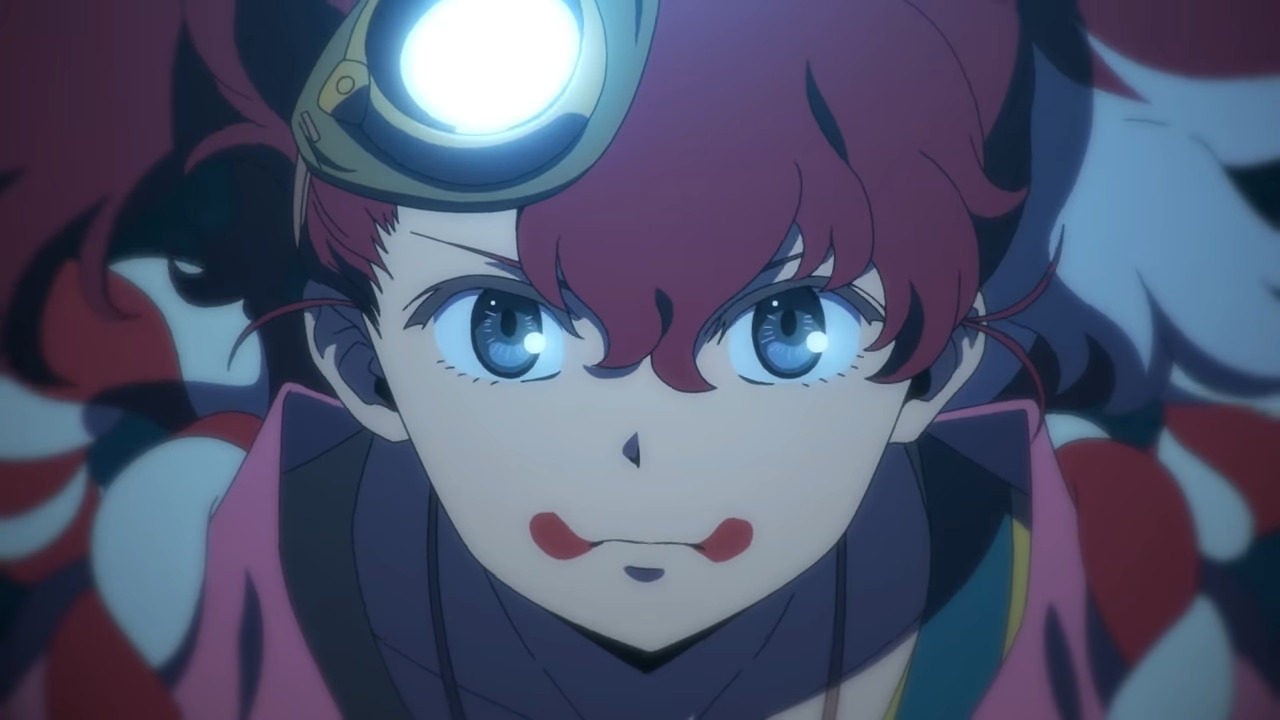
Sorano Appare (Appare-Ranman!)

Having the protagonist of a racing anime be a serendipitous inventor makes for an interesting dynamic. Appare chafes against the cultural norms and restrictions expected of him in his home life in Japan, and an impromptu trip to the US (along with an entry into a transnational motorcar race) allows his eccentric genius to flourish. Above all, there are two main things that make Appare great. The first is that his interactions with others both big and small make for a very convincing portrayal of a protagonist whose way of thinking, priorities, and philosophy run along a different path from everyone around him. The second is that he grows tremendously on his journey—in part due to his initially reluctant racing partner Kosame—and ultimately ends up with both a passion for technology and compassion for his fellow human beings in equal strength.

BEST FEMALE CHARACTER

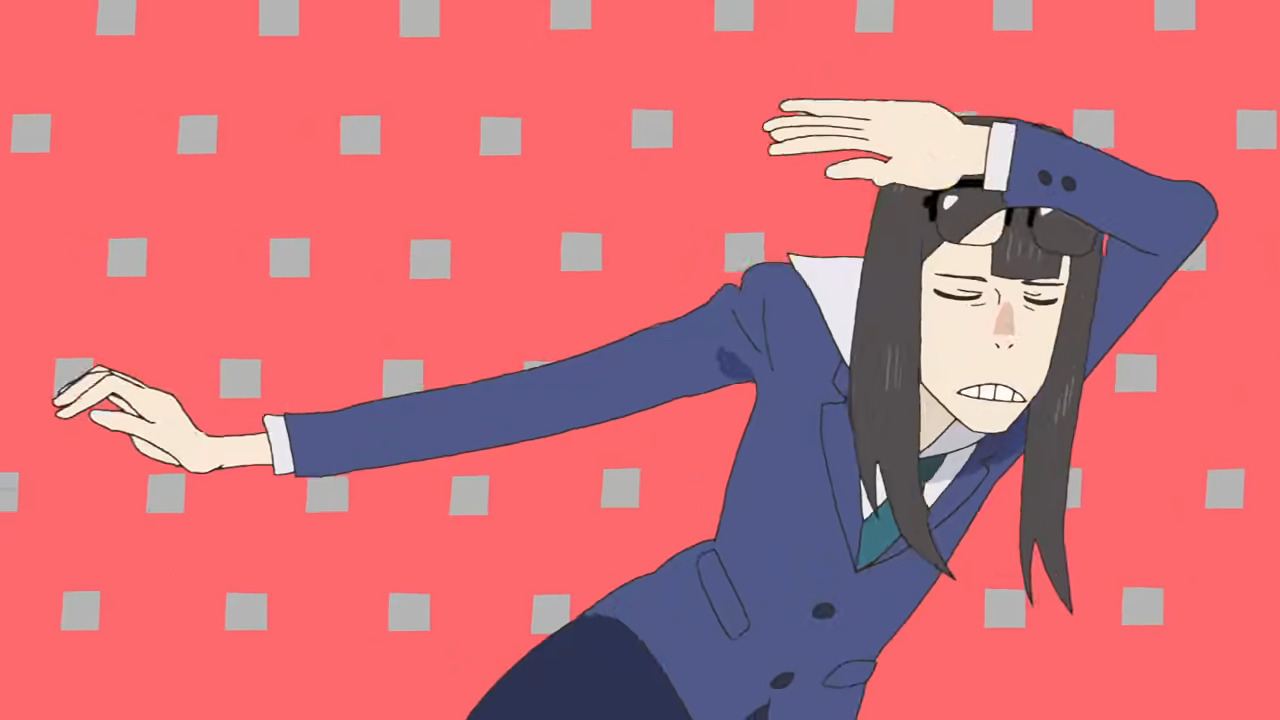
Kanamori Sayaka (Keep Your Hands Off Eizouken!)

In one of the greatest celebrations of the creative process ever made, the most impressive character is Kanamori Sayaka, the practical-minded “producer” of the main trio. The very fact that she embodies that producer mindset (as opposed to director, artist, or animator) is a rare treat, and while she’s basically the fun police in terms of the narrative, the story portrays her as integral. There’s something downright refreshing about how grounded and logical Kanamori is in contrast to the rampant imaginations of her friends Asakusa and Mizusaki, and it makes a character who would otherwise recede into the background stand out all the more. In certain ways, she reminds me of Kasukabe Saki from Genshiken—always a fine character to be compared to.

Final Thoughts

When I look at my choices for best characters of 2020, the thing I see in common is that both are unorthodox characters who provide windows into the act of creation, be it artistic or mechanical. Funnily enough, Appare and Kanamori play opposite roles in their respective stories, with Kanamori being the straight man to her friends’ disregard for pragmatism and Appare being the unimpeded tinkerer who Kosame has to manage. It would probably make more sense if I had picked two similar characters on each side, but in both cases, the way they upend expectations makes me believe in them.

I’d also like to make an honoroable mention for Kaburagi from Deca-Dence, who was extremely close to being my pick for male character of the year. Kaburagi is an aged combat veteran, but as we learn more about his life and perspective, we can see the inner struggle in him extends beyond merely his loss of zest for life and into what it means for a society to survive versus what it means to prosper.

A turbulent year full of worries and delays has nevertheless seen many wonderful anime come out that both challenge norms and provide hope and inspiration.

The Prince of All Rating Systems: The Vegeta Level

There are many areas in which we can judge anime and manga. We can talk about animation quality, narrative consistency, excitement factor, or even just emotional resonance. Recently, I’ve come up with a system that I think provides a new perspective on how we view titles—I call it the Vegeta Level.

Named after the Prince of All Saiyans from Dragon Ball, determining a work’s Vegeta Level starts with a simple question: “How many Vegetas are in this?” In other words, are there any characters who embody—in part or in whole—the qualities of Vegeta, and if so, how many of these characters are there? Vegeta qualities include but are not limited to: short, spiky hair, intense, arrogant, a rival status, current or former villain with a smidge of emotional development. Sometimes, there’s an intangible quality where you can’t quite say why they’re a Vegeta, but you can definitely feel it. 

A series with a relatively high Vegeta Level can have one extreme Vegeta, or it can have so many partial Vegetas that they add up to one or more whole Vegetas. The degree to which each Vegeta quality is present can also factor in. For reference, Vegeta himself is 10 out of 10 Vegetas.

The genesis of this idea actually came from the volleyball anime Haikyu! When I first started watching, one of my recurring thoughts was, “There sure are a lot of Vegeta-like characters in this show.” Hinata and Nishinoya are both short, spiky-haired hotheads with something to prove. Kageyama is a scowling and hyper-competitive “king.” Tsukishima has all the arrogance in the world. And then, as you expand to the other teams, the number of Vegetas only grows—see Bokuto to some extent, and especially Hoshiumi. There’s Vegeta-like energy in all of them.

Even though there’s a clear standard for this metric—Vegeta—there’s still room for subjectivity. In a sense, how you perceive a Vegeta is as much based on how you see Vegeta, whether you’ve actually read/watched Dragon Ball or not. Bakugo in My Hero Academia is very clearly a Vegeta, but how Vegeta is he? One could argue that only Vegeta should be a 10 out of 10, but Bakugo is so nasty and angry and has such a character arc that he might be considered just as Vegeta if not moreso.

So let’s work through an example. Dragon Ball is clearly at least Very Vegeta due to the man himself. Are there any other Vegetas? Technically, there are literal relatives of Vegeta in here, but this is more about personality and archetype. Of his kin, his dad King Vegeta is probably around an 8/10, and Future Trunks (but not modern-day Trunks) is more like a 6/10. Among antagonists/rivals, Tienshinhan, Cell, Piccolo, and Frieza are all fairly Vegeta—I’d say about 4/10, 5/10, 6/10, and 7/10 respectively. From that rough look, that’s 49 Vegeta points. Again, it’s not wholly objective, much like the star rating system in professional wrestling, so there’s room for argument.

So what use does the Vegeta Level have? Well, if you like Vegeta, it’s probably a great way to find a series that interests you. But also, Vegeta as a character is so embraced not just by fans but also shounen manga in general, and I think the presence of Vegeta-like characters are a way to give a series an extra edge without necessarily making it “edgy.” That being said, an all-Vegeta series would make for about the edgiest thing ever.

Does such a series exist? One friend suggested to me at least one series that could outstrip it: The Sopranos. According to him, practically every character in that show is a high degree of Vegeta. 

Food for thought: Could there theoretically be a work with a Vegeta Level that’s over 8000 or 9000?

Blog Sounders XIII: Ogiue Maniax 13th Anniversary

Here we are, at lucky number 13. Toward the end of last year, I wrote a few posts about my feelings going into the new decade, unaware that the span from 2019 to 2020 would feel less like a year and more like a decade. As much as I would simply want this anniversary post to be about Ogiue Maniax proper, I can’t ignore that the world is in a strange and unusual place due to the effects of COVID-19 and the extremely uneven response to it around the world. The fact that we managed to deliver a defeat to the would-be dictator that we call the 45th President of the United States is at least some comfort, and I’m genuinely happy that I’m on the other side of the US election in a position of relative hope instead of soul-draining despair.

The pandemic has actually affected Ogiue Maniax in certain ways, and not just because I’m more readily willing to write about topics like it. For instance, in recent years, I’d been doing my writing during long train commutes to and from my day job. While not an ideal situation, I’d begun blogging on my smartphone as an efficient use of my time and as a way to decompress from the work day while also fulfilling my personal standard of at least two posts per week. If I didn’t feel like writing, I might read manga (whether paper or digital), listen to podcasts, play games, or any number of activities that could become the fodder for future blogging. But now, I have no commute to “fill up,” so I’ve had to adjust my habits again, accounting for this shift in routine as well as my personal mental and emotional status. Which is to say, I’m not traumatized to the point of inactivity (as any regular readers would notice), but I definitely can’t say I’m unaffected.

Even the travel I would have done—a combination of personal, professional, and blog-oriented excursions—have been kiboshed. Gone are the conventions like Otakon, Anime Expo, New York Comic Con, and Anime NYC. What would have been a trip to Japan next year is highly unlikely for the foreseeable future. I’m one of the many who picked up Animal Crossing as a way to connect to friends, and I’m sure that has influenced my media consumption in some ways as well. Ironically, I’ve worried in the past that I haven’t done enough individual reviews of anime and manga, and now I’m worried I might be doing too many. I used to think nothing could keep me from Otakon, but I did not expect a deadly virus to upend the world. Silly me.

One bright spot among all this is that Ogiue Maniax’s site views are actually trending upwards for the first time in about eight years. In recent times, I’ve been lamenting the declining popularity of anime blogging at the same time I have been reluctant to move from the format, out of some combination of stubbornness and comfort. However, when I looked at my site stats recently, I noticed that almost every month in 2020 has been better than the last in terms of exposure; curiously, it seems to have begun in March and April. So while I have no concrete evidence at hand, I have begun to wonder if the pandemic has been a significant influence on my readership. Could it be that with so many people at home now, they’re willing to read my blogging? I appreciate the increased hits, but I would trade them for a world not in the grip of a plague.

I really, really, really hope next year’s blog anniversary sees us all in a better place.

Healin’ Good Precure and the Age of Coronavirus

In recent weeks, many of the anime that were on hiatus due to COVID-19 have begun returning, and one question that arises is how these series might be affected by the delay going forward. Many, like Demon Slayer: Mugen Train and The Millionaire Detective, are adaptations, and so wouldn’t be affected content-wise. Similarly, historical fiction like Appare Ranman! can easily ignore current events. But there is one series I’m looking at as potentially being deeply impacted by coronavirus on a story level, and that’s Healin’ Good Precure.

The main motifs of Healin’ Good Precure are healthcare and the environment. The girls essentially act as doctors trying to heal different Earth spirits when they fall ill, their interactions with their fluffy mascots take a veterinary angle, and their magical dresses briefly resemble physician lab coats during transformation. It’s an incredible coincidence that this would be the Precure series we have in the middle of a global pandemic, but here we are.

The Precure franchise as a whole does not have any source material—the anime are the original works. Everything else, from manga to video games, are subordinate to it. What this means is that there’s no source material to reference or adhere to, so it likely has a degree of flexibility in terms of potentially changing its story. The fact that Precure shows are typically around 50 episodes also means there’s plenty of time to pivot and try to take into account current trends and real-world concerns. Also, while the series was on hiatus, the official Precure LINE channel actually had videos featuring Precure stuffed dolls talking (via the voice actors) to kids and playing games with them, so i think there is an awareness that children are feeling the effects of self-quarantine and the like.

While I don’t think Healin’ Good Precure is going to do anything as drastic as explicitly introduce coronavirus into the show, I do wonder if they’re going to try and incorporate some of the good behavior into the girls’ special moves or equipment. For example, what if one of the mid-series upgrades are special magical masks that give the Precures enhanced powers? What if the girls learn a special attack that requires them to stand six feet (or two meters) apart from one another? Of course, it’s also possible that the show will keep ignoring the environment created by COVID-19 in the hopes of giving young kids an image of how things are “supposed to be.”

Regardless of how far Healin’ Good goes to address current events, Precure’s general positivity and supportive messages are very welcome. I’m just waiting to see how far it goes.

The Sincerity of Tokusatsu

I have watched a lot of anime, but I’m far less experienced with tokusatsu stuff. When Toei launched their official worldwide tokusatsu channel on Youtube a few months ago (despite a major hiccup where they accidentally banned themselves), I originally saw it as a way to legitimately watch more obscure giant robot anime such as Lightspeed Electroid Albegas and Space Emperor God Sigma. However, thanks to the sheer range of shows available—stuff leading back to even the black & white era of television—I thought it was high time I made a more concerted effort to watch tokusatsu and form my own opinions.

What I’ve come to notice is that I enjoy these series a lot more than the adapted tokusatsu works I’ve seen over the years in the US—Power Rangers, VR Troopers, Super-human Samurai Syber Squad, etc.—and I think I know why. When it comes to Japanese tokusatsu, there is a greater degree of earnestness that makes these shows more enjoyable overall. They might not have much of a budget, as shown by their threadbare special effects, but everything feels somehow more sincere.

Sure, the localized shows have their own merits, and there have been memorable storylines over the years that lend at least an air of seriousness and compelling storytelling to their worlds. In Power Rangers alone, there’s the original Green Ranger storyline from Mighty Morphin’ and the bond between Astronema and Ecliptor in Power Rangers in Space that revealed the two as more than just evil villains. However, they feel more like exceptions to the rule—-chances for otherwise very non-serious stories to reveal an edge.

With Japanese tokusatsu on the other hand, even the very first episodes feel like they’re working hard to get viewers emotionally invested. They’re also still ultimately kids’ shows as well, but their presentation is such that they expect the young viewers at home to enjoy drama and tension in their entertainment. When you hear the ending theme to Janperson, even if you don’t know Japanese, there’s a strange yet heartfelt sense of passion. It’s definitely cheesy, but it’s a convincing kind of cheesy. The difference is akin to the kind of pro wrestling that easily makes you suspend your disbelief versus the kind that takes you out of the magic.

Anyway, if anyone has recommendations, I’m all ears. A part of me wants to check out Space Ironmen Kyodain and Akumaizer 3 just because of Konata’s fiery karaoke from Lucky Star, but I’m down to keep exploring.

Thoughts on Open-World RPGs and the D&D Lineage

Open-world RPGs have never really been my thing, though it’s less about genre preference and more about circumstances. I was never much of a PC gamer when RPGs like Baldur’s Gate were around, and by the time similar games (such as The Elder Scrolls series) emerged on more powerful console hardware, I didn’t have any of those systems. But from a distance, I find the branching paths of Western RPGs and Japanese RPGs to be such a wonderful story of diverging Dungeons & Dragons lineages—namely how the former has taken more from the customization and self-insertion aspects of tabletop roleplaying in contrast to the latter and how the latter has went on to emphasize the narrative and storytelling components by way of old Western computer RPGs such as Wizardry.

It might be my ignorance and unfamiliarity at work, but I see expansive open-world RPGs as putting less emphasis on defining strong characters through which a story unfolds. More often than not, my impression is that they are about putting the player in the driver’s seat and trying to convey a virtual environment where they can do “whatever they want” within the boundaries of a game’s programming. Even if they have set things to do and accomplish, these games are meant to feel like your story.

That being said, plenty of JRPGs have user insert characters, including Dragon Quest and Pokemon have audience insert protagonists, and the latter even allows for heavier aesthetic customization now. However, I do feel that there is a more defined sense of a default look and feel to these generic JRPG player characters, and the result is that they also end up feeling like someone you’re observing from a distance—like you’re in a dream seeing yourself from a third-person perspective.  For me, personally, I’ve traditionally preferred that direction.

Of course, I’m making certain assumptions and generalizations when I define Western RPGs as more expansive and open-world, as even those words can change meaning and significance depending on what players are used to and how they perceive the importance of those qualities. For example, it’s interesting to me that the prevailing online opinion on Pokemon Black & White has changed so drastically in the ten years since its debut. 

Back when it first launched, the games were criticized as being too easy and hand-holdy—you always knew exactly where to go next. This was a far cry from the original Pokemon Red & Blue generation-1 games, which gave far fewer explanations and kind of left a lot of things ambiguous. But now, Black & White are touted as being one of the gold standards of Pokemon, and its descendants inferior for their perceived lack of strong and focused storytelling. Red & Blue, in turn, are seen as cumbersome relics that don’t do enough to guide players. It comes down to a generational divide, but even within the specific realm of Pokemon—hardly what you’d call a premiere example of open-world gameplay—this debate about the two Dungeons & Dragons lineages takes place.

I feel that the success of expansive open-world RPGs on an individual level comes down to whether or not the inevitably less defined bits of narrative that are a consequence of heavy personal customization and gameplay systems that encourage defining “your” story as opposed to following someone else’s. Both it and the JRPG style are capable of capturing people’s imaginations, but it’s what we want to do with our captive imaginations that highlights our differences.

This post is sponsored by Ogiue Maniax patron Johnny Trovato. You can request topics through the Patreon or by tipping $30 via ko-fi.

Animal Crossing: New Horizons as Rorschach Test

Animal Crossing: New Horizons arrived just in time to explode in popularity. With so many people staying home due to COVID-19 and in need of some respite, the series’s laid-back atmosphere might just be what the doctor ordered. I know because more than a few of my friends and loved ones have been playing it, some long-time veterans of the franchise and others absolute newbies. After a while, seeing the people I know derive such enjoyment out of it, I had to see firsthand what the fuss was all about.

I wouldn’t quite call Animal Crossing: New Horizons a personality test, but I find that it does reflect something of what’s going on in each of us. There are goals you can progress towards, and there are achievements that can net you bonuses, but the game is largely without any demands. You could do everything or you could just do the bare minimum. You gradually shape your space according to however you feel, with some harmless elements of luck and the mellow atmosphere preventing it from being something like a SimCity. Seeing my island slowly come together and comparing it with others’, I can see how we express ourselves through the game’s quirks.

Animal Crossing is clearly not for everyone, and I can think of two categories of players who might regret getting the game. The first is anyone who needs there to be a distinction between winners and losers. While there are areas in which you can potentially compete—fishing events, the size of your collection, how much money you have, etc;—they’re largely arbitrary and there’s no judge keeping score. You really have to go out of your way to make it about competition, because there’s nothing that inherently says one person’s stuff is better than another’s.

The second category is anyone who would feel anxiety over accomplishing all the million little tasks and activities the game offers. It’s possible that, rather than being a calming, almost meditative experience, Animal Crossing: New Horizons becomes a source of stress. If you feel bad about ignoring things you could be doing, and you feel like you avoided guilt rather than achieved satisfaction by accomplishing them, then playing this might be a bad idea.

As for me, I’m trying to make my island into an incongruous mix of relaxing good times and abstract horrors. Either way, my villagers look like they’re having a good time.

Beastars and the Fight Against Behavioral Absolutism

Exploring the tension of anthropomorphic animal society from the perspective of high school students, Itagaki Paru’s Beastars can at times feel like it’s encouraging a very dangerous view of the world. In a world where carnivores and herbivores co-exist peacefully and eating your fellow animal is illegal, the constant pressure faced by the timid wolf protagonist, Legoshi, for not embracing his violent, meat-eating ancestral nature seems to bleed into sexist alpha/beta nonsense territory. Yet, by the end of a first anime season filled with tumultuous and shocking developments, the message I took away was something far different and more nuanced than a simple animalistic nature vs. civilization dichotomy.

Warning: Beastars spoilers ahead

Legoshi is portrayed as shunning the spotlight. Although he’s in the drama club, Legoshi works as a meek behind-the-scenes stagehand, leaving the attention to others such as the club’s star actor, Louis the red deer. But what Louis notices is that Legoshi is clearly stronger and potentially more intimidating than he lets on. As a gray wolf, he possesses might that no herbivore can hope to match, and it incenses Louis that Legoshi can be such a pushover. When Louis gets hurt and a shuffling of roles causes Legoshi to appear in a play, a tiger clubmate named Bill tries to bring out Legoshi’s dormant ferocity.

However, Legoshi is afraid of his own carnivorous side. Not only was his good friend, Tem the alpaca, eaten by a carnivore, but Legoshi himself comes dangerously close to succumbing to his lupine instincts and devouring a female dwarf bunny named Haru—a girl he later develops strong feelings for. Legoshi does not want to be that kind of animal, which is why he looks up to Louis, who accomplishes things through grace and diplomacy. Even so, there’s no denying that Legoshi would be incredibly powerful if only he let himself be. 

Part of what holds Legoshi back is a society that discourages carnivores from exerting dominance through force. Meals for them are made with high protein content, e.g. eggs, as a way to sate hunger, but the appeal of real flesh can be overwhelmingly difficult to endure. Throughout the series, Legoshi struggles to fight that desire for meat, which then blends in odd ways with his love/lust for Haru, further complicating things in his heart.

Towards the end of the series, Haru gets kidnapped by an organized crime group—a cadre of lions called the Shishigumi—with the intent to eat her. Having discovered previously that Louis is seeing Haru (though what Legoshi doesn’t know is that Haru is extremely promiscuous as a way for her to have some control over her life), Legoshi tries to bring Louis along. However, Louis declines, having already learned about the kidnapping and being told that he must stay quiet if he is to accomplish his goal of rising to the top of society and being able to effect widespread change. Legoshi storms the Shishigumi base without the red deer, and by fully tapping into his violent side, is able to rescue Haru. 

At first, the lesson seems to be that Legoshi finally set aside his false persona of timidity for what was truly inside, but what happens afterwards communicates what I found to be the most important takeaway from Beastars: when it comes to instinct vs. reason, there is no universal answer.

Having saved Haru, Legoshi and her end up at a love hotel prepared to take their relationship to a physical level. Legoshi confesses that he was the one who tried to eat her, and Haru says she always suspected it was him but was still drawn towards Legoshi. However, just as they are on the verge of consummating their relationship, Legoshi’s mouth moves uncontrollably as if he’s going to eat her, and Haru’s body moves, as if on its own, to be eaten by him. Built into their genetics is a relationship of predator and prey, and sex between them isn’t “supposed” to happen. Even so, they’re genuinely in love with each other and they want to make it work, which means denying what their DNA is screaming at them to do. If Legoshi wants his heart’s desire, reason must prevail over instinct.

The underlying message I take away from Beastars is that the question of whether to follow or rebel against one’s animalistic nature is not an all-or-nothing proposition. There are times when it can be of great benefit, but other times when it can be a mistake or lead to disastrous outcomes. Moreover, whether or not doing so is a right choice will vary from individual to individual. Legoshi is not Louis. Legoshi is not Haru. They can naturally accomplish things he cannot and vice versa, but they’re also all capable of going out of their inherent comfort zones to do even more. It is the moderation of both reason and instinct relative to each other that allows us to flourish.

Artistry in Manga and Anime, and What’s Lost in “Translation”

Every so often, I come across someone on Twitter who talks about how they love anime but don’t really mess with manga. To them, manga is inherently inferior to anime, or at the very east, doesn’t give them the full multimedia package that anime offers—animation, music, voices, etc. Of course, people are free to enjoy what they want however they want it, but a part of me can’t help but feel a little frustrated that manga, as a mode of creative expression, is not reaching them. They can appreciate the artistry of anime but not the artistry of manga. 

“Artistry” is a very loose term and it can mean a million different things. Moreover, you’ll likely find people arguing that certain styles are better than others, and that certain creators are more imaginative and skilled than others. When I use the word “artistry” here, I’m thinking from a very broad sense, where it means how something is portrayed as opposed to what is being portrayed. Two titles could wind up portraying the same thing—a blond guy throwing a punch, for example—but the execution could create two very different experiences. 

Years ago, I wrote a couple of blog articles: one on decompression in comics, and another on its opposite, compression. One of the big takeaways is how the page as a whole is typically used in manga, where the panels and visual elements are geared towards a very smooth and continuous experience that allows the eyes to quickly move from one panel to the next. There are many different avenues of manga artistry, but this is the one that sticks out to me most because it’s a form of creative direction where time and space seem to transition seamlessly. But even given the history of comics in Japan, this is something that had to develop over time, and there’s no one right way to make the pages “flow.” It’s not as fundamentally intuitive as treating a comic like a picture book playing out one panel at a time, and I have to wonder if maybe that extra step needed to engage with manga is a step too far. Without it, perhaps manga really does seem like a lesser version of anime. That engagement has to be learned on some level.

In a sense, the difference between anime and manga is a less pronounced version of the separation between film and books. Anime and film engage more senses, and they progress without the viewer needing to actively move them along. Manga and books are focused mostly on the visual (on a basic level), and the story does not continue unless the reader actively chooses to move it forward. While anime and manga are closely tied in the sense that they often draw from the same stylistic trends and adaptations from one to the other are incredibly common, this difference in how one engages the medium seems to be too large a disparity for some. If I could help it, I would want to take someone who only reads manga and help them appreciate anime, as well as vice versa. If that were possible, then I would do what I could to help people appreciate the artistry of these creative endeavors.

This post is sponsored by Ogiue Maniax patron Johnny Trovato. You can request topics through the Patreon or by tipping $30 via ko-fi.