
I wrote a post about characters who suffer from deep love over at Apartment 507. Are you dere for yandere?

I wrote a post about characters who suffer from deep love over at Apartment 507. Are you dere for yandere?

This time on Apartment 507, I explore the idea of the “anime fighter” and all of its surrounding meanings and associations. Hope you like air dashing!

I wrote a post about the eccentric heroine of Dagashi Kashi over at Apartment 507. You can find out why Hotaru might be my character of the year, and why her role as a sheltered dagashi heiress is so interesting to me.
Out of all of the new characters introduced in Super Smash Bros. for Nintendo 3DS & Wii U (aka Smash 4), the Mii Fighters are among the most contentious in its competitive scene. Based off of Nintendo’s official user avatars, Mii Fighters can look like anyone, wear unique costumes, be any size (within certain limits), and have access to a full range of special attacks, more than any other characters by default. Ever since they were introduced, there has been an on-going debate as to what extent Miis should have access to their full range of customization (size, visual design, attacks). Recently, EVO 2016 announced its Smash 4 ruleset to include only 1111 guest-sized Miis, locking them into a specific size and a specific set of special moves that many Mii players deem unfair.
However, I’ve noticed a tendency on both sides to try and pass off some often small, minor detail as a deciding point that completely negates the opposing side’s concerns, when in fact many of these points have holes to them.
In my opinion, trying to build some watertight argument about Mii Fighters is ultimately futile because they’re mostly arbitrary. In showing this arbitrariness below, however, my goal is to actually direct the whole discussion towards the subject of the characters’ emotional resonance. The decision to #FreeMiis or not is ultimately about a base of players who want to play the character they want, and the discussion should go towards an emotional compromise.
Keep in mind that I am neither for nor against full Mii Fighters, so I have no hat in this race. Also, I’m coming from the perspective that, as far as we know, Mii Fighters do not have any extremely unfair advantage against the rest of the cast.
1) The “Menu” Argument
Aside from DLC, all characters in Smash 4 can get custom moves just like the Miis. Previous tournaments have tried custom moves for the entir ecast, but the general trend has been away from that direction. This is the reason why many tournaments that allow Miis require a single moveset and default to 1111.
Mii players point out that, even in a Customs Off environment, you can select Miis with non-1111 special moves. Thus, the argument goes that, if the UI deems it correct, then so it should be. The fact that customized Miis are also available in non-Customs online tournaments supports this idea.
The problem with this particular argument is that the Smash Community has never based its decisions on what the menu or standards tell them is correct. For Glory is played with 2 stocks/5 minutes, and Online Tournaments impose a 3-minute time limit on matches with “amount of damage done” being the criteria for a tiebreaker. Actual tournaments on the other hand go either 2 stocks/6 minutes or 3 stocks/8 minutes (that’s a debate I won’t go into), and handle tiebreakers differently.
Along these lines, the menu argument can be turned against the Mii Fighters just as much, because they by default do not appear on the character select screen, and must specifically be created in order to show up. Moreover, when you create a Mii Fighter, their attacks also default to 1111 and you have to specifically choose different ones.
The ability to twist the menu argument in either side’s favor is why I think it’s a point of disagreement that should just be dropped. It’s unproductive and kind of silly to begin with, especially because of how it’s used as “scientific” proof.
As an aside, Super Street Fighter II Turbo had hidden characters called “Old Characters,” alternate versions of the existing cast with different properties that could only be selected by navigating the character select screen in very specific ways to input a code. Ultimately, only one character out of these was controversial, and for the most part they are an accepted part of the game.
2) The “Adapt” Argument
There are three Mii Fighter archetypes: the Brawler, the Swordfighter, and the Gunner. Each of them has access to 81 possible combinations of special moves, though some are clearly superior to others lessening the number somewhat. One point of compromise is forcing Mii Fighter players to use only default size pre-made Miis that come with Smash 4 to avoid having to upload Miis to the system and create delays at large tournaments, but if size differences are allowed the amount of combinations goes into the thousands. There are small differences in frame data, endurance, reach, and power when adjusting size parameters that can make a difference in competitive play, where even shaving one frame off of a move can be the difference between it being useful or useless.
One argument against full custom Miis is that the ability to pick whatever moves you want is an unfair advantage when other characters cannot do the same. Why should a player have to prepare for all of these combinations of Mii Fighters, and why should the Mii player be able to cherry-pick their moves? Instead of that, it is argued that Mii Fighters need to learn to deal with having one moveset.
Full Mii supporters argue that players are already dealing with 55 other characters, and that having a lack of knowledge as to how Mii Fighters work is ultimately the fault of the opposing player. According to this point of view, Mii Fighters changing special moves is not nearly as drastic as someone who goes from Mega Man to Bowser, two characters that are different in nearly every aspect), so it’s arguably easier to adapt to that than a full character change between sets.
On either side of this fence is the implication that the opposition needs to learn how to “adapt.” In an age of balance patches for competitive games in general, where players will frequently complain that they need an official update in order to use their character competitively, it has become increasingly common to admonish newer players for their inability to roll with the punches and take the advancement of their characters into their own hands.
Just like with the “Menu Argument,” both sides can twist a this philosophy to their advantage. Why shouldn’t players adapt to new patches just as much they should adapt to a lack of patches? Similarly, the Limited/1111 Mii side argues that Mii Fighters need to learn to fight effectively with a locked moveset, while the #FreeMiis side argues that those against Full Miis should be able to handle the variations. Adapting has to happen at some point. I feel that if only there could actually be some compromise between both sides, it would go a long way towards settling this issue.
3) The “Mii Gimmick” Argument
This argument is derived from the idea that each character for the most part has some unique feature that defines them and their gameplay. Little Mac has KO Punch, Cloud has Limit, Ryu has Special Inputs, and so on. A lot of these features are not part of the standard Smash character, and so it’s argued that the variable movesets of Mii Fighters fall into the same category. In past games, you could even choose to transform into different characters, so why is that allowed but not full Mii moveset options?
What I find odd about this stance, however, is that it works ever so conveniently in the #FreeMiis contingent’s favor. When it’s pointed out that Palutena is built around a similar principle, it goes all the way back to the “Menu” Argument, that the simple press of the “Customs On/Off” icon is the dividing line that prevents Palutena from reaching her full potential but allows Miis more or less free reign. There are also some players who don’t just want to have custom moves but want to be able to switch their moves in between tournament rounds or even within individual matches, all under the umbrella that it is the “Mii gimmick.”
The idea that the spirit of the Miis is lost when you’re unable to play them exactly as you want them might be to some extent true, but competition isn’t necessarily looking at how the characters align with their players on a personal level. The use of Guest Miis already puts a damper on everyone who wants to be Proto Man or James Bond or any other custom Mii design, so at the end of the day it really is about the moves.
This does not mean that Miis should be restricted to 1111, but the idea that they should be allowed their full range of moves at nearly all times is as arbitrary a line as 1111, or, say, making it so that all characters have to use 1231 regardless of which Mii Fighter they’ve chosen. The question I want to ask here is, do Miis lose all purpose if you can’t customize their moves, and if so, is that a problem?
4) The “Moveset Synergy” Argument
It is objective fact that fully customized Miis have greater potential to succeed competitively than 1111 Miis, by virtue of the fact that, not only are many of the non-1111 moves significantly better, but the ability to pick just the right moveset for the character you’re facing allows you to maximize the effectiveness of your special moves. If you are a Mii Gunner and you are fighting a character without a projectile, you have less of a reason to use your Echo Reflector special move. If you’re a Mii Brawler, who normally is good at racking up damage but has trouble killing, getting access to Helicopter Kick gives the character a potent kill option, thus making them more rounded in general.
I think anyone who looks at Mii Brawler’s 1111 moveset will notice that it’s pretty bad. Why do they have both Soaring Axe Kick and Head-on Assault, when those attacks are pretty redundant? This potentially points to the idea that the Mii Fighters are not designed for 1111 at all, or even if they were the game is ultimately not hurt by them having their best special moves.
The problem with this position is that not all characters have perfect synergy in their movesets either. It is not necessarily an oversight, or something that is supposed to be ripe for the changing. Characters are generally designed to have pros and cons, and while they can’t totally erase many of the physical properties of a Mii Fighter, having special moves synergize better can be used to shore up their weaknesses. However, to go back to the “Adapt” Argument, the idea that it’s not right for Miis to have flawed existences can apply just as much to other characters. Maybe Mii Brawler is supposed to have trouble killing. Maybe Gunner is supposed to have holes in the projectile and range game. Who’s to say they’re not meant to be like Ganondorf, with very clear and extreme upsides and downsides?
Final Thoughts
I think the core of the Mii Fighter problem isn’t that Miis are too good, or they’re too bad, or anything actually having to do with competitive viability or fairness. The issue at stake is that Mii players do not feel much gratification playing 1111 versions of their characters. Without the right moves, they become emotionally empty vessels, perhaps all the more appropriate that they’re supposed to be combat-oriented versions of personal online avatars. That being said, I have to wonder if Mii Fighters could potentially provide “just enough satisfaction.” Mii Fighter users all seemingly want their preferred movesets no matter what, but perhaps it could be enough to have 50% or 75% a the preferred combination. For example, if everyone who cares about Miis were able to vote on a common moveset that had just enough appeal to all of the various Mii contingents, then maybe that sort of compromise is worth looking into.
—
If you liked this post, consider becoming a sponsor of Ogiue Maniax through Patreon. You can get rewards for higher pledges, including a chance to request topics for the blog.
One of the big bugaboos of Japanese to English translation has been the use of untranslated words. Whether it’s senpai (“upperclassman”) nakama (“comrade”), or the utterly fictitious zankantou (“colossal blade”) the question of whether words should be left as is or fully adapted to English rages in arguments between fans, translators, and everything in between. Of course, there are no solid rules, and determining where in this spectrum your translation should fall is very much a case-by-case basis. However, what intrigues me about this debate is that, when you look at the Japanese language and how it’s used in anime, advertisements, and more, there is a very intentional sprinkling of foreign words with the clear idea that they are used for their exoticism.
The show that actually got me to think about it was, of all things, Show By Rock!! Here are the first lines of the opening:
Ren’ai inochi VERY VERY HAPPY!
Yuujou inochi hajikeru JUMPING!
Bouken inochi dokidoki OK?
Seishun ouka COM’ON READY? LET’S GO!
I’m leaving it untranslated just to show the clear use of English vs. Japanese. They didn’t have to use English words but they did. Similarly, let’s look at the popular One Punch Man opening:
ONE PUNCH!
(THREE! TWO! ONE! KILL SHOT)
Sanjou! Hisshou! Shijou saikyou
Nan dattenda? FRUSTRATION Ore wa tomaranai
One concession is that a lot of these words are very simple, like “HAPPY” and “JUMPING.” They’re not terribly complex and don’t carry a great deal of cultural baggage like senpai (though one might argue that ren’ai (romantic love) being originally a concept introduced from Europe to Japan falls into that range). However, I think where the actual big cultural difference comes from is that Japan has been open to receiving a lot of foreign words and maintaining them as emphatically foreign, as opposed to fully integrating them into the language. So while English has its fair share of Japanese loan words, from sushi to karaoke, they don’t maintain as much of their exoticism. It’s just a very different environment for sentences and words themselves.
What’s funny is that English wasn’t always this way, especially when it was not the lingua franca of the world. Prior to World War II, French was the most dominant language in diplomacy, and (correct me if I’m wrong!) throwing in French words with the expectation that only a few would understand it was not uncommon among the educated. Of course, this is different from the use of “HAPPY” and “JUMPING,” but I do think that the English language’s ubiquity leads to the sense in us users that it doesn’t have to bend to the will of others.
Translating to English often assumes that English is important. That sounds like a no-brainer, but what I mean specifically is that English speakers value their own native language so highly that it comes across to some extent as a rejection of foreign influence. France today for example is known for trying to keep foreign words out of its language, preferring to take existing French words and modify/combine them accordingly to eschew the need for new loan words.
I’m not saying translators who do not use senpai or whatever are imperialists anymore than I think that using nakama means someone is fetishizing Asian culture. Moreover, the exotic aspects of English usage in Japan come with their own sets of considerations and concerns. Rather, the seeming need for everything to be transformed into English might say something about how we as English speakers look at ourselves, and that this differs depending on how we individually approach that self-reflection.
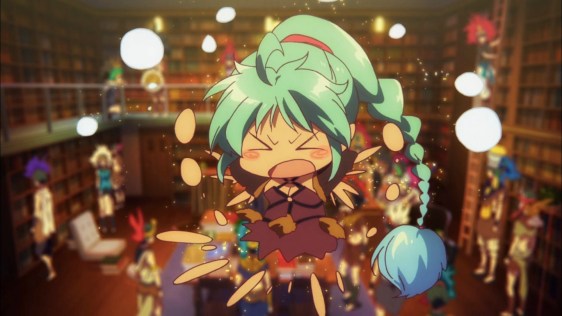
I’ve written a post about Myriad Colors Phantom World over at Apartment 507, and its similarities to anime of the 90s such as Slayers and Saber Marionette J. What do you think? Is Phantom World a “1990s anime in 2016 clothing?”
In a recent blog article on the site Wave Motion Cannon, blogger tamerlane laments two aspects of how we talk about anime. First, he discusses lack of appreciation (one might even say disdain) that many American fans and experts of animation have towards anime. Second, he argues that sakuga fans (essentially fans of especially expressive, dynamic, and powerful Japanese animation) aren’t doing enough to help spread appreciation of the animation in anime. On these general points, I completely agree. Whether it’s anime or manga, the technical skills of Japanese creators are often unfairly get derided, labeled as being full of shortcuts and cop-outs. Anime defies the rule books of animation that people take as gospel, so critics prefer to point a finger at anime rather than the rules themselves. Similarly, I also find that sakuga fans can often sabotage themselves, but one thing that tamerlane might not realize is that in his very post are those risky elements, that which makes sakuga fans, perhaps unfairly, seen as an insular group.
To start off, I want to highlight a couple of lines from the article:
That is, strip away all those aspects of animation that have superior alternatives elsewhere – story, music, draftsmanship – and look at what’s left. That is animation.
…
Animation shouldn’t exist for its own sake, certainly, and there’s no shortage of animated films that are as vacuous as they are pretty, but without any way of meaningfully differentiating itself from other forms of art it might as well not exist at all.
In other words, animation should do what is uniquely suited to it, otherwise there’s no point. It’s simple… or not.
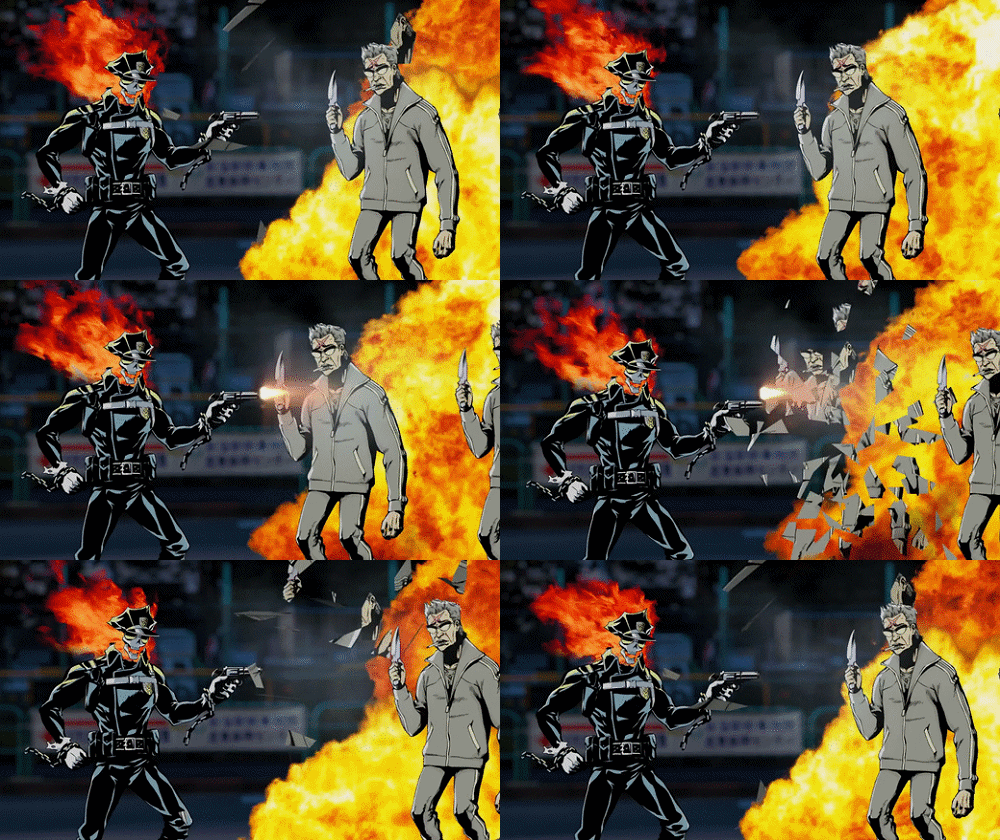
The problem with such a sentiment is that, while it might seem like the proper way to view animation, there are serious limitations to pinning a medium down to what is unique to it. Granted, it’s not a bad way of viewing things. An artist might want to push the boundaries of the medium, and in doing so create something great. However, it leads to what philosopher and scholar Noël Carroll refers to as an over-reliance on “medium essentialism,” where in trying to emphasize the qualities of animation that cannot be replicated elsewhere one ends up ignoring the “common” aspects that can also empower a form of artistic expression. Comics scholar Thierry Groenstein describes comics in general similarly, that it is because comics are a mixture of elements found elsewhere that it can create interesting outcomes. Try telling someone who plays visual novels that they should either read a book or play a real game. Try telling someone that they shouldn’t enjoy Inferno Cop because of its intentionally terrible animation (though I have to acknowledge the possibility that one only begins to appreciate Inferno Cop if they are a fan of the act of animating itself).
I don’t believe tamerlane means to come across as so completely essentialist, and at the very least he points out that the two schools of thought discussed in his article about animation (anime vs. Disney-esque animation) are equally valid. However, I think it’s still important to focus on the idea that to be a fan of animation (or anime) is to be a fan of the construction of animation, that it is of the highest priority for anyone who calls themselves a fan of animation. In response to this, I would argue that, while it might be impossible to just ignore the act of animating outright, one’s interest in animation can rightfully be defined by elements outside of appreciate of technical or expressive skill.
I’m going to use myself as an example. I am not the average anime fan, and I have what I would call a fairly passable understanding of sakuga and animation. I can’t necessarily recognize an animator’s work just by seeing a cut in isolation, but I appreciate Kanada, Umakoshi, Itano, and so on. However, appreciation of animation is but one facet of my interest in anime, which I would more generally describe as a fascination with the interaction of ideas and emotions across Japanese animated cartoons and their narratives, and given limited time I do not prioritize it above all else. I leave that up to the experts, whether certified or self-proclaimed, because even if they’re the latter their passion leads them further.
In fact, the reason I started looking into animators is because of Ben Ettinger, the guy behind the blog Anipages. Based on his writings, he is very clearly a fan of animation in the same sense that tamerlane and other sakuga fans are. He knows the names of the animators. He can recognize their work. He looks into the most obscure and even uninteresting shows to find strong animation. However, most crucially, I don’t sense hostility from his writing, or the idea that his way of viewing things is the right way or the only way.
The problem comes when sakuga fans, as ambassadors of quality animation, deride the uninitiated for not “getting it,” or not understand the values of others. This can only serve to push their potential audience and potential comrades further away. If there is not an actual inability to relate to non-sakuga fans, it can appear to be the case.
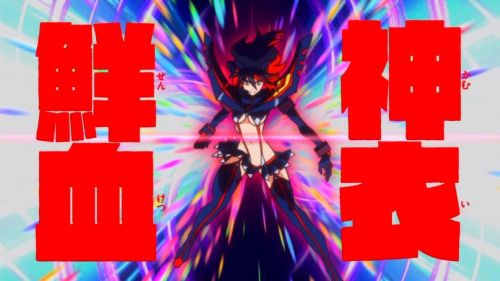
It’s not my first time reading what tamerlane has to say about anime or animation. A couple of years ago, he commented on some Kill la Kill posts of mine, and expressed that one of the issues was that the characters weren’t fun to watch, tying this into his passion for the act of animation, while also stating that those who enjoyed the series only had weak reasons to do so. I disagreed on the simple basis that, while I could recognize some of the weaknesses he mentioned, they weren’t a deal breaker for me, and what I valued in Kill la Kill was still very present and very strong. However, this also gave an image of tamerlane as someone with a very specific and at times contentious point of view, so much so that I almost chose not to read his post.
I want to emphasize two things based on what I just said. The first is that, if I had ignored his article based on past interactions, I would have been the stupid one. It would have been an example of me judging someone purely through some brief internet talk where communication was marred by a number of factors that weren’t just on his side. I think it’s more than possible to see both sides, or to disagree about one thing while agreeing on another, but most importantly I believe it’s possible to respect the other side.
The second point is that not everybody can ignore their initial impressions, and how one communicate to others as fellow human beings can be just as important as what you have to say. I know, because I struggle with this to. I understand what it’s like to be frustrated that others don’t share my point of view, or to not be able to express myself well. However, at the end of the day, positioning one’s own reasons for liking a show as just inherently better will always rub people the wrong way.
Even if accusations against sakuga fans are unfounded, the impression one gives when communicating can plant that idea in the reader or listener’s head, and whether you’re talking to hostile skeptics or people eager to know more about animation, driving them away by telling them to get on your level is only going to convince a few. Sakuga fans have to speak to other fans on their own terms and empathize with them. And if not, they have to at least let their passion come across in a way that is not confrontational. Sakuga fans need more Carl Sagans, and if not him, then at least some Neil deGrasse Tysons, who can be both snarky and personable.
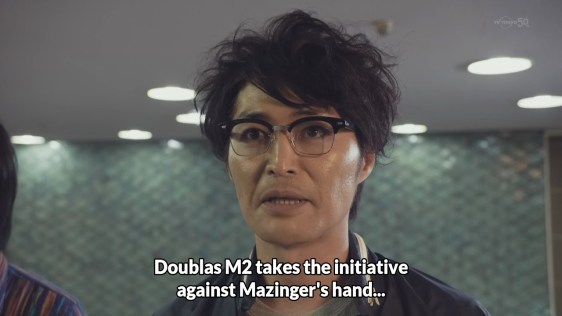
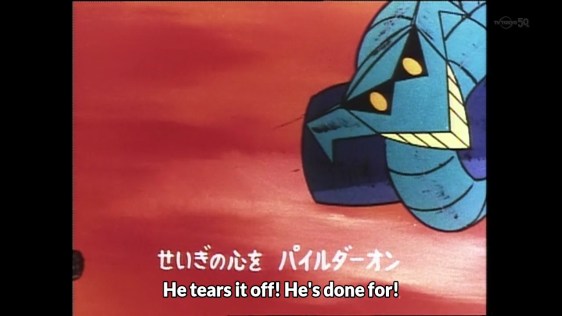
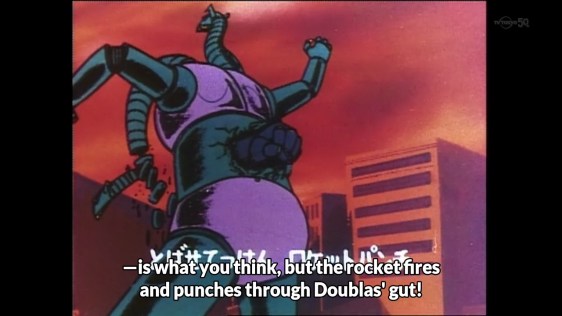
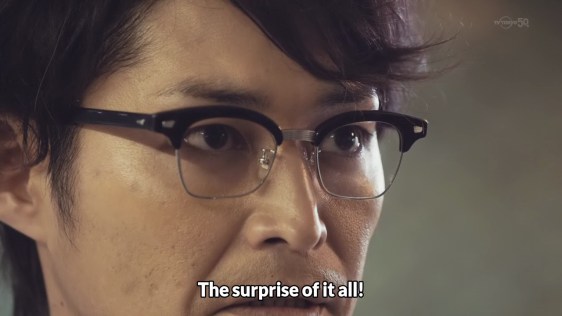
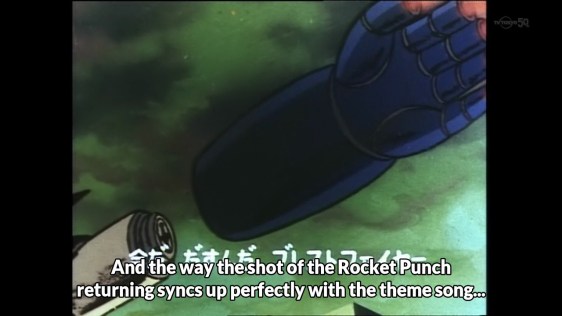
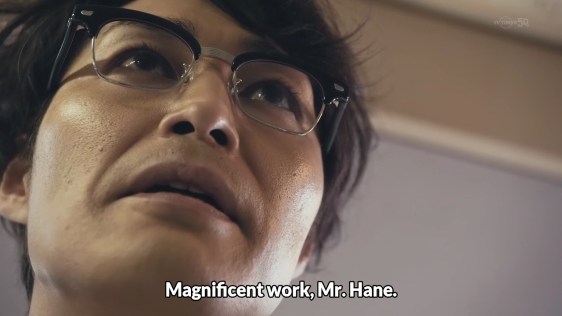
I’m going to leave off with some screencaps from Episode 3 of Aoi Honoo, a J-drama about the school where many future luminaries of the anime industry came from. Though obviously different from real life interactions and conversations, I think it’s worth nothing how Anno Hideaki (or rather the actor who plays him) is shown to express his love for animation, in spite (or perhaps because) of his lack of social skills.
As the progenitor of the “real robot genre,” every time a new Gundam series comes out the question of its realism comes up. Even though its robots tend to be brightly colored and increasingly full of weird weapons, the simple formula of mecha as tool of war endures. Just this past year, we’ve had both Mobile Suit Gundam: Iron-Blooded Orphans, which follows a group of child soldiers, and Gundam Thunderbolt, which combines a gritty feel with a more hard science fiction feel. Which is more realistic? Does it matter?
I don’t intend to actually answer these questions. Rather, I’m bringing them up to try and start a discussion about the ways in which we try to position the idea of realism in something like Gundam. It’s not the first time I‘ve talked about it on this blog, either. With the first episode of Gundam Thunderbolt available, however, I can’t help but feel that it’s probably the Gundam a lot of the fans who revel in a certain image of realism have been looking for. One might call it the Macross Plus of the Gundam franchise in this respect. Its hard SF aspects, both in terms of presentation of technology and its expected character types, provide an interesting contrast to Iron-Blooded Orphans, which has a more contemporary “anime” look, cute girls and handsome boys and all. One can almost detect a generation gap in Thunderbolt vs. Iron-Blooded Orphans in terms of anime fandom; Thunderbolt feels like it came out of the science fiction conventions from which anime cons originally grew from.
In turn, Iron-Blooded Orphans seems more divisive in terms of what it tries to do with its realism, its young boys trying to carve a place in the world because of their circumstances as child soldiers. Of course, child soldiers aren’t new to Gundam. One could argue that the earliest protagonists of Gundam were child soldiers, but in this case it’s more the young guerilla archetype, seen also in Gundam 00. I do see Iron-Blooded Orphans get a bit more flack, and though my sample might be skewed by the fellow fans I interact with and observe, I think it has to do with how Iron-Blooded Orphans, unlike Thunderbolt, carries a kind of more “feminine” aesthetic that does not jive with more traditional images of realism as gritty.
Of course, grittiness does not automatically equal realism, but I think we’re trained to believe it. It’s one of the biggest trends of modern video games, and while there are plenty of games that push against it, many kids are growing up being taught by games and media that this is what “real” looks like. That said, Gundam Thunderbolt still has elements of the fantastic, and perhaps in the space between it and Iron-Blooded Orphans we can find versions of “realism” to satisfy all of those looking for it.
—
If you liked this post, consider becoming a sponsor of Ogiue Maniax through Patreon. You can get rewards for higher pledges, including a chance to request topics for the blog.
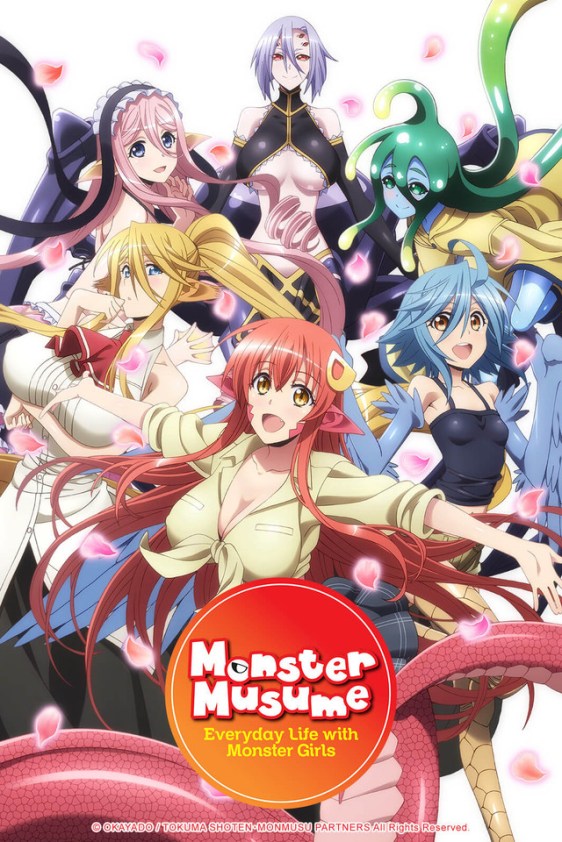
I wrote another post over at the site Apartment 507 about Monster Musume. This time, I go over what I think makes Monster Musume a special series. Warning, the post might be NSFW.
And yes, I am planning on making a Fujoshi File for Zombina.
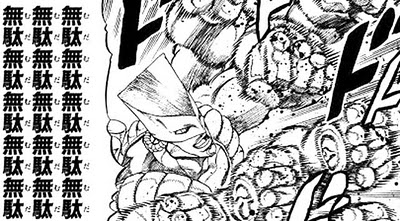
A few months ago on Twitter, a number of manga translators and readers threw their hats into the ring to discuss the persistent issue of “authenticity” vs. “localization.” The central point of argument was whether the fact that the English translation of the JoJo’s Bizarre Adventure manga kept antagonist Dio Brando’s signature catch phrase untranslated (MUDA MUDA MUDA MUDA / USELESS USELESS USELESS USELESS) is a sign of faithfulness, Japanophilia, or something else entirely.
There’s no real right side to all of this. As the Reverse Thieves explained well, there are many facets to consider, and translation is more an art than a science. For example, people who argue that translations should be as localized as possible so as to remove the sense that it comes from another language would assume that the primary audience is a broad, general readership. What if it isn’t, however? Academic translations for instance tend to be filled with footnotes and marks and other things because you’re supposed to be fully explaining the nuance of meaning through translation.
What’s even more fascinating, however, is seeing the problem of translation from the English to Japanese side, and the challenge that is posed to English translators in Japan. For example, let’s look at one of the on-going controversies within this greater Japanese to English translation debate: whether or not to include Japanese honorifics in English translations. After all, while “-san” might be already known to fans of Teenage Mutant Ninja Turtles and other similar works, for the most part it’s the realm of the manga fan, so to speak. When the decision is made to remove them, a translation either has to compensate for the loss of immediate information pertaining to how two characters relate to each other through a more liberal translation, or ignore that aspect entirely.
What about English to Japanese? From that perspective, the problem is completely flipped around. Suddenly you go from a language with no honorifics to one where they’re a part of everyday life. Let’s take a movie like Gone with the Wind. How would you translate Rhett Butler’s speech? The official translation has him use “Ore,” possibly to show that he’s both masculine and skirts standards of politeness and pomp. Is that the right decision?
If you were in charge of translating Gone with the Wind to Japanese, what honorifics would Rhett have to use when talking to other characters, if any? Would they change over the course of the movie? The change or removal of honorific usage to determine the progression of a relationship between two characters is a classic trope of manga and anime, and something English translators have to be constantly wary of (as is switching from last name to first name), but here with Gone with the Wind it’s potentially something that the translator has to build into the story where it once did not exist. The decision could be made to ignore honorifics specifically, but then a lot still has to be done to adapt characteristics and speech patterns to particular personalities. Rather than having to subtract, the English to Japanese translator has to consider additional components if they want to go for a “natural”-sounding language. Or do you just get rid of them all because it takes place in the US, or to show again that Rhett doesn’t have much use for politeness?
Of course, that’s not to say that Japanese to English translators also don’t have to create what ostensibly isn’t there to get the meaning of a line across. In both cases, there are things to be gained and lost in the decision to interpret lines in certain specific ways.
There are even multiple different translations of Gone with the Wind, each of them taking different liberties. Rhett’s famous “Frankly my dear, I don’t give a damn,” has been variously translated as 「俺には関係ない」(Ore ni wa kankei nai, “This has no relation to me”) and 「俺の知った事か」(Ore no shitta koto ka, “I have nothing to do with that”). Notably, both do not bother to preserve the cultural meaning of “damn,” nor the “Frankly my dear” part. The frankness is in the lack of formality and the general implied rudeness of the sentence construction.
Suffice it to say, translation isn’t easy, and the decision to keep or remove cultural elements is a unique challenge that perhaps few other fields have to contend with. Whether you’re a translator or just a reader, it might be helpful to express how you feel about the work that goes into translating.
—
If you liked this post, consider becoming a sponsor of Ogiue Maniax through Patreon. You can get rewards for higher pledges, including a chance to request topics for the blog.
 OGIUE MANIAX