Newtype Magazine’s Very First Cover Girl

Just as Marilyn Monroe graced the first issue of Playboy, it’s often somewhat telling who a magazine gets to be their first cover girl. For the anime magazine Newtype which debuted in 1985, it turns out to be Cham, the fairy girl from Aura Battle Dunbine, and I have to wonder what message that sent at the time.

Honestly when I found this out I was pretty surprised. Perhaps I shouldn’t have been given the Newtype -> Gundam -> Sunrise -> Dunbine connection. And yet, of all of the female characters to be the visual centerpiece for a debut, Newtype went for the cute fairy girl as opposed to even, for example, other girls from Dunbine like Marvel Frozen (a prediction of Disney’s eventual purchase of Marvel nearly 30 years later?!). What could it mean, especially because she would be back only a few issues later?

I may not be the best person to speak on this. I never finished Dunbine, and I don’t have any real idea as to how popular Cham was at the time among anime fans. However, whether they were trying to appeal to a fanbase of Cham lovers or trying to push her as the next big thing (though at this point Dunbine had been over for a while), I feel as if Cham’s status as the inaugural spokesmodel of Newtype says something about where anime fandom was in Japan at the time and where it’s gone since.

You often hear about how anime’s changed and the advent of “kawaii” and “moe,” but where did it truly begin if it began in anime at all? Then you look and see that at the very start of this magazine for anime fans from 1985 and see a cute little pixie.

Where the American Anime Fandom Goes

I’ve been living outside of the United States for the past few years, though funnily enough I’ve spent every 4th of July in the US. This year is an exception, but at the same time I will also be heading back home soon. So at least for the foreseeable future, this is my first and last Independence Day in Europe. What better time then to talk about America? I haven’t done that in a few years either.

Specifically, there are a bunch of thoughts related to Americans and anime fandom that have been whirling around in my head as of late, and I’m using this opportunity to try and organize them into some cohesive ideas. Not sure if I’ll succeed or not but that’s part of the entrepreneurial spirit or somesuch. AMERICA.

Two pieces of news that caught my eye over the past few weeks have been the announcement of a sequel and animated television series for Pacific Rim, and the fact that the recently revived Toonami block on Cartoon Network is doing better and better. In the case of Pacific Rim, one of the biggest talking points concerning the first movie’s release was that it didn’t do well in the United States, but in contrast found some success nternationally, especially in China. The idea permeating Pacific Rim and its “failure” was that it needed to do well domestically for it to have any real hope of continuing, but this news has shown otherwise. Scott Mendelson over at Forbes argues that this is the first movie that has received a sequel despite of its lack of success at the American box office, and may hint at the increasing importance of that overseas market. Various arguments have been made for why Pacific Rim didn’t click with American audiences, from idea that “mecha” isn’t a popular genre in either the US mainstream or among its anime fandom, to the opinion that it was just a bad movie, but there’s something intriguing about the idea the US is not the epicenter of this property’s future.

In contrast, it looks like anime is in a certain sense “rediscovering” its American fandom through Toonami. For a long while anime looked like it was on its way out of the American geek culture, as the presence of Japanese cartoons on Cartoon Network faded from their heyday in the early to mid 2000s. The “Toonami” concept itself, a block dedicated to anime and anime-like cartoons, even went away in 2008. And yet, whether it was because the folks in charge smelled profit in the air from anime once more or there was just some personal desire somewhere to bring anime back to the fore of Cartoon Network, Toonami has returned and is doing quite well.

Historically, anime has not needed its American fanbase. Sure, there have been a lot of viewers, but anime’s domestic market is Japan, and it also finds success around the world, in Europe, South America, and Asia. The US certainly has an online presence when it comes to anime discussion and enthusiasm, but over the years it’s been easy to get the impression that this fandom is a paper tiger, especially when it comes to popular shows among the internet fandom not translating to home video sales. Of course, this also has something to do with how expensive anime was for a long time (and still kind of is relative to other forms of media), but overall it wouldn’t be surprising if people perceived American audiences of anime as just somehow lacking. Now, however, not only are American viewers tuning in to catch Toonami and its latest anime, but the shows people are most interested in are also the ones that have developed large fanbases online as well.

It would be remiss of me to minimize the importance of the actual shows themselves, as I think regardless of anyone’s opinions of these anime, it’s fairly easy to see why series such as Sword Art Online (MMORPG plus swords and sorcery), Attack on Titan (violent post-apocalyptic world with large cast of interesting characters), and Black Lagoon (guns and action) would do well with an American audience even if all three are significantly different from each other. One thing that I find interesting, however, is that at least for the first two their Japanese fanbases are also quite substantial. In this situation, you have the support of a hardcore Japanese fanbase, a mainstream Japanese audience (especially for Attack on Titan), a hardcore international and American fanbase, and a relatively mainstream presence in the US as well. It’s as if the division between fan and casual has been collapsed, and interests that are often viewed as mutually exclusive now overlap.

So on the one hand, you have a property in Pacific Rim where the American audience turns out to not be as important as originally thought, and on the other hand you have in Toonami the rediscovery of an American audience that is, while arguably not significant, still good to have. I feel like there’s some connection or relationship here but I’m not exactly certain of what it is. One thing that might help is that I recently read an academic article from 1998 on Sailor Moon, which was written during the time that Sailor Moon was already a runaway hit in Japan and was beginning to air in the US. Though Mary Grigsby’s “Sailormoon: Manga (Comics) and Anime (Cartoon) Superheroine Meets Barbie: Global Entertainment Commodity Comes to the United States” is more about arguing how the series is influenced by cultural hegemony (essentially the continuous and subconscious reinforcement of how things are in society) yet somehow defies it, what caught my attention is the fact that a note at the end mentions how by the time this article was published Sailor Moon had already been a commercial failure in the US.

Sailor Moon was not the profit machine that the various companies supporting its US distribution had hoped, but in light of a new  Sailor Moon anime in celebration of its 20th anniversary and the clear continued significance it has to American anime fandom, it’s clear that the show has had an impact, and possibly that what was seen as a failure of the show at the time may have been more a failure of marketing. To some extent, this may have had to do with the cultural landscape of the US in the 90s. After all, in contrast to the revising of Sailor Uranus and Sailor Neptune from lesbian lovers to cousins back then, currently more and more people in the US are accepting or at least tolerant of same-sex relationships. However, there’s another important point to consider. In the Pacific Rim article, Mendelson also writes that “The deciding factor separating Pacific Rim 2 from Robocop 2 may be the passionate fan base of the former. It’s easier to talk financial parties into a sequel to a somewhat under-performing original if paying audiences actually liked said original.” Sailor Moon grew a powerful fanbase that the models for success at the time couldn’t properly account for. As the American anime fandom grows once more, now may be the time for both old and new fans to find some common ground.


Achieving 4-Dan and Stepping Away to Improve at Mahjong

mahjong-4dan

In December of 2010 I wrote a post about how I had finally achieved 3-Dan on the mahjong website Tenhou. Finally, after three and a half years, I have hit the next level and rose into 4-dan. The fact that it’s taken me this amount of time to get to 4-dan is either great or embarrassing depending on your own mahjong skills, but I realized that part of the reason I was finally able to break that barrier was that I had stepped away from the game for a while (unless you count posts about Saki or Akagi, I haven’t really posted much about mahjong lately), and that this has in some ways contributed to me being able to play better.

A few months ago someone asked me, “How do you not get angry when playing on Tenhou?” My answer was simple: I do get angry, all the time. Mahjong is a game that takes a lot of mental energy and so long sessions end up being quite taxing on the brain. Since about September of last year I’ve had to really focus on my work, so that risk that mental and emotional exhaustion that comes from playing mahjong wasn’t really worth it to me. During this time, I made occasional trips back to the table (virtual or otherwise) that reminded me of how rusty I become from playing less often, but also actually helped me to distance myself from mahjong and to improve my mental game immensely.

As with many things, one of the dangerous things about going on tilt in mahjong is that your “vision” in terms of what is possible or what is supposed to happen starts to narrow. When you’re not winning hands despite being in great positions, or when you feel like it’s totally “unfair” that you got screwed over in some way, it can cloud your judgment and cause you to make mistakes you may not have made otherwise. One sign I’ve learned to watch out for is when I get too desperate for pinfu. It may be the simplest hand in the game to achieve, but when I’m so obsessed with trying to win “anything at all” I realize I’m not actually playing mahjong. Stepping away from the game has helped me to realize this.

Another thing stepping away allows for, at least far as my relatively low level is concerned, is that it has helped me develop more versatility. Tenhou breeds a certain kind of mahjong player: someone who’s conservative in play, calculates risk extensively, and has a decent head for numbers. It’s the “proper” way to play mahjong, and so when on the Tenhou ladder you tend to learn to play against people like that. However, if thrown in a situation where others are playing “improperly,” doing the things that are suboptimal yet somehow winning anyway, I’ve noticed that a lot of better players have trouble dealing with this, including myself. What I realized eventually was that it was just as much my problem for not having the adaptability to deal with different types of players regardless of whether they pay no attention to theory and probability. It’s kind of like complaining about button mashers in fighting games or not being prepared for a Shedinja in Pokemon. “Nobody does that! You’ll lose more than you’ll win with that!” And yet, at the end of the day, you’re the one who couldn’t deal with it.

Speaking of fighting games, I recommend this video from fighting game community veteran James Chen on “reading your opponent.” I’ve skipped to the part where he talks about why “advanced” players tend to be kind of double-edged swords because they play too close to the theoretical optimal.

Perhaps the most significant if seemingly contradictory thing is that because I’ve distanced myself from mahjong, I’ve actually developed a better sense of my own style, how I want to play. Thus, when I managed to finally find not just some free time, but a week or two to where I could redirect my mental energy to other tasks again, I decided to get back on Tenhou and finally aim for 4-dan. There were of course many highs and lows, but I think that, as I explained to an extent above, trying to “make up for what you’ve lost” from one game to the next is the wrong way to look at it. The more you think, “I got 4th this one game, so I need to get 1st in the next two games!” the more likely you’re going to fall further down the hole. It happened to me quite a bit, as I hadn’t merely stayed in 3-dan the whole time, but actually moved between 1-dan and 3-dan as my own frustration got the better of me. Of course luck is a factor in this game, but not letting it get the better of you emotionally is also important.

mahjong-chihou

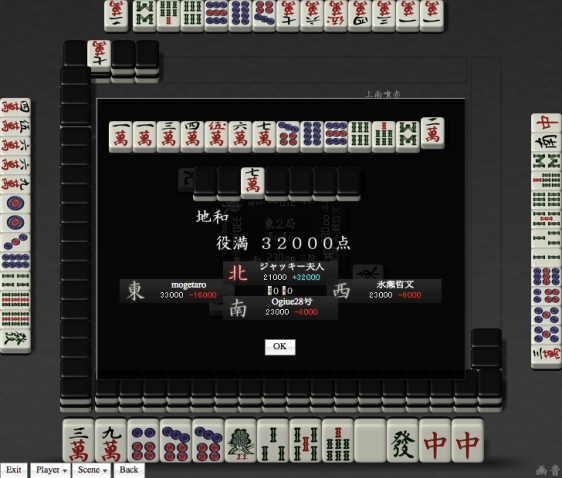
In the end, if I can get hit by a chihou of all things (SERIOUSLY A CHIHOU) and still rebound, then I feel pretty good about my future prospects. That said, I still haven’t fully memorized the score chart. Oops.

The Price of Art: Miyazaki Hayao’s “The Wind Rises”

It’s been a few weeks since I took the opportunity to see Miyazaki’s The Wind Rises. For personal reasons I’ve been unable to write about it until now, which makes me a little sad since my memories of the movie are no longer as fresh. Nevertheless, the film made such an impression on me that I can still remember its effects on me, the mild trembling and near-existential crisis I experienced after leaving the theater that I feel compelled to write about it. This is because while other Miyazaki films have been beautiful, profound, poignant, heart-warming, and intelligent, The Wind Rises is challenging.

I’m going to spoil quite a bit. If you haven’t seen it, I highly recommend this movie.

The Wind Rises is a highly fictionalized account of the life of Horikoshi Jirou, inventor of the “Zero,” the most famous Japanese plane of World War II. We first see him as a child in love with the idea of flight, though sadly unable to ever truly take to the skies due to his terrible eyesight. Instead, in a dream where he meets Caproni, a famous Italian aeronautical engineer, he realizes that if he can’t fly the planes, then at least he can build them. The movie is thus the story of a man with a passion that stays with him throughout his life. The main issue is that he lives in the 1930s, and Japan already has an alliance with Nazi Germany. We know what Jirou’s passion will lead to, and this aspect of his story is how The Wind Rises confronts its audience with difficult questions.

There is a sort of romantic image surrounding the artist who lives for his craft, and over and over again the movie shows how Jirou would rather not think of anything but the plane itself. However, The Wind Rises juxtaposes this quality in Jirou with the era in which he lives. Given the imperialist and militaristic nature of Japan at the time as depicted in the film, it is clear where Jirou’s inventions will eventually take him, and yet given the context of his society, it’s also the only opportunity he really has to fulfill his dream. He makes the best of his situation, pursuing his life-long goal using the means available to him, and though on a personal level this can be seen as the emblematic of the adaptability of the creative human mind, it also comes at a very real cost of millions of lives, claimed essentially by Jirou’s imagination. At the end of the movie when Jirou returns to his dreams of the sky and we see the clouds in the sky transform into his greatest invention, there’s a clear sense of tension on the screen between the beauty of the Zero and the ugliness inextricably tied to it. This is why when I see people accuse this film of being militaristic, I feel as if they did not bother to actually see what was happening in the film.

Can art truly be made for art’s sake? This is one of the central questions of the film, and The Wind Rises answers that this passion, as much as we might want to bottle it and isolate it from the world, is nevertheless still a part of it. Even the refusal to compromise ends up being a type of compromise in itself, and the film makes this point clear not only through Jirou’s profession but also his personal life. Falling in love with a woman suffering from tuberculosis in a time when there was no cure, throughout the movie they make sacrifices between their immediate and future happiness. When ultimately they decide to live together despite knowing that this will shorten her lifespan, the parallel is clearly established that, whether it is at home or in another country, Jirou’s passion in a sense destroyed lives. And yet, it is impossible to see Jirou as a “villain,” or as morally reprehensible. There is no guarantee that we would not have done the same thing, living in the here and now while hoping for a brighter future. Jirou’s choices cannot simply be divided into “right and wrong.”

The very fact that Miyazaki himself is an artist making some of the most successful animated films ever makes the ideas of The Wind Rises feel both self-critical and targeted toward society at large. One of the more interesting decisions for the movie was that Anno Hideaki, creator of Neon Genesis Evangelion, animator on Miyazaki’s Nausicaa of the Valley of the Wind, and otaku extraordinaire was cast as the voice of Jirou. Anno is no voice actor, and it shows in his amateurish performance, but I think this was a deliberate choice because Anno is also a “passionate person” as an otaku. Evangelion was Anno’s attempt to tell otaku to get out there and confront the world, and in certain ways the opposite happened, so I believe that Anno in the role of the protagonist speaks to the idea that otaku are generally considered obsessive people in some sense “cut off” from society. There is an earthquake at the beginning of the film, and when the ground begins to crumble and shake, it looks like the old Gainax style more than that of Ghibli, and I have to wonder if it was animated in this way to call attention to the otaku. As with Jirou, the question would be if we can call otaku a pocket of society, a subculture, or if that passion should be contextualized. It’s a confrontation with both otaku and non-otaku.

I saw this movie at a period in my life where many things are in flux. The future often looks uncertain, the present looks frightening, and more than a few people I’ve known have become ill or worse in recent years, and this movie hits me hard in those areas. Moreover, as someone who has spent his life in creative endeavors, whether it’s art or writing, I feel as if this movie peered straight into my soul, asked me about my life, and forced me to ask myself what a human being really is. In spite of this—or perhaps because of this—however, The Wind Rises may very well have become my favorite Miyazaki film ever (which has been Laputa: Castle in the Sky for the longest time). In fact, when I think about it, the last time I felt this profoundly affected by any anime was the masterful Turn A Gundam. If I had to summarize my thoughts on the film in three words it would be: beautiful, deep, painful. 

Robotech Fans Wish They Had Yamato 2199

I recently finished Space Battleship Yamato 2199, the outstanding remake of the original Space Battleship Yamato. It’s a series deserving of an elaborate, detailed review to explain all of the thing they did to update the series and why the work, but this isn’t that review. Maybe it’ll come in the future, but what I’d rather talk about is a small revelation I had after I finished the series: Yamato 2199 is basically what Robotech fans wish they got.

The long-standing Robotech fandom is notorious for an obsession with minutiae. Every little detail in the series is scrutinized. Things are renamed to sound more “high-tech.” Every mistake in script and animation in the source anime (Macross, Southern Cross, Mospeada) is either ignored, retconned, or mentally transformed into something which makes technical “sense.” A whole slew of supplementary material exists to explain in a satisfying way to an audience who enjoys harder science fiction some of the sillier moments that come from the original anime.

While Yamato 2199 doesn’t go quite that far, it does accomplish a lot to smooth over some of the narrative and hazy science fictional bumps which littered the original version. Case in point, the ridiculous-sounding device that the crew of the Yamato must travel to Iscandar to pick up to save the Earth, “Cosmo Cleaner-D,” is rechristened the “Cosmo Reverse System,” and is given a technical explanation as to how it’s supposed to work. Moments in the original Yamato which were more for dramatic flair than anything else keep the drama but also add sounder technical elements. Aspects of the show barely touched upon originally receive elaboration in Yamato 2199, and where the old series at times looked like it was still trying to find what it really wanted to do, the new series has the benefit of hindsight to cleanly and efficiently aim for its narrative and thematic goals.

As far as I can tell, what Robotech fans really want is just Robotech as it was back in the 1980s with minor adjustments, and this is what really makes Yamato 2199 the ideal template for Robotech fans. Yamato 2199 is about 90-95% the same as the original in tone and feel, even though it is updated for the modern era to take into account social developments in the past 40 years and the character designs are a little more modernized. It’s this formula which something like The Shadow Chronicles does not appear to achieve, though it also helps to have a substantially higher budget and cleaner animation like Yamato 2199 does, to accomplish its goals.

Pokemon and Color

The depiction of race and culture in Pokemon over its nearly 20-year history has been a work in progress. Much of this has to do with the very Japanese origins of the game and their exportation to the rest of the world. A mostly assumed Japanese cast of characters suddenly wasn’t, like when the character Sakaki was renamed Giovanni to evoke the image of an Italian mob boss. At the same time, Pokemon with seemingly innocuous elements within Japan such as Jynx became a legitimate concern against the increased awareness in the United States of the history of discriminatory visual depictions of black people. Since then, thanks in all likelihood to its international success, Pokemon has taken considerable steps to try and be more culturally sensitive and inclusive, mainly through the depiction of characters with different skin tones and features. In some cases, the characters have more definite racial features, and in others they’re left vague, and the question of whether or not an “ambiguous brown” is for the better becomes an especially difficult question that is nevertheless worth exploring.

124Jynx_OS_animeJynx

The change to include characters who are neither vaguely white or Asian in appearance began with Pokemon Black and White, a series which I would argue not-so-coincidentally takes place in Pokemon universe equivalent of New York City, one of the most ethnically diverse cities in the entire world. Unlike the regions of Kanto, Johto, Hoenn, and Sinnoh (all based on areas of Japan), the Unova region (Isshu in Japan) would not reflect the NYC influence properly if everyone was of the same skin color (what sometimes gets referred to as Friends syndrome).
Black_White_IrisBlack_White_MarshalBlack_White_Lenora_2

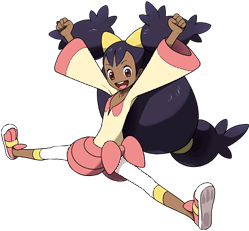
Iris, Marshal, Lenora

Major characters of color were introduced during these games, such as the Gym Leaders Lenora (Aloe) and Iris, as well as the Elite Four’s Marshal (Renbu), all of whom are bosses one must face before eventually challenging the final opponent, the Pokemon League Champion. All three of these characters are shown to be strong trainers, and Iris even featured prominently in the Pokemon anime. At the same time, all three possess varying degrees of ethnic identifiers. Iris is difficult to pinpoint, Marshal has features which indicate black, and Lenora is undeniably black to a possibly stereotypical fault. Originally wearing an apron in her official design, the proximity of this depiction to the Aunt Jemima-esque mammy stereotypes of the United States (in a game based on a US city!) prompted a revision which portrays Lenora simply slinging the apron over her shoulder (though she still wears it in the in-game sprite). This is far from a Jynx scenario, as Lenora is both a clever gym leader and the curator of her own museum, and her design is still fairly restrained, but it is rather telling that the approach taken with the next generation of games, Pokemon XY, lean closer to Iris’s style.

XY_Grant                XY_Olympia

Grant, Olympia

Pokemon XY, which takes place in the France-inspired Kalos region, features not only Gym Leaders Grant (Zakuro) and Olympia (Gojika) but also individual trainers throughout the game such as the male Pokemon Ranger and Rising Star. As is evident from their designs, a greater amount of care is put into them as well. The location of not-France is also perhaps an influence here, as taking into account the centuries-old Arabic influence in Europe, colonialism, and even just recent immigration from other continents creates a complex milieu of cultures that differs in significant ways from that of the United States. The vagueness of these character designs may be a reflection of that aspect.

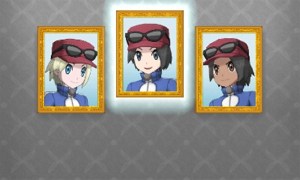
However, the biggest change is undoubtedly the fact that Pokemon XY actually allows you to choose the skin color (and eventually hair color) for your player character. Now, in addition to choosing gender (a feature available since the second-generation Pokemon Crystal), it is possible to get closer to having your avatar appear the way you do (or don’t, as the case may be). The ethnic vagueness idea comes to the forefront here, as only three skin tones are available, which leads to the question of whether or not this is the right direction to take, if it’s perhaps a washing out of cultural identity.
malecharactercustomizationchoices

femalecharactercustomizationchoices

I’m of two minds about this. With some characters such as the Gym Leader Marlon (Shizui), it’s actually difficult to tell if he’s supposed to be a darker skin color or just someone with a nice tan. The lack of concrete information, as well as the fact that many of the characters have very Japanese-sounding names in Japanese regardless of appearance, makes it easy to accuse them of just taking “white/Asian” designs and swapping the hues. On the other hand, it’s erroneous to assume that certain features are meant to evoke one race rather than another. After all, it’s a classic mistake to assume that anime characters “look white” because of their large eyes. When the racial features are relatively nondescript, perhaps it gives them a versatility that prevents those features from being abused as stereotyped caricature. That’s not to say that future games couldn’t benefit from adding more skin tones, for example, but there’s something to be said about allowing players to make their own interpretations.

Whether or not the racial ambiguity of character designs in Pokemon helps or hinders (or both), one positive that is hard to deny is the benefit of just having so many depictions of characters of color being happy and successful. They talk to dragons, climb mountains, run museums, practice martial arts, and go on adventures. They’re intelligent, dedicated, compassionate, funny, people you can look up to and want to know better. They’re role models with limitless potential. It’s especially notable that, in the follow-up games of Pokemon Black 2 and White 2, Iris would go from being a Gym Leader to being the Pokemon League Champion herself. The Pokemon games have always done a good job of portraying female characters, with three of the most recent games featuring female Champions, and to have a woman of color be the strongest and most celebrated individual in the land is nothing to scoff at.

Black_2_White_2_Iris

In the end, what I see as the greatest contributing  factor in the depiction of diversity in Pokemon is that the series has not gotten complacent. With every passing generation of games they continue to make improvements, and it’s a likely sign that this will continue as long as Pokemon stays alive.

VGCW is a Slice of Fandoms

In the second episode of the Video Game Championship Wrestling series spinoff, “Extreme Dudebro Wrestling,” Lucina from Fire Emblem: Awakening made her way to the ring. Just as VGCW makes the chat itself part of the viewing experience, so too does EDBW, and Lucina’s arrival brought with it some powerful (text) chants.

“LET’S GO CINA!”

“CINA SUCKS!”

Anyone who’s familiar with the WWE over the past decade is likely familiar with the origin of these dueling chants. Loved by kids, reviled by adult fans who grew up with The Rock and “Stone Cold” Steve Austin, John Cena’s popularity splits the audience in two whenever he wrestles. Naturally, VGCW fans did not pass up an opportunity for some wordplay.

Of course, this is to be expected, right? It’s a constructed wrestling universe based on popular video game and occasional anime characters, so this type of crossover should lead to cross-demographic jokes. And yet, when I watch and participate in any of the VGCW chats, I feel like I’m being exposed to a group which I normally don’t interact with otherwise. Somehow, even though I’m friends with anime fans, gamers, and smarks, I’ve never found myself in the middle of their convergence as much as I do in VGCW. That’s what makes all the Table-san jokes work, where the announcer’s table is jokingly viewed as a shy and meek anime girl whose day always get ruined when Wrestler A decides to powerbomb/suplex/elbow drop Wrestler B on top of her.

The connection between anime fandom and wrestling is a lot stronger in Japan, where you had series like Kinnikuman which continue to get referenced even today, as well as real life wrestlers based on anime like Jushin Liger and Tiger Mask. It’s sort of like if Zeus from No Holds Barred turned out to be one of the best, most beloved wrestlers ever when he made his WWF appearance.

As for Lucina, she fell behind the entire match, barely missing out on being pinned for the 3-count over and over. Then, as if the entire match was simply an opportunity for her to mount a comeback, she landed a DDT and a devastating finisher and won the match. The chat exploded, realizing that Lucina was even closer to John Cena than expected.

As they say, Hustle, Royalty, Respect.

Samurai? Flamenco?

If you’ve watched all of Samurai Flamenco you’ll know that even though the show has humble beginnings and then progressively gets into increasingly more outlandish territory. It’s the kind of thing that you try to keep your mouth shut about so as not to spoil the uninitiated (by the way, SPOILER WARNING), partially because it’s obvious how intentional the whole thing has been.

The main character Masayoshi goes from tryng to be like a Kamen Rider-type to actually being a Kamen Rider-type, to being the leader of a Super Sentai team (with giant robot) and eventually even an Ultraman-style giant (and that’s not even mentioning the final genre shif at the end). The changes are so abrupt and swing so heavily from one thing to the next that I can only interpret the show as poking fun at the mid-season corporate meddling that can happen to a tokusatsu series and yet genuinely embrace it as a part of tokusatsu history.

I have to wonder, did Samurai Flamenco hint at this from the start? Perhaps Samumenco was always projecting an aura of neverending incongruities. Just think about the name “Samurai Flamenco.” What gimmicks or powers would a guy with a codename like that have? He’d maybe have some rhythm or dancing abilities (like Cure Lovely in Happiness Charge Precure) and probably a costume based more on a Japanese suit of armor. Real tokusatsu series do similar things, like how Ressha Sentai ToQger currently features trains, and even the fake in-universe shows of Samurai Flamenco like Red Axe features… a guy with an axe. Samurai Flamenco, however, is neither Samurai nor Flamenco, and when he finally gets a set of effective weapons his gimmick of all things turns out to be “weaponized office supplies.” In that respect suddenly getting a giant robot that’s a mix of Combattler V and Dancougar isn’t so odd.

Perhaps Samurai Flamenco was always about the hodgepodge, the elements that don’t quite fit together so you have to smash them all in and enjoy what comes out. After all, it does start with a guy dressed like a superhero getting beat up by kids, who then forms a friendship with a cop where they sit around and watch children’s television.

It Took Me Almost the Entire First Season to Understand the Space Dandy Ending Theme

Episode 1 of Space Dandy made an impact by killing off its main characters. In episode 2 they were back, and I think everyone (including myself) took this as a sign of the show not treating death or continuity very seriously. Supporting this is the fact that many episodes after this had odd, seemingly irreversible turnouts, like the zombie takeover of the universe, or the Redline-esque galactic race leading into time travel.

At the end of every episode there’s a catchy ending theme (by the singer of the Mawaru Penguindrum openings) which talks nonchalantly about the quantum physicist Hugh Everett III and the confusion caused by his theory of… parallel universes.

PARALLEL UNIVERSES.

DAMN IT.

Random Thoughts on Twitch Plays Pokemon

aiiiiiirrr-small

I made this just for this post

Twitch Plays Pokemon is a fascinating social experiment. Through the magic of streaming video and live chat, tens of thousands of users try to collectively play a single game of the original Pokemon Red by inputting simple commands such as up, down, and a. The result is inevitably chaos as our hero Red looks to be religiously checking his items, pacing back and forth, throwing away valuable items, and never ever being able to walk in a straight line. Fans have lovingly crafted a lore around the whole endeavor, taking the idea of active participation to arguably another level.

If you’re reading this, you probably don’t need me to tell you about it, because Twitch Plays Pokemon has absolutely exploded in popularity, getting coverage on a number of major sites. Given this, I do have to wonder to what extent the popularity has to do with Pokemon itself? Pokemon is one of the best-selling video game franchises of all times, and inevitably many people have experienced Pokemon in one form or another, even if they haven’t played the original game. This is why you can get anywhere between 40,000 to 100,000 people on the stream simultaneously 24 hours a day, because much like the British Empire the sun never sets on Pokemon fandom.

I’m no exception as I’ve inputted a few commands myself. I’ve watched in horror as the convulsing young Pokemon Trainer threw away two of his most valuable Pokemon, and witnessed the serendipity of Digrat, the Rattata who keeps resetting the progress of the game by digging back to the beginning of caves and secret hideouts. What I’ve also learned is that Pokemon Red is still really fun in and of itself. While the latest games in the series, Pokemon X/Y, are by far the best Pokemon games ever in terms of level of refinement, things to do, and even ease of finally creating that competitive team to beat down your friends/people on the internet, the enjoyment that the first-generation games brought was not simply a matter of nostalgia. Nostalgia is a huge factor for me personally, as the familiar tunes are ingrained deep into my psyche and I realized I could recognize that a Drowzee was sent out just from hearing it cry, but the elaborate yet ultimately forgiving sense of exploration you get in Pokemon Red/Blue just feels right.

This isn’t to say that the collaborative aspect of Twitch Plays Pokemon is subordinate to the game itself, as it’s being part of a greater crowd that is (for the most part) trying to aim towards success but often unintentionally stifling it that gives the whole experience much of its charm. With the Pokemon games, you’ve always had an environment where success feel great, but with Twitch Plays Pokemon failure often feels just as satisfying. Either way, it makes for great stories to share.