Pokemon and Color

The depiction of race and culture in Pokemon over its nearly 20-year history has been a work in progress. Much of this has to do with the very Japanese origins of the game and their exportation to the rest of the world. A mostly assumed Japanese cast of characters suddenly wasn’t, like when the character Sakaki was renamed Giovanni to evoke the image of an Italian mob boss. At the same time, Pokemon with seemingly innocuous elements within Japan such as Jynx became a legitimate concern against the increased awareness in the United States of the history of discriminatory visual depictions of black people. Since then, thanks in all likelihood to its international success, Pokemon has taken considerable steps to try and be more culturally sensitive and inclusive, mainly through the depiction of characters with different skin tones and features. In some cases, the characters have more definite racial features, and in others they’re left vague, and the question of whether or not an “ambiguous brown” is for the better becomes an especially difficult question that is nevertheless worth exploring.

124Jynx_OS_animeJynx

The change to include characters who are neither vaguely white or Asian in appearance began with Pokemon Black and White, a series which I would argue not-so-coincidentally takes place in Pokemon universe equivalent of New York City, one of the most ethnically diverse cities in the entire world. Unlike the regions of Kanto, Johto, Hoenn, and Sinnoh (all based on areas of Japan), the Unova region (Isshu in Japan) would not reflect the NYC influence properly if everyone was of the same skin color (what sometimes gets referred to as Friends syndrome).

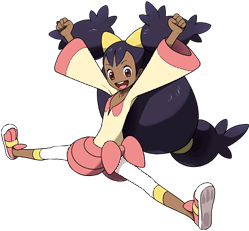
Black_White_IrisBlack_White_MarshalBlack_White_Lenora_2

Iris, Marshal, Lenora

Major characters of color were introduced during these games, such as the Gym Leaders Lenora (Aloe) and Iris, as well as the Elite Four’s Marshal (Renbu), all of whom are bosses one must face before eventually challenging the final opponent, the Pokemon League Champion. All three of these characters are shown to be strong trainers, and Iris even featured prominently in the Pokemon anime. At the same time, all three possess varying degrees of ethnic identifiers. Iris is difficult to pinpoint, Marshal has features which indicate black, and Lenora is undeniably black to a possibly stereotypical fault. Originally wearing an apron in her official design, the proximity of this depiction to the Aunt Jemima-esque mammy stereotypes of the United States (in a game based on a US city!) prompted a revision which portrays Lenora simply slinging the apron over her shoulder (though she still wears it in the in-game sprite). This is far from a Jynx scenario, as Lenora is both a clever gym leader and the curator of her own museum, and her design is still fairly restrained, but it is rather telling that the approach taken with the next generation of games, Pokemon XY, lean closer to Iris’s style.

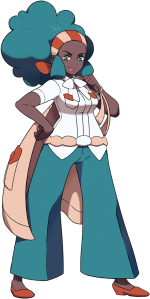
XY_Grant                XY_Olympia

Grant, Olympia

Pokemon XY, which takes place in the France-inspired Kalos region, features not only Gym Leaders Grant (Zakuro) and Olympia (Gojika) but also individual trainers throughout the game such as the male Pokemon Ranger and Rising Star. As is evident from their designs, a greater amount of care is put into them as well. The location of not-France is also perhaps an influence here, as taking into account the centuries-old Arabic influence in Europe, colonialism, and even just recent immigration from other continents creates a complex milieu of cultures that differs in significant ways from that of the United States. The vagueness of these character designs may be a reflection of that aspect.

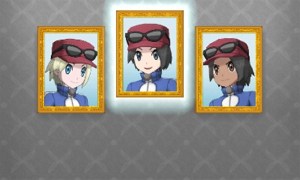
However, the biggest change is undoubtedly the fact that Pokemon XY actually allows you to choose the skin color (and eventually hair color) for your player character. Now, in addition to choosing gender (a feature available since the second-generation Pokemon Crystal), it is possible to get closer to having your avatar appear the way you do (or don’t, as the case may be). The ethnic vagueness idea comes to the forefront here, as only three skin tones are available, which leads to the question of whether or not this is the right direction to take, if it’s perhaps a washing out of cultural identity.

malecharactercustomizationchoices

femalecharactercustomizationchoices

I’m of two minds about this. With some characters such as the Gym Leader Marlon (Shizui), it’s actually difficult to tell if he’s supposed to be a darker skin color or just someone with a nice tan. The lack of concrete information, as well as the fact that many of the characters have very Japanese-sounding names in Japanese regardless of appearance, makes it easy to accuse them of just taking “white/Asian” designs and swapping the hues. On the other hand, it’s erroneous to assume that certain features are meant to evoke one race rather than another. After all, it’s a classic mistake to assume that anime characters “look white” because of their large eyes. When the racial features are relatively nondescript, perhaps it gives them a versatility that prevents those features from being abused as stereotyped caricature. That’s not to say that future games couldn’t benefit from adding more skin tones, for example, but there’s something to be said about allowing players to make their own interpretations.

Whether or not the racial ambiguity of character designs in Pokemon helps or hinders (or both), one positive that is hard to deny is the benefit of just having so many depictions of characters of color being happy and successful. They talk to dragons, climb mountains, run museums, practice martial arts, and go on adventures. They’re intelligent, dedicated, compassionate, funny, people you can look up to and want to know better. They’re role models with limitless potential. It’s especially notable that, in the follow-up games of Pokemon Black 2 and White 2, Iris would go from being a Gym Leader to being the Pokemon League Champion herself. The Pokemon games have always done a good job of portraying female characters, with three of the most recent games featuring female Champions, and to have a woman of color be the strongest and most celebrated individual in the land is nothing to scoff at.

Black_2_White_2_Iris

In the end, what I see as the greatest contributing  factor in the depiction of diversity in Pokemon is that the series has not gotten complacent. With every passing generation of games they continue to make improvements, and it’s a likely sign that this will continue as long as Pokemon stays alive.

VGCW is a Slice of Fandoms

In the second episode of the Video Game Championship Wrestling series spinoff, “Extreme Dudebro Wrestling,” Lucina from Fire Emblem: Awakening made her way to the ring. Just as VGCW makes the chat itself part of the viewing experience, so too does EDBW, and Lucina’s arrival brought with it some powerful (text) chants.

“LET’S GO CINA!”

“CINA SUCKS!”

Anyone who’s familiar with the WWE over the past decade is likely familiar with the origin of these dueling chants. Loved by kids, reviled by adult fans who grew up with The Rock and “Stone Cold” Steve Austin, John Cena’s popularity splits the audience in two whenever he wrestles. Naturally, VGCW fans did not pass up an opportunity for some wordplay.

Of course, this is to be expected, right? It’s a constructed wrestling universe based on popular video game and occasional anime characters, so this type of crossover should lead to cross-demographic jokes. And yet, when I watch and participate in any of the VGCW chats, I feel like I’m being exposed to a group which I normally don’t interact with otherwise. Somehow, even though I’m friends with anime fans, gamers, and smarks, I’ve never found myself in the middle of their convergence as much as I do in VGCW. That’s what makes all the Table-san jokes work, where the announcer’s table is jokingly viewed as a shy and meek anime girl whose day always get ruined when Wrestler A decides to powerbomb/suplex/elbow drop Wrestler B on top of her.

The connection between anime fandom and wrestling is a lot stronger in Japan, where you had series like Kinnikuman which continue to get referenced even today, as well as real life wrestlers based on anime like Jushin Liger and Tiger Mask. It’s sort of like if Zeus from No Holds Barred turned out to be one of the best, most beloved wrestlers ever when he made his WWF appearance.

As for Lucina, she fell behind the entire match, barely missing out on being pinned for the 3-count over and over. Then, as if the entire match was simply an opportunity for her to mount a comeback, she landed a DDT and a devastating finisher and won the match. The chat exploded, realizing that Lucina was even closer to John Cena than expected.

As they say, Hustle, Royalty, Respect.

Samurai? Flamenco?

If you’ve watched all of Samurai Flamenco you’ll know that even though the show has humble beginnings and then progressively gets into increasingly more outlandish territory. It’s the kind of thing that you try to keep your mouth shut about so as not to spoil the uninitiated (by the way, SPOILER WARNING), partially because it’s obvious how intentional the whole thing has been.

The main character Masayoshi goes from tryng to be like a Kamen Rider-type to actually being a Kamen Rider-type, to being the leader of a Super Sentai team (with giant robot) and eventually even an Ultraman-style giant (and that’s not even mentioning the final genre shif at the end). The changes are so abrupt and swing so heavily from one thing to the next that I can only interpret the show as poking fun at the mid-season corporate meddling that can happen to a tokusatsu series and yet genuinely embrace it as a part of tokusatsu history.

I have to wonder, did Samurai Flamenco hint at this from the start? Perhaps Samumenco was always projecting an aura of neverending incongruities. Just think about the name “Samurai Flamenco.” What gimmicks or powers would a guy with a codename like that have? He’d maybe have some rhythm or dancing abilities (like Cure Lovely in Happiness Charge Precure) and probably a costume based more on a Japanese suit of armor. Real tokusatsu series do similar things, like how Ressha Sentai ToQger currently features trains, and even the fake in-universe shows of Samurai Flamenco like Red Axe features… a guy with an axe. Samurai Flamenco, however, is neither Samurai nor Flamenco, and when he finally gets a set of effective weapons his gimmick of all things turns out to be “weaponized office supplies.” In that respect suddenly getting a giant robot that’s a mix of Combattler V and Dancougar isn’t so odd.

Perhaps Samurai Flamenco was always about the hodgepodge, the elements that don’t quite fit together so you have to smash them all in and enjoy what comes out. After all, it does start with a guy dressed like a superhero getting beat up by kids, who then forms a friendship with a cop where they sit around and watch children’s television.

It Took Me Almost the Entire First Season to Understand the Space Dandy Ending Theme

Episode 1 of Space Dandy made an impact by killing off its main characters. In episode 2 they were back, and I think everyone (including myself) took this as a sign of the show not treating death or continuity very seriously. Supporting this is the fact that many episodes after this had odd, seemingly irreversible turnouts, like the zombie takeover of the universe, or the Redline-esque galactic race leading into time travel.

At the end of every episode there’s a catchy ending theme (by the singer of the Mawaru Penguindrum openings) which talks nonchalantly about the quantum physicist Hugh Everett III and the confusion caused by his theory of… parallel universes.

PARALLEL UNIVERSES.

DAMN IT.

Random Thoughts on Twitch Plays Pokemon

aiiiiiirrr-small

I made this just for this post

Twitch Plays Pokemon is a fascinating social experiment. Through the magic of streaming video and live chat, tens of thousands of users try to collectively play a single game of the original Pokemon Red by inputting simple commands such as up, down, and a. The result is inevitably chaos as our hero Red looks to be religiously checking his items, pacing back and forth, throwing away valuable items, and never ever being able to walk in a straight line. Fans have lovingly crafted a lore around the whole endeavor, taking the idea of active participation to arguably another level.

If you’re reading this, you probably don’t need me to tell you about it, because Twitch Plays Pokemon has absolutely exploded in popularity, getting coverage on a number of major sites. Given this, I do have to wonder to what extent the popularity has to do with Pokemon itself? Pokemon is one of the best-selling video game franchises of all times, and inevitably many people have experienced Pokemon in one form or another, even if they haven’t played the original game. This is why you can get anywhere between 40,000 to 100,000 people on the stream simultaneously 24 hours a day, because much like the British Empire the sun never sets on Pokemon fandom.

I’m no exception as I’ve inputted a few commands myself. I’ve watched in horror as the convulsing young Pokemon Trainer threw away two of his most valuable Pokemon, and witnessed the serendipity of Digrat, the Rattata who keeps resetting the progress of the game by digging back to the beginning of caves and secret hideouts. What I’ve also learned is that Pokemon Red is still really fun in and of itself. While the latest games in the series, Pokemon X/Y, are by far the best Pokemon games ever in terms of level of refinement, things to do, and even ease of finally creating that competitive team to beat down your friends/people on the internet, the enjoyment that the first-generation games brought was not simply a matter of nostalgia. Nostalgia is a huge factor for me personally, as the familiar tunes are ingrained deep into my psyche and I realized I could recognize that a Drowzee was sent out just from hearing it cry, but the elaborate yet ultimately forgiving sense of exploration you get in Pokemon Red/Blue just feels right.

This isn’t to say that the collaborative aspect of Twitch Plays Pokemon is subordinate to the game itself, as it’s being part of a greater crowd that is (for the most part) trying to aim towards success but often unintentionally stifling it that gives the whole experience much of its charm. With the Pokemon games, you’ve always had an environment where success feel great, but with Twitch Plays Pokemon failure often feels just as satisfying. Either way, it makes for great stories to share.

Is Shoujo Manga Becoming More Varied?

This is a follow-up to my previous post, A Sexy Star is Born: Thoughts on the History of Romance in Shoujo Manga.

While romance has been the dominant force in shoujo manga for over 40 years, lately I’ve begun to wonder if a quiet revolution is occurring within the shoujo manga industry, or at least within the publisher Kodansha.

For example, recently there has been a comedy manga about young girls who use model guns and play in survival games. “But Stella Women’s Academy C³-Bu isn’t shoujo!” you might say. You’d be right, except that I’m actually talking about the shoujo manga Survival Game Club! by Matsumoto Hidekichi.

What’s remarkable about Survival Game Club! is not only that it’s a manga which eschews romance in favor of firearm gags, but that it runs in Nakayoshi, a magazine whose primary demographic is 5-10 year old girls and whose alumni include Cardcaptor Sakura and Sailor Moon. These aren’t jaded manga experts looking for the next big thing, they’re readers who just want to enjoy their comics (and their free goodies). That said, the expectations for 10 year old readers might be surprisingly different, given that Survival Game Club! starts with one of its characters threatening a train molester.

Survival Game Club!

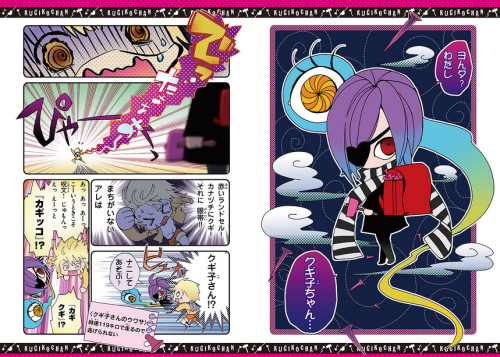
Other titles currently running in Nakayoshi include No Exit/Deguchi Zero by Seta Haruhi, about a school for aspiring actresses which becomes a survival horror story, and Kugiko-chan by PEACH-PIT (Rozen Maiden, Shugo Chara!), a gag spinoff of a manga about a ghost who is said to drive nails into people’s eyes. Both of these series not only revolve around a horror theme but are fairly unorthodox when it comes to art style.

No Exit

Kugiko-chan

According to Wikipedia (so take it with a grain of salt), the shoujo magazine Bessatsu Friend began to shift away from romance because of manga by artists such as Suenobu Keiko. Notably, her 2009’s manga Limit, a story about a group of girls in a life or death situation where the social statuses afforded to them by their school cliques no longer matter and feelings of betrayal and revenge run high, stands out as being very far from the romance-centered stories associated with shoujo. While Bessatsu Friend targets an older age group compared to Nakayoshi, I wonder if its influence slowly bled down to the younger audience.

The sense that there’s a quiet revolution isn’t just coming from shoujo manga which de-emphasize romance, however, as there’s a sense that titles about love and relationships are approaching them with greater mindfulness and breadth of topics. For instance, 3D Kanojo by Nanami Mao, about a popular girl and her otaku boyfriend, deals with the lack of respect that sexually active girls can get. One story from the girl’s past involves her trying to express her feelings of frustration and loneliness to her then-boyfriend, only to realize that he wasn’t really listening and was trying to just make out with her. Pochamani by Hirama Kaname, about a chubby girl and her handsome boyfriend, looks at body image issues and the ability to be confident in an appearance which does not fit the social standard. In both cases, these manga are about relationships already in motion as opposed to the journey towards one, and so bring to attention the challenges which can confront couples.

Of course, this is all more or less a hunch, and while I read a good deal of shoujo manga I’m not as well-read in it as other bloggers like Magical Emi or Kate from Reverse Thieves. If anyone can provide examples to further prove (or even disprove) the idea that shoujo manga has begun to move somewhat against its long-standing conventions of love and romance, I’d be more than welcome to hear it.

A Sexy Star is Born: Thoughts on the History of Romance in Shoujo

A common complaint against shoujo manga is that it’s too obsessed with romance. When you look at shoujo as a whole, love is not just a major factor in a lot of series, often times it’s the only factor. It all boils down to a simple question: “Why can’t shoujo manga be more ambitious?”

To a fair extent, this criticism is justified, but I finished reading the English-language release of Hagio Moto’s The Heart of Thomas recently and the afterword by Matt Thorn provided an interesting context to the romance-heavy nature of shoujo as we know it. Thorn writes about how, in contrast to the shoujo manga of the time which assumed that girls had no interest in stories in the more adult side of relationships, manga like The Heart of Thomas were revolutionary because they introduced the thrill of romance and sexual desire to shoujo manga. This is not to belittle the shoujo manga before Hagio and her contemporaries as somehow inferior as that’s certainly not the case, but it’s clear there was a trend of chaste stories about daughters reuniting with their mothers and such, which was supplanted by shoujo manga as love story. Romance in shoujo is the 800 lb. gorilla now, but it wasn’t always that way.

It actually reminds me about one of the biggest difficulties in discussing depictions of women with respect to feminism, which is that both the denial and exploitation of women’s sexuality have been used to control women in the past, and good and bad intentions exist within various a complex array of cultural contexts. Romance in shoujo manga is  a way for readers to learn about their own desires, but perhaps at the same time also a way to control their interests.

On a certain level, the reason behind the proliferation of romance-based shoujo is obvious: money. Girls liked romance, it sold a lot, and so it became de rigueur for an entire industry. It’s understandable, as is the criticism against it. While romance is just the thing that many fans (including myself) look to shoujofor, at this point, it could stand to have some more variety.

The funny thing is, I’ve recently begun to suspect shoujo manga is undergoing just such a transformation, but I’ll leave my thoughts on that for a follow-up post.

Shounen Sports and Girl Appeal

I’ve been watching two shounen anime adaptations as of late, Yowamushi Pedal and Kuroko’s Basketball. The former runs in Weekly Shounen Champion, the latter in Weekly Shounen Jump. When you look the contents of each series, it’s almost obvious, as if they embody the general direction each magazine has taken, but not in a way which denies either their contemporary nature or their shounen-ness.

In this age where the definition of shounen manga has been in flux, Shounen Champion is the most primary source of classic, old-fashioned shounen manga where a boy does his best to fight and improve. It fits the basic goal of that magazine quite well, which is to be a boys’ magazine for boys, though Yowamushi Pedal isn’t without its modern flairs, including having a more handsome rival for the main character.

Shounen Jump on the other hand is arguably the mainstream boys’ magazine which has embraced its female audience the most, outside of Jump variations which specifically target that audience. Kuroko’s Basketball, like Prince of Tennis before it, is filled with good-looking guys handsomely showing their best. Even if they’re not fujoshi, there’s a clear appeal to girls in it, though overall the series still has in common with Yowamushi Pedal the thrill of sports and competition.

One thing that both series share is the female manager archetype, who more broadly fits into the “knowledgeable supporter” role as well. The idea is that, while they’re not participants in the main activity of each series, they bring an enthusiasm and a set of knowledge that helps the reader understand the sport better while also acting as a cheerleader for the main character and maybe providing a bit of eye candy, though I don’t think either Miki from Yowamushi Pedal or Riko from Kuroko’s Basketball are quite the characters you’d go to for cheesecake. At the same time, I think there’s a certain substantial difference between Miki and Riko, which is that Miki is clearly a love interest for the main character, whereas Riko if she has any romantic involvement at all is with a side character in the series.

I think the fact that Riko is not a love interest, and arguably that Kuroko’s Basketball has no main female love interest for its main character at all (Momo is ostensibly one but her connection to Aomine seems stronger) speaks a lot to the difference in their magazines.  I don’t think this just has to do with Kuroko’s Basketball having a fujoshi fanbase which prefers pairing the guys together, either. If anything, I get an almost shoujo manga-esque impression of Riko’s relationship with Hyuuga and Teppei due to their interactions, not in the sense of hearts and sparkles in the background, but from its use of Riko as a character in her own right.

The Spectacle of Salty Bet and VGCW

At this point a lot of people know that it’s fun to watch other people play video games, whether it’s a Let’s Play or a competitive esports event. A subsection of these people additionally know that it’s crazy fun to watch AI opponents fight each other, provided the right context surrounds it. That’s what we get with Video Game Championship Wrestling, a gaming stream where various gaming culture icons fight each other inside of a WWE video game, and with Salty Bet, a place where you bet fake money on fighting game characters.

Though similar in that they both involve having non-human-controlled characters duke it out, they’re opposites in terms of how these AIs are used. VGCW is a curated experience where, much like actual pro wrestling, a single person writes the story and decides the overall direction of his “show,” but ironically is missing the most crucial pro wrestling component of having match results predetermined. Instead, the show clearly alters its path from week to week according to the results of its own matches. For me, the highlight of the entire thing so far has been when Little Mac came back from getting hit by a car and had an amazing match with Dracula that ended with Mac landing a powerful Star Punch counter on Dracula and then throwing him inside a coffin.

Salty Bet on the other hand is not about “story,” it’s about seeing how different characters crafted by M.U.G.E.N. creators across the world fare against each other, a complex interaction of not just who the characters are but the skills of their makers, their desires to make the strongest or the weakest characters, and even sometimes their desires to be in video games, as many of the self-insert avatars in Salty Bet show. Largely, the “drama” is created at random when two strangely appropriate opponents face each other, or a clash of gods occurs. The exception is that once every Thursday the owner of Salty Bet holds custom tournaments, often around a certain theme (the week of Pokemon X & Y‘s release there was a Pokemon character tournament).

In either case, what I find most amazing about their experiences is the necessity of the audience. Sure, audience matters at a Starcraft or Street Fighter IV tournament in that it livens up the mood and makes things just feel special, and in a Let’s Play of course you the viewer are the audience, but with VGCW and Salty Bet watching them is substantially worse when there is no chat available. The chats, with all of their memes and running jokes, make the fights feel “real” because real emotions are being poured into them. Scholars like Henry Jenkins talk about active fandom and audience participation, but with these “shows” the audience is in many ways the reason to watch. That’s not to say the work the owners of VGCW and Salty Bet don’t matter, as they’re of course important, but their successes are also tied into the image created by the very people viewing them.

Call from Mighty No. 9, a Focal Point of Projected Ideals

mightyno9-call-e

Given the success of its Kickstarter, it’s highly likely that you’re already aware of Mighty No. 9. The brainchild of Inafune Keiji, co-designer of Mega Man, it’s very much a successor to Mega Man, starring a robot with variable powers named Beck. While there are plenty of things to discuss when it comes to Mighty No. 9, one of the more fascinating topics is the “Roll” of the game, a female character named Call. Garnering enough fan support for a “Call gameplay stage” stretch goal to be reached, what is curious about Call is that her popularity was achieved well before we knew really anything about her.

From the very beginning of the Mighty No. 9 project, it was announced that there would be this female supporting character. However, she had no definitive design (though a few possibilities were shown), no determined color scheme, and very little information about her background or personality. Even her actual name was a later addition to the campaign, while these were the only notes eventually provided about her:

  • Call is a female robot originally created by Dr. White’s friend, Dr. Sanda, to help assist him with his research; she somehow avoided being infected by the virus causing all the other robots to go berserk and has pledged to help Beck.

  • Call was not imbued with the human characteristics that make Beck unique, so she’s more of a pure robot — as you might imagine, this contrast can lead to some interesting differences and misunderstandings whenever they interact!

And yet, even with this utter lack of information about Call, she developed a fanbase, such that the vote to decide what will become her finalized look has become a big deal among Mighty No. 9 fans.

mightyno9-call-f

A common answer these days for this sort of thing involves referencing Hiroki Azuma’s database narrative concept in a reductive fashion by pointing to how disparate features such as blue hair or a tsundere personality act as patchwork parts to create characters appealing to otaku, but I don’t think you can even refer to Call’s initial concept as a “database character.” It was less of a database and more of a less-than-1kb .txt file, and I think Call’s popularity actually comes from something else entirely.

mightyno9-call-h

My own guess is that the reason Call gained fans before we really knew anything about her is that her basic position, as a female character in a new video game which has as one of its guiding principles heavy interaction with the community during development, made her an open canvas for fans’ perspectives. Whether fans see Call as someone to potentially relate to, or an opportunity to establish a strong female character who can go a step beyond Roll in Mega Man, or even just as “the cute girl,” Call’s initial lack of features combined with faith in Inafune and the staff of Mighty No. 9 allowed people to project onto Call their various ideals. In this prototype state Call fans see in her the very best.