So it finally happened: I got my first case of COVID-19. I’ve been isolating, but I’ve also finally started testing negative, so I think I’m over the hump.
I already announced it on Twittter, but anyone who attended Anime Central 2023 should probably get themselves tested if they haven’t already. While I was masked for pretty much the entire time, I most likely had COVID-19 during the entire event, and it’’s better to be safe than sorry when it comes to the coronavirus.
While it might be too late for anyone who’s first reading about my COVID-19 case here, I still wanted to talk about it in this status update for a couple reasons. First, well, this is technically the “status of Ogiue Maniax.” Second, many people are afraid to admit they got COVID, worried that they might be looked upon negatively if they say anything, or feel a sense of guilt about how they put themselves and/or others in danger. But I think the more we publicly talk about it, the more we can reduce the stigma without downplaying the ongoing severity of the pandemic (it’s not just “the flu.”)
Thank you to my Patreon subscribers, who allow me to continue to indulge in this hobby of mine:
While Anime Central wasn’t ideal due to my condition, I did manage to conduct some interviews, and I think they all turned out well. Expect to start seeing them soon!
May 25, is the birthday of VTuber La+ Darknesss, and that means a variety of ways to mark the occasion, as per usual. There are the special streams, the general well wishes from fans and peers alike, and of course, the merch. As La+ is one of my absolute favorites (and her group holoX just a generally great Hololive generation), I (and my wallet) will also be partaking in the celebration. But one thing I find so funny about VTuber birthdays is that they’re the ultimate kayfabe—a crucial area where everyone suspends their disbelief.
Nearly all virtual youtubers have two important dates to celebrate every year: their debut anniversaries and their birthdays. The former are near-immutable facts; they did their first YouTube streams on X Day, and that remains into perpetuity (unless a re-debut is somehow given precedent). The latter are completely arbitrary.
VTuber birthdays aren’t based on when their designs are first created or when they’re first hired—that’s an unknown and (presumably) long process. It’s clearly never the same as the actual person’s birthday—that’d just invite trouble by accidentally leaking personal info. Instead, the VTuber birthday is this made-up thing that gives an excuse to put the spotlight on an individual streamer while they get to promote their projects and new goods for fans to purchase. Everyone plays along as if this is the real deal.
It’s actually great.
I feel like everyone is on the same page in this situation, because what it really does is focus all the love and attention onto a particular period of time, giving meaning to the actions of the VTubers and their followers alike. It’s also the only part of a VTuber’s lore that holds firm no matter what. Character personalities can change. VTubers can play into their original lore or abandon most of it to be something closer to who they are behind the screen. Fans can popularize theories, and the performers themselves can choose whether to incorporate aspects of them. Entire designs can even change significantly. However, the birthday remains.
So Happy Birthday, La+ Darknesss! It’s going to be great getting to see you get all the attention you’ve earned. It’s good to see you bounce back from COVID as well (ironic that I say this while just getting my own first bout of COVID.)
An important final note: La+ has mentioned that she’s recovering from a stress fracture due to COVID-19, so there might not be a concert stream. In the meantime, two different delayed birthday concerts are happening this week: One is for the original Hololive, Tokino Sora, on May 26 (her birthday is May 15). The other is for 1st-Generation member Aki Rosenthal on May 27 (whose original concert in February had to be postponed due to some unknown difficulties). So while we might not get to see the Founder’s sweet dance moves again, we do get to see two of the best performers around.
I find myself in a constant state of worry that I’m not doing enough with anime and manga. It’s not like I’m avoiding it entirely, but I think my very focused consumption of it has receded slightly both in an attempt to do things I’ve never tried before and to make up for time lost in other categories.
There’s an entire Breathof the Wild sequel coming out this month, and I’ve only just gotten the glider in the first game! I want to build my language skills in Japanese as well as in others. I worry about being the person chasing two rabbits, but at the same time am perpetually unable to pursue just one without regretting losing the other.
In the meantime, shout-outs to my Patreon subscribers, including a new supporter among the Sue Hopkins fans.
I’m actually going to Anime Central this month for the first time! I’m hoping to get to see Kubo Yurika (aka the voice of Hanayo).
And you probably have heard about this, but the Writers Guild of America has gone on strike to protest unfair wages from streaming and the threat of companies potentially trying to use AI to hamstring writers. Funnily enough, the last time a writers strike started was on November 5, 2007—the same month as the birth of Ogiue Maniax.
I’ve been thinking about what I call “safe yandere,” or alternately “yandere aesthetic.”
Yandere character fetish feeds off many things. The notion of a character who’s so in love with another that she turns into a crazed axe murderer (and that this is a good thing!) is at the same time obvious and complex. It’s a realm of fantasy that, in my estimation, works by essentially being so hyper exaggerated as to feel real—like how food for astronauts is made extra spicy because the sense of taste is dulled in space.
Because yandere characters come primarily from media like anime, manga, and visual novels, there are many visual shortcuts to convey that quality. The thousand-yard stare, the creepy smile, the icons of sadism, and so on make portraying a yandere in a single drawing perfectly possible. What this also means is that this aesthetic can be extracted and placed onto characters who aren’t necessarily trying to trap their significant others in cement so that they can be together forever.
The first example that stands out to me is Jabami Yumeko in Kakegurui. She has all the visual hallmarks of a yandere, except she directs that primal energy towards the art of gambling instead of a person. She doesn’t take pleasure in hurting others so much as she does mutually experiencing the torrent of emotions that stir when everything is on the line.
Another is the teasing girl. They’re not exactly yandere—more like a midway point between that and tsundere—but they can serve a somewhat similar function. Nagatoro might be the most well known at this point, and her sneers evoke a kind of pain/pleasure combo that aligns with the general yandere for vibe.
The last example actually comes from the world of VTubers. The Hololive zombie girl Kureijii Ollie has a visual presentation that is very reminiscent of yandere, especially in the eyes, but her personality is far from it. I suspect that this contrast is part of her charm, though, and a reason she’s so popular. Incidentally, another Hololive member, Ceres Fauna is sort of the opposite: Her appearance is gentle but her words and demeanor can get yandere, especially in ASMR streams.
I don’t think separating out the visual component of yandere is a bad thing—far from it, in fact. It gives people the opportunity to assess themselves and what they enjoy, allowing for greater personal discovery. It also reminds me a bit of what has happened to the concept of vampires. Some people just want a specific sub-flavor of hotness, and that is okay.
I don’t know if we’ll reach a point where the definition of yandere has fundamentally changed and it goes towards the safe yandere. I doubt it, given the continued popularity of characters like Toga Himiko from My Hero Academia. But like so many things, I’d rather people be able to remember that this transformation has occurred rather than wholly adhere to some specific definition. History is important, even that of the yandere.
(And technically, all fictional yandere are safe precisely because they remain in the realm of fiction. Though that does mean VTubers can blur that line…)
The Hololive fan project Holocureis what finally made me try a Vampire Survivors–type game. That’s not to say anything is wrong with Vampire Survivors—I had no particular qualms based on what I knew of the genre, but also no particular motivation to check it out. But now I’ve devoted more hours to Holocure than many games in recent memory, so I figured I should jot down my thoughts on it, no matter how disorganized.
I can see why this game type has become such a hit. There’s something simultaneously relaxing and stressful about the format. The whole automatic-firing thing exemplifies this, as it means you don’t have to worry about constantly mashing on a button or timing hits, but it also means you have less control in dire situations where you really wish you could be more precise. My only complaint is that collision with stage elements sometimes happens unexpectedly, and I feel like certain graphics such as fences and potted plants are kind of iffy in terms of how they interact with the playable characters. Either that, or my partial color blindness makes them hard to notice.
Wikipedia calls Vampire Survivor a “timed survival” game, and I don’t know how common or accepted that is as a term. I feel like it’s treated as a genre or subgenre of its own, though I can’t help but compare it to the 1980s arcade game Robotron 2084, which also features an overhead view plus dual sticks for movement and aiming respectively. There are differences but also a clear conceptual lineage, and it’s fascinating to see people try to coin a term to describe this game type. The term “Roguelite” is funny for all the reasons Metroidvania and Roguelike are.
Specifically regarding Holocure, the roster is an obvious point in its favor. Getting to use Hololive members is ultimately what pushed me to try it in the first place, especially after hearing that Haachama would get added to the game. Even if I weren’t already a Haachama fan, she’d probably still end up being my favorite in Holocure. The fact that she has a “stance change” mechanic (based on the #coexist arc that implied Haachama has two warring personalities inside her) just makes her fun to play and strategize with.
I’ve now had the chance to use every character available in Version 0.5, and I just love the way that the girls’ lore, personality, and memes all get rolled into gameplay elements. It’s the advantage of being a fan game based on an existing property. I’m eager to see how future characters turn out. The entirety of Hololive Indonesia has already been announced for 0.6, and I want to try them all, especially Kureiji Ollie, Airani Iofifteen, Kobo Kanaeru, and Kaela Kovalskia—the last of whom has herself become addicted to playing Holocure for hours end while blaring an in-game trumpet for maximum cacophony.
And of course, I can’t wait to see the eventual arrival of La+ Darknesss. Given that Gura has the power of Smolness that allows her to dodge attacks more easily, I wonder if La+ will have a similar ability, given that she is literally the shortest member of Hololive. Or will it be the case that her massive horns neutralize the advantage of short stature? What will her super be—a reference to her original song Dark Breath, perhaps?
Sometimes, the perfect analogy to explain something can come from an unexpected place. For me, I recently found a way to organize some thoughts I’ve been having about martial arts, and it’s all thanks to VTuber mega star Ironmouse.
As I peer more into the world of kung fu and the like, I’m frequently encountering the idea that many martial arts are not built around merely being a catalog of techniques one can add to their arsenal. Rather, they’re often systems of efficient power generation for particular circumstances, which then form the foundation for executing techniques.
Something like western boxing has been proven effective for fighting, and it’s a system where specific implementation of techniques can be made functional by anyone if initially taught correctly. From what I understand, a less experienced person can learn to throw a 100% proper and effective punch even if it might not be as good as a veteran boxer’s. In contrast, many techniques across various kung fu disciplines will be largely ineffective without having trained extensively in how a style is meant to generate power and having passed a certain point in which your body has adapted to this counterintuitive movement.
It’s a difference that can be hard for people to grasp, myself included. I’m not a fighter or a martial artist, so it’s not something I can intuitively understand. But this is where Ironmouse comes in.
One of the many impressive things that Ironmouse is known for is that she actually has training in operatic singing. However, her opera voice is not her “normal” singing voice. During her 2023 birthday concert (see below), she sang well but without going into opera mode, and the difference is noticeable. In other words, a person can’t just improve their singing until it reaches “opera level”—it requires dedicated training in a particular way of producing sound.
While not the only VTuber to have studied opera (Tokino Sora from Hololive and Banzoin Hakka from Holostars EN), Ironmouse is probably the most powerful example of how specific the training can be. This is because singing opera style can literally cause her physical pain due to chronic health issues, so she doesn’t often perform that way. When she does, though, Ironmouse sounds incredible.
The similarities to different types of martial arts also extends to the topic of subjectivity. Opera may require a certain type of training to make a certain type of sound, but is it inherently better than other forms of singing? Not necessarily. It’s all down to personal wants, needs, and preferences, as well as what you aim to do with it. Is it the right move to train for years in a specific way of generating power found in certain martial arts, or to work from what one’s body can already do?
So thanks, Ironmouse. I don’t know if it makes sense to everyone, but your singing has helped me in a most unexpected way.
The 3D debut of La+ Darknesss forever changed her image as a Virtual Youtuber. This Hololive member initially presented herself as a brattychuunibyou with legit singing and rapping skills, but seeing her with a full range of motion revealed that La+ is actually one of Hololive‘s best dancers. Since then, she’s had a handful of performances in her own streams and as a guest in others, and they’re consistently top-notch. Numerous clips and comments in multiple languages make note about how her routines just look different from most everyone else’s, with one Japanese viewer summing it up well: While many others (like Subaru and Matsuri) are great at idol dancing, La+ comes across as a great dancer.
Indeed, La+’s dancing has made such an impact on me that I’ve previously discussed her talent in two separate posts. And now here’s a third one.
Writing another essay might seem superfluous; I’d actually thought as such myself. I’m also such an absolute dance novice that I’m completely unqualified to comment on La+’s with any authority. But as I’ve waited for more expert analysis of her skills, none have really appeared—even reaction videos are exceedingly rare. So, I’ve found myself watching her concerts over and over, trying to figure out why her abilities shine through even to someone as ignorant of the art as myself.
Thus, I present my attempt to explain what I literally don’t have the proper vocabulary or understanding for, in the hopes that someone better than me can do a more proper job of it.
Crisp, Full-Body Expression
I think the first dance that really caught my attention was from La+’s 3D debut stream: her performance of her first original song, “Aien Jihen.” She actually came up with the choreography herself, and it is likely her most difficult dance to date—La+ even prefaced by saying she was only dancing to her pre-recorded vocal track.
The introduction starts off, and she strikes poses if every part of her is in perfect sync with the rest. Then the blow horns sound off, and La+ goes into the first verse with the most confident arm movements I’ve ever seen from a VTuber. As she pumps her body, there’s a combination of elegance and forcefulness (along with some solid camera work) that just leaves a lasting impression—and that’s before La+ gets into the more difficult parts of her choreo! She looks as if she’s able to carry movements all the way from beginning to end with a level of precision that makes everything feel both important and impactful.
That crispness can be seen across literally everything she does. Case in point, one place where it really stands out to me is in her duet cover of Ayase’s “Cynical Night Plan” with Amane Kanata, from her first-anniversary concert. At times, La+ performs more complicated moves than Kanata, but there are moments when they’re doing the same steps, and she just seems to have something extra. In the above clip, the duo spread their arms in and flick upwards in steps of three; while Kanata seems to move wrist-first, La+ looks as if she’s moving from the shoulders and elbows, creating a sharp ratcheting that matches the song well. I find my eyes being drawn to her as a result.
Control and Stability
The 3D debuts of every member of holoX culminated with a group stream in which they performed a cover of the song “Roki” by MikitoP. This is actually the moment that multiple VTuber clippers drew attention to La+’s dancing, and for good reason: she somehow manages to steal the spotlight without diminishing her genmates. There are just multiple moments where she dips or moves like an undulating wave, and it highlights just how much more control and stability she seems to have over her body—especially her core—compared to the rest of holoX and by extension nearly all of Hololive.
Her first-anniversary stream is also full of moments that demonstrate her incredible smoothness, but where that talent really comes to the fore is in “Dark Breath”: her second original song, and one that clearly draws inspiration from K-Pop in the vein of Blackpink. Not only does she demonstrate the aforementioned crisp movement when she turns in place like the hands of a clock, but the way she leans back as if about to fall over—only to then snake right back up—seems to speak to an impressive amount of training.
Idols and Dancing
With the impressive expressiveness and control of La+ on display, I’d like to return to that previously mentioned distinction between “idol dancing” and “dance dancing.” To that end, it’s important to describe what idol-style dance is in the first place with a brief and highly generalized history lesson.
Japanese idol culture emerged in the 1980s with singers such as Matsuda Seiko being presented as platonic ideals of what girls could be—this is the foundation of the seiso (pure and clean) idol concept that is the butt of so many jokes.
As dancing has become a bigger part of idol culture—such as with the famous AKB48—performances follow a similar trend, being less about making you go “wow” and more about making you go “aww” or “ooh.” In anime terms, this is the progression from Macrossand Creamy Mamito Love Live!
Idol dance is the angle most Hololive members take, and it allows for those with and without dance experience to look fairly good and to utilize their strengths. For example, Inugami Korone is known as one of the most physically fit members of Hololive. She doesn’t have the cleanest moves, but she makes up for it with sheer athleticism and stamina, famously pulling off a front walkover flip while also nursing a broken finger. In turn, Oozora Subaru may not be as athletic as Korone, but she brings a similar amount of boundless energy, a kind of joyful expressiveness that’s really endearing, and visible improvements over time that play into the narrative of watching idols as “works in progress.”
Two members who actually have significant backgrounds in idol performances are Natsuiro Matsuri and Takahashi Kiara (Hololive Myth’s best dancer), and it shows in how stable they look while in motion.
In the above clip, Matsuri’s “Hare Hare Yukai” dance from Suzumiya Haruhi stands in sharp contrast to Houshou Marine’s memorized but somewhat uncoordinated motions. Below, Kiara’s performance during her original song “Hinotori” straddles the line of idol dancing with a choreography that feels more daring, but she still has a certain staticness that is expected of idol fare, despite showing off a great deal of balance and flexibility.
In comparison, it’s clear that La+ doesn’t follow the same template as most others. Certainly, she’s not alone in that regard, with Kiara diversifying her style further with her later songs, and Moona Hoshinova giving a more diva-like performance for her original song “High Tide.” But I think what La+ seems to have an astounding level of consistency, which leads me to the third reason I think she’s such a mesmerizing dancer.
Versatility
On the subject of idol dance, there is something important to note: Just because it’s not La+’s typical style doesn’t mean she’s bad at it. In fact, she’s one of the best:
This clip is taken from the most-rewatched moment in her first-year anniversary concert: her idol outfit reveal, which leads into “Daishikyuu Daisuki,” a poppy and bubbly tune by the Japanese group Femme Fatale. It’s by far the most idol-esque number La+ has ever done, and she manages to bring her crispness and control to the performance in a way that elevates the whole thing. From how she twists and bends to the subtle positioning of her legs, she looks as impressive here as her other dances. For comparison, below is a video showing other Hololive members covering the same song. The difference is noticeable.
La+ is amazingly versatile, and nowhere is that more apparent than the fact that the very same first-anniversary concert also features La+ with Aki Rosenthal, who is indisputably one of Hololive’s best dancers. With a partner who is similarly skilled, La+ is able to pull off something that looks closer to a Broadway number or a dance recital at a major concert hall. The song, “One Room All That Jazz,” also has a completely different feel from everything else she’s done (quiet and jazzy, naturally). The number consists of nonstop highlights, but I think what really shows her (and Aki’s) power is the level of elegance displayed during the instrumental section that then transitions into a wildly contrasting tap dance. Aside from possibly Kiara and Moona, as well as potentially certain members who have yet to receive their 3D models, I’m doubtful there are many who could manage this so effectively.
Dark Lord of the Dance
When La+ Darknesss dances, she displays artistry and a plethora of skills that I think put her near, if not at the top of the list of best dancers in Hololive and Virtual Youtubers as a whole. She actually outdoes Miku Miku Dance models from the best 3D animators when it’s far more common for the opposite to be true.
La+ has the crisp, full-body expression that makes every movement feel razor-sharp. She has such stability and control that her moves seem somehow effortful and effortless at the same time. She has the versatility to apply her talents to different songs and genres of dance, and make all of them look good. It’s as if she combines the strengths of the most notable performers in Hololive, with the possible exception of Korone-level endurance and athletic prowess (though she might merely be lacking relative to the intensity of her choreographies). And all this isn’t even factoring her strong singing ability—something that makes her concerts that much more powerful. Truly, she’s my favorite dancer in Hololive and there is no close second.
Which is all to say, if you haven’t watched La+’s 3D concerts, you should really check them out.
There must have been something fermenting in the collective imagination of 2022. Last year gave us not one, not two, but three different forms of media featuring cute dogs combined with bread. And as many minds landed on this same idea of oven-baked canines, they all appeared to be guided by more than merchandising power alone.
Sanallites
The first bread dog of note is an embodiment of the Sanallites, the fanbase for the retired VTuber Tsukumo Sana from Hololive. The reason her fans are portrayed as bread is that Sana herself would express how much she loves bread, even going as far as doing a bread horoscope in an early stream. And because Sana herself is an experienced artist, she used her illustration chops to solidify the design as a whole loaf with an adorable flat face.
Sana’s bread dog comes from a warm and comforting relationship with her fandom—the kind of personal-feeling connection that you could only get from a streamer.
Pam-Pam
The second bread dog is Pam-Pam, a sandwich-themed dog fairy from the magical girl anime Delicious Party Precure. Here, Pam-Pam is the mascot sidekick of the bread-themed Cure Spicy, and contrasted with a rice mascot and a noodle mascot for a trio of staple carbs. This all plays into one of the themes of Delicious Party Precure, which is teaching kids to eat balanced meals and learn to appreciate all types of food. Pam-Pam transforms into a little sandwich with her dog head sticking out, meaning her bread elements come out primarily in battle.
Delicious Party Precure’s bread dog is a way to convey a theme of good nutrition. The decision to design Pam-Pam in this way is the result of trying to prepare children for the future.
Fidough and Dachsbun
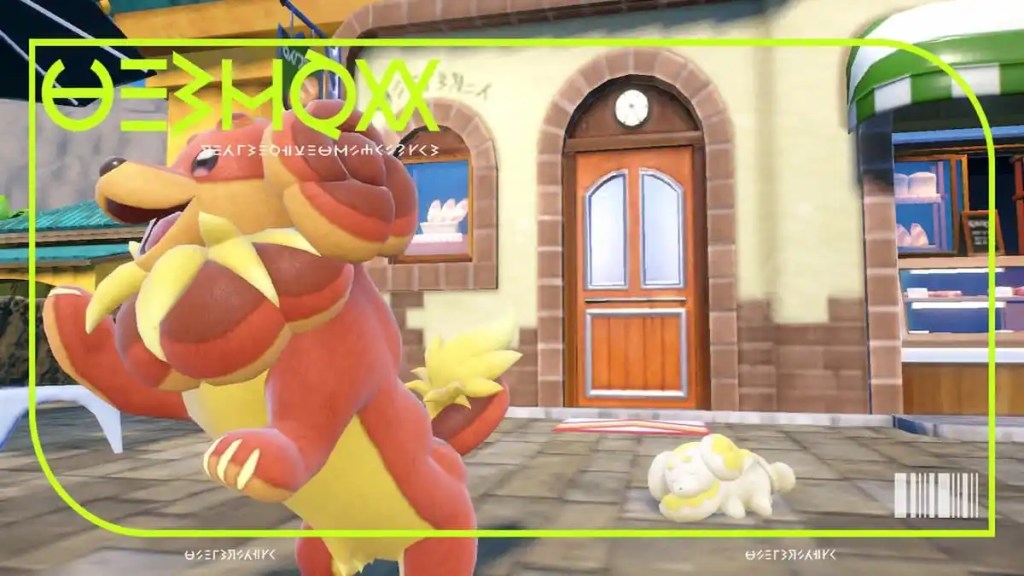
The last bread dogs are the new evolutionary line from Pokémon Scarlet and Violet. Fidough, which resembles unbaked bread, evolves into Dachsbun, whose Baked Body ability makes it actually immune to fire attacks. They have more of an active bread motif than Pamu Pamu but retain more dog features than the Sanallites.
These two are actually just a couple of the many new Paldean Pokémon with a food motif—others include hot pepper plants, olives, and more. The Paldea region is based on Spain, which has a rich and diverse food culture, and both bread dogs reflect that aspect.
The Yeast They Can Do
Combining fluffy bread with furry dogs seems like an obvious winner, and these examples are certainly not the first. But to see three big franchises implement the same idea within the same year feels like a tiny miracle. There’s a surprising amount of versatility to be found in the bread dog concept, and should there ever be a true bread-dog boom, I doubt anyone would mind.
There’s a 50/50 chance that saying “the Japanese beverage company Suntory has their own official Virtual Youtuber” would come as a surprise. But the blue-haired “Suntory Nomu” is real (in a sense), and I actually like her design quite a bit. What really stands out about Nomu’s appearance, relative to other VTubers, is how simple and subdued it is. A white dress with blue highlights stands in sharp contrast to the vast majority of Hololive and Nijisanji, who seem to be created with a maximalist philosophy. This latter approach brings to mind broader discussions about character design in media.
(Side note: I’m not sure I need to mention this, but in case it matters, I am not endorsing Suntory products in any way. I generally like their drinks well enough, but that’s about it.)
When looking at Nomu relative to the Hololive members she’s streamed with, the difference is clear. While both have attractive designs, Takane Lui and Aki Rosenthal have all these details, adornments, and colors, resulting in rather complex/complicated appearances. There are practical reasons to make them this way, of course: They need to be immediately distinct and visually appealing to prospective viewers. Rigging/modeling them for animation is a one-time thing, as opposed to needing to draw them anew every time in the vein of anime or manga. And the expectation is that people will stare at them for extended periods. VTubers need to communicate a good portion of who they are immediately, as viewers can’t be expected to dive into an extensive backstory—and often VTuber backstories are helpful suggestions, at best.
The decision to go maximalist reminds me of fan discussion surrounding fighting game characters. Fighting games, especially ones not based on an existing property, share a number of similarities with VTubing. There’s no prior context for people to get attached to (as they might with an animation or comic), so having characters catch the eye right away while also communicating how they play is important. There’s still quite a bit of range—Compare Ryu or Chun-li from Street Fighter to Sol Badguy or Dizzy from Guilty Gear (especially pre-STRIVE)—but criticizing a fighting game character for being “boring” is typically more about looks and presentation of attacks. That’s actually a big difference with Virtual Youtubers: It does ultimately come down to personality.
But it makes me wonder if significantly simplified designs like Suntory Nomu couldn’t thrive despite the general trends against them. Maybe it’s because so many designs take an “everything but the kitchen sink” approach that Nomu’s aesthetics stand out more. Could there be a trend back down to relatively more minimalist designs in VTubing, fighting games, and other similar areas? It’s something I’d like to see, if only because I’m curious how it would all play out among the fans themselves.














 OGIUE MANIAX