The Emergency Heteronormative Character

There is an archetype in anime and manga that I’ve begun calling the “Emergency Heteronormative Character.” 

In the beginning, many manga creators do not know where their comics will end up. Rose of Versailles was supposed to focus a lot more on Marie Antoinette than Oscar. Kinnikuman famously began as a superhero parody before it turned into a full-on wrestling manga—and all because its authors, Yudetamago, really got into the latter. A single storyline in Yu-Gi-Oh! about a trading card game permanently altered its entire trajectory. I think the same thing happens with series where character relationships are important.

Some love triangles know exactly who the end girl will be, whereas others might not arrive at an answer immediately (or ever). But I have also seen series where a particular character, usually a minor one, seems to exist just in case, as if above them is a message that reads “Break Glass if Heternormative Romance is Necessary.” 

I have never read Slam Dunk, but I’ve heard about Akagi Haruko: the female love interest of the protagonist, Sakuragi Hanamichi. She is a fairly important character at the start (being the one to spark Hanamichi’s entry into basketball), and she’s even the focus of the anime’s extremely beloved first ending sequence. But over time, she recedes into the distance because the dynamics between the players themselves are what really draw people in. 

The appeal of shounen sports series for shippers plays right into this pattern. Whether it’s Prince of Tennis or Yowamushi Pedal, there often seems to be a girl character who is like an anchor on the port of heteronormativity, allowing a manga creator to double back if need be. Even Saki has some of this energy in the earliest volumes. The character of Koutarou began as the sole male member of the mahjong club, acting as a potential male audience stand-in to witness the girls in their nonchalantly risque glory.

BL and yuri potential often drive a good deal of the relationship interest in series like the ones mentioned. However, the Emergency Heteronormative Character can even exist in series that are pretty heterosexual too. In Rokudo’s Bad Girls, you have Tsuyukusa Mizue, the only non-delinquent girl in the series. She’s meek and cute, and always worried about how the main character Rokudo seems to be turning to the dark side. And while the anime is on an accelerated timeline, the early part of the manga makes it pretty clear that she could have been Rokudo’s “saving grace” if the series had gone a little differently.

Emergency Heteronormative Characters aren’t automatically bland, and they can be fun and charming in their own right. That said, they often feel like the product of an author hedging their bets, and they typically shine less brightly because they are simply not meant to be in the spotlight as much. I also have to wonder if these characters exist on some level for in case a title needs a quick romantic conclusion should things need to wrap up quickly. However, as we further leave the era where nice and neat heterosexual relationships are seen as necessary, maybe the archetype will have to evolve into something else entirely.

My Personal Challenge: Deciding What Language to Work On

Whether by circumstance or choice, I’ve had the benefit of knowing, learning, and at the very least being exposed to multiple languages. I’m native in one, grew up with a second, and work extensively with a third (Japanese). I love learning about languages. However, as I try to improve my understanding, I keep running into a couple of issues where I feel that I probably know the answers but am afraid to fully open my eyes.

First, what language(s) should I be focusing on? One connects me to my background and culture. Another helps me professionally. And then there are a few others I’ve been exposed to over the years that I’d like to at least get a grasp on.

Second, if I want to get to a point of fluency in a language, what do I need to do? For that matter, what kind of fluency am I looking for?

From my having studied Japanese, I’m aware that there is a point at which a language will just click into place. I have vivid memories of having spent time there after taking classes back home, and one day just being able to understand so much more, as if my brain finally “got it.” So the best solution to start with is probably to stick with one language until it entrenches itself in my mind, because outside of head trauma, you can’t ever fully lose it.

I also know this because my second language is something where I have an intrinsic connection. My parents have spoken it all my life, though I haven’t always reciprocated in kind. I’ve spent much of my life in a situation where I can often understand what is being said to me but can’t always find the words on command, and my reading ability is subpar at best. When it comes to really complex topics or idioms, I am out of my depth. Even so, I can tell that it’s in settled deep in there. My specific dilemma here is whether I should be satisfied with only that much.

So the specific goal depends on the language because I have different degrees of familiarity with each. When it comes to Japanese, I would seek a greater mastery so that I won’t get caught off guard by unusual words or phrases, be they extremely archaic or all too modern. For my parents’ tongue, I’d like both literacy and enough of an expanded vocabulary so as to not sound like a child even well into my adulthood. And as for other options, I’d really just like to be able to read comics in a target language so I can appreciate them more.

The hard pill for me to swallow is that the best thing to do, almost without a doubt, is to concentrate heavily on one so that the neural connections can form. Be as active as possible about it too, consuming all the media I can, and maybe even seek out language partners or take classes. From there, once I feel comfortable with one, I can maybe consider trying another. 

However, there are some barriers, mostly having to do with time and mentality. While I’m very fond of language learning, it’s not my only hobby or even my primary one (see: this anime and manga blog). Also, whenever I stray away from a language, I end up feeling guilty about neglecting it—even if it’s to work on another one! Despite knowing full well that learning new languages is hard, I feel stuck in limbo, worried that I’m simultaneously spending too much and too little time and effort. If I can overcome that block, I can probably make greater strides instead of moving forward bit by bit.

My intent is not to become a polyglot. I don’t have a goal of wowing my friends with all the languages I can possibly speak. If I were to achieve such skill, I’d surely be happy about it, but it’d be just one more tool I could utilize to explore the world and its stories better than ever. Now, if only I could make sense of my jumbled thoughts.

Why It’s So Hard for Shounen Battle Manga to End on a High Note

The author of One Piece, Oda Eiichiro, once stated that he always wanted to make a manga series where the ending is the most exciting part. Right now, it looks like his flagship series could very well be heading in that direction. However, when I thought about whether this is possible, I couldn’t help but think about the fact that the graveyard of shounen manga is strewn with series that failed to hit that goal—if they even had a chance at all.

So many shounen manga, particularly popular battle manga, usually peak well before the end. While taste is subjective, I think it’s a common opinion across various titles. In Kinnikuman, the tournament to determine the king of Planet Kinniku is actually pretty good, but it kind of pales compared to the Akuma Daishogun arc. Fist of the North Star peters out after Kenshiro’s climactic clash with Raoh. Naruto and Bleach have many possibilities as to the best arc, but it’s definitely not their finales. L in Death Note is remembered far more fondly than other rivals. Even with Oda’s beloved Dragon Ball, Majin Buu is not usually the villain people would regard as the best or most memorable.

That’s not to say it’s impossible. Two answers I received when I asked on Twitter were anything by Fujita Kazuhiro (Ushio & Tora, Karakuri Circus) and Yu-Gi-Oh! Funnily enough, these two examples also came up in a private conversation I had on the same subject. Nevertheless, the odds are not in One Piece’s favor.

The reason for this hurdle is pretty simple, I think: Most successful shounen series end up getting somewhat zombified, as they’re expected to keep going for as long as they’re popular in the hopes of bringing in more readers. No matter how creative manga authors might be, or how well they can plan, it just gets increasingly difficult to run on all cylinders. On top of that, even if an author has a brilliant ending in mind, they might still get canceled early, or their attempts to force a finale are ignored. Toriyama, for example, clearly tried to finish Dragon Ball in the Freeza and then the Cell arcs, only for the manga to keep going.

One big X-Factor is that Oda is on another level in terms of long-term planning. His signature series is basically an armory full of Chekhov’s guns situated next to a clothing store dedicated to alternating shoe drops. If anyone can pull it off, it’s surely him, but when your manga has been going on for almost 30 years (!!!), that is a whole lot of anticipation to live up to. Good luck, man.

So…Can you think of any shounen battle manga that was at its best and most exciting by the end?

Lego’s Monkie Kid Draws on the Past in More Ways than the Obvious

What if there was a sequel to Journey to the West, the story of Sun Wukong the Monkey King, and it was set in the near future? And what if all the characters were Lego people? That’s the basic premise of Lego Monkie Kid, an Asia-focused media franchise featuring toys, a cartoon, and more. I first noticed Monkie Kid thanks to clips on YouTube, and found myself impressed by the surprising quality of its animation. I recently got the chance to watch the actual series, and find it to be a kids show that, while modern, is also reminiscent of action cartoons from decades past.

The premise of Monkie Kid is that a noodle delivery boy named MK discovers the legendary staff of the Monkey King and becomes his successor. Now, he must fight against the now-freed Demon Bull King, who was originally imprisoned by Wukong himself, with the help of a close group of friends.

One of the first works that Monkie Kid reminded me of was American Dragon Jake Long, and not simply because of the connections to Chinese culture. Rather, MK is a very similar character to Jake, from his impetuous nature to his constant use of “hip and popular” vernacular. That said, while Jake’s use of slang could get obnoxious (something the show runners on Jake Long noticed and dialed back in its second season), I find this isn’t really the case with MK.

Another cartoon that came to mind was Thundercats, and with it all the 1980s action cartoons of that variety. Specifically, in the storyline, the Demon Bull King is weakened after his revival, and is forced to rely on cybernetics that are powered by artifacts. Items of sufficient rarity (from ancient treasures to exclusive sneaker drops) can restore him to his former might, but only temporarily. This kind of Mumm-Ra/Silverhawks MonStar villain hasn’t really been a thing for a very long time, which makes Monkie Kid’s decision to include such a gimmick oddly nostalgic for someone my age.

The approach to storytelling is mostly episodic (as opposed to outright serial) and full of toy-shilling antics, but it does build towards major events here and there while featuring actual character growth along the way. Again, I liken it to 80s fare wherein a few episodes and a season finale are more focused on the overarching plot, and the results are usually pretty satisfying if one doesn’t mind this format. One big edge Monkie Kid has, however, is that it doesn’t feel as aimless as Thundercats or He-Man, and even displays shades of Avatar: The Last Airbender in the way it gradually turns into a grander and more epic story. 

It’s also obvious that the show creators are more than aware of Avatar when Monkie Kid throws in gag references to Aang’s spinny hand trick. In fact, this is just one of many shout-outs to past animated works.

There’s one fun detail about Monkie Kid that I think is worth mentioning: The casting choice for the Monkey King. In English, he’s actually voiced by Sean Schemmel, the current dub voice of Goku from Dragon Ball Z—in other words, a guy famous for playing a Sun Wukong derivative is voicing the original! And then in the Cantonese and Taiwanese Mandarin versions, the role is performed by Dicky Cheung, a Hong Kong actor who rose to fame portraying the Monkey King in the popular and beloved 1996 Journey to the West TV series!

(He also sang the openings for those versions too.)

Overall, Monkie Kid is a children’s cartoon with real legs. Though it may be based on Legos, and it’s not the most sophisticated thing, there is an undeniably high quality to the whole thing. It’s one of those works where the creators definitely did not need to go this hard, but they chose to elevate their project into something greater. I come out of this now curious to watch whatever comes next, and maybe try to finally read Journey to the West.

New Frontiers with Old Lessons: Hololive Advent and ReGLOSS

The past few months of Hololive have been one major event after the next, and among the biggest were the debut of not one, but two new Virtual Youtuber groups. First was Holo Advent at the end of July, the newest English generation in two long years. Then in September came ReGLOSS, who seem to be the vanguards of an entirely new division. Both groups have now had a bit of time to establish themselves, and they seem to reflect two very different approaches: refinement based on past experience vs. taking an experimental direction that’s a mix of old and new.

Holo Advent

While “lore” and “backstory” matter less and less over time, they are part of the initial impression a VTuber makes and can help to solidify their image in the eyes of fans. And when it comes to the English branch of Hololive, their parent company COVER Corp. chose to make things elaborate. Unlike the relatively simple princesses, idols, and devils of the Japanese branch, the first generation (known as Holo Myth) debuted with an ancient Atlantean shark, a grim reaper, a warrior phoenix, an Eldritch priestess, and a time traveling detective. 

Due to circumstances of timing (a global pandemic) and their own abilities, Myth are the most successful generation of Hololive—and possibly any VTuber group—ever. Their follow-ups, Project Hope and Holo Council, went even bigger by being the representatives and embodiments of abstract concepts: hope, of course, but then also a celestial governing body of space, time, nature, civilization, and chaos. While all of them have turned out to be popular and entertaining individuals, I think the grandiose nature of their lore can be a burden on the girls themselves. It can weigh the VTubers down just as much as it can elevate them, and often the streamers give this facet of their characters only basic lip service.

I believe that knowing how to avoid that awkwardness is the lesson taken from the past two English generations, and I see this in how Advent strikes a middle ground between them. Like Council, they have a group concept unifying them: The members of Advent are all runaway prisoners who were locked away due to their forbidden powers but staged an escape together. However, their individual backstories are all more detailed than Myth yet less so than Council. Shiori Novella is an archiver whose pursuit of knowledge gave her access to the forbidden. Koseki Bijou is a sentient jewel who inadvertently drives avarice. Nerissa Ravencroft is a demon not unlike a siren. Fuwawa and Mococo Abyssgard are twin demon guard dogs locked away for being huge pains.

In practice, this specific level of lore allows them to play into their core characters without having to devote too much of themselves to keep up an act. Shiori encourages creative works and accumulation of interesting stories. Bijou makes rock jokes on the regular. Nerissa sings beautifully. FuwaMoco talk in cute dog voices and bark on occasion. They don’t have to, for example, express primordial chaos. In pro wrestling terms, Advent’s gimmicks are starting points that they can choose to learn into or not without feeling like they’re overdoing or underdoing it.

ReGLOSS

If Advent is a product of calibration and finding a nice lore sweet spot that is neither too sparse or too burdensome, then ReGLOSS takes a far different angle. Like Advent they number five in total, but all of them are supposed to be just regular human girls—not reincarnations or half-wombat people or anything—albeit eccentric in their own ways. Hiodoshi Ao is a handsome manga artist who is now a VTuber to help with new story ideas. Otonose Kanade is an aspiring musician with a penchant for bad puns. Ichijou Ririka is a young gal CEO who loves survival puzzles. Juufuutei Raden is a saucy rakugo performer with a fondness for drinking and smoking. Todoroki Hajime is a short-statured, pastel banchou (delinquent boss) who loves dance and fashion. 

These five have joined together to make music, but what’s funny about this is that most of them are not practiced musicians. A couple have confessed that singing is still awkward to them, and they don’t have the trained vocals of many of their senpai. While there have been Hololive members who start off lacking in this department, there is typically the expectation that they’ll grow at their own pace and fans will love their ability or evenlack thereof. In contrast, ReGLOSS debuted with their own generational song from the get-go.

However, this plays very much into a familiar aspect of Japanese idol culture. Unlike K-Pop, which prefers to unleash its stars when they’re already fantastic, part of the enduring appeal of idol culture is seeing the performers grow. That quality permeates Hololive both naturally and by intent, but it’s never been this concentrated. That said, it’s notable how, while they’re mostly not singers by default, they have other skills and interests they can fall back on. For example, Raden does fine art history talks and Ao did an entire stream about the bullet journal system.

The most unusual thing about ReGLOSS is arguably that they are also the first to be part of a division called holoDEV_IS (pronounced “Holo-dev-ice”), whose true purpose is still unclear. Is it an attempted inroad to other areas of entertainment? Not much is known.

Room to Explore

With any sort of new iteration, there will be those who want something comfortably familiar. Likewise, there will also be those who want something new and exciting. What I think has helped make Hololive such a big player in the world of VTubing is their willingness to provide both while understanding that there is more than one type of success—big numbers alone don’t tell the whole story. Advent and ReGLOSS are indicative of this philosophy, and as they continue forward, I will enjoy seeing all their members carve out their own fanbases and finding people who appreciate them.

Reminiscing About Right Stuf in Its Final Days

In August 2022, the online anime and manga store Right Stuf was sold to the massive anime streaming and licensing company Crunchyroll. Now, Right Stuf has announced that it will cease to exist and its contents will be integrated into the Crunchyroll Store as of October 10. With that comes what I (and apparently many others) believe is the end of an era. I haven’t felt quite this way since Geocities closed.

I first learned about Right Stuf Anime around 2005 or 2006, and have been a frequent customer ever since my first order: Eureka Seven DVD Volume 1. At a time when I didn’t have much disposable income, the sales they had on the regular were a great way to get more for less. Those sales were often based around a single anime or manga publisher, so it also became a practical method for familiarizing oneself with what a particular company had to offer. Although my memory is hazy, they might very well have been the first site I bought anime online from (It was either them or Deep Discount DVD).

Right Stuf didn’t always necessarily offer the absolute best deals. For example, in the time it existed, Amazon grew into an even bigger juggernaut of online retail. It wasn’t uncommon for items on Amazon to be better priced, but I stuck almost entirely to purchasing on Right Stuf because the company showed a lot of care for its products in so many ways. You almost never had to worry about damaged packaging, and they even went out of their way to eliminate the use of plastic and make it more environmentally sustainable. If you bought an item the day before it was part of a sale, you could email them and request the order be revised. And at the end of the day, the sales were still really good. 

Not everything was rainbows, of course. I once had a package go missing and had to jump through a ton of hoops—including filing a police report—but the positives outstripped the negatives by a country mile.

Another strength was that the company always maintained something of an old school feel. A lot of the American anime culture over the past 15 years or so has been to incorporate more and more aspects of general geek fandom/media, and while those things are great, they can often overshadow the anime and manga aspects. The fact that Right Stuf was still dedicated primarily to Japanese pop culture after all these years (while still incorporating that more general fandom) was something I really appreciated. 

I’m definitely concerned that without the Right Stuf brand and the weight of the customer expectations its fans expected, the savings just won’t be the same. I’ve looked at the Crunchyroll Store, and while I won’t knock them for providing merch in an easily accessible fashion, I never once thought of buying from there as long as Right Stuf existed. And even though I’m in a far different place in life compared to 2006, I know that’s not the case for everyone—especially younger anime fans (at least those who care about physical media) who’ve had to deal with things like a terrible economy wrought by a once-in-a-generation life-changing pandemic. And I just don’t expect the Crunchyroll Store to provide that more personal touch Right Stuf had.

Crunchyroll could surprise me. They could maintain a lot of what Right Stuf did, well, right. But the fact that they’re even shelving the Right Stuf name does not bode well in my view. I might give them a chance, but a chance is all they get. With Right Stuf, what I had was trust and faith.

Thumbs Up to the Fall Lineup: Ogiue Maniax Status Update for October 2023

The start of October means a new anime season, and there’s a lot of new shows I’m looking forward to. My main concern is having enough time for all of them. We’ve got manga adaptations I’m looking forward to like Shy, MF Ghost, Under Ninja, Migi and Dali, and Firefighter Daigo: Rescuer in Orange. Then there’s not one but two rap/hip hop battle shows in Hypnosis Mic season 2 and Paradox Live. And then Otona no Precure, the first sequel to feature past Precures as adults! For those who might be feeling tired of isekai, I think this season is gonna be one to remember—and even if you love isekai a ton, there’s still plenty to go around.

Thank you to my October Patreon subscribers below!

General:

Ko Ransom

Diogo Prado

Alex

Dsy

Sue Hopkins fans:

Serxeid

Hato Kenjirou fans:

Elizabeth

Yajima Mirei fans:

Machi-Kurada

Blog highlights from September:

Gattai Girls 14: “Sakura Wars” and Shinguji Sakura

Continuing my series of reviews of mecha heroine anime.

Boy Meets Girl Meets Tick-Throw Spinning Piledriver: Hi Score Girl

My complete review of one of the best nerd romances ever.

Hololive’s ReGLOSS Features Refreshingly Simple Character Designs

A new generation of Japanese Hololive members brings some designs that buck the trend

Kio Shimoku

There was a Genshiken pop-up store event in Japan!

Closing

COVID’s on the rise again. I hope everyone can stay safe.

Kio Shimoku Twitter Highlights September 2023

This month, Kio Shimoku posted more Genshiken art, and we saw the opening of Genshiken pop-up shops across Japan! Yes, there’s even Ogiue merch!

Kio had a good deal of trouble finding this Engage SR3 model kit from The Five Star Stories, but then managed to order and receive it.

Having trouble with a turtle in Elden Ring.

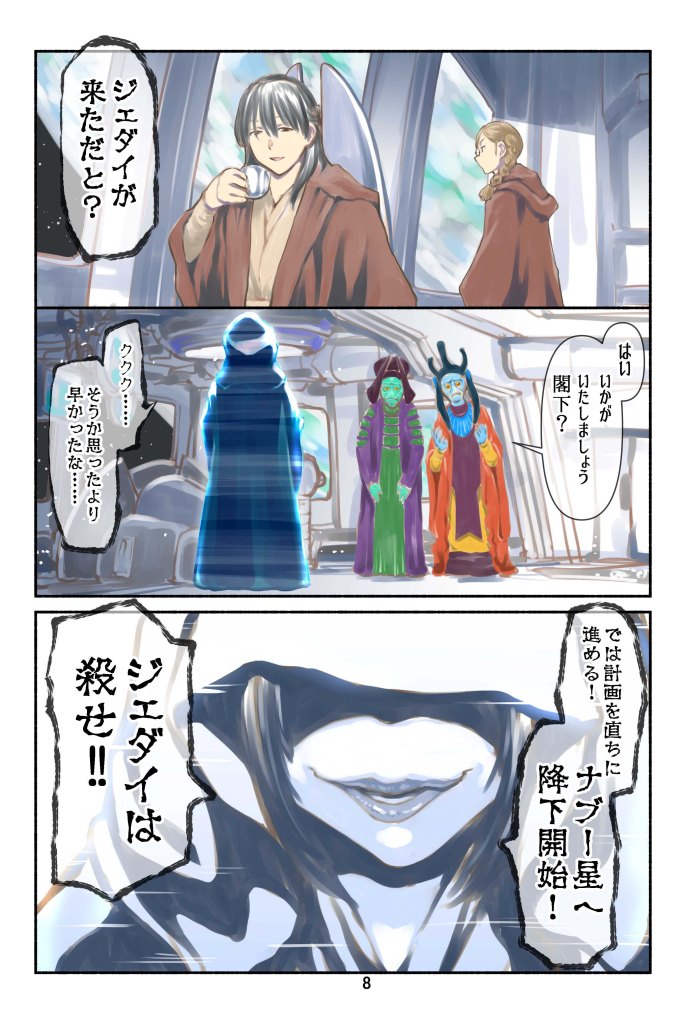
More pages from Sister Wars, Kio’s genderbending The Phantom Menace parody. With that, Chapter 1 is done.

Kio kind of wings it with the color, but thinks that the work wouldn’t be that different even in B&W. Kio likes the color palette in Star Wars in general.

Amidala-kun.

Kio also uploaded Sister Wars Chapter 1 to Pixiv.

Kio went to an Azuma Kiyohiko Yotsuba&! exhibit at the Tokiwa-sou museum.

Kio is especially flabbergasted by how Azuma managed to do this panel.

Kio mentions that this Jedi is not to be confused with this girl from Kio’s 18+ doujinshi. However, he realizes that he might have certain preferences when the characters he came up with in 2010 and 2022 are so similar.

Ogiue and Ohno might technically fall under this category too. Kio includes an old drawing of Ohno cosplaying Leina from Queen’s Blade and asking Ogiue to cosplay as Leina’s little sister Elina. This is a voice actor joke because the original Ohno (Kawasumi Ayako) voiced Leina and the original Ogiue (Mizuhashi Kaori) voiced Elina.

After seeing a weather report that the temperature is going to be 35 degrees C (95 degrees F) after a typhoon, Kio is reminded of a line about becoming accustomed to torture.

It’s in the nature of manga artists to want to make efficiently beautiful manuscripts. The shorter, the better.

Kio got through 70 pages of his eromanga manuscript, but then wasn’t sure of a certain part and ultimately decided to put in twice as much effort and drew the whole thing.

In response to the passing of Terasawa Buichi (author of Space Adventure Cobra), Kio describes Cobra as an accumulated mass of sense. (That sense seems to mean like an artistic/aesthetic/creative sense.)

Kio buys a doujinshi by manga artist Kusada, who released it at the originals doujin event Comitia.

Kio took a lot at the author Shima Tokio’s 18+ doujinshi, and was not only surprised at a development that happens in the middle, but that Shima would have the time to draw this on top of working on a serialized manga.

Kio purchased a doujinshi by the artist Kusada called Sister vs. Chupacabra. He likes how there’s tsukkomi after tsukkomi in it.

Kio is thanked by the author Ichihara Hikari Z for preordering their manga, Seishun Libido Yama.

Kio opened Twitter for the first time in a while. He couldn’t keep up with the timeline, so he’s decided to give up and go to bed.

Kio read a comic drawn by Nagata Reiji, a person who left being a surgeon to become a manga artist, about that very experience. Nagata was apparently also serialized in Afternoon, and Kio decided to buy one of his manga.

Kio has been meaning to tweet about the Genshiken pop-up shop at all TSUTAYA stores (that began on September 22nd) but kept forgetting to do so. (Check out the replies as well for lots of Kio thanking very excited fans.)

High-resolution art of the school swimsuit Ogiue on the limited edition Volume 6 of Genshiken. [If you’re wondering if I own it, the answer is yes.]

Kio retweeted Koume Keito’s art for Wandjina in Fate/Grand Order. (Koume was the artist on the Kujibiki Unbalance manga.)

A tweet about the start of the Genshiken pop-up shop event, with Kio retweeting and responding to various photos taken by fans of the displays, including those lamenting items being sold out.

Kio’s own purchases from the pop-up shop. He got a full Madarame set.

The title page art for Genshiken Volume 6. (I seriously love this image.)

Something about starting from Nidaime/Second Generation (I’ll admit that this is a bit vague, and I’m not sure I fully understand this).

Some Genshiken Nidaime art from the 2012 Afternoon calendar.

Sue from the title page of Genshiken Volume 7.

Child Empowerment as Commodity and 1980s American Cartoons

The 1980s were a pivotal decade in American children’s television, when Ronald Reagan’s administration removed the rules against directly advertising to children. Things like He-Man, My Little Pony, and Thundercats are all a product of this barrier getting knocked down. There was a clear downside to this—it allowed greedy capitalist companies to have their way with young and impressionable minds—but I also distinctly remember loving the cartoons of the 80s (and 90s) because they felt like they spoke to me and my desires.

Compared to the even older cartoons of decades past that I’d see pop up on TV, there was so much more action. Characters from shows like Silverhawks, Teenage Mutant Ninja Turtles, and Bionic Six just looked downright amazing in the mind’s eye of a young kid. I think what really stood out to me was the degree to which these shows felt like they understood what kids wanted, in contrast to programs that were concerned about what parents would think. Even with the requisite PSAs (e.g. GI Joe’s “Knowing Is Half the Battle”), what made these toy-centric cartoons feel so good was the irresponsibility. They allowed kids like me to live vicariously through them, with only the flimsiest of morals as pretext. Even today, their opening animations ooze such style and splendor that they represent the pinnacle of cool.

Of course, the reality is that what kids want isn’t necessarily what’s good for them, and companies were and are all too eager to exploit them for the sake of a bottom line. Children are not ignorant or imperceptive, but they’re also readily willing to eat ice cream for breakfast, lunch, and dinner. Cartoons of the Reagan era definitely swung in that direction, and those who grew up on them and take their visual conventions and tropes for granted might not be aware how much their biases are influenced by this sustained marketing volley on our senses.

At the same time, shit was rad, and I’m glad I saw Rodimus Prime ask the Matrix of Leadership to “light our darkest hour.” How do you give kids that kind of empowerment without taking advantage of the plasticity of their minds?

I use the 80s as the main focus because of that prominent macho aesthetic, but what I’m also thinking about is the way getting attached to a specific era of animation can shape one’s perspective as to what is normal and interesting. Cartoons do not exist in a vacuum apart from the world at large, and both the creators and kids carry values that are often different in some way than their predecessors.

Ironically, diversity and championing civil rights is far more transgressive move than just letting kids imagine they could shoot lasers, but to those who grew up in the shadow of the 80s and 90s, the former can seem too much like the moralizing that made the previous decades’ cartoons feel boring.

The complaint that Disney doesn’t have “true bad guys” anymore also comes to mind. On some level, it makes sense: Evildoers like Jafar, Scar, Maleficent are iconic and bring a bit of an edge to the family-friendly works they come from. However, while these bad guys often possess a visceral darkness about them, the antagonistic forces of current Disney movies tackle more socially profound topics like generational trauma. The former chill the spine, while the latter bludgeon the gut, often feeling far more painful to those of us who can relate to the characters’ situations. But a certain type of person thinks it automatically worse if the villains aren’t, well, villainous. The lack of a clear-cut light vs. dark conflict can be disappointing to those who just want to see a foe vanquished.

I think all this is to say that sometimes it’s not just nostalgia that makes a period of art and entertainment feel special—there are actual differences influenced by the culture of the time and the people who contributed. But just because a period is special doesn’t mean it’s the be-all, end-all. We can find hot in the way 80s cartoons hit the mark aesthetically and inspired kids with that sense of cops-and-robbers awe, while also acknowledging that not everything was perfect. 

Killing Them Hard with Her Golf: “Birdie Wing: Golf Girls’ Story” Season 2

I don’t know if there’s a wrong side of ridiculousness, but I definitely know that Birdie Wing: Golf Girls’ Story is squarely on the right one. And with the series now finished, I wanted to do a review of Season 2 to wrap everything up.

(Warning: Season 1 Spoilers)

The plot of the first season is like something from a fever dream: An orphan girl named Eve participates in her country Nafrece’s illegal underground golf scene, where big money is on the line. One day, she encounters a Japanese girl destined to become her rival/romantic interest Amawashi Aoi. In order to fulfill their dream of truly playing against each other someday, Eve has to overcome all the crime lords involved through the power of her brute force approach to golf. During this time, the list of things that happen include: a rocket launcher assassination, an airship with a transforming golf course inside, and even a cyborg golfer. Eventually, Eve winds up in Japan and attends the same school as Aoi, an academy for people with dreams of going pro.

At the end of Season 1, we were left with a question of what kind of series Birdie Wing will be overall. It has so many components that it could lean just a little in any direction and become something wildly different. Now that Season 2 is done and the series is complete (for now), we have the answer: Birdie Wing is all about Maximum Drama, and it will use every tool in its arsenal to achieve this goal. These include: a disease that kills you if you play too much golf, convoluted family trees that boggle the mind, and special abilities passed down from mentors and long-lost figures from the past. What we have is not so much a sports anime or a drama, but a series that asks, “What if a soap opera had tournament arcs?”

I will give one small spoiler about Season 2: My prediction about them going into space to play golf never came true, despite the fact that “Amuro Ray” and “Char Aznable” essentially both exist in this anime. Nevertheless, it’s an enjoyable roller coaster all the way through, and how the series ends is actually brilliant in its own way. While I’m not going to say that Birdie Wing is perfect, or that it’s for everyone, I do believe that we need more anime of its kind in the world.