Super Robot Wars 30 and the Two Chizurus

I love the way the Super Robot Wars series combines plots together, and one example is the “connection” between the two Chizurus featured in Super Robot Wars 30.

One of the anime series in Super Robot Wars 30 is the 2000s-era anime Gun x Sword, and among the cast is a veteran robot crew called El Dora Team, who are portrayed as old-fashioned relics of a bygone era who find the spirit to fight again instead of sitting on the sidelines and waxing nostalgic. They’re essentially meant to be 1970s robot anime characters (with a bit of Mexican and spaghetti-Western flair) thrust into a modern context.

One of those 70s elements is they once had a female teammate named Chizuru, possibly as a nod to Nanbara Chizuru, the girl member from Super Electromagnetic Robo Combattler V. However, both Gun x Sword and Combattler V are in Super Robot Wars 30, and the setting is such that El Dora Team are still the old timers and the Battle Team are the upstarts. As a result, they flipped the script and made the Combattler V Chizuru the younger one who reminds the grandpas about their dearly departed friend.

This swapping of ages and influences is a clever maneuver to allow both sets of characters to retain their identities and physical ages within the story. But it also reminds me of someone: Elvis Presley.

Elvis famously wore flashy jumpsuits with collars and sometimes capes, and there’s speculation that he didn’t do it out of the blue. Growing up, he was a big fan of the Fawcett superhero Captain Marvel Jr., and the similarities between the character and Elvis has led to fans of both wondering if Elvis took elements of his famous aesthetic from the comic character. The story doesn’t end there, though.

Over the years, DC had acquired the license to the Captain Marvel (aka Shazam) characters. In one of their many later reboots, they placed Captain Marvel Jr. into their setting as a modern teenager, so rather than being a child of the 1930s, he was now a product of the 1990s. But in a similar twist to how the two Chizurus are connected in SRW30, it was now Captain Marvel Jr. who was the Elvis fan.

It’s a funny kind of geekery that I appreciate, and it reminds me why it’s fun to be a fan.

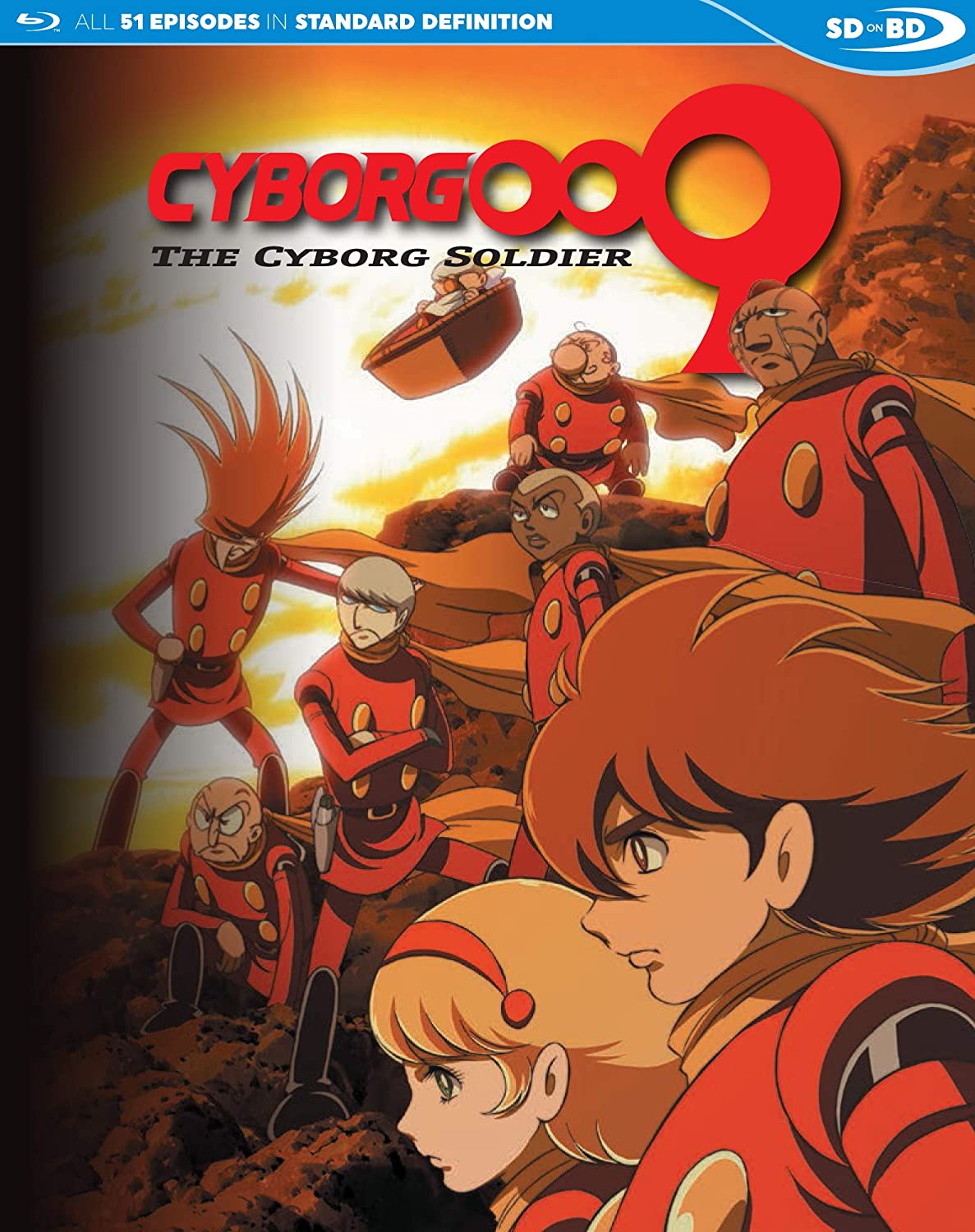
What’s the Justice, Indeed—Cyborg 009: The Cyborg Soldier

The early 2000s were an interesting time for anime remakes. Rather than trying to “update” aesthetics to match contemporary sensibilities, many chose to be intentionally retro. It’s within this context that 2001’s Cyborg 009: The Cyborg Soldier emerges. Based on the pioneering action manga by legendary creator Ishinomori Shotaro, the series embraces the rounded, Tezuka/Disney-inspired character designs that defined post-WWII manga while adding some modern flourishes.

The eponymous Cyborg 009 is one Shimamura Joe, a Japanese guy who was abducted by the mysterious organization known as Black Ghost and forcibly converted into a cyborg capable of moving at superhuman speeds. However, Black Ghost’s plans go haywire when Joe escapes thanks to previously unknown allies: fellow 00 Cyborgs just like him, numbering 001 through 008, each of whom have unique abilities like flight or super strength. Together, they battle against Black Ghost and its plans to inflame and perpetuate war and conflict on Earth.

I’ve only read a little of the original manga, but what struck me about Cyborg 009: The Cyborg Soldier is how compelling it is from the start. Between the solid foundations of the source material and a retro style combined with sharp direction and animation, it never comes across as too indulgent in nostalgia or trying too hard to make up for any perceived staleness from the 1960s original. Cyborg 009 is so influential that many of its elements have become standard tropes in anime, manga, and even beyond, but they still feel fresh when presented here. I also have to point out the stellar voice cast, which features heavy hitters like Sakurai Takahiro, Wakamoto Norio, Ohtsuka Akio, and more.

This anime (which is just one of many, many adaptations over the decades) largely follows the manga it’s based on by covering all the big arcs—though certain storylines like the Vietnam War have had their settings changed. One consequence is that the strengths and flaws of the manga also come across in the 2001 version, including the fact that some storylines are just weaker than others. Especially after the first 20 or so episodes, there seems to be a bit of meandering as the narrative has trouble finding foes as interesting as earlier ones. This comes right down to the climactic conclusion, which was controversial at the time it ran in the manga and disappointed many fans, but is presented here largely unchanged. The last few episodes are even an alternate storyline based on notes Ishinomori left for a new conclusive ending, but one he couldn’t finish before passing away in 1997.

Given how recently Ishinomori had died at the time of production, I have to wonder if that affected the approach taken for The Cyborg Soldier. It reminds me of 2021’s Getter Robo Arc, which was also a mostly straight adaptation of a deceased artist’s work, but in that case, the manga never finished, leaving both it and its anime on a cliffhanger. At least The Cyborg Soldier has some sense of closure.

The politics of Cyborg 009 with its antiwar message and its criticisms of war profiteering stand up to the test of time, especially because they’re rarely ever simplistic. In one episode, the team has to help psychic alien children who come from a world where killing is completely unimaginable, but they are invaded by other aliens with no such qualms. All they can do is run and defend, stemming the bleeding but never truly stopping it. It isn’t until Cyborg 002, an Italian-American with flight powers named Jet Link, provokes the children to stand up for themselves that they turn the tide of battle. The character abhors war, but believes that remaining passive and lacking the will to fight back in any situation means getting run over—a sentiment he developed on the mean streets of New York City. Notably, though, this isn’t necessarily the philosophy of the rest of the team, and the fact that they both have unique personalities and come from different cultures around the world helps to portray a diverse team with different perspectives.

One issue with that diversity is that in the original manga, many of the designs of the characters were ethnic stereotypes, with Cyborg 008 being the most egregious example. A black African named Punma (whose country of origin changes depending on the version), he is portrayed in the manga with comically large lips and jet-black skin like a sambo doll. However, it’s clear from his personality and background that he is not meant to be a joke: Punma is originally a clever and kind soldier fighting against a tyrannical government, which means he has the most practical combat experience. His ability to excel in underwater combat, a product of his cyborg transformation, is a pretty neutral ability, and neither he nor his people are portrayed as savages. In The Cyborg Soldier, Punma sports a much less offensive design, helping the visuals to catch up to the character within.

Another case where the politics of representation could use some work is with the sole woman on the team, Cyborg 003. French woman Francoise Arnoul has enhanced hearing and sight, which means she’s the only one with a passive ability—a longstanding trope for female team members in children’s series inside and outside of Japan. It also doesn’t help that she is often the default caretaker of Cyborg 001, a Russian baby with psychic powers named Ivan Whisky, with her cradling Ivan in her arms as the men go out.  But she’s also a three-dimensional character clearly beloved by the anime staff, and there are plenty of moments where Cyborg 003 is made to shine or another character sings the praises of her sensory abilities or regrets not having them. Unlike with Cyborg 008, though, because the issues with her portrayal are less purely visual, The Cyborg Soldier still ultimately retains a great deal of this passivity it adheres to the manga. 

Cyborg 009: The Cyborg Soldier ran incomplete internationally in the early 2000s, and it wasn’t until 2018 that a US Blu-ray was released in full thanks to Discotek Media. It’s one of those titles I genuinely thought would never see the light of day again, so I’m more than grateful. What’s funny to me is that even this 21st-century adaptation might be viewed as “retro” by fans (it’s 20 years old!), and that in this context, it stands the test of time in more ways than one. Not only does The Cyborg Soldier successfully convey the strengths of the original manga, but it holds its own as one of the best things to come out of that early digital era of anime, while delivering a timeless message of a wish for peace.

You Have a Friend in Moi—Mujirushi: The Sign of Dreams

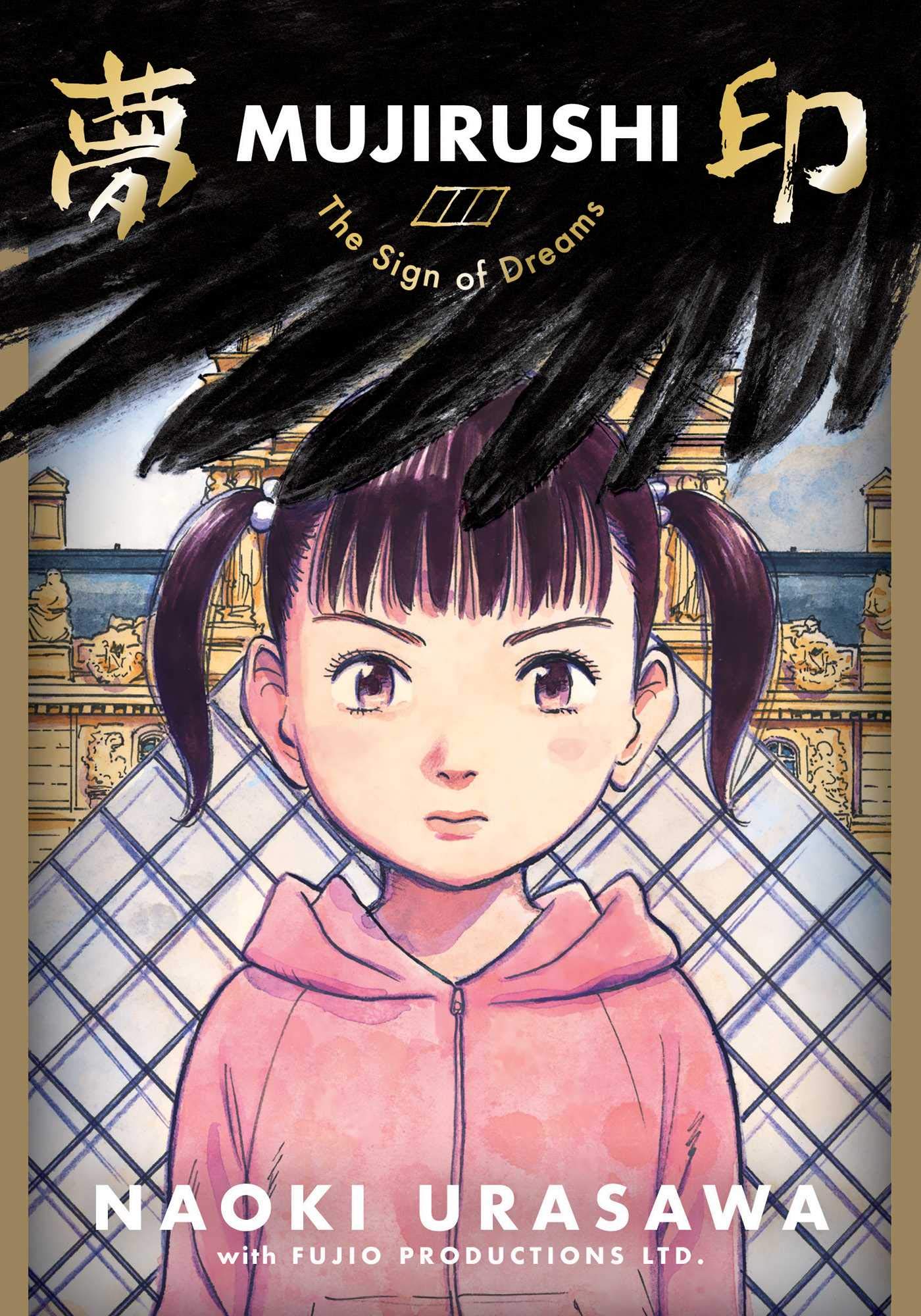
I’ve read my fair share of Urasawa Naoki. Between Monster, Pluto, and 20th Century Boys, I hold the manga author in high esteem, and generally assume I have a decent sense of his style. But I’m not sure anything could quite prepare me for Mujirushi: The Sign of Dreams.

The story centers around a father and daughter who have fallen on hard times after the dad makes a series of bad decisions. Desperate to get out of crushing debt, the two happen upon a mysterious fellow with extremely large front teeth and an overwhelming obsession with France known as the Director. This fellow convinces the father to participate in a plan that supposedly should give them both what they want, leading to a trip to France and the Louvre that only brings more unexpected turns.

It sounds like a pretty reasonable story, but one thing that makes Mujirushi different is that the Director is none other than Iyami, the most famous side character from the Osomatsu-kun franchise whose “SHEEH!” exclamation became a cultural phenomenon. As described by Urasawa himself (and even discussed in the early episodes of the modern-day revival sequel Osomatsu-san), Iyami was explosively popular in the 1960s—even more than the brothers themselves. An American equivalent would be something like having Steve Urkel show up as a central character in an otherwise unrelated movie (though Urkel did have his own France moment…)

I also want to mention that this manga features a weird female parody of Donald Trump named Beverly Duncan, whose face ends up playing a major role in the story, and it makes me wonder why Urasawa decided to throw this in. My best guess is that he simply wanted to draw Trump’s characteristic punchable grin because it makes quite the visual impact.

The manga is actually part of a collection of French, American, and Japanese comics made to celebrate the Louvre; readers might be familiar with the JoJo’s Bizarre Adventure take known as Rohan at the Louvre. When taken in this context, I can’t help but be amazed that Urasawa would weave one of Japan’s most pre-internet memetic characters into a story about French culture in the popular imagination, as if to say that the mere concepts of “France” and “the Louvre” exist in many individuals’ minds through the loud proclamations of a Francophile character. In many ways, it gives me similar vibes to 20th Century Boys and its obsession with Japanese pop culture of the mid-Showa period (Friend’s character in particular), as if Mujirushi is a story about France for the Japanese people who grew up in that period.
Mujirushi thus ends up being as much a look at how people learn of and experience France as it is the Louvre itself. In that sense, while it’s not a sweeping psychological mystery like so many of Urasawa’s titles, its intersection of nostalgia, culture, and memory fits right into his oeuvre.

Kizuna AI, Uruha Rushia, and the Search for Authenticity

A confluence of events has me thinking a lot about how people connect to Virtual Youtubers. Just recently, we’ve had both the final concert from pioneer Kizuna AI—who coined the actual term “Virtual Youtuber”—and the termination of Hololive’s Uruha Rushia not long after a different incident involving controversy over a rumored real-world relationship. When I think about just those two examples, I realize that their respective stories have a lot to say about the very way people engage online through these highly detailed virtual avatars.

VTubers generally exist as a form of kayfabe. They want viewers to embrace the idea that these artificial selves are real, and even when all parties understand it’s an act, the willful suspension of disbelief is important. But there are a few key differences between AI’s approach back in the burgeoning days of VTubing and the style that Rushia, as a member of Hololive, engaged in. First, AI’s content for most of her career involved uploading clips to YouTube with streaming being secondary content, whereas Rushia is the opposite in that live streaming was the foundation. Second, one of the big AI controversies was when fans thought they were trying to make her into more of a brand than an individual performer, while Rushia ran into trouble because of the perceived blurring of lines between her virtual and real selves.

The fact that streaming is live (as opposed to pre-recorded) inherently changes how viewers interact with someone. It means being there in real time, more or less. Certainly, there are things like superchat readings, where messages sent with monetary donations aren’t responded to until a later stream, but you know that when the figure on screen reacts to something, you’re seeing it right then and there (or at least with a slight delay). It’s somewhat like the difference between video chatting with a friend versus receiving a video message from them, and I don’t think it’s surprising that many would find the former more engaging. 

Having things live also means that things can go in unpredictable directions. That’s often seen as a plus, but that uncut nature is exactly what brought Rushia trouble. After all, the initial ruckus happened because she seemingly received a Discord message from a guy—a male YouTuber with his own massive and intensely devoted following—which for her more obsessed fans broke the immersion they had with her character personality as a yandere wife. The situation, in turn, is made all the more complicated by the fact that devotion to VTubers is often expressed through money via things like the aforementioned superchats. This exact series of events couldn’t happen to a VTuber who only uploaded clips, or at least not nearly as easily.

In contrast, one of the biggest controversies of Kizuna AI came not from the perception of peeling the curtain back too far, but from practically the opposite. Up until a couple years ago, it was not officially known who was the voice behind Kizuna AI, but fans knew there was a singular person bringing the character to life. When Activ8, the company behind AI, started the “Multiple AI Project” that would result in her being split into multiple versions, the fan backlash was the result of fear that they were going to replace the original, ater revealed to be voice actor Kasuga Nozomi. In other words, the concern was that making AI a vessel or suit that anyone could jump into and “become” her would be essentially stripping the character of her unique identity (brought forth by Kasuga) and providing cheap imitations. If we go by wrestling terms again (a natural extension of describing all this as kayfabe), then this was a Fake Diesel and Razor Ramon moment:

I’m also reminded of the Vtuber kson, who is a rarity in that she is willing to stream both as her flesh-and-blood self and as a Virtual Youtuber. In an interview on the Trash Taste Podcast, she mentioned that her fans in Japan enjoy her IRL stuff less. While kson says she’s not sure why that’s the case, she thinks it’s because they relate to her anime form more. Here again, immersion seems to be a big factor. This is not to single out Japanese fans or anything, but it speaks to the different wants and desires from VTuber fans, as well as the power of “chara moe.” Only, now these characters can be directly interacted with on a level not seen before.

I’m not someone who thinks that having strong feelings for online performers, virtual or otherwise, is inherently a doomed path. In my eyes, it’s not all that far removed from other forms of escapism and fandom, which I think are beneficial overall. However, what’s clear to me is that the varying degrees to which people want to engage with both the virtual and the real means that every strategy comes with inherent advantages and disadvantages—especially when you factor in the desire for success as a Vtuber, however one wants to define it. Perhaps what all this comes down to is a genuine human desire for safe emotional connection and authenticity, and Virtual Youtubers allow for a taste of that in times when we feel alone. It’s just not without risks to both performers and viewers alike, and I hope everyone can maintain their sanity because doing this can make anyone extremely vulnerable.

Theorizing the Perfect Fighting Game for Scrubs

What are the most common salty complaints in fighting games? “I swear I pressed the right button!” “Why did your move hit?!” “It’s not fair that I practiced this combo and you have to do less!” “Combos are cheap! Why should I have to put down my controller whenever I get hit?” Scrub gripes are often contradictory and based in whatever is convenient for the player, so if you were to truly cater to the scrub, the solution would be to wipe that all away and let them do whatever they want, whenever they want. So here’s my idea: give every character permanent super armor.

For those unfamiliar with “super armor” in fighting games, think of most classic Mega Man games. In boss fights, Mega Man recoils whenever he takes a hit, but the enemy robot masters never flinch, and will continue to execute their attacks even as you damage them. I believe the ideal scrub fighter would be such that all playable characters would be like Mega Man bosses, and hitstun as a concept wouldn’t even exist. The character Mech-Zangief already exists in some older games with this ability, but it would be roster-wide.

No blocking. No throws. Plenty of combos, but none of the combos would actually prevent the other player from continuing to hit buttons. There would be literally zero ways for an opponent to interrupt a player’s actions, and it would only become a matter of who could land more of their attacks against an opponent who’s moving around and trying to land theirs.

Would scrubbery still happen? Of course. You can’t truly defeat it any more than you can defeat anger itself. But maybe by being absolutely uninterruptible, the scrub can panic mash to their heart’s content, and thus derive joy.

The Heat Is On: Ogiue Maniax Status Update for March 2022

I’d be lying if I claimed I wasn’t full of fear of where the world is going. While violence is nothing new, there’s something about these particularly brazen lies we’re seeing used to justify a takeover of a sovereign nation that has me worried that the world is going to scary places, if not already there.

That said, while I sometimes would like to more fully disconnect my fandoms from the world at large, it’s a great deal harder than one might expect. Case in point, I started watching 2001’s Cyborg 009: The Cyborg Soldier, which is about people who were kidnapped and forcefully integrated with machines, who then rebel against the massive warmongering arms dealer that made them who they are. Even an adaptation of a classic action manga has dimension. That’s not in the same ballpark as, say, a harem series, but I think it’s ideal to discuss both the anime and manga that embraces every level of political engagement to those that are more passively political. Heck, isn’t the biggest anime basically Attack on Titan?

Here are the special Patreon members who continue to show me their generosity. While the lack of new members might be viewed as a sign of stagnation, the fact that so many continue to stick with me is something I appreciate.

General:

Ko Ransom

Diogo Prado

Alex

Dsy

Sue Hopkins fans:

Serxeid

Hato Kenjirou fans:

Elizabeth

Yajima Mirei fans:

Machi-Kurada

Blog highlights from February:

Rise of the Dojo Dojikko: Mabataki Yori Hayaku!!

My review of a cute-girls-doing-karate manga I’ve been really enjoying.

Summer Cure Makes Me Feel Fine: Tropical-Rouge! Precure

This Precure’s full of energy and avenues for change!

Power and Truth: Mobile Suit Gundam Unicorn

It’s been a long time coming, but here are my thoughts on Gundam Unicorn at last. Speaking of political anime…

Kio Shimoku

Kio Shimoku’s Twitter was pretty light in February, but I expect that to change in March with the final volume of Hashikko Ensemble.

Closing

I’m impressed how well Cyborg 009: The Cyborg Soldier holds up. It feels just as fresh today as it did when I’d catch episodes on Cartoon Network back in the day, and the focus on diversity, peace, and criticism of warmongering feel more relevant than ever before. I hope the ideals that anime brings can be something we can reach in our lifetimes.

Kio Shimoku Twitter Highlights February 2022

This month was pretty light when it came to Kio Shimoku tweeting.

Kio stumbles on a new technique while doing art for the final volume of Hashikko Ensemble.

B the Hashikko superfan asks if it’s due the cover, and Kio says it’s for the back cover because the front is going to be crowded.

B also mentions going to a choir concert thanks to Hashikko Ensemble, to which Kio expresses excitement that there was such an event.

Kio and Ikuhana Niro swap stories about buying alcohol on Ikuhana’s birthday.

Gathering the components for the release of Hashikko Ensemble Volume 8.

He slacked off on working out for three months, but got back into it recently. The post-workout aches from being away for so long are pretty bad.

Kio is about to private his Hashikko Ensemble YouTube video soon! Listen while you still can!

Another Five Star Stories model kit.

The pet tortoise returns! Kio apologizes for only having lettuce.

Next month is after the release of the latest chapter of Spotted Flower, and when the final volume of Hashikko Ensemble goes on sale. I expect a lot more tweets in March.

Power and Truth: Mobile Suit Gundam Unicorn

The Universal Century’s fight between the forces of the Earth Federation and the space-dwelling Zeon is both the foundation of Gundam and also, at times, the albatross around its neck. After 1988’s Char’s Counterattack closed the book on the central rivalry between Amuro Ray and Char Aznable, future Gundam anime would for decades do everything but provide a direct sequel. Gundam F91 and Victory Gundam set their stories decades after the events of Char’s Counterattack, other works like 0080: War in the Pocket and Gundam: 08th MS Team are side stories adjacent to Amuro’s story, and G Gundam launched the concept of alternative-universe Gundam—titles that take the name and basic aesthetics but are worlds unto themselves. This all changed with 2010’s Gundam Unicorn, also known as Gundam UC.

As a sequel to Char’s Counterattack,  can get pretty deep into the weeds. For example, to understand the power of the Unicorn Gundam and its heavy incorporation of Psycho Frames and its NT-D system (short for Newtype Destroyer) is to be invested in the lore of the Universal Century timeline. Newtypes are people who have gained extrasensory abilities in response to humankind’s expansion into space, and their subsequent weaponization of leads to the development of both aforementioned technologies; the former is a way to fully utilize their mental and emotional power (and which was once the key to saving the Earth), while the latter is a counter to such abilities. However, while these world-building elements can get complicated, they also provide a rich backdrop for Banagher and Audrey’s stories of confronting the crimes of their forefathers.

SPOILERS BEGIN HERE

Much like the later Mobile Suit Gundam: Hathaway, Gundam Unicorn is based on a novel, but it’s also the first franchise novel to be adapted into a part of the main canon. Taking place shortly after the Earth narrowly avoided having the Luna II asteroid base dropped on it, Gundam Unicorn tells the story of Banagher Links, a student living in a space colony who gets wrapped up in a strange conspiracy after encountering a girl calling herself Audrey Burne. The head of Banagher’s school and head of the Vist Foundation, Cardeas Vist, is the most powerful man in Banagher’s colony, and his immense influence over the Federation has to do with the latter’s fear of something known as “Laplace’s Box.” When a mobile suit battle breaks out in the colony, Banagher’s psychic desire to protect Audrey leads him directly to Vist and the mysterious Unicorn Gundam, a weapon that serves as the “key” to Laplace’s Box. Why the box has such a hold on the Federation and how characters reconcile with their family histories and ties to the history of the founding of the Universal Century are central to the story of Gundam Unicorn.

By the end of the first episode, Banagher discovers that he’s actually the estranged son of Cardeas Vist, and shortly after sees his dad die before Vist gives him exclusive access to the Unicorn Gundam—and with it, a bridge to a secret that terrifies the Federation top brass. In the next episode, Audrey reveals her true identity: She is Mineva Lao Zabi, the last surviving member of Zeon’s original royal family whose leaders steered a fight for independence into a militaristic fascist regime. These central characters, both with deep roots in the two respective warring sides, are continuously challenged to look long and hard at the privileges they’ve received on the backs of the fallen. Their situations are contrasted with another character, Riddhe Marcenas (the son of a Federation politician), who desperately tries to maintain the status quo in order to avoid disrupting the familiar world he’s known.

Banagher is the protagonist, but Mineva is the stand-out character in so many ways. For those already familiar with the history, Mineva is familiar as the innocent baby daughter of Dozle Zabi, who perished fighting the original Gundam in the first anime. The monstrous-looking Dozle was ironically the most righteous and pure-hearted of the Zabis (albeit while still being guilty by association of Zeon’s atrocities), and his selflessness and loyalty are what allowed Mineva to escape with her mother. As the last Zabi, she is revered by the remnant Zeon forces, and she has a regal bearing that speaks to her status. Now on the verge of adulthood, however, Mineva sees her mission as atoning for the sins of the Zabis.

The ultimate direction taken by Banagher, Mineva, and eventually even Riddhe is what I would summarize as “Do good with the advantages you have.” None of the power they possess, whether physical or political, is bloodless, but they decide to reveal the truth that lies behind Laplace’s Box despite the fact that its contents could potentially flip everything upside down. Laplace’s Box turns out to be a monument containing the very first Universal Century charter, previously thought to be lost in a terrorist attack. While something so ceremonial should not be so revelatory, it turns out that this original charter contains a clause surreptitiously removed in later versions: 

“In the future, should the emergence of a new space-adapted human race be confirmed, the Earth Federation shall give priority to involving them in the administration of the government.”

In other words, the Federation government was supposed to have enshrined the equal treatment and political representation of the space-born, but purposely revoked it in secret in order to rule over the Spacenoids. This action is revealed by Mineva to all as a  successful move to consolidate power, its obfuscation of the truth arguably being the first catalyst that would lead to the One Year War and the continued bloodshed between Federation and Zeon. I have to wonder if this is also meant to be the catalyst that leads to the decline of the Federation that we see in later sequels like F91 and Victory.

The series does not absolve Zeon of their crimes through this, and Mineva outright states that her family is guilty of much tragedy, but that this is about spreading the real history of what transpired and to open the path for a better future. I can’t help but think of the current situation in the US and the attempts to ban the teaching of its racist past and present in an attempt to indoctrinate children into a blind patriotism. I understand that both the novel and anime predate this current unfortunate phenomenon, but nevertheless it feels more relevant than ever. Perhaps it ties into Japan’s own ongoing struggle with rewriting its history books to hide the things its wartime government inflated on its own people and those throughout Asia.

There’s a lot of meat I didn’t even touch upon, and all of it has a lot to say about war, peace, society, and justice. While Gundam Unicorn is really dedicated to trying to fit neatly in the canon of Gundam, it’s also a solid and compelling science fiction anime in its own right. Somehow, its lessons feel more relevant than ever.

Just Keep Drawing: Blank Canvas

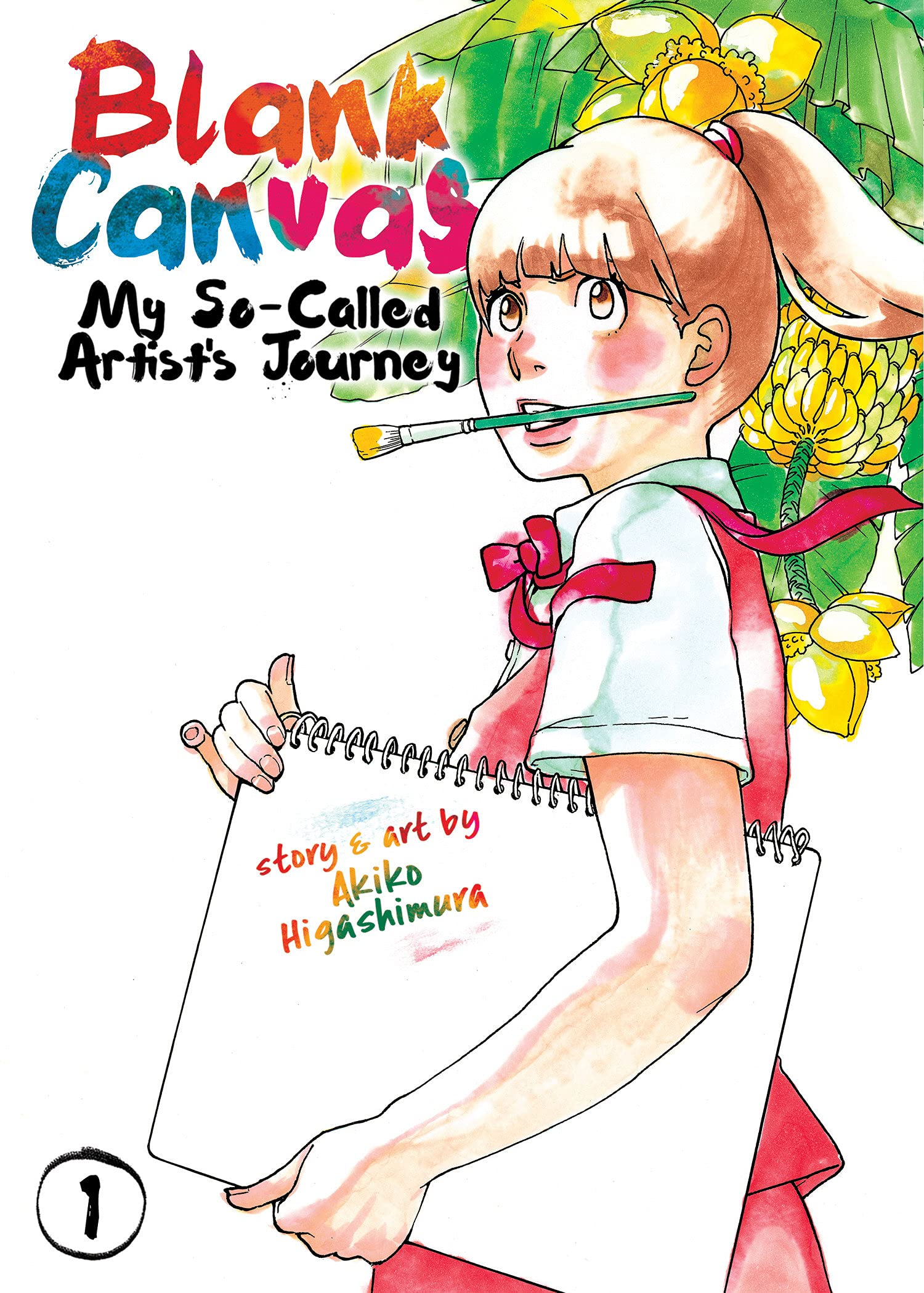
I love the works of Higashimura Akiko. Whether it’s Princess Jellyfish, Tokyo Tarareba Girls, or even the recent Webtoon A Fake Affair, her stories about women feel utterly authentic even as they can sometimes dip into the realm of the fanciful. But Blank Canvas: My So-Called Artist’s Journey is a little different from these other titles: an autobiographical series about how Higashimura herself became a renowned professional manga artist. Rather than some self-aggrandizing memoir, however, it declines to pull its punches by conveying the sacrifices she made, for better or for worse, to get to where she is. 

Titled Kakukaku Shikajika (“And So On and So Forth”) in Japanese, Blank Canvas traces Higashimuta’s path starting from her days as an overconfident high school student assured that she’ll be the next big manga artist. Her plan to get into an art college and use that as a platform to launch her career leads Higashimura to her first art teacher, Hidaka-sensei: an expectations-defying hothead of an old man who runs his own independent class and constantly pushes his students to just keep drawing no matter what. From art lessons to art school to her first published manga and more, Higashimura lays out the strange-but-profound relationship the two of them share.

I myself attended a fine arts school but ultimately did not end up in a career directly tied to that particular world, and there are definitely elements of Blank Canvas I can relate to—particularly in terms of remembering the greater talent and hard work that I would see in my peers. I may even still have trouble honestly assessing how much of the opportunity I squandered versus how much it benefited me, but when I read Higashimura, I can feel the harsh yet fair weight of her self-assessment, as she emphasizes just how much Hidaka’s teachings stuck with her. Through the ups and downs of Higashimura’s artistic life, including a mentally and emotionally draining struggle between her “fine arts” side and her “manga” side, her teacher’s lessons (both in life and in art) crop up as both sources of inspiration and dread.

Hidaka-sensei is definitely a character, and reading it made me think about how differently people can be built both inside and out. Hidaka-sensei is portrayed as someone who would berate and even physically hit his students, but was nevertheless confident that anyone who put in the time with him would improve. The mix of faith and Spartan training is an odd combination, and I could see it being actively harmful to certain types of artists. Yet, Higashimura makes it clear that this helped her greatly, even if she didn’t always want to admit it.

The series also provides insight into the kinds of manga that influenced Higashimura, and it makes me interested in looking deeper at the shoujo magazine that inspired her the most: Bouquet. If the series found in Bouquet are part of the reason we got the artist of Princess Jellyfish and all these other great titles, they’re even more worth reading in their own right.

Blank Canvas is complete at five volumes, and its combination of levity and brutal honesty are hard to forget. I feel like it’s just as likely to convince someone to become a comic artist as it is to get them to rethink that career choice, but more importantly, it’s a gradual and thorough processing of all a life has to offer—the beautiful, the ugly, and the realization that it’s easy to mistakenly assume which is which.

Is Loving a Genre Like Supporting a Local Sports Team?

I’ve been mulling over something lately: Is it safe to define a genre or trope preference in fiction as a case where you’re more accepting of less-than-stellar results? Much like supporting a local sports team through thick and thin, is being a genre fan about enjoying even the mediocre?

I’m ready to admit that the analogy falls apart under close scrutiny for a whole host of reasons. There’s no clear metric for winning vs. losing with something subjective like fiction. Supporting a player or a team, something made up of real people, is very different from being into a particular fiction genre—a more fitting comparison might be a favorite animation studio or book imprint.

But when I think about a genre I enjoy—giant robot anime for instance—there’s something about my appreciation that feels like it goes well beyond considerations of quality. When Good Smile Company announced a ton of new model kits for their Moderoid line, the sheer variety and obscurity of the line stood out to me. Some of the excitement came from the representation of series I consider personal favorites: Godannar!!, Reideen, Granbelm, Rayearth, The BIg O, and more. But it also came from seeing new or relatively obscure things get the spotlight, like Daitei-oh (the Eldoran series that never officially got an anime), Zeorymer, Promare, and iDOLM@STER: Xenoglossia. Not all of these series are genre-defining heavy hitters, but that they exist as merchandise fills me with warmth.

In contrast, I’ve watched a good amount of idol anime at this point, but I still don’t see myself as a fan of the genre. I appreciate the titles that stand out, though.

Perhaps, however, supporting your local fiction genre also comes with being able to recognize that you have a bias towards the tropes and expectations that come with it, because sometimes having a truly disappointing instance stings extra hard. But I also wonder if, like how you have sports fans of consistent winners and those of perennial underdogs, there’s a difference between the fans of a genre that’s seeing the limelight and one whose star has faded a bit—or, for that matter, a genre that may have once been big versus one that has never really ascended in the first place.