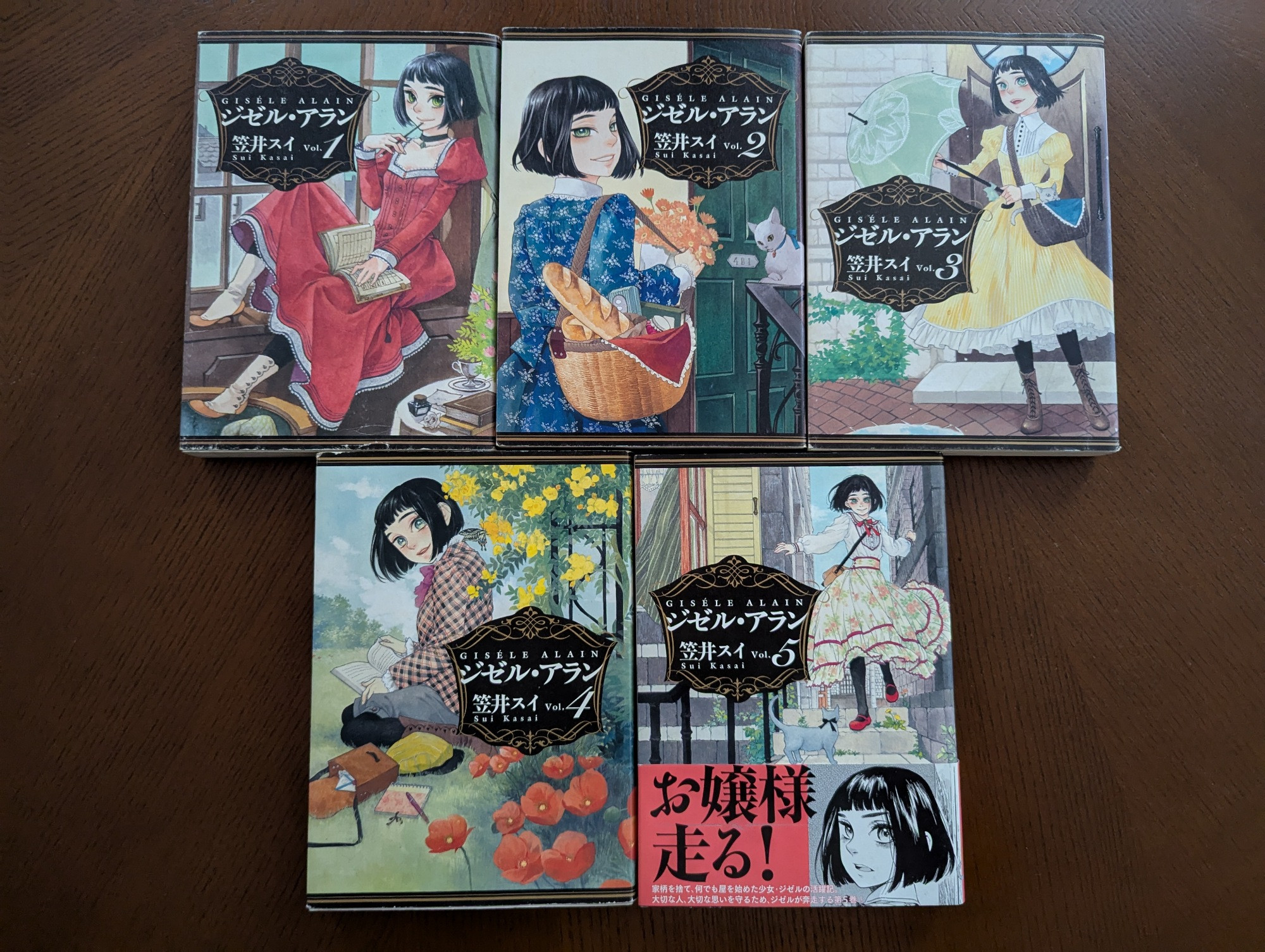
I feel like I’ll never be used to this, but another one of my favorite creators has left us. Kasai Sui, author of the historical fiction manga Giséle Alain, passed away on September 12.
With a drawing style reminiscent of Mori Kaoru (A Bride’s Story, Emma) and Miura Kentaro (Berserk), Kasai’s art was stunningly gorgeous, and really captured that Harta Comix style. Giséle Alain follows a young and wealthy tomboy by the same name who opens her own “all trades” business taking care of odd jobs, and it is one of the best manga I’ve ever read. The art is simply gorgeous, with character expressive and lovingly rendered—particularly when it comes to Giséle herself. The period clothing, architecture, and little details are some of the best I’ve ever seen in manga. The story, told through the little adventures of our heroine and eventually her complex relationship with her own past, is something that drew me in deeper and deeper.
Giséle Alain ran for five volumes before going on hiatus in 2014. I was looking through the archives of this blog, sure I had posted something about it over the years, and I was shocked to discover that I had not devoted a single post to this series. I think a part of me was still holding out hope that Giséle Alain would return, and that I would be able to write about Kasai’s work then. Alas, I guess this is my review now: Go read the manga if you can.
I didn’t follow Kasai closely, and I kind of regret that now. For one thing, I never quite realized that Giséle Alain stopped serialization because the author had become ill. Nor did I know that they had a wife who is also a manga artist. I also wasn’t aware that Kasai had opened a Pixiv Fanbox, and had been posting to it off and on for the past six years, and I wish I could have been supporting them this whole time. During this time, Kasai’s output fluctuated a lot (I assume due to health issues), but their art remained incredible. They even tabled at Comitia last year! A part of me wants to take up drawing again, being faced with the mortality of an artist whose work I adored, especially because they were close to my own age.
News articles have also revealed that an extra Giséle Alain story was actually in the works and close to completion before Kasai died. The author had tweeted innocuously just four days prior, and it seems like everyone assumed this was going to be her triumphant (albeit limited) return. I really hope we get to see this extra story, even if it’s in disorganized pieces.
Kasai’s Fanbox is going to close paid subscriptions after October 31. Visiting it is a great and convenient way to see the work of a master.
Another famous Japanese singer from anime and tokusatsu passed away recently: Yamada Nobuo, aka NoB, aka lead singer of the band MAKE-UP. He was 61, and had recently been dealing with kidney cancer.
I don’t have quite the childhood connection to NoB that so many others do, but I still wanted to say a few words because I do feel that his music touched my life at different points.
I didn’t grow up with the anime or anything, and I only read the manga a few years ago. However, I was very familiar with most famous song: “Pegasus Fantasy,” the first Saint Seiya anime theme. That opening has long been one of my go-to examples of a near-perfect intro thanks to the energizing and soulful music combined with the action-packed animation. Sometimes, I will just randomly type it into YouTube to watch again. Years later, I would also enjoy his return to the franchise with Saint Seiya Omega, where MAKE-UP sang “Pegasus Fantasy” alongside Shokotan.
Because I didn’t follow his career closely, I also didn’t realize that he was also involved with another show for which I have fond memories. When I was living in Japan in 2005, I enjoyed just being able to catch what was airing on TV, and that included the Super Sentai show Mahou Sentai Magiranger. Watching it became a weekend tradition, though I hadn’t realized that he was responsible for the theme of the character Dark Magic Knight Wolzard.
This has been a sad loss for NoB’s fans, and my condolences go out to them. For me personally, it’s a reminder of the passage of time. But music is immortal in unique ways, and I don’t think I’ll stop playing his songs, whether over my headphones or just in my head.
Rachel Lillis, one of the main voice actors of the original Pokémon dub, passed away recently. She was 55.
I don’t hold that original 4Kids dub in special regard—their voices do not necessarily define the characters for me, even though I think they played the characters well. That said, I feel that they are an important part of my life, and something that took me from kid who liked anime to full-on otaku.
I think Lillis’s ability comes through in the range of characters she played. As the voice of both Misty and Jessie, she was in virtually every episode talking to herself, and she really sounded like two entirely different people. If I didn’t know they were voiced by the same person, I might not have ever realized. Her performances resonate clearly in my memory—I used to watch the show every day for years and years, I had the 2BA Master CD, the whole nine yards. Whatever my potential misgivings about the dub’s censorship choices, I find that Lillis’s voice work actually felt entertaining and faithful to her characters.
In terms of her influence, I especially remember an early Pokémon fansite, the Team Rocket Headquarters. It was filled with people who absolutely adored Jessie, James, and Meowth, and Lillis’s tragic and arrogant goofball of an agent played a major part in bringing them to be Pokémon die-hards. Also, it apparently still exists????
Pokémon switched English actors in the mid-2000s, which means that virtually everyone who grew up with Lillis’s performances are now full-grown adults. There’s no doubt she brought a lot of smiles to fan’s faces, and I hope those who aren’t familiar with her work can go back and appreciate it too.
On a recent trip to Japan, I walked past a shrine. Next to that shrine were statues of Dragon Quest monsters. Seeing them reminded me of the sheer impact of those games and the artist whose memorable designs helped to entrench the series in Japan’s popular imagination.
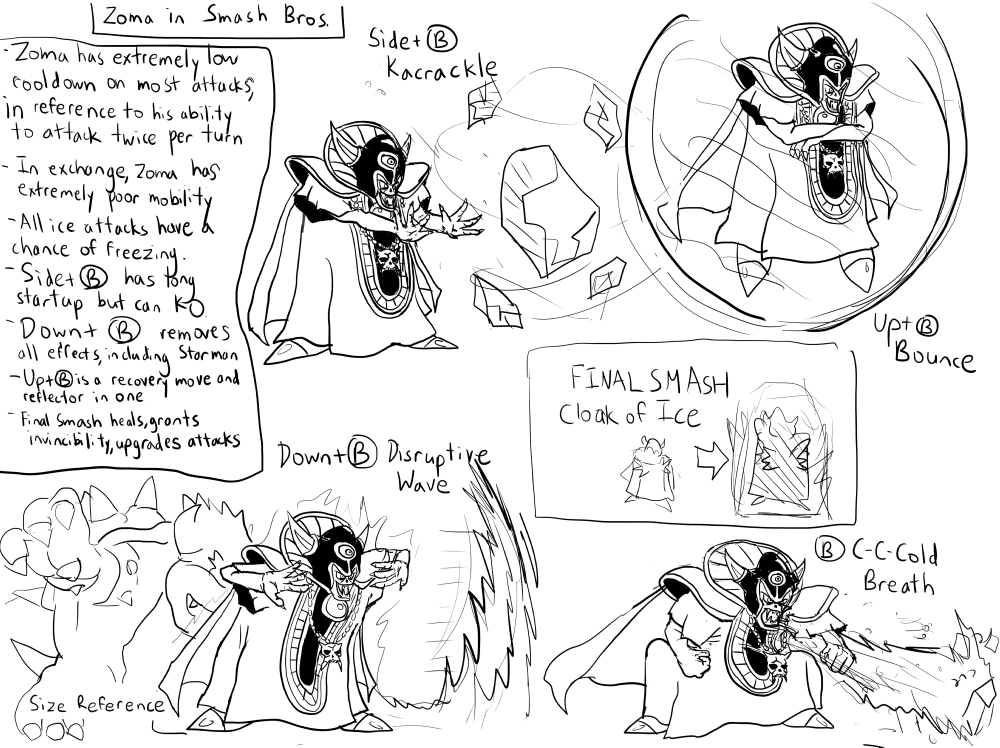
We now live in an age where Toriyama Akira is no longer with us. As the creator of Dragon Ball and Dr. Slump, as well as the iconic artist of Dragon Quest and Chrono Trigger, his influence is nigh-unmatched. There are maybe two or three other series that are as pivotal to shounen manga as Dragon Ball, and Toriyama even casts an enormous shadow on the isekai and fantasy genres: The Dragon Quest series is what established the “Hero” (Yuusha), the “Demon Lord” (Maou), and the “weak Slime” as archetypes in Japan’s popular imagination, and it’s Toriyama’s designs that inform the aesthetic of all successors.
In light of Toriyama’s tragic death at only 68 years old, I’d like to just talk about how my life has been touched by his work. My story is nothing special compared to the millions of voices mourning Toriyama, but I wanted to at least personally add to the well wishes pouring out.
Dragon Ball
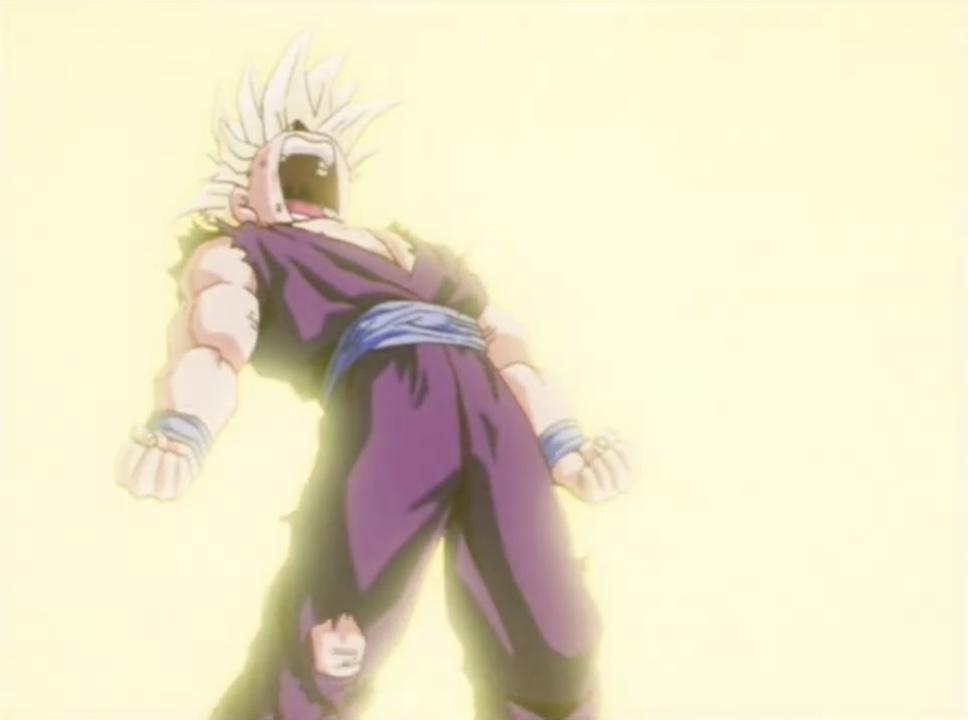
Dragon Ball Z was the very first anime that I knew to be “anime.” While I had loved things like Voltron, they were still just “cartoons” to me. But when a relative started bringing home tapes of DBZ, it was a sight unlike any other. I remember just being amazed at the rapidfire punches, the zooming around, the ki blasts—I’d never realized animation could be this way! I cheered for Piccolo, watched characters (gasp) die, saw Son Goku turn Super Saiyan, and witnessed his son step up and defeat Cell. I wondered if anything could ever top this story. I wanted to be Gohan.
It was also a time when I got to play the first two fighting games for the Super Famicom, and when I’d re-read over and over a small guide to the first game that showcased all the playable characters. “What does Jinzoningen (“Android”) mean?” I recall wondering.
So when I first found out that DBZ was coming to US airwaves (for real, and not just finding a random channel that sometimes had Korean episodes of the original Dragon Ball), I was elated at the prospect of Dragon Ball Z getting big. Imagine: more American DBZ fans! While the English adaptations have had their differences with the original (as well as the non-English dub I first watched), Goku ultimately succeeded in reaching into the hearts of countless viewers. (I still wish those early US viewers got the chance to hear “Chala Head Chala,” though.)
Ironically, I was one of those people who’d go on to poo-poo the Dragon Ball franchise. As I got more into anime and manga, I viewed the series as a thing you’re into when you’re just a “beginner,” or obsessed with just macho violence and watching muscle-bound dudes power up endlessly, and I felt good that I knew there was more out there. It took a number of years to get through that embarrassing phase, but I’d eventually come back around to appreciate Dragon Ball for its outsize influence on culture, as well as for just being a work of art in itself. More recently, it’s been great seeing Dragon Ball Superbe a thing, and for Toriyama to have worked to bring back the essence of Goku—as well as the balance of action and humor that Dragon Ball and Toriyama himself had been known for.
Dragon Quest
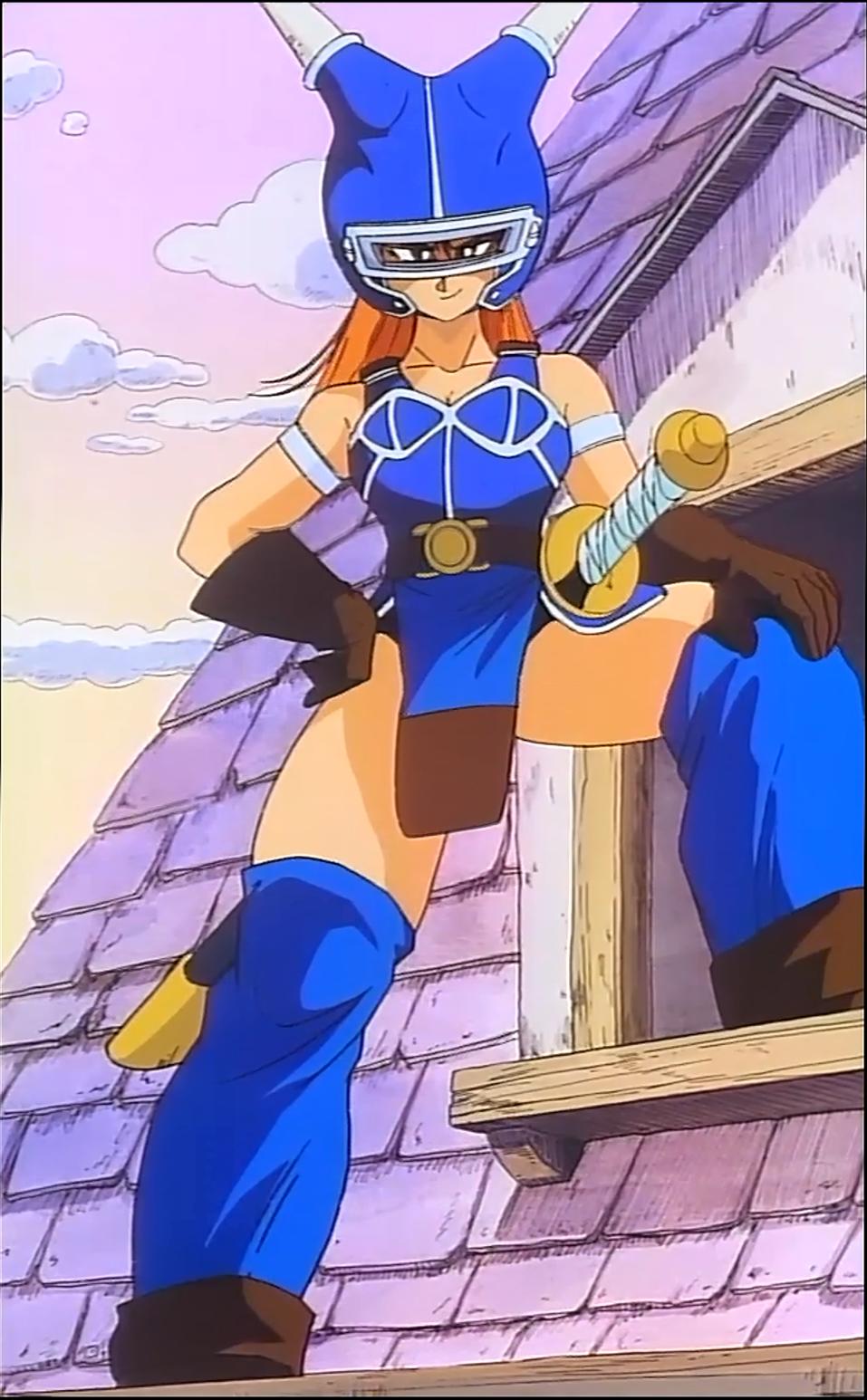
Dragon Ball Z was actually not my first encounter with Toriyama, and not even the first anime from Toriyama that I had seen. I was one of the kids who watched Dragon Warrior (aka the English dub of the anime Dragon Quest: Legend of the Hero Abel) as it aired. I remember having to wake up very early—around 5:30 or 6am on weekends. I don’t think about it very often, but in hindsight, the show was likely very formative for me, and I wouldn’t be surprised if Daisy (the girl in blue armor) ended up influencing my taste in characters.
My family also subscribed to Nintendo Power, and we received a free copy of Dragon Warrior (aka the first Dragon Quest) as a result. Today, RPGs are a popular and beloved genre of video game, but back then, they were entirely new territory to most kids, and pretty unapproachable. However, the same relative who brought home DBZ tapes had decided that they were going to beat Dragon Warrior, and spent hours getting through the game as a young me would watch along. In the final battle, the evil Dragonlord reveals his true form as a giant bipedal dragon, and I remember just being in awe.
This was at a time when the Super NES had already come out, and I thought the Dragonlord looked almost on par with the graphics I saw there. The fact that his foot covered part of the dialogue box, and the way the screen froze instead of shaking every time he landed a blow made it feel like this was the ultimate adversary. It wasn’t until at least a decade later that I got to see Toriyama’s drawing of the Dragonlord that I realized just how closely the sprite graphic matched his original art, and I appreciated that memory all the more.
If Dragon Warrior was the game that pushed the boundaries of what an NES game could look like, then Chrono Trigger was a revelation. The 16-bit graphics and the greater color palette of the Super NES really brought Toriyama’s designs to life, and the game conveyed an intensity to RPG battles unlike any I’d seen up to that point. The only thing they paled in comparison to was Toriyama’s actual drawings of Chrono, Frog, Magus, and the others. While Chrono very obviously looked like a redheaded Goku, he was still unbelievably cool. And just as the Dragonlord was a mindblowing antagonist, so too was Lavos. The eeriness of music and visuals in the climactic confrontation with him is hard to match even to this day.
Years down the line, Dragon Warrior finally became known as Dragon Quest just like in Japan, and I was one of the folks who bought Dragon Quest VIII. It wound up being one of my favorite RPGs ever. In addition to its classic feel (Dragon Quest is famous for not trying to reinvent the wheel), the game really felt like stepping into the world of Toriyama’s art. It was a triumph of the PlayStation 2, but also a treat for those who always wanted to see an interactive environment that embodied his imagination and aesthetic.
A Farewell
Toriyama Akira’s life was a spark that inspired creators to bring their ideas to life, bridged culture gaps through the sheer power of his work, and even pushed people to exercise and train so that they could be like Goku. His name is synonymous with anime, manga, video games, and even indirectly light novels. And while I can’t call myself the most diehard Toriyama fan, he clearly took my life on a course that would embrace the wonders of Japanese popular culture—a path I still pursue to this day. Rest well, King. To say you deserve all your praise and accolades is the understatement of a lifetime.
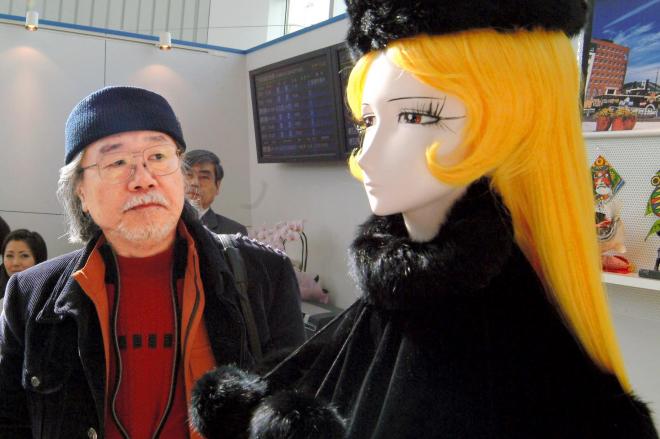
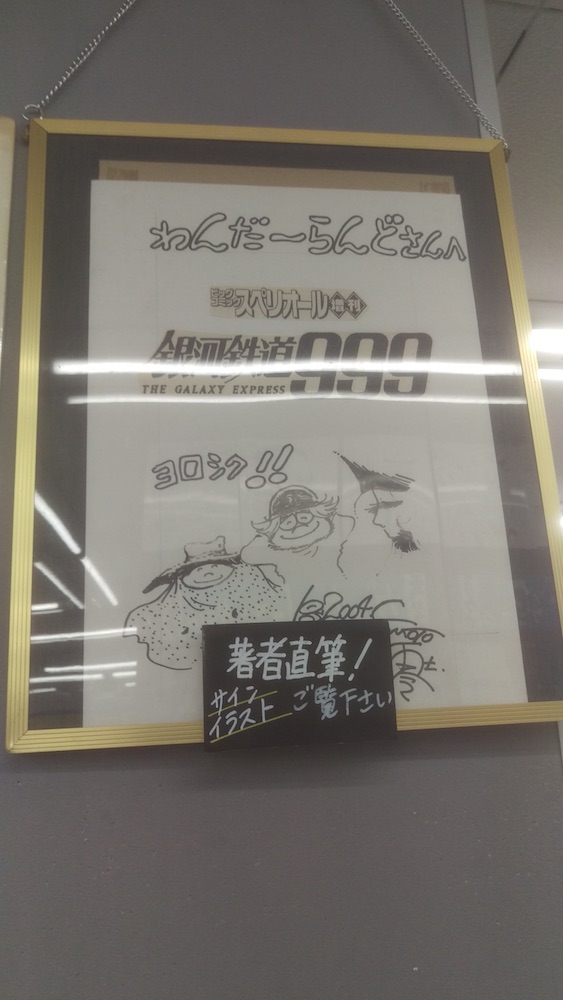
The news of Matsumoto Leiji’s death shocked me. While the passing of an 85-year-old shouldn’t be too surprising, it still makes me contemplate so many things. The number of creators who can trace their careers back to those early decades of the postwar manga industry is now vanishingly few. Matsumoto’s influence was monumental, with great works like Galaxy Express 999, Captain Harlock, and Space Battleship Yamatoall under his belt. He was also instrumental in so much of what we now call the anime fandom, as his work on Space Battleship Yamato was the catalyst for fandoms in Japan, the United States, and elsewhere.
More than his broader artistic and historical significance, though, I feel Matsumoto’s legacy supporting me, as I might not have gone down my particular path of anime and manga fandom if I had never discovered his works. His messages of humanity and compassion sparked my curiosity, and helped me to look both forward and backwards.
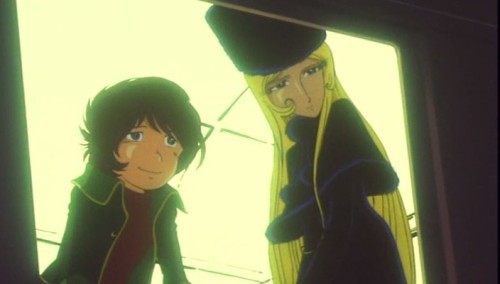
The 1979 Galaxy Express 999 film is, bar none, my favorite anime ever. I reviewed it in the early days of Ogiue Maniax, but as I explained there, my history with it goes back further. I first watched it as part of a local film festival, at a time when my exposure to much older works was more limited. I can’t recall when exactly I saw it relative to other 70s anime, but I still remember to this day the sense of awe I felt coming out of the theater. Maetel remains one of my top 3 favorite female anime characters of all time, a figure whose presence in the story speaks to the beauty and soul of Galaxy Express 999. Nothing has toppled it in my heart even decades later.
After seeing the film, I naturally began to notice more Matsumoto Leiji material, and since then, the worlds of his creations have been part of my world too. I bought a single volume of the Galaxy Express 999 manga in English in high school, and I would read it over and over. I would repeatedly consult Frederik Schodt’s Manga! Manga!, which included not only a biography of him but also a sample of one of his more obscure manga. Among my first figure purchases was a large Maetel, and I remember my excitement over finding the Queen Emeraldas OVAs and discovering Daft Punk through Interstella 5555.
I’ve reviewed Danguard Ato celebrate the 50th anniversary of anime on television, sent Harlock to show “the pirate’s way” in Super Robot Wars T, and made lasting bonds thanks to The Galaxy Railways. I’ve also purchased that 1979 Galaxy Express 999 film over and over, whether it was happening upon a used Region 2 DVD at a Bookoff, getting the US DVD to show my support, or upgrading to the blu-ray so I could experience it in better quality than I ever thought possible. Actually, in that regard, the film festival I attended all those years ago showed a VHS version, so it really is like night and day.
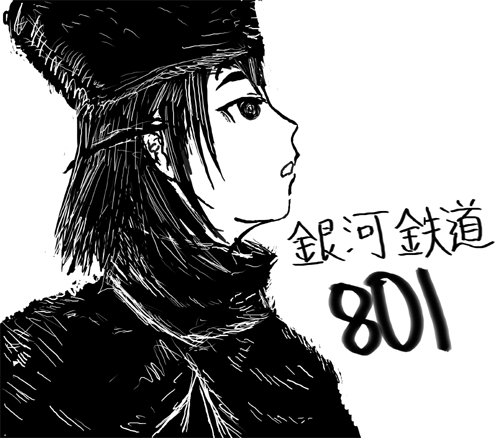
An old drawing I made of Ogiue cosplaying as Maetel
In the long run, I think I would have still come to take a broader view of anime and manga. But as I currently am, Matsumoto Leiji’s art contributes no small part to the enthusiast I am today. As he leaves us, I wish his messages about the importance of remembering and cherishing our humanity continue to resonate in the years to come.
The Galaxy Express 999 will take you on a journey, a never-ending journey. A journey to the stars!
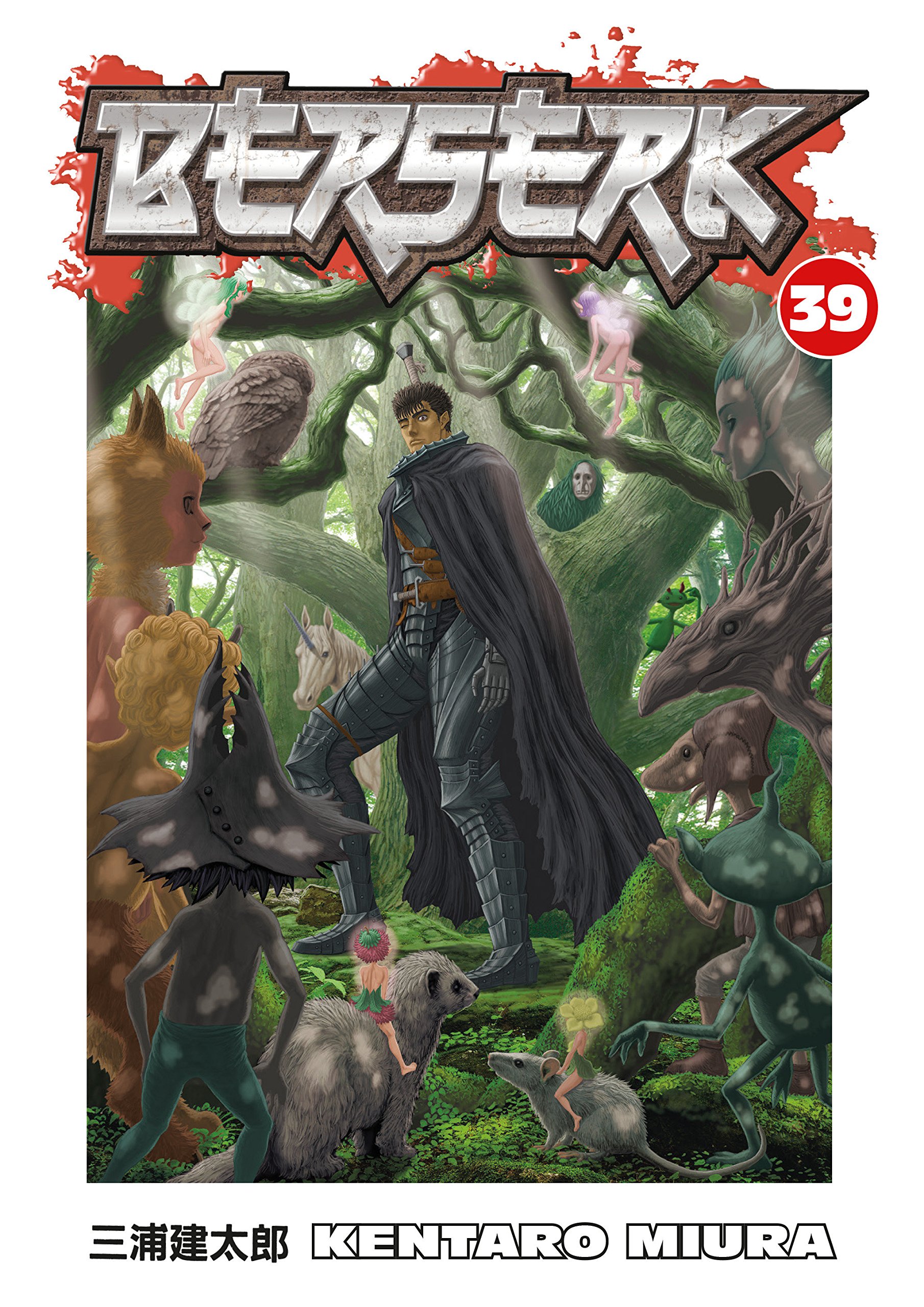
This past week, the world learned of the passing of Miura Kentaro, the creator of Berserk, on May 6th. Miura was 54. This leaves one of the most powerful and influential manga in history most likely unfinished, but more importantly, it’s the sudden and tragic end to a career of an artist whose ambition in storytelling always felt beyond human.
To be clear with where I stand, I’m not a Berserk mega fan. I didn’t spend my developing years in the thrall of its gorgeously detailed artwork like some manga readers, so my connection to the series isn’t especially personal. However, even without that intimate closeness to Berserk, it’s impossible to not feel the amount of dedication that Miura put into his magnum opus. He began the series in 1989 and worked on it for over 30 years. I don’t think it’s an exaggeration to claim the man poured his soul into Berserk—Morikawa George, creator of Hajime no Ippo and an artist to whom Miura was an assistant early in their careers, said as much:
The months passed by, and I started serializing Hajime no Ippo, and it wasn’t long after that Berserk started. Miura shared some stories of difficulty with me, but I was confident that his manga would be a hit. Kentarou-kun had poured his strength and confidence into this long-awaited serialization, after all. The world would soon be as astonished as I was when I first saw his drawings. He had a completely refined artistic skill and drew with all his soul, and I had nothing but the deepest respect for every new chapter of Berserk.
It’s one thing to have a long and sprawling story but a less detailed art style, or an intricate style but a fairly simple story. It’s another to try to go full blast in both respects. To want to tell a tale so ambitious in scope and so lovingly rendered on every page, and to make it so cohesively impactful is nothing short of astounding. Just thinking about his designs of the God Hand, malevolent deities central to the story in Berserk, leaves me amazed. In fact, it’s a wonder that Miura was able to keep it up for as long as he did, even if chapters became much more infrequent later in his life.
There’s a question of whether stress played a role in Miura’s death, given that aortic dissections can be caused by high blood pressure, and that the manga industry is known for putting people through the ringer and encouraging workaholic habits. Tezuka Osamu himself passed away unable to finish his most ambitious work (Phoenix) after a self-imposed grueling career that became a model of sorts for other creators. However, one thing that makes it hard to tell how much responsibility the manga industry carries is that Miura was an absolute perfectionist, and not the kind of creator who would compromise quality for expediency. In an interview from 2019, he mentions switching over to working digitally, only for him to end up going through his drawings pixel by pixel—a trap common enough for it to be mentioned in a chapter of Genshiken, but also something that takes on a whole new meaning now that Miura is gone.
If there was a way he could’ve told the story he wanted to tell, the way he wanted to tell it, all the way through while still being able to live to old age, I wish we could have found it. That said, it’s clear to me that the whatever disappointment remains over a potentially unfinished work, Miura’s artistry and vision of Guts’s journey in Berserk has left a mark on fans the world over.
I’m grateful to be in a position where I am mentally and emotionally well, even in this pandemic. It’s easy for me to assume that fear and concern over COVID-19 is what’s on people’s minds, but the recent deaths of so many people and figures in my social and fandom spheres just has me hyper-aware of the challenges many face that are likely exacerbated by current circumstances.
In the world of anime, Zac Bertschy of Anime News Network died in his apartment on May 21, 2020. In wrestling, Shad Gaspard died at age 39 after helping save his son from a rip current on May 17. Another wrestler, Hana Kimura was 22 when she died by suicide on May 23 after online harassment due to her appearance on the reality show Terrace House. And while this isn’t recent, it’s been almost a year since the suicide of gaming youtuber Etika, who was 29. Death may be unpredictable and inevitable, but the fact that they all left so young makes me shake my head in disbelief.
I wasn’t close to any of the people I mentioned, so my perspective is not as a friend or peer, or even necessarily as a fan or follower. Yet, I feel something: sadness, anger, frustration, or maybe something else I can’t describe. In the case of Hana Kimura, I kept saying to myself, “I really need to check out Stardom because she seems like a star,” and now all I’ll have is past videos to reference. It makes me want to reach out to my friends, and those I’ve lost contact with over the years. It’s easy to just assume that the last image you had of them is roughly how they are today, but time passes and people face challenges both internal and external. I always worry about overstepping my boundaries or thinking I’m closer to someone than I actually am, and maybe I just need to find the tiny ounce of courage to get over that and maybe, just maybe, help someone turn away from a bad decision.
I used to frequent a chat room that was named after the anime Maria-sama ga Miteru (aka Maria Watches Over Us). A few years since I last visited, I decided to stop by, and the chat topic included a person’s name: “So-and-so ga Miteru.” It turns out they had passed away. A couple more years passed, and I visited again. This time, more names had been added to the topic. It feels like I blinked, and more of the people I knew had vanished. As far as I know, none of those deaths were due to suicide, but they stung nevertheless. And while I never really interacted with them on any deeply personal level, it made my infrequent visits feel like “too little, too late.” When it’s related to physical health, there’s only so much any of us can do. When it’s not, it hits differently.
I hope we can connect to our fellow human beings, those we love and even those with whom we have the barest connection, so that we can help lift up one another. If you’re feeling like life isn’t worth living, reach out to suicide prevention for professional help. If you’re hurting and just need someone to listen, feel free to even leave a comment below or contact me on Twitter.
On Sunday, Geoff “iNcontrol” Robinson passed away due to a sudden illness. A beloved figure in the StarCraft community, his gregarious nature and sense of humor did a lot to push and keep StarCraft in the limelight for many years.
The news hit me in a way I wasn’t entirely expecting. I enjoyed his work, but I haven’t been avidly following StarCraft for a few years now. Still, I remembered all the times I would stay up late to listen to a State of the Game podcast or leave a match on in the background just to hear the entertaining banter between him and the other casters, and I realized what an impression he had left on me. When I did check in on what he’d been doing as of late, it seemed like the world was open to him. He had so much potential left.
33 years old. Damn it, that’s much too young. While jokes are made in esports that anyone over 30 is a relic, iNcontrol always looked like the picture of health. To say his passing was unexpected is an understatement, and it saddens me in a profound way that I can’t fully describe or understand.
iNcontrol leaves behind a hell of a legacy. He was a major figure in the early days of non-Korean Brood War. He helped to bring esports to renewed prominence in the early days of Twitch streaming and being a positive force in his community. I can tell his impact because I find myself impacted by him, and my deepest condolences and respect for those near and dear to him.
Last week saw the passing of one of the greatest anime directors of all time, Ishiguro Noboru. I’m not an expert on Ishiguro, so I don’t think it’s appropriate to talk as if I am keenly aware of his entire history. Instead, I would like to just talk about his impact on a more personal level.
Ishiguro’s list of influential works is almost second to none, and I know from personal experience that his finest works stand the test of time in a way that few can. Back in 2004, I was a college student who finally managed to get all of the original Super Dimensional FortressMacross. The show was so utterly engrossing that I managed to finish all 36 episodes in two nights. During that time, I felt myself moving from cheering for Minmay to cheering for Misa; the way the show had developed and grown its characters amidst the backdrop of pop-songs-as-simple-ideals and war made it feel like I might never experience that kind of thrill burning through a show again. Then came late Autumn 2008, and Legend of the Galactic Heroes.
At a daunting 110 episodes, it wasn’t a show that was really possible to marathon in a short period, but I still found myself often unable to stop. This wouldn’t have been any sort of a problem except at the time I was also studying for my Level 2 Japanese Language Proficiency Test. Was it worth it to cut into my study time so much? Well, the fact that I managed to pass probably colors my reflection, but again I was treated to one of the most well-crafted, intelligent, and hopeful pieces of fiction I’ve ever had the privilege to enjoy. I know Macross and LOGH aren’t Ishiguro’s only works, and there are even people who hold them far more dear than I do, but together they shape much of my views of the man.
I first had the opportunity to talk to Ishiguro as part of a press conference at Otakon 2009, and asked him a question about Nagahama Tadao, director of Combattler V, Voltes V, and Daimos. The way I framed my question was that since Nagahama had passed away decades prior, the only way to really know about him was to ask those who had worked with him, which included Ishiguro. Reflecting on this question, I realize that I had mentally placed the idea of Ishiguro dying far away from Nagahama’s own passing.
Then at Otakon 2011, I attended a panel which had both Ishiguro and Shinkai Makoto (5cm per Second, Place Promised in Our Early Days), and seeing the significant age gap between the old veteran and the newer talent and how that difference also meant the difference between cel and digital animation, I asked if Shinkai had any advice for Ishiguro. I caused a fair amount of light-hearted controversy for suggesting that the younger Shinkai could advise Ishiguro on the craft in which he made his name, but Ishiguro was more than open to it. For a man who was still looking for his next anime to work on, the hierarchy of age didn’t matter to him.
One question about the past and the old, one question about the future and the young, both assuming the man would live for many more years to come. Funny how things work.
Satoshi Kon, dead at age 47, will always be remembered for creating great animated films.
In writing this post, I am aware that I am nowhere near the biggest Kon fan. I’ve only seen a handful of his total output, owning none of it on physical media or in digital format, but I know that of the films I have seen, all have had a profound effect on me. To this day, I distinctly remember that scene in Millennium Actress where the titular character is moving gracefully between still paintings, stepping out of one and taking up her pose in the next. It’s visually creative in a way rarely seen in anime, even with someone like Miyazaki, who usually goes a much more orthodox route when it comes to representation of events. It’s the kind of thing that gets burned into your memories, and you’re all the better for it.
When I say that the man will be remembered for creating great animated films, you might be wondering, by whom? And the answer is nearly everyone. Not just film buffs, not just the casual movie-going audience, and especially not just anime fans who themselves come in all varieties, but just about anyone who’s had the opportunity to see one of his films. Satoshi Kon’s recurring themes of psychology, memories, and dreams have the potential to be incredibly heavy and complex to the point of driving people away, but instead Kon managed to create incredibly accessible works which get their audiences to think. Not every film is for every person, but there’s inevitably one you can show to your friends or your family and have a nice discussion afterward. You want to know how to mature your tastes as an anime fan in a short amount of time? Watch a Kon film, and see where your mind takes you.
I’ve seen around the internet that people are worried about the fate of anime and the creativity therein after all of this. To this I say, losing Satoshi Kon, especially at such a young age, is a serious blow to the heart and gut of Japanese animation, but great creators die. It’s kind of what they do, being human and all, and to dwell on what they could have done, while a worthwhile exercise, only takes you so far. A creative form of expression such as animation, Japanese or otherwise, is not so simple that it can be felled by the death of one man, great as he may have been. There is mourning, but there is also the next step.
Rest in peace, Satoshi Kon, with the knowledge that it’s impossible for you to not have inspired someone.





 OGIUE MANIAX