Not much to speak of this month, but I did post this right before Halloween, so there might be something interesting in the next few days (that I’ll be posting in November).
Kio defeated a Gargoyle outside the Bestial Sanctum in Elden Ring, and also is 33% through the story after beating Radahn. At first, he thought it’d be too strong, but managed to pull it off using the Watchdog’s Staff.
Kio wanted to re-read the vale tudo arc of the karate manga Shura no Mon (Asura’s Gate), which made him want to re-read the Showa arc of the similarly named but unrelated manga Shura no Toki (Time of Asura).
When asked if his next manga’s going to be fighting-based, Kio denies it.
Kio saw the movie Undercurrent, and thought it was a really good adaptation of the original.
Kio plans to watch the “Jungle Revenge” special for How Do You Like Wednesdays, but only got four hours of sleep, and is thinking he might doze off partway. Seems like this special is a follow-up to a DVD that was released six years ago.
Kio kind of wings it with the color, but thinks that the work wouldn’t be that different even in B&W. Kio likes the color palette in Star Wars in general.
Kio mentions that this Jedi is not to be confused with this girl from Kio’s 18+ doujinshi. However, he realizes that he might have certain preferences when the characters he came up with in 2010 and 2022 are so similar.
Ogiue and Ohno might technically fall under this category too. Kio includes an old drawing of Ohno cosplaying Leina from Queen’s Blade and asking Ogiue to cosplay as Leina’s little sister Elina. This is a voice actor joke because the original Ohno (Kawasumi Ayako) voiced Leina and the original Ogiue (Mizuhashi Kaori) voiced Elina.
After seeing a weather report that the temperature is going to be 35 degrees C (95 degrees F) after a typhoon, Kio is reminded of a line about becoming accustomed to torture.
Kio got through 70 pages of his eromanga manuscript, but then wasn’t sure of a certain part and ultimately decided to put in twice as much effort and drew the whole thing.
In response to the passing of Terasawa Buichi (author of Space Adventure Cobra), Kio describes Cobra as an accumulated mass of sense. (That sense seems to mean like an artistic/aesthetic/creative sense.)
Kio took a lot at the author Shima Tokio’s 18+ doujinshi, and was not only surprised at a development that happens in the middle, but that Shima would have the time to draw this on top of working on a serialized manga.
Kio read a comic drawn by Nagata Reiji, a person who left being a surgeon to become a manga artist, about that very experience. Nagata was apparently also serialized in Afternoon, and Kio decided to buy one of his manga.
9月22日(金)からTSUTAYAにて『げんしけん』POP UP SHOPの開催が決定いたしました! 新作グッズの販売や記念ノベルティなど盛り沢山!!
Kio has been meaning to tweet about the Genshiken pop-up shop at all TSUTAYA stores (that began on September 22nd) but kept forgetting to do so. (Check out the replies as well for lots of Kio thanking very excited fans.)
A tweet about the start of the Genshiken pop-up shop event, with Kio retweeting and responding to various photos taken by fans of the displays, including those lamenting items being sold out.
This month, Kio mostly talks about Elden Ring. But we also get to see a high-quality version of one of the best covers he ever drew (no bias from me, clearly).
Even after 100 hours, Kio is having trouble in Elden Ring. In many places, he feels that he would never have been able to figure things out without strategy guides. (Forgive me for not translating this in greater detail.)
Kio keeps seeing figures and illustrations from Elden Ring but for the most part has no idea who anyone is, seeing as he’s only played 16% of the game.
Reflecting on his time with a much older FromSoftware game, King’s Field II, Kio recalls his experience. Despite the fact that it wasn’t really “open world,” finding out how one area of the game connects to another was very exciting.
There was a remix of AKIRA music playing at the gallery, and Kio wondered where it came from. Turns out that it was new arrangements done for the gallery. Kio wants a CD of it.
High-quality version of the cover to Genshiken Volume 6, as well as just the art of Ogiue. Needless to say, I love this cover and volume to death. Also check the thread to see lots of people posting their copies (and variations).
Kio attended a live screening of the newest How Do You Like Wednesday?, which included people from the cast. It was a fun and unusual experience. He did not attend in Ikebukuro.
Kio made these Madarame drawings as part of a special collaboration with the series Love-yan, which features a protagonist who resembles Madarame. Kio also vaguely denies knowing about the Rocking Spark attack from Ultraman and how similar it looks to Madarame’s pose.
Kio recalls how tough it was to live on the top floor (6th) of a building because of how hot it got in the summer. He tells fellow manga creator Kusada to take care of himself amid some very high temperatures.
The first tweet states that really good artists can draw Image B, where the frame is mostly taken up by the left leg. Kio says that he tries to draw B but can only really do A.
Kio has played Elden Ring for over 50 hours and is over Level 50, but only just reached Limgrave.
He can’t get the timing for rolling and such down, and while he played King’s Field, he hasn’t played later FromSoftware games aside from Shadow Tower and Dark Souls.
Gundam manga artist Tokita Kouichi shares a photo of a first-era Gundam model kit. Kio reacts by saying that the instructions are from before they changed how joints work on Gunpla models.
Kio’s tortoise has been walking quickly around in their home, being hyper. Kio comments that outdoor spaces would be good for it, but the actual outdoor space available right now isn’t all that big, so this is the best he can do right now.
The reason it’s so hyper is because the warm summery weather is affected it as a cold-blooded creature.
Kio visited actual sites from some How Do You Like Wednesday? Specials. The first tweet shows one of 12 bridges featured, and the second is Suigou Sawara Ayame Park.
Kio thanks a fan for sharing a Monthly Newtype video about manga in 2008, the height of one of the host’s teen years. Genshiken and Spotted Flower both get mentioned briefly. (See 23m45s in the video below.)
Kio later tweets about the video separately, commenting that he likes how writer and host Mafia Kajita says that Spotted Flower has had one hell of a development.
As Kio sees artists tweeting about whether they got into Comiket or not, he is working on his (unrelated) erotic doujinshi. He’s been drawing but also cutting content out, so even though he’s drawn 30 pages, it feels like only the beginning.
Working on his new ero doujinshi seems to be an endless task. It includes things like fretting over which erotic sound effects to use, like “guchu” vs “gucho.”
Kio, after getting his ass kicked by the boss Margit in Elden Ring, goes back to drawing ero manga. He likes how he can just skip bosses and explore elsewhere in an open world game.
Kio got through 63 pages of his ero manga manuscript, but is setting it aside to get some of his professional work done. Apparently, the next part is the climax.
Replying to manga creator Kusada (who just got done selling at the doujin event Comitia), Kio mentions that he’s also hesitant about posting URLs to his 18+ doujinshi on Twitter for fear of being shadowbanned.
Kio has decided to undertake a rather massive personal project. Back in 2010, Kio sold at Comiket a very rough manuscript of a genderswapped Episode I parody called Sister Wars. Now, he’s turning the entire thing into a fully illustrated doujinshi. (Note that I will be making a separate post about this at some point.)
Another person talks about wanting to own Sister Wars, but Kio says that if it’s something where money needs to get involved, then it’ll cause issues, so his intent is to keep it free and online-only.
Kio says the whole thing is 350 pages, but it’s someone he always wanted to do, and he feels that it’ll be a waste if he doesn’t use the free time he has now to work on it. He put a lot of thought into it beyond the genderswap aspect too.
Another commenter recalls there being no Jar Jar, to which Kio responds that other characters from Episode II were also cut, as they seemed to mainly be there originally to just make things more confusing.
Kio realizes a line during the theme song for the variety show/special series How Do You Like Wednesday? comes from a spoof drama they did called Shikoku R-14. Kio originally thought it may have been unused footage.
Finishing the drawings of the Kujibiki Unbalance dating visual novel, here are Koyuki and Chihiro routes as reviewed by Kohsaka and Ohno, respectively.
Some old Genshiken-related drawings. Kio couldn’t remember when it was or what it was used for other than being part of some multi-creator piece, but a fan points out that it was part of an Afternoon 20th Anniversary illustration, as seen on the above library card.
High-quality version of the cover illustration for Genshiken Volume 5.
A fan comments that they remember not being able to read the doujinshi the Genshiken club made, to which Kio responds that most people couldn’t [because it was heavily mosaic’d as part of the joke].
A Genshiken drawing used for the cover of a 2004 issue of Monthly Afternoon with Saki helping to zip up Ohno’s Kuradoberi Jam cosplay, and Ogiue staring awkwardly in the background. Kio also responds positively to people talking about how great Ogiue is in this image, even saying that Ogiue looks like she’s seeing cosplay for the first time. He recalls wanting to draw a scene that doesn’t happen in the actual manga.
I actually found my old instructions for the Kotobukiya Ogiue figure, as well as the glasses for her, all of which I had thought I lost! Kio retweeted it.
Kio saw the 2022 movie Bullet Train. Even though the depiction of Japan is not at all genuine, he was entertained nevertheless. In fact, he even liked the scene in the quiet car. He really wishes he saw the movie in the theater like he had originally planned.
Kio bought Go Go! Ghostbusters Club by Kusada, and mentions wanting to see more of the assistant and wanting to find out why the club president would start a Ghostbusters Club when they’re afraid of ghosts. Kusada thanks Kio as well. (Note that Kio often retweets Kusada, which is not fully reflected in these tweet summary collections.)
Kio watches and reacts to the DVD for the How Do You Like Wednesday? special, How Do You Like Japanese History If We Only Travel by Late-Night Bus for Three Nights Straight?
(Without context, I can’t really properly summarize the reactions so I will leave it like this.)
Kio read Love Comedy Experiments Manga by Shima Toki and really liked the part where they have to stop right before climax (sundome). Shima thanks Kio as well. (Shima is another author who often gets retweeted by Kio; both them and Kusada all do manga for Rakuen, the magazine that runs Spotted Flower.)
While trying to figure out how to fix the warping in this kit part, Kio receives various pieces of advice ranging from pliers to dryers.
Thank you! These days, I'm doing two things while taking a break. One is to draw an R-18 doujinshi (sold at FANZA, titled "ぜんぶ、せんせいのせい。"). The other is to draw "シスターウォーズ" on Twitter.
Kio building a 1/144 Gundam Aerial model kit. He added a bit of weathering effects to the paint job. It also felt like a long while since Kio worked on a Gundam kit.
Kio drew his first original 18+ doujinshi, called It’s All Your Fault, Sensei, which is now available on FANZA and DLSite under the circle name ぼたん堂. Content note: It is futanari on cis girl, and in terms of depictions of sex goes well beyond anything shown in Spotted Flower.
Those who have been following Kio’s Twitter account might recognize one of the girls, as he drew an earlier version of her around the New Years in a bunny outfit.
Kio mentions that had he wanted to draw what happens between Sasahara and Ogiue on the couch, it would have been “something similar,” though the original tweet has been deleted, so it’s not clear if he’s referring to his doujinshi or the fact that Not-Sasahara and Not-Ogiue are in bed together in the side chapters.
A doujinshi cover of Ritsuko from Genshiken Volume 1.
From Genshiken Volume 4, reviews of different routes in the Kujibiki Unbalance visual novel. Madarame reviewed Renko’s, Sasahara Ritsuko’s, Tanaka Izumi’s, Kugayama Kasumi’s. Kio agrees with a commenter that Ootani Ikue (voice of Pikachu) fit the character perfectly.
According to Kio, drawing ero manga is sort of the opposite of regular manga, and that’s what made it tough for him when planning it. In regular stuff, his thought process is paneling -> text -> art, but for pornographic stuff it’s art -> text -> paneling.
This month’s tweet highlights for Kio Shimoku are a little different: I’m doing them in chronological order rather than grouping them by subject. Tell me what you think!
January is also the month that Hashikko Ensemble ended. Check out my review!
Kio talks about what a big personal step it was for him to start a Twitter, and that he’s gradually learning how to use it. He thought he had to do it at some point, and thinks it was good timing in more than one sense.
Kio draws Kousei as a tiger man to celebrate the Year of the Tiger. B, the “I love Jin” superfan for the Hashikko Ensemble character asks if Kousei’s always been that buff (while also stating how Kousei’s cat-like qualities make the image work), to which Kio says he added a bit of fantasy to the drawing.
(Just as a warning, that Jin fan’s Twitter account is very NSFW. Their love of the character is serious business—as the Ogiue Maniax, I should know.)
Kio mentions finishing the manuscript for the final chapter of Hashikko Ensemble. When the Jin fan asks if the series got canceled, Kio says “more or less.” Elaborating a bit, he says he got the call to start wrapping it up in summer of 2020, but was given the opportunity to go past the School Festival arc and end on eight volumes total. For reference, the original Genshiken was nine.
Feeling some nostalgia from when he got this at Wonder Festival. A fan shows a similar arm from a model kit of theirs, and Kio replies that he was never able to get that one (the Mighty Beta).
Kio got a new scarf, and decided to draw what it looks like with Madarame as the model. He saw it being called an ascot scarf, but found that it didn’t match his Google searches. “New York scarf” seems to fit the bill better.
In light of the death of famed baseball manga artist Mizushima Shinji (Dokaben), Kio reminisces about growing up with Mizushima’s manga. In his home, there would always be assorted volumes of Dokaben around, and he would read them voraciously. In his estimation, a lot of baseball know-how for kids his generation came from reading Mizushima manga, and he especially enjoyed the series Dai Koshien. Kio offers a prayer at the end.
Kio wanted to reference an old chapter of Spotted Flower for his manuscript, and opened his old file, only to remember that he did it in the program Comic Studio. He’s switched over to Clip Studio Paint now, and seeing Comic Studio start up took him by surprise. He also notes that Asaka-sensei had a different hairstyle in this earlier chapter.
B the Jin fan has a question for Kio, asking how Kio managed to get a music note generator version of Sukima Switch’s “Kanade” because it doesn’t seem to be for sale. Kio responds that he uses a program called Score Maker Zero by KAWAI, which can also sing using a synthesized voice. Kio can’t read sheet music, so it’s very helpful for him.
Kio says that he generated these notes for “Kanade” himself, and asks if B lives nearby. B thanks him and doesn’t say anything about location, but he does mention going to the high school that Hashimoto Technical High School is based on. Kio is impressed.
As Kio was rearranging his desk in his room, his pet tortoise awoke (after barely moving during these winter months), and then stepped out of its box, ate some food, went outside, and then peed and pooped.
Kio made a Hashikko Ensemble Youtube channel, and uploaded a video of his tone generator version of “Kanade” by Sukima Switch for two male voices. It’s supposed to evoke the image of Akira and Jin singing together.
Kio made a Hashikko Ensemble Youtube channel, and uploaded a video of his tone generator version of “Kanade” by Sukima Switch for two male voices. It’s supposed to evoke the image of Akira and Jin singing together.
Some old NEO-GEO games from his college days that he found in a cardboard box. They include a bunch of Fatal Fury games, Samurai Sho-down, and even Far East of Eden.
Every month, I collect highlights from Genshiken author, Kio Shimoku’s, tweets. This month’s provide some interesting insight into Kio’s work history beyond the manga he’s known for!
Kio quotes a tweet about a special one-shot manga in Monthly Afternoon by Samura Hiroaki (Blade of the Immortal, Wave, Listen to Me!) about the life of the renowned second chief editor of Afternoon, Yuri Kouichi—a man who, prior to Afternoon, was responsible for bringing hits like Akira and Ghost in the Shell to publication. In the manga, Samura mentions his interactions with the famous manga artist Takano Fumiko, and Kio says in his quote tweet that he once worked as an assistant for Takano. He only did screentones for her, but she smiled and said to him, “I don’t care whether you’re a rookie who’s yet to debut—you did a good job.” The moment stuck with Kio.
3 out of 4 of the CDs for his 2010 doujinshi work seems to not be working. While he has the original 350-page paper manuscript somewhere (for a Star Wars parody called Sister Wars Episode I), he doesn’t know where it is. A fan mentions wanting to buy it, but Kio’s not sure what format he should sell it in. He also feels a desire to make Episode II. He’s had plenty of ideas for it, but he feels like he’s been forgetting them lately, so he probably needs to get it done sooner than later.
(Kio mentioned Sister Wars in his interview with the Vtuber Luis Cammy. You can read my summary of that interview here.)
Oguro Yuuichirou, the chief editor at Anime Style, gives high praise to Hashikko Ensemble and its characters, story, and visual presentation of music. Kio tweets being happy about it, to which Oguro re-expresses how genuinely good he thinks the manga is. Kio gives a thank you.
December featured an online extra for Spotted Flower that focuses on the editor character Endou. Kio responds to fan feedback, including from a fellow Ogiue lover and Twitter mutual of mine!
Kio is done with the last rough drawing, whose expression he changed around four times. A fan (who’s a huge Jin from Hashikko Ensemble fan) asks which character it is, to which Kio responds “the ostensible protagonist, Fujiyoshi,” and then reacts to the fan’s Jin profile picture.
He took some kind of online quiz, I think, and the result it gave him was that he lives life on “hard mode.” Kio responds with “What the?” The test also apparently says that someone like him wants a life where they love and are loved. He thinks this might be fitting for a manga artist.
Kio retweets Kotobuki Tsukasa (character designer for Saber Marionette J, Gundam: The Origin) talking about turning 50, and realizes he himself turns 50 next year.
Next month is going to be the end of Hashikko Ensemble, so I suspect there is going to be lots of reminiscing on Kio’s timeline. Here’s hoping!
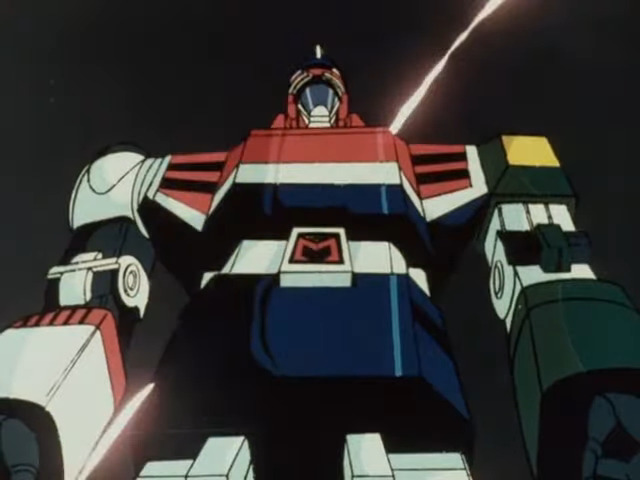
There are two success stories to tell about the 1981 giant robot anime Six God Combination God Mars. The first is about a combining giant robot that was better as a toy than as an animated figure in motion: toy sales were strong enough to extend the series beyond its first year, but the awkward stiffness of the titular God Mars itself is something of a running gag (as seen in the YouTube comments here). The second, and I think the one that should get more attention among English-speaking anime fans, is about the tremendous influence of God Mars on Japan’s female anime fandom and doujinshi scene. In a time when pairing same-sex characters from your favorite series was not yet the full-on cottage industry it is today, God Mars was a cornerstone title alongside Captain Tsubasa.
I personally came to know about God Mars twenty years ago, although knowledge about the two aspects of the series came at different times. It was a collection of giant robot anime openings around 2001 that introduced me to the show and its impressive-looking mecha, but it was actually 2004’s Genshiken Official Data Book (of all things)that first brought to my attention God Mars’s popularity with women. Years later at Otakon 2010, voice actor Mitsuya Yuji mentioned among his most popular roles a character from God Mars named Marg. Now, I have the entire series on physical media thanks to Discotek (with 25 episodes up for free on TMS’s Youtube channel), and I’ve finally come to understand what made God Mars one of the granddaddies of fandom pairing in Japan.
Simply put, it’s Marg. Once you know about him, it becomes crystal clear why a female fandom around God Mars developed.
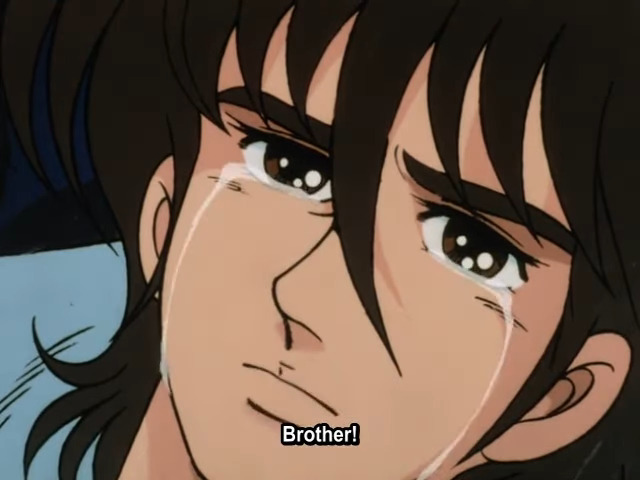
Marg is not the main character. That honor goes to Myoujin Takeru, a guy with psychic powers who discovers that he is actually an alien named Mars sent from the planet Gishin to destroy Earth. However, Takeru manages to defy the evil Emperor Zul and use the very weapon originally meant to eliminate Earth to instead form God Mars and beat back the Gishin Empire. Along the way, he discovers many truths about his original home world, including that he has a long lost brother—Marg—in Zul’s clutches. The dramas that emerge from their familial relationship include attempts to reunite, the pain of separation, and even the crossing of swords due to various plot contrivances.
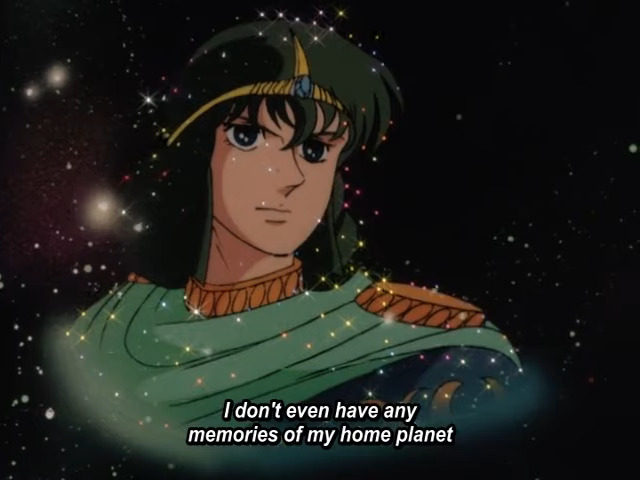
Marg is ridiculously beautiful both inside and out. He has lush locks of long green hair, and eyes that can express the deepest kindness but also the most fervent passion. His voice is gentle yet powerful, and his forlorn communications with Takeru express a longing and desire to see Takeru—unless he’s being brainwashed into being the enemy, of course, at which point his anger is spine-tingling. Whenever Marg shows up, he becomes the most captivating figure on screen.
Given that we’re talking about shipping and coupling, it’s not entirely accurate to pin it all on Marg. The popularity of a series among female fans traditionally hinges on the relationships between characters rather than singular personalities, and Takeru himself is no slouch. Not only does he look like a more handsome version of many a 70s robot protagonist, but he is perhaps the angstiest hero ever to grace a giant robot anime. Sure, Shinji from Evangelion is traumatized and depressed, and Heero Yuy from Gundam W is dark and brooding, but they don’t angst the way Takeru does. Naturally, more often than not, that anguish has something to do with Marg. And yes, they’re brothers by blood. Whether that was an additional awakening for fans in 1981, I’m not sure. I wouldn’t be surprised.
Even before God Mars, there were plenty of good-looking and charismatic secondary characters in mecha anime. Between directors Tomino Yoshiyuki and Nagahama Tadao, they all but cornered the market: Prince Sharkin (Reideen), Garuda (Combattler V), Prince Heinel (Voltes V), Richter (Daimos), and both Char Aznable and Garma Zabi (Gundam). The key difference between these major rivals and Marg is that the latter is so many things in one. He’s an adversary at some times, but at other times he’s basically a damsel in distress.
There is something I need to make clear: Unlike so many later anime, which could be constructed from head to toe with a female audience in mind (or at least pay regular lip service to that side of fandom), God Mars is still built on the foundation of a toy-shilling kids’ anime. It is 65 episodes long, and not every episode is exactly compelling. There’s an unsurprising inconsistency in terms of the show’s quality with respect to storytelling and animation quality. In addition to the notorious stiffness of God Mars the robot, the anime is rife with fights between characters with psychic powers that revolve around dramatic poses in still shots in lieu of actual movement—a style of action scene the book Even a Monkey Can Draw Manga mocks for its laziness. And dashing canon hopes of brotherly love, the series pairs Takeru with a female character, albeit one with a connection to Marg. In other words, back in 1981, fujoshi had to walk uphill both ways to get their BL shipping fix.
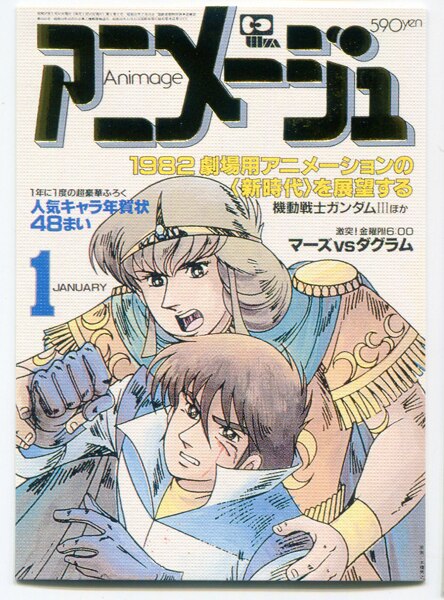
Even so, a girls’ fandom emerged out of God Mars, and plenty of evidence exists that the creators became aware of this audience eventually. The TV series keeps finding ways to bring him back in different forms. A 1982 movie recap of the first 26 or so episodes reduces the screen time of other supporting characters in favor of more Marg, and the poster advertising the film even features him prominently (see above). A later OVA released in 1988—well after God Mars’s heyday—centers around Marg entirely. A look at God Mars merchandise reveals both official and unofficial works where Marg takes up a lot of real estate.
When I was going over my own prior history with God Mars, I omitted one thing: the game Super Robot Wars D for the Gameboy Advance. God Mars is one of the titles included, and in the game, you can manage to not only recruit Marg to your side but also have him pilot an alternate God Mars from that 1988 OVA in which he’s the star. Once together, Takeru and Marg can perform combination attacks like the “Double Final God Mars.” I can’t help but wonder if there were both kinds of God Mars fans working on this game, bringing together the hopes and dreams of those whose lives were changed in some part by God Mars and its two successes.



 OGIUE MANIAX