A Bird Among Dragons: Remembering Toriyama Akira

On a recent trip to Japan, I walked past a shrine. Next to that shrine were statues of Dragon Quest monsters. Seeing them reminded me of the sheer impact of those games and the artist whose memorable designs helped to entrench the series in Japan’s popular imagination.

We now live in an age where Toriyama Akira is no longer with us. As the creator of Dragon Ball and Dr. Slump, as well as the iconic artist of Dragon Quest and Chrono Trigger, his influence is nigh-unmatched. There are maybe two or three other series that are as pivotal to shounen manga as Dragon Ball, and Toriyama even casts an enormous shadow on the isekai and fantasy genres: The Dragon Quest series is what established the “Hero” (Yuusha),  the “Demon Lord” (Maou), and the “weak Slime” as archetypes in Japan’s popular imagination, and it’s Toriyama’s designs that inform the aesthetic of all successors.

In light of Toriyama’s tragic death at only 68 years old, I’d like to just talk about how my life has been touched by his work. My story is nothing special compared to the millions of voices mourning Toriyama, but I wanted to at least personally add to the well wishes pouring out.

Dragon Ball
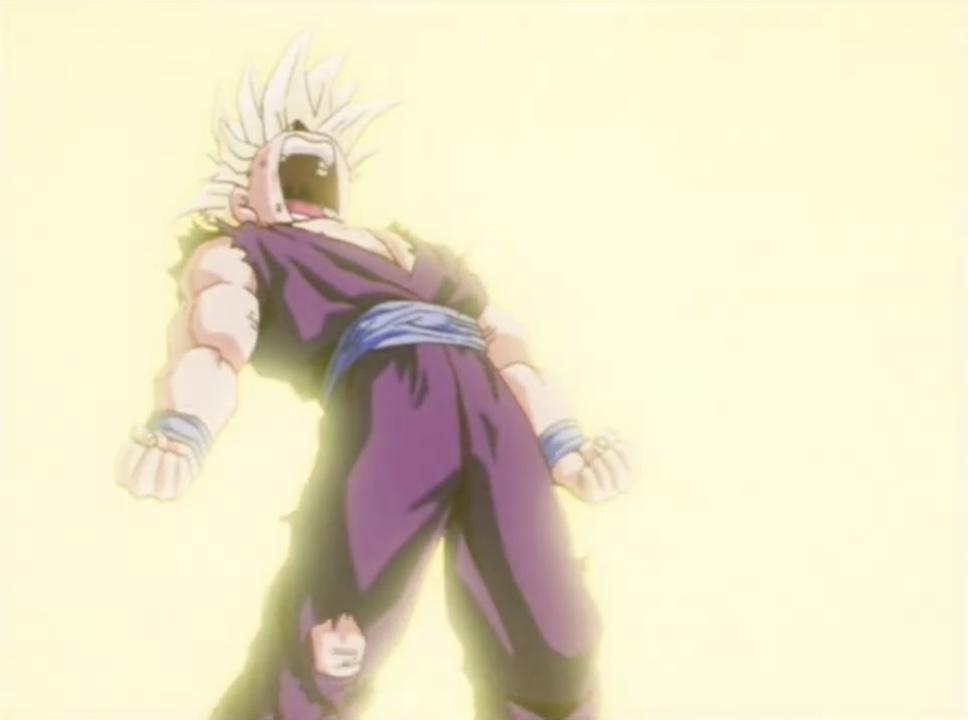
Dragon Ball Z was the very first anime that I knew to be “anime.” While I had loved things like Voltron, they were still just “cartoons” to me. But when a relative started bringing home tapes of DBZ, it was a sight unlike any other. I remember just being amazed at the rapidfire punches, the zooming around, the ki blasts—I’d never realized animation could be this way! I cheered for Piccolo, watched characters (gasp) die, saw Son Goku turn Super Saiyan, and witnessed his son step up and defeat Cell. I wondered if anything could ever top this story. I wanted to be Gohan.

It was also a time when I got to play the first two fighting games for the Super Famicom, and when I’d re-read over and over a small guide to the first game that showcased all the playable characters. “What does Jinzoningen (“Android”) mean?” I recall wondering.

So when I first found out that DBZ was coming to US airwaves (for real, and not just finding a random channel that sometimes had Korean episodes of the original Dragon Ball), I was elated at the prospect of Dragon Ball Z getting big. Imagine: more American DBZ fans! While the English adaptations have had their differences with the original (as well as the non-English dub I first watched), Goku ultimately succeeded in reaching into the hearts of countless viewers. (I still wish those early US viewers got the chance to hear “Chala Head Chala,” though.)

Ironically, I was one of those people who’d go on to poo-poo the Dragon Ball franchise. As I got more into anime and manga, I viewed the series as a thing you’re into when you’re just a “beginner,” or obsessed with just macho violence and watching muscle-bound dudes power up endlessly, and I felt good that I knew there was more out there. It took a number of years to get through that embarrassing phase, but I’d eventually come back around to appreciate Dragon Ball for its outsize influence on culture, as well as for just being a work of art in itself. More recently, it’s been great seeing Dragon Ball Super be a thing, and for Toriyama to have worked to bring back the essence of Goku—as well as the balance of action and humor that Dragon Ball and Toriyama himself had been known for.

Dragon Quest

Dragon Ball Z was actually not my first encounter with Toriyama, and not even the first anime from Toriyama that I had seen. I was one of the kids who watched Dragon Warrior (aka the English dub of the anime Dragon Quest: Legend of the Hero Abel) as it aired. I remember having to wake up very early—around 5:30 or 6am on weekends. I don’t think about it very often, but in hindsight, the show was likely very formative for me, and I wouldn’t be surprised if Daisy (the girl in blue armor) ended up influencing my taste in characters.
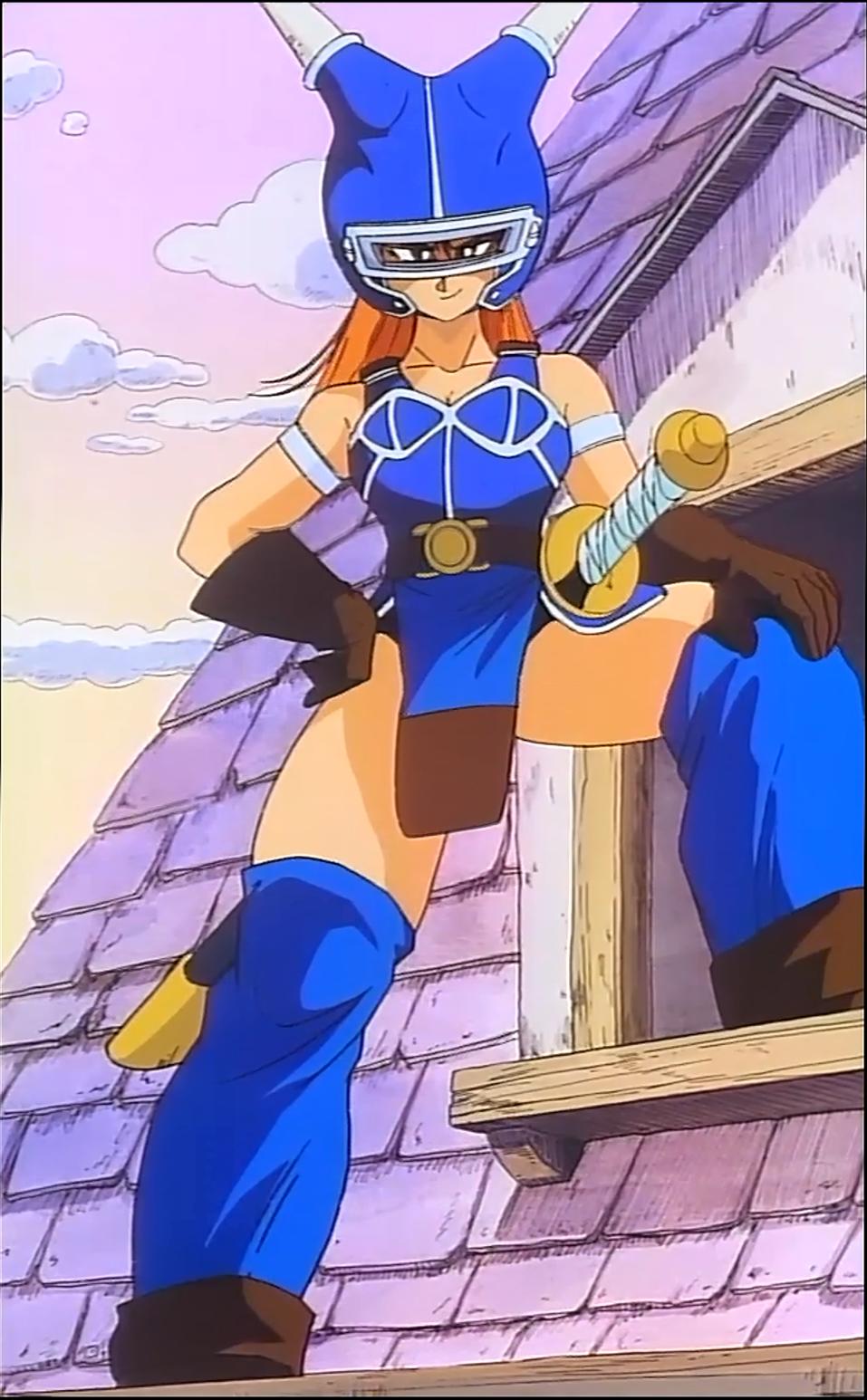
My family also subscribed to Nintendo Power, and we received a free copy of Dragon Warrior (aka the first Dragon Quest) as a result. Today, RPGs are a popular and beloved genre of video game, but back then, they were entirely new territory to most kids, and pretty unapproachable. However, the same relative who brought home DBZ tapes had decided that they were going to beat Dragon Warrior, and spent hours getting through the game as a young me would watch along. In the final battle, the evil Dragonlord reveals his true form as a giant bipedal dragon, and I remember just being in awe.

This was at a time when the Super NES had already come out, and I thought the Dragonlord looked almost on par with the graphics I saw there. The fact that his foot covered part of the dialogue box, and the way the screen froze instead of shaking every time he landed a blow made it feel like this was the ultimate adversary. It wasn’t until at least a decade later that I got to see Toriyama’s drawing of the Dragonlord that I realized just how closely the sprite graphic matched his original art, and I appreciated that memory all the more.

If Dragon Warrior was the game that pushed the boundaries of what an NES game could look like, then Chrono Trigger was a revelation. The 16-bit graphics and the greater color palette of the Super NES really brought Toriyama’s designs to life, and the game conveyed an intensity to RPG battles unlike any I’d seen up to that point. The only thing they paled in comparison to was Toriyama’s actual drawings of Chrono, Frog, Magus, and the others. While Chrono very obviously looked like a redheaded Goku, he was still unbelievably cool. And just as the Dragonlord was a mindblowing antagonist, so too was Lavos. The eeriness of music and visuals in the climactic confrontation with him is hard to match even to this day. 

Years down the line, Dragon Warrior finally became known as Dragon Quest just like in Japan, and I was one of the folks who bought Dragon Quest VIII. It wound up being one of my favorite RPGs ever. In addition to its classic feel  (Dragon Quest is famous for not trying to reinvent the wheel), the game really felt like stepping into the world of Toriyama’s art. It was a triumph of the PlayStation 2, but also a treat for those who always wanted to see an interactive environment that embodied his imagination and aesthetic.

A Farewell
Toriyama Akira’s life was a spark that inspired creators to bring their ideas to life, bridged culture gaps through the sheer power of his work, and even pushed people to exercise and train so that they could be like Goku. His name is synonymous with anime, manga, video games, and even indirectly light novels. And while I can’t call myself the most diehard Toriyama fan, he clearly took my life on a course that would embrace the wonders of Japanese popular culture—a path I still pursue to this day. Rest well, King. To say you deserve all your praise and accolades is the understatement of a lifetime.

The Prince of All Rating Systems: The Vegeta Level

There are many areas in which we can judge anime and manga. We can talk about animation quality, narrative consistency, excitement factor, or even just emotional resonance. Recently, I’ve come up with a system that I think provides a new perspective on how we view titles—I call it the Vegeta Level.

Named after the Prince of All Saiyans from Dragon Ball, determining a work’s Vegeta Level starts with a simple question: “How many Vegetas are in this?” In other words, are there any characters who embody—in part or in whole—the qualities of Vegeta, and if so, how many of these characters are there? Vegeta qualities include but are not limited to: short, spiky hair, intense, arrogant, a rival status, current or former villain with a smidge of emotional development. Sometimes, there’s an intangible quality where you can’t quite say why they’re a Vegeta, but you can definitely feel it. 

A series with a relatively high Vegeta Level can have one extreme Vegeta, or it can have so many partial Vegetas that they add up to one or more whole Vegetas. The degree to which each Vegeta quality is present can also factor in. For reference, Vegeta himself is 10 out of 10 Vegetas.

The genesis of this idea actually came from the volleyball anime Haikyu! When I first started watching, one of my recurring thoughts was, “There sure are a lot of Vegeta-like characters in this show.” Hinata and Nishinoya are both short, spiky-haired hotheads with something to prove. Kageyama is a scowling and hyper-competitive “king.” Tsukishima has all the arrogance in the world. And then, as you expand to the other teams, the number of Vegetas only grows—see Bokuto to some extent, and especially Hoshiumi. There’s Vegeta-like energy in all of them.

Even though there’s a clear standard for this metric—Vegeta—there’s still room for subjectivity. In a sense, how you perceive a Vegeta is as much based on how you see Vegeta, whether you’ve actually read/watched Dragon Ball or not. Bakugo in My Hero Academia is very clearly a Vegeta, but how Vegeta is he? One could argue that only Vegeta should be a 10 out of 10, but Bakugo is so nasty and angry and has such a character arc that he might be considered just as Vegeta if not moreso.

So let’s work through an example. Dragon Ball is clearly at least Very Vegeta due to the man himself. Are there any other Vegetas? Technically, there are literal relatives of Vegeta in here, but this is more about personality and archetype. Of his kin, his dad King Vegeta is probably around an 8/10, and Future Trunks (but not modern-day Trunks) is more like a 6/10. Among antagonists/rivals, Tienshinhan, Cell, Piccolo, and Frieza are all fairly Vegeta—I’d say about 4/10, 5/10, 6/10, and 7/10 respectively. From that rough look, that’s 49 Vegeta points. Again, it’s not wholly objective, much like the star rating system in professional wrestling, so there’s room for argument.

So what use does the Vegeta Level have? Well, if you like Vegeta, it’s probably a great way to find a series that interests you. But also, Vegeta as a character is so embraced not just by fans but also shounen manga in general, and I think the presence of Vegeta-like characters are a way to give a series an extra edge without necessarily making it “edgy.” That being said, an all-Vegeta series would make for about the edgiest thing ever.

Does such a series exist? One friend suggested to me at least one series that could outstrip it: The Sopranos. According to him, practically every character in that show is a high degree of Vegeta. 

Food for thought: Could there theoretically be a work with a Vegeta Level that’s over 8000 or 9000?

Chala Head Chala vs. Rock the Dragon and the “Image” of Dragon Ball Z

In a recent blog article, I wrote about how the character of Vegeta in Dragon Ball Z is portrayed differently in Japanese and English, and how this has resulted in something of a divide among fans. The article was a surprising success, quickly becoming one of my most popular posts in recent memory, and the numerous responses I received (especially on Twitter) prompted me to think more about how Dragon Ball Z (and the Dragon Ball franchise in general) is perceived differently depending on how a person came across it.

Is Dragon Ball a gruff fighting series, or a heartful adventure? How big a role should comedy play before it goes too far? Many factors go into how the series is viewed, including whether or not someone started with adult or kid Goku, but I came to realize another influence: theme songs. On some level, I believe that the core difference between how Dragon Ball can be summed up in the contrast between “Rock the Dragon” and “Chala Head Chala.”

Before I delve more deeply, I do want to say that, while I prefer “Chala Head Chala,” my taste in music is not important here. Nor is the fact that “Chala Head Chala” came first. Tthe anime is based on the manga, which has no actual sound at all, let alone opening and ending themes. “Being the original” is not a sound argument to make. What I will be focusing on is mainly, how do each of those themes make its viewers feel?

“Chala Head Chala” feels fairly light-hearted, with quite a few odd lyrics (“If I discover a dinosaur in ice, I want to balance it on top of a ball” ???), yet there’s also a quiet sense of gravitas thanks to Kageyama Hironobu’s warbling voice. While the theme does suggest action and excitement, it emphasizes more a sense of “adventure” and “discovery,” though perhaps not to the same extent as the Dragon Ball opening, “Makafushigi Adventure.” Most of the visual imagery in the opening is concentrated on movement—flying and running. Motion is the key.

“Rock the Dragon” is all about heavy use of electric guitar riffs. The song puts all of its emphasis on high-octane thrills, and the the lyrics (as repetitive as they are) further push to the forefront the idea that this is not just a series with action, it’s the action series. Instead of the first image being a rotating dragon ball, it’s the dragon itself in all of its majesty and glory. All of the footage aside from that is fighting, fighting, and more fighting.

If I had to greatly simplify, I’d say that “Rock the Dragon” is more about “body and spirit,” and “Chala Head Chala” is more about “heart and soul.” They both introduce the same overall series, about Goku and his allies taking on ever-increasingly powerful threats to the Earth, but one revels in the fighting and the other suggests fighting as a means of expressing character. Because of this difference, I think it cements different core images of Dragon Ball in people’s minds, and this affects how subsequent works (Battle of Gods, Dragon Ball Super) are received as well. Looking ahead, the opening of Dragon Ball Super, “Limit Break x Survivor,” is actually a kind of middle point between “Chala Head Chala” and “Rock the Dragon” with a dash of “Makafushigi Adventure.” Could it be the theme that unites Dragon Ball dub and sub fans once and for all?

Does the Japanese “Vegeta” Voice Not Translate to English?

Amidst the announcement of Dragon Ball FighterZ, a Guilty Gear-esque 3-on-3 fighting game based on the popular Dragon Ball franchise, one of the old debates between fans has cropped up: do you play with the Japanese voices or the English ones? Frequently, choices have to do with familiarity (what did you grow up on?), as well as the divisiveness of Nozawa Masako’s performance, which some fans see as not fitting for Son Goku’s masculine appearance.

Because of this, I began diving into old sub vs. dub threads, and to my surprise I found that quite a few people were also not big fans of Horikawa Ryo as Vegeta. On the occasions that commenters preferred Christopher Sabat’s Vegeta, it frequently had to do with Sabat making Vegeta sound more gruff and “badass.”

English and Japanese Vegeta have a lot in common. They’re both extremely arrogant and prideful, and even their caring sides will be expressed through anger. However, I find that each of them brings a different feel as well. If both of their performances could be likened to boulders (big and powerful), then Sabat’s Vegeta would be rough and jagged, while Horikawa’s would be smoothed and polished.

I’m beginning to wonder if the Horikawa-style Vegeta is somehow “lost in translation,” as if the effect doesn’t come across properly. The reason I’m considering this at all is that I also see other cases of similar characters coming across differently in English performances.

One example is Meta Knight in Smash Bros., who sounds more like a noble knight in Japanese but has a deep baritone in English. (In the dub of Kirby: Right Back at Ya!, they went for an odd Spanish accent, but that’s more a directing choice than anything else.) Would the effect Horikawa has as Vegeta work better if a voice akin to English Smash Meta Knight’s was used?

Another example is Kaiba Seto in Yu-Gi-Oh! In Japanese, Kaiba’s performance is more curt than anything else, like he has no time to waste on being nice or courteous. In English, Kaiba sounds more actively mocking and malicious. Would the former have not been as memorable? All of these different performances (as well as different scripts) can change people’s impressions to the point that they can almost be viewed as different characters.

I’d like to believe that it’s possible to successfully translate the feel and intent of a character at least for the most part when dubbing a series, but I have to consider whether or not cultural context actually changes how a given voice “sounds” to a person. It’s not uncommon to see dub anime fans complain about all the “high-pitched voices” in Japanese, but fans of Japanese voices might lobby the opposite criticism towards dub actors making high schoolers sound like 40-year-olds. It’s almost impossible to get an “objective” opinion on how a character sounds across different languages, especially because the actors themselves will slowly evolve their performances over time.

If dub Dragon Ball Z was ever able to perfectly adapt Horikawa’s Vegeta to English, would it actually have garnered him a somewhat different fanbase than he possesses now among English-speaking fans? Does the core character of Vegeta transcend voice, or is it a major factor in defining how the character lives?

How Dragon Ball Super Made Dragon Ball Better

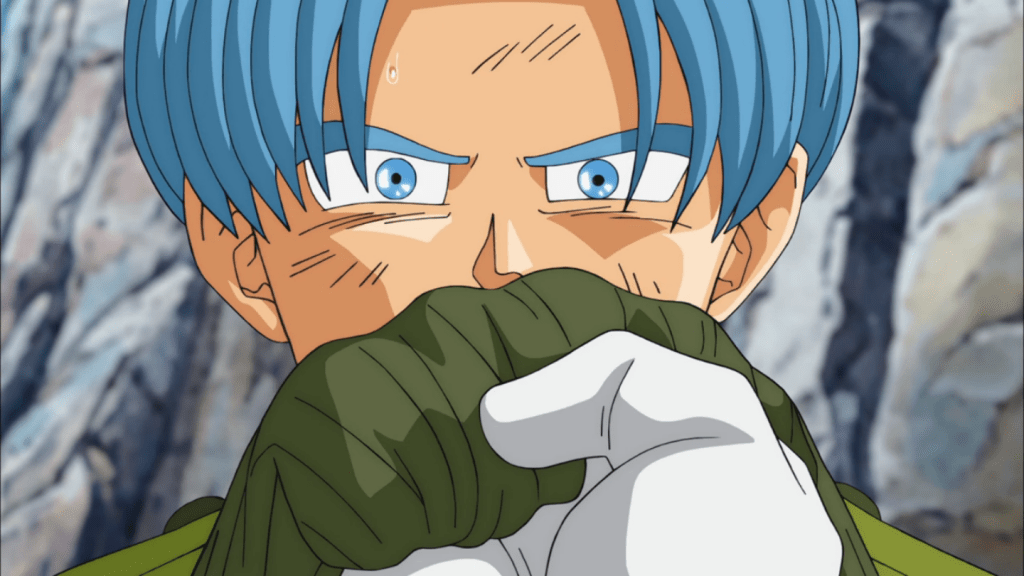
trunkscrying

Surprising even to me, it turns out Dragon Ball Super is actually really good. I’ve written a small post detailing how Dragon Ball Super has improved upon its predecessors. Take a look!

Purity in Anime Isn’t So Simple

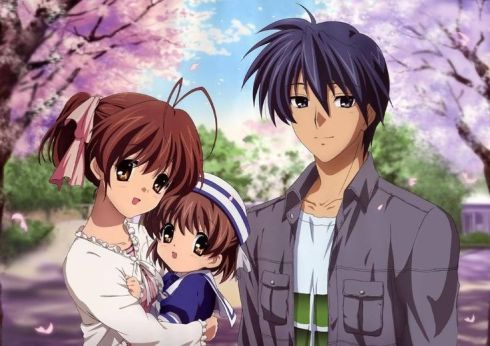
clannadafterstory

When the words “purity in anime” come up, I think the typical association is with sexual purity. Between past stories of fans being angry at individuals both fictional (Nagi from Kannagi) and real (Suzumiya Haruhi seiyuu Hirano Aya) for not being virgins, to the idol industry’s forbidding of relationships for its stars, there is a valuing of chastity that is often tinged with the desire for someone’s virginity to be in a state of limbo: always on the cusp of losing it, but never going to do so. At the same time, however, while sexual innocence is one form of purity, it’s not the only kind, and often it takes the form of a “naive perspective,” a “pure heart,” or a “child-like desire.”

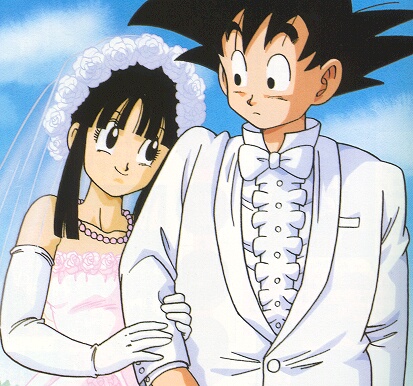
Chichi_20goku_20married

To shift the discussion away from female characters, I’d like to talk about perhaps the most famous character in all of anime: Son Goku. Suffice it to say, he needs no introduction, but one recurring trait of the character is that he is pure-hearted. It’s what allows him to ride Kintoun (Flying Nimbus). When confronted with the Devilmite Beam, an attack that turns one’s negative thoughts into damage, Goku is completely unaffected. Even as he fights planet-crushing adversaries, has two kids, and generally grows into an adult, Goku is still portrayed as innocent of mind. His love of fighting is genuine, and even sex doesn’t really change him.

Looking at more recent titles (unless you count Dragon Ball Super), a character like Nagisa in Clannad is supposed to be an epitome of innocence and purity, but by the time of After Story she’s married and is no longer a virgin. Even though her tragedy quotient shoots way up (as tends to happen in Key works), Nagisa is much like Goku in that sex doesn’t actually impact the sense of purity her character exudes. In terms of child-like desire, Haruka in Free! views the act of swimming similar to to how Goku approaches fighting. It’s not about winning or losing, it’s about the simple joy of the activity itself, whether that’s swimming to feel the thrill of the water regardless of competition, or wanting to test one’s strength against strong opponents. It’s as if the ultimate purity is one that maintains itself no matter the circumstances.

I can’t forget that there is a double standard when it comes to sex. Girls, be they fictional or real, are subjected to the issue of being “ruined” or considered “sluts” in a way that goes well beyond the limited world of idols where both sexes are subject to scrutiny. Nevertheless, I have to wonder if it’s possible for a character to be viewed as pure yet also sexually promiscuous? I don’t think it’s impossible. Perhaps even the enjoyment of sex can be portrayed innocently, even if that might not necessarily be realistic. That said, the degree to which people would be able to accept something like this is probably small in the grand scheme of industry and audience reactions, but maybe that’s not such a bad thing either. One question I wonder is how fans can reconcile a desire for purity in some cases with a strongly sexual presentation at the same time, but it might just have to do with having the option to shift responsibility, especially in the 2D realm of anime and the 2.5D realm of idols.

Parasyte_Migi_2

In the first paragraph I mentioned Hirano Aya and her fall from grace due to the idea that she had sex with her band mates. The backlash essentially sent her from being the top otaku idol to only working in anime sparingly, but ultimately it’s my opinion that this has made her voice acting career better than ever. No longer is she pushed into roles that are tailored towards keeping her as that “goddess of anime.” She can be Migi, the alien symbiote in Parasyte. She can be Paiman, the weird panda-like hero in Gatchaman Crowds. She can be Dende, guardian of the Dragon Balls in Dragon Ball Super. It’s possible to look at her full CV and see that her acting is not limited to that which is most sexually thrilling or geared towards otaku appeal qualities. By de-coupling her from the very idea of virgin purity, her acting is arguably purer than ever before.

This post was sponsored by Johnny Trovato. If you’re interested in submitting topics for the blog, or just like my writing and want to support Ogiue Maniax, check out my Patreon.

Whiplashing It: Iron Man 2 Thoughts

I watched Iron Man 2, and just to put down a quick review, it was very entertaining and a worthy sequel, though not as good as the first and the action scenes tended towards the disorienting. What I really want to talk about though is the film’s villain , Ivan Vanko.

Iron Man suffers somewhat from a lack of really memorable supervillains, with few outside of the fanbase even knowing who the Mandarin is, let alone someone like the “Iron Monger” or “Whiplash,” the official name for Ivan (though it’s never mentioned in the film). Strictly speaking, there is no “Ivan Vanko” in the original comics, and is instead an amalgam of two existing Iron Man supervillains, Whiplash and the Soviet-themed Crimson Dynamo.

What an intriguing idea! If your villains aren’t that interesting, try to take elements from at least two, and try to create a more developed character out of it. I feel like it could go a long way.

So then I think, what if we applied this to film adaptations of anime? Let’s just say, HYPOTHETICALLY SPEAKING, that there was some kind of Dragon Ball “film,” if you will. While there are plenty of strong, iconic adversaries Goku and friends have had to face over the course of their tale, I just have to wonder about the possibilities of “Whiplashing” it.

Merge the Saibamen with the Little Cells to have an ultimate team of deadly jobbers.

Incorporate elements of Android No.19 into Tullece and have a guy who looks like Goku because he is a robot.

Better yet, mix Zarbon and Bacterion into a handsome, self-centered alien whose true form is ugly and also smells.

The possibilities are endless

Who is Goku’s Greatest Mexican Rival?

“Fajita.”

Sprkng! Early Observation of Dragon Ball Kai

I don’t plan on making it a habit of blogging about Dragon Ball Kai, but seeing as I reviewed a very “special” remake yesterday, I felt I should talk a little about how the other, inarguably better remake is doing.

For those of you who don’t know, Dragon Ball Kai is an HD re-mastering of the original Dragon Ball Z with new audio recorded (both music and voices) and, most importantly, all fat trimmed to make the show more streamlined and in-pace with the original Toriyama manga. Three episodes are out so far, and it should give a good indicator as to how the show will fare later on.

Dragon Ball Kai accomplishes in three episodes what took the original anime five, and early Dragon Ball Z wasn’t even that filler-laden! At the pace they’re going, the show may end up feeling it’s never dragging. That is, unless perhaps the manga dragged in certain areas as well. It’s an interesting conflict, being “true to the manga,” because should you be true to it, bad parts and all? Probably the main difference in pacing that will be seen is that in the manga powering up hardly takes any time. It’s the classic cliche of Dragon Ball Z that entire episodes are spent “powering up,” and it’ll be funny to see that stereotype smashed. It’ll be even funnier when the Namek saga takes significantly less time, and the inevitable jokes will occur which go, “Are they still on Nam- oh…I guess not. Carry on!”

Unlike that other thing, there’s really no point to discussing whether or not Dragon Ball Kai is true to the spirit of Dragon Ball. While this is clearly going to make them massive piles of money to roll around (and to sleep on top of with lots and lots of beautiful women), it’s still, I feel, a labor of love to a certain extent, even if it’s simply a repackaging of old material to seem new and fresh. I’m cool with that.

I just have to wonder if this mean that for all the young kids who are watching Kai before Z, will they be unable to ever watch the Z anime when a superior alternative exists?

Dragon Ball Kai over Dragon Ball Z?

Dragon Ball Kai, for those of you who don’t already know, is the remastered, revised new airing of Dragon Ball Z with the filler cut out and the pacing altered to remove the fluff and get closer to the pacing of the original manga. Obviously, this is going to at some point be released on a physical format for purchase. Most likely it’s even going to be on Blu-Ray what with this being a remastering for HD broadcast.

If you enjoyed the series on Cartoon Network or syndication but never purchased any series, is how willing would you be to buy Dragon Ball Kai INSTEAD OF the original Dragon Ball Z anime? If you have the original DBZ anime, would you be willing to sell it in order to get DBKai, or does the original hold too much sentimental value?

It’s supposed to be about half as long with everything improved, so it looks to me like a more enticing purchase, but I just want to get a better idea of what others think. Would DBKai being essentially a condensed DBZ anime be a more attractive product to lay money down on? Is DBKai something only existing DBZ fans will pay attention to? Can it draw in a new audience, one that was born within the past decade and is now just reaching the target age for a classic great shounen series?