Checking Out the hololive Kura Sushi Collab

The revolving sushi restaurant chain Kura Sushi has been doing a collaboration with hololive, and I decided to check it out. By the time I got there, the available merch was done, but that was okay. My real goal was to taste the hololive-themed sushi.

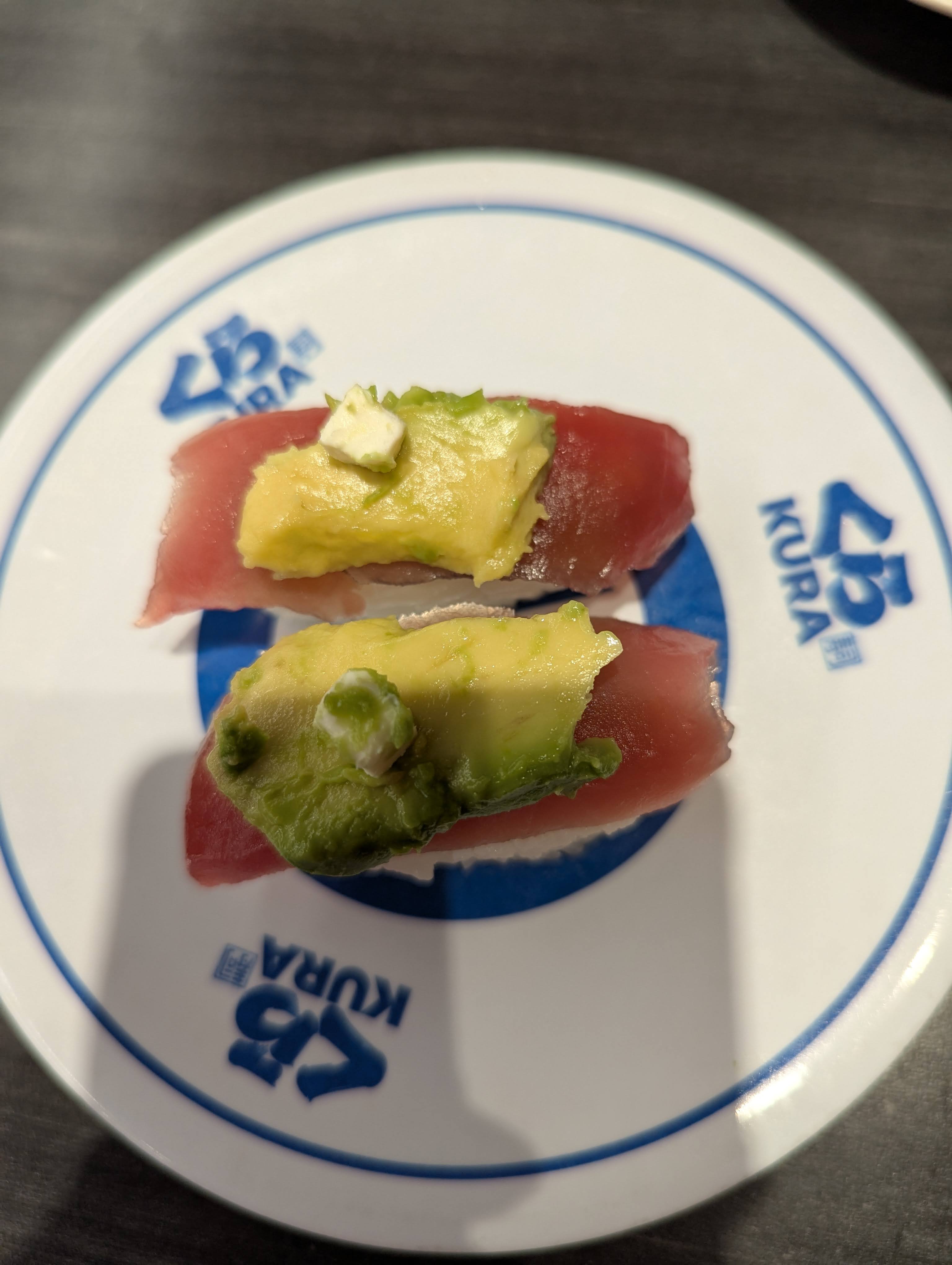
Ouro Kronii’s “Tuna with Avocado Cream Cheese, which pairs soy-marinated tuna with avocado and cream cheese over Kura’s specialty sushi rice.”

The spokespeople for the collab were Ouro Kronii, Ninomae Ina’nis, and Gigi Murin. I don’t think there was any particular rhyme or reason to these three being the reps, but the official art was cute and I rolled with it all.

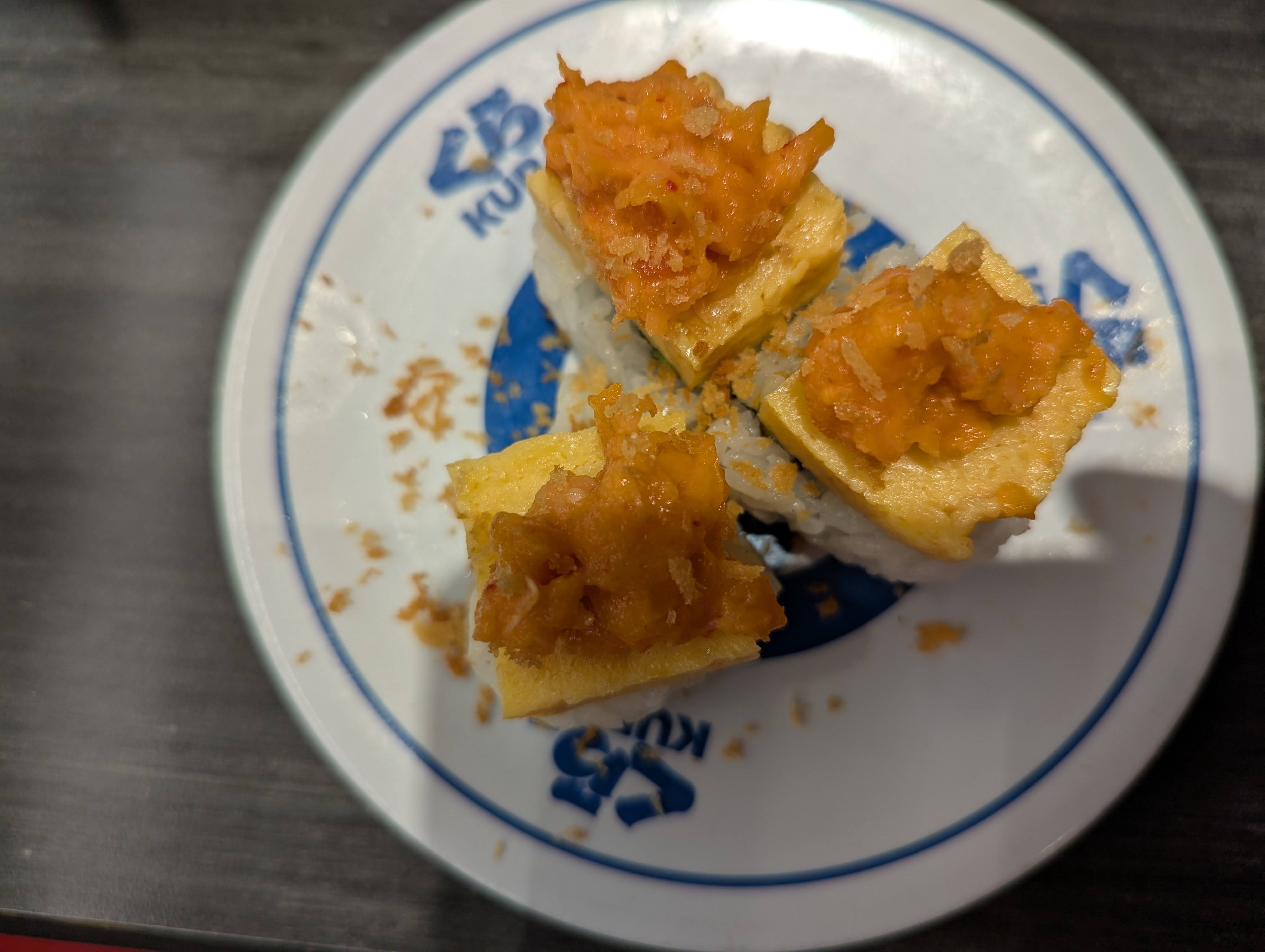
Gigi’s “Salmon & Tamago Spicy Roll, made with spicy salmon and tamago atop a shrimp mayo roll finished with panko crunchy flakes.”

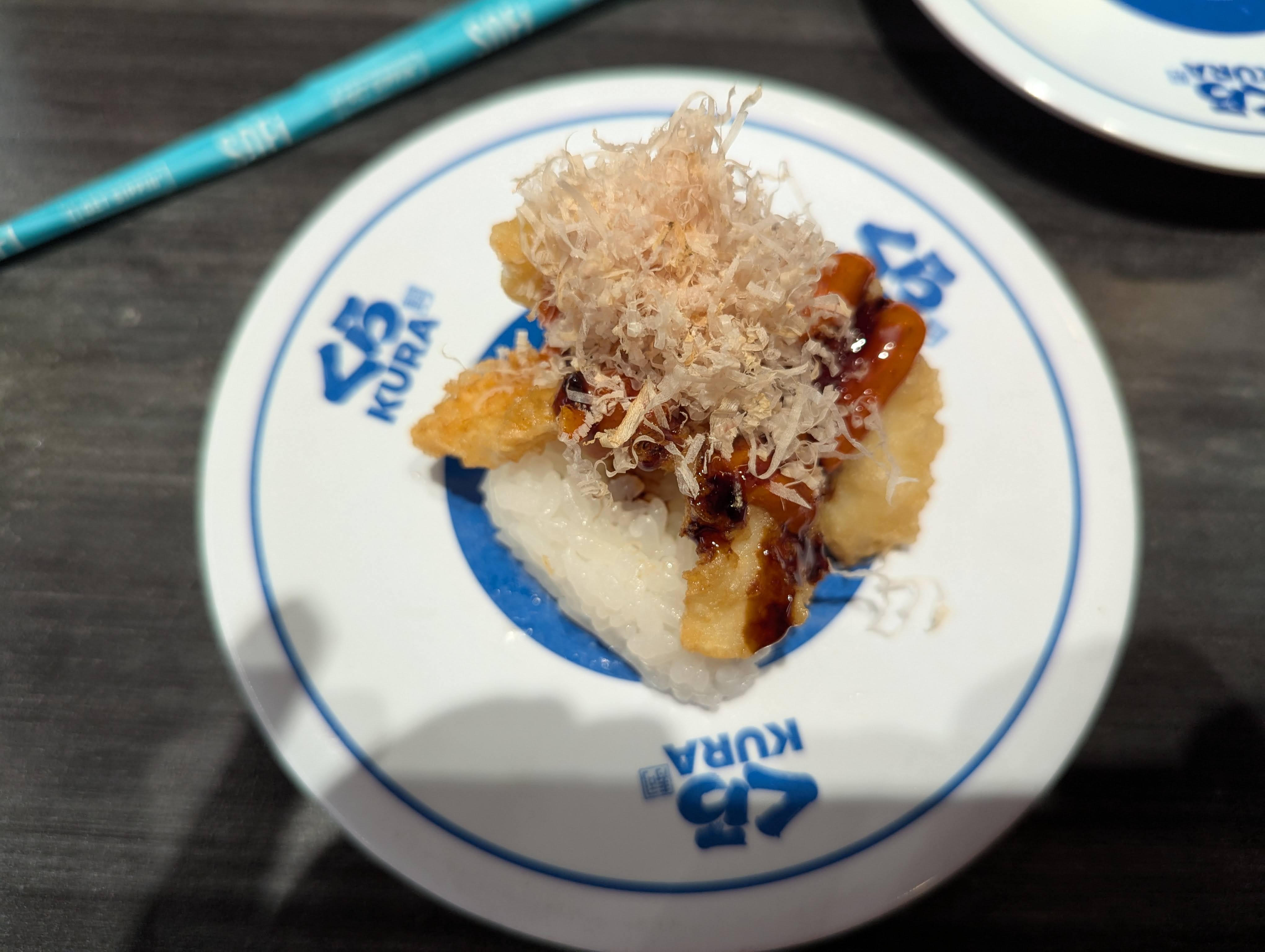
One strange thing is that when I first sat down, only Kronii’s and Gigi’s were available. About 40 minutes in, though, Kronii’s ran out and Ina’s became available. Of the three, I liked Gigi’s best because it was the most esoteric and involved the blending of many flavors.

Ninomae Ina’nis’s “Spicy Crunchy Squid, featuring squid tempura topped with spicy mayo, eel sauce, and bonito flakes over Kura’s specialty sushi rice.

Aside from the collab sushi, all items on the conveyor belt were the same price. This made certain items seem very much not worthwhile, and almost like pity options for those who might not be all that into sushi. 

I ended up getting a $5 coupon, but it ended up being a pretty expensive dinner, so I don’t know if I’d go back just to use the discount before it expires. Despite that, I think this one trip was a fun outing, and I appreciate being able to try some nifty nigiri.

I Ate Nissin Curry Meshi Thanks to hololive

Truly “instant” curry rice is something I’ve always wanted, but the idea of a truly shelf stable with absolutely minimal prep time seemed a bit farfetched. That’s why I was surprised a few years ago to see Minato Aqua, Oozora Subaru, and Usada Pekora from hololive promoting a new product called Nissin Curry Meshi, i.e. Japanese curry rice in a cup.

When I traveled to Japan last year, I used the opportunity to get some for myself. What I didn’t know is that there were multiple versions at this point: the original; the “perfect meal” version; extra spicy; and hayashi, which is technically not curry but often gets lumped in with it. Yotsuba famously called hayashi “fake curry.”

As stated in the hololive video above, preparing these instant curries involves adding water to the cup, waiting a few minutes, and then stirring continuously to get the roux to melt and mix with the rice. It’s a little more involved than Cup Noodles, but not by much.

Every flavor tastes close enough to what they claim to be. They hit the right notes, and wouldn’t be mistaken for anything else. I do think the perfect meal version kicks the whole product into the realm of the mildly inconvenient with its extra separate curry powder, but it ends up tasting all right overall. 

Regular

The rice is decent but does not taste 100% authentic. It’s unlikely anyone would confuse this for fresh (or even day old) rice if it was served in a blind taste test. It sort of reminds me of a rice-based breakfast cereal in that it feels like dehydrated rice that has been reconstituted, but not necessarily like it’s cooked rice that has dried out. It’s like the curry isn’t quite all there, nor is the rice, but together, they make for a decent facsimile.

Some of the containers suggest adding a raw egg after pouring the water, but depending on how comfortable you are with eating very undercooked eggs (or how where you live treats its eggs), it might not be the best idea. 

Hayashi (left) and Keema (right)

In recent years, Nissin has been selling its seafood and curry Cup Noodles in the US, and these products are closer to the more high-quality versions found in Japan. I hope that they find a way to bring Curry Meshi here. It’s not the best thing in the world, but I could see it doing well with those who want something quick and easy but are getting tired of instant noodles. 

(It does make me wonder if Nissin branches would come up with flavors to cater to local tastes. Maybe instead of Curry Meshi, we’d get instant rice and beans.)

Old-School Noodle Goodness: Kanda Yabu Soba

While in Japan last winter, I decided to check out one of the oldest soba shops in Tokyo, Kanda Yabu Soba. The restaurant dates all the way back to 1880, during the Edo period, and comes from a time when soba got famous as a fast food for busy people.

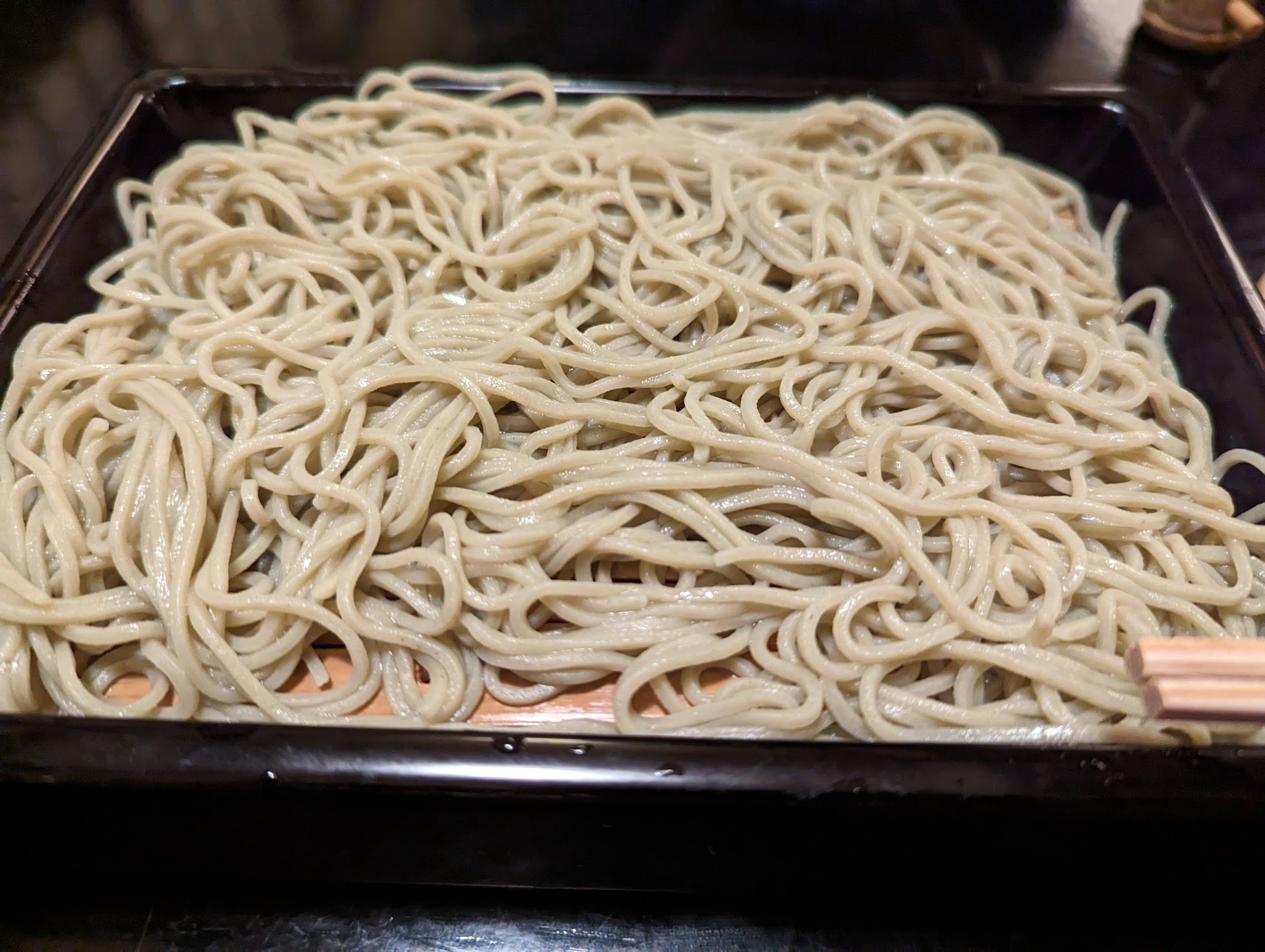
To my surprise, my group managed to get in. While the wait was somewhat long—around 30 minutes—it was nowhere near as bad as I was expecting for a restaurant with its reputation. When our number was called, we sat down at one of the traditional floor spots (as opposed to having western-style chairs), and I ordered seirou soba: a plain buckwheat noodle, served hot with a thin dipping sauce. 

It was literally the best soba I’d ever eaten. The noodles were simple but satisfying with a fresh buckwheat taste with lots of depth, and the restaurant also offered hot water at the end that you could mix with your remaining dipping sauce to create a nice after-meal broth. Not only that, but it was very affordable, not even factoring in a strong dollar to yen exchange rate.

Japan is a land of genuinely good food at reasonable prices, and Kanda Yabu Soba is a prime example. While this value is most apparent in the many convenience stores that dot the country, what’s truly mind blowing to me is that even a nationally renowned, 144-year-old restaurant would still be so accessible budget-wise. But even putting aside such a long-lived establishment, I find that the US, by comparison, suffers from high rent, the cost of real estate, and the segregation of communities due to the prevalence of car culture. These factors make it almost impossible for niche restaurants to get off the ground and remain reasonably priced. 

My only regret about going to Kanda Yabu Soba is that I didn’t have the opportunity to try more than the basic. It was excellent, of course, but now that I’ve had the seirou soba, I want to try their more elaborate options (like the one with duck!). That’ll hopefully be for next time, if I happen to be in the area again. 

My First Experience with Sumo Stew: Chanko Kawasaki

I’m always interested in trying new foods. That’s why, on my trip to Japan last year, I had a particular restaurant in mind as I landed: Chanko Kawasaki. 

I had heard a lot about chanko nabe, aka “sumo stew.” It’s supposed to be the stuff sumo wrestlers consume to help bulk up—nutritious and high in protein for building muscles, and easy to eat in large quantities to pack on those calories. I happened to find Chanko Kawasaki through a simple Google search, and soon discovered that it’s not just any chanko nabe restaurant, but the original! It was founded by a former sumo wrestler turned stable head, and he devised the dish as a way to feed his wrestlers well.

The restaurant is located only a few minutes by foot from Ryogoku Station, and not far from the Ryogoku Kokugikan Sumo Hall, where matches happen. The station is decorated with large images of famous sumo wrestlers, proudly announcing the historic nature of the area.

Chanko Kawasaki is fairly small, and its entrance is around the back when heading there from the station. Given its legendary status as the origin of chanko nabe, I was worried that I wouldn’t be able to get a seat. Fortunately, though, I happened to go during the sumo off-season, so there were only a couple other parties there. 

My group got a standard chanko nabe, as well as a variety of skewered meats. The hot pot stew is primarily chicken meat (plus liver and kidney), along with tofu and vegetables such as nappa cabbage and carrots. It’s kept at the ideal temperature using a single portable stove. While this was indeed authentic sumo food, they don’t serve it in sumo-sized portions to ordinary folks (though you can keep ordering more).

The thing that surprised me most about the chanko nabe is how clean and refreshing it tasted. I had expected a fairly heavy dish, equivalent to brawny bodybuilders eating steaks, but it all went down easily. That doesn’t mean it was lacking in flavor, though. The broth was nice and savory, and the ingredients all tasted great. Nothing was overcooked either, and even the chicken breast was far from dry. I could easily see myself eating it often and in large quantities. 

Overall, I am very glad I went to Chanko Kawasaki. While I haven’t had other chanko nabe to compare, I would be satisfied with versions even half as good. I’d be curious to see what it’s like during sumo season, but for now, I at least have my memories of hot stew on a pleasant winter’s night.

How the Gorgeous Food Manga Mogusa-san Does Side Characters

I recently picked up Volumes 2 through 5 of one of my favorite manga in recent years, Mogusa-san. Featuring a girl who eats anything and everything and has developed seemingly superhuman skills in order to get as much food in herself as possible without anyone noticing, it’s basically a series made just for me. One question that arises from reading Mogusa-san is, how do you keep this premise going? What kinds of characters do you introduce as complements or foils to Mogusa herself? The answer is, a closet picky eater who has some of the qualities of a tsundere without necessarily falling squarely into that archetype.

mogusasanvol3-chigumi-small

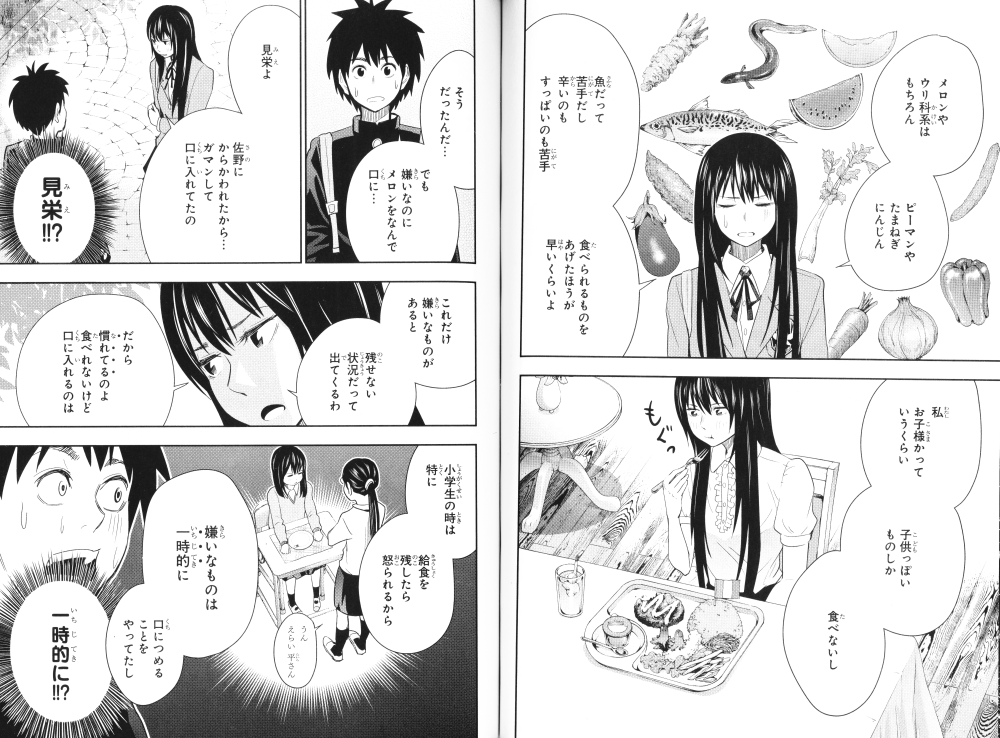
Taira Chigumi is the president of Mogusa’s class, and a seemingly strait-laced, no-nonsense individual. However, she harbors a deep, dark secret: she has the palate of a 10 year old. That means hamburg steaks and gummy candies are in, tomatoes and fish are out. Of course, she has an image to uphold, so she’s learned to basically keep gross foods in her mouth without swallowing them, and then force them down with a helping of coffee milk.

It makes sense in a way: opposite a girl who eats anything is a girl who eats almost nothing, and the added twist of giving her the taste buds of a child makes her rather endearing. When Koguchi (the male POV character) discovers her secret, she responds by violently attacking him. On the surface, this appears to be the stereotypical tsundere reaction, but it’s a little too active and conscious for that to be the case. Tsundere characters are usually based around having an almost involuntary reaction to embarrassment and having their true selves revealed (as parodied in the manga Mozuya-san Gyakujousuru, about a girl with tsundere as a form of clinical disease). Also, rather than having her priorities be love or the denial thereof, Chigumi simply wants to be friends with Mogusa because she sees how Mogusa just seems to love food more than anything else, and maybe, just maybe, if she spends enough time with her, that this quality will rub off on Chigumi as well.

mogusasanvol3-corn-small

Chigumi isn’t the only character who adds to the world of Mogusa-san, as it also features a little sister who eats character-shaped foods as if she were a Titan from Attack on Titan, and even an eating rival. Suffice it to say, I recommend this series 110/10. No, that’s not a typo.

If you liked this post, consider becoming a sponsor of Ogiue Maniax through Patreon. You can get rewards for higher pledges, including a chance to request topics for the blog.

Waku Waku +NYC Blog: Let Your Imagination Soar with Onigiri Rice Balls

I wrote a short post on onigiri over at the Waku Waku +NYC Blog. Why not take a look, and then think about what you’d like to put in a Japanese rice ball?

Waku Waku +NYC Blog – IPPUDO’s Ramen King on What It Takes to Run a Ramen Restaurant

I wrote a small post on the Waku Waku +NYC blog, translating a couple of choice quotes from the founder of the ramen restaurant chain IPPUDO.

IPPUDO is going to be at Waku Waku +NYC so if you want to enjoy anime, cosplay, and more while eating authentic Japanese ramen, tickets are on sale now.

Waku Waku +NYC: In Japan, Ketchup is Not a Crime

I’ve written a new post at the Waku Waku +NYC blog, about how ketchup is treated as a versatile ingredient in Japanese food in contrast to its reputation in the US as a one-note, non-exciting condiment.

What do you think of ketchup? Is it worthy of respect, or another example of people having no taste?

In Case You Forgot, I Love Both Anime and Food

I’ve written a blog post on Sailor Moon as my introduction to Japanese food over at the Waku Waku +NYC official blog. If you’re interested in me waxing nostalgic and rambling the way you expect out of Ogiue Maniax, take a look.

Sailor Moon Was My Gateway into Japanese Food

I’ll be a regular contributor to the Waku Waku +NYC blog from now on, so look forward to more posts from there in the future. As always, I will continue to devote myself to Ogiue Maniax as well.

If you’re curious, Waku Waku +NYC is an upcoming Japanese popular culture festival from August 29-30 in Brooklyn, NY. Unlike a lot of anime cons and Japanese events, this one looks to more thoroughly integrate food with Japanese anime, games, fashion, etc. If you’re even half as interested in eating and watching anime as I am, it might be worth your while.

In Memory of Donburiya and the Best Donburi in New York City

Over the years, I’ve written a couple of reviews on Ogiue Maniax for a Japanese restaurant in Manhattan called Donburiya. It served many types of Japanese foods, but as per its name, its claim to fame was its donburi: large bowls of rice with various toppings on them. I’m truly sad to inform everyone that Donburiya closed its doors at some point over the past few months, and I only found out upon arriving and seeing the entire place abandoned.

I haven’t been this upset about losing an excellent food joint in a long while. The last time this happened, it was The Pink Teacup, a soul food restaurant that literally, literally served the best fried chicken I’ve ever eaten. In that case, the flavor penetrated the chicken all the way down to the bone, and in the case of Donburiya just about every dish I ever ordered there had a similar level of quality. Whether it was the Chirashidon (sashimi), Oyakodon (egg and chicken), Katsudon (pork cutlets), or Unatamadon (eel and egg), or even the curry, I will cherish my memories of that restaurant.

I know it might sound silly to some, but as people might have picked up from my writings, I’m a huge food enthusiast and food is a very emotional subject for me. To lose a place that has served me well, not only in terms of the quality of its dishes but also as a space to gather with friends and to celebrate, makes me wish I could’ve gone back just one last time.

By the way, if anyone knows any fantastic donburi places in New York City, I’m all ears. And mouth.