hololive is arguably the premier VTuber company, and hololive fes is the big annual concert for its female talents. I’ve been watching avidly for a few years now, and it’s become a tradition I increasingly look forward to every time. However, 2025 saw quite a few major challenges for hololive, notably the departure of multiple talents. So while I was just as enthusiastic as ever about watching this year’s 7th fes, I wondered how differently I might end up feeling with so many familiar names gone.
Despite the potential setbacks, I came out of it with generally positive vibes. I always appreciate that we get performances of all stripes, with each talent bringing a story of their own that was created through their experiences as VTubers and the fanbases they’ve cultivated.
Venue and Other Details
This was the first year that the event took place over three days—a change that affected its associated convention, hololive Super Expo 2026, as well. Rather than having two concerts per day over two days, they had one on Friday, two on Saturday, and one on Sunday. Moreover, whereas one of those concerts used to be an “extra” stage that utilized talents from the other three, this time around saw all four concerts featuring unique performers. Watching the stream live meant messing with my sleep schedule, in some ways better compared to previous years and in other ways worse, due to time zone shenanigans and a pesky thing called a “work week.”
Once again, the venue setup used multiple stages as a way to have more people able to get better views of at least a few performances. The mysterious pod from 6th fes did not return, and was replaced by a new moving cart/trolly contraption with screens on the sides, which acted as “windows” to see the VTubers and vice versa. It moved through a diagonally placed lane that cut through the audience section, with the seeming aim of also providing more up-close viewing and interactions with the talents. While it was definitely less confusing and bizarre than the pod, it didn’t have quite the novelty factor, for better or worse.
The Debuts
While it stung to lose some beloved members of hololive in 2025 and to have both Inugami Korone and Haachama not participating, the overall number of performers stayed close to the same as last year thanks to the two most recent generations making their fes debuts: Justice on the English side and Flow Glow on the Japanese side. While the graduated talents were truly special and can never be replaced, the performances by the newest blood kept them well out of their predecessors’ enormous shadows.
Justice showcased each of their unique approaches—Liz’s versatile vocal range, Cecilia’s emphasis on elegance and accuracy along with a violin solo, Gigi’s boundless energy and a singing style that hangs on a razor’s edge, Raora’s bubbly pop. And when Flow Glow hit the stage, they put on a display of why they’re the most stage-focused group ever in hololive thanks to their well-honed skills and experience in singing, dancing, and overall entertainment.
Leveling Up
For the returning fes veterans, their hard work came through more than ever in their performances, with some having come particularly far from where they started.
With her characteristic awkward grace, Shiori Novella sang her recently-released first original song, “Monsters and Men” and came across as more comfortable than any previous performance—possibly because the song was made for her. Biboo (Koseki Bijou) discovered in the past year a method for singing lower, which she utilized for her original song “Rock In” while showing increasing comfort with dancing. Ichijou Ririka took on the challenge of covering “Darling Dance” and its fairly complicated choreography despite having two left feet when she first debuted. Ouro Kronii probably wins the award for greatest overall vocal improvement, showing a different and more vibrant quality as she performed a surprise new original of her own titled “Storm.” And Airani Iofi pulled off an impressive cover of “Unison of Smiles,” the main heroine’s signature song from You and Idol Precure!, emphasizing just how far she’s come in all aspects.
Not everyone comes to hololive as a strong singer or dancer (skill in either doesn’t seem to be a strict requirement), so seeing evidence of the talents’ hard work and progress in these areas gives me joy.
Conquering Great Hurdles
Even those with more experience and ability pushed their limits. Baelz Hakos, already a top dancer, gave a stunning performance of the first Oshi no Ko opening, “Idol.” One stand-out moment was when Bae seamlessly transitioned into a squat as she went into the rap portion of the song, but more significantly, she also threw in a cartwheel and some basic breakdancing moves at the end. These are more acrobatic moves that she has been afraid to do because of the potential head trauma, and for her to confront her fear directly was a real thing of beauty.
Perhaps the biggest story of all was the astounding recovery made by Kazama Iroha from holoX. In 2024, she was afflicted with a psychological condition that left her unable to speak, and her voice only barely managed to come back by the time 6th fes rolled around. But whereas some of her speech was still noticeably halting and unsteady in 2025, a year of speech therapy and streaming resulted in an Iroha at 7th fes who almost made me forget the tribulations she’s experienced. We saw her sing and dance with confidence, and even have heartfelt and off-the-cuff exchanges with her frequent collab partner (and idol) AZKi.
Preludes to Upcoming Concerts
Speaking of holoX, they have their big live-attendance concert, First Mission, coming up. They’re not alone either, as Ninomae Ina’nis and Takanashi Kiara from Myth are only days away from their own concert in Los Angeles, Drawn to Dawn. While I can’t be sure how the rehearsal timelines lined up, I really felt that their practice for these major events are evident at 7th fes, especially in the case of Kiara and holoX’s leader, La+ Darknesss.
Kiara’s dancing and singing showed a new level of refinement, while La+ once again focused mainly on singing for her solo performance…and then threw everyone for a loop by humorously and abruptly tossed her prop guitar on the ground at the beginning of her song. When Kiara and La+ then performed together their original, “Glow in the Dark,” they reminded me that 1) Kiara is one of the most versatile talents around, and 2) even as the overall level of dance in hololive keeps going up, there’s really something special about the way La+ moves. At the same time, it felt like both of them were holding back a bit, as if they’re saving the big guns for the upcoming concerts.
IRyS has also just announced her first solo live concert for October 2026. I had thought her incredibly solid performance of her Eurobeat original “Carbonated Love” might have been out of a desire to feature at fes a song she personally adores, but now I also suspect it’s because the majority of her energy is going into this major project.
Other Stand-Outs
There were still other performances that caught my attention.
I feel that the entirety of hololive Indonesia really showed up this year. Moona Hoshinova especially brought some of my favorite performances of the entire event, with “100%,” her song featuring Nerissa Ravencroft, being one of the absolute highlights for me.
On the Japanese side, Nekomata Okayu’s deep and sultry singing is always a surprise, but it really hit hard this time around. Natsuiro Matsuri can go under the radar, but she appears to have made some incredible strides this year on top of her already underrated skills.
I also got a kick out of Todoroki Hajime’s new solo choreography for “Countach,” and Otonose Kanade’s voice rang out loud and beautifully on “Greatest.” And while Juufuutei Raden isn’t quite the musical performer of her fellow ReGLOSS members, the fact that she turned a Japanese art history lesson into a song and then had thousands singing along (and thus learning in the process!) really showed me how VTubers can reach people in unique ways.
Final Thoughts
As I finished watching 7th fes, I began to think about the structure of the event itself and what it can accomplish. fes is a gathering of both the hololive talents and their fans, and because these fanbases don’t overlap perfectly, the concerts can also be someone’s introduction to other VTubers. In that context, I end up wondering what kind of first big impression these unfamiliar audience members get. The way this format encourages fans to branch out past their immediate faves by providing this comfortable atmosphere really appeals to me, especially with the live audience there to react. That’s why, despite the fact that fes prices out a lot of fans (and something like the New Year’s Countdown is arguably a better introduction because it costs nothing to watch), I think it can go a long way in igniting someone’s career and helping someone discover a new favorite.
So while I certainly missed the presence of the talents who left or couldn’t be there, it was also an opportunity in many ways. I just hope that hololive can foster an environment that gives these artists the chance to develop their craft in the ways they want, and in ways that keep them healthy in both mind and body.
In 2023, I went to the first hololive English concert, Connect the World. In my review, I ended off with some idle thoughts:
And now that I’ve gone to a concert for virtual idols, who knows what’s next? Maybe I’ll attend some concerts by 100% flesh-and-blood musicians as well. Ironically, the VTuber rabbit hole might just lead me back to the real world.
Two years later, I finally made good on this by seeing Pat Metheny at Carnegie Hall on his Dream Box/MoonDial Tour. Given how more and more of my favorite creators and artists have been shuffling off this mortal coil, I considered him a top priority, and I’m glad I finally got the chance.
While Metheny does have a connection to anime thanks to “Last Train Home” being used as a JoJo’s Bizarre Adventure ending theme, my fondness for his music goes all the way back to my early childhood, when I first heard in a commercial what I would later learn was “It’s For You.” I watched the film Fandango earlier this year specifically because I knew that song was featured in it.
I’m the definition of casual fan—I didn’t even realize quite how much music Metheny has made, or that he’s a 20-time Grammy winner, or that he still puts out songs on a fairly regular basis. I knew he was a beloved musician, but not that he’s in the running for greatest jazz guitarist of all time. Though in hindsight, I don’t think anything could have prepared me for the live experience.
Metheny just seems fundamentally different from most musicians I’m familiar with—he seems to be less focused on making individual songs and more about exploring music and sound itself. It might be because I’m not very familiar with his very extensive discography, but it felt like I never knew where he was going or what he was going to try next. At one point, he mentioned a guitar maker he works with often, and how she takes his ideas for instruments and makes them a reality. In fact, this entire concert was dedicated primarily to his recent decision to use the baritone guitar more, and this included his custom designs. In his last few songs, Metheny used a bunch of contraptions to record his own guitars on the spot and then played them back to become a kind of one-man band while colorful meters flashed and shined. It was an aural and visual cornucopia.
Helpfully for a newbie like myself, he actually took time to delve into his life and history. Metheny explained how he came from a family of trumpet players, but that he didn’t take to the instrument nearly as well. It was seeing the Beatles on the Ed Sullivan Show that exposed him to electric guitars and changed his life forever, despite his family’s initial dislike of the newfangled instrument. At a young age, he started playing at famous spots in his home state of Missouri. Metheny mentioned that he rarely ever talks this much during concerts, so I consider myself fortunate in this regard.
This was both a culmination of a journey as a listener and the start of something new. I wonder where I might go next.
Last month, All for One took place on August 23 and 24 at the iconic Radio City Music Hall. The third hololive concert also included 15 VTubers in the Big Apple, but all was not the same. The past 12 months have seen the departure of four talents and the introduction of a new generation. Because of all that has transpired, the concert atmosphere conveyed an energy that was about, if not passing the torch, at least sharing the flame so that all may shine.
Overview
In terms of fame and seating capacity, Radio City Music Hall was a major step up from the King’s Theater in Brooklyn. That’s not a knock against last year’s venue, which was overall great, but if hololive EN wanted to send a message, this was certainly the way to do it. One other upside was the efficiency and courtesy of their staff. It was very clear that they were more than accustomed to dealing with large crowds, and none of the delays or long snaking lines that occurred last time were an issue.
One thing that was notably different compared to every previous hololive concert I’ve seen, English or otherwise, was that the setlists consisted entirely of songs from hololive. This was apparently a deliberate decision to highlight all the music that has been created under their banner over the years, and in that respect, they certainly succeeded. Whether it was people singing their own songs or earworms that have turned into Holocure BGM, there was a real sense of history for a company that is both still young and the grizzled veteran organization of this industry.
That said, I have to admit that I missed the anime covers and what-not a little. While I do write more and more about VTubers these days, I’m still primarily an anime fan at the end of the day, and I get a kick out of hearing virtual people bust out an opening or two.
All for One was also the first time an EN concert had all its performers in idol outfits—before, this was usually reserved for the annual big holo fes. Similar to the music, it does give a sense of unity, but I also enjoy seeing the regular outfits due to how unique they are. Maybe if they modeled the idol outfits to better match the bodies of the default models, I might feel differently. Another aspect of the visual presentation was the inclusion of lasers. They didn’t show up for every song, but when they did, it felt like Ideon launching all its missiles at once.
Lack of anime themes aside, in terms of song choices, I don’t exaggerate when I say that they managed to hit virtually every number I was hoping for. Baelz Hakos performing “Countach”? Hell yeah she did, alongside Gigi Murin and Indonesia guest Kureiji Ollie. “Start Again,” a song that features the top singers of every generation? It literally kicked off the second day. I know the setlist has at least some input from the talents, but however they decided to finalize it, I felt treated to one amazing moment after the next. The way they also mixed things up in terms of song order compared to the previous concerts was also refreshing.
Start Again
The Talents
While last year I wrote about each VTuber and their presence individually, I think All for One is better served by focusing on their generations and narrowing down.
Justice
The four ladies of Justice are the newest additions to hololive EN, and they debuted the 3D models that allow them a full range of motion only recently. All for One was their very first live concert, with all the pressure that entails. But one way or another, each of them showed a real spirit of performance.
Elizabeth Rose Bloodflame is one of the best singers to ever grace VTubing, and the strength and playfulness of her voice commanded attention, whether in her solo cover of “Stellar Stellar” or in group songs such as “Above Below.” Raora Panthera’s boundless energy was infectious, and she would do things like get in a little wiggle while disappearing off stage. During the big group numbers like the titular “All for One,” I even saw her do the monkey once, and also spin around while hopping. Cecilia Immergreen’s “Wind Up” has quickly become one of my favorite hololive songs, which she accompanied with a graceful dance, and a group cover of Aki Rosenthal’s “Shallys” saw her manifest her violin for a brief solo. Gigi Murin’s combination of brashness and silliness served her well, as her songs ranged from cool to comedic. While the latter three don’t have Liz’s vocal skills, they all work well with their limitations.
I also need to give attention to the MC part featuring CC and GG, as I don’t think I’ve ever been quite so entertained by one of those breaks. You could tell that they started from an absurd spot (GG carrying CC while on all fours) and then through improvisation naturally escalated it into anti-humor about stand-up comedy cliches and the inherent absurdity of their fan-favorite pairing name, AutoFister. Even thinking about it now, it still makes me snort in laughter.
Advent
Returning for a second year, Advent is considered one of the newer generations of hololive, but they’re also no longer inexperienced rookies. Their mutual closeness has been one of their biggest strengths: They have released the most group covers out of anyone, and are currently in the middle of releasing a whole series of lore-centric songs.
The first of those works, “Genesis,” came out a couple weeks before the concert, so I didn’t have my hopes up about getting to hear it live. Fortunately, I was wrong. This performance became one of the highlights of my weekend, and I especially love the way the song plays on each of their official back stories without sounding disparate or forced. Best of all, it’s in the free section of the VOD, so anyone can revisit it anytime.
Genesis
Like Justice, Advent has one particularly strong singer in Nerissa Ravencroft, who is versatile but especially good at sounding sultry. One of her lines in “Genesis”—“Watch me be your diva/I’m gonna raise your fever”—leaves me actually feeling flustered, with her wide-swinging hips adding to her appeal. The twins, Fuwawa and Mococo Abyssgard, once again showcased their harmonization skills with each other and their thorough embracing of their personas. Diminutive Koseki Bijou appeared dedicated to showing that she has more than a cute side, with a surprising solo choice in Houshou Marine’s “Dead Ma’am’s Chest” and a group performance of another Marine song, “I’m Your Treasure Box.” As for their leader, Shiori, she continued a trend that started last year with her singing in a lower register that might seem uncharacteristic of her but sounds noticeably better, as well as conveying an almost nonchalant charisma that’s both graceful and charmingly awkward.
Promise
The girls of Promise have faced many challenges over the years. They had the unenviable position of following a powerhouse first generation, and if you count their past as Council, they also have lost three members over time—the most of any hololive generation. But their year has also seen some huge positive changes for them as IRyS, Ouro Kronii, and Hakos Baelz have worked to hone their crafts while seemingly less beholden to outside expectations.
IRyS went with “Diamond Girlfriend,” a song that is a culmination of a long and incredible journey that took her from wishing she could have her own Eurobeat song to collaborating with Motsu of Initial D fame. She also came full circle a different way by pefrorming “Gravity” alongside Towa and Kronii. While this was not the first time IRyS had sung it on stage (see Connect the World), this different context brought “Gravity” from a symbol of her “Project Hope” era to a defining work for hololive EN as a whole. With Kronii, meanwhile, the difference between All for One and Breaking Dimensions (or even 6th fes earlier this year) was like night and day. Neither singing nor dancing were her strong suits, but they’re increasingly a part of her repertoire, especially when you take into account the fact that Kronii lives outside of Japan, and thus away from the main hololive studio and its resources.
Then there was Baelz Hakos. She’s my favorite current hololive EN member, and this concert had me trying my damn hardest to not blink and miss any moment with her. The amount of training she has undergone to improve her physical fitness, her singing, and her already top-tier dancing is hard to overstate.
The result was one unforgettable number after the next. There was the aggressive aura of “RxRxR” with Calliope Mori, her stylish dance moves in “Countach” (a song originally from her fellow elite hololive dancer Hajime), and Bae’s mind-boggling combination of nuance and dynamism for her solo “La Roja.” She even got to be the center for the encore performance of “All for One” to end the whole thing! I am eager to see more people learn about her.
For their group number, Promise covered “feelingradation” from ReGLOSS. This was another favorite of mine from this concert, not simply because I really love the original version, but because the three just felt very cohesive as a unit. It’s also not lost on me that Bae sang not one but two Hajime songs; the Vroom Boom Duo is truly one of the hottest things to ever hit hololive.
Myth
As the generation that started hololive English, Myth are rightfully seen as pioneers. They celebrate their 5th anniversary this month, and a lot of All for One could be seen as giving props to them for laying the groundwork that has allowed later arrivals to thrive. At the same time, they’re in a position similar to Promise’s in that they’ve been down two members after Gawr Gura and Amelia Watson left. The complexion of their generation does feel different as a result, and adjusting to this “new” Myth has taken some time.
Temari
Whatever the situation, it’s pretty astounding how far they’ve come. Ninomae Ina’nis was the first solo performance of Day 1 with her original song “Temari,” and her voice over the years has gone from cute and sweet to being capable of this wonderfully haunting quality. Calliope Mori was originally all about defying expectations of what a VTuber should sound and act like, but has now become a mentor and even a standard of measure. Her music, her singing style, and even her dancing (which includes a surprisingly well-done can-can) have all transformed over time—and her songs at All for One cover that history well. The third Myth member, Takanashi Kiara, may have gotten the most love of all. Not only did she perform a short medley for her solo number, sing her original song “Mirage” with IRyS, and showcase her enticing dance moves, but Kronii also covered “Do U,” the kpop-influenced song that became Kiara’s first breakout hit.
Chimera
And as if to add to the fond reminiscence, their group performance of “Seishun Archive,” was a choice deliberately requested by Kiara because practicing for it was when she first really bonded with Gura.
Towards the end of Day 2, all three did an MC together, and it became a time to reflect on where they came from and where they’ve gone. While a part of me braces for impact when you see this much reminiscing, I think all of them have shown that they’ve come out of the last five years better than ever.
Guests
Although none of them got their own solos, it’s worth discussing how much the guests—Oozora Subaru and Tokoyami Towa from hololive JP, as well as Ayunda Risu and Kureiji Ollie from hololive ID—put on wonderful performances.
Oozora Subaru’s “Hot Duck” and its lighthearted silliness contrasted with a breathtaking performance of Ayunda Risu’s “Alice&U.” The latter has long been considered a tremendously difficult song that was arguably too difficult for others to cover, but Nerissa and Elizabeth showed that they had the technical skill to knock it out of the park. Towa and Calli’s “Queen of the Night” is the best song from the MythMash series in my opinion, and getting to hear it live was a joy. There wasn’t an Ollie-centric song during the event (which is very characteristic of her humility), but the zombie idol brought a welcome energy of excitement. A minor hiccup during Ollie and Shiori’s MC left us all literally in the dark for a few minutes, but this seemed to be more of a random mishap than anything else.
Miscellaneous
There was a whole bunch of ticket shenanigans that happened earlier this year when a bunch of fans tried to outmaneuver the scalpers but ended up making it harder for other fans to buy tickets. Over the weekend of Anime NYC, I saw people online and even at the convention center trying to sell off tickets for heavily discounted prices. While this was done with good intentions, I think one of the major failings was assuming that all fans of hololive are active on Discord or even use it at all.
Moving on from that, each night ended with a credits roll, as is typical. However, one funny thing for me personally is that I recognized the font used: Marker Felt Thin. So if you want to ever replicate the All for One credits, here’s your starting point.
My last unorganized thought is: Houshou Marine sure is popular. Even though she wasn’t involved with the concert directly, she probably got more songs of hers into All for One than anyone else, barring Kiara.
Overall
To say I was happy with how All for One turned out is a gargantuan understatement. I came out of it with my feet aching but my heart full. Despite all that they’ve gone through, this was a really strong showing for the ladies of hololive English.
I benefited immensely from All for One being in New York at Radio City Music Hall, but I really wouldn’t mind it being somewhere else—even on a different continent. I want more people to have this experience, and I’m willing to settle for streaming tickets to give it to them.
hololive 6th fes—the latest edition of the largest VTuber live concert in the world—happened earlier this month, from March 8th to the 9th. Watching it online, I came away feeling that this event was potentially a pivotal moment for hololive and its talents.
As an agency, hololive has come a very long way. What began as the off-shoot of a small tech start-up of around 10 employees named Cover corp has become a massive corporation of over 500, as well as the first name in VTubing. In other words, a lot has happened, and the performances seemed to reflect the various contrasts that come with this change: the simplicity and instability of the past versus the complexity and stability of the present, the advantages and disadvantages of playing it safe versus taking risks, and looking back to remember the good times but also to show how far they’ve come.
Performances with Extra Meaning
Related to this sense of history and where it might lead, the biggest story going into 6th fes happened only a few days earlier: Murasaki Shion of hololive Japan’s 2nd generation announced she would be graduating at the end of April, meaning this would be her last fes, and thus one last chance for the fans who gathered there live to show her their appreciation.
Thus, Shion’s performance became a major focal point for the whole event, where she performed her latest single: “Gomen ne Medicine.” The song’s lyrics talk about trying to create a medicine to heal, that she’s sorry if it ends up doing more harm in the process, and how she’s not able to properly convey her gratitude—a message that hits differently in hindsight. Moreover, she received one of the coveted spots in the concert venue’s new center stage contraption, putting her even more in the spotlight. The result was a highly emotional performance that was both a celebration of Shion’s 6.5 years at hololive and an acknowledgment that this was the beginning of the end.
Kazama Iroha’s participation was also a big deal. Afflicted with a psychological condition that prevented her from speaking, she managed to find her voice again sooner than her doctor had anticipated, and she’s been gradually streaming again. However, Iroha’s speech has become a bit halting and noticeably different from the boisterous and rapid-fire style she once had, so the question was how this might affect both her singing and potentially her MCing. But she managed to perform her original song “Mahou Shoujo Magical GOZARU” with little trouble, and while there was a few moments of hesitation in her talking, these were only minor hiccups
Iroha recently mentioned that her appearance at 6th fes almost didn’t happen. Now, she’s taking another hiatus in the hopes of fixing her speech and preventing her current way of speaking from becoming the standard.
The Center Stage
I need to talk about that center stage pod Shion (and others) used before proceeding further.
hololive fes has gotten increasingly huge over the years, and now the Makuhari Messe convention space appears to be at capacity for how many people can attend the concerts. There also weren’t differently priced tickets, so having a stage on just one end would be unfair to the people sitting all the way in the back. Last year, the solution they came up with was to have three different stages in different spots, so the “front” of the audience changed, depending on the performance.
This year, they went with two stages and a pod in the middle of the space. The two stages were similar to 5th fes’s, but the pod was so unusual that at first, I wasn’t sure what I was looking at. Essentially, it was a three-sided structure that rotated continuously, with a single performer displayed on the screens and additional walls blocking certain angles. I think the idea was that it gave a chance for everyone in the 360 degree space to get a decent view, but because the stream view could only ever see one screen, I couldn’t tell if the other two were showing the performer at different angles (for a kind of pseudo-3D hologram view), but I’ve seen others online say that was the case.
On the one hand, I was a little disappointed that this wasn’t a true 360-degree hologram like I thought it might be when hololive first shared the venue diagram. On the other hand, I appreciate that they tried to improve on 5th fes, even if their answer was a little ridiculous.
The ones who appeared on center stage in addition to Shion were Houshou Marine, Hoshimachi Suisei, Nekomata Okayu, Takane Lui, Sakura Miko, Tokino Sora, Ayunda Risu, Natsuiro Matsuri, and Moona Hoshinova (note that I may have missed some). There is no singular thing they all have in common, but many are pillars of the company, known for their excellent vocals, and/or have recent (or upcoming) solo concerts/album releases.
6th fes Debuts
This year, two generations made their first hololive fes appearances: English’s Advent and DEV_IS’s ReGLOSS. The two are kind of like sister groups, even covering each other’s music. And while neither group has a long history with hololive (around a year and a half for both), their group song choices already seem to reflect slightly different approaches.
Advent went with their debut number, “Rebellion.” However, compared to their initial recording and even their multiple previous performances for their 3D showcase and the live concert Breaking Dimensions, Advent has improved noticeably. Nerissa Ravencroft and (actual) twin sisters FuwaMoco were already strong singers, but Nerissa’s voice seemed more stable and FuwaMoco’s harmonies sound wonderful as ever. Shiori Novella continued to benefit from switching to a lower register where she has more control (as opposed to the higher notes of the original recording), and Koseki Bijou had more strength in her vocals. It’s the best “Rebellion” has ever sounded.
ReGLOSS, instead of picking their first song, went with their fourth: “Feelingradation.” To be fair, ReGLOSS just has more music they’ve done as a group compared to Advent (and even most generations in hololive, for that matter), but I still think it was a noticeable decision to not choose “Shunkan Heartbeat.” Much like Advent, however, their progress isn’t an illusion. Todoroki Hajime is still an impeccable dancer (easily top 2 or 3 in hololive) and Otonose Kanade is the heart of the group with her amazing singing, but Hiodoshi Ao, Ichijou Ririka, and Juufuutei Raden all took steps to improve their weaker areas for this performance. Listening to it, I’m reminded how much I love their music; it’s exactly up my alley.
Remember the Big Hits?
Compared to every previous year, I felt that 6th fes emphasized how long hololive has been around. It was like a combination of nostalgia trip, a desire to celebrate personal legacies, and an attempt to capitalize on major successes. For example, this year saw six medley performances—double what was at 5th fes.
In a concert event that is often about mixing things up, it’s also notable that three of the older and more beloved pairings were featured. Shirogane Noel and Shiranui Flare of JP’s 3rd gen (from 2019) once bought matching rings. Shishiro Botan and Yukihana Lamy of JP’s 5th gen were also a close duo when they first started in 2020. Nekomata Okayu and Inugami Korone have a friendship that actually predates hololive, and their song of choice was “If…” by Da Pump, calling back to one of their most viral karaoke moments from four years ago. As if to show off how much they’ve improved, the two performed the song straight instead of breaking into giggles, Okayu covering the singing parts with her buttery voice and Korone handling the rap portions while busting a move and literally doing cartwheels.
Additionally, this year’s fourth concert was called the Creators’ Stage, and it was promoted as a highlight of notable music makers who have worked with Hololive talents. But in light of previous years, which featured concerts promoting full collaborative albums with groups like deco*27 and Honeyworks, the Creators’ Stage felt more conservative. The most unusual thing was seeing what combination of girls sang together. Moreover, the Creators’ featured three songs from Houshou Marine, and while she is one of their most famous members, it felt like either 1) a case of last-minute substitutions or 2) the company really wanted to get the popular songs in. One song was even performed twice, namely Marine and Kobo Kanaeru’s “III” (which I’ve learned is pronounced “Ai-Ai-Ai” and not “Three”). While repeating songs had the advantage of allowing people to hear these songs without purchasing multiple tickets, I suspect this was not the main motivating factor.
I don’t think playing it safe or referencing the past is inherently bad. The medleys can exist because the individual talents have enough songs to make them possible at all. All of it was also still very entertaining, and some of these performances were among my favorites of the weekend. Nevertheless, it came across to me as at least partly an exercise in caution.
The Dancers Grow Ever Stronger
The number of skilled dancers increased and the established ones continued to improve, treating us to some astounding performances.
Hakos Baelz covered Ado’s “Show,” and displayed the intense energy and skill that her fans have come to know and love. While it didn’t have the striking movements of “GEKIRIN” at Breaking Dimensions or the daringness of the interpretive contemporary dance from 5th fes, something about the routine felt like it was specifically designed to accentuate her strongest attributes and to showcase improvements she made in the past year.
Later during an MC section, Bae revealed that she came up with her choreography for “Show” herself. In a post-event stream, she also mentioned that her zombie-like rise from the floor (a move she learned when she was five!) was something she tried to put into last year’s performance, but the technology they used couldn’t handle it. The girl literally pushed the limits of what was possible with Cover’s motion tracking and helped cause it to improve.
The rat wasn’t the only one to put on an amazing dance show. Todoroki Hajime’s smooth confidence showed why she and Bae are seen as the very best. I adore Takanashi Kiara’s “Mirage,” and the adaptations she made to dancing a solo version worked well. Vestia Zeta’s snappy hip and movements are etched into my memory. Aki Rosenthal was originally known as possibly the best dancer early on, looked the best she has in a long time.
Roads Less Traveled
Usually, La+ Darknesss is a part of that list of dancers, and she did make for a great idol dance trio with Matsuri and Momosuzu Nene. However, for her solo performance this year, the leader of holoX eschewed a complex choreography for a greater focus on singing. As a fan of hers, I find this noteworthy because La+’s voice has struggled some ever since illness forced her to change the way she speaks and even laughs. But here, singing “Tokyo Teddy Bear,” she sounded maybe the best she has outside of a studio recording in a while. And while she didn’t have a fully structured routine, she brought her characteristic energy and impeccable sense of poise when posing.
La+ wasn’t the only one to mess with expectations. Korone usually picks an older obscure song (like the opening to a 1990s horse-racing anime), but this time, she actually went with one of her originals (and threw in a one-handed cartwheel). Matsuri jokingly refers to herself as “the pure one (seiso tantou)” when she’s extremely upfront about her horniness, but her performance of her newest original, “Love Letter,” could easily convince listeners that she’s telling the truth about herself. Ouro Kronii—known for her mature, sardonic personality and her equally mature figure—was perhaps the last person anyone expected to sing “Loli Kami Requiem.”
Other performances saw talents go outside their comfort zones. Nanashi Mumei usually focuses mainly on singing but this time danced a fairly elaborate choreography. Kaela Kovalskia is one of the least “stage”-oriented members of hololive, but her cover of Digimon Adventure’s “Brave Heart” was a real crowd pleaser. In this way, there were definitely places where experimentation contrasted with the reliable approach of the concert as a whole.
“Familiar” Doesn’t Mean Bad
While not everyone was about taking on wild new challenges, that doesn’t mean the more expected ones were by any means bad or disappointing. In fact, a lot of these “expected” performances were among my favorites. IRyS sang “TwiLight,” which has become my favorite original song of hers, and gave me exactly what I was hoping for. Oozora Subaru hyped up the crowd through her contagious energy. Tokoyami’s deep voice is still a thrill to experience. Airani Iofifteen went for something cute and poppy, and while her two genmates are better known for their singing prowess, Iofi really played into her niche well. Gawr Gura is already known for having a soothing singing voice, but her cover of the sorrow-laden song “Dango Daikazoku” from Clannad left me with emotions welling up.
And then there’s Haachama, whose orthodoxy is being unorthodox. She came in with her new metal-influenced song titled “Who2” (a play on futsuu, or “normal”), and she expressed a chaotic fervor reminiscent of her duet with Kureiji Ollie from two years ago. If it weren’t for the impact of her surprise return at 5th fes, this would probably be my favorite showing by her yet.
The New Idol Uniforms
The last thing I want to talk about is the fact that almost all hololive members at 6th fes received a new outfi (the exception is ReGLOSS, who already have unique idol outfits). It was the first in two years, and unlike at 4th fes, there’s one general template across all regions instead of having specific designs for Japan, Indonesia, and English branches. I think the design both looks good and stands out as unique compared to all the previous idol outfits, and I particularly enjoy the little aspects that individual talents can customize. The only drawback is something that has applied to all the shared outfits: The bodies are often generalized and don’t necessarily capture the look and proportions of their original models. I hope hololive can make that accommodation someday.
Final Thoughts
hololive 6th fes felt like a victory lap that was also a cautious straddling between the old and the new. In last year’s review, I mentioned how the dramatic rise of hololive made the difference between the older fes events and the most recent ones very apparent. Six events in, we’re now firmly on the side of “grand and polished”—perhaps to such an extent that we can’t ignore its sheer weight as the biggest VTuber company in the world.
When it starts up the engine, hololive has more momentum than anyone else, but it can be hard to change course. At the same time, having a diverse talent pool each with their own strengths means that even if the company as a whole can’t be as nimble, they can still create in-roads to other possibilities. I am fairly optimistic that they can find a decent balance between the two while thinking about the long-term wellbeing of both the company and the people working in it.
Next year will be Justice and FLOW GLOW’s turns to take the big stage, and I’m excited to see how they shine. I get the sense that both groups are going to excel in 3D performances.
These days, I listen to a lot of VTuber music. They dominate my playlist, which might come across as an odd choice because while quite a few are wonderful singers, you’re not going to get professional-quality results all the time. Even so, there is something that makes VTuber music that feels special in current times: They remind me of anime character image songs.
In the 1990s and up through the 2000s, image songs were pretty common. Whether it was Ranma ½or Suzumiya Haruhi, shows with large casts would have voice actors sing songs based on their characters, and often as their characters. This feels less prevalent in anime over the past decade and change, but with VTubers, it’s like practically every original song (and even covers to some extent) are just inherently image songs because they work off of the VTubers’ personas.
The “issues” with VTuber music are also reminiscent of complaints about image songs. “Why listen to people who can’t actually sing all that well?” But it’s just as much about connecting to the characters being portrayed as it is about the inherent musicality of a song. You’ll get some performers who are excellent at what they do, but real skill is a bonus rather than a requirement. Better yet, if there is improvement, you get to really see them come into their own rather than just starting as amazing. One of the best things is hearing someone perform one of their songs live and realize that they actually sound better than the studio recording they did back when they were still a little shaky.
To end off, I’m curious about if any readers are fond of any character songs, be they anime, VTuber, or maybe some other category.
In July of 2023, I went to hololive English’s first full concert, Connect the World. I was grateful for the opportunity to be part of that milestone, and felt that if I never attended another event like this, I would have been content. Who knows if I’d be able to make it again anyway? Then June hit, and Cover corp announced a second concert right in New York City called Breaking Dimensions. It would be the first real-life concert for the third EN generation, Advent, bringing them together with their predecessors Myth and Promise.
Upon hearing the news, I had one thought: Even if I wasn’t able to get a ticket for any of this two-night event, I had to try. Thankfully, with some luck and a good friend on my side, I was able to see both days in person. In the end, I came away with immense satisfaction at what everyone at hololive, as well as the fans, created.
Changes from Connect the World
Breaking Dimensions took place August 24–25 and improved on its predecessor in virtually every way.
While I certainly enjoyed Connect the World and cherish the experience, it wasn’t without issues. For example, the immersion could falter at times due to what seemed like the quality of the video projection. At Breaking Dimensions, the setup was a lot more convincing, and it felt much more like I was really watching VTubers on stage. I even got to see it from very different seats between Day 1 and Day 2, and they maintained the illusion in both cases.
Connect the World was also a bit regimented in terms of its setlist: group songs purely by generation, individual performances also by generations, and a few big numbers. Compared to the major holo fes concerts in Japan (the biggest live events for the company), there were no interesting talent mixes. Breaking Dimensions fixed all that and more, featuring various duos, trios, and even quartets that had me cheering out loud. Whether it was fan-favorite combos or new experiments, the whole thing was full of pleasant surprises.
The only downgrades from the first concert were the lower seating capacity and the one-hour delay that occurred on Day 1 due to long lines (despite the fact that all seats were assigned). The Kings Theatre can hold about 3,000 people, and over 20,000 tried to get in when tickets first went on sale. I suspect this has to do with the fact that New York City is not a good place for mid-sized venues; you either do something like this or you have to go all the way up to Madison Square Garden/Barclays Center, and the latter locations are not cheap. And one upside of the Kings Theatre is that it’s gorgeous. I saw fans considering dressing up to match, but the summer heat put the kibosh on that idea for the majority of concert goers.
And while this isn’t a problem with Breaking Dimensions specifically, I do wish the colors in the penlights were either more saturated or labeled. As someone with a bit of color blindness, I struggled sometimes with switching between colors, especially when it came to purple vs. violet. There were definitely a few great choreography moments I missed or caught only glimpses of as I struggled with the penlights.
The Concert Was Simply Great
The whole show fired on all cylinders from start to finish, and by the time I was done, I had absolutely zero regrets about going (despite what my wallet might say).
I’m serious when I say that it had too many great moments to count, so much so that I decided that the next best thing is to give my thoughts on every talent one by one in the hopes of capturing enough of the finer details. I want to give them the respect they both earned and deserved, as VTubers and as people.
Below are my thoughts on each EN member, in order of their first solo appearances. Following that is a section for the guests from hololive Japan and Indonesia.
I also want to reiterate an important point I’ve made in the past about these large group hololive concerts: While there are certainly individuals involved who are exceptionally skilled at performing on stage, it’s not a prerequisite or even necessarily a desired expectation from their fans. hololive is in many ways similar to an idol or music company, but it is not actually either. Sometimes the reward is just getting to see them stand in front of the bright lights, basking in being these identities they’ve built up for themselves.
hololive EN
IRyS
When IRyS appeared as the first solo act on Day 1, there was little doubt as to what song was coming. She had just released her first original in about a year and a half, and this was the perfect environment for it. “Carbonated Love” is a Eurobeat tune directly inspired by the soundtrack of Initial D, and with IRyS being among hololive’s very best singers, my anticipation was sky high.
Her performance was everything I wanted. IRyS generally sounds even better singing in person than in studio-produced tracks, and her melodic voice pierced through the venue, never wavering in its crystal-clear beauty. The addition of some mildly daring gyrations also sent the crowd into a tizzy. And fortunately for everyone, IRYS is in the free section on YouTuber, so everyone can see her in action.
Later group acts on “High Tide,” “Promise,” and “Blue Clapper” (the last of which was with her fellow CHADCast members + Koseki Bijou) benefited immensely from IRyS’s vocals. No matter what song she was on, she sent shivers up my spine in the best way.
FuwaMoco
As the only twins in hololive, FuwaMoco are generally in a unique situation compared to the rest of the talents, including sharing a Youtube channel. At Breaking Dimensions, neither got a solo performance, but they did have two duets: their original song “Born to Be ‘BAU’DOL” on Day 1 and a cover of “SHINKIRO,” the city pop tribute originally by Houshou Marine and Gawr Gura, on Day 2. The contrast between the peppy cuteness of the former and the wistful melancholy of the latter showed off their versatility, especially because Fuwawa and Mococo sing differently and have to find the right approach together in each case.
This was also Advent’s first IRL concert, and it was great having them in all their glory on the big stage. FuwaMoco’s ability to harmonize with each other is unlike anything else in hololive—the clear product of continuous effort and a life at each other’s sides. Their performance of “Doggy God Street” with Korone and Kobo (humorously called “Wet Dogs,” “Dog Water,” and other similar nicknames) also brought some welcome lightheartedness.
I wonder if we’ll see FuwaMoco split up for some songs in future concerts. Either way, the idol journey of the guard dogs will be something to look forward to.
Shiori Novella
Witnessing Shiori move in three dimensions has been one of the biggest surprises of Advent. One of the fun things about seeing VTubers get their 3D models is learning their body language and movement, but the other Advent girls have acted more or less as expected: FuwaMoco are great at idol dances, Bijou is jumpy and energetic, Nerissa is poised. Shiori, on the other hand, was hard to pin down.
Between her 3D Showcase and her appearance at Breaking Dimensions, what has become very clear is that Shiori possesses remarkable physical charisma. She’s not a great dancer or athletically impressive, but it’s like she makes every move count ten-fold. Similarly, while her singing is inconsistent, she does decently at her lower registers. Shiori’s solo (“world.execute(me)”) and her song with Kronii and Ina (Tokoyami Towa’s “FACT”) show this well. And her number with Fauna and Nerissa (“Lonely in Gorgeous,” the opening to Paradise Kiss) is one of my favorite performances of the entire concert.
Ouro Kronii
Kronii is known more for her speaking voice and acting skills than her singing, but she was able to not get lost in the shuffle. Having listened to her at Breaking Dimensions, one interesting thing about the Warden of Time is that despite having a fairly deep voice, she actually sings better at higher notes. In that sense, she’s sort of the opposite of Shiori (though I assume it’s just coincidence that their MCing was so unhinged).
It’s no secret that Kronii has a very loyal audience who loves to see her move on stage, but I myself found that she brought some nice flair to her dancing and singing, especially in her solo cover of “Bocca della Verità.” The contrast between her cringing at corny things but willing to throw caution to the wind only makes her stage presence stronger. Kronii’s group performances—with Kobo and Korone, and then Ina and Shiori—are notable for how her “cool” persona provided a different kind of balance in each trio.
Takanashi Kiara
As the best dancer in the 1st gen, Myth, and an experienced hand at performing in general, Kiara always seems comfortable when the spotlight’s on her. Her choice of “Pineapple,” a summery pop song from her album Point of View, let Kiara show a different side of herself while still emphasizing her status as the consummate idol of hololive EN—especially coming off of her world tour performances the Friday before.
One of the biggest cheers in the entire event was when Kiara warped in along with Calli, which only grew louder as the audience realized they were going into their group song, “Fire N Ice.” Playing on their respective motifs of blazing hot phoenix and chilling grim reaper, their performance highlighted two major things: 1) their clear improvement in singing and dancing these past four years, and 2) how truly special the TakaMori pair has become. Sure, it was hololive EN’s first major ship and for that reason still has many dedicated fans, but it’s developed into something much more powerful: close friends who respect each other and have each other’s backs through thick and thin.
Ceres Fauna
Fauna recently released a video short talking about how she joined hololive without knowing how to sing, and that she’s made many missteps up till now. Indeed, it’s true that singing still isn’t one of her strong suits. But despite her limitations, she still managed to draw me in.
First was the debut of her new song with Mumei based on their goth and emo outfits, appropriately titled “It’s Not a Phase.” Second was her solo—a cover of city pop classic “Mayonaka no Door/Stay with Me” where her gentle voice gave it a soothing quality. And as for “Lonely in Gorgeous” with Shiori and Nerissa, Fauna contributed a delightfully haunting quality to one of my favorite performances.
Gawr Gura
Gura, one of the icons of VTubing, is known for her love of Hatsune Miku, and her childhood dream of being on stage like her Vocaloid idol someday. Naturally, Gura has tended towards Miku covers for her real-venue performances, but Breaking Dimensions felt like a real “she made it” moment as she sang Miku’s most iconic song, “World Is Mine.”
Gura has two general modes of singing, and she weaponizes them to great effect: smooth+soulful or smug+bratty. She used the former in her “Bibbidiba,” while her cover of “IDOL” from Oshi no Ko with Amelia Watson was the latter. Her rendition of “World Is Mine” leaned towards cute but incorporated both styles, accentuated by the song’s signature high-pitched yells and Gura’s own adorable dancing with lots of tail-wagging antics.
Every appearance she made sent the crowd into a raucous frenzy. Truly, Gura is the queen of hololive EN, whose singing makes you feel like they’re the only person in the room with her, even if you’re in a packed theater.
Baelz Hakos
The chaos rat has become synonymous with top-tier dancing in hololive. I knew that much, coming into Breaking Dimensions. I thought I was prepared, but I wasn’t. She took me for a loop in every performance, especially her solo.
Bae released her first album this year, with each track based on an animal from the Chinese zodiac. Her solo choice, “GEKIRIN,” is written from the perspective of an ancient and prideful dragon. As if to embody that image on stage, Bae coiled and flowed elegantly like a heavenly serpent, occasionally unleashing powerful moves bursting with fire and fury, all while delivering on the singing. The subtleties of her performance could sometimes be hard to see in the crowd, so the online audience had certain advantages.
As for what’s next, I have my predictions. Given that the fourth English generation, Justice, has a lot of appeal towards Europe, I think the next big concert is going to be in either London or Paris. I don’t think I’ll be able to attend that one, but I’ll be happy to cheer from home, and hope that others will get the opportunity to have as good a time as I did at Breaking Dimensions.
In a later stream, Bae mentioned that the choreography for “GEKIRIN” was not of her own making, and that she was even a little daunted by the sheer difficulty. But the choreographer said to her, “I know you can handle it.” I think that sheer dedication and ability to push the envelope of what is possible in VTuber dance is something truly special about Bae.
An aside: On the morning of Day 2 before the concert, I was wondering what song she would pick, and I actually predicted that Bae would perform “GEKIRIN” from ZODIAC. Because I got her song choice correct, I decided that evening to see if fortune was in my favor and went to play the lottery. As for how it went, there’s a line in “GEKIRIN” that goes, “Oh, you humans so naive and desperate/Enough to think that luck and fate have favorites.” It was a lesson I learned the hard way.
Amelia Watson
I cannot emphasize enough how far Ame has come as a singer. From one karaoke stream to the next, and with each concert, you can literally hear her improve—a far cry from the days where she basically got by on vibes.
The idol side isn’t her wheelhouse, but the ways in which Ame was celebrated at Breaking Dimensions really struck a chord with me. She participated in a cover of “Puru Puru Pururin”: a callback to her debut 3D appearance at hololive 3rd fes. This time, she was accompanied by FuwaMoco and Koseki Bijou, and it made me realize that we’ve gone long enough with Myth that these returns to old songs actually feel kind of nostalgic. It didn’t come across as a retread either, specifically because she was joined by two of the biggest champions of mid 2000s online anime fandom, as well as a perpetual meme lord. Ame’s cover of Nekomata Okayu’s “Mogu Mogu Yummy” was also a great way to chill out, and it’s also in the free section on Youtube!
Ame’s reappearance towards the end of Day 2 made for one of the most exciting moments throughout the weekend. Seeing her distinctive yellow star appear, realizing she was about to start singing “IDOL” from Oshi no Ko, and then seeing Gura emerge from behind her led to such a rush of emotions in me. The roar of the crowd (one of the loudest across both days) made it clear that my fellow audience members agreed. I also noticed the fact that our resident detective was able to rap in Japanese—no small feat.
Koseki Bijou
The short-statured gem girl affectionately known as Biboo is more famous for her musical memes than her actual singing, and sure enough, she engaged in her most famous cringe earworm, “Sticking Out Your Gyatt for Nerizzler” in one of the MC sections. But even in the actual song performances, Biboo showed up and put herself out there.
If there’s one thing that Biboo’s performance communicated about her, it’s that she appears very comfortable with the prospect of being in front of thousands of fans. Either she’s a brave soul or she’s very good at pretending to be one, but the result is the same. Her choice of a more serious song in Hatsune Miku’s “Love Is War” showcases her willingness to take risks and to play into the chuuni parts of her personality. And in “Blue Clapper,” she didn’t feel out of place at all with Calli, Bae, and IRyS despite the fact that those three have been an established trio (the CHADCast) for a long while.
Ninomae Ina’nis
Over the past year or so, I’ve felt that Ina is on the cusp of really breaking through as an exceptional singer. That characteristic low-energy voice of hers can give her songs an ethereal quality, and it feels as if she only needs a little more refinement to take it to the next level. Ina performed a cover of “Synchrogazer” (the first Symphogear opening), and she demonstrated that she’s able to carry a song and give it a feel that emphasizes those unique aspects of her.
In the group songs, namely “Beyond the way” and “Bibbidiba,” her quieter approach also helped provide a bit of contrast with the other singers. While the Ina-Kronii-Shiori trio had none of hololive’s heaviest hitters in song or dance, it was still very memorable because they’re somehow aesthetically in the same general direction while each being very unique.
Nanashi Mumei
I still don’t quite grasp how Mumei sings the way she does. The way I often describe her is that she sounds like what other people get if you apply a ton of pitch correction and autotuning to them—except Mumei does it naturally. Or it’s like if you tried to trick Mumei into attempting to imitate an AI singer, only for her to beat it at its own game and then some. Alongside the fact that she can also go deep (as heard previously in “Mind Craft” and in the “Breaking Dimensions” song), you have one versatile songstress.
While many others went with newer works in their catalogs for their solos, Mumei actually sang her very first original, “A New Start.” Because it’s from early on in her hololive career, I think the single itself showed only a fraction of what Mumei is capable of, and the Breaking Dimensions performance highlighted the fact that Mumei has only grown more skillful and expressive. This also came through in “Beyond the way” with fellow birds Kiara and Nerissa.
The stand-out moment for Mumei came in the reveal of her original 2000s-era-inspired goth-emo duet alongside Fauna, “It’s Not a Phase.” She was very good at balancing “Haha silly joke” with “No, I’m as serious as a dark abyss” while making both sound good. As the stronger singer of the two, she helped keep the two sides cohesive.
Nerissa Ravencroft
As the singer of Advent, whose character is premised mainly around the forbidden power of her voice, I think there was a good deal more pressure on Nerissa for her first IRL concert. Even the namesake song, “Breaking Dimensions,” features her in a unique fashion as she harmonizes with the chorus other members sing. But I think she lived up to her reputation and lore here, and even danced remarkably well for someone who literally has a metal rod down her spine due to health issues. Whatever limitations this might impose, Nerissa worked around them very well.
Nerissa’s tune of choice for her solo was “Sweetest Scarlet,” which she also sang for her 3D debut. While it would have been great to hear something different for variety’s sake, I think having it done in front of a live crowd changes a lot. At times, it almost felt like she could pull in the entire audience into her embrace with her sultry notes. And whether she was the power singer in the holotori EN trio’s performance of “Beyond the way” or the central pillar for “Lonely in Gorgeous” with Shiori and Fauna, Nerissa was an important part of making those songs land effectively.
Calliope Mori
Calli has had a hell of a year, even recently landing on the US’s Billboard Top 100. Her commercial success is admirable, but what really jumped out at me during the concert was just how much her singing has leveled up. She’s been transforming from a primarily rap-centric performer to equal parts singer and rapper, and the fruits of her labor are showing in spades.
“Go-Getters” might be my favorite song she’s ever done, and part of it is that her vocals can keep up with the ambitiousness of the song. There were points I felt like she might not have the power to deliver on some sections, but she always pulled through. Similarly, I could hear in “Blue Clapper” the greater consistency she developed. And with “Fire N Ice,” her gruffer voice balanced out Takanashi Kiara’s well and even sounded better than the original recording. It also didn’t hurt that TakaMori’s choreography was spot-on.
Calli’s victories are not just in accolades but also real improvement. You love to see it.
JP AND ID Guests
Hoshimachi Suisei
Suisei showed up on two songs, including her record-smashing hit “Bibbidiba” with Gura, Ina, and ID’s Moona. While it’s hard to pick a single best singer in hololive, Suisei is definitely a contender while also being nearly unmatched in terms of mainstream recognition for her music. What isn’t as clear is that she can keep up dance-wise as well. Her star power was undeniable, as every time she came in with her rich voice on both “Bibbidiba” and “High Tide,” the audience’s cheers would grow ever stronger.
Kobo Kanaeru
I truly feel that Kobo is one of the most well-rounded VTubers, with even greater success only limited by the fact that the Indonesian language is not as ubiquitous as English or as anime fan–oriented as Japanese. A big part of her potential for stardom is her immense singing ability that transcends cultural barriers, along with her peppy dance moves and air of confidence.
For Breaking Dimensions, she sang “HELP!!,” one of her originals and also one of my favorite songs as of late. It was actually the second time she performed it that weekend, thanks to her appearance on the hololive World Tour at Anime NYC. The big difference is that whereas the world tour rendition was a solo, this rendition was as a trio with Kronii and JP’s Inugami Korone. The other two aren’t the singer Kobo is, but it was still an enjoyable experience seeing them all together.
Inugami Korone
Korone brings an energy that few if any can imitate or duplicate. While she didn’t bust out any athletic feats for her original song “Doggy god’s street” or “HELP!!,” her attitude on stage shouted, “I might not be the very best, but I belong here and no one can tell me otherwise.” It was like the world conformed to her existence. While she didn’t perform with Koseki Bijou, I actually think they’re made of similar stuff.
Moona Hoshinova
Moona appeared for both “Bibbidiba” and her own original song “High Tide.” Unlike her past performances of the latter, she was joined this time by IRyS, Bae, and Suisei.
I believe Moona has the best balance between singing and dancing in all of hololive, and exudes more “diva” energy than anyone else. That’s why having two of the strongest vocalists and arguably the top dancer in the company worked so well for “High Tide.” The body rolls, the powerful notes, and the high performance rate from the quartet was one of the brightest spots in a concert event rife with highlights.
Big Group Songs
There were five big group songs over the course of Breaking Dimensions: one for each of the three generations, a big finale both days, and then different encores for each concert.
Myth’s song, “ReUnion” is an okay track that ended up hitting a lot better in front of a live crowd. Promise’s, aptly titled “Our Promise,” has a “grand adventure” motif that sounds lovely but left the crowd a bit confused as to how to chant along because it just isn’t that type of song. “Rebellion,” the debut song for Advent, strikes the best balance, and it was perfect for the stage.
I must admit that I was listening to “Breaking Dimensions almost nonstop in the lead-up to the concert. I love the way that it emphasizes the particular qualities of each generation—Myth’s trailblazing through the unknown, Promise’s unity in the face of tumultuous times, and Advent’s mold-breaking while standing on the shoulders of their predecessors. One big treat with the two concert performances is that you could see them change things up a little compared to the music video. The chorus sections were sung by all 15 girls instead of sets of 5. Bae changed up her moves during the choruses from body rolls to more of a sway with a head bob. Biboo went from staying in position for her rap portion on Day 1 to walking around a bit on Day 2. And Ame, who strikes the final pose a split second later than the others (to cute effect), actually got the timing right for both days. I cheered especially for her tiny victory, and I wondered if others did the same.
For the encores (“Connect the World” on Day 1 and the English version of “Our Bright Parade” on Day 2), it was fun seeing and hearing these symbols of hololive EN’s continued success.
Final Thoughts
I try my best to reflect on what I see with a positive perspective without just spouting unalloyed praise, yet I know much of this review sounds like I’m gushing. I truly do think very highly of what hololive accomplished here, and attending it is one of my favorite experiences in the past few years.
Since Connect the World, my opinion of hololive has only gotten better, and I find myself paying attention to so many more talents. That’s not even simply because they’ve literally debuted multiple generations, but because they manage to thread the needle between feeling both very personal and highly professional. The Breaking Dimensions concert really puts this balancing act on full display. It’s like each member gave the audience a solid peek into their various journeys, ones whose paths diverge and intersect over and over. And the fans reciprocate, helping to make these VTubers feel like the superstars they are.
PS: I spotted my support message on the screen while waiting for the concert to start:
Over the past few years, hololive Super Expo & hololive fes (a combination convention and live music event) have cemented themselves as the premiere event of not just hololive, but all of VTubing. This year, “hololive 5th fes. Capture the Moment” bookended an incredible 365 days that saw the debut of two new generations, a swathe of 3D debuts, and other milestones all culminate in a whopping four-concert series.
The big visual change this year was a new triple-stage setup for the live audience. By having three stages (one in front and two on the sides), it gave the chance for different sections of the crowd to have a better view of the action at different times. This didn’t matter much to anyone like myself who was watching via the live stream, but I appreciated the effort on behalf of those attending in person.
In anticipation for 5th fes, I watched the Blu-rays of the previous years’, as well as videos of other concerts. While this year’s event was indeed bigger than ever before, it also really felt like the latest point in each VTuber’s journey. Seeing the progress of your favorites is a part of the idol experience, but what I find notable in this situation is how hololive encourages the fans to meet the talents “where they are.” Improvement is relative to oneself rather than absolute, and can consist of circuitous and unpredictable paths.
Because there were dozens and dozens of hololive talents involved, I will only be writing about a handful. That said, even if I did not include your favorite, you might be able to find them fitting into one of the categories below.
Debuting on the Big Stage
For the 3rd generation of hololive Indonesia, this was their very first hololive fes, marking a major milestone in their VTubing careers.
Kobo Kanaeru showcased her versatile singing voice and her boundless energy. Vestia Zeta displayed her sleek dancing but decided to go a cuter route compared to the hip-swaying routines of her 3D debut. Kaela Kovalskia went a simpler and more subdued route that fit her “gamer grind” persona. The range in their personalities was on full display, especially when performing the ID gen 3 group song “Save Our Hearts.”
Making Strides
Some talents, often by their own admission, are not the best singers or dancers. However, it was clear from their performances at 5th fes that they’ve taken steps to get better.
Himemori Luna has been known for her nonexistent stamina, once even needing to literally sit down in the middle of a performance while everyone else continued. At 5th fes, though, Luna was like a new person, showing no signs of severe fatigue. On top of that, her song choice—“Kamippoi na”—was a far cry from the cute and bubbly tunes she typically prefers. The contrast between her famous baby voice and the eerie feel of the number was a pleasant surprise.
Amelia Watson was originally so down on her own singing that one of her YouTube stickers is a bleeding ear. But many karaoke sessions and one original song later, things have changed. At 5th fes, she covered “Sugar Song and Bitter Step” (the ending theme to Blood Blockade Battlefront), and went full-on idol for it, not only showing better vocals but also including dancing a more complex routine compared to previous concerts. Amelia’s karaoke streams are among her most popular because they feel like going out to sing with a friend, and she maintains that feel on the big stage even as she develops.
Pushing the Limits
Progress didn’t just come from those who were lacking ability, but also those who were already highly skilled and took things to the next level. For example, Inugami Korone has gone from a front walkover flip two years ago, to back-to-back cartwheels last year, and now a fully unsupported side flip.
I’ve devoted many words to the mesmerizing performances of La+ Darknesss, and I think 5th fes is her best ever. Her song of choice was her first original, “Aien Jihen,” and its inclusion has a special importance. La+’s first performed it during her 3D debut, and it was when fans realized what a phenomenal dancer she is. However, she used a pre-recorded track due to the difficulty of the choreography (which she came up with herself!). At Waku Waku Dark Nightmare (her Nissin- sponsored solo live), she managed to both sing and dance at the same time, but the audience was all online. This time, La+ was there in front of a crowd of 11,000+—and she killed it.
Additional adjustments to the choreography made her look even more crisp, her voice remained mostly strong throughout, and her overall movement felt more intricate and daring than at 4th fes. In her own words, La+ thought the 5th fes “Aien Jihen” was stronger compared to at Waku Waku Dark Nightmare, and I’m inclined to agree. I’m happy to have seen my favorite hololive song performed so beautifully.
Takanashi Kiara is a similar case. When Myth, the first generation of hololive English, first appeared in official 3D at 3rd fes in 2022, Kiara made a big impression. There was no doubt that she was one of the best dancers in hololive, as she displayed a level of grace and confidence few could match. Then, at 4th fes the following year, an amazing debut performance by Hakos Baelz actually prompted Kiara to declare Bae the best dancer in EN. Over time, other strong dancers have also joined hololive, and it felt like Kiara was getting “powercrept,” so to speak.
Then Kiara went on stage in 5th fes and blew away all prior notions. While singing a brand new song, “Chimera,” she moved in a way I’d never seen from her before. Most (all?) of her prior choreographies have been arranged by an expert dancer named kianna, and Kiara’s “Chimera” looked closer than ever to matching that professional level. It really felt like Kiara was out there to show the world that you can never write her off, and that she was willing to put in the time and effort to prove this point. Watching in the moment, I wondered if Kiara might shine brighter than everyone else this year.
Changing the Conversation
Then Hakos Baelz came in and showed how pointless comparisons could be. By that, I don’t mean that she was inherently or objectively better than Kiara or anyone else, but that she decided to flip the script in a way that rendered such discussions moot.
Ever since her first 3D appearance at 4th fes, Bae has brought a very high level of quality and energy to every performance. Because she has been so consistently great, however, it became a question of how she’d be able to outdance herself this time around. Add in the fact that Bae herself commented on how her plans could potentially result in a flop, and fan speculation was all but inevitable. What feats of dance would she show this time?
To my (and it seems everyone else’s) surprise, Bae went in another direction entirely. Eschewing the high-octane routines she was known for, Bae went for a slow and passionate interpretive dance set to “Uta yo” (aka “Gales of Song”) from the Hosoda Mamoru film Belle. Watching her, I could feel my emotions welling up in response to her sublime choreography, the shock of seeing something so unexpected, and the boldness of Bae’s decision. Moreover, her voice was haunting in a way we rarely hear from her.
The next day, when she performed again for the hololive x Honeyworks stage, Bae did something more typical for her, and the contrast between those performances makes her sheer ability all the more impressive. Later, Bae also said that 1) she’d never done interpretive dance before this and 2) it takes her only about 2 hours to fully learn a choreography. It all goes to show how ridiculous she really is.
Returning in Style
In a few cases, certain performances were like reunions. Some of the hololive members have spent time not using YouTube and social media, and their circumstances meant that their presence at 5th fes ended up being reunions of sorts with their fans.
Murasaki Shion has been on hiatus for the past few months, and this was her first public appearance since she went on break. The roar of the crowd felt like a big “welcome back,” and seemed to communicate the idea that her supporters are there for her through thick and thin.
But while it was already known that Shion would be there, there was actually one talent whose performance came completely out of left field. Last year, Haachama ended up in the hospital not long after 4th fes, and she had to take eight months away from streaming. Because so much time had passed and because there wasn’t much time for her to practice after she did return, Haachama was not scheduled to be at 5th fes.
Then, without any anticipatory fanfare, Haachama blinked onto the stage. Watching the stream, I could hear the slight delay as general confusion in the crowd transitioned into pure excitement. Haachama sang “Idol,” the opening to Oshi no Ko—a song whose content fits an unpredictable girl who declares herself to be the “Worldwide Strongest Idol.” At the very end, she transformed one of the lyrics into a shout of “I love you!” as if to show her gratitude to everyone watching.
There was one other reunion of sorts, though it was more like a story going full circle. One of the last songs of the event was “Last Frontier,” performed by Hoshimachi Suisei and AZKi. The two are among the very best singers in the entire company and naturally sounded amazing, but the song also has a special significance: It was originally written by AZKi for Suisei when Suisei was transitioning from hololive’s INNK music label to the main branch, and AZKi was considering retirement. However, both have stayed with hololive, and Suisei even secretly rewrote some of the lyrics to go from being about sending someone off to achieving new goals together. When Suisei then read out a letter to AZKi about their time together, AZKi couldn’t hold back her tears.
Final Thoughts
It’s funny seeing just how massive hololive has gotten. In those earliest blu-rays, it’s clear that this whole project was a much more humble affair. The concerts were just decently large (but not gigantic) crowds of people in front of screens displaying their favorite VTubers, and actively buying into the illusion presented. Now, everything is so slick that it feels like another world. A bit of the intimacy has been lost in the process, but despite that one drawback, I think this change has been good for hololive and VTubing as a whole.
All the different journeys detailed above, combined with the variety of performances, made for an emotional rollercoaster. There were even plenty of fantastic showings that I didn’t touch on, where the stories weren’t as dramatic but were still wonderful to see play out—even ones as simple as “They put on a great show that the audience adored.”
My only worry is that 6th fes in 2025 looks like it’ll have at least 10 new talents to account for, and I can see my free time (and my sleep schedule) slipping away.
Official VODs are currently available until April 17.
“Is it more important to me for a group song to sound good or have distinct voices?”
This is something that’s been on my mind lately as I’ve been exploring my own feelings about music- and idol-adjacent worlds.
I have an odd relationship with K-Pop. I think it can be good, but it’s also definitely not my preference generally, and as someone who seeks to be open-minded, I keep resisting the urge to write off huge swathes of it. The last thing I want to be is dismissive, so I listen and listen, but it just never seems to fully click. Even with songs that I enjoy, something bothers me in the back of my head. Also confusing is that I seem to end up enjoying songs inspired by K-Pop more than K-Pop itself. Case in point: “Dark Breath” by hololive VTuber La+ Darknesss. That includes both the song itself and the accompanying dance (which I know is part of the appeal of K-Pop).
Speaking of, La+ has been crossing over in all sorts of places: notably performing with non-hololive VTubers, doing covers of songs by the League of Legends K-Pop-style group K/DA (alongside her fellow hololive members) for Riot Games One, and being one of two VTuber ambassadors for the very first The iDOLM@STER/Love Live joint concert.
And here, despite the hololive performances of “POP/STARS” and “Baddest” being less polished, I also enjoy them more than the originals. I don’t think it’s merely because I know the VTubers, so I’ve been doing a good deal of listening to K/DA for the first time, and revisiting Love Live! in between VTuber songs.
Different franchises and media projects have their own priorities. Love Live! and The iDOLM@STER are both just as much about voice acting as they are music, and being able to easily distinguish between individuals based on how they sound is a big part of helping each character/performer to garner their own fandoms.
For example, I don’t think you need to have any familiarity with Love Live! to notice that “Cutie Panther” features three very distinct voices. The differences can be exaggerated, but they’re present nevertheless.
Similarly, the start of ReGLOSS’s “Shunkan Heartbeat” has each of the five hololive members singing a part of the beginning by themselves, and it’s because the song is as much an introduction of them as five distinct entities (each with their own Youtube channel). That’s part of the VTuber business model.
This is not to say that songs need distinct voices to be good, and there’s plenty of music with easily differentiated voices that is lacking in other ways, including within those voice-acting/VTuber/idol domain. But when I listen to Blackpink, for instance, I find it is nowhere near as easy to tell the singers apart. It might just be a lack of familiarity on my part, but I also feel that it might not even be the fault of the singers themselves. After all, if you picked three random people out of a room and told them to all sing, there’s a good chance they’d all sound different from one another, even if they weren’t good.
The culprit, I believe, could be how K-Pop is produced. That industry seems to be built on projecting images of perfection, and the result is that everyone sounds flawless. However, this has the drawback of also removing the quirks in people’s voices and by extension their individuality. And even with K/DA, I feel that their songs do a relatively better job of keeping these qualities, perhaps because the source material was a game with over 150 unique playable characters.
Which is to say: 1) While I don’t think distinct voices can be the only thing a song has, nor a lack of such a quality to be a deal breaker, I think it can add a lot to a song. 2) I think part of the reason K-Pop feels so overproduced to me is because of the way it seems to hone and chisel the music to such an extent as to wipe out those interestingly unique qualities that singers possess.
And all this leads me down another rabbit hole, which is thinking about the different roles a singer can have when it comes to music. Does the song serve them, or do they serve the song? Are they the centerpiece, or part of a greater sound? With idols, is it that the quality of music is less important than its ability to emotionally connect the fans to the idols? I feel like there are endless possibilities, and perhaps that how much we as listeners and audiences prioritize certain elements is what shapes our tastes.
Concerts are normally not my thing. I’ll attend them at anime cons as an extension of my greater fandom, but I typically don’t travel specifically for music events.
That all changed with Hololive English’s inaugural live concert, Connect the World. Well, sort of. Attending a Virtual Youtuber concert can be viewed as a natural consequence of being an otaku, but it’s also akin to seeing a KPop and J-Idol group. Either way, my fondness for the stars’ antics outside of musical performance was just as much a motivation to see them as the concert stuff. And as the very first Hololive concert to be held in the US, I felt that I had to at least try to go. I might never have such an opportunity again, because as much as I’d love to attend the Holo Fes events in Japan, it’s just not realistic for me.
So with a bit of luck and perseverance (and lots of angry cursing at Ticketmaster), I managed to secure myself a ticket and a pretty decent seat. Fast forward a few months later, and there I was with penlight in hand, cheering alongside 5,999 other Holo fans. It was a fantastic overall experience, and I’m grateful to have been a part of this moment in VTuber history.
Summary
Connect the World began with a message in English from A-chan, whose role in Hololive can be described as the ultimate behind-the-scenes pillar. A central figure in the development of Hololive from its humble beginnings, she has garnered a fandom of her own that made itself known through enthusiastic cheers. The concert then went into full swing with a full-roster performance of the Hololive signature theme “Shiny Smily Story,” followed by ten individual performances from the EN girls, two guest numbers by reps from Hololive Japan and Hololive Indonesia, three generational songs, the titular “Connect the World,” and then an encore with “Kirameki Rider.”
Unlike later Hatsune Miku concerts with full-on 3D holograms, this was done with a flat projection screen and additional monitors on the side—similar to what is done even in the Japan events. So it wasn’t the fully immersive experience one might expect, but I think part of the “live” feel actually comes from being shoulder to shoulder with one’s fellow fans. In other words, we help make it “real” just as much as the VTubers.
The Opening Acts Were Made for Me
I feel incredibly blessed that the first couple of solos were by two of my favorites in EN. The first, Hakos Baelz, is nearly undisputed as the best dancer in Hololive EN (as well as being one of the strongest in Hololive as a whole), and I couldn’t help but be drawn to her as she killed the dance floor. Even basic movements, like swaying left and right during “Shiny Smily Story,” carried a sense of poise and confidence when executed by Bae, and she continued that same spirit into her original song “Psycho.” Almost as impressive was her singing, which possessed a powerful throatiness that I enjoyed a lot and fit the song well. Someday, I’d love to see her more energetic movements alongside the amazing rhythm and fluidity of fellow dancer extraordinaire La+ Darknesss.
I’ve read people’s complaints about how the camera work didn’t do Bae’s self-designed choreography justice, and I can sympathize. Seeing it live really drove home how beautifully she moves, and I feel fortunate to be among those who could witness it straight on and uninterrupted. That being said, I feel like the criticism of the camera can be overly harsh, not only because I think it has its moments but also because the approach taken is meant to play it safe. In other words, it’s better at hiding flaws than accentuating strengths—sometimes it works, and sometimes it doesn’t.
The second star on stage, Amelia Watson, went with her first and only original song, “Chiku Taku.” For Amelia, neither singing nor dancing have ever been her strong suits, but part of the joy of witnessing Amelia on stage is in experiencing her energy and seeing the strides she has made with respect to the “idol” aspects of being a Hololive VTuber. The highlight for me was the kicking motions in her dance—what I’ve since learned is ska dancing, or “skanking.”
Having both of the above performances be in the free YouTube preview works out in my favor, as it means I get to revisit them as much as I want. The fact that Bae was also part of the free preview at the Holo 4th Fes Deco*27 stage makes me think that they know full well what a draw she is.
Other Favorites
One stand-out moment was IRyS’s “Gravity,” which is my favorite of her originals, as well as one of the Hololive songs I love most. I was happy to hear IRyS herself say that she’s partial to “Gravity” as well. The song just accentuates her talents as a vocalist, especially because it has that illusion of effortlessness that only comes when someone is immensely skilled at something. I feel like I achieved something just by hearing it live.
Later when the EN girls did their group songs, IRyS actually ended up with another solo performance just because she’s technically a generation unto herself. This has led to multiple jokes from fans and from IRyS alike—“Who do you like more, IRyS or IRyS?” Incidentally, prior to the start of the concert, I was chatting with a friend about her, where I mentioned wanting to hear “Gravity,” and in response, he said that he really wanted her to sing “Caesura of Despair.” That just so happened to be her second song, and while we had no actual say in the song list, it’s fun to pretend that we willed it into existence. Between both tunes, they really show off the crystal clarity of IRyS’s voice.
I expected that we’d get some surprises at Connect the World, but I didn’t expect the debut of two new original songs, one by Gawr Gura and the other by Ouro Kronii. Truth be told, I don’t listen to enough Hololive songs to always know what is a cover, what is an original, and what is brand new, but they both sounded unfamiliar to me at the time. Gura’s “Full Color” and Kronii’s “Souten ni Moyu” both fit their respective characters, personalities, and voices very well, and I think they’re each VTuber’s best songs to date. Neither has an official release yet, but I’m definitely looking forward to them.
The Teaser
After the encore was a mysterious teaser that had the audience clamoring. Featuring stills of fiery imagery and ending with a symbol that somewhat resembles a toothy grin, the natural assumption is that this is the long-awaited next generation of Hololive—the first since 2021. With no other info at this point, it’s anyone’s guess as to what it all means.
Given the dark tones of the teaser, my hope is that it’s some kind of heel faction. Obviously it wouldn’t work quite like pro wrestling—you don’t actually want the viewers to despise them—but I imagine them dropping in to interrupt songs as they begin and talking smack as they belt out some tunes. Hololive EN also has a tendency to start with elaborate lore that then falls by the wayside, so I don’t know if they could maintain that sort of gimmick for long.
Issues
There were a few hiccups at the event, and I don’t just mean Amelia’s at the end of “Chiku Taku.”
The first was that the monitors on each side were off-sync from the main screen, which made looking back and forth between them kind of awkward. The second was that the singing could sound a bit chimpunky at times. Was it the audio equipment at the venue or maybe something else, like use of pitch correction? I don’t have the knowledge to diagnose that sort of thing, so I’ll leave it to the experts.
Technical problems aside, I had also hoped to see more interactions between the different branches English, Indonesia, and Japan, but there wasn’t any mingling. I suspect that they wanted to just do the basics and save stuff for future concerts. I recall a similar situation with JAM Project’s first US appearance at Otakon 2008, where it was almost like an introduction to the American audience.
None of these things are deal breakers, particularly because I understand that the sheer complexity of trying to pull off a huge concert with 3D models means something might not work as intended. Take these as minor quibbles among an overall great experience.
Final Thoughts
I’m proud to have been part of this first Hololive concert in the US. I feel content knowing that I got to see some of my favorite entertainers shine on stage. I do hope we get a blu-ray soon, though, as I would like to have a permanent physical way to re-watch it. Then again, the 4th Fes blu-ray isn’t even out yet, so we might be waiting a good while longer.
I hope we get to see more international concerts in the future so that others have the opportunity to go in person, even if I end up being personally unable to attend them. Of course, depending on location and lineup (Haachama and La+ in particular), I might just have to find a way again.
And now that I’ve gone to a concert for virtual idols, who knows what’s next? Maybe I’ll attend some concerts by 100% flesh-and-blood musicians as well. Ironically, the VTuber rabbit hole might just lead me back to the real world.
Every month, I review the newest chapter of Kio Shimoku’s manga Hashikko Ensemble. Because it’s music-themed and a lot of real-world pieces play both major and minor (no pun intended) roles in the series, I usually include a list of whatever songs are referenced.
I’ve decided to begin compiling as many of these songs as I can in a Youtube playlist so that everyone can get an understanding of what the characters are talking about, and what the songs they sing sound like. You can find it here:
Not all songs featured in Hashikko Ensemble are on the playlist—did you know that children’s music isn’t allowed to be added to Youtube playlists anymore? But I think it’ll potentially enhance the reading experience.

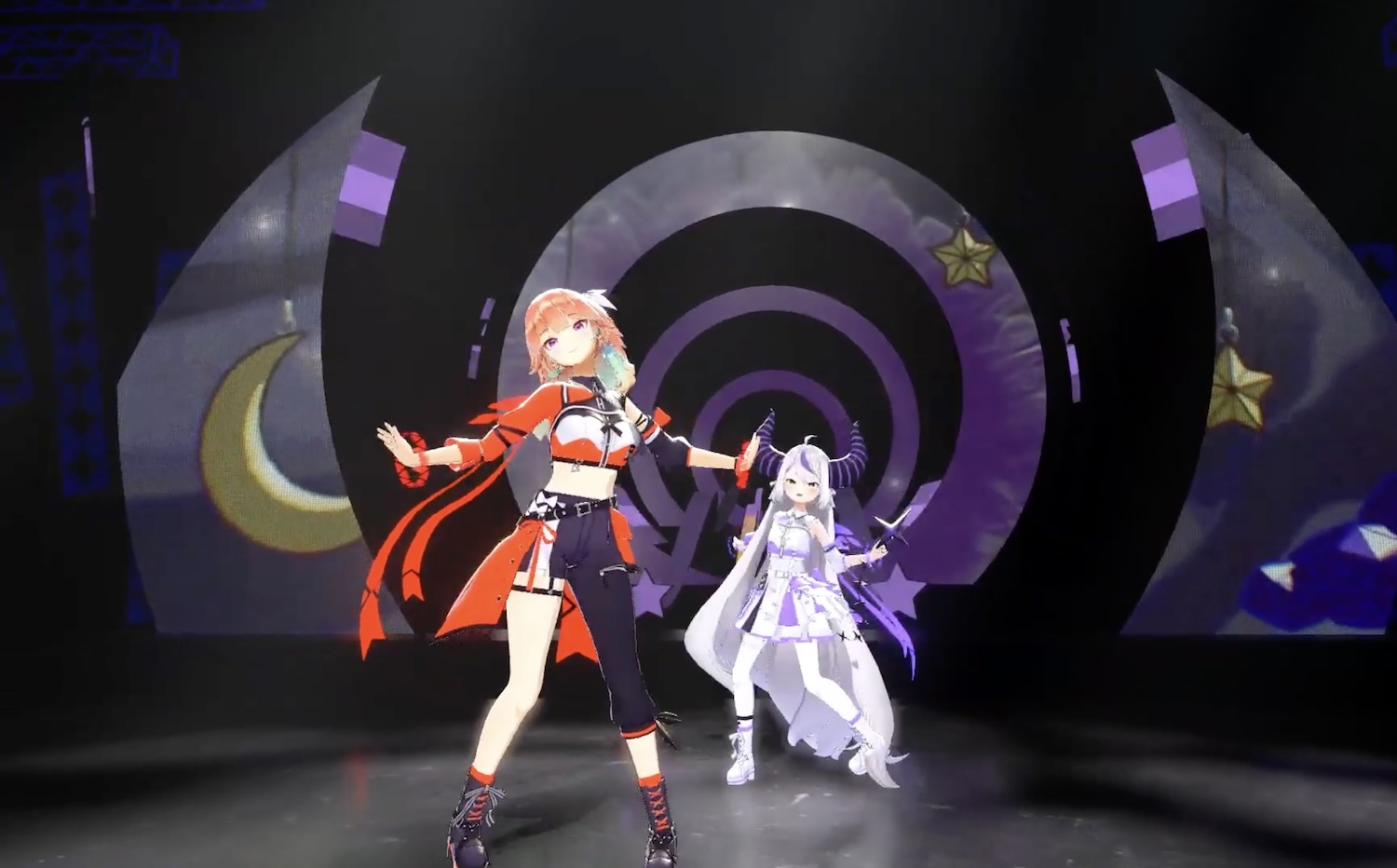
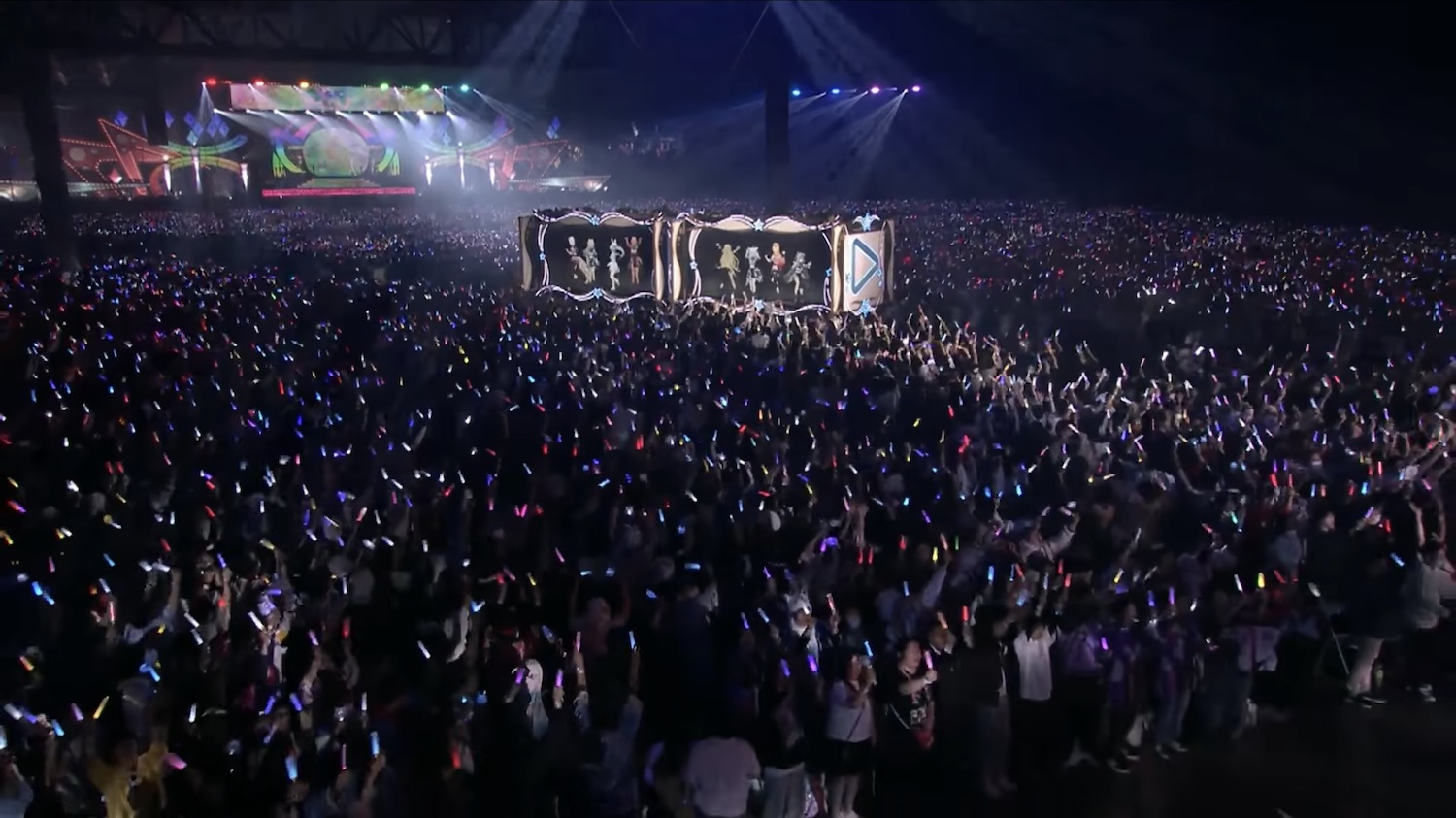
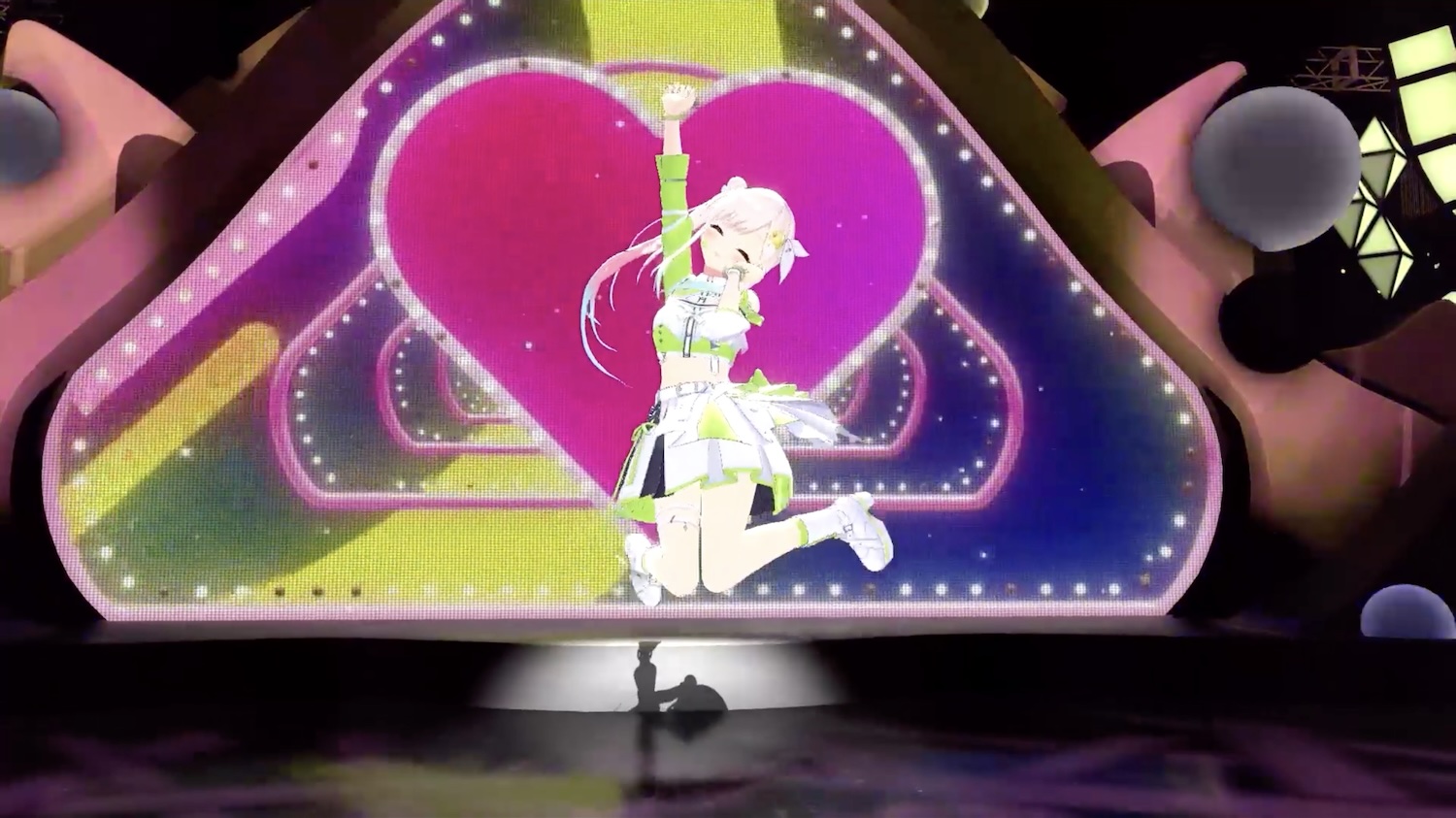
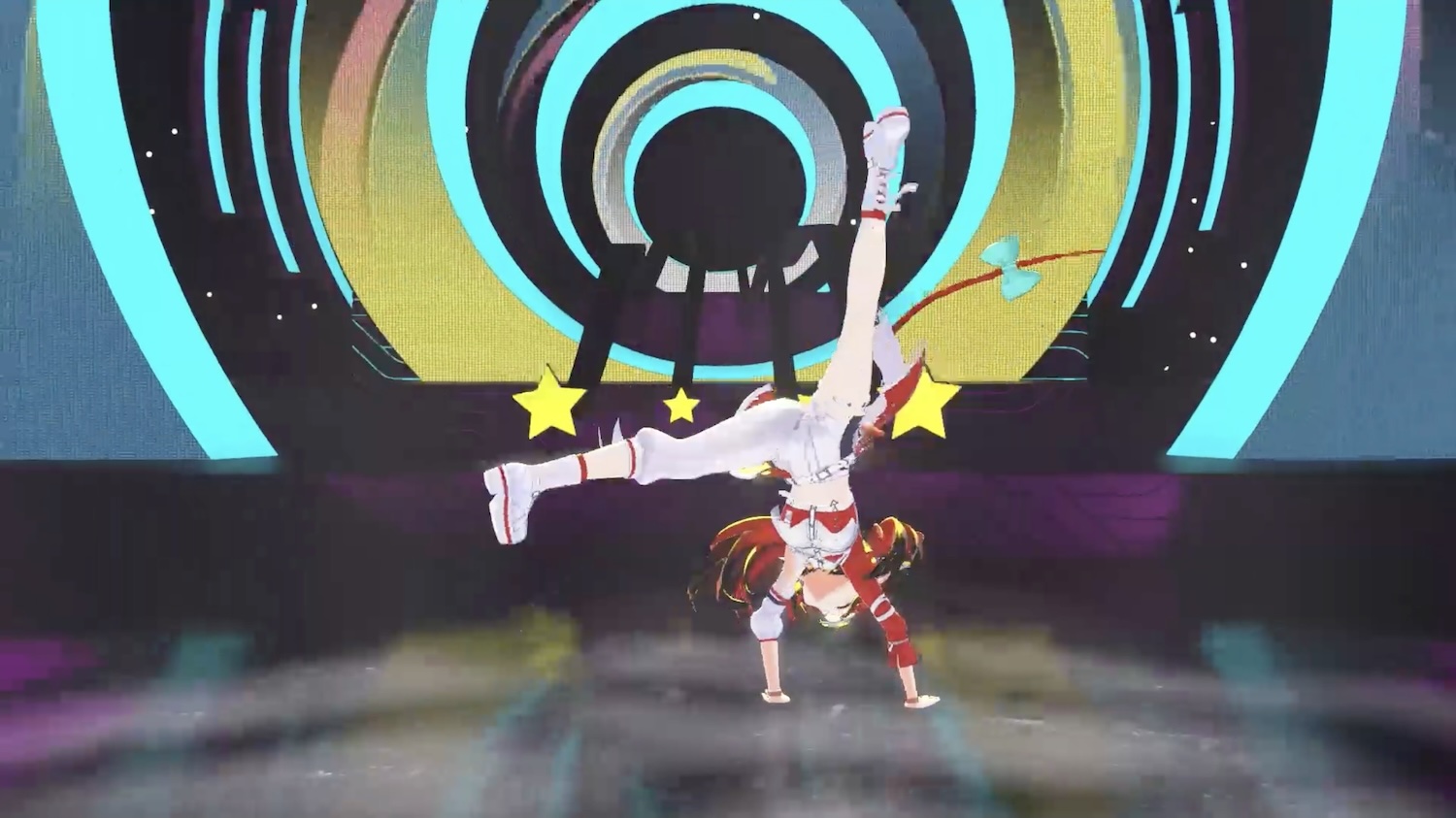
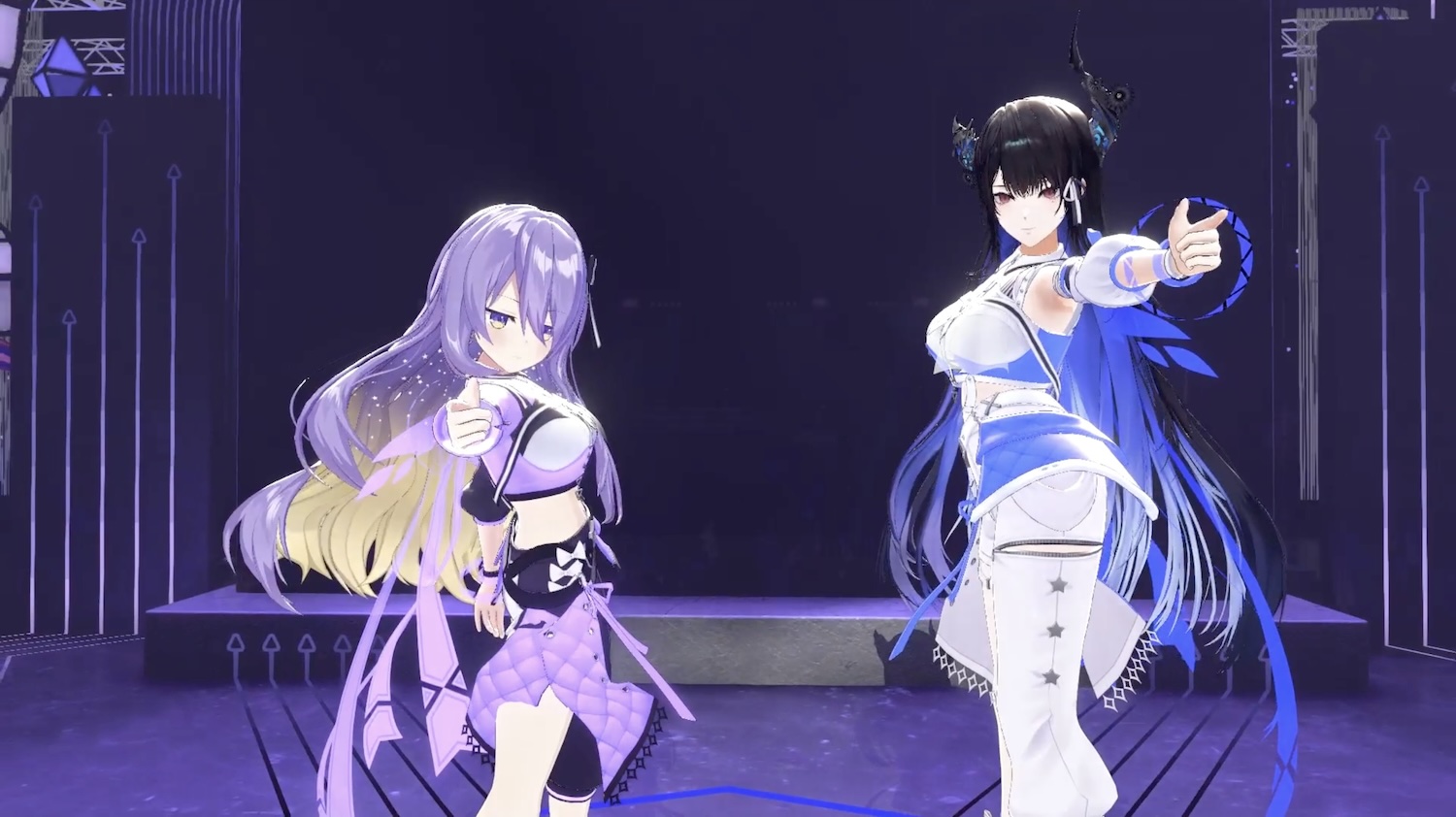


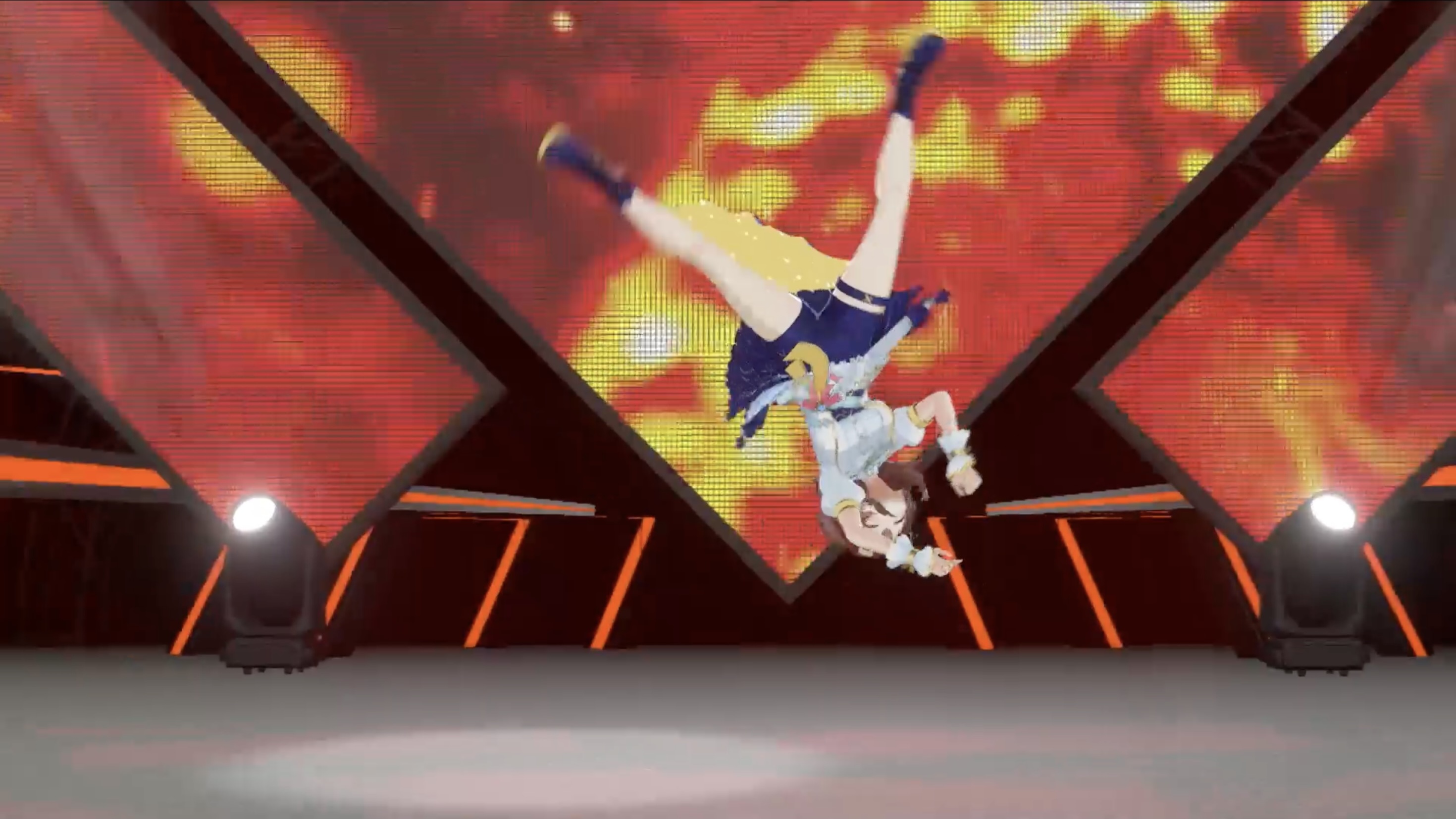


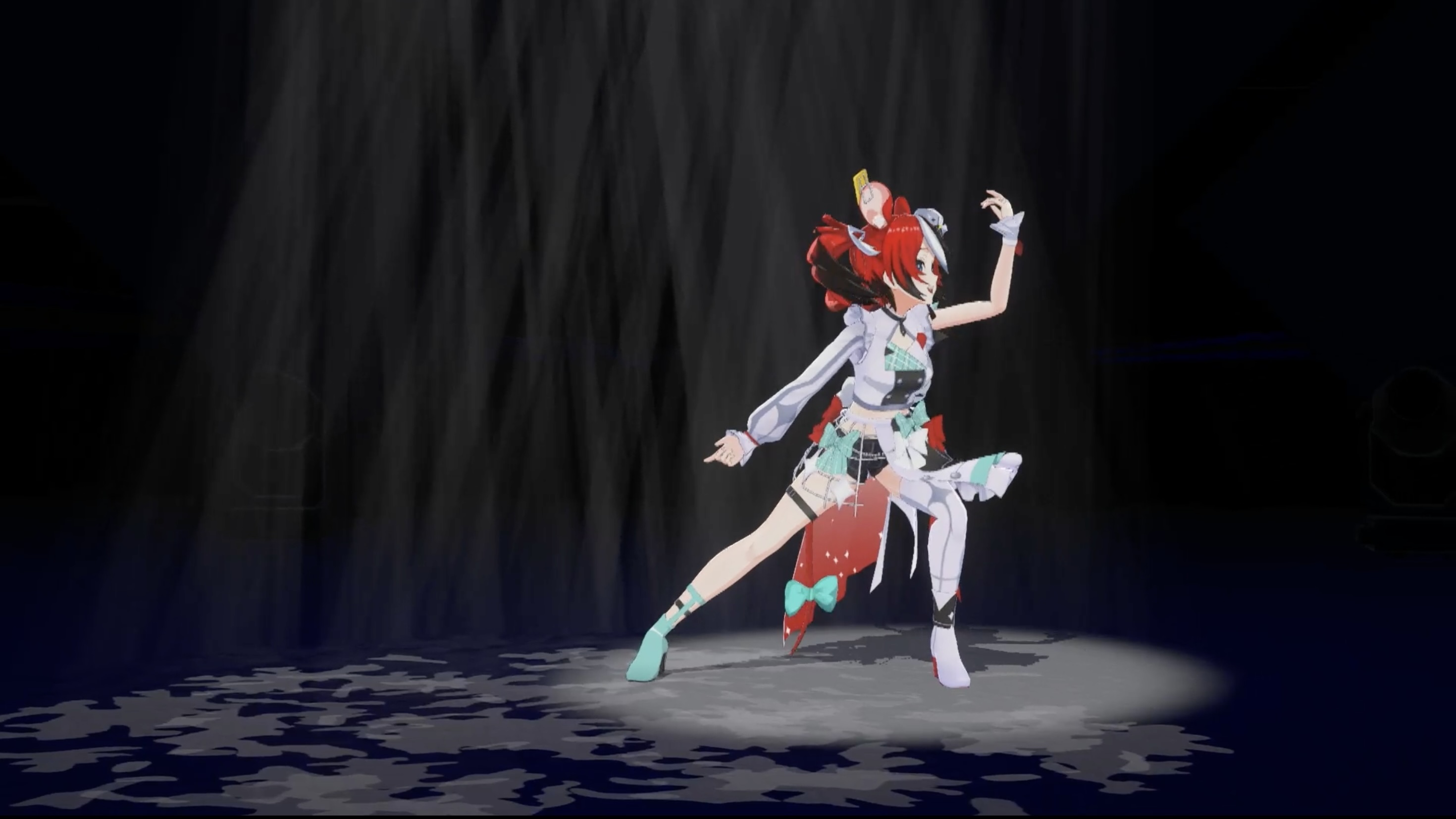


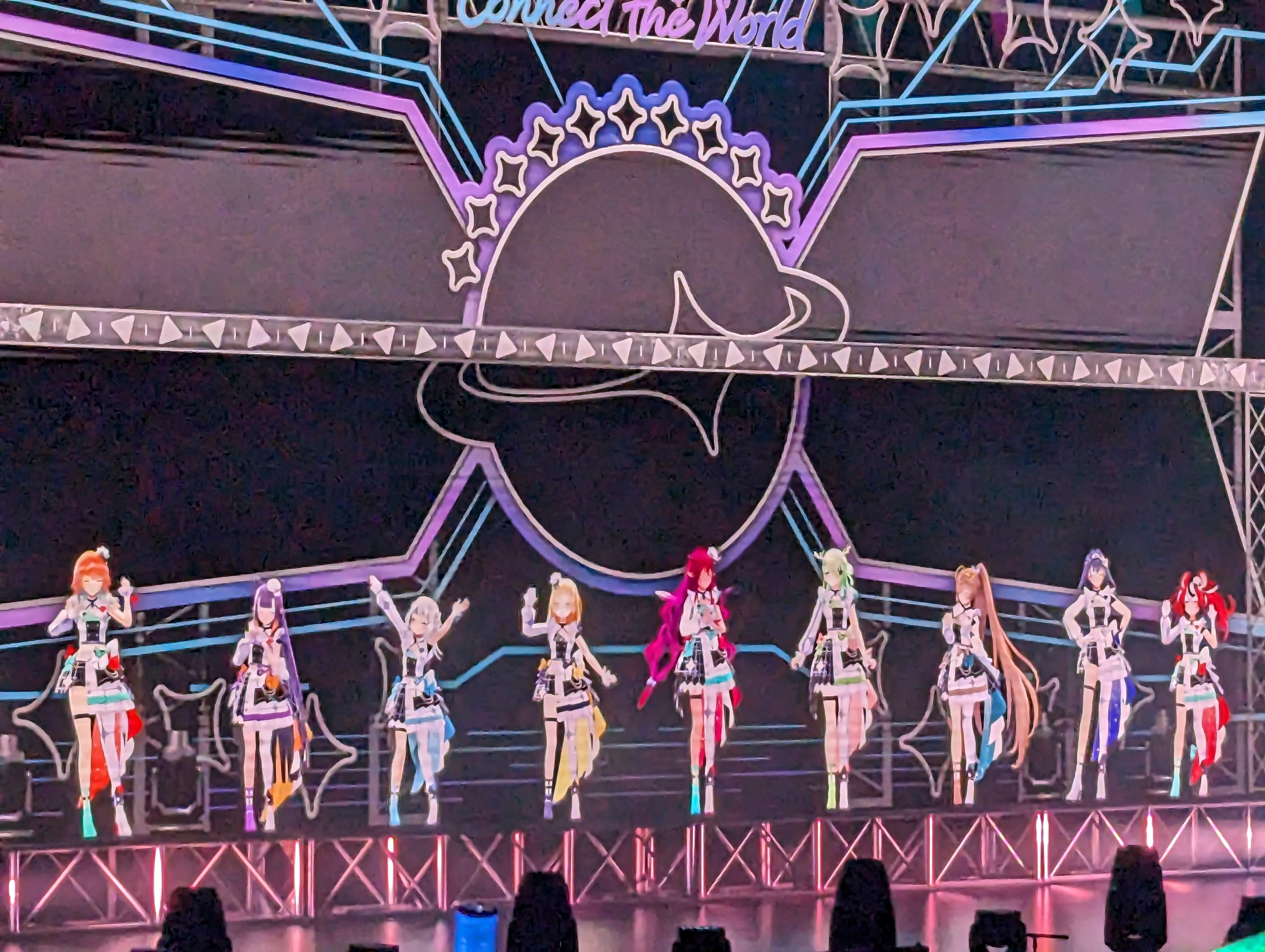
 OGIUE MANIAX