The Real Diversity of Street Fighter 6 and Across the Spider-Verse

WARNING: SPOILERS FOR SPIDER-MAN: ACROSS THE SPIDER-VERSE (and I guess Street Fighter 6?)

I’ve had the pleasure lately of experiencing two of the finest works of media this year: Street Fighter 6 and Spider-Man: Across the Spider-Verse. Both are at the pinnacle of their respective genres (fighting games and superhero movies) and seem to draw all the right lessons from the past. But one thing both titles really have in common—and which I think is so indicative of their approach—is strong character designs that are profoundly respectful of their casts’ diversity in terms of culture, background, and circumstances. 

The idea of an international roster far predates both works and even their respective origin points, i.e. Street Fighter the arcade game and the Spider-Man comics. Often, these past portrayals end up being flawed, if well-intentioned. Be it a manga like Kinnikuman featuring heroic wrestlers built entirely on stereotypes or having the brilliant detective Charlie Chan played by an actor in yellowface, it’s historically a mixed bag. These instances frequently betray a lack of exposure to other cultures by ones that consider themselves the default.

SF6 and AtSV know that their audiences aren’t limited mainly to one ethnic group anymore, and either have people from more diverse cultures on staff, or at least people eager to listen to people from other groups. Both SF6 and AtSV had to meet the challenge of revamping many existing designs—the former because many returning characters are supposed to be older, and the latter because it draws from so many different portrayals of Spider-Man. In this regard, both succeed in spades.

Here are a few examples:

In SF6, Chun-Li’s update conveys through her mannerisms and outfit that she has matured while still being undoubtedly recognizable as the queen of fighting games. Her clothes draw directly from Chinese culture without bordering on parody, and some of her animations have been changed to draw from actual Chinese kung fu styles. Her new standing medium kick, for example, is actually the Separation Kick from tai chi.

Zangief still looks like a hulking wrestler, but they actually changed his body type. In previous games, Zangief has more of a body builder’s physique—extremely chiseled all around—but in SF6, he exchanges that appearance for one with a bit more fat around his massive muscles. In other words, he looks more like he trains for practical strength, and the fact that the developers did this actually goes a decent way in diversifying the bodies in the game while remaining true to Zangief’s character.

Similarly, AtSV had Pavitr Prabhakar, an Indian Spider-Man whose costume feel less like symbols of India added to Spider-Man and more like what a Spider-themed superhero might look like if they grew organically out of Indian culture. Moreover, the writers of AtSV actually consulted with Indian and Indian American writers as well as Pavitr’s voice actor, Karan Soni, because they wanted greater cultural specificity and authenticity.

And even with all of this consideration for ethnicity, gender, sexuality, etc., all these characters are attractive in their own right. People like to see good-looking characters, but there’s no one standard of beauty. Both creative teams seem to understand that.  
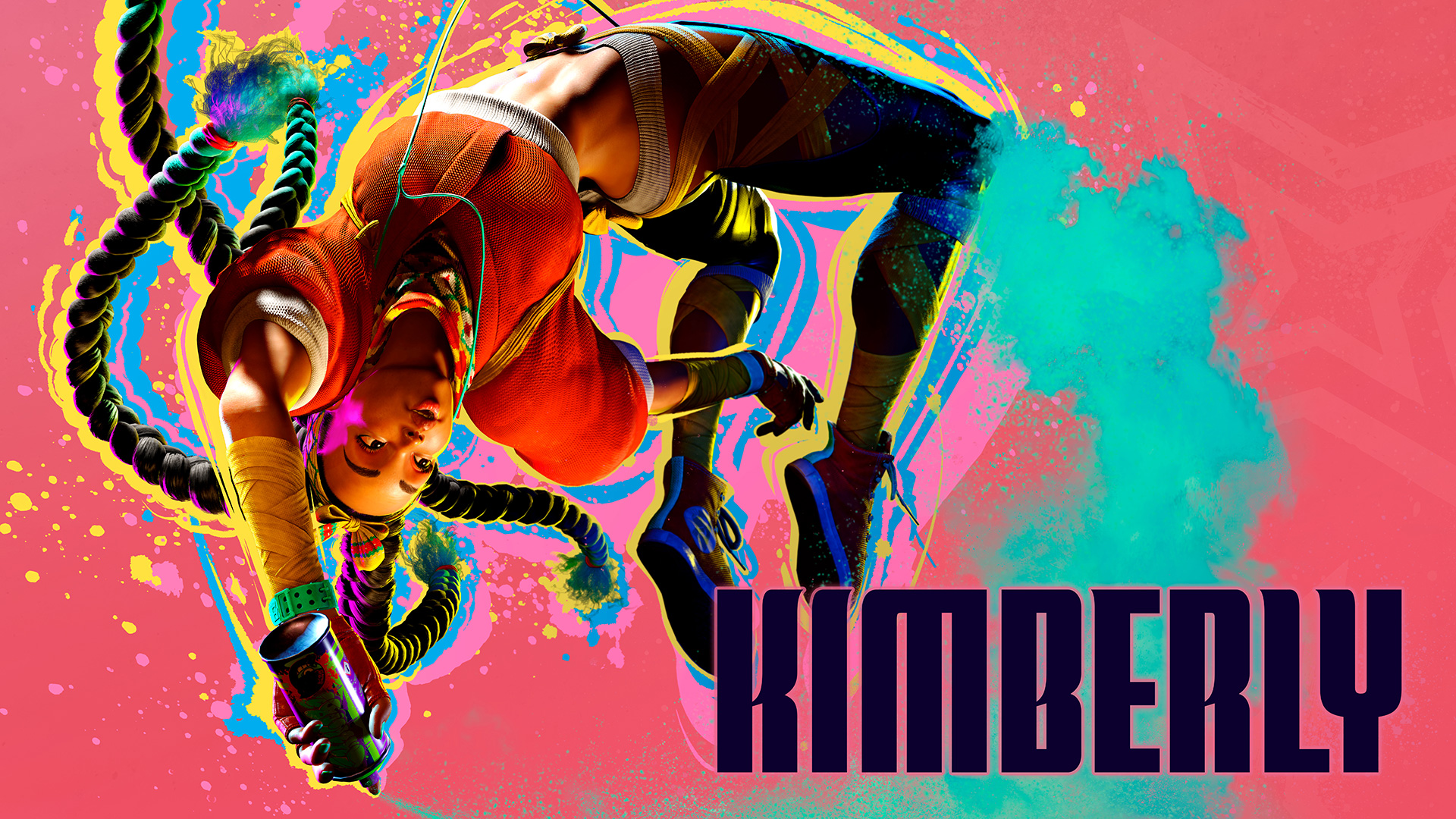
A major factor in both works’ success is starting from the understanding that not just one group of people are going to enjoy it. Kimberly Jackson in SF6 is black and one of the three most prominent heroes, and the only one with a story that ties directly to the main antagonist. The protagonist of the Spider-Verse movies, Miles Morales, is Black and Puerto Rican—and he reflects many of the aspirations and anxieties of those who grow up in non-White households in the US.

It can be easy to forget that the first Miles Morales film, Into the Spider-Verse, came out in 2018—before the murder of George Floyd and the increased mainstream awareness of the deeply rooted problems with police in the US. In 2023, however, I couldn’t help but notice the views expressed on that topic in AtSV. Both Miles and another character, the Spider-Woman Gwen Stacy, have dads who are on the force. They’re officers of the law who honor and respect the people, and having them be positive role models is part of the Spider-Man lore, but making the police and unalloyed good would never be compatible with the lived experience of so many black and brown people, not to mention other groups.

At one point, Stacy (a white girl) outright states that the reason her dad took on the role of captain is because he would inevitably be replaced by someone worse than him. In other words, contrary to the idea that cops like the one who murdered George Floyd are simply “bad apples,” it is the tree itself that is rotten, and the occasional good apple is the exception rather than the rule. While perhaps the film could have stated it more directly, it goes to show just how much AtSV is trying to express perspectives beyond what is comfortable. 

The greatest strength of Street Fighter 6 and Across the Spider-Verse is that both works come across as genuinely wanting to engage with as many cultures as possible from all sides. They’re not just paying lip service to the notion of diversity but actually making it happen in a satisfying way. I hope that both Capcom and Marvel continue to draw inspiration from the world in all its glory and shame, and in turn, encourage others to do the same.
Remembering Watanabe Chuumei

Composer Watanabe Chuumei (real name Watanabe Michiaki) died on June 23, 2022 at the age of 96. At first, the name didn’t ring a bell for me, but I initially saw the news thanks to a tweet from Obari Masami of all people, and it began to click. 

Watanabe was actually responsible for the music in Mazinger Z, helping to set the template for all future giant robot anime. The original singer, Mizuki Ichiro, reminisced and posted photos together. Watanabe also did the music for Dangaioh (an Obari series), including the unforgettable opening, “Cross Fight,” which features a duet of Mizuki and Horie Mitsuko. Another series with songs by that titanic combo is Godannar (one of my favorite anime), of course also composed by Watanabe. The Godannar soundtrack includes callbacks to Space Sheriff Gavan, whose opening is by Kushida Akira (who also sang for Godannar). Watanabe has a prolific career in tokusatsu, and among his songs are one of my all-time karaoke go-to’s: the Toei Spider-Man.

The above chain of thoughts is a little convoluted, but that’s how my brain was processing the info as I realized just what an impact Watanabe’s music has had on me both directly and indirectly. He was the man who made the songs for some of my favorite shows, but also for the shows that inspired my favorite shows. His style is exactly the energy that makes me feel good when I sing myself (however poorly). And his work manages to sound both classic and timeless. It could be dropped into any era, and while it wouldn’t necessarily sound like it all fits perfectly, the emotional impact would shine through.

Daitetsujin 17 and the Wonderful Clunkiness of Tokusatsu Soul of Chogokin

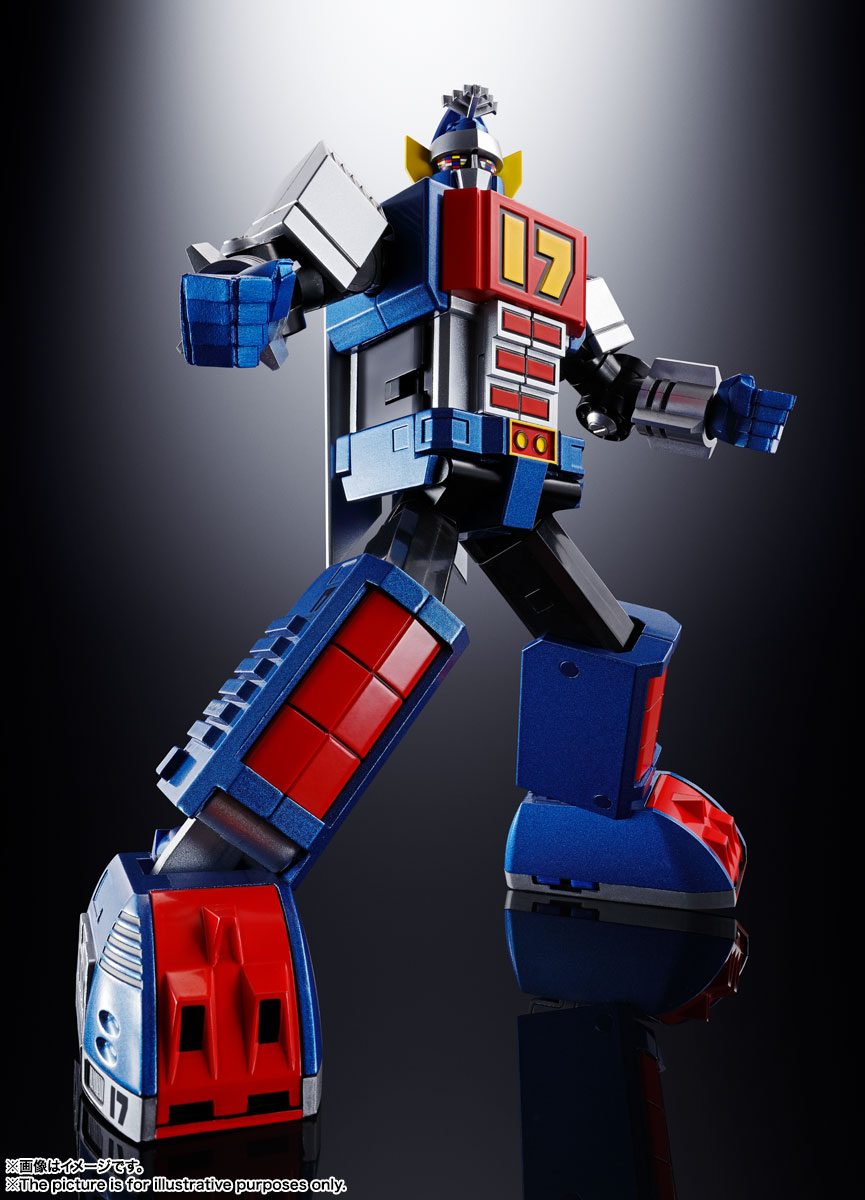
The latest Soul of Chogokin figure was announced last month, and it’s Daitetsujin 17 (pronounced “One-Seven”) from the 1970s tokusatsu series by the same name. It was created by the very father of tokusatsu, Ishinomori Shotaro, and features the classic “little kid remote-controlling” giant robot motif that began with Tetsujin 28. Prior to its release, I never watched any Daitetsujin 17, but I decided to check out the first episode, and what I noticed is that the promo images for the SoC version really capture how the toy is designed with a kind of live-action clunkiness seen in the original program itself.

There’s no doubt that this is highly intentional, as the Soul of Chogokin line is famous for trying to get as close to “show-accurate” as possible. Japanese toy reviewer wotafa stated in his look at the POSE+ METAL Gaogaigar that one of the big things differentiating it from the earlier SoC release was that the latter is more faithful to the anime, while the former looks like “Gaogaigar came back from studying abroad in America.” But in contrast to the myriad anime-derived Soul of Chogokin figures, adapting tokusatsu giant robots like Daitetsujin 17 seems to present another sort of challenge. 

Whereas the anime robots have to reconcile the contradictions between the (mostly) two-dimensional drawings with the three-dimensional realities of the toys themselves, a different conflict is in play. Tokusatsu shows typically have their mecha appear in two different ways: as a model for transforming and such, and as a costume for a suit actor to fight in. A figure whose goal is to bring the source material to life has to balance these two dominating visuals, and from what I can tell, Daitetsujin 17 looks like it succeeds on that front.

But Daitetsujin 17 is not the only live-action robot to get the SoC treatment, and so I started looking at past instances to see if that characteristic tokusatsu-ness is still present. What I found is that, while not as strongly flavored as Daitetsujin 17, that feel is still present to varying degrees. 

The recently released Daileon from Juspion comes from a different era than Daitetsujin 17, but the premium it places on poseability goes to show just how important it is to capture that “guy-in-a-suit” element of the show. Comparing the 3DCG trailer they released to the live-action footage, you can see how much emphasis was put on making sure Daileon could strike all its signature poses, as if to say the very acting of posing defines the feel of Juspion as a whole:

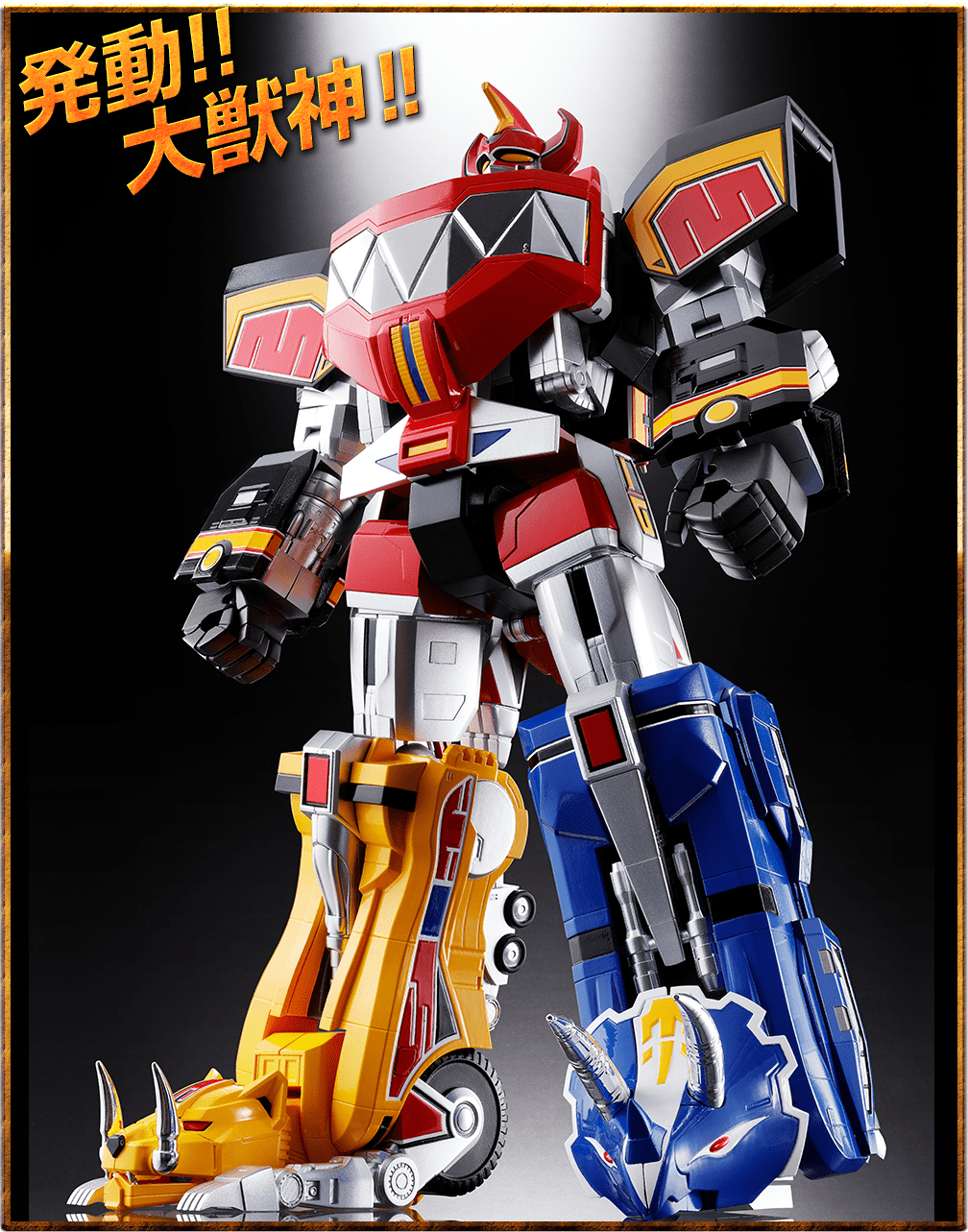
A more popular SoC figure, at least among English-speaking countries, is the Megazord (or Daizyujin) from Mighty Morphin’ Power Rangers. This one looks more like it emphasizes a cool, stocky appearance that’s a bit removed from how the Megazord usually looks in motion. 

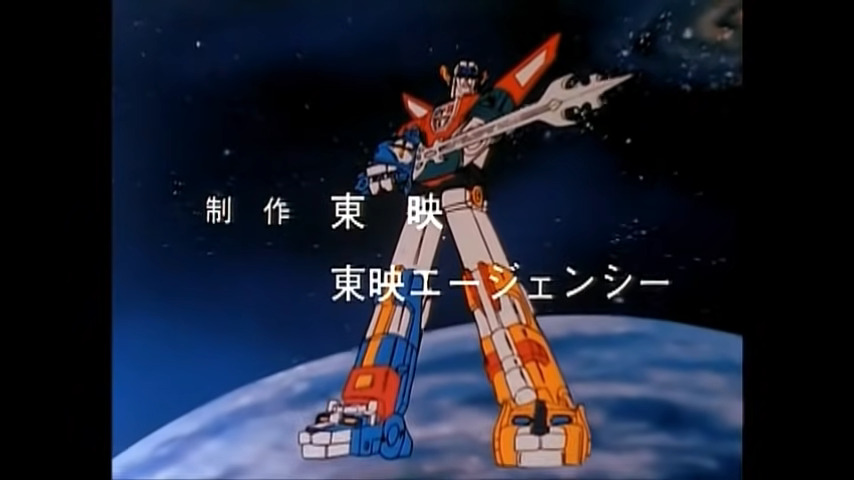
However, when compared to a similar figure released around the same time—Voltron (aka Golion)—the contrast in proportions between the two really drive home how the Megazord was made with different considerations in mind. It’s notable that the SoC Voltron has lankier proportions than its original toy from the 1980s to be more in line with its iconic pose from the anime’s opening.

This trend continues all the way back, whether it’s Leopardon from Toei’s Spider-Man, Battle Fever Robo from Battle Fever J, or King Joe from Ultra Seven.

The Daitetsujin 17 figure seems to most greatly embody the concept of  tokusatsu-faithfulness, and I think that speaks to how far the Soul of Chogokin line has come. Every year, it seems to get more and more impressive, and I have to wonder what they’ll tackle next. Although the Daitetsujin 17 and many of the tokusatsu-based figures aren’t my priority, I find I can appreciate the lengths they’ll go to making the biggest nostalgia bombs possible.

Watchmen is/isn’t Watchmen Enough

In discussing the Watchmen movie, I  feel that I should first describe my own personal situation with Watchmen, as I’ve seen how a person’s level of exposure to the original comic can really color the way a person sees the movie. I read the comic once a year or two ago, and enjoyed it, but never really re-read it or looked at it again between then and the time I saw the Watchmen movie. So I am familiar with the story, and the characters, and I know how it all goes down, but particulars and small details and possibly even visual cues are things I don’t remember particularly well.

The strongest impressions I had of Watchmen were its pacing and its visual style. For the pacing, I noticed somewhere in the middle of watching that it did not feel like it had a typical three-act movie structure.  Does this mean the movie had poor pacing, if it didn’t follow what movies are “supposed to do?” I’m not sure myself, but what it boils down to is that this is definitely the result of converting a comic book directly into a movie, instead of just converting the general theme as they did with Iron Man for example.

As for the visual style, 300 already established Zack Snyder as having a keen sense of action and the glorification of violence, though it’s debatable whether or not it was appropriate for Watchmen. Many I think wanted Watchmen to stick close to the visual style of the comic, which is this sort of ugly and dirty look where characters are all pathetic in their own way, but I don’t know how well the audience would have reacted to such. We’ve seen how viewers and critics react negatively to the very blatant anime-esque feel of Speed Racer, often seemingly not even noticing it was supposed to be like pages from a manga but with real people and bright colors. I personally think the violence was just a tad overdone, but the striking and brutal nature of the fights while perhaps overly stylish I think were good for establishing how the characters were, even if it was different from the comic.

I enjoyed Watchmen, though even now I can’t get a firm grasp on my feelings on it. It was at the very least not boring, and half the actors were fantastic, especially Billy Crudup with his serene  Doctor Manhattan voice, Patrick Wilson playing up the middle-aged and insecure Nite Owl, and Jackie Earle Haley as Rorshach who captured the character to a tee. No money was wasted in seeing this movie.

Ultimately, what I feel people’s views, including my own, boil down to in regards to the Watchmen is how do you adapt a work like Watchmen? It does not have an extensive history like Spider-Man or Batman from which you could cherry pick while keeping a basic sense of what makes them effective stories. Watchmen is just one book, and its strength lies in how every part comes together from the writing to the art to the characters and their motivations to the little bits here and there and everywhere. Something has to be lost in the transition to the big screen, and there will be endless debates as to whether the choices were right, especially as people themselves prioritize different parts of the comic. And then you have those who didn’t read the comic at all, and then the debates as to whether that makes for a “better” viewing experience or not, to not be chained by the original.

Adaptations are a funny thing going from any medium to the other, and it can be difficult to tell what is a “smart” change that will help unfamiliar people get into a story, or what will be a “stupid” change that is robbing the work of its core and dumbing it down. I’m sure the people working on Dragonball Evolution didn’t go in intentionally sabotaging it. They probably thought that the parts of the manga and anime they changed were changed for the better. Who wants to see a weak girl who can’t fight in Bulma? Give her guns! Who wants an ugly old man playing Shang Tsung the Turtle Hermit? No appeal!

The funny thing about the Watchmen movie is that you have people now complaining that a superhero movie stuck too close to the original source. Years ago, people would have dreamed of being able to have a misgiving like that. The fact that we now have a Hollywood that can produce honestly decent superhero movies on a somewhat regular basis is testament to true change.

What YOU should be WATCHing Today of All Days

JAPANESE SPIDER-MAN on the OFFICIAL MARVEL WEBSITE.

What, you thought I meant something else? Why then you’re as foolish as  Professor Monster who thinks he can stop the Invincible Man, the Emissary from Hell SPIDER-MAN.