Aesthetic and Gameplay Thoughts on Pyra and Mythra in Smash Ultimate

The newest DLC characters for Super Smash Bros. Ultimate are Pyra and Mythra (also known as Homura and Hikari in Japanese) from Xenoblade Chronicles 2. I’ve never played any Xenoblade games (or, for that matter, any games beginning with the prefix “Xeno”), so my impressions of these two characters are purely from an aesthetic and Smash gameplay standpoint.

Aesthetics

In terms of visual designs, Pyra and Mythra are probably the most “anime” of all characters thus far in the Smash Bros. franchise. Now, I fully understand that anime as a style is extremely diverse and that saying something is “anime” doesn’t reveal much on its own. Here, however, what I specifically mean is that their aesthetic is the kind that appeals to otaku primarily in the same vein that something like BlazBlue does—and at the possible expense of appealing to a wider and unfamiliar audience. 

Speaking personally as someone who devotes numerous hours per week to anime and manga, I don’t mind their look, but I fully understand why others would turn their noses at these two. There’s no mystery that these designs are pretty thirsty, and that they traffic heavily in anime tropes. If you listen to the Japanese in the video “Mr. Sakurai Presents Pyra/Mythra,” the Smash Bros. series director summarizes their respective demeanors as dere and tsun—what the official subtitles translate as “sweet” and “headstrong.” 

Ultimate also gives the ability to listen to the characters’ voices in Japanese and English, and the differences in performance have convinced me that there’s an aspect of many Japanese characters that gets lost between characters. Namely, when performing special attacks, I think the differences in Pyra’s and Mythra’s personalities aren’t as prominent in English as they are in Japanese. There’s a certain lack of aggressiveness I sense in Pyra even in her more passionate lines in Japanese that isn’t quite there in English.

Gameplay

Much like Zelda and Sheik prior to Super Smash Bros. for 3DS & Wii, Pyra and Mythra are two characters in one, with players being able to swap between the two of them as a special move. The basic breakdown (as explained by series director Sakurai) is that Pyra has power and Mythra has speed, but I wasn’t quite prepared for how fast Mythra is. 

Just moving around with Mythra reminds me of my earliest days playing Super Smash Bros. Melee and trying out Fox McCloud. Throughout the Smash Bros. franchise, Fox is known for being extremely nimble on the ground, and also dropping like a rock when falling. It’s not uncommon for new players unfamiliar with Fox to just fall off accidentally and die. Mythra sports a similar combination along with a somewhat limited ability to get back to the stage that makes self-destructs likely, and in a game like Ultimate where recoveries are generally strong, it’s quite a glaring weakness. 

That being said, Mythra by herself easily feels like one of the best characters in the game because that level of agility never goes out of style in Smash. She’s fast on the ground, fast in the air, and she has attacks that either start up quickly or cover a lot of space instantly. Her side special, Photon Edge, reminds me a bit of Sonic’s game plan in general. If you’re caught slacking from even half a stage away, Mythra can punish even an empty hop—the drawback being that some of her more damaging attacks like Photon Edge are easy to punish themselves.

In contrast, Pyra is markedly slower in every way and her recovery is even worse, but her reach and kill power easily outdo Mythra’s. Traditionally, Smash has favored speed over strength, and that’s still likely the case here, but Pyra’s ability to net KOs is actually kind of frightening. Many of her attacks are actually relatively fast for how early they can take stocks, and her superior reach compared to Mythra means that you can mess up an opponent’s spacing and neutral by switching between the two characters. Playing against Pyra, there were many occasions where I assumed I was at a safe distance, only to get forward smashed and lose the game. So while Pyra is likely the weaker of the two, her upsides complement Mythra quite well and actually appear to shore up each others’ flaws, unlike how Sheik is far and away a better character in Melee and Brawl to the point that Zelda only ever comes out in extremely niche situations.

Given the inherently advantageous properties of Mythra combined with having Pyra as a wild card, I feel like the chances of this character being top tier are very high. There’s just so much they have that classically works well in Smash that it’s hard to imagine them having any weaknesses that could truly limit them.

Overall

I don’t know Pyra and Mythra, but I think they’re welcome additions to Smash Bros. Their characters don’t bring any wild or unorthodox new mechanics to the table, but they ooze personality in everything they do. While I’m expecting the two of them to be very popular competitively, and I suspect that there might be a backlash against them coming,I think it’s a good idea to enjoy the ride for now, whether you’re a fan of them already or you’re just discovering them for the first time.
Wellness for the Self, Wellness for the World: Healin’ Good Precure

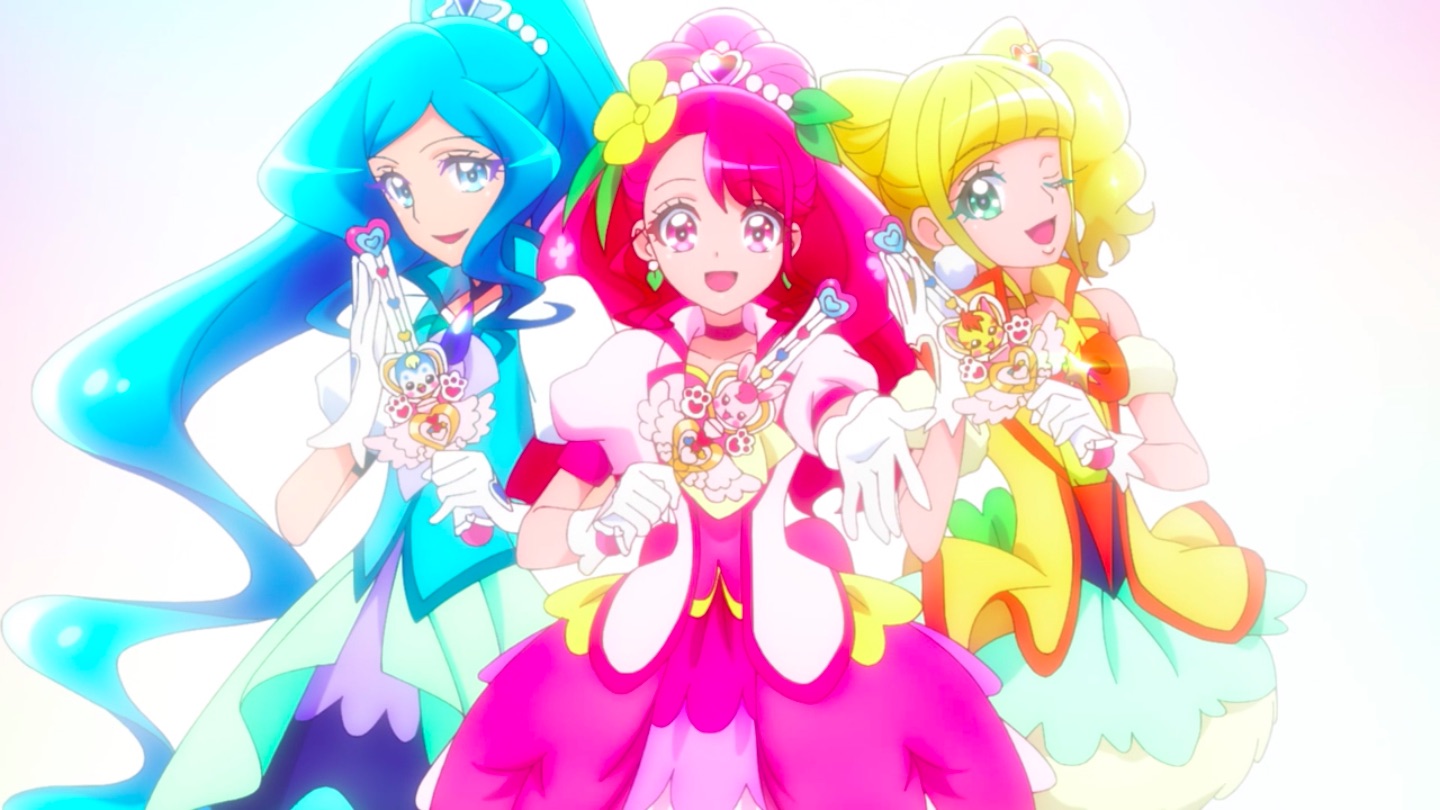
Healin’ Good Precure might be either one of the best-timed anime ever or one of the worst. With themes of environmentalism, medicine, and even personal wellbeing, the anime began in February 2020 right as the threat COVID-19 was starting to increase. As a result, the series lost about a month’s worth of episodes (ending at 45 instead of around 50), and the pandemic only further increased the importance of its message. As it came back from the production delay, I myself wondered if the series would change anything to directly address COVID-19, like facemask equipment or social distancing beams.

The answer, it turns out, is “not really.” In hindsight, however, this might not be such a bad thing. Although often fairly simplistic in its messaging, Healin’ Good Precure focuses less on harsh and gritty truths, and more on the idea of trying to take care of both people and the planet together, with a few surprisingly insightful gems along the way that I hope the kids watching take to heart.

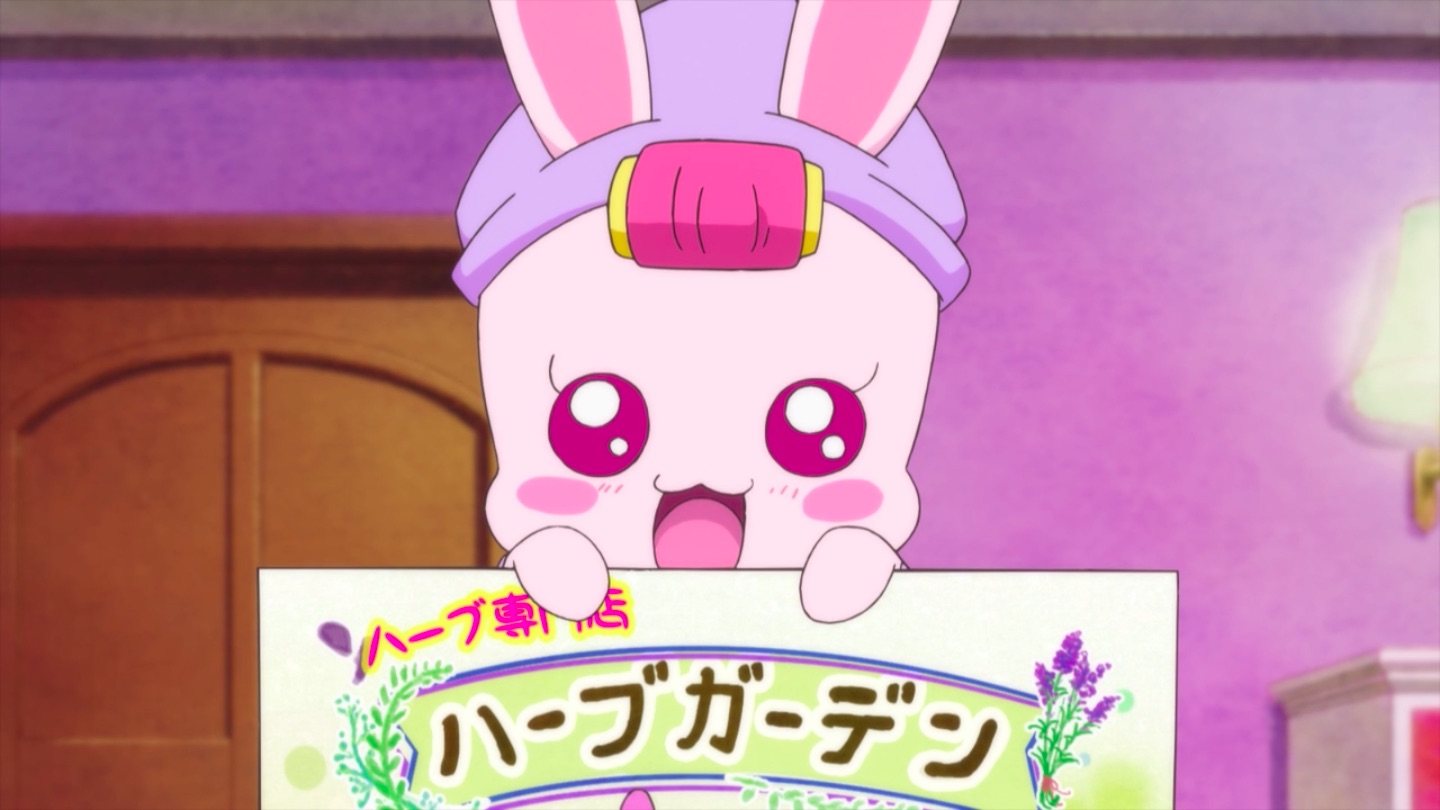
The premise: Hanadera Nodoka is a kind and gentle middle school girl who, not long ago, was hospitalized with an unknown illness. Having finally recovered and now moved to Sukoyaka City with her parents, she looks forward to doing all the things a healthy person does, but her life changes when she encounters a magical rabbit. The rabbit, named Rabirin, is one of three “healing animal” trainees who have escaped from the Byo-gens, virus-like invaders whose goal is to “undermine” everything they infect. Bonding with Rabirin to protect the healing animal princess Rate, Nodoka becomes Cure Grace, one of the legendary warriors known as Precure. Soon, she’s joined by other girls at her school who also bond with healing animals, and they fight to treat the Earth’s maladies.

In terms of overall cohesive storytelling, Healin’ Good is not one of the strongest Precure entries. It takes a mostly episodic approach with major narrative developments at mostly abrupt and expected intervals, and some of those developments are actually kind of bizarre if you think too hard about them—like something that could be read as a pregnancy metaphor but probably isn’t supposed to be. 

That said, the series sports some impressively expressive animation, and the fights often feel like the characters have some real heft to them—not always the case in Precure. The main cast of characters are also interesting, relatable, and inspiring enough to make the watching experience enjoyable overall. The contrasts between the three main Cures—Nodoka, Chiyu, and Hinata—mean that each girl has their own challenges they need to face and overcome, though the amount of attention paid to each of them can feel weirdly lopsided. More episodes seem to be devoted to Chiyu’s more ambitious goals of becoming a competition high-jumper and family innkeeper, though I don’t know if that’s just a result of losing those five or so episodes to the production delay.

Another factor to its credit is that I think Healin’ Good has not only some of the least annoying mascots ever, but they’re also some of the best support characters Precure has ever seen. Rabirin, along with her companions Pegitan and Nyatoran, act as both foils and complements to their human partners, and their desire to get stronger in order to keep the Earth from experiencing a fate similar to their own world feels genuine. Moreover, Rate gets a surprising amount of development that’s actually welcome rather than overshadowing the Cures.

While the series takes a fairly kid-gloves approach to the challenges it presents (not surprising from a kids’ show), there are aspects of Healin’ Good that I think are meant to teach the young viewers to face up to a world that’s increasingly headed towards multiple disasters both potential and real. When the Byo-gens infect an area of the city, failing to stop the infection only makes the monsters stronger. In this, I can see a metaphor for climate change and the need to slow it down as soon as possible, because while keeping the Earth from warming up to the point of substantial environmental change is a monumental task, it’s a lot easier than trying to bring the Earth back from that point. Additionally, all the doctor imagery strewn throughout Healin’ Good, from parents’ professions to the idea of “treating’ the planet to even the girls’ transformation lab coats might encourage more girls to go into pursuing careers in medicine and fight the sexism that pervades medical schools in Japan. In that sense, I think it builds on some of the positive messages found in its immediate predecessor, Hugtto! Precure.

It’s also notable that those very same kid gloves start to come off towards the end. There is a moment late in the anime where Nodoka is faced with the dilemma of trying to help an injured enemy who is responsible for much of her pain. But where many past stories would make its heroine some kind of saint, Healin’ Good emphasizes the need for self care, and that there is no requirement to lend a hand to someone who has harmed you, especially if you only end up feeling more hurt as a result. In other words, kindness is not a resource that should be exploited, and girls should not be expected to sacrifice their well-being because they’re supposed to be “caring.” Similarly, the environmental message calls out the complicity of humanity by the end, though is ultimately positive, as expected.

As much as I would have found it interesting, I realize now that Healin’ Good Precure did not need to tackle COVID-19 head-on. Face masks are already commonly accepted in Japan, so there’s no need to encourage people to wear them. The infection rate, although a real concern, is not nearly as bad in Japan as it is in other parts of the world (especially the good ol’ US of A). And as for not emphasizing social distancing, the series was probably created with the hope and expectation that we’ll eventually be able to return to some semblance of our former life, and that kids should be able to see what normal social interaction looks like.

Instead, we have a Precure anime that aimed to tackle some of the biggest issues facing the world through an approachable lens of the familiar magical girl tropes. Although the final product doesn’t have the riveting and finely tuned narratives of some of its predecessors, that’s not the only measure of an anime’s success—and no, I don’t mean toy sales. What Heain’ Good Precure has in spades is ambition to make improve society by encouraging a positive and humanitarian spirit in its audience. The world thirty years from now will hopefully be a better place.

Sun Guts: Ogiue Maniax Status Update for March 2021

Here we are: roughly a year since coronavirus basically forced the world to change course. I seriously could not have imagined all that has happened since, and it feels like ten years have passed in the span of one. I’m losing my grip on time a bit, but this makes me wonder if doing these monthly blog updates actually helps in some way. I can see the days and weeks go by.

In happier news, the Blocker Corps IV Machine Blaster crowdfund to digitally archive the series was successful! I talked about it in a post to drum up support, and it actually didn’t make it until literally the 11th hour by crossing the finish line with only 11 minutes left in the all-or-nothing campaign. It’s not going to be on anyone’s list of best anime ever, but knowing I helped to keep an anime alive makes me feel good.

After all, I know what it’s like to have the support of others. Thank you to March’s Patreon sponsors:

General:

Ko Ransom

Diogo Prado

Alex

Dsy

Sue Hopkins fans:

Serxeid

Hato Kenjirou fans:

Elizabeth

Yajima Mirei fans:

Machi-Kurada

Blog highlights from February:

God Mars and the Legacy of BL Fan Shipping

A look at the giant robot anime that is foundational to the fujoshi fandom in Japan. Gundam Wing before Gundam Wing, you might say.

That’s Ruff, Buddy—Nichijou: My Ordinary Life

My long overdue review of one of the funniest manga ever.

Otakon Needs Our Help

My favorite anime convention might not survive another year due to the Coronavirus. Consider supporting them!

Hashikko Ensemble

Chapter 37 has the most intense musical performance yet.

Closing

The 2021 New York International Children’s Film Festival starts this Friday! Unlike previous years, it’s a virtual festival this time around, and the $40 two-week all-acesss pass is an incredibly good deal. If you live in the US, it might be worth checking out.

Also, how about that Pyra and Mythra in Smash Bros. Ultimate, huh? I’m thinking about writing something in regards to fanservice in character designs, hopefully providing a nuanced perspective.

Stay safe, get vaccinated. I wish you good health.