
Last year was the first time in about two decades that I did not attend Otakon. While I don’t regret my decision, I still missed being there, so I was extra stoked to return to DC for 2026. While I’m not from the area, I considered this convention to be an annual homecoming of sorts. There’s still nothing like Otakon, even (or perhaps especially) in an age where anime cons keep popping up and attendance is exploding.
The Basics
Otakon 2026 was held at the Walter E. Washington Convention Center in Washington, DC from July 31 to August 2. In a rare and pleasant change, the weather was surprisingly good, with temperatures hovering below 90 degrees F and only a Sunday storm at the end being an issue. According to official numbers, this was the most attended Otakon of all time, at 47,049.
And while the US and the world has moved on, I still think it’s important to bring up the masking policy, or lack thereof. I know it’s sadly impossible to convince the majority of people to stay masked at this point, I wish they took COVID-19 more seriously. At the very least, the spaces (including the Artist Alley and Dealer’s Hall) were well ventilated, and they don’t forbid masks either. (It can just be a good way to avoid getting sick in general.)
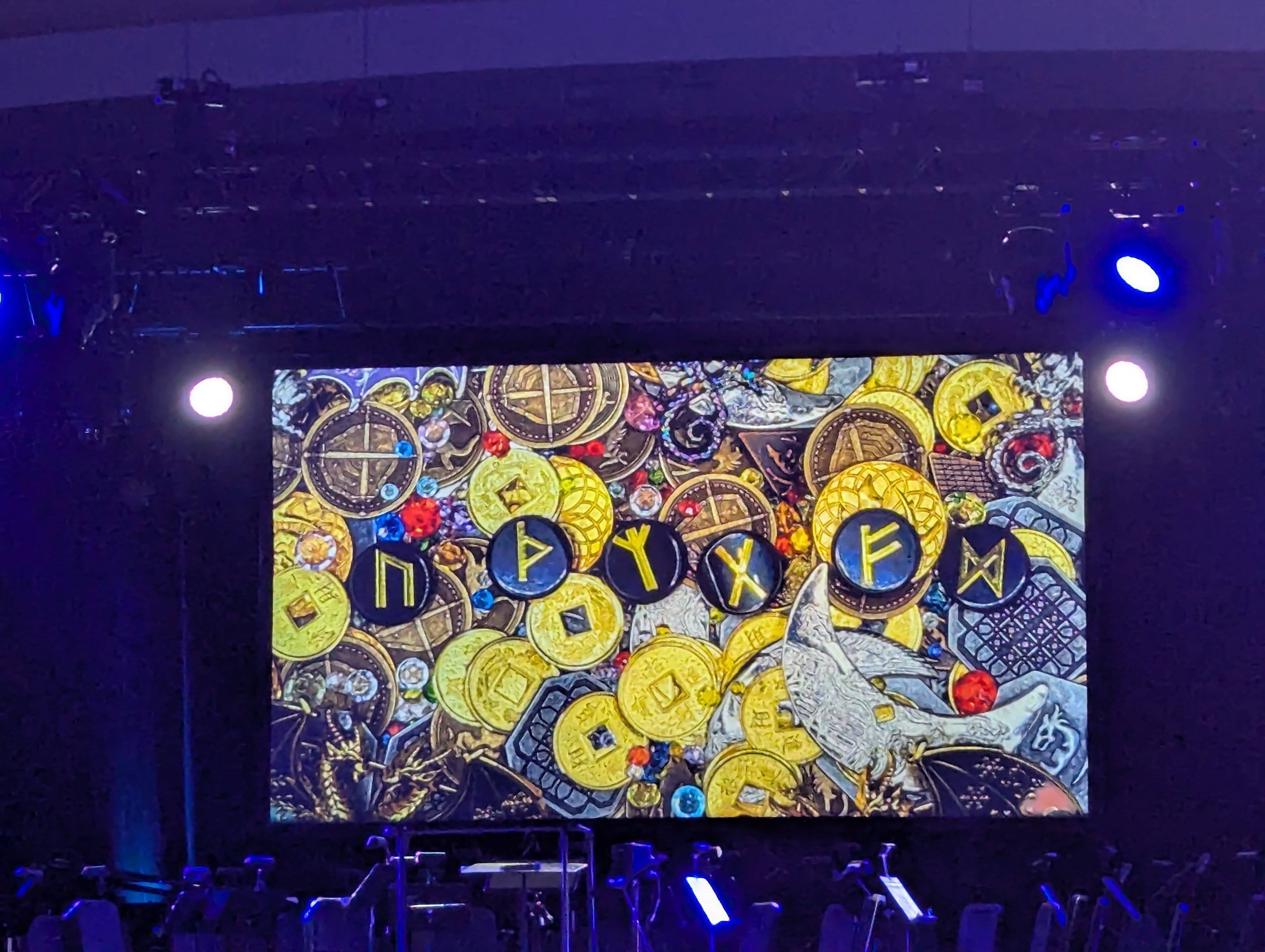
The theme this year was “Swords and Sorcery,” and attendance badges used official art from Final Fantasy XIV with designated classes such as Summoner, Wizard, etc. People could also volunteer to play a scavenger hunt-esque RPG that involved finding images of runes hidden all over the convention center and then “fighting” enemies at a guild. I participated a bit with friends but didn’t get a chance to do any battling myself. As far as I could tell, it was a fun idea implemented somewhat awkwardly, but I understand that it’s hard to make a game like this that accounts for all the different priorities attendees might have.
The New(-ish) Autograph Policy
Since last year, Otakon has done away with the in-person, first come first served international guest autographs lines of the past. Instead, they switched to a system that required people to sign up for autographs via the Guidebook app that was still first come first served but meant that the struggle happened entirely online.
The rollout for 2026 was marred by a few problems. First, when autograph sign-ups initially launched a couple weeks before the con, the Android version of the app could not select any of them, and those on iPhone could only select one autograph total. When they redid it later (and over multiple days to spread the load), the app would not automatically update at the start time, and you had to swap in and out between them. If you didn’t know, this meant losing precious seconds that might be the difference between getting an autograph and not. Also, you couldn’t sign up for two autograph sessions that overlapped even the slightest, so if you had two guests with conflicting schedules, you couldn’t get both, even if neither had a particularly long line.
Despite personally getting many autographs over the years through the previous approach, and despite potentially losing out on sign-ups due to the above issues with Guidebook, I welcomed the new policy. The song and dance required to get access was always ridiculous, with people hovering as close to the autograph area as possible without technically being “too close.” The fervor with which people rushed the line was also unpleasant and dangerous, and I’ve personally seen someone have a panic attack when they got caught within the aggressive push. Then there was the amount of time you had to dedicate to get into position to even have a chance (an hour at least), and it meant losing out on other things you might have wanted to do or see. And because it needed to account for throngs of people, the Autograph Area was in the Dealer’s Room, adding to what is already one of the most crowded sections of Otakon.
With the change, autographs instead were held on the 3rd floor, near Main Events, turning all-but-inevitable chaos into a fairly subdued experience.
VTubers Officially at Otakon
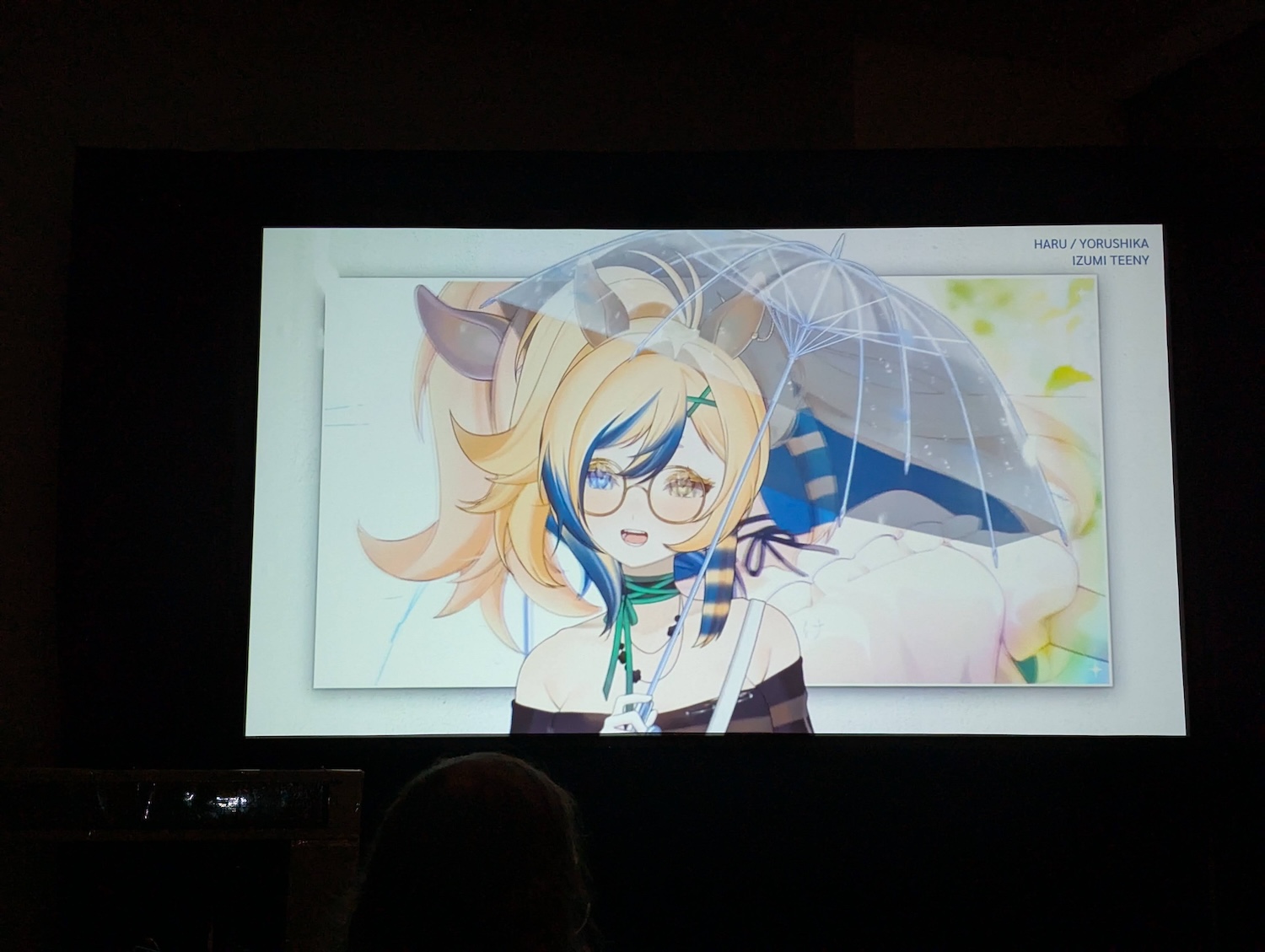
While VTuber fanart has been a part of the Artist Alley in recent years, and even a few companies have appeared as vendors (e.g. Phase Connect), this was the first year that VTubers were officially guests at Otakon. The lineup was slim but varied, ranging from prominent stars like Ironmouse to talents with smaller fanbases. Should they start to have a bigger presence (and more heavy hitters) in the years to follow, I wonder how it might affect attendance numbers, given that despite a good degree of overlap, not all anime/manga fans are VTuber fans and vice versa.
Unlike at OshiUplink, the official meet and greets were free, and were treated more or less like autographs—including being held in the same area and requiring sign-ups via Guidebook. I got the chance to talk to Izumi Teeny and Bonnie Barkswell this way. I wish I could have seen Ironmouse’s panel, but Guidebook can be a clumsy app, and I wasn’t even aware she had one. However, I did go to Hylo’s Anime and VTuber Jeopardy panel, and was fascinated to see what came easily to the other players and what stumped them. The fact that people struggled over the question of what anime “Hare Hare Yukai” came from is a very quick way to make me feel the passage of time.
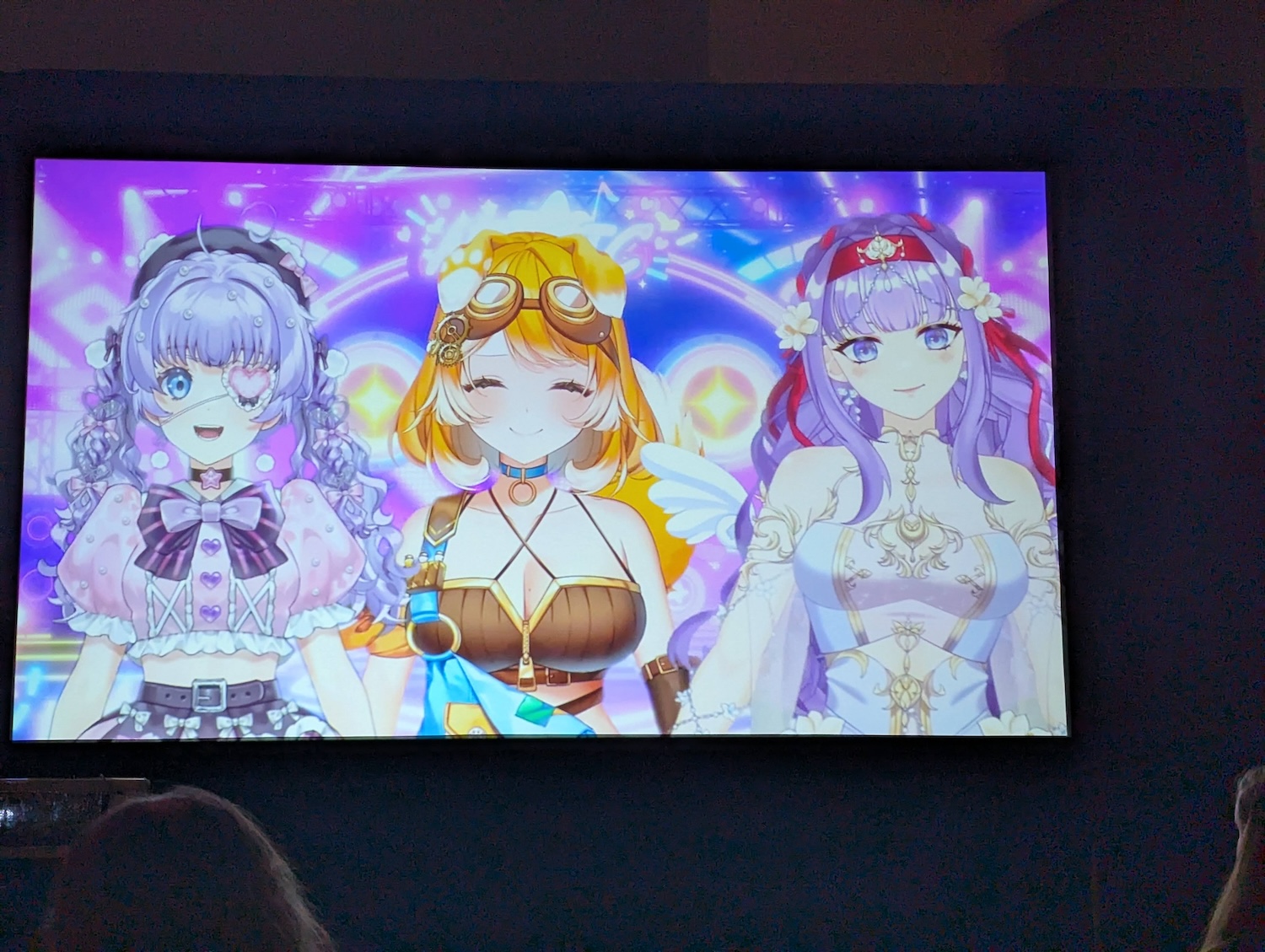
There was also a VTuber concert by Teeny, Bonnie, Rachie, and Yumemi. I couldn’t catch the very beginning, but still managed to watch most of the girls. Given that most of them appear via screen, Otakon made the decision to hold the concert in a video room instead of an event space. Despite that, Yumemi actually appeared in person as well and performed with her animated counterpart, even running up and down the small aisle.
Idolspace
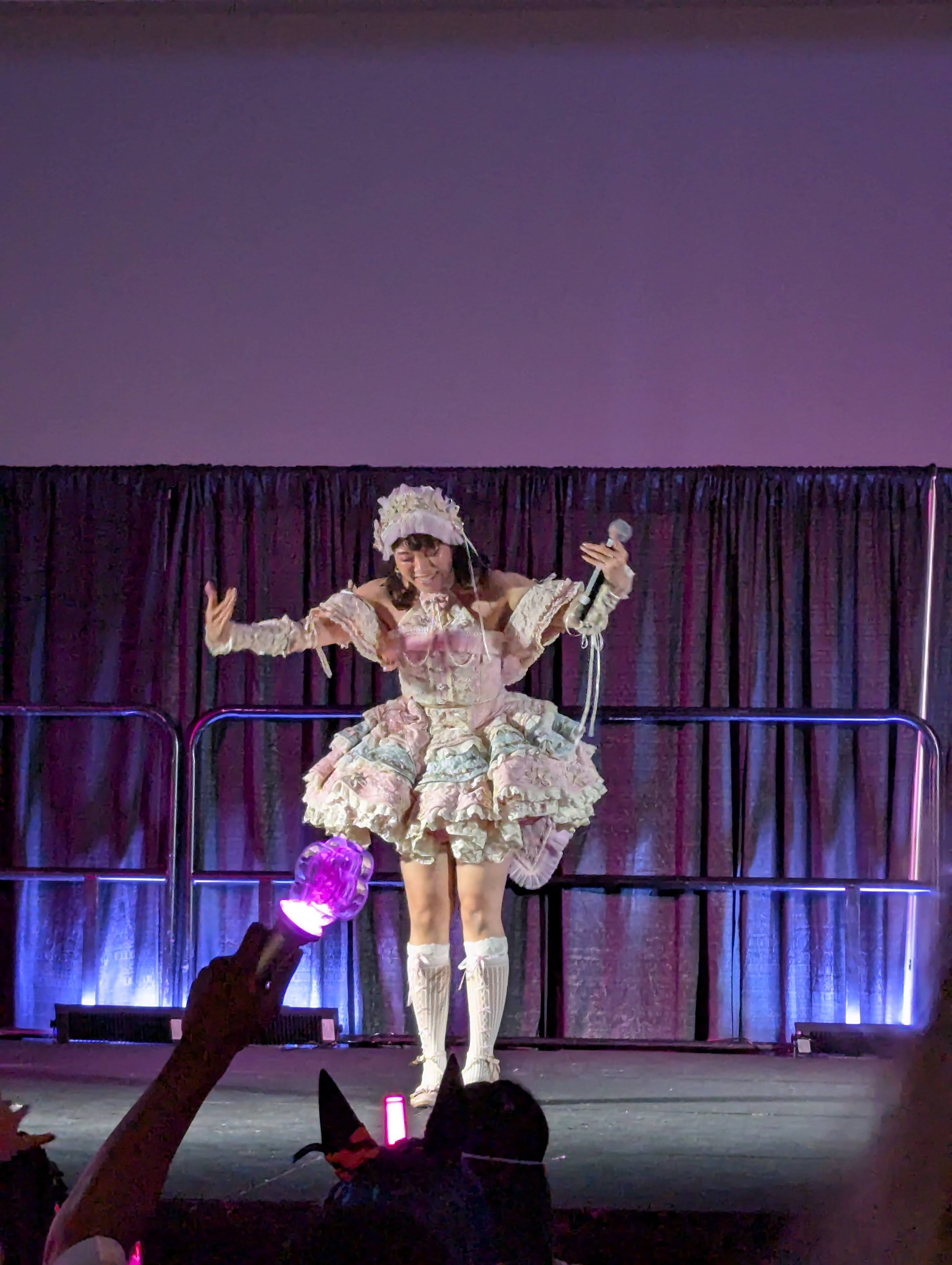
Speaking of concerts (and VTubers), I went to see Phoebe Chan perform. I almost didn’t make it because I mistakenly thought the Idolspace area (where Phoebe was) and the Featured Events area (which had some idol and cosplay performances) were the same thing. That was on me for not being aware of that distinction, but I think my confusion was understandable.
The preshow featured a fun overseas idol duo called the ChiRi Girls. Their hard work was evident, and I’m curious to see where they’ll be in a couple more years. Phoebe meanwhile, is someone I had heard about for years but started paying more attention to after she became a part of the VTuber trio Densetsu.exe. She’s been going for about 10 years at this point, and I could feel a strong sense of professionalism and polish that clearly came from that decade of experience. Even when there were some technical issues, Phoebe managed to take it all in stride and still give a powerful performance. She did an excellent “Hot Limit” cover too.
As someone who enjoys VTubers and some idol anime but isn’t big into idols in general, it was interesting to get a taste of a world that felt very familiar in many ways, yet unfamiliar in just as many other respects. In particular, it’s the embrace of certain aspects of Japanese idol culture combined with a more “outsider” approach that I find fascinating. It’s like they’re trying to decouple idols from the power structure and hierarchy found in Japan and keep only the fun aspects, and I can respect that, even if it’s not perfect. Another thing I noticed about the Idolspace that I enjoyed is that there was no seeming need by the audience to stand—they provided a space for those who had that desire, though. Sometimes, I just want to sit and enjoy things.
Interviews
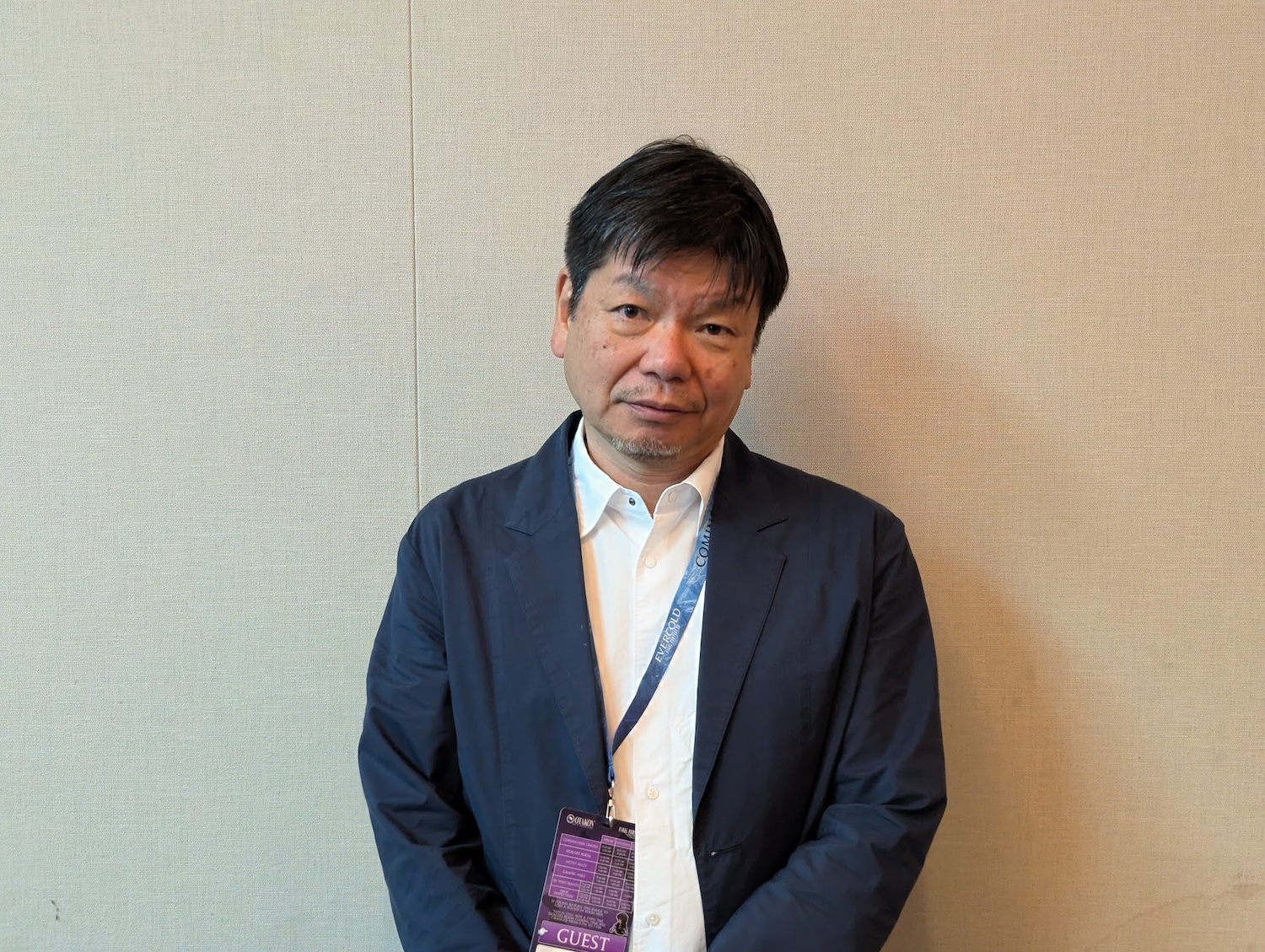
I got to speak to two guests this year and conduct interviews:
The first was with Minami Masahiko, co-founder of Studio Bones.
The second was with Oka Kunio, a man famous for designing food replicas like the ones you see at restaurants all over Japan. Stay tuned for this one!
Panels and Screenings
I make it a point every year to go to panels at Otakon, professional- and especially fan-run. Even when the quality varies, I can sense the passion for the subject, and it encapsulates a lot of what I enjoy about conventions in general. Sadly, I did not attend any 18+ panels this year because I was perpetually too tired in the evening. Also surprisingly, I don’t think there was a single Record of Lodoss War panel. Perhaps that’s just a sign of the times.
Detective Conan the Movie: The Million Dollar Pentagram
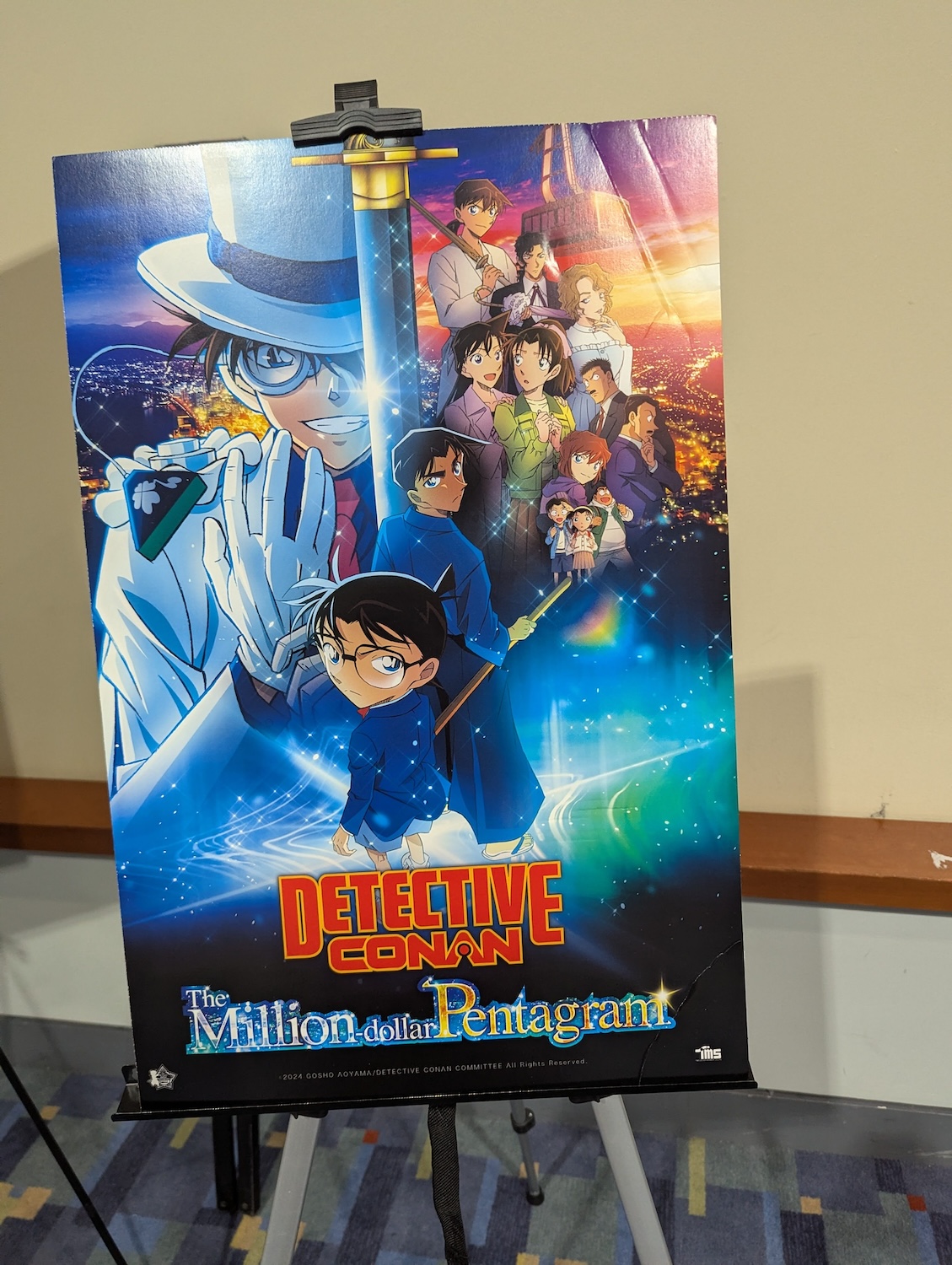
There has been a renewed push for Detective Conan over the past few years (including specifically using the name Detective Conan instead of Case Closed), and part of that effort this year has been screenings of the recent movie The Million Dollar Pentagram. Otakon was one stop on this tour, and since the YouTube showings that have been happening on occasion generally include the newest films, I decided to watch here.
Conan movies are a fascinating tradition, in that they have been a thing for literal decades now, and they try to be a reliable annual staple in Japan that feels both familiar and new. The Million Dollar Pentagram features phantom thief Kaito Kid and fellow young detective Hattori Heiji, as well as a string of murders that seem to be more than just about revenge or malice. In terms of the mystery, the ridiculous spectacle of action and violence, and some surprising plot revelations that extend beyond the movie itself, I think it was one of the stronger Conan entries I’ve seen.
Magic Knight Rayearth
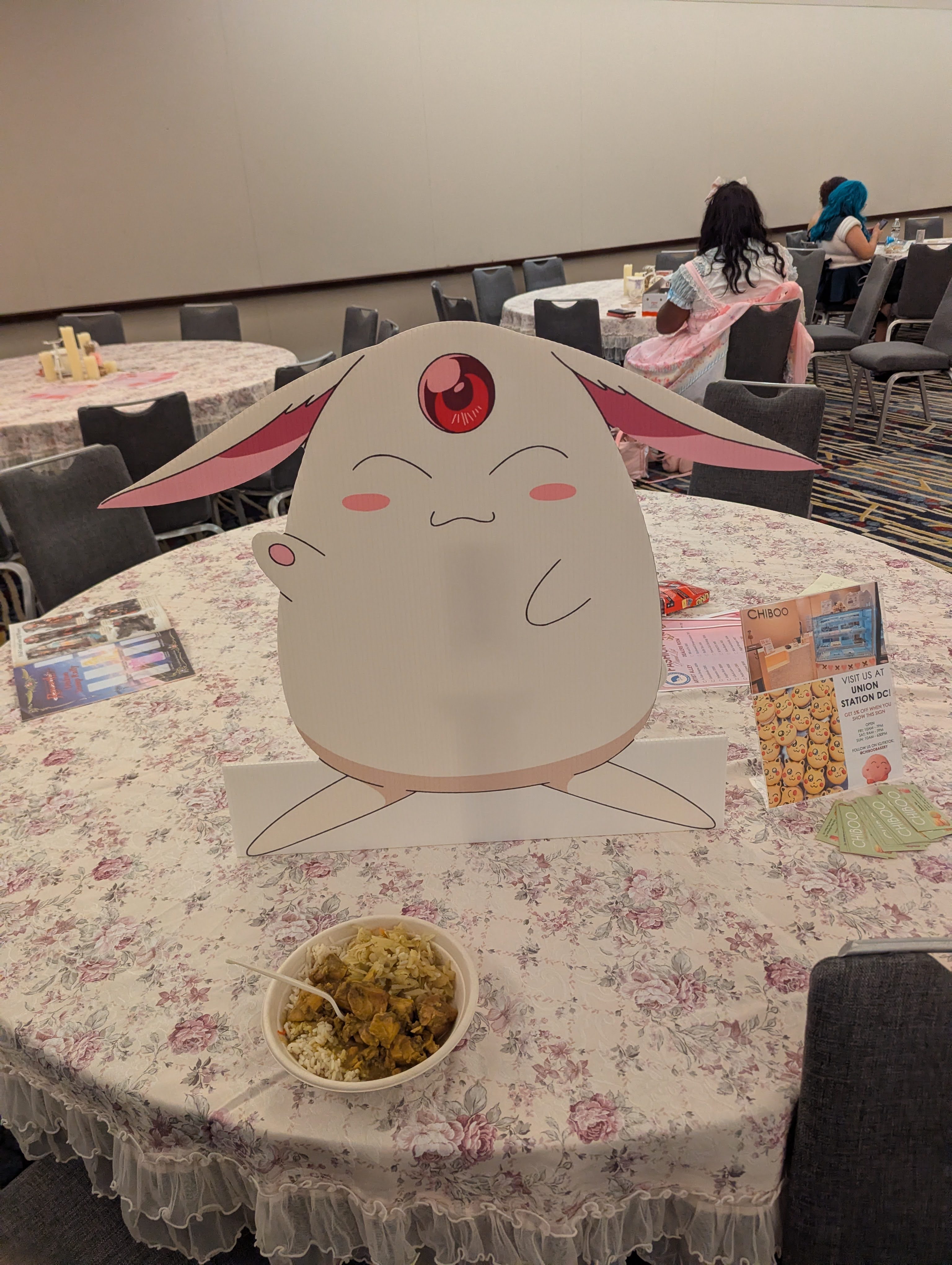
There was a lot of promotion and hype around Magic Knight Rayearth‘s upcoming remake, including a stamp rally. The series holds a lot of sentimental value for me, including having a wonderful memory of listening to “Yuzurenai Negai” by the original singer back at Otakon 2010, so I knew that I had to attend the screening of the first two episodes. In a time when the word isekai is sometimes viewed with derision, it’s like a breath of fresh air to have this old and reliably superb work spring back to life.
I haven’t read or watched Rayearth properly in a long time (the most was using the characters in Super Robot Wars), and Hikaru came across here as more serious and earnest than I remembered. I wondered, was my memory faulty or were there significant differences between her anime and manga depictions? Also, seeing Fuu bring up RPGs as if they were this relatively unknown thing felt delightfully quaint in 2026. And of course, we haven’t seen this many chibi transformations in decades.
Notably, they did not include the opening theme.
Vermillion Mask
I thought this was going to be a screening of the first episode, but it turns out “preview” can just mean showing a few drawings and video clips. The premise of the series reminded me a lot of The Mask starring Jim Carrey, so I asked the staff during the Q&A whether it was influenced by the film. It turns out that the author of the original manga was inspired in part by The Mask, so the animators use it for reference. (In hindsight, I should have asked whether the comic and/or the movie influenced Vermillion Mask.)
I don’t know if I’ll watch the show, but I’d like to know if any character ever says, “Somebody stop me!”
Discotek
I’m not generally into industry panels that are just about announcing new titles, but I make an exception for Discotek (and to an extent their cousin AnimEigo/MediaOCD). Being in a room full of fans who love nostalgic and obscure anime makes me feel like I’m among my people. There were a lot of welcome license rescues this time around, with the heaviest hitters in my opinion being Toradora! and Mawaru Penguindrum, the latter of which was known for having a lot of technical issues with its original blu-ray release.
A History of Anime in Mexico
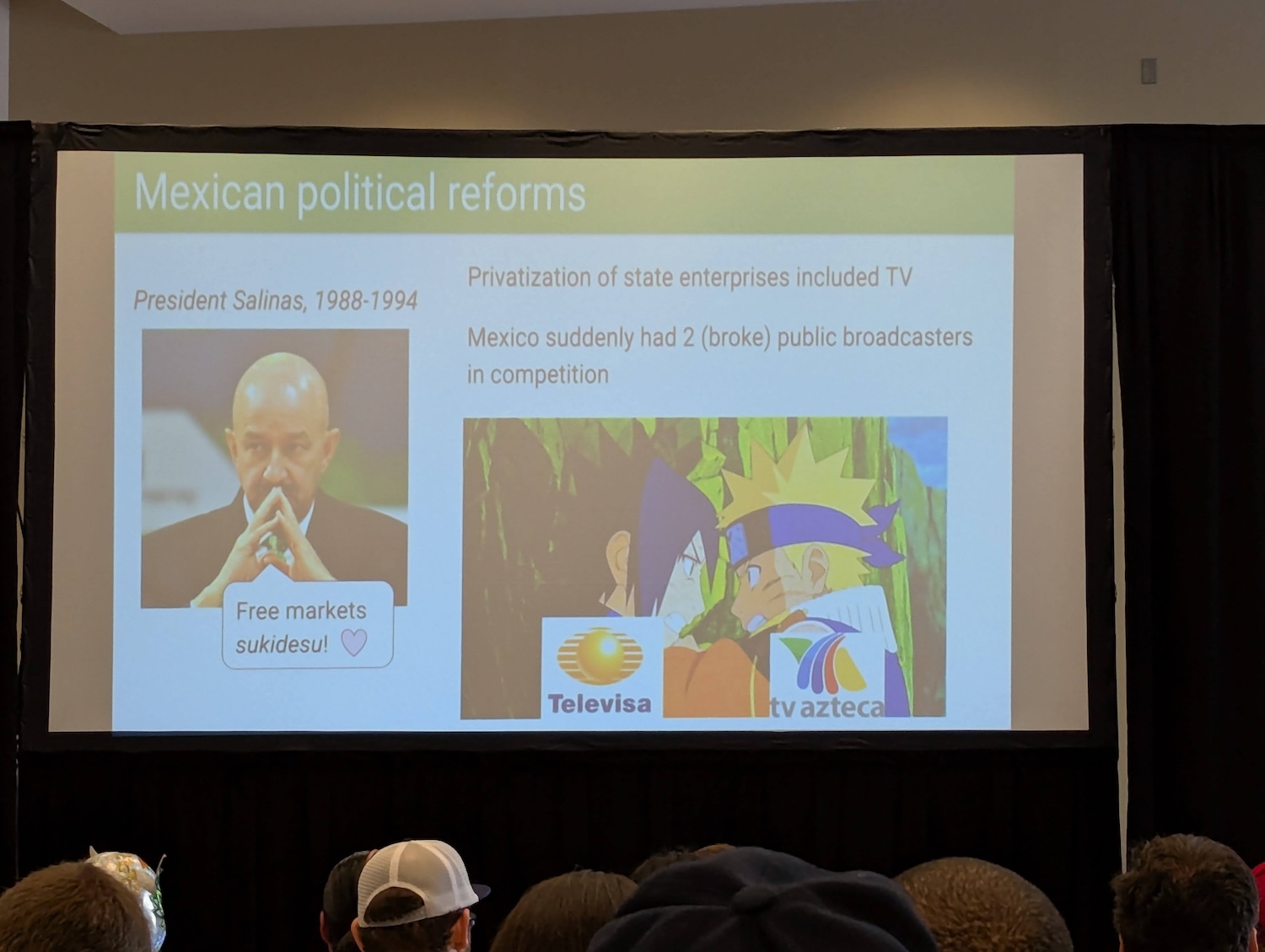
In life, an easy pitfall is to assume that the way things happened in your corner of the world was also the case everywhere else. Fandom is no exception, which is why a panel about the history of anime in Mexico was exactly the sort of thing I wanted to see. The panelists—a husband with a business career that had him working in Mexico with Japanese companies and a wife who majored in history—did a great job of looking at things from both cultural and economic perspectives. They also took time to dispel some myths (crime rates did not go down during episodes of Dragon Ball Super), and to teach the audience aspects of the fandom that might not be obvious to those outside of Mexico. For example, a lot of famous Mexican voice actors with decades of experience have also worked on anime dubs, and their popularity has helped them to establish a convincing anti-AI base. Hearing about the clash between Japanese bureaucracy and the more laid-back approach to business in Mexico was also fascinating.
The Ramen that Keeps Anime Going
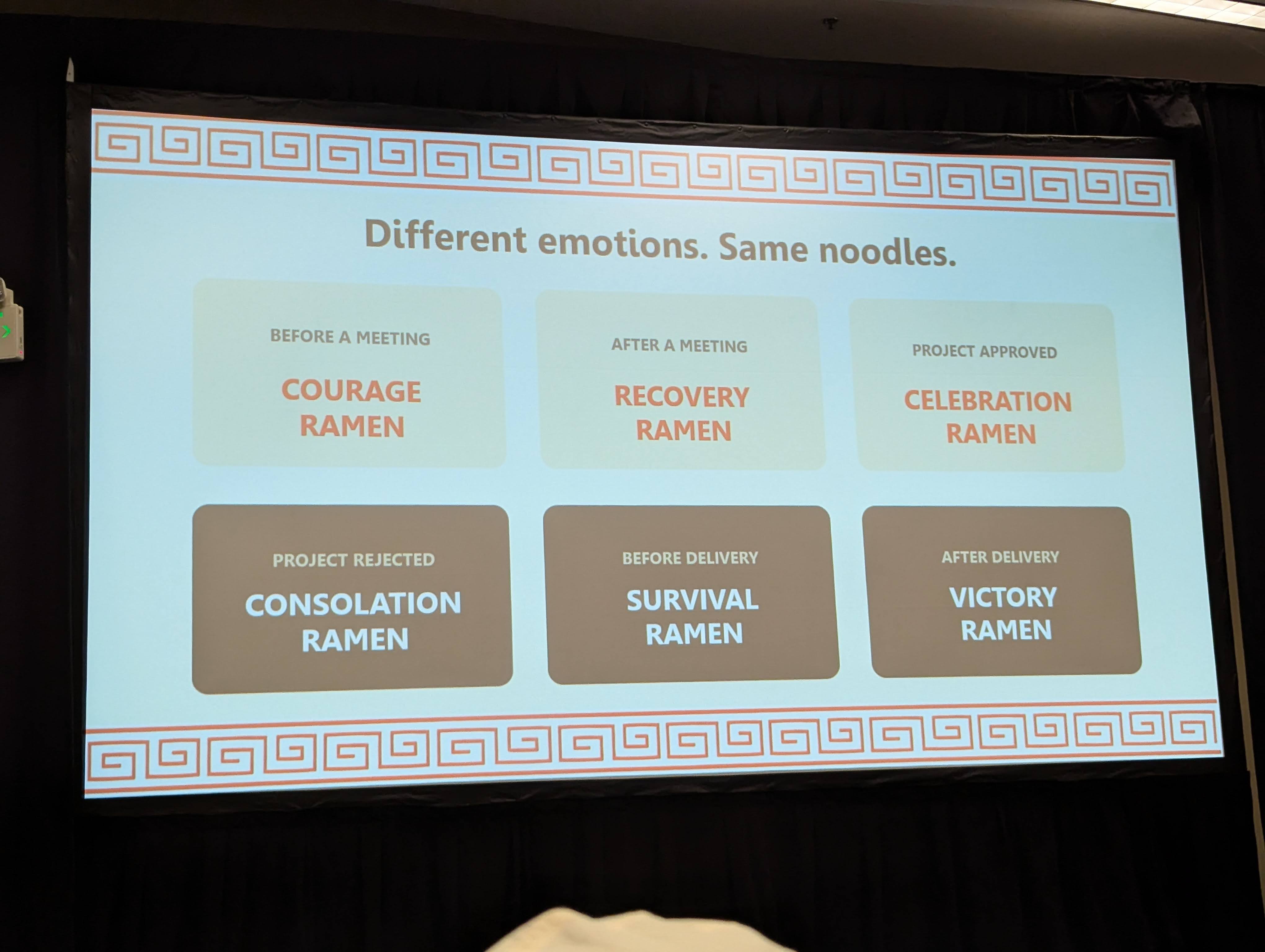
While I unfortunately missed all the full-on industry panels from Production I.G., I did manage to attend one by director Ueda Yoko. Rather than talk about the nitty gritty of making anime though, it was about the power of ramen. It was both informative and tongue-in-cheek, with the primary emphasis being that it’s fast and hot food that can help boost morale and lift spirits before, during, and after production.
Despite this panel being the product of an official guest it really felt like a lighthearted bit of fun from Ueda about a topic of great interest to her, as opposed to a cheeky attempt at marketing. That’s the culture of Otakon I truly appreciate.
Mecha Kaikan
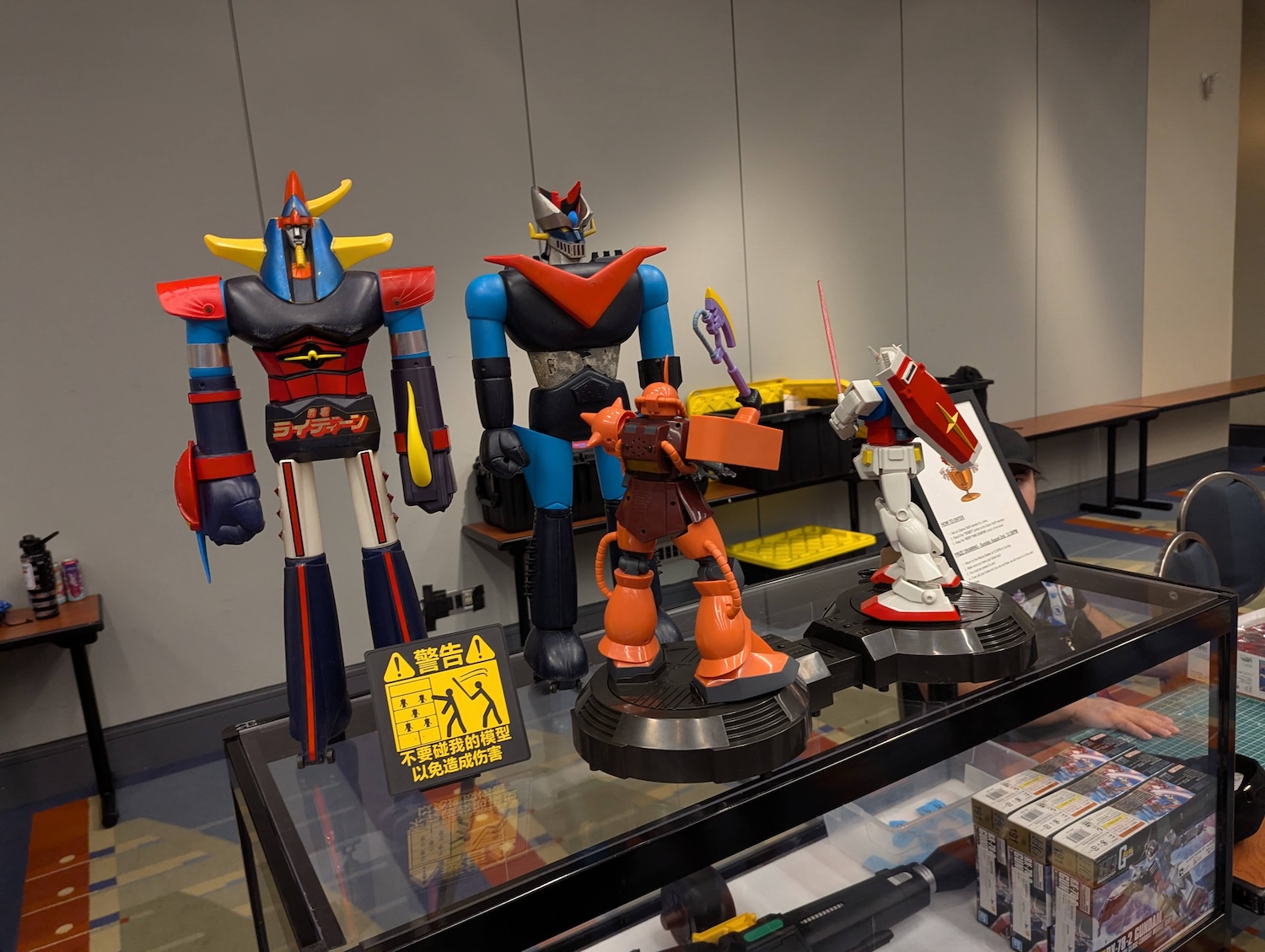
One thing I missed out on by not attending last year was the debut of a dedicated space for panels and workshops about giant robot media, known as the Mecha Kaikan.
I appreciate its existence on a conceptual level, and I do like how you’re encouraged to build model kits. At the same time, I always feel conflicted when it comes to attending mecha–related things precisely because it’s a genre near and dear to my heart. I don’t want to be one of those people who judges robot panels and tries to prove my kung fu is stronger (as one Daryl Surat likes to put it), but this is also a place where it’s easy to bullshit your way through if the audience doesn’t know better.
What I will say is that I don’t think knowing absolutely everything about a topic should be a prerequisite for doing panels, nor do I think they need to be for hardcore experts only. At the same time, I’m not a fan of papering over gaps in knowledge with wackiness and implying that everyone is on the same page as you.
It’s easy to be critical when you’re not doing the panels yourself, though, so I still have respect for those who genuinely try to make good presentations.
Food
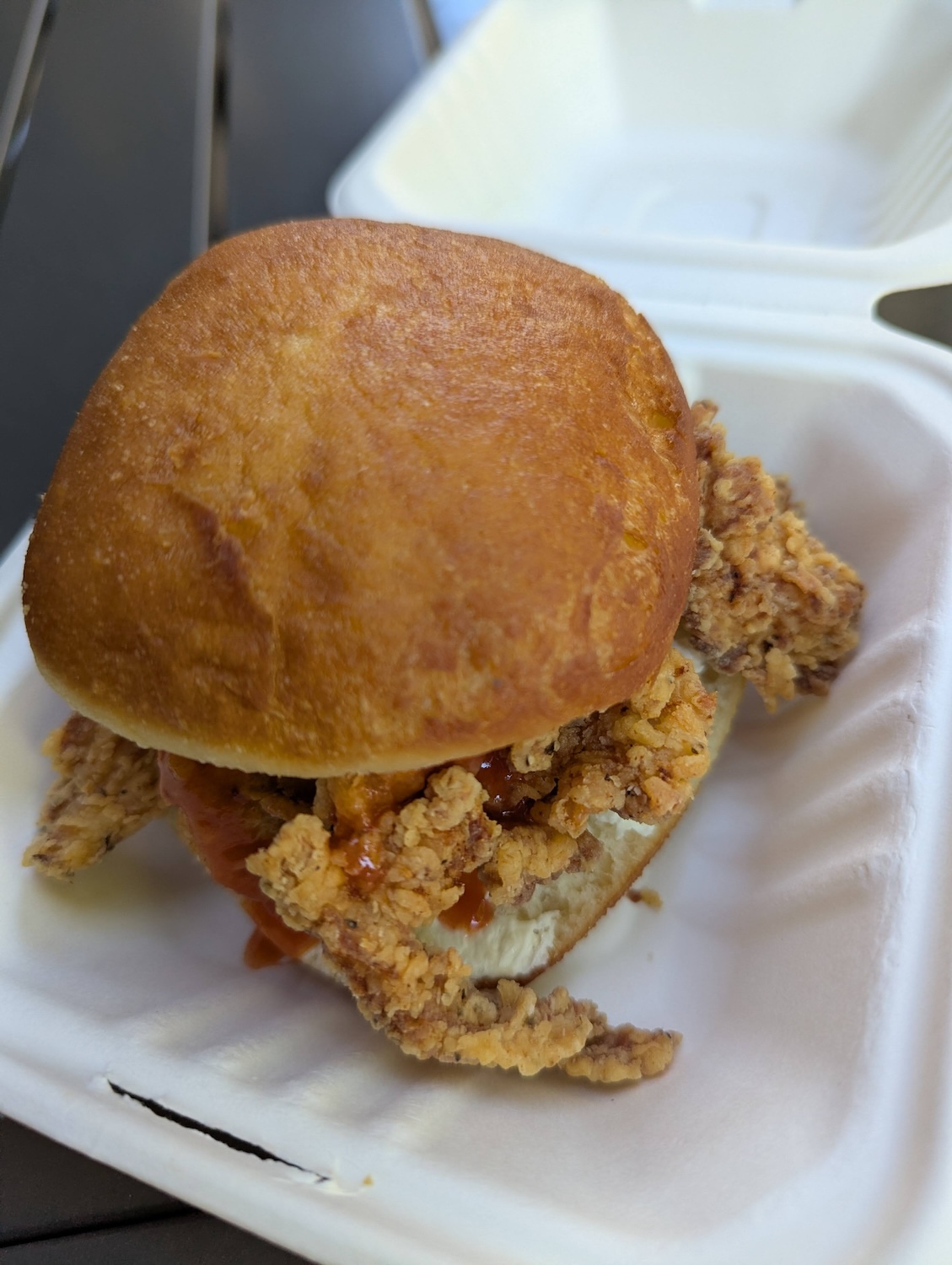
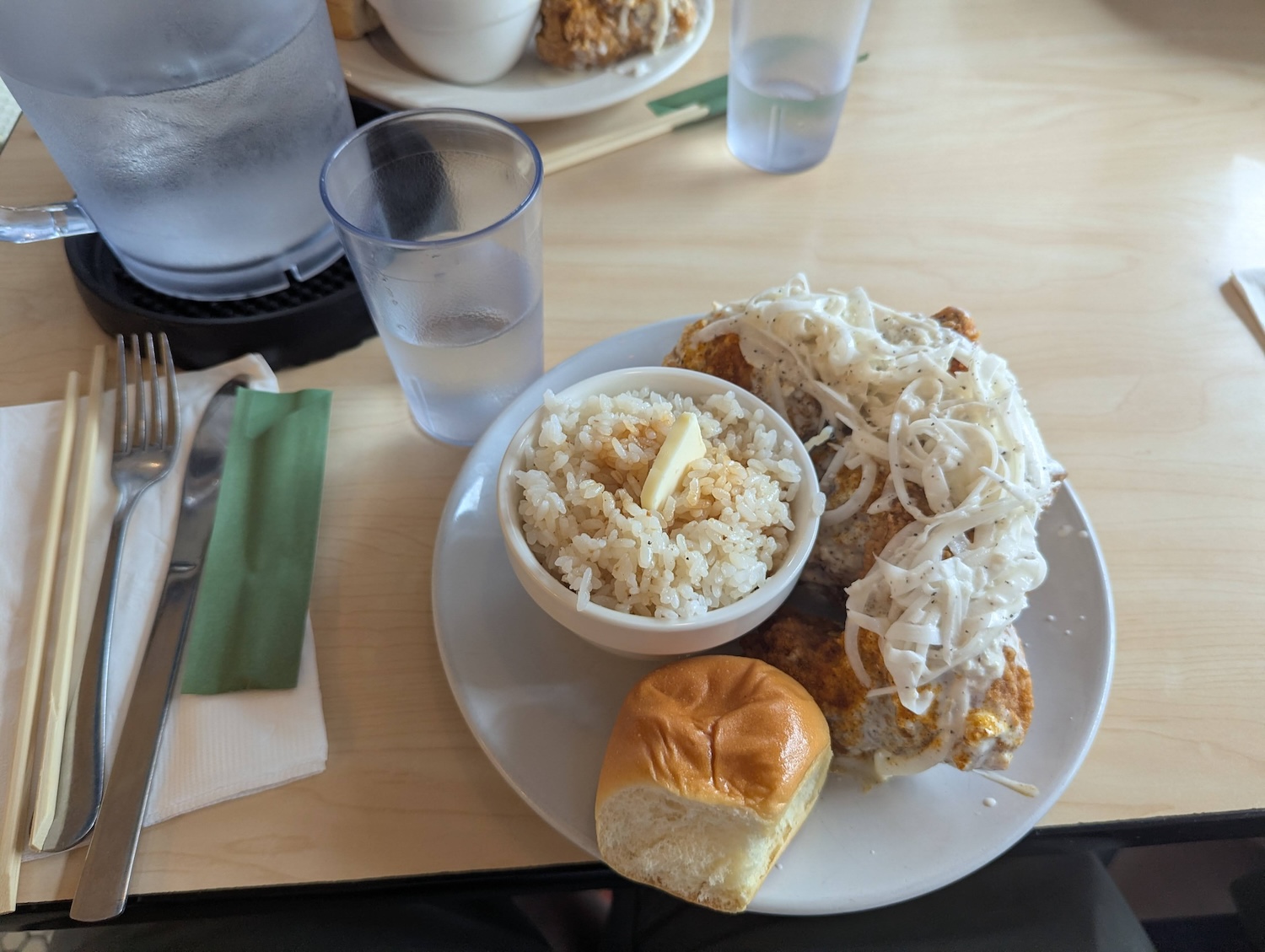
I spend some time in DC before the start of the convention every year, and 2026 was no exception. Somehow, I ended up eating a lot of fried and roasted chicken within a short amount of time! This included Peruvian-style rotisserie chicken and Chicken+Whiskey, fried chicken on a savory donut at Astro Doughnuts & Fried Chicken, and “snow-topped” fried chicken (accompanied by a bowl of rice with chicken drippings and butter) at an old favorite in Bantam King. All were good and worthwhile.
During the con, I mostly ate meals in my own hotel room, but did get some stuff at the convention center. Ben’s Chili Bowl and the caribbean food spot are still obviously overpriced yet reliable. On Sunday after the con wrapped up, my friends and I went to 2fifty, a Texas-style barbecue joint. While they were already out of many of their signature items, what remained was still quite good.
Final Thoughts
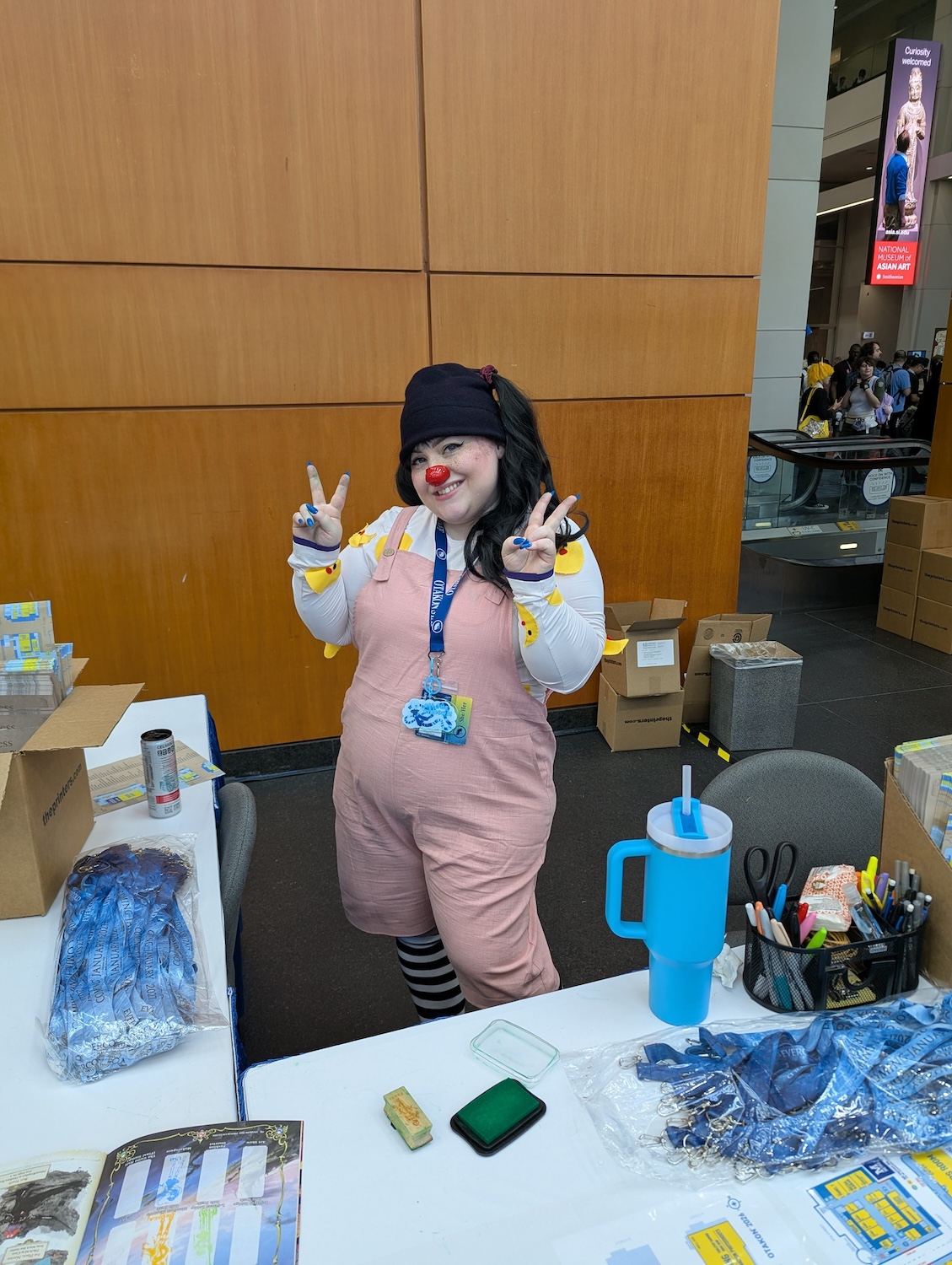
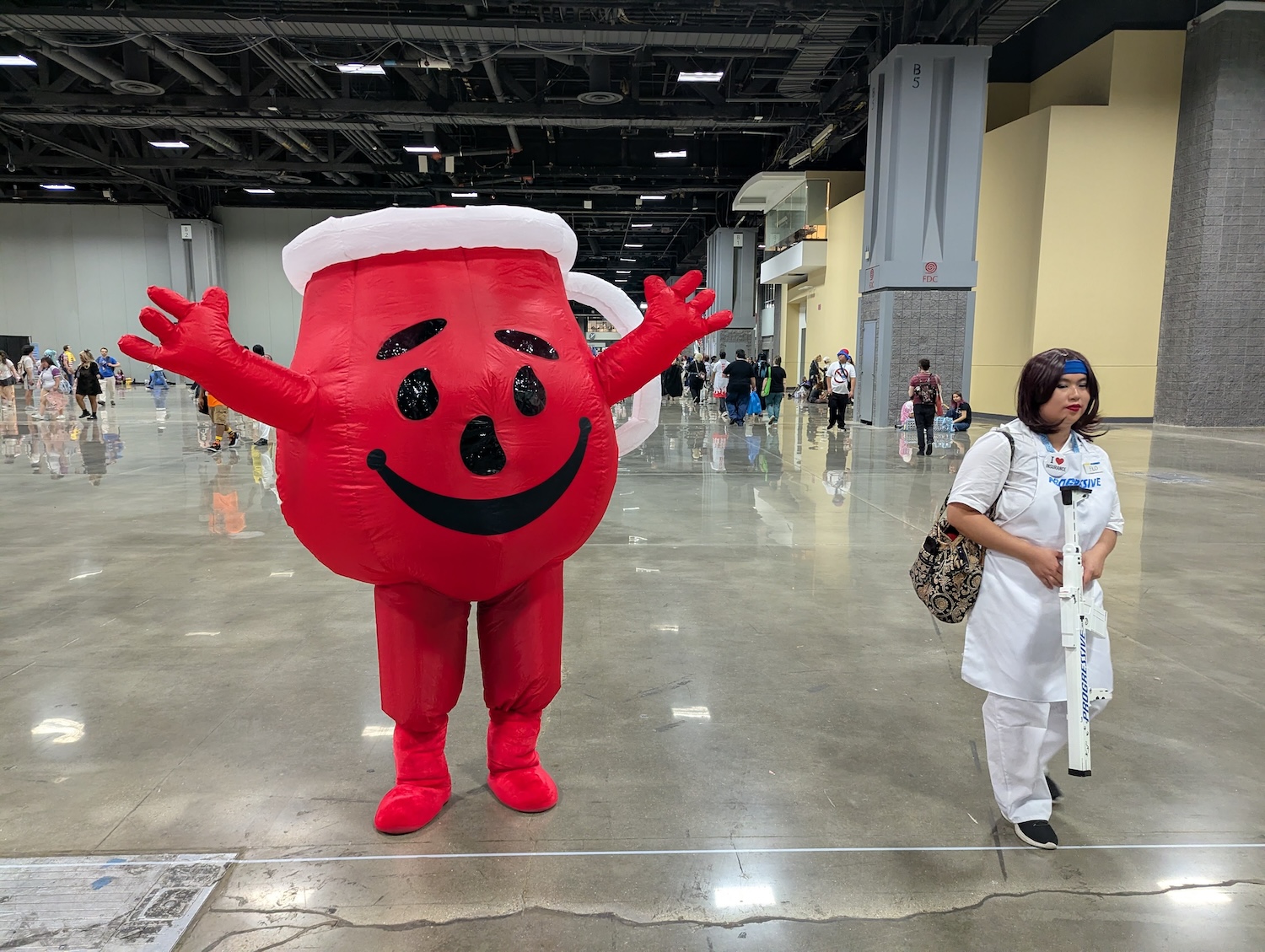
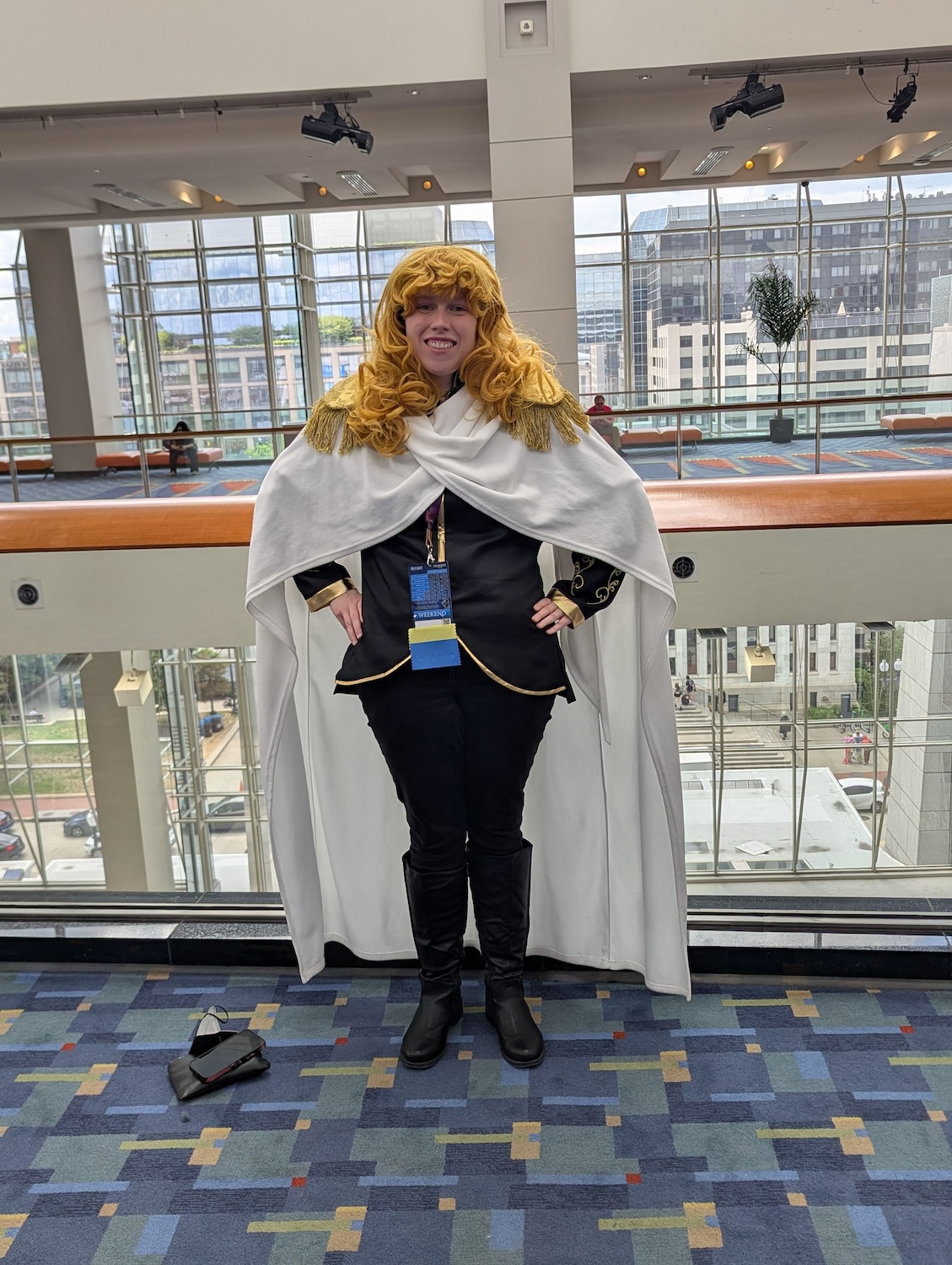
While some of it may be residual nostalgia, this year’s Otakon reminded me why it’s still my favorite. As the biggest conventions get bigger, it becomes an increasingly welcome presence. Otakon is not obsessed with either nickel-and-diming you outright (even “paid ticket” events offer some free seating) or encouraging you to spend as much as possible (though you still can if you really want to). Attending makes me feel both energized and relaxed, and I think that can’t be underestimated.


Pingback: Crossing Dimensions: Skyline Serenade (and Seigetsu Stars) – OGIUE MANIAX
Pingback: Concerts at (and Around) Anime NYC: Club Ironmouse, Big Apple Idol Fest, and Eclipsed Fates – OGIUE MANIAX
Pingback: Ro, Ro, Ro Your Bots: Ogiue Maniax Status Update for October 2026 – OGIUE MANIAX