Kio Shimoku, author of Genshiken, recently announced that he’s going to be releasing an artbook collecting his work from across his 30-year career! It will also include an interview with him.
The book is titled Kio Shimoku Gashuu: Mata Ashita, Bushitsu de—Kio Shimoku Art Collection: See You Tomorrow in the Clubroom. It’s being released by Fukkan, a Japanese publisher that specializes in niche specialty books and reviving out-of-print titles.
While the book is available for pre-order on other Japanese sites, pre-ordering on Fukkan’s site will get you a set of A4-sized replica illustrations of Kio’s work. And if you do it by July 16 (JST), then you can enter to win an autograph from the man himself!
Unfortunately, Fukkan will only ship domestically, so if you live outside of Japan, you’ll need to use a third party. Just keep in mind that with the pre-order bonus, shipping might be pretty killer!
In a sports anime where relationships on the court are centrally important, the defining team rivalry of Haikyu! is undoubtedly Karasuno vs. Nekoma. In Haikyu!! The Dumpster Battle, it all comes to a head as the two face off in the big inter-high tournament.
While the high-flying Hinata Shoyo is generally the star of the series, this movie feels like one where his friend and longest rival, Nekoma’s setter Kozume Kenma, is the actual main character. A significant amount of time is spent exploring his history and inner world, elaborating on how he started playing volleyball, and what has kept him in the sport despite his dislike of physical exertion. It’s because the film is basically an adaptation of a small chunk of the manga, but I appreciate that its story can be told in a way that really shines the spotlight on Kenma and adds a new perspective on his relationship with Hinata, as well as with Kenma’s own teammates.
The two schools are set up as equal but opposite forces. The Karasuno duo are the high-flying spiker Hinata and the technical setter Kageyama, while Nekoma’s main pair consists of the quietly analytical setter Kenma and the psychology-oriented Kuroo. Whereas Karasuno focuses on heavy aerial offense meant to overwhelm, Nekoma stays primarily grounded and defensive, strategically picking apart opponents. It’s a little on-the-nose, with the whole “ravens vs. cats” imagery, but there’s nothing wrong with that if it’s executed well.
What I especially like about this film is the fact that it’s all about a single match, and the majority of it is spent in competition. It reminds me of theGirls und Panzer films, which also take the time to depict long, drawn-out battles where two sides try to outwit and trap each other. Production I.G. goes out of its way to make the volleyball look amazing, even sometimes making it feel like you’re right there on the court.
Despite obviously being meant for people who have been watching Haikyu!! from the start, I actually think a non-fan could come into this pretty easily. They might assume that Kenma is the protagonist, and might not get all the running gags, but The Dumpster Battle is just a fine piece of sports fiction that just also happens to include lots of handsome dudes.
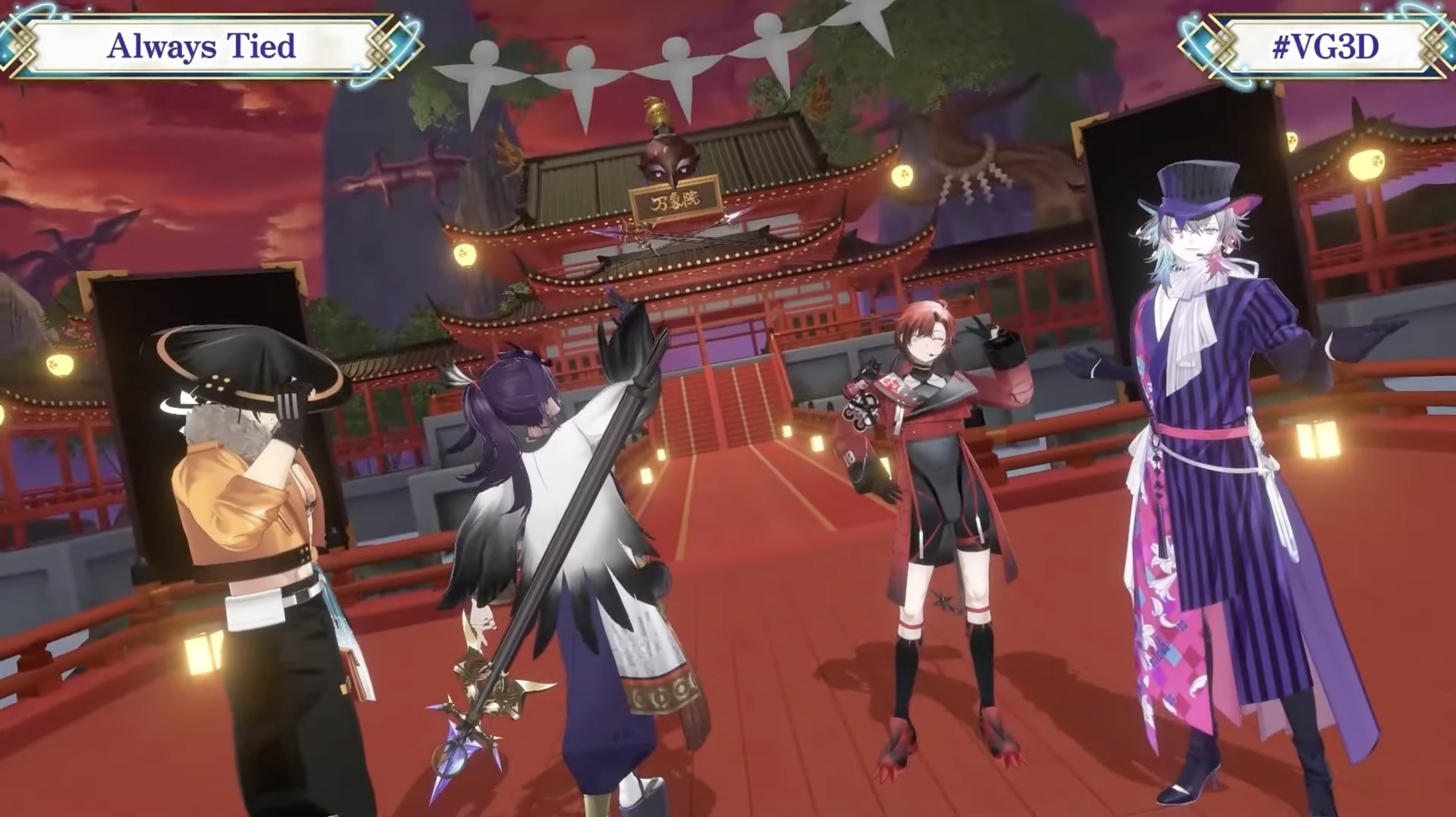
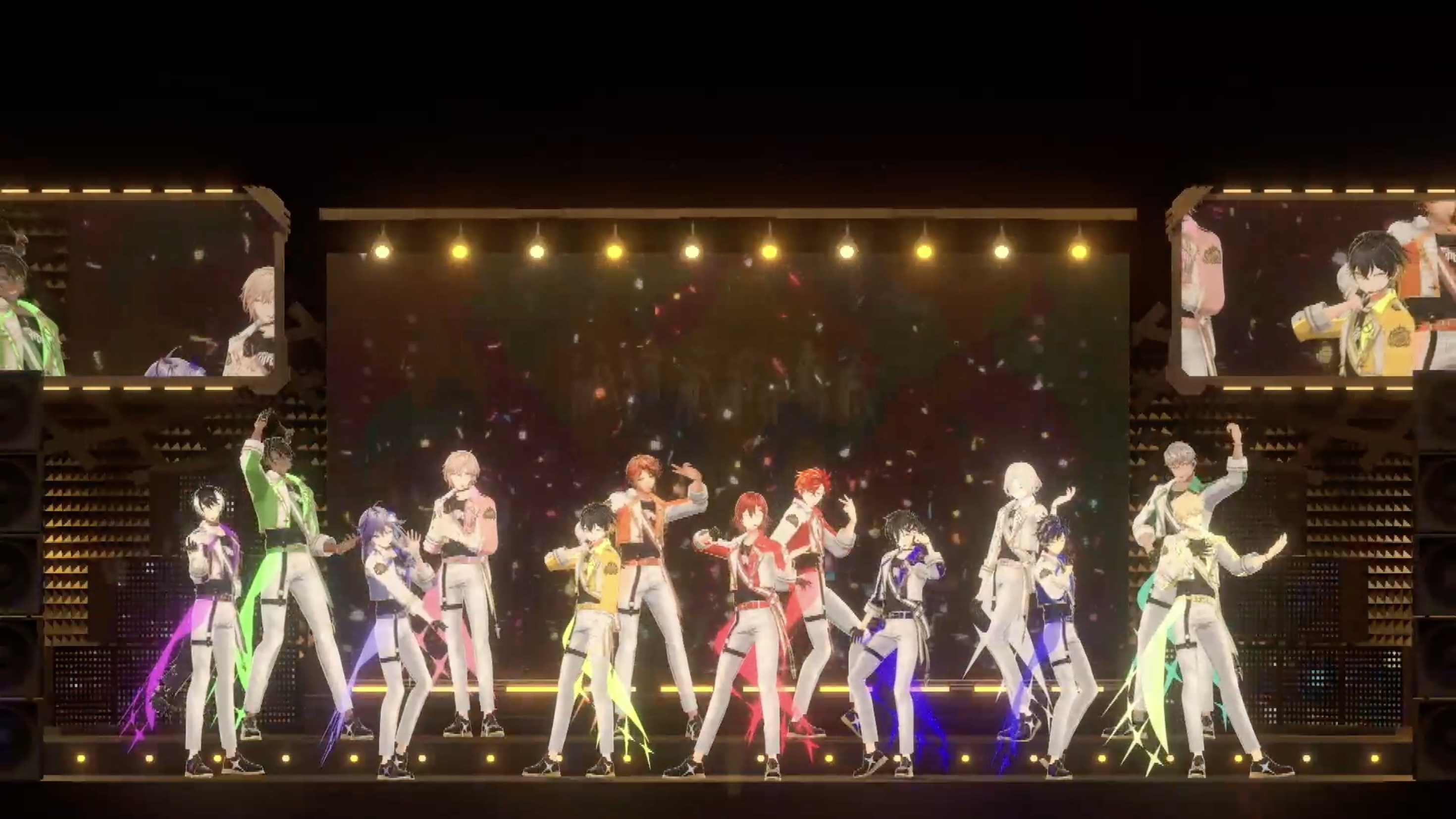
Over the past month, there have been a number of events for Holostars, the men’s side of hololive. While I don’t usually watch them often, I decided to check out both the Tempus Vanguard 3D debuts, as well as the Holostars JP 5th anniversary concert, Movin’ On. While the boys get only a fraction of the attention that the girls do, it’s become clear to me that this discrepancy has little to do with a lack of talent.
Holostars Popularity
I think the massive success of the hololive girls can skew people’s perspectives when it comes to how well the guys are doing. Holostars members have subscriber counts that are sometimes an order of magnitude smaller than their female counterparts, but this is comparing 100 thousand to 1 million—they’re still in the upper echelons of both VTubers and online content creators. I don’t pretend to know what makes anything become enormously popular, but they’ve all garnered sizable fanbases in their own ways. I wonder if the disparity just has to do with how girls are more often willing to watch stuff made for guys, but the reverse doesn’t happen as much.
Tempus Vanguard 3D
3D debuts/showcases are one-time events in the hololive world, and so they naturally attract curious passersby like myself. They also give new insight on figures who were basically only talking heads, with the added benefit that these special streams are built entirely around putting the VTuber’s skills and personality on display. Tempus Vanguard is no exception. Bettel’s buffoonery has extra nuance when you can see him physically clowning around (and getting clowned on). Flayon is surprisingly athletic, which makes him seem even more animated than normal. Hakka’s powerful singing was obvious even in 2D, but getting to see his physical expressions only adds to his performance. Shinri’s willingness to go a bit “out-of-character” for his song selections makes him even more masculine.
Movin’ On
For the Movin’ On concert, I followed Kureiji Ollie’s stream VOD so that she and her watchalong crew could fill in the gaps a little. These events are often culmination points for talents and their fandoms rather than neutral evaluations of their abilities, and I knew that I was lacking the right context in basically all cases. Together with Area 15, Baelz Hakos, and the live audience, I got a somewhat better understanding of the relationship each Holostars member has with their respective followers.
Just like with the hololive girls, though, there are some individuals who can really command the stage. Minase Rio’s singing is beautiful. Roberu carries his jovial charisma from his chatting streams to his performances. Astel Leda has undeniable star power, combining a versatile voice with serious dance skills.
Overall, it’s just good to see everyone in Holostars provide a good time for their fans, be it through thrilling stage performances or as a comforting respite from the world. Maybe someday, we’ll get to see the EN and JP branches together at the annual hololive fes in their own concert (as opposed to a fun karaoke session), or even together with the female talents. Whatever the future holds, I’d like to see them succeed on their own terms.
Movin’ On is still available for a limited time as a VOD costing 6,500 yen.
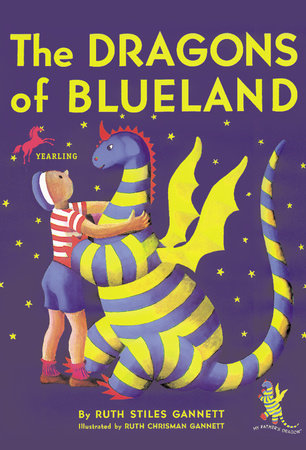
Ruth Stiles Gannett, author of the My Father’s Dragon trilogy, passed away on June 11 at the age of 100. I can’t overstate how important she was to my early childhood.
My elementary school was part of a program to encourage reading, and we could choose one book to take home. I was in first grade, and I decided on The Dragons of Blueland (the third in the trilogy after Elmer and the Dragon) despite the fact that it was meant for sixth graders—I think I wanted to show that I was smart enough to tackle a tougher book. It ended up being the very first novel I ever finished, as well as the first book I could truly call my own.
I probably would not have written about Gannett’s death for this blog, but I’ve come to learn that Gannett is actually quite beloved in Japan—possibly even more than in the United States, where she was born.
I actually first learned about Gannett’s passing because I was browsing Twitter and saw Gaogaigar director Yonetani Yoshitomo post an image of a large statue depicting the titular dragon, Boris. It was quoting another tweet mentioning the news. When I tried to look for a source, the only ones showing up were Japanese sites.
It turns out that My Father’s Dragon was published in Japan in 1963 as Elmer no Bouken (“Elmer’s Adventure”), 15 years after it was originally released in English. In 1966, it was adapted into a puppet play for the NHK show Ningyougeki(“Puppet Theater”), and then into an anime film in 1997. Yonetani’s photo above came from a My Father’s Dragonexhibit that’s been touring Japan. And just looking through Youtube, someone created and uploaded their own puppet show version in 2010, which has a lot of views for a very small channel.
As an aside, there’s also a 2022 Netflix film from the makers of The Secret of Kells. I haven’t see it, though.
When I was in first grade, I hadn’t yet developed a keen interest in Japanese culture. Looking back, I do find it funny that this author who made such a huge impact on my life would be so celebrated in a country whose media has literally changed my life. I haven’t gone back to The Dragons of Blueland or the other books in a very long time, but I might just take some time to revisit my childhood.
Thank you, Ruth. You were a big part of why I loved reading as a kid, and Dragons of Blueland introduced me to so many wonderful things (not least of which was Fig Newtons). I hope your books continue to inspire imagination in people young and old.
The 1980s Transformers movie looms large in my memory. I can still feel a part of me reacting to moments I first saw when I was maybe five years old, watching a VHS recording at a neighbor’s place. But I hadn’t experienced the full film itself in a very long time, only sometimes revisiting iconic moments on YouTube, and I wondered how I would view it through the eyes of someone well past childhood.
There are a few things I’ve come to realize by watching The Transformers: The Movie again. Namely, I can see even more clearly why it was such a cultural touchstone for the young fans, and why it was so confusing and strange for adults. To the parents, film critics, and other older folks, Transformers likely spoke in a visual language that was disorienting and didn’t bother to differentiate characters in ways that made sense.
But the kids, including myself, were essentially raised on the kind of collect ’em all mentality that involved different color schemes for boxy robots. Certainly, collectible toys existed in the past, but this was a post-He-Man world, where the sheer variety of action figures were tied to unique personalities that kids could know and love (or hate). Much has been written about how the death of the heroic leader Optimus Prime was a turning point/moment of trauma for a lot of children.
Younger people reading this might wonder why this was a big deal beyond the obvious pain of having a fan favorite pass, but the key thing to know and remember is that death was unheard of in cartoons of the 1980s. No one ever got permanently hurt, lasers and guns would blow up vehicles but never people, and each episode’s ending reset to a status quo so that shows could go on forever, or even run episodes out of order if need be. What makes this all the more astounding is that the decision to kill off Optimus—and a large chunk of the cast—was the result of a cynical decision to make way for new toys to sell. The people in charge thought that the children saw Transformers as playthings, only to realize that they had introduced fascinating personalities and role models to which those kids could get attached. Even if the catalyst was simple capitalism, the result was an awareness of the power of fiction.
One thing I realized anew is how the relationship between Starscream, Megatron, and Unicron plays out. Throughout the original Transformers TV cartoon, Starscream is a conniving soldier whose ambition is to overthrow Megatron and take over as leader of the Deceptions. He also never truly succeeds because he’s a coward who jumps the gun at the slightest sign of weakness, only to have it all backfire. On top of that, Megatron is simply more powerful than him, and he can’t hope to actually win in a fight.
But when Starscream sends a weakened Megatron to his death, and the latter is exposed to a being far beyond him in the form of Unicron, it becomes clear just how very similar Starscream and Megatron are. Much like Starscream, the normally arrogant Megatron is quick to capitulate when threatened with real harm, but is also just as opportunistic—working towards betraying his new master by trying to obtain the Matrix, the only thing that Unicron fears. The only difference is that Megatron is more patient.
Another takeaway: The movie is basically a series of incredible vignettes kind of sloppily stitched together. The story as a whole is about passing the torch and discovering your potential, and individual scenes have some of the most impressive animation of all time, but the whole thing often feels loose and disconnected. It’s why watching clips of the high points on YouTube or whatever is so effective. Moments like the deadly battle between Optimus and Megatron, the Decepticon leader’s transformation into Galvatron, and the moment when Hot Rod fulfills his destiny with the Autobot Matrix of Leadership never fail to give me goosebumps. The weaker parts I can safely file away in the recesses of my memory.
If you speak the “language” of Transformers and the kind of merchandising that is its legacy, everything about this movie makes sense. If not, then it all falls apart. I’m curious as to how newer generations of viewers—especially more recent Transformers fans—view this work. It’s a classic in my nostalgia-filled eyes, and I acknowledge all the ups and downs that come with such a perspective.
It’s been over two years since my last review of a Gundam Reconguista in G movie. In Part IV: The Love That Cries Out in Battle, the series continues to gain new life as a more cohesive work compared to the original TV series.
G-Reco is about a world centuries after the Universal Century era of the original Gundam. Humanity has crawled back from the brink of extinction, leading to a ban on the old UC technologies and a rationing of energy. However, conflicts still remain, and people are cut into various factions.
At the end of Part III, protagonist Bellri Zenam inadvertently activates the Crescent-Moon Ship, a space-faring vessel that’s meant to lead them to Venus Globe, where the batteries that are meant to provide power to Earth. However, right as Part IV begins, Bellri and those traveling with him are confronted by a group from the G-IT Laboratory, a technology research facility that views the war-prone Earth-born with disdain, and wants to take both the Crescent-Moon Ship and Bellri’s mobile suit, the G-Self, for their own. From there, the film continues and amplifies many of the trends of the previous film, like the importance of understanding individual characters’ motivations, as well as the ways that people’s environments can affect their views on society and civilization. It sees the furthest reaches of humankind before drawing the characters back towards Earth and juxtaposing all these different ways of thinking.
A recurring lesson emphasized throughout is that people can have different blindspots depending on their proximity to Earth and its issues:
The character Aida Surugan (newly discovered to be Bellri’s sister, to his chagrin) questions why energy has to be rationed when so many people suffer, but other characters point out that she’s been affected by “Amerian” indoctrination that fetishizes “freedom.”
The mobile suit pilots of the G-IT Laboratory are quick to judge those from Earth for their legacy of war and death, but they also imagine themselves as glorious fighters who just haven’t had the chance to really show their stuff, and they incorrectly assume that the weapons they wield indiscriminately won’t cause the same problems. (Their similarity to Gym Ghingham in Turn A Gundam is probably no coincidence).
The inhabitants of Venus Globe appear to live in peace while faithfully honoring the heights of Earth’s civilization, but they are largely ignorant of what happens on Earth, and their abundant luxury masks greater health issues that come with both living in space and seeing themselves as the far-off arbiters of Earth’s ability to sustain itself.
Capital Army leader Cumpa Rusita (the closest thing the series has to a main antagonist) is motivated by his disgust at the physical deterioration of the space-born, and this has led him into being a Social Darwinist who believes conflict is the key to restoring humanity’s greatness.
It’s as if the goal of G-Reco is to highlight how people often think that they now see the big picture, but their perspective is far more narrow than they realize. Or even if they don’t miss the forest for the trees, their failure to also account for the trees is in itself a flaw.
I think I give the impression that G-Reco and this film in particular are very serious with all the political and speculative philosophizing, but the series can also be refreshingly lighthearted at times. There are many scenes devoted to daily or mundane activities, like running to sweat out any toxins that come from space travel, or stepping on a robotic scale to check weight. Noredo Nug and Manny Ambassada have an almost “Scooby and Shaggy”-like presence with their antics that’s more understandable rather than annoying. All this actually adds a lot to conveying the idea that these are individuals with lives of their own, and adds a touch of joy to the worldbuilding of this series.
As for Bellri, he seems to embody both the silly and the serious, which might be why he’s the main character. In the same movie, you see him continuously calming his libido by remembering that the girl he’s into is actually his flesh-and-blood sister, and then showing incredible frustration at how many of the people he fights can’t see beyond their own nose. When he uses a new weapon to try and slow down conflict only to unleash a never-before-seen power that leaves all sides horrified and bewildered, Bellri immediately reacts with genuine disgust.
With the original G-Reco TV series, a good part of my overall positive review of the series had to do with how the last few episodes play out. The final film, Part V, is next—I get the feeling I’m going to enjoy this finale even more.
Taira Isao is a Japanese singer famous for his contribution to multiple anime songs. Famously, he can be heard in the openings to Space Runaway Ideon, Muteki Robo Daiohja, and Galactic Cyclone Braiger. And over the past three years, Taira’s also been running a small Youtube channel.
The channel is called Taira Isao’s Uta Uta Uta [that’s “song” written three different ways), and the man uploads his covers of old Japanese music. Taira’s stated goal is to share songs from history, and even give a little background on each one to spread knowledge.
Some examples:
“Momiji” (1911)
“Hana no Machi” (1947)
“Princess Mononoke” (1997, from the movie)
As of this post, Taira has less than 2,000 subscribers. It’s wild to me, the fact that this person with this ultra-recognizable voice from anime would have this humble Youtube presence at the age of 71.
It’d be great if he had more subscribers, but I kind of like that his channel is relatively small. There’s something charming about all this, especially because he’s trying to draw attention to great (non-anime) music from yesteryear.
As we inch closer to summer (and all the fun and horror that entails), I find myself a little spend-happy. What can I do when the Soul of Chogokin line announced a ton of new releases for their 50th anniversary?! There’s the DX Showa Mechagodzilla, Shinkalion, Tryon 3 (aka the very first Gundam entry in the SoC line), and it doesn’t even stop there. It’s impossible for me to buy all of them, but I am ever so tempted to do so.
I also started playing Elden Ring this month. I don’t know if I’ll do a full review or anything, but it’s inspiring me to at least write one or two posts somewhat related to it.
This past month also saw the birthday of hololive’ La+ Darknesss! I decided to celebrate by pulling out the old ink and brush and drawing a quick portrait. I used to post more art to Ogiue Maniax, but that mostly fell by the wayside a long time ago. I keep trying to convince myself to do more again, but we’ll see.
Thank you to the following Patreon supporters for the month:
I keep on thinking about upping my foreign language learning, but I have yet to fully commit. I’m considering trying one of those language partner/tutor sites, but I don’t know where to even begin.
Kio laments that Spotted Flower (a series that was once supposed to be simple and easy to draw) now has a huge cast, places he’s never drawn before, things that require photo references, and an increased page count.
It’s been 10 years since Kio last watched The Piano, a movie that apparently shook him with the level of NTR it features. In hindsight, he realizes this might be why he likes the movie so much.
On a whim, I decided to watch the recent superhero movie, Blue Beetle. I’ve been feeling a little burned out by the Marvel Cinematic Universe, so I figured I’d try something from DC. It also stars Xolo Maridueña (who I’ve enjoyed in Cobra Kai) as the main hero, Jaime Reyes.
The basic structure of the movie is standard hero-origin fare, but at the very least, it ends up being better than a lot of the recent Marvel stuff. I think where Blue Beetle succeeds (and where the MCU increasingly fails) is that it feels very human and doesn’t get lost in the weeds of a “superhero universe” or its tropes. In the case of Blue Beetle, the emphasis on Jaime’s Latin American background is what holds the entire film together.
Jaime’s family is Mexican, and they are shaped by both the struggles and triumphs they’ve had to face making a life in the US, ranging from some members being undocumented immigrants, to enduring years of backbreaking labor, to a rather surprising detail about his doting old grandma. Blue Beetle asks how a person like Jaime, the very first member of his family to graduate from college, gains a lot of his strength from his upbringing and the values of his culture. The generational and cultural gap felt by Jaime as a first-generation American feels very authentic. And all through this, the story of the Reyes family delivers a complex message about what it’s like to aim for the American dream in an America that doesn’t see you as equal.
Blue Beetle isn’t spectacular, but it’s still a pretty entertaining feature with some solid legs. It frames the superhero aspects of its story through an exploration of a multigenerational immigrant experience, and manages to cross a finish line that many of its peers have been unable to reach.



 OGIUE MANIAX