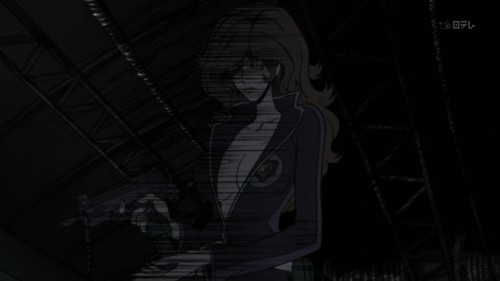
Mysterious Girlfriend X is Somewhat Different in Anime Form

I’m actually a pretty big fan of the manga Mysterious Girlfriend X, so I naturally had to check the anime out. While it followed the manga very closely, I still came away with a somewhat different experience (though not necessarily a bad one), and it has something to do with some of the choices they made in adaptation, as well as the very act of adaptation itself.

Mysterious Girlfriend X is definitely a weird concept that just isn’t for everybody. The story centers around a high school couple, Tsubaki Akira and his girlfriend Urabe Mikoto, and their connection through saliva, specifically the fact that Urabe’s drool seems to have paranormal properties related to empathy. As boyfriend and girlfriend, rather than kissing, they exchange saliva by finger. I’ve seen it argued that the series is solely for people who have a saliva fetish, but I think this is really shortchanging the series and its viewers, because the reasons for following it aren’t as overly specific and narrow as “liking drool.” The appeal is more basic than that, as you have this thrilling and bizarre romance between an established couple who share a bond that seems to go deeper than anyone else’s.

That said, I found the experience of watching the whole saliva exchange to be different between the anime and manga in a way I’m not entirely for. In the manga, the drool is kind of a visual motif, drawn very simply, something that while ever-present is almost just like a rendered symbol. In the anime, however, they go out of their way to make the drool glisten and glow, to give it depth and dimension. The real killer is the sound, because in addition to all the effort they put into it visually, they also tried to make it sound as loud and slimy as possible. Again, drool is definitely a part of the series, but I think a little too much attention is given there.

Another thing that makes the anime quite different is the lack of manga-style paneling. This is kind of unavoidable, as anime is a different medium that works along different rules (unless it went out of its way to mimic the panel-based structure of manga), but Mysterious Girlfriend X has really fantastic page composition and paneling, especially in its smart usage of the contrast between black and white. I even used it in my article about decompression in comics. Take a look at the page above, and you’ll see that even if you took every one of those panels and animated them together, it would simply lack the overall structure of the “columns” created by the characters. When you then add color to the film-like style of the anime, it just makes for a different impression.

There are also a couple of more minor things to note. The first is that the elaborate dream backgrounds, which are fully drawn in the manga, are rendered in CG in the anime. A practical change of course, but one which kind of takes away that impressive bit where you realize someone drew all of that. The second is that the voice actor for Urabe doesn’t sound like I imagined she would, though that’s more on my end than anything else. Her voice actor also seems to be quite new at this, showing something of a similar effect to Omigawa Chiaki in her days as Maka from Soul Eater.

I’m still going to keep watching Mysterious Girlfriend X, of course, and I’m probably going to enjoy it. I just wanted to say something about the subtle changes that are present, and perhaps how this speaks to the things that can occur in adaptation from one medium to another.

The School in Aquarion Evol is a Pokemon

The Fujoshi Files 40: Yoshitake Rika

Name: Yoshitake, Rika (吉武莉華)
Alias: N/A
Relationship Status: Single
Origin: Genshiken: The Society for the Study of Modern Visual Culture II

Information:
Yoshitake Rika is a student at Shiiou University who, despite her youthful looks and demeanor, actually entered college at the age of 20. She initially joined the Society for the Study of Modern Visual Culture (Genshiken) after seeing a particularly appealing drawing of Sengoku Basara characters by Genshiken president Ogiue Chika at the club fair. As a member, she quickly befriended everyone in Genshiken, especially her fellow freshmen, Yajima Mirei and “fudanshi” Hato Kenjirou. Yoshitake has a younger (but taller) sister named Risa who is also an otaku, and has bought doujinshi for Risa, who is typically unable to attend events due to her obligations to her basketball team.

Her sense of fashion, forward personality, and willingness to break a few rules in the name of fun (like convincing her slightly underage friends to drink) belie a person who is more comfortable in social settings that the average fujoshi might not be. At the same time however, Yoshitake has a capacity for expounding endlessly on BL-related topics, which allows her to strike up conversation with her fellow fangirls just as easily as she would non-otaku. Yoshitake’s taste in media is also very diverse, going from classic literature to anime and manga to live-action films.

Fujoshi Level:
Yoshitake is able to combine both the wide breadth and depth of her interests with her fujoshi mindset, and consider the pairing and yaoi potential of a range of works far greater than the average fujoshi. Notably, she believes that the judo novel Sugata Imatarou is excellent in part for the emphasis on sweaty men forging close bonds with one another.

SRWZ2 Saisei-hen Out Already?! And It Has Tetsujin 28?!

Recent events have made me aware of how out of the loop I am with the mecha fandom. Whereas I would’ve once known and posted about it within days of the first announcement, this time I wasn’t even aware of it until someone linked me to a video the day it came out.

(Thanks, Jorge.)

Probably the most surprising thing about the new game is that, finally, after something like 20 years’ worth of games in the franchise, the grandfather of the heroic giant robot, Tetsujin 28, has made its SRW debut. Now, all of the questions about how Shoutarou factors in will be put to rest (he doesn’t even appear next to the robot, meaning he won’t accidentally get smashed by falling debris).

Granted, it’s not the original 1960s Tetsujin 28 here, but rather the 1980 remake, Emissary of the Sun Tetsujin 28 (not to be confused with Emissaries of Light Cure Black and Cure White, or Brave of the Sun Fighbird). I have to wonder why they decided to go with this iteration, as opposed to the ultra-90s remake, or the more recent Imagawa adaptation, but I figure it probably has to be for one of two reasons (or maybe a combination of the two). First, its style meshes the best with all of the other robots in the series, and so it has the least chance of sticking out. Original Tetsujin, which also appears in the 2004 version, is too clunky and rough, and the 90s version is too beefy and doesn’t share enough of the iconic look of the original. Second, as per the reason Space Emperor God Sigma got into SRWZ (the director said, “I liked it as a kid so now it’s in the games), maybe someone just wanted it in there.

One thing I find interesting, however, is the fact that they managed to get Tetsujin 28 in any form into the game at all. I remember hearing that back when Super Robot Wars Alpha 3 came out that they were originally going to have Giant Robo: The Animation in, just as they had it in the first Alpha game, but that the license had become too expensive after the creator of Giant Robo and Tetsujin 28, Yokoyama Mitsuteru, passed away. But now years later we have what might be his most lasting legacy ever in an SRW game. What gives? Was that rumor merely just that? Is the cost perhaps the reason why there are so few new series in Saisei-hen? Does being an adaptation factor in, much like Godmars?

In any case, check out the game’s animation. It is fantastic.

Ishiguro

Last week saw the passing of one of the greatest anime directors of all time, Ishiguro Noboru. I’m not an expert on Ishiguro, so I don’t think it’s appropriate to talk as if I am keenly aware of his entire history. Instead, I would like to just talk about his impact on a more personal level.

Ishiguro’s list of influential works is almost second to none, and I know from personal experience that his finest works stand the test of time in a way that few can. Back in 2004, I was a college student who finally managed to get all of the original Super Dimensional Fortress Macross. The show was so utterly engrossing that I managed to finish all 36 episodes in two nights. During that time, I felt myself moving from cheering for Minmay to cheering for Misa; the way the show had developed and grown its characters amidst the backdrop of pop-songs-as-simple-ideals and war made it feel like I might  never experience that kind of thrill burning through a show again. Then came late Autumn 2008, and Legend of the Galactic Heroes.

At a daunting 110 episodes, it wasn’t a show that was really possible to marathon in a short period, but I still found myself often unable to stop. This wouldn’t have been any sort of a problem except at the time I was also studying for my Level 2 Japanese Language Proficiency Test. Was it worth it to cut into my study time so much? Well, the fact that I managed to pass probably colors my reflection, but again I was treated to one of the most well-crafted, intelligent, and hopeful pieces of fiction I’ve ever had the privilege to enjoy. I know Macross and LOGH aren’t Ishiguro’s only works, and there are even people who hold them far more dear than I do, but together they shape much of my views of the man.

I first had the opportunity to talk to Ishiguro as part of a press conference at Otakon 2009, and asked him a question about Nagahama Tadao, director of Combattler V, Voltes V, and Daimos. The way I framed my question was that since Nagahama had passed away decades prior, the only way to really know about him was to ask those who had worked with him, which included Ishiguro. Reflecting on this question, I realize that I had mentally placed the idea of Ishiguro dying far away from Nagahama’s own passing.

Then at Otakon 2011, I attended a panel which had both Ishiguro and Shinkai Makoto (5cm per Second, Place Promised in Our Early Days), and seeing the significant age gap between the old veteran and the newer talent and how that difference also meant the difference between cel and digital animation, I asked if Shinkai had any advice for Ishiguro. I caused a fair amount of light-hearted controversy for suggesting that the younger Shinkai could advise Ishiguro on the craft in which he made his name, but Ishiguro was more than open to it. For a man who was still looking for his next anime to work on, the hierarchy of age didn’t matter to him.

One question about the past and the old, one question about the future and the young, both assuming the man would live for many more years to come. Funny how things work.

I hope Angel Scandies makes it somehow.

Superhero Comics and Being Sexy on an Individual Basis

Introduction

When it comes to the controversial approach to sexuality in superhero comics, probably nothing is more exemplary than the oft-seen exaggerated pose where a female character twists her torso such that both her butt and her breasts are facing at the reader directly. Known as the “brokeback,” the pose is frequently the target of criticism as an example of sexualization gone wrong. Generally, the criticisms concern the fact that, as action-based stories, the pose is a completely impossible and extremely impractical thing to do in fighting. The idea is that, by showing them as such, comics communicate the idea that when it comes to female characters the T&A is more important than their identities as heroes or characters in general.

The point at which I might diverge from other opinions is that I believe strongly in freedom of artistic expression and think that such works have a right to be drawn and a right to be enjoyed by readers on a sexual level. While I think that the disparity in idealization between genders can definitely be too much, something has to be said for the fact that the visual arts in general can make the impossible happen in the first place. If people are literally physically incapable of contorting themselves into the “brokeback” pose, then mediums such as comics are the only places where it is possible at all.

I also think people have the right to admire a character while simultaneously desiring her or the pose that she’s taking. Again, the fact that forms of fiction such as comics make it more than possible for the portrayal of a female character to be an effective fighter while doing the least physically sensible thing possible is not an inherent negative, as long as we’re being honest about the fact that it is indeed done for sex appeal. No matter how much we’re able to point out that those contorted positions would shatter someone’s spine, or that other poses come straight out of pornography, they successfully generate sexual attraction. Individual tastes may vary, but they’re also called “porn poses” because they work, and at the end of the day pornography drawn or otherwise does not automatically turn people into misogynists.

But while the act of making or consuming such products causes no harm in and of itself, when the brokeback pose becomes the default method for portraying sexual attractiveness, it creates two major problems in particular. First, while anyone has the right to enjoy any type and degree of sexualization, if the goal is to try and attract a larger female readership, then no one should be surprised when such portrayals lessen their desire to pick up superhero comics. Second, and what will be the primary concern in this article, is that by having that style of sexualization be so ubiquitous, it creates a singular image of how a female (character) is supposed to look when they’re being “sexy.”

Sex as Character

Over the month of February, comics news and editorial site Comics Alliance published a series of articles on sex in comics. One of the articles discussed Adam Warren’s Empowered, where writer David Brothers argues that, even though Empowered is more sexually explicit and has more overt fanservice than regular superhero comics, it still approaches the topic of sex in a much healthier and more mature fashion.

Although a majority of commenters have voiced their understanding of David’s points and explanations, there are a few dissenting responses which I found interesting for what they imply. The recurring criticism, which not only appears in David’s article on Empowered but also many of the other posts, basically calls out the writers for having a double standard, praising the portrayal of sex in indie comics, while lambasting the presence of sexuality in superhero comics, in something of a high art, ivory tower, porn vs. erotica-type argument. Another criticism leveled at Empowered in particular, is that its crass displays of actual sexual content and juvenile-sounding dialogue make it worse than the other superhero comics to which David compares it.

I think David actually addresses this well in the article itself when he describes the primarily sexual relationship in Empowered, that of the main heroine, Emp, and her ex-henchman boyfriend, Thugboy:

Empowered‘s eponymous heroine is a superhero with issues. Her costume is too skintight and ineffectually fragile, and neither her teammates nor her nemeses respect her. She gets tied up way too often for her liking.

They both get different things out of the relationship, aside from just sex. Thugboy clearly loves Emp, and expresses that in a way that’s both a little paternal and a lot touching. He gets her issues with her body and career, and when she doubts herself, he’s there to point out how wonderful she is. He supports her, and the reverse is true, too.

More important than that, though, is the fact that she’s comfortable expressing her insecurities to him.

The thing to take away from their relationship is that when Emp has sex, it’s not simply a display of sex but rather shows the specific scenario of “sex with Emp.” It takes all of the various bits and pieces of her characterization and doesn’t forget them even during moments of titillation. The trouble with how sexuality is frequently visualized in superhero comics then, assuming the goal is to show female characters in a sexual manner in the first place, is that this level of specificity doesn’t exist in most portrayals. Rather than a female character making a sexy pose, it becomes a female character conforming to a sexy pose template, no matter her personality, history, or quirks. When combined with the way that superhero comics can grow and reinforce bad ideas, we end up in the current situation where this approach to sexuality generates an entrenched position that causes people to staunchly defend it as if it is simply the way that comics communicate “sexy,” as if there is little alternative.

The issue of posing isn’t confined to just “bad” artists, as the above example from Jim Lee demonstrates. Taken from his famed X-Men run in the 90s, the image is well-drawn and the women are idealized without necessarily going off the deep end, but aside from Jubilee (front) all of them are taking the same sexy stance. Psylocke (left), Rogue (center), and Dazzler (right) all have very different backgrounds and personalities, so it seems strange that they would all be in the same pose. This goes double when you compare them with all of the male characters, each of whom showcase their individuality in the way they’re standing or sitting, or Jubilee once more, whose “attitude” comes across in her slouched position.

Again, there’s nothing wrong with showing attractive girls in exaggeratedly attractive poses in and of itself, nor is there any fault in enjoying them, but superhero comics are in the business of creating unique, iconic characters. This is why they have different origin stories, different costumes, and different powers. The goal is to be able to see how a particular character stands out from the rest, and if sexuality is involved, then comics can benefit from making sure that the erotic is also made to fit the characters.

Alternatives from Anime and Manga

I’m going to steer away from superhero comics and take a look at anime and manga, a territory I’m much more familiar with, and one which I find provides some strong examples of works where the sexuality of their characters is both emphasized and individualized. This is not to say that anime and manga are devoid of sexism, or that any of the examples shown below are perfect in their portrayal of women. Instead, I want to show how these works go out of their way to portray their characters’ sexuality in ways which also reflects their unique characteristics, and to point out how the issue with pushing just one type of sexuality can be an issue even when the goal is to portray characters in a sexual fashion.


Senjougahara Hitagi (above) and Kanbaru Suruga (below) from Studio SHAFT’s Bakemonogatari/Nisemonogatari

The first title is Bakemonogatari (and its sequel Nisemonogatari), which features a number of attractive and highly-sexualized female characters. The characters depicted above are both the same age and both attracted to the main character. However, Senjougahara’s seductive body language is fed by her sardonic personality, whereas the athletic Kanbaru, a self-admitted pervert and an exhibitionist, shows a more forward and aggressive approach. What isn’t as clear from these screenshots is that the show banks on their sex appeal being highly individualized down to the very way that conversations happen.

Left to right: Ran, Madoka, and Muginami, from Rinne no Lagrange by Studio XEBEC/Production IG

Next is the recent Rinne no Lagrange. The three main characters depicted above are all clearly meant to be attractive, but in addition to having varying styles of dress which set them apart at the same time that they emphasize their figures, the three girls also literally sit differently. Just having them relaxing on chairs in unique manners suggests the differences (as well as differences in physical appeal) between them, and I might even go so far as to say that a person could get a rough idea of their personalities based on this image alone.

What of the brokeback itself, then? Is the pose forced to contain only one connotation, such that it cannot become a characterization factor? I believe the answer is that any way of posing a character, even the brokeback, does not automatically void its own potential to be a factor in showing a character and their particulars. The easy answer here is that if some seductress character wanted to stand that way to entice men sexually (and I’m assuming heterosexuality here mainly because that is the site of this debate), then it would make sense, but it doesn’t require that the character herself to be hypersexual, provided that it does not take over her overall portrayal or the view of sexuality in the comic itself.

Akashi Kaoru (right), heroine of Zettai Karen Children by Shiina Takashi

In these pages from Zettai Karen Children, we have its main heroine Akashi Kaoru standing in a way that emphasizes both her chest and her rear. It’s in the context of “stretching for a run,” which lends some practicality to it, but as I said in the introduction, I find arguing from a point of realism as if to say that once you undermine the physics of the pose, you break its spell to be a flawed one, somewhat like arguing that Superman shouldn’t fly with one arm out because that would just create unnecessary wind resistance. Instead, the reasons I see Kaoru’s pose as being be different on some level compared to the typical broke back are that first, the twist of the torso isn’t quite as exaggerated, and second, it is shown to be just one pose among many within these two pages, let alone the rest of the book. Her stance is neither the primary display of athleticism nor the primary display of Kaoru herself, and on top of that she contrasts with the other girls shown.

To re-emphasize, my goal with these examples isn’t to assert some kind of general superiority of manga over American comics, but to say that the problem with having the brokeback and what it represents be the default for comics in general is problematic for more reasons than simply “sexism.” Comics and other media don’t necessarily have to go so far as to possess the highest quality of characterization, nor do they have to be the most tasteful or thought-out. Rather, if the goal is to create unique characters, then that uniqueness shouldn’t be subsumed by some generic template, sexual or otherwise.

Conclusion

The topic of poses and how they emphasize female sexuality in certain ways almost inevitably leads from the action of the body to the body itself. That is, the idea of “defaults” and “templates” can also encompass specific body types, and even a cursory glance at superhero comics shows that certain proportions on women are far more prominent than others. To address the issues of “body” and “body image” would make for an entire essay (or several) in and of itself, so I won’t touch on it except to acknowledge it, and to state that, like the brokeback for poses, the “big-breasted porn star” look isn’t inherently valueless, but it can be abused. Instead, the real problem lies not in the porn poses or the porn star bodies in and of themselves, but in their sheer ubiquity, as the singular image of sexuality that they create winds up narrowing the overall perception of beauty and idealization in comics. However, by broadening the approach to sexualization and showing that different forms of “erotic” exist, it is possible for even female characters with extremely similar bodies to show a greater degree of variety as characters, and can help to expand the number of ways a woman’s sexuality can be portrayed.

Peter Parker, Make a Contract with Me

Have you read Spotted Flower? It’s a comedy manga by Genshiken creator Kio Shimoku, about an otaku and his pregnant wife. Actually, the premise isn’t that important for this post, other than to say that it made me realize something recently.

Let’s look at this page from Chapter 4:

Pretty funny and bizarre moment. But let’s modify it a bit.

Basically, thanks to Spotted Flower, I realize now that all of the girls’ names inMadoka Magica are unconventional in that they’re actually two first names strung together, a convention that I primarily associate with American superhero comics.

That’s all, really. Maybe I’ll actually talk about Spotted Flower some other time.

Meal, On-hand-to Eat: Strike Witches Rations

I like food, and I like shameless advertising involving food, but it’s often hard for the two to make sense. Sure, there was the Saki Tacos promo, but rarely do the components of edible promotion actually line up so well, instead usually involving some logos or stickers slapped onto the wrapping of a biscuit. Luckily, we now have Strike Witches rations, so that you can simulate the feel of being a teenage girl with propellers strapped to your feet fighting a war.

Japanese blog “Kyou no Gogo kara Honki Dasu” has a photo review of the product, which appears to come with “biscuit bars” and some kind of jelly to go with it. According to the reviewer, the biscuits are absurdly sweet, though I don’t know by what criteria he’s judging it (American candy tends to be sweeter than Japanese desserts for instance).

I’ll be honest, unlike Saki I don’t really know much about Strike Witches. I’ve only seen two episodes, but even so, I still feel compelled to buy this product, if only because it really exists.

“Smile Precure!” Transformations Are Widescreen as Hell

Smile Precure! began this month, and it’s bringing back the five-man team back to the Precure franchise. Incidentally, Yes! Precure 5 was also the first Precure to use a widescreen perspective, and when you compare Smile to Yes 5 and its other widescreen predecessors, Smile’s transformation scenes really stand out in terms of how they utilize screen space, particularly with the individual transformations.

Let’s take a look at the old ones first.


Cure Dream, Yes! Pretty Cure 5


Cure Dream, Yes! Pretty Cure 5 Go Go


Cure Peach, Fresh Pretty Cure


Cure Blossom, Heartcatch Precure!


Cure Melody, Suite Precure

Now here’s Smile Precure!‘s heroine, Cure Happy.

Cure Happy’s pose fills the screen in a way that I very rarely see in any sort of transformation sequence, whether it’s Precure, mahou shoujo, anime in general, or even live-action tokusatsu. Happy is not only shot closer, but her body is also slightly angled with both her arms and her hair spread out wide. This makes it so that her body is contact with all four sides of the screen while also occupying the majority of the space in between.

Then we have Cure Sunny, who doesn’t take up quite as much space as Happy does, but still has a body which cuts the shot in half diagonally almost perfectly, again emphasizing the length of the screen.

Granted, not all of the transformation poses in Smile Precure! are done in this manner, as can be seen by Cure Peace above. But whereas the previous series in the franchise stuck to the single figure in the middle of the screen as almost a rule of thumb, the large amounts of empty space on either side of her becomes more of an individual character flourish, and is perhaps even an indicator of her personality. Though I’m not 100% on this, I get the feeling that leaving that much space around Peace has the effect of emphasizing her clumsy, crybaby personality. In contrast, Happy’s personality is the kind that can fill an entire room just as her image fills the screen during her pose.

I actually think there’s a practical reason for this change, and that is the fact that Japan is finally going to switch over (almost) entirely to digital TV in about a month. Older series had to take into account a large amount of people with analog signal TVs, whereas now they can rightfully assume that most of their viewers will be watching in widescreen.

The Adventures of Tsunacon 2012 ~New Wings~

This year was my second time at the Dutch anime convention known as Tsunacon. As a one-day event I won’t have a ton of things to say about it, but there were some significant differences this year, not least of which is the move from the town of Sliedrecht over to the more well-known city of Rotterdam to make room for the ever-growing con attendance numbers.

Naturally, the first difference was transportation. Whereas last year required me to transfer to a rather small and adorable train, Rotterdam is one of the largest cities in the country and so took only one train to get there (getting back was a different story, but more on that later). This also means that for other people living around the country, there is a far likelier chance that the trains will be relatively more convenient for them as well. But unlike in Sliedrecht where it took only a short walk from the station to the convention, going to the new location required an additional bus or tram. Well, you could still walk but it would probably take you over an hour, and if you’re like me and European cities and streets confuse you, then it would take you about twice that amount. The trams and buses are both very close to the train station though, so it isn’t really a hassle.

The actual site of the convention this year was the Social Sciences building of Erasmus University, and it was, as promised, significantly larger than the old place. With three floors available as opposed to just one, and a significant amount of space per floor, it seemed just the right size for the convention, providing enough room for people to move around, but not being so spacious as to dwarf the crowd and make the place seem barren. Cosplayers were naturally everywhere, and as is common here, the dealer’s room is combined with the artists’ alley, with dealers and artists all mixed together. Overall, the university was lacking some of the charm of the old location in terms of its coziness and warmth, but I think it was a fair (and of course necessary) trade.

One major difference with the new location was the way in which food was handled. The spot in Sliedrecht was something of a fitness and recreation center, so it had both a small bar in the main area, as well as a bar with seats where karaoke had taken place. One of the most vivid memories for me at my first Dutch con was seeing a fairly large crowd chowing down on cup noodles like they were the best thing ever made (a claim that is supported to some extent by the fact that it has its own museum). This year however, cup noodles were practically a thing of the past, as Tsunacon saw it fit to serve actual bentou and bowls of ramen straight out of Naruto (with signs saying “Ichikaru Ramen” hanging above the serving area). Though the lack of a bar limited the food options (no bitterballen or Japanese beer as far as I could tell), this did not seem to bother the patrons at all, because the line was gigantic.

Even though I passed by the line repeatedly over the course of many hours, not once did the line ever die down, as if the people’s desire for ramen was insatiable. Honestly, I can relate, because unless you live in Den Haag, Rotterdam, or Amstelveen, it can be quite difficult to get a half-decent bowl of Asian noodle soup in the Netherlands, whether it’s ramen, wonton noodles, or pho. I know it’s a hunger that never fully dies down, and maybe on a different day I would have joined them.

There’s some obvious advice for you: serve Japanese food at an anime convention and you’re sure to be a smash hit. Think Pocky is the talk of the town? Why not hit them with some udon?

The larger space also allowed for something new this year: panels. Whereas last year the closest thing you could get to a panel was a cosplay/AMV competiton or an arts and crafts workshop or two, Tsunacon dedicated a room to the endeavor. Seeing as the panels were in Dutch, I couldn’t exactly get the most of them, but I did attend the one panel I could actually follow along with: Name that Anime. Divided into categories such as “openings,” “action scenes,” and “traps” (yes, that kind of trap), the panelists showed footage from a large variety of anime. As far as I could tell, most of the anime were from the last decade or so, with a sprinkling of Ghibli as the primary representation of anime 20 years and older. As I wasn’t sure of the exact nature of the panel going into it, I didn’t participate for fear that my inability to speak or comprehend Dutch would hold me back, but I might try next year. Overall, the panel was 90 minutes, which might either be too much or not enough for this kind of “game show,” but it seemed like it was on a good track to improvement for next year.

The last thing I did at the con was go to the karaoke room, as anyone who knows me is aware of the fact that I enjoy singing anime songs even though I can’t sing. It’s also fun to see people really get into the songs they love, which ranged from Vocaloid tracks to the popular shounen titles to the English Pokemon theme, which seems to be universally popular among singing anime fans. I spoke about this last year, but the people responsible for karaoke at Dutch cons have an entire fancy system set up to mimic a proper set. With a monitor displaying words in-sync with the song, just about anyone can follow along if they know the basics of the song, something that not even Otakon has. As for myself, I recognized a lack of burning passion in people’s selections, so I went with the go-to song for both me and one Astro Toy columnist: Kanjite Knight. Though quite off-key, the crowd was still nice enough to applaud my endeavor.

When I look at the attendees at these conventions in the Netherlands, I get the feeling that, while tastes are largely similar between the US and Dutch fans, there seem to be some major differences as well. Most notably, One Piece seems to be more well-loved among the Dutch anime fans. Does anyone else get this impression? People sang One Piece songs at karaoke, One Piece merchandise seemed to be popular in the dealer’s room, and I even saw a Garp cosplayer, which is something I have never seen at an American con (though I may have just not been paying attention). How popular is Monkey D. Luffy and his merry band of pirates among Dutch otaku, anyway?

In any case, cosplay:


(To the cosplayers above who asked me to send you this photo, my apologies as I seem to have lost your card!)


The famous combo of Chii & Stocking

I would have stuck around longer, but by 4pm noticed that it had began to snow. As I have learned during my time here, snow + Dutch trains = not fun, and what was once a 30-minute trip turned into 2 hours. Obviously, that’s no fault of the convention itself, and in hindsight I can only imagine how much worse the delays would have been going to and from Sliedrecht. In spite of those troubles, it was overall a fun convention where people just enjoyed being anime fans.