Kio Shimoku Twitter Highlights June 2024

The big thing this month is the announcement of the Kio Shimoku artbook! Also, a drawing of Darkness from KonoSuba!

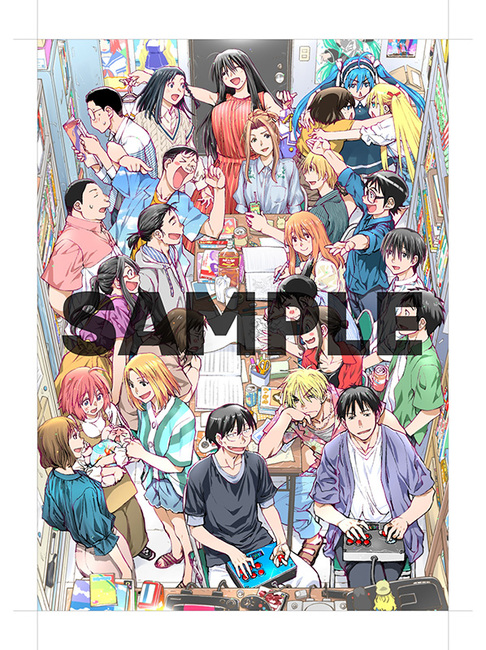
Kio is going to have an artbook! (I wonder if this is why he’s been posting high-quality images of his old art over the past year or so.) More details here.

He wondered when would be the right time to release the book, and reflects on the fact that it’s been 30 years since he started his manga career.

The pre-order art is actually high-quality reproductions of the original, so you can see all the little guide lines and other marks in the images.

The artbook will also include an interview with him.

Kio has a color illustration job deadline coming up, so he’s been plugging away at it little by little. He thinks he can finish in time. That said, he has a lot of other work due the week after. It also means he can’t work on his ero manga. 

Kio’s tortoise has been a hyper little hellion (as far as tortoises go).

Terry and Mai from Fatal Fury will be in Street Fighter 6. Kio is surprised at the news. One commenter says they’re looking forward to seeing Sue in SF in 15 years, to which Kio says maybe in 30.

It turns out this drawing from last month is for the cover to the artbook! It’s one of his characters from an older work (I think the Yonensei/Gonensei series?).

Kio went and saw the Bocchi the Rock! movie. He really liked the music and performance scenes.

Excited for the announcement of Delicious in Dungeon anime season 2.

Kio bought all of the original Oblivion Battery manga out, only to find out that it doesn’t progress as quickly as the anime. Now, he wishes he stuck with just the anime.

There’s a Yasuhiko Yoshikazu and Koizumi Yuu exhibit titled “Modern Japan and Russia/Soviet.” Kio couldn’t go the previous day but has decided to check it out.

A drawing of Darkness from KonoSuba!

Kio is shocked that the anime is only up to Volume 7 of the light novels, which currently have 17 volumes out.

While waiting for a Pre-DLC Elden Ring update to download, Kio works on his ero manga and gets a page done. He’s also wondering how the hell he’s listening to an audio book of Buddha’s Teachings while working on said 18+ comic,

Working on the ero manga and also walking his tortoise. The reptile is unusually fast.

Knocking down his deadlines one by one.

Elden Ring download done.

Otomo Katushiro is releasing an album called Akira Remix. The Otomo recent cel exhibition was playing music from it, and Kio remembers going to the exhibition and hearing the music the whole time.

Kio Shimoku Is Releasing a 30th Anniversary Artbook!

Kio Shimoku, author of Genshiken, recently announced that he’s going to be releasing an artbook collecting his work from across his 30-year career! It will also include an interview with him.

The book is titled Kio Shimoku Gashuu: Mata Ashita, Bushitsu deKio Shimoku Art Collection: See You Tomorrow in the Clubroom. It’s being released by Fukkan, a Japanese publisher that specializes in niche specialty books and reviving out-of-print titles.

While the book is available for pre-order on other Japanese sites, pre-ordering on Fukkan’s site will get you a set of A4-sized replica illustrations of Kio’s work. And if you do it by July 16 (JST), then you can enter to win an autograph from the man himself!

Unfortunately, Fukkan will only ship domestically, so if you live outside of Japan, you’ll need to use a third party. Just keep in mind that with the pre-order bonus, shipping might be pretty killer!

Rivalry at Its Finest—Haikyu!!: The Dumpster Battle

In a sports anime where relationships on the court are centrally important, the defining team rivalry of Haikyu! is undoubtedly Karasuno vs. Nekoma. In Haikyu!! The Dumpster Battle, it all comes to a head as the two face off in the big inter-high tournament.

While the high-flying Hinata Shoyo is generally the star of the series, this movie feels like one where his friend and longest rival, Nekoma’s setter Kozume Kenma, is the actual main character. A significant amount of time is spent exploring his history and inner world, elaborating on how he started playing volleyball, and what has kept him in the sport despite his dislike of physical exertion. It’s because the film is basically an adaptation of a small chunk of the manga, but I appreciate that its story can be told in a way that really shines the spotlight on Kenma and adds a new perspective on his relationship with Hinata, as well as with Kenma’s own teammates.

The two schools are set up as equal but opposite forces. The Karasuno duo are the high-flying spiker Hinata and the technical setter Kageyama, while Nekoma’s main pair consists of the quietly analytical setter Kenma and the psychology-oriented Kuroo. Whereas Karasuno focuses on heavy aerial offense meant to overwhelm, Nekoma stays primarily grounded and defensive, strategically picking apart opponents. It’s a little on-the-nose, with the whole “ravens vs. cats” imagery, but there’s nothing wrong with that if it’s executed well.

What I especially like about this film is the fact that it’s all about a single match, and the majority of it is spent in competition. It reminds me of the Girls und Panzer films, which also take the time to depict long, drawn-out battles where two sides try to outwit and trap each other. Production I.G. goes out of its way to make the volleyball look amazing, even sometimes making it feel like you’re right there on the court.

Despite obviously being meant for people who have been watching Haikyu!! from the start, I actually think a non-fan could come into this pretty easily. They might assume that Kenma is the protagonist, and might not get all the running gags, but The Dumpster Battle is just a fine piece of sports fiction that just also happens to include lots of handsome dudes.

The Dragons of My Childhood: In Remembrance of Ruth Stiles Gannett

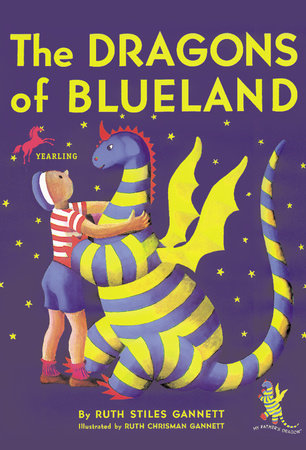
Ruth Stiles Gannett, author of the My Father’s Dragon trilogy, passed away on June 11 at the age of 100. I can’t overstate how important she was to my early childhood. 

My elementary school was part of a program to encourage reading, and we could choose one book to take home. I was in first grade, and I decided on The Dragons of Blueland (the third in the trilogy after Elmer and the Dragon) despite the fact that it was meant for sixth graders—I think I wanted to show that I was smart enough to tackle a tougher book. It ended up being the very first novel I ever finished, as well as the first book I could truly call my own.

I probably would not have written about Gannett’s death for this blog, but I’ve come to learn that Gannett is actually quite beloved in Japan—possibly even more than in the United States, where she was born.

I actually first learned about Gannett’s passing because I was browsing Twitter and saw Gaogaigar director Yonetani Yoshitomo post an image of a large statue depicting the titular dragon, Boris. It was quoting another tweet mentioning the news. When I tried to look for a source, the only ones showing up were Japanese sites.

It turns out that My Father’s Dragon was published in Japan in 1963 as Elmer no Bouken (“Elmer’s Adventure”), 15 years after it was originally released in English. In 1966, it was adapted into a puppet play for the NHK show Ningyougeki (“Puppet Theater”), and then into an anime film in 1997. Yonetani’s photo above came from a My Father’s Dragon exhibit that’s been touring Japan. And just looking through Youtube, someone created and uploaded their own puppet show version in 2010, which has a lot of views for a very small channel.

As an aside, there’s also a 2022 Netflix film from the makers of The Secret of Kells. I haven’t see it, though.

When I was in first grade, I hadn’t yet developed a keen interest in Japanese culture. Looking back, I do find it funny that this author who made such a huge impact on my life would be so celebrated in a country whose media has literally changed my life. I haven’t gone back to The Dragons of Blueland or the other books in a very long time, but I might just take some time to revisit my childhood.

Thank you, Ruth. You were a big part of why I loved reading as a kid, and Dragons of Blueland introduced me to so many wonderful things (not least of which was Fig Newtons). I hope your books continue to inspire imagination in people young and old.

The Psychological Price of Distance—Gundam Reconguista in G Part IV: The Love That Cries Out in Battle

It’s been over two years since my last review of a Gundam Reconguista in G movie. In Part IV: The Love That Cries Out in Battle, the series continues to gain new life as a more cohesive work compared to the original TV series.

G-Reco is about a world centuries after the Universal Century era of the original Gundam. Humanity has crawled back from the brink of extinction, leading to a ban on the old UC technologies and a rationing of energy. However, conflicts still remain, and people are cut into various factions. 

At the end of Part III, protagonist Bellri Zenam inadvertently activates the Crescent-Moon Ship, a space-faring vessel that’s meant to lead them to Venus Globe, where the batteries that are meant to provide power to Earth. However, right as Part IV begins, Bellri and those traveling with him are confronted by a group from the G-IT Laboratory, a technology research facility that views the war-prone Earth-born with disdain, and wants to take both the Crescent-Moon Ship and Bellri’s mobile suit, the G-Self, for their own. From there, the film continues and amplifies many of the trends of the previous film, like the importance of understanding individual characters’ motivations, as well as the ways that people’s environments can affect their views on society and civilization. It sees the furthest reaches of humankind before drawing the characters back towards Earth and juxtaposing all these different ways of thinking.

A recurring lesson emphasized throughout is that people can have different blindspots depending on their proximity to Earth and its issues:

  • The character Aida Surugan (newly discovered to be Bellri’s sister, to his chagrin) questions why energy has to be rationed when so many people suffer, but other characters point out that she’s been affected by “Amerian” indoctrination that fetishizes “freedom.” 
  • The mobile suit pilots of the G-IT Laboratory are quick to judge those from Earth for their legacy of war and death, but they also imagine themselves as glorious fighters who just haven’t had the chance to really show their stuff, and they incorrectly assume that the weapons they wield indiscriminately won’t cause the same problems. (Their similarity to Gym Ghingham in Turn A Gundam is probably no coincidence). 
  • The inhabitants of Venus Globe appear to live in peace while faithfully honoring the heights of Earth’s civilization, but they are largely ignorant of what happens on Earth, and their abundant luxury masks greater health issues that come with both living in space and seeing themselves as the far-off arbiters of Earth’s ability to sustain itself. 
  • Capital Army leader Cumpa Rusita (the closest thing the series has to a main antagonist) is motivated by his disgust at the physical deterioration of the space-born, and this has led him into being a Social Darwinist who believes conflict is the key to restoring humanity’s greatness. 

It’s as if the goal of G-Reco is to highlight how people often think that they now see the big picture, but their perspective is far more narrow than they realize. Or even if they don’t miss the forest for the trees, their failure to also account for the trees is in itself a flaw. 

I think I give the impression that G-Reco and this film in particular are very serious with all the political and speculative philosophizing, but the series can also be refreshingly lighthearted at times. There are many scenes devoted to daily or mundane activities, like running to sweat out any toxins that come from space travel, or stepping on a robotic scale to check weight. Noredo Nug and Manny Ambassada have an almost “Scooby and Shaggy”-like presence with their antics that’s more understandable rather than annoying. All this actually adds a lot to conveying the idea that these are individuals with lives of their own, and adds a touch of joy to the worldbuilding of this series.

As for Bellri, he seems to embody both the silly and the serious, which might be why he’s the main character. In the same movie, you see him continuously calming his libido by remembering that the girl he’s into is actually his flesh-and-blood sister, and then showing incredible frustration at how many of the people he fights can’t see beyond their own nose. When he uses a new weapon to try and slow down conflict only to unleash a never-before-seen power that leaves all sides horrified and bewildered, Bellri immediately reacts with genuine disgust. 

With the original G-Reco TV series, a good part of my overall positive review of the series had to do with how the last few episodes play out. The final film, Part V, is next—I get the feeling I’m going to enjoy this finale even more.

The Ideon Singer Has a Youtube Channel

Taira Isao is a Japanese singer famous for his contribution to multiple anime songs. Famously, he can be heard in the openings to Space Runaway Ideon, Muteki Robo Daiohja, and Galactic Cyclone Braiger. And over the past three years, Taira’s also been running a small Youtube channel.

The channel is called Taira Isao’s Uta Uta Uta [that’s “song” written three different ways), and the man uploads his covers of old Japanese music. Taira’s stated goal is to share songs from history, and even give a little background on each one to spread knowledge.

Some examples:

“Momiji” (1911)

“Hana no Machi” (1947)

“Princess Mononoke” (1997, from the movie)

As of this post, Taira has less than 2,000 subscribers. It’s wild to me, the fact that this person with this ultra-recognizable voice from anime would have this humble Youtube presence at the age of 71. 

It’d be great if he had more subscribers, but I kind of like that his channel is relatively small. There’s something charming about all this, especially because he’s trying to draw attention to great (non-anime) music from yesteryear. 

Soul of Where’d My Money Go: Ogiue Maniax Status Update for June 2024

As we inch closer to summer (and all the fun and horror that entails), I find myself a little spend-happy. What can I do when the Soul of Chogokin line announced a ton of new releases for their 50th anniversary?! There’s the DX Showa Mechagodzilla, Shinkalion, Tryon 3 (aka the very first Gundam entry in the SoC line), and it doesn’t even stop there. It’s impossible for me to buy all of them, but I am ever so tempted to do so.

I also started playing Elden Ring this month. I don’t know if I’ll do a full review or anything, but it’s inspiring me to at least write one or two posts somewhat related to it.

This past month also saw the birthday of hololive’ La+ Darknesss! I decided to celebrate by pulling out the old ink and brush and drawing a quick portrait. I used to post more art to Ogiue Maniax, but that mostly fell by the wayside a long time ago. I keep trying to convince myself to do more again, but we’ll see.

Thank you to the following Patreon supporters for the month:

General:

Ko Ransom

Diogo Prado

Alex

Dsy

Sue Hopkins fans:

Serxeid

Hato Kenjirou fans:

Elizabeth

Yajima Mirei fans:

Machi-Kurada

Blog highlights from May

When the Shounen Good Boy Gets Hate: Tanjiro, Deku, and Anti-Antiheroes

My thoughts on the “good boy” protagonist, and responding to criticisms of such characters.

A Hot Spring Inn in Ogiue’s Home Prefecture: Meigetsuso

Another report from my trip to Japan last year! This time, I visited Yamagata Prefecture.

Crawling Through the Dark: End of Evangelion

I watched End of Evangelion in theaters. Here are my thoughts returning to this film after many years.

Kio Shimoku

Not a whole lotta tweets this month.

Closing

I keep on thinking about upping my foreign language learning, but I have yet to fully commit. I’m considering trying one of those language partner/tutor sites, but I don’t know where to even begin.

Kio Shimoku Twitter Highlights May 2024

​​Not very many tweets this month, but starting off with some fun insight into how Spotted Flower has changed.

Kio laments that Spotted Flower (a series that was once supposed to be simple and easy to draw) now has a huge cast, places he’s never drawn before, things that require photo references, and an increased page count.

It’s been 10 years since Kio last watched The Piano, a movie that apparently shook him with the level of NTR it features. In hindsight, he realizes this might be why he likes the movie so much.

Kio believes that the manga artist Kusada has made some kind of breakthrough in portraying the cuteness of their character Kurono.

A drawing from the 18+ work Kio is currently making, showing the mom from the first doujinshi he did.

Mysterious drawing.

Kio drew a special piece for the current anime Train to the End of the World.

Turtle door! 

Ultimate Character Combo: Idols, Gals, and the Jougasaki Sisters

As character types, the “idol” and the “gal” (or gyaru) have both been around in Japanese media for decades. However, they seem to have hit even greater notoriety in recent times. On the idol side, there’s been heavy hitters like Oshi no Ko and Love Live! Then there are works like Hokkaido Girls are Super Adorable and An Otaku Who’s Kind to Gals, where gals are the main heroines or the central focus.

The idol is an idealized symbol of pure devotion to the fans, for better or worse. Fan support is why she’s able to grow as a performer. The gal is attractive, forward, and runs up against traditional Japanese beauty standards. When portrayed with a heart of gold (or as someone who’s secretly a virgin), she transforms into dork kryptonite. 

What happens when the two are combined? Naturally, it would make for a powerful character.

In thinking about the relative success of both archetypes, I began to wonder if there are any examples of such a convergence. Then I remembered that there are indeed a couple of characters who occupy that intersection: sisters Jougasaki Mika and RIka from The iDOLM@STER.

I am by no means an expert or even a dedicated fan of The iDOLM@STER. What I do understand, based on my limited knowledge, is that 1) Mika and Rika were introduced in the Cinderella Girls mobile game in 2011, and 2) I’ve been seeing their fanart for what seems like forever—Mika’s especially. In all instances, they exude “gal” energy. According to the popularity polls, Rika was initially ranked higher, but Mika emerged as more of an enduring mainstay. As if to reflect Mika’s notoriety, the Cinderella Girls anime portrays Mika not as one of the main characters, but an established idol whom others look up to.

One thing I don’t know is whether Mika and Rika have been merely a reflection of the two trends or if they actually contributed to their presence in significant ways. In other words, while I can guess that their popularity has come from being gal idols, how often is it the case that the Jougasakis are the reason people got into one or both sides? Gal subculture has been around for a long time, but I don’t recall them being nearly as prominent as characters in 2011—at least, not in the way they are today, and not in terms of their cultural presence around in the 90s and early 2000s.

While one can hardly attribute the increased visibility of idols to primarily Jougasaki Mika or Rika (they are from games where nearly everyone is an idol, after all), I can’t help but wonder if they’re significantly responsible for shining a greater spotlight on “gal characters” in a way that has persisted over a decade later. If the sisters have played a large role, it would make them influential in a way few other characters can match.

And if there are any other examples of gal idols, I’d like to learn about them.

Bringing the Heat to Prime Time—Firefighter Daigo: Rescuer in Orange

Cop-themed media is ubiquitous, but firefighter stories are far less common—maybe it’s the lack of “bad guys.” But here comes Firefighter Daigo: Rescuer in Orange, an anime that’s not only about dealing with fires and other hazards, but is actually a sequel to a popular 90s series. 

The original Firefighter! Daigo of Fire Company M by author Soda Masahito was a successful manga in Japan, running for an impressive 20 volumes. Over in the US, I remember seeing ads for the original Firefighter Daigo manga back in the 2000s, but it never really got any traction. My primary exposure to author Soda Masahito’s work has been through some of his shorter manga such as the schoolgirl rap battle series Change! and the MMA-themed Hanakaku. In both cases, they were clearly (and disappointingly) made to end early, so it’s interesting to see Soda return to the world of his biggest hit not named Capeta.

The sequel does not require prior knowledge of the first series—the only anime ever created for it is a decades-old film. Taking place many years after the first series, Firefighter Daigo: RiO follows three recent recruits as they go through the rigorous process of becoming rescuers and then beyond. The first is Toake Daigo, a taciturn wunderkind who has a preternatural knack for dealing with dangerous situations. The second is Onoda Shun, an intense guy who’s the exposition hype man, kind of a Vegeta, and a hardworking guy in his own right. The third is Nakamura Yuki, Shun’s former high school classmate, who possesses keen observation skills and a literal lifelong dedication to joining the fire department. As they go through their respective paths towards being full-fledged rescue workers, their links to one another run deeper than they realize.

Daigo and Shun are clearly meant to both parallel and contrast with the original duo from the first series, Asahina Daigo and Gomi Shunsuke. Asahina is the loud and brash one while Gomi is the serious kind, whereas their spiritual successors have “swapped” personalities. Yuki can come across as “Firefighter Daigo: Now with Girl,” but they develop her as a unique character and a worthy peer in her own right.

Firefighter Daigo: RiO is mainstream in a way few anime ever are. On top of the approachable subject matter (“firefighters saving people from danger and going through personal drama!”) and the lack of more otaku-oriented tropes, the series also aired during Japanese primetime hours. The result is that it has some of the highest TV ratings of winter 2024, just below the perennial favorites like Sazae-san and on par with the runaway hit that is Frieren. It feels almost tailor-made to do well, like it’d run alongside Law & Order.

Episodes typically highlight the extensive training and preparation of firefighters and rescue workers but also the reality that they can never anticipate everything—improvisation and a cool head under pressure are both necessary. No one embodies this spirit more perfectly than Toake Daigo himself—seemingly too perfectly, at first. He’ll do what others would never think of, and his peers can’t help but watch (and comment) in awe as he pulls off another miracle. But over time, it becomes clear that this intense dedication hides deeper wounds from his past, and that this seeming flawlessness is anything but. Rescuer in Orange does a great job of putting the human in superhuman, not least of which is because Daigo himself sees his peers as better than himself.

It’s a very normal show, until it isn’t. As Kate from Reverse Thieves points out, you think it’s just a normal human drama…and then you find out that the original Daigo has been traveling the world rescuing people like some kind of vigilante firefighter. On top of that, the original Shun has separately been building up a clandestine elite firefighting force to prepare for some impending mega disaster.

The only recurring issue that I think really detracts from the show is that the animation can get pretty sloppy, and a lot of each episode is taken up by a recap; a 22-minute show is more like 18.

Firefighter Daigo: Rescuer in Orange is very cool in a normal way. Its characters are compelling in a normal way. It feels so very conventional most of the time, but will occasionally throw a curveball that really shows how well constructed the series really is. It’s the kind of show that would make for a great gateway anime. I hope that it can accomplish this goal, not only for anime in general but for Soda Masahito’s other works.