Something’s Wrong with Medaka Box

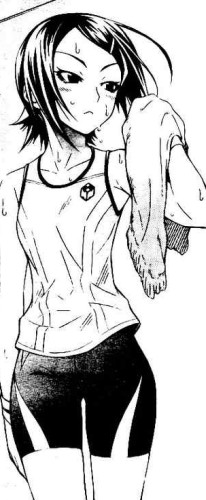
Every week or so I find myself reading the latest chapter of Medaka Box. The thing is, I don’t like it all that much. It has a number of fine qualities and moments, like when Medaka pulls a Joseph Joestar and imitates someone to a tee, but something about it just doesn’t jive with me. It just doesn’t have that oomph, aside from that one girl on the track team whose design I like.

Whoo, she’s nice.

The problem isn’t that I’m not fond of it, but rather that I’m not sure why don’t like it that much, and it’s been bothering me since Chapter 0. It’s not the Nisio Isin-ness of it; I like Bakemonogatari just fine. Is it the visuals with the dialogue? This is further complicated by the fact that there’s plenty of mediocre to bad anime and manga that I do like, and none of them seem to have the unique problem I perceive Medaka Box as having.

I feel like I’m continuing to read it either in the vague hope that it’ll get better and all the pieces will start to come together, or that if I continue with it I’ll be able to better figure out just what my problem with Medaka Box might be.

Ichigo Mashimaro and “Product Placement”

Of all the scenes in Ichigo Mashimaro‘s anime, the one I remember most is the one where young british lass Ana Coppola is out on a hot day.

Ana stops by a vending machine, looks at one of the sodas, and says to herself, “Ghingheru…? Well, as long as it’s cold, it should be fine.”

Then an old man’s voice creeps in.

“G. I. N. G. E. R. A. L. E. It’s called…’Ginger Ale.'”

This sudden information startles Ana, who decides to leave quickly.

And ever since then, that is what I think about whenever I open up a can of Canada Dry or Schweppe’s. In a way, I’m not much different from those guys who bought Akiyama Mio left-handed basses.

“Why Do Attempts to Look Manga-Style Tend to Go Wrong?”

I’ve never been able to pinpoint the exact causes for why drawing “manga” style typically doesn’t look quite right, but there’s some things I’ve noticed that I think point towards why this tends to be the case.

The artists did not grow up in the culture. I had a Japanese teacher who one day as part of a vocabulary exercise brought into class a drawing she made of a “handsome guy.” Now, my teacher was not an artist, but the picture she drew was clearly that of a manga-style character and nothing seemed out of place. It was just, when drawing a cartoon character who’s supposed to look stereotypically handsome, this is how it turns out. While I don’t think not growing up in Japan or Japanese precludes an artist from developing that style, I think you can see how growing up in different environments with different artistic influences can change how even a normal person draws or sees drawings, let alone a professional.

But what then are those stylistic differences? Why is it that a manga artist who draws super realistically can still feel naturally like manga? Why is it that even a lot of the non-Japanese artists who get the basic visuals right (i.e. understanding that it’s not just big eyes and small mouths) still tend to produce works that jar you out of the illusion?

The first big one is the different philosophies in paneling. Traditionally in manga, the flow of panels is very important to the story, with emphasis on the concept of “flow.” That’s not really an official term or anything, but it’s one I like to use. Manga are typically designed to have the readers’ eyes be guided smoothly through the page, from one panel to the next, with everything in the panel, art and word bubbles and all, facilitating this flow. While American comics for example also take care to utilize word bubbles in strategic areas to help move the reader along, traditionally the American comic has been about having self-contained panels, each of which encapsulates everything going on at the time, a perfectly stilled moment. I’m reminded of when Grant Morrison in an interview after Final Crisis said, “We talk about events all the time. Well, why can’t every panel be an event?” In a way, he’s not far off from the tradition of Western-style comics, whether it’s indie, superheroes, or newspaper gag strips. It’s also what I think is the real difference between “compressed” and “decompressed” storytelling.

Basically, think of manga as a river, and American comics as a series of ponds. While of course there’s more to comics than just America and Japan, I’m simplifying for the sake of what little claims to brevity I have left. And while there are exceptions on both sides, take note how a manga with not as much “flow” such as Space Adventure Cobra or Nausicaa do well in the west, particularly Europe where highly illustrative backgrounds tend to be emphasized, or how an American comic with a strong sense of visual “flow” in Little Nemo could be seen fondly in Japan (at least I believe it is, if someone can correct me, please do so).

And then there’s other smaller things. Scott McCloud in Understanding Comics for example talks about how back when romance stories in American comics were more common, they still tended to compose scenes as if all of the characters were figures placed in a room. Contrast this with shoujo manga, which tends to emphasize the emotional over the physical; it’s not as important that you know where characters are standing.

But that only applies to manga, right? What about all those cartoons that try, but don’t quite get it. Your Teen Titans and Totally Spies and what-not. There, I’m not as certain about it, but I think it just has to do with what’s considered common in Japanese Animation to the point of it being ingrained into the system. I think the most prominent example of this might be animating on the 3’s, which means changing the image on every third frame instead of every second one as is common with American cartoons. This was originally one of many necessary money-saving techniques for anime on limited budgets as far back as Astro Boy, and what ended up happening was that stuff like animating on 3’s and using lots of stills and closeups, stuff which had its origins in having scarily low budgets, began to be embraced and improved upon and mastered until it in essence became the style anime is known for. What’s important here is the way in which factors such as these influenced the sense of timing that anime tends to have, and if you don’t understand that sense of timing then it becomes difficult to replicate it. Anime has a unique sense of timing.

To summarize, what makes manga seem like manga and what makes anime seem like anime goes deeper than how the characters or backgrounds look, all the way to how the story is told through the visuals. Another important thing to remember is that this is less about quality, or why one is “better” or “worse” than the other, and more about why things are the way they are from the worst comics to the best ones. If you were to compare X-Men: Misfits, an American comic trying to be manga, and that Japanese X-Men manga I posted about a while back, a Japanese comic trying to be American, you’d see that neither one is able to fully escape their origins. Whether these are the most significant factors, I don’t know, but that’s what I’ve seen.


I’ve never been able to pinpoint the exact causes for why drawing “manga” style typically doesn’t look quite right, but there’s some things I’ve noticed that I think point towards why this tends to be the case.

The artists did not grow up in the culture. I had a Japanese teacher who one day as part of a vocabulary exercise brought into class a drawing she made of a “handsome guy.” Now, my teacher was not an artist, but the picture she drew was clearly that of a manga-style character and nothing seemed out of place. It was just, when drawing a cartoon character who’s supposed to look stereotypically handsome, this is how it turns out. While I don’t think not growing up in Japan or Japanese precludes an artist from developing that style, I think you can see how growing up in different environments with different artistic influences can change how even a normal person draws or sees drawings, let alone a professional.

But what then are those stylistic differences? Why is it that a manga artist who draws super realistically can still feel naturally like manga? Why is it that even a lot of the non-Japanese artists who get the basic visuals right (i.e. understanding that it’s not just big eyes and small mouths) still tend to produce works that jar you out of the illusion?

The first big one is the different philosophies in paneling. Traditionally in manga, the flow of panels is very important to the story, with emphasis on the concept of “flow.” That’s not really an official term or anything, but it’s one I like to use. Manga are typically designed to have the readers’ eyes be guided smoothly through the page, from one panel to the next, with everything in the panel, art and word bubbles and all, facilitating this flow. While American comics for example also take care to utilize word bubbles in strategic areas to help move the reader along, traditionally the American comic has been about having self-contained panels, each of which encapsulates everything going on at the time, a perfectly stilled moment. I’m reminded of when Grant Morrison in an interview after Final Crisis said, “We talk about events all the time. Well, why can’t every panel be an event?” In a way, he’s not far off from the tradition of Western-style comics, whether it’s indie, superheroes, or newspaper gag strips. It’s also what I think is the real difference between “compressed” and “decompressed” storytelling.

Basically, think of manga as a river, and American comics as a series of ponds. While of course there’s more to comics than just America and Japan, I’m simplifying for the sake of what little claims to brevity I have left. And while there are exceptions on both sides, take note how a manga with not as much “flow” such as Space Adventure Cobra or Nausicaa do well in the west, particularly Europe where highly illustrative backgrounds tend to be emphasized, or how an American comic with a strong sense of visual “flow” in Little Nemo could be seen fondly in Japan (at least I believe it is, if someone can correct me, please do so).

And then there’s other smaller things. Scott McCloud in Understanding Comics for example talks about how back when romance stories in American comics were more common, they still tended to compose scenes as if all of the characters were figures placed in a room. Contrast this with shoujo manga, which tends to emphasize the emotional over the physical; it’s not as important that you know where characters are standing.

But that only applies to manga, right? What about all those cartoons that try, but don’t quite get it. Your Teen Titans and Totally Spies and what-not. There, I’m not as certain about it, but I think it just has to do with what’s considered common in Japanese Animation to the point of it being ingrained into the system. I think the most prominent example of this might be animating on the 3’s, which means changing the image on every third frame instead of every second one as is common with American cartoons. This was originally one of many necessary money-saving techniques for anime on limited budgets as far back as Astro Boy, and what ended up happening was that stuff like animating on 3’s and using lots of stills and closeups, stuff which had its origins in having scarily low budgets, began to be embraced and improved upon and mastered until it in essence became the style anime is known for. What’s important here is the way in which factors such as these influenced the sense of timing that anime tends to have, and if you don’t understand that sense of timing then it becomes difficult to replicate it. Anime has a unique sense of timing.

To summarize, what makes manga seem like manga and what makes anime seem like anime goes deeper than how the characters or backgrounds look, all the way to how the story is told through the visuals. Another important thing to remember is that this is less about quality, or why one is “better” or “worse” than the other, and more about why things are the way they are from the worst comics to the best ones. If you were to compare X-Men: Misfits, an American comic trying to be manga, and that Japanese X-Men manga I posted, a Japanese comic trying to be American, you’d see that neither one is able to fully escape their origins. Whether these are the most significant factors, I don’t know, but that’s what I’ve seen.

Kyoto Animation in the 1800s

Historians have recently discovered that animation fandom has existed in Japan for much longer than originally expected, and that Kyoto Animation, the studio behind Haruhi, Lucky Star, and K-On! was originally founded shortly after the capital of Japan moved from Kyoto to Edo, currently known as Tokyo.

At the time, children and adults alike were entertained by Kyoto Animation and their inventive animation system known as the “moetrope.”

Shugo Chara Party! is a Kids’ Show

You’re probably looking at the title and asking why in the world would Ogiue Maniax be making such an obvious, brain-dead statement. Shugo Chara! was a kids’ show. Shugo Chara!! Doki was a kids’ show. What’s the fuss? Let me clear up something though. While the first two Shugo Chara anime were kids’ shows, Shugo Chara Party! is a KIDS’ SHOW.

The format of Shugo Chara Party! consists of 1/3 live actors introducing the show, 1/3 flash animation starring the Shugo Chara who proceed to engage in hijinks, and 1/3 actual anime episode. This is important to keep in mind.

While shoujo has traditionally been designed to target young girls primarily, there has been for many decades now a desire to implement a degree of storytelling sophistication. This is how the world got works such as Candy Candy and Onii-sama e, and mahou shoujo ends up being no exception. This sophistication is also what manages to draw in additional audiences outside of young girls to magical girls, be it older women, teenage boys, or adult salarymen, and while the manga for Shugo Chara! is running in Nakayoshi, very much a shoujo magazine, it is also written by Peach Pit, manga creators who know a thing or two about appealing to non-female audiences through seemingly feminine stories (Rozen Maiden).

The first Shugo Chara anime is regarded by fans as a very good show (and I would agree), with each sequel being regarded as inferior to the series that came before it. You may have seen back when the second series Doki was airing that people complained about it being significantly worse. They cited the large amounts of filler and lower-quality animation as evidence of the decline, and to some extent that is true, but what the fans of Shugo Chara were truly feeling was actually the sting of them being removed as a relevant demographic. In an old post, I talked about how the characters in Doki tended to talk directly at the audience in a manner reminiscent of Dora the Explorer, and with Party!, it is clearer than ever before that Shugo Chara is being turned into the type of show that kids enjoy at the expense of keeping older viewers and fans of the manga entertained.

Look at Shugo Chara Party! and compare it not so much with shows such as Pretty Cure or even the original Shugo Chara!, but rather Thomas the Tank Engine or Mister Rogers’ Neighborhood. You have live actors talking to you the audience, asking you questions about how you’re feeling. The characters in the animated portions do the same. And while Mr. Rogers can certainly be enjoyable to watch as an adult in its own way, it’s always obvious that 20 year olds are not the target audience here.

In fact, the similarities between Mr. Rogers and Hinamori Amu really come to light when you consider the following famous saying by Fred Rogers.

You’ve made this day a special day
By just your being you
There’s no one in the whole world like you
And I like you just the way you are

From Mew to Arceus: A Discussion of Rare Pokemon Events and Beyond

The Pokemon Who is Also God is available at Toys “R” Us until November 15 this week, and I don’t know about you guys but I am totally gonna get me some divine Pockets Monster and then not use it at all because I haven’t actually played the game in forever. Nobie’s been out of the Pokemon gig for a while now.

As a result of the Arceus giveaway I’ve been thinking a lot about Pokemon as of late, and so if you’ll forgive me I’m going to ramble on while trying to touch on a number of points that I want to discuss.

Arceus is not the first rare pokemon I’ve obtained. I’ve gotten Darkrai and Deoxys through Toys “R” Us and Game Stop by bringing in my DS with my Pokemon Diamond and using Mystery Gift to get eggs from that one shop. However, I also went to the Pokemon Center back when it wasn’t called Nintendo World, and I was even there to get my official Mew for my Generation-1 Pokemon games, as well as at Six Flags to get my Celebi years later. I’ve been at this for a while.

The biggest difference between then and now, is that with the way event Pokemon get sent to you through the Mystery Gift function, you can totally get your Arceus without anyone noticing or wondering why you’re even there. This was not the case with getting that original Mew. You had to stand in a line with your game cartridge in hand while next to people of all ages (mostly kids, obviously) talking about Pokemon, and then you had give it to the Nintendo official who was wearing a bright Pokemon shirt so that they could use a machine to give you your Mew. In other words, there was no way to disguise the fact that you were a Pokemon fan. You had to accept it in order to get your Mew, or you were out of luck. Or you could just Gameshark it, but that’s another issue entirely.

I’m the kind of person who was never afraid to tell people I was into Pokemon, and keep in mind that I was into Pokemon starting in high school, so I was well beyond the target age. So what I liked about the Mew event was that you had to proudly show that you were a Pokemon fan, and while I can definitely say that the current way of obtaining event Pokemon is a lot more convenient for everyone, I do end up missing that aspect of camaraderie where you couldn’t hide in shame. And I’ve known people like that online and off, who were afraid to tell other people they were fans of Pokemon. They in many ways helped to inform my posts about having confidence in yourself as a fan of anime and such. It’s something I want people to come to terms with, no matter who they are.

Going back to the whole “people of all ages” thing, it’s really amazing how Pokemon is able to attract such a wide age group, and it’s a testament to the effectiveness of the game design and the supporting material. The game is easily playable by children 4 and under, and yet the battle system is one of the most robust and entertaining vs modes you will ever find in a video game. With currently almost 500 Pokemon available, 17 types, tons of attacks and items and more, it creates this intricate web of decisions and actions that you have to consider in order to make an effective Pokemon team. If it wasn’t obvious before, I’ll say it now: I love the strategy in Pokemon. Love, love, love it. It’s one of my favorite games of all time as a result, where I focus my efforts on trying to make Pokemon with lesser stats and abilities viable in competitive play while still maintaining what makes them unique. I’ve been a part of Azure Heights, Pokemon Daily, I used the Pokemon Battle Simulator, GSBots, Netbattle, Shoddy, and I even wrote some of the strategy sections on Smogon for some of the lesser-used Pokemon such as Noctowl and Sableye (though they are out of date), and was one of the first to suggest Yawn + U-Turn on Uxie. The only reason I don’t play it more now is that I know how easily it can draw me in.

And the best part is, if you don’t want to be a part of this insane world, you can ride on back to Pokemon just being about going out on adventures with your Pokemon friends and trading and having fun and ignoring all the number crunching that goes on. But if you do choose to stay? Why, there’s a whole plethora of options available to you. You can make a team according to your personality and what you think is important in a game, and you can still be competitive.

I know it can be a very daunting task to try to get into Pokemon multiplayer seeing as how there’s so much information. You’re supposed to memorize the fact that Steel is only weak to Ground, Fire, and Fighting, while also knowing that Ursaring has a very high attack stat. You’re supposed to at the very least know all 17 Pokemon types and most of the Pokemon out there. It’s a lot to commit to memory. But do you know who does commit it to memory? Kids. And they don’t do it by first going, “OKAY, I, GEORGE PEEPANTS, AM GOING TO BE A COMPETITIVE PLAYER.” No, they just absorb all of the media naturally. They learn everything about Pokemon because they love Pokemon, and that’s the true beauty of the Pokemon concept.

I know some people are of the belief that games shouldn’t require you to learn so much before you get to play. To that I say, first off you don’t actually need to know all this stuff to start playing against other people, it just increases your chances of winning. Secondly, I think you are rewarded much more richly for understanding the Pokemon system first. Sure, Pokemon is glorified Rock-Paper-Scissors (and Yu-Gi-Oh is glorified War, but that’s another topic for another day), but it’s that glorification that makes it the solid game that it is, and the complexity of the type chart is not something which people “just know.” And if you want to learn, just do what the kids do, and play.

Wow, are you still with me? In that case, let me share one of my favorite Pokemon to use with you. It’s designed primarily to annoy people who hate it when luck influences a match. I won’t go into stat distributions and what-not, so you can have the opportunity to see what works for you.

Registeel @Leftovers
Substitute
Dynamicpunch
Zap Cannon
Explosion

Both Dynamicpunch and Zap Cannon have 50% accuracy, so you’re essentially fighting with coin flips, until you’ve had enough and you explode on somebody. Have fun with it, and watch as your opponents grow to hate you. You can use it in both the current generation and in the Advance line of games. If you want to apply it to Gold/Silver/Crystal, note that Ampharos can learn both Dynamicpunch and Zap Cannon.

So yeah, Pokemon.

It’s Like April Fool’s All Year Long

By popular(?) demand


What Do Nancy and Kira Yamato Have in Common?

No, the title is not a lead-in to a bad humor post.

Like many anime fans out there, I have issues with Gundam SEED Destiny and how it effectively sabotaged the SEED plot with nonsense and a complete and utter lack of direction. Think Code Geass R2 and Gundam 00 Second Season ruined their respective prequels? While I might disagree with you there, I can see easily how you can hold that opinion with the big thematic shifts that happened between seasons. Even then, they’re nothing compared to what Destiny “achieved.”

I have a whole laundry list of complaints about Destiny, but there’s one in particular I want to focus on, and that’s the show’s treatment of Shinn Asuka. Shinn from the start of Destiny was meant to be the main character, with returning character Athrun Zala in the role of older and wiser mentor of sorts. However, as the series progressed Shinn slowly slipped out of the spotlight, replaced gradually by Athrun himself and then eventually Kira Yamato, the hero of the original SEED. Now Shinn is a very abrasive character. I know I’ve used that word a number of times before, but Shinn is the real deal. He’s pig-headed, ignorant, fueled by equal parts petty vindictiveness, trauma, and some sense of justice, and is overall the kind of guy who, if you told him the war he was fighting was wrong, would yell back at you, “OH YEAH?! WELL MY FAMILY’S DEAD.” It’s easy to see why people would prefer Kira or Athrun over him, but at the same time I can’t help but feel that it was a crime to shift main character focus to that extent. It felt disappointing because they could have done so much more with him. It felt wrong.

As much as I dislike the idea of switching up main characters mid-series though, I realize that it is not all that uncommon in animation and comics, let alone anime and manga. Before Tezuka created Tetsuwan Atom, he created Captain (Ambassador) Atom, a story where Atom was more of a side character than anything else. Similarly, the newspaper comic Nancy was originally known as Fritzi Ritz before the introduction of Fritzi’s niece, who would eventually take over the entire comic (as well as the title) and relegate Fritzi to that of a side-character-as-parental-figure.

Both Tezuka and Nancy creator Ernie Bushmiller saw the writing on the wall and realized just how much better and more popular their works would be when they pushed aside the old protagonist, and while I can accept that, I can’t quite accept what happened to Shinn. The fact that it used a character who was already a main character in a previous series made it seem like they were taking two steps backwards, and just trying to turn SEED Destiny into a retread of the original, instead of actually making a sequel.

In the end, it really all just comes down to doing whatever might get you a better or more successful work, but changing up your heroes has just as much, if not more of a chance of making a story worse than it does of making it better. One outcome as we saw with Destiny was that the constant shift in focus detracted to the story as a whole,  which resulted in both the plot and the characters sputtering about. On top of that, it happened within a TV series that had a set amount of episodes and probably a decent amount of story written beforehand, and while 52 episodes seems like a lot, it doesn’t compare to the long, long serial run of something like Nancy, and it doesn’t make a sharp division between stories like that of Captain Atom and Tetsuwan Atom. In better hands or in  a looser storytelling environment, the Shinn->Athrun->Kira shift may have been enjoyable, but sadly that was not to be.

Oh, and don’t get me started on what they did to Cagalli.

Please Hunt Me, Onii-chan: The Willingly Poached Anime


Cardcaptor Sakura

Cardcaptor Sakura is a magical girl series released in 1996 (manga) and 1998 (anime) which remains very popular among otaku. Following the life of a young girl who discovers magic powers and must use those new-found abilities to collect magical cards which have been dispersed throughout her city, Cardcaptor Sakura’s main draw is the natural charm its characters possess, particularly the heroine Kinomoto Sakura. Sakura exudes a sense of authenticity in her character that makes older male fans feel for her, and sometimes even develop sexual feelings for her.

While it’s never clear as to whether or not Cardcaptor Sakura was intended to be received by the fans in this manner (even though Sakura creators CLAMP were fans themselves before becoming professionals), there exists little of that ambiguity with a similar show, Magical Girl Lyrical Nanoha. Essentially following the same basic premise as Cardcaptor Sakura, Nanoha features a young girl who receives magical powers and has to go collect items, but the key difference between the two series is that while Cardcaptor Sakura was targeted towards primarily young girls, Nanoha was aimed squarely at those older male otaku who were very fond of Kinomoto Sakura and the world in which she lived. The late-night time slot, the merchandising (posters in the otaku-oriented Megami Magazine, Nanoha-themed hug pillows), all of it points to a show made for otaku. Why then, do the people who make and promote Nanoha go through all the trouble of giving the series this magical girl facade and having it designed to look on the surface as if it were designed for the enjoyment of young girls when it clearly is not? The answer is, because that’s what the fans want.


Magical Girl Lyrical Nanoha

“Textual poaching” is a term which refers to the act of engaging a work of media, be it text, television, radio, etc., and taking from it not so much what the author intended, but what is pleasurable or enjoyable to the reader/viewer instead of the work as a whole. Coined by Michael de Certeau in 1984, the term was utilized by Henry Jenkins in his study of Star Trek fans, particularly in the way that fans approached their own creative endeavors pertaining to their chosen fandom. The classic example of this is the notion that Kirk and Spock are romantically interested in one another, based on their close friendship and lines which are interpreted as “hints” towards their “true” relationship.

More recently, Jenkins has talked about how the one-sided conversation between creator and consumer has broken down, and how easy it is now for people to talk to a creator, albeit in the indirect form of shouting into the internet. While Jenkins does not focus particularly on Japanese animation, this is essentially the environment modern anime finds itself in, and in this setting you will find that a number of shows, like Nanoha, are designed to be poached.

At the zoo, chimpanzees are not fed by simply placing the food in front of them. Instead, what the zookeepers do is hide the food in the chimpanzees’ cage so that the chimps may find it themselves, and in doing so are creating a facsimile of the wild setting where chimps would forage for food. Even though the zoo is obviously not the jungle, this artificial foraging is what the chimpanzees prefer to simply having the food given to them. In essence, this is the situation surrounding the otaku and the otaku-conscious creator. The otaku, the fan, gains enjoyment from being able to draw from these works a secondary interpretation of events and characters within, and so the creator responds by making a story which on the surface seems very similar to an “innocent” series, but in actuality is constructed from the ground up as a work meant to simulate the foraging otaku engage in to find aspects of a work they can extrapolate as fans. Another example of this is Prince of Tennis and other similar series which, while running in Shounen Jump, are designed in part to attract the female readers who, similar to the Kirk/Spock fans, saw the “close friendship” theme common in shounen manga as “CLOSE FRIENDSHIP.”


Prince of Tennis

The joy derived from not approaching a work as intended makes sense when you realize that many fans are familiar with the notion of liking things to an extent others may not. Fans, after all, are not the majority. As such, they are experienced with liking things which are not intended for them, to the point that the act of pursuing series not intended for them may become the focus of their activity as fans. Creators understand this desire, and so have responded in kind by making series which are designed to be used in that manner, like a small man-made pond where pre-caught fish are thrown in to make things easier. The relationship between creator and fan/otaku is thus predicated on this willful suspension of disbelief. The otaku are willing to pretend that this series made for otaku is not made for otaku. The creator, in turn, continues to intentionally hide bits of “sustenance” in the fans’ cage, a cage which the fans have willfully constructed themselves and can leave at any time should they choose to do so.

The Otaku Diaries Take a Look at Careers, Escapism, Hobbies

The Reverse Thieves have their fifth Otaku Diaries entry up, leading off with a beautiful poem by Hisui. Aside from the poem though, I recommend you check it out and the rest of the Otaku Diaries entries, as I’m a fan of fan analysis (no pun intended), and even with the limited sample size I still think it provides a lot of interesting windows into trends and behaviors among otaku.

Two things jumped out at me in particular with this entry, the change in trends from mostly people interested in computers being into anime to anime reaching a wider demographic, as well as the concept of anime used as an escape.

As someone who went through an arts program in college, what I noticed is that among my peers few were into anime to the extent that I was. You could still find people who enjoyed anime to be sure (some of my art school friends and I decided to marathon all of Evangelion in one day Freshman year) but most of my classmates did not treat anime as something worth looking at for any extended period. When I remembered that the same classmates for the most part had never even watched The Simpsons, I began to see the extent to which those who had chosen this path had dedicated themselves to it at the expense of other things. That’s not to say they were mistaken in their decision, but the idea that they had almost no exposure to things which I considered to be common knowledge made me sense a palpable difference in mindset and what we valued. A lot of times it didn’t even occur to them to take a look at anime at all. I was also the only art student I knew of who even attended the school’s anime club at all (though I had to stop going after sophomore year to give myself more time to get work done).

Contrast this with my friends in college who were mostly computer science majors (with some chemistry, business, and other types mixed in), and I would have to say that the majority of them enjoyed anime, video games, things which tended towards the nerdish side. They weren’t solely into nerd hobbies, as some enjoyed sports and weightlifting and playing guitar and such, but they always seemed more ready to accept anime, even if I couldn’t necessarily convince them to watch Cardcaptor Sakura. Why the stark difference between the two groups?

“Fine Artist” and “Geek” do not stereotypically cross over much, and I think it has to do with the idea of right brain vs left brain, and that what brings enjoyment to one type does not apply to the other. All the more interesting then that there were a handful of people I knew who were actually Art/Computer Science double majors, and that out of all of them though, I felt that they more often than not tended towards their Computer Science side. I wonder if it’s impossible to be both in even ratios, and I have to also wonder where I myself fit, because even though I was not a computer science major I did not fit the Fine Arts mold entirely either. Another thing to note was that Geek and Illustrator tend to have much more crossover than Geek and Fine Artist, and the reason behind that lies in the concept that Fine Artists’s sense of aesthetics supposedly exists in a world different from that of the Illustrator, which is such a complex topic I’m gonna have to save it for another day.

Now with escapism via anime, and the active denial of using anime as such, I think it has to do very much with otaku trying to defend their shows or their status as otaku. It’s the idea that anime fans are using anime to avoid reality, whether it’s by moe shows, science fiction, pornography, whatever, no one wants to be told that they’re not living in the real world. In some cases, people will deny outright that anime is an escape, and in other cases they will talk about how escape isn’t that bad of a thing and more people should do it. Either way though, it does have this tinge of defensiveness, even if it’s completely valid to be defensive. After all, what else would you expect people to do if they’re perceiving someone’s outside comment as an attack?