The 70s Super Robot That Didn’t Have an Anime: Gattai Robot Atlanger

Introduction 

When talking about the mecha genre, omitting the merchandise component often tells an incomplete story. Most shows are historically also toy commercials, and sometimes decisions can be traced to bottom lines more than creative choices by a director or writer. But what about a giant robot that, for the most part, was only ever a toy?

That’s the story of Gattai Robot Atlanger, a robot from the 1970s that didn’t have a cool and dramatic TV series to excite the imagination and endear itself to an audience, yet still managed to find success by looking cool, being affordable on a kid’s allowance, and having lots of playability. And my goal in writing this article is to provide an informative but not comprehensive look at Atlanger to help others who are curious.

Background

My interest in Atlanger (sometimes known as Atranger or Atlanjer) started a few years ago, though I don’t remember what was the catalyst that prompted me to look for more information. Nevertheless, I was intrigued by the idea that there exists a beloved hero from the golden age of super robots that often doesn’t get included because of an accompanying anime or tokusatsu title. However, when I tried to find English websites, articles, or anything that talked about it at length, I kept coming up short. 

So I decided to give it a try myself. I’m nowhere close to being an expert on Atlanger, but I wanted to have something out there for English readers. I also wasn’t a kid in 1970s Japan and I haven’t collected any of the toys or other merch, so everything I know is just second- or even third-hand knowledge. Hopefully, those who lived through it, or are perhaps bigger toy and model enthusiasts, can hopefully expand on what I have here.

Before I get into things, a few notes:

First, a special thanks to long-time robot fandom comrade VF5SS for pointing me towards a book released in Japan all about the company behind Atlanger: Outsider Plamodel Art -Aoshima Bunka Kyozai Co.’s Unusual Power of Imagination-. It’s been the biggest boon in this endeavor, though it means there are likely a number of biases that come from working mainly off of one resource.  I’m also grateful to the YouTube channels pokopokoMyTubeRobo-Labo J, and Arisa Honda for providing detailed looks at many of the products and releases I discuss below.

Second, a lot of name spellings below are unofficial and are my best guesses. 

And last, while the word “successful” is used in various resources, it’s not entirely clear what defines a success. Outsider Plamodel Art gives some sales numbers, but they’re for Aoshima as a whole, and not just Atlanger by itself. At least in terms of overall profit, the company made hundreds of millions of yen throughout the 1970s and 1980s.

Aoshima and the Birth of Atlanger

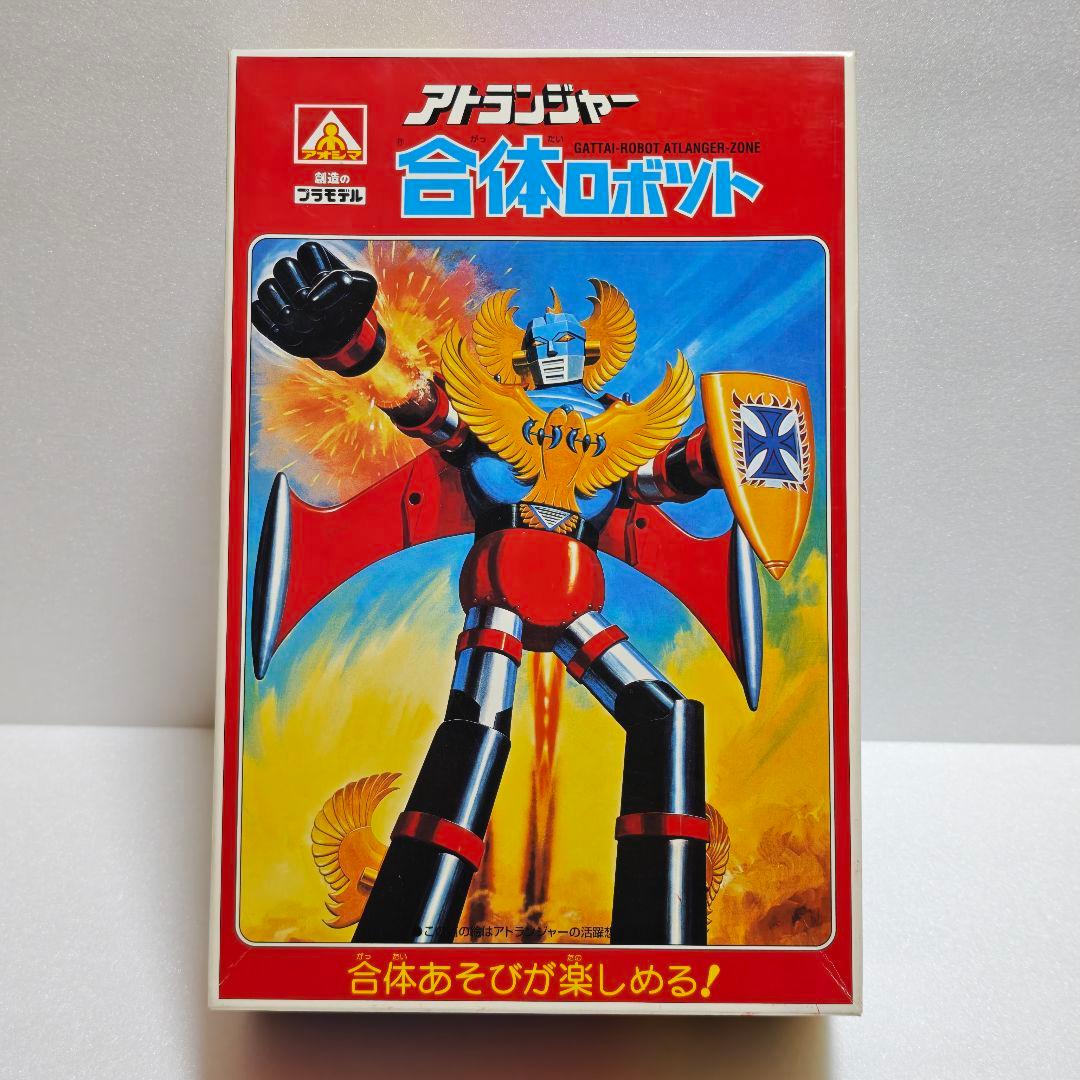
Aoshima Bunka Kyozai began in 1918 by selling model kits of airplanes, and the company still makes model vehicles today, including for the racing manga and anime series Initial D. The story of Atlanger’s specifically, however, begins in 1975. The company had previously released a Mach Baron toy, but that year saw something of a super robot drought, with supercars being the hot new thing. In this environment, the staff at Aoshima decided they would take matters into their own hands, and the third-generation company president, Aoshima Masao, went about personally designing their first original robot.

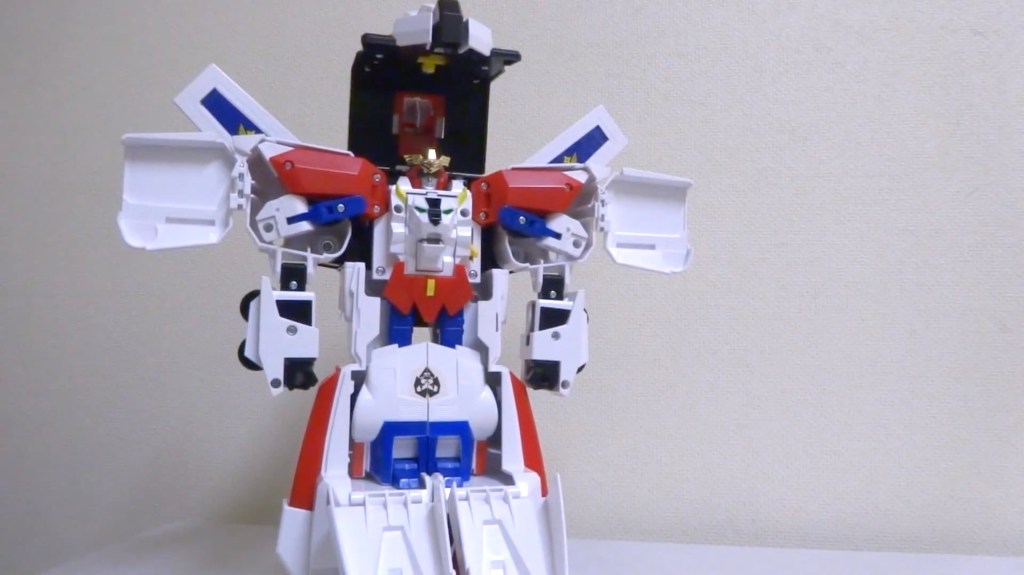
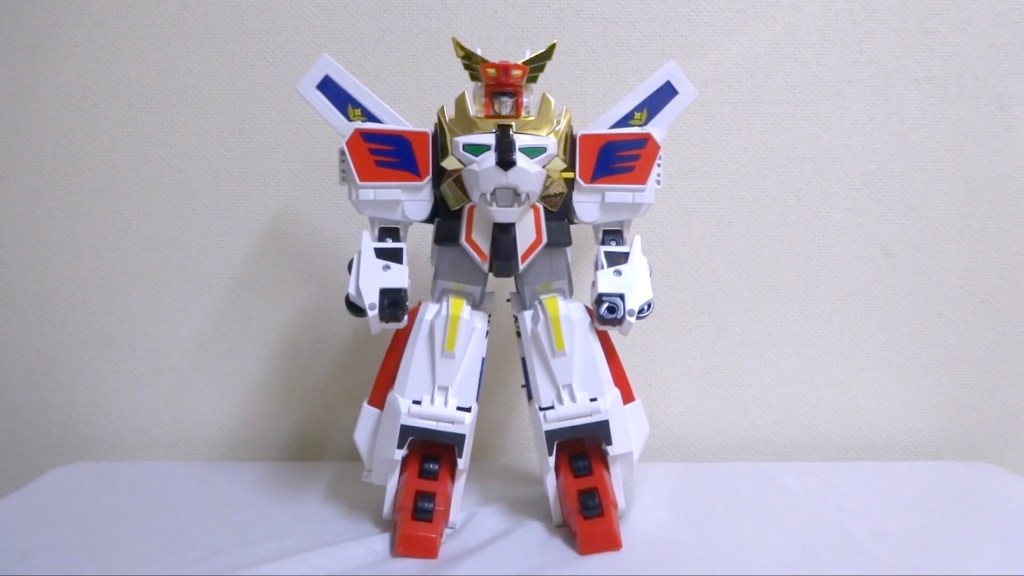
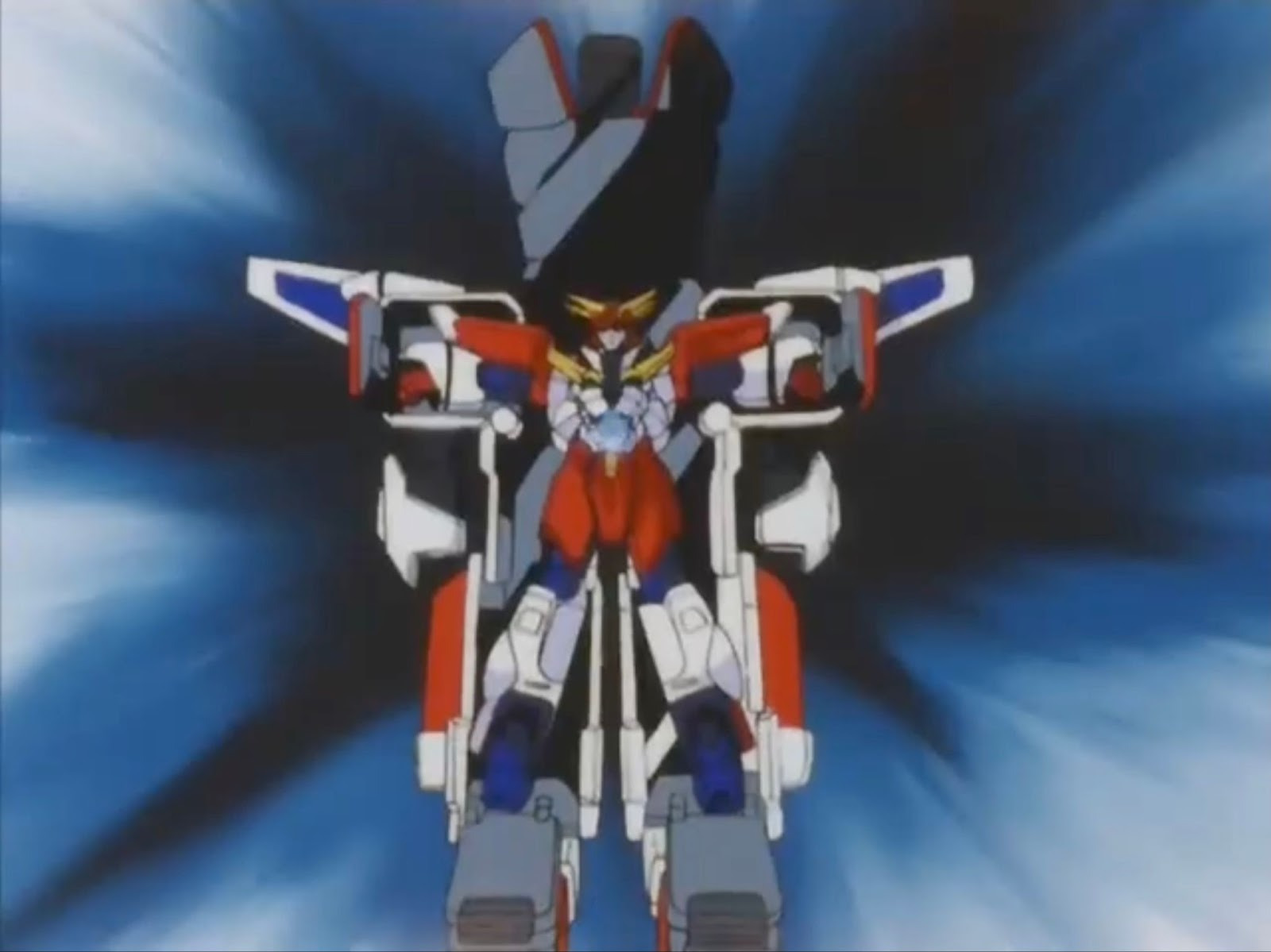
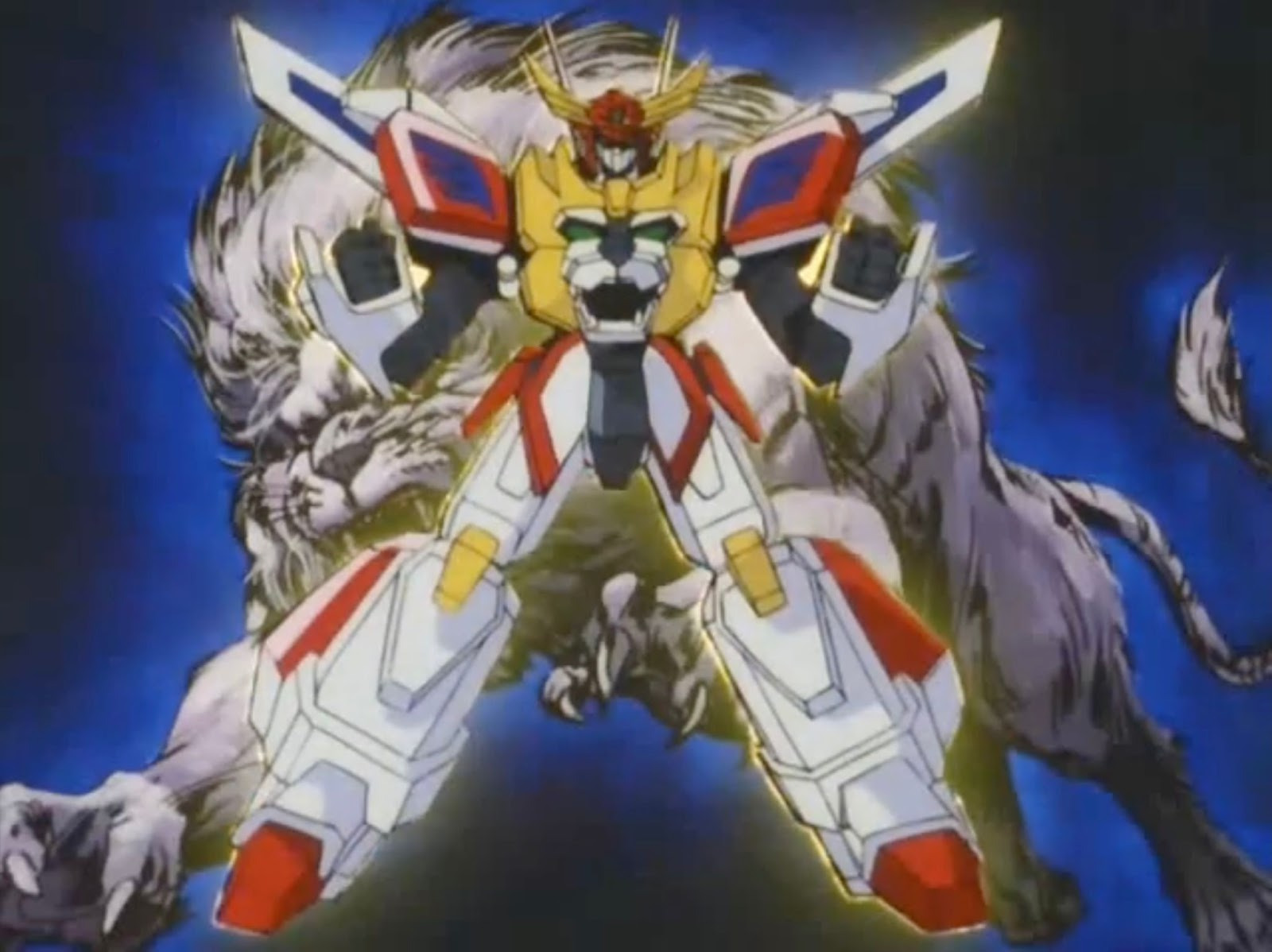
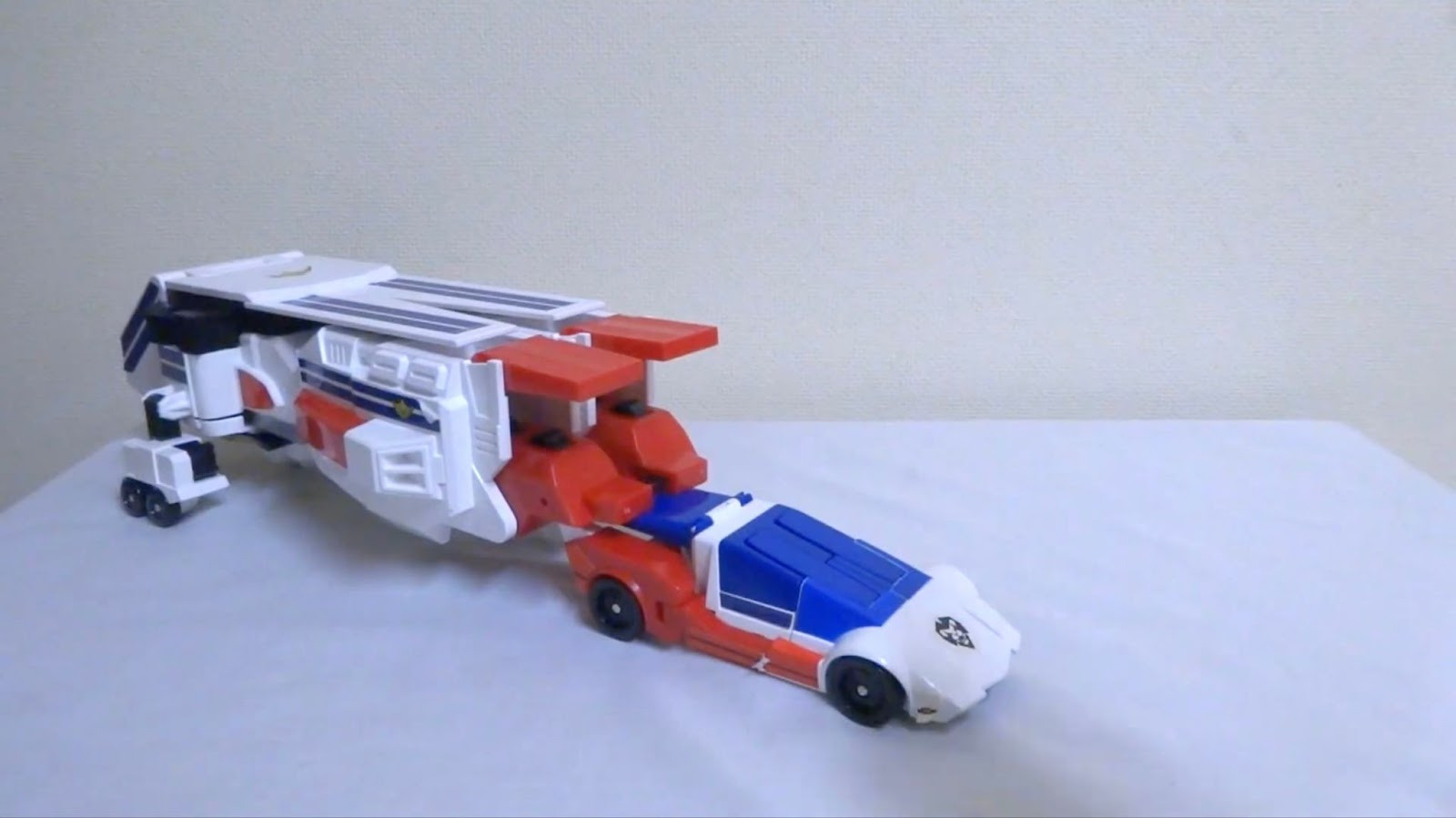
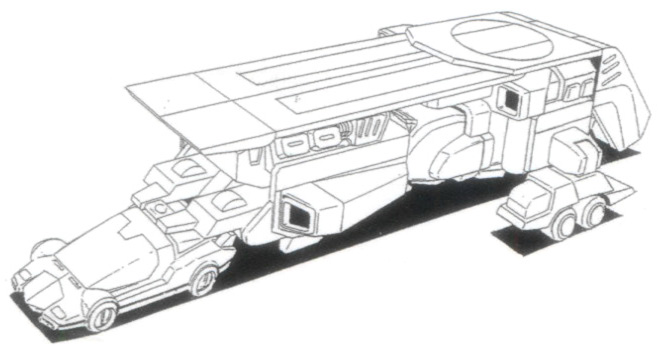
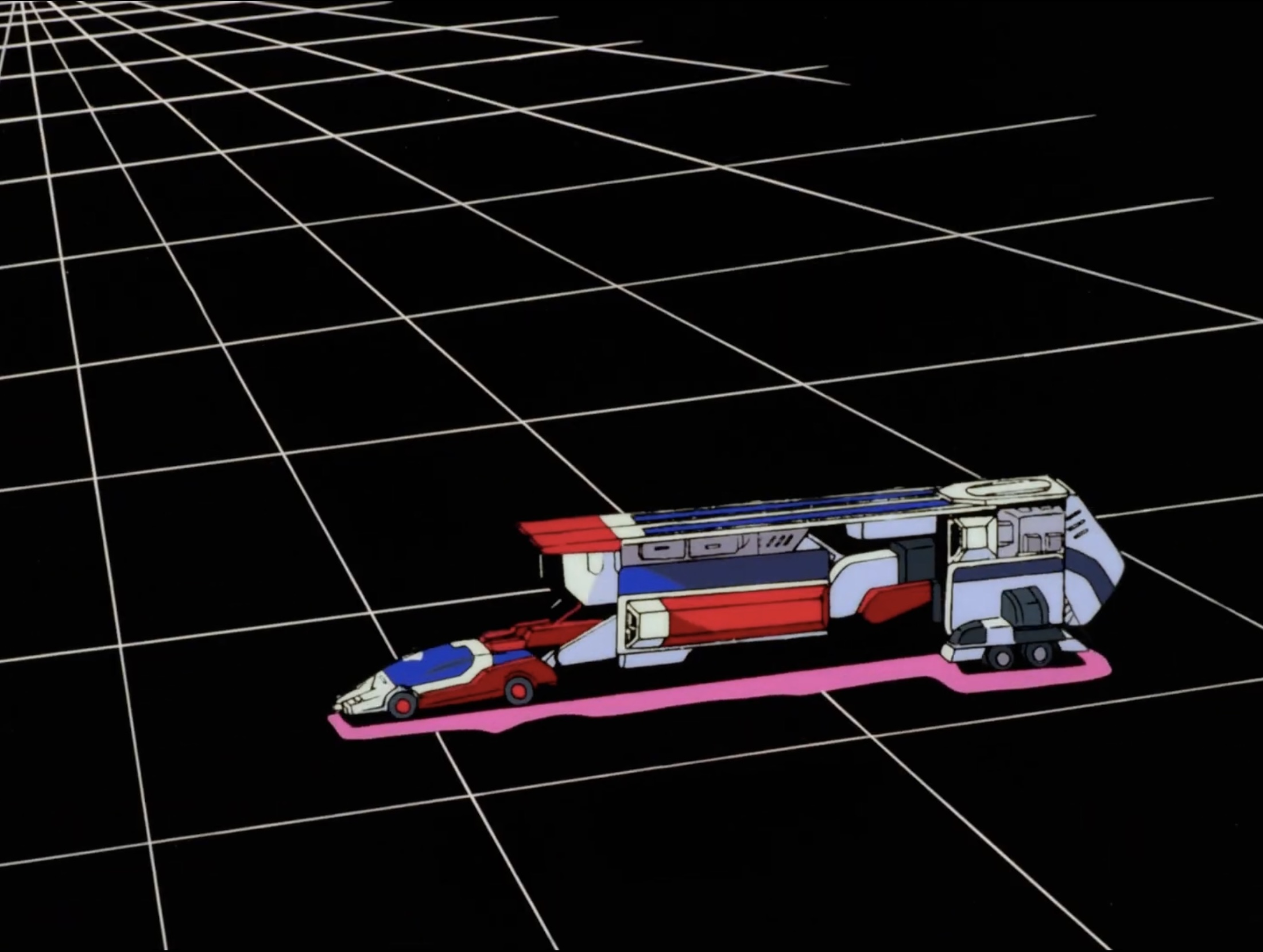
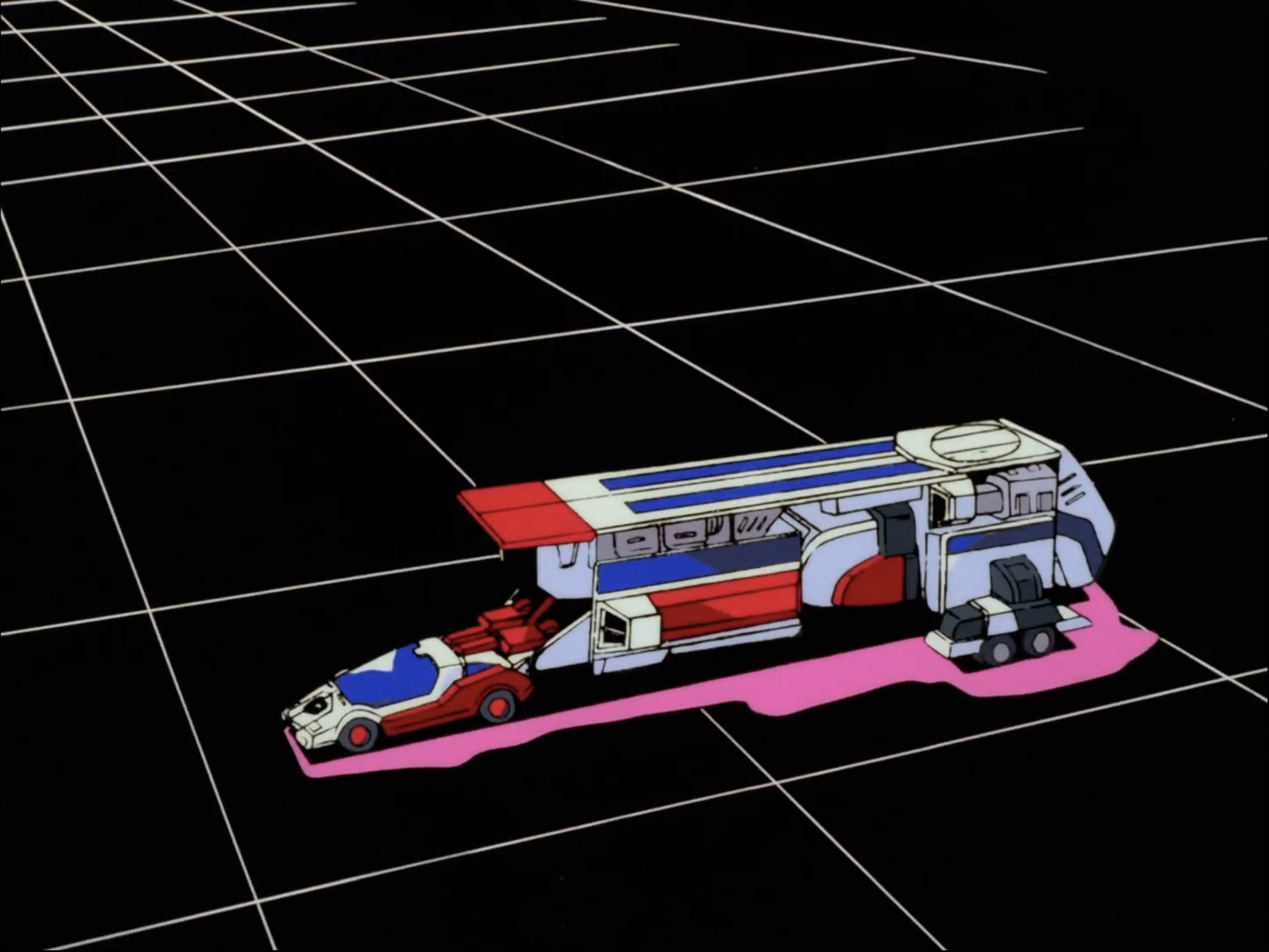
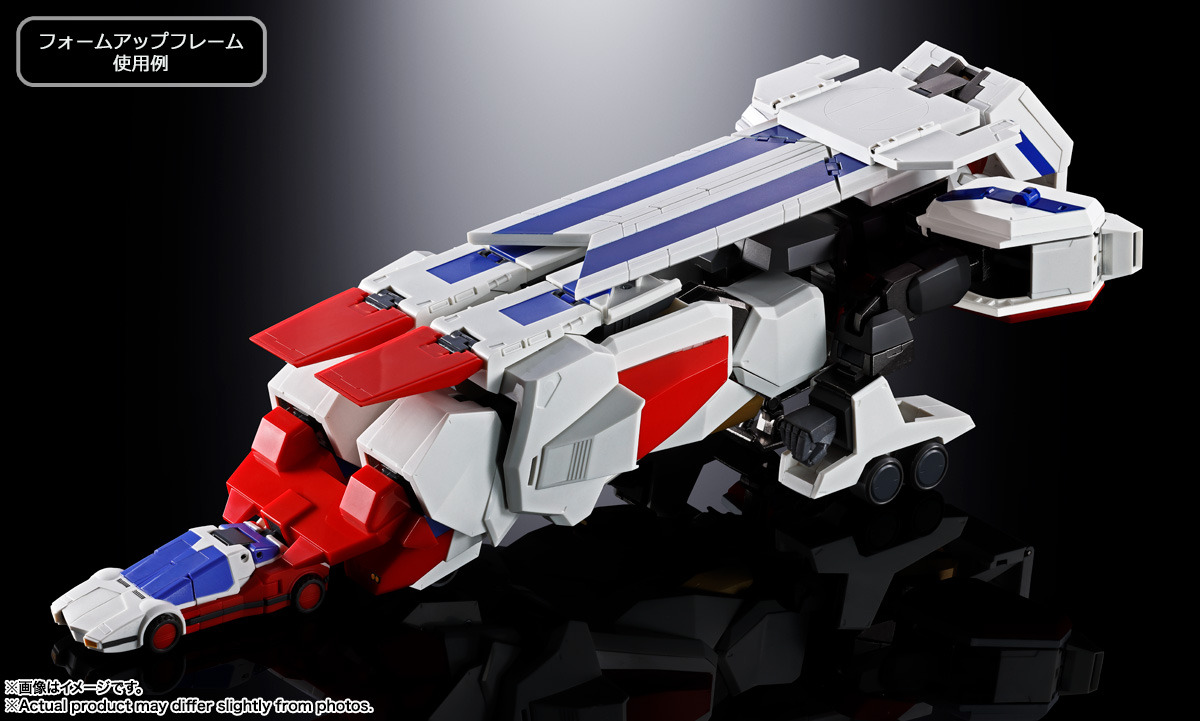
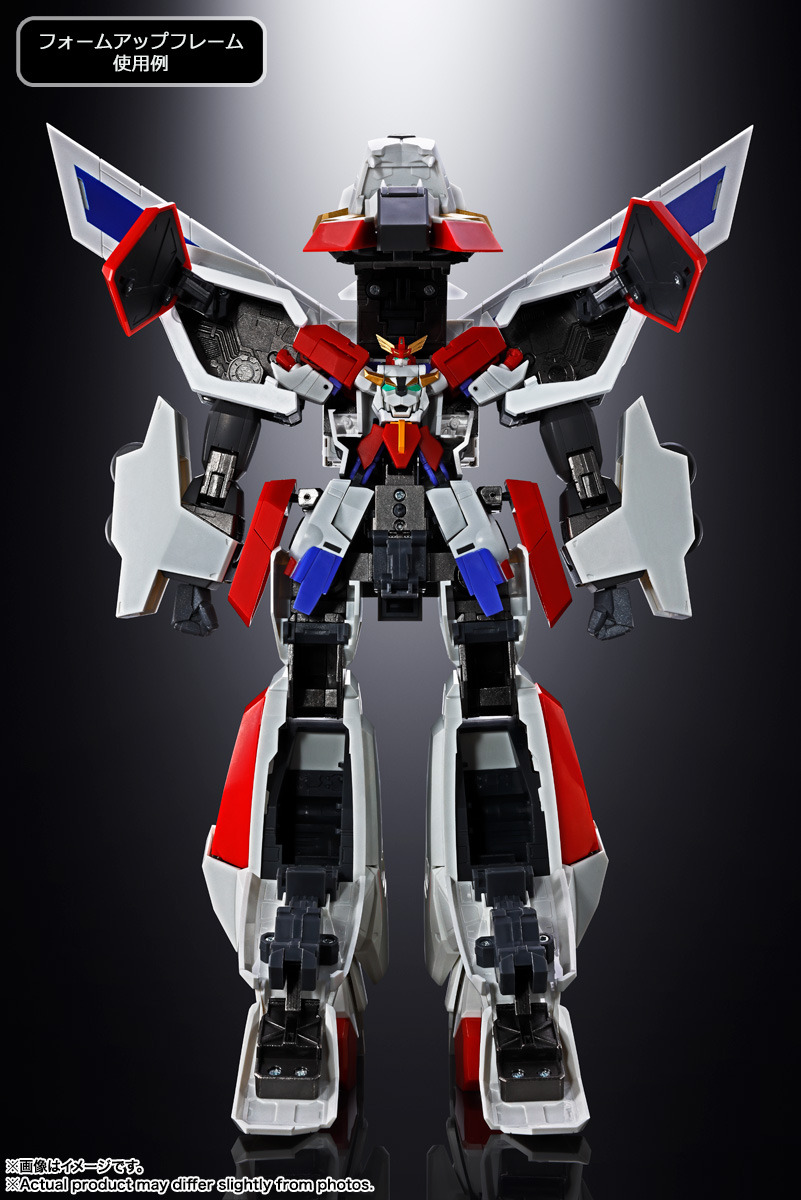
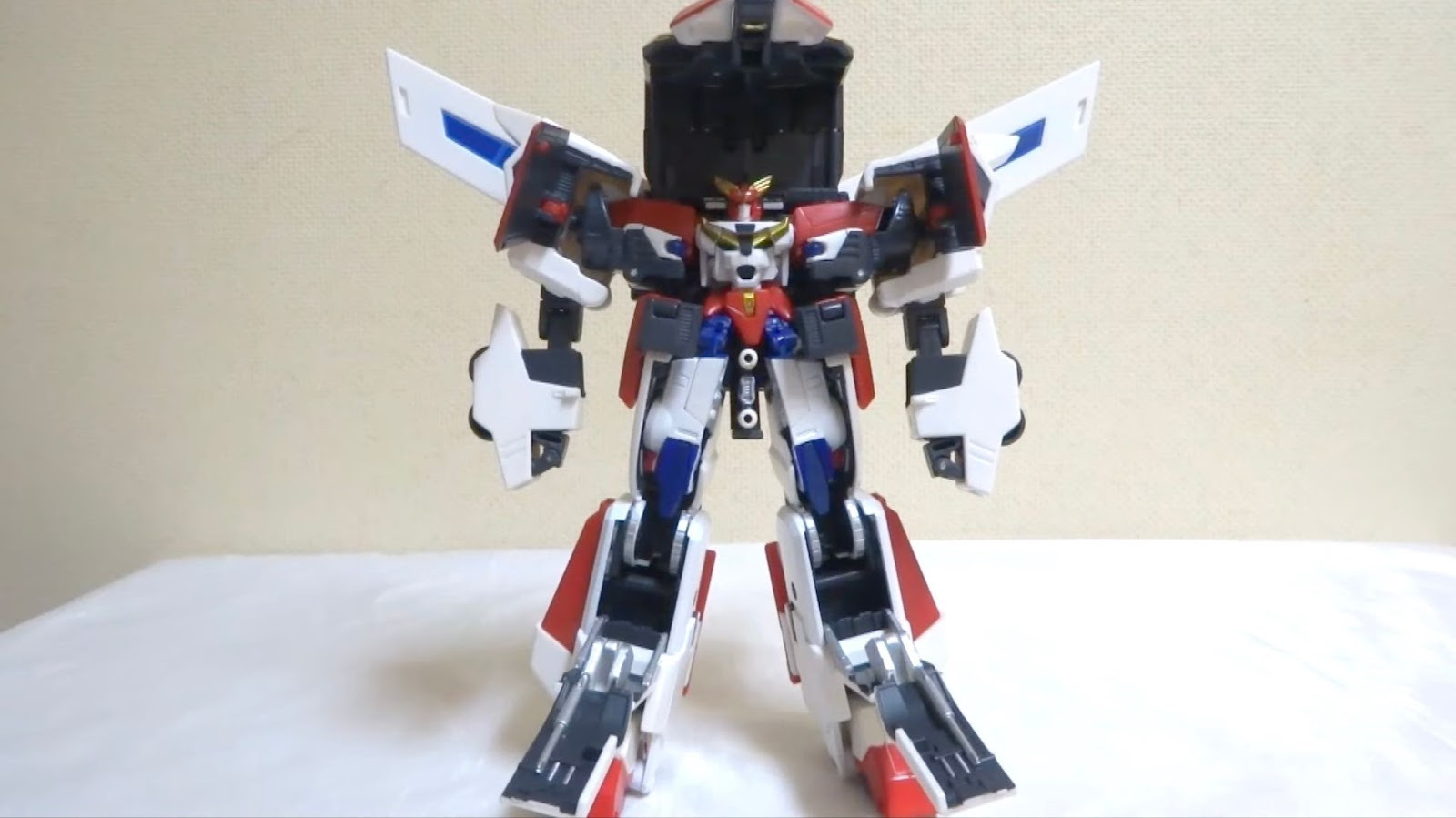
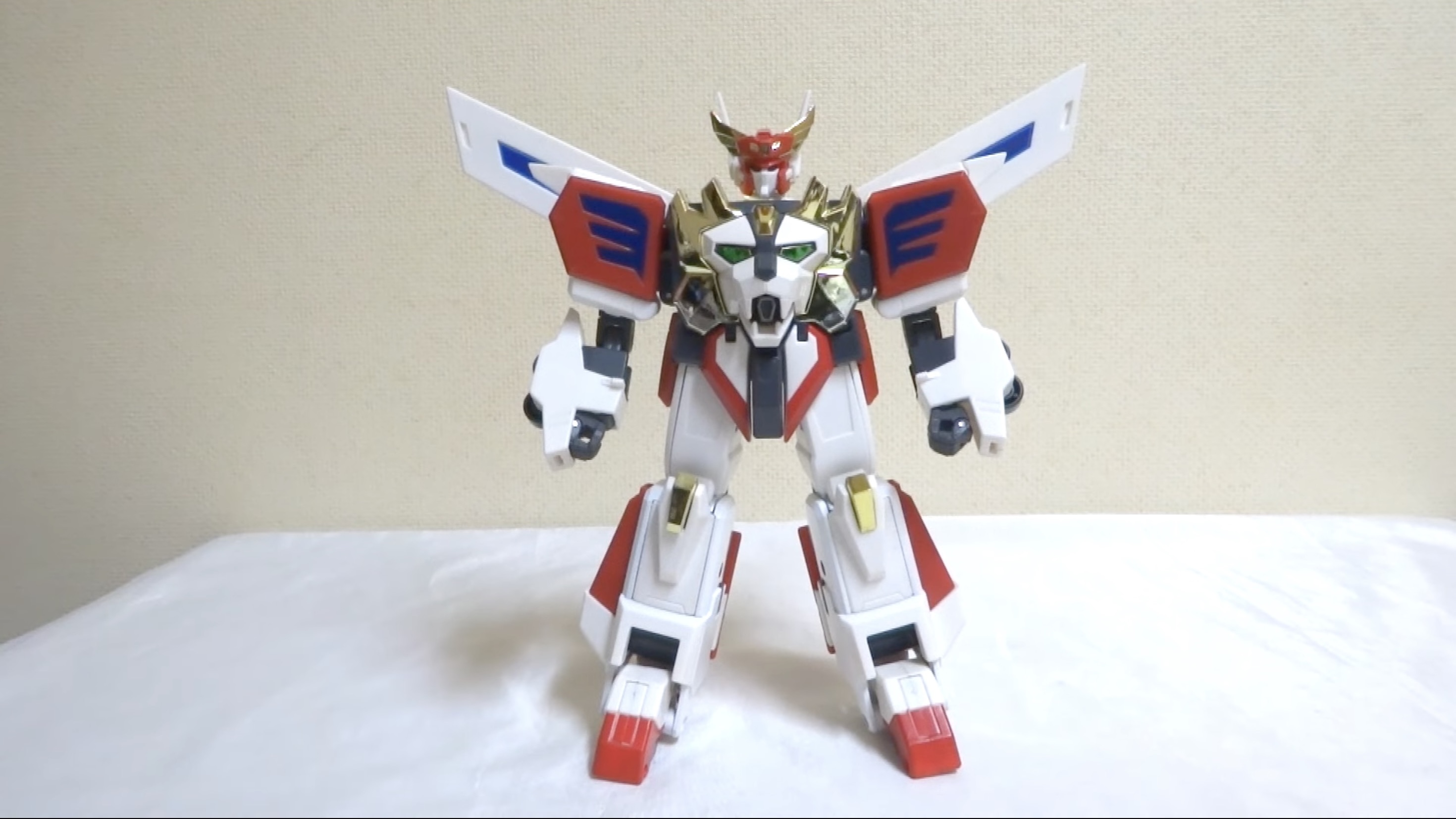
According to its lore, Atlanger is a robot originating from Atlantis 8,000 years ago. Made up of the alloy orihalcon discovered by the scientist Picard (Pikaru), it was created by the Atlantean prophet Palou (Paruu) to defend the Earth against an invasion from the Dark Planet Gloustar (Ankoku Sei Guroosutaa). Atlanger is actually assembled by combining four vehicles: the Grand Tiger, the Mighty Bird, the Red Clipper, and the Target Carrier. When fully formed, it strikes an impressive figure thanks to its Mazinger-like aesthetic and its golden yellow highlights (especially its bird-like chest plate), as well as its four major armaments. Those would be the Broken Cutter sword, the Miracle Defender shield, launching fists called Rocket Clippers, and the flight-granting Red Wings. 

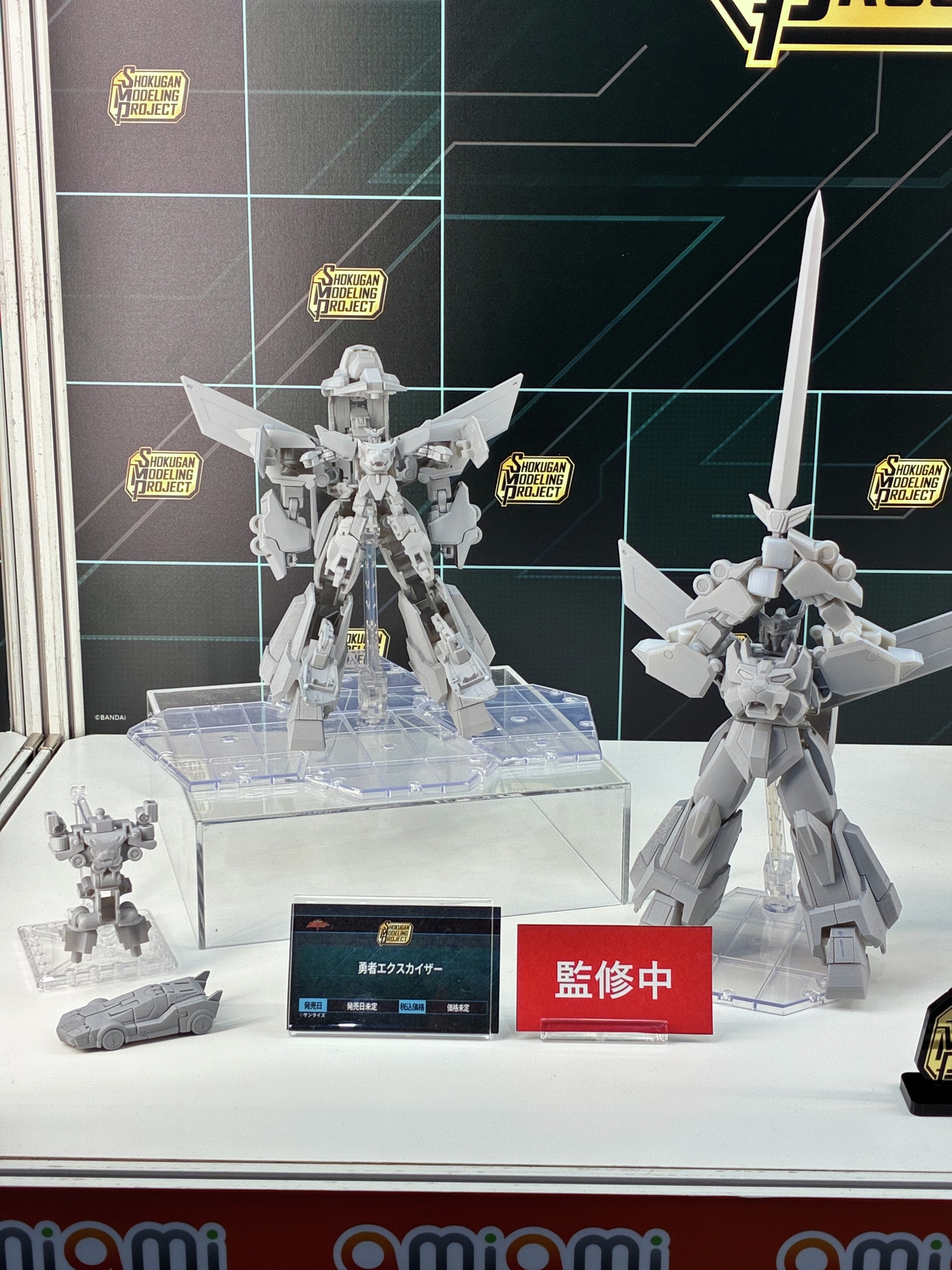
This name and backstory were created after the robot was already designed, and some details appear to have changed or gotten fudged over time. For example, later versions would state that the pilots of Atlanger were fighting in the year 2500 CE after a second invasion from Gloustar. Aoshima would also introduce other allies like the robot Dryger; a Grendizer Spazer-style flying vehicle that can combine with Atlanger called the Tiger Shark; and the large battleship Gattai Kyokan Yamato, which has its own mecha on deck called Gattai Robot Musashi.

Atlanger within Mecha History 

The fact that Atlanger is composed of vehicles that join together cleanly might feel pretty run-of-the-mill today, but it was no small deal at the time. 1975 was after Getter Robo introduced its “smash ’em together” gattai sequences but before Combattler V and its detailed combination that could be replicated nicely in toy form. While the Atlantean robot’s design wasn’t as elegant as Combattler’s, it was a bridge between the more logic-defying approach of the former and the more realistic one of the latter. And unlike Aoshima’s Mach Baron (which had a similar feature but which didn’t reflect its presentation in the Super Robot Mach Baron TV show), this was “official.” Atlanger was also fairly novel in its concept, being a robot with a fantasy angle similar to Reideen—which coincidentally came out the same year and is also from a lost continent (Mu). 

This timing and relative originality is part of the reason Atlanger found a place in the toy market, but another major factor was price. Aoshima’s complete robots were sold in supermarkets and dagashi shops for 1,000 yen (around 2,115 yen adjusted for 2025 inflation), but individual vehicles were also available for 500 yen each. While kids might not be able to afford the whole thing, they could also settle for a part and maybe hope to get the rest down the line. The toys were also often cross-compatible, so you could take parts of one robot or vehicle and attach them to another. A battleship could have heads and arms sticking out of it. There were no rules, like seen in this absurdly and decidedly non-canon Ideon vehicle called the “Ideon Colossus.” 

One of the reasons why the Aoshima kits like Atlanger (and Mach Baron before it) were so relatively inexpensive is that they were made entirely of plastic, unlike the diecast metal toys seen elsewhere that were often twice as expensive. In this sense, they could also be considered precursors to the Gunpla craze, with Gundam predecessors like Zambot 3 and Daitarn 3 even getting Aoshima versions. Atlanger and pals were also much simpler to construct.

Aoshima would later create smaller kits more proportionally in line with Gundam model kits. Although Aoshima’s kits were slightly more expensive (400 yen vs. 300 yen), they were also larger and more colorful.

Yet, despite (or perhaps because of) Atlanger’s affordability, it wasn’t immune to economic hardship. One curious thing about the aforementioned Broken Cutter is that the sword is so unusually short that it’s practically a dagger. Japan was still feeling the effects of the 1973 oil crisis, and this was one way to save on manufacturing expenses.

Keeping Up with the Times, or At Least Trying 

Atlanger comes from a specific period of time, but as Aoshima’s flagship mecha, it has been updated in numerous ways over the decades.

When the company started making those smaller and vaguely Gunpla-esque kits through its Mini Gattai line, they introduced “New Atlanger” in 1981, a version with a more angular design and elements very reminiscent of Gundams and other real robots. 

Years later, they would release Hattenkei (Successor) Robo Atlanger, which looks a lot more like a 90s Sunrise/Takara Brave Robot. 

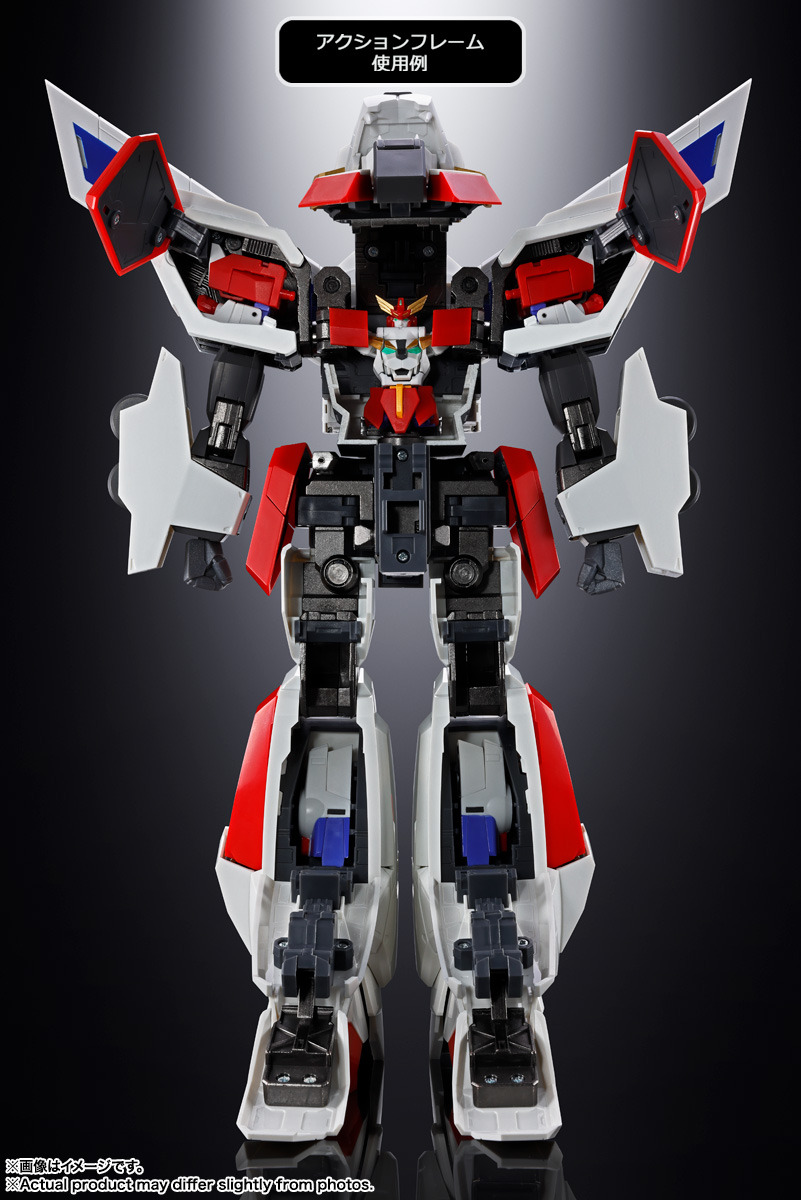
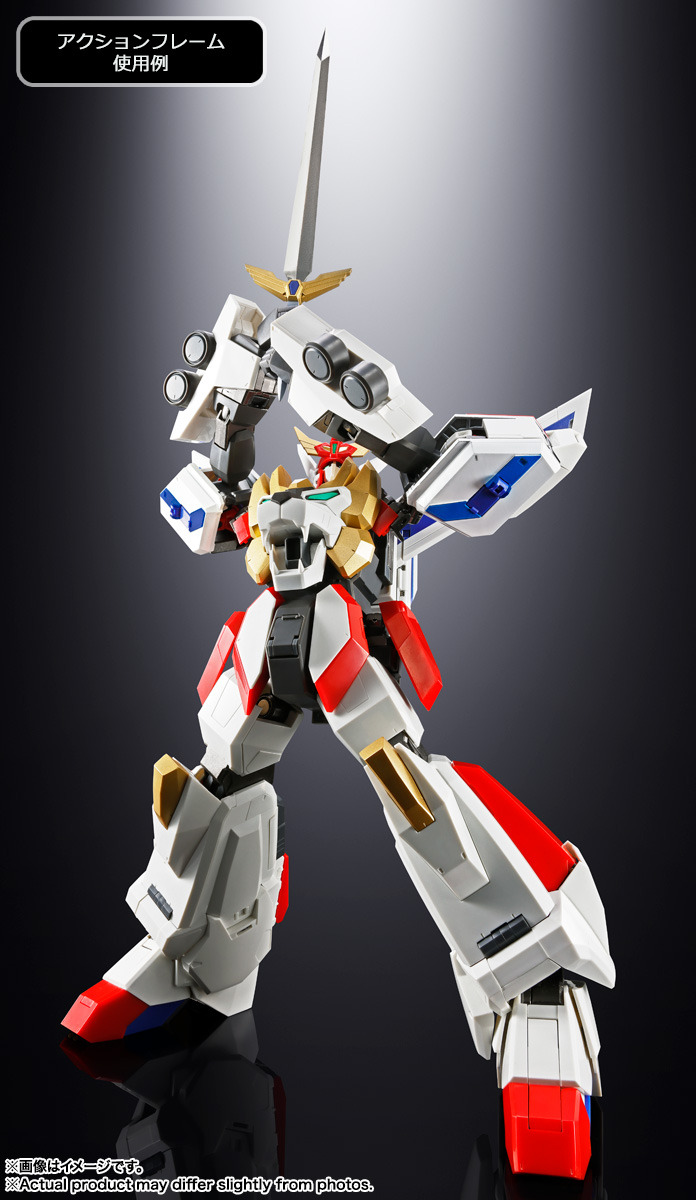
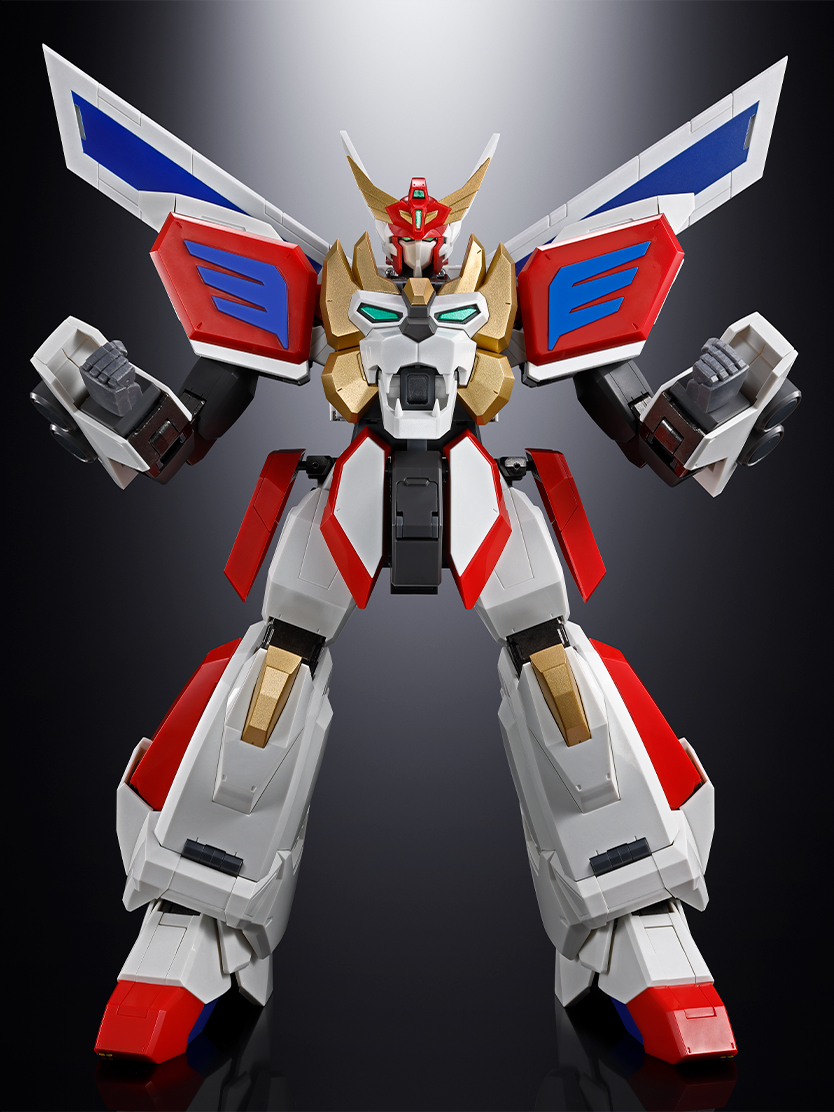
In 2012, Evolution Toy released a premium poseable figure in its Dynamite Action Series. One interesting feature of this toy is the fact that it comes with two versions of the Broken Cutter: a longer one and a shorter one. The former is more aesthetically pleasing and what you expect out of a super robot’s sword weapon. However, the latter has history, calling back to the original toy and its material circumstances. I find it funny and charming that the stubby Broken Cutter is so iconic for Atlanger that they bothered to include it as an accessory. 

Most recently, 2021 would see a new model kit called the ACKS Gattai Atlanger, and it again made a move to modernize. However, while it indeed sported a “modern super robot” aesthetic, the real feature that spoke to the times was the fact that it came with an additional figure: a cute and sexy anime girl named Hotaka Atori, who wears an outfit reminiscent of Atlanger. This girl figure could even attach some of the robot parts to become a mecha musume of sorts. 

Actually, There Is an Atlanger Anime, But…

I went through the majority of this article emphasizing that Atlanger-related narrative media wasn’t really a factor. That technically isn’t true, though there is an important caveat: It’s always been in service of the toys themselves to a degree that exceeds even the merchandise tie-ins of other mecha.

Aoshima’s products, including but not limited to Atlanger-related toys, were portrayed in manga form through the 1970s and 80s, first in children’s magazines by Shogakukan focused on individual elementary grade levels, and then in their own Aoshima Comics. However, these were primarily short promotional comics meant to show how cool the toys are, not unlike the pack-in comics that came with He-Man products in the US. 

Then, in 2011, Aoshima released a one-episode 15-minute OVA titled Gattai Robot Atlanger at Winter Comic Market 81. Its purpose was to celebrate Atlanger, but also to coincide with a figure release: the 2012 Evolution Toy version mentioned above. 

The plot sees Atlanger on the eve of a retirement ceremony after decades of service in the fight and eventual stalemate against the aliens from the Dark Planet. When a new attack occurs, it’s up to Asuka Ken (one of the old pilots of Atlanger) to jump in the cockpit once again. This time around, he’s joined by a group of young co-pilots who are skeptical about the effectiveness of this outdated machine, but the classic robot proves to still have what it takes in battle. At the climax, Atlanger showcases its ability to split into four vehicles, as well as its combined form with the Tiger Shark, to win the day—all while a theme song is performed by tokusatsu and anime music legend Kushida Akira (Gavan, Xabungle). Overall, the OVA is a love letter filled with nostalgia. There’s even a meta commercial for the old 1975 toy included!

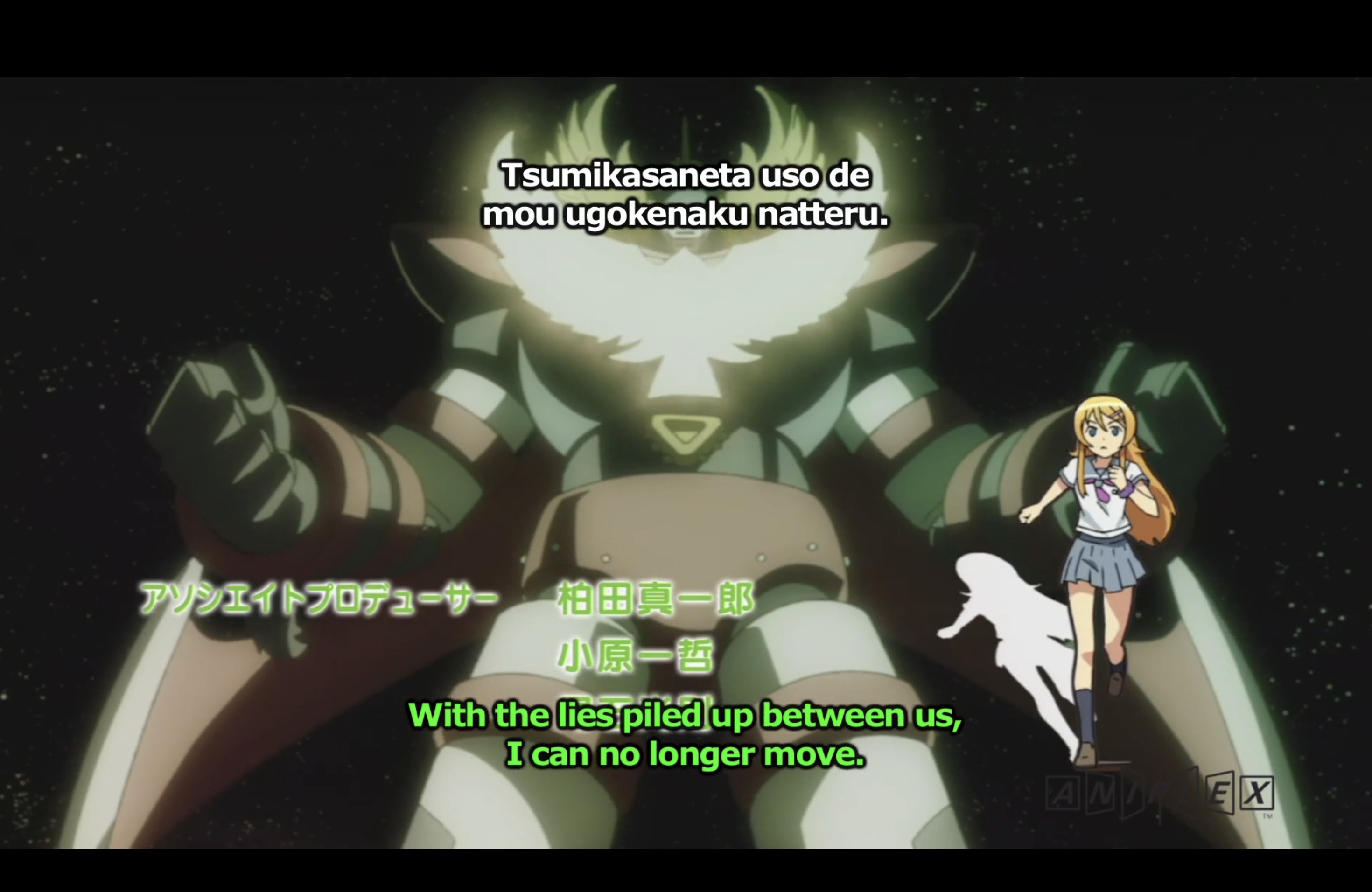
(Curiously, this wasn’t Atlanger’s first anime appearance. That would be, bizarrely enough, a very brief cameo in the opening of Episode 8 of Oreimo in 2010. The same studio, AIC, worked on both.)

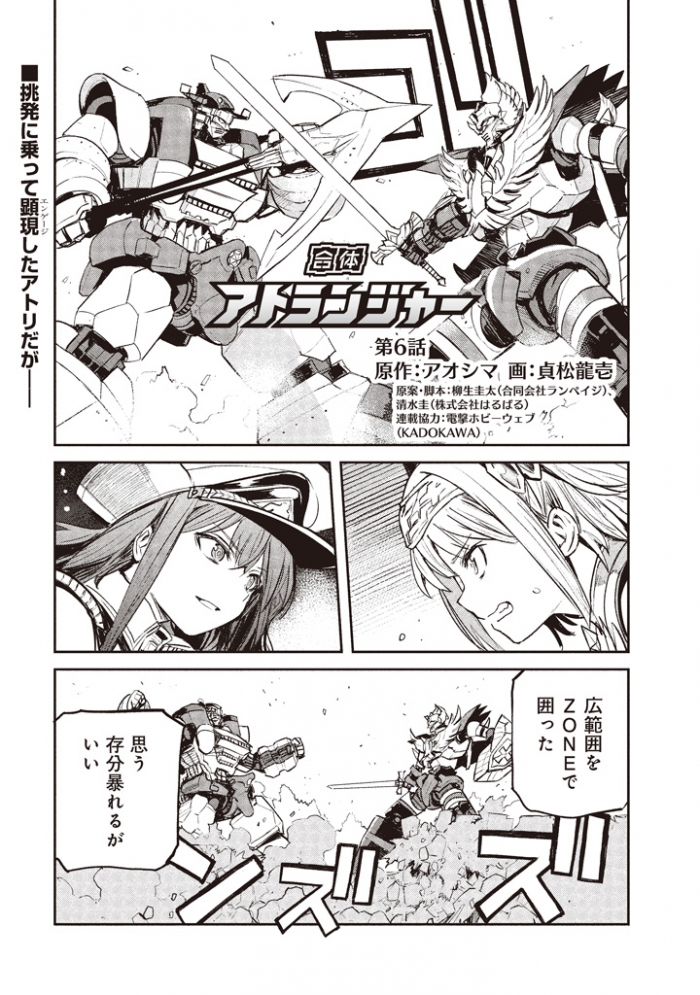
An Atlanger manga then debuted digitally in 2021. Gattai Atlanger was published on the Dengeki Hobby website, coinciding with the ACKS model kit release and featuring multiple cute moe girls. In this version, Atlanger was a sentient guardian deity robot who fought against a threat to humanity called Shadow (not Gloustar). After a cataclysmic battle, the AI for Atlanger was sent back across time and space, meeting schoolgirl Hotaka Atori, who becomes capable of transforming magical girl–style and even summoning Atlanger in super robot form. This manga ran for six chapters, with the ACKS kit version of Gattai Robot Musashi also showing up. 

In every case, the merch ends up being the true center of attention. Atlanger is simply a robot that happens to have an anime, rather than being an “anime robot.”

Concluding Thoughts

Gattai Robot Atlanger began as an affordable robot toy first and foremost, with any media tie-ins being ancillary at best, and somehow still found success. This spirit has persisted, defining the presence and memory of Atlanger over the course of four decades. 

Without a defining anime/manga image at its core, the aesthetics of Atlanger shifted from one iteration to the next. The 70s super robot toy made way for the 80s real robot–adjacent model kit, and each later release saw more and more changes that fluctuated based on how much they were trying to call back to the original and how much they were trying to modernize.

But even in terms of tapping into nostalgia, Atlanger hasn’t been able to get what most other mecha receive when they’re made into premium robot figures. High-quality lines like Soul of Chogokin, Masterpiece Transformers, Master Grade (or higher) Gunpla, and even Evolution Toy’s Dynamic Action Series all try to close the gap and find a compromise between the physical objects, the visual media, imagination, and nostalgia. Alternative designs like Hajime Katoki mobile suit variations or the Amakuni Kizin line might re-think or exaggerate certain elements or proportions while staying pretty close to this idea. But because “fidelity to the original” isn’t really a factor, there is no “platonic ideal” to aim for in this case. In a way, that’s perfect for Atlanger.

But eschewing faithfulness to source material isn’t telling the whole story. In an essay in Outside Plamodel Art, quintessential mecha designer Okawara Kunio (Gundam, Zambot 3, many others) talks about the degree to which the “combining” aspects of Aoshima’s licensed toys paid little attention to how a robot was portrayed in their own media. This wasn’t uncommon at the time (see the original Clover Gundam toys), but Okawara believes that while other companies were always trying to create new ideas and gimmicks for toys, Aoshima was more about providing  “teaching materials” that could foster learning in kids. To me, it sounds like Okawara is saying that Atlanger and company were like a halfway point between action figures and Legos, and thus occupied a unique position on store shelves. 

So while Atlanger won’t ever have the powerful politics of Mobile Suit Gundam, the iconic status of Mazinger Z, the dozens of variations of Super Sentai, or the challenging introspection of Evangelion, it does emphasize something special: a primary devotion to play, where “messages” and “themes” are secondary to imaginative, hands-on exploration by the young and the young at heart.

VTuber Mono Monet Likes Genshiken

Mono Monet, a VTuber from the agency V4Mirai, recently revealed herself to be a Genshiken fan. 

What’s more, I was directly involved in this reveal! During a chat about a different topic, I was specifically called out by Mono for having “Ogiue” in my name. It spurred her on to start talking about the series, and the possibility of doing a Genshiken watchalong at some point.

This is the second time I’ve seen a VTuber explicitly express a fondness for Kio Shimoku’s title. (The first was when FUWAMOCO from hololive sang “Kujibiki Unbalance.”)

The above clip is over 20 minutes long because Mono talks about not just her love of Genshiken itself, but also Evangelion and what she looks for in fiction. It’s quite interesting overall, and Mono is just full of good takes, particularly when it comes to the appeal of flawed and messy characters.

The Voices Called for Me: Anime NYC 2025

A spacious view of the Jacob Javits Center from the inside, with people walking and standing around. In the distance is a large banner that says "Anime NYC."

Anime NYC 2025, held from August 21 to 24, was the second time since the New York–based convention moved its dates to take place in the summer. The decision allows it to use more of the Jacob Javits Center, but comes at the cost of being stuck in a crowded con season, as well as the risk of unpleasant heat and humidity. Luck was in Anime NYC’s favor this year, however, as the weather was pretty much ideal despite the weeks prior being pretty dire.

As always, the convention is very concentrated on its Exhibit Hall and its events. There are plenty of panels featuring industry insights and announcements of upcoming plans, but they tend to be geared more towards promotion, with a few less business-focused gems here and there. For me, because Anime NYC has become a big event for VTubers, I’ve found myself dedicating more attention in that direction.

The Takahashi Yoko Concert

I don’t always attend the concerts at Anime NYC, which require an additional ticket purchase. But there was almost no price that would keep me from seeing Takahashi Yoko, the singer of the Neon Genesis Evangelion opening. The series has been such a part of my life over the course of decades that I jumped at the chance to hear her sing live. 

Curiously, her tickets didn’t sell out that quickly, and there were plenty still available even after a small group purchase. I could see people not making the connection between Takahashi and the evergreen “Cruel Angel’s Thesis,” or that we’ve hit a point where Evangelion is considered more history than anything else among newer generations of anime fans. More for people like me, I guess.

Takahashi performed songs found in Eva such as “Fly Me to the Moon” and “Soul Refrain,” but her set was not just limited to music from the franchise. She was also accompanied by two young backup dancers, who were quite impressive. A part of me hoped that Hakos Baelz, the hololive VTuber who specializes in dance and was in NYC at this time, was in the audience and could see them. Naturally, Takahashi capped off the concert “Cruel Angel’s Thesis.”

There were some issues with the audio that took time to resolve. The acoustics of the main event space aren’t ideal for concerts in the first place, and there was something about the setup that drowned out her voice to a degree. I brought ear plugs, but had to take them out at first because I couldn’t hear her well enough with them in. There was also a tech flub on one song that forced them to restart it. In spite of all that, Takahashi’s voice was simply sublime; it sounded even better in person. 

During the concert, Takahashi gave a speech in English, reading from some prepared notes. She talked about how she basically grew up with music and was going down the path of the classically trained, but various issues kept her working as a session musician. She was initially hired to sing one of the versions of “Fly Me to the Moon” for Evangelion, knowing nothing about it. At her first recording, she was accompanied by just one bespectacled man in a sweatshirt and sweatpants—Anno Hideaki. After this, she was asked to sing the opening as well.

Takahashi described her relationship with Evangelion as a complicated one, but also something she’s overall grateful for. It boxed her in, but without it, she would not have been able to achieve such success or have so many opportunities. She talked about how her favorite episode of Eva is actually 26 because of one scene in particular: In the “abstract sketch” space seen in the finale, Shinji is shown floating through an empty void with total freedom, but the lack of any boundaries makes it intimidating. He is then drawn a ground, limiting his freedom in one way. However, the boundary that exists now allows Shinji to do what he couldn’t before, which is walk and find a way. Takahashi basically feels the same way about Eva.

hololive 

The VTubers of hololive have become a staple of this event. Returning to the Exhibit Hall was the large booth featuring convention-exclusive panel streams, as was the hololive World Tour (more on that later). Curiously, while past Anime NYCs have also included a big hololive panel as well, that wasn’t the case this time around.

The Booth

One big change from previous years was that the panels were spaced further apart on the schedule, which I found very welcome. It gave me an opportunity to check out other things, and helped mitigate the potential fire hazard that forms with the enthusiastic crowds. I didn’t attend every panel, but every one I did see was fun in its own way.

Takane Lui, along with Shirakami Fubuki on the hololive booth screen. Fubuki is wearing a Yagoo mask and has two fake muscle arms flexing.

I’m a fan of all the holoX ladies, so I really wanted to see Takane Lui. She did not disappoint, especially when it came to karaoke, but the antics of her panel partner, Shirakami Fubuki, made it even better. The fox would bust out a 2D Yagoo mask and a pair of muscular arms on occasion, which culminated in their fitting presence during the song “Onegai Muscle” from the anime How Heavy Are the Dumbbells You Lift?

Mori Calliope and Koseki Bijou on screen. Above them is the question "Would you rather lick a subway pole for 30 seconds or drink a whole vat of hot dog water?"

The Tombstone panel, so named because Calliope Mori is a grim reaper and Koseki Bijou is a living gemstone, had them answering “Would you rather” questions related to New York City. The NYer heavy crowd naturally had a lot of opinions, and it was entertaining to hear the VTubers try to twist logic to suit their choices.

Airani Iofifteen performing karaoke on screen.

I also went out of my way to see the hololive Indonesia karaoke relay, which had Kobo Kanaeru, Airani Iofifteen, and then Pavolia Reine. You could tell that people really love Kobo’s singing because the normally boisterous crowd was almost pin-drop silent as she covered “Mayonaka no Door,” “Cruel Angel’s Thesis,” and other tunes. Kobo was going to sing “Dragostea Din Tei” too, but a technical mishap prevented her from finishing it. Iofi amazed me by singing “Do You Remember Love?” and I even got noticed by the camera when she was looking around for holo merch.

If I had any big complaints, it would be that standing on concrete for extended periods is really tough on my feet, even though I have good shoes. It’s possible to have better flooring for a booth, and I think Cover Corp can afford it.

The World Tour

Cardboard standees featuring the official art from hololive STAGE World Tour '25, featuring Nerissa Ravencroft, Kureiji Ollie, Mori Calliope, Momosuzu Nene, and IRyS.

Anime NYC was selected as one of the stops on the world tour, which is officially titled ‘hololive STAGE ‘25 World Tour -Synchronize.” This is not to be confused with the hololive EN 3rd Concert, All for One, which took place the same weekend. You can read my review of that here.

The different lineup from last year brought a different energy that was less “pop diva.” With Calliope Mori, IRyS, Nerissa Ravencroft, Momosuzu Nene, and Kureiji Ollie on stage, you had a combination of dedicated singers and all-out entertainers. Personal highlights included the covers of “Shijoshugi Adtruck” and “Don’t Say Lazy,” as well as the world tour official song, “Live It Loud!” which I think does a good job highlighting the strengths of each performer.

I do have a few complaints. The first two are ones I’ve already mentioned, namely the whole “standing on concrete for hours” thing like at the booth, and the iffy acoustics of the Main Events hall. The third is what I’d consider a very mild gripe: a good amount of the songs performed were also at Breaking Dimensions last year. However, I know I pay a great deal of attention to the musical performance side of hololive, and this is less of an issue for those who watch events less often.

Each stop includes two additional guests, and New York City’s were Natsuiro Matsuri and Haachama, aka Akai Haato. Matsuri is a nice middle point between singer and entertainer, and I’m a big, big fan of Haachama in general. I was a little sad that I couldn’t see the entirety of Haachama’s panel last year at Anime NYC, and I consider myself very fortunate that I managed to purchase a ticket to Synchronize. I even brought my Haaton wearable head towel so I could represent, and spotted other Haatons (i.e. Haachama fans) while waiting in line. For the concert, she performed her first original, “RED HEART,” and its simplicity is something that goes back to the very core of VTubing in a way I enjoy immensely.

The Stamp Rally and Other Merch

There was a great deal of hololive-related goods available at the con. They had very visible representation in the Artist Alley, and the official booth gave away a con-exclusive trading card featuring the participants of the world tour, as well as a card for a stamp rally. The prize for completing the rally was a sticker set with all the ambassadors from hololive MEET ‘25, the general umbrella for conventions and other events around the world. However, it required participants to make purchases at specific booths, and if you got there on later days like I did, it meant making more expensive purchases. This is exactly why I ended up caving and getting the Hakos Baelz hoodie from Ohmonah. I had been eyeing it since July, and the quality and comfort (on top of the stamp for the rally) was too much for me. It’s so good, man.

Other VTubers

Likely because of hololive’s presence every year now, Anime NYC has also become a focal point for VTubing on the east coast. Merch-wise, big names like Sameko Saba, Nimi Nightmare, Dooby3D, Mint Fantôme, Dokibird, and Shylily were all over the Artist Alley. Ironmouse and CDawgVA also had a panel promoting a new game. 

Additionally, the Exhibit Hall had a couple booths featuring Meet & Greets with smaller VTubers all weekend long. I used this opportunity to talk to Pillowdear, and complimented her for doing fun and creative ASMRs like her Easter stream. This was my second ever Meet & Greet, and I found it fascinating that you really get the gamut of participants. I saw someone who was clearly a dedicated fan of Pillow, but also people who literally had no idea about or even VTubing in general. I guess I fall somewhere in the middle.

A package of Ember Amane Custom Roast coffee, with a picture of Ember on it.

There was also a Phase Connect karaoke event that I ended up not attending, but I did finally buy coffee from their booth. I got the Ember Amane beans, and while I also wanted Dizzy Dokuro’s, I foolishly forgot to take into account that her blatantly shilling-oriented original song made it a hot commodity. (Expect an Ember coffee review at a later time.)

Other Panels

Tsuda Kenjiro and Yu-Gi-Oh! 25th Anniversary

I attended the Yu-Gi-Oh! 25th anniversary panel, which featured the Japanese voice of Kaiba Seto, Tsuda Kenjiro. These days, Tsuda is everywhere, but this was basically his first really big role. For those who grew up on the English dub, I still think it’s worth listening to his portrayal of Kaiba, because it gives a similar yet different flavor to the character. For the panel, he did a live reading of a scene from the Yu-Gi-Oh! movie The Dark Side of Dimensions.

There were a few stories Tsuda told that I found particularly interesting:

  • Back when Yu-Gi-Oh! Duel Monsters was airing, the voice of Yugi (Kazama Shunsuke) was still in high school, and he would sometimes come to the recording studio in his school uniform.
  • When Tsuda recorded a voice-over for a Yu-Gi-Oh! video game, he saw a lot of comments online about how “Kaiba sounds so old now.” This made Tsuda want to show that he could still voice the character, and when he was asked to come back for Dark Side of Dimensions, he relished the chance.
  • Tsuda talked about how unlike most other shounen series, where the characters get amped up and then calm down, Yu-GI-Oh! characters are basically dialed up to max at all times. It makes recording for other series way easier by comparison.

One-Punch Man and JAM Project

I could not attend the entire One-Punch Man panel due to having to leave for All for One, but I do want to make sure story in particular is told for posterity. The guests for the panel were the members of JAM PROJECT, who do the One-Punch Man openings. In recounting the creation of the first opening (“THE HERO!!”), leader Kageyama Hironobu recalls going to his bandmates and vaguely humming the lines of the first verse without any lyrics, including the part that would eventually go Nandatten da? Frustration!/Ore wa tomaranai!—which Kageyama recreated as a series of ambiguous squeals and yells. Apparently, the other members looked at him funny and basically replied, “Are you serious?”
I later found out that they played “SKILL” from Super Robot Wars in addition to One-Punch Man music. I wish I could have been there, but alas.

The Food Is Too Expensive

Like so many other convention centers, the Jacob Javits has never been cost friendly when it comes to food options. For anyone looking to save money, I never recommend anyone eat the con itself, and I do it because I see trying out different overpriced meals to be part of the experience—kind of like gambling in Las Vegas or Atlantic City. However, even I felt that the prices were getting beyond ridiculous this year. Things were close to if not exceeding $20 when they weren’t that way last year, and I will definitely bring food with me next year. Moreover, there were certain options available last year that weren’t present for 2025: Korilla and its Korean dishes were sorely missed, as was the Indian section in the food court area. 

A salmon bento, including salmon, rice, potato salad, shumai, pickled vegetables, a small omelet, string beans, and seaweed.

If I had to recommend one place, it would have been the BentOn stall in the Exhibit Hall. While the prices are still not great, the bento options (fish or fried chicken) are the best bet for getting a well-balanced meal at Anime NYC.

Cosplay

Final Thoughts

Anime NYC has long been trying to be the Anime Expo of the east coast, and it has succeeded in essence. It gets big guests from Japan and around the world, has a major industry presence, and it looks and feels big. If you want to attend events and see things you wouldn’t be able to otherwise, this con is generally a good place to be. However, that comes at a price, in that it can sometimes feel overwhelming the same way one might get bombarded by neon signage. The difference is that Anime NYC is like a less extreme AX, where there are fewer good things (AX being on the west coast gets it a lot more opportunities for interesting guests) but also fewer bad things (Anime NYC almost never has the really bad crowding issues of AX).

I think this is why I’ve come to enjoy the VTuber side of Anime NYC so much. While it’s definitely part of the “corporate” presence due to hololive (and other VTuber companies to a lesser extent), that side still feels very fan driven. I would like to see some of that spirit and energy on the anime and manga side as well.

My Theory on the True Identity of the GQuuuuuuX

Gundam GQuuuuuuX is a work that has a lot to potentially talk about, especially because it both utilizes and deviates from a lot of established Gundam lore. This is a followup to my overall review of the series, where I now want to take the time to put forth what I consider my biggest GQuuuuuuX theory as a result of the show’s final episode: The Gundam QuuuuuuX mobile suit is possessed by the spirit of the original Amuro Ray. And by original, I mean original.

Before I elaborate, I want to make two notes. First, there will be MASSIVE SPOILERS.

Second, I’ll be discussing the actor Furuya Toru, the original voice of Gundam protagonist Amuro Ray, someone who’s become persona non grata due to revelations of adultery and domestic abuse. While I myself have soured on him because of this and am deeply disappointed by his actions, he still played a role in the finale that I think is meant to have greater implications than just being a fun callback. Thus, the analysis below takes into account what I believe is the effect of his inclusion.

With that, let’s begin.

In the final episode, as Machu in the GQuuuuuuX is fighting Shuji in the original-design RX-78-2 Gundam, the GQuuuuuX unlocks the true form of its Omega Psycommu. Within the rush of the kaleidoscopic “kira kira” Newtype space, the voice of Furuya Toru speaks to Machu and Shuji and says, “I can’t bear to see the Gundam taking Lalah’s life again.”

One would assume that this is the Amuro from “Rose of Sharon” Lalah’s universe, but here’s the catch: Lalah never died there. While extremely similar, the Lalah we see in the Elmeth is established to be different from the Lalah in the original 1979 anime and the film trilogy. In her world, Char dies instead of her, and the shock causes her to slip into alternate timelines where he survives. In fact, according to Shuji, more often than not it’s Char who dies instead. 

This is why I believe that this is “our” Amuro Ray, the one we saw go through Mobile Suit Gundam and on. And on top of that, I think this was his fate after the end of Char’s Counterattack

Additionally, while not a direct reinforcement of the above point, I want to point out the significance of the true name of the Omega Psycommu that’s inside the GQuuuuuuX. Challia Bull reveals that it’s actually called the Endymion Unit, and those familiar with Furuya’s voice roles might find that it sounds familiar. This is because Prince Endymion is the original name of Tuxedo Mask in Sailor Moon before he reincarnated as Chiba Mamoru, and Furuya plays this character in the 1990s anime. In other words, the Endymion Unit is a reference to a character played by Amuro Ray’s actor—one who failed to save his lover and was reborn into a watchful protector who helps guide Sailor Moon. Even if only meant to be a fun reference, the thematic parallels are hard to ignore.

Also, the way the GQuuuuuX looks when the Endymion Unit is unleashed is very reminiscent of Neon Genesis Evangelion, where the EVAs themselves contain the souls of other characters who (for the most part) watch over their pilots.

One thing that GQuuuuuX also does is imply that the vaunted esper-like abilities of Newtypes are quantum in nature, in that they can see multiple possibilities and choose the right one, somewhat like the Doctor in Doctor Who. Perhaps Char’s Counterattack Amuro ascended to a higher level of this, and in spirit form traversed alternate universes to find the Rose of Sharon.

If all this were to be true, that leaves me to wonder about something else: If the GQuuuuuuX houses the spirit of the original Amuro Ray, where is the original Char Aznable? Could it be that the Red Gundam, i.e. the RX-78-2 of the GQuuuuuuX world, is actually possessed by Char? When the GQuuuuuuX Char pilots it, does that mean we’re getting Double Char? Were that to be the case, this would mean Amuro and Char have decided to work together to save this Lalah from living through endless tragedy.

A Whole New Meaning to “G” Generations: Mobile Suit Gundam GQuuuuuuX

Where do I even start with GQuuuuuuX

I prefer to review shows after they’ve finished, so my plan has always been to wait until the end of the TV series to give my more complete thoughts. However, the way Mobile Suit Gundam GQuuuuuuX fueled speculation every week with every reveal means that it’s hard to separate it from the hype train surrounding its broadcast. One question I have to ask myself is simply, to what extent do I judge the show removed from the moment when that energy was so important to its release?

Complicating all this is the fact that I can’t pretend that all the nudges and winks at the fandom weren’t up my alley. To that end, this ends up being less of a review and more the ramblings of a long-time Gundam fan who tries not to care too much about the nitty gritty of lore but still gets excited about it nevertheless, especially when GQuuuuuuX is built heavily around that world building. 

The Beginning (Literally)

My introduction to GQuuuuuuX was through the movie from earlier in the year. I went in knowing nothing beyond a few promotional images and one curious spoiler that had me more confused than anything, and I figured Gundam GQuuuuuuX: The Beginning was some new franchise entry. Then an all-too-familiar narration began accompanied by an iconic colony drop deliberately made to evoke a simplistic cel animation, and by the time Char Aznable stole the Gundam, it was clear that we were not working with an alternate universe so much as an alternate timeline. 

Coming out of the theater, my #1 thought was “The world’s biggest Challia Bull fan must have waited decades to pull this off.” The Beginning actually takes a one-off character from the original TV series and turns him into one of the biggest badasses around, a decision that could only come from some incredibly hardcore fans at the helm. To then also make it a show that establishes an alternate history where a Zeon victory during the One-Year-War creates a whole host of different consequences in the lives of characters both new and old, both famous and obscure? That’s some kind of fever dream only a complete nerd could create, and I mean that in a good way. 

With GQuuuuuuX, you have a work that clearly anticipated the whole spectrum of Gundam fandom as an audience. Its what-if nature is catnip for old-school Gundam fans, the female protagonist and other setting elements resemble the wildly popular Witch from Mercury in some ways, and it would only be natural to assume at least some new viewers curious about this Gundam thing or who are perhaps drawn in by the characters and aesthetics. My own love for the franchise runs nearly the full gamut, and this bringing together of generations only made things better in my eyes, especially because that clash of eras is also reflected in the characters themselves.

A Gathering of Generations

When I say the characters are of different generations, it’s not just about some being older than others, or a reference to the fact that the character designs suddenly take on the classic Yoshikazu Yashuko aesthetic when the story jumps from the year UC 0085 back to 0079 and the One Year War. The younger characters feel reflective of our current times in the year 2025, and they behave differently from not just the older vets surrounding them but also the teenage characters of past Gundam series. The main heroine Amate “Machu” Yuzuriha looks for meaning and self worth through illegal mobile suit matches (“Clan Battles”), starts a close yet adversarial friendship with the other major heroine Nyaan (a refugee on the run from the law for illegal entry), navigates a complex love triangle she wants desperately to believe her supernatural psychic connection to the boy Shuji is unique to her, and desperately hopes other characters she meets won’t be trapped by her circumstances. I can’t fully describe why, but the way she takes to the unfamiliar world of mobile suits and Newtypes, excelling in some areas and being frustrated by others, just reminds me of modern-day teenagers and the challenges they face.

The alternate history helped propel a lot of the speculation that accompanied GQuuuuuuX. Every week, more and more characters from Gundam history would make appearances and get people abuzz. Some are fairly well known side characters, like the Black Tri-Stars (fighting in Clan Battles), Basque Ohm (still formidable but with less power and influence), and Sayla Mass (who seems to have become the ace of the Federation in the absence of Amuro). But then you have extremely minor faces show up, like Cameron Bloom (Mirai Yashima’s fiancee) and Gates Capa (a Zeta Newtype), and even figures who are original to GQuuuuuuX but have threads connecting to other figures, like ace pilot (and popular mom character) Shiiko Sugai and Cyber Newtype Deux Murasame. Additionally, undergirding all this is the persistent presence of the distinct refrain of “La…la…” heard whenever Newtype characters experience a psychedelic vision. This sound is all too familiar to old Gundam fans, and the very possibility that this is a series connected to Lalah Sune, the tragic Newtype girl who loses her life trying to protect both Amuro and Char from each other, is uniquely appealing. GQuuuuuuX is brimming with fanservice, and it’s the kind where the fans they’re servicing are often those Gundam otaku running the entire ship. 

Overflow

So here we have an anime packed so tightly with storylines and character threads that it can be difficult to see how all this can all fit into 12 episodes. The answer is that it kind of doesn’t, and that there are potentially many untold or unfinished stories that could spring out of GQuuuuuuX. Also, the shifting emphasis between new and old characters could make it difficult to figure out who the audience should concentrate on the most. Amate, Shuji, and Nyaan are clearly the main trio, but their story gets partly subsumed in the end by the focus on the “Rose of Sharon” and the older characters. The result is that Amate and the others feel as much observers of a greater world as they do individuals with their own agency.

I do feel that the increasing emphasis on old Gundam lore is less surprising to me because I first watched the movie, since it front loads all the flashbacks to the One Year War. I suspect that starting with the TV series might have made this more jarring. Nevertheless, the speculation was fun and allowed imaginations to run wild. And I don’t mind that the anime ended differently from everyone’s expectations, including my own. 

Conclusion

I struggled a lot writing this review (if you can even call it that), but I have come to think of this as a good thing. GQuuuuuuX is a messy work: a 5000-piece jigsaw puzzle where the manufacturer made a few pieces too big, a few too small, and threw in a handful from another box entirely. It doesn’t quite fit together to create a picture-perfect image, but that incongruity is beautiful in its own way. If they ever decide to make more, that’s fine, but I’d be quite happy if they just left it alone and allowed us fans to keep speculating.

Stay tuned for a future follow-up to this review, where I get into all the spoilers and nerd out over all my GQuuuuuuX theories.

Cutty and the Triple Robot Reference in You and Idol Precure

Cuttinda, a giant robot with a hefty frame and large forearms and calves, with a red pointy chest plate.

A couple of episodes of the magical girl anime You and Idol Precure has an enemy henchman named Cutty forcibly transformed into a giant robot called Cuttinda. As a fan of both giant robots and magical girls, I felt the need to write about Cuttinda, particularly its appearance and the way it draws from three different works from the mecha genre.

The first robot referenced is Mazinger Z, based on the red plate on its chest. Normally, those shades are part of the Monster of the Week’s face, but here, they’ve specifically been placed in a way similar to the Mazinger line.

The second is Gaiking. The limbs, particularly the design of the wrists and the red sections of the legs, are really reminiscent of the monster-chested robot.

The third is Giant Robo. Cuttinda’s head, like Giant Robo’s, resembles that of a pharaoh or the Sphinx.

I think Cuttinda being the way it is comes from the fact that Precure is a Toei franchise, as all three of these mecha are also by Toei. Mazinger Z and Dino Mech Gaiking are both anime, while Giant Robo is a tokusatsu series. 

WIll we ever see Cuttinda merch? Probably not, but I wouldn’t mind getting a silly robot.

Kio Shimoku Twitter Highlights May 2025

This month, Kio basically tweets Gundam GQuuuuuuX fanfic.

There’s a Rakuen: le paradis collaboration cafe, and it includes a Spotted Flower drink! The name: Madara Cream Soda (Maara means “spotted,” dohoho).

It ran from May 1 to June 1.

Kio thinks the anime Apocalypse Hotel is really interesting.

On May 10, Kio had a talk at Gallery Zenon with fellow manga author Ikuhana Niiro.

The second half of Kio’s 18+ doujinshi, Zenbu Sensei no Sei. Part 2, has been out. 

The Clan Battles in Gundam GQuuuuuuX don’t specify that cockpit attacks are forbidden. That fact has Kio worried.

Dominion Conflict One is Shirow Masamune’s last work to be fully analog, so it holds a special place for Kio.

Kio discovers that Twitter doesn’t like large image files anymore.

Kio was at Gallery Zenon and the Rakuen cafe. He went with manga author Tsuruta Kenji.

Kio founded the Madarame Cream Soda to be really fizzy, capturing the viewpoint of the manga. The gelatinous bits also make it dangerous to talk while drinking it.

At the trance of Gallery Zenon is a Kenshiro statue.

Others have been getting the drink as well, which the man himself appreciates.

Kio finds Decors Weiszmel from The Five Star Stories to be a fantastic villain.

Part 2 of Zenbu Sensei no Sei. 2 is just straight-up all boinking.

The long-running otaku site AkibaBlog reviewed Kio’s doujinshi.

Kio intends to keep Zenbu Sensei no Sei. as strictly doujinshi, as opposed to a more standard published manga.

The 18+ doujinshi is on DLSite now too.

Kio lays out his vision of what he wanted to see in Gundam GQuuuuuuX Episode 7 [SPOILERS KIND OF?]:

Machu and Shuji start the Clan Battle as MAVs -> Nyan deals with the money -> Deux goes berserk because of the kira kira -> The Psycho Gundam does severe damage to the colony -> The Military Police gets wiped out -> The Psycho Gundam reaches the building where Kycili and Machu’s mom are -> Machu and Shuji can’t stop it -> Xavier’s Gyan and Shallia’s Kikeroga arrive in style -> The Hambrabi is shot down -> The Psycho Gundam is pushed back, leading Deux to go Newtype berserk even more -> Zeknova -> The Red Gundam vanishes -> Xavier is shot down -> Challia and Machu form an impromptu MAV combo and destroy the Psycho Gundam -> Machu leaves her cockpit to find Shuji -> Machu’s identity is exposed by the broadcast -> She goes with Challia because he knows about Zeknova -> Nyan fails to procure the money and flees -> She runs into Xavier after he crashed -> Nyan goes to Zeon.

Kio reacting to the character Fuguri in Apocalypse Hotel and commenting on the show with Kimi Rito (author of The History of Hentai Manga).

Back from seeing Princess Principal: Crown Handler Chapter 4, Kio comments on how difficult life must be as a spy.

A Mecha Classic More Timeless than Ever: Blue Comet SPT Layzner

When I first saw the opening of Blue Comet SPT Layzner, I was blown away. The music, the animation, the dramatic flair, the giant robots—it all worked together to make me want to see the show for real someday.

This was my introduction to Layzner, and it would be a long time before I was able to watch the series. Now that I have, I’ve come away feeling that this Cold War relic is not only an excellent work despite major setbacks, but actually more relevant than ever, for better or worse. 

Before actually watching it, I continued to encounter Layzner in different forms. In the first TV series of my beloved Genshiken, there’s an episode preview narration where the characters are talking about anime that got their runs cut short. The character Madarame (i.e. the nerdiest of the nerds) posits the curious notion that it’s not so much that great shows often get canceled but that getting canceled is the very sign of a great show. One of the series he mentions is the thinly veiled title Dizner, which taught me that Layzner was an anime that got kneecapped. 

Was this abrupt end a case of a show burning bright and then fizzling out? Or maybe the merch simply didn’t sell; that happens all the time. But the truth is more bizarre, and tells the story of a series cursed by circumstances beyond its control—a faulty kerosene heater made by the primary sponsor of Layzner, Sanyo Electronics, meant funding ended up being pulled

Later, I would command the characters of Layzner through my import copy of Super Robot Wars GC, but because my Japanese was not all that great at the time, my understanding of the story was limited, as was my awareness of how exactly it was rushed. (Having Shin Getter Robo and Mazinkaiser show up doesn’t exactly reflect the story of Layzner with great accuracy either.)

But now, in 2025, I can say I have watched all 38 episodes of Blue Comet SPT Layzner, plus the three OVAs made to give the series some semblance of a real conclusion. But before I get to the end, I need to talk about the beginning and all the potential this anime held and indeed lived up to, until things went sideways.

Watching Layzner

In the future year of 1996, the Cold War between the US and USSR has expanded into the stars. During a visit to a space station by a youth culture club, a mysterious figure appears. His name is Eiji Asuka, and he has come to warn the Earth of an impending invasion by his home planet, Grados. Eiji is half Earthling, and he does not want his father’s world destroyed by war. The advanced giant robots known as SPTs are far superior to anything humankind has created, but luckily, Eiji has an SPT of his own: the powerful Layzner. However, his abhorrence towards killing weighs heavily on him when he might have to turn his weapons on the very people from his home planet. This is made doubly troublesome because the A.I. of Layzner seems to hold a dangerous secret that makes it much less merciful than Eiji himself.

Layzner drew me in instantly with its compelling story, its characters’ political and philosophical conflicts, and its overall animation and style—80s “real robot” anime at its finest. Every episode brims with drama and intensity, and the action is consistently exciting. Central to it all is Eiji himself, who definitely has a place in the Mecha Angst Hall of Fame. Unlike the stoic Chirico Cuvie from director Takahashi Ryousuke’s Armored Trooper VOTOMS, Eiji is deeply passionate about his love for both Grados and Earth, and the determination he must hold while his heart aches makes for one of the finest (and indeed angstiest) protagonists ever. His compassion also helps win over some of the more skeptical Earthlings, who go from mistrusting him to being some of his closest allies. One of those humans, a 14-year-old girl named Anna Stephanie, acts as the narrator for the series. 

The Mid-Series Tonal Shift

Like with so many anime that are set to run for an entire year, the “halfway” point for Layzner comes with a massive shift and changing of the status quo. Whereas the first 26 episodes are about Eiji trying to reach the Earth in the hopes of preventing or at least slowing down war, the second part sees the plot jump forward a few years to a time when the Earth is dealing with a brutally regime that is trying to stamp out all nearly aspects of human culture, including books and art. Given our current political climate—where right-wing leaders who are largely fascists, racists, and grifters who are trying to force their backwards view of humanity onto the world and bilk us for all we’re worth—I found myself taking a bit of psychological damage. Seeing the main New York Public Library being set on fire hits a little too close to home, and it makes me all too aware of the fact that I might have viewed this series differently if I had watched it even 10 years earlier.  

Eiji himself changes during this time, abandoning some of his more pacifist tendencies in favor of outright opposition against the powers that be. He also goes from that angsty young man with a thinner build to a brooding and brawny freedom fighter. While he isn’t Fist of the North Star Kenshiro levels of being a barrel-chested Greek god, the difference is noticeable. 

However, the biggest transformation goes to Anna Stephanie, who grows into a strong 17-year-old girl and has basically learned what it means to fight in the face of oppression from her time with Eiji. Anna might be a sticking point for viewers, as her younger self seems designed to appeal to lolicon fans, and they set up a burgeoning romance towards the end of the first 26 episodes that’s made more blatant after the timeskip (including an ending theme talking about love and longing). While Eiji is supposed to be 16 (later 19), his design is such that he looks much more mature than Anna, and I have to wonder if the timeskip designs are meant to make the pairing more generally palatable. 

The Early Finish

It’s fairly clear around when the sponsorship got pulled because the show begins to make giant leaps forward in time with only the briefest explanations as to what has changed. The final episode answers next to nothing, functioning like a canceled manga’s non-conclusion. The third and final OVA episode basically replaces Episode 38 and gives a greater sense of closure to Layzner as a whole, but still has to suffer from the fact that the series was originally forced to rush through its story by the end. That said, it’s truly fascinating to see what a work of fiction prioritizes when it suddenly doesn’t have enough time left, and Layzner chooses to up the political and emotional drama of its characters. 


If there’s a significant flaw of the series that is not wholly related to having its year-long run cut short, it’s that Lazyner sometimes doesn’t seem to know what to do with certain characters. For example, the initial image of Eiji’s sister comes from the ending sequence, where it implies that she is some kind of gentle soul draped in a white dress. However, when we finally meet her in the series, she is a focused warrior intent on revenge. Then, after the timeskip, she becomes more like a messianic religious leader whose pacifism gives hope to the people. Another character whose purpose seems to change over time is Le Cain, the talented and powerful son of the Gradosian commander who is leading the assault on Earth. Introduced later in the series, he swings from arrogant and brutal antagonist to honorable rival to naive noble desperate for his father’s approval, with some romantic sparks between him and Eiji’s sister. I get the sense that Le Cain ended up being a popular character, and that the show tried to lean into this.

Final Thoughts 

Hobbled by aspects outside of the production’s control, Blue Comet SPT Layzner is nevertheless an all-time great that tragically could have been even better if it was allowed to tell its full story. It has the characters, the story, and the thematic messages to be a timeless classic, and unfortunately for us, it is perhaps more relevant than ever before. I’m very glad I watched Layzner after all these years. While it might have taken forever, the timing might have been perfect: In the world we live in now, Lazyner makes me feel more invigorated to stand up for human dignity.

Kio Shimoku Twitter Highlights April 2025

April was a relatively light month of tweets for the Genshiken artist.

Kio spent all of April Fool’s driving, so he couldn’t see any of the jokes. Someone suggests he still has time to fly to the US and experience the day there, and Kio responds that he’d only end up seeing American April Fool’s gags as a result. Another person mentions that he heard Genshiken 3 was coming out, to which Kio replies, “Yay!”

Kio drew fanart of Sis-tan (the mascot of the arcade Okayama Fantasista) for her 10th anniversary. SIsta-tan tells Kio that he’s helped make her anniversary more splendid, and asks Kio what games he’s played at arcades. 

Kio responds that there were certain games—namely Neo-Geo ones—that he would only ever watch at the arcades because he wasn’t brave enough to play against other people. He did get to play them at a friend’s house, though. When it came to games he actually played, he liked vertical-scrolling shooters like Gunbird and RayForce.

Sis-tan replies in turn that it was still great that Kio had an environment where he could play Neo-Geo, especially one where no one as skilled as Kohsaka in Genshiken would show up. And while Okayama Fantasista doesn’t have a whole lot of vertical shooters, it would still be great if he came to play the ones that are there.

Kio got help to finish his work schedule for April, but it looks like some of his other work will spill into May. A person replies that Gundam GQuuuuuuX model kits come out in May, but Kio doesn’t think he’ll be able to buy them, so he’s giving up now. He really wants them all, though.

On May 10, Kio will be at the Rakuen: Le Paradis gallery in Tokyo giving a talk with Tsuruta Kenji. It’s a part of an entire month of talk shows.

Kio is happy to finally have some time to watch the first episode of Gundam GQuuuuuuX. He’s jealous of those who can watch the first episode without having seen the theatrical release, The Beginning, which he did.

Kio thought nothing would really surprise him in the first episode of GQuuuuuuX just because he saw The Beginning in theaters, but the ending theme made him a lot more emotional than he expected. [The ED is by hololive’s Hoshimachi Suisei!]

He was already seeing fanart of the show’s characters before the first episode even aired, so watching the ending video had him in tears. The personalities contrast between the two main girls is right up his alley, and his imagination is running wild as a result.

Someone responds that he also expects to see old men dancing to the opening. Kio recalls grinning so hard he could die at “Naatu Naatu” from RRR, and wonders if the old men dancing to “Plazma” could beat that. 

Despite a busy schedule, Kio went to the Hirano Kouta Super Expo gallery, featuring the work of the Hellsing author. He thought it was fantastic, from the way it showcased the power and insanity of the work, to the choice of manuscript pages to feature, to the way it showed off what makes all the characters great.

He wanted to listen to the audio guide by the Hellsing characters Luke and Jan, but he didn’t realize that he needed to connect to it through his smartphone, so he ran out to get some cheap earbuds.

Kio wears bifocals, but he likes to look at his work with the naked eye. However, when he does, he risks getting headaches and has to take Bufferin (a brand of aspirin).

Kio is happy that after a day of intently painting erotic naked skin in grayscale, he then gets to watch trailers for the new Ghost in the Shell and Steel Ball Run anime.

Kio checked out a special for How Do You Like Wednesday?, The Conquest of 21 European Countries in Our 21st Year.

Thinking About Soul of Chogokin Gold Lightan

Once in a great while, the Soul of Chogokin Gold Lightan goes on sale again in some form, and every time, I feel tempted to buy it. The thing fascinates me, and not just because the anime is one wild and surprisingly violent ride. I think I’m just intrigued by how Gold Lightan defies the typical sensibility of the SoC toyline and makes it stick out like a sore thumb.

Soul of Chogokin is all about high-quality toys that aim to capture the coolness of a given mecha by finding a nice middle ground between the original toy and its representation in media such as anime or live-action. Over time, this has often meant trying to match body ratios, colors, and aesthetic details while retaining gimmicks like transformations. But Gold Lightan is a weird case because it’s a challenge to get him to look “anime-accurate,” “toy-faithful,” and also “cool” at the same time.

Conceptually, Gold Lightan is supposed to be a flip-top cigarette lighter that transforms into a robot. He is essentially a box with a head and limbs, and there is only so much you can do with that. He doesn’t have anything to tuck or fold in to give him a more dynamic appearance. If you look at the very first toys, his arms and legs are hilariously small in order to get them to fit.

The creators of the anime by Tatsunoko Pro clearly knew this, so they gave Gold Lightan more human proportions. However, if his limbs are that size, they can’t possibly fold into the torso without cartoon magic. The SoC toy compromised by making them longer to somewhat better match the anime, but they’re not thick enough to look good relative to the torso. The “chest” and “gut” stick out so far beyond the head as to be comical.

Then there’s the issue of actual physical texture. The original physical toy had that pattern because it was trying to mimic real cigarette lighters. This would have been a nightmare for the animators, so Gold Lightan in the show is generally portrayed with a bright, flat yellow. However, during close-ups, the anime implies that the textured pattern is still there; it’s just not being rendered most of the time. A toy likely cannot simultaneously achieve both the saturated “gold” of the anime and the look of the original toy/close shots.

The one portrayal of Gold Lightan that managed to achieve something of a visual balance between these two aspects is the Tatsunoko vs. Capcom fighting game franchise, but that’s in terms of non-physical 3DCG without the need to include the cigarette lighter transformation. There’s also the “Full Action” subcategory of the SoC line that eschews transformation and combination functions in favor of extensive poseability, but it’s probably very difficult to give a box with limbs and no waist the “Obari Masami” that defines the FA entries.

Consequently and perhaps more than any other Soul of Chogokin, the design of Gold Lightan prioritizes its toy-friendly qualities over everything else. It’s as if they abandoned any hope of making it look exciting. And let’s be real: Even if they managed to make it look just like the anime, it’s not like that animated design is all that exciting either. The appeal is precisely because Gold Lightan is so ugly and weird, that it is a curio that makes you wonder who even thought it was a good idea. 

Gold Lightan is awesome.