Last year, I forgot about my anniversary for about a month. Always looking to improve Ogiue Maniax, I decided that it wasn’t enough, so this time I’ve over a month and a half late for the annual retrospective.
Whoops!
Eight years sounds kind of crazy for anime blog, doesn’t it? A lot of old friends and comrades have set aside their keyboards while others keep marching on, but of course that doesn’t mean anything about their passion for their hobbies. Blogs are just one way of doing things, and it’s the format I’ve come to prefer the most. It’s just informal enough to feel comfortable, while also providing plenty of space to get serious if need be.
Though I think it a bit obvious, by far the biggest change to Ogiue Maniax this past year was the launch of my Patreon. Thanks to my patrons, but also everyone who reads and shares and even just thinks about what I have to say, I’ve managed to make a decent chunk of change from blogging. It’s not a full-time career by any means, but I think it shows that good written content is appreciated for the ideas contained within, even if the tendency in “content creation” is often towards simpler things like lists. Just the fact that my longer posts garner greater attention gives me a little more faith in the world.
I’ve been looking at the idea of being a “content creator” recently, and one thing that’s crystal clear is that written content, especially given how much time and effort is required of it, is often viewed as a losing battle. Video and podcasts are where it’s at. Of course, it’s more than possible to create quality work on YouTube or wherever, and the convenience is something even I take advantage of as a viewer, so I’m not knocking people who focus their energies in that direction. Rather, in light of this, I actually feel pretty good that there are so many people who think my writing is worth something. While I don’t need a confidence boost to keep writing, it at least is comforting to know that the energy I’ve put into Ogiue Maniax can be felt by so many.
Commercials about deodorant are not a common topic on Ogiue Maniax, a blog dedicated to anime and manga discussion. However, one thing that anime, Old Spice in 2015, and superhero comics have in common is a love of crossovers in varying capacities. With Old Spice, this comes in the form of ads where its two biggest spokesmen, Isaiah “Hello Ladies” Mustafah and Terry “POWERRRRRRRRRRRR” Crews pit their respective deodorants against each other. It’s been a long time coming (and basically instant money for Old Spice), but what stands out to me about these commercials is just how much they actually pay attention to keeping their respective superhuman abilities consistent as they’re utilized to both entice the viewer and outdo each other.
When placing characters into a crossover, especially one that involves a direct conflict, what’s important is maintaining the strengths and identities of the characters being brought together. Superman is immensely strong, unbelievably fast, and has a variety of astounding abilities, while Batman is extremely intelligent, excels at planning, and puts in more effort than anyone else. Detective Conan is a master of deduction and observation, while Lupin III is renowned for his deception and improvisation. When these characters meet, there is ideally a clever interaction that enhances their mutual reputations, and that’s what happens when Isaiah takes on Terry.
Both Isaiah Mustafa and Terry Crews exhibit reality-bending powers in Old Spice commercials, but they’re uniquely different when compared to each other. Isaiah’s “ability” is that he can quickly and seamlessly transition one environment or object to another without a moment’s notice, owing to his status as the ultimate ladies’ man. Terry essentially invades space through the sheer power of his intensely hyper-masculine personality for men, cloning himself, appearing where he shouldn’t, and even blowing himself up. What you see in these series of commercials is how the two try to one-up and counter each other with their specific skill sets, a battle of equals who realize that the other is just as potent and manly as the other, only in different ways.
Basically, while it’s always been clear that a lot of thought is put into Old Spice’s recent commercials, what we see here is an actual consideration for Isaiah and Terry as unique, superheroic characters. Isaiah can’t do what Terry can and vice-versa, and never is there a conflation of what the two are capable of. It’s the superhero duel the world has been waiting for, and in a way I hope it comes to define and influence all future crossovers in mainstream media and advertisement.
—
If you liked this post, consider becoming a sponsor of Ogiue Maniax through Patreon. You can get rewards for higher pledges, including a chance to request topics for the blog.
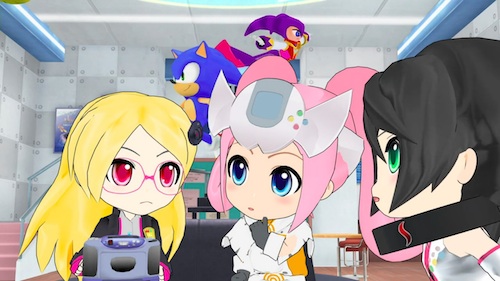
At one point, the AWO crew and guest Heidi Kemps talk about the SeHa Girls ending theme, which they explain is actually the company song for Sega in the 90s, but is sadly left untranslated in the official Crunchyroll release. I decided to take it upon myself to translate the song, only to realize that there is not only a full version of the original song, but that there’s also a full version of the variation used in SeHa Girls as well.
Thus, I present to you a translation of “Wakai Chikara -SEGA HARD GIRLS MIX-.”
A couple of notes: Wakai Chikara, or “Youthful Power,” was the Japanese Sega slogan in the 90s. Similarly, a lot of the quotes spoken in reference to Sega hardware are also advertising slogans.
Title: Wakai Chikara -SEGA HARD GIRLS MIX- Composed by Wakakusa Kei
(Japanese lyrics taken from here)
世界の創造 生命(いのち)にかえる Sekai no souzou inochi ni kaeru
Creating worlds, changing lives
セガ(SEGA!) セガ(SEGA!) セガ(Fu-!!)若い力 SEGA! (SEGA!) SEGA (SEGA!) SEGA (Fu-!!) Wakai chikara Sega (Sega!) Sega (Sega!) Sega (Foo!!): Youthful Power
—
If you liked this post, consider becoming a sponsor of Ogiue Maniax through Patreon. You can get rewards for higher pledges, including a chance to request topics for the blog.
Though I don’t mention it often, over the past year or so I’ve become a fan and regular viewer of Video Game Championship Wrestling, a weekly show streamed on Twitch that uses characters from video games and has them play out both matches and stories similar to an actual WWE show, with free pay-per-views (an oxymoron yes) that cap off each arc. During this time, I’ve come to realize how interesting the concept of pro wrestling video games are.
Whenever a video game is based on a “real world” activity, be it shooting people, playing basketball, or building TCG decks, the games are designed to simulate some activity where the intention is to win or lose. With pro wrestling, however, the point isn’t to overpower the opponent but to put on a show, and to merely mimic the idea that these two wrestlers are really going at it. This is what’s known to wrestling fans as “kayfabe,” or supporting the illusion that everything happening in wrestling is 100% real, and to go off-script or to break that illusion is a “shoot.” In that sense, a wrestling video game is akin to a video game about Shakespeare, where you would have to perform plays in front of an audience and receive their applause.
The gameplay mechanics that go into these wrestling games are a reflection of this performative quality, especially as time has passed and things have gotten more sophisticated. In the “drama” of wrestling, matches go back and forth, wrestlers have “signature moves” that tell you when they have the momentum, and they have “finishers” that generally net them the win should they land. If you look at a bad old wrestling video game, like Wrestlemania for the NES, it fails to follow “wrestling logic.” You punch and kick and never use holds, while occasionally a power-up symbol floats by and makes you stronger. Very few of the wrestlers can even perform their unique finishers, and overall there was clearly little effort expended to make it “feel” like wrestling beyond slapping some popular faces on and making the background a wrestling ring. In contrast, more successful games of the era such as Tecmo World Wrestling do a much better job of replicating the idea of a wrestling match, by doing something as simple as giving the characters unique finishers and having dramatic cut-ins when used on worn-down opponents.
In the case of WWE 2K14 (which VGCW utilizes for its show), there are actual built-in “drama” mechanics such as the fact that a wrestler can make a “comeback” that replicates digging deep when the chips are down. You have signature moves that can build up into finishers. All of the attacks are things that have happened in the history of the WWE (or at least in some sort of televised wrestling). While there is obviously a wide chasm of difference in terms of technological and graphical power between an old NES game and a PS3 game, what’s more important is that the latter is practically a game whose display is fundamentally based on “storytelling” rather than “competition.”
While this could be extended to, say, fighting games (which take a lot of cues from martial arts films and anime), with the wrestling game there’s a greater sense of mixing up what is real and what is fake because of the origin of the wrestling itself. As with so many things that dramatize combat, certain techniques would never work or would be too impractical in a realistic setting In the game world, but the wrestling video games take it a step further because supporting and maintaining kayfabe is in a way the key to victory. To win is to play along with the rules of wrestling as performance, and to do otherwise is perhaps in its own way a form of shoot.
—
If you liked this post, consider becoming a sponsor of Ogiue Maniax through Patreon. You can get rewards for higher pledges, including a chance to request topics for the blog.
Fighting games at this point are decades-old. While it’s debatable what can be considered the very first fighting game, what is indisputable is which game is responsible for popularizing the genre: Street Fighter II. That game, as well as all of its upgrades, are the standard by which all other fighters are judged, and it’s had a profound effect on how people discuss fighting games in terms of gameplay and strategy. However, if Street Fighter II is the archetype, there are a number of deviations from it, and one that’s become increasingly popular in recent years has been the Super Smash Bros. series.
Whereas in the past these two communities, traditional fighters and Smash, remained fairly separate (and one even unfairly mocked the other for not being a “real” fighting game), over the past year with the release of the latest Smash Bros. games, this has begun to change. One curious outcome of this has been that, when it comes to Super Smash Bros. for Wii U, a number of notable traditional fighting game community (FGC) members have taken to it, such as EVO Champion Infiltration and commentators Ultra David and James Chen, but it has also received negative attention from many players of Super Smash Bros. Melee, what is widely considered the most technical and mechanically difficult game in the franchise. The reason I believe this disparity exists is not only because of a difference in terms of the games themselves, but also a difference in how these respective communities have argued for what makes their games great.
The arguments made by many Melee supporters as to why it’s the superior game tend to revolve around the slew of difficult techniques that expand the range of possible moves available, as well as a heavier emphasis on free-form combos. The idea is that, while Melee is simple on the surface, being a game that was intentionally designed to be more accessible than the traditional fighting game, it in fact hides layers and layers of complexity. What might appear to be a game that is competitively limited due to its simplicity is in fact only the first step into a demanding realm of technical depth and discovery. Super Smash Bros. for Wii U lacks many “advanced techniques” and is slower-paced, and is therefore seen as an inferior game.
Perhaps this reasoning is a product of the way in which the FGC would dismiss Smash Bros. as a whole as “kiddie games,” but, whatever the case, this is the rhetoric that has been built up from Melee, that simplicity makes way for complexity, and that complexity equals depth. In the documentary The Smash Brothers, Melee commentator Prog likens the difficulty of Melee to Starcraft, a game that is also known for its mechanical difficulty that leads to a wider range of options for a player, with the idea that this leads to a kind of expressive freedom (though it should also be noted that the documentary’s director, Samox, chose to include that in the first place).
EG|PPMD—recent champion of Apex 2015, the largest Melee tournament ever—shares this sentiment:
EG|PPMD: Melee allows me to express myself on a very profound level. I am not just playing the character, I am my character. I am not just playing against my opponent, I am communicating with that person deeply and getting to know them on a very personal level and conversing on that level with the game as a medium.
Said differently, the depth and speed of the game allow me to really bring myself out. Competition is also incredibly fun! I would be really surprised if another game gave me this feeling, but that would be awesome if it did happen.
In contrast, the most prominent arguments as to why traditional fighting games are great take the opposite angle. Traditional fighting games are known for being difficult to learn on the surface, due to specialized inputs (quarter-circle forward + punch makes Ryu throw a hadouken, while just hitting the “special move” button for Mario makes him throw a fireball) and complex combos, but the prevailing philosophies are of the mind that the ideal core of fighting games, what makes them really worthwhile and competitive, is a foundation of simplicity and elegance, and that this is what leads to depth.
While the above video is super corny, it reflects the lessons taught by great players such as Tomo Ohira, who is featured in that video and is often argued to be the first king of Street Fighter II in its earliest days. For another example, take the fighting game player turned game designer David Sirlin, who argues that what makes fighting games games truly interesting is the level of mental interactions that come from “yomi,” or reading the mind of the opponent. Others such as Ultra David have argued that yomi isn’t as important as developing and executing a strategy, but the emphasis is still on the idea that technical complexity should ideally make way for something more basic and fundamental. This is what drives Divekick, a stripped-down fighting game that attempts to get to the core of fighters by limiting players to two buttons and emphasizing spacing and reads.
Although what I’ve shown above are not universally held beliefs by either community, I wanted more to show that they exist and are prominent parts of each community’s identity when it comes to their games. I also don’t want to give the impression that the communities believe that complexity vs. simplicity and their relationship with depth is black and white in either direction, nor that the games necessarily reflect the philosophies described above 100%. Rather, it’s more about how people visualize depth, and why the idea of depth becomes so subjective.
As for why all of this matters, there are two points to consider as to why traditional FGC members might praise Super Smash Bros. for Wii U whereas Melee enthusiasts might look down upon it. First, much like Divekick, the Super Smash Bros. games with their simplified commands have already removed a surface layer of complexity, and to many experienced fighting game players this is seen as a positive. Complexity hides an elegance of simplicity and what makes fighting games truly beautiful. These players want to introduce this beauty to as many people as possible, and Smash Bros. allows this.
Second, while previous games in the Super Smash Bros. franchise were developed by its director Sakurai Masahiro with a team that was more experienced in other genres, Super Smash Bros. for Wii U was developed with the help of Namco, which is known for fighting games such as Tekken and Soul Calibur. Although there haven’t been any specific statements made on this matter, I believe that the development team, rather than viewing Melee as their template, looked more to conventional fighting games for ways to add competitive depth to Super Smash Bros. and that the mechanics of the new game reflect this. In discussions with Dave Cabrera, a friend and someone much more knowledgeable about fighting games than I am, he had a similar impression. Ultra David and James Chen also state how they find Melee to be a more momentum-based game similar to the also-unconventional Marvel vs. Capcom series while Smash Wii U is more positional, similar to Street Fighter games.
The result is a clash of perspectives. On the one hand, the Melee community, which has developed its conception for what makes a good competitive game based on Melee and the idea of hidden complexity, sees Super Smash Bros. for Wii U as lacking many of the elements that made Melee great, and that it is therefore a lesser experience. On the other hand, the fighting game community, which bases its standards for fighting games on Street Fighter II and the idea of hidden simplicity, has in this new Super Smash Bros. something that exemplifies that concept while also catering more to their tastes. Whatever the reasoning, it’s clear that there are two different philosophies at work driving discussion.
—
If you liked this post, consider becoming a sponsor of Ogiue Maniax through Patreon. You can get rewards for higher pledges, including a chance to request topics for the blog.
Lately, I’ve been a fan of Video Game Championship Wrestling. It’s where you watch AI-controlled video game characters duke it out in a WWE game.
Tonight s “End Game 7,” the finale to the latest season of VGCW. I recommend that people turn in, as End Games tend to be the hypest of hype, rarely if ever disappointing. Whether it’s Phoenix Wright fighting his alternate-universe evil doppelganger, Little Mac coming back from the lowest of lows to bury Dracula in a casket match, or Kefka using the power of the Dragon Balls to become a god, there’s always something crrrrazy to look forward to.
Me personally, I’m looking forward to Kefka vs. Illidan, if only because there’s the possibility that Kefka will re-obtain his divine powers to fight Mr. Stormrage Winged Purple Beast to Winged Purple Beast.
You can check it out at the official VGCW channel at 6PM Eastern, 11PM UK, 12PM Central European.
Twitch Plays Pokemon is a fascinating social experiment. Through the magic of streaming video and live chat, tens of thousands of users try to collectively play a single game of the original Pokemon Red by inputting simple commands such as up, down, and a. The result is inevitably chaos as our hero Red looks to be religiously checking his items, pacing back and forth, throwing away valuable items, and never ever being able to walk in a straight line. Fans have lovingly crafted a lore around the whole endeavor, taking the idea of active participation to arguably another level.
If you’re reading this, you probably don’t need me to tell you about it, because Twitch Plays Pokemon has absolutely exploded in popularity, getting coverage on a number of major sites. Given this, I do have to wonder to what extent the popularity has to do with Pokemon itself? Pokemon is one of the best-selling video game franchises of all times, and inevitably many people have experienced Pokemon in one form or another, even if they haven’t played the original game. This is why you can get anywhere between 40,000 to 100,000 people on the stream simultaneously 24 hours a day, because much like the British Empire the sun never sets on Pokemon fandom.
I’m no exception as I’ve inputted a few commands myself. I’ve watched in horror as the convulsing young Pokemon Trainer threw away two of his most valuable Pokemon, and witnessed the serendipity of Digrat, the Rattata who keeps resetting the progress of the game by digging back to the beginning of caves and secret hideouts. What I’ve also learned is that Pokemon Red is still really fun in and of itself. While the latest games in the series, Pokemon X/Y, are by far the best Pokemon games ever in terms of level of refinement, things to do, and even ease of finally creating that competitive team to beat down your friends/people on the internet, the enjoyment that the first-generation games brought was not simply a matter of nostalgia. Nostalgia is a huge factor for me personally, as the familiar tunes are ingrained deep into my psyche and I realized I could recognize that a Drowzee was sent out just from hearing it cry, but the elaborate yet ultimately forgiving sense of exploration you get in Pokemon Red/Blue just feels right.
This isn’t to say that the collaborative aspect of Twitch Plays Pokemon is subordinate to the game itself, as it’s being part of a greater crowd that is (for the most part) trying to aim towards success but often unintentionally stifling it that gives the whole experience much of its charm. With the Pokemon games, you’ve always had an environment where success feel great, but with Twitch Plays Pokemon failure often feels just as satisfying. Either way, it makes for great stories to share.
There are about three weeks left in the Hurricane Polymar DVD crowdfund project and out of all the anime on Anime Sols, I think it’s a show especially deserving of attention. It’s fun, it’s wild, and somehow despite the clearly older animation doesn’t feel all that dated.
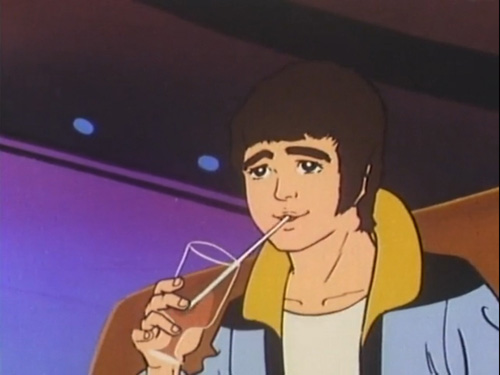
Some people might be more familiar with the Hurricane Polymar OVA from the 90s, and though I’ve never seen it myself I’ve been told that it is kind of a drab affair. This original 70s Hurricane Polymar TV series however is anything but mundane. In fact, although it’s called Hurricane Polymar, the Japanese used to write “Hurricane” actually means “Shattering Backfist,” while the opening is so vibrant and energetic that I think its style alone is reason enough to at least check out the first episode.
The actual premise is fairly silly but in a delightful way which still leaves plenty of room for action. The main character is Yoroi Takeshi, an assistant for a bumbling yet cocky detective named Kuruma Joe who proclaims himself to be the “Next Sherlock Holmes.” Every episode they fight a different animal-themed criminal organization, and Takeshi, under the guise of a simple yet loyal apprentice, secretly helps the detective’s investigations more than the detective himself realizes.
When things call for some martial arts violence, however, Takeshi can transform into the mighty Hurricane Polymar, who chops and kicks and creates illusions while somehow fitting the word “hurricane” into Bruce Lee-style WATAAAAAAs.
Rounding out the cast are the narrator (a dog), and Nanba Teru, who is perhaps the most stylish female character ever. Actually, like many old Tatsunoko Pro shows, the character designs are by Amano Yoshitaka, best known for his work on Final Fantasy.
Hurricane Polymar essentially acts as a mix of the comedy of Inspector Gadget, the secret identity shenanigans of Superman, and a Hong Kong kung fu flick. It’s not the kind of anime that has a really dramatic impact or a fantastic ongoing story, but it doesn’t really need it either. What Hurricane Polymar excels at is being supercharged entertainment, the kind of thing where you watch an episode just to get invigorated and ready to tackle the world. In fact, it might not be good to watch too many episodes in a row, as you might get too hype.
If you decide that you are so capable of handling Hurricane Polymar that you actually want a physical copy of it (and live in the United States or Canada), you can contribute to the Anime Sols crowdfund.





 OGIUE MANIAX