Lolita vs. Gothic Lolita Characters

Lolita fashion (and in fact fashion in general) is one aspect of Japanese pop culture that I never really looked into. However, I’ve come to learn a lot about the culture, its fans, its philosophy, and the sheer range of styles available that fall under the umbrella of “Lolita fashion.” What once looked to be “large bows and frilly dresses” turns out to have a good deal of subtlety and expression.

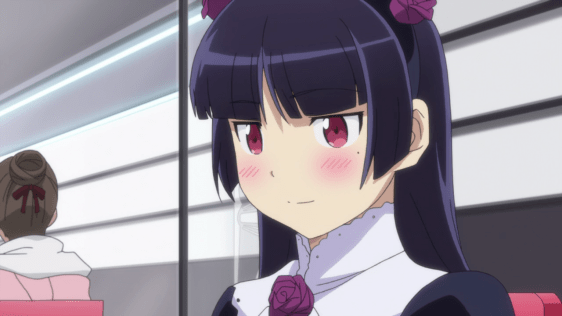
One of my discoveries in this period has been about how there are many different types of Lolita fashion. Prince Lolita involves a more masculine appearance. Sweet Lolita aims for a more child-like look. There are other variations as well, but what I’ve come to wonder is why Gothic Lolita in particular captures the imagination of anime and other related industries. If there’s a Lolita character in anime, more often than not she’s Gothic.

Some readers might be asking, “What’s the difference?” In fact, before I started reading up on the subject I didn’t know that there was a distinction myself. “Aren’t all Lolitas also Gothic Lolitas as well?” If others fell under similar misconceptions, then it’s perhaps no wonder that the Gothic variety would be so much more prominent.

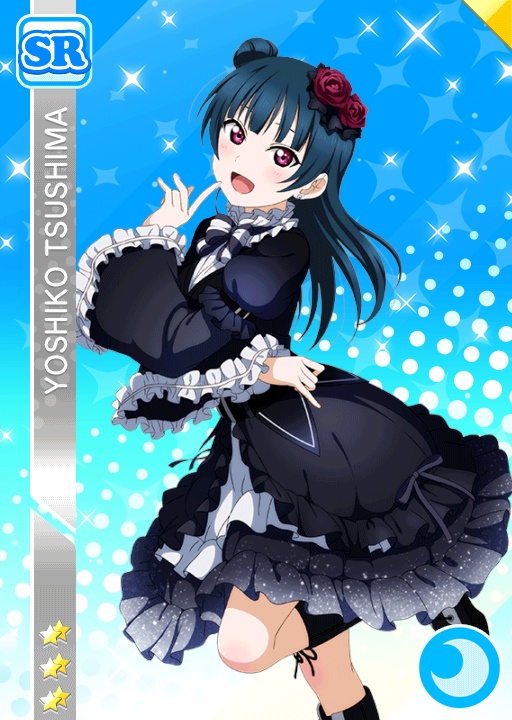
However, I think there’s another component to consider, which is the popularization of the chuunibyou personality trait. Consider many of the Gothic Lolita characters that appear in anime and manga, such as Kuroneko in My Little Sister Can’t Be This Cute, Kanzaki Ranko in The iDOLM@STER: Cinderella Girls, or Yohane in Love Live! Sunshine!! More often than not, their dark, Victorian clothing is supposed to be an expression of the desire to come from some kind of otherworldly, magical place. Lolita fashion enthusiasts often love it as a way of presenting themselves to the world in a way that goes against expected norms, but this resistance can be easily understood. When paired with the idea of the chuunibyou character and their wish to be the reincarnation of Demon Lord Wingding III, it enters more the realm of comprehensible fantasy and not so much feminist criticism, which is a factor in Lolita fashion in part or in whole.

When people see Lolita, they’re often probably not viewing it from the same perspective as the wearers of Lolita Fashion themselves, bringing their own values (for better or for worse) to the meaning of Lolita fashion. Perhaps in a world full of chuunibyou stories, the Gothic Lolita, more than any other Lolita type, is the visual and personality type that can resonate with the greatest number of people unfamiliar with Lolita fashion, and the result is that Gothic Lolita reigns as an archetype over others.

If you liked this post, consider becoming a sponsor of Ogiue Maniax through Patreon. You can get rewards for higher pledges, including a chance to request topics for the blog.

Deep in the Tiger’s Den is a Het Pairing: Sasuke × Sakura’s Doujinshi Popularity

When I traveled to Japan this past May, one of my activities was to visit various doujin shops such as Toranoana. I like to see what’s popular, to get a general image of trends among hardcore fans. Which titles are popular? Which characters? Which pairings? And unlike doujin events, where many artists release their own works more for passion than profit, Toranoana is about what sells.

In Akihabara, this means going to multiple Toranoana stores, each of which specialize in a certain demographic. One in particular is devoted to girls (though nothing prevents guys from entering and shopping there), and as expected it’s primarily filled with BL.

However, one major exception was actually Naruto. In a relatively small yet dedicated section, surrounded by guy-guy pairings in most every other title, heterosexual romance took to the majority of the Naruto shelf. Of those couples, Sakura × Sasuke was by far the most popular.

I’m not against Sasuke × Sakura by any means, but I have to wonder why does it hold such a special place among hardcore female anime and manga fans. Why is it to the point that other het pairings are outshone, and the normally dominant BL pairings fade into the distance in this one ninja-themed microcosm?

One thing I discovered while searching for reasons is that Sasuke × Sakura is perhaps the most popular straight romantic pairing in English-speaking Naruto fandom, and visibly popular among Japanese fans. Given that context, it might just be the case that its sheer prominence is able to overcome even the fujoshi hegemony of the girls’ doujin scene.

Perhaps one factor is that Sakura is an easy target for female readers to project themselves onto. She’s also closer to the two most important characters in the manga than anyone else. However, given that fujoshi popularity is usually based on the strength of the pairing itself than the individual characters, it makes me skeptical about Sasuke × Sakura being an exception, even if it is a heterosexual ship.

From what I’ve read, a common reason fans support Sakura is her sense of loyalty towards Sasuke. She’s willing to support him through thick and thin, and even oppose him when she feels he needs it. The scene where Sakura tries to stop Sasuke from leaving to join Orochimaru appears to have been a flashpoint for supporters and haters of Sasuke × Sakura, because the former saw Sasuke’s “thank you” and knocking Saa away as him reluctantly pushing away those he cares about, while the latter saw it as an example of Sasuke showing flat, platonic fondness at best. Given the actual outcome of the series—Sakura and Sasuke married and had a child—the fans clearly won out, with Sasuke’s behavior best described as “reliably angsty.” Even as husband and wife, Sasuke’s #1 gesture to show affection is to tap Sakura on the forehead, and then disappear for months or years on end, undergoing secret missions to protect his family Andy his village.

Sasuke × Sakura reigns strong as a premiere het pairing, and I’m not bothered one bit. If any fans would like to help me understand the SasuSaku mind further, feel free to comment!

The Important Lesson Nadesico Teaches Us About Entertainment

Current discussion of entertainment media is filled with questions as to what messages, intentional or otherwise, are conveyed to audiences. Does a work promote racism or sexism through its characters actions? Does a series portray as heroic characters whose values are misanthropic? In this time, one work to look back on is the science fiction anime Martian Successor Nadesico, which highlights the idea that creative works are ultimately subject to personal interpretation, but that those subjective outlooks can have real consequences.

In Nadesico, many of the characters are fans of an old giant robot anime called Gekigangar 3. Cut from the same mold as 70s-era anime such as Getter Robo and Voltes V, it’s a simple story about heroes of Earth defending against alien invaders through the power of friendship and passion. At first, this series within a series acts mainly as a fun retro contrast to the setting and aesthetics of Nadesico itself. This all changes, however, when it’s revealed that the enemy forces are also fans of Gekigangar 3. In fact, they’re not just fans—they’ve based their entire civilization on Gekigangar.

Jovian men dress like the male heroes of Gekigangar 3. The women pattern themselves after the sole female character, Nanako. Even the robots they use to fight the Earth forces are made to look like the titular Gekiganger III. This mutual love of the same series between the space battleship Nadesico’s crew and the Jovians opens up the opportunity for peace. After all, Gekigangar 3 is all about friendship and passion, right?

One character, Jovian Vice-Admiral Kusakabe Haruki, does not see it that way, and he acts as the main antagonist at the finale of the TV series. When asked how he could defy the principles of Gekigangar, Kusakabe argues that his actions are completely in accordance with the show that forms the basis of Jovian society because Gekigangar 3 is about victory for the righteous against evil.

The same action scenes that the main crew of the Nadesico viewed as the bridge to peace also acts as the pretense for war and violence. While it’s possible to argue that Kusakabe’s interpretation was misguided and a too-narrow reading of Gekigangar 3, the reality is that it fuels his actions, and that even if the work had the best of intentions, the work does not exist in a vacuum and is subject to both social and personal perspectives.

The final joke about Gekigangar 3 is that the ending is pretty bad and hokey. Negating the noble sacrifice of one of the characters, Joe (whose design and narrative purpose is a mix of Hayato and Musashi from Getter Robo) conveniently comes back from the dead for a last-second save reminiscent of the finale of Mazinger Z when Great Mazinger shows up. The main hero of Nadesico, Tenkawa Akito, talks about how he held off on watching the last episode of Gekigangar 3 for a long time, only to find out that it’s nothing special. In a way, everyone who worshipped Gekigangar 3 put it on a pedestal that far exceeded its actual content, but at the same time the way it inspired people to strive for their best and to live with passion in their hearts is seen as a net-positive. “Remember this anime at its best” is the takeaway for the crew, but it requires an already-held belief of wanting to take a positive and humanity-affirming spin on any media consumed, which won’t always be the case for everyone.

Even works with the best of intentions, like Fight Club, are infamous for being misread. Entertainment meant to portray something in a negative light might accidentally be seen in pop culture as supporting those ideas. So for those shows and films like Gekigangar 3 that aren’t necessarily meant to be deep or extremely thoughtful, the opportunity for both loving and hateful interpretations is even greater. Ultimately, it’s the responsibility of those watching to give their takes on a work, even if it’s not 100% intended by the original creators, so that a work’s interactions with the cultural and social symbols that live and grow among us can be discussed and debated upon.

Hopefully Celebrating Independence: Ogiue Maniax Status Update for July 2018

The United States is another year older, and it’s starting to feel its age. I normally don’t try to talk politics too much in these monthly updates, but the times compel me to.

Before I jump into the nitty-gritty messiness, however, I want to thank my sponsors on Patreon and Ko-fi. You help make writing and blogging even more worthwhile than it already is.

Thank you to…

General:

Johnny Trovato

Ko Ransom

Alex

Diogo Prado

Sue Hopkins fans:

Serxeid

Hato Kenjirou fans:

Elizabeth

Yajima Mirei fans:

Machi-Kurada

When it comes to the state of the US in 2018, I feel a great deal of anxiety. Politics are tricky, but I constantly feel as if those in charge, especially on the right, are playing with napalm and are willfully ignoring the danger they pose to the people and the very foundations of American democracy. I’ve been watching Legend of the Galactic Heroes: Die Neue These, and every instance of the democratic Free Planets Alliance trying to use jingoistic loyalty or play with human lives to gain favor for an election season his way too close to home at the moment.

If I had to describe my political beliefs, I’d say I’m broadly left/liberal. It’s not as if I walk lock-step with everything the left says, but if I have to choose between a side that can get a little over-enthusiastic about their desire to create a world free of racism, sexism, and discrimination of all kinds, and one that holds onto power by any oppressive means necessary, then I’m willing to take some disagreements from the former. Seeing the endless mental hoops that defenders of our current political climate try to jump through, all in order to keep power in the hands of those who willingly exploit the marginalized, saddens me.

I know that some others on the left don’t share my interpretation of Darling in the Franxx. And in the past, I’ve actually argued that Anita Sarkeesian was unfair in her early analyses of women in video games. But it’s better for a Sarkeesian or anyone else to try and call out issues of representation where she sees them than to pretend they don’t exist at all—or worse yet, drum up controversy for the thinly veiled sake of minimizing input from other groups.

On a lighter note, here are my favorite posts from June.

How Super Smash Bros. Ultimate’s Gameplay Decisions Support Both Casual and Competitive Players

The new Smash Bros. was revealed, and I am beyond excited. One thing I did notice is that a lot of the new changes try to embrace both casual and competitive players, and I’m optimistic about it.

“Mogusa-san Fights Against Appetite” Concludes on a Body-Positive Note

The sequel to Mogusa-san, the story of a charmingly gluttonous girl, comes to an end.

Thoughts on Shinkalion, the Robot Anime Designed to Promote Bullet Trains

Subliminal, liminal, and superliminal approaches to selling the Shinkansen.

Return to Genshiken

It’s the final post on my series 1 re-read! See my closing thoughts on my favorite manga ever.

Hashikko Ensemble

Chapter 5 of Kio’s new manga is the best one yet.

Patreon-Sponsored

The Relevance of Older Anime to Newer Anime Fans

It’ll always benefit a newer fan to look back, at least a little.

Closing

Here’s to hoping for a better world.

Precure: The Crossroads of Voice Acting

Fifteen years is a long time for an anime to continue running strong, and Precure still stands at the apex of the magical girl genre in terms of prominence and notoriety. In that decade and a half, numerous voice actors have lent their performances to Precure, and it’s made this franchise into one in which seiyuu of all stripes, from anime veterans to relative newbies, intersect. To be involved with Precure can become a defining role, or an affirmation of an illustrious career.

In the original Futari wa Pretty Cure, Cure Black was played by Honna Youko, who at the time had more experience playing small roles in live-action series. While the few voice performances under her belt at the time were big deals—starring roles in Studio Ghibli films Omohide Poroporo and Whisper of the Heart—she wasn’t an anime industry juggernaut. Opposite Honna in the role of Cure White was Yukana, who was coming into her own as a fan-favorite due to roles such as Li Meiling in Cardcaptor Sakura and Teletha Testarossa in Full Metal Panic! Since then, Honna has earned some major roles in anime, notably Sumeragi Li Noriega in Gundam 00, but the bulk of her career is in voice-overs and narrations for television. Yukana, meanwhile, has become an anime industry veteran.

Mizusawa Fumie, voice of Cure Marine

Another voice actress who had a career-defining performance in Precure is Mizusawa Fumie, voice of Cure Marine. Prior to Precure, she was relatively unknown, playing roles mostly in small and relatively obscure anime. Now, she’s beloved by both children and adults for her energetic performance in Precure, and is considered a highlight of every crossover movie she appears in. In contrast, Mizusawa’s counterparts—Nana Mizuki (Cure Blossom), Kuwashima Houko (Cure Sunshine), and Hisakawa Aya (Cure Moonlight—were in 2009 already known for numerous characters in extremely popular series. These include Naruto (Nana as Hyuuga Hinata), Azumanga Daioh (Kuwashima as Kagura), and Sailor Moon (Hisakawa as Sailor Mercury).

The list of veterans goes on. Sawashiro Miyuki (Mine Fujiko in the more recent Lupin III works) became Cure Scarlet. Kugimiya Rie, the tsundere queen, came to Precure as Cure Ace. Tamura Yukari (the Magical Girl Lyrical Nanoha to Nana Mizuki’s Fate Testarossa) is Cure Amour. Koshimizu Ami, who originally began her career as Nadja Applefield from the 2003 Toei anime Ashita no Nadja, became Cure Melody. In each case, there’s a sense that they’ve “arrived in Precure” at long last.

One unique case is Miyamoto Kanako, who began her Precure career as a theme song vocalist across multiple series. In time, she landed the role of Cure Sword before going back to performing more themes. Other Precure singers have made cameo appearances, but only Miyamoto has made it as a Cure.

Various levels of acting experience existing in a production is hardly unusual, anime or otherwise. However, what Precure has is sheer longevity and the constant reboots to bring in new blood. It’s been around for so long that girls who grew up with Precure are now old enough to audition for it. To that point, according to the original producer of the franchise, Washio Takashi, 2017’s Kira Kira Precure a la Mode was the first time that girls who grew up watching the series became the voices behind the Precures themselves. Precure is in a unique position to push younger talent while also celebrating the efforts of voice acting’s Titans, and it should continue to do so for as long as it’s around.

Return to Genshiken – Volume 9: Don’t Call It an Ending?

Here we are: the end of Genshiken. At least, that’s what we could’ve said if the sequel never came out. It’s fascinating to look at this last volume while both remembering the finality with which it hit back around 2006, and being cognizant of the developments that have occurred since then.

What is Return to Genshiken?

Genshiken is an influential manga about otaku, as well as my favorite manga ever and the inspiration for this blog, but it’s been many years since I’ve read the series. I intend to re-read Genshiken with the benefit of hindsight and see how much, if at all, my thoughts on the manga have changed.

Note that, unlike my chapter reviews for the second series, Genshiken Nidaime, I’m going to be looking at this volume by volume, using both English and Japanese versions! I’ll also be spoiling the entirety of Genshiken, both the first series and the sequel, so be warned.

Volume 9 Summary

A visit from Ohno’s American friends, a New Year’s shrine visit, a fight between Sasahara and Ogiue, and a failed confession from Madarame all lead to the finale of Genshiken: graduation for Sasahara, Kasukabe, and Kohsaka. Good times, good memories, and an open future are in store (at least, until the sequel shows up).

A New Ogiue

It surprises me that even to the very end, we’re still learning a lot about Ogiue. It might be because she’s had such a dramatic shift in her own life in the previous volume (i.e. resolving her inner turmoil and starting a relationship with Sasahara) that we’re seeing sides of her that were previously obscured.

One of the most notable qualities in Ogiue after her change is that she loves being in love. She wants Sasahara to hold her. She enjoys walking and talking. She’s easily embarrassed, so public displays of affection are out of the question, but the thrill of being with Sasahara permeates her being and helps to make every day of Ogiue’s a less angry one compared to her past. However, what becomes evident is that Ogiue did not undergo a total transformation. That anger and confrontational stubbornness is no longer omnipresent, but it’s still there, and it still fuels Ogiue when she needs it.

This quality of hers is seen in Volume 9, when Ogiue asks Sasahara (who’s now working as a manga editor) to look over her submission for a published manga magazine (Monthly Afternoon, the home of Genshiken, as we later learn). Here, we find out Ogiue tends to take criticism very personally. In her eyes, comments about the lack of a clear protagonist and a too-long introduction are attacks on her character and her ability, and she lashes out at Sasahara. But as Yabusaki points out, Ogiue’s not the type to give up easily. Motivated by rage, she revises her manga (and draws a second submission!) in a way that incorporates Sasahara’s advice. So it turns out that she’s bad at receiving criticism but great at utilizing it—a volatile combination that Sasahara somewhat laments.

The unique editor-artist/boyfriend-girlfriend relationship between Sasahara and her is another facet of Ogiue hat is revealed in this final volume. In the sequel, this dynamic is constantly referenced, even as early as the first chapter of Nidaime, making it a vital part of how they interact with each other. While I’m loathe to simplify everything into S&M relationships, there is a sort of subtle sadomasochistic quality to their relationship because they keep going through this pattern of criticism, anger, and renewal, only to come back for more. But given that Ogiue’s both willingly letting herself get mad and taking it out on Sasahara, it’s not like there’s a clear-cut “S” or “M,” if you can even use those labels at all.

As an aside, Yajima in Nidaime goes through a similar thing, creating a highly entertaining manga after getting fed up by her lack of apparent talent compared to Hato, but I wonder if that’s less anger and more frustration.

Silence

In Chapter 53, “Confession,” Madarame runs into Kasukabe alone in the club room, conjuring up the memory of when he first started to develop a crush on her. Sure that she’d be forever out of his reach, Madarame elects to stay quiet about his love, preferably for the rest of his life. Back when I first read it, I thought Madarame did, if not the right thing, then the Daidouji Tomoyo route of “I want the person I love to be happy.” I think it was and is easy to relate to the plight of a noble (or perhaps spineless) nerd and his unrequited feelings, and to see Madarame as a mildly tragic (perhaps moe) character.

Of course, things have changed since then with Madarame in Nidaime confessing, being turned down, and ending up with Sue after a drawn-out competition from a bevy of female suitors, but I distinctly remember back then thinking that leaving things unspoken and unsettled might indeed be Madarame’s fate. And now, looking at this whole plot thread in full, I’d say Madarame confessing in Nidaime was the right choice because it’s clear he just couldn’t move on. In order to find another potential partner, he needed to be rejected because he’d be stuck in perpetual emotional limbo otherwise.

But Madarame’s confession isn’t the only time silence plays a major role. One of the highlights of Volume 9 is a special chapter dedicated to showing Kasukabe finally doing a joint-cosplay photo shoot with Ohno. The story has Kasukabe an unwilling victim of her own promise, Ohno trying to sneakily give photos of Kasukabe to Madarame, Ohno getting clocked for her efforts, and everyone getting ready for the graduation. This is done entirely without dialogue or sound effects (the sole word balloon being a “!?”), and it creates a powerful mood as the penultimate chapter. The fact that it comes directly after “Confession”—silence following silence, so to speak—might be coincidental, but it only adds to the feeling that “this is it, the end of Genshiken.”

That chapter is also an exercise in creativity for Kio, which is something I see in Volume 9 more generally. Earlier in the volume, when the characters are visiting a shrine in Narita for New Year’s, there’s an image of the group walking around, overlaying a bunch of other panels showing off the scenery. I have to wonder if these are the seeds that lead to the more dynamic (perhaps one could say shoujo-esque) paneling of Nidaime, and if that shrine visit is the start of Kio’s fondness for dumping tourist information into his series.

Before moving to the next topic, there’s an interesting panel in the silent chapter: an unfinished drawing of nighttime that leads into a Sasahara and Ogiue scene. It’s clearly not meant to be unfinished in that “roughness makes it look more interesting!” way, and it’s never been fixed or corrected. This isn’t a big deal, but it stands out all the more because of how detailed the scenery and environmental backgrounds typically are in Genshiken.

Sue, and the Story “Yet to Come”

Sue’s always been a fascinating character in the sense of her being a non-American’s (surprisingly accurate) interpretation of an American fangirl, but also in that she makes a strong impact from her mere presence. To this day, one of my favorite moments in Genshiken is Sue reenacting the “hiccup scene” from Azumanga Daioh—there’s something perfect about those “clones” of hers showing her gradually moving toward Sasahara, delivering every line in the process, before planting her fist in his solar plexus. In one of the between-chapter comics, Yabusaki runs from her (feeling awkward/shy around foreigners), only for Sue to unexpectedly start chasing her. If there’s any character in Genshiken who’s consistently hilarious, it’s Susanna Hopkins.

Given how little she appears, it’s amazing how much we see of Sue in Volume 9. We learn that she wants to study in Japan, we see her form a weird and affectionate bond with Ogiue, and we see her interact with Madarame more. If Genshiken had ended here as it originally did, we’d be left with just a general sense of Sue’s comfort around the two of them. With the context of Nidaime, these two relationships become much more significant. Even though Sue’s known Ohno for years, Ogiue might actually be her best friend. As for Madarame, that scene of him with Sue on his shoulders as he feels the warmth of her thighs takes on a whole new dimension.

Graduation as the Turning Point

Graduation is a special time in most school-themed works that run long enough, and it’s typically presented as all the things one might expect: a changing of the guard and the dawn of a new age. Genshiken ends up having two (three if you count Nidaime), and I think of its many strengths is how it handles these generational changes. They’re not necessarily abrupt, and it’s not like the old characters go away, but the refocus of the core cast is tricky to handle. While I know everyone has their own favorite “era” of Genshiken, I’m impressed by how well this manga handles that transition each time.

Anachronisms and Retcons

It amuses me that we still see flip phones in Volume 9. By the time Nidaime rolls around, Ogiue already has a smartphone. The sequel is supposed to take place not long after Volume 9, but the actual real-life time gap meant a lot of small things ended up changing. In the end, I think it’s for the best, instead of having to try and faithfully replicate 2005-2006 for the newer series. Besides, one of the points of Nidaime is to reflect how much otaku culture had changed over the past decade, and that wouldn’t quite fit if Kio just went straight back to the subculture of the mid-2000s.

In fact, one of the big changes in Nidaime is the much-higher female population, something that’s already sort of in motion in the first Genshiken. This brings up a big question: is the original Genshiken ending retconned? In it, we see a group of anonymous guys come up to the club room and greet an off-screen club president. In Nidaime, those guys are nowhere to be found. Is it supposed to be some undefined “future?” Should we pretend that scene never happened? It can’t be the past, because there’s a poster of Sänger Zonvolt and the little-girl version of Irui Ganeden from Super Robot Wars Alpha 3 (2005).

Kasukabe Saki, Moe, and a Translation Correction

I’m about to say something that might surprise Genshiken fans: The English translation of the final page has issues that alter the meaning significantly.

The final side story for Genshiken series 1 involves everyone having post-graduation drinks, when Madarame brings up a topic of discussion: “What would make Kasukabe be moe?” They go through different possibilities (sexy character, tsundere), only to realize that other girls closer fit those archetypes (Ohno and Ogiue, respectively). Madarame thinks the only way it’d work is if Kasukabe were a virgin, such that her insecurities became her vulnerability and thus her moe quality. Kasukabe asks Kohsaka what’s moe about her, and his answer is nothing. The other girls then wonder if Kasukabe really hasn’t noticed Madarame’s feelings, and the entire manga ends with her looking at them (and the viewer), oblivious.

This might not be how you remember it, and it wasn’t quite how I remembered it either. Back when I first read this, that I thought the final chapter was more about taking the piss out of Kasukabe and just ending with a good ol’ classic otaku discussion. Only now, having done this re-read, I realized both my error and the official English translation’s mistake. Japanese is very much a language of unspoken context and Genshiken is quite slangy when it comes to how the characters talk. By being even a little off in terms of understanding the meaning conveyed, it can completely derail the point of a scene.

Here’s the English translation:

Keiko: I wanna watch this whole thing explode.
Ohno: No, that wouldn’t be fair. Because you wouldn’t be the one exploding.
Ogiue: I’ve always felt this way, but I don’t think Kasukabe-senpai realizes how sensitive she is to conversations like this.
Girls: ……
Kasukabe: Huh?

And here’s what it’s saying in Japanese (I’ve made the translation a little stiff on purpose to give as much of the full context as possible).

Keiko: I sooo wanna step on that landmine.
Ohno: You can’t. Because you’re not the one who’d explode.
Ogiue: Um……I’ve been thinking about this for a while, but do you really think Kasukabe-senpai hasn’t noticed? I mean, she’s perceptive when it comes to this kind of talk, right……?
Girls: ……
Kasukabe: Huh?

The issue is that the English translation first has Keiko talking about wanting to watch it all explode, when the Japanese is using the term “step on a landmine” to basically mean “I want to bring up something I shouldn’t,” i.e. the fact that Madarame is in love with Kasukabe. That’s why Ohno responds with “You wouldn’t be the one exploding,” because it’d be Madarame catching the brunt of that. Then, when Ogiue chimes in, what she’s really talking about is how odd it is Kasukabe hasn’t noticed Madarame’s feelings when she’s normally so good at catching on to these kind of subtle social cues. The trouble is the term binkan, which can mean sensitive or susceptible, but also aware and alert.

So the real point of this whole thing is that Kasukabe’s potentially “moe” qualities are there, just not in the way that’s readily apparent. They mainly exist only relative to her interactions with other individuals, namely Kohsaka and Madarame. With her boyfriend, it’s her inability to handle Kohsaka’s cutting remarks. With Madarame, it’s the possibility that, somehow, the most socially perceptive person in the group hasn’t notice how hard this guy is crushing on her. As we later learn in Nidaime, Kasukabe’s suspected Madarame of liking her all along, but didn’t pick up on the actual hints, in a “stopped clock is right twice a day” sort of way.

Final (Random?) Thoughts: What is Genshiken‘s Greatest Strength?

As I finish this revisit of my absolute favorite manga series, I’m left to wonder why Genshiken grabs me so thoroughly. Luckily, a recent interview with Kio Shimoku revealed an important factoid: Kio never actually spent all that much time in the anime/manga/gaming club that became the inspiration for Genshiken. Instead, his characters are shaped by a seeming desire to make them feel as real as possible. And that’s who these characters are. They’re otaku, but they’re not limited by that label. They’re human beings, full of wants and desires, contradictions, the potential for growth, and so much more. That’s what drew me to the series, and that’s what inspired me enough to name this blog after Ogiue. The endless voids of her eyes and the anger inside of her filled me with inspiration and joy all those years ago, but it’s the way she evolved that made me a fan of her (and this great manga) forever.

The Relevance of Older anime to Newer Anime Fans

This month, I was asked to write about “the relevance of older anime to newer anime fans.” The short answer is that older anime is always relevant, even if newer fans don’t think it is. I’ll leave the criteria for “older” up for interpretation, but no matter whether it’s one year or 30 years, looking back on the anime that came before is a way to gain perspective on this form of art and entertainment that enthralls us so.

When a fan only watches what is newer, there’s a risk of developing a very skewed sense of what anime was, is, and can be. It’s easy to assume certain ideas are entirely new and have never been explored before, when in fact there’s a whole back catalog of shows that take on those topics. For example, the surface reputation of Gundam as vaguely “giant robots do fighty army things” can often color people’s views of what the franchise is actually like, and actually taking the time to look into those older series can broaden one’s perception.

In other cases, it’s easy to think that it’s “always been this way,” when certain stylistic or narrative tendencies are in fact the product of continued development reflecting the changing times. I recall being a young anime fan in the 90s, when most of what we got were short OVAs meant to be proof-of-concept adaptations for manga that doubled as advertisements. Often, they didn’t make any sort of effort to acclimate new viewers, so many fans were under the assumption that most anime were visually beautiful but unfollowable nonsense story-wise. We often failed to understand that it was simply what we received.

The above examples aren’t necessarily about looking backwards, but the point isn’t to position “older anime” as “better.” Not only is that highly subjective, but there are strengths and faults to anime made in any era, as well as cultural assumptions that might be controversial in hindsight. Rather, the important thing is to look beyond one’s current purview.

I understand that it’s easier said than done to get into older anime and not have it feel like a “chore.” It shouldn’t be “watch this show from 20 years ago because it’ll make you appreciate newer things—to hell with your own enjoyment!” Moreover, there are so many forces at work that directly and indirectly discourage newer anime fans from looking backwards. The newer shows take up all of the mental space through advertisements and social media discussion and who knows what else. If watching anime is a social experience for someone, it can become difficult to convince friends to abandon the opportunity to keep up with current trends. And while good aesthetics are in the eye of the beholder, older shows can at first look dated and thus lack relevance to a young, modern person. But for those who can overcome those hurdles, the reward is a more expansive library to potentially love and learn from.

This is actually why I’ve begun to think that remakes aren’t such a bad thing. Notably, Devilman Crybaby has re-introduced a classic manga to the wider world, and people have embraced it. The visuals might not be standard anime by any definition, but they’re fresher and more contemporary than what came beforehand, and they help fans to understand that the stories told in the past can still be relevant and powerful even if they look like they’re from a bygone era. If done well, it can encourage fans to break out of their shells and see.

See more, see wider, see further.

This post was sponsored by Ogiue Maniax patron Johnny Trovato. If you’d like to request topics for the blog, or support Ogiue Maniax in general, check out the Patreon.

Back from the Future: Ogiue Maniax Status Update for June 2018

I’m back after an exciting honeymoon in Tokyo. It was a grand ol’ time full of food and nerdery, and also spending way too much money on otaku goods. For example, I actually bought all of Heartcatch Precure! on DVD—albeit at a huge discount. (I promise I didn’t just do Precure-related things, honest.)

I’m happy to answer (most) questions about staying in Japan to the best of my ability, so send ’em in!

But before that, I’d like to thank my sponsors on Patreon and Ko-fi.

A big thank you too…

General:

Johnny Trovato

Ko Ransom

Alex

Diogo Prado

Sue Hopkins fans:

Serxeid

Hato Kenjirou fans:

Elizabeth

Yajima Mirei fans:

Machi-Kurada

I still had some posts go up even while I was away, so here are my favorite posts from May:

Darling in the Franxx and Choice in a Sexual Dystopia

Some people think the show is greatness itself, while others think it’s hyper trash. Here are some of my thoughts.

Project Z Revived! “Hakai-oh – Gaogaigar vs. Betterman Part 1” Novel Review

My review of the latest Gaogaigar light novel, which is actually the long-awaited sequel to Gaogaigar Final!

“Flukes”: Competitive Rigor vs. Sustainability in Esports

How important is grabbing an audience vs. absolute competitive integrity in esports?

Hashikko Ensemble

Chapter 4 continues the kooky sense of almost-camaraderie.

Patreon-Sponsored

Gamblers’ Paradise: “Uma Musume: Pretty Derby”

My feelings on the new horse girl-themed anime and the expected franchise surrounding it.

Closing

As you might expect, I plan to have a ton of blog posts concerning my trip to Japan. It won’t be a full on travelogue, but I plan to have reviews of doujin events, reviews of series I picked up, and more. Who knows? Maybe it’ll even bleed into July!

Darling in the Franxx and Choice in a Sexual Dystopia

Amidst shipping wars and attention given to its fanservice, hearing about the anime Darling in the Franxx secondhand gives the impression that it’s light on substance at best and alarmingly conservative in its sexual values at worst. Yet the more I watch it, the more I’m convinced that these descriptions do not accurately convey what the show has to offer. Instead, what I see is an anime that explores political discourse on what it means to be in a relationship, focusing on questions of equality, agency, and defiance.

WARNING: Spoilers for Darling in the Franx

Darling in the Franxx takes place in a science fictional world where kids are artificially created and trained to use giant robots called “Franxx” in order to fight massive monsters known as Klaxosaurs. They live in a world that separates adults from children, has those same adults revered like virtual gods, and directs sexual energy towards combat. Those teens are put into not-so-subtle male-female pairings called “stamens and pistils,” who then enter a cockpit that has them basically pantomiming doggy-style sex without even knowing what it means to kiss. While these arrangements can seem like an excuse for some highly suggestive imagery, it’s implied throughout the series (if not stated outright) that this is an intentionally exploitative design within the context of their world.

The fact that their society is partly based on adults exploiting children, stunting and controlling their hormones, and making it seem like a favor is already a kind of political message. However, plenty of anime both deep and shallow have done the same. “Kids vs. adults” is a classic trope, and even the biggest names in mecha (e.g. Evangelion and Gundam) feature them to some extent.

This might appear to be an admonishment of “frivolous” romance. However, it’s quite the opposite. I find that the romances are of central importance to the complexity of Darling in the Franxx. The relationships, how they’re presented and what they represent, are a direct window into the shows’ political themes and messages. Those themes and messages, in turn, are actually supportive of more liberal views on gender and sexuality than assumed at first glance.

Futoshi and Kokoro: Relationship Betrayal or Relationship Freedom?

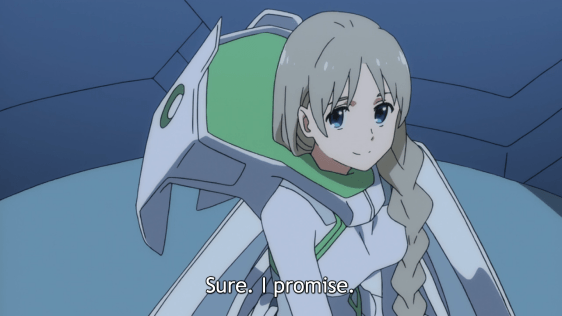
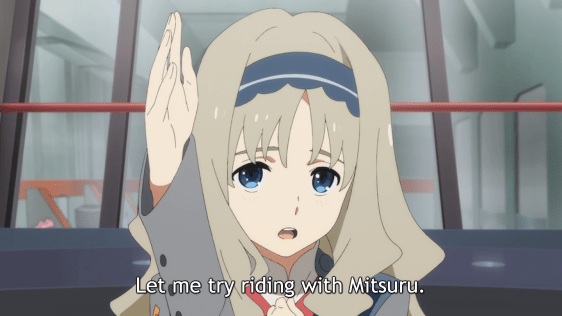
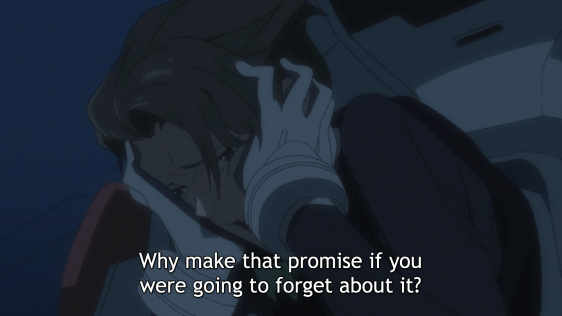
One of the more controversial episodes sees the character Futoshi pledge his devotion to Kokoro. After weakly promising to go along with Futoshi’s pledge to be his “partner [i.e. co-pilot] forever,” Kokoro later decides to try and switch partners to Mitsuru when the option becomes available—an implicit rejection of Futoshi. This was the cause of a great deal of consternation, with speculation that the show was trying to cheaply indulge in the NTR [cuckolding] fetish found in Japanese otaku culture.

However, what I think frames the importance of Kokoro’s actions is the fact that the stamen-pistil pairings are assigned. Yes, Futoshi was absolutely infatuated and Kokoro agreed to his pledge, but it was also established that Kokoro’s natural tendency is to oblige others and not speak her mind. This is what attracts her to the surly Mitsuru in the first place. He’s got a huge chip on his shoulder and isn’t afraid to let it be known—something Kokoro finds incredibly difficult. Rather than this being some “betrayal” of Futoshi, I find it better viewed as Kokoro finally taking initiative in her life and finding someone in Mitsuru who complements her flaws and benefits from her strengths. Kokoro breaks down the walls Mitsuru has established to hide his vulnerability, while Mitsuru’s attitude inspires Kokoro to prioritize her own feelings.

Certain elements of the series, such as the male-dominant sexual imagery of the cockpits, and the fact that other Franxx pilots outside of the core group tend to be emotionless, imply a world that thrives on power imbalances and sex without joy. While this could be considered the message of the show, romantic developments based on the need to find a true equal says otherwise.

Hiro and Zero Two: Equal Partners Against the World

Nowhere is the emphasis on equality more evident than in the main love triangle between protagonist Hiro, his childhood friend Ichigo, and the part-Klaxosaur pilot Zero Two. At first, it comes across as harem-esque wish fulfillment starring a guy who seems like he stepped out of every generic light novel ever. There’s a vague sense that the girls are in love with him because he’s ambiguously “nice,” in the most boring way possible. So why is Hiro so much more attracted to Zero Two?

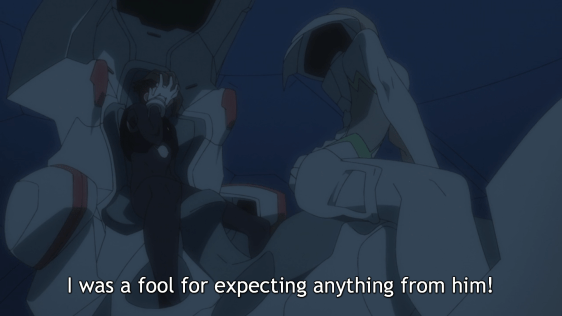
It can seem like mere exoticism, or the series deciding that one girl has to win, but there are moments throughout the series that suggest a vital difference between how the two girls relate to Hiro. Ichigo worships Hiro, and places him on a pedestal. Zero Two, however, inspires Hiro to push forward and to try and overcome his limits. When we find out their lost history in Episode 14—that the two actually met when they were children and had their memories altered by the adults as a result—it’s not just about Zero Two being “another childhood friend.” Instead, Hiro’s attempt to rescue her and escape together is the ultimate act of a child who constantly questions the status quo of a rigid society. Similarly, Hiro is the catalyst that allows Zero Two to experience the outside world, and to see herself as more than a monster. There is a sense of equality and a constant desire to push one another forward that is present when Hiro and Zero Two are together—one that doesn’t exist with Hiro and Ichigo.

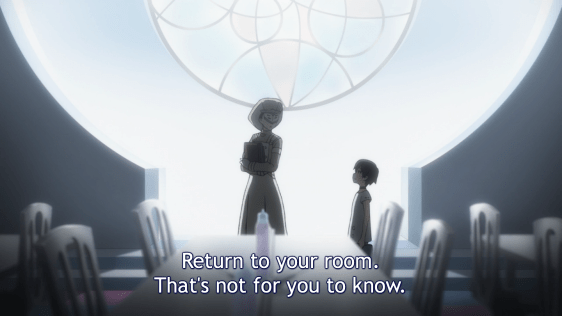
Surprisingly, Hiro himself becomes an increasingly fascinating character as the series continues, being revealed as not really the goody two-shoes his initial impression conveys. That childhood flashback to meeting Zero Two highlights the fact that he was actually a problem child for a society that encourages kids to stay ignorant and obedient. A young Hiro refuses to take “you’re not supposed to know” as an answer, and is punished for it by having his memories erased and being forced into a more complacent personality. When he meets Zero Two again for the first time years later (in Episode 1), that puts him on the path towards his naturally inquisitive self that dares to challenge society’s assumptions.

Gender Conformity or Gender Rebellion?

Accepting that the romances are more than skin-deep, the question then becomes: what exactly is the message conveyed through these relationships? A recent episode has garnered some backlash because it’s being seen as reinforcing gender conformity and a heteronormative worldview. However, based on other information about the world in Darling in the Franxx, I feel that it’s not so simple.

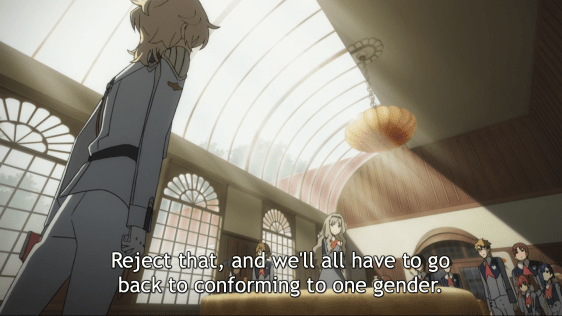
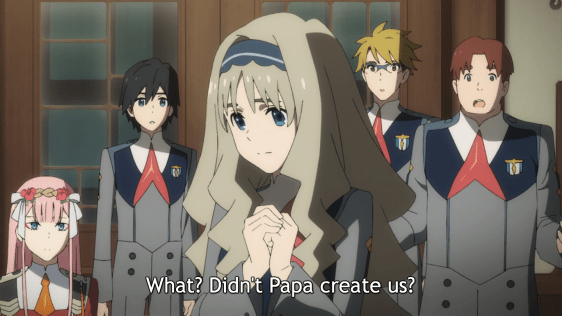
In Episode 17, Papa’s personal elite squadron, the Nines, move in with the main characters. Once there, they discover that Kokoro has discovered information on pregnancy and childbirth, which is forbidden in their world. The leader of the Nines, named Nine Alpha, talks about how traditional pregnancy and childbirth are unnecessary because humans have evolved past it, and that to go back to the old ways would be to restore rigid gender roles and identities.

An antagonistic character is making that point, which potentially makes it look like it’s being presented as the “wrong choice.” But if anything, Darling in the Franxx features a world where all sexuality regardless of gender, sex, or sexual orientation is taboo, so it’s not simply a matter of “proper gender roles” being enforced in the narrative.

Consider the fact that only one of the characters, Kokoro, is expressing any desire for a traditional pregnancy. Consider also that the characters literally have no idea how they came into the world, believing that the “Big Brother”-esque Papa “made them” in some mysterious fashion. It’s one thing if they knew how they were birthed, but they’re not even allowed to know in the first place. Moreover, a previous episode features one of the other pilots, Zorome, meeting an adult who is heavily implied to be his biological mother—which means the talk about having evolved past the need for traditional childbirth might very well be a lie. To me, it looks like the issue isn’t that Papa is cruel for preventing humans from being able to have sex and reproduce and fulfill established gender roles, but that he’s suppressed all education about the topic.

Adults have their organs removed and their puberty somehow controlled or skipped over. Franxx pilots are allowed to keep their reproductive organs solely because they’re the key to piloting their robots, and they die early as a result. Sex and sexual desire are made a tool of the government regardless of the people and who they’re attracted to.

Franxx piloting becomes the closest thing people have to being able to engage in physical relationships, and even that is not so cut and dry. One of the other pilots, Ikuno, is clearly a lesbian or at the very least bisexual, but the world doesn’t even acknowledge her state as a possibility. When she suggests an attempt at a pistil-pistil combination for piloting, it doesn’t work—as if the state-ordained sex substitute known as the Franxx cannot allow it. Even then, she comes to Kokoro’s aid, slapping Nine Alpha for verbally attacking Kokoro’s newfound values. Prior to this, Ikuno can be seen bristling at the idea that gender distinctions could become more dominant if society reverted back to ancient times, but she still comes to Kokoro’s defense. I believe this is derived from the commonality between Kokoro’s wish for heterosexual procreation and Ikuno’s own emotional defiance of heteronormativity, which is that both wish to be free of a world that denies their feelings.

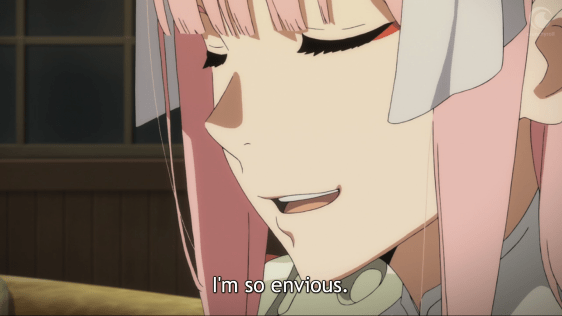
Even the main couple itself, Hiro and Zero Two, is a subtle rebellion against rigid gender roles. If the ability to have children is what defines women according to the story, then that would invalidate Zero Two, who mentions in Episode 17 that it is physically impossible for her. Yet her romance is the paramount love story of Darling in the Franxx. While she expresses envy at the fact that the humans can potentially have children, it’s more to do with them having a choice in the first place.

More Questions

One curiosity the series has yet to address is why the Nines seem to be capable of piloting in formations counter to the stamen-pistil pairing. Nine Alpha, for example, reads as male, but takes the bent-over position in the cockpit normally reserved for girls. Are the Nines, in part or in whole, actually outside of the male-female dichotomy in terms of sex and/or gender? Are their Franxx units somehow different from the rest? These unanswered questions further deepen the story and its potential avenues.

Conclusion: Emotional Depth and Political Rebellion

Darling in the Franxx starts off with many signs that it’s a shallow endeavor centered around boring wish fulfillment, shock value, and an excuse for sex and violence. But the show carries a lot of themes I would dare say are important to where we currently are in society. Its characters are extremely emotional teenagers, the classic archetype of anime, but their actions within the context of their world and the restrictions that world places on their bodies and minds gives renewed importance to everything they do. The romance of Darling in the Franxx is both a window into the politics of society and the importance of equality in emotional and loving relationships that transcend the strict hierarchies and roles given to them by a world of adults that seeks to mercilessly exploit its children. Rather than fighting for sexual conformity, the characters in Darling in the Franxx fight for sexual freedom and the freedom to choose their bodies’ futures, whether they know it or not.

Given that the series is yet to conclude, there’s a definite chance my interpretation is off the mark. If that time comes, I will be happy to reassess my analysis, and to see what I got right and what I got wrong.

“Flukes”: Competitive Rigor vs. Sustainability in Esports

The question of whether or not to stratify different groups of competitors occurs in any competitive setting, but it tends to be ground zero for debate in gaming even more than in traditional sports or fields such as Chess. For this reason, a recent tweet by veteran League of Legends and Overwatch commentator MonteCristo lamenting the lack of “pros-only” tournaments for fighting games garnered a significant backlash.

There’s one core reason for the negative response to MonteCristo: those who consider themselves part of the fighting game community tend to consider the ability for “gods” and “mortals” to meet in open competition—and for god slayers to emerge at any moment—as one of the strengths of fighting games. In particular, people latched onto the use of the word “flukes” as evidence of the esports works being afraid of “true competition.” If esports could be compared to tennis, then to the FGC a world of invitationals (and nothing else) would be akin to the pre-open era of tennis—when pros and amateurs were not allowed to compete against each other at major tournaments.

However, having followed esports for over ten years now, I’ve noticed that this seeming incongruity in values stems from a difference in what aspects of competitive gaming are prioritized. Is it about competition and camaraderie, or competition and sustainability? While the two are not wholly incompatible, the esports side has long expressed a desire for recognition, expansion into the mainstream, and eventually a reverence similar (but not necessarily identical) to traditional sports. With respect to this, figures in esports have emphasized the importance of “narratives,” and seeing how big a deal they are is very telling as to how esports tends to try and achieve sustainability.

In 2010, StarCraft II ushered in a new era in esports, and tournament circuits such as GOM Starcraft League in Korea and the US-based Major League Gaming were established to give players a chance at competition. While there were many differences in their formats—GSL participants played only a handful of matches per day over the course of weeks and months, while MLG pitted hundreds of players against each over a single weekend—both came to the table early on with a certain goal in mind: to create stars.

GSL created a distinction between the cream of the crop (Code S) and the almost-greats (Code A), where players from the latter could earn the right to be promoted to the former. However, in the first few incarnations of the GSL, it was purposely made difficult for players to fall out of Code S. Essentially, the players who performed the worst in Code S had to compete against the best of Code A in a potential changing of the guard. The number of players who dropped down to these “Up and Down Matches” was restricted, and the Code S players could still end up defeating the hopefuls from Code A and send them back down. The reason? To make sure that recognizable faces remained on camera so they could establish fanbases, and by extension garner a sense of celebrity—to be people that fans and players could remember and look up to.

This was also the reasoning behind MLG‘s seeding system for its multi-tournament season, which saw players who did well at earlier tournaments get byes into much, much later stages of later league tournaments. Going on a tear in your first tournament could pay off down the line. If a player earned a top-32 spot in one tournament, they could keep getting place into a high spot for the next, and then play just well enough to not tank out, it meant a stable spot for increased visibility.

Eventually, both GSL and MLG revised their formats to encourage less ossification of brackets and more chances for rising stars to make a name, but that still doesn’t erase the fact that their initial versions tried to create a delineation between the “Pros” and the “Joes.” Central to all of this was the idea that “good narratives draw viewers in.” What better way to encourage a good narrative than to have a consistent cast of “characters” for the audience to know and root for?

Examples of the benefits that heroes and heroic narratives provide to competition are numerous, but one that stands out in particular is the story of basketball legend Larry Bird. At the time, basketball was seen in the US as largely a “black sport,” and thus had a relatively small white audience. Larry Bird helped to change that, as could be seen from one nickname of his: the Great White Hope. Was this racist? Yes, to a degree. Did it also help pull basketball into the mainstream? Yes it did.

(Is there a comparison to be made between this example and the fact that esports vs. FGC exists along something of a similar divide in terms of racial demographics? Also yes, but that discussion will be for another time.)

Narratives do not have to be manufactured whole-cloth. Seeing an underdog defeat a champion, or watching a winner cement his place with an undefeated streak happens just from competition existing. However, in a world where visual presentation can often be confusing to those unfamiliar, presenting these bouts as being between humans with wants and desires and emotions (especially simple ones like anger) can bridge that gap. So it’s no wonder why esports organizations frequently try to control it through player perception, delineations between pros and amateurs, and so on. But one question that arises is, does setting things up so conveniently end up compromising the integrity of competition? The answer is that it can, but it largely depends on severity.

Take professional wrestling, which has been predetermined for many decades precisely because the promoters understood that most audience members cared more when the wrestlers had charisma. Famously, when a bland 1940s wrestler named George Wagner dyed his hair blond and became the arrogant and effete “Gorgeous George,” his antagonistic demeanor drew audiences in droves to see him in the hopes that they’d get to witness George getting destroyed. Pro wrestling isn’t a true athletic competition precisely because it becomes easier to control the narrative and get viewers invested.

But even in a legitimate sport like mixed martial arts, the desire for narrative can influence decisions. While the results of matches aren’t fixed, the media and advertising machine surrounding MMA are there to try and produce the best narratives they can, either by using what’s there or cooking up some controversy. That’s because they know that narratives make people care. Athletes will be brought out to drum up a sense of animosity between the two. Is it real? Is it fake? Does it matter if it sells tickets? A guy like Conor McGregor, who’s naturally antagonistic but also an amazing fighter, puts butts in seats. People are eager to see him be on either the giving or receiving end of an ass-kicking.

At the same time, leaving things to chance can be scary for those who have substantial amounts of money riding on the success of their investment. Conor McGregor is in some ways the ideal, but he also has a tendency to get himself in trouble and make the UFC look bad in the process. One can even compare those blunders to the number of players caught blurting out racial slurs onstream. Just because someone’s a winner doesn’t mean they’re a good spokesperson, especially if they have no media training and are just kids plucked out of online lobbies and given an environment to train in. When there are so many variables at play where something can go wrong—quality of the game itself, image of competitive gaming to the outside world, the perception of “nerds”—it’s understandable (though not immune to criticism) why teams, tournaments, and organizations would want to control what they can.

The divide between FGC and esports, or the perception of it, has largely to do with community vs. respectability. The former looks inwards, and believes that having a solid core, a group of passionate players who can weather any storm together through a love of competition, is paramount. The latter looks outwards, and aims to establish itself as a permanent fixture in the world, something that cannot die because it has the size and backing to keep it going forever. The two are not irreconcilable, but finding a balance (if a balance is desired at all) requires parties that can trust each other to not abandon the other side’s principles.