
I wrote a post about my favorite anime and manga characters from New York City. You’ll notice that many of them are orphans or something like that.

I wrote a post about my favorite anime and manga characters from New York City. You’ll notice that many of them are orphans or something like that.
I made a post on the Waku Waku +NYC Blog based on the idea that, in the media, cosplayers are the first people to get attention in reports on anime conventions and other geek gatherings, and that this potentially gives cosplayers a great deal of responsibility. Do you agree or disagree?
A lot of things have happened over the past month at (or around) Ogiue Maniax. Observant folks might have noticed that I’ve started linking to other posts on this blog. That’s because I’ve started contributing to the social media for an upcoming convention in New York City, Waku Waku +NYC, and this includes writing blog posts for them. I hope you enjoy the extra material, as while they’re not quite the same as what I’d normally write for Ogiue Maniax, they’re still intended to be fun, informative, and promote discussion.
However, if you look at the actual Patreon page, I don’t include those extra blog posts in my creations, as I believe it’s not quite fair to bolster my numbers like that when it’s all content supported by another organization not explicitly for Ogiue Maniax. Readers, do you agree, or would you rather see everything I make go on there?
This month’s special sponsors are:
Ko Ransom
Alex
Johnny Trovato
Anonymous
May was actually the first month where I wrote two sponsored posts:
We Don’t Need No Stinkin’ Holograms (At Least Not All the Time): Voca Nico Night
An Acquired Taste that Gets Better with Time: Mysterious Joker
I definitely enjoyed writing them, and they got me to look more into topics I’ve had only passing familiarity with, and if you like what you see, why not consider becoming a sponsor? At $30 a month you can request topics as well.
I’m also still putting consideration into a new sponsor level, which is to have Skype conversations with me every week, and a milestone, which will involve me writing a negative review of Genshiken just for fun. The goal would not be to exaggerate, but to fairly state the flaws of my favorite series. What do you think? Would that be fun?
A new Super Robot Wars game is coming to the Nintendo 3DS, and at this point people know the drill. A bunch of old favorites come back, a few new series make their debut, and because it’s not on a “main” system they can be a little more daring with their choices in terms of which new anime to bring along.
Returning Series
-Aura Battler Dunbine
-Story of Aura Battler Dunbine
-Zettai Muteki Raijin-Oh
-King of Braves Gaogaigar
-Mobile Suit Gundam Unicorn
-Mobile Suit Gundam 00 the Movie
-Macross Frontier Movies
-Shin Mazinger (Mazinger Edition Z: The Impact!)
-Mazinkaiser SKL
-Martian Successor Nadesico
New Series
-Panzer World Galient
-SD Gundam Gaiden
-Mobile Suit Gundam AGE
-Giant Gorg
-Macross 30
While the new series at a glance might not seem that unusual, I think a second look actually brings home how bizarre the newcomers are. In some cases, it’s because they lend themselves well to the crossover nature of Super Robot Wars. Panzer World Galient and Giant Gorg are two series fans probably thought would never join SRW, yet it’s odd that this would be the case because both of their settings involve disparate levels of technology and a greater dedication to an almost more philosophical sense of science fiction that potentially lets them connect various generations together. Gundam AGE is at this point one of the black sheep of the Gundam franchise, yet its generational story can be the glue that holds similar yet different series together (Shin Mazinger and Mazinkaiser SKL, for example).
On a personal note, I’m looking forward to hearing the instrumental version of the Galient opening.
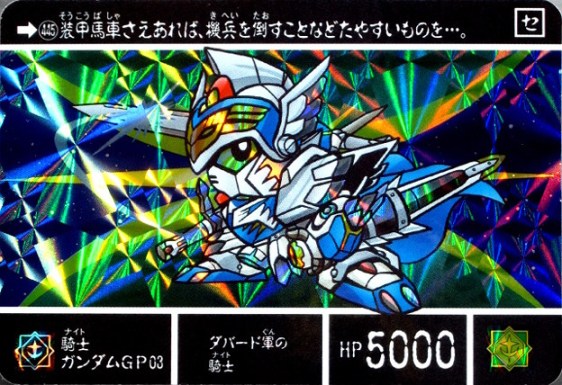
Then you have SD Gundam Gaiden, and I think to appreciate its inclusion we have to go back to the beginnings of Super Robot Wars.
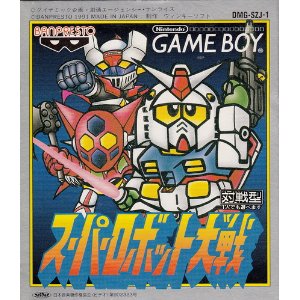
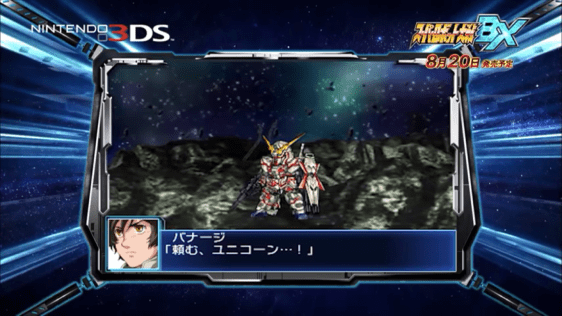
In the early iterations of SRW, the Gundam units took their designs and aesthetics from the popular SD Gundam franchise. This meant mobile suits looked extra cutesy, with large expressive eyes that future pupils. As SRW progressed this changed: pupils disappeared, robots became not quite as squat, and the old-fashioned SD look became a relic of the past. By having a series that actively celebrates that more cartoonish look, it’s almost like a piece of SRW history is returning. It’s all the more notable then that the Unicorn Gundam from Gundam UC is probably the least chibi-looking Gundam in SRW history; its proportions are practically realistic.
As for Macross, that franchise is fairly common in Super Robot Wars, but Macross 30 is actually a Playstation 3 game devoted to celebrating the Macross metaseries as a whole. So, in a game dedicated to bringing together multiple giant robot anime, one of their inclusions is a video game all about celebrating decades of one series in particular. Does this mean that all of the Macross characters across history will show up, or is the intention more to focus on the original characters of Macross 30?
So, while it’s not as wild as throwing in Jushin Liger or Iron Leaguer, Super Robot Wars BX might have just enough twists to the formula to make things interesting.
—
If you liked this post, consider becoming a sponsor of Ogiue Maniax through Patreon. You can get rewards for higher pledges, including a chance to request topics for the blog.
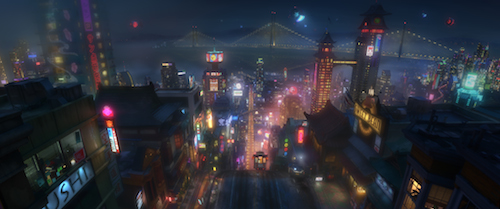
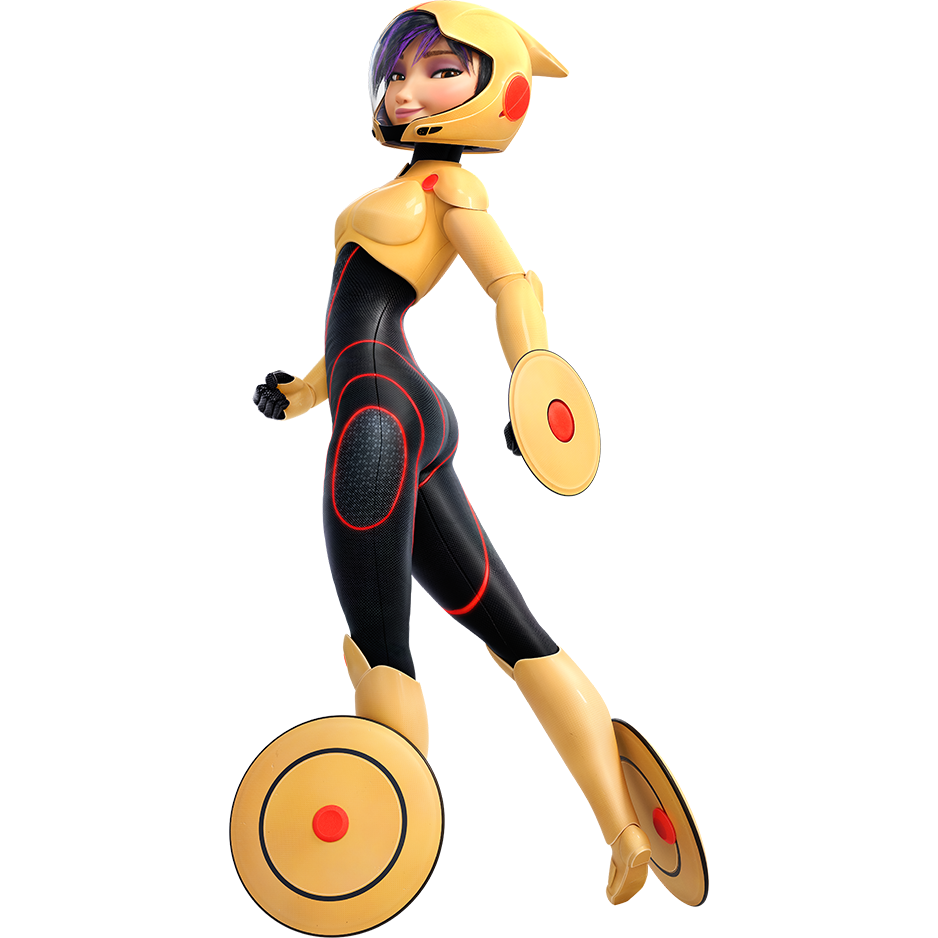
When watching the Disney animated film Big Hero 6, one of the first things that stands out is the city in which the characters live: the portmanteau of “San Fransokyo.” How it relates to either San Francisco or Tokyo remains a mystery, but it’s probably meant to pay tribute to both Disney’s own American origins and the inspiration Big Hero 6 takes from Japanese media.
However, Big Hero 6 hasn’t been the only work of fiction to combine American and Japanese cities. One such work is an anime that dates back to the 1970s: Hurricane Polymar.
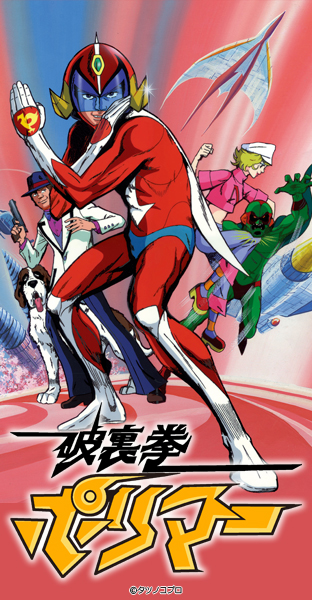
A series by Tatsunoko Production, the same studio responsible for classics such as Gatchaman and Casshern, Hurricane Polymar comes from that same era and young Amano Yoshitaka-derived aesthetic sense. A mix of Inspector Gadget, Bruce Lee, and Superman, the series takes place not only in the capital of “Washinkyo” (Washington DC + Tokyo), but in the country of “Amehon” (America + Nihon [Japan]).
I think it’s fun to imagine what an actual “Amehon” would be like, or where it would come from. Would it literally be the US and Japan deciding to be one nation? Would it be some strange alternative universe where they were the same land mass all along? Would anime fans who despise American culture and love Japanese culture be more at home, or would the appealing “foreignness” of Japan be lost in the process? Going back to anime itself, could Hurricane Polymar himself be considered a blend of American and Japanese superhero tropes and qualities, similar to how the characters of Big Hero 6 occupy a similar category?
—
If you liked this post, consider becoming a sponsor of Ogiue Maniax through Patreon. You can get rewards for higher pledges, including a chance to request topics for the blog.
This post was sponsored by Johnny Trovato. If you’re interested in submitting topics for the blog, or just like my writing and want to be a patron of Ogiue Maniax, check out my Patreon.
—
As part of my Patreon rewards, I was recently asked to write about “Voca Nico Night,” a series of concerts celebrating Vocaloid music broadcasted over the Japanese streaming site Nico Nico Douga. This topic is somewhat outside of my normal purview, as I will admit to not being especially knowledgeable about Vocaloids or the scene surrounding them (I enjoy the music and recognize the characters but would not call myself a devoted Vocaloid fan), but as I watched recordings of Voca Nico Night I found that the performances seen at Voca Nico Night can be viewed as a reminder that, at the end of the day, talented human creators are an integral part of the success of Vocaloids and the music that is created using them.
The story of how virtual idol Hatsune Miku became an international sensation is the kind of tale that can cause some to proclaim the green-haired, leek-twirling, robot-voiced “singer” as the sign of a glorious future, and others to describe her as the death of music. For years the music company Yamaha had put out a voice synthesis program, but with some improvements to the software and the use of a cute girl in chic, futuristic clothing, things changed. Suddenly it was embraced by composers, musicians, music enthusiasts, artists, and writers both amateur and professional, and you can find countless examples of Vocaloid music, art, and more on sites such as Youtube, Pixiv, and Nico Nico Douga.
All of this has culminated in Vocaloid live concerts, where holographic projections of the Vocaloids sing and dance as live crowds cheer them on. This presents a fascinating contrast in the “life” of the Vocaloid. At the same time that Miku and the others become more “real”, their artificiality becomes even more pronounced. After all, even if she were to be brought into reality, Miku still has the appearance of an anime character, and that stylization and abstraction cannot be divorced from her even they’re re-drawn and individualized by various creators.
This can be viewed as a strength, as Miku’s self, constructed from the effort and desires of millions, makes no illusions about the synthesized elements of her music (as opposed to the auto-tuning that regularly occurs in popular music these days), but for those who believe that music comes from the soul, that way of thinking is certainly difficult to swallow. While I’m more of the former opinion, the latter I think is something worth keeping in mind.
This is where I think Voca Nico Night really shines, because without the expensive holograms, without the explicit desire to see Hatsune Miku or Megurine Luka or the Kagamine Twins, what’s left are the DJs, the musicians, the performers at center-stage, engaging with their audience both online and in the flesh. You can still hear the distinctly robotic tones of the Vocaloids, but their images are not taking all of the attention. Instead, the Vocaloids’ role as tools for producing music comes to the forefront, and while talking about the “functionality” of an actual musician would be crass and unfair, the origins of the Vocaloids means that they can be as “useful” or as “soulful” as one needs them to be. Voca Nico Night exists somewhat opposite the live concerts that get all of the attention, and while I hesitate to use a “yin-yang metaphor,” I do think that having both is for the better.
In many ways it reminded me of the times I’ve attended chiptunes concerts (another scene where I have interest but cannot call myself a true fan). Like the Vocaloid scene, chiptunes creators and fans embrace a type of music often associated historically with a visual component that arguably puts less emphasis on the music or the musicians (video games in the case of chiptunes), but people who love chiptunes use concerts to show their appreciation and their talents outside of what is typically expected out of a “performance.” I have to wonder if Vocaloid concerts and the like are at an intersection between the rock concert where band members are sometimes viewed as gods, the orchestra where the relative significance of the individual musicians versus the composers’ original scores can be argued, and the club where a DJ combines beats and melodies together to form something new.
Check out the list on the Waku Waku +NYC Blog. And no, the answer isn’t “Ogiue in that Cardcaptor Sakura cosplay that one time.”
Top 10 rankings are surprisingly difficult for me, because I think I dwell on them longer than you’re supposed to. Still, I understand that they’re accessible and easily digestible content and a great way to introduce anime and manga fans to series they may not have heard of, so you’ll see my try them every so often.
Of course, feel free to leave comments, either here or at the link above.

My Teen Romantic Comedy SNAFU was an anime that really impressed me in spite of its seemingly cliche-ridden premise, and whenever I talk to others who were skeptical of the show, I recount to them my surprise that I had found something worth watching.
On one occasion, I was chatting with some friends online and explaining how I really liked the fact that the series can get a little serious at times when it comes to criticizing elements of social interaction people take for granted and that the main character has a “loser” perspective that feels different from other similar light novel protagonists. One friend responded that this was exactly the sort of thing he hated about the show, and because it had been a while since I had seen SNAFU I wondered if my own experience was colored by my biases or some other factor.
Since then, a sequel series has started coming out for the Spring 2015 season. While I haven’t had the time to watch as much as I would like, re-visiting this anime through this second season (which by the way is for some reason animated by a completely different studio) has helped me to clarify why, in fact, I enjoy the surly adventures of Hikigaya Hachiman.
Hachiman has a very cynical personality, and his self-described strength is that his particular world view allows him to see problems and find solutions that the popular kids can’t. On the surface it appears as if Hachiman is the rebel who’s too cool for school written by someone who resented the popular students growing up (whether justified or not), but I believe that SNAFU portrays his character with far more consideration. For example, in the first two episodes, Hachiman clashes with a number of other characters, who basically criticize him for his methods, and I think it’s very important that he appears to be affected by their words. Hachiman isn’t the invincible outcast, and he at times unwillingly questions his own mindset. His cynicism is as much a weakness as it is a strength, and it leaves open the opportunity for him to grow and change, or at least acknowledge when he needs the help of others who simply see things differently.
The fact that the series premise is that Hachiman, Yui, and Yukino solve other students’ problems lends itself to also reflecting and showcasing the issues of the main characters themselves. As the series goes along, I think that this quality in SNAFU will become even more important.
—
If you liked this post, consider becoming a sponsor of Ogiue Maniax through Patreon. You can get rewards for higher pledges, including a chance to request topics for the blog.
This post was sponsored by Johnny Trovato. If you’re interested in submitting topics for the blog, or just like my writing and want to sponsor Ogiue Maniax, check out my Patreon.
—
It is a somewhat common mistake to assume that Japan as a wholly foreign and alien culture despite events such as the influence of China on its development, the appearance of Commodore Perry, and various interactions with nations such as Portugal and the Netherlands. However, no matter where it comes from, Japan’s own history can be considered unique (and just about any culture or area can say the same), and there are certain implicit and assumed elements that can permeate Japanese culture.
I was asked by Johnny Trovato to address broadly the subject of how theological differences between Japan and countries with more of a Christian history affect how anime and manga are viewed. Truth be told, even though I’ve watched plenty of series which reference religion and spirituality such as Neon Genesis Evangelion, Inari Kon Kon Koi Iroha, and Hermes: Winds of Love (don’t watch that last one), I’m not really an expert on the subject. I originally planned on tackling the subject from a fairly limited perspective, but fortunately I recently discovered a book called Holy Ghosts: The Christian Century in Modern Japanese Fiction by Rebecca Sutter. While it’s not quite on the subject of Japanese religions and beliefs, it did help me to realize an aspect of Japanese culture, media, and literature that I believe sheds a bit of light on how religious beliefs are used in anime and manga.
One of the more major lessons I took away from reading Holy Ghosts is that Japan has historically approached religion in a rather pragmatic way. Shintoist, Buddhist, and Confucian beliefs exist together in Japan, but only as far as they’re convenient. When Portuguese Jesuits arrived in Japan and sought to convert its people, not only did the Japanese sometimes interpret Jesus as a kind of “Buddha” that conformed to their own polytheistic views, but many of the daimyo who converted did so because the Portuguese also sold firearms. Spirituality exists, but it has existed to to serve the people, rather than having people be absolutely beholden to one or more gods. Even the idea of the Emperor as god was a response to the prominence of other religious beliefs being used as tools to control territory.
To take what is probably too big of a leap into the present day, I think we can still see this tendency at work when it comes to the utilization of religious aspects in anime. Evangelion famously features Christian imagery and mythology mainly as a way to provide something fairly exotic to Japanese viewers, while Spirited Away is just as much about encouraging young people to rediscover nature regardless of overt spirituality. This, I believe, is where a good deal of the confusion or dissonance might lie when it comes to how people in the United States and other traditionally Christian cultures interact with anime. Of course, not every person who lives in those countries is necessarily religious, and there has been plenty of media that plays fast and loose with the Bible, from Bruce Almighty to Teen Angel (I still love that show, by the way), but often there’s some kind of counter-play with the assumption that many people know at least the basics of Christianity and that there are plenty who firmly believe in its tenets.
I’m going to use two examples of media, one from the US, and one from Japan. Xena: Warrior Princess was a popular show when it aired. Having begun as a spinoff of Hercules: The Legendary Journey, it at first focused mainly on ancient Greece and the presence of Greek Gods. Eventually though, they decided to branch off and include Christianity in the show. Xena meets both David and Jesus, and any historian would probably tell you that it makes no sense. It didn’t matter in the show itself to a certain degree, but it was directly up against the value of Christianity in the US, and how accurate or (intentionally inaccurate) a work it was factored into how it was perceived.
Now contrast this with Devilman, the story of a teenager who gains the power of a devil so that he can fight other demons. Its creator, Nagai Go, stated that he designed Devilman to resemble a bat, even though that’s not quite the imagery people in countries more familiar with the idea of Satan and Hell would utilize. Eventually Satan himself appears, and he turns out to be a hermaphrodite because Lucifer has been described in some texts as being as such. However, the main value of Lucifer’s dual-gender appearance is visceral shock, and Devilman as a whole didn’t have to take into account how much its readers would be going to church every Sunday. Devilman, if I recall correctly, also mixes in various spiritual beliefs including Japanese ones, and it all effectively works to (on a somewhat pragmatic level) help the story along.
The idea that religion isn’t this overwhelmingly powerful subject in Japanese culture and society isn’t necessarily shared by all who live there, of course, but I think there’s a lot in the old adage that says, in Japan, you have a Shinto birth, a Christian wedding, and a Buddhist funeral. That synthesis of beliefs and the ability to mold them into whatever you want defies the idea of religion as this overwhelming, monolithic thing that cannot ever be altered, and anime and manga are proof of that.

The Yo-Kai Watch video game series has been a smash hit in Japan, even managing to outsell Pokemon. Recently there has been news to start bringing the franchise and its accompanying merchandise to English-speaking audiences, and the main character of Yo-Kai Watch, Amano Keita (pictured above, right), has become Nathan Adams. This leads me to speculate on the specific choice made here, and to think about how it compares to the meaning inherent to the original name.
Video games are no stranger to changing characters’ names to make them more culturally accessible, but a question arises as to whether there is any meaning lost (or even gained) in localization of names. For example, a lot of Pokemon characters names gain become much more explicit in terms of wordplay though in a way that has less to do with the inherent meanings of names and more to do with how they sound or have built up associations through culture and history (Lance the Dragon Master, Brock the Rock Gym Leader).
In the case of Amano Keita (which sounds like a fairly typical Japanese name) in Japanese his name references very specific things, and because the name has official kanji it becomes easier to see what it could mean. Amano Keita is 天野景太, where 天 means “sky/heaven,” and 景 means “scenery/view.” The Ama in Amano is on a basic level associated with the Japanese goddess Amaterasu (EDIT: It also might very well refer to Amanojaku, a demon-like creature in Japanese folklore. Thanks to Zack Davisson for informing me!). Thus, Amano Keita’s name basically means “a view of the heavens,” which I think associates him with spirituality and mythology and thus the titular youkai in Yo-Kai Watch.
What about Nathan Adams? Initially, what can’t be ignored is the fact that “Amano” and “Adams” sound somewhat similar. I have little doubt about that.
In terms of basic meaning, a Google search reveals that both Nathan and Adam are Hebrew in origin (Adam being a little more obvious in that regard), so there might very well be a continued connection to heaven and spirituality through the name as well. At the same time it probably won’t earn the ire of those who don’t wish to associate Judeo-Christian beliefs with the Japanese occult, because even though Nathan means “gift from God,” Nathan Adams is also fairly generic-sounding and few truly associate names like “Christopher” with Christ anymore.
However, I’m not sure if this is the actual reasoning, because as explained above, I don’t know the degree to which a localization would actually pursue the deeper origins of names, especially because they don’t have the benefit of kanji to make things explicit. That said, sometimes names are selected because of how they sound, with different kanji used to transform it into a “real” name, similar to English. For example, the female character in Hurricane Polymar is Nanba Teru, or “Number Telephone.”
There is another way in which the English name can be associated with the spiritual and the occult, which is The Addams Family. This, I think is actually more of a likely origin, and while Yo-Kai Watch isn’t focused on the macabre the way The Addams Family is, there’s still that connection with the afterlife, ghosts, and monsters. As for Keita vs. Nathan, I wonder if Nathan was picked because it sounds close to “nature.”
While it’s difficult to draw firm conclusion, I believe that both names spirits and the occult/celestial, though due to cultural differences their exact meanings don’t exactly draw from quite the same concepts. I get the feeling little of this will actually matter in terms of how the character of “Nathan Adams” is perceived, but it was at least fun to explore the potential connotations of his name.
—
If you liked this post, consider becoming a sponsor of Ogiue Maniax through Patreon. You can get rewards for higher pledges, including a chance to request topics for the blog.

