The pet tortoise returns! Kio apologizes for only having lettuce.
Next month is after the release of the latest chapter of Spotted Flower, and when the final volume of Hashikko Ensemble goes on sale. I expect a lot more tweets in March.
This month’s tweet highlights for Kio Shimoku are a little different: I’m doing them in chronological order rather than grouping them by subject. Tell me what you think!
January is also the month that Hashikko Ensemble ended. Check out my review!
Kio talks about what a big personal step it was for him to start a Twitter, and that he’s gradually learning how to use it. He thought he had to do it at some point, and thinks it was good timing in more than one sense.
Kio draws Kousei as a tiger man to celebrate the Year of the Tiger. B, the “I love Jin” superfan for the Hashikko Ensemble character asks if Kousei’s always been that buff (while also stating how Kousei’s cat-like qualities make the image work), to which Kio says he added a bit of fantasy to the drawing.
(Just as a warning, that Jin fan’s Twitter account is very NSFW. Their love of the character is serious business—as the Ogiue Maniax, I should know.)
Kio mentions finishing the manuscript for the final chapter of Hashikko Ensemble. When the Jin fan asks if the series got canceled, Kio says “more or less.” Elaborating a bit, he says he got the call to start wrapping it up in summer of 2020, but was given the opportunity to go past the School Festival arc and end on eight volumes total. For reference, the original Genshiken was nine.
Feeling some nostalgia from when he got this at Wonder Festival. A fan shows a similar arm from a model kit of theirs, and Kio replies that he was never able to get that one (the Mighty Beta).
Kio got a new scarf, and decided to draw what it looks like with Madarame as the model. He saw it being called an ascot scarf, but found that it didn’t match his Google searches. “New York scarf” seems to fit the bill better.
In light of the death of famed baseball manga artist Mizushima Shinji (Dokaben), Kio reminisces about growing up with Mizushima’s manga. In his home, there would always be assorted volumes of Dokaben around, and he would read them voraciously. In his estimation, a lot of baseball know-how for kids his generation came from reading Mizushima manga, and he especially enjoyed the series Dai Koshien. Kio offers a prayer at the end.
Kio wanted to reference an old chapter of Spotted Flower for his manuscript, and opened his old file, only to remember that he did it in the program Comic Studio. He’s switched over to Clip Studio Paint now, and seeing Comic Studio start up took him by surprise. He also notes that Asaka-sensei had a different hairstyle in this earlier chapter.
B the Jin fan has a question for Kio, asking how Kio managed to get a music note generator version of Sukima Switch’s “Kanade” because it doesn’t seem to be for sale. Kio responds that he uses a program called Score Maker Zero by KAWAI, which can also sing using a synthesized voice. Kio can’t read sheet music, so it’s very helpful for him.
Kio says that he generated these notes for “Kanade” himself, and asks if B lives nearby. B thanks him and doesn’t say anything about location, but he does mention going to the high school that Hashimoto Technical High School is based on. Kio is impressed.
As Kio was rearranging his desk in his room, his pet tortoise awoke (after barely moving during these winter months), and then stepped out of its box, ate some food, went outside, and then peed and pooped.
Kio made a Hashikko Ensemble Youtube channel, and uploaded a video of his tone generator version of “Kanade” by Sukima Switch for two male voices. It’s supposed to evoke the image of Akira and Jin singing together.
Kio made a Hashikko Ensemble Youtube channel, and uploaded a video of his tone generator version of “Kanade” by Sukima Switch for two male voices. It’s supposed to evoke the image of Akira and Jin singing together.
Some old NEO-GEO games from his college days that he found in a cardboard box. They include a bunch of Fatal Fury games, Samurai Sho-down, and even Far East of Eden.
Every month, I collect highlights from Genshiken author, Kio Shimoku’s, tweets. This month’s provide some interesting insight into Kio’s work history beyond the manga he’s known for!
Kio quotes a tweet about a special one-shot manga in Monthly Afternoon by Samura Hiroaki (Blade of the Immortal, Wave, Listen to Me!) about the life of the renowned second chief editor of Afternoon, Yuri Kouichi—a man who, prior to Afternoon, was responsible for bringing hits like Akira and Ghost in the Shell to publication. In the manga, Samura mentions his interactions with the famous manga artist Takano Fumiko, and Kio says in his quote tweet that he once worked as an assistant for Takano. He only did screentones for her, but she smiled and said to him, “I don’t care whether you’re a rookie who’s yet to debut—you did a good job.” The moment stuck with Kio.
3 out of 4 of the CDs for his 2010 doujinshi work seems to not be working. While he has the original 350-page paper manuscript somewhere (for a Star Wars parody called Sister Wars Episode I), he doesn’t know where it is. A fan mentions wanting to buy it, but Kio’s not sure what format he should sell it in. He also feels a desire to make Episode II. He’s had plenty of ideas for it, but he feels like he’s been forgetting them lately, so he probably needs to get it done sooner than later.
(Kio mentioned Sister Wars in his interview with the Vtuber Luis Cammy. You can read my summary of that interview here.)
Oguro Yuuichirou, the chief editor at Anime Style, gives high praise to Hashikko Ensemble and its characters, story, and visual presentation of music. Kio tweets being happy about it, to which Oguro re-expresses how genuinely good he thinks the manga is. Kio gives a thank you.
December featured an online extra for Spotted Flower that focuses on the editor character Endou. Kio responds to fan feedback, including from a fellow Ogiue lover and Twitter mutual of mine!
Kio is done with the last rough drawing, whose expression he changed around four times. A fan (who’s a huge Jin from Hashikko Ensemble fan) asks which character it is, to which Kio responds “the ostensible protagonist, Fujiyoshi,” and then reacts to the fan’s Jin profile picture.
He took some kind of online quiz, I think, and the result it gave him was that he lives life on “hard mode.” Kio responds with “What the?” The test also apparently says that someone like him wants a life where they love and are loved. He thinks this might be fitting for a manga artist.
Kio retweets Kotobuki Tsukasa (character designer for Saber Marionette J, Gundam: The Origin) talking about turning 50, and realizes he himself turns 50 next year.
Next month is going to be the end of Hashikko Ensemble, so I suspect there is going to be lots of reminiscing on Kio’s timeline. Here’s hoping!
Kio promoting Hashikko Ensemble Chapter 46. He doesn’t like how Kurotaki Maki is cut off here, so he retweeted his old drawing of her as a bunny girl. Kio also remarks how he’s noticed that all the girls are pretty stacked (with one exception).
Kio saw the anime film Sing a Bit of Harmony. As the creator of a manga about singing, he noticed the realism with which the main character of the film, Aya, breathes while performing.
Kio drunk-reviewing the latest chapter of Five Star Stories. He doesn’t remember lines or story details, but it made an impression on him—particularly the character Auxo’s expressions.
There are official water-based Gundam model kit paints now, and Kio comments that he’s had cases of the paint going all over the place using water-based acrylics. It was still fun, though. He’s painted a Juaggu and a Z’Gok that way.
Kio finally managed to store a ton of manga in boxes. At least some of the boxes are from 20 years ago, and there are about 25 boxes with 30 books each.
Kio drinks the Japanese energy drink Lipovitan D Super to start working on a new manga manuscript. He also decided to take an outdoor bath because it’s not that cold outside, and finds it’s actually good for work.
Kio has much respect for ero manga artists because of how much they have to master: poses, anatomy, camera angles, etc. Apparently, one thing people say is “If you want to get good at drawing, do porn.” But Kio also respects those porn artists who aren’t trying to make a career and just want to draw horny things. He actually drew some in middle school, but he stopped because he was afraid of his family finding out.
Kio Shimoku claims at the beginning of October that there won’t be as much tweeting, but that turns out not to be so much the case. This month also features (?) Kio drunk tweeting for the first time!
Kio felt he did a good job with the linework in this “pencil” layer for some extra art for Spotted Flower Volume 5, but laments that he inevitably has to cover it with ink lines.
Kio explains that he had all this energy doing collaborative illustrations and tweeting a bunch because of the double-release, and apologizes that it won’t be the same once September is over.
Kio links to a couple of songs that have shown up in Hashikko Ensemble. In turn, the composer of those songs retweeted him and expresses how happy she is about them appearing in Hashikko Ensemble, which Kio finds to be a good thing.
After all the endless work from doing two collected releases and more, Kio finally relaxes at a nice spa and massage place. But when he went to take a nap in the nap room, there was an old man snoring there. Though, overall, it was the first time in a long while that he had no trouble waking up early.
Kio struggles all night to work on the final page of his manuscript for the recent chapter of Hashikko Ensemble, while at the same time being aware that he’s probably going to make corrections to it in the morning anyway.
Kio buys Five Star Stories Volume 16, as well as a Newtype Magazine with Five Star Stories on the cover. He also has a model of the VOLKS Arsculs, but hasn’t built it yet because the binders are pretty daunting. (At this point, it’s pretty clear he’s a huge fan.)
Kio worries about the fact that he likes himself best when he’s drunk, to which others reply. Artist Ikuhana Niro says “Yep, I like you!” to which Kio says, “Thanks!” Another individual mentions that communication skills get stronger after drinking, which Kio agrees with.
Kio drunk tweeting. It’s mostly about him heading home, having trouble getting through his door, and asking if people like Drunk Kio. Ikuhana inevitably replies with a yes, but asks him to take care of himself.
Much of Kio’s tweeting this month has had to do with the fact that Hashikko Ensemble Volume 7 went on sale on the 22nd, and Spotted Flower Volume 5 is out on the 30th…on top of Chapter 44 of Hashikko! There are lots of inevitable scheduling woes, but he’s actually also been responding to and retweeting readers in a concerted fashion for the first time.
All Spotted Flower volumes have a plastic cover jacket with characters in clothes that obscures a second paper cover jacket with the characters in underwear. Kio gives a sneak peek here.
The next chapter of Hashikko Ensemble has a ridiculous amount of lyrics and musical effects, but while the work seemed to never end, it’s finally almost over.
Kio discusses with 18+ manga artist Ikuhana Niro (who also publishes in Rakuen: Le Paradis) about ways to abbreviate Hashikko Ensemble and Spotted Flower in Japanese. Ikuhana uses HashiAn and SupoHana, while Kio originally uses Hashikko and SupoFura, but also Spotted in hiragana or katakana. Supote is brought up, with the idea that it sounds like Ponite (ponytail).
The Rakuen: Le Paradis Twitter account chimes in that Supote is one sale 9/30.
Kio responds with thanks to those who tweeted about supporting the release of Hashikko Ensemble, Volume 7. He doesn’t quote tweet readers all that much, so it feels special.
A fan mentions that they’ve always liked Genshiken and stuff, but only recently got into Hashikko Ensemble and wish they did so sooner. Kio tells them to enjoy it at their own pace.
Kio mentions that there are store-exclusive bonuses for Volume 5 of Spotted Flower. (I’ll be getting the Ogino-sensei ones from Melonbooks and Animate.)
In response to a TSUTAYA bookstore showing its display bookshelf for manga artist panpanya, Kio responds that it’s sandwiched in one hell of a place, given the shelves on each side (Blue Lock, Demon Slayer).
Kio up until recently still was not a fan of Kurita Kan’ichi as the voice of Lupin III ever since he took over the role in the 1990s. However, he’s noticed that rather than sounding like an imitation, Kurita’s performances now have a weight and seriousness that has allowed Kio to finally accept his Lupin.
Kio talks about the good work an “Akio-san” did on photos. What it means is still unclear.
Looking Ahead
This was a pretty tweet-heavy month for all the reasons above. I get the feeling we’ll be seeing less for October, but you never know. I also posted these highlights right before the 9/30 release date of Spotted Flower Volume 5, so I’m sure I’ll be covering a lot just from that!
Not a ton of tweets this month, but if you’re interested in Kio’s thoughts about Rebuild of Evangelion (as well as his bout with work exhaustion and illness), here they are!
During a sale on the Kujibiki Unbalance manga, Kio talks about how this came before Jigopuriand Nidaime. “In a sense, it’s an original work closest to being a Genshiken spinoff.”
Kio has two volumes coming out in September (Spotted Flower v5 and Hashikko Ensemble v7), and he expressed that the amount of work he needs to put in to draw all the extra stuff was a challenge. However, he eventually managed to finish more recently.
Kio makes a joke about his LCD tablet being really “hot,” except he means literally high-temperature. He realizes that he’s always used the tablet in air-conditioned environments, so he never really noticed it until now. He then decides the next day to use the AC after all.
Kio was all prepared to hold a “lavish party” (which might just be “getting more work done”), but between his schedule and the side effects of this medicine (vaccine side effects?), he wanted to cancel. As he went back and forth between at least trying to work, he realized it wasn’t possible.
Last month, I left this tweet untranslated because I hadn’t seen Evangelion 3.01+1.01 yet. Now I have, and it’s time to delve into it. WARNING: SPOILERS
Kio was apparently a fan of the theory that Asuka and the other characters in Evangelion 3.33 were all from the old The End of Evangelion timeline, and the Rebuild characters were all imprisoned. He also came into the final film ready to not be surprising by anything, but it was the gentleness of the movie that got to him.
Kio was too busy to go see Evangelion 3.0+1.01 in theaters again, so he listened to the soundtrack while working, and mentally recalled scenes from the film.
Kio reacting to this month’s Five Star Stories. According to him, the designs can be disappointing in some ways, but the contents of the story are so rich. He seems to really feel the Shinnomaru and the Akatsuki. He had originally gotten some of Volks’s “Mighty Series” model kits, but didn’t build them. When someone he knew gave him the Akatsuki, though, he ended up finishing that one.
A recounting of his experiences at the Secondary Culture Choir Festival, previously mentioned in the July tweet roundup. He’s not super knowledgeable about music still, but he enjoyed the sense of freedom with which they sang, and is grateful for the experience. He was announced as a “manga creator,” which he’s flattered by.
This is a small honor for me: Kio Shimoku quoted one of my tweets!
VIZ is releasing a Japanese Star Wars tribute artbook, and Kio’s work is in it. Kio mentions that his vision for his drawing was “What Kio Shimoku would like to draw.” The result is a bunch of Episode I characters.
Quoting this anatomy drawing, Kio recalls working on Kagerowic Diary. At the time, a friend asked him why he drew the girls with such muscular backs, and Kio’s response was that he just thought it’d be a good idea.
To fight off exhaustion, Kio went to the convenience store to buy a Red Bull only to discover that they have extra-long Red Bull cans now. Not only that, the long cans were actually sold out.
Kio was invited to be a critic for Day 1 (August 14) of an otaku-themed music event called the Secondary Culture Choir Festival. He’s honored and flustered.
This is a tweet thread about Shin Evangelion. Because I haven’t seen this movie, I’m hesitating to translate it without proper context, but one thing Kio mentions is that he was really into the theory that Asuka and all the other characters from Evangelion Q were the characters from the old Death, Rebirth, and End of Evangelion films. I will probably revisit this once I’ve seen the film next month.
In light of the death of Nasu Masumoto, the author of the Zukokke series of children’s books, Kio reminisces about his own experience reading them. He talks about how as a kid, they were the greatest: a mix of the real and the absurd that went between horror, fantasy, science fiction, and the everyday. He and his classmates would get caught up in imagining their own adventures.
These are tweets from mangaauthor Kio Shimoku from June 2021 that I found notable and informative. They include a number of early sketches from Genshiken, and his dreams of having a vacation home just for building model kits.
Early Madarame. Kio thinks he captured the spirit of the character well. Character descriptions on the drawing include: close-cropped hair, thin, lolicon, high-energy, glasses, and likes fighting games. Originally, he was supposed to be the best at fighting games among the group, and his preferred main was Nakoruru from Samurai Shodown. The notes also describe him as being essentially the leader of the club despite being a second-year, and also that he likes to tease others.
(What I find interesting is that the fighting game skills went to Kohsaka, and that the character gained a lot more vulnerabilities in the actual manga. Those flaws are part of why people like Madarame, and here we see sort of what could have been.)
A 20-year-old photo Kio took of a model kit he built. The robot is the L.E.D. Mirage from Five Star Stories, and the photo was taken with a non-digital camera. Airbrushing was probably involved.
Kio saw Mobile Suit Gundam: Hathaway’s Flash. Even though the Universal Century timeline has been around for a long time, the film is full of imagery he’s never seen before: what first class looks like for civilian space travel, a military mess hall that’s like a food court, the terror of having to move around the legs of mobile suits in combat. He was glued to his seat while watching..
A 1/144 model kit of the Waff from Gundam: The Origin. It’s the only airbrushed Gundam model Kio has, and he likes how it’s small but still looks chubby.
Kio’s first tank model kit: the Panzer IV Ausf.D from Girls und Panzer. Kio mentions not really knowing how to do weathering, and that he used the darkest paint from the Waff on this kit as well. He also likes how sharp the details are.
The first thing that Kio thinks of when he sees the term “plastic model training camp” is Plamo Kyoushirou, the proto–Gundam Build Fighters manga. He recalls wanting to be like the characters taking the kit boxes out and saying, “I’m gonna make the Dougram!” and “I’ve got the Real-Type Zaku!”
After he became an adult, he started collecting them to his heart’s content. It’s why he wants an extra vacation home, so he can have room for all the kits—though actually, he has so many he can’t add any more. But model kits keep on evolving, and he wants to keep up.
Kio continues to describe his dream of a lodging just for model kits that would have all the equipment and features needed to build kits, and stacks of manga to read. Then, he and the others there would go out at night for drinks.
After someone mentions that the possibility is closer than he might think, the conversation mentions a Wonder Festival dealer named “Backyennew.” Kio responds that he knows this garage kit maker.
Kio recalls this crossover drawing between different Shounen Sunday characters. After trying to remember what happens on the next page, a follower answers that it was a kind of fourth-wall breaking moment where they mention that the other manga authors said to do this.
Kio watched the anime film Pompo: The Cinéphile, and thinks it’s a really interesting movie. He talks about how important the editing process is, and recalls that back when he worked on Gonensei [The Fifth-Year], he tried to cram every idea in. For that reason, the progress the character Gene makes as a first-time director is impressive.
By the time of Genshiken, Kio knew how to edit down better, though he actually just took the cut material and turned them into extras in the collected volumes.
The director of Pompo, Hirao Takayuki, is happy that Kio “of Genshiken fame” tweeted about the film. Hirao says he read Gonensei, and that the pain from that manga is still with him today. Kio gives him a big thank-you, mentions how young and inexperienced he was at the time of Gonensei, and compliments Hirao for the highly technical edits. Kio also says the movie being shorter is a good thing, and that he still want so get the second half of the limited-edition extra booklets.
In order to get all the limited-edition goods, Kio went to see Shin Evangelion four times. The fourth time around, he felt he could just sit back and enjoy the movie.
There has been a long history of English-language localizations doing their best to hide the fact that Japanese media is from, well, Japan. Old dubs of Gigantor and Astro Boy would have characters reading the “international newspaper.” Satoshi in Pokemon became Ash Ketchum, and onigiri became donuts, popcorn balls, and even photoshopped sandwiches. Phoenix Wright is suddenly practicing law in California, and a car with the steering wheel on the right side was “imported.” There’s enough that’s gone on over the years that fan skepticism towards translation can be justified, but more recently, there’s been a growing trend of negative criticism about the work of translators, accusing them of overly politicizing a work or introducing “Western” ideas that interfere with the “purity” of the original Japanese work. There are a lot of factors that go into this debate, and not always with the sincerest of intentions, but I’m going to elaborate on how (as the cliché goes) translation is more art than science, and why there’s an inherent limit to such purity arguments.
First things first: I do want to lay down that bad translations can exist. It’s subjective on some level, but I do believe that there is such a thing as a localization taken too far. One example I often think about is the English dub of Ojamajo Doremi, known as Magical Do-Re-Mi. Changing the names is one thing, but that version of the beloved magical girl series would inject extra dialogue and voice-overs to such an extent, often without any basis in the original, that it changed how the anime felt as a whole. At the time, it was an outdated philosophy on children’s cartoons transplanted onto a children’s anime. Another example is in Super Smash Bros. Brawl, where Ike’s line, “I fight for my friends,” sounds hilarious in English, especially with the monotone delivery, but that cheesiness is not in the Japanese. The original s closer to “I merely fight for those I must protect,” which changes the contours of what’s being conveyed.
However, there is a large spectrum when it comes to translation and localization. Translation cannot and will not ever be a 1:1 transfer, not even for two very closely related languages such as English and Dutch, let alone English and Japanese. There are cultural differences, disparities in lived experiences, and gaps in what might be considered “common knowledge, before you even get to the mechanics of languages themselves differing greatly.
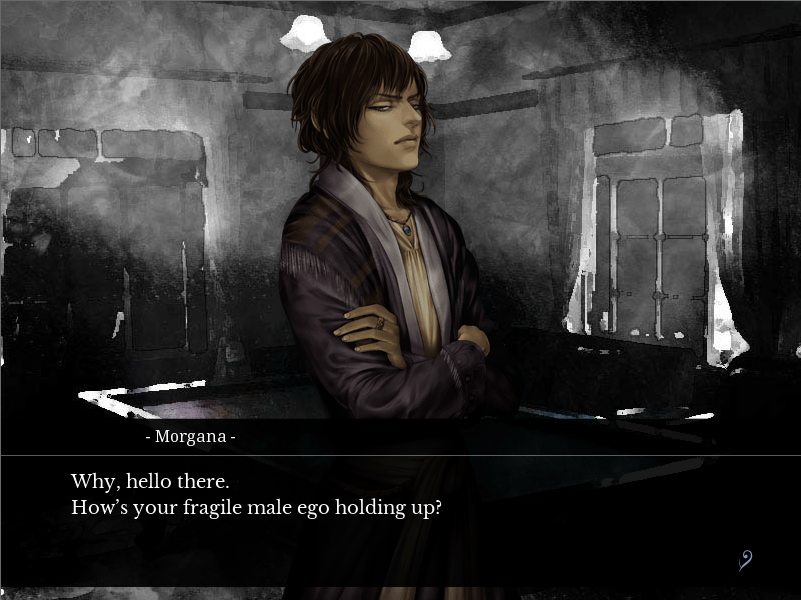
One of the ground zero examples at the moment is a game called The House in Fata Morgana, and the epicenter of that debate is the translation of the word tsundere. In Japanese, it’s a slang word that’s been borne out of anime and manga fandom to describe characters who go from essentially hating someone to falling in love with them, or someone who acts like they hate someone but is secretly in love. Meanness and maybe even a bit of slapstick violence often come part in parcel. More importantly to this particular example, however, it’s become a celebrated trope. Tsundere girls are popular both because the inherent emotional conflict is powerful, but it can also have a fetishistic element. In Fata Morgana, the choice was to translate tsundere as “fragile male ego” because, as the translator explains at length, the use of the word tsundere is sarcastic here, referring more to the other character’s abusiveness. It’s not the only answer she could have arrived at, but it ultimately results in a translation that gets across not so much the nitty gritty of what’s being said in Japanese, but rather the essence and the intent behind those words. Yet, because the word tsundere has solidified in fandom, it’s seen by critics as a kind of “pure” concept that needs to be preserved.
One option was to just keep the word tsundere, but to do so would be to assume that every person playing the game would already be familiar with the word. Moreover, no amount of more direct translations could succinctly convey the fact that it is indeed a stock phrase. This, I think, is where a lot of the criticism falls short, because it presumes that one’s own experience with a work trumps everyone else’s. I think back to the Anime World Order review of Dog Soldier, where the translator, Neil Nadelman, explains that he translated instant ramen as “instant noodle soup” because ramen was not ubiquitous enough at the time to just make sense off the cuff. Times have changed, but they haven’t changed enough for tsundere to be common parlance.
One thing that might help people championing the “purity” of translation is to think about the process in the opposite direction, from English to Japanese. Plenty of English-language films and TV shows get imported and adapted, and there are challenges on the other end to localizing those works. I once wrote about how Gone with the Windhas had multiple interpretations of the iconic “Frankly, my dear, I don’t give a damn,” which don’t break it down word by word but rather try to communicate the curtness and rudeness of Rhett Butler’s dismissive attitude at the end. To translate that more literally would make it lose some of the impact of Rhett’s brevity.
In that post, I also discussed the challenge of giving particular personal pronouns and honorifics usage to characters from English to Japanese. If it were a so-called “pure” translation, there wouldn’t be any such distinctions, but this would be jarring to a Japanese audience, where those elements are woven into the fabric of both language and society. Since then, I’ve come across some interesting examples. First, is the Deadpool movies. Second, is the old sitcom Full House.
In Japanese, Deadpool refers to himself with the unique personal pronounce ore-chan, where ore is a very masculine and impolite way to say “I,” and chan is an honorific that usually is reserved for young children, girls, small animals, and the like. A rough equivalent in English would be “little ol’ me,” but it’s not used in the same way. The Japanese subtitles for Deadpool try to capture his character through his pronoun usage, interpreting and localizing his speech for the audience.
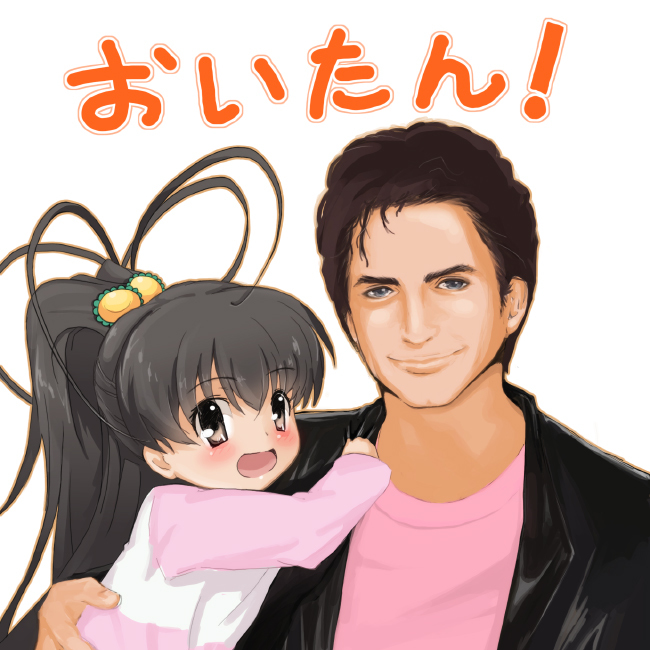
Similarly, while in the original English-language Full House, many characters refer to Jesse Katsopolis as “Uncle Jesse,” they give the youngest daughter, Michelle Tanner, a unique way of referring to her uncle in Japanese: oi-tan, or a babyish pronunciation of oji-chan (uncle). Neither Deadpool nor Michelle’s phrasings are “literally translated” into Japanese, but are rather localized based on the characters themselves—who they are, how they act, etc. In this sense, it’s not so different from The House in Fata Morgana and the use of “fragile male ego” because it’s trying to communicate more about who is speaking to whom.
I think the point that needs to be absolutely understood is that there is always, always some compromise when it comes to translating from one language to another. The question, then, is what are acceptable sacrifices in order to get something across most faithfully, given cultures, circumstances, and even mediums. For example, a novel (or indeed visual novel) has more space to give an explanation about some cultural aspect that would fly by in anime subtitles or a manga word balloon, but does the act of throwing in a long explanation shift the work or interrupt the flow of dialogue? Different readers have different priorities, and different translators have to interpret the original works through their own lenses. It’s why multiple translations of the same works exist.
What I see in the purity arguments of Japanese media fandom is a desire to be rewarded for one’s specialized knowledge, and it’s the perspective of those who revel in being as hardcore as possible. As someone who has devoted decades of energy to anime and manga fandom, as well as thinking about how translations function, I can relate. The unfortunate thing is that it turns experiencing these works into a kind of measuring contest to see who knows more and who has the “real” access to Japanese culture, which is in a certain sense the opposite of what translation is there to do: make something accessible.


 OGIUE MANIAX