Amidst the announcement of Dragon Ball FighterZ, a Guilty Gear-esque 3-on-3 fighting game based on the popular Dragon Ball franchise, one of the old debates between fans has cropped up: do you play with the Japanese voices or the English ones? Frequently, choices have to do with familiarity (what did you grow up on?), as well as the divisiveness of Nozawa Masako’s performance, which some fans see as not fitting for Son Goku’s masculine appearance.
Because of this, I began diving into old sub vs. dub threads, and to my surprise I found that quite a few people were also not big fans of Horikawa Ryo as Vegeta. On the occasions that commenters preferred Christopher Sabat’s Vegeta, it frequently had to do with Sabat making Vegeta sound more gruff and “badass.”
English and Japanese Vegeta have a lot in common. They’re both extremely arrogant and prideful, and even their caring sides will be expressed through anger. However, I find that each of them brings a different feel as well. If both of their performances could be likened to boulders (big and powerful), then Sabat’s Vegeta would be rough and jagged, while Horikawa’s would be smoothed and polished.
I’m beginning to wonder if the Horikawa-style Vegeta is somehow “lost in translation,” as if the effect doesn’t come across properly. The reason I’m considering this at all is that I also see other cases of similar characters coming across differently in English performances.
One example is Meta Knight in Smash Bros., who sounds more like a noble knight in Japanese but has a deep baritone in English. (In the dub of Kirby: Right Back at Ya!, they went for an odd Spanish accent, but that’s more a directing choice than anything else.) Would the effect Horikawa has as Vegeta work better if a voice akin to English Smash Meta Knight’s was used?
Another example is Kaiba Seto in Yu-Gi-Oh! In Japanese, Kaiba’s performance is more curt than anything else, like he has no time to waste on being nice or courteous. In English, Kaiba sounds more actively mocking and malicious. Would the former have not been as memorable? All of these different performances (as well as different scripts) can change people’s impressions to the point that they can almost be viewed as different characters.
I’d like to believe that it’s possible to successfully translate the feel and intent of a character at least for the most part when dubbing a series, but I have to consider whether or not cultural context actually changes how a given voice “sounds” to a person. It’s not uncommon to see dub anime fans complain about all the “high-pitched voices” in Japanese, but fans of Japanese voices might lobby the opposite criticism towards dub actors making high schoolers sound like 40-year-olds. It’s almost impossible to get an “objective” opinion on how a character sounds across different languages, especially because the actors themselves will slowly evolve their performances over time.
If dub Dragon Ball Z was ever able to perfectly adapt Horikawa’s Vegeta to English, would it actually have garnered him a somewhat different fanbase than he possesses now among English-speaking fans? Does the core character of Vegeta transcend voice, or is it a major factor in defining how the character lives?
When playing multiplayer games, we all at some point come across options or paths for victory that are less than ideal. If it’s possible to adjust the rules or patch a game such that the option in question is better or more rewarding, then it might be better for the game. However, sometimes it’s not, and if one has to choose between making a move “too good” or “too bad,” the latter can be the better option for the sake of the overall health of competition. This is what I call the “ryanpeikou dilemma,” after a particular hand in Japanese mahjong.
Ryanpeikou is the older brother of the “iipeikou,” a hand that consists of two identical straights. For example, 123 and 123 both in the same suit would qualify as iipeikou. It’s a fairly common hand in Japanese mahjong, and while it isn’t worth a lot of points the setup for iipeikou is often quite flexible, and so even if you don’t get it you can still be rewarded with something nice.
Ryanpeikou, then, is essentially two “iipeikou”: 123 123 of the same suit with 456 456 of another suit is one example of a ryanpeikou. However, while the two hands are related, ryanpeikou is significantly more difficult to obtain, and in fact in my experience I think I can count on one hand how many times I’ve achieved ryanpeikou. Given the rarity of this hand, it’s understandably worth more (3 han instead of iipeikou’s 1 han), but for the trouble that it’s worth it really is relatively weak. Why go for a ryanpeikou when it’s possible to aim for hands that are easier to achieve and score more in the process?
The issue is that ryanpeikou is a little too weak as a 3 han hand, but would be a little too strong for a 4 han hand. If it’s made too good, and it also has the similar late-game flexibility of iipeikou, then it overshadows many of the other hands around it. Because of the rules of Japanese mahjong, ryanpeikou cannot achieve a satisfying equilibrium of risk vs. reward. At the same time, it would be wrong to get rid of it entirely, because then you wouldn’t be rewarding the player at all.
Buffing in and of itself is seemingly simple enough: all you have to do is make a character or a weapon or spell more powerful. However, the wrong buffs could have unforeseen repercussions, such as over-centralizing the game, and in some cases it might not be possible to deliver the proper buff due to the mechanics or rules of the game itself. So before you ask why a game can’t just make everything powerful, or that it is “always better to buff than to nerf,” keep in mind the ryanpeikou dilemma.
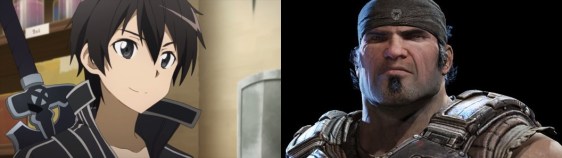
When looking at the generic male protagonist found in light novels, one finds that he usually has some combination of the following traits. First, he’s a guy. Second, he’s Japanese. Third, he has short hair. Fourth, he has a fairly slender figure. Fifth, he has either minor or major otaku vibes. Sixth, he has some trait that speaks towards passiveness, whether it’s an aspect of his personality or some sort of special ability that emphasizes defense or neutralization. Titles that fall along this criteria include Sword Art Online, Ore Imo,A Certain Magical Index, Baka Test, Re:Zero, Rise of the Shield Hero, Bakemonogatari, and so on. In effect, the Light Novel Protagonist plays a similar role to the “gruff brown-haired white guy,” an archetype that has populated mainstream video games over the past ten years.
The Light Novel Protagonist’s appearance renders him the “everyman,” but taken to a kind of extreme mediocrity. His appearance is roughly that of a teenager or early 20s adult who could probably pass for a salaryman if not for his clothing and lack of a stable job. Even though he’s often a “failure” in the eyes of society, he’s ready to show himself as capable if given the right (often nerdy) circumstances. In this way, the Light Novel Protagonist resembles the Video Game Hero in that both reinforce a rough image of masculinity. Where they differ is that the Light Novel Protagonist is often a kind of “bare minimum” of manhood, while the thick-necked rugged white guys of video games are the apex of masculinity in that arena.
This difference is evident when looking at how generic light novels and generic mainstream video games approach the topic of homosexuality. Putting aside a few exceptions from both sides, the protagonists of light novels are more willing than their angry, shooting counterparts in games to dance the line when it comes to gender. Kirito’s video game avatar gets long hair in later parts of Sword Art Online. Hachiman in My Youth Romantic Comedy and Akihisa in Baka Test find themselves attracted to extremely effeminate male characters. However, not only is the possibility of a homosexual ending unlikely, but the sheer femininity of those ambiguous characters’ appearances renders them essentially girls in all but name. As a result, masculinity and heterosexuality are preserved.
Nevertheless, that difference between portraying a masculine world versus a hyper-masculine world seems to be what allows light novels to attract a female audience a little more easily. This is actually something girls have learned to do for a long time, navigate the “boys’ world of entertainment” and carve out their own spaces, but games like Gears of War seem to actively reject any notion of appealing to people beyond their assumed young, male, heterosexual audience. In contrast, light novels pull from the many tropes of anime, manga, and Japanese games, which exist in a complex relationship of pulling aspects of girl-oriented titles toward male audiences and vice versa (e.g. shounen sports being made for girls, magical girls being made for guys).
The irony might be that, while both the Very Japanese Light Novel Protagonist and the Gruff White Video Game Hero are all about protecting their audiences’ masculinity, the two archetypes probably would not get along if they had to interact with each other. The video game hero is an embracing of old ideals of manliness, while the light novel protagonist tends to be a partial rejection of the former. The Light Novel Protagonist is often a “loser,” while the Video Game Hero is more frequently a “winner,” and the active acknowledgement of both might just be two different approaches to dealing with male insecurity.
As a general fan of Smash Bros. I enjoy watching almost every game, but I prefer Smash 4 above all else. However, I’ve noticed that, if I watch Smash 4 after a couple hours or more of Melee, Smash 4 just seems to move muuuch mooore slooowly. If you’ve played a game with a speedy mode, like the Dodrio Tower in Pokemon Stadium, 8-star turbo in Street Fighter II Turbo: Hyper Fighting, or indeed even Lightning Melee in Smash Bros. Melee, this is probably a familiar feeling to you once you switch back to the default. While I know in my head that the decision-making in Smash 4 is plenty quick, I find that it takes a bit of time to re-acclimate my brain to Smash 4 from Melee.
I have no studies or evidence beyond my personal experience, so I’m not writing from a place of thorough research, but I don’t think I’m alone in feeling this way. What’s more, I suspect that, for those who are less interested in Smash 4, the effect is likely exacerbated.
In this respect, Melee reminds me a lot of super spicy food. Like Melee, spicy food has its diehard enthusiasts. If you like chilis and scoville ratings in the hundreds of thousands, then no other kinds of foods compare. Once you try the most flaming hot dishes, there’s no turning back. And if you like it that much, you’ll want to aim for even spicier foods. After all, why settle for less? Similarly, when Melee viewers and players alike talk about why they love the game and why they see it as near-perfect, they mention the blazing fast speed, the difficulty in learning it, and the sense of freedom. They speak of Melee as a unique experience like no other, and that no other games can compare.
The side effect of this, I believe, is that it ends up essentially “dulling” the senses and making other game seem worse, that they require significantly less skill even if that’s the case. In the spicy food analogy used thus far, this would be the equivalent of just eating vindaloo non-stop for an entire day and then taking a bite of a much milder and more subtly flavored food, such as sushi. It’s not as if Indian food isn’t full of a robust variety of tastes, or that flavors matter less in Indian or Japanese food, but if your palate is inundated with spices, then it’s not the fault of the sushi if you can’t get much out of it. And if Smash 4 seems as if its players have to think “less,” it might just be a product of having your senses overloaded by Melee.
After a small drought of first place finishes, famed Smash Bros. Melee player Mang0 of Cloud 9 Gaming recently took home the gold medal at Royal Flush 2017. The tournament’s viewership was fairly modest throughout the tournament, but by the time grand finals rolled around the viewer count spiked to an impressive 73,000. While Mang0 is a perennial crowd favorite for his flashy, yet intelligent play and his devil-may-care attitude, I think there was another factor at work drawing eyeballs to his Mother’s Day victory: the appeal of a dominant champion turned underdog.
People love an underdog, as the saying goes, but there’s often an emotional investment to trying to cheer on a player or team with the odds stacked against them. For every Boston Red Sox or Chicago Cubs breaking their decades-long curses, there are many more across various competitive fields that wither and die in the early stages without achieving anything. Is it really worth cheering on someone who loses in the first round of a tournament every time? If it is, there’s typically some other element to consider: regional loyalty, character loyalty, etc.
But when it’s a known commodity, i.e. a former champion with a record of winning but who’s fallen off more recently, then there’s a different appeal at work. Think of Michael Jordan on the Washington Wizards, an aged George Foreman, or JulyZerg in Starcraft: Brood War. In each case, they arrived to make up for a loss of physical prowess with skill, experience, and ingenuity, but in their pushes for victory one thing was certain: though they fell behind, there is historical evidence of an “it” factor: the will to win, and the potential to snatch victories from the jaws of defeat.
In a certain sense, cheering for former champions become a case of trying to have your cake and eat it too. People cheer for underdogs, yes, but they also like to cheer for winners. When you have a former great, you get the best of both worlds. They’re a comforting pick because, even if they lose, a person can simply look back in time and say, “But I know they have what it takes!”
Mang0 is not the same as the examples I gave above. He’s still a top 3 player in his game, and slumps are often exaggerated in the world of eSports because the concept is so young and people think 3 months is a long time. However, if it were a true veteran of the past who enjoys legendary status such as Liquid’Ken, the “King of Smash,” then I believe even more spectators would have flocked to Royal Flush.
Tuesday, May 10th, 2016 marked the final episode of Video Game Championship Wrestling, and the end of one of the most bizarrely enjoyable spectacles I’ve ever known.
VGCW was a federation that used the WWE video games’ “Create a Wrestler” feature to fill its ranks with video game characters, celebrity gamers, and even Vegeta and Nappa from Dragon Ball Z. Pitting not human opponents but rather (often incompetent) computer-controlled wrestlers against each other, VGCW stood out amidst a universe of “Let’s Plays” and eSports titles in ways few other phenomena could. VGCW was the flagship show for the VGCW Network, which also includes a women’s federation and a developmental one.
One of the more fascinating aspects of VGCW was the fanbase that surrounded it. Viewers in Twitch chat would cheer on their favorite wrestlers, despite knowing full well that their rabid typing would not actually affect the routines and patterns of the AIs. While story threads presented by the creators of VGCW provided the stakes for many matches, what has been really the heart and soul of this whole concept of video game AI wrestling is the ability for the fans to willingly give meaning to the actions of these virtual marionettes who represent out favorite heroes and villains.
While the same could be said of actual pro wrestling, the difference is that audience interaction there tells the wrestlers if they’re doing well and if they need to change anything to keep the audience’s attention in a predetermined match. In VGCW, match results are unknown even by the creators.
I remember seeing Little Mac redeem himself by knocking out Dracula and throwing him in a casket. I recall Phoenix Wright returning from captivity to vanquish his alternate-dimension evil doppelganger (affectionately known as Phoenix Wrong), an achievement celebrated by having Fall Out Boy’s “Like a Phoenix” play over the end credits (see above). I enjoyed seeing the Gameshark force the wrestlers to leave WWE 2K14 and enter the N64 game WWE No Mercy. Gabe Newell, founder of Valve, wrestled and defeated Jesus, teamed with Deus Ex 2 hero Adam Jensen, became an all-powerful villain, and died. Scorpion from Mortal Kombat is arguably the greatest champion of all time with his record six title defenses.
For the recent finale, the championship match featured Ganondorf, the only triple crown winner in VGCW history, against perennial underdog Zubaz—a rejected Street Fighter design popularized by the Super Best Friends YouTube channel who became a playable character in the bare-bones fighting game Divekick. On top of that, they actually commissioned former WWE announcer Justin Roberts to announce the match. Calling VGCW a wild ride would be an understatement.
My personal connection to VGCW lied not just in the excitement it brought, but also in that it helped me deal with tension in my life. When I first started watching VGCW, I was still living in the Netherlands, and due to the pressure of trying to finish my dissertation I could sense that my nerves were constantly frazzled. Watching anime and reading manga was fun, but it wasn’t relaxing because consuming titles caused my brain to keep firing on all cylinders. During this time, I found that what soothed the cacophony inside my head was episodes of VGCW. It was, in a certain sense, my version of “healing anime” such as Aria.
I have to give a shout-out to the defunct multiplayer spinoff called “NWTOH,” which first featured a bizarre entrance for obscure Final Fantasy VI character Banon. A shining example of what one might call “anti-cinematography” due to the non-sequitur nature of its transitions, Banon’s entrance can make me laugh so hard that I can literally feel the stress leaving my body every time I watch it:
Although the main VGCW show is gone, it leaves with successors and descendants. All of the more recent episodes are on YouTube, and a little digging around can uncover older ones as well. Women’s Video Game Championship Wrestling (WVGCW) is gearing up for its own finale. Developmental show Extreme Dudebro Wrestling (EDBW) still has some life left in it, and might just step out of the shadow of VGCW now. Belmont Wrestling Alliance (BWA), which will be live tonight, recently made its return, and it has perhaps the most eccentric and eclectic roster of all.
To Bazza, TOH, and everyone who worked to make me and the other VGCW fans sports entertained, thank you.
How did being a NEET become an endearing quality in fictional characters?
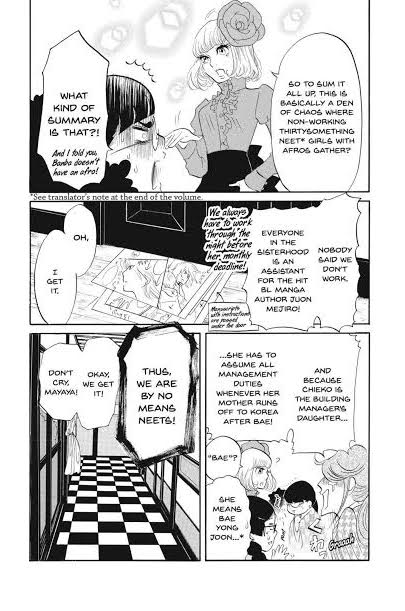
NEET is a term first created in the UK and imported to Japan. Standing for “Not in Employment, Education, or Training,” it’s another way of saying you’re unemployed and probably mooching off of your parents, and most likely somewhere in your 20s to 30s (or beyond). The United States has a similar stereotype in the basement dweller, but whatever the phrasing, it would normally be rather unusual to have such characters be figures of admiration, desire, and more. And yet, this is exactly what we’ve seen out of Japanese media. The geek girls of Princess Jellyfish admit to not having jobs and relying on their folks, but readers connect with them rather than shunning them. Futaba Anzu, one of the characters in THE iDOLM@STER: Cinderella Girls, is not technically a NEET (she has the job of being an idol), but embodies the spirit, being a lazy lay-about whose shirt features the classic slogan of the NEET: “If I work, I lose.”
People don’t necessarily cheer for the forthright and responsible (some would say boring) characters in fiction, but there’s something in particular about embracing the NEET that seems strange on the surface to me, as it’s not exactly an admirable quality in normal contexts. At the same time, there’s a rebellious element, and many have argued that Japan’s economy, rather than the NEETS themselves, are to blame. But the rebellion feels a bit…pathetic, even if possibly admirable.That’s not so much in the sense that NEETS are losers, but it calls to mind the image of an inept geek try their hardest to go camping, only to get lost and fall in a hole. In the end, they’re safe because they can just go back to their home, but within their specific circumstances they’ve tried, even if they end up looking like fools in the process. There’s a tinge of failure, or perhaps fear of failure, and maybe that’s why people connect to them.
One possibility is that a lot of people are or have experienced being NEETS, and it’s probably no coincidence that a character like Anzu would be popular from a mobile game revolving around management of idols. After all, idols are a kind of illusion that fans willingly fall into, and I wouldn’t be surprised if being a NEET inspires the desire to break away from the real world, justified or not. However, one thing that is made clear from Princess Jellyfish and Futaba Anzu is that, at least when it comes to fictional portrayals of NEETS, what defines them first and foremost is passion for something, but most especially passion for the impractical.
Anyone who’s watched anime or read manga for a long time has noticed a kind of reverence for the teenage years, and one factor behind that is the idea that it’s the time in your life when you can truly devote yourself to a task regardless of its practicality. As mentioned by Bamboo on The Anime Now Podcast’s review ofLove Live! The School Idol Movie, the difference between an “idol” and a “school idol” in the world of Love Live is that even if you can’t succeed as the former, you can become a beloved school idol through hard work and passion for your beliefs. It’s a safe space away from the realities of a harsh industry. NEET characters, whether they’re older (Princess Jellyfish) or not (Futaba Anzu), appear as if they want to extend this mindset into their later years, fighting against a society that tells them to grow up.
Given the ways in which middle school and high school are framed within Japanese media, it’s maybe no wonder that this happened. It’s supposed to be the prime of your life, the time when your soul burns brightest, and then you’re supposed to quietly file it away or adjust it to how the real world works. Even if it’s arguably socially irresponsible to do that, I think it’s understandable, and maybe this is where NEET characters really draw their power from. They’re characters who hold onto their dreams, but tinged with the colors of reality that contextualize them in ways that don’t turn their impractical aspirations into a pure fantasy.
—
If you liked this post, consider becoming a sponsor of Ogiue Maniax through Patreon. You can get rewards for higher pledges, including a chance to request topics for the blog.
Recently, the granddaddy of all competitive Super Smash Bros. sites, Smashboards, released their third Smash 4 tier list. The significance of this version is that it’s the first tier list that did not come in the middle of patches or DLC, so it provides our first big look at the status of Smash 4 in a stable environment.
Overall, I have no major qualms with the tier list, and my go-to characters—Mewtwo and Mega Man—are right where I think they should be. Some characters might be a little too high or a little too low, but I don’t have any horses in that race. However, I’d like to talk about two topics: theory vs. results, and the most controversial characters among the tier list voters.
Theory vs. Results
One of the frequent struggles when it comes to bringing together tier lists is the balance between theory and results. A character can look great on paper, but actually using them and winning with them is another matter entirely. On the flip side, even if a character is winning consistently versus everyone else, this could be simply due to a gap in knowledge.
For likely a multitude of reasons, the Smash 4 community at large seems to have a hard time marrying theory with results to the extent of other fighting games. For example, the tier list above has Bayonetta at #1, but it wasn’t long after the list was announced that people were commenting that the results don’t support the position. This isn’t to say that they’re necessarily wrong, but always get the impression when looking at and joining in on discussions about character viability that people either overshoot or undersell the influence of a character’s theory with respect to what they’re capable of.
Some of the reasons I think it’s hard for Smashers to get the right balance of theory and results are as follows.
The game is full of Nintendo icons, so there’s often the desire to argue in favor of your beloved character
As a result of the above, players will often theorycraft from a biased perspective. This is difficult to avoid, and is not inherently bad because of how it can motivate people, but leads to a lot of broad leaps and assumptions.
People become distrustful of theorycrafting and instead lean towards results, which have defined parameters (wins, losses, championships).
This leads to people taking extreme stances about the importance of results vs. theory, where one is touted as significantly more important than the other. However, I believe that the ideal tier list is one that uses results to theorize further beyond what results currently show us. They should be less a snapshot of what the actual current metagame is like, and more an image of what we think the game will become given the information we have.
Disagreements on Character Viability
In the Smashboards post about the tier list, it’s possible to order the tier list in order to see which characters garnered the most disagreement in terms of placement. The top 5 (not counting Miis) are Samus, Bowser Jr., Pac-Man, Olimar, and Wario. According to the tier list, these characters are supposedly mid-tier at best, but it’s still worth noting that there were some who thought highly of them nevertheless.
One of the reasons for this might just be that the voters come from all over the world. Different regions are known for having strong players for characters that one might not find elsewhere. For example, Duck Hunt was considered a pretty bad character until three Japanese Duck Hunts made their way to the US and took some big names. In the case of the five characters above, Olimar is a major influence in California, Florida, New York, and especially Japan; the ranked fourth best Japanese player in their region is an Olimar named Shuton. Similarly, Wario is a major presence in Europe thanks to France’s Glutonny, with a lesser but still significant mark being made by Wario player TheReflexWonder.
Pac-Man and Bowser Jr. have been on a progressive downward slide because their most prominent players, Abadango from Japan and Tweek from New Jersey respectively, have long since put them on the backburner. I believe that there must still be those holding out hope that Pac and BowJow have what it takes to cause the occasional upset (and they still do sometimes!).
Samus is the major enigma. She has never been considered strong in Smash 4, especially compared to her armor-less counterpart, but even after a number of significant buffs she received through patches there’s still not the sense that she’s any good. And yet, enough players voted her as being at least mid-tier that there has to be some strong belief in her potential. I think what causes such disagreement as to her character is that her toolkit is actually very diverse and her physical properties all appear to be strong but dysfunctional, and how much a player can overcome that dysfunction (as they have with Shulk) remains to be seen.
The Future!
Early Smash 4 was an interesting beast because of how, for once, swordsmen weren’t dominant. This meant characters with lesser range could thrive. This has changed dramatically with the rise of Marth and the advent of Cloud (pun intended). Will there be another major shift, even without balance patches? I look forward to seeing players push their characters to their limits.
February might be Valentine’s Day Month, but how much I’ll actually discuss romance on the blog remains a mystery even to me!
Whatever the situation, I know that if I were in Japan, I’d be giving giri choco to my Patreon sponsors.
General:
Johnny Trovato
Ko Ransom
Alex
Diogo Prado
Viga
Yoshitake Rika fans:
Elliot Page
Hato Kenjirou fans:
Elizabeth
Yajima Mirei fans:
Machi-Kurada
Given that this will be the tenth year of Ogiue Maniax, I decided last November to do a Genshiken series 1 re-read. I’ve started with Volume 1, and you should expect to see them come out every other month. (I would have said bi-monthly but that phrase can also mean “twice a month,” so…) I’ve already felt like I’m stepping back into a different world, so I’m looking forward to the next article too.
Perhaps the most important post I’ve written this month is on the subject of butts in anime. In it, I detail increasing presence of large rears in Japanese animation, and put forth my own hypothesis on why this has occurred. The seeds of this post have been germinating in my head for a very long time, even before Ogiue Maniax ever began. If you want to see more content like this, let me know. I just hope it doesn’t take me another 10 years to write one!\
I was also sad to see the end of Soredemo Machi ga Mawatteiru aka And Yet the Town Moves. It’s a very unique series in a lot of ways, and I look forward to seeing what the artist does next.
As for this month’s Patreon-sponsored post, I looked at the subject of babies in anime and manga. My rating of babies is based on how much they make their parents suffer, I guess. If you have a subject you really, really want me to write about, it’s just a one-time $30 pledge.
If you’re wondering why I have it at that price, it’s just because I don’t necessarily want the blog to consist primarily of requests as opposed to my own ideas. That being said, I am considering maybe offering a poll with three or four topics that can be voted on with Patreon pledges. Is this an idea readers would be on board for?
Overall, I think this was a pretty solid month. I don’t have a wholly solid idea of what’s going to come next, but it might be a bit less review-heavy compared to this one.
One of the unicorns pursued by designers of competitive games is to create something that is enjoyable (and competitive) at all skill levels. However, there’s a tricky balance to maintain, because if you skew it too much towards the most advanced players, then only those willing to place countless hours towards honing their skills can enjoy the game. On the other hand, if you cater too much to the beginner, then the overall competitive depth of the game may suffer as better players find that there is less for them to do as they improve. What’s more, some players want to feel like they always have a fighting chance, while other players want to feel the sheer power of a superior opponent bearing down on them, something that tells them how deep the rabbit hole goes. Leaning towards any of these options isn’t inherently wrong, but I think trying to appeal to as many different types of players as possible is an admirable goal in itself.
I’ve been thinking a good deal about what it means to enjoy a competitive game. In Part 1, I wrote about how, while the classic image of the competitive gamer is the “Spike”—someone who prioritizes using the most effective and efficient strategies to win—the current esports/competitive gaming field is comprised much more of “Timmy-Spikes”—people who love to win, but prefer to win with style and flash. What I’m about to say might sound obvious, but I think there are two unifying factors for players of all skill levels and of different philosophies when it comes to enjoyment of video games that involve facing off against opponents both human and AI.
Players love to feel powerful
Players hate to feel powerless
It’s pretty simple, but I think that there’s a lot that can be extrapolated from these two statements.
Whenever I read comments and forum posts about competitive games, there are certain recurring complaints. “This game doesn’t let me play the way I want to. “In this situation, there’s pretty much nothing I can do.” “It’s not fair that this game lets people worse than me win.” Now, some of these complaints might just be rationalization of one’s flaws or simply the act of making excuses, but I find it worthwhile to think about these statements in terms of notions of power/powerlessness.
Let’s look at some examples.
Take the classic idea that “throwing is cheap” from the early days of arcade fighting games. Why was it considered a dishonorable tactic? It’s because, for many players, the act of blocking makes them feel powerful (or at the very least safe). The ability to just block high/low and stop/weaken the opponent’s offense is a simple and easy way to make a player feel better. Throws destroy that false sense of security, creating a sense of powerlessness. It’s up to the player being thrown to learn how to deal with it, and of course many have over the years, but that feeling of vulnerability (and the fear of vulnerability) is why so many throwers got punched over the years in arcades.
One of the complaints about Heroes of the Storm from other MOBA players is that the leveling system, wherein all players on a team gain levels at the same rate instead of having it determined on a per-player basis, means that individuals cannot become the stars of their team. Similarly, while Street Fighter V has its supporters, one criticism from detractors is that the combo system SFV isn’t complex/difficult enough to allow for players to distinguish themselves. In other words, they feel that the game is shackling them, stripping them of power at moments when they wish to feel most powerful.
In StarcraftII: Legacy of the Void and previous versions, the Protoss race is usually the cause of much ire (or should I say “Aiur” dohoho), and they’ve been described as a “coin-flippy” race. The idea is that there is no skill involved, that it’s merely a 50-50 guessing game for a lot of their strategies. For enemies of Protoss, this is the reason they’re strong and annoying. For users of Protoss, this is why they’re weak and frustrating. When you break it down, hinging your success or all-or-nothing strategies is the epitome of the “power/powerlessness” dynamic.
Power can take on many forms. Training is power. Knowledge is power. Good teamwork is power. Outwitting the opponent is power. Overpowering the opponent is, well, a show of strength. Even in pay-to-win games that don’t reward skill but rather how deep your pockets are, the very idea that you can just outdo your opponent because you have more money can be a power trip. Different players experience feeling powerful through different means, and it’s why they likely gravitate towards their chosen games.
For instance, I believe that part of the reason Super Smash Bros. Melee and Starcraft: Brood War have such loyal scenes that considers most other games inferior is because they have many ways to make players feel powerful. They both require constant practice to keep one’s skills at a serviceable level. Both games are clearly stratified in terms of skill level, as knowledge to and access of specific non-obvious techniques creates a divide between those who know and those who don’t. Perhaps most telling of all, in both games, even simple movement, e.g. controlling your army to compensate for Brood War‘s poor pathing or utilizing dash dancing and wavedashing in Melee for basic neutral interactions, involves “advanced actions.” At the same time, these are also the reasons why many prefer to play other games.
As much as a robust player base is needed for a strong competitive scene, one of the challenges of trying to make a competitive environment more accessible is that, ironically, players who are trying to be “competitive” might not realize what it entails. Street Fighter V took the route of simplifying controls and execution barriers so that players could theoretically reach the point where they’re matching wits more directly. The problem is that many players don’t necessarily want that close, intimate experience of trying to out-think the other, making this “simpler” game even more daunting. Nothing’s worse than feeling, in the words of Fatal Fury villain Geese Howard, “predictable.”
Instead of having multiple paths to feeling powerful, such as training technical skill, to dampen the pain of losing on the mental level (or vice versa), new players are left feeling powerless.
I’m not a game designer, so I can’t profess to know the exact mechanics of “fun,” but I believe that one possible key to making competitive games fun for all is that players should be able to have moments where they feel powerful no matter their skill level or experience. Moments of feeling powerless cannot be avoided 100%, but if there are enough instances that can make a player feel like they did something, that might just be enough to soften the negative impact of defeat.
“I lost, but did you see that awesome shot I made?”
“I lost, but my team and I almost brought it back.”
“My opponent really got me in the end, but I could tell they were scared for a second.”
This might very well be why so-called “comeback mechanics” exist in games, like desperation moves in Fatal Fury 2, X-Factor in Marvel vs. Capcom 3 or Ultra Combos in Street Fighter IV. They give something to the losing player when the chips are down, a glimmer of hope to keep them in the game. The tricky element of this, however, is that this can end up actually making winning players feel powerless. The common complaint of comeback mechanics is that they “punish the better player,” and while that’s debatable in terms of the actual effect on the game, that doesn’t prevent people from feeling that way. It might not sound important, and it might sound terribly subjective, but feeling that something is cool, fun, and indeed powerful is subjective already.