Pimple Popping Manga: Chiyo’s Lips

chiyoslips-cover-small

Though certainly not to everyone’s liking, hands-on acne removal is a very popular subject on YouTube (click if you dare, but it’s potentially NSFW). Often referred to in comments as one example of the “the weird part of YouTube,” it’s somewhat curious that it hasn’t emerged as some kind of sub-genre of manga or anime. In fact, the only title I can think of where pimple popping is a primary focus or narrative device is the manga I’m going to be reviewing today: Chiyo no Kuchibiru (or Chiyo’s Lips) by Iwami Kiyoko.

As this subject can be disgusting to a lot of people, I’m going to put this behind a cut-off just for the sake of your lunches. For those who don’t mind (or even enjoy this sort of thing), read on:

Continue reading

Ishida Akira’s Amazing Voice Work in Showa Genroku Rakugo Shinjuu

yakumo-old

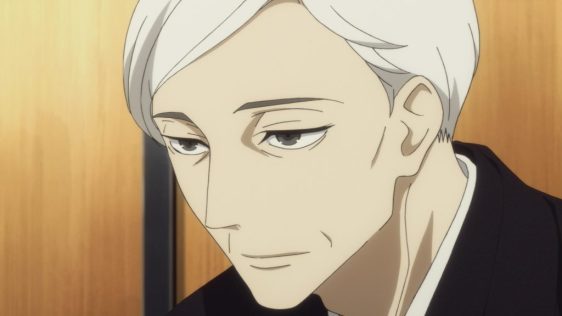
One of the best anime of 2016, Showa Genroku Rakugo Shinjuu, has returned for the Winter 2017, and with it some of the finest voice acting in recent anime history. Given that rakugo performers are themselves supposed to be able to take on many roles while telling a story, it requires the seiyuu playing these characters to have a great deal of convincing range. Nowhere is this more evident than in the voice of Ishida Akira, who plays Yuurakutei Yakumo the Eighth.

Ishida Akira has been a major player in anime since the 1990s, with roles such as Xelloss from Slayers and Athrun Zala from Gundam SEED to his name. However, what made me realize the sheer skill Ishida possesses is an audio clip of him performing seven different people, male and female, of all ages. From a young girl to an elderly grandpa, he can do it all. So, when he first appeared in Rakugo Shinjuu as Yakumo, I expected great things—an expectation that was fulfilled in spades. There’s a clear distinction in season 1 between Yakumo’s younger self in the past, and his elderly demeanor in the present.

To my surprise, season 2 turns out to show off Ishida’s chops even better. In this sequel, Yakumo is even older, and Ishida actually goes as far as to modify his performance to further show the passing of time. Often, I find that voice actors will have an “elderly voice,” but will not necessarily make the distinction between someone in his 60s versus someone in his 70s, for example. Ishida, however, does just that. His voice in season 1 had the weight of many years in it, but by season 2 it’s slower, deeper, and just a bit less coherent, as if that weight has finally started dragging his body down.

What’s even more impressive is when he performs privately for Yotarou (a.k.a. the new Sukeroku). Here, despite the strain it puts on him, Yakumo gives an extremely lively rakugo show. Pay attention to Ishida’s acting here, as he’s not just changing his voice to play younger characters as you would expect from any other professional voice actor. Instead, Ishida purposely plays a man in the twilight of his life imitating younger people as he performs. His enunciation is much clearer when he’s “on-stage,” but nevertheless has that characteristic elderly drawl. When he finishes and appears completely exhausted, and his voice reverts to “normal.”

Ishida’s performance is just one aspect of why Showa Genroku Rakugo Shinjuu is amazing, but it gives the series as a whole such a powerful presence. It’s great to see the guy in a role where he can really show the full extent of his talent.

The Fujoshi Files 166: Ayame

Name: Ayame (アヤメ)
Alias: N/A
Relationship Status: Single
Origin: Hacka Doll The Animation

Information:
Ayame is a fujoshi who’s considering applying for Comic Market when she’s visited by the Hacka Dolls, semi-incompetent AIs who attempt to help people with mixed results. Though Ayame’s experience with them is mostly stressful, they help to inspire her to stick with her fandom on more than one occasion.

Fujoshi Level:
Ayame enjoys more typical bishounen-style BL, as well as beefier guys closer to the “bara” style of homosexual manga.

Save

Save

Save

Valentine’s Day “Dead Eyes Extravaganza”

In honor of Valentine’s Day, that romantic holiday transformed in Japan into a way for girls to express their feelings for guys, I present an image mosaic of one of my favorite character traits: dead or empty eyes.

deadeyes-mosaicCreated using Mosaic Maker

Dead eyes, that is to say empty eyes without luster, are usually associated with characters who have been mind-controlled. However, I’m more fascinated by them when the characters who have them are in full control of themselves. Rather than being a sign of a loss of will, they’re often symbolic of something else. They can be intensity, trauma, otherworldly perspective/experience, or even a swirling madness. Just think about how all many of the characters in the image above have notably different personalities!

Do you have a favorite character in the image above? Is there a dead eyes character you’re a fan of? Let me know!

Save

Save

Opposites Connect: 3D Kanojo – “Real Girl”

3dkanojo-couple-small In 2013, I came across a shoujo manga called 3D Kanojo by Nanami Mao. Although I had some initial misgivings based on the title alone (it means “3D girlfriend”), the series ended up becoming one of my favorite manga. It recently finished just last year, so I’d like to give my overall thoughts about this excellent work.

The idea of a socially awkward young man winning the affections of the beautiful girl has long been a popular trope. America has seen Revenge of the Nerds, Beauty and the Geek, and the hyper-popular The Big Bang Theory. Japan has been home to Densha Otoko, and numerous manga and anime premised around this idea such as The World God Only Knows and Love Hina. Within these works are three recurring ideas: the nerd as underdog, the nerd as the nice guy vs. the jerks, and the notion that nerds carry hidden charms buried deep inside shells of social awkwardness.

One difference between the stereotypical image of the American “geek” and the Japanese “otaku” is that while the geek guy worships at the altar of characters who are live actors (e.g. Princess Leia), otaku go for the “2D girls” of anime, manga, and games. Reality, where actual “3D girls” reside, is thought to be a frightening realm that can eat otaku alive. So, with a title like 3D Kanojo, I had wondered if this might be one of those wish fulfillment fantasies where an otaku boy gets the girl just by being nice without any real substance, while the girl ends up as some kind of virginal ideal, a typical “2D girl come to life” scenario. Fortunately, within one chapter 3D Kanojo defies those assumptions, and shows itself to be a robust, considerate, and even progressive approach to this idea.

When the series begins, Hikaru Tsutsui is an otaku who is unable to handle social interaction outside of talking to his only friend, a fellow hardcore fan. His ideal girl is a magical girl from an anime. One day at school, he sees one of his classmates, the beautiful Igarashi Iroha, being accosted by a guy angry at Igarashi for cheating on him. When the guy tries to hit her, Tsutsui jumps in to defend Igarashi…only to get his ass kicked because he’s a wimp with no physical ability.

At first glance, this is ground already traveled by stories like Densha Otoko and Back to the Future—a chivalrous act by a geek shows the strength of his heart, and makes the girl fall in love with him. However, with 3D Kanojo, the relationship even at the early stages possesses a lot more depth. Many times, the girls in these stories only appear to be very sexually active but are actually secretly virgins, giving them a sense of idealized purity. Not so with Iroha, who freely admits that she was two-timing the guys she was with. Rather than shunning her for being a “slut,” Tsutsui accepts her for who she is, especially once the two of them spend more time together and are able to open up to each other more readily. What’s important isn’t that she’s had others in the past, but how they feel about each other now. And as the series continues, it becomes clear that their love for each other burns red-hot.

It isn’t all roses, of course. Romantic rivals show up for both character, such as an otaku girl and a handsome guy (it’s a shoujo manga, after all). Igarashi’s sexual experience isn’t a deal breaker, but it’s intimidating for a guy who, up to that point, didn’t even talk to girls other than his own mother. Tsutsui’s constantly questioning whether or not he’s good enough for her, but it’s important to note that she’s doing the same just as often. In spite of how different they are on the surface and even in many elements of their personalities, there’s a mutual longing for understanding.

While I thought highly of the series very early on, there is a particular chapter that solidified my opinion that 3D Kanojo is a great series. Most of the time, the story is told from Tsutsui’s perspective, but in one chapter it’s Igarashi’s head we’re in. Through her, we see her relationship history. As an extremely attractive girl, she’s had numerous suitors, but the apparent issue is that all of them only paid attention to her appearance. In this way, her looks became a curse. At one point, she had even tried to open up to a boyfriend, only for the guy to treat it as basically, “There, there. Okay, now that I’ve comforted you, are you gonna put out?”

3dkanojo-exbf-small

Here, it becomes plainly obvious what Igarashi saw in Tsutui. He isn’t just generally “nice” and “considerate,” he connects and empathizes with her on the level both of them desire. While occupy different strata of the high school hierarchy, both of them are familiar with being unfairly judged by their looks, and their ability to see what is truly inside each other is what draws them closer and closer.

Ultimately, even as the series goes through some fairly well-worn shoujo manga plot developments, the sheer robustness of this core relationship, as well as a solid cast of supporting characters, keeps the series from feeling old-hat. I felt a genuine desire to cheer on Tsutsui and Igarashi, not because they were “supposed” to be together as the main couple, but that everything they had been through together showed why they should be as one.

The last thing I’d like to mention is that 3D Kanojo technically isn’t the real title. That’s how it’s written out, but due to quirks in how the Japanese written language is used, it’s actually supposed to be pronounced “Real Girl.” In retrospect, the two titles fit this series perfectly. While Igarashi comes across at first as the mysterious girlfriend of the “3D realm,” her “realness,” both in the sense of her lived human experience and her candor, are what foster her romance with Tsutsui.

Save

Save

How Dragon Ball Super Made Dragon Ball Better

trunkscrying

Surprising even to me, it turns out Dragon Ball Super is actually really good. I’ve written a small post detailing how Dragon Ball Super has improved upon its predecessors. Take a look!

Medabots vs. Medarot: A Case of Two Openings

Though I was never a big fan of the show, I’ve been impressed by the Japanese Medarot (aka Medabots) opening theme. It’s surprisingly intense, and it hits with just the right hint of melancholy as anime songs tend to do. Imagine my surprise, then, when I found out that others who grew up with the show on TV in the US did not quite agree. If you take a look at the YouTube comments for the opening, there’s a pretty even divide between those who think the English opening is better vs. the Japanese one.

While nostalgia likely plays a big factor in many of these opinions, I believe that there’s something more, some essential differences between the two songs and the messages they try to convey. Essentially, while the English opening emphasizes “coolness,” the Japanese opening is all about “fiery passion.”

In the case of the English version, there’s a sense that “Robattling” is the hip thing to do. Get your gear, get your robot, and engage in this cool activity. In contrast, the Japanese song is focused towards the energy of youth, and that’s even putting aside the lyrics, which occasionally mention things being “white hot” and such. The song itself ends with the idea that the world of Medarot is one of intelligence and bravery.

The more I thought about this difference, however, the more it became clear to me that Japanese cartoons for children have historically seemed to be more willing to emphasize the value of being young. Be it Digimon or Cardcaptor Sakura or something else entirely, I get the sense that these openings want kids to feel like being a kid is fantastic. American openings for cartoons and other shows, on the other hand, tend to skew towards the desire for kids to grow up. While they’re not telling kids that it’s great to be a 20-year-old or anything, there exists a general marketing idea that kids do not connect with characters who are younger than them. Neither side exists at an absolute extreme, and you can find plenty of exceptions (Precure features characters in middle school while targeting elementary school children), but I can’t help but feel that this is what actually underlies the Medabots vs. Medarot theme song divide.

Wizards Are Among Us!: Maho Girls Precure

mahogirls

Witches were the original magical girls in anime, so it’s somewhat surprising that the now nearly-15-year mahou shoujo franchise Precure would take so long to make a series where magic in the conventional sense is front and center. That’s what Maho Girls Precure brings to the table, and the result is a series that, while not terribly ambitious, is a still a good deal of fun.

Maho Girls Precure follows Asahina Mirai, a normal Japanese girl who one day runs into a witch in training named Liko. Searching for a magical item called a Linkle Stone, the two run afoul of a villain searching for the same item. Despite the fact that Mirai knows nothing of magic and Liko’s own skills aren’t the best, they’re able to summon the legendary power of Precure, transforming into magical girls named Cure Miracle and Cure Magical, fighting off the enemy with their new-found abilities. From there, the two become fast friends, even traveling between the magical and non-magical worlds to attend school, have fun, and protect both from malevolent forces.

Given the presence of a magic school, comparisons with Harry Potter are practically invited. There’s even a wise old headmaster (though considerably younger-looking) and a stern female teacher. You might even call Mirai and Liko “chosen ones.” However, unlike J.K. Rowling’s famed series, Maho Girls Precure isn’t a detective story with the elaborate trappings of a magical world, and in terms of seriousness vs. levity remains roughly in the territory of the early, prepubescent Harry Potter stories. That being said, it’ll occasionally raise the stakes at climactic moments and pull it off well. When it comes time to finish, Maho Girls Precure pulls out all the stops in terms of dramatic flair and animation, which is customary for the franchise but always welcome nevertheless. By the end, it’s even the first to really acknowledge the world beyond junior high since my beloved Heartcatch Precure!

curemagical-topaz curemiracle-topaz

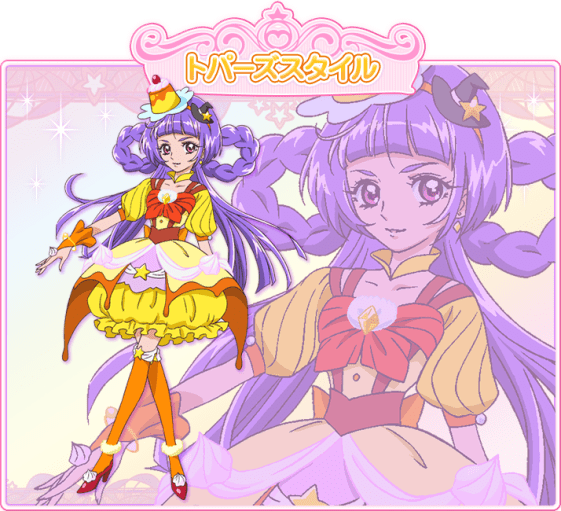
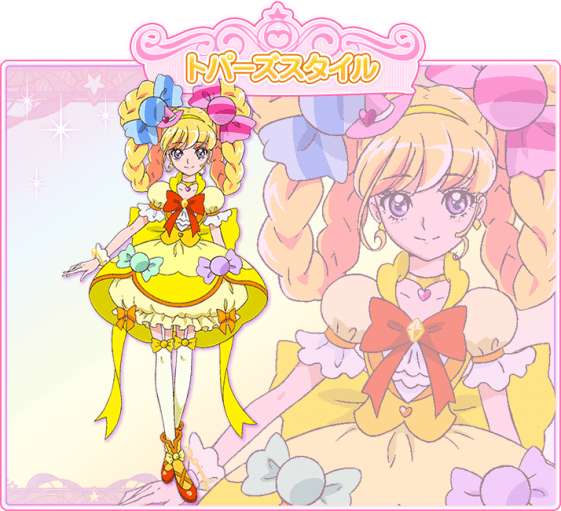
The series is not a terribly bold or daring work, but it also never promises more than it can live up to, which was the issue with the earlier HappinessCharge Precure!—a series that introduced the idea of Precures from all over the world, but never elaborated on it to a satisfying degree. Speaking of HappinessCharge, one aspect from that series utilized to greater effect here is the ability for the Precure to transform into different costumes with different abilities. While it’s not always clear why they use one over the other, they’re all stylish enough in appearance and unique enough in application to not wear out their welcome. My favorites are the topaz outfits, which carry dessert themes and also Green Lantern powers.

mahogirls-sleepingbags

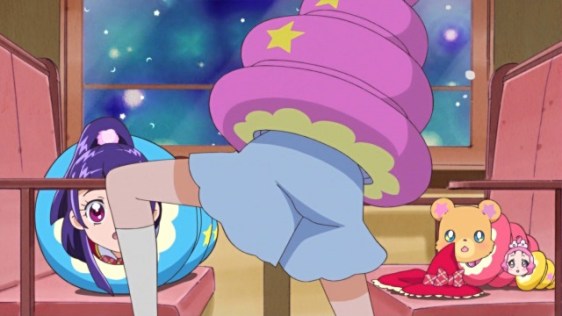
The aspects of the magical world I enjoyed most were the silly little quirks of a different society accustomed to spells and physics-defying elements. From the default incantation of “Cure-up! Rapapa!” to the bizarre shell-shaped sleeping bags found on the snail trains (sort of the Maho Girls equivalent of the Hogwarts Express) to the wizard versions of fairy tales (the fairy godmother is the main heroine!), I looked forward to seeing what simple yet amusing elements of magic would pop up next.

mahogirls-kana

However, the most telling thing about how I view Maho Girls Precure is that my favorite part of the anime is not the heroines or their fight against the forces of chaos, but a side character, Katsuki Kana. A fan of the paranormal, Kana is quick to notice that some unusual things are going on in their town, except no one else seems to notice, and the Precures themselves actively deny it. When she first encounters Liko’s witch friends, they nonchalantly blurt out about how things are so different in “their world,” prompting a frantic expression from Kana in response. In addition to her panicked reactions towards any hint of magic, her ongoing desire to learn the truth, carry shades of one of my other favorite supporting characters in Precure, school newspaper journalist Masuko Mika of Yes! Pretty Cure 5.

Speaking of characters, I’d also like to mention that Liko is pretty much the anime version of Twilight Sparkle from My Little Pony: Friendship is Magic in both appearance and personality. Any fans of Twilight would probably enjoy her antics.

 Maho Girls Precure only rarely ever had me dying to see what happens next, but its simple yet expansive relationship between its characters and their worlds made sure I never tired of it. It’s a series you can take your time with, and it’ll entertain and move, at least one step at a time.

I Have a Choco: Ogiue Maniax Status Update for February 2017

February might be Valentine’s Day Month, but how much I’ll actually discuss romance on the blog remains a mystery even to me!

Whatever the situation, I know that if I were in Japan, I’d be giving giri choco to my Patreon sponsors.

General:

Johnny Trovato

Ko Ransom

Alex

Diogo Prado

Viga

Yoshitake Rika fans:

Elliot Page

Hato Kenjirou fans:

Elizabeth

Yajima Mirei fans:

Machi-Kurada

Given that this will be the tenth year of Ogiue Maniax, I decided last November to do a Genshiken series 1 re-read. I’ve started with Volume 1, and you should expect to see them come out every other month. (I would have said bi-monthly but that phrase can also mean “twice a month,” so…) I’ve already felt like I’m stepping back into a different world, so I’m looking forward to the next article too.

Speaking of Genshiken, I also wrote a little post comparing Kasukabe Saki to Love Live‘s Nishikino Maki. The latter’s cooldere attitude reminded me of Madarame’s fantasy version of the former.

Perhaps the most important post I’ve written this month is on the subject of butts in anime. In it, I detail increasing presence of large rears in Japanese animation, and put forth my own hypothesis on why this has occurred. The seeds of this post have been germinating in my head for a very long time, even before Ogiue Maniax ever began. If you want to see more content like this, let me know. I just hope it doesn’t take me another 10 years to write one!\

I was also sad to see the end of Soredemo Machi ga Mawatteiru aka And Yet the Town Moves. It’s a very unique series in a lot of ways, and I look forward to seeing what the artist does next.

On the video game side, I’ve written a couple of posts thinking about what how players view competitive games, and what they can potentially do to both bring in a bigger audience and keep them from running away in fear.

As for this month’s Patreon-sponsored post, I looked at the subject of babies in anime and manga. My rating of babies is based on how much they make their parents suffer, I guess. If you have a subject you really, really want me to write about, it’s just a one-time $30 pledge.

If you’re wondering why I have it at that price, it’s just because I don’t necessarily want the blog to consist primarily of requests as opposed to my own ideas. That being said, I am considering maybe offering a poll with three or four topics that can be voted on with Patreon pledges. Is this an idea readers would be on board for?

Overall, I think this was a pretty solid month. I don’t have a wholly solid idea of what’s going to come next, but it might be a bit less review-heavy compared to this one.


What People Want Out of Competitive Games (Part 2): Power and Powerlessness

“It’s easy to learn, but difficult to master!”

One of the unicorns pursued by designers of competitive games is to create something that is enjoyable (and competitive) at all skill levels. However, there’s a tricky balance to maintain, because if you skew it too much towards the most advanced players, then only those willing to place countless hours towards honing their skills can enjoy the game. On the other hand, if you cater too much to the beginner, then the overall competitive depth of the game may suffer as better players find that there is less for them to do as they improve. What’s more, some players want to feel like they always have a fighting chance, while other players want to feel the sheer power of a superior opponent bearing down on them, something that tells them how deep the rabbit hole goes. Leaning towards any of these options isn’t inherently wrong, but I think trying to appeal to as many different types of players as possible is an admirable goal in itself.

I’ve been thinking a good deal about what it means to enjoy a competitive game. In Part 1, I wrote about how, while the classic image of the competitive gamer is the “Spike”—someone who prioritizes using the most effective and efficient strategies to win—the current esports/competitive gaming field is comprised much more of “Timmy-Spikes”—people who love to win, but prefer to win with style and flash. What I’m about to say might sound obvious, but I think there are two unifying factors for players of all skill levels and of different philosophies when it comes to enjoyment of video games that involve facing off against opponents both human and AI.

  1. Players love to feel powerful
  2. Players hate to feel powerless

It’s pretty simple, but I think that there’s a lot that can be extrapolated from these two statements.

Whenever I read comments and forum posts about competitive games, there are certain recurring complaints. “This game doesn’t let me play the way I want to. “In this situation, there’s pretty much nothing I can do.” “It’s not fair that this game lets people worse than me win.” Now, some of these complaints might just be rationalization of one’s flaws or simply the act of making excuses, but I find it worthwhile to think about these statements in terms of notions of power/powerlessness.

Let’s look at some examples.

  1. Take the classic idea that “throwing is cheap” from the early days of arcade fighting games. Why was it considered a dishonorable tactic? It’s because, for many players, the act of blocking makes them feel powerful (or at the very least safe). The ability to just block high/low and stop/weaken the opponent’s offense is a simple and easy way to make a player feel better. Throws destroy that false sense of security, creating a sense of powerlessness. It’s up to the player being thrown to learn how to deal with it, and of course many have over the years, but that feeling of vulnerability (and the fear of vulnerability) is why so many throwers got punched over the years in arcades.
  2. One of the complaints about Heroes of the Storm from other MOBA players is that the leveling system, wherein all players on a team gain levels at the same rate instead of having it determined on a per-player basis, means that individuals cannot become the stars of their team. Similarly, while Street Fighter V has its supporters, one criticism from detractors is that the combo system SFV isn’t complex/difficult enough to allow for players to distinguish themselves. In other words, they feel that the game is shackling them, stripping them of power at moments when they wish to feel most powerful.
  3. In Starcraft II: Legacy of the Void and previous versions, the Protoss race is usually the cause of much ire (or should I say “Aiur” dohoho), and they’ve been described as a “coin-flippy” race. The idea is that there is no skill involved, that it’s merely a 50-50 guessing game for a lot of their strategies. For enemies of Protoss, this is the reason they’re strong and annoying. For users of Protoss, this is why they’re weak and frustrating. When you break it down, hinging your success or all-or-nothing strategies is the epitome of the “power/powerlessness” dynamic.

Power can take on many forms. Training is power. Knowledge is power. Good teamwork is power. Outwitting the opponent is power. Overpowering the opponent is, well, a show of strength. Even in pay-to-win games that don’t reward skill but rather how deep your pockets are, the very idea that you can just outdo your opponent because you have more money can be a power trip. Different players experience feeling powerful through different means, and it’s why they likely gravitate towards their chosen games.

For instance, I believe that part of the reason Super Smash Bros. Melee and Starcraft: Brood War have such loyal scenes that considers most other games inferior is because they have many ways to make players feel powerful. They both require constant practice to keep one’s skills at a serviceable level. Both games are clearly stratified in terms of skill level, as knowledge to and access of specific non-obvious techniques creates a divide between those who know and those who don’t. Perhaps most telling of all, in both games, even simple movement, e.g. controlling your army to compensate for Brood War‘s poor pathing or utilizing dash dancing and wavedashing in Melee for basic neutral interactions, involves “advanced actions.” At the same time, these are also the reasons why many prefer to play other games.

As much as a robust player base is needed for a strong competitive scene, one of the challenges of trying to make a  competitive environment more accessible is that, ironically, players who are trying to be “competitive” might not realize what it entails. Street Fighter V took the route of simplifying controls and execution barriers so that players could theoretically reach the point where they’re matching wits more directly. The problem is that many players don’t necessarily want that close, intimate experience of trying to out-think the other, making this “simpler” game even more daunting. Nothing’s worse than feeling, in the words of Fatal Fury villain Geese Howard, “predictable.”

Instead of having multiple paths to feeling powerful, such as training technical skill, to dampen the pain of losing on the mental level (or vice versa), new players are left feeling powerless.

I’m not a game designer, so I can’t profess to know the exact mechanics of “fun,” but I believe that one possible key to making competitive games fun for all is that players should be able to have moments where they feel powerful no matter their skill level or experience. Moments of feeling powerless cannot be avoided 100%, but if there are enough instances that can make a player feel like they did something, that might just be enough to soften the negative impact of defeat.

“I lost, but did you see that awesome shot I made?”

“I lost, but my team and I almost brought it back.”

“My opponent really got me in the end, but I could tell they were scared for a second.”

This might very well be why so-called “comeback mechanics” exist in games, like desperation moves in Fatal Fury 2, X-Factor in Marvel vs. Capcom 3 or Ultra Combos in Street Fighter IV. They give something to the losing player when the chips are down, a glimmer of hope to keep them in the game. The tricky element of this, however, is that this can end up actually making winning players feel powerless. The common complaint of comeback mechanics is that they “punish the better player,” and while that’s debatable in terms of the actual effect on the game, that doesn’t prevent people from feeling that way. It might not sound important, and it might sound terribly subjective, but feeling that something is cool, fun, and indeed powerful is subjective already.