Ogiue Maniax’s (Late) Second Anniversary Celebration

It seems like I have a tendency lately to forget important dates, even those of the things I care about most. November 20, 2009 came and went, though drawing something after having not done so in a while might have been an adequate way of marking the second anniversary of Ogiue Maniax. Still it’s no Genshiken Review, and I think I should celebrate two years of writing and analyzing and making terrible puns with some panache. Seeing as how tomorrow is Stuff Your Face with Food All Day… Day… I’ll save the Thank You’s for the next post. Instead, I’ll talk about how I’ve felt the blog has changed and changed me since I began working on it.

It was over two years ago that I began to realize that I enjoyed writing, and not just any writing but the kind that is meant to inform and enlighten and to encourage others to think. I was given opportunities on both Heisei Democracy and Towards Our Memories to write a little, and from there I decided to just dive in and start my own blog. I named it after the Genshiken character Ogiue Chika, who I believe to be the most deeply complex, emotionally moving, and overall amazing character to ever appear. I intended to use the blog to record my thoughts on the mediums that I love, even if it was just a brief inkling, and to help not only others to learn but myself as well.

Being able to accurately convey my thoughts while also challenging myself to think beyond my own point of view gave me a new and different sense of confidence that what I’d experienced previously, especially when I began to see others respond, and to weigh in with their own words. This in turn would motivate my desire to write even more, and before I knew it, I had improved as both a writer and as an anime fan.

And to you my readers, though I said I would not give thanks, I have to make an exception here. Thank you for respecting my words as much as I respect yours. The comment philosophy at Ogiue Maniax is to allow all comments as long as they are relevant, as it encourages everyone to engage in dialogue and to better understand each other. And if you’re a troll you’re all the more welcome, as it gives me the opportunity to further clarify my points. At that point, it’s up to every individual reader to decide if they agree with me or not.

Ogiue Maniax, two years old. Get ready, because this baby’s starting to walk.

Like Casting Pearls Before Artificial Intelligence

If you’ll allow me a moment, I am going to rant about them there video games.

I’ve been playing Jump Ultimate Stars recently, trying to finally unlock all the characters and such, and in order to do so you need to collect these gems that appear when you break open containers or you defeat enemies. A simple, if tedious process, gem collection is made five times worse when you find out that your computer opponents collect the gems as well.

Now keep in mind that unlike other items which might cause status effects or buffs/de-buffs, the gems serve no function other than as currency, and so serve no use to the computer opponents who will occasionally go out of their way to collect them. It just slows down the grinding process unnecessarily and can make you want to punch Yugi in the face when he grabs your damn knowledge gem for the umpteenth time. Fortunately with this game you can do exactly that.

If you’ve played Super Smash Bros. Brawl, then you probably know what I’m talking about. In Brawl, you get additional background music by collecting CDs which will randomly pop up in the middle of a fight. Again, if a computer-controlled opponent picks that CD up it means that you’re going to have to wait another day for that disc to reappear.

Why, Nintendo? Why, Ganbarion? Why put this into your games? It just leads to annoyance and frustration, and not the good kind either.

Oh yeah, if you do reply, please don’t turn this into an argument about tripping or whatever.

The Lolicon of 1982

Kransom recently showed me this image from a 1982 issue of Animage Magazine. The image is a chart which is designed for you the reader to figure out your lolicon level. The further down the list your preferences go, the more of a lolicon you are.

I don’t expect people to recognize every character. I certainly didn’t, which is why I’m including this handy guide. From left to right:

Top Row (You’re Normal): Fiolina (Dagli Appennini alle Ande), Clara (Heidi), Monsley (Future Boy Conan), Hilda (Hols: Prince of the Sun), Lana (Future Boy Conan), Clarisse (Lupin III: Castle of Cagliostro)
Middle Row (Serious Symptoms): Aloise (A Dog of Flanders), Diana (Anne of Green Gables), Megu (Majokko Megu-chan), Becky (Tom Sawyer), Angie (Her Majesty’s Petite Angie), Heidi (Heidi)
Bottom Row (Already Sick): Lighthouse Keeper Girl (Wanwan Chuushingura), Princess of the Purple Star (Gulliver’s Space Travels), Shizuka (Doraemon), Makiko (Tetsujin 28 (1980)), Ulala (Robokko Beaton), Mayu (Space Pirate Captain Harlock)

Though it might seem unnecessary for me to repeat it, I have to restate that this comes from 1982 and a very different era of anime. This is not the modern-age pandering lolicon of Kodomo no Jikan and other similar shows. Looking at this list, the majority includes characters from shows that were produced by future Studio Ghibli staff such as Miyazaki and Takahata, as well as characters from famous children’s literature around the world such as Tom Sawyer and Anne of Green Gables, and I don’t think anyone would accuse Diana Barry of being a one-dimensional character.

Though moe is not lolicon, the generally youthful look of moe characters means that the two ideas are often associated with each other. And aside from the idea that Miyazaki and children’s literature created the lolita complex in anime fans, accusations which are not new, I think the real implication is that as much as we decry lolicon and the like for being shallow, vapid, and creepy, this shows that it came from a real source consisting of strong storytelling and visual quality. Though I might be reaching a little, I really think that the people who realized their own lolicon-ness as the result of these shows were taken in by the excellent characterization of the young girl characters present in these anime, and not because these characters hit any specific buttons. This sentiment was then carried over, becoming reduced and simplified in the same manner that resulted in the current understanding of moe, and also in a fashion to how the people who fell in love with Gundam would go on to work on their own giant robot anime years later.

It’s not my goal to defend or condemn lolicon, but rather to say that this aspect of anime fandom, like it or not, appears to be born from high-quality Japanese Animation from some of the greatest masters in the industry. In other words, even though there are shows that pander to lolicon, it was not lolicon-pandering shows which created the market in the first place.

“Tanaka! Are You Paying Attention?”

In my opinion one of the best things about the old Shounen Jump manga Kinnikuman was that it allowed kids to submit their own designs for wrestlers with the possibility of their characters appearing in the actual comic. Not only that, some of those submissions became full-on major characters in the story of Kinnikuman. Even if they were sometimes just Hulk Hogan in a mask, it provided a level of interaction with the readers and imbued the story with a greater amount of childhood imagination. I wrote a small review a while back, in case you’re curious about what the series is ctually like.

In 1999 though, Kinnikuman received a sequel, Kinnikuman II: Second Generation, which is still running today Known in the US as Ultimate Muscle, the big difference between Kinnikuman II and the original was that instead of targeting kids, the new series targets the kids who grew up loving Kinnikuman who were now adults, much like the relationship between Hokuto no Ken and Souten no Ken. Shounen manga’s changed in the last 20 years, and a series like Kinnikuman would not have the easiest time in this new era of Shounen.

The sequel receives submissions for wrestler designs just like the original manga, only instead of it being from Tanaka Hiroshi Age 11, it’s now Tanaka Hiroshi Age 27, which has me picturing a salaryman on the train or in a board meeting eagerly sketching out a Choujin Wrestler on a notebook lying against his briefcase. He’ll be sitting there as the company president is detailing their new financial plan, drawing the buzz saw that comes out of the wrestler’s legs.

“Tanaka! Are you paying attention?”

“Yes sir, I’m just…taking notes.”

“Oh…very well then. Good job, keep it up.”

Tanaka then sits down and adds some electricity lines to his character’s muscles, for extra power.

Reverse Thieves Secret Santa, Ogiue Maniax Edition

I am participating in the Reverse Thieves’ Secret Santa Project, in which bloggers picked shows for other bloggers based on their anime preferences with the ultimate goal being a review of one of the anime picked for us.

Anyway, my show.

Lovely Complex.

Good choice, Mr. or Ms. Claus. I hear this series is shoujo at its finest, and so I’ll be looking forward to taking it on.

Haven’t Done This in a While

Cliff Notes Characterization: Another Moe Discussion Part 3

In my previous two entries in the Another Moe Discussion series, I may have generated some confusion on the topic, particularly because my own choices for characters I find to be particularly moe may seem somewhat unusual. In addition, reading the comments I received,  a question popped up in my head: does the “moe” label imply a certain character depth or a lack thereof? The answer I’ve come up with is that it is both and neither. A seeming cop-out response, but allow me to explain.

Let’s say there’s an anime series you absolutely love, and in it is a character with strong characterization who goes through some trauma, and in the process resonates with you emotionally, possibly sexually, and you want to tell other people how great the character is and how powerfully attractive they are. The best way to try and make them understand would be to get them to watch the series, but if that is an impossibility, the best you can do is summarize the character and try to describe in fewer words just what made the character move you so. If you have to summarize your complex feelings towards the character in a few sentences, you’re going to have to either pick very specific moments or generalize greatly to give a broader view.

Now then, what happens if all copies of the original work fell into the ocean without any chance of salvaging them, and all the world had left was that summary you wrote? To be sure, your summation has its own merits, as does your intent to really get to the core of what makes you love that character so dearly, but what you’re left with now is a record of that depth. It would be like if nearly every book in the world on a subject was destroyed and the only ones left unharmed were Cliff Notes, and then everyone assumed that this is the way things are and also begin to write their own original stories in the Cliff Notes format. The summary becomes the entirety of the work.

Let’s use a famous character who is often argued as both moe and not-moe: Evangelion’s Ayanami Rei. Having watched the entirety of the original Evangelion series, I can say that there is a lot to Rei’s character to the extent that it’s somewhat difficult to summarize her character and do her justice, but if I had to, I would describe her as an expressionless girl who is fully aware of the fact that she is not unlike a human doll, and has to live while being unsure as to whether or not her emotions are real or just facsimiles. Rei often puts herself into danger as she does not regard her own life as more special or important than the task at hand. To abridge that once more, “Rei is a seemingly emotionless human doll who has little regard for her own well-being.”

But what happens if you take that Cliff Notes version and were to simplify it even further? A Spark Notes of the Cliff Notes one might say. What if you were to reduce the element of time down to zero, and attempt to express those aspects of Rei purely in her visual design? Blue hair and pale skin make her appear more doll-like. An expressionless face implies a seeming lack of emotion. The frequent appearance of bandages on her body implies that she often gets injured. These visual elements become symbols with their own power, which then can be isolated, codified, and even fetishized. Rather than looking for a character by their description as a conflicted human doll who struggles with understanding emotion, you can instead look for a character with pale features. And then you can play off of that trope by making a pale character who acts unlike the stereotype. That leads us to where we are now.

Depending on the extent to which you simplify and distill the attributes of a character, moe can be something with plenty of depth or very little, be it an emotional depth, a storytelling depth, or some other kind. I think this also explains why some people can have such a bad reaction towards moe, because it can be seen as a reduction of what should be there, a quick-and-dirty facsimile of storytelling and characterization. However we must also keep in mind that art and fiction itself is often an exercise in summarizing and simplifying ideas and emotions to transmit them more easily.

Static vs Active: Another Moe Discussion Part 2

Yesterday, I made a post about how the “issue” of moe basically came down to whether or not it was personally offensive to someone. I didn’t go into what “is” or “is not” moe, as what was important there was not to get people to agree to any one definition but to point out the fundamentals of why moe can make for such heated debates and arguments. Today though, I want to talk about one of the possible reasons why discussions regarding moe can often seem like the two sides are arguing two entirely different topics. Keep in mind that my goal is not to show one side being right and another wrong, but to help you better understand why it is you, I, or anyone has developed their respective opinions on the topic of moe.

In the past, I’ve defined moe as a strong empathy for a character’s weaknesses, but knew that not everyone would necessarily agree with my interpretation. The more I studied my own definition and others’ however, the more I realized that there was some mix-up as to what different people considered the most important element in defining moe. From there, I thought up two general categories: static moe and active moe.

Static moe is where a character’s design and basic attributes are moe. The character’s voice, personality, unique physical traits, etc. all contribute to static moe. The idea is not to pull a character completely out of their context, but to see them in a stilled moment and gain moe from that.

Active moe is achieved through a character’s actions or what happens to them in the context of an animation. It is in the way they change or interact with their world that creates moe. In a way, this moe lacks concrete evidence, and is built into how the character grows on the viewer.

If we look at Tsukimiya Ayu from Kanon, her love of Taiyaki, tomboyish personality, lack of cooking skills, and penchant for saying “Uguu~” are all elements of static moe. Ayu’s interactions with Yuuichi, the way the two characters grow closer as friends, and the manner in which we learn about her true identity are what comprise Ayu’s active moe. To generalize, static moe is the stationary character, while active moe is the character in motion.

Now, what contributes most to your perception of moe? Whether you like moe or not, do you view moe as primarily static, where the most vital aspect of it is the design of the character, or do you view it as primarily active, with the greatest emphasis on the path the character takes?

Using myself as an example, when I examined the characters I found to be the most moe (Ogiue, Eureka, Hinata, etc.), I realized that my views on moe were shaped mostly by my own emphasis on what they had done as characters. In other words, I was moved strongly by their active moe. Again though, it’s not as if moe as active will make you like it, or thinking of moe as static will make you dislike it, but I think that the view of moe people have shaped in their mind relative to this dichotomy strongly influences their opinion as a whole, whether they realize it or not.

That’s Part 2 of Another Moe Discussion. Is there going to be a Part 3? A likely possibility, as I do have something in mind.

Two Questions: Another Moe Discussion Part 1

Hi kids, it’s time to talk about moe again.

There’s two things I want to address here, the first is what is up with the strong feelings towards/against moe. The second topic I’m going to address tomorrow, so hold onto your hats!

We as anime fans on the internet can argue about moe all we want, whether it’s hurting or helping the industry or anime as an art form, whether it’s a boon or a detriment to storytelling, but when you strip away all of the noble back-and-forth posturing and gesturing, it basically comes down to two “yes” or “no” questions.

Does moe creep you out?

If so, are you okay with that?

And this is based on however you yourself interpret moe to be. Of course I’m generalizing, and there can be other reasons to dislike it, but from what I’ve seen this is the origin of the most vehement opposition to it is from the people who just cannot handle the idea that anyone proper of mind would like moe of all things, and its most ardent supporters are the ones who take offense to the idea that they are somehow developmentally insufficient.

Now it’s okay to be creeped out by moe, as that’s totally your prerogative. I may like moe myself, but it’s not like there hasn’t ever been an instance where I was creeped out by a piece of fiction and I was not okay with that. Specifically, I’m talking about that awful Thundercats comic from a few years back where they had Wily Kit and Wily Kat as bondage slaves to Mumm-Ra. Sure, they were adults in the comic but what the hell. That really weird sexualization of two comic side characters from a children’s cartoon bothered the hell out of me, especially because this was not some guy’s fanart but an actual official comic that was supposed to be like canon to the Thundercats story. In many ways I think it’s similar to the reaction that a lot of its opponents have against moe, replacing Thundercats with anime as a whole.

As to what influences perception of moe, that’s for the next post.

Something’s Wrong with Medaka Box

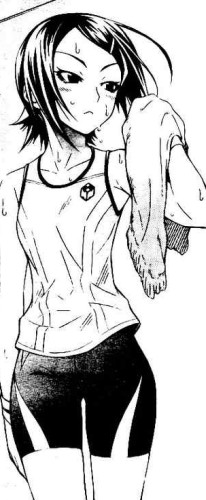
Every week or so I find myself reading the latest chapter of Medaka Box. The thing is, I don’t like it all that much. It has a number of fine qualities and moments, like when Medaka pulls a Joseph Joestar and imitates someone to a tee, but something about it just doesn’t jive with me. It just doesn’t have that oomph, aside from that one girl on the track team whose design I like.

Whoo, she’s nice.

The problem isn’t that I’m not fond of it, but rather that I’m not sure why don’t like it that much, and it’s been bothering me since Chapter 0. It’s not the Nisio Isin-ness of it; I like Bakemonogatari just fine. Is it the visuals with the dialogue? This is further complicated by the fact that there’s plenty of mediocre to bad anime and manga that I do like, and none of them seem to have the unique problem I perceive Medaka Box as having.

I feel like I’m continuing to read it either in the vague hope that it’ll get better and all the pieces will start to come together, or that if I continue with it I’ll be able to better figure out just what my problem with Medaka Box might be.