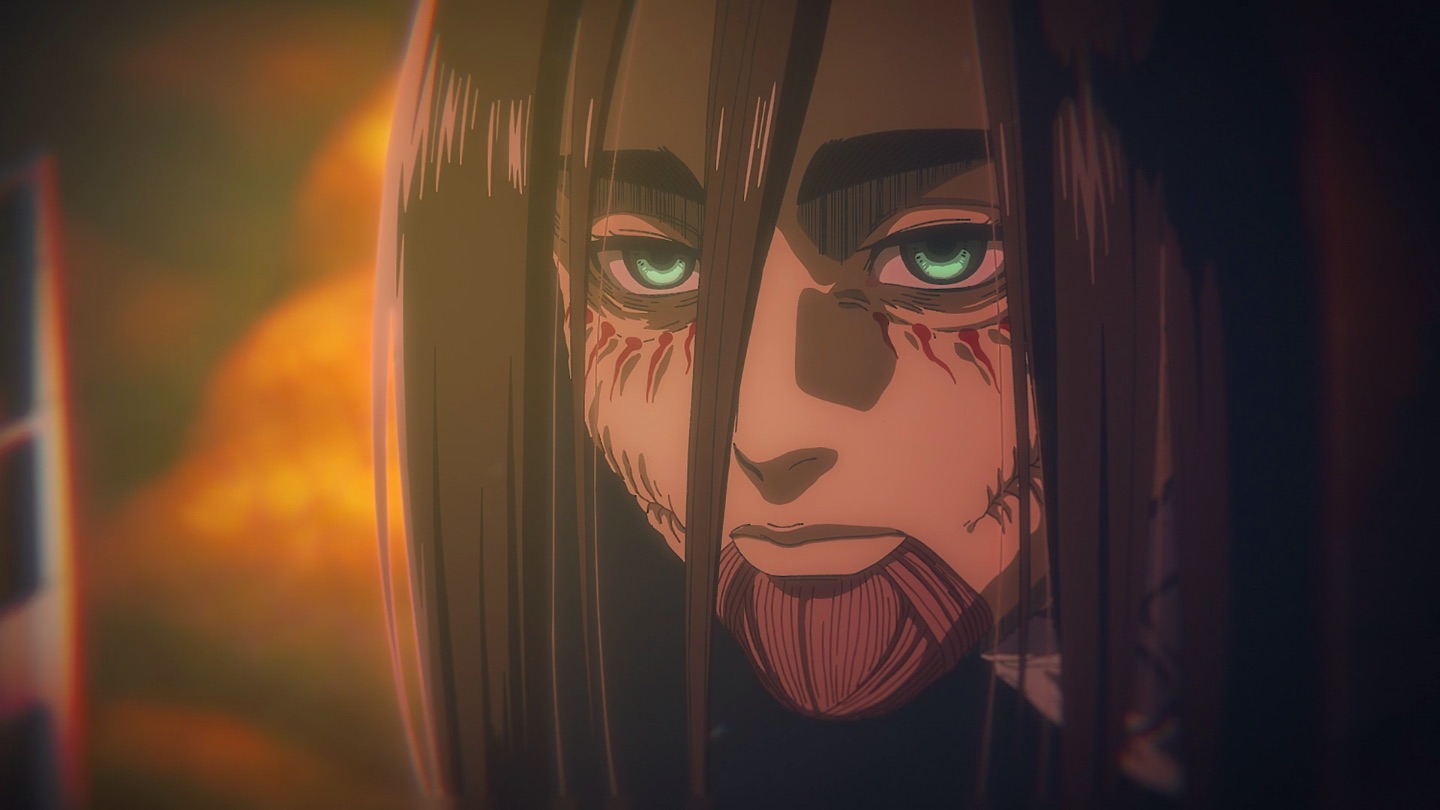
When it comes to Anno Hideaki’s Shin Japan Heroes Universe movies, the meaning of that first word, Shin,is left ambiguous. Usually, depending on how it’s written in Japanese, shin can either mean “true” (as if whatever iteration we’re seeing is either an entity in its greatest and purest form) or “new” (a reimagining, a version yet unseen). After watching Shin Kamen Rider, it’s increasingly clear to me that it’s meant to be both, and maybe more.
Based primarily on the original 1971 Kamen RIder series, Shin Kamen Rider tells the story of Hongo Takeshi, a man captured by the organization SHOCKER and made into a part-bug living weapon. However, thanks to a sympathetic scientist, he manages to escape and he decides to fight against SHOCKER using his newfound powers and his strong sense of justice.
Seeing as how I’ve never even watched a single full series, I can’t call myself a big Kamen Rider fan or expert by any means. But when Shin Kamen Rider was first announced, I remembered something Anno said in an interview: He thinks the world of the first three episodes of the original Kamen Rider due to their darker nature. I also have seen comments about how Shin Kamen Rider is unusually violent, which lends credence to the notion that this would somehow be different.
Shin Kamen Rider turns out to be even bloodier than I had expected, even with the aforementioned warning. It is brutal and visceral in a way that none of the other Shin movies are. That’s not to say the work is overly gratuitous—but rather, it’s one of many factors that make the story very human and personal. On some level, this is probably just due to the fact that Evangelion, Ultraman, and Godzilla all concern giants, giving an inherently different sense of scale.
But even more than the violence, Shin Kamen Rider feels like it’s trying to be something that the word “fundamental” doesn’t fully describe—as if the work is tapping into the essence of its source material so deeply that it ends up bringing forth a version from within that had not seen the light of day prior to this. What we see is a Kamen Rider if the series had continued on with the energy from those earliest episodes that Anno cherishes so much.
I watched Shin Ultraman not long before this, and there are some noteworthy differences that I think speak a lot to what each franchise embodies. For example, the monsters in ShinUltraman appear to be much more essential—who and what they are doesn’t stray far from the source material. All the monsters in Shin Kamen Rider, on the other hand, are portrayed with much greater liberties in terms of motivations. In contrast, the main human character in Shin Ultraman is a completely different person compared to the original TV series, whereas Shin Kamen Rider still maintains the character of Hongo Takeshi, even if he isn’t 100% the same. Ultraman has more memorable monsters; Kamen Rider has more memorable humans.
To skeptics, Shin Kamen Rider would very likely come across as hokey in a way that no amount of ultra-violence could make it more palatable. However, the portrayals of its characters, from their emotional pain to their sheer awkwardness really grounds the film. I think it’s no coincidence that the costumes for Shin Kamen Rider are actually pretty cheesy—the production could have easily made them sleeker and more modern. Instead, they’re weird and cumbersome, as if the bit of messiness is important. Shin Kamen Rider is, at its core, a work that is both “cool” and “uncool,” and the two sides merge together to reveal something incredibly human.
Introduction: “Gattai Girls” is a series of posts dedicated to looking at giant robot anime featuring prominent female characters due to their relative rarity within that genre.
Here, “prominent” is primarily defined by two traits. First, the female character has to be either a main character (as opposed to a sidekick or support character), or she has to be in a role which distinguishes her. Second, the female character has to actually pilot a giant robot, preferably the main giant robot of the series she’s in.
For example, Aim for the Top! would qualify because of Noriko (main character, pilots the most important mecha of her show), while Vision of Escaflowne would not, because Hitomi does not engage in any combat despite being a main character, nor would Full Metal Panic! because the most prominent robot pilot, Melissa Mao, is not prominent enough.
—
This is an unusual “Gattai Girls” entry. Sakura Wars is one of Sega’s most beloved video game franchises in Japan, and doing a review/analysis of it based on an animated TV adaptation will inevitably mean I can’t fully capture everything that makes the series what it is. Nevertheless, we have a solid example of an anime that fulfills the criteria of a mecha series with a centrally prominent female pilot, so here we are. As far as I know, the TV series follows much of the same plot, but there are some cases where major events (such as a certain heel turn) do not play out as they did in the game.
Sakura Wars takes place in an alternate Taisho-era mystical-steampunk Japan where people and technology thrive, but where horrible demonic forces also threaten the peace. The only people capable of fighting them on relatively even terms are the members of the Imperial Combat Revue: a group of girls who have the dual roles of being performers in musicals in the vein of the Takarazuka Revue and fighting as pilots of special spiritually powered mecha known as Kobu.
One of the points of appeal of Sakura Wars is that these girls are all interesting and memorable characters, but the face of the franchise is undoubtedly its namesake, Shinguji Sakura. To understand her general popularity, one need only look at Sega’s 60th anniversary popularity poll wherein Sakura got 3rd place behind only Sonic the Hedgehog and Opa-Opa from Fantasy Zone. What makes her so appealing is that she’s essentially the ultimate yamato-nadeshiko—the classical Japanese beauty—but without being a regressive character bound by conservatism.
(SIde note: While I acknowledge that the series is full of excellent female characters, the focus will be on Sakura as the main heroine).
When Sakura first arrives to join the Combat Revue in Tokyo, she’s like a fish out of water. Clad in a kimono, everything about her screams “traditional.” However, this is the Taisho era, a time of increasing embrace of certain Western values (such as marrying for romantic love). Much of Sakura’s growth over the series involves adapting to the cosmopolitan nature of her new environment and her teammates—allies who come from different parts of Japan and the world, and who hold different values—all the while still honing the swordsmanship and spiritual energy that has made her a recruit for the Combat Revue in the first place.
I don’t often devote space to discussing the voices behind the characters in these “Gattai Girls” entries, but I have to make a special exception here because Yokoyama Chisa is simply exceptional. Her voice carries such a range of emotions, from strength to vulnerability, from joy to sorrow, sometimes all at the same time. She’s the main singer in the Sakura Wars opening for this anime (as well as many of the games), and it really does feel like Shinguji Sakura is bringing the song to life.
I understand that romance is actually a significant part of the Sakura Wars games, as the player usually takes the role of a male captain who’s in charge of the squad. In the case of the earliest games and related media, that would be Ogami Ichiro, and I believe Ogami and Sakura are the most popular pairing. However, romance isn’t really a huge factor in the anime, and much of the story is focused on Sakura and the others developing bonds that help them to grow as people and warriors, as well as unraveling the secrets of the demons that are plaguing Japan. In this regard, Sakura is shown to possess immense inner strength, focus, and courage, all of which end up translating to becoming a great Kobu pilot over time.
The Kobu themselves look fantastic, their round shapes and steam valves capturing the setting’s aesthetic better than anything else. They’re distinctive, and their unisex designs means that no specific attention is drawn to the Kobu being piloted primarily by girls. Every character fights in their mecha with weapons similar to what they’d use on foot, and Sakura’s is a single katana. The power, will, and resolve to defend the innocent is actually part of Sakura’s appeal as a yamato-nadeshiko, but this is again presented less as a facet of an ossified woman and more an anchor she can use for stability when she needs it.
Shinguji Sakura is the kind of female protagonist who is often imitated but never duplicated. To be able to embody seemingly contradictory values of progress and tradition while truly betraying neither is a juggling act that can fall apart all too easily. She’s the surest sign that just because a character falls under a dominant archetype doesn’t mean they have to be boring or bland.
I’m five years late to the party. As others started playing The Legend of Zelda: Tears of the Kingdom, I decided to dust off my barely touched Breath of the Wild with the goal of freeing the Divine Beasts and taking down Calamity Ganon. I wouldn’t be going in totally ignorant (I’d seen others both play and beat it), but I still had to contend with my own poor sense of direction. And so here I am now, on the other side of glorious victory, here to detail my thoughts on a game everybody has already played.
I’m not the most hardcore Zelda fan. I have a history with the games—including playing the original NES game, Link to the Past, and Ocarina of Time—but I never really touched 21st-century Zelda. I know there have been various debates about whether the post-Wind Waker games have been too linear and uncreative, and that having Breath of the Wild arrive in this context was like a bolt of lightning. This open world game ends up being situated in an interesting place in the Zelda series, not only because it had never been done before, but because it both harkens back to and defies its predecessors. The free exploration feels a lot like classic Legend of Zelda, but the open-ended solutions for puzzles hits differently compared to earning a Hookshot and utilizing it throughout a dungeon designed around it.
I think my experience with BotW can best be encapsulated by the fact that my greatest challenges and frustrations were at the beginning of the game. As mentioned, I am directionally challenged, and throwing me into the middle of nowhere without many visual markers is a sure sign for me to never get a sense of my bearings. I was probably stuck up on the game’s first area, a low-stakes plateau, for far longer than I probably should have been. Still, once I managed to actually get stuff done, the game opened up to me, and I started to have a lot more fun.
There’s something very satisfying about just discovering stuff as you go on little detours, or looking at the map and seeing something really odd out on the edges of the land—“Is that a maze?!” The game rewards you for being curious, though you may get skill-checked by the nearby monsters. It’s one thing to be able to assess the strength of enemies, but when you have to factor in that your weapons and equipment can shatter and leave you defenseless, you really have to decide if trying to go somewhere is worth it. I often stubbornly decided it was, and would end up either killed or hanging on by the skin of my teeth. Did I have to fight that first Lynel? No—the game even explicitly says you don’t need to—but I wanted to try, and I was willing to lose 80% of my weapons to do so. It’s a funny feeling to look at your rewards against what you lost to get them.
Combat is a major part of BotW, as enemies are a frequent sight, and bosses require you to at least be able to function. I’m of two minds about the fact that the game gives you so many tools for one-on-one situations but then frequently pits you against many—I like that they don’t just wait kindly like in Ocarina of Time, but it is annoying nevertheless. I would also often wonder if maybe I was too powerful for an area with the equipment I had; I wanted to test my skills but it might have just been a matter of brute force. At the same time, I also didn’t necessarily want to be facing challenges masochistically underequipped. I understand that any powerful items I possessed were thanks to my own exploration, so it’s not like anything was unearned, but I still would have liked a better sense of where I stood in terms of mechanics mastery.
Overall, though, it was a very satisfying experience to play through Breath of the Wild. I’ve heard that Tears of the Kingdom is just a straight-up improvement in every way, which I’m looking forward to trying out sooner rather than later. I actually find it fascinating that TotK is such a direct upgrade, as that has never really happened in the history of Zelda. I’m curious to see how people assess BotW vs. TotK in terms of greatness: What do you value more, the pioneer or the refiner?
If you ever talk to fans of episodic, monster-of-the-week shows, a common refrain is that inevitably not all episodes are winners, but that there is also a flipside: Often, some stories are so good and memorable that they elevate the work as a whole. Whether it’s a particularly poignant moment, an interesting monster, a surprising level of maturity, or even a contribution to the greater overarching plot, there are times when that otherwise simple kids show rises to the occasion. Following this thought, a question often arises. What if all the “excess” was cut out, and you were left with all killer, no filler?
Shin Ultraman is a film that embodies such an idea. A kind of homage/return-to-roots/reboot all in one, it tells the tale of the original Ultraman TV series in a modern setting. The premise sees Japan invaded by powerful monsters that necessitates the creation of a specialized task force to fend them off. Just as the monsters start to be too much, however, a mysterious giant warrior (later named Ultraman) arrives to help. What ensues is a look at how humanity interacts with Ultraman and vice versa as greater threats emerge, leading to questions about the essential elements of the people of Earth. The film highlights the essence of this classic tokusatsu hero by compressing an entire TV series into an almost two-hour experience—or at least it comes across that way.
My exposure to the Ultraman franchise is sparse at best. While a young me did wake up early every weekend to watch the English-original Ultraman: Towards the Future, much of what I know is though (sub) cultural osmosis and Ultraman’s proximity to anime and manga. Of particular significance to me is the fact that it’s a huge influence on Evangelion—not only does Eva feature similarly giant light-based heroes with time limits, but the director Anno Hideaki is also responsible for Shin Ultraman as part of a pattern of uniting various Japanese pop culture staples (see Shin Godzilla, Shin Kamen Rider, and indeed Shin Evangelion). In the hands of other creators, I might have greater skepticism, but having Anno at the helm at least piqued my curiosity from the start in a way that has since been rewarded.
The fact that there is no established antagonist might make the film seem strange to those who are used to more conventional feature-length storytelling, but I found myself enjoying the range of foes in Shin Ultraman.The basic progressionis that every adversary presents an escalating challenge, starting with tougher and tougher monsters that pose increasingly dire threats before making way for dangers that seek to exploit the flaws of humankind: fear, greed, mistrust, and so on. Ultraman is also similarly alien to humanity, but contrasts with the invaders as he gravitates towards and cherishes humanity’s positive qualities, e.g. trust, cooperation, and curiosity.
Because I’m not an Ultraman fan, there are many references I simply could not catch on the first viewing. Sure, I know about things like Zetton, the monster that ranks as arguably the most iconic final boss in all of tokusatsu, but not much more than that. But when I did read up, I further realized what a love letter Shin Ultraman is. For example, at the very beginning, a brief history of various monsters are shown, all of which are successfully dealt with by humans. I found this curious because normally the monsters in a work like this are simply too much—that’s why you need Ultraman. It turns out that all of these initial monsters are originally from the predecessor to Ultraman, a TV series named Ultra Q. There, it’s about the people of Earth dealing with phenomena, with no alien giants to help. The fact that Shin Ultraman makes this reference to Ultra Q while also using it to establish both the world of the film and the general competence of the human task force is very clever in hindsight.
Without knowing its source material well, I can tell that Shin Ultraman seeks to both bring out and then distill the very core of Ultraman. In that sense, there are many things that could have been done to make it a “better” or “more cohesive” film, but I also think doing so could very well have blunted the effect of Shin Ultraman as a work that tries to capture the essence of a childhood icon and remind everyone of its inherent relevance. Shin Ultraman is both rooted in nostalgia and timeless in its message: There is light in humanity.
Hololive just announced a new group of Virtual Youtubers, collectively called ReGLOSS. Ever since the Hololive Splash Party concert at the end of August, there have been numerous teasers for something called “hololive DEV_IS,” and these new members seem to be the first project under that banner. Now we have both their appearances and a debut music video, one thing that stands out to me: The girls of ReGLOSS have surprisingly clean character designs.
Most VTuber designs take what I’ve referred to as a “maximalist” approach. Typically, a Virtual Youtuber wants their essence to be easily identifiable at a glance, and so most will have things like wild hairdos, horns, animal ears, and complex outfits on display. The most recent Hololive English generation, Advent, features all these attributes and more. While there are exceptions, this is the general trend.
In comparison, the ReGLOSS designs are actually quite subdued. Sure, they’re still pretty flashy, but they’re somewhat less elaborate than even typical IRL human idol or Kpop fare. The fact that all five members’ outfits are coordinated with one another is new and different—rarely have generations looked this cohesive. (And if anything, they kinda look like they stepped out of the anime RahXephon.)
As for why Hololive has decided to go this angle, I wonder if it’s because they seem poised to be a music group first and foremost, and there isn’t as much of a need to go big with the designs. Perhaps it’s no coincidence that another major Hololive singer, AZKi, has herself gotten more elegant redesigns over time. That said, I’d be shocked if they didn’t stream at least a decent amount, as that connection with the fans has been a boon to the followings of all the various musicians in Hololive.
For now, I’m pleasantly surprised. While I appreciate plenty of VTubers with maximalist designs (including Advent), I have wondered if that “arms race” has gone a bit overboard. If ReGLOSS finds success, maybe we’ll see a turn back to simpler and more refined aesthetics (if we ever really had them at all).
PS: While it’s somewhat futile to speculate about what they’re really like, Hololive seems to be very aware of this, and has created an image and hashtag for fans to predict what they’re like. So I figured, why not join in on the fun?
PPS: Hololive has also revealed their casual outfits. Though they no longer match, I think everything I said about their designs still stands—even Raden’s.
I’m happy and grateful that the full Hi Score Girl manga series by Otoi Rekomaru is out in English. It’s one of those manga where, once upon a time, a US release would have been a pipe dream. A nostalgic nerd love story premised around Street Fighter II and the 90s Japan arcade scene? As significant as that era was in Japanese gaming history, it’s a niche among niches. And yet, here we are.
I first discovered the series eight years ago, and was immediately won over by two things. First, there was the eccentric nature of its main duo: the obnoxiously loud gamer kid Haruo and his friend/rival/love interest, the reticent and rampaging Akira. They initially meet at an arcade and feud over a Guile vs. Zangief matchup, and though they never stop butting heads, it’s silly and sweet how they essentially communicate through gaming. That’s not metaphorical either; Akira pretty much never talks. Second, the portrayal of the 90s games and the way Haruo based his very outlook on life on them could have only come from a genuine place. Otherwise, jokes like “messing up the secret select code for Akuma” and “Akira having sympathy for big grappler characters because she feels bad about how little they get chosen” wouldn’t land so well.
The characters age over the course of the 11 volumes, going from elementary to high school and growing alongside the rapid developments in gaming technology. Their transition into adulthood is concurrent with continuous upgrades to Street Fighter II, the advent of 3D fighting games like Virtua Fighter, and so on. A nice narrative device to be sure, but it’s actually surprising seeing how much Haruo actually matures as he comes to understand responsibility in his own way. He’s not the sharpest tool in the shed, but his convictions are real.
Hi Score Girl reminds me a lot of one of my all-time favorites, 81 Diver. The art is similarly rough, and the core relationship is as much a rivalry as it is a love story (if not moreso). That’s actually pretty rare in manga focused on het romance, and is usually the domain of fujoshi-adjacent works. But it’s convincing here because of how Otoi portrays the genuine desire for connection, and the way that gap is bridged through gaming. Sure, the premise of a boy meeting an ultra rich mega gamer girl is unrealistic in many ways, but the portrayal makes me want to believe in their love.
In addition to the authenticity of the passion for fighting games, I think what ultimately makes Hi Score Girl work is that while Haruo kind of exists primarily in his gaming-obsessed mental space, the life lessons he draws from games are ultimately his own. He’s a guy with an imaginary friend who gives him pep talks and acts as his conscience, and that friend is often just Guile. Haruo and Akira imbue greater meaning into games, and the games reciprocate by providing them the thrill of victory, the agony of defeat, the comfort of friendship, and the joy of love.
I don’t know if it’s the record heat waves or just the sheer amount of things going in life, but the summer has felt incredibly long. But now that it’s the final stretch, I’m sure I’ll be missing it soon enough.
During this time, I also managed to watch both Shin Ultraman and Shin Kamen Rider, so expect some reviews of those sooner than later. In the meantime, I’d also like to mourn the loss of gfycat, which provided many a useful moving record for both mirth and study. I didn’t use the site much for Ogiue Maniax, but I have been updating a few posts here and there.
September Patreon subscribers! Thank you to the following—
A post about the new Hololive dog twins and their preferred name pronunciations.
Kio Shimoku
Kio mostly talks about Elden Ring, but also, check out that high-resolution Ogiue art!
Closing
I watched the Hololive Summer 2023 concert, and it was a blast. There were some issues with the viewing platform that ended up with the entire Day 1 concert being streamed for free on Youtube for the next month, and I’m thankful for that because it meant being able to easily watch Holotori strut their stuff over and over. The fact that Day 2 has holoX’s performance of their new song, “Labyrinthine Labyrinth,” as part of the free preview makes me feel like I won a small lottery again. I also highly recommend checking out the last song in the Day 2 preview, especially those who love 80s anime.
And now Hololive Myth 3rd Anniversary is coming up! It’s amazing to reflect on how much time has passed, and how directly it’s tied to the COVID-19 pandemic. No, I will never forget about that.
This month, Kio mostly talks about Elden Ring. But we also get to see a high-quality version of one of the best covers he ever drew (no bias from me, clearly).
Even after 100 hours, Kio is having trouble in Elden Ring. In many places, he feels that he would never have been able to figure things out without strategy guides. (Forgive me for not translating this in greater detail.)
Kio keeps seeing figures and illustrations from Elden Ring but for the most part has no idea who anyone is, seeing as he’s only played 16% of the game.
Reflecting on his time with a much older FromSoftware game, King’s Field II, Kio recalls his experience. Despite the fact that it wasn’t really “open world,” finding out how one area of the game connects to another was very exciting.
There was a remix of AKIRA music playing at the gallery, and Kio wondered where it came from. Turns out that it was new arrangements done for the gallery. Kio wants a CD of it.
High-quality version of the cover to Genshiken Volume 6, as well as just the art of Ogiue. Needless to say, I love this cover and volume to death. Also check the thread to see lots of people posting their copies (and variations).
At this point, Otakon is a given in my life. I have enough faith in the people who run the anime convention every summer that they will create a rewarding experience. But short of anything pertaining to Genshiken, Otakon 2023 ended up with a guest announcement straight out of my otaku wishlist: Iwao Junko, the voice of Daidouji Tomoyo in Cardcaptor Sakura.
And yet, somehow, Iwao was only the tip of the iceberg. Between Asamiya Kia (manga artist of Silent Mobius, Nadesico), Aramaki Shinji (mecha designer on Bubblegum Crisis, Magazine 23), Terada Takanobu (producer on Super Robot Wars), and even the sleeper hit that was Ikezawa Haruna (science fiction writer and the voice of Yoshino in Maria Watches Over Us), I feel like I three conventions’ worth of experiences.
Line Con No More
Otakon 2023 took place from July 28 to July 30, once again at the Walter E. Washington Convention Center in Washington, DC. It was coming off a previous year with record-breaking attendance, and two big questions were whether 2022 was a fluke caused in part by the US opening up again after the height of the COVID-19 pandemic, and how Otakon would handle the flow of foot traffic if it wasn’t. Long story short: Otakon actually surpassed its record this year, and the lines got noticeably better. While there were still a few hiccups here and there (like an unusually long wait to get my panelist badge due to a change in how they handled that process), it’s no coincidence that multiple people in the post-con feedback session praised the staff for fixing most of the congestion issues in a single year.
Fixing the lines was of even more paramount importance due to the weather over that weekend. DC was blisteringly hot; including humidity, there were times the temperature was reported as feeling like 112 degrees. Otakon needed to make sure people could get into that convention center quickly and easily, and they succeeded.
Lack of Masking Policy
I know it is incredibly difficult to put the genie back in the bottle, especially because “officially” COVID-19 is no longer a national emergency, but I really do wish Otakon would re-implement a mandatory masking policy. While I didn’t catch it at this convention, I was definitely in circles where the virus was present, and it would just allow more people to attend the con.
Industry
The guest list this year was truly packed, to the extent that I had to make some serious decisions as to what to spend time pursuing. Kawamori Shoji (creator of Macross) would have been near the top of the list any other year, but the fact that I had already gotten the chance to interview him in 2018 meant sacrifices had to be made. There were also a great number of manhwa artists at Otakon 2023, and as a general enjoyer of comics who is less familiar with Korean comics, this could have been a great opportunity to learn more. Alas, time was truly limited.
A good chunk of my time this year was thus spent on obtaining autographs because a lot of the guests are industry veterans, and some are getting up there in age. It may sound a bit morbid, but I’m worried that we’re going to lose more and more great figures in anime and manga, and I want the chance to see them and thank them before it’s too late. At the same time, I do worry that too much of my Otakon experience ends up being in autograph lines, and every year is a bit of a struggle in that for every wonderful thing you do, you know you’ll miss at least two other equally fantastic experiences.
Iwao Junko
One guest panel highlight for me was Iwao Junko’s, where she went over how she got into voice acting, her earliest days in the industry, and how she eventually made it into a full-time job. I have a detailed summary of the panel as its own post, and I also interviewed Iwao alongside her frequent music collaboration partner, Kawamura Ryu.
Mecha Guests
Another panel I was looking forward to featured multiple creators involved with mecha, including all the ones mentioned in the introduction. Just getting to hear them banter back and forth was entertaining, and you could tell that all of them would gladly talk your ear off if given the chance. One funny part of all this is the fact that Kawamori was clearly but somewhat surreptitiously drawing on his tablet in between answering questions—a fact that one panel attendee humorously called him out on (it turns out he was working on a project).
I got to sit down with two of the guests and talk more in depth: mecha designer Aramaki Shinji and Super Robot Wars producer Terada Takanobu.
Ikezawa Haruna
But there was one guest who was possibly the sleeper hit of the entire con: Ikezawa Haruna. While Ikezawa did her requisite panel about what it’s like to be a voice actor, she also did something incredibly rare for Japanese guests: run a panel entirely about one of her own personal interests.
In this case, it was a panel all about Japanese SF as compared to Western SF. Not long after she started, it was crystal clear that her knowledge was encyclopedic, and that her passion for the subject was through the roof. She probably knew more about science fiction in that room than the entire audience combined, and she made some interesting points about the essence of regional science fiction. For example, in the context of Japanese SF, she mentioned how xenophobia has become a big topic because it’s a major subject right now in Japanese society.
Ikezawa talked about how she actually prefers the term SF to “science fiction” because she thinks Japanese SF encompasses so much more—the abbreviation can stand for sukoshi fushigi (“a little mysterious”), speculative fiction, super fantasy, and so on. She also gave a variety of recommendations, including stories she’s written herself. These are Nova 2023 (an all-woman anthology), SF in 2084 (an anthology themed around stories that take place in 2084), the Naoki Prize–winning Maps and Fists by Ogawa Satoshi, Law Abiding Beast by Harukure Kouichi, and First, Let the Cow Be the Ball by Isukari Yuba. Unfortunately, all of them are in Japanese, but another story by Isukari, Yokohama Station SF is available in English.
Anime Screenings
While I was unable to attend the Discotek panel this year, I do think it’s worth mentioning the fact that they licensed all the Digimon Adventure movies, including both the original Japanese versions as well as the smashed-together film shown in US theaters. Not only is this the first time they’re all available in English, but Discotek did a special screening of them at Otakon. Sadly, I couldn’t attend that either, nor the showing of Macross Frontier: The False Songstress. That’s because I chose to watch the US premiere of The Tunnel to Summer, the Exit of Goodbyes, which I’ve reviewed here.
VTuber Presence
While there were cosplayers and artists who were repping the VTubers, there wasn’t much of an official presence (in contrast to Anime Expo, where it was a major force). That said, the group Phase Connect had a booth. I visited and bought an acrylic stand of Dizzy Dokuro.
Panels
Due to everything else going on, I shamefully ended up not attending very many fan panels this year despite that being one of Otakon’s best features. And for the ones I did, I could only see them in part.
I do want to give a shout-out to Anime in the Philippines, as it definitely taught me new things, and gave a window into a culture and fandom that I was largely unfamiliar with. For example, now I know that Mechander Robo aired there, and I learned about this:
I did present on two panels this year myself, though: “Giant Train Robots of Anime and More” and “Densha Otoko: Train Man, Modern Myth, Internet Legend.” The theme of Otakon 2023 was trains, so I decided to play along.
Giant Train Robots was a joint project between myself and Patz from The Cockpit. We both love mecha, and I also relied on his greater knowledge of the tokusatsu side in bringing this together, and I think the result was a fun and breezy panel whose goal was to entertain, inform, and leave the audience appreciating trains that turn into robots. We got a good-sized attendance despite being at 1030am on Friday, and I hope everyone enjoyed it.
The Densha Otoko panel was all me, and I had actually started thinking about doing it since the end of Otakon 2022 when they had announced the train motif for the following year. Densha Otoko had been such a phenomenon in the mid-2000s, and I was curious to both look back on that era and to see what was its legacy today. I seemed to get mostly people who had already seen or knew about it, but that was just fine with me.
I think Giant Train Robots actually got more attendance than Densha Otoko, and I find that interesting because it used to be that the evening panels were better attended than the morning ones, and that mecha panels weren’t terribly popular, at least back in Baltimore. And this is on top of us actually being at the same time as a different giant robot panel! I wonder if there has been a generational shift or something that would explain this.
Food
After many years, the convention center cafeteria was finally open, giving another option for those who want to get something to eat but don’t want to travel too far. I dropped in there once, and saw that there were three options: Japanese, pizza, and hot dogs/sausages. I went for the last option (which was pretty similar to what’s offered at Ben’s Chili Bowl) mainly because it had the shortest kind, and it was pretty decent. The Japanese food naturally had the longest line at an anime con, though I still remember Otakon staff claiming a long while back that the sushi was actually pretty decent.
But the best food in the Walter E. Washington Convention Center was still the Caribbean food stand, which was located at the far end of the Exhibit Hall. While all con food is inevitably overpriced, this place always feels like the best deal, and the meals feel well balanced in terms of taste and nutrition. I’ve had something from them pretty much every year, and they never disappoint.
Cosplay
Closing Thoughts
2023 was definitely a strong Otakon in spite of circumstantial issues like the weather. Most importantly, I got to meet Tomoyo.
That said, the amazing thing is that next year promises to be even bigger and more powerful because it’ll be Otakon’s 30th anniversary. I’m already brainstorming ideas for panels, and wildly speculating on potential guests. I feel like it would be the perfect time to get people who were big back in 1994, and I trust the staff running the show to bring in some big guns.
Terada Takanobu is a veteran game producer, and has been involved with the Super Robot Wars franchise since the 1990s. This interview as conducted at Otakon 2023 in Washington, DC.
Hello, it’s great to meet you. I’ve been a long-time fan of the Super Robot Wars series, and I’m very glad that is finally easy for people to play around the world.
My first question: You recently announced that you were becoming a freelancer. How has that change been for you? Have there been any particular advantages or challenges that come with it?
There were lots of interests I wanted to pursue, so I decided to step down from the producer role to become a supervisor, and use that time to do the things I’d like to do.
I want to make toys and plastic models, and original robot animations—ones that are not Super Robot Wars OG.
Do you have any all-time favorite anime or even tokusatsu works?
My favorite super robot is Mazinger Z. As for tokusatsu, Ultraman and also Masked Rider. And more and more.
Original Kamen Rider, or…?
It would have to be the first Masked Rider, fundamentally.
One signature element of SRW is the continued use of very creative 2D attack animations. What are the reasons you have stuck with this style even though so much has changed about video games over time?
In Super Robot Wars DD, we’re doing 2D animations and something between 2D and 3D too, so we’re diversifying.
In SRW DD, the idea behind going for 3D animation is to better capture the original. But more than when I was a producer, I can now better create the content I make compared to before
What has it been like developing mobile games, as well as having multiple games out there? Is it part of a broader strategy?
With regard to the overall strategy of creating mobile games, that lies with the publisher, Bandai Namco, so I can’t really speak to it. However, as for challenges in mobile games specifically, I’d say one that having a deadline every month is a bit challenging. For example, before, if it was for a console, you had three years to get the battle animations and the scenarios and put everything into one package. But now, with the mobile games, you have everything packaged every month.
You started at Banpresto in the 90s. Are there any staff from that era still at [its successor] BBSoft?
There are some.
Do you have any specific series or character units that you thought turned out especially well in terms of their presence in SRW? Or do you think there were any storylines that were executed very well?
It’s a bit difficult, because all of them are a lot of work, and I’m mainly putting effort into making what’s there. It’s a cyclic process of making and releasing and making. More than myself, it’s ultimately the users who decide what’s good.
Are there any titles you are especially proud of being able to obtain for SRW or thought you’d never get for the series?
Space Battle Yamato, aka Star Blazers. As for recently, too many. Hmm…recently, Gridman, Mobile Suit Victory Gundam, and Gun x Sword. In SRW DD, Devilman and Koutetsu Jeeg. What’s it called in English?
Translator: [Steel] Jeeg.
Oh, just that directly.
Ogiue Maniax: There isn’t much of a Jeeg presence in America.
Ah, I see. Oh, and there are two Jeegs now: [Steel] Jeeg and [Steel God] Jeeg.
The impression I have about SRW is that there are the “main” games—Alpha, F, F Final, V, X, T, 30, etc.—and then there are smaller ones that tend to be a little more daring with game mechanics and what series they include. One title I think of is SRW Neo, with Jushin Liger. Is there any truth to the idea that you see the smaller games as more experimental?
Before, yes, there was a difference with the more experimental ones. But now, SRW DD is the only one out, and in there, we try all sorts of things like Jushin Liger and Granzort. SRW DD does embrace the style of SRW, such as the game stages and the scenarios and everything.
I know that you cannot reveal any unannounced information, but has there ever been any consideration to include giant robots from non-Japanese media?
I’m not allowed to say what it was, but there were past attempts. There’s lots I would like to license, but it didn’t work out.
Do you receive feedback from the directors and other staff involved with the titles included in SRW? For example, have you ever had to interact with directors Tomino or Anno?
Yes, there has been some feedback—and actually, there have been some ideas that came from Tomino-san and Anno-san. And actually, I came across some suggestions that Kawamori-san of Macross had earlier. But I had to tell him that’s not something I have control over.
One last question: Over the years, you’ve worked with many voice actors, and unfortunately, some have passed away. Sometimes, they are replaced by new actors, and other times, you re-use existing voice clips. Do you have any say in who gets recast in SRW, or is it outside your control?
If it’s stated by the original source material, I will do as the source material requests. Otherwise, I have the freedom to choose.