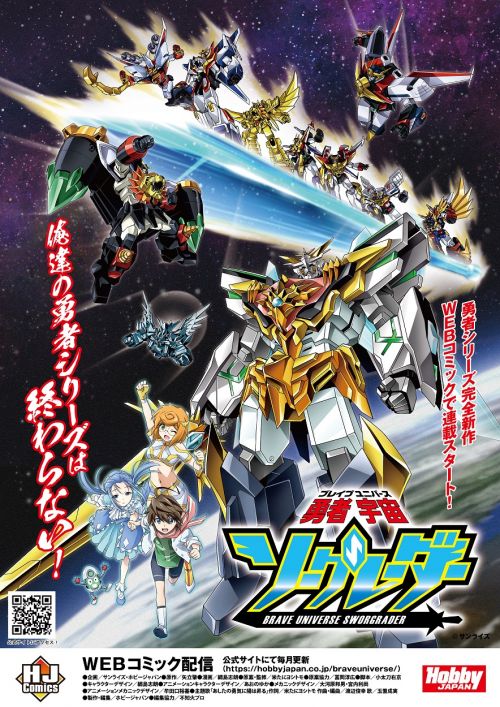
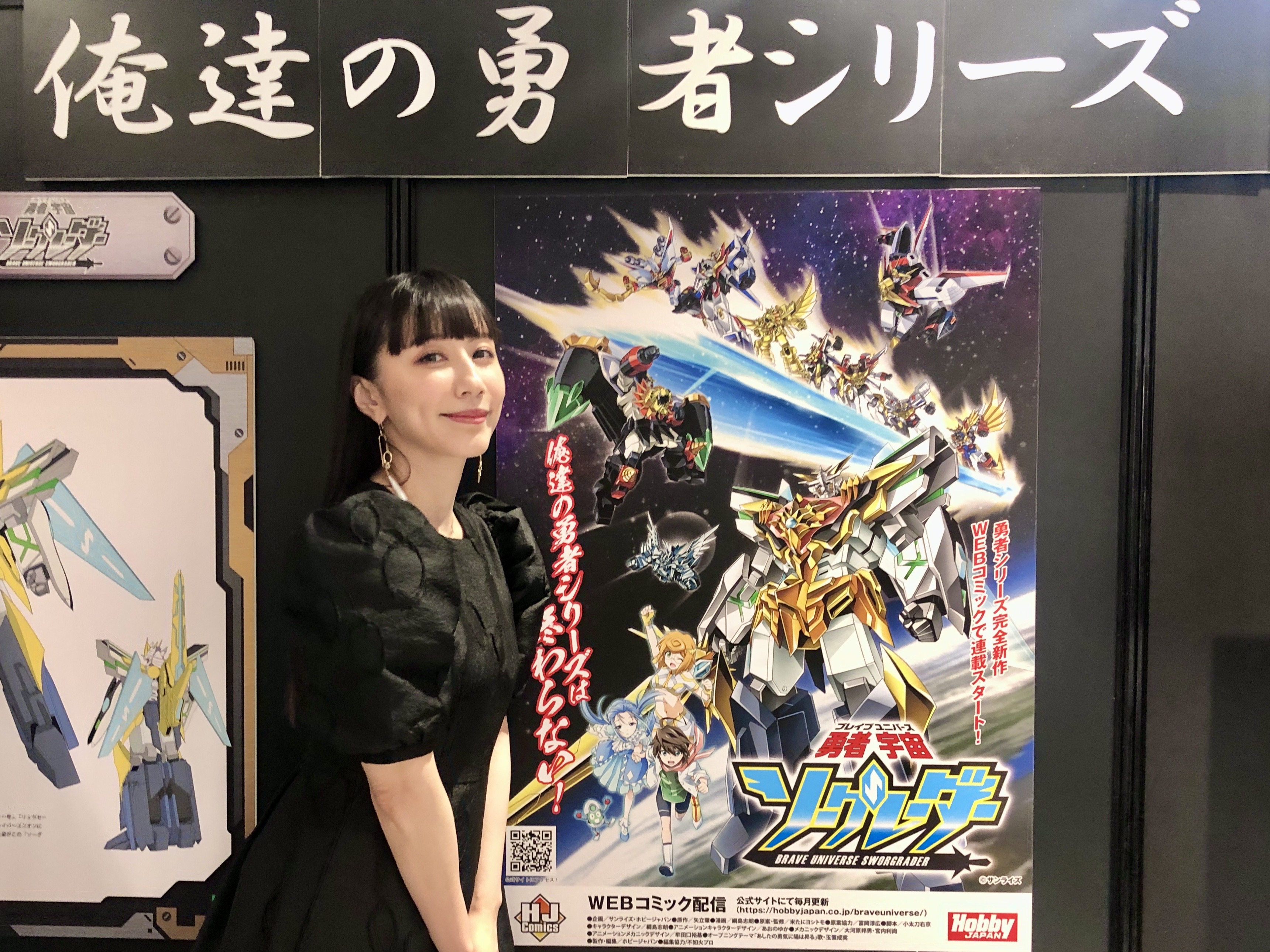
This past week, the Gaogaigar 25th Anniversary Exhibition in Japan featured a surprise announcement: A new entry in the Brave Series has been greenlit! Brave Universe Sworgrader is heading our way, albeit with a caveat. Unlike all its anime-based predecessors, it will debut as a web manga.
Sworgrader isn’t totally alone in regards to not coming out the gate as an anime. The sequel to Gaogaigar Final, King of Kings: Gaogaigar vs. Betterman, started off as a web novel series before being adapted into a manga. Other old anime have also received novel-only nostalgic sequels, such as Raijin-oh and even the magical girl title Ojamajo Doremi. One major difference is that Sworgrader is wholly original, though the teaser art and the whole “Brave Universe” thing seems to imply that the previous Brave Robots will somehow be involved—even the shelved sequel that only ever got a spotlight in video games, Baan Gaan.
I do feel a mix of joy and sorrow in all this: It’s great to see Brave franchise make something of a comeback, but also a shame to know how diminished it is compared to its heyday. I suspect that something like a 90s throwback robot toy franchise isn’t going to attract the massive kids market that was tuning into Exkaiser and such thirty years ago (otherwise this would at least be a mobile game). It’ll mostly be banking on the adults who had grown up with the old shows, and merch will probably be premium figures and model kits, as opposed to children’s toys.
That all said, it’s worth pointing out that despite likely having more “Big Friend” appeal than anything else, the main characters are clearly cut from the traditional Brave cloth: They’re kid heroes through and through. So many retro-style series prefer to have characters who are at least in their late teens in order to be more relatable to that older audience, but I kind of admire the creators of Sworgrader for trying to be faithful to the Brave spirit. Gaogaigar really hit its stride once the shackles of toy advertisement were loosened, and Sworgrader is potentially going to be like that from Day One.
In addition to overseeing the entire project, Gaogaigar director Yonetani Yoshitomo is also the lyricist on the main theme for Sworgrader; something he’s had experience doing thanks to Gaogaigar and Betterman. In fact, similar to Sworgrader, Gaogaigar vs. Betterman has “opening” and “ending” themes despite there being no anime. Thetheme will be sung by Tamaki Nami, who got her debut in anime singing the fourth and final Gundam SEED opening, “Believe.” All this takes me back to my very first time in Japan in 2005: a year when Gaogaigar: Grand Glorious Gathering was on TV, and I could hear Tamaki’s SEED openings while in the supermarket.
And while I believe a Sworgrader anime will have some trouble coming to fruition, not all hope is lost: One of the credits on the project is Aono Yuka (Shinkalion Z, Brave Beats) as “Animation Character Designer” as distinct from “Character Designer” Tsunashima Shirou, the artist of the Jinki franchise (talk about another throwback). Similarly, there are separate credits for “Mechanical Design” (Ookawara Kunio, Miyauchi Toshinao) and “Animation Mechanical Design” (Mutaguchi Hiroki) Maybe we’ll see some cool shorts, at the very least?
Whatever form Sworgrader takes, I look forward to seeing its arrival. I will neither automatically love it or hate it, but I do hope it brings joy and excitement to all.
Concerts are normally not my thing. I’ll attend them at anime cons as an extension of my greater fandom, but I typically don’t travel specifically for music events.
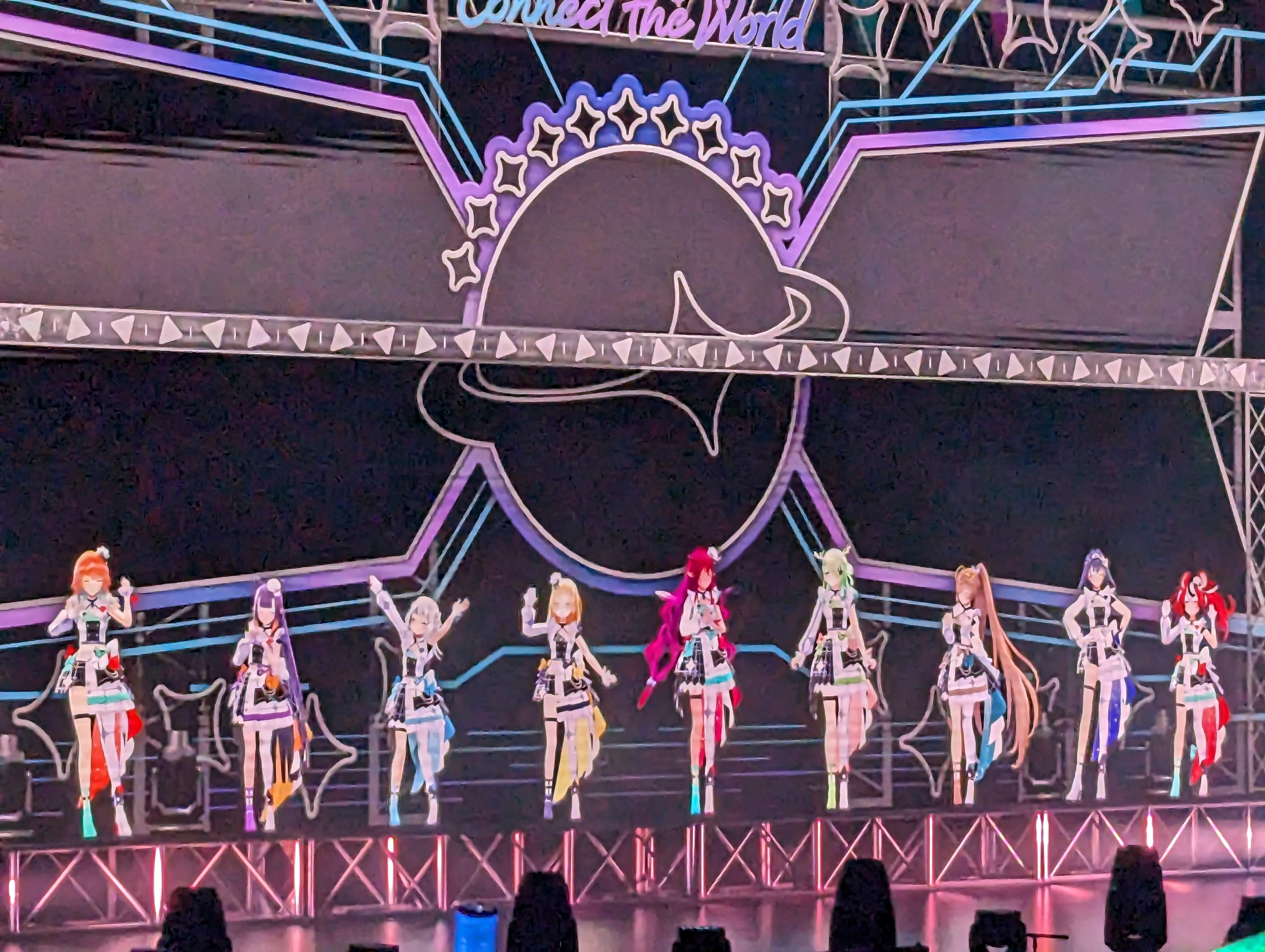
That all changed with Hololive English’s inaugural live concert, Connect the World. Well, sort of. Attending a Virtual Youtuber concert can be viewed as a natural consequence of being an otaku, but it’s also akin to seeing a KPop and J-Idol group. Either way, my fondness for the stars’ antics outside of musical performance was just as much a motivation to see them as the concert stuff. And as the very first Hololive concert to be held in the US, I felt that I had to at least try to go. I might never have such an opportunity again, because as much as I’d love to attend the Holo Fes events in Japan, it’s just not realistic for me.
So with a bit of luck and perseverance (and lots of angry cursing at Ticketmaster), I managed to secure myself a ticket and a pretty decent seat. Fast forward a few months later, and there I was with penlight in hand, cheering alongside 5,999 other Holo fans. It was a fantastic overall experience, and I’m grateful to have been a part of this moment in VTuber history.
Summary
Connect the World began with a message in English from A-chan, whose role in Hololive can be described as the ultimate behind-the-scenes pillar. A central figure in the development of Hololive from its humble beginnings, she has garnered a fandom of her own that made itself known through enthusiastic cheers. The concert then went into full swing with a full-roster performance of the Hololive signature theme “Shiny Smily Story,” followed by ten individual performances from the EN girls, two guest numbers by reps from Hololive Japan and Hololive Indonesia, three generational songs, the titular “Connect the World,” and then an encore with “Kirameki Rider.”
Unlike later Hatsune Miku concerts with full-on 3D holograms, this was done with a flat projection screen and additional monitors on the side—similar to what is done even in the Japan events. So it wasn’t the fully immersive experience one might expect, but I think part of the “live” feel actually comes from being shoulder to shoulder with one’s fellow fans. In other words, we help make it “real” just as much as the VTubers.
The Opening Acts Were Made for Me
I feel incredibly blessed that the first couple of solos were by two of my favorites in EN. The first, Hakos Baelz, is nearly undisputed as the best dancer in Hololive EN (as well as being one of the strongest in Hololive as a whole), and I couldn’t help but be drawn to her as she killed the dance floor. Even basic movements, like swaying left and right during “Shiny Smily Story,” carried a sense of poise and confidence when executed by Bae, and she continued that same spirit into her original song “Psycho.” Almost as impressive was her singing, which possessed a powerful throatiness that I enjoyed a lot and fit the song well. Someday, I’d love to see her more energetic movements alongside the amazing rhythm and fluidity of fellow dancer extraordinaire La+ Darknesss.
I’ve read people’s complaints about how the camera work didn’t do Bae’s self-designed choreography justice, and I can sympathize. Seeing it live really drove home how beautifully she moves, and I feel fortunate to be among those who could witness it straight on and uninterrupted. That being said, I feel like the criticism of the camera can be overly harsh, not only because I think it has its moments but also because the approach taken is meant to play it safe. In other words, it’s better at hiding flaws than accentuating strengths—sometimes it works, and sometimes it doesn’t.
The second star on stage, Amelia Watson, went with her first and only original song, “Chiku Taku.” For Amelia, neither singing nor dancing have ever been her strong suits, but part of the joy of witnessing Amelia on stage is in experiencing her energy and seeing the strides she has made with respect to the “idol” aspects of being a Hololive VTuber. The highlight for me was the kicking motions in her dance—what I’ve since learned is ska dancing, or “skanking.”
Having both of the above performances be in the free YouTube preview works out in my favor, as it means I get to revisit them as much as I want. The fact that Bae was also part of the free preview at the Holo 4th Fes Deco*27 stage makes me think that they know full well what a draw she is.
Other Favorites
One stand-out moment was IRyS’s “Gravity,” which is my favorite of her originals, as well as one of the Hololive songs I love most. I was happy to hear IRyS herself say that she’s partial to “Gravity” as well. The song just accentuates her talents as a vocalist, especially because it has that illusion of effortlessness that only comes when someone is immensely skilled at something. I feel like I achieved something just by hearing it live.
Later when the EN girls did their group songs, IRyS actually ended up with another solo performance just because she’s technically a generation unto herself. This has led to multiple jokes from fans and from IRyS alike—“Who do you like more, IRyS or IRyS?” Incidentally, prior to the start of the concert, I was chatting with a friend about her, where I mentioned wanting to hear “Gravity,” and in response, he said that he really wanted her to sing “Caesura of Despair.” That just so happened to be her second song, and while we had no actual say in the song list, it’s fun to pretend that we willed it into existence. Between both tunes, they really show off the crystal clarity of IRyS’s voice.
I expected that we’d get some surprises at Connect the World, but I didn’t expect the debut of two new original songs, one by Gawr Gura and the other by Ouro Kronii. Truth be told, I don’t listen to enough Hololive songs to always know what is a cover, what is an original, and what is brand new, but they both sounded unfamiliar to me at the time. Gura’s “Full Color” and Kronii’s “Souten ni Moyu” both fit their respective characters, personalities, and voices very well, and I think they’re each VTuber’s best songs to date. Neither has an official release yet, but I’m definitely looking forward to them.
The Teaser
After the encore was a mysterious teaser that had the audience clamoring. Featuring stills of fiery imagery and ending with a symbol that somewhat resembles a toothy grin, the natural assumption is that this is the long-awaited next generation of Hololive—the first since 2021. With no other info at this point, it’s anyone’s guess as to what it all means.
Given the dark tones of the teaser, my hope is that it’s some kind of heel faction. Obviously it wouldn’t work quite like pro wrestling—you don’t actually want the viewers to despise them—but I imagine them dropping in to interrupt songs as they begin and talking smack as they belt out some tunes. Hololive EN also has a tendency to start with elaborate lore that then falls by the wayside, so I don’t know if they could maintain that sort of gimmick for long.
Issues
There were a few hiccups at the event, and I don’t just mean Amelia’s at the end of “Chiku Taku.”
The first was that the monitors on each side were off-sync from the main screen, which made looking back and forth between them kind of awkward. The second was that the singing could sound a bit chimpunky at times. Was it the audio equipment at the venue or maybe something else, like use of pitch correction? I don’t have the knowledge to diagnose that sort of thing, so I’ll leave it to the experts.
Technical problems aside, I had also hoped to see more interactions between the different branches English, Indonesia, and Japan, but there wasn’t any mingling. I suspect that they wanted to just do the basics and save stuff for future concerts. I recall a similar situation with JAM Project’s first US appearance at Otakon 2008, where it was almost like an introduction to the American audience.
None of these things are deal breakers, particularly because I understand that the sheer complexity of trying to pull off a huge concert with 3D models means something might not work as intended. Take these as minor quibbles among an overall great experience.
Final Thoughts
I’m proud to have been part of this first Hololive concert in the US. I feel content knowing that I got to see some of my favorite entertainers shine on stage. I do hope we get a blu-ray soon, though, as I would like to have a permanent physical way to re-watch it. Then again, the 4th Fes blu-ray isn’t even out yet, so we might be waiting a good while longer.
I hope we get to see more international concerts in the future so that others have the opportunity to go in person, even if I end up being personally unable to attend them. Of course, depending on location and lineup (Haachama and La+ in particular), I might just have to find a way again.
And now that I’ve gone to a concert for virtual idols, who knows what’s next? Maybe I’ll attend some concerts by 100% flesh-and-blood musicians as well. Ironically, the VTuber rabbit hole might just lead me back to the real world.
When I was playing Splatoon 3, I would do something that I barely attempted in previous games: try out as many weapons as I could to get a feel for them. Because upping a weapon’s “Freshness Rating” is how you get tickets to obtain other weapons, it’s both a welcome system and an opportunity to experiment. Combined with the forgiving leniency of Open Anarchy Battles, and I could even do so without worrying that it’d tank my rating.
This relates to a topic I always find fascinating: How people figure out what “feels right” for them and why. It extends to just about any game where players have the freedom to choose their tools. The considerations one makes about skill level, comfort, satisfaction, community consensus on what’s strong and weak, etc. all factor in.
And then there are all the attempts to help people figure out where they are. The famous Magic: The Gathering psychographic profiles, i.e. Timmy, Johnny, and Spike, are meant to be broad categories to designate how different cards appeal to different players. YouTubers create videos to help anyone who’s unsure of what weapons work for them in various shooters. Fighting games like Guilty Gear STRIVEand Street Fighter 6 now include in-game basic descriptions of how characters play so that newcomers can more quickly pick the archetype that appeals to them.
I think what fascinates me in particular about the whole “trying to find what fits you” aspect of multiplayer video games is that just because something is the “best” doesn’t mean it’s right for you. The example that immediately comes to my mind is the Smash Ultimate player, MKLeo. Despite Pyra and Mythra being widely considered a top tier character, they don’t quite click with MKLeo’s play style for some reason, and he’s actually gotten better results with the theoretically weaker Byleth. Even a player who had been undisputed #1 for years, can’t automatically go with the “superior” choice.
I love to watch videos discussing choice of weapon or character. I love discussions about it, salt and all, even in games I don’t actually play! I think it’s the way these choices are conduits for personal expression, and it’s what makes games beautiful.
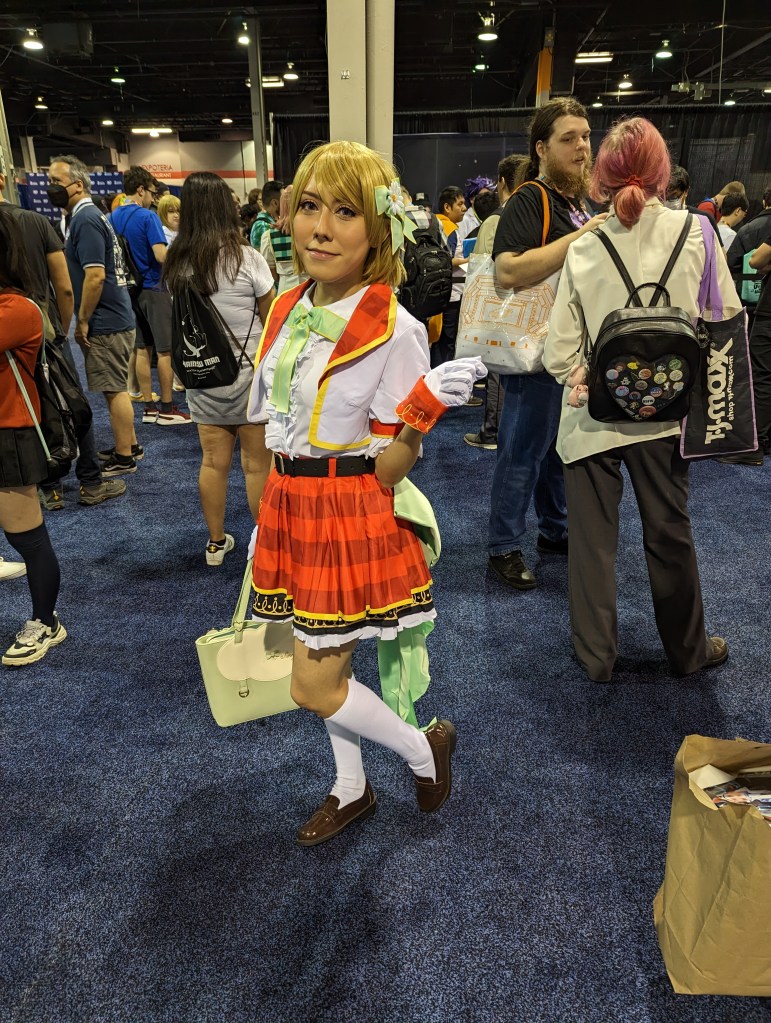
I’ve been to my fair share of US anime conventions—on the east coast and the west coast and even some international ones—but never in the Midwest. When I heard the news that Kubo Yurika (the voice of Hanayo in Love Live! ) would be attending Anime Central 2023, I decided I had to be there. Call it paranoia, but after one of my favorite character designers and animators, Kimura Takahiro, passed away this year, I’ve started feeling that I shouldn’t let opportunities pass me by.
What I did not expect was to have COVID-19 while at the event—a fact that I wouldn’t find out until later. While my throat was feeling uncomfortable, I had tested negative multiple times before flying out, so I figured it was just a mild cold or something similar that could be contained with good masking. Unfortunately, it turned out to be worse than I thought.
I mention all this for two reasons:
First, as far as I know, I did not spread COVID to anyone at the con—not even my convention roommate who had to hear me coughing and hacking into the night and had to fly next to me. This means that good respiratory masks (KN95, N95, KF94) really, truly work. You are doing yourself and everyone else a favor at conventions and other crowded places.
Second, because I wasn’t feeling great, my experience at Anime Central 2023 was not ideal. Nevertheless, I had a good time, and I think it has to do with the fact that Anime Central still maintains a pretty down-to-Earth feel for a convention.
Basics
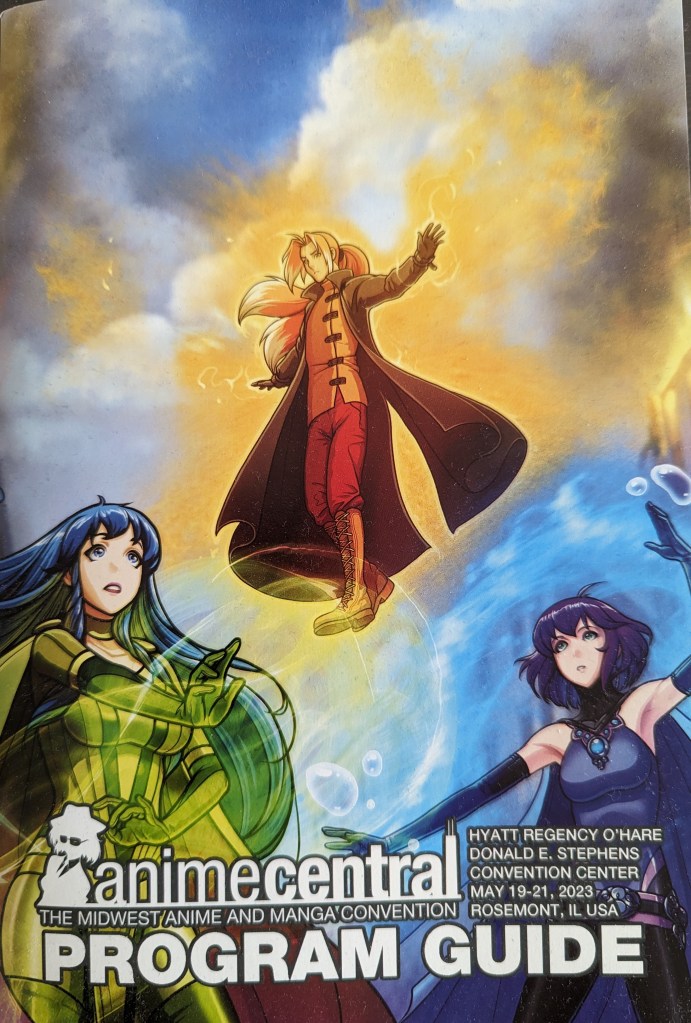
Anime Central 2023 took place May 19–21 at the Donald E. Stephens Convention Center in Rosemont, Illinois, just a 35-minute car ride from Chicago O’Hare airport. With multiple hotels connected to the convention center through a system of enclosed overpasses, you can easily get to the convention center itself without stepping outside. Putting aside my own hopelessness when it comes to directions, plenty of signage makes it difficult to get lost in those above-ground tunnels.
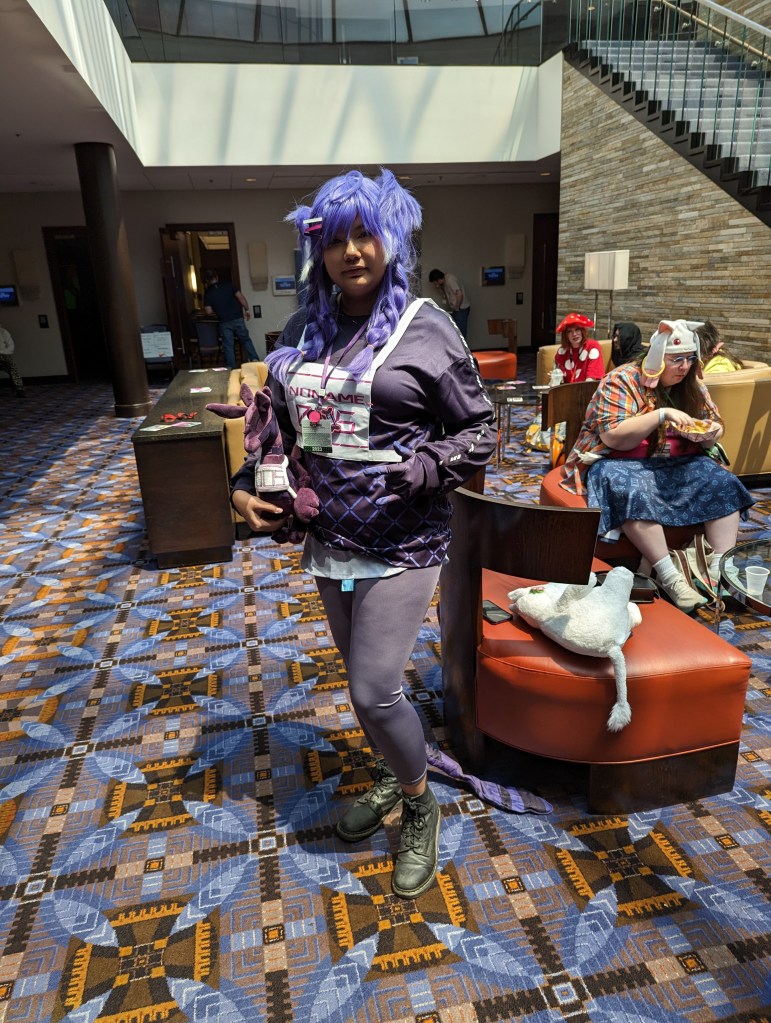
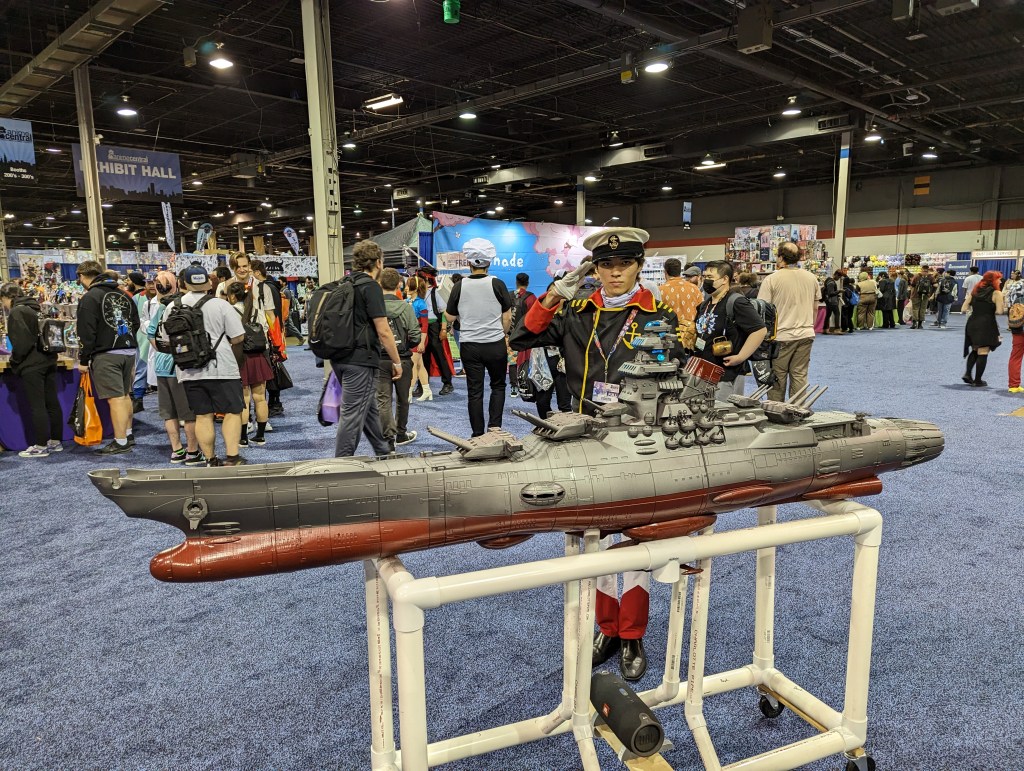
The con had a certain feel I would describe as very 2006. That’s not an insult either, as I actually prefer my conventions to not be polished to the point of rubbing out any quirks. The way Anime Central manages to get big guests while still feeling very fan-run is reminiscent of my favorite anime cons.
The Kubo Yurika Experience
One of the big highlights of the con is the fact that I got to interview Kubo. That came with a caveat: Talking with her had to be under the pretense that we would be focusing on the game A Light in the Dark, for which she and Ichinose Kana (Suletta Mercury from Gundam: The Witch from Mercury) provided voices. The result still provided a good deal of insight into their careers and approaches to voice work.
I also attended her panel, and it was a joy to see her interacting with the audience as fans gushed over her. One person in particular mentioned that having an earbud accidentally get stuck in her ear while watching Love Live! inadvertently helped her doctor realize that she had a tumor—which means Love Live! saved her life. The biggest takeaway I had from all this is that it’s wonderful to see such a large gathering of Hanayo fans.
Kubo was also doing a couple signing sessions and meetings with fans, but my condition that weekend basically made it impossible for me to wait the hours needed to get something. While I have some regrets about that, the positives outweigh the negatives.
Interviews
You can find my Q&As with guests at Anime Central, including with Kubo and Ichinose, here:
I didn’t get to attend as many panels as I would have liked, but the ones I saw were all good in their own ways. Tadokoro Azusa made for a lively guest eager to answer questions from the audience, and I was glad to hear people ask her about her time as Kiriya Aoi in Aikatsu!Helen McCarthy’s panels on the late Matsumoto Leiji and the history of cosplay both took deep dives into humble origins, and I recommend sitting in on any of her talks if you have the chance. And then there was “Kani-me 2: Crabs of Anime,” which struck a decent balance between crowd-pleasing antics and being informative. As someone who once co-ran a panel called “Such Dog, Much Anime, Wow,” I felt a connection.
Food Scarcity
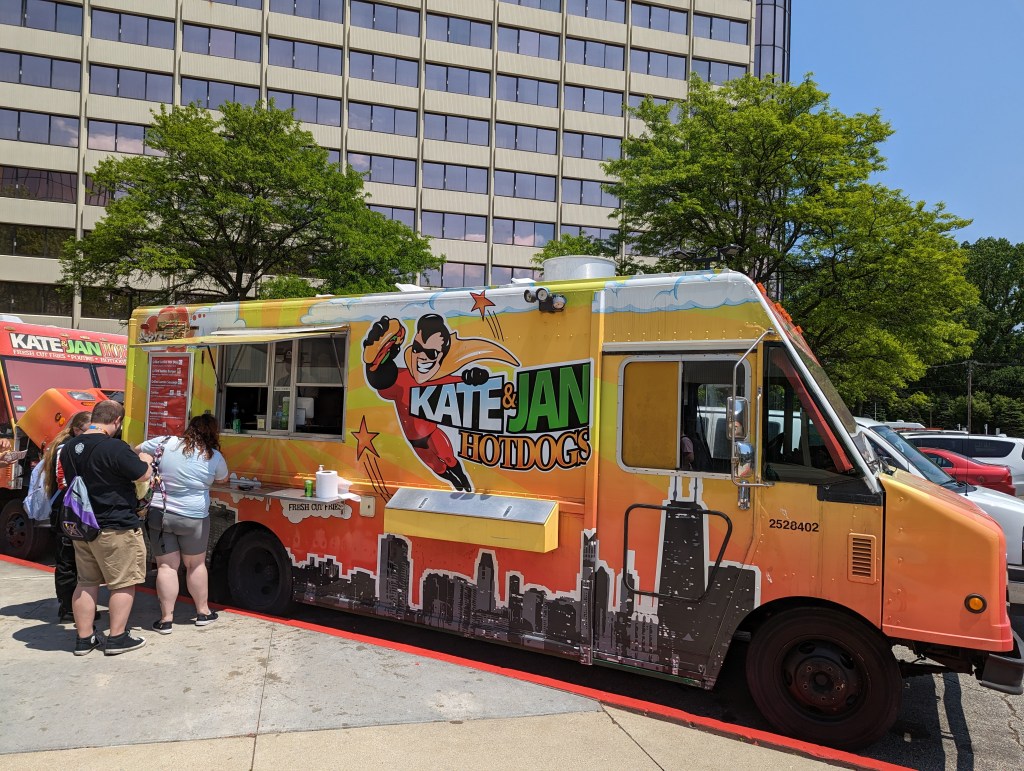
Now here’s a downside: Compared to other cons I’ve been to, getting meals can be inconvenient. While there is an entertainment area nearby that has a number of restaurants, there aren’t a ton of options for quick eats or delivery. Normally, I wouldn’t mind traveling to Chicago proper to get my fill, but because I didn’t have the stamina, I had to make do with what was available. The food truck situation was pretty dire, in that there were literally only two, and they were run by the same people. The different hotels provide options at hotel prices, and the Convention Center “ramen” was more like a lo mein cosplaying its Japanese cousin. Supermarkets and grocery stores are also hard to come by without a car. In other words, it’s best to pack some snacks and more nutritious options in your luggage if you plan to go.
Final Thoughts
Attending Anime Central 2023 was an exception of sorts for me, and regardless of the quality of the event itself, I can’t say if I’ll be able to go back next year. However, it gave me plenty of reasons to consider the possibility, and hopefully I’m not suffering from a once-in-a-lifetime plague by then.
For those in and around the Chicago area, it might just become your go-to regional con, but I get the feeling that you already know that better than I do.
A thought popped into my head one day: Can I tell if a good anime adaptation was marred by bad direction without knowing actual details about the production? It’s one thing to point at spectacular failures, but what about something that was decent but could have been transcendent? What about if the source material was so strong on its own that not even a mediocre director could remove its shine? Or is it impossible for something to be good, yet suffer from poor direction?
While I love anime and possess some formal education in related areas, I’m not refined to the point that I can easily make judgment calls about direction quality. Moreover, with anime, there are a lot of people involved—e.g. the actual animators—in a collaborative effort, so it can be difficult to tell where one person’s contributions end and another’s negative impact begins. I’m also generally someone who prefers to point out a work’s strengths over its weaknesses, and this may have left me unable to nitpick to such an exacting degree.
I’m not sure how strongly I desire the ability to be so discerning in the end, but maybe I could develop it. While I’d rather not be an anime snob (feel free to call me out if you think I already am), I’m somewhat wary of giving more credit than is properly due. There have been past cases of me praising something that I thought was a legitimately good work (and still do), only to learn that the person at the helm hindered more than helped. I don’t know if I’m asking too much of myself, but I feel like I have to be aware of my limitations.
July is a packed month. Not only do I have Otakon at the end of the year, but I’m also in LA this weekend for Anime Expo and to see today the first HololiveEN live concert, Connect the World! Back when tickets became available, I almost missed them entirely, but I got lucky that there was some available after the initial prerelease sale. I fully intend on writing a review of the experience.
I won’t be lying when I say that I’m nervous about attending large events after just getting over COVID a month ago, but I will be masked as much as humanly possible for my sake and others’. I hope everyone else treats others attending these big gatherings with respect and compassion.
Thank you to my Patreon subscribers at the start of this summer season!
I got to conduct an extensive interview with a 20-year veteran of the industry. Tabata goes into detail and working with the late, great Kimura Takahiro.
Anime Expo and Connect the World has many powerful individuals I’m interested in, but Otakon has Iwao Junko: the voice of Tomoyo from Cardcaptor Sakura. Here’s to hoping I can get an interview with her! It would be a dream come true.
Gundam manga artist Tokita Kouichi shares a photo of a first-era Gundam model kit. Kio reacts by saying that the instructions are from before they changed how joints work on Gunpla models.
Kio’s tortoise has been walking quickly around in their home, being hyper. Kio comments that outdoor spaces would be good for it, but the actual outdoor space available right now isn’t all that big, so this is the best he can do right now.
The reason it’s so hyper is because the warm summery weather is affected it as a cold-blooded creature.
Kio visited actual sites from some How Do You Like Wednesday? Specials. The first tweet shows one of 12 bridges featured, and the second is Suigou Sawara Ayame Park.
Kio thanks a fan for sharing a Monthly Newtype video about manga in 2008, the height of one of the host’s teen years. Genshiken and Spotted Flower both get mentioned briefly. (See 23m45s in the video below.)
Kio later tweets about the video separately, commenting that he likes how writer and host Mafia Kajita says that Spotted Flower has had one hell of a development.
As Kio sees artists tweeting about whether they got into Comiket or not, he is working on his (unrelated) erotic doujinshi. He’s been drawing but also cutting content out, so even though he’s drawn 30 pages, it feels like only the beginning.
Working on his new ero doujinshi seems to be an endless task. It includes things like fretting over which erotic sound effects to use, like “guchu” vs “gucho.”
Kio, after getting his ass kicked by the boss Margit in Elden Ring, goes back to drawing ero manga. He likes how he can just skip bosses and explore elsewhere in an open world game.
Kio got through 63 pages of his ero manga manuscript, but is setting it aside to get some of his professional work done. Apparently, the next part is the climax.
WARNING: SPOILERS FOR SPIDER-MAN: ACROSS THE SPIDER-VERSE (and I guess Street Fighter 6?)
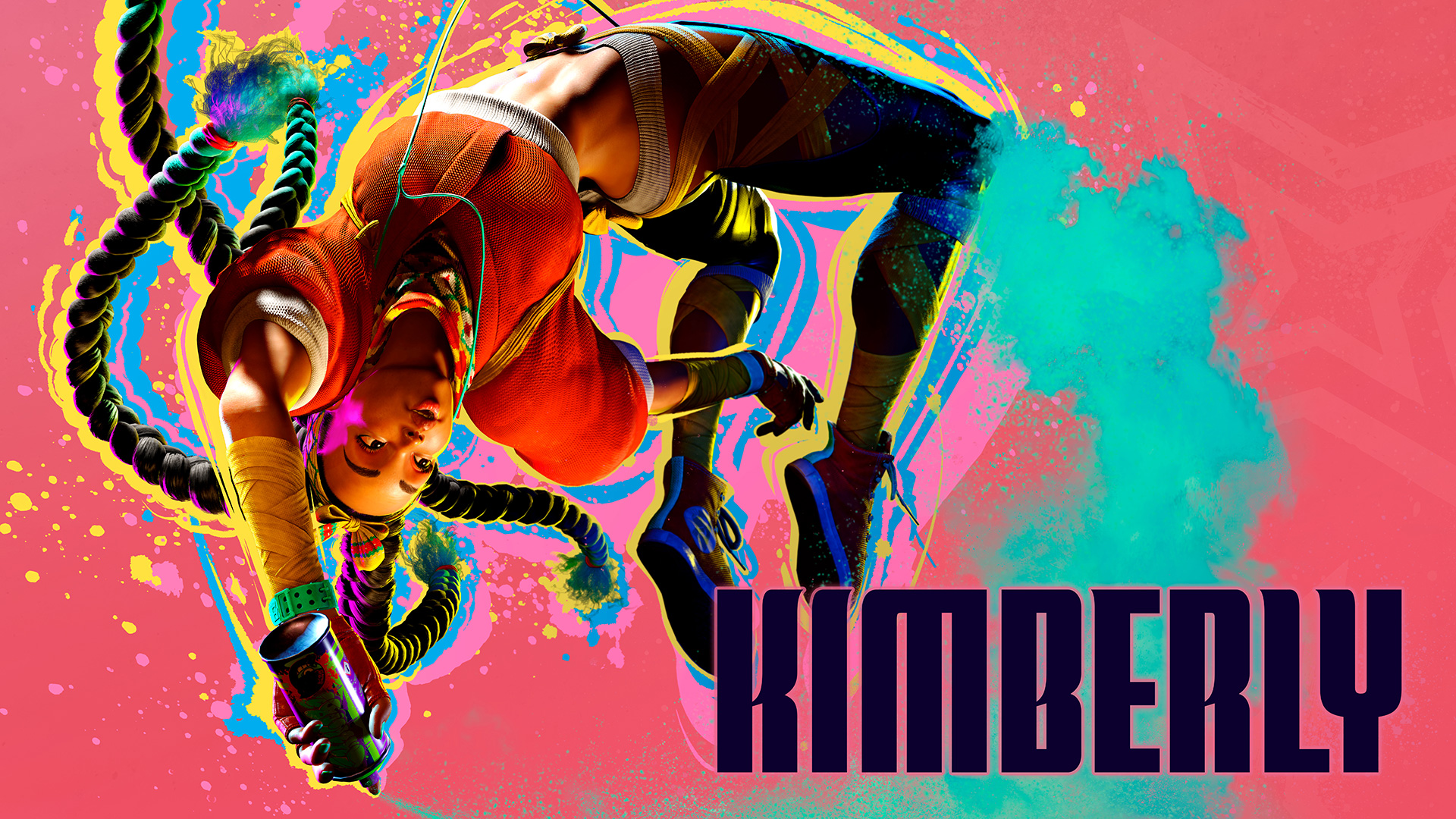
I’ve had the pleasure lately of experiencing two of the finest works of media this year: Street Fighter 6 and Spider-Man: Across the Spider-Verse. Both are at the pinnacle of their respective genres (fighting games and superhero movies) and seem to draw all the right lessons from the past. But one thing both titles really have in common—and which I think is so indicative of their approach—is strong character designs that are profoundly respectful of their casts’ diversity in terms of culture, background, and circumstances.
The idea of an international roster far predates both works and even their respective origin points, i.e. Street Fighter the arcade game and the Spider-Man comics. Often, these past portrayals end up being flawed, if well-intentioned. Be it a manga like Kinnikuman featuring heroic wrestlers built entirely on stereotypes or having the brilliant detective Charlie Chan played by an actor in yellowface, it’s historically a mixed bag. These instances frequently betray a lack of exposure to other cultures by ones that consider themselves the default.
SF6 and AtSV know that their audiences aren’t limited mainly to one ethnic group anymore, and either have people from more diverse cultures on staff, or at least people eager to listen to people from other groups. Both SF6 and AtSV had to meet the challenge of revamping many existing designs—the former because many returning characters are supposed to be older, and the latter because it draws from so many different portrayals of Spider-Man. In this regard, both succeed in spades.
Here are a few examples:
In SF6, Chun-Li’s update conveys through her mannerisms and outfit that she has matured while still being undoubtedly recognizable as the queen of fighting games. Her clothes draw directly from Chinese culture without bordering on parody, and some of her animations have been changed to draw from actual Chinese kung fu styles. Her new standing medium kick, for example, is actually the Separation Kick from tai chi.
Zangief still looks like a hulking wrestler, but they actually changed his body type. In previous games, Zangief has more of a body builder’s physique—extremely chiseled all around—but in SF6, he exchanges that appearance for one with a bit more fat around his massive muscles. In other words, he looks more like he trains for practical strength, and the fact that the developers did this actually goes a decent way in diversifying the bodies in the game while remaining true to Zangief’s character.
Similarly, AtSV had Pavitr Prabhakar, an Indian Spider-Man whose costume feel less like symbols of India added to Spider-Man and more like what a Spider-themed superhero might look like if they grew organically out of Indian culture. Moreover, the writers of AtSV actually consulted with Indian and Indian American writers as well as Pavitr’s voice actor, Karan Soni, because they wanted greater cultural specificity and authenticity.
And even with all of this consideration for ethnicity, gender, sexuality, etc., all these characters are attractive in their own right. People like to see good-looking characters, but there’s no one standard of beauty. Both creative teams seem to understand that.
A major factor in both works’ success is starting from the understanding that not just one group of people are going to enjoy it. Kimberly Jackson in SF6 is black and one of the three most prominent heroes, and the only one with a story that ties directly to the main antagonist. The protagonist of the Spider-Verse movies, Miles Morales, is Black and Puerto Rican—and he reflects many of the aspirations and anxieties of those who grow up in non-White households in the US.
It can be easy to forget that the first Miles Morales film, Into the Spider-Verse, came out in 2018—before the murder of George Floyd and the increased mainstream awareness of the deeply rooted problems with police in the US. In 2023, however, I couldn’t help but notice the views expressed on that topic in AtSV. Both Miles and another character, the Spider-Woman Gwen Stacy, have dads who are on the force. They’re officers of the law who honor and respect the people, and having them be positive role models is part of the Spider-Man lore, but making the police and unalloyed good would never be compatible with the lived experience of so many black and brown people, not to mention other groups.
At one point, Stacy (a white girl) outright states that the reason her dad took on the role of captain is because he would inevitably be replaced by someone worse than him. In other words, contrary to the idea that cops like the one who murdered George Floyd are simply “bad apples,” it is the tree itself that is rotten, and the occasional good apple is the exception rather than the rule. While perhaps the film could have stated it more directly, it goes to show just how much AtSV is trying to express perspectives beyond what is comfortable.
The greatest strength of Street Fighter 6 and Across the Spider-Verse is that both works come across as genuinely wanting to engage with as many cultures as possible from all sides. They’re not just paying lip service to the notion of diversity but actually making it happen in a satisfying way. I hope that both Capcom and Marvel continue to draw inspiration from the world in all its glory and shame, and in turn, encourage others to do the same.
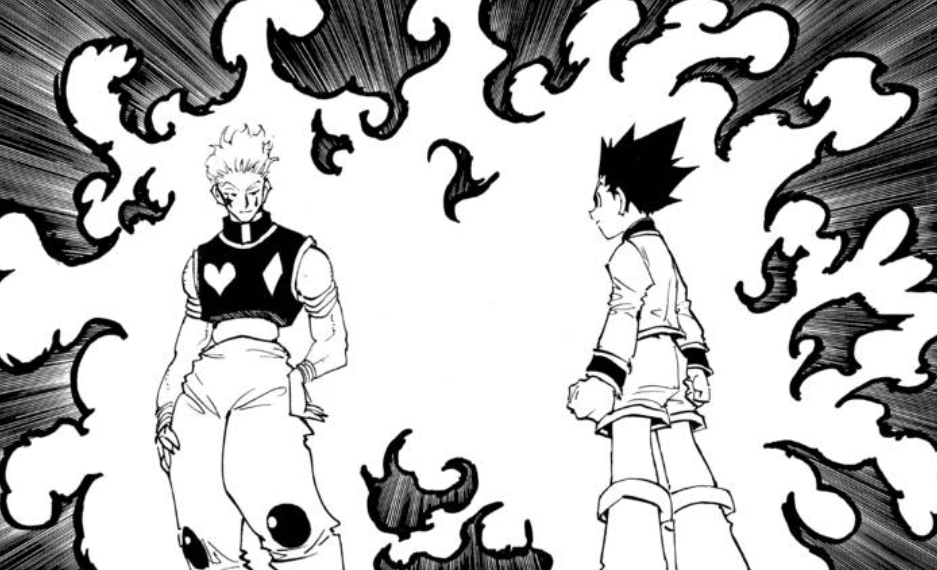
Hunter x Hunter has long been one of those series that I defined by the enthusiasm of its fans. Without knowing much about the series, I would often see it regarded as one of the best shounen action manga ever, and arguably a cut above author Togashi Yoshihiro’s other major work, YuYu Hakusho. The only thing that seemed to stifle its relentless charge was the fact that Togashi has very serious medical issues that have inevitably resulted in numerous stops and starts. But with the series getting some new chapters last year and VIZ putting all previous chapters on their Shonen Jump app to read for free, I’ve decided to jump on board this bumpy ride called Hunter x Hunter and see what the hype is all about.
The world of Hunter x Hunter is one where the most revered but challenging career is that of a “hunter.” A hunter of what? The answer is “anything and everything.” Gourmet foods, cultural artifacts, criminals—everything is fair game. Our hero, a boy named Gon, has long heard that the father he never knew was actually a hunter, and he seeks to follow in his footsteps so that he can meet his dad. Few are able to pass the arduous and deadly test, but Gon’s combination of kindness, cleverness, athleticism, and perseverance that friends and rivals alike take notice of.
I have read around 70 chapters of Hunter x Hunter, which for all I know is only scratching the surface of what makes it so renowned. From this limited experience, though, I can begin to understand why fans of shounen fight manga love it so much, even if it hasn’t captivated me in quite the same way. This is because Hunter x Hunter feels both more advanced than the typical formula but well within its boundaries.
There are two common action formulas for what I call “structured” shounen fighting, that is to say battles that have some sort of in-story framework governing it. The first is the tournament arc, where everyone ostensibly fights to figure out who’s #1. The second is the Bruce Lee’s Game of Death–style fight to the top, where the heroes must vanquish one “boss” after the next before being able to reach the goal, like in a video game. Hunter x Hunter, at least from what I’ve read, is the formulas distilled down to their essences and mixed together so that everything is one or the other or both. But working off a formula doesn’t necessarily mean it’s formulaic, and where Hunter x Hunter shines is by emphasizing that the solution to fights isn’t always sheer strength or a passionate heart. It’s cleverness that often wins the day.
At the same time, I feel like anyone who isn’t in love with shounen fighting might have a difficult time with the series, unless they’re maybe really dedicated to shipping the characters. I think the most helpful comparison might be to JoJo’s Bizarre Adventure, which has a similar focus on fights that require wits and ingenuity, but the highly eccentric and over-the-top nature of JoJo’s gives it a level of spectacle I haven’t seen in Hunter x Hunter. It’s like JoJo’s loves to break rules while Hunter x Hunter prefers to at most bend them.
It’s very possible that I’m on the cusp of the series getting turned on its head, and that I’m just one step away from the series transforming into something I love rather than merely enjoy. It’s happened before, but I can’t say I’m there yet.
Fatphobia is still prevalent in Japanese culture. While there will be the occasional piece of media that pushes against it (sometimes in flawed, yet well-meaning ways), Japan is still predominantly a place where “thin” is in. That’s what makes the presence of fat characters in Gundam: The Witch from Mercury noteworthy; it features multiple characters who are portrayed not as comic relief or even fetishes, but as just cool and admirable in their own right.
The first is Feng Jun, a woman who on the surface is a smuggler but is in actuality an agent of the Space Assembly League, a governing organization in The Witch from Mercury. She’s cunning, savvy, and capable in a rather matter-of-fact way, and her body is never shown as a hindrance. As the show progresses, it becomes clear that she cannot be pigeonholed based on any expectations.
The second is Kennanji Avery, a veteran mobile suit pilot renowned for his skills in battle. Seen as a thinner fellow in the prologue, by the time of the main story, he’s put on some pounds. But while he doesn’t look the same as he did in his younger days, his subordinates all look up to and trust him, and he’s shown to possess a sharp mind and an athletic body even if it doesn’t appear to be the case. He fights against the notion that “fat” automatically means “physically unfit.”
The third is Lilique Kadoka Lipati, a first-year and fellow classmate of the heroine, Suletta Mercury. Defying conventional thinking about girls her size, Lilique is described in her official profile as being quite popular. One episode even has another girl start trouble with Lilique because her boyfriend tried to ask Lilique out. It is incredibly rare to have even a few characters have a thing for the “fat girl,” let alone giving her a popular reputation for making people fall left and right.
What’s notable about the way The Witch from Mercury portrays these three is that their size is neither diminished nor put out as some kind of circus display. While there’s certainly nothing wrong with being really into larger people, what this anime does is push their attractiveness beyond the boundaries of fetish territory. They’re all charismatic in different ways, as if they’re all unique people with different personalities and histories, even if they have similar body types. It’s ultimately about respect, and I can truly sense that from how Feng, Kennanji, and Lilique make such powerful impressions.







 OGIUE MANIAX