Randori Acts of Friendship: “Ippon” Again!

Anime is no stranger to judo, with titles like Yawara! being perennial favorites in Japan. “Ippon” Again! isn’t quite the same kind of work, but what it does do is successfully mix the joy of slice-of-life-adjacent everyday friendship with the emotional journeys that are a hallmark of sports-themed titles, resulting in a series that thrills just as much as it comforts. In other words, “Ippon” Again! is a series about cute girls doing judo where they actually do judo.

The title is a pun: In Japanese, mou ippon can mean “one more round,” but ippon is also the most points that can be scored by a single move in competitive judo. The main character, an energetic teen girl named Michi, loves judo—particularly the part where you land sweet throws and really lay the opponent on their back. But no matter what, she’s never been able to score an ippon in competition. She finishes middle school with this dream unfulfilled and a decision to quit judo in high school, but when she finds out her final opponent at her last tournament is one of her classmates, she gets drawn back into the world she loves so much. Together, they begin to re-establish the school’s defunct judo club.

“Ippon” Again! definitely takes its judo seriously, and it’s all the better for it. Like so many good sports series, it has an endearing core cast each of whom have their own reasons for practicing judo (or not, as the case may be), and they bring their training and their aspirations onto the mat against a variety of interesting opponents. The action is well executed, with high tension and fluid animation that make movement and techniques feel impactful. This is a more grounded portrayal of a sport, less Kuroko’s Basketball and more Haikyu! Yes, Michi has a tendency to shout out the names of her attacks, but that’s just a personal quirk of her direct and eager personality. The result is an anime that wants to show how much its characters grow both in practice and in the spotlight.

The overall feel reminds me a lot of one of my current favorite manga, the karate series Mabataki Yori Hayaku!!. While the characters and their dynamics aren’t quite the same (one features an experienced judo player protagonist while the other stars a karate neophyte, for example), it’s safe to say that if you like one, you’ll probably like the other. It’s also personally fascinating to see how similar yet different the scoring systems are based on the throwing-focused judo versus the striking-based karate, but your mileage may vary. Another title of a similar vein is Bamboo Blade, although “Ippon” Again feels a bit less prone to exaggeration and wacky personalities. 

I don’t know whether “Ippon” Again! is supposed to be a glorified ad for judo. Even if it is, I don’t really mind. It‘s a nice, solid story that delivers on everything it sets out to portray, and seeing the team get closer and come into their own is an absolute joy. There’s a lot more manga, and I hope we get to see it further adapted into manga.

Ironmouse, Opera, and a Kung Fu Analogy

Ironmouse, a pink-haired Virtual Youtuber, holding a slipper in her left hand

Sometimes, the perfect analogy to explain something can come from an unexpected place. For me, I recently found a way to organize some thoughts I’ve been having about martial arts, and it’s all thanks to VTuber mega star Ironmouse. 

As I peer more into the world of kung fu and the like, I’m frequently encountering the idea that many martial arts are not built around merely being a catalog of techniques one can add to their arsenal. Rather, they’re often systems of efficient power generation for particular circumstances, which then form the foundation for executing techniques. 

Something like western boxing has been proven effective for fighting, and it’s a system where specific implementation of techniques can be made functional by anyone if initially taught correctly. From what I understand, a less experienced person can learn to throw a 100% proper and effective punch even if it might not be as good as a veteran boxer’s. In contrast, many techniques across various kung fu disciplines will be largely ineffective without having trained extensively in how a style is meant to generate power and having passed a certain point in which your body has adapted to this counterintuitive movement.

It’s a difference that can be hard for people to grasp, myself included. I’m not a fighter or a martial artist, so it’s not something I can intuitively understand. But this is where Ironmouse comes in.

One of the many impressive things that Ironmouse is known for is that she actually has training in operatic singing. However, her opera voice is not her “normal” singing voice. During her 2023 birthday concert (see below), she sang well but without going into opera mode, and the difference is noticeable. In other words, a person can’t just improve their singing until it reaches “opera level”—it requires dedicated training in a particular way of producing sound

While not the only VTuber to have studied opera (Tokino Sora from Hololive and Banzoin Hakka from Holostars EN), Ironmouse is probably the most powerful example of how specific the training can be. This is because singing opera style can literally cause her physical pain due to chronic health issues, so she doesn’t often perform that way. When she does, though, Ironmouse sounds incredible. 

The similarities to different types of martial arts also extends to the topic of subjectivity. Opera may require a certain type of training to make a certain type of sound, but is it inherently better than other forms of singing? Not necessarily. It’s all down to personal wants, needs, and preferences, as well as what you aim to do with it. Is it the right move to train for years in a specific way of generating power found in certain martial arts, or to work from what one’s body can already do?

So thanks, Ironmouse. I don’t know if it makes sense to everyone, but your singing has helped me in a most unexpected way.

Memoriam-o-rama: Ogiue Maniax Status Update for April 2023

April is cherry blossoms in Japan, and their fleeting nature is associated with an aesthetic valuing of the ephemeral in Japanese culture. I normally don’t get all poetic about it, but recent events have me reminiscing and feeling the passage of time. One month after the death of Matsumoto Leiji, one of my favorite character designers, Kimura Takahiro, passed away. Ash Ketchum is being retired as the lead of the Pokemon after two decades. Not one but two VTubers are graduating: Heavenly King Mirai Akari and Pikamee Amano, one of the lights of the early COVID pandemic. And just today we learned that Sakamoto Ryuichi of Yellow Magic Orchestra passed on the 28th of March—the second member to go this year after Takahashi Yukihiro.

To my April Patreon subscribers, thank you:

General:

Ko Ransom

Diogo Prado

Alex

Dsy

Sue Hopkins fans:

Serxeid

Hato Kenjirou fans:

Elizabeth

Yajima Mirei fans:

Machi-Kurada

Blog highlights from March:

Farewell to One of Anime’s Great Character Designers: RIP Kimura Takahiro

I was devastated.

La+ Darknesss: Hololive’s Tiny Dancer Extraordinaire

My attempt to explain why I love La+’s dancing so much.

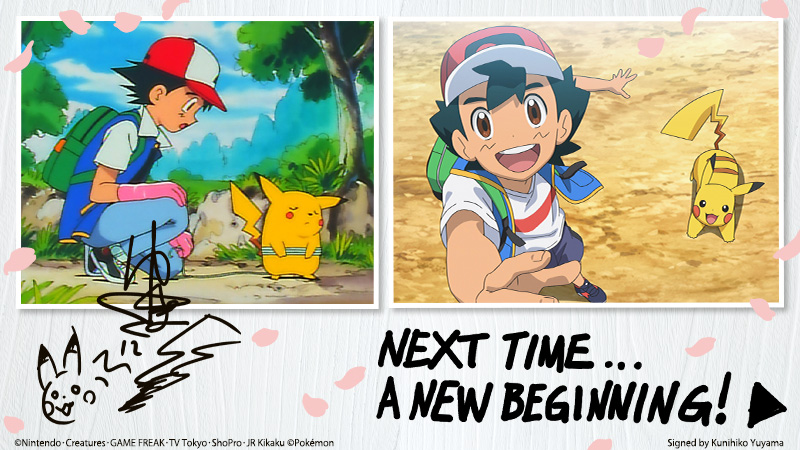
Pallet Cleanser: The End of Ash Ketchum as Pokemon Protagonist

Looking back on 20+ years of Pokemon anime, and Ash’s ride into the sunset.

Kio Shimoku

Kio tweeted a lot about Spotted Flower this past month because the latest volume came out on the 31st.

Apartment 507

My thoughts on Akiba Maid War.

Closing

Another new season of anime is upon us?! Already?! And it’s filled with a ridiculous amount of highly anticipated shows??!!

Kio Shimoku Twitter Highlights March 2023

March has been a big month for Kio, as Spotted Flower Volume 6 just came out today, the 31st! Not only that, but he’s been posting lots of high-quality art from the original Genshiken run, particularly about Kujibiki Unbalance

Spotted Flower Chapter 42 is out.

Front and back covers of Spotted Flower Volume 6. Like all volumes, the underjacket cover features the characters in their underwear, and you can just barely see it peeking through.

Kio stepped away for a brief moment, and in that time, his tortoise claimed Kio’s electric hot water bottle.

Clean version of the title page image for Genshiken Volume 3.

A commenter talks about how the line “You have a nose hair sticking out” comes to mind. Kio replies that such a line would be in a Saki route, and it would lead straight to a Bad Ending.

Kio has finished the manuscript for his first ero manga, clocking in at 50 pages.

A model kit of the Knight of Gold (K.O.G.) from The Five Star Stories that Kio built. When asked if the kit is lacking a Buster Launcher (a standard weapon in that universe), Kio replies that there actually aren’t many design specs for the K.O.G., and modelers had to use their imagination to make these kits. Likely, the K.O.G. doesn’t have a Buster Launcher because it would need a counterweight to balance it.

Unfortunately, the head portion might be warped a bit, and might need some epoxy to fix.

Genshiken Volume 3 extras: Artwork from Unbalance Fighter, a fictional Kujibiki Unbalance doujin fighting game. Kio notes that while Berserk Tokino is based on Berserk (Orochi) Iori from King of Fighters, all her attack names are based on NECO from the game Zero Divide.

The strategies as they’re written in the volume are inspired by the guides from the magazine Gamest.

Starting from here are “screenshots” from Unbalance Fighter. Here is Renko and Yamada vs. President (Ritsuko). Supposedly this isn’t an unblockable, but it is an incredibly strict high-low mixup.

Someone asks if this game will ever come out. Kio replies that if anyone out there in the world wants to make it happen, well…

Renko and Yamada vs. Izumi, demonstrating Renko’s super move “Giant Swing with Yamada.”

Komaki vs. President. According to Kio, not shown is the following moment where Ritsuko counters with a Bajiquan elbow attack and sends Komaki flying.

President vs. Shinobu-sensei. Ritsuko’s fighting style isn’t based on a fighting game character, but rather Jhons Lee from Air Master. Kio is an Air Master fan.

Vice President Kasumi vs. Izumi. Kasumi is using her “Mist” (i.e. “Kasumi”) super to move through projectiles.

Vice President vs. Tokino. This “screenshot” demonstrates Kasumi’s great reach and jump height.

And Spotted Flower Volume 6 is literally out by the time this blog post goes up.

Renko and Yamada vs. Lisa. This is an animation frame from Lisa’s “Coin Toss” attack. A commenter mentions that they used to play a lot of fighting games (like KoF ‘94) but not anymore. Seeing the fine details of Kio’s explanations takes him back, though. Kio responds that the depth of the characters is based on SNK, and that he owned a NEO-GEO. However, the animation impact is Capcom-esque.

Lisa’s super being performed on Kasumi. As mentioned in Volume 3, Kasumi loses a lot of her abilities if she gets grabbed as a way to be lore-accurate at the expense of game balance (Kasumi basically faints if she gets hugged). 

A commenter replies that in the modern era, broken stuff in fighting games gets patched, and this probably wouldn’t last. Kio replies that because Unbalance Fighter is a doujin game, it might have gotten a patch at some point.

President vs. Berserk Tokino (specifically, it’s “Tokino Drunk After Eating Komaki’s Brandy-Soaked Apple Cheesecake).

Berserk Tokino getting a perfect.

A Hellandeath mirror match. The character’s name is a reference to Fernandeath, the final boss of Waku Waku 7.

Kio got to use for the first time neodymium magnets to help stick together two model kit pieces that weren’t fitting right.

Kio reacting to the death of character designer and animator Kimura Takahiro. “What?! No…”

The title page image for Genshiken Chapter 18, which was later turned into a jigsaw puzzle. Kio tried to fill it with as much stuff as possible to make it good for a puzzle, but he feels like the results were iffy. One fan shows their completed puzzle, and as noted by another, it originally came in the Nov 2003 issue of Monthly Afternoon.

A fan recalls that the figure version of Ohno on the TV from Volume 3 was from a Wonder Festival. Kio replies that he has the entire series stored somewhere.

Kio’s Super Sasadango Machine plastic kit has arrived.

Kio is starting to build another kit: the Demi Trainer from Gundam: The Witch from Mercury.  It has three sets of runners and no polycaps. He’s also resisting the urge to start filing things down right away.

Kio’s progress on the Demi Trainer. His comments are basically marveling at the quality and advancements of current Gundam model kits, including the lack of need for polycaps (which used to be the standard for kits in the old days).

The completed kit!

This is the art used for store display for Spotted Flower Volume 6.

Kio learns about “hell puzzles,” jigsaw puzzles where there’s no picture to help. Your only hints are the shapes of the pieces themselves.

Copies of the cover jacket for Spotted Flower Volume 6.

“Sprites” and “backgrounds” for Unbalance Fighter. Someone in the replies comments that all this fine and detailed work shows how much love Kio put into it, and they’re glad to know that he had fun drawing it. Kio responds that “youth” was also a big factor.

Spotted Flower Volume 6 will have exclusive illustration cards at six different stores in Japan. (For the record, I plan on getting the one at Toranoana).

The illustration from the cover of Genshiken Volume 4. Someone in the replies says that her wearing a mask feels like this picture is happening in real time, and Kio says he has the same thought.

In response to a hashtag prompt, artist and character designer Kotobuki Tsukasa shows a drawing of his from 30 years ago: a manga titled Go Go! Our Marbet-san, from his Victory Gundam short story parody series. Kio mentions having this book all this time.

The back cover of Genshiken Volume 4. Kio wanted to draw Izumi from Kujibiki Unbalance in a cute manner.

The famous and long-running Akiba Blog wrote about Spotted Flower Volume 6!

Rock and Roll Sometimes and Party Never: Bocchi the Rock!

I’m a little late to the Bocchi the Rock! party. I saw the positive reactions every week, from the discussion to the clips of creative animation to the fanart, yet I still decided to wait. Having now watched the entire season of the anime, I understand what the hype is all about. In the perennially popular genre of “cute girls doing things,” Bocchi remains anything but static. 

Gotou Hitori is a girl who wishes to make friends but suffers from severe anxiety. Upon seeing a band play on TV, she gets a brilliant idea: If she can become a great guitarist, she can stay shy and reticent and have people come to her instead. As with all best-laid plans, however, she remains lonely through middle school and into high school even as she hones her skills and even started a music channel on a social media platform. When all hope seems lost, Hitori gets roped in by two girls around her age who have started a band of their own and are desperate to find a last-minute replacement for their missing bandmate. It’s her chance to shine, though first she has to deal with her biggest fear: actual social interaction. Noticing her personality, Hitori’s new acquaintances nickname her “Bocchi,” or “lonesome.”

With a show like this, there was always a possibility that Bocchi’s social anxiety would be treated pras a kind of characterization seasoning; many anime only go so far. But it becomes immediately obvious that even though her panicking is portrayed with some levity, the anime is not treating Bocchi’s emotions frivolously. From her frustrations to her tendency to catastrophize, everything feels painfully genuine.

There’s an example that hits particularly close to home for me: Bocchi initially tries to make friends by displaying band stickers on her stuff and carrying around her guitar so that others might notice and strike up a conversation. As soon as I saw this, I could feel myself cringe as I remembered doing similar things at her age. While I never had Bocchi’s debilitating levels of anxiety, I distinctly recall putting anime merchandise on my bag, and maybe even playing my music a little loud so that someone might recognize “Cruel Angel’s Thesis” and the like. And just like with Bocchi, I learned that this never works. 

(As an aside, whenever I see people with anime goods these days, I don’t say anything out of fear of being too old or overstepping boundaries. Ahh…)

Bocchi the Rock! could have easily remained in this space of comedic suffering—what I refer to as the moe of tiny tragedies. But what gives the anime real legs is that it depicts Bocchi’s imperfect progress towards overcoming her issues. Specifically, it shows how her relationship with music and her gradually strengthening connections with her bandmates work in tandem to help Bocchi come out of her shell. The fact that it’s often a matter of “two steps forward, one step back” only makes her journey feel more authentic.

Given the premise of Bocchi the Rock!, it draws an inevitable comparison to one of the most titanic cute-girls series of the past 20 years: K-On! Both are works capable of providing comfort to its viewers and inspire them to take up music, but they’re as different as a Swedish massage versus a deep-tissue massage. The former is a soothing experience meant to invigorate (K-On!) while the latter hurts so that it can heal (Bocchi the Rock!). This contrast is evident in their protagonists. Hirasawa Yui is a silly and cheerful sort who can never remain sad for long, while Bocchi is a gigantic bundle of frayed nerves. It makes me wonder if Bocchi the Rock! might resonate better with a current-day audience than K-On! would if it first aired in 2022 instead of 2009. 

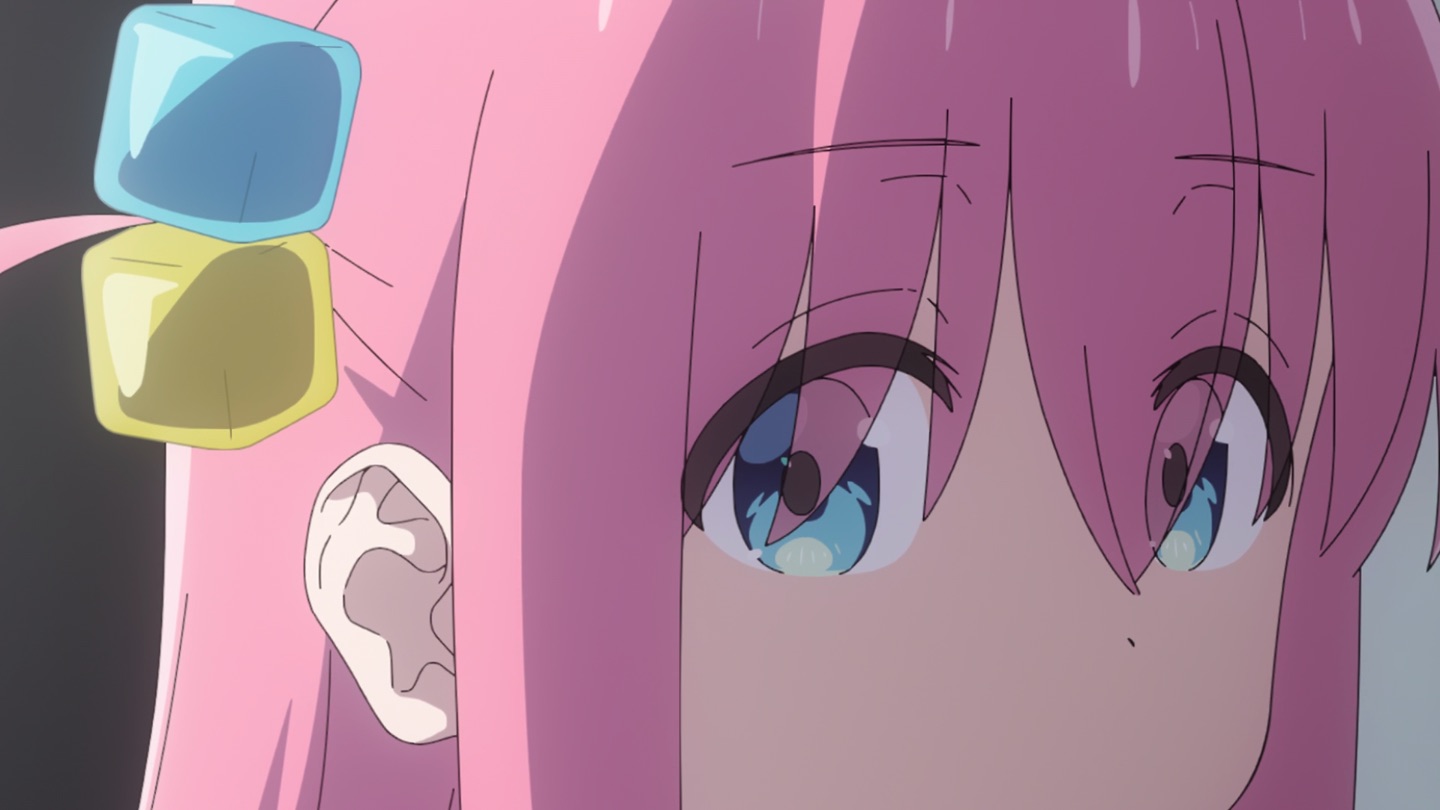
So I’m definitely a fan now. It’s a series that hits hard in so many unexpected ways, and in that regard, I actually think there’s a moment in the opening that perfectly encapsulates its essence. As the opening draws to a close, there’s a closeup of Bocchi at school just staring while the shot zooms in very, very slowly. There’s no “animation” to speak of, yet it conveys the tempestuous turmoil behind her eyes and the difficult inner journey she faces. It’s amazing that something so simple contains so much power—that’s Bocchi the Rock! in a nutshell.

Pallet Cleanser: The End of Ash Ketchum as Pokemon Protagonist

This past week marked one of anime’s biggest departures ever, as Ash Ketchum—aka Satoshi—has ended his 26-year tenure as the main hero of Pokemon. It’s amazing to think about how the character has been such an enduring presence in the lives of millions of people for over two decades, all without being wholly remade and revised. Other heroes in other franchises might arguably have greater legacies, but the fact that it was consistently the same Ash week in and week out makes for one fascinating and continuous chain of history.

It’s been many, many years since I was actively part of the Pokemon fandom. I naturally didn’t know about it when it first came out in Japan, but for all practical purposes I was there from the beginning. I remember getting a little pamphlet about Pokemon in an issue of Nintendo Power, and as I anticipated its arrival, I managed to even catch the sneak peek “Battle Aboard the St. Anne” episode that aired the week before the first episode aired in the US. For maybe five or more years, I would record every episode on VHS, and the times I had to program the VCR, I tried to time breaks in the recording to preserve space so I could fit more on each tape. I’ve long since stopped doing that, or watch Pokemon on a regular basis, but I can never forget those early days.

Ash was never my favorite Pokemon character, and for the fellow fans I interacted with online, it was largely the same. The reason: a lot of the people I talked to I met either through the competitive scene (years before the founding of Smogon) or via a Team Rocket messageboard. In the former case, people were not fans of Ash’s nonsensical battles or inability to understand the type chart despite his successes. In the latter, it’s because a site dedicated to Team Rocket would naturally run ever-so-slightly edgy and prefer older characters. For me, it’s just because he was a pretty decent but generic kids’ anime protagonist—a plain rice ball (or donut, as it were) in a world of more compelling stories. 

But there‘s something special about being that hero for so many people for so long. And while many of his accomplishments were often tied to meta events (e.g. Gary Oak/Shigeru’s Japanese voice actor leaving the show is why they ended up having their big 6v6 clash in the Johto Pokemon League), the sheer amount of things Ash managed to achieve is impressive. A character who could have gone on forever unchanging still leaves behind one hell of a CV. 

A big factor in why there was a sense of progress with Ash was because of the way he would go from one region to the next in accordance with game sequels. While the basic formula of “meet new friends, have adventures, get gym badges” was always present, he never stayed in the same area for long, and he always met new people. And while fans would often remark on the way his skill and knowledge would seemingly go backwards every time he started a new path to a Pokemon League, it’s clear that his inability to retain knowledge is not necessarily a matter of poor character writing or insufficient lore consistency and more a way to keep him level with the new fans who still come to the series even now. Ash is as much a vessel as he is a protagonist, and he could never be a vessel for everyone at the same time.

One thing I always found funny is the fact that some of Ash’s greatest wins and titles came about in “filler arcs,” the seasons that took place between main-game storylines. This is why he’s the Orange League champion, the Frontier Champion, and most recently the winner of the Masters Eight tournament (solidifying him as the strongest trainer in the world). He also won the Galar Pokemon League, but in hindsight, it’s clearly because they knew they were about to start winding down Ash’s story and they wanted to show much he had grown. I remember thinking, all the way back in the late 90s, about how a main-line gold medal would likely someday be the sign that Pokemon was going to conclude. While the anime will continue with new leads, it really is the end of an era. 

Now the perennial 10-year-old gets to go off and do things unseen, and it makes me wonder if we’ll ever see him again. Might Ash make cameo appearances down the road, and will he look different or even possibly…older? It’s a new and unknown world.

A Movie with a Hell of a Build-Up: They Call Me Jeeg

When I first heard about the film They Call Me Jeeg, its premise intrigued me. Although named after an anime, it’s not actually based on Steel Jeeg, a 1970s anime firmly within the super robot subgenre. Rather, the film is a mob flick mixed with a superhero origin story, where the characters use the lore of Steel Jeeg as a reference point to understand the changes happening. 

Before getting into the movie itself, I want to say that its premise shows the degree to which giant robot anime has long penetrated the popular psyche of Italy. As an American, it has always felt remarkable. Sure, we have our Voltrons and Gigantors and the like, but it’s just not the same compared to the sheer range of influence Italy has experienced from Goldrake (aka Grendizer), L’imbattible Daitarn 3, and in this case Jeeg Robot. They Call Me Jeeg utilizes its titular mecha somewhat like how The Iron Giant uses Superman.

The hero of the story is Enzo Ceccotti, a small-time pickpocket who accidentally exposes himself to barrels of toxic waste while on the run. Unbeknownst to him, the experience makes him super strong and nigh-invulnerable. At first, he uses his newfound abilities to just commit bigger crimes, but when Alessia (the mentally unwell adult daughter of his boss) is threatened by higher members of the local gang, Enzo rescues her incognito. Alessia is obsessed with Steel Jeeg and sees everything through the lens of the 1970s anime, and confidently declares that Enzo is actually Shiba Hiroshi, the Immortal Cyborg and protagonist of Steel Jeeg. The contrast between Enzo’s flawed self and the ideal version Alessia sees in him—especially when dealing with the local gang leader, Fabio—becomes the main conflict of the film. Sometimes, it takes the world of fiction to provide a reference point of what one can be.

The general arc of the narrative is generally familiar to superhero fans (the gradual fulfillment of unrealized potential to save others), but the very grounded grittiness makes everything feel almost palpable: the emotions, the violence, the internal and external struggles. In this age of sleek and highly produced Marvel and DC films, They Call Me Jeeg stands out all the more. Enzo is a compelling main character precisely because he struggles with the idea of performing acts of good and questions if he’s even capable of it. In a sense, he reminds me of Denji from Chainsaw Man, and I mean that in a positive way. Whether to do the right thing even when it’s not immediately personally beneficial is a major question in the movie.

There are a few areas that might not play well with a current audience. I’m not particularly well read on the topic of mental health, but Alessia might come across as a bit stereotypical. That said, the film does show how her interpreting everything through Steel Jeeg is not just “random craziness” but her way of coping with past traumas. In terms of other issues, the flamboyant and unhinged nature of Fabio might reinforce the image of villainous gays, and there is some highly questionable consent. In regards to the former point, I think it might be trying to position Fabio as parallel to Queen Himika, the first major antagonist of Steel Jeeg. Also, it seems that the actor for Fabio, Luca Martinelli, is famous for portraying queer characters of all kinds. And as for the latter point, the act is not portrayed as a positive thing, but its presence can’t be ignored.

They Call Me Jeeg carries both a loftiness and a down-and-dirty feel that successfully Enzo’s struggles between the life he has led and the one he’s capable of. It’s not an anime movie in any traditional sense, but it takes a piece of pop culture and draws out a story based on the emotional connection Steel Jeeg has created in people. I wonder if we’ll ever see more like it.

Thoughts I Have After Watching “Raven of the Inner Palace”

Raven of the Inner Palace is an intriguing fantasy anime with shades of one of my favorite shows ever, Twelve Kingdoms, but mixed with the vibes of a series like Natsume’s Book of Friends or Mushi-shi. The main heroine, a girl known as the Raven Consort, works in the inner environment of a great palace, using her supernatural abilities to solve mysteries like an occult detective. Its combination of elements and its overall compelling nature make me think about various assorted aspects of the series, each of which I want to briefly expand upon. There’s no real organization to these thoughts. 

Chinese Fantasy vs. European Fantasy

The world of Raven of the Inner Palace is not actually China, but the series takes a lot from Chinese culture and mythology. It’s certainly not alone in this regard (Twelve Kingdoms also falls in this category), but it stands out in my mind because of how much “Ancient China” is an aesthetic (especially in fiction coming out of Asia in general), and how much it parallels/contrasts with the default European look that typifies fantasy series of a certain kind. “China-esque” is a whole artistic motif that is less prominent in the West, but the fact that the Chinese Wuxia BL novels have been such a hit makes me wonder if Raven of the Inner Palace (itself originally a light novel series) might also get increasingly popular.

Girls Often Make for Better Audience Stand-In Characters

In terms of being vehicles for wish fulfillment, Raven of the Inner Palace isn’t an exception. It’s primarily geared towards female readers, with the heroine Liu Shouxue (or Ryuu Juusetsu, depending on if you prefer Chinese or Japanese pronunciation) being a cool and powerful sorcerer who gets involved both professionally and emotionally with a kind and handsome emperor. But even knowing this, Shouxue comes across as a well-conceived and well-written character who is actually enjoyable to witness. 

I think one of the big differences is that the male counterparts in series geared towards guys tend to be either more insufferable or carry qualities that just make them less appealing overall. I can see why the emperor or anyone else would fall for Shouxue, and it helps render her as an individual who can carry her own weight in the narrative. On the other hand, so many light novel protagonists seem to just kind of be there, with a handful of quirks cobbled together into a makeshift personality.

Cool Eunuchs???

In Chinese culture and entertainment, eunuchs are often not portrayed in a favorable light. The very reason Chinese emperors used eunuchs is because their inability to procreate supposedly meant that they could care for the concubines without surreptitiously siring children with them, but they also became major parts of inner-palace politics as a result. Thus, eunuchs are traditionally portrayed as weirdly effeminate and conniving schemers who also smell.

However, Raven of the Inner Palace, eunuchs are some of the most awesome characters around. Unpleasant emasculation is interpreted as bishounen coolness, and I can’t help but think about whether this is the product of Chinese-inspired fantasy being processed through anime and manga aesthetic.

The Last Thing: Chekhov’s Chicken

There’s a chubby bird that lives with Shouxue that is mainly comic relief, but I had a feeling from the start that it’s important in some way. I call it “Chekhov’s Chiken,” and I just wanted to mention this nickname so that others use it as well.

I Watched Tron for the First Time

I’ve been watching more non-anime films lately, partly with the intent of connecting to influential works of geek culture. Today’s menu: 1982’s Tron.

My general image of Tron is shaped by my earliest days online, back in the 1990s. Being into things like video games and anime, websites would often laud Tron as a work that shaped perceptions of what the inner world of computers looked like, but also really appealed to nerds even as it was less well received by many movie critics and didn’t perform astoundingly at the box office. The grids and games of “Deadly Discs” and what-not carried a virtual cyberpunk aesthetic, even if the film might not be technically cyberpunk.

Now that I’ve watched it, I can see exactly why some would love it to bits and others would find it shallow and impenetrable. It’s the kind of movie where in order to enjoy it, you need to be in love with the aesthetics or at least highly appreciative of them. The world they depict, highly reminiscent of the arcade games of the 1980s mixed with a hauntingly sterile environment, carries a certain specific attraction that current artists try to capture through things like vaporware. As someone who is into this sort of thing, experiencing Tron could feel like a religious experience, or like a David Lynch or Oshii Mamoru work. The fact that the universe of Tron has programs as living entities who speak of their programmers in hushed tones of reverence (while a rogue program forces its fellow brings to renounce their creators) certainly adds to it.

But it’s in that basking that Tron can drag. Moments meant for viewers to revel in the heretofore unseen computer graphics and the eerie world around them can take a long time—enough to make even me impatient. For anyone who is not so on-board with the aesthetics, whether because they were a 1980s critic for whom “computer world” held no value or because Tron most assuredly looks at least somewhat dated to a modern viewer, these moments can get in the way of the story rather than complement it. 

To compare Tron to later works might be an exercise in foolishness (what was once novel is now commonplace), but the first thing that pops to my mind is the 1990s cartoon Reboot. In a similar manner, that show depicts a world inside the computer where programs go on their own adventures and have a strange relationship with a being on high (the “player”). And given that decades have passed since Reboot as well, it might be worth revisiting just to see how its depiction of the universe inside electronics holds up today. 

So Tron is definitely a nerd film that valued things mainstream critics often would not. Today, it might seem too plain. But its look and feel can still resonate today, amidst the enduring revival of 80s nostalgia. I feel like I can understand the past and present just a bit more.

Farewell to One of Anime’s Great Character Designers: RIP Kimura Takahiro

I normally don’t write about the death of anime and manga figures that often, preferring to save it for people I feel have influenced me in major ways. But here we are again with animator and character designer Kimura Takahiro, who passed away on March 5 from amyloidosis. He was 58.

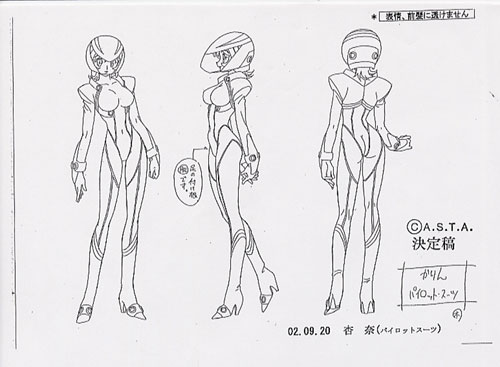
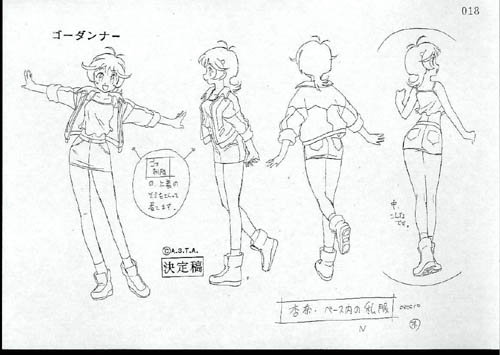
Kimura worked on series like Gaogaigar, Betterman, Godannar!!, Brigadoon: Marin & Melan, Gun x Sword, and Code Geass. As far as character designers go, he is one of my favorite ever. His style is distinct, and he would give his designs a real attractiveness and charisma. Are they drawn pretty horny? Certainly, but somehow that aesthetic feels both very grounded in the 90s but also timeless. His art touched so many of the series I love, and I still consider Aoi Anna from Godannar a Top 10 fave among female characters.

I never got to meet Kimura in person, and I think about this because of the fact that he was a guest at Sakura Con in 2006 and Anime NYC 2019. In both cases, circumstances made it impossible for me to see him, and now I wish I could have figured something out. 

I found out the news of Kimura’s death thanks to a tweet from his wife, the artist RICCA—I guess this is how I learned the guy was married. Also, Kimura apparently loved to search his own name, and RICCA mentions that he’s probably watching from heaven and loving the attention.

And here’s a message from the director of Gaogaigar, Yonetani Yoshitomo, recalling the cosplay wedding party Kimura had back in the day. Apparently, Yonetani and Kimura not only sat next to each other at work, but also lived right next door from each other.

Thank you, Kimura Takahiro. You were one of my heroes.