A Hot Spring Inn in Ogiue’s Home Prefecture: Meigetsuso

On my trip to Japan last year, I stayed briefly at Meigetsuso, a hot spring ryoukan located in the city of Kaminoyama in Yamagata Prefecture. The reason I picked Yamagata is that it’s Ogiue’s home prefecture. No, really—I specifically started with “I want to visit where my favorite character is from,” and worked backwards. Based on that, as well as availability, I landed on Meigetsuso, which translates roughly to “Tomorrow’s Moon Inn.”

A ryoukan, or Japanese-style inn, embodies the notion of “traditional Japanese aesthetics,” between the paper-screen doors, the tatami mats, and the traditional cuisine. It provides the sort of experience one typically doesn’t get as a foreigner otaku who’s prioritizing anime and manga, but I’ve found that on the rare occasion that I get to stay at a ryoukan (particularly if it’s attached to a hot spring!), the experience is worthwhile. And by taking the effort to neither essentialize or exoticize the culture, I believe I can comfortably appreciate the way these inns give their guests the red-carpet treatment, so to speak.
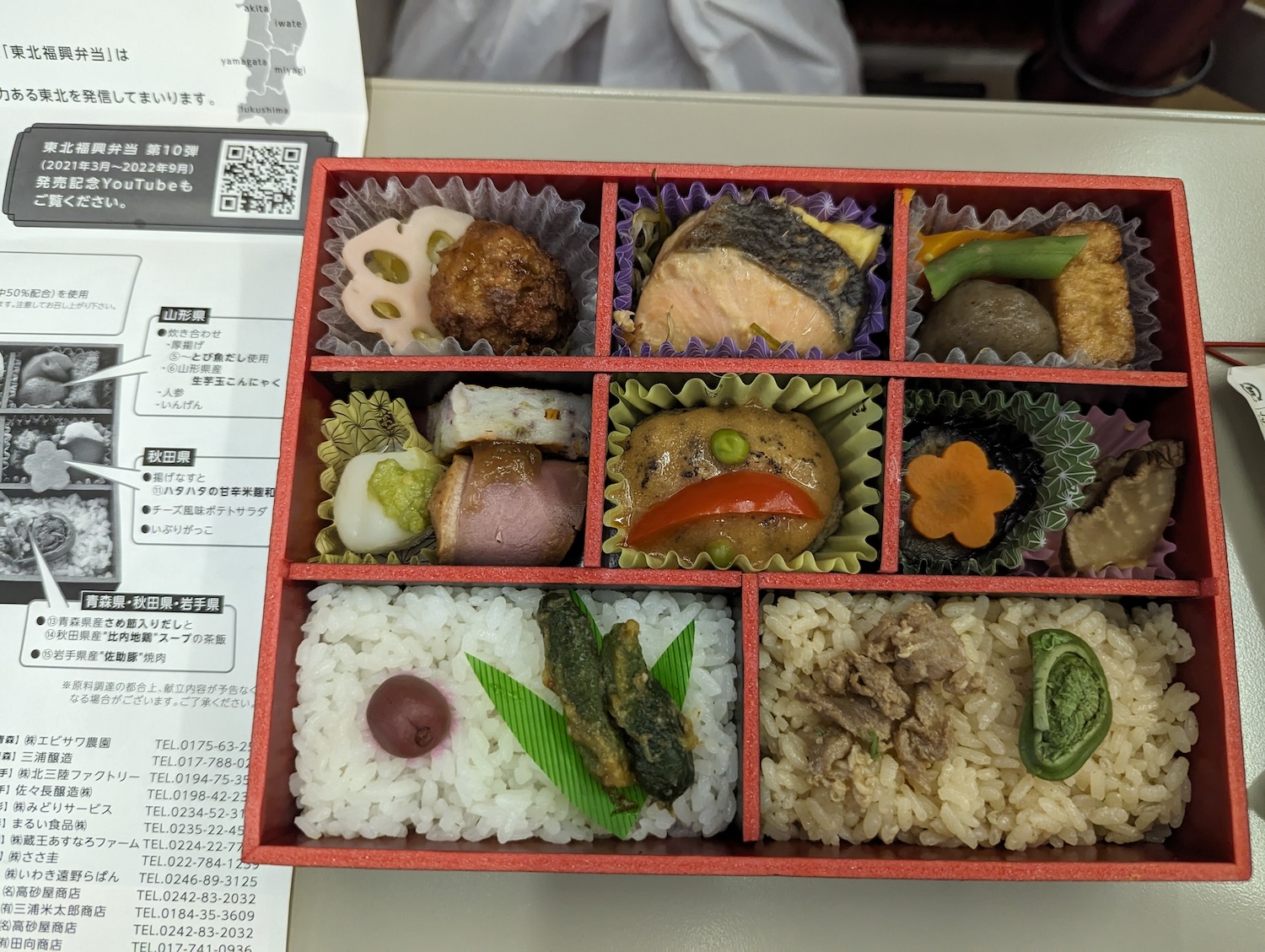
I arrived in the city via shinkansen on a snowy winter day after eating a special Tohoku-themed train bentou. While public transportation can get close to the inn, I decided to travel by foot in order to explore the area a bit.
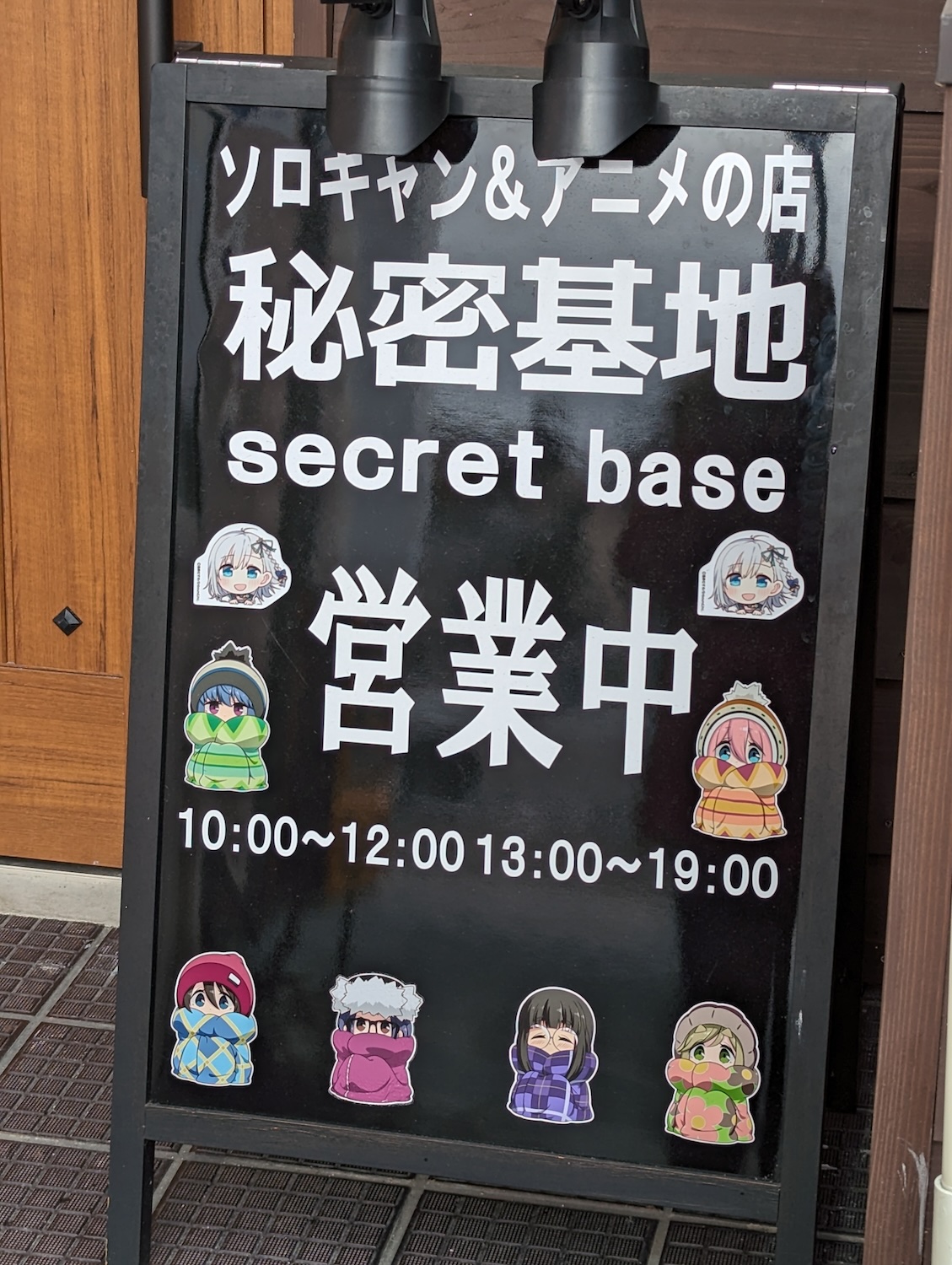
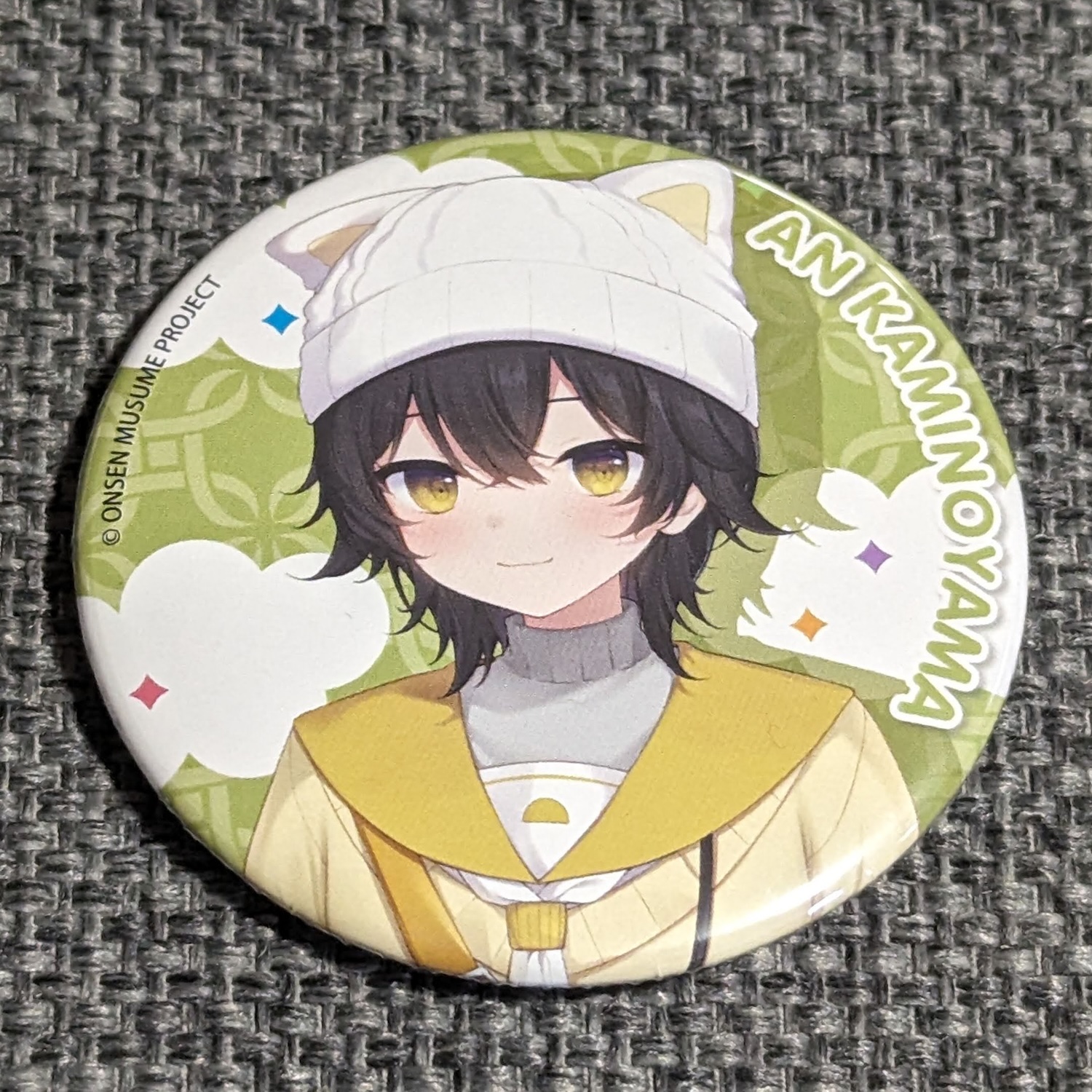
One fun find was a small anime store called Himitsu Kichi, or “Secret Base.” It was charming in a way that reminds me more of a humble local comic book shop back home, the kind that’s far less prevalent today. The most prominent series at Himitsu Kichi was definitely Laid-Back Camp, and a Love Live! Nozomi tapestry greeted me at the entrance. I bought a button featuring Kaminoyama An, a character who represents the region in the Onsen Musume franchise.
After some time traversing uphill, I eventually made it to Meigetsuso, which was a little ways up the mountain. It wasn’t an ultra-challenging climb or anything, but my legs definitely got a workout. 

The Meigetsuso building itself is gorgeous both inside and out. It did indeed look a lot like my animes, but even setting aside the associations with tradition and all that, I couldn’t help but be in awe at how relaxing it felt just to walk around. The room itself was similarly beautiful and pleasant, and the hot spring was naturally amazing to the point of being downright addictive. I don’t know if any of the purported healing properties of hot springs are real, but I definitely felt better after jumping in one.

There was a room called the Sasa room (written with the same kanji as “Sasahara.”) Naturally, I had to take a picture of it with Ogiue.

The staff treated me like a VIP, and while it cost a pretty penny to get that luxury (more on that later), I can’t deny that I got my money’s worth. Most of them did not speak English, but a combination of my relative fluency in Japanese and their occasional use of translation apps helped smooth things over. I suspect that for those who don’t know any Japanese, that app ends up getting a lot more work.

As for food (aka one of my favorite subjects), I loved the fact that much of what they serve is either local dishes or made from local ingredients.

Upon settling in the room, the attendant served a small set of assorted snacks that included fruit, jelly, their own house-made senbei rice crackers, and other things I didn’t entirely recognize. Nothing was super sweet (as expected of Japanese food), but it was all quite pleasant.

There was also a large pot of conjac jelly balls available in a lounge area through the afternoon, with a side of spicy mustard also available. It was actually my first time having conjac, and it turns out that I’m quite a fan of its gelatinous texture. If I didn’t have a large meal that evening, I probably would have kept eating them!
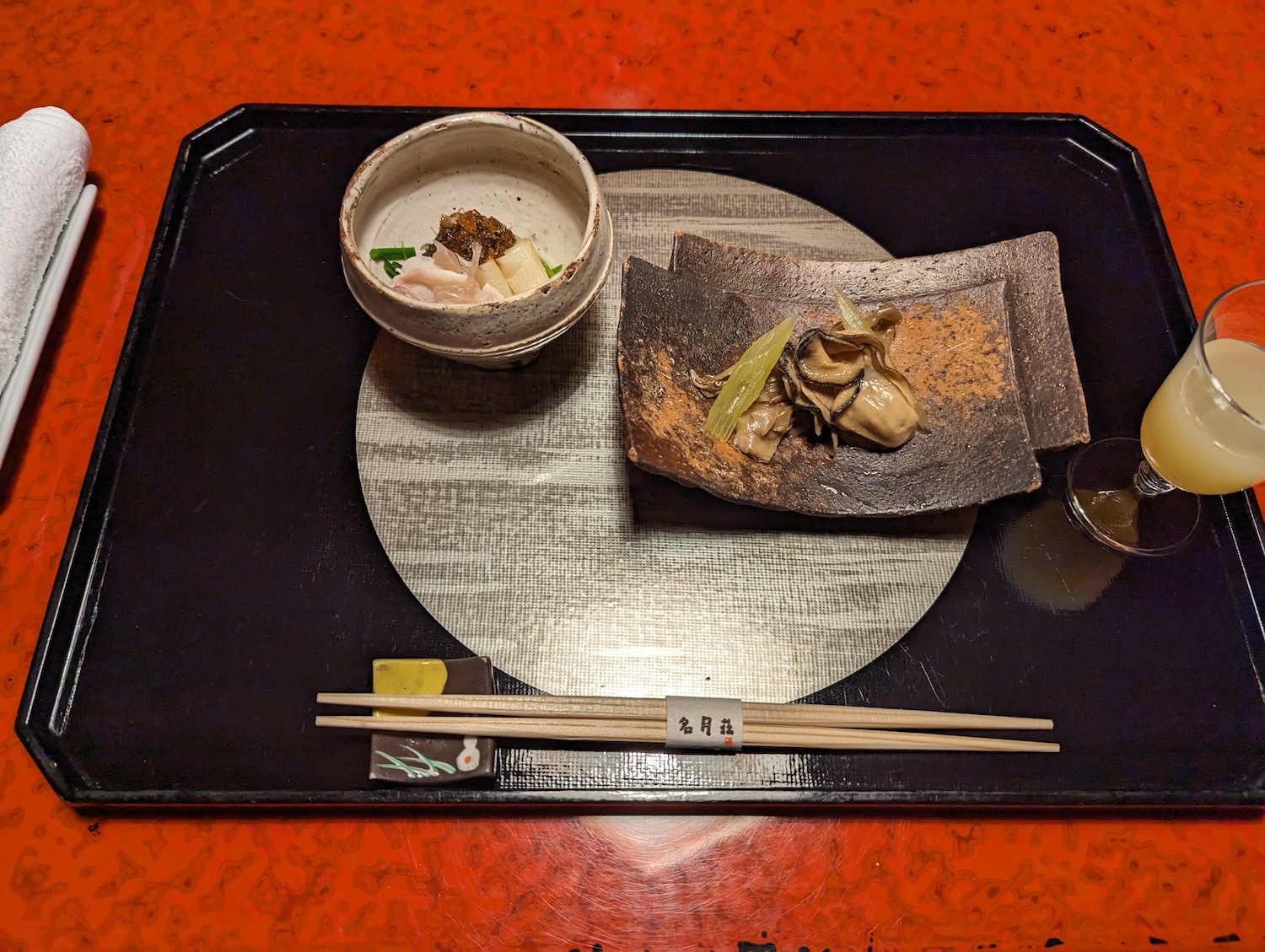
That dinner was kaiseki, a type of dinner with multiple courses of small servings, and one of the fancier ways to eat in Japan. The only times I’ve had them is at ryoukan, where it was included with the cost, and part of what makes them a good deal if you can afford to stay in the first place. It was a wonderful experience that included some of the best steak I ever had, fresh sashimi, a unique form of wide udon noodles, and even my first time eating fugu! In the last case, a part of me was worried about the whole lethal poison thing, but here I am, alive.

Rice is apparently a source of regional pride in Yamagata, and dinner came with their most famous breed: Tsuyahime, which had a chewy texture and a subtle sweetness that really stood out to me. It was one of the last parts of dinner, after I was absolutely stuffed, but they offered to make the leftovers into rice balls for snacking at a later time. I happily obliged. 

The morning brought a breakfast that also consisted of many small dishes, such as a burdock root dipping sauce for vegetables, rolled omelets, grilled fish, and Yukiwakamru rice (instead of Tsuyahime). The rice could be served as a plain bowl or as a porridge, but you can (and I did) ask for both. This one is apparently famous for being popular with people who just like to eat heaping helpings of rice unadorned, and I’m inclined to agree. 

All in all, I was the proud owner of a very satisfied belly.

I won’t deny that this was a very pricey excursion, and that for many, including myself, it’s definitely something you need to save up for. Even so, the quality of service and the blissful atmosphere provided is really worthwhile for how much it costs. Meigetsuso ended up being less expensive compared to a similarly luxurious resort or hotel. The currently strong dollar to yen ratio also helped tremendously, but even if that weren’t the case, I think Meigetsuso was a fantastic place to stay and even come back to. The only reason I wouldn’t return is because I don’t make trips to Japan often, so I might want to share the love elsewhere. But if I did live in Japan, I could see myself making annual trips to Kaminoyama to enjoy their hospitality.
Never Stop Sparking: Ogiue Maniax Status Update for April 2024

March was a hell of a month and kind of a bad time for fans of Japanese creators, between the deaths of Toriyama Akira, Tarako (the voice of the main character in Chibi Maruko-chan), and Inomata Mutsumi (character designer on the Tales RPG series). I feel like I’m still reeling from the passing of Matsumoto Leiji and Kimura Takahiro last year. It drives home to me the conviction that I need to cherish artists, performers, and creators—because you never know when things might change.

At the same time, I’m still high off the hype of hololive 5th fes. I can’t stop watching all those wonderful performances, and I’m looking forward to whenever the Blu-ray comes out. And how about that Bravern, huh? Expect a review soon.

April is when the Japanese school year starts, and while that has nothing to do with my life, I feel a sense of renewal in the air. Maybe it’s my imagination.

Thank you to my Patreon subscribers for April!

General:

Ko Ransom

Diogo Prado

Alex

Dsy

Sue Hopkins fans:

Serxeid

Hato Kenjirou fans:

Elizabeth

Yajima Mirei fans:

Machi-Kurada

Blog highlights from March:

A Bird Among Dragons: Remembering Toriyama Akira

Here are the ways the work of arguably the world’s most influential manga creatro touched my life.

Above and Beyond: hololive 5th fes. Capture the Moment

This year, I stayed up to watch hololive’s big annual concert series. Was that a good idea? In any case, here are my thoughts about the event.

Dare to Defy the Past: Soaring Sky! Precure

The 20th anniversary of Precure brought one of the most innovative series to the franchise.

Kio Shimoku

A pretty quiet month of Kio tweets (though if you follow his account, you’ll know that he retweets a lot of artists and stuff).

Related to this, I finally found out FUWAMOCO’s favorite Genshiken character!

Closing

The spring 2024 anime season is upon us, and it is stacked, especially when it comes to returning series and sequels. Here’s to hoping that Shinkalion: Change the World actually gets picked up for streaming!

Eating Among the Trains

Continuing my visit to train and train-adjacent locales in Japan, here are my thoughts on two eateries in and around Tokyo: Platinum Fish Cafe and Curry Niagara.

Platinum Fish Cafe

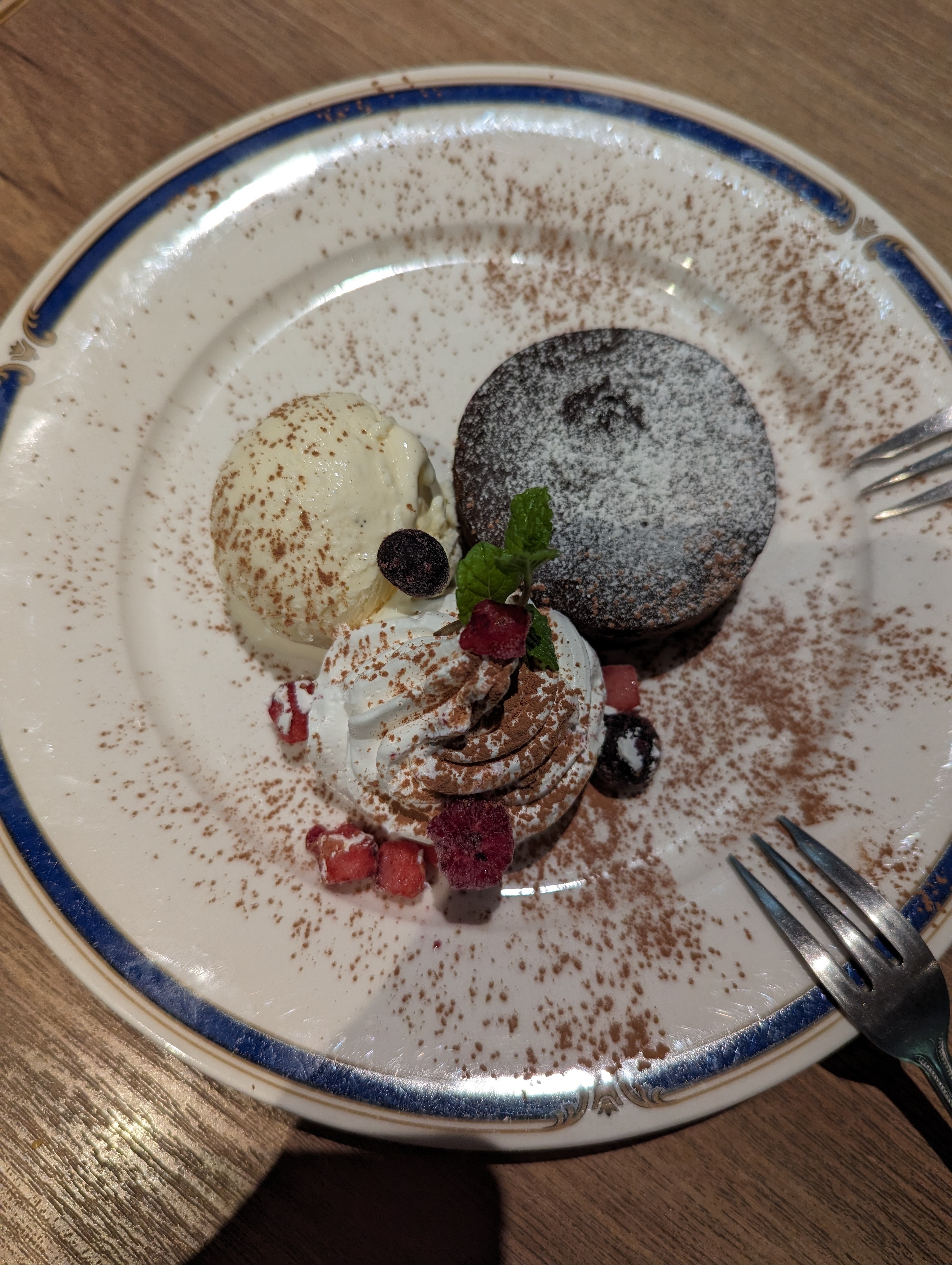
A plate with a small round cake, some vanilla ice cream, and some whipped cream

Located in Chiyoda-ku, Tokyo, Platinum Fish Cafe is actually inside of an old decommissioned train station. It has some standard food options, like curry, pasta, and cakes, but also drinks named after different train lines. I got the Yamanote (the loop that goes through Tokyo, Akihabara, Ikebukuro, and other stops), which was actually double muscat grape flavor. Between this, the Love Live! cafe, and other places, muscat grapes seem to be popular. 

The real appeal of the cafe, however, is the view. Platinum Fish is situated between two train tracks, and you can see them zooming past on both sides pretty regularly. For those coming from NYC or elsewhere in the US, this might sound like torture you inflict on your worst enemies. In Japan, though, the trains are smooth and relatively quiet. It actually makes for a relaxing experience, if you like urban ambience and a nice cityscape.

Curry Station Niagara

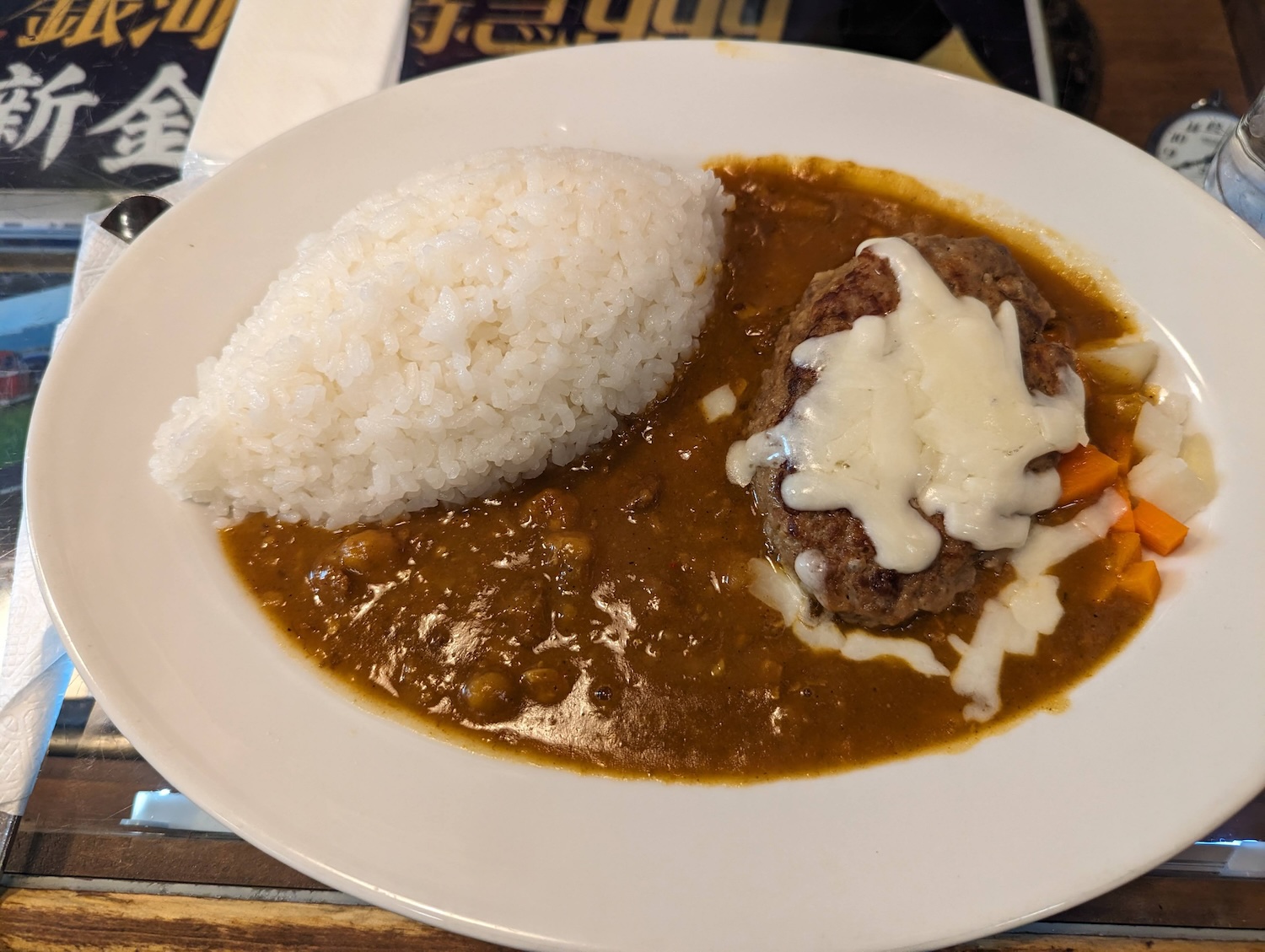
A plate of hamburg curry, with the rice in a football shape, cheese sauce on the hamburg steak, and plenty of curry sauce

This place has been on my bucket list for many years now: a curry restaurant run by a huge train enthusiast. 

The inside is covered wall to wall in rail travel memorabilia and paraphernalia, including some Galaxy Express 999 merch. Right outside the door are a couple gashapon machines with replica train station signs, specifically branded for Curry Station Niagara. Close by is a play area for kids featuring model trains and other toys.

Almost everyone in line was parents accompanying their train-loving little kids, and it was downright adorable. There’s a track not far from the restaurant, and as one passed, I could hear a kid identifying a passing train’s line as “Yokohama navy blue”—the rail system is indeed color-coded. As someone with younger relatives, I could see parallels, and wondered if those relatives would have also become train fans if they lived in Japan.

If you get a seat at the tables, a miniature train delivers your food straight to you. Because the space is very small and there were lots of kids, my group opted to sit at the counter and not deprive the young ones of that experience.

The menu is mostly pretty typical, with different toppings like tonkatsu and such, but there are also a few curve balls: extra spicy options for a premium price, curry spaghetti, and so on. I went with the Hamburg steak curry, which did not disappoint. It had a bit of a kick, but nothing overwhelming. However, one person I was with seemed to have gotten their curry cold by accident. After our meal, we got commemorative replica train tickets.

Overall Thoughts

I love restaurants just run by some person with a passion. This includes Platinum Fish and Niagara, but they’re relatively common in Japan. While making money is important, these places feel like they’re humbly dedicated to a craft or a desire to share something with their customers. I really wish more places like this existed in the US, but with real estate prices and rent being what they are, I sadly don’t see it happening anytime soon. One can hope, though…

Virtual Tumult: Ogiue Maniax Status Update for March 2024

I broke an internal rule this month, which was that I try not to post about VTubers more than twice in a month. However, extenuating circumstances resulted in me doing three posts. One was because of the unprecedented events surrounding the termination of Selen Tatsuki, aka Dokibird. Another was the fact that the La+ Darknesss Waku Waku Dark Nightmare Solo Live was available only until March 1. And the last was the post I had actually planned all along: a celebration of Hakos Baelz for her rare Leap Year birthday. How rare is it that three of my absolute favorites would end up having something big in the same February?

And that’s not even considering that hololive 5th fes is in a couple weeks.

I’ve started to think about a Venn diagram between VTubers, pro wrestling, soap operas, and superhero comics. The concepts of loose continuity, neverending stories, kayfabe, and more make for a fascinating thought exercise. I don’t know when or even if this’ll become a real post, but I keep thinking about it.

Thanks to my Patreon subscribers below for this month:

General:

Ko Ransom

Diogo Prado

Alex

Dsy

Sue Hopkins fans:

Serxeid

Hato Kenjirou fans:

Elizabeth

Yajima Mirei fans:

Machi-Kurada

Blog highlights from February:

Laughing It Off: Celebrating Dokibird and Selen Tatsuki

A VTuber came back from the brink, and I am grateful she’s still around.

BaeDay 2024: The Unceasing Force of Hakos Baelz

One of the hardest working hololive members around.

Shinkalion and Japan’s Railway Museum

I wish the US had a train museum this good (and also train-themed robot franchise).

Kio Shimoku

Kio tweets about cool stuff, but he also came out with his official Genshiken LINE stickers!!!

Closing

I said last month that my Japan posts might go past February. That is clearly more than a “maybe” now. I bet April will even be likely at this point.

Shinkalion and Japan’s Railway Museum

On my winter 2023 trip to Japan, I happened to do a good deal involving trains and train accessories. This is Part 1 of my experience, focused on the Railway Museum in Omiya, Saitama.

The Railway Museum

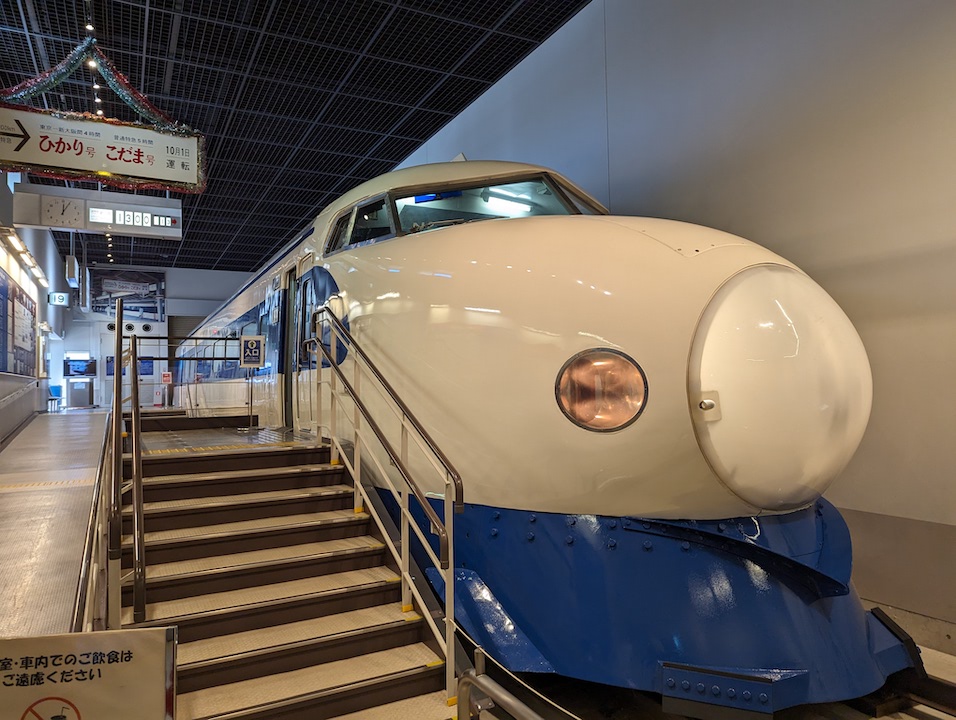
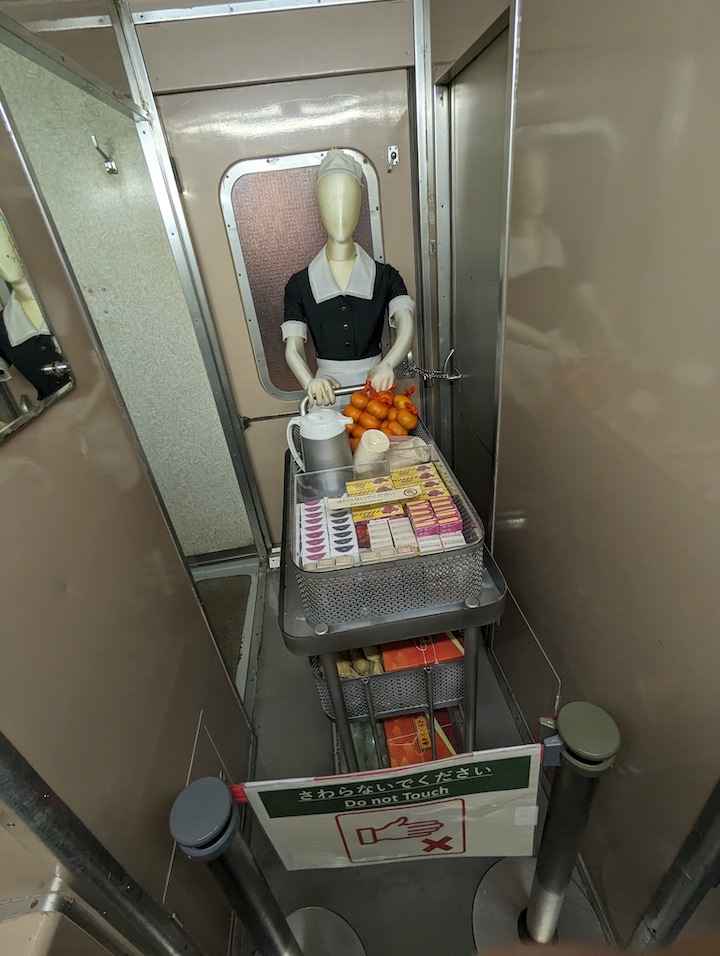
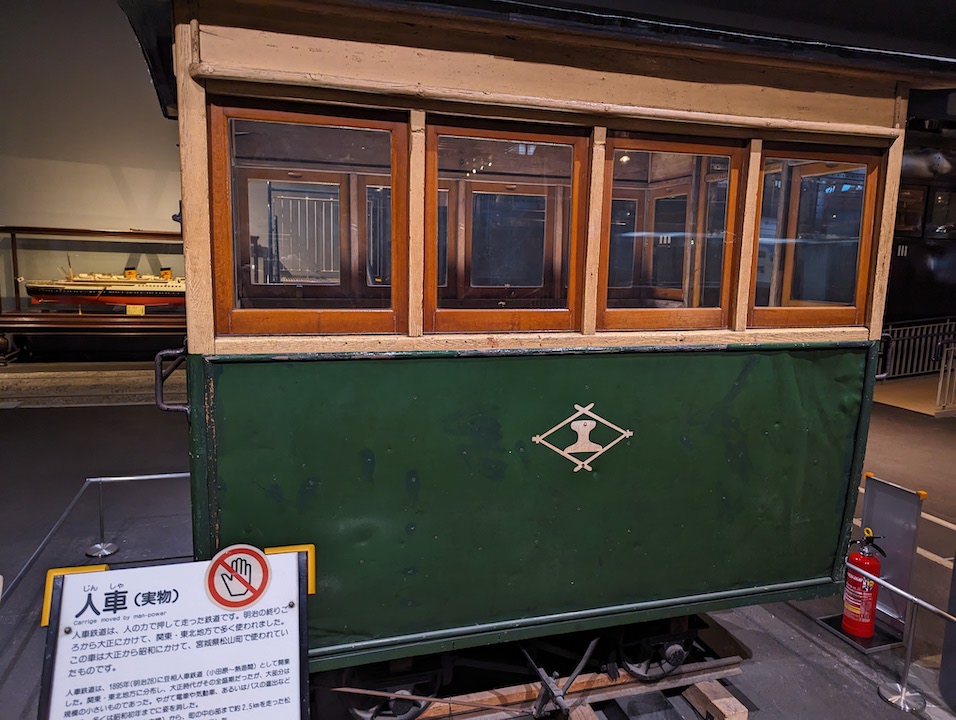
Owned and operated by Japan Railway, the museum features exhibits about the country’s trains, as well as actual decommissioned train cars. Getting to see and even sometimes walk through trains from throughout the history of Japanese rail is a blast that scratches two itches: a fondness for exploring cultural development and a love for large machines. Whether it was going inside the very first bullet train, seeing a train meant exclusively for the emperor, or learning about manually powered carts that utilized laid tracks, I got a lot out of simply being there. 

There was also a restaurant that served authentic train cafeteria foods from the olden days, but unfortunately, I already had lunch plans that prevented me from eating there. I did snag some microwaveable train curry to try at a later date, though (more on that in the future).

One highlight was seeing the kids who loved being there. Whereas some museums typically have adults dragging bored children there, this was not the case at all. These young train fans were captivated by everything they saw, and some even dressed up as conductors. It made me realize that the train otaku of Japan start young—a recurring theme that I saw throughout my trip.

Shinkalion Shorts

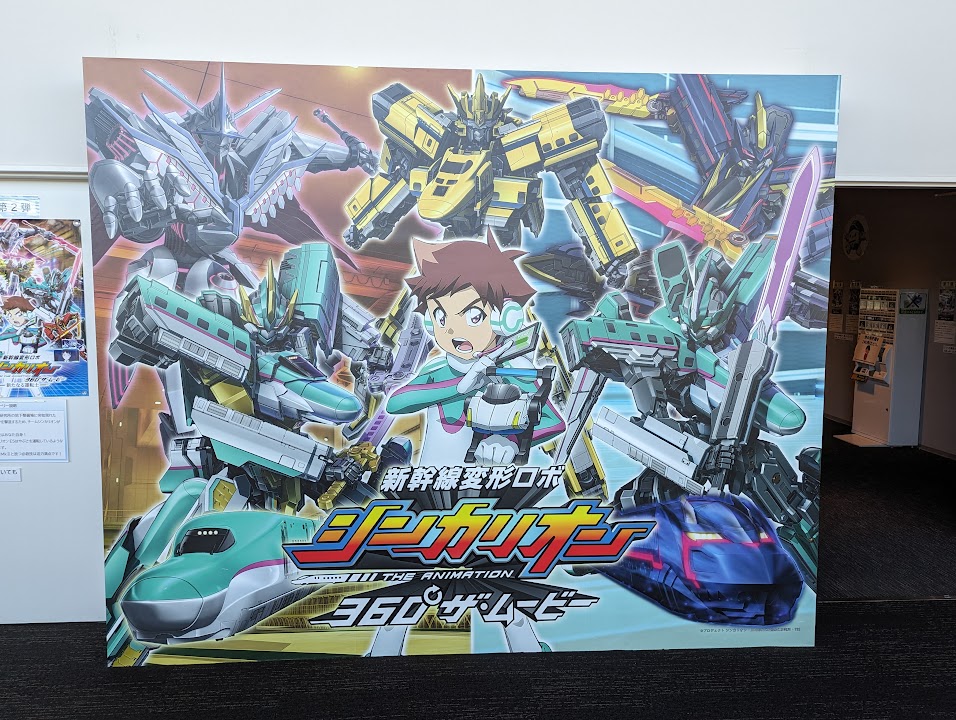
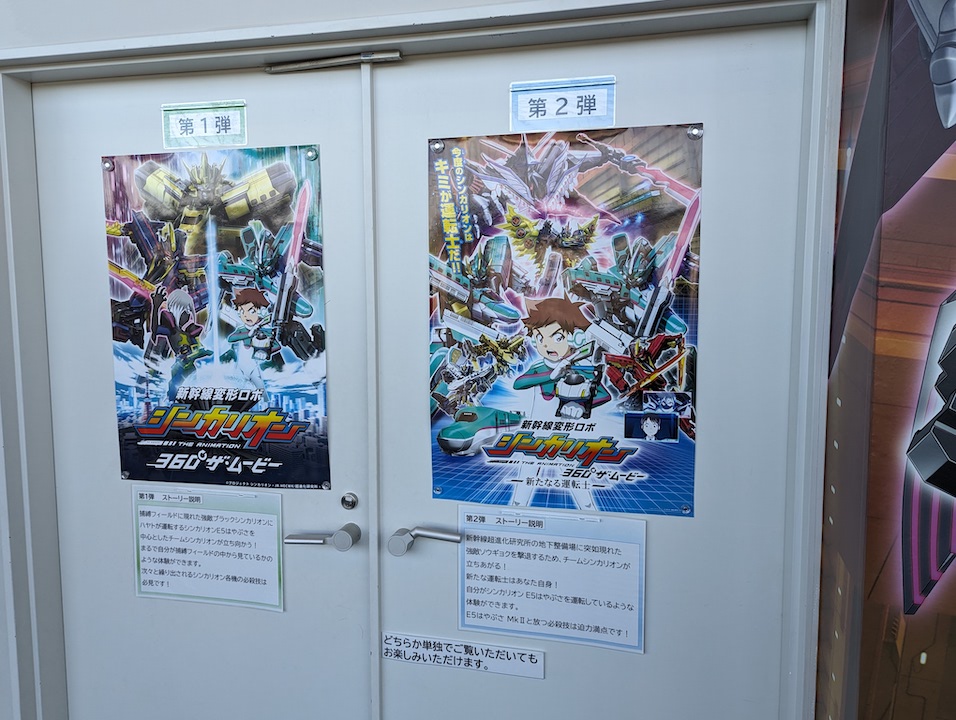
Speaking of kids stuff, I was delighted to find out that the Railway Museum has showings of two shorts from Shinkansen Henkei Robo Shinkalion: The Animation, the mecha anime about transforming bullet trains. Specifically, they’re Shinkalion: The Animation—360° The Movie and Shinkalion: The Animation—360° The Movie: The New Driver. Both cost a little extra—around 700 yen each—with each around five to eight minutes. The seating capacity was quite small (around 20 seats), but I did see some kids and parents watching as well. They also had showings throughout the day, so anyone curious could dip in at their own convenience.

Both shorts take place in the world of the anime, with the second taking place later in the story than the other and including the audience as the titular “new driver.” The main gimmick for these shorts is they’re shot in 3D and (as implied) in 360 degrees. When laser beams go flying, you can look over your shoulders to see it disappear in the distance. They’re fun little things that I’m glad to have experienced.

Coincidentally, the makers of the series actually announced a new anime on Christmas called Shinkalion: Change the World. The characters look a bit more mature than in previous series, and I wonder if they’re aiming for a slightly older audience.

That’s all for now. Look forward to Part 2!

Spectacle and Success: Spy x Family Code: White

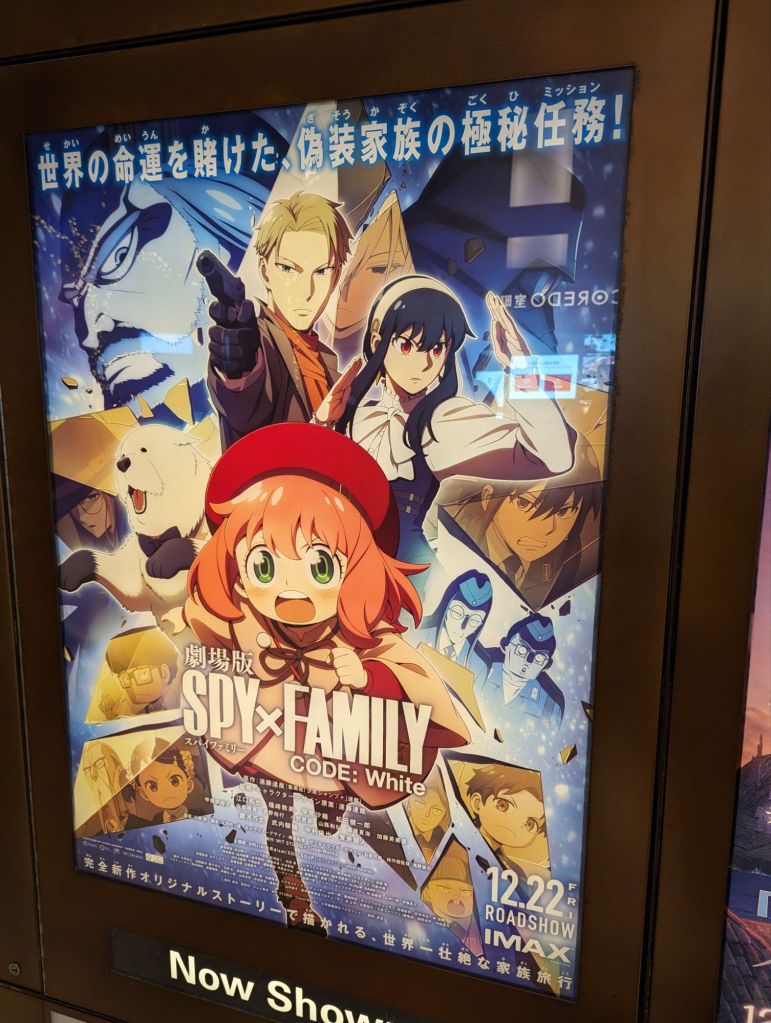
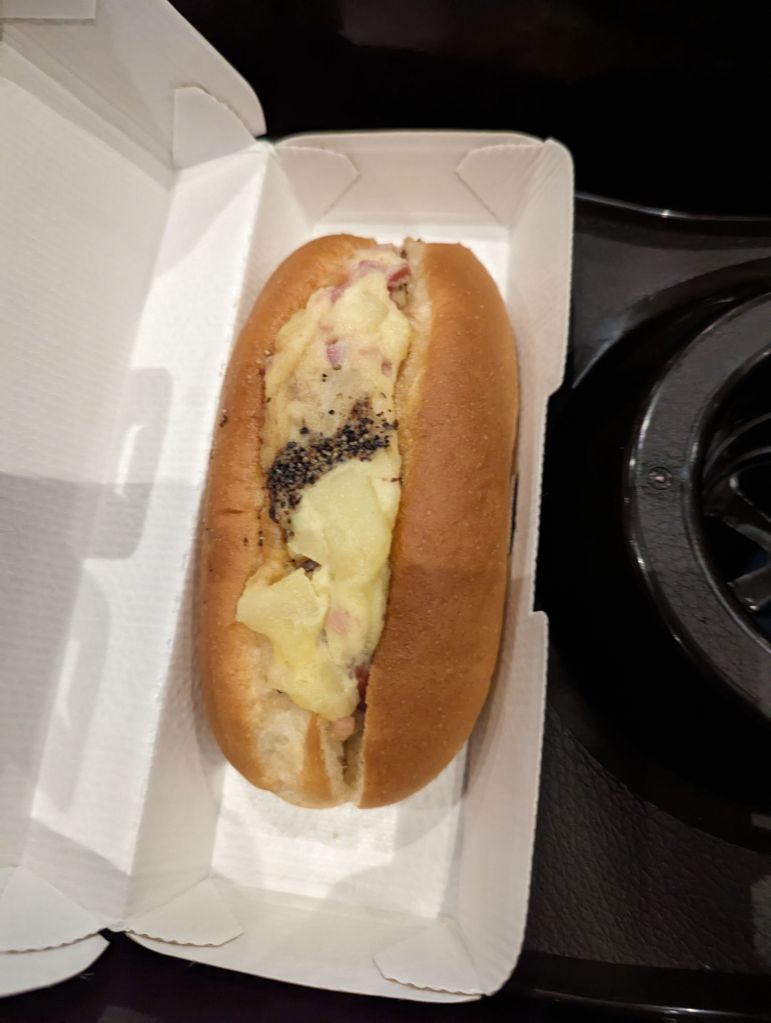
My winter trip to Japan last year gave me the opportunity to see Spy x Family Code: White, the very first Spy x Family movie. As a fan who has kept up with both the manga and the anime, I was curious to see how they would approach a theatrical release. I sat down with my buttered-potato-topped hot dog and my sour-cream-and-onion popcorn, ready to find out.

Spy x Family is the story of Twilight, an unrivaled master of espionage whose latest mission is to create a false family so that he can get close to a former prime minister, all with the goal of preventing another war from breaking out. To this end, he marries an office worker named Yor and adopts a girl named Anya. Unbeknownst to him, Yor is really one of the deadliest assassins alive. And while neither husband nor wife know the truth about the other, Anya certainly does because she’s actually a psychic. Despite all the secrets, though, the three manage to form a family that on the surface is the envy of all, yet also increasingly seems to be motivated by genuine love and affection.

The recent trend with some Jump series (such as Demon Slayer and Jujutsu Kaisen) has been to adapt an arc or major plot point into a feature-length work, and I wondered if Spy x Family would do the same. However, it turns out that the makers went with a different tack. Rather than going for something canonical, they created an original story. It’s the common choice for mega franchises, e.g. One Piece, Precure, Doraemon, Detective Conan.

In fact, Code: White is pretty much a Detective Conan movie with way less mystery solving and way more action. The story is all right, but spectacle is the name of the game: gorgeously animated chase scenes and fights, a story that takes the trio to ridiculous(ly cool) places, wild stunts, and plenty of explosions. The actual plot developments stretch the limits of what would plausibly keep Twilight and Yor from suspecting each other and wouldn’t be feasible if the movie wasn’t standalone. But given what it is, the makers are allowed to go ham, and they have enough for ten Christmas dinners. It’s a short but sweet popcorn flick.

I think the fact that Spy x Family Code: White is a non-canon entry says a lot about how the franchise is regarded in Japan. Basically, it’s a pop culture hit, almost on par with the heavy hitters. That much was clear even when discounting all the merch available in chains and other big stores to promote the movie. At one point, I stopped in a stationery store that barely sold five manga, and one of those titles just happened to be Spy x Family

It doesn’t look like the hype will be dying down anytime soon.

Comiket, at Long Last: Comic Market 103

I can count on one hand the number of times I’ve been to Japan, and every stay has been memorable in the best ways. However, there’s was always one item on the bucket list that I could never quite fulfill: going to Comic Market (aka Comiket), Japan’s—and likely the world’s largest comics-related event in the world.

That’s now changed. In an adventure that felt like nearly two decades in the making, I am proud to say that I am (technically speaking) a Comiket veteran.

My Feelings Going In

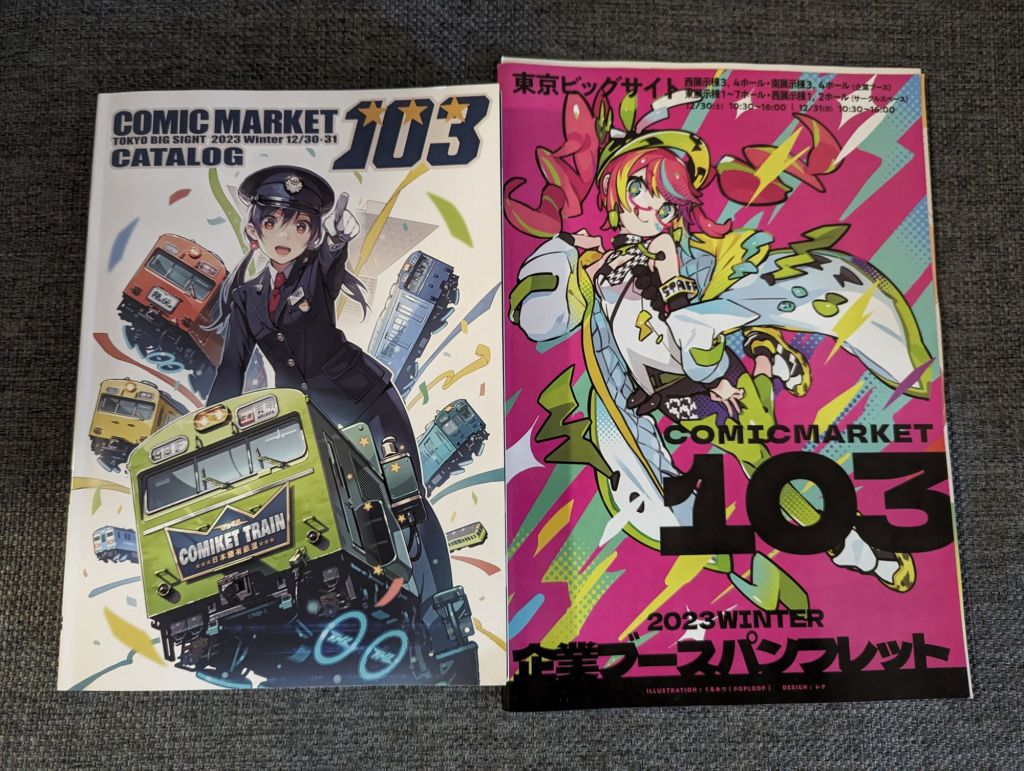
Comic Market 103 catalog and industry booth pamplet

I’ve read a lot about and related to Comiket over the years. I’ve had friends and acquaintances tell me about the times they went and the money they burned. The event also looms large in my favorite manga, Genshiken—scenes such as Sasahara losing every inhibition his first time attending, Madarame breaking his hand but choosing to try to stay anyway, and an incognito Ogiue spilling her BL all over the floor are all downright iconic. But I’ve also seen comments that the event is some combination of overrated and overhyped, so I wanted to make sure I came to Comic Market 103 with expectations that were neither ridiculously lofty nor blatantly unfair.

A classic cautionary tale is that of the anime fan who gets disillusioned upon visiting Japan, because they had previously been viewing the country and its culture through the inherently distorted lens of anime. My first time there, I was prepared for everyone I met to actually dislike anime because I didn’t want to make that mistake, only to have a different experience. While Japan wasn’t quite like my animes, it was also not that far removed, and I could still appreciate it as a fan. I approached Comiket with all this in mind.

Downside

I want to start by laying out some of the negatives I ran into. 

First and foremost, there were no Genshiken doujinshi, as far as I could tell. Boooo.

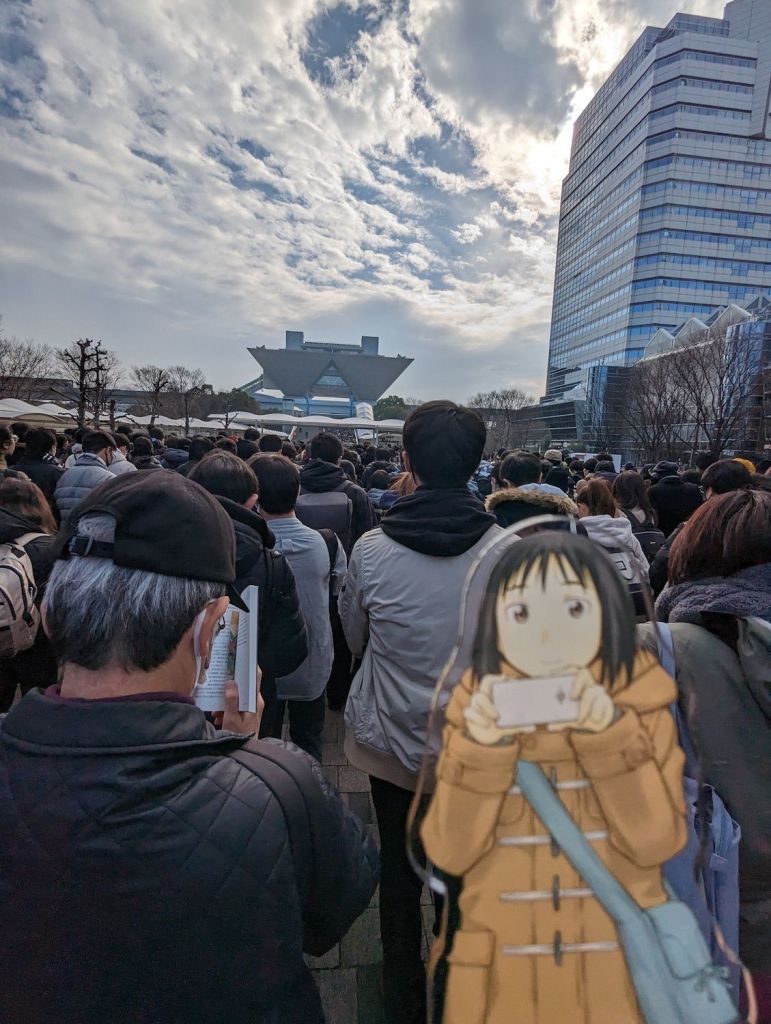
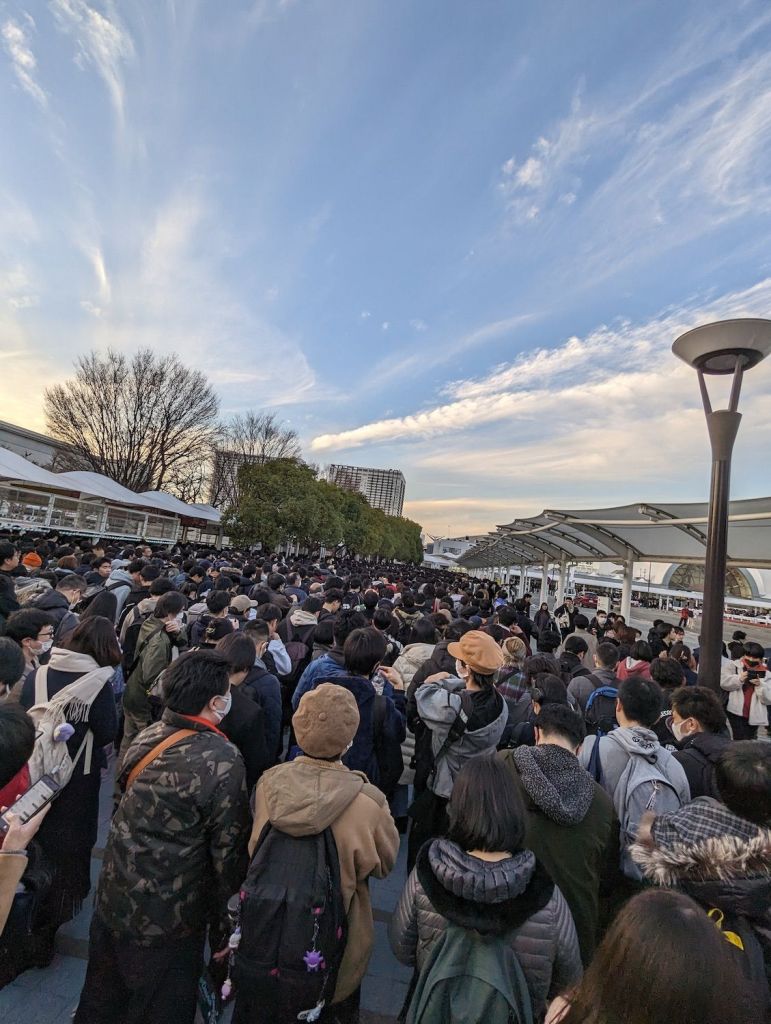
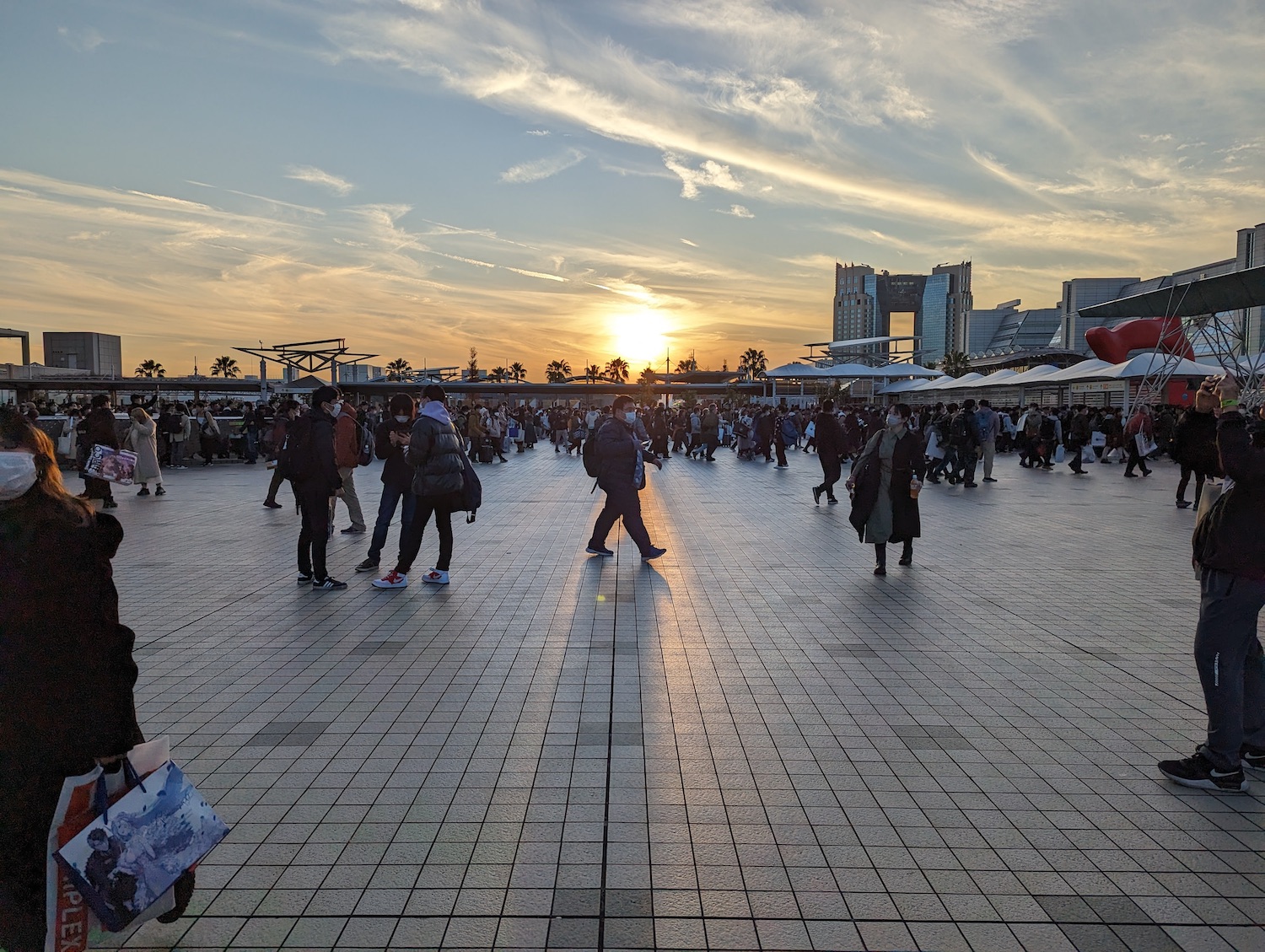
Second, getting to and from the venue, Tokyo Big Sight, can be an ordeal—especially depending on what time you decide to travel. On Day 1 (of 2), I ended up in a classic sardines-in-a-can situation in the morning, had to wait in line for about two hours before I could actually get into the exhibition space, and made the mistake of staying to the very end. In that last instance, it meant that a walk back to the train station that should have taken five minutes ended up being about an hour. Comiket is literally the most highly attended comic event in the world, and the approximately 30,000 circles (i.e. doujinshi vendors) would itself be considered a large convention. When you have to walk back with that many people, the pedestrian traffic jam is intimidating.

I was very fortunate that, despite Comiket taking place in late December, the weather was surprisingly pleasant. Had things not been so nice, the wait (and my overall experience) might have been more miserable.

Third is that there is very limited time to get anything, and nothing is guaranteed. A small fraction of tickets are for early entry (the doors open at 10AM), and are sold at a premium while also being lottery only. Otherwise, most people (including myself) have regular morning or early afternoon entry tickets, and can only get in later. On top of that, each day ends at 4pm, circles typically are there for only one day, and the most popular artists (especially the 18+ ones) will have massive lines. For example, I tried to get something from Mika PikaZo (character designer of Hakos Baelz and Fire Emblem Engage), and ended up going through three lines only to discover she had sold out of everything. There is a serious sense of FOMO that can make the losses sting—if something is popular, you basically have to impulse buy, or else it might be gone.

But This Is Accounted For!

There may be inevitable issues at Comiket, but that’s all the more reason I have to commend the staff for their excellent organization and crowd control. While things took time, they still progressed smoothly. And once inside, the crowds were not difficult to manage—about comparable to a large-ish anime convention. This is also owing to the attendees and circle members themselves, both of whom generally tried to follow the rules. On a few occasions, I had inadvertently blocked one table while looking at the content of another, and was asked to avoid doing so in consideration of others. The sense I got was that a lot of people involved, be they staff or otherwise, were very familiar with both Comiket and Tokyo Big Sight itself.

Something that helped with the crowds was that halls could open up to the outside, which prevented massive lines for certain artists from clogging up the aisles. I heard from a friend that this seems to have started since 2020 as a COVID precaution, and that this is an added side benefit. There’s a chance I might have felt somewhat differently if the weather hadn’t been so good, but I would have appreciated the improved ventilation regardless.

And as for FOMO, it turns out that a lot of artists sell their stuff in stores after the event, in places like the popular doujin shop Melonbooks. So not all hope is lost (though for buyers outside of Japan, you likely have to spend more on shipping fees and third parties). 

What this all means is that negatives do exist, but they are accounted for and mitigated to a decent degree.

Upside

My haul

Although Comiket is not perfect, it’s still a great event that showcases what makes the otaku spirit special. There are drawbacks to being so massive, but the sheer amount of stuff both ultra popular and extremely niche, all in the same space, is a sight to behold.

The biggest categories this year were VTubers and various mobile games (or at least mobile game–adjacent works). But even if you’re into none of that, there’s still a chance you can find creators with which you share a common interest—and that’s even putting aside the 18+ stuff.

Here is some of what I ran into over the course of two days.

  • Srungle fanfiction
  • Guides to NYPD call signs and insignia
  • Illustrated food guides
  • Andy Hole x MIX from Aquarion EVOL in the year 2023
  • Original mecha drawings
  • Pilgrimage guides for fans of particular franchises
  • A book dedicated to events for Kawamura Maria, the voice of Naga from Slayers
  • Guides to bootleg ZOIDS
  • Cure Precious x Black Pepper Precure het shipping
  • Illustrated collections from actual VTuber character designers/collaborators
  • Cosplay model photo collections
  • Initial D BL
  • Yotsuba& parodies of Zambot 3 and Daitarn 3
  • Both het and LGBT Gundam: The Witch from Mercury shipping
  • Literally Sonoda Ken’ichi

It might be easier to find smaller events throughout the year that are hyper-focused on your particular interests, but nowhere is the sheer diversity of fandoms more on display than at Comic Market, even if certain specific titles dominate the majority of the physical space. It’s wonderful.

Vs. Conventions

The sense of discovery at Comiket is second to none, and I can’t help but contrast it with anime conventions in the US. One of my biggest problems with artist alleys is that it’s hard to find fanart of more obscure titles. This is because con tables are expensive (Otakon is $375 USD as opposed to Comiket’s 8000 yen, around $60–$80), and artists tend to display what’s most popular, probably out of the need to recoup the expenses. It’s not impossible, but sussing out the weird stuff involves going through artist portfolios or asking, which can be awkward or time-consuming. On the other hand, because Comiket tables are generally grouped together by interest, and their specific interests are front and center, you can know at a glance what to expect. 

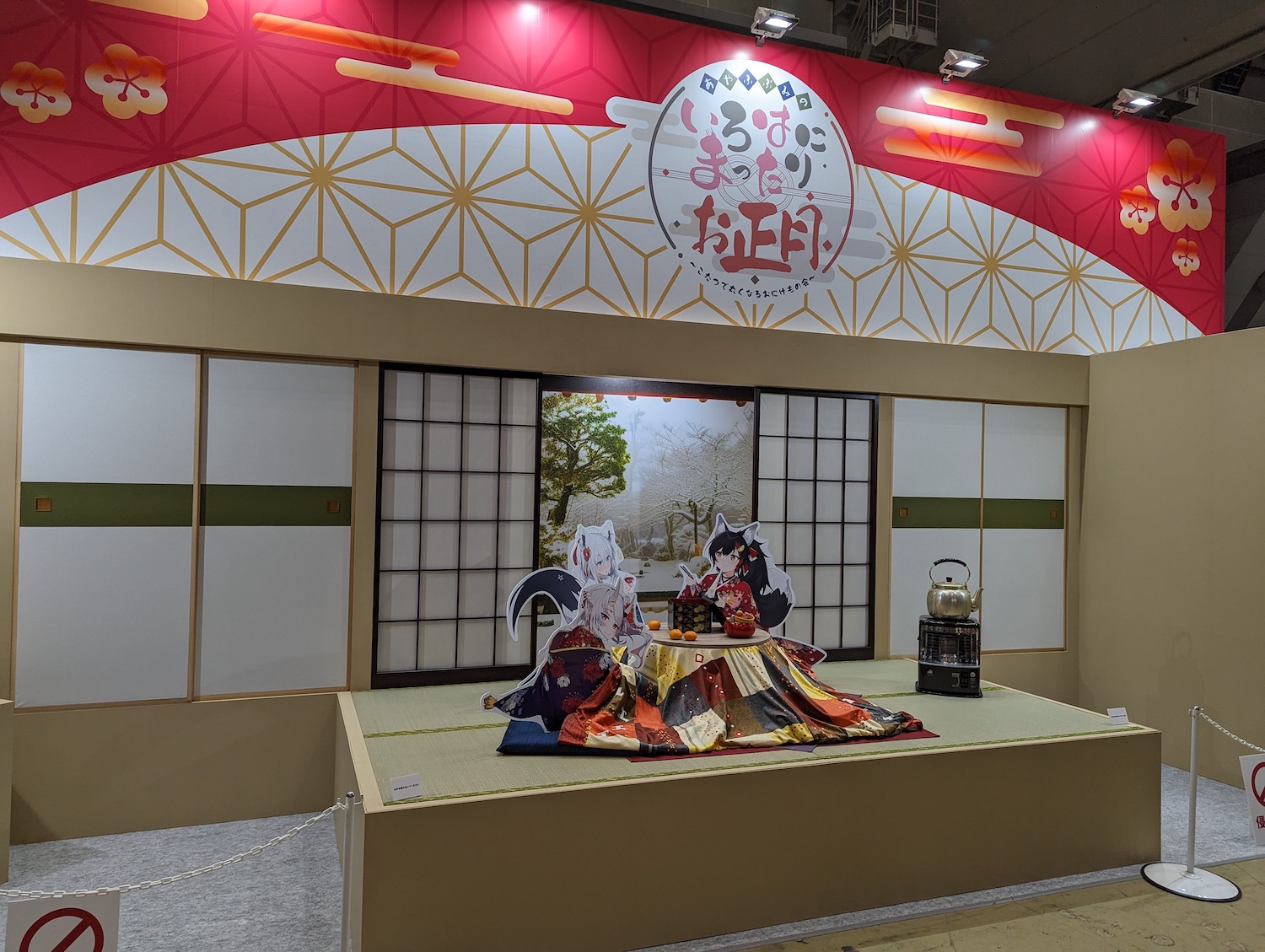
The hololive booth

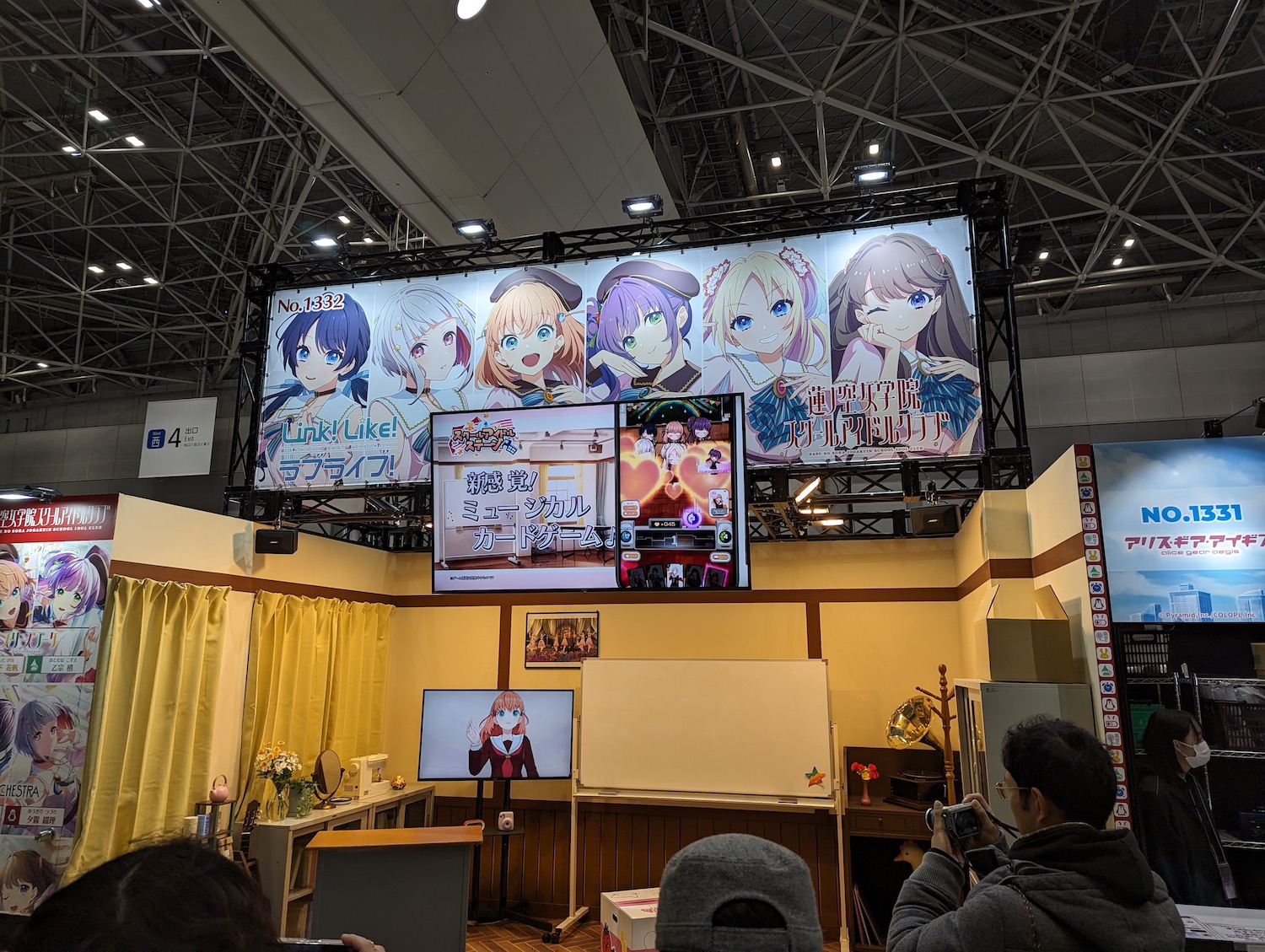
There was an industry presence at Comic Market 103, but it was much smaller than the space dedicated to doujin works. This is actually the opposite of American conventions, where the official booths and merch usually take up the majority of floor space. One thing I found interesting is that most of them, more than being manga-related, were more otaku-focused. That is to say, they were properties that attract hardcore dedicated fans—things like VTubers, Love Live!, The iDOLM@STER, mobile games, etc. One interesting presence was a booth for My Youth Romantic Comedy Is Wrong, As I Expected, which is celebrating its 10th anniversary. I saw quite a line for merch there, and as a fan of the series, I’m glad to see it get some real love.

Another difference is that con-style panels and talks, be they fan-run or professional, are non-existent. They’re typically one of my favorite things, so their absence is a tad disappointing, but I also already knew that would be the case. All this goes back to time being a precious resource. No one really lingered or tried to socialize either, and the fact that the food truck lines were short (unlike an anime con) encapsulated one important fact: Attendees had priorities, and only a few hours to get what they wanted.

Overall Thoughts

Comic Market isn’t really one fandom, but rather dozens side by side in the same space. This approach has its strengths and weaknesses, and both are magnified by the sheer size of the population attending it. But while there are disparate groups, they all have the same general goal of finding the books that resonate on a personal level, and I think this gives the entire event a certain focused energy. 

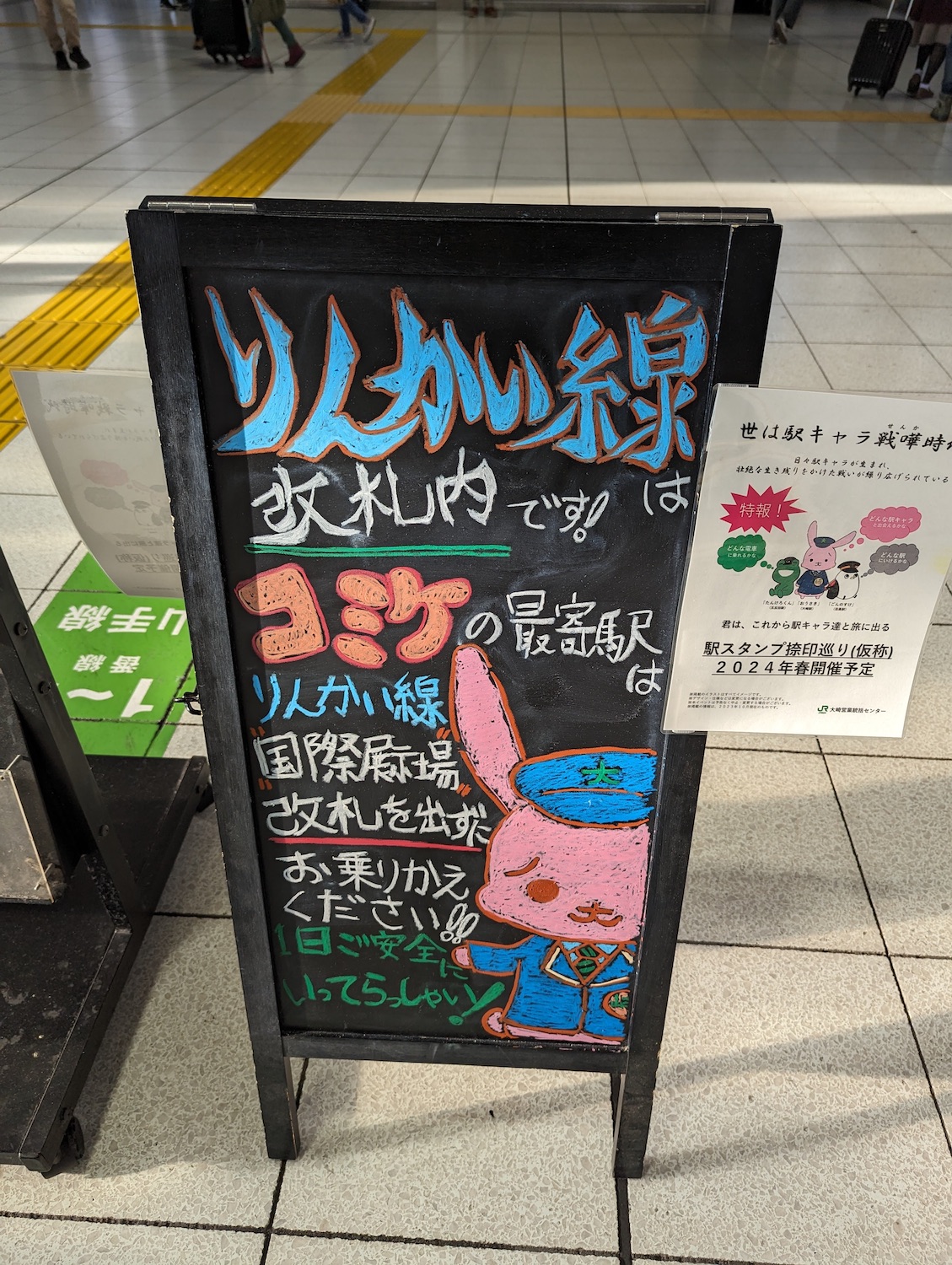
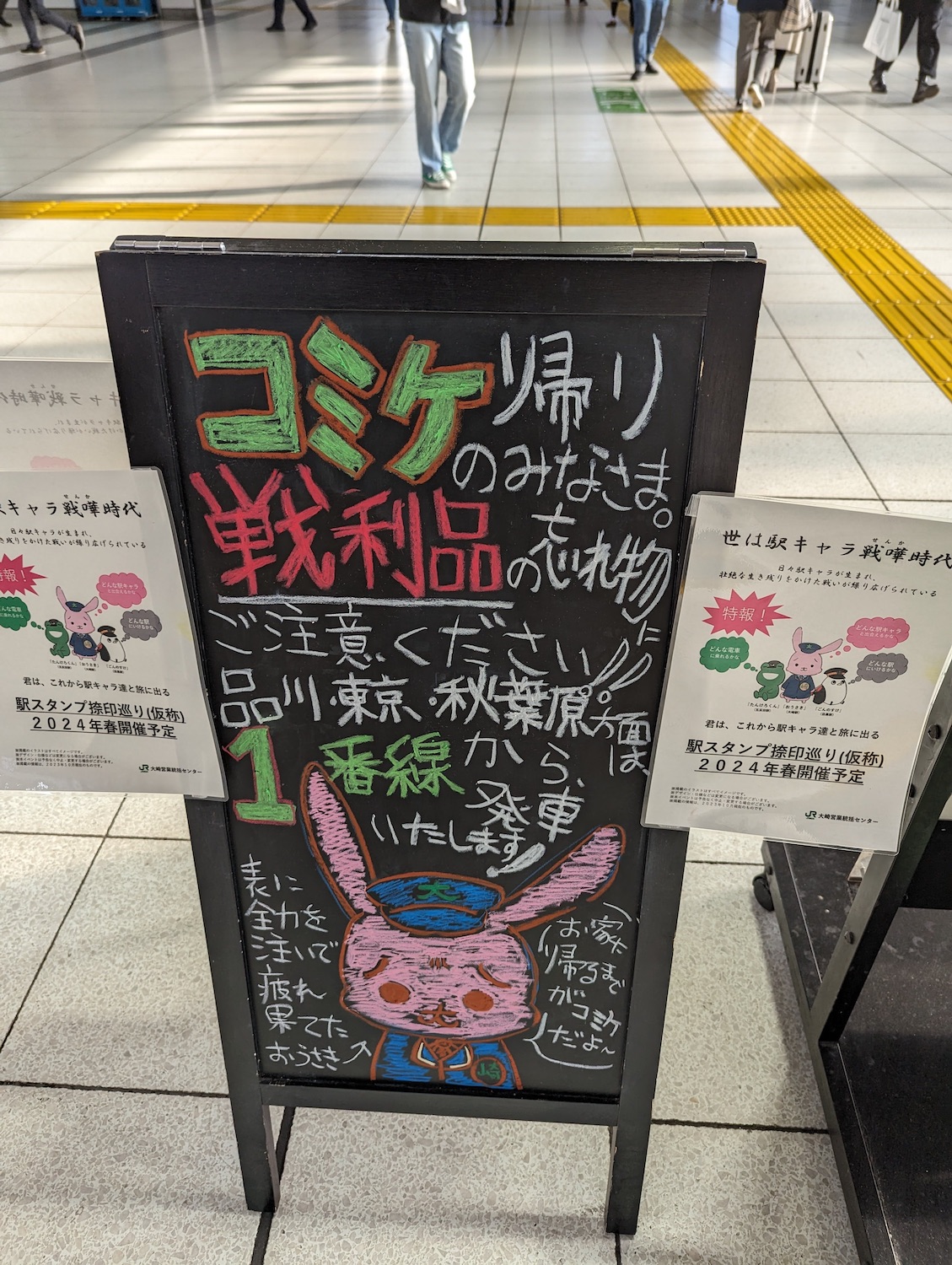
At the Osaki train station, one of the transfer points to get to Tokyo Big Sight, there was a chalkboard sign both welcoming people to Comiket and thanking everyone on the way back, depending on which direction you were coming from. It’s a small gesture in the grand scheme of things, but this double-sided sign’s presence really hit home for me the fact that the majority of hardcore fandom in Japan descends on a small strip of land.

I can’t say if this should be the first doujin event a person should visit, and it might not even be the best choice, depending on what one values. However, I can personally say that I had a great time, I’m happy to have done it, and if the stars align, I’d be more than willing to go again.

Deep in the Tiger’s Den is a Het Pairing: Sasuke × Sakura’s Doujinshi Popularity

When I traveled to Japan this past May, one of my activities was to visit various doujin shops such as Toranoana. I like to see what’s popular, to get a general image of trends among hardcore fans. Which titles are popular? Which characters? Which pairings? And unlike doujin events, where many artists release their own works more for passion than profit, Toranoana is about what sells.

In Akihabara, this means going to multiple Toranoana stores, each of which specialize in a certain demographic. One in particular is devoted to girls (though nothing prevents guys from entering and shopping there), and as expected it’s primarily filled with BL.

However, one major exception was actually Naruto. In a relatively small yet dedicated section, surrounded by guy-guy pairings in most every other title, heterosexual romance took to the majority of the Naruto shelf. Of those couples, Sakura × Sasuke was by far the most popular.

I’m not against Sasuke × Sakura by any means, but I have to wonder why does it hold such a special place among hardcore female anime and manga fans. Why is it to the point that other het pairings are outshone, and the normally dominant BL pairings fade into the distance in this one ninja-themed microcosm?

One thing I discovered while searching for reasons is that Sasuke × Sakura is perhaps the most popular straight romantic pairing in English-speaking Naruto fandom, and visibly popular among Japanese fans. Given that context, it might just be the case that its sheer prominence is able to overcome even the fujoshi hegemony of the girls’ doujin scene.

Perhaps one factor is that Sakura is an easy target for female readers to project themselves onto. She’s also closer to the two most important characters in the manga than anyone else. However, given that fujoshi popularity is usually based on the strength of the pairing itself than the individual characters, it makes me skeptical about Sasuke × Sakura being an exception, even if it is a heterosexual ship.

From what I’ve read, a common reason fans support Sakura is her sense of loyalty towards Sasuke. She’s willing to support him through thick and thin, and even oppose him when she feels he needs it. The scene where Sakura tries to stop Sasuke from leaving to join Orochimaru appears to have been a flashpoint for supporters and haters of Sasuke × Sakura, because the former saw Sasuke’s “thank you” and knocking Saa away as him reluctantly pushing away those he cares about, while the latter saw it as an example of Sasuke showing flat, platonic fondness at best. Given the actual outcome of the series—Sakura and Sasuke married and had a child—the fans clearly won out, with Sasuke’s behavior best described as “reliably angsty.” Even as husband and wife, Sasuke’s #1 gesture to show affection is to tap Sakura on the forehead, and then disappear for months or years on end, undergoing secret missions to protect his family Andy his village.

Sasuke × Sakura reigns strong as a premiere het pairing, and I’m not bothered one bit. If any fans would like to help me understand the SasuSaku mind further, feel free to comment!

Back from the Future: Ogiue Maniax Status Update for June 2018

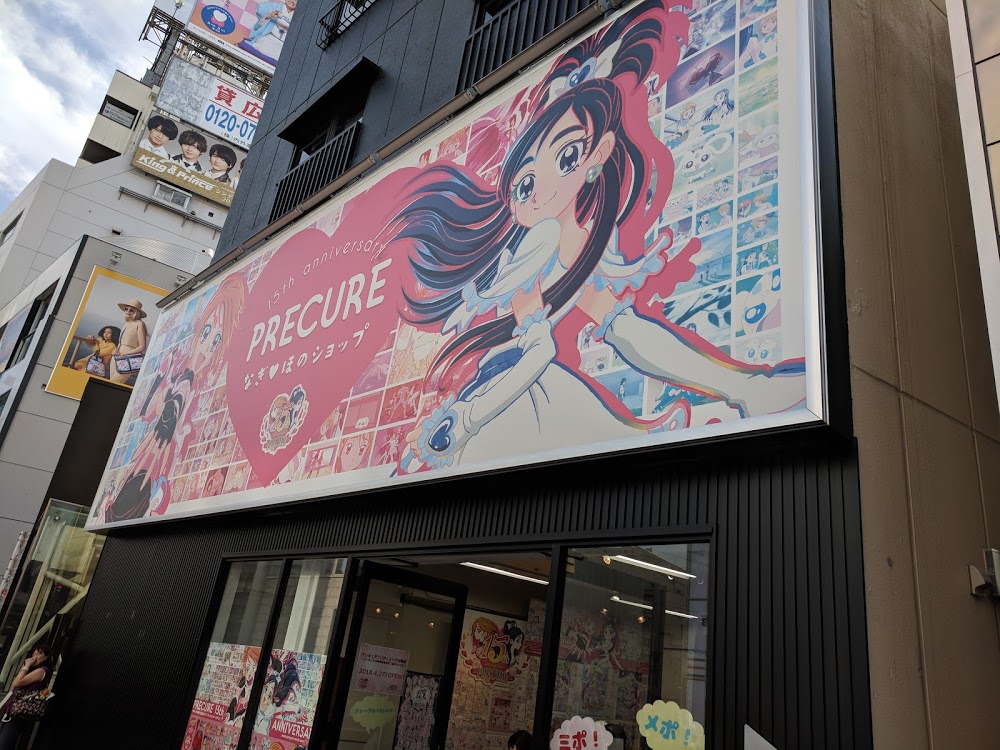
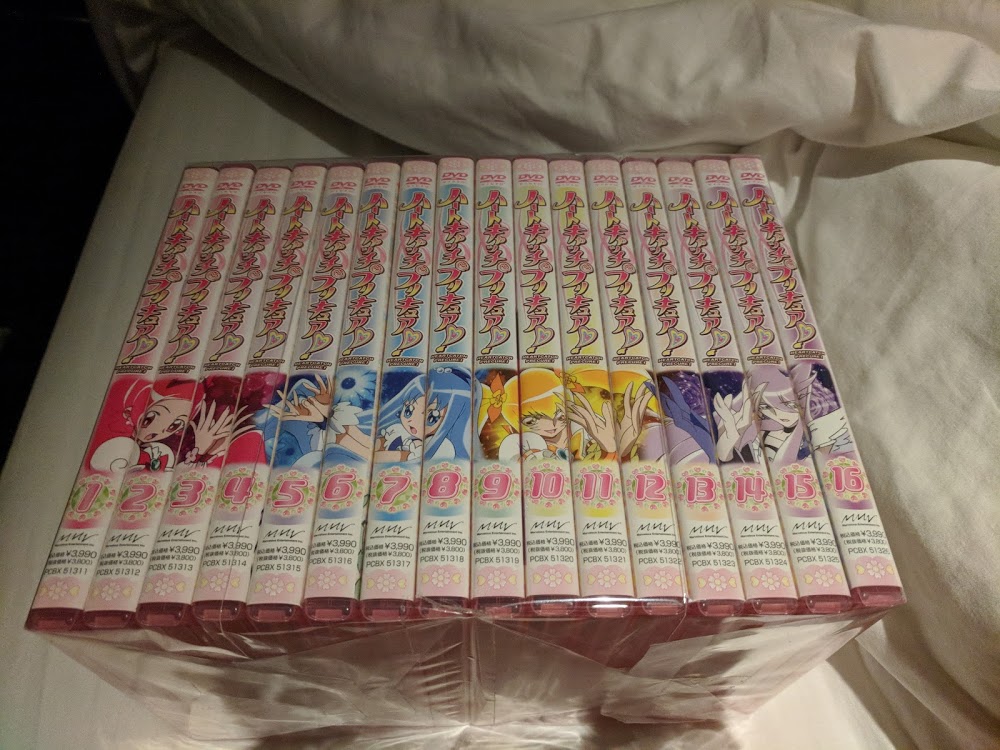
I’m back after an exciting honeymoon in Tokyo. It was a grand ol’ time full of food and nerdery, and also spending way too much money on otaku goods. For example, I actually bought all of Heartcatch Precure! on DVD—albeit at a huge discount. (I promise I didn’t just do Precure-related things, honest.)

I’m happy to answer (most) questions about staying in Japan to the best of my ability, so send ’em in!

But before that, I’d like to thank my sponsors on Patreon and Ko-fi.

A big thank you too…

General:

Johnny Trovato

Ko Ransom

Alex

Diogo Prado

Sue Hopkins fans:

Serxeid

Hato Kenjirou fans:

Elizabeth

Yajima Mirei fans:

Machi-Kurada

I still had some posts go up even while I was away, so here are my favorite posts from May:

Darling in the Franxx and Choice in a Sexual Dystopia

Some people think the show is greatness itself, while others think it’s hyper trash. Here are some of my thoughts.

Project Z Revived! “Hakai-oh – Gaogaigar vs. Betterman Part 1” Novel Review

My review of the latest Gaogaigar light novel, which is actually the long-awaited sequel to Gaogaigar Final!

“Flukes”: Competitive Rigor vs. Sustainability in Esports

How important is grabbing an audience vs. absolute competitive integrity in esports?

Hashikko Ensemble

Chapter 4 continues the kooky sense of almost-camaraderie.

Patreon-Sponsored

Gamblers’ Paradise: “Uma Musume: Pretty Derby”

My feelings on the new horse girl-themed anime and the expected franchise surrounding it.

Closing

As you might expect, I plan to have a ton of blog posts concerning my trip to Japan. It won’t be a full on travelogue, but I plan to have reviews of doujin events, reviews of series I picked up, and more. Who knows? Maybe it’ll even bleed into July!

My Visit to the Genshiken University

chuo-curve

A geek voyage to Japan typically involves trips to the various otaku mecca strewn across the country. From shopping areas such as Akihabara and Den Den Town to sites found in anime such as Lucky Star and Inari Kon Kon Koi Iroha, otaku pilgrimages are a special way to appreciate Japanese pop culture (and support them financially through tourism in the process). For me, there was one place that I needed to pay my respects to on a trip to Japan: the university campus upon which Genshiken is based.

Before proceeding, I have to thank this site for the information on how to get to the university, as well as showing important spots in the first place. The photos they took are also much better than mine, so if you want really good reference material that’s the place to go.

chuo-animeclub

While the actual Society for the Study of Modern Visual Culture is based on a club at Tsukuba University in Ibaraki, the actual campus of the fictional Shiiou University is based on Chuo University’s Tama Campus. This is made immediately obvious by the Chuo University sign adorning one of the campus’s buildings.

chuo-outside

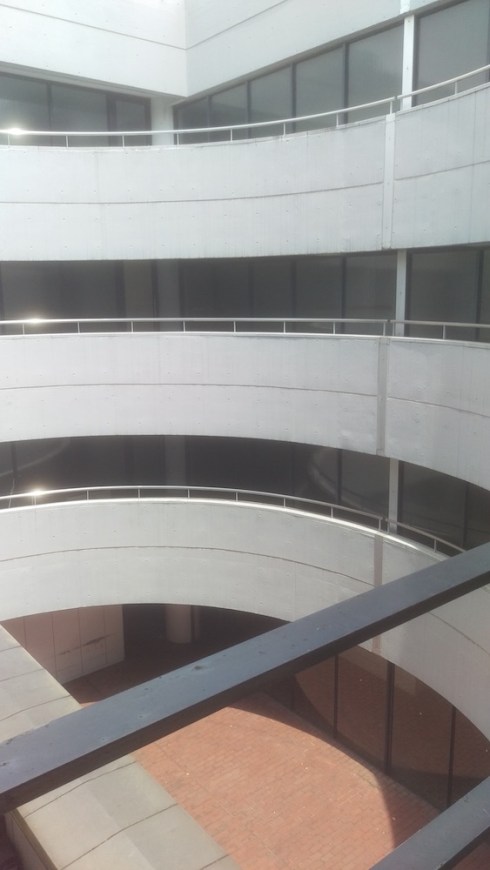
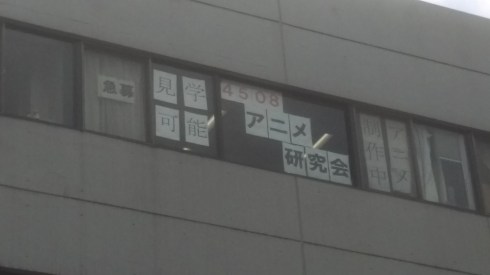
The real main event is the club area, where the Genshiken club itself would be located if it were real. The building is constructed in an interesting oval shape with an open court in the center, which gives it a distinct appearance. The windows of the two sides of the club building face each other, which is how the members of Genshiken set up their doujin traps to break down willpower in their new members, and how they first noticed Ogiue jumping out of the Manga Society window.

chuo-hallway

Upon entering the club building, it is immediately noticeable how well-worn it is as an environment for students. Remnants of flyers new and old adorn the walls, and produce a strong sense of history. Given my club experience back in undergraduate, I wish we had a place like this to share in the club experience. Though the building was fairly empty at the time, there were definitely signs of life. The first thing I heard was the wails of a death metal vocalist in training, which I assumed came from a Heavy Metal Research Society or something similar.

chuo-posters chuo-mangasociety

chuo-folkdanceclub

chuo-mangacreationclub

chuo-senkisociety

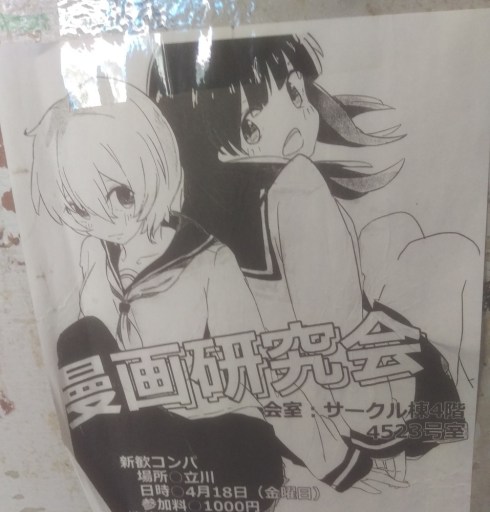
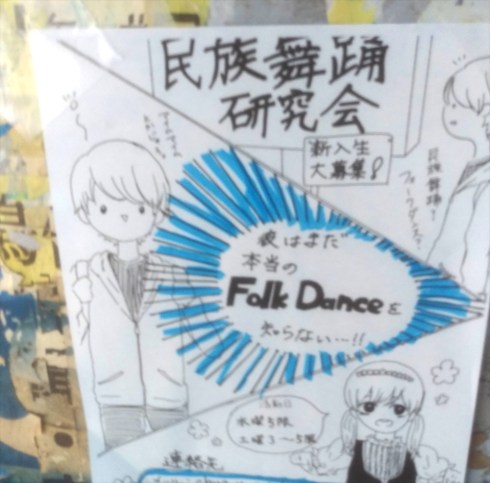
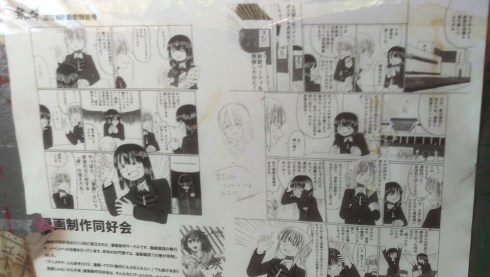
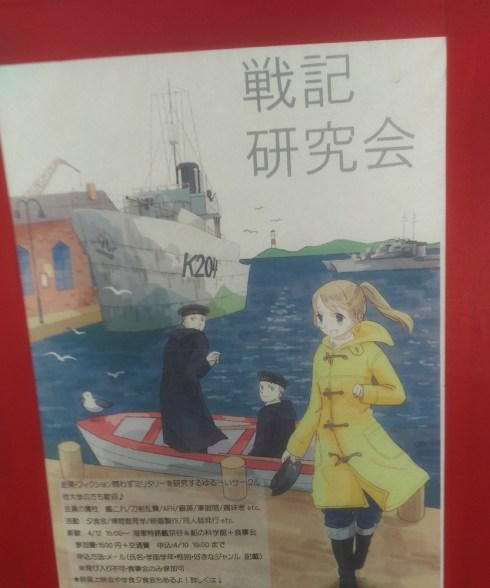
Looking at the flyers themselves showed just how spread out otaku interests could be. From what I could tell, the many clubs included a Animation Research Society, an Anime and Manga Research Society, a Manga Research Society, a Manga Creation Research Society, a Voice Actor Appreciation Society, an Idol Appreciation Society, and an Idol Games Research Society. Many clubs also utilize cute manga characters such as the Folk Dance Research Society and the War Chronicle Research Society. Signs advertising different circles for different doujin events could also be found throughout the building.

chuo-genshikendoor

I eventually arrived at the door where I believe Genshiken’s club room would be located. Though I anticipated some kind of signage to indicate this fact, there was nothing of the sort. The only things that could be found were scraps of paper taped to the wall, with no clear marker as to what club might currently be using the room.

Though I think this shows that Genshiken is nowhere near as big as, say, Love Live! or Lucky Star, and I do wish that it was known enough that some kind of signage would be present to point fans of the best manga series to its source material, it is perhaps for the best. The club building at Chuo University’s Tama Campus still has the feeling of truly being used and handed down by generations of students, which is now an even more solidified theme of Genshiken with Nidaime currently being published.

On a final note, back in 2005 when I originally visited Japan, I went to the Tama Zoo. located near the Tama Campus. Not long after I left Japan, Sasahara and Ogiue had their first date at a zoo. I strongly believe that the Tama Zoo is where they went, though I of course at the time could not know that it would become a pilgrimage site for Genshiken fans; I couldn’t predict the future, after all! However, I am taking the liberty to consider this a retroactive visit to an important Genshiken locale, partly because it makes me feel better.

If you liked this post, consider becoming a sponsor of Ogiue Maniax through Patreon. You can get rewards for higher pledges, including a chance to request topics for the blog.