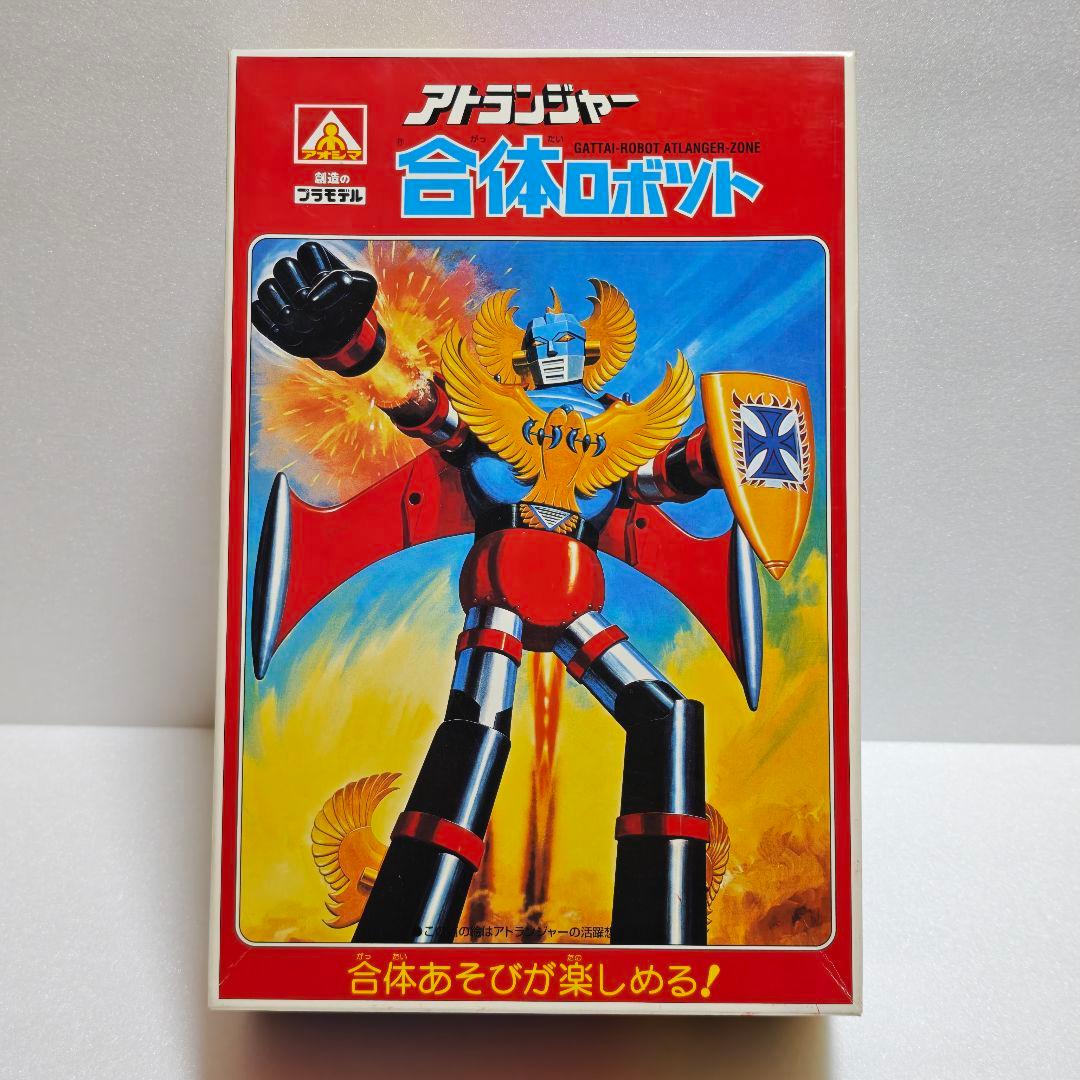
The 70s Super Robot That Didn’t Have an Anime: Gattai Robot Atlanger

Introduction 

When talking about the mecha genre, omitting the merchandise component often tells an incomplete story. Most shows are historically also toy commercials, and sometimes decisions can be traced to bottom lines more than creative choices by a director or writer. But what about a giant robot that, for the most part, was only ever a toy?

That’s the story of Gattai Robot Atlanger, a robot from the 1970s that didn’t have a cool and dramatic TV series to excite the imagination and endear itself to an audience, yet still managed to find success by looking cool, being affordable on a kid’s allowance, and having lots of playability. And my goal in writing this article is to provide an informative but not comprehensive look at Atlanger to help others who are curious.

Background

My interest in Atlanger (sometimes known as Atranger or Atlanjer) started a few years ago, though I don’t remember what was the catalyst that prompted me to look for more information. Nevertheless, I was intrigued by the idea that there exists a beloved hero from the golden age of super robots that often doesn’t get included because of an accompanying anime or tokusatsu title. However, when I tried to find English websites, articles, or anything that talked about it at length, I kept coming up short. 

So I decided to give it a try myself. I’m nowhere close to being an expert on Atlanger, but I wanted to have something out there for English readers. I also wasn’t a kid in 1970s Japan and I haven’t collected any of the toys or other merch, so everything I know is just second- or even third-hand knowledge. Hopefully, those who lived through it, or are perhaps bigger toy and model enthusiasts, can hopefully expand on what I have here.

Before I get into things, a few notes:

First, a special thanks to long-time robot fandom comrade VF5SS for pointing me towards a book released in Japan all about the company behind Atlanger: Outsider Plamodel Art -Aoshima Bunka Kyozai Co.’s Unusual Power of Imagination-. It’s been the biggest boon in this endeavor, though it means there are likely a number of biases that come from working mainly off of one resource.  I’m also grateful to the YouTube channels pokopokoMyTubeRobo-Labo J, and Arisa Honda for providing detailed looks at many of the products and releases I discuss below.

Second, a lot of name spellings below are unofficial and are my best guesses. 

And last, while the word “successful” is used in various resources, it’s not entirely clear what defines a success. Outsider Plamodel Art gives some sales numbers, but they’re for Aoshima as a whole, and not just Atlanger by itself. At least in terms of overall profit, the company made hundreds of millions of yen throughout the 1970s and 1980s.

Aoshima and the Birth of Atlanger

Aoshima Bunka Kyozai began in 1918 by selling model kits of airplanes, and the company still makes model vehicles today, including for the racing manga and anime series Initial D. The story of Atlanger’s specifically, however, begins in 1975. The company had previously released a Mach Baron toy, but that year saw something of a super robot drought, with supercars being the hot new thing. In this environment, the staff at Aoshima decided they would take matters into their own hands, and the third-generation company president, Aoshima Masao, went about personally designing their first original robot.

According to its lore, Atlanger is a robot originating from Atlantis 8,000 years ago. Made up of the alloy orihalcon discovered by the scientist Picard (Pikaru), it was created by the Atlantean prophet Palou (Paruu) to defend the Earth against an invasion from the Dark Planet Gloustar (Ankoku Sei Guroosutaa). Atlanger is actually assembled by combining four vehicles: the Grand Tiger, the Mighty Bird, the Red Clipper, and the Target Carrier. When fully formed, it strikes an impressive figure thanks to its Mazinger-like aesthetic and its golden yellow highlights (especially its bird-like chest plate), as well as its four major armaments. Those would be the Broken Cutter sword, the Miracle Defender shield, launching fists called Rocket Clippers, and the flight-granting Red Wings. 

This name and backstory were created after the robot was already designed, and some details appear to have changed or gotten fudged over time. For example, later versions would state that the pilots of Atlanger were fighting in the year 2500 CE after a second invasion from Gloustar. Aoshima would also introduce other allies like the robot Dryger; a Grendizer Spazer-style flying vehicle that can combine with Atlanger called the Tiger Shark; and the large battleship Gattai Kyokan Yamato, which has its own mecha on deck called Gattai Robot Musashi.

Atlanger within Mecha History 

The fact that Atlanger is composed of vehicles that join together cleanly might feel pretty run-of-the-mill today, but it was no small deal at the time. 1975 was after Getter Robo introduced its “smash ’em together” gattai sequences but before Combattler V and its detailed combination that could be replicated nicely in toy form. While the Atlantean robot’s design wasn’t as elegant as Combattler’s, it was a bridge between the more logic-defying approach of the former and the more realistic one of the latter. And unlike Aoshima’s Mach Baron (which had a similar feature but which didn’t reflect its presentation in the Super Robot Mach Baron TV show), this was “official.” Atlanger was also fairly novel in its concept, being a robot with a fantasy angle similar to Reideen—which coincidentally came out the same year and is also from a lost continent (Mu). 

This timing and relative originality is part of the reason Atlanger found a place in the toy market, but another major factor was price. Aoshima’s complete robots were sold in supermarkets and dagashi shops for 1,000 yen (around 2,115 yen adjusted for 2025 inflation), but individual vehicles were also available for 500 yen each. While kids might not be able to afford the whole thing, they could also settle for a part and maybe hope to get the rest down the line. The toys were also often cross-compatible, so you could take parts of one robot or vehicle and attach them to another. A battleship could have heads and arms sticking out of it. There were no rules, like seen in this absurdly and decidedly non-canon Ideon vehicle called the “Ideon Colossus.” 

One of the reasons why the Aoshima kits like Atlanger (and Mach Baron before it) were so relatively inexpensive is that they were made entirely of plastic, unlike the diecast metal toys seen elsewhere that were often twice as expensive. In this sense, they could also be considered precursors to the Gunpla craze, with Gundam predecessors like Zambot 3 and Daitarn 3 even getting Aoshima versions. Atlanger and pals were also much simpler to construct.

Aoshima would later create smaller kits more proportionally in line with Gundam model kits. Although Aoshima’s kits were slightly more expensive (400 yen vs. 300 yen), they were also larger and more colorful.

Yet, despite (or perhaps because of) Atlanger’s affordability, it wasn’t immune to economic hardship. One curious thing about the aforementioned Broken Cutter is that the sword is so unusually short that it’s practically a dagger. Japan was still feeling the effects of the 1973 oil crisis, and this was one way to save on manufacturing expenses.

Keeping Up with the Times, or At Least Trying 

Atlanger comes from a specific period of time, but as Aoshima’s flagship mecha, it has been updated in numerous ways over the decades.

When the company started making those smaller and vaguely Gunpla-esque kits through its Mini Gattai line, they introduced “New Atlanger” in 1981, a version with a more angular design and elements very reminiscent of Gundams and other real robots. 

Years later, they would release Hattenkei (Successor) Robo Atlanger, which looks a lot more like a 90s Sunrise/Takara Brave Robot. 

In 2012, Evolution Toy released a premium poseable figure in its Dynamite Action Series. One interesting feature of this toy is the fact that it comes with two versions of the Broken Cutter: a longer one and a shorter one. The former is more aesthetically pleasing and what you expect out of a super robot’s sword weapon. However, the latter has history, calling back to the original toy and its material circumstances. I find it funny and charming that the stubby Broken Cutter is so iconic for Atlanger that they bothered to include it as an accessory. 

Most recently, 2021 would see a new model kit called the ACKS Gattai Atlanger, and it again made a move to modernize. However, while it indeed sported a “modern super robot” aesthetic, the real feature that spoke to the times was the fact that it came with an additional figure: a cute and sexy anime girl named Hotaka Atori, who wears an outfit reminiscent of Atlanger. This girl figure could even attach some of the robot parts to become a mecha musume of sorts. 

Actually, There Is an Atlanger Anime, But…

I went through the majority of this article emphasizing that Atlanger-related narrative media wasn’t really a factor. That technically isn’t true, though there is an important caveat: It’s always been in service of the toys themselves to a degree that exceeds even the merchandise tie-ins of other mecha.

Aoshima’s products, including but not limited to Atlanger-related toys, were portrayed in manga form through the 1970s and 80s, first in children’s magazines by Shogakukan focused on individual elementary grade levels, and then in their own Aoshima Comics. However, these were primarily short promotional comics meant to show how cool the toys are, not unlike the pack-in comics that came with He-Man products in the US. 

Then, in 2011, Aoshima released a one-episode 15-minute OVA titled Gattai Robot Atlanger at Winter Comic Market 81. Its purpose was to celebrate Atlanger, but also to coincide with a figure release: the 2012 Evolution Toy version mentioned above. 

The plot sees Atlanger on the eve of a retirement ceremony after decades of service in the fight and eventual stalemate against the aliens from the Dark Planet. When a new attack occurs, it’s up to Asuka Ken (one of the old pilots of Atlanger) to jump in the cockpit once again. This time around, he’s joined by a group of young co-pilots who are skeptical about the effectiveness of this outdated machine, but the classic robot proves to still have what it takes in battle. At the climax, Atlanger showcases its ability to split into four vehicles, as well as its combined form with the Tiger Shark, to win the day—all while a theme song is performed by tokusatsu and anime music legend Kushida Akira (Gavan, Xabungle). Overall, the OVA is a love letter filled with nostalgia. There’s even a meta commercial for the old 1975 toy included!
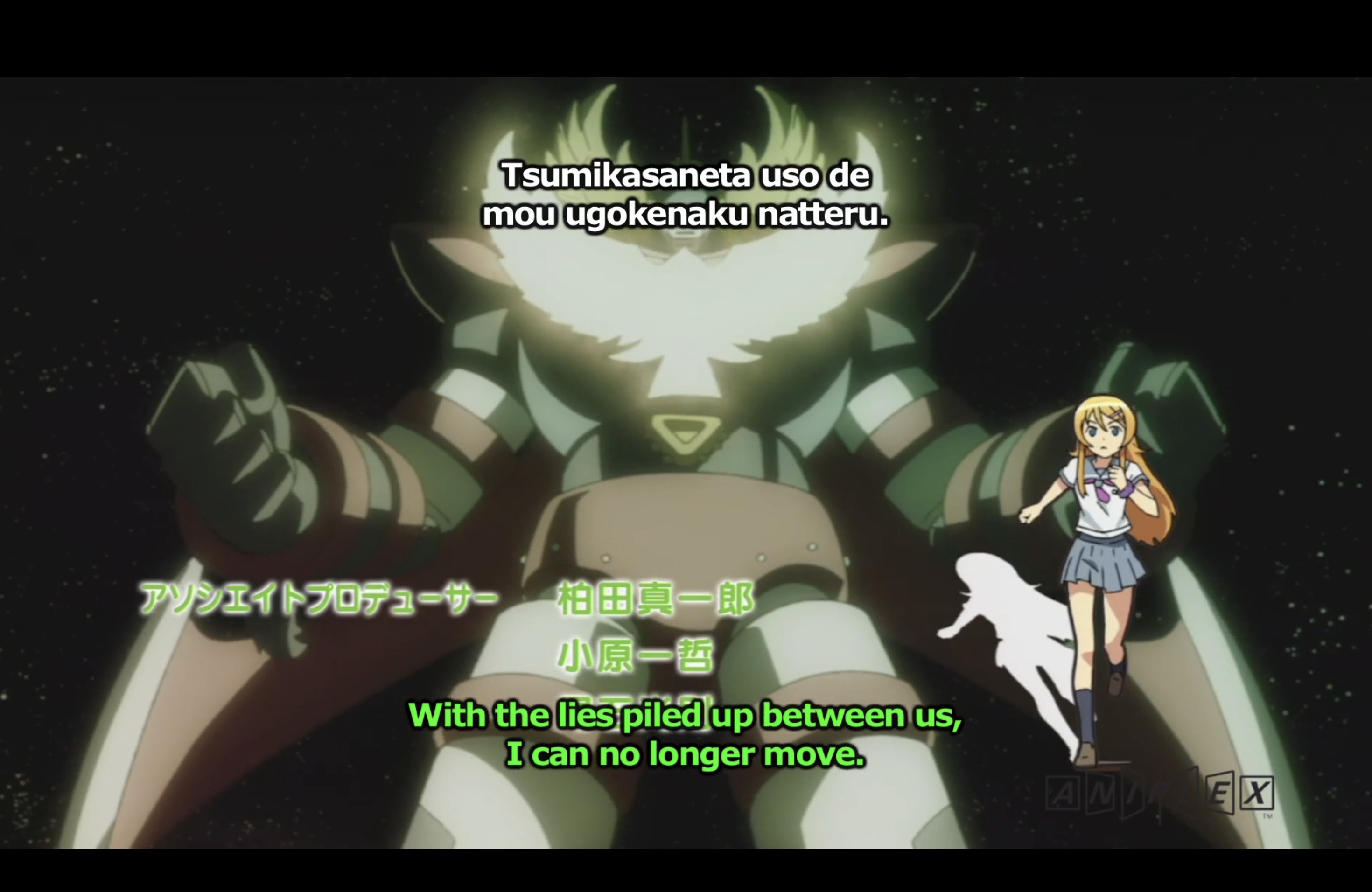
(Curiously, this wasn’t Atlanger’s first anime appearance. That would be, bizarrely enough, a very brief cameo in the opening of Episode 8 of Oreimo in 2010. The same studio, AIC, worked on both.)
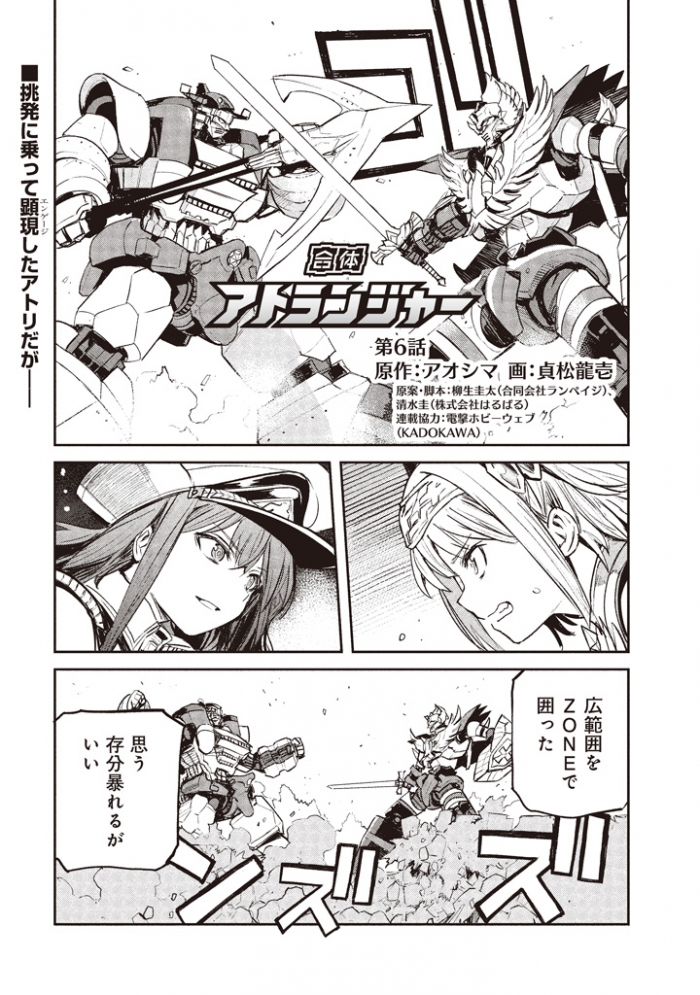
An Atlanger manga then debuted digitally in 2021. Gattai Atlanger was published on the Dengeki Hobby website, coinciding with the ACKS model kit release and featuring multiple cute moe girls. In this version, Atlanger was a sentient guardian deity robot who fought against a threat to humanity called Shadow (not Gloustar). After a cataclysmic battle, the AI for Atlanger was sent back across time and space, meeting schoolgirl Hotaka Atori, who becomes capable of transforming magical girl–style and even summoning Atlanger in super robot form. This manga ran for six chapters, with the ACKS kit version of Gattai Robot Musashi also showing up. 

In every case, the merch ends up being the true center of attention. Atlanger is simply a robot that happens to have an anime, rather than being an “anime robot.”

Concluding Thoughts

Gattai Robot Atlanger began as an affordable robot toy first and foremost, with any media tie-ins being ancillary at best, and somehow still found success. This spirit has persisted, defining the presence and memory of Atlanger over the course of four decades. 

Without a defining anime/manga image at its core, the aesthetics of Atlanger shifted from one iteration to the next. The 70s super robot toy made way for the 80s real robot–adjacent model kit, and each later release saw more and more changes that fluctuated based on how much they were trying to call back to the original and how much they were trying to modernize.

But even in terms of tapping into nostalgia, Atlanger hasn’t been able to get what most other mecha receive when they’re made into premium robot figures. High-quality lines like Soul of Chogokin, Masterpiece Transformers, Master Grade (or higher) Gunpla, and even Evolution Toy’s Dynamic Action Series all try to close the gap and find a compromise between the physical objects, the visual media, imagination, and nostalgia. Alternative designs like Hajime Katoki mobile suit variations or the Amakuni Kizin line might re-think or exaggerate certain elements or proportions while staying pretty close to this idea. But because “fidelity to the original” isn’t really a factor, there is no “platonic ideal” to aim for in this case. In a way, that’s perfect for Atlanger.

But eschewing faithfulness to source material isn’t telling the whole story. In an essay in Outside Plamodel Art, quintessential mecha designer Okawara Kunio (Gundam, Zambot 3, many others) talks about the degree to which the “combining” aspects of Aoshima’s licensed toys paid little attention to how a robot was portrayed in their own media. This wasn’t uncommon at the time (see the original Clover Gundam toys), but Okawara believes that while other companies were always trying to create new ideas and gimmicks for toys, Aoshima was more about providing  “teaching materials” that could foster learning in kids. To me, it sounds like Okawara is saying that Atlanger and company were like a halfway point between action figures and Legos, and thus occupied a unique position on store shelves. 

So while Atlanger won’t ever have the powerful politics of Mobile Suit Gundam, the iconic status of Mazinger Z, the dozens of variations of Super Sentai, or the challenging introspection of Evangelion, it does emphasize something special: a primary devotion to play, where “messages” and “themes” are secondary to imaginative, hands-on exploration by the young and the young at heart.

Kio Shimoku Twitter Highlights June 2023

This month, Kio talks a lot about Elden Ring and drawing smut.

Gundam manga artist Tokita Kouichi shares a photo of a first-era Gundam model kit. Kio reacts by saying that the instructions are from before they changed how joints work on Gunpla models.

Kio’s tortoise has been walking quickly around in their home, being hyper. Kio comments that outdoor spaces would be good for it, but the actual outdoor space available right now isn’t all that big, so this is the best he can do right now.

The reason it’s so hyper is because the warm summery weather is affected it as a cold-blooded creature.

Kio has started doing the rough manuscript for his next horny doujinshi.

Lazy tortoise.

Watching more How Do You Like Wednesday?

Kio visited actual sites from some How Do You Like Wednesday? Specials. The first tweet shows one of 12 bridges featured, and the second is Suigou Sawara Ayame Park.

Kio got to use a line from How Do You Like Wednesday? on someone who was unfamiliar with the show. 

Kio thanks a fan for sharing a Monthly Newtype video about manga in 2008, the height of one of the host’s teen years. Genshiken and Spotted Flower both get mentioned briefly. (See 23m45s in the video below.)

Kio later tweets about the video separately, commenting that he likes how writer and host Mafia Kajita says that Spotted Flower has had one hell of a development.

As Kio sees artists tweeting about whether they got into Comiket or not, he is working on his (unrelated) erotic doujinshi. He’s been drawing but also cutting content out, so even though he’s drawn 30 pages, it feels like only the beginning.

Art from the first anime’s DVD box set; this one is for Volume 2. Lots of comments about Kitagawa from fans.

Kio responds to a commenter pointing out Kitagawa approaching from the rear by saying that she would definitely not be walking lightly.

Kio also feels some sympathy for Kitagawa being called “Athlete’s Foot Senpai” by the fans.

“You! Genshiken!” is a common refrain in the Genshiken anime from Kitagawa.

Kio also comments to a person wishing for tons of Genshiken spin-offs that such a thing might’ve happened if Genshiken came out today.

A few comments about how good Ohno looks too.

Kio telling everyone who watched the Newtype special above that the newest Spotted Flower chapter is available in Rakuen magazine.

Kio says that the daughter in Spotted Flower being named Saki kind of solidifies it as being a different world from Genshiken.

Working on his new ero doujinshi seems to be an endless task. It includes things like fretting over which erotic sound effects to use, like “guchu” vs “gucho.”

The horny work has also gone from 50 pages to 100. (I sometimes think about how Ogiue’s workrate is probably a reference to Kio’s own.)

Kio also restored some pages that were previously cut, specifically about a mom getting embarrassed.

Kio’s tablet pen broke, and then when he got a new one, he realized it was the wrong kind.

While a new pen was in the mail, Kio broke out the PS5.

Kio has been playing Elden Ring and primarily sneaking around. He comments that despite appearances, he is in fact not playing the ninja game Tenchu.

Kio enjoyed Spider-Man: Across the Spider-Verse despite having not seen Into the Spider-Verse. He thanks a fan for sending a link to the prequel.

The new tablet pen arrived, but Kio is still playing Elden Ring.

Kio got picked for a live viewing of the newest How Do You Like Wednesday? DVD.

Tenchu is one of his favorite games from the PlayStation era, and the movement in Elden Ring reminds him a lot of it.

Kio, after getting his ass kicked by the boss Margit in Elden Ring, goes back to drawing ero manga. He likes how he can just skip bosses and explore elsewhere in an open world game.

Komaki from Kujibiki Unbalance on the back cover of Genshiken Volume 5.

Kio comments that his characters tend to have some plumpness to them.

Kio defeated Flying Dragon Agheel in Elden Ring with the help of a strategy site. He didn’t realize you had to fight it on horseback.

Kio got through 63 pages of his ero manga manuscript, but is setting it aside to get some of his professional work done. Apparently, the next part is the climax.

He also keeps adding hearts to the end of dialogue in his regular work out of habit due to spending all that time creating smut.

Kio Shimoku Twitter Highlights May 2023

Kio Shimoku goes back to fulfill one of his old unfinished projects in this month’s tweets.

Replying to manga creator Kusada (who just got done selling at the doujin event Comitia), Kio mentions that he’s also hesitant about posting URLs to his 18+ doujinshi on Twitter for fear of being shadowbanned.

Kio has decided to undertake a rather massive personal project. Back in 2010, Kio sold at Comiket a very rough manuscript of a genderswapped Episode I parody called Sister Wars. Now, he’s turning the entire thing into a fully illustrated doujinshi. (Note that I will be making a separate post about this at some point.)

One person shows a Sister Wars drawing Kio did, to which he replies, “Oh…? Did I draw that…?”

Another person talks about wanting to own Sister Wars, but Kio says that if it’s something where money needs to get involved, then it’ll cause issues, so his intent is to keep it free and online-only.

Kio says the whole thing is 350 pages, but it’s someone he always wanted to do, and he feels that it’ll be a waste if he doesn’t use the free time he has now to work on it. He put a lot of thought into it beyond the genderswap aspect too.

When asked if there will be a female Jar Jar, Kio replies that the Gungans have been cut entirely.

Another commenter recalls there being no Jar Jar, to which Kio responds that other characters from Episode II were also cut, as they seemed to mainly be there originally to just make things more confusing.

Kio realizes a line during the theme song for the variety show/special series How Do You Like Wednesday? comes from a spoof drama they did called Shikoku R-14. Kio originally thought it may have been unused footage.

Finishing the drawings of the Kujibiki Unbalance dating visual novel, here are Koyuki and Chihiro routes as reviewed by Kohsaka and Ohno, respectively.

Some old Genshiken-related drawings. Kio couldn’t remember when it was or what it was used for other than being part of some multi-creator piece, but a fan points out that it was part of an Afternoon 20th Anniversary illustration, as seen on the above library card.

And a Genshiken drawing used for a calendar.

High-quality version of the cover illustration for Genshiken Volume 5.

A fan comments that they remember not being able to read the doujinshi the Genshiken club made, to which Kio responds that most people couldn’t [because it was heavily mosaic’d as part of the joke].

One commenter says that Genshiken is the reason they decided to first attend Comiket, with Kio going “Hoho!”

A Genshiken drawing used for the cover of a 2004 issue of Monthly Afternoon with Saki helping to zip up Ohno’s Kuradoberi Jam cosplay, and Ogiue staring awkwardly in the background. Kio also responds positively to people talking about how great Ogiue is in this image, even saying that Ogiue looks like she’s seeing cosplay for the first time. He recalls wanting to draw a scene that doesn’t happen in the actual manga.

I actually found my old instructions for the Kotobukiya Ogiue figure, as well as the glasses for her, all of which I had thought I lost! Kio retweeted it.

“For those feeling that Sunday afternoon ennui.”

Kio saw the 2022 movie Bullet Train. Even though the depiction of Japan is not at all genuine, he was entertained nevertheless. In fact, he even liked the scene in the quiet car. He really wishes he saw the movie in the theater like he had originally planned.

Shocked to discover there’s gonna be a Bullet Train 2.

Kio bought Go Go! Ghostbusters Club by Kusada, and mentions wanting to see more of the assistant and wanting to find out why the club president would start a Ghostbusters Club when they’re afraid of ghosts. Kusada thanks Kio as well. (Note that Kio often retweets Kusada, which is not fully reflected in these tweet summary collections.)

“The train has air conditioning.”

Kio saw The Super Mario Bros. Movie, and thought it was great.

He also saw the movie Psycho-Pass: Providence. Though he didn’t remember a lot of what had happened prior, he felt this was a must-watch.

Kio watches and reacts to the DVD for the How Do You Like Wednesday? special, How Do You Like Japanese History If We Only Travel by Late-Night Bus for Three Nights Straight

(Without context, I can’t really properly summarize the reactions so I will leave it like this.)

Kio read Love Comedy Experiments Manga by Shima Toki and really liked the part where they have to stop right before climax (sundome). Shima thanks Kio as well. (Shima is another author who often gets retweeted by Kio; both them and Kusada all do manga for Rakuen, the magazine that runs Spotted Flower.)

Star Wars model kits.

Showing the Padawan hair braid.

While trying to figure out how to fix the warping in this kit part, Kio receives various pieces of advice ranging from pliers to dryers.

Kio answering a fan’s questions in English. No need for me to summarize!

I think this is Kio struggling with a model kit?

The art for a Genshiken DVD box set.

Kio building a 1/144 Gundam Aerial model kit. He added a bit of weathering effects to the paint job. It also felt like a long while since Kio worked on a Gundam kit.

Starting up on two more The Five Star Stories kits.

Kio Shimoku Twitter Highlights April 2023

Kio Shimoku announces the release of his first original 18+ doujinshi in his tweets this month.

Kio made these cool photo/drawing composites featuring his characters sitting on the manga they’re from.

Kio drew his first original 18+ doujinshi, called It’s All Your Fault, Sensei, which is now available on FANZA and DLSite under the circle name ぼたん堂. Content note: It is futanari on cis girl, and in terms of depictions of sex goes well beyond anything shown in Spotted Flower.

Those who have been following Kio’s Twitter account might recognize one of the girls, as he drew an earlier version of her around the New Years in a bunny outfit.

New side chapters of Spotted Flower on the Rakuen website.

Kio mentions that had he wanted to draw what happens between Sasahara and Ogiue on the couch, it would have been “something similar,” though the original tweet has been deleted, so it’s not clear if he’s referring to his doujinshi or the fact that Not-Sasahara and Not-Ogiue are in bed together in the side chapters. 

Video of Kio’s tortoise eating!

Kio learned the trick of modifying model kit boxes to make them smaller in order to store completed kits.

A doujinshi cover of Ritsuko from Genshiken Volume 1.

From Genshiken Volume 4, reviews of different routes in the Kujibiki Unbalance visual novel. Madarame reviewed Renko’s, Sasahara Ritsuko’s, Tanaka Izumi’s, Kugayama Kasumi’s. Kio agrees with a commenter that Ootani Ikue (voice of Pikachu) fit the character perfectly.

Good weather for the tortoise.

Kio sometimes finds model kits he forgot he bought, and then gets in the mood to want to build them.

According to Kio, drawing ero manga is sort of the opposite of regular manga, and that’s what made it tough for him when planning it. In regular stuff, his thought process is paneling -> text -> art, but for pornographic stuff it’s art -> text -> paneling.

Kio is shocked by the developments in Princess Principal: Crown Handler Part 3.

The tortoise stepped outside to rest, despite it not being all that sunny.

A rough manuscript of Kio’s 18+ doujinshi. It was originally 20 pages but became 50 in the final product. 

Kio recalls a special on Do You Like Wednesdays? called “Butt Rhambutan.” A commenter finds a screenshot of the title screen.

Kio shares a drawing he made of the school doctor from his doujinshi.

Kio tells everyone to visit his Pixiv via the link on his Twitter profile.

The doujinshi manuscript is also on Pixiv.

Kio brought his tortoise outside and checked to see how it was doing, only to find it flipped over. He went out himself and flipped the tortoise back.

Art of Tokino from Kujibiki Unbalance from Genshiken Volume 1. Kio mentions that he actually forgot to post this in previous months.

Kio Shimoku Twitter Highlights March 2023

March has been a big month for Kio, as Spotted Flower Volume 6 just came out today, the 31st! Not only that, but he’s been posting lots of high-quality art from the original Genshiken run, particularly about Kujibiki Unbalance

Spotted Flower Chapter 42 is out.

Front and back covers of Spotted Flower Volume 6. Like all volumes, the underjacket cover features the characters in their underwear, and you can just barely see it peeking through.

Kio stepped away for a brief moment, and in that time, his tortoise claimed Kio’s electric hot water bottle.

Clean version of the title page image for Genshiken Volume 3.

A commenter talks about how the line “You have a nose hair sticking out” comes to mind. Kio replies that such a line would be in a Saki route, and it would lead straight to a Bad Ending.

Kio has finished the manuscript for his first ero manga, clocking in at 50 pages.

A model kit of the Knight of Gold (K.O.G.) from The Five Star Stories that Kio built. When asked if the kit is lacking a Buster Launcher (a standard weapon in that universe), Kio replies that there actually aren’t many design specs for the K.O.G., and modelers had to use their imagination to make these kits. Likely, the K.O.G. doesn’t have a Buster Launcher because it would need a counterweight to balance it.

Unfortunately, the head portion might be warped a bit, and might need some epoxy to fix.

Genshiken Volume 3 extras: Artwork from Unbalance Fighter, a fictional Kujibiki Unbalance doujin fighting game. Kio notes that while Berserk Tokino is based on Berserk (Orochi) Iori from King of Fighters, all her attack names are based on NECO from the game Zero Divide.

The strategies as they’re written in the volume are inspired by the guides from the magazine Gamest.

Starting from here are “screenshots” from Unbalance Fighter. Here is Renko and Yamada vs. President (Ritsuko). Supposedly this isn’t an unblockable, but it is an incredibly strict high-low mixup.

Someone asks if this game will ever come out. Kio replies that if anyone out there in the world wants to make it happen, well…

Renko and Yamada vs. Izumi, demonstrating Renko’s super move “Giant Swing with Yamada.”

Komaki vs. President. According to Kio, not shown is the following moment where Ritsuko counters with a Bajiquan elbow attack and sends Komaki flying.

President vs. Shinobu-sensei. Ritsuko’s fighting style isn’t based on a fighting game character, but rather Jhons Lee from Air Master. Kio is an Air Master fan.

Vice President Kasumi vs. Izumi. Kasumi is using her “Mist” (i.e. “Kasumi”) super to move through projectiles.

Vice President vs. Tokino. This “screenshot” demonstrates Kasumi’s great reach and jump height.

And Spotted Flower Volume 6 is literally out by the time this blog post goes up.

Renko and Yamada vs. Lisa. This is an animation frame from Lisa’s “Coin Toss” attack. A commenter mentions that they used to play a lot of fighting games (like KoF ‘94) but not anymore. Seeing the fine details of Kio’s explanations takes him back, though. Kio responds that the depth of the characters is based on SNK, and that he owned a NEO-GEO. However, the animation impact is Capcom-esque.

Lisa’s super being performed on Kasumi. As mentioned in Volume 3, Kasumi loses a lot of her abilities if she gets grabbed as a way to be lore-accurate at the expense of game balance (Kasumi basically faints if she gets hugged). 

A commenter replies that in the modern era, broken stuff in fighting games gets patched, and this probably wouldn’t last. Kio replies that because Unbalance Fighter is a doujin game, it might have gotten a patch at some point.

President vs. Berserk Tokino (specifically, it’s “Tokino Drunk After Eating Komaki’s Brandy-Soaked Apple Cheesecake).

Berserk Tokino getting a perfect.

A Hellandeath mirror match. The character’s name is a reference to Fernandeath, the final boss of Waku Waku 7.

Kio got to use for the first time neodymium magnets to help stick together two model kit pieces that weren’t fitting right.

Kio reacting to the death of character designer and animator Kimura Takahiro. “What?! No…”

The title page image for Genshiken Chapter 18, which was later turned into a jigsaw puzzle. Kio tried to fill it with as much stuff as possible to make it good for a puzzle, but he feels like the results were iffy. One fan shows their completed puzzle, and as noted by another, it originally came in the Nov 2003 issue of Monthly Afternoon.

A fan recalls that the figure version of Ohno on the TV from Volume 3 was from a Wonder Festival. Kio replies that he has the entire series stored somewhere.

Kio’s Super Sasadango Machine plastic kit has arrived.

Kio is starting to build another kit: the Demi Trainer from Gundam: The Witch from Mercury.  It has three sets of runners and no polycaps. He’s also resisting the urge to start filing things down right away.

Kio’s progress on the Demi Trainer. His comments are basically marveling at the quality and advancements of current Gundam model kits, including the lack of need for polycaps (which used to be the standard for kits in the old days).

The completed kit!

This is the art used for store display for Spotted Flower Volume 6.

Kio learns about “hell puzzles,” jigsaw puzzles where there’s no picture to help. Your only hints are the shapes of the pieces themselves.

Copies of the cover jacket for Spotted Flower Volume 6.

“Sprites” and “backgrounds” for Unbalance Fighter. Someone in the replies comments that all this fine and detailed work shows how much love Kio put into it, and they’re glad to know that he had fun drawing it. Kio responds that “youth” was also a big factor.

Spotted Flower Volume 6 will have exclusive illustration cards at six different stores in Japan. (For the record, I plan on getting the one at Toranoana).

The illustration from the cover of Genshiken Volume 4. Someone in the replies says that her wearing a mask feels like this picture is happening in real time, and Kio says he has the same thought.

In response to a hashtag prompt, artist and character designer Kotobuki Tsukasa shows a drawing of his from 30 years ago: a manga titled Go Go! Our Marbet-san, from his Victory Gundam short story parody series. Kio mentions having this book all this time.

The back cover of Genshiken Volume 4. Kio wanted to draw Izumi from Kujibiki Unbalance in a cute manner.

The famous and long-running Akiba Blog wrote about Spotted Flower Volume 6!

Kio Shimoku Twitter Highlights February 2023

Ogiue from Genshiken sitting in front of a drawing desk in a rabbit-themed kimono with blank comic pages around her.

This month’s Kio Shimoku tweets are a real treat, as he’s been posting a bunch of old Genshiken art without any text, including at least one piece that’s never been released widely see above)! Genshiken was also trending on Japanese Twitter thanks to being spotlighted on a TV show!

On Duck King’s birthday, Kio mentions that he used to play Duck King. He could do Duck King’s command throws from jumping or out of a block, but never from standing.

In response to a Kim Kaphwan player, Kio refers to Kim as a “demon.” Another commenter replies with “Obenjo Baby!” (Toilet Baby)—a mishearing of one of Kim’s attacks. Kio jokingly says he never could figure out what Kim was saying, so he’ll accept this interpretation

Kio bought a Playstation 5 and Elden Ring despite a lack of free time. He also wants to try SEKIRO.

A long-time fan asks him to please not die without releasing any new works because he was playing nothing but Elden Ring. Kio says he’ll be careful. (Others in the thread do not mind encouraging him to play more.)

These three books just happened to arrive in the mail at the same time.

Yasuhiko Yoshikazu: My Back Pages – Cucuruz Doan’s Island

The IdeXabDun fan anthology, covering Ideon, Xabungle, and Dunbine.

M.S. Gundam Fan Club: Char’s Counterattack

Kio accidentally misplaced some parts for a model kit. Manga artist Ikuhana Niiro and Kio talk about how this sort of thing makes them grateful for the quality of Gundam kits.

Kio showing the parts he’s built. When asked if this is a garage kit, he says that it’s technically an action figure kit Kaiyodo used to sell, but it’s functionally a garage kit.

Kio found the missing neck parts from earlier: Turns out he accidentally threw them into the trash!

Kio built one of the kits from the box in this older tweet: Knight of Gold from The Five Star Stories. It turns out one of the parts that went missing earlier is actually for this.

Kio learns that Genshiken is going to be on the TV show Sukkiri the next week, on the segment “Hot Comic.” He’s excited about this, and naturally receives a bunch of congratulations from fans (too many to list in this post).

I will make an exception for this one person who says they love Ogiue and Sue. Kio responds “OgiSue! ……Or Sue/Ogi?”

Kio has been so busy with Spotted Flower and other things since the end of last year that he hasn’t had time to work on his ero manga project. Even though it’s the same amount of work that he had when doing a monthly series, it somehow feels unsustainable these days.

Speaking of, Spotted Flower Volume 6 will be on sale in Japan on March 31st!

Kio describes his ero manga as basically being a very ero manga–ey ero manga focused on the essentials.

Kio posts this old drawing of Madarame and Jin, to which someone responds that they wish they could see both Genshiken and Hashikko Ensemble continue. Kio thanks them, and says he’ll continue to work hard on Spotted Flower.

Kio attended Wonder Festival for the first time in a long time.

Another older drawing, but this time someone shows Kio that they have the hot-spring bathing Ohno bust that came free with an issue of Monthly Afternoon. Kio calls it a fine product.

Kio gives the disclaimer that Sue and the blonde who’s just like Sue in Spotted Flower are technically different characters, kinda sorta maybe.

An Ohno fan says they loved Ohno so much, they ended up with a girl like her, and that Kio is responsible for this “severe” crime. Kio jokingly says that’s unforgivable.

Repeat Saki drawing.

Someone started making a garage kit based on that Ohno drawing!

Genshiken on Sukkiri at 9:25!

A fan mentions that he used to be embarrassed to say the word eroge before Genshiken. Kio replies that they actually checked if there was any issue using it for the anime, and the response was “none at all.”

Kio finished watching Sukkiri. He jokingly equates hearing all the old lines he wrote 20 years ago to humiliation fetish play, and says he’s happy to see it regarded as a story not merely about otaku but about human beings.

Kio feels the depiction of otaku in media has changed since then.

Director Mizuhima Tsutomu (Girls und Panzer, Shirobako) mentions working as staff on the first Genshiken anime and the Kujibiki Unbalance stuff in there. He also worked on the Kujibiki Unbalance light novel as part of the group called “Yokote Michiko and Her Pleasant Companions.” (Yokote Michiko is a writer who’s worked on Genshiken.)

Kio thanks Director Mizushima, but is a bit confused, as Mizushima directed Genshiken Nidaime

Singer Atsumi Saori talks about how if it weren’t for Genshiken, she wouldn’t have wrote the ending theme for it, “Biidama.” She’s grateful to the series for that reason.

Kio thanks her back, and talks about how he likes the fact that the song contains both happiness and sadness.

Manga creator Shikizawa Kaya describes Genshiken as if actual real people were chiseled and dug out for it. Spotted Flower uses an even sharper chisel, and results in something very thrilling. Kio responds with gratitude.

A fan didn’t realize that the name Genshiken Nidaime is in part a reference to the second club president. I.e. Madarame. Kio responds that this was one thing he considered when naming the series.

The official account for a Japanese plastic wrap company shows off their Kio Shimoku manga collection.

​​https://twitter.com/kioshimoku1/status/1625689070939824128

A Japanese model, Ikeda Miyuki (aka Michopa-san) said something along the lines of it being weird to experience works from an era before the concept of otaku had proliferated in the culture. Kio agrees.

A fan remembers the character Saki and the way she’d misplace the emphasis on the word “anime.” Kio recalls that as well.

Kio thanks a new fan, who discovered Genshiken thanks to their favorite VTuber talking passionately about it.

Kio thanks the host of “Hot Comic” on Sukkiri, actor Okayama Amane, as well as the staff for talking about Genshiken.

He then promotes Spotted Flower by calling it “What-if after-story, or maybe a spin-off, or maybe a parallel world—even the author isn’t sure.” He then shows the above drawing of Not-Sue and Not-Ogi and says “Characters like these show up.”

Kio is salvaging HD versions of old drawings from Genshiken.

Middle school Ogiue from Genshiken Volume 8’s title page.

The cover of Genshiken Volume 8. Also, it turns out that my Twitter mutual and fellow Ogiue fan Noori actually went to the spot referenced in the cover! Kio thinks that’s probably the place?

Another old piece of art from 20 years ago, this time of Ohno. Kio is not a fan of his old coloring skills.

Genshiken Volume 1 title page.

Kio attended a Choraliers chorus club mini-concert.

Genshiken Volume 1. “It all started here.”

When asked if this is also when Kubijiki Unbalance started, Kio replies that it was largely undecided at that point.

A reader talks about how he first saw Narita-san Shinso-ji temple through Kio’s work, and Kio recalls having drawn it.

Genshiken Volume 2 title page.

Kio responds with a “Nice!” to someone telling him that they grew up wanting a senpai like Madarame, and eventually found one after they started working.

Kio responds to the death of manga legend Matsumoto Leiji. “A great achievement…My prayers…”

A Genshiken drawing of Saki and Ohno on a bench from a calendar. It might have also been included with a supplemental CD.

Genshiken Volume 2 cover.

Ritsuko from Kujibiki Unbalance in a school swimsuit, from the back cover of Genshiken Volume 2. When shown a sealed figure of the same character, Kio points out that the figure in question is based on an illustration by Yagumo Kengou (who illustrated the light novels, and was later in charge of the designs for the anime).

A commenter mentions to Kio that the Midnight Blissed version of Hydron (Nool) from Capcom Fighting Evolution is clearly based on Ritsuko from Kujibiki Unbalance, and not only does Kio know that, but the artist who made those drawings has also made a Ritsuko doujinshi.

Kio responds happily to someone who made a real-life version of Ritsuko’s oversized helmet

Kio responds to someone posting an autographed drawing of Sue cosplaying as Ritsuko they received with shock that it’s been 10 years.

Genshiken Chapter 5 title image. It was actually gray in the collected volume. And as one commenter points out, they’re doing a Vagrant Story cosplay.

An early version of a drawing that’ll be in Spotted Flower Volume 6.

Title image from Genshiken Chapter 9. Kio notices that the colors seem different on Twitter compared to how they actually are, and one commenter replies that it might be because they need to be converted from CMYK to RGB for viewing on screens. Kio realizes this is the case and proceeds to repost many of the earlier illustrations.

The color-corrected RGB versions.

Kio bought a plastic model of Super Sasadango Machine, a wrestler from the comedy wrestling company DDT. He’s a parody of Super Strong Machine from New Japan Pro-Wrestling.

A beautiful, lovely, amazing, wonderful drawing of Ogiue for a 2011 New Year’s card used by the Afternoon Editorial Department.

I love this so much, I had to show my gratitude. I know he does it for everyone, but I’m glad to get his thank-you.

Kio responding to another person posting a signed Ogiue drawing. (Can you feel my envy?)

Kujibiki Unbalance art from the inside covers of Genshiken Volume 2. These have not been seen in color before.

Kio explaining about how the first anime had a special addition with the Kujibiki Unbalance OVAs, and this is what led to Director Mizushima helming the TV series.

The cover art of Genshiken Volume 3. Kio also replies to a commenter talking about how he thinks the quality of the old Genshiken trading figures is really high for how small they are.

Kio Shimoku Twitter Highlights January 2023

In amazing news for people who run blogs called Ogiue Maniax, Kio actually retweeted one of my blog posts this month! He also drew a bunch of Year of the Rabbit bunny girl art and went to an Animage exhibit at the Ghibli Museum.

Kio’s 2022 included the end of Hashikko Ensemble at the beginning of the year, which resulted in him taking it fairly easily for the remainder. In the morning, he’d wake up and notice no dark circles under his eyes. But because he’s been doing stuff like practicing ero manga, he’s itching to get back into things.

Kio asks if it’s okay to draw “bunnies” (for the New Year), and then follows up with drawings of people in bunny outfits.

Unnamed bunny girl. (I wonder if she has any connection to the “ero manga” practice Kio’s been putting in.)

Not-Ohno from Spotted Flower. Not-Saki is saying, “Uh, mom with two kids.”

Mimi-sensei from Hashikko Ensemble.

Jin from Hashikko Ensemble.

Kio says that the Year of the Rabbit is cruel (This looks like a reference to all the bunny girl art).

Kio was into the Horizon in the Middle of Nowhere anime, but wasn’t interested in the original light novels at first. However, a few years ago he bought all of them and became a fan.

Someone replies that the books look intimidating even without opening them, to which Kio agrees. (Note that the Horizon novels get very lengthy, with my some exceeding 1,000 pages in Japanese.)

Something that appeals to Kio about Horizon is that it’s a world without any knowledge of its own history—an idea that has always appealed to him. He recalls the author being a huge history buff too, to the point that he read history books every day prior to starting Horizon. It’s something Kio wants to try but has never done.

He’s also done Horizon art for a comic anthology book, but nothing beyond that.

Kio wishes there was more Horizon anime, and his favorite character is Kimi. He admits to liking “cheat characters” as a rule.

Kio realizes that Spotted Flower Volume 6 has been announced.

Kio excitedly decided to go to a Ghibli Museum exhibit on Animage magazine from 1978 to the 1980s. 

Painting his The Five Star Stories model kit using the Citadel Colour system. Replies congratulates him for finishing, and he says Citadel is great for small details like this.

An inconsistency in terms of left and right armor. The KOG looks like it’s gonna be a pain to build as a result of such warping.

Kio getting overwhelmed with nostalgia seeing the Animage Ghibli Museum exhibit, pointing out that these are exactly the magazine issues he remembers from that time. (The Nausicaa manga started in Animage and the time Kio got into drawing because of Miyazaki, per his interview with Luis Cammy.)

A comparison between the initial paint job on the Empress vs. now.

Kio (and Rakuen magazine) retweeting one of my blog posts!!! “Hmm? Oh, what’s this?” Except he’s making a pun based on oya (parent) and oya (oh?) because it’s about Not-Keiko from Spotted Flower being a mom.

It might be obvious, but I’m very happy that this happened.

Kio bought the March 2023 issue of Weekly Model Graphix, which has a cover drawn by the manga artist Kusada. Kio mentions to Kusada that the magazine definitely stood out in the store.

After seeing a demonstration of how 3D graphics can be used to create background and reference images in manga, Kio laments that he’s gonna have to learn 3D if he wants to keep drawing alone.

Someone in the replies points out that Clip Studio Paint has 3D reference objects as part of the program, and Kio thanks him while saying that he’s only just started using ko it.

​​https://twitter.com/kioshimoku1/status/1619329291694768132

Kio talks about how great it would have been to be able to use 3DCG models for Genshiken, and for anything involving Tokyo Big Sight (the venue for Comic Market). That said, Kio has collected tons of reference photos of Big Sight, so he can draw the place relatively easily. 

Some fans talk about how they love Kio’s analog background work (with one person calling it his bathroom reading material as a compliment), and Kio thanks them for their compliments. Kio does enjoy drawing analog backgrounds, and he used to be able to draw Genshiken backgrounds from memory (but not anymore).

After reading a tweet from an anatomy account, Kio has to fix a drawing to make a stomach crease go above the belly button.

Kio’s tortoise! In the first photo, it just leapt.

Kio Shimoku Twitter Highlights December 2022

Kio reveals his love of soccer/football and pays tribute to Mizuki Ichiro in this month’s tweets.

“This is what makes soccer interesting!” (Japan beat Spain in the 2022 World Cup on December to advance out of the group stage.)

Kio declares that he won’t buy any new model kits until he gets through these The Five Star Stories kits. Some of them are actually 20 years old. 

Kio finally tries the word balloon tool in Clip Studio Paint. He thinks he’s slowly coming to understand it.

Kio got out his disk copier to make a copy of the 2018 World Cup games he recorded. He’s also impressed by Croatia’s hard-fought win in overtime over Japan. Kio wishes he could have seen Japan in Top 8, though.

Kio compares Croatia’s momentum in the World Cup to a steamroller that crushes every other country’s dreams.

Kio is building one of his The Five Star Stories/GothicMade kits, and shows the parts. When asked if it’s the Kaiserin, Kio answers that it’s the Empress.

Kio also bought paints just for it.

The assembled Empress, before painting.

Someone asks where he got a certain kit he showed back in January 2022, but Kio responds that it was a present from a reader and no longer available for purchase.

Kio responds to someone who has the same Empress kit from an old Wonder Festival, and how the knees make it hard to pose standing. However, someone else shows what they’ve managed to pull off, which impresses Kio. He also agrees with someone who finds that the way the pieces are arranged in the box is similar to Tamiya’s motorcycle model kits.

Food from the store that prepares it for Kio’s pet tortoise.

The age of the model kit shows in a bit of deterioration.

The tortoise eats! There’s a video too!

Kio pays his respects to legendary anime singer Mizuki Ichiro.

Kio talks to the store that gave him his tortoise food, and mentions how quickly his pet ate through it all.

He can’t find his Vallejo primer.

Still having trouble with the Empress’s legs. Also, there are some extra parts whose purpose he’s unsure of. 

Fully assembled without any paint or modifications.

Not a Kio tweet, but note that there are special web chapters of Spotted Flower out this month! They feature debut of Not-Sasahara’s sister, Not-Keiko.

In response to the Rakuen account saying, “We want to see you do this from the bottom of our hearts!” Kio writes, “This is editorial saying this to a manga artist.”

Kio was thinking about the career of Lionel Messi after Argentina’s 2022 World Cup victory all throughout lunch. He remembers a young Messi moving to Spain, contrasts with Maradona, how that World Cup trophy eluded him, and how we can finally call him history’s greatest footballer. (If it isn’t clear by now, Kio is definitely a fan of soccer/football).

As a follower points out, Kio wrote about Messi (written “Messhi” in Japanese) while eating a meal (meshi).

Kio discovered that he had a spray can of primer after all. He found it in a cardboard box.

More tortoise chow from the same company as before.

Tortoise activity area.

Kio mentions that he has a kit for the Engage from The Five Star Stories on the way.

Kio enjoyed the final episode of Bocchi the Rock!

The tortoise is enjoying the heat lamp, but seems to be sleeping even more than usual.

Kio tried to lightly brush the primer he sprayed, but brushing and spraying are just inherently different.

Kio wants to get better at both building plastic models and drawing ero manga, but doesn’t feel that he’s made much progress on either.

The Empress kit with the base coat fully painted.

He also bought these special glasses for plastic model building.

Using a Citadel Colour set with a brownish shade color.

Kio Shimoku Twitter Highlights November 2022

In contrast to last month, Kio Shimoku tweeted up a storm in November. The big topics: Royal Space Force: The Wings of Honneamise, drawing characters playing baseball, and…sketching out manuscripts for pornographic manga?!

Kio announcing that Chapter 41 of Spotted Flower is out. He mentions that the way the image is cropped unintentionally makes it look more improper than it actually is.

Kio finally got the chance to see the theatrical version of Royal Space Force: The Wings of Honnêamise (which had recently been playing again on the big screen). He didn’t even know about it back when it first released, though he’s seen the TV-broadcast version tens of times. In fact, he’s seen it on TV so much that seeing the scenes cut from that version added back in felt kind of weird. The full theatrical version adds a lot of nuance to places missing from the TV version, but Kio still has an affinity for that one, and he thinks they did a good job with the edits. He talks about how nowadays, it’s unusual for people to want to watch cut versions, but he still loves it nevertheless. He doesn’t have the TV version, and Wikipedia doesn’t even mention it at all. Kio wonders if anyone actually remembers it.

A follower also talks about the cut TV version of Castle of Cagliostro, which Kio also has a recollection of. Others chime in that they have seen Royal Space Force on TV, including one person who remembers Anno Hideaki providing commentary on it for an airing on the program Friday Roadshow (which airs movies on TV). Someone else chimes in that they can remember Anno explaining a few things. Namely, how good the scene is where Marty says 「誰かが必要としているからここにいられると思っている」[If anyone can provide a translation with proper context, that’d be a big help], and how the TV version uses monoaural sound, so it couldn’t replicate everything, like the way the sound changes as they go up into space. 

“I think I’m here only because somebody needs me.”

The saga continues: Watanabe Shigeru, the editor of the TV version of Royal Space Force actually replied to Kio! In a rare instance, we get to see Kio fanboying over someone. Watanabe mentions that while he’s an anime producer now, back then he was a mere tradesman. Kio asks if there’s a betamax version, but Watanabe says there isn’t, and the TV version was basically a “necessary evi.”

Watanabe also recalls that they had Okada Toshio and Yamaga Hiroyuki (also of Gainax fame) for the TV broadcast as well.

Someone else mentions that there’s a scene with the characters drinking milk that was included in the laserdisc release but according to Kio, it wasn’t in the theatrical re-release. Watanabe chimes in again and explains that this extra scene wasn’t shot on 35 millimeter so it didn’t look good when upscaled. However, it’s included with the blu-ray as an extra.

As a follow-up to last month’s trip to the batting center, Kio has been drawing Hashikko Ensemble characters playing baseball. There’s also some discussion about the characters and how 

As an aside, my friend Diogo Prado (and a Patreon member of Ogiue Maniax) got retweeted by Kio!

A fan apologizes for discovering Hashikko Ensemble too late, and asks if there’ll be a sequel (like Genshiken Nidaime). Kio says not to sweat it, and that everyone discovers works at their own timing.

Kio also went to see a new theatrical run of GOTHICMADE. Much of the story has also been told through the manga, but the last part of the film has still yet to be adapted. 

Someone replies to Kio’s preview of Spotted Flower Chapter 41 by saying the meme line, “But he’s a guy” from Stein’s;Gate. Kio replies “They’re both,” to which the replier apologizes. However, while the replier assumed he meant that Not-Kohsaka (depicted there dressed like Not-Hato) was nonbinary, what Kio meant was that both characters are guys.

(I guess this answers the gender identity of Not-Hato).

Kio reacts to the official Twitter account of Kumamoto Castle tweeting a saying popular among idol fans and the like: You’ll stan the ones you stan when you stan (the actual word being oshi). It’s basically saying you’ll know who’s your favorite because it’ll come out from you.

The batting center is a 30-minute walk for Kio, but that walk is a good way to sober up, apparently.

Kio went to see Royal Space Force in theaters again! This time, he noticed a sound similar to a baby crying that had never registered to him before while watching.

Kio and another talking about how they can’t stop humming the music from Royal Air Force

Kio’s reaction to a mecha from The Five Star Stories: “Oh? Whoaaa! Magnapalace!”

Kio mentions Ueda Masashi as one of the all-time greats of 4-panel manga, and writes about how even these simple characters could be portrayed as having unseen “adult” sides to them. He even used Ueda’s work as a basis for a scene between Not-Ohno and Not-Tanaka in Spotted Flower Volume 5.

Kio saw Shinkai Makoto’s new film, Suzume no Tojimari.

Sometimes, Kio sketches out ero manga manuscripts, but finds striking the right balance between elements difficult. Moreover, he feels that the order of priority is different for ero manga: Instead of paneling -> text ->  images, it’s the other way around. After all, you can’t tell if something is gonna be hot just from a barebones layout. (Note that Kio had previously praised ero manga artists for their talents—this seems to be a follow-up to the idea that it’s not that easy.)

When asked what he’s drawing, Kio says it’s new and original characters. He’s also entertaining the notion of quietly putting something on the adult website Fanza.

Related to the above tweets, Kio struggled with the most recent manuscript for Spotted Flower.

Kio went on vacation for a few days, taking a break from Twitter.

Kio watched the first half of the Japan vs. Germany World Cup 2022 match and went to sleep early assuming it was all over for Japan, only to wake up to headlines about the upset.

He planned to watch the second half once he got home, wondering if player Ito Junya went wild (which Kio later confirmed).

After retweeting a bunch of plastic-model-related tweets, Kio says he really wants to build plastic models, and remarks about the “big wave” of model-building hitting after all this time. Author Ikuhana Niiro encourages him to do so, to which Kio responds by wondering whether he should finally open all the cardboard boxes that hold his model kits.

The Divide of Time, Space, and Imagination: A Look At the Concept of Nostalgic Merchandise

A few days ago, when I wrote about the direction giant robot designs have taken over the years, I received a comment pointing out to me the “Master Grade RX-78-2 Gundam 2.0,” which was a new model kit version of the iconic original Gundam, only designed to more closely resemble the mobile suit as it appeared in anime. When compared to previous RX-78-2 model kits, this means less details, different proportions, and a more “cartoonish” look overall.

Interested in how hobbyists took to this version of the classic Gundam, I looked at reviews of the kit. Any time its aesthetics were criticized, it was largely because the model was not as detailed as they liked. Being “anime accurate” was not a positive trait, and they would point out other kits, notably the “One Year War” version with a higher level of grittiness and detail, as a preferred alternative. In response to all this, I made my own comment, which was to point out that these fans appeared to be saying, “I don’t want the RX-78-2 to resemble the robot in the show, I want it to resemble the robot in my imagination!”

Then today, I saw the Toy Fair 2010 GI Joe toys. These action figures were designed based on the 80s version of GI Joe, the 3 inch figures instead of the giant doll-like ones. The only thing is, they are much more detailed and gritty than the 80s toys they were based on! It was also made clear that these toys are there partially for GI Joe collectors, adult men who look back fondly on their childhood toys, and I think it is all the more apparent that, like the One Year War RX-78-2, these GI Joes are trying to fill the gap between the actual toy and the collectors’ memories of what the toys were like as children, memories fueled by the power of childhood imagination. And there, in the attempts to make up for the loss of childhood creativity and thinking with skilled craftsmanship, lies the foundation of the nostalgic toy.

That is not to say of course that adults are incapable of having strong imaginations. Fiction as a whole would be incredibly boring if that were the case. Nor am I lumping everyone in as wanting more “realism” in their toys, as the original commenter I referred to above was all in favor of more toys like the MG RX-78-2 2.0. Instead, the issue is simply that the mind of an adult is simply different from the mind of a child. I am reminded of this fact whenever I look at drawings from my childhood and compare them to what I have done as an adult or even as a teenager.

When I previously touched on the subject of childhood imagination as it applies to animation, I talked about how children tend to ignore significant errors in animation and make up for these deficiencies through their imagination. But now when looking at a similar topic, that of toys and model kits, I realize that it’s not just a matter of childhood imagination “filling in the gaps,” but that childhood imagination, unlike adult imagination, cares little about “structure.”

If you look at the Soul of Chogokin series of toys, you will find everything I’ve been talking about, with its more solid and realistic redesigns of classic mecha targeted towards adult buyers, but if you want to really see what I mean by adults caring about structure, take a look not at the Soul of Chogokin line, but the original-style Chogokin toys, or rather, reviews of them by collectors. You will find that the way the reviewers talk about the features of the toy, about what is good and what is bad, is almost inevitably a very “adult-minded” way of looking at the toy, giving words to topics such as “points of articulation” and what-not. Even when referring to the nostalgia factor this happens, whether the topic is Chogokin, Jumbo Machinders, or Generation 1 Transformers.

It’s common knowledge among collectors, but the first generation of Mobile Suit Gundam toys, resembling the “neat gadgets”-style Chogokin toys that preceded it, were a marketing failure, as the toys did not really match up with what was on the screen. It really wasn’t until the concept of the giant robot “model kit” revolutionized giant robot figures that Gundam merchandise became the monster that it still is today, and people claim that this has to do with the fact that the audience for Gundam was skewing older than giant robot shows had in the past. I may be jumping the gun here, but what it looks like to me is that the older audience of younger and older teens were looking for more structure and accuracy in their toys, and that is what they got. As soon as Gundam hit that older demographic, I believe the Chogokin-style toys were dealt a serious blow, even putting aside the shoddy designs and inaccuracies of the original toyline. I think that the attitudes towards the 2.0 MG RX-78-2 are actually an extension of this over time and international waters.

Actually, more than even Chogokin reviews, if you really, really want to see the difference between child and adult mindsets and creativity, take a look at the webcomic Axe Cop. Promoted as being written by a 5 year old and drawn by his 29 year old brother, the artist admits to the story not being truly written by his significantly younger sibling, but that he asks the young child questions about the setting and events that occur, and then builds a story around it. The adult adds structure to the boundless imagination of the child, structure that is necessary to keep it all together, even if it doesn’t make sense entirely.

The child’s imagination says, “This is what happens.”

The adult’s imagination asks, “Why?”

But when it comes to reality, the child and adult’s responses reverse.