Last year, I forgot about my anniversary for about a month. Always looking to improve Ogiue Maniax, I decided that it wasn’t enough, so this time I’ve over a month and a half late for the annual retrospective.
Whoops!
Eight years sounds kind of crazy for anime blog, doesn’t it? A lot of old friends and comrades have set aside their keyboards while others keep marching on, but of course that doesn’t mean anything about their passion for their hobbies. Blogs are just one way of doing things, and it’s the format I’ve come to prefer the most. It’s just informal enough to feel comfortable, while also providing plenty of space to get serious if need be.
Though I think it a bit obvious, by far the biggest change to Ogiue Maniax this past year was the launch of my Patreon. Thanks to my patrons, but also everyone who reads and shares and even just thinks about what I have to say, I’ve managed to make a decent chunk of change from blogging. It’s not a full-time career by any means, but I think it shows that good written content is appreciated for the ideas contained within, even if the tendency in “content creation” is often towards simpler things like lists. Just the fact that my longer posts garner greater attention gives me a little more faith in the world.
I’ve been looking at the idea of being a “content creator” recently, and one thing that’s crystal clear is that written content, especially given how much time and effort is required of it, is often viewed as a losing battle. Video and podcasts are where it’s at. Of course, it’s more than possible to create quality work on YouTube or wherever, and the convenience is something even I take advantage of as a viewer, so I’m not knocking people who focus their energies in that direction. Rather, in light of this, I actually feel pretty good that there are so many people who think my writing is worth something. While I don’t need a confidence boost to keep writing, it at least is comforting to know that the energy I’ve put into Ogiue Maniax can be felt by so many.
Whenever I think of Christmas and anime, my mind immediately goes to Initial D: Third Stage. Does that count as a Christmas anime? I’m going to say yes, and try to make it official.
Here are this month’s Patreon supporters. As always, I’m happy that they have my back.
General:
Ko Ransom
Alex
Anonymous
Yoshitake Rika fans:
Elliot Page
Hato Kenjirou fans:
Elizabeth
Yajima Mirei fans:
Machi-Kurada
We even have a new Yajima fan aboard! Seeing as how the character’s been developing in Genshiken as of late, I wonder if more will join.
It’s a pretty subtle change, but one thing I’ve been trying to do over the past month is put out content three times a week. I used to do at least two posts a week, with a Fujoshi File every other week, but I felt that it wasn’t quite enough.
Speaking of the Fujoshi Files, at the moment they’re on a brief hiatus as I use that time to indulge in my love of Super Smash Bros. After the recent announcement that Cloud Strife is going to be a playable character (!), I’ve gone back to an old love of mine and have been designing movesets for what-if Smash characters. So far I’ve done Pitfall Harry from Pitfall and Zoma from Dragon Quest III, and there will be at least a couple more on the way.
I have more reviews this month, though as always they toe the line between review and analysis. Of course, there’s the requisite Genshiken chapter, and if you’re a Sue fan this is the one for you. I also wrote something about the use of kanji and words in Aquarion Logos, and then there’s my review of the new Digimon anime. If you haven’t heard about that last one, it’s actually a sequel to the original, with all of your favorite characters in high school. If you like giant robots, I also appeared on the Cockpit podcast to talk about Gaogaigar. I even made a new 1 Minute Review to celebrate the release of Girls und Panzer der Film!
As with every month, if you’re interested in requesting topics for me, it’s a reward for those who pledge $30+ on my Patreon. I of course don’t mind coming up with my own topics (and in many ways it’s actually kind of easier), but I do miss being “forced” to look at something I might not have otherwise. In the meantime I’ve replaced the Ogiue Maniax Skype group reward at $2.00 with a new feature: I will include a link to whatever you want (within reason) in a special section in my sidebar. Remember, if you’re pledging already, you already have access to this, so send those requests my way!
The last thing I’d like to talk about is the whole social media thing. In the past, I’ve tried to make it so that each site I used had a different specialty. My tumblr, for example, was mainly for video clips. However, I realized that many people only look at their favorite social media platforms and rarely venture outside of them. That’s why I’ve been getting a bit more redundant with posts across different sites, to reach more people. My question is, are you someone who sticks to just one, or someone who sees different value in Twitter, tumblr, Facebook, etc.? I’d like to have a better idea of how to interact with my readers, so that I can foster interesting or even delightfully frivolous discussion.
The past month has been quite fun for Ogiue Maniax. First off though, I’d like to thank the following Patreon supporters for believing in me and my writing:
General:
Ko Ransom
Alex
otarsus
Anonymous
Yoshitake Rika fans:
Elliot Page
Hato Kenjirou fans:
Elizabeth
If you haven’t checked out what I’ve written over the past month, I think I’ve put out some pretty good work this time around. As part of New York Comic Con I reviewed Boruto: Naruto the Movie, which is the bookend to the long and popular Naruto franchise. I also finally got around to talking more about my current favorite food manga, Mogusa-san, and I make a pretty convincing argument as to who’s the best moe character of 2015.
My Genshiken chapter review this month felt somewhat heavier than my previous ones, but I think it makes a good partner with my most recent post, which covers my own thoughts on the recent harassment issue in the Steven Universe fandom.
No sponsored posts this time around, but if you’re interested in having me tackle a specific topic of your choice, I take requests from sponsors who have pledged $30+ on my Patreon.I’m trying a few new things with Ogiue Maniax, as while I love the blog I do wonder if it’s grown stagnant and unwieldy in certain respects. First, while many of my articles are fairly long, I’ve started including some shorter posts as well. Back before 2010, when I would write one post per day, my output was more about getting ideas out there and making them short and sweet. Although I think longer posts have their merit in that they allow for more in-depth explorations of ideas and so I would never do away with them, I am wondering if shorter posts can reach people in a different way.
Second, I’m dipping my toe in YouTube. I do not believe I will ever fully get into the YouTube game, but I was thinking of it as a different medium to get my thoughts across. Today I’ve released the first in what could be a series of “1-Minute Reviews,” based on my past reviews on the blog. The idea, as implied, is that I give my take on an anime in 60 seconds or less.
Third, I started up a Facebook page for Ogiue Maniax. I’m currently not entirely sure what its use is, but I’m open to suggestions.Finally, I’ve created an Ogiue Maniax Skype Group for any Patreon supporter who contributes $2 or more. I’m curious to see if anyone would be interested in chatting with me or other readers directly. I’m still unsure if I would do video chat, but voice chat is something I’m open to. Just contact me through Patreon with your Skype name and I will add you to the group.
So tell me what you think!
September I feel was kind of an exciting month, and I think I’ve put out some of my best articles in a while. Chief among them are my review of Love Live! The School Idol Movie and a monthly sponsored Patreon post, “The Rise and Fall of Saimoe.” In fact, even though it’s against the rules of my Patreon, I want to extend my gratitutde to Johnny Trovato, who while no longer a patron was the first to take me up on my offer to write posts based on topics chosen by my patrons. Thanks, Johnny.
Over the past month I’ve introduced a new type of pledge, where you can pledge a certain amount based on your favorite Genshiken character. In all honesty it’s just an excuse for me to make bad puns, so that’s why the amounts are all over the place. Of course, this also means that there are now different categories for sponsor shout-outs.
I haven’t gotten to all of the Genshiken characters yet, but if there’s one that you really want to see (Kaminaga? The younger Yoshitake? Ohno?), then speak up! It’ll be interesting to see which characters are still the fan favorites after all this time.
As for what’s on the horizon, New York Comic Con is this week, and I’ll be attending all 4 days! Of course I’ll have a con report for everyone to read, and you’ll be able to (most likely) catch me at a number of panels. Of course, given the hectic nature of NYCC, there’s no telling for sure!
This post was sponsored by Johnny Trovato. If you’re interested in submitting topics for the blog, or just like my writing and want to be a patron of Ogiue Maniax, check out my Patreon.
—
Who is the greatest moe anime character?
That’s the question that the Saimoe (literally “Most Moe”) Tournament set out to answer, and its long history of competitions, dating back to 2002, are a reflection of not so much the state of anime fandom over the past 13 years, but rather how internet anime fandom has grown, changed, and even arguably moved on past the concept of moe in both the US and Japan.
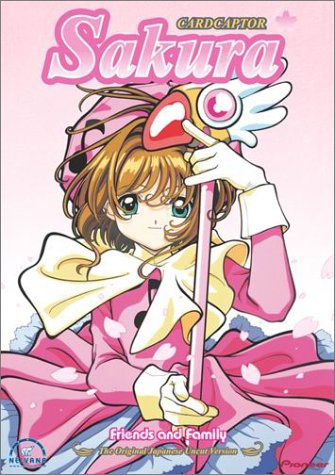
If there’s one fact I always find interesting about Saimoe, it’s that its original winner was Kinomoto Sakura of Cardcaptor Sakura. There’s something just so appropriate about her being the first champion, given how beloved she is among anime fans of all stripes. However, Saimoe is also often a snapshot, a look into the zeitgeist of at least a corner of anime fandom, and in that same tournament it might come as no surprise that its silver medalist was Osaka from Azumanga Daioh. These days Azumanga Daioh is viewed as a relic of the Early 2000s, an excellent show for sure, but not as timeless as its fervent fans (of which I am included) would have hoped for.
Other than Sakura, who has stood the test of time as Saimoe champions? It’s okay if you don’t remember who has won Saimoe before, as anime fandom as a whole has a tendency to burn briefly yet passionately for its favorite characters, where in the moment it seems as if her fame will last forever, the sheer memetic popularity of a Suiseiseki (Rozen Maiden) or a Takamachi Nanoha (Magical Girl Lyrical Nanoha) blinding fans from seeing the long-term. That’s not to say that characters such as Aisaka Taiga (Toradora!) and Rosemary Applefield (Ashita no Nadja) are forgettable or bad, but that the otaku mind can be a fickle thing.
Among these titles, it seems as if Madoka Magica‘s popularity still endures, giving a kind of strength to previous winners Madoka and Mami, but one factor that also has to be considered is that the numbers for Saimoe participation rose rapidly in the mid-2000s, and then declined sharply afterwards. To give an idea, for final-round votes, Sakura won in 2002 with 580, Suiseiseki won in 2006 with 2306, and most recently Saki and Nodoka from Saki tied each other at 187. This can be explained by the fact that the mid-2000s were when Saimoe truly opened up to international participation, but also that the idea of “moe” no longer carries as much subcultural weight.
This is perhaps best exemplified by that Suiseiseki victory. It was during that time that fervent fans on 4chan and other communities figured out how to vote for their favorite characters, and whether they were genuinely voting for who they believed was “most moe,” were backing their favorite characters, were trying to push a running gag forward, or they wanted to rally behind their chosen girl, Suiseiseki embodied all three. She was the center of the DESU DESU DESU meme, Rozen Maiden was generally popular among hardcore fans, and her character does have distinguishable moe qualities overall. The heyday of Saimoe was indeed also the heyday of 4chan, and while it’s questionable as to whether Saimoe had ever been more than a popularity contest, when looking at the “rise and fall” of Saimoe, so to speak, what comes out of the other side isn’t so much as a return to the idea of “moe” from the earlier days when Cardcaptor Sakura won it all, but something new and different that I can’t quite fully describe.
Let’s compare the winners of Saimoe 2012 and 2014, all of whom come from the anime series Saki. 2012’s champion was Onjouji Toki, a character who is strictly moe by all conceptions of the often-nebulous term. Toki is a sickly girl whose ability to peer into the future to win at mahjong set her up as a tragic figure that overshadowed even the protagonists of her story (the ending theme to Saki: Episode of Side A, “Futuristic Player,” is actually a reference to Toki). It’s hard to describe her as anything but “moe.” In contrast, while there are cutely tragic elements to Saki and Nodoka, their dual-victory in Saimoe carries a very different set of meanings. First, it can’t be ignored that Saki dominated the overall bracket, to the extent that it could be argued that the fans who care most these days about “moe” overlap significantly with Saki fans. Second, and I think this is more important, Saki has a major yuri component, and I believe that is the true meaning behind the tie. In fact, Toki, Mami, and Madoka also all attract yuri fanbases.
Yuri to some extent has been a factor in people’s views of characters as moe (see Nanoha and Fate’s popularity), but the role that the cute girl plays in the aspirations and fantasies of anime fandom seem to have changed. Moe as an idea was arguably overwhelming and overpowering at its height, but now it seemingly has begun to secede, and in its place is a network of interests of which yuri is a part. I put it that way because I don’t think “yuri” supplanted “moe” as if that would even be possible. After all, yuri as a vocabulary word predates the solidification of moe by at least a couple of decades, so if anything moe was the young upstart terminology. Rather, moe may have gradually melded itself back into the fabric of anime’s iconic characters, to the extent that trying to ask who is the “moest” has become a more difficult and less directly appealing proposition overall.
As September begins, I feel as if something is going to happening. I’ve been considering promoting the blog more than I have in the past, and really thinking about if I should make more efforts to have my posts reach people rather than writing them and waiting for readers to show up. I don’t want to push Ogiue Maniax at people who don’t care, but I do think that there are folks who might be interested in my blog, but who could very well know nothing about it. After all, I still get messages from people discovering Ogiue Maniax, albeit at a slower pace than what used to happen when anime blogging was a bigger thing in general.
I had one other new sponsor who just barely missed the cut-off point for this month, but don’t worry (and you know who you are!). You’ll see your name next month.
This month’s sponsored posts covered food anime (though it turned more into a post about the Food Network’s anime-like qualities), and Senki Zesshou Symphogear. I had a lot of fun writing both, and I’m grateful that my sponsors enjoy the fact that I will sometimes twist their topics to suit my own particular interests and way of thinking. I feel appreciated, and I’m always happy to see others interested in my thoughts on anime, manga, and other topics.
I had a kind of crazy idea for the Patreon just the other day, and I don’t know how to properly reward people if they do this, but I wanted to make it possible to pledge certain amounts that also indicate your favorite Genshiken characters, based on Japanese wordplay. It would go something like this:
$10.00 for Ogiue (The Chi in Chika means “1000” and 1000 yen is about $10.00. I would say $1000 but I’m being realistic here)
$8.00 for Madarame (The Ha in Harunobu = 8)
$3.38 for Sasahara (Sa = 3, Ha = 8, thus $3.38)
$8.10 for Hato (Ha = 8, To = 10)
$4.40 for Yoshitake (4 = Yo, Shi = 4)
$4.37 for Sue (Susanna, Su = 4 (in Chinese and also Japanese mahjong), San/Zan = 3, Na = 7)
And so on.
What do you think of this idea? Would you be interested in pledging based on your favorite Genshiken character? Is this just another nefarious way for me to add more bad puns to the world?
This post was sponsored by Johnny Trovato. If you’re interested in submitting topics for the blog, or just like my writing and want to support Ogiue Maniax, check out my Patreon.
—
When first approaching the anime Senki Zesshou Symphogear, my view of the show was colored by one experience in particular. A few years ago, I was on the Veef Show to discuss AKB0048, another show from Studio Satelight that also involved singing, battling idols in a science fiction setting (no surprise coming from the studio founded by the creator of Macross). There, Veef informed me that Symphogear was essentially a show made by a relatively inexperienced staff, and it showed. So, I went in with the impression that it’d probably look nice but be fairly discombobulated, lacking the veteran knowledge of Kawamori Shouji or others. While after watching four episodes I certainly can’t say how the series concludes or holds together, what I can say is that Symphogear is very good at conveying passion.
I’m aware that this kind of sounds like a cop-out response. How can any anime, created by teams of people, and often tied in along with a desire to sell and succeed, be any more or less passionate than others? For that matter, how can a series that combines mild yuri, skintight space battle uniforms, idols, mecha, and general fanservice be anything more than a cynical marketing ploy? However, when watching Symphogear, I can’t help but feel that all of those elements are less calculated ploys and more actually the things that the creators themselves wanted to see. I haven’t read any interviews, and I haven’t researched this show heavily, so none of what I say is backed up by hard facts. It’s mainly my impression, and that feeling says to me that there’s something beyond appealing to the lowest common denominator as an external factor in Symphogear.
Being calculated doesn’t make a bad series, and neither does being true to one’s passions result in a good series. I think Love Live! School Idol Project, for example, is a fantastic series, entertaining through and through, with lots of great characters with well-rendered personalities, but it feels on a very basic level to be a product of marketing knowledge. All of the characters, even my favorites such as Hanayo and Nico, are carefully crafted to have just the right balance of traits. It’s just that this has worked out in its favor, and the series is genuinely well-written. Conversely, a series that is genuinely the product of its creator’s vision and interests but might carry an unfortunate message or soapbox situation can also be an issue. Symphogear seems as if it on some level has to go cheesy and get overloaded with all of those otaku interests, because that’s just what the creators think would be enjoyable.
I think the best example might just come from the main character Hibiki herself. Within the first four episodes, she’s shown to be this quiet girl with large, gentle eyes and a petite yet shapely figure who gains a mysterious power almost equivalent to that of a berserker. She’s shown to have a strong sense of justice, a willingness to get her hands dirty fighting, and a childhood friend who seems to be on a Daidouji Tomoyo level of “friendship.”At a distance, she can come across as this amalgam of desirable traits, and even upon looking more closely they still maintain that impression, but through the efforts of the animators and artists, the writers, and her voice actress Yuuki Aoi, her sense of being shines through. All of the elements that might be viewed as schlock when viewed with a cold, critical eye gain an air of warmth, and it feels possible to connect with Symphogear on a deeper level as a result. Perhaps it’s because Symphogear, more than even Kawamori’s own series, is the pinnacle of combining singing idols with space fighting faction, because the girls’ suits are literally powered by their voices.
With three seasons of Symphogear now in existence, I might assume that the series gets better as it goes along, but of course that’s never a guarantee. One thing I’ll be looking out for is, simply, what this inexperienced team ends up doing with the experiences they gather.
The #1 thing I want to talk about for this month’s Patreon status update is that as of late I’ve gotten really bad at regularly updating the Patreon page. People who frequent the blog are likely well aware that Ogiue Maniax updates frequently, but I end up neglecting the actual Patreon page itself, resulting in large swathes of updates at once. It’s not the best way to do things and for that I have to apologize.
Even so, I’m glad so many of you have been sticking around. Due to various time constraints I can’t devote quite as much attention to the blog as I like, but I still try to get out my thoughts on anime, manga, games, and other topics.
This month, one of my Patreon-sponsored posts was from Johnny and was about making time for your hobbies. It’s as much a reflective piece as I come to realize what it means to be truly, truly busy as it is advice, and I also think it’s worth reading if you’ve ever felt burnt out on your hobbies or fear that you might be heading towards burn-out.
The other post was actually private at the behest of the sponsor. What do people think of this idea? Normally, what would happen is that a Patreon-sponsored post would be there for all to see and discuss, but if people want something more private and in-depth on a personal level, I’m willing to consider it.
Also, I’ve been writing a bit more about games and game design philosophy, even though I’m not a game designer. For example, I wrote a post about the relationship between balance and faithfulness to source material in Super Smash Bros. Would readers like to see more, or less of these? Keep in mind that ultimately the decision rests with myself, but I do appreciate the input.
Over the past month, Ogiue Maniax finally hit the $100 mark on Patreon. I think that’s a pretty great milestone, and I’m thankful to everyone who’s helped out. I would consider this one of the more important events as of late, except that I actually also recently received my PhD and that kind of trumps everything else. Looking back, my academic achievement is a direct extension of a route that began with Ogiue Maniax all those years ago, and having my writing be appreciated on multiple levels fills me with a sense of wonderful pride (that’s also fleeting because I’m kind of self-doubting).
Both Patreon-sponsored posts this month had interesting topics, I think. Touhou, Kantai Collection, and the Idea of the Controlled Fandom Experience is a post that came out of a request to talk about Touhou in general, but because Touhou is in such a different place compared to where it really began to make a mark in the English-speaking fandom, and because there’s so much competition in the mental space of otaku, I had to make it about Kantai Collection as well. For the other one, Miyamoto Ariana, “Japanese-ness,” and Black Cosplay, I’m not someone who normally thinks about beauty competitions or even cosplay, but the achievement by Miyamoto I think inevitably ties to a lot of ideas about identity and identity politics that even extends to the cosplay community.
This past month I also went and replaced my old Patreon milestone, the internet meme post, with a new challenge. At $150 I will now write a genuinely negative review of Genshiken, focusing mainly on its flaws (and not fake mascots ever). As my favorite manga ever, and because I tend to be positive overall with the blog, I see this as a challenge for myself. If you’re interested in seeing me squirm, this is your chance.
I still want to think about the whole Skype conversation reward, but it’s more a time concern than anything else at this point. I also am not sure how valuable talking to me actually is. Maybe once I get myself a silky smooth baritone voice, I can bump it up something fierce.
This post was sponsored by Johnny Trovato. If you’re interested in submitting topics for the blog, or just like my writing and want to be a patron of Ogiue Maniax, check out my Patreon.
—
Touhou is an interesting phenomenon. Beginning as a passion project for a game developer, this ostensibly “amateur” shmup in the tradition of R-Type and Ikaruga replaces spaceships with cute girls, introducing a wide variety of characters with distinct yet generally simplistic personalities. This has given fans plenty of room to position and interpret the characters in their own way, using the barest scraps of evidence as the catalyst for imagination. While not the first franchise to encourage this, with Touhou it’s particularly noticeable given its popularity at doujin events and the like, but it’s also interesting to note what has come in a post-Touhou environment. In particular, I feel like Kantai Collection has to be viewed within this lens, and so this post is mainly about a comparison between Touhou and Kantai Collection from an outsider’s perspective.
On a personal level, outside of Magic: The Gathering, the biggest nerd fandom that I’ve barely scratched the surface of is probably Touhou. Sure, I’ve drawn a crossover fanart between Cirno and Esports personality Day[9], and I’m a fan of bkub (particularly his New York Comic Con special featuring “the Deadpool”), but I’ve never played any of the actual games. In fact, the only Touhou game I’ve ever played is the doujin game Mega Mari, which is more of a Mega Man game than anything else. However, I’m well aware of Touhou‘s presence, if only because my surrounding environment is “other geeks,” and inevitably among hardcore anime fans there will be Touhou fans as well.
The same goes for Kantai Collection, a browser-based strategy game where battleships are personified as cute girls, except I arguably know even less about it. I’ve watched a few episodes of the anime, I know which character design I like best (Tenryuu), and I know that the game plays with supply and demand because you have to win a lottery to even get to play it in the first place. I’m also aware that it’s become Touhou‘s rival in terms of popularity, with a big difference being that Kantai Collection actively employs popular and professional artists, whereas Touhou‘s official art is famously lacking in refinement.
The relationship between Touhou and Kantai Collection is therefore a tricky one in terms of how these respective series have prompted fan production that hinges on interpretation in their fanbases (which also have plenty of overlap). Whenever I see the two, I feel as if Touhou is primarily this product that just had an intentionally simplistic presentation that fans took and expanded into their own world. Kantai Collection, in turn, with its voiced characters, better artwork, and overall presentation invites that sort of activity from fans, and revels in being able to provide that space.
In other words,it’s as if Kantai Collection saw how Touhou inadvertently had its characters transformed into commodities through the efforts of its fans, and actively sought to replicate that through careful planning and razor-sharp marketing. That means actively trying to appeal to what fans want. Whether that’s a good thing or not is personal opinion, of course, and I’m hesitant to label it as “David vs. Goliath” in the traditional sense, especially because the border between an amateur and professional artist in Japanese games, anime, etc. can be so nebulous. However, I feel like perhaps part of what made Touhou appealing to its fans in the first place is that “amateur” environment, even if it’s indeed populated by professionals. There’s a rawness to it, a kind of unregulated frontier that’s continuously re-shaped compared to Kantai Collection with its carefully measured attributes, that makes more room for the fan to be in a sense also a creator.





 OGIUE MANIAX