Parafusion Starmie and Memories of Early Pokémon Gen 2 Theorycrafting

I’ve been thinking about Pokémon a whole bunch lately, particularly about the online community and how much time has passed. The competitive players I considered my friends are so far in the past that the next generation after them is considered the “old school.” I met many of them during Generation 1, and one of the most fascinating times was in the transition to Generation 2, particularly with regard to theorycrafting.

The importance and limitations of theorycrafting is something all players have to deal with in any competitive environment, but back when information was scarce and we only had questionably translated materials from the Japanese release, it really felt like something different. As with every generation change, players on sites like Azure Heights tried to figure out what would be strong in Gold and Silver. One answer that came up was Starmie.

On paper, it made sense. Starmie was among the top picks in Red, Blue, and Yellow. It was fast. It hit hard. Its movepool was also among the best. Not only did it learn powerful moves that benefited from its Water/Psychic typing (Psychic, Surf, Hydro Pump), but it could also cover every type combination in the game with Ice Beam and Thunderbolt (or Blizzard, which was ~90% accurate in Gen 1), and it learned amazing defensive/support moves in the paralyzing Thunder Wave and the health-restoring Recover. Being Psychic type was also a huge boon in a generation where they had no actual weaknesses.

Gen 2 introduced egg moves: techniques that Pokémon could only learn via breeding. This could potentially be transformative, and one move stood out in Starmie’s list: Confuse Ray. Being both paralyzed (25% chance to not move at all combined with a 75% speed reduction) and confused (50% chance to hit yourself and not execute a move) was among the most annoying things to deal with in Gen 1. To have parafusion on a single Pokémon seemed like a nightmare scenario, and so Starmie was predicted to be a serious meta threat. 

Time proved things out differently, however. While parafusion could still be annoying, the changes made to the battle system went far beyond players’ early theorycrafting. The dividing of the Special stat into two (Special Attack and Special Defense) meant that moves like Amnesia and Psychic were not quite as effective. The introduction of the Dark and Steel type, and to a lesser extent the improvements made to Bug, all took away the Psychic types’ major advantage. Curse turned out to be an incredibly strong move, especially when paired with an incredibly bulky choice like Snorlax—even when stuck in place while paralyzed and confused, they could weather the storm and Rest off the damage. Heal Bell, a move that removed all the status effects inflicted on your own team, trivialized attacks like Thunder Wave. And this is the generation Mean Look and Perish Song was introduced, creating the Perish Trap strategy that could lock opponents in and force them into no-win scenarios.

Back then, the false hype of parafusion Starmie taught me something important: People will theorize based on their previous experiences because that’s what they have to rely on, and that strength is relative. Strategies don’t exist in a vacuum, and things that were considered universally strong sometimes falter in a different environment. (And sometimes, things are actively nerfed.) This is far from the only instance of theory not matching practice in Pokémon or even beyond, but it’s one I remember with a strong tinge of nostalgia.
Pokémon: Mewtwo Strikes Back EVOLUTION…in Japanese?!

While browsing Netflix one day, I came upon the movie Mewtwo Strikes Back EVOLUTION: a remake of the first Pokémon movie originally from the late 90s. Out of curiosity, I decided to look at the language settings to see what was available, and was surprised to see Japanese audio among the options.

This is a fairly big deal because the US release of the first movie never came with Japanese as an option, and it was from a time when dubs would substantially alter the contents of the original. While both the Japanese and English versions of Mewtwo Strikes Back are clearly meant primarily for kids, the differences are enough to practically make them two different movies. 

I watched EVOLUTION with Japanese audio and English closed captioning (an actual subtitle track was unavailable), and to my surprise, it actually translates a majority of the script faithfully. Gone are the attempts to “explain” mysterious moments from the film—there’s no legend of “healing tears,” for example. And rather than the antagonist Mewtwo being a grievance-filled villain out to start his “reign” over the world, they’re back to being the traumatized soul who “strikes back” at the world because of a deep existential crisis. I am serious when I say that Mewtwo is literally the best character in the entire anime because of the complexity of their character, and I’m happy that people get to see that now. For those watching in Japanese, Ichimura Masachika reprises his role as Mewtwo, and his performance remains unbelievably good. Ichimura’s background is actually in theater acting (he was the very first Japanese Phantom of the Opera), and his veteran skill shows.

I said the script was mostly faithful, though, and that’s because a few things do not match up. 

The opening and ending songs are still the ones used in the dub version even when you watch in Japanese, so I sadly did not get to hear the new rendition of one of my favorite songs, “Kaze to Issho ni.” At the very least, the new ending song is better than what used to be there in the dub.

The biggest departure comes from the fact that the English script retains the dub’s version of Mewtwo’s speech at the end: “I see now that the circumstances of one’s birth are irrelevant. It is what you do with the gift of life that determines who you are.” It’s not a bad sentiment, but it is significantly different from the Japanese, where Mewtwo is much more ambivalent to the very end. In Japanese, they talk about how the clones are alive, and they will continue to live—somewhere.” The difference in sentiment feels like it comes down to America’s valuing of being a master of your fate vs. Japan’s love of the ephemeral and imperfect (to overly simplify things), but I wish at least this version could have stuck closer to the original. Given how the rest of the script is so close, I suspect that those in charge felt that the dub line is inextricably tied to perceptions of the movie in English.

Aside from the translation comparison, the rest of the film just feels like an experiment they decided to throw out there. The CG is all right but unspectacular, and a number of action scenes feel longer than they did before (sometimes to the detriment of the pacing). Overall, the original holds up a bit better in Japanese, but having a version that’s 80% more accurate in English is something I’m just glad to see.

Reflecting on the Passing of Rachel Lillis

Rachel Lillis, one of the main voice actors of the original Pokémon dub, passed away recently. She was 55.

I don’t hold that original 4Kids dub in special regard—their voices do not necessarily define the characters for me, even though I think they played the characters well. That said, I feel that they are an important part of my life, and something that took me from kid who liked anime to full-on otaku. 

I think Lillis’s ability comes through in the range of characters she played. As the voice of both Misty and Jessie, she was in virtually every episode talking to herself, and she really sounded like two entirely different people. If I didn’t know they were voiced by the same person, I might not have ever realized. Her performances resonate clearly in my memory—I used to watch the show every day for years and years, I had the 2BA Master CD, the whole nine yards. Whatever my potential misgivings about the dub’s censorship choices, I find that Lillis’s voice work actually felt entertaining and faithful to her characters.

In terms of her influence, I especially remember an early Pokémon fansite, the Team Rocket Headquarters. It was filled with people who absolutely adored Jessie, James, and Meowth, and Lillis’s tragic and arrogant goofball of an agent played a major part in bringing them to be Pokémon die-hards. Also, it apparently still exists????

Pokémon switched English actors in the mid-2000s, which means that virtually everyone who grew up with Lillis’s performances are now full-grown adults. There’s no doubt she brought a lot of smiles to fan’s faces, and I hope those who aren’t familiar with her work can go back and appreciate it too.

Pallet Cleanser: The End of Ash Ketchum as Pokemon Protagonist

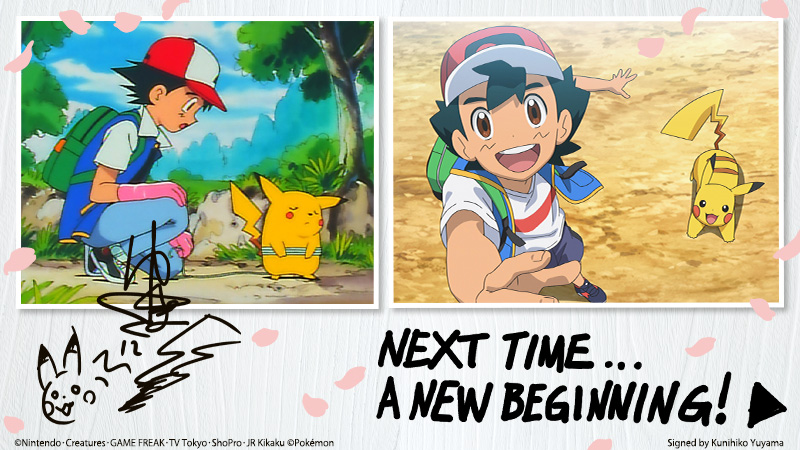
This past week marked one of anime’s biggest departures ever, as Ash Ketchum—aka Satoshi—has ended his 26-year tenure as the main hero of Pokemon. It’s amazing to think about how the character has been such an enduring presence in the lives of millions of people for over two decades, all without being wholly remade and revised. Other heroes in other franchises might arguably have greater legacies, but the fact that it was consistently the same Ash week in and week out makes for one fascinating and continuous chain of history.

It’s been many, many years since I was actively part of the Pokemon fandom. I naturally didn’t know about it when it first came out in Japan, but for all practical purposes I was there from the beginning. I remember getting a little pamphlet about Pokemon in an issue of Nintendo Power, and as I anticipated its arrival, I managed to even catch the sneak peek “Battle Aboard the St. Anne” episode that aired the week before the first episode aired in the US. For maybe five or more years, I would record every episode on VHS, and the times I had to program the VCR, I tried to time breaks in the recording to preserve space so I could fit more on each tape. I’ve long since stopped doing that, or watch Pokemon on a regular basis, but I can never forget those early days.

Ash was never my favorite Pokemon character, and for the fellow fans I interacted with online, it was largely the same. The reason: a lot of the people I talked to I met either through the competitive scene (years before the founding of Smogon) or via a Team Rocket messageboard. In the former case, people were not fans of Ash’s nonsensical battles or inability to understand the type chart despite his successes. In the latter, it’s because a site dedicated to Team Rocket would naturally run ever-so-slightly edgy and prefer older characters. For me, it’s just because he was a pretty decent but generic kids’ anime protagonist—a plain rice ball (or donut, as it were) in a world of more compelling stories. 

But there‘s something special about being that hero for so many people for so long. And while many of his accomplishments were often tied to meta events (e.g. Gary Oak/Shigeru’s Japanese voice actor leaving the show is why they ended up having their big 6v6 clash in the Johto Pokemon League), the sheer amount of things Ash managed to achieve is impressive. A character who could have gone on forever unchanging still leaves behind one hell of a CV. 

A big factor in why there was a sense of progress with Ash was because of the way he would go from one region to the next in accordance with game sequels. While the basic formula of “meet new friends, have adventures, get gym badges” was always present, he never stayed in the same area for long, and he always met new people. And while fans would often remark on the way his skill and knowledge would seemingly go backwards every time he started a new path to a Pokemon League, it’s clear that his inability to retain knowledge is not necessarily a matter of poor character writing or insufficient lore consistency and more a way to keep him level with the new fans who still come to the series even now. Ash is as much a vessel as he is a protagonist, and he could never be a vessel for everyone at the same time.

One thing I always found funny is the fact that some of Ash’s greatest wins and titles came about in “filler arcs,” the seasons that took place between main-game storylines. This is why he’s the Orange League champion, the Frontier Champion, and most recently the winner of the Masters Eight tournament (solidifying him as the strongest trainer in the world). He also won the Galar Pokemon League, but in hindsight, it’s clearly because they knew they were about to start winding down Ash’s story and they wanted to show much he had grown. I remember thinking, all the way back in the late 90s, about how a main-line gold medal would likely someday be the sign that Pokemon was going to conclude. While the anime will continue with new leads, it really is the end of an era. 

Now the perennial 10-year-old gets to go off and do things unseen, and it makes me wonder if we’ll ever see him again. Might Ash make cameo appearances down the road, and will he look different or even possibly…older? It’s a new and unknown world.

New Paths: Pokemon Violet

I’ve been a Pokémon fan since before the very first game launched in the US, and I have to say that playing Pokémon Violet is some of the most fun I’ve ever had with the franchise. Yes, I know about the glitches and lack of polish. I got stuck in a black void inside my own house right at the start of the game, and I’ve taken note of the wonky physics. But even though I’ve finished the main game, I still keep jumping in.

Similar to Pokémon Legends: Arceus, Pokémon Scarlet and Violet are open-world games, meaning that they emphasize freely exploring the environment without forcing you into a certain order of doing things. This is both a plus and minus, personally: I have felt that newer Pokémon games are a little too on-rails, and this is a way to break with that trend, but I’m rather directionally challenged both in real life and in games. Luckily, they’ve added things that make the world feel pretty navigable even for someone like me. One key concept shared with Legends: Arceus is to have a ridable Pokémon that replaces the idea of key TMs or HMs to traverse unusual terrain—a definitely welcome change.

The new region, Paldea, is based on Spain. Here, you enter a Pokémon school that places heavy emphasis on both searching for and pursuing your dreams. To that end, there are three separate but overlapping storylines that each emphasize somewhat different views of what it means to thrive in the world: Victory Road, Path of Legends, and Starfall Street. Their stories progress in compelling ways, involve meeting great new characters, and even act somewhat as tutorials to help you develop certain skills. 

Victory Road feels the most refined, being the most tried-and-true part of Pokemon singleplayer. It’s the familiar acquiring of gym badges in order to fight against the Elite Four and become a champion, but it also manifests in cultural aspects of Paldea that result in a unique experience. Whereas Gym Leaders in other games dedicate their lives to running their gyms, it’s more of a side job here. Paldean Gym Leaders include a baker, a streamer, an office worker, a rapper, a sushi chef, and so on. Gym battles take place outdoors—perhaps as a way to not have to model interiors, but it nevertheless adds to the feel that Paldea isn’t like other regions. 

Adding to this is maybe the most fun rival to ever appear in Pokémon. Nemona is a fellow student, but she’s already a Champion-rank trainer by the time you meet her. Rather than growing alongside you, she guides you to become stronger, all because she loves Pokémon battles so much that she’ll seize any opportunity to have a great match. Players online have compared her to Goku from Dragon Ball, and it’s quite apt.

The storylines in Path of Legends (where you pursue titanic Pokemon) and Starfall Street (where you fight against school delinquents who comprise the latest nefarious organization, Team Star) have really engaging plots full of interesting developments. I found my view of certain characters evolve over time, and they provide both some of the most heartfelt moments and some of the funniest gags I’ve ever experienced in Pokémon. One downside is that I think the gameplay elements they each emphasize could have been done in somewhat more exciting ways. The Titan Pokémon could feel more titanic, and there really isn’t much to the battle system used for taking down Team Star. They’re more good than bad, though.

Playing through all three paths is very rewarding, not only because it opens up new branches and brings the overall plot together, but also because they collectively convey the richness of Paldea. The region seems to move at a characteristic pace (at its Own Tempo, one could say) that is about loving life and enjoying good food, while the blossoming of aspirations, the learning of mythology, and the reassessment of assumptions create a feeling that this is a robust world with lots of history and personality.

As for the Pokémon themselves, appealing to those who prefer a more classic look and those looking for more bizarre designs. Nothing is as off-the-wall as the Ultra Beasts of Pokemon Sun and Moon, but they expand the series’s universe in interesting ways. One quirky thing is the abundance of Pokémon based on food, whether it’s Fidough the dog bread dog, Garganacl the living salt golem, or Scovillain the two-headed pepper plant, culinary creatures are a norm. The game also has a feature where you can make sandwiches and visit restaurants that confer certain bonuses, driving home the idea that Paldea is a land of gourmets—an idea heavily promoted by Spain’s own tourism industry, incidentally.

Compared to Pokémon Legends: Arceus, one thing that’s missing is the greater sense of experimentation with the gameplay mechanics. That game really turned key aspects on their heads, and it was refreshing in a way. I do understand keeping the game more turn-based and rooted in established elements like the implementation of speed and status effects and even agree that this was the right choice for a main Pokémon title. That said, I can see it being a little tedious for those who want something more different.

Pokémon Scarlet and Violet certainly have flaws, but there’s an undeniable charisma that makes me want to keep playing. Witnessing the myriad stories unfold is fun. Venturing out into the world is fun. Finding and learning about Pokémon is fun. Meeting new characters and discovering what makes them tick is fun. And growing alongside everyone is fun. I don’t know how long I’ll stick around, but I’ll consider it time well spent.

Rise of the Bread Dogs: Hololive, Precure, and Pokémon

There must have been something fermenting in the collective imagination of 2022. Last year gave us not one, not two, but three different forms of media featuring cute dogs combined with bread. And as many minds landed on this same idea of oven-baked canines, they all appeared to be guided by more than merchandising power alone.

Sanallites

The first bread dog of note is an embodiment of the Sanallites, the fanbase for the retired VTuber Tsukumo Sana from Hololive. The reason her fans are portrayed as bread is that Sana herself would express how much she loves bread, even going as far as doing a bread horoscope in an early stream. And because Sana herself is an experienced artist, she used her illustration chops to solidify the design as a whole loaf with an adorable flat face.

Sana’s bread dog comes from a warm and comforting relationship with her fandom—the kind of personal-feeling connection that you could only get from a streamer.

Pam-Pam

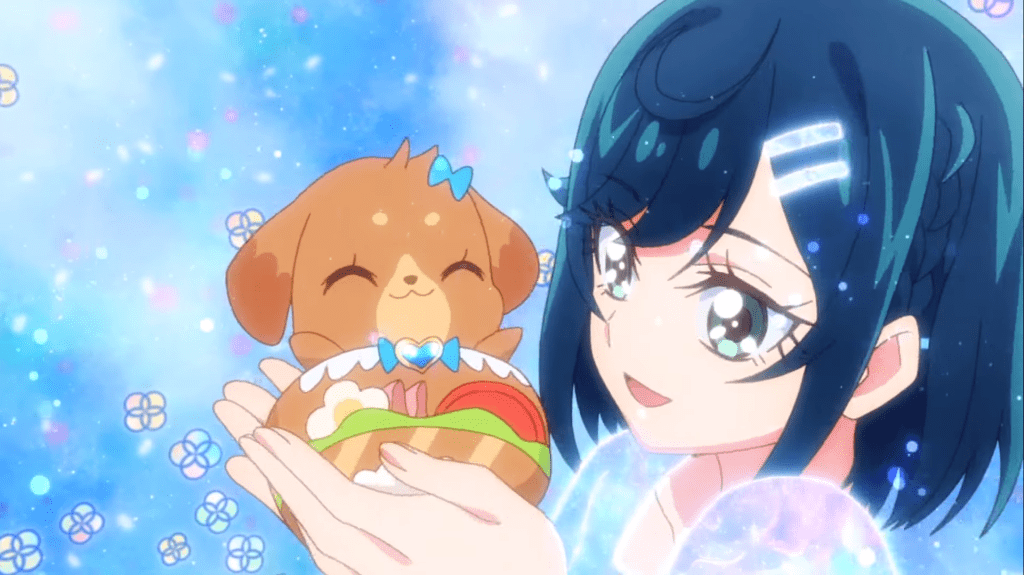
The second bread dog is Pam-Pam, a sandwich-themed dog fairy from the magical girl anime Delicious Party Precure. Here, Pam-Pam is the mascot sidekick of the bread-themed Cure Spicy, and contrasted with a rice mascot and a noodle mascot for a trio of staple carbs. This all plays into one of the themes of Delicious Party Precure, which is teaching kids to eat balanced meals and learn to appreciate all types of food. Pam-Pam transforms into a little sandwich with her dog head sticking out, meaning her bread elements come out primarily in battle.

Delicious Party Precure’s bread dog is a way to convey a theme of good nutrition. The decision to design Pam-Pam in this way is the result of trying to prepare children for the future.

Fidough and Dachsbun

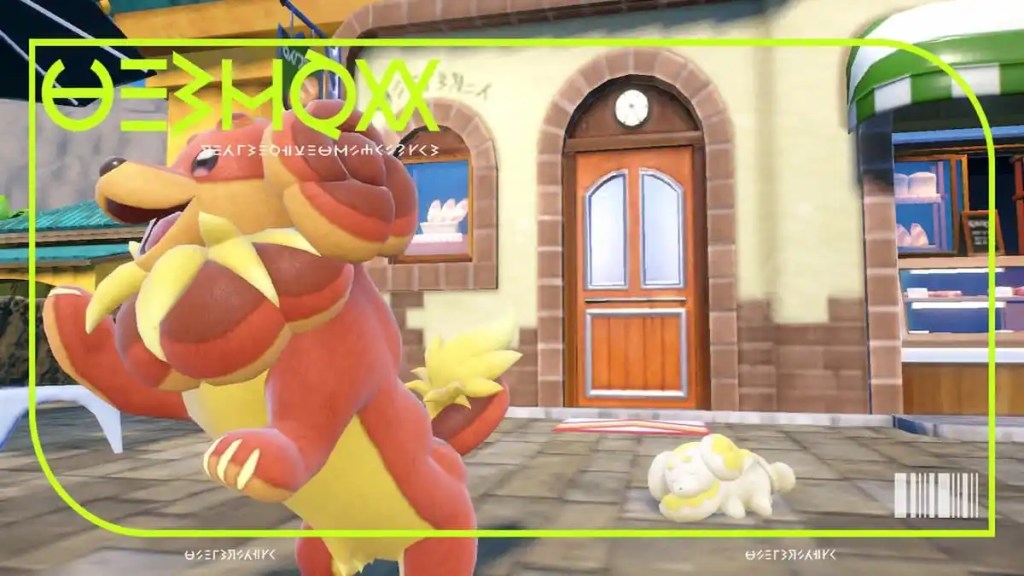
The last bread dogs are the new evolutionary line from Pokémon Scarlet and Violet. Fidough, which resembles unbaked bread, evolves into Dachsbun, whose Baked Body ability makes it actually immune to fire attacks. They have more of an active bread motif than Pamu Pamu but retain more dog features than the Sanallites.

These two are actually just a couple of the many new Paldean Pokémon with a food motif—others include hot pepper plants, olives, and more. The Paldea region is based on Spain, which has a rich and diverse food culture, and both bread dogs reflect that aspect.

The Yeast They Can Do

Combining fluffy bread with furry dogs seems like an obvious winner, and these examples are certainly not the first. But to see three big franchises implement the same idea within the same year feels like a tiny miracle. There’s a surprising amount of versatility to be found in the bread dog concept, and should there ever be a true bread-dog boom, I doubt anyone would mind.

Life, the Universe, and Battling – Pokémon Legends: Arceus

For better or worse, the Pokémon games have stuck to a tried-and-true formula that has brought it great success for nearly 30 years. While there have been some oddballs, the clear emphasis on the series has been on a fairly gentle-yet-complex turn-based experience that allows it to remain popular and accessible. For those wanting more—like a real-time battle experience—it can feel like a futile wish.

The pseudo-open-world of Pokémon Legends: Arceus isn’t exactly the game to answer these prayers, but it is the most daring title to date. It’s sort of a middle ground between various poles—not a full-fledged main title entry, but one that still maintains most of the core concepts of Pokémon. The open field at the center of the Sword and Shield games is greatly expanded upon here, and is in fact pretty much the feel of Legends: Arceus. The game also incorporates some real-time gameplay elements that put your trainer in peril instead of just your Pokémon, but battles inevitably come down to a turn-based experience, albeit one where the mechanics have a few added twists. All this makes for a fairly refreshing game that’s like a foot pressing halfway on the gas pedal. Some things feel familiar and other things are real surprises.

The premise of Pokémon Legends: Arceus is that you have been transported back in time to an era before the Sinnoh region was even called by that name. You arrive right on the cusp of the invention of the Poké Ball, which means that the so-called Hisui region is a place with a fundamentally different relationship with Pokémon consisting of fear and reverence. I was genuinely surprised to have the player character experience a time slip, and I have to wonder why the developers went with this angle instead of just having it be a child of the past. The story is decent enough, but I think the gameplay itself is what’s most interesting.

Because this is supposed to be a historical period that’s also more dangerous for regular folks, the new mechanics (or sometimes lack thereof) feel like both a throwback and a new frontier. There are no features like traits or even held items, let alone something as modern as Dynamaxing, giving me a real Generation-1 vibe at times. I experienced a number of moments where I was worried about a Pokémon having something like Levitate, only to quickly realize that such things don’t exist in Hisui. 

The really major change comes from the way attacks can have different “speeds” to them, such that while battles are still fundamentally turn-based, sometimes you or your opponent can go two or more turns in a row. Combined with the fact that things like status effects and stat buffs/debuffs work quite differently all around, and the result is something familiar, yet strangely new. Also, sometimes, you’ll have to fight 1v2 or more, whether because you caught the attention of multiple wild Pokémon, or you’re fighting someone whose village culture is one where having multiple Pokémon out to do battle is perfectly normal. It’s not like any standard rules have been codified yet—which adds to the feel that this game takes place in a bygone era.

As for the real-time elements, the main ones are special boss fights against guardians known as “Noble Pokémon,” where you have to pelt extremely powerful Pokémon with bags of soothing balm and create opportunities to engage them in a proper Pokémon battle. The added factor of having to learn boss patterns and how to best dodge their attacks brings a dexterity element mostly absent from older games, but the awkward transition into battle mode feels like it could use some work—like a bizarre cousin of chess boxing. Maybe if you still had to dodge collateral damage while your Pokémon is engaging them, it could integrate the two pieces better.

There are hints that the upcoming Pokémon Scarlet and Violet are going to utilize at least some elements of Pokémon Legends: Arceus, though to what extent is still not entirely clear. While I do enjoy that real-time aspect, I’m not sure if I necessarily want it for the main series. I personally would be served with a solid hybrid between real-time and turn-based, but when I think about the fantastic accessibility of Pokémon that has allowed players young and old to approach it regardless of dexterity, and of the stories where kids have learned to read because they played these games, I don’t want that taken away. Maybe we could live in a world where Pokémon can somehow be both, and everyone can be happy.

“Gotcha!” and Pokémon Nostalgia, One Year Later

It’s been almost one year since Nintendo released their gorgeously produced Pokémon music video “Gotcha!” Even now, I find myself thinking about how amazing and emotional the short video is.

The song in the video, “Acacia” by Bump of Chicken, communicates a sense of both nostalgia and discovery; even on its own, its gentle and soulful sound makes it linger in my mind. When combined with the accompanying animation, however, it becomes something magical to those of us who have grown alongside Pokémon

“Gotcha!” features virtually every major and minor character from across eight generations of games, but I think it’s not merely the sheer amount of familiar faces that make the music video so impactful Rather, what it pulls off (with a sense of both elegance and down-to-Earth grit) is a celebration of what it’s like to make your way through one or more of the games—to capture those memories of triumph, accomplishment, and exploration.

With a big franchise like Pokémon, content is often traditionally made to celebrate what’s to come, as opposed to what has passed. There will always be new players, and while Pikachu and Charizard would remain popular even if you gave all existing fans amnesia, there’s a general aim towards a presentation that doesn’t delve too deeply into the lore and history of its world. “Gotcha!” defies that throughout its short timespan.

At one point, silhouettes of virtually every legendary Pokémon can be seen moving around the background, i.e. elements of the Pokémon single-player late game that are meant to communicate how far you’ve come in an adventure. These images then recede, and in their place are shadows of all the major antagonists from throughout the series—again, characters who are indicative of not the beginning but the end of these stories. The video then transitions to a gorgeously animated showcase of most of the league champions, whereas normally such characters would not be displayed in such close succession in advertising or merchandising. 

Later in the video, the remaining champions appear. Blue, the rival from the first generation, summons his six Pokémon while standing in front of a door and a couple of statues—portraying the moment after you defeat the Elite Four’s Lance and have to defeat Blue to take the title away from him. The attention to detail is notable, as all of Blue’s Pokémon are exactly the ones he would have if you picked Charizard as your starter: Pigeot, Alakazam, Rhydon, Gyarados, Arcanine, and Venusaur. The video then transitions to showing the battle on Mt. Silver between the player character from the second generation and the final boss of those games: Red, the player character from generation 1. In other words, this shift from fighting Blue to fighting Red conveys the passage of time through Red’s growth from player insert to final boss.

For those who don’t know anything about Pokémon, “Gotcha!” is plenty impressive, but what astounds me about the whole thing is that it just does an unbelievably good job of communicating and celebrating the nostalgia of Pokémon. It’s as if the music video captures not so much what happens in the games, but rather the memories that have been created through our experiences as players. It’s the sort of thing that can only happen with a series that has such a robust history and connection to its audience. 

Pokémon Journeys, the Original Mewtwo, and Playing with Canon

In a surprising move, the current Pokémon TV anime (called Pokémon Journeys in English and simply Pocket Monsters in Japanese) recently brought back the original super legendary, Mewtwo. And not just any Mewtwo, but the one who debuted over 20 years ago as the Viridian City Gym’s trump card. Mewtwo is my favorite character in all the anime, so there’s a personal thrill to seeing its return, but there’s added significance as well: the continued acknowledgement of the canonicity of events in and connected to the first film, Mewtwo Strikes Back, and an emphasis that what has happened over the anime’s long history still matters.

The Pokémon anime tends to play a little fast and loose with its canon, resulting in strange discrepancies, especially when it comes to the divide between the films and the weekly series. Aside from Mewtwo Strikes Back, whose plot ties directly into the TV anime, it’s always unclear—likely intentionally so—whether the events of the other movies actually “happened.” This isn’t unusual when it comes to films based on popular anime—nearly all the Dragon Ball Z movies are non-canon, and the popular movie-only character Broly had to be reintroduced into that universe in a canonical entry, Dragon Ball Super: Broly

In the world of Pokémon, this has meant that, despite the fact that certain legendary Pokémon are meant to be the only one of their kind, Satoshi (Ash Ketchum) has encountered multiple versions. After he helped a telepathic Lugia save the world in Revelation-Lugia, he would later encounter a different one that could not communicate psychically and, in fact, was trying to raise a child (Lugia is not supposed to be able to breed). Even Mewtwo, whose whole story is that it is a one-of-a-kind artificial creation made to be unmatched in combat, would see a second distinct version show up in the 16th movie.

In the recent episode, there is no mistaking that the Mewtwo seen is the original. When it first appears, Mewtwo slowly descends as ominous background music from Mewtwo Strikes Back and the Mewtwo Lives TV special can be heard. When Mewtwo speaks, its gruff yet soulful masculine voice is that of the original actor, Ichimura Masachika, as opposed to the feminine voice of the 16th movie Mewtwo’s Takashima Reiko. And when Satoshi and Goh lay eyes on Mewtwo, their reactions couldn’t be more different: whereas Goh is shocked by seeing something unfamiliar, Satoshi and Pikachu immediately recognize the Genetic Pokémon and even say its name. 

However, it’s not as if Mewtwo and Satoshi start to recall their two encounters. Mewtwo doesn’t even say anything about already knowing Satoshi, and Satoshi doesn’t bring anything up beyond that initial recognition. While this might be frustrating to fans who’d like to see a more concrete nod to Mewtwo and Satoshi’s connection, I think the current anime is trying hard to balance a lot of different paradoxical elements that exist within Pokémon and Satoshi himself. He’s somehow both the veteran with years of experience under his belt and the plucky young amateur who has much to learn—perpetually 10 years old for over 20 years. Satoshi’s many adventures have happened (including at least one film), but he’s also still meant to be an audience-representative character for young viewers tuning into the anime for the first time, even as Goh fulfills a similar role (though his character is closer to a scholar or researcher). Furthermore, by having Satoshi not say much, it reinforces the idea that he hasn’t let his previous experiences get to his head. A similar moment happens in the second episode of the current series, where Lugia speaks to Satoshi (and only Satoshi) telepathically, hinting that this one might just very well be the one we see in the second movie.

Trying to fully reconcile the Pokémon anime canon would be a foolish endeavor because it’s only as consistent as it needs to be in any one moment. Satoshi is forever a challenger, even as he wins championships. But given what the anime is trying to be, a long-running series that wants to feel both familiar and new at the same time, it’s not a bad place to be. And seeing the original Ichimura-voiced Mewtwo n the year 2020 is a nostalgic and thrilling experience. Mewtwo’s appearance speaks to the idea that the past of Pokémon still matters even as we continue to move into the future. 

Thoughts on Open-World RPGs and the D&D Lineage

Open-world RPGs have never really been my thing, though it’s less about genre preference and more about circumstances. I was never much of a PC gamer when RPGs like Baldur’s Gate were around, and by the time similar games (such as The Elder Scrolls series) emerged on more powerful console hardware, I didn’t have any of those systems. But from a distance, I find the branching paths of Western RPGs and Japanese RPGs to be such a wonderful story of diverging Dungeons & Dragons lineages—namely how the former has taken more from the customization and self-insertion aspects of tabletop roleplaying in contrast to the latter and how the latter has went on to emphasize the narrative and storytelling components by way of old Western computer RPGs such as Wizardry.

It might be my ignorance and unfamiliarity at work, but I see expansive open-world RPGs as putting less emphasis on defining strong characters through which a story unfolds. More often than not, my impression is that they are about putting the player in the driver’s seat and trying to convey a virtual environment where they can do “whatever they want” within the boundaries of a game’s programming. Even if they have set things to do and accomplish, these games are meant to feel like your story.

That being said, plenty of JRPGs have user insert characters, including Dragon Quest and Pokemon have audience insert protagonists, and the latter even allows for heavier aesthetic customization now. However, I do feel that there is a more defined sense of a default look and feel to these generic JRPG player characters, and the result is that they also end up feeling like someone you’re observing from a distance—like you’re in a dream seeing yourself from a third-person perspective.  For me, personally, I’ve traditionally preferred that direction.

Of course, I’m making certain assumptions and generalizations when I define Western RPGs as more expansive and open-world, as even those words can change meaning and significance depending on what players are used to and how they perceive the importance of those qualities. For example, it’s interesting to me that the prevailing online opinion on Pokemon Black & White has changed so drastically in the ten years since its debut. 

Back when it first launched, the games were criticized as being too easy and hand-holdy—you always knew exactly where to go next. This was a far cry from the original Pokemon Red & Blue generation-1 games, which gave far fewer explanations and kind of left a lot of things ambiguous. But now, Black & White are touted as being one of the gold standards of Pokemon, and its descendants inferior for their perceived lack of strong and focused storytelling. Red & Blue, in turn, are seen as cumbersome relics that don’t do enough to guide players. It comes down to a generational divide, but even within the specific realm of Pokemon—hardly what you’d call a premiere example of open-world gameplay—this debate about the two Dungeons & Dragons lineages takes place.

I feel that the success of expansive open-world RPGs on an individual level comes down to whether or not the inevitably less defined bits of narrative that are a consequence of heavy personal customization and gameplay systems that encourage defining “your” story as opposed to following someone else’s. Both it and the JRPG style are capable of capturing people’s imaginations, but it’s what we want to do with our captive imaginations that highlights our differences.

This post is sponsored by Ogiue Maniax patron Johnny Trovato. You can request topics through the Patreon or by tipping $30 via ko-fi.