Minecraft Steve Is the PC Gaming Mascot of Smash

Throughout the years on this blog, I’ve speculated who would be a proper mascot for Western PC gaming in Smash Bros. As that series has transitioned from being “Nintendo All Stars” to “Video Game All Stars,” I’ve thought about the kinds of characters who could do a field as wide as “gaming on computers” justice. Maybe it could be the Warcraft orc Thrall, who features prominently in the real-time strategy, MMORPG genres, and MOBA genres. Maybe it could be Turrican, who comes from the Commodore 64 and Amiga era. But what I failed to realize—even after I did an analysis!—is that Steve from Minecraft is that Western PC representative. 

Minecraft is currently owned by Microsoft and on nearly every platform available, but as one of only two characters to get his start on computers (the other being Solid Snake and his original MSX debut), Steve 100% counts as a PC gaming mascot. I think the reason it didn’t even occur to me until recently is the sheer degree of Minecraft’s success. It is literally the best selling video game ever, and its presence transcends gaming. Yet, it still has fairly humble origins as a side project for a programmer working at a browser-based game company, to the extent that you might even count Steve as also the first indie gaming rep in Smash Bros. even if it is technically no longer an indie game.

As with every out-of-left-field fighter added to Smash, Steve opens up a world of possibilities in my mind. I want more than ever to just every aspect of video games from its earliest days somehow included. What about edutainment? Ryu, Ken, and Terry cover 2D fighting games, but 3D fighting games are substantially different. Reimu from Touhou could cover doujin games as well as shmups. Mobile and gacha games are such a huge part of the industry now—why not Angry Birds, or Dragalia Lost if they want to keep it in the Nintendo family? Imagine if Great Giana Sisters (which began as a Mario rip-off) made it in. Hell, why not bring in Computer Tennis

I’m aware that there are only three DLC slots left in Super Smash Bros. Ultimate, and that I’m wishing for the moon. Even so, it feels like we keep getting one ladder rung closer to that impossible dream, and it becomes ever so tempting to keep imagining. I realistically won’t be disappointed to see something less, and I respect all that the developers have accomplished, but nothing will stop me from looking toward the next sequel.

Sephiroth in Smash Is Uncharted Competitive Territory

Sephiroth has officially been released for Super Smash Bros. Ultimate, though many people had already gotten their hands on him thanks to the Sephiroth Challenge: a special boss fight with the new DLC character where the reward was early access. Having tried out the One-Winged Angel for a few days myself, I’d like to give my initial impressions of the character, and how I think he’ll pan out in more competitive play.

During this preview period, I’ve seen assessments of Sephiroth go anywhere from disappointingly mediocre to potential top tier. Based on personal experience, I can see why. Sephiroth seems to have qualities that are often death sentences for viability (large body easily prone to getting hit, slow and laggy attacks) but also ones that make for powerful characters (extremely large sword, high mobility, versatility, a built-in comeback factor). In other words, while Sephiroth is nowhere near as unorthodox as Steve from Minecraft, he still possesses a combination of qualities that have never really existed in Smash Bros. before. As #1 player in the world MKLeo puts it, he’s like Byleth (a similarly range-focused character), except Sephiroth trades attack speed for better movement. And in Smash, movement is generally king. 

The sheer size of Sephiroth’s Masamune changes everything. It goes without saying, but the sword is loooong. Cases where an opponent would otherwise be safe rolling away can still get them caught by the end of a sword swipe, and not even because of a particularly impressive read. Spacing both as and against Sephiroth is just different, especially if you factor in his other special moves, which are designed to scare opponents into making bad decisions. The ability to fake out with a Flare charge cancel, to get people to panic with Shadow Flare, or even catch someone slipping with a deadly Octoslash means that it’s easy for Sephiroth to fight on his terms.

That’s not to say Sephiroth’s aforementioned weaknesses are trivial. Like Mewtwo, he’s both tall and light, meaning it’s easy for him to take damage and die early. Sephiroth has issues with being smothered by quick and agile characters who can bait out his attacks and punish their endlag. His frame data is objectively lackluster, and his closest reliable option out of shield is a dismal neutral air with a frame-9 startup (though its utility on offense is much greater). His faster attacks also require a lot more precision, as they tend to be long but thin stabbing motions that don’t cover much space to the sides of the sword. However, Sephiroth in neutral generally looks to have an answer for everything, and it’s a matter of finding what works. I was playing online and losing games to a Fox—exactly the kind of character who can get in your face and stay there—but I managed to eventually win just by using my attacks differently. Down smash’s heavy shield damage can make defensive play unreliable, Scintilla’s ability to push back aggression, and up tilt’s generous scooping hitbox made charging in less free once I realized what to do.

On top of all this is Sephiroth’s One-Winged mode, which improves his stats across the board, as well as giving him super armor on smash attacks and a third jump. Activated when Sephiroth takes a certain amount of damage, it makes him scary in a manner akin to Limit Cloud, because the enhanced mobility makes possible things that would have been out of the question otherwise. Luckily for anyone facing him, he’s still light to the point that it won’t take much to KO him and remove his enhancements temporarily, but it can be like fighting (and using) a different character.

Speaking of Cloud, in comparison to his fated rival, Sephiroth is definitely not meant to be a beginner’s character. Whereas Cloud has extremely good mobility and hitboxes that are both safe and generous, Sephiroth can’t just throw things out willy nilly and hope for the best. Cloud can be played intelligently, but Sephiroth needs brains to function well if your opponent knows what to expect. He just has so many attacks with so many particular uses, it’s going to take a long while before even the best players know how to fully utilize everything he can do.

As for where I think Sephiroth will end up in terms of viability, I’m bullish on his future performance, and can see him at least in high tier. Slow attack speed is never a good thing, but imagine if you took Ganondorf and just gave him a sword as big as Sephiroth’s. It wouldn’t necessarily make Ganondorf a top tier, but it would open up possibilities on offense and defense in a big way. Thus, while Sephiroth has his fair share of pronounced flaws, he also possesses a unique combination of laggy yet powerful ranged attacks along with tricky movement and specials such that the drawbacks of the former can be mitigated by the latter with smart spacing. The very fact that MKLeo is interested in using Sephiroth might also very well give him a huge boost in visibility early on. 

Sephiroth and Villainous Presence in Smash Bros.

Sephiroth has been announced as the latest DLC guest character in Super Smash Bros. Ultimate to great fanfare. I certainly didn’t expect him because I figured they would want to spread their 3rd party characters among as many companies and franchises as possible for the widest marketing reach—let alone having a second Final Fantasy VII character, even if there is a big remake currently.  Why Sephiroth?

The answer, I surmise, is that he fulfills an ongoing theme of having villains to contrast some of the biggest heroes in Ultimate. This is the game that added Ridley and King K. Rool to the roster, and K. Rool’s trailer even emphasizes the different rival pairings that exist in Smash. There’s a special place for the One-Winged Angel in the pantheon of video game villains, and he more than deserves a place among the other all-stars in Smash. Sephiroth is the first third-party villain in the game, and the first villain DLC.

But Sephiroth’s appearance makes me realize something: much to my chagrin, it’s highly unlikely that any antagonist or boss can get into Smash as a playable character without there first being a protagonist to contrast them. I would wager that, in another universe where Cloud had not managed to debut in Super Smash Bros. for 3DS & Wii U, he would have been the one to appear now instead of Sephiroth. It’s understandable why they would go for heroes before villains, given that the bad guys are usually not the most prominent mascots of their video games, and the good guys are usually the player characters. Even a generic hero like, well, Hero, takes precedence over Zoma or Dragonlord from the Dragon Quest series. 

There is a game that has leaned more toward villainy when it comes to its guest characters, though. Tekken 7 has Geese Howard but not Terry Bogard, Akuma but not Ryu, and Neegan but not whoever the protagonist of The Walking Dead is. That’s a very different sort of environment, of course, given that Tekken is a standalone world and not inherently a crossover like Smash is. Again, I see why Smash would not want standalone bosses to take up too much of the roster, but I’ve just always thought it would be a nice way to add some diversity without taking up two slots instead of one.

Of course, nothing is ever set in stone with Smash in terms of how or why new characters are chosen, but I think “villains second” just makes sense, even if I wish it didn’t. The only possible exception I could see is if said antagonist all but defines a certain video game’s identity. Which is to say, maybe Carmen Sandiego still has a shot…?

In any case, I’m looking forward to the Sephiroth gameplay reveal.

Mind Craft: Steve in Smash Bros. Ultimate Impressions

The impossible has happened once again as Steve (and Alex) from Minecraft joins an increasingly unthinkable roster in Super Smash Bros. Ultimate. While I’ve never touched Minecraft, I appreciate its creativity and the joy it has provided so many people young, old, and virtual. Having now played (and played against) him for the past few days, I would say that in both visual style and gameplay, Steve from Minecraft is likely the most bizarre character in franchise history. 

Where most characters end up having their appearances updated or at least rendered in finer detail, Steve joins Mr. Game & Watch in having a look deliberately hyper-faithful to his source material to the point of incongruity with the rest of Smash. In terms of his skill set, Steve moves differently, attacks differently, and his block-formation + resource-mining mechanics only have the loosest similarities to other fighters. He’s a little bit Olimar (gathering resources), a little bit Robin (resource management), and some degree of Mega Man (movement while attacking), but also far beyond being a simple chimera of those three. His blocks also kind of resemble what Kragg in Rivals of Aether and Olaf Tyson in Brawlout are capable of, but Steve’s version exists as more than just an unusual recovery move. 

I have quickly come to the conclusion that I’m not a good Steve player (and likely never will be), so I can’t offer any tips or hints as to how to best play the character. I can, however, talk about how it feels to struggle with and against Steve.

With Steve, moving around feels counterintuitive to what I’m accustomed to in Smash. For example, in Ultimate, one common way to avoid attacks is to jump. Unlike in previous games, all characters take the same amount of time to leap, so you can go above a lot of things, especially grabs. Steve, however, has one of the worst first jumps in the roster, and so he can actually get grabbed in situations where others wouldn’t. Steve needs to burn his second jump instead, which would be a bad idea for most other characters—except unlike everyone else, he can create a block underneath and restore his jumps instantly. You have to literally approach concepts like being grounded and being airborne in a new way compared to everyone else, and for me, it is taking a lot of time to get used to. 

In addition to not having any ups, Steve has some of the worst mobility stats in the game—roughly bottom 10 in nearly everything. He feels sluggish when I’m in control of him, but when I play against him, he somehow feels incredibly squirrely. I believe this is because of a combination of qualities Steve possesses. 

First, he can attack while walking in a fashion akin to Mega Man and Min Min, so he can retreat and advance with ease, even if he’s slow.

Second, he has a deceptively thin hurtbox that makes spacing moves against him difficult. “Hitting” his arms doesn’t do any damage, and often attacks that seem like they hit will whiff easily when combined with his ability to move back and forth easily.

Third, it’s very hard to tell what he’s doing based on his animations because so many of them overlap or look extremely similar. His walk, dash, run, roll, jump, and even his getting-hit animations all have the same ramrod-straight stance with arms and legs flailing, and his other actions aren’t far off. The fact that he remains “standing” while getting hit in the air also means he sometimes lands on platforms where others wouldn’t.

Fourth, his actual attacks are surprisingly fast, and the ability to rapidly throw out simple moves means it’s hard to tell when he’s vulnerable and when he isn’t.

When Steve is at full strength—plenty of resources to burn and diamond tools for early kills—he seems very strong. He lets a player be as creative as they want, and already, people are discovering unique combos, techniques, and glitches (that will likely get patched out). What he lacks in movement, he makes up for in fast, strong, and useful attacks, somewhat like Luigi. The Minecart looks like one of the best moves in the game at the moment, as it protects Steve from attacks, and the ability to stay in the cart (for an attack) or jump out (turning the cart into a grab) is a scary mixup. It’s basically Diddy Kong’s Monkey Flip on steroids, and I’m unsure of whether it’s the online setting that makes the move frustratingly difficult to react to, or if it’ll be just as potent online. I do feel that the character benefits a lot from lag, but it’s very possible that his quicker properties would be of greater benefit offline.

I’ve still yet to fully decide which characters I think do especially bad against Steve, but Little Mac’s reliance on ground movement means that blocks mess him up pretty easily, and his recovery is rife for exploitation by Steve’s crafting blocks and down-tilt (a descending fire attack). Big-body characters get comboed to hell and back by him, but I can see certain ones doing better or worse. I can’t quite figure out if Mewtwo does well against Steve or not, but I think the online environment plus the strength of Minecart is skewing my perceptions. 

As for which characters seem to demolish Steve, it’s likely characters who can either outcamp him, or who can quickly get close and overcome his attacks with better range. Zelda’s Din’s Fire can be a pain for Steve because its properties let it circumvent block placement. Marth and Lucina have the speed, strength, and long pointy swords to make life difficult. Shulk’s Monados may be hard to contend with as well. Also, the rigid hurtbox of Steve comes with a potential drawback: it looks strangely easy to hit him with sweetspot attacks, like Zelda’s lightning kicks and Marth’s tipper sword attacks. 

Of course, that’s all speculation on my part. Steve is such a decidedly non-cookie-cutter character that it’s going to be months or even years before he’s even halfway understood. If Smash Bros. is about bringing together all these different video game legends and showing off their unique qualities, then Steve feels like they imported an entirely new game engine into that universe. He’s both fun and annoying at the same time, and I suspect we’re going to be seeing a whole lot of him for a long while.

Smash Bros. and the Concept of Restrictive Consequences

When two games are of the same franchise, comparisons are inevitable, as is the case with Super Smash Bros. Ultimate and Super Smash Bros. Melee. Between Ultimate being the hottest new thing and in many ways the peak of Smash’s video game crossover premise, and Melee being the game that has stood the test of time after 20 years, the two understandably act as points of reference to each other. But one thing that has frustrated me when seeing people bring up the differences between Melee and Ultimate in terms of high-level competitive play is that there’s often a tacit assumption about Melee’s qualities being inherently better for the platform fighters. What’s worse is that Ultimate fans rarely come to the kind of spirited defense that Melee fans are willing to bring. 

However, after listening and reading to so many reviews, posts, and other sources that compare Melee and Ultimate on some level, I’ve come to realize a big reason why this happens. Essentially, Melee is such an outlier, not just in terms of Smash Bros. but fighting games in general, that it attracts a loyal audience whose main basis for what makes a game fun is heavily rooted in that love of Melee. Specifically, what Melee players and fans cherish is a heavy sense of physical freedom at all times—provided you have the skill, knowledge, and dexterity to earn it. In turn, games that emphasize heavily restricting movement (especially when in a disadvantageous position) are seen as a less enjoyable and skill-rewarding experience. 

A Love of “Jazz” Above All Else

There’s a popular moment from the 2010 documentary The Smash Brothers, where the ex-commentator Prog likens Melee to jazz. Contained within that analogy is the idea that what the two have in common is being freeform and improvisational in ways that value expressiveness and openness. While this sentiment is a little more abstract, you can see it conveyed in more concrete, if perhaps less poetic terms elsewhere. 

One example is a Reddit post titled “Does anyone else think Ultimate has a super obnoxious, uninteractive disadvantage state?” In it, user gajuby discusses what they believe are Ultimate’s weaknesses compared to Melee. Another example comes from a Youtube video titled “Is Melee a Good Game?” by AsumSaus, who emphasizes that freedom of movement in multiple scenarios is one of the things that makes him love Melee.

Here’s a quote from gajuby:

Easily my least favorite part of ultimate…is ledgetrapping. So many characters ledgetrap so effortlessly that it feels barely interactive. It never felt fun that against a lot of characters, it was a 50/50 between “jump” and “every other options”, especially against characters that could stay outside the range of ledge hopped aerials.

This is eventually followed by a comparison to Melee:

And finally, getting off of the ledge. I still often die when doing ledge dashes, but I absolutely love that they basically bypass the ledge trapping stage altogether. It takes away that whole obnoxious, tiresomely long stage of the game, the phase that honestly makes me dislike ultimate a lot of the time, despite its amazing roster and balance.

Similar to the Reddit post, AsumSaus’s review (which to be fair is more about looking at Melee as both a singleplayer and multiplayer experience), he laments the state of Ultimate’s platforms to Melee’s, with the former allowing for many more possibilities.

In Melee, platforms are mechanically versatile and extremely deep. Many players base their entire playstyles on platforms and how they use them to their advantage. It’s a reminder of how much more fun neutral and combos are when platforms are fun and easy to move around on. In Ultimate, however, the same platforms that make Smash Bros. as a series so unique represent how the developers have chosen to limit the number of options to move and interact. (23:42)

I want to highlight how indicative these statements are of the Melee mindset. For reference, a ledge dash—also known as an invincible ledge dash—is an advanced technique that allows a character to get off the ledge and move forward while invulnerable and able to execute a move. It is, as stated in the quote above, capable of completely negating the advantage of the opponent’s position, with  the only drawback being difficulty of execution. 

As for the matter of what roles platforms should serve in Smash, AsumSaus’s argument boils down to the idea that their purpose should be multifaceted and allow for enhancing offense and defense, depending on the situation. Platforms being more like “hazards” that put you in a bad position relative to an opponent standing below doesn’t sit well with him. So, what should be inherently bad positions can be easily dealt with in Melee through sheer technical skill, in essence allowing more educated fingers to reliably overcome the odds (Starcraft: Brood War gets similar praise from its players).

By comparison, being on the ledge in Smash is akin to being in the corner in other fighting games, where being above an opponent comes with a severe set of drawbacks as well. Generally speaking, in most games in the genre, there is really no such thing as an “invincible corner escape” that also grants the versatility of being able to attack simultaneously. And whereas Melee especially allows a player getting hit to “DI” an attack and influence the trajectory they fly as a way to try and escape combos, most fighting games feature combos that are mostly inescapable. What’s even more telling is that these frustrations over Ultimate don’t necessarily come from being in bad spots, but rather having one’s options severely limited by being in bad spots.

For someone like me who prefers Ultimate, the bones tossed at Ultimate players can feel almost condescending, even if that’s not the intention. Stating that “Ultimate is better balanced across the cast” typically comes with the caveat that the variety and balance at the top level of Melee is superior. “The game is easier for beginners to get into and do well in” is a backhanded compliment to Ultimate that highlights how difficult Melee can be to play. One thing that these opinions seem to fail to take into account is how the sheer versatility of movement in Melee is what imbalances the roster so heavily in the first place. A game where mobility is absolutely paramount basically invalidates slower, heavier characters who would have a much harder time in a Melee environment, unless severe changes were made. That being said, I can understand how, to someone whose primary (if not only) game is Melee, all other games can feel like having your wings clipped.

But as for what other approaches to competitive multiplayer can offer Melee players, commentator Toph relayed his own thoughts on the matter in an episode of the Scar & Toph Show Podcast. When Sajam (a commentator of more traditional fighting games) talks about a more conventional game game like Granblue Fantasy Versus having more reductive options compared to Melee, Toph responds as follows:

…That’s actually kinda what I’m liking about playing it, actually—the fact that I’ve never really played a game that’s a little more reductive in terms of the option set…. I’ve mostly been like a Melee player through my competitive life in my 20s…. With Melee, there’s always this sense that, like, you can find some new option, or you can find some new answer—the option space is so wide. I think, for me, it’s been good to play a game where the option set is a little smaller, and the game speed is a little bit toned down, because, like, now I have to be really careful…. 

In a game like Melee, I can jump, and if I realize it was a bad jump midway…I can hold back and I’m out of there, or I can waveland on the platform, or I can fuckin’ fastfall or not fastfall, or I can fastfall a little later, so that I fuck their timing up. Or I can fastfall a little later and drift back at the same time, or I can drift forward if they think I’m gonna drift back. In a game like Granblue, if I do a bad jump, I did a bad jump, and I’m gonna get fuckin’ anti-aired for 50% if I push a button…. It’s really been fun for me to experience the other side of things.

In summary, Super Smash Bros. Melee brings out an extremely loyal fan base who can find it hard to play other games with as much enthusiasm because of how unique Melee and its extreme emphasis on freedom of mobility are in the grand scheme of competitive offerings. However, this can result in Melee fans seeing things primarily in Melee terms, unable to see the merits of other Smash titles and other fighting games in general—particularly those where powerful limitations are a fundamental basis for both the fun and the competitive core of a title. It can benefit players to see these titles not as inferior but as providing a different interactive environment whose focused and pared down concepts of decision-making and reward/punishment offer another kind of fun.

Where in the World is the Next Smash Bros. Character?

I woke up one morning with an amazing idea: What if Carmen Sandiego became a Smash Bros. character?

Sure, there are a lot of things working against her. The Carmen Sandiego franchise is traditionally more about teaching kids geography than anything else, and there’s not much “gameplay” to speak of. There’s already a thief as a guest character in the form of Joker from Persona 5. She’s not even all that recognizable in this day and age, though people who grew up in the 1990s might know her through the various shows based on her that populated public and network television in the US. 

However, she would directly represent a genre of gaming that is only barely touched upon by other characters: edutainment. Sure, it’s not as exciting as RPG, FPS, or fighting games, but Carmen herself has enough style to give her a striking impression.

Also, I think I have a great moveset for her, and I really want to share it. 

As a virtually unparalleled thief and criminal mastermind, Carmen Sandiego would be a nimble and slippery character, light yet speedy in most respects. She would probably be similar to Joker in that respect, but unlike her fellow sticky-fingered compatriot, she would place less emphasis on building towards a powerful, combo-oriented office.

Carmen Sandiego is not just good at stealing—she makes off with the most absurd and improbable items possible. Among them are “the Trans-Siberian Railroad,” and “all the goulash,” and “the steps to the tango.” In other words, she can steal things of enormous scale, infinite quantity, and even concepts! That’s why her neutral-special move would be a command grab called Master Theft, and it would allow her to rob an opponent of their own neutral-special. 

Essentially, it would be akin to Kirby’s Inhale mixed with a bit of Villager Pocket, except it would actually deny the target the use of their move! However, she wouldn’t be able to use the attack herself. Instead, she would store it in a briefcase that she uses for some of her attacks, and having a stolen special move would increase the damage and knockback, turning it into a potent KO move.

This special move would clearly be more potent against some characters. While Ganondorf losing Warlock Punch wouldn’t be the biggest deal, Shulk should be scared to not have Monado Arts.

From there, Carmen’s special moves would be as follows.

Jetpack would be her up-special, and would make for nimble recoveries, but limited offensive potential. 

Side-special would be Phantom Step, and would have her create an illusory clone that can stay still or move forward. The closest thing in Smash would be Greninja’s Shadow Sneak, but this is closer to the Adept’s Shade technique in Starcraft II.

And down-special would be V.I.L.E. Henchman, which would summon a random subordinate of Carmen’s, each with different properties. It would resemble Duck Hunt’s Wild Gunmen attack to a certain extent, but the effects would be much more varied than “different guys shooting.” 

Her Final Smash would be V.I.L.E. Assault, and would entail a full-on attack by all the Henchmen and Carmen at the same time As for which henchmen would be picked, I really am not sure. The game-show ones like Robocrook would be most recognizable, but that might stray too far off from Smash Bros. as a celebration of games.

That being said, it would still have to include the Rockapella theme. 

https://youtu.be/s1EIUP8tvbE

There are other edutainment games that could serve the role of representative, such as Oregon Trail or Math Blaster. But I think Carmen Sandiego has the cultural penetration and character charisma to make her a great addition to Smash Bros. I know the chances are slim, but it would be such a fantastic surprise for a future Nintendo Direct.

PS: I never get tired of this:

Refreshing Noodles: Min Min in Smash Bros. Ultimate

A lot has happened in the Smash Bros. community over the past two weeks, with multiple instances of sexual abuse and assault among its competitive scene coming to light. This is a serious problem, and its exposure is ultimately for the better, especially for the victims and those who would have been potential victims.

This has also overshadowed some of the happier Smash news—namely the reveal of Min Min as the new DLC character—so I want to focus on that. Hopefully, we can embrace the good without looking away in willful ignorance as to what needs to change.

Min Min

When an ARMS character was announced as DLC for Super Smash Bros. Ultimate two months ago, the online reaction felt less than enthusiastic. Although ARMS is a fairly successful Switch game, the previous DLC pack had hardcore fans craving for more outlandish choices in the vein of Hero and Banjo-Kazooie. Amazingly, I think the developers and Nintendo have managed to turn opinion around with their reveal of Min Min as the winner, and it’s thanks to a combination of factors. 

First, ARMS just has fantastic character designs that ooze personality, and Min Min is one of its best. Second, she brings a unique fighting style that gives players something new and different to try out. Third, she happens to be associated with the Etika, the gaming Youtuber who tragically died by suicide almost one year ago. All three worked together to make a perfect storm.

Character Design

Min Min looks cool when she probably should look ridiculous. She is a ramen shop owner with noodles for hair, a ramen bowl hat, a dragon for an arm, a somewhat stereotypical Chinese outfit, and she does kung fu. Yet, somehow, it all works together. She comes across as fun and lighthearted, yet serious and strong. Her martial arts animations are impressive, and they lend her a lot of flavor.

The trailer itself also did a great job of conveying her personality. As the other ARMS fighters battle to obtain a coveted Smash Bros. invitational letter, Min Min is at her shop watching Captain Falcon and Kirby eat ramen. It’s only after Captain Falcon has completely finished his bowl with utter satisfaction that Min Min leaves to fight for the Smash spot. This shows how important her restaurant and customers are to her, that she would on some level prioritize them over what is arguably the ultimate prize. Min Min just comes across as charming and powerful in the best ways, even to those who have zero familiarity with ARMS.

Min Min is also the first playable Chinese character in Smash Bros. history, giving her a unique factor. Because she speaks Mandarin Chinese in the trailer, I was curious as to who her actor is. It turns out the voice behind Min Min is Takutsu Haruna, a Japanese performer who studies Chinese as a hobby. I appreciate the fact that they chose someone who has put in that much effort, even if all she’s saying is, “I love ramen!”

Fighting Style

Min Min might very well become the bane of online play with her long reach and dual-arm game mechanic. Zoners and projectile specialists are the bane of many Smash players, and it seems like Min Min is only adding fuel to the fire. But Sakurai’s video demonstration makes her look more exciting than one might have expected, notably because she controls differently from pretty much every Smash character before her. Whereas most characters have a clear delineation between their normal “A-button” moves and their special “B-button moves,” for Min Min, they control her left and right ARMS respectively. Moreover, she can move while her attacks are coming out. Thus, she’s able to deliver long-range one-two combinations at a player’s chosen timing or send them in different directions to cover a wider area. 

The closest comparable character is Mega Man, who’s able to move and attack in a similar way thanks to his pellets, but even that doesn’t fully prepare players for the Min Min experience. Just from using her for a few days, it feels like you’re playing a completely different game—my fingers stop knowing what to do with other characters when I try to switch back. She’s someone who will take time and dedication to use at even a functional level, which also means she’s offering something you won’t find in other characters. It’s unclear as to how strong she actually is, but it will take time to figure out regardless.

As an aside, while not related to ARMS, this left-right setup could also be the perfect way to add a Tekken character to the roster. Heihachi is probably out given the Mii costume they just announced, but who knows? Maybe we’ll get Kazuya MIshima or Jin Kazama instead.

Etika’s Legacy

The late Etika was one of the most visible figures in online Smash fandom, and was probably the very face of “Smash reaction videos” thanks to his genuine passion towards character reveals. While he would invite controversy constantly, it became sadly clear in the end that he suffered from mental illness, and every one of his fans wishes that things turned out differently.

Etika also happened to be a big fan of Min Min, though not always for the purest of reasons, as his LEGS t-shirt above makes clear. Regardless, when Min Min was first shown in that trailer, those who followed and knew Etika probably all had the same thought: the man would have loved this. It’s even possible to imagine how he would have reacted—with an expressiveness few can ever match.

In the End, Nothing’s Wrong with First-Party Characters

Min Min’s announcement had it all: a strong character aesthetic that can make new fans instantly, a showcase of interesting gameplay brought by her, and an online presence that goes beyond the familiar borders of Nintendo in the form of Etika. What’s just as important is that it showed how you don’t need an off-the-wall unpredictable pick to create excitement and hype. “An ARMS character” is something probably anyone could have predicted, but what they perhaps couldn’t account for is having the whole package executed so well. My hope, however futile it might be, is that fans can appreciate the characters that are coming, even if it’s not necessarily the ones they want. They might be able to win us over, just like Min Min.

Kunio-kun and Double Dragon for Super Smash Bros.

As Smash Bros. Ultimate increasingly becomes a celebration of gaming history on a wider scale, I want more and more to see every video game genre represented in its character roster. Just like how Cloud and Hero represent RPGs, or how Ryu, Ken, and Terry are the poster boys for fighting games, I’d like to see someone represent the beat ’em up genre. In that respect, there are only two possible franchises that I think deserve this honor: Kunio-kun and Double Dragon.

Kunio-kun is the granddaddy of beat ’em ups, starting with the very first game in the genre’s history: Nekketsu Kouha Kunio-kun. Featuring the brash yet noble delinquent Kunio-kun, it would set the template for the entire genre—full range of movement, enemies on all sides, clever attacks, weapons, etc. It would later influence gaming further though sequels and spin-offs such as River City Ransom

The original Double Dragon arcade game was basically designed on the Kunio-kun engine except with more international appeal. Instead of the specifically Japanese context of gakuran-wearing yankii, it’s about two Chinese-American kung fu brothers named Billy and Jimmy Lee. Which one would be better for Smash comes down to that difference—do you want the very Japanese and explosive Kunio, or do you want the Lee brothers and their global recognition?

Either way, the movesets practically write themselves. In fact, one could say that they have too many moves to choose from. 

Kunio not only has his first game, but he’s also one of the stars of River City Ransom (where he was renamed “Alex” for the US) and is Mario-level in terms of dabbling in other genres. He could squat like a delinquent, Acro Circus though the air, punch people on the ground, and throw a ball straight out of Super Dodge Ball.

For Billy and Jimmy, you also have endless options. Do you base them more on their arcade moves or their console appearances? The Cyclone Spin Kick is obvious, but do you go with the arcade animation or the NES one? What about nunchaku from Double Dragon III or the Double Dragon for NES back elbow? What if they based the gameplay on Double Dragon II, where the B button always means “attack left” and the A button always means “attack right?” In terms of Smash, both the Double Dragons and Kunio can be as orthodox or as unusual as possible.

Given that the beat ’em up genre is long past its heyday, and Nintendo’s apparent desire to use Smash Bros. Ultimate as a promotional platform, it might not seem all that likely to see either Kunio or the Lees. However, Arc System Works (creators of BlazBlue and Guilty Gear) have the current rights, and there was a Kunio-kun Spirit Event in Ultimate. So here’s hoping that any of these brawling heroes have a chance to be newcomers.

Byleth and the “Fire Emblem” Tactical Spirit in “Super Smash Bros. Ultimate”

The new Super Smash Bros. Ultimate character announcement did not exactly hit with a great bang. Byleth, the player avatar from Fire Emblem: Three Houses, is arguably even the most predictable choice possible. However, in spite of hype-addicted fans not getting their fix and my own neutral feelings towards Byleth, I find their gameplay reveal to be an interesting look into the developers’ latest attempt at capturing Fire Emblem‘s tactical gameplay in Smash.

Fire Emblem is a turn-based, fantasy-themed strategy RPG series where you control different characters with unique strengths and weaknesses. It’s a game that discourages charging in headfirst and instead emphasizes positional advantages and careful advancements. Because the games are not as action-packed as Smash, it has required a greater degree of interpretation to translate the Fire Emblem representatives. Marth (and by extension Lucina) has the highest walking speed in the series, allowing him to swiftly move in and out of enemy range. Robin is one of the slowest characters in the game, but has a mix of long-range magic and close-range sword attacks to try and trap the opponent in a bad spot. As mentioned by Sakurai in the Byleth gameplay video above, most of the Fire Emblem characters in Smash have Counter attacks in order to replicate the retaliations that happen in the original game’s combat sequences.

Byleth comes equipped with a multitude of different weapons, each of which are tied to a particular general direction. Upward attacks are done with a chain-like sword, side attacks utilize a spear with long reach, downward attacks are performed with a slow but powerful axe, and neutral attacks use a bow and arrows for fighting from far away. This plays into the multitude of weapons in Fire Emblem: Three Houses and their properties, such as accuracy, effective range, etc.

In turn, what I think Super Smash Bros. Ultimate is trying to capture by linking specific weapons to specific directions is the spirit of the positional and preparatory thinking that goes into playing Fire Emblem. Byleth is likely encouraged to fight at different distances depending on what the opponent’s priorities are. This applies to some extent with every Smash character, but with Byleth especially, it looks like there is no cure-all attack that can be used by default to cover multiple situations, such as Link’s neutral air or Mr. Game & Watch’s Fire trampoline.

Sakurai points out some of the examples of the weapons’ limitations. The spear has tremendous reach but is weak up close and has problems with vertical movement. The axe is cumbersome, but has many ways to foil evasive measures and low attacks. The bow has a point at which it must fire, forcing The long-range weapon into being a commitment if you want some serious power. He doesn’t say much about what the sword can’t do, but I imagine it will primarily function as an anti-air.

There are plenty of characters who have multiple weapons that are meant to attack at different angles, but in many of those cases, those moves are usually exclusively special moves. Because the directional theme is tied to Bayleth’s normals and specials, it highlights a different kind of tactical thinking. If you want your sword attacks to be effective, you have to be at a distance where the lance is a poor choice, for example. And you can’t make up for it like Mario could with a quick jab vs. a slower fireball because all of Bayleth’s forward-reaching attacks are lance-based. In other words, Bayleth’s vertical spacing is substantially different from their horizontal spacing, and the player has to adjust accordingly.

The more I delve into how Bayleth is designed, the more impressed I am with the thought and concept behind the character. The game could’ve given them a weapon-switching mechanic, for example, but associating a weapon with a direction means that understanding the right spacing for Bayleth also means understanding the right stage positioning as well. It hints at the same feeling as putting the right unit in the right spot in Fire Emblem and allowing the enemy to fall on your blade.


Creme de la Creme: Why Alcremie Should Be a Smash Bros. Character

With more Super Smash Bros. Ultimate DLC characters on the way (including but not limited to the last Fighters Pass entrant), I’m throwing my hat in the ring as to who I think would be the right Generation 8 Pokemon representative. While it’s a longshot for sure, I’m throwing my hat in the ring in favor of the Cream Pokemon, Alcremie.

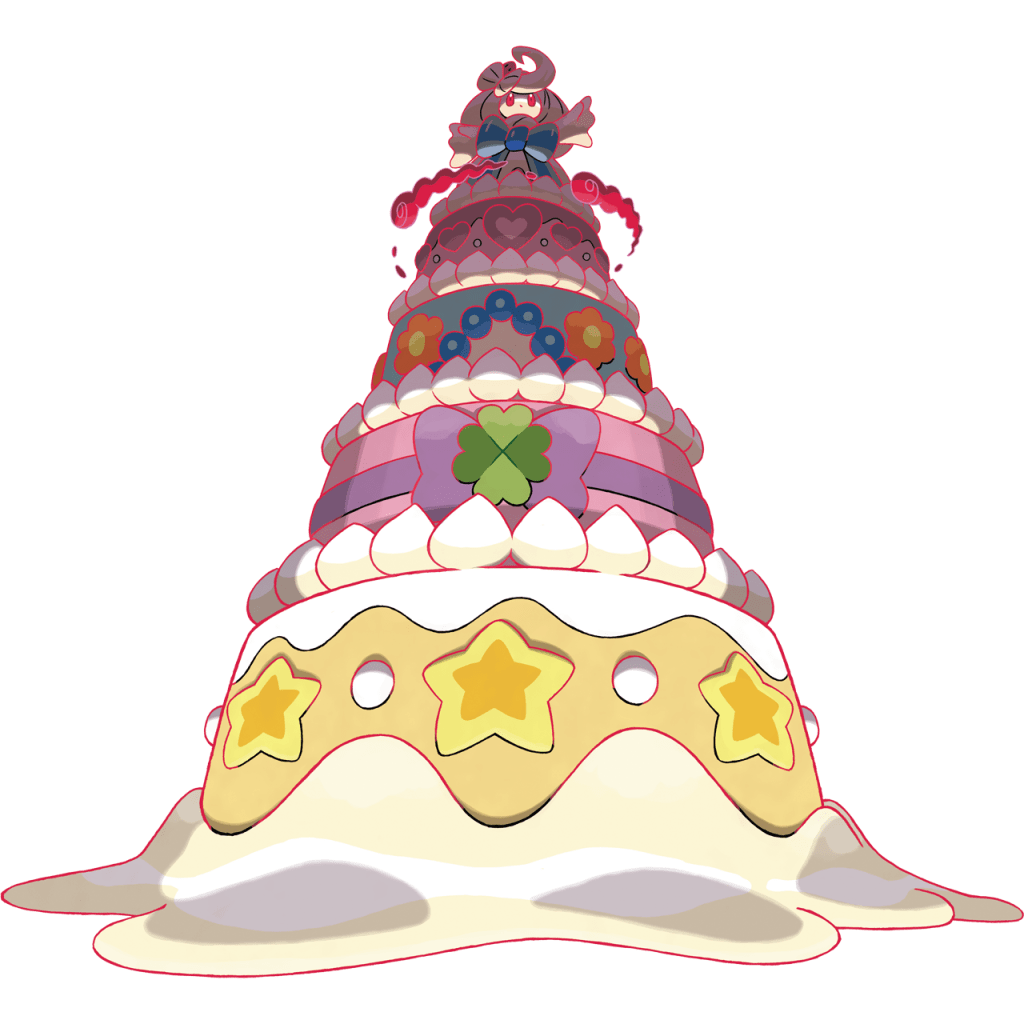
There are three reasons I think Alcremie would be the ideal Pokemon Sword and Pokemon Shield character. First is Alcremie’s Gigantamax form. Second is that she already comes with a huge variety of colors to base costumes on. Third is the unique gameplay she would provide.

Gigantamax

The signature feature of the Galar region in Pokemon Sword and Shield is Dynamaxing, where Pokemon grow to massive size and gain all sorts of new abilities. A select few Pokemon have the ability to do a more advanced form of Dynamaxing called Gigantamaxing, and Alcremie is among those capable of the feat. Moreover, her Gigantamax form is visually striking, as she turns into a giant multi-tiered cake. It’s perfect for a Final Smash, especially with Gigantamax Alcremie’s signature move, G-Max Finale. It attacks and heals at the same time, and would likely be somewhat similar to Princess Peach’s Final Smash.

Color Palettes Galore

As of Super Smash Bros. Ultimate, each Smash character has eight costumes. For other Pokemon, there haven’t been many canon options for colors, resulting in things like purple Charizard and yellow Mewtwo. For Alcremie, however, this is anything but a problem. In Sword and Shield, Alcremie actually has dozens of possible physical variations based on the specific way it evolves from its previous form, Milcery. Rather than the developers having to work towards picking colors and trying to get approval, they can just say “let’s pick Matcha Cream and Rainbow Swirl” and call it a day, confident that the Pokemon Company won’t take issue.

Gameplay

For the most part, the Pokemon that appear in Smash Bros. are kind of similar. They have very animal-like appearances and their animations translate that aesthetic to their moves. But Alcremie is living whip cream who’s slow but with high special stats, and who specializes in support moves and fairy-type attacks. The closest we get to that is Jigglypuff, who only became a Fairy type in Pokemon X and Y. Alcremie could be a low mobility but high range character, hitting opponents with Dazzling Gleam while also using Decorate to provide support. If they wanted to take this further, developers could even make it a team specialist.

An Alternative 

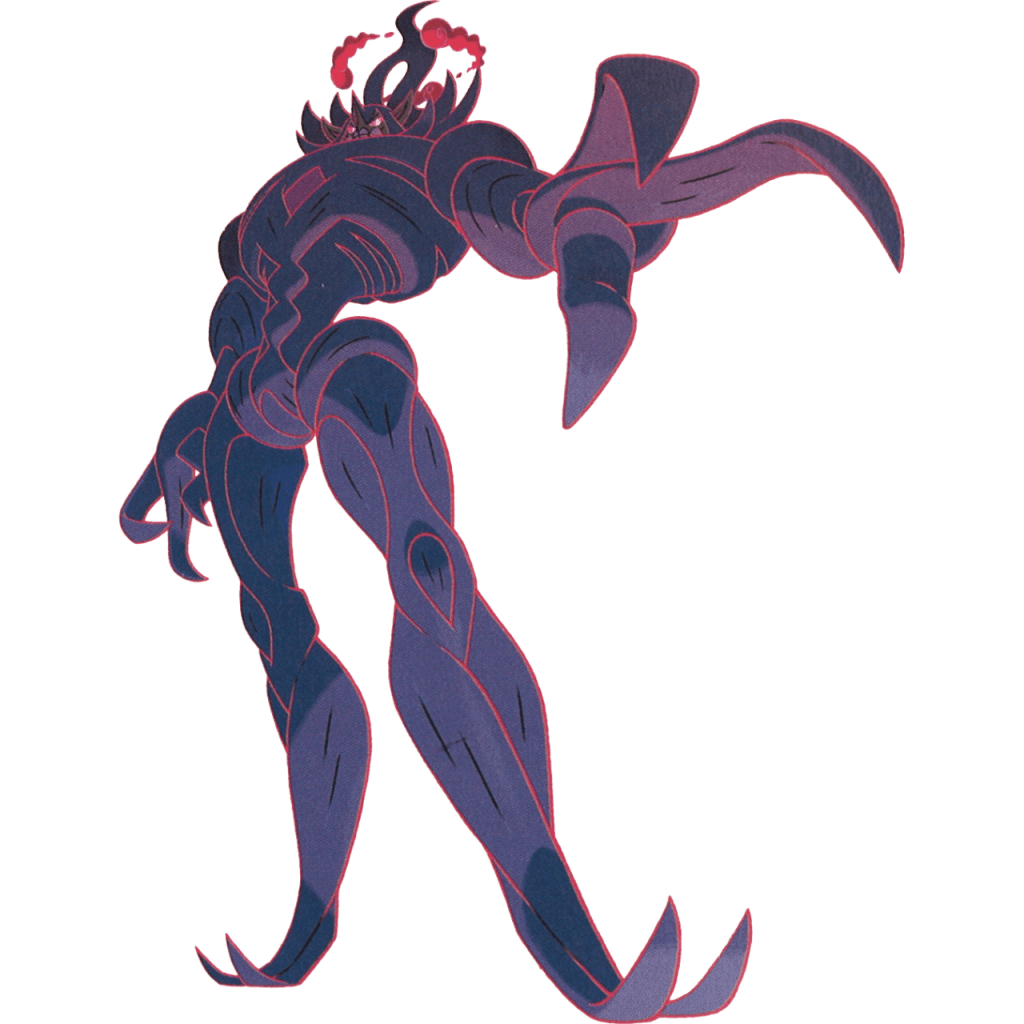
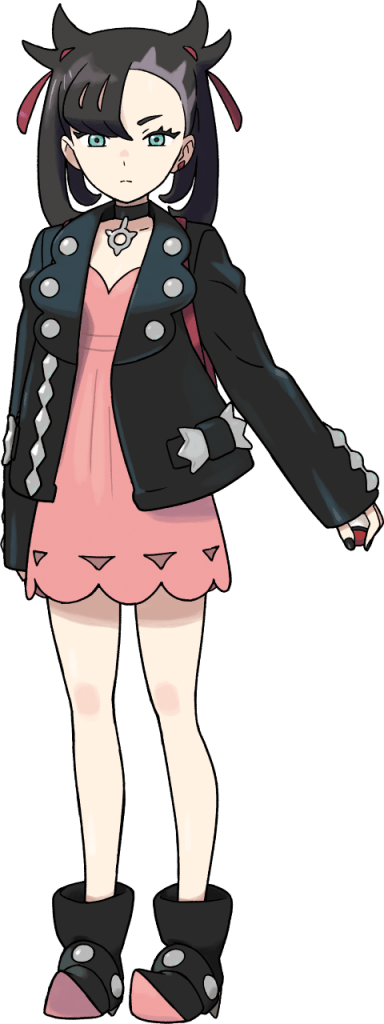
In all likelihood, Alcremie could be too left-field even for Smash Bros. In that case, I think an almost equally good choice would be Grimmsnarl, who also has a cool Gigantamax form but unlike Alcremie has a more conventional body type. On top of that, Grimmsnarl is used by the ever-popular Sword/Shield character Marnie, giving it potentially a built-in fanbase.

The Cream of the Crop Always Rises to the Top

The DLC character of Super Smash Bros. Ultimate have mostly been third-party guests, but Pokemon Sword and Pokemon Shield are absolutely big deals in the video game landscape. Alcremie would be a quirky but appropriate mascot for the Galar region, and I think it would have both general appeal and the opportunity for some creative game design.

Now, if only they’d go back and give Generation 3 a proper representative as well…