As character types, the “idol” and the “gal” (or gyaru) have both been around in Japanese media for decades. However, they seem to have hit even greater notoriety in recent times. On the idol side, there’s been heavy hitters like Oshi no Ko and Love Live! Then there are works like Hokkaido Girls are Super Adorable and An Otaku Who’s Kind to Gals, where gals are the main heroines or the central focus.
The idol is an idealized symbol of pure devotion to the fans, for better or worse. Fan support is why she’s able to grow as a performer. The gal is attractive, forward, and runs up against traditional Japanese beauty standards. When portrayed with a heart of gold (or as someone who’s secretly a virgin), she transforms into dork kryptonite.
What happens when the two are combined? Naturally, it would make for a powerful character.
In thinking about the relative success of both archetypes, I began to wonder if there are any examples of such a convergence. Then I remembered that there are indeed a couple of characters who occupy that intersection: sisters Jougasaki Mika and RIka from The iDOLM@STER.
I am by no means an expert or even a dedicated fan of The iDOLM@STER. What I do understand, based on my limited knowledge, is that 1) Mika and Rika were introduced in the Cinderella Girls mobile game in 2011, and 2) I’ve been seeing their fanart for what seems like forever—Mika’s especially. In all instances, they exude “gal” energy. According to the popularity polls, Rika was initially ranked higher, but Mika emerged as more of an enduring mainstay. As if to reflect Mika’s notoriety, the Cinderella Girls anime portrays Mika not as one of the main characters, but an established idol whom others look up to.
One thing I don’t know is whether Mika and Rika have been merely a reflection of the two trends or if they actually contributed to their presence in significant ways. In other words, while I can guess that their popularity has come from being gal idols, how often is it the case that the Jougasakis are the reason people got into one or both sides? Gal subculture has been around for a long time, but I don’t recall them being nearly as prominent as characters in 2011—at least, not in the way they are today, and not in terms of their cultural presence around in the 90s and early 2000s.
While one can hardly attribute the increased visibility of idols to primarily Jougasaki Mika or Rika (they are from games where nearly everyone is an idol, after all), I can’t help but wonder if they’re significantly responsible for shining a greater spotlight on “gal characters” in a way that has persisted over a decade later. If the sisters have played a large role, it would make them influential in a way few other characters can match.
And if there are any other examples of gal idols, I’d like to learn about them.
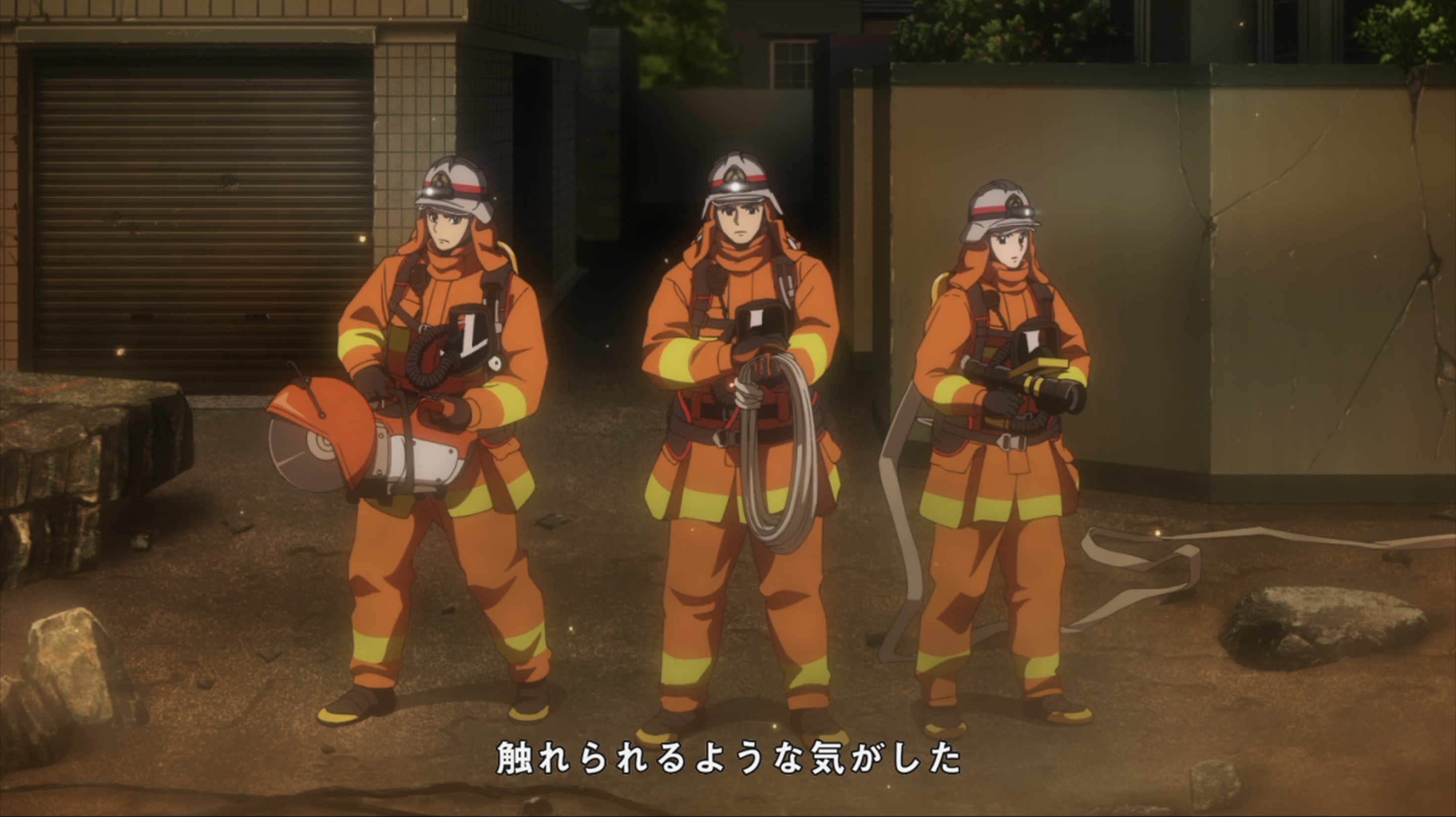
Cop-themed media is ubiquitous, but firefighter stories are far less common—maybe it’s the lack of “bad guys.” But here comes Firefighter Daigo: Rescuer in Orange, an anime that’s not only about dealing with fires and other hazards, but is actually a sequel to a popular 90s series.
The original Firefighter! Daigo of Fire Company M by author Soda Masahito was a successful manga in Japan, running for an impressive 20 volumes. Over in the US, I remember seeing ads for the original Firefighter Daigo manga back in the 2000s, but it never really got any traction. My primary exposure to author Soda Masahito’s work has been through some of his shorter manga such as the schoolgirl rap battle series Change! and the MMA-themed Hanakaku. In both cases, they were clearly (and disappointingly) made to end early, so it’s interesting to see Soda return to the world of his biggest hit not named Capeta.
The sequel does not require prior knowledge of the first series—the only anime ever created for it is a decades-old film. Taking place many years after the first series, Firefighter Daigo: RiO follows three recent recruits as they go through the rigorous process of becoming rescuers and then beyond. The first is Toake Daigo, a taciturn wunderkind who has a preternatural knack for dealing with dangerous situations. The second is Onoda Shun, an intense guy who’s the exposition hype man, kind of a Vegeta, and a hardworking guy in his own right. The third is Nakamura Yuki, Shun’s former high school classmate, who possesses keen observation skills and a literal lifelong dedication to joining the fire department. As they go through their respective paths towards being full-fledged rescue workers, their links to one another run deeper than they realize.
Daigo and Shun are clearly meant to both parallel and contrast with the original duo from the first series, Asahina Daigo and Gomi Shunsuke. Asahina is the loud and brash one while Gomi is the serious kind, whereas their spiritual successors have “swapped” personalities. Yuki can come across as “Firefighter Daigo: Now with Girl,” but they develop her as a unique character and a worthy peer in her own right.
Firefighter Daigo: RiO is mainstream in a way few anime ever are. On top of the approachable subject matter (“firefighters saving people from danger and going through personal drama!”) and the lack of more otaku-oriented tropes, the series also aired during Japanese primetime hours. The result is that it has some of the highest TV ratings of winter 2024, just below the perennial favorites like Sazae-san and on par with the runaway hit that is Frieren. It feels almost tailor-made to do well, like it’d run alongside Law & Order.
Episodes typically highlight the extensive training and preparation of firefighters and rescue workers but also the reality that they can never anticipate everything—improvisation and a cool head under pressure are both necessary. No one embodies this spirit more perfectly than Toake Daigo himself—seemingly too perfectly, at first. He’ll do what others would never think of, and his peers can’t help but watch (and comment) in awe as he pulls off another miracle. But over time, it becomes clear that this intense dedication hides deeper wounds from his past, and that this seeming flawlessness is anything but. Rescuer in Orange does a great job of putting the human in superhuman, not least of which is because Daigo himself sees his peers as better than himself.
It’s a very normal show, until it isn’t. As Kate from Reverse Thieves points out, you think it’s just a normal human drama…and then you find out that the original Daigo has been traveling the world rescuing people like some kind of vigilante firefighter. On top of that, the original Shun has separately been building up a clandestine elite firefighting force to prepare for some impending mega disaster.
The only recurring issue that I think really detracts from the show is that the animation can get pretty sloppy, and a lot of each episode is taken up by a recap; a 22-minute show is more like 18.
Firefighter Daigo: Rescuer in Orange is very cool in a normal way. Its characters are compelling in a normal way. It feels so very conventional most of the time, but will occasionally throw a curveball that really shows how well constructed the series really is. It’s the kind of show that would make for a great gateway anime. I hope that it can accomplish this goal, not only for anime in general but for Soda Masahito’s other works.
For almost as long as Godzilla has existed in fiction, there have been essentially two versions of the giant reptile. The first is “Godzilla as force of nature and reflection of human folly,” most recently seen in the Oscar-winning Godzilla Minus One. The second is “Godzilla as defender of the Earth.” That’s the space occupied by the sequel to Godzilla vs. Kong—Godzilla x Kong: The New Empire. The resulting film is one I found incredibly satisfying for what it aims to be, which is a crossover film that treats its monsters as the actual stars.
Godzilla x Kong takes place a few years after lizard and ape’s victory over Mechagodzilla in the previous film. King Kong now resides in Hollow Earth, looking for any signs of other giant apes. Godzilla remains on the surface, fighting titanic threats that are trying to encroach on their territory. When possible evidence of Kong’s species turns out to be tied to a potential threat to both parts of Earth, both he and Godzilla set into motion to do something about it.
The big thing about this film is that it presents its iconic monsters as legitimate central characters. Godzilla x Kong not only tells a story centered around the monsters, it highlights how different they are in terms of their relationship with humanity. King Kong would rather avoid harming humans. Godzilla doesn’t actively try to kill humans, but if they need to swim through a busy bridge and take out a few dozen occupied vehicles in the process, oh well. The two behemoths are not terribly fond of each other, but sometimes there are bigger fish to fry.
The human stories, meanwhile, are decent enough without overshadowing Godzilla or Kong.
This movie’s monstrous antagonist (because you know there has to be one) is interesting in a lot of ways, firstly because they’re 1) an all-new character, and 2) Kong-centric. It’s all too easy for films featuring Godzilla to tap into their extensive rogue’s gallery—they could reasonably never make anything original and still never run out of adversaries. In contrast, King Kong doesn’t really have archenemies because that’s never really been a thing in the character’s stories. Secondly, this monster is less about brute force or overpowering his foes, and is more of a conniving despot who uses pain and fear as tools for control. It’s a lot more than what I expected from Godzilla x Kong, and reminds me of some of the best pro wrestling heels.
I decided to look at online reactions to the villain, and I was surprised to see a good number of people were disappointed. This was a realization that when it comes to MonsterVerse baddies, a decent chunk of fans want a Brock Lesnar (an unstoppable wrecking machine) instead of a Ric Flair (an underhanded schemer who exploits others).
Overall, I got everything I wanted from this movie, and then some. If you want something movingly artistic with amazing actors, Godzilla Minus One is right there. If you want a story about gargantuan beasts pummeling one another while still carrying lots of personality, Godzilla x Kong hits the spot like few things can. I’d actually love to see the two get released in theaters as a double feature, so audiences can experience both sides of the big green G and come away enlightened.
The first time I learned that some anime and manga fans dislike Tanjiro from Demon Slayer, I was genuinely surprised. To me, he’s one of the best shounen protagonists in a long time: a gentle soul whose greatest qualities are love and empathy, and who is fueled by those emotions to get stronger. And in terms of the battles Tanjjro fights, I really enjoy how every victory feels like it came at great cost to him, emotionally and physically.
“How could anyone not like Tanjiro?” I wondered. Even knowing that this was probably a minority of viewers, I decided to just look at online comments both off the cuff and more detailed, and saw a few recurring criticisms. Namely, the goodness of Tanjiro can make him come across as preachy or self-righteous. He’s too good, lacking any darkness whatsoever, and this can be difficult to relate to.
I understand not being into goody two-shoes, but what confused me at first is that it’s not like Tanjiro is a perfect unstoppable hero. He’s often unable to defeat demons on his own, and it means that battles are more of a collective effort. However, I eventually realized that this too can be seen as an unappealing trait precisely because he didn’t win on his own.
Things changed when I began approaching the matter in pro wrestling terms. Essentially, I think a lot of people who aren’t fond of Tanjiro—or other similar characters like Deku from My Hero Academia—want heroes more akin to wrestling greats like Stone Cold Steve Austin, The Rock, and post-1980s Sting. Back in the 1990s, antiheroes became much more prominent in entertainment as a whole, and while they were often underdogs against an oppressive greater force, they were also rowdy ass kickers. In contrast, Tanjiro is what wrestling fans call a “white meat babyface,” or an unabashed good guy. In wrestling, this is often “solved” by having the good guy turn bad, become edgier, and then become good again so that they carry at least a bit of a dark side with them. This literally happened with The Rock, and even Deku has a similar phase—one that certain fans had wanted Deku to reach the entire time. Some folks are just looking for badasses.
All this reminds me of a post I wrote back when Kill la Kill was the big thing. At that time, some fans saw Ryuko as a one-dimensional protagonist because she’s a perpetually angry ass kicker who doesn’t have a grand arc full of character development. She doesn’t change on a fundamental level, and this was viewed incorrectly as “poor writing.” I think a similar thing happens with Demon Slayer, only with a different type of main character. That’s not to say preferences aren’t allowed to exist, but that they are not to be confused with neutral objectivity.
For Tanjiro and other “good boy” characters, the purity of their compassion is a beacon of hope that kindness and love can be enduring sources of strength. The fact that Tanjiro never changes at his core reinforces that power. At least, that’s my interpretation. What I’ve since learned is that others might see that aspect as something bland and in need of “development.” To this, I would say that being able to maintain one’s empathy even as the world grows more cruel is a fine character arc because it is in itself a true challenge that requires adapting and honing oneself to overcome the temptation to do otherwise.
On my trip to Japan last year, I stayed briefly at Meigetsuso, a hot spring ryoukan located in the city of Kaminoyama in Yamagata Prefecture. The reason I picked Yamagata is that it’s Ogiue’s home prefecture. No, really—I specifically started with “I want to visit where my favorite character is from,” and worked backwards. Based on that, as well as availability, I landed on Meigetsuso, which translates roughly to “Tomorrow’s Moon Inn.”
A ryoukan, or Japanese-style inn, embodies the notion of “traditional Japanese aesthetics,” between the paper-screen doors, the tatami mats, and the traditional cuisine. It provides the sort of experience one typically doesn’t get as a foreigner otaku who’s prioritizing anime and manga, but I’ve found that on the rare occasion that I get to stay at a ryoukan (particularly if it’s attached to a hot spring!), the experience is worthwhile. And by taking the effort to neither essentialize or exoticize the culture, I believe I can comfortably appreciate the way these inns give their guests the red-carpet treatment, so to speak.
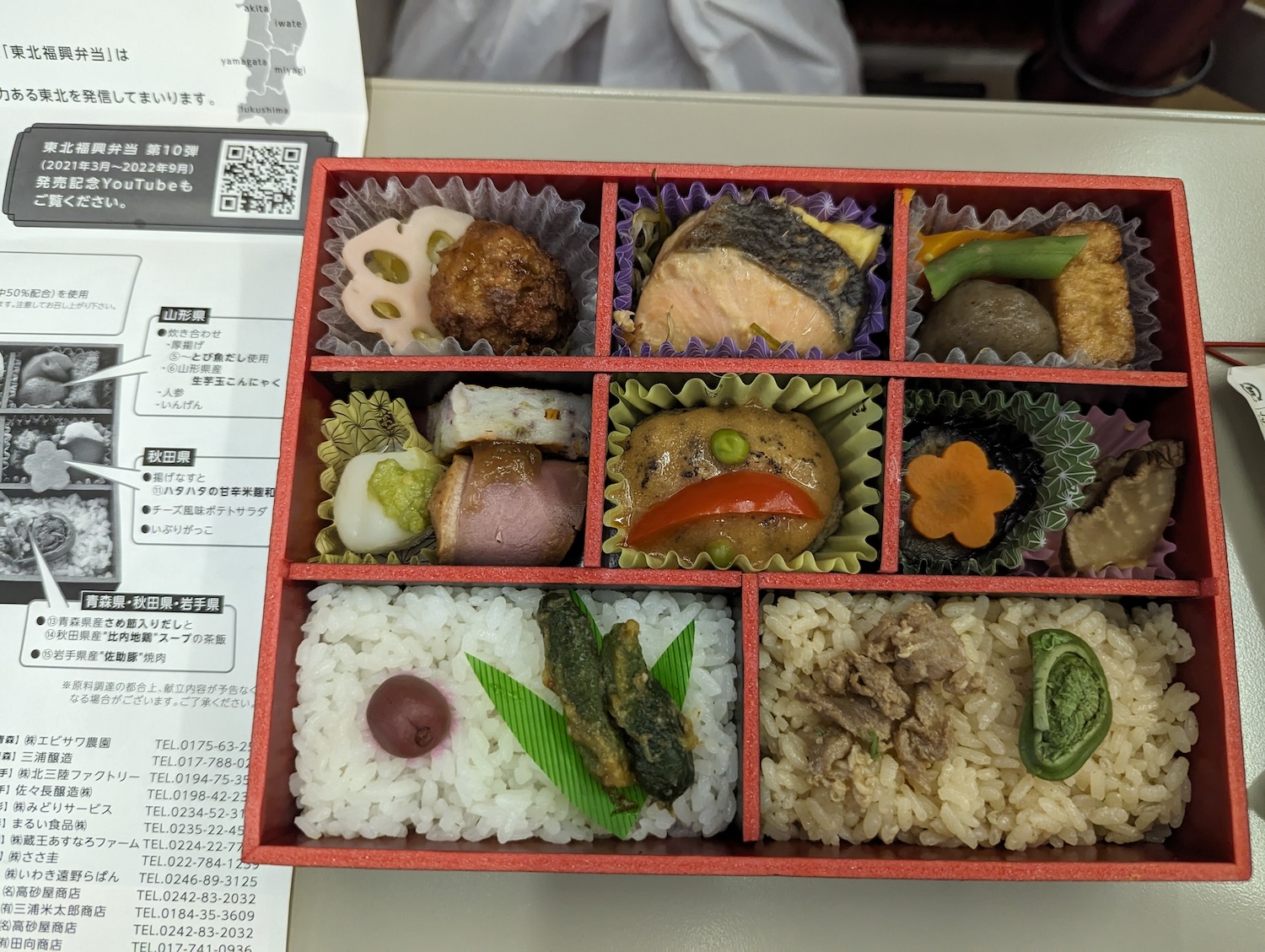
I arrived in the city via shinkansen on a snowy winter day after eating a special Tohoku-themed train bentou. While public transportation can get close to the inn, I decided to travel by foot in order to explore the area a bit.
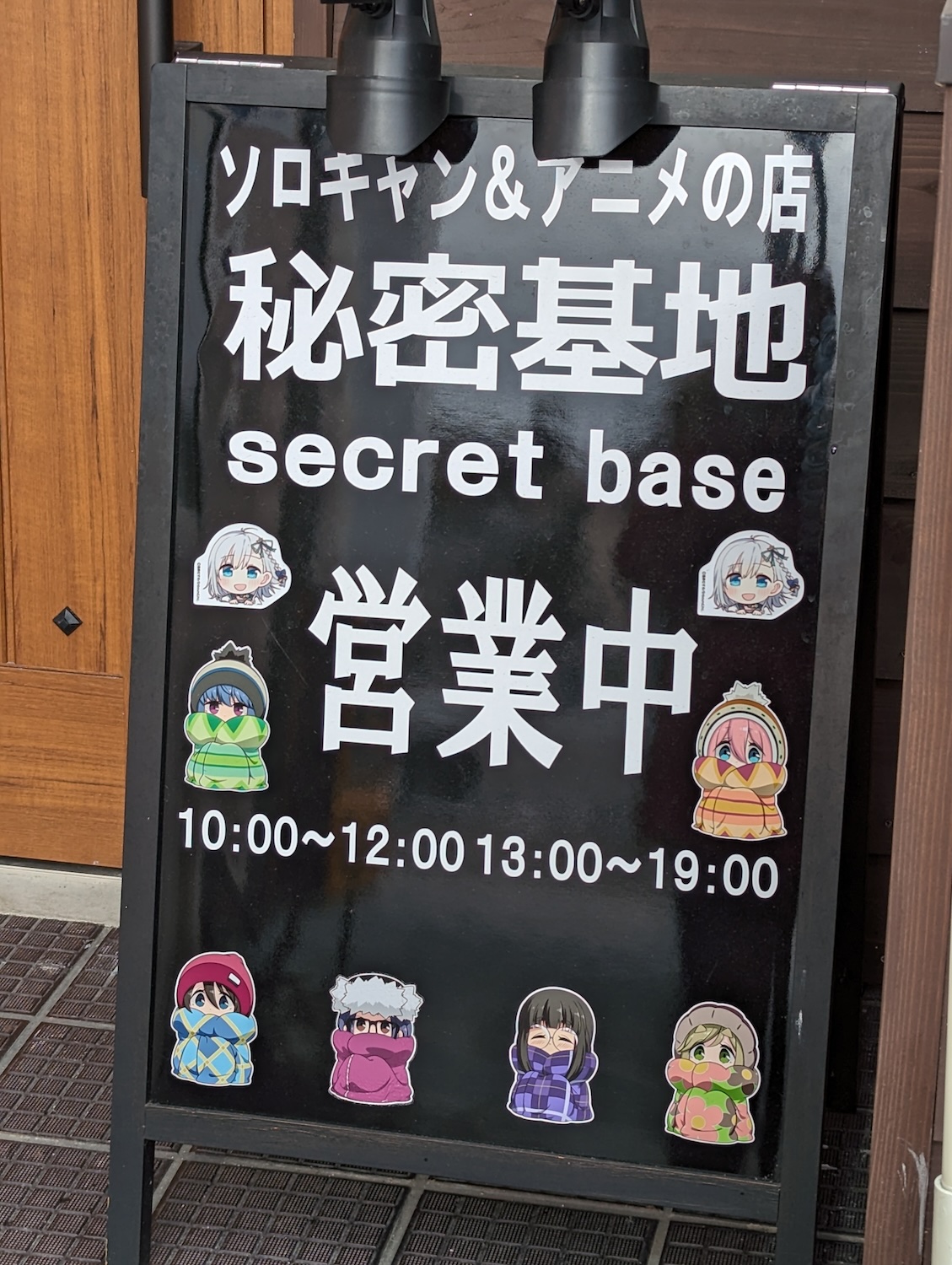
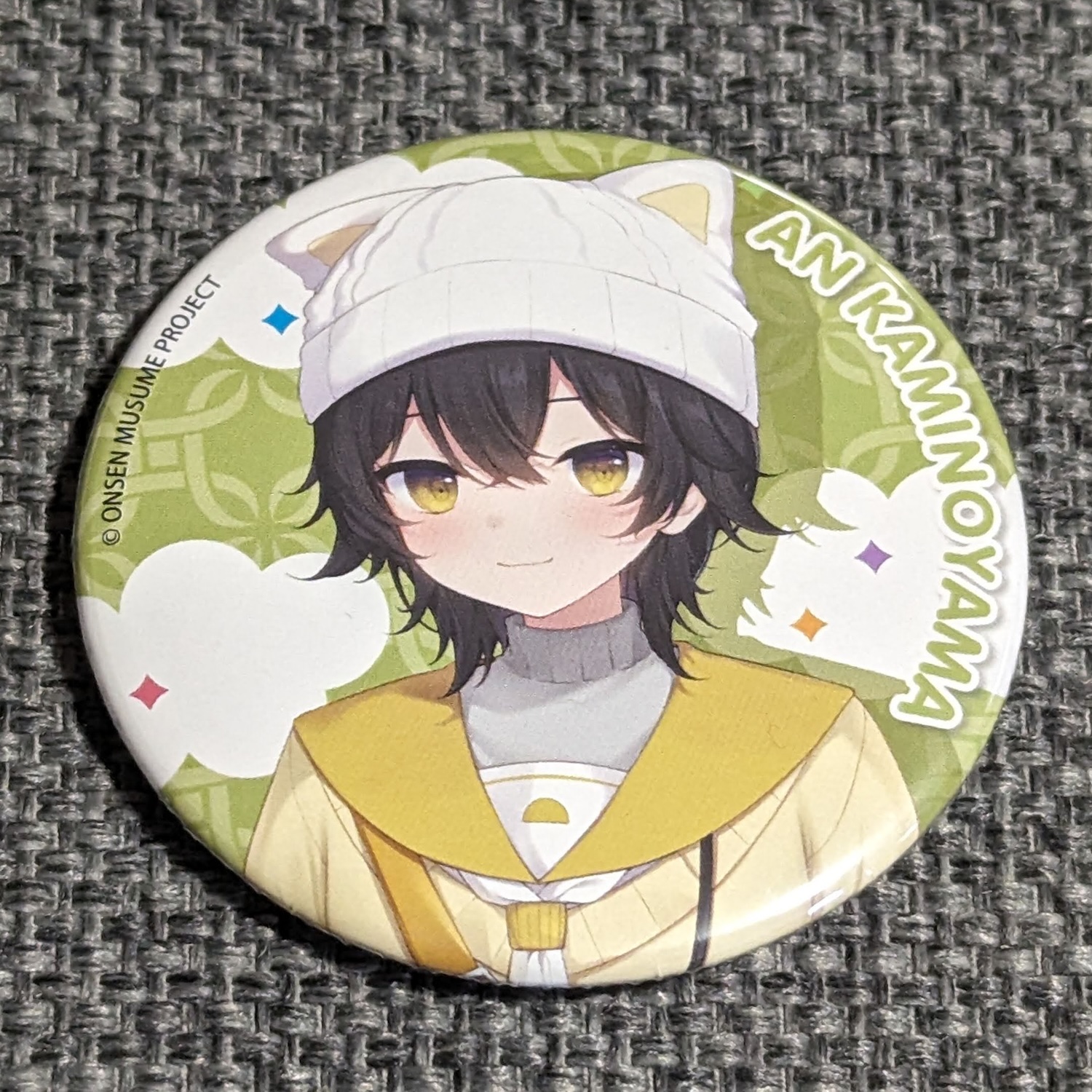
One fun find was a small anime store called Himitsu Kichi, or “Secret Base.” It was charming in a way that reminds me more of a humble local comic book shop back home, the kind that’s far less prevalent today. The most prominent series at Himitsu Kichi was definitely Laid-Back Camp, and a Love Live! Nozomi tapestry greeted me at the entrance. I bought a button featuring Kaminoyama An, a character who represents the region in the Onsen Musume franchise.
After some time traversing uphill, I eventually made it to Meigetsuso, which was a little ways up the mountain. It wasn’t an ultra-challenging climb or anything, but my legs definitely got a workout.
The Meigetsuso building itself is gorgeous both inside and out. It did indeed look a lot like my animes, but even setting aside the associations with tradition and all that, I couldn’t help but be in awe at how relaxing it felt just to walk around. The room itself was similarly beautiful and pleasant, and the hot spring was naturally amazing to the point of being downright addictive. I don’t know if any of the purported healing properties of hot springs are real, but I definitely felt better after jumping in one.
There was a room called the Sasa room (written with the same kanji as “Sasahara.”) Naturally, I had to take a picture of it with Ogiue.
The staff treated me like a VIP, and while it cost a pretty penny to get that luxury (more on that later), I can’t deny that I got my money’s worth. Most of them did not speak English, but a combination of my relative fluency in Japanese and their occasional use of translation apps helped smooth things over. I suspect that for those who don’t know any Japanese, that app ends up getting a lot more work.
As for food (aka one of my favorite subjects), I loved the fact that much of what they serve is either local dishes or made from local ingredients.
Upon settling in the room, the attendant served a small set of assorted snacks that included fruit, jelly, their own house-made senbei rice crackers, and other things I didn’t entirely recognize. Nothing was super sweet (as expected of Japanese food), but it was all quite pleasant.
There was also a large pot of conjac jelly balls available in a lounge area through the afternoon, with a side of spicy mustard also available. It was actually my first time having conjac, and it turns out that I’m quite a fan of its gelatinous texture. If I didn’t have a large meal that evening, I probably would have kept eating them!
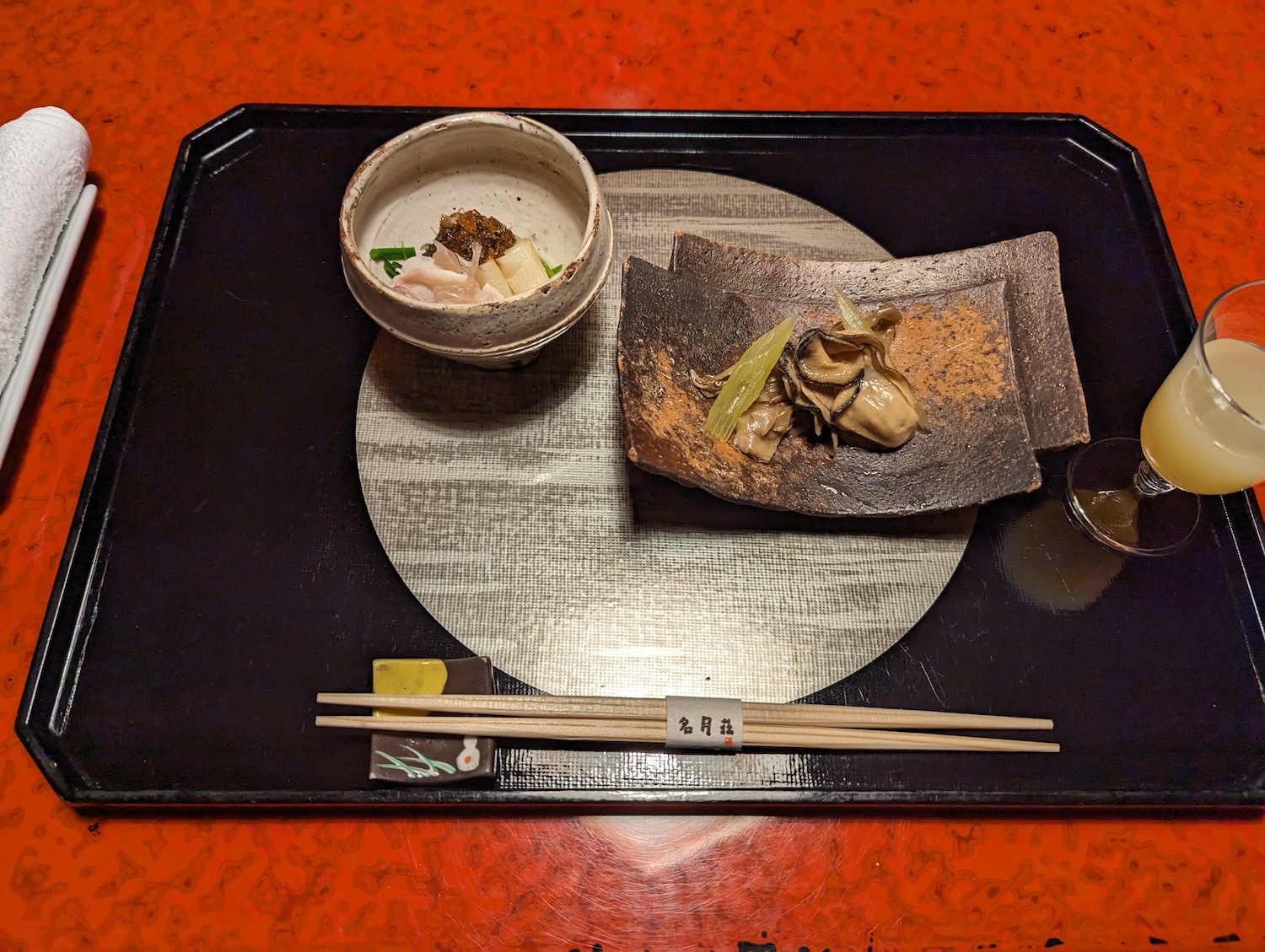
That dinner was kaiseki, a type of dinner with multiple courses of small servings, and one of the fancier ways to eat in Japan. The only times I’ve had them is at ryoukan, where it was included with the cost, and part of what makes them a good deal if you can afford to stay in the first place. It was a wonderful experience that included some of the best steak I ever had, fresh sashimi, a unique form of wide udon noodles, and even my first time eating fugu! In the last case, a part of me was worried about the whole lethal poison thing, but here I am, alive.
Rice is apparently a source of regional pride in Yamagata, and dinner came with their most famous breed: Tsuyahime, which had a chewy texture and a subtle sweetness that really stood out to me. It was one of the last parts of dinner, after I was absolutely stuffed, but they offered to make the leftovers into rice balls for snacking at a later time. I happily obliged.
The morning brought a breakfast that also consisted of many small dishes, such as a burdock root dipping sauce for vegetables, rolled omelets, grilled fish, and Yukiwakamru rice (instead of Tsuyahime). The rice could be served as a plain bowl or as a porridge, but you can (and I did) ask for both. This one is apparently famous for being popular with people who just like to eat heaping helpings of rice unadorned, and I’m inclined to agree.
All in all, I was the proud owner of a very satisfied belly.
I won’t deny that this was a very pricey excursion, and that for many, including myself, it’s definitely something you need to save up for. Even so, the quality of service and the blissful atmosphere provided is really worthwhile for how much it costs. Meigetsuso ended up being less expensive compared to a similarly luxurious resort or hotel. The currently strong dollar to yen ratio also helped tremendously, but even if that weren’t the case, I think Meigetsuso was a fantastic place to stay and even come back to. The only reason I wouldn’t return is because I don’t make trips to Japan often, so I might want to share the love elsewhere. But if I did live in Japan, I could see myself making annual trips to Kaminoyama to enjoy their hospitality.
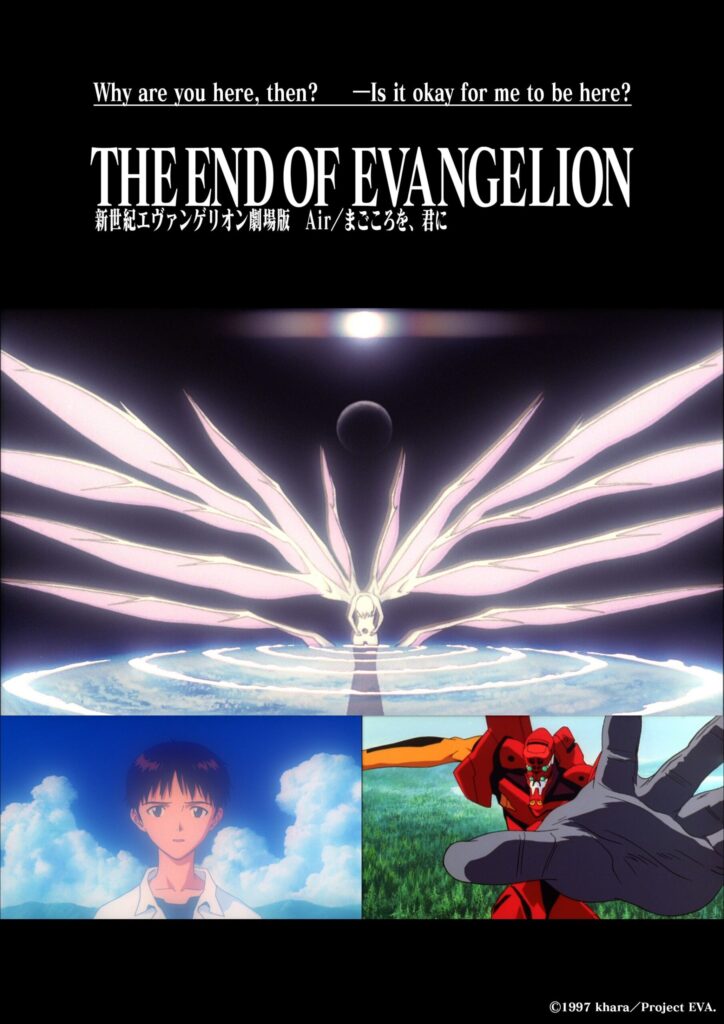
In March, I went to a screening of End of Evangelion. While it wasn’t my first time seeing the movie, it had also been many years, and this was actually the first time EoE had been released in theaters in North America, courtesy of GKids.
Evangelion as a whole is a major part of my history as an anime fan, culminating with the Shin Evangelionmovie. But two decades ago, End of Evangelion was one of those works that blew apart my preconceived notions about what animation could do. The emotional turmoil, the horrifying spectacle, and the beautiful animation all worked together to leave a lasting impact on my psyche.
It’s interesting to have again seen this film in full, now with the context of my own lived experience and where Evangelion has gone since then.
End of Evangelion is a sort of alternate version of the last two episodes of the TV series. Rather than taking place purely in an abstract world consisting of the collective minds and souls of its characters, things are based more in the physical world. After NERV defeats the last of the Angels, its secretive parent organization SEELE betrays NERV, and the ensuing carnage sends its already traumatized heroes spiraling down even further.
Ikari Shinji has long been the poster child for angsty teen protagonists, and it’s easy to see here why he could be both a very relatable character and an endless source of aggravation for viewers. As the people on his side and close to him are literally gunned down in cold blood, Shinji is unable to act. It makes me want to shout, “Get out of your own head, damn it!” And that admonishment more or less happens in the movie itself. But Shinji’s perspective is also one that hits close to home: He’s screwed up so many times that he thinks doing nothing is literally better than trying at all and inevitably making things worse. When you only see yourself as a source of failure and disappointment, it can be hard to take even a single step forward.
But when Rei initiates Third Impact, the apocalyptic event that’s meant to bring everyone’s souls together and reform humanity as the single entity it began as, Shinji does something surprising: He rejects this future that would ostensibly solve all his problems with human connection. It turns out that Shinji isn’t satisfied with a happiness that is handed to him, even if it would be a realm of sheer bliss. He wants to achieve self worth by going out there and finding it himself. The process itself, and the authenticity of the success, is paramount. It’s not so much that reality is about suffering, but more like telling someone who’s trying to plant a flower (and is incredibly bad at gardening) that you can just buy them an entire field of flowers that’ll be tended by the world’s best botanists.
The ending scene is one of many scenes that have long generated discourse, and thinking about it from the perspective of dreams vs. reality has me reconsidering its outcome. In the aftermath of the Third Impact (or at least its attempt), Shinji finds himself alone with Asuka. Seeing her lying prone, Shinji starts to strangle her, repeating an earlier “action” he took while being confronted in his mind about the way he desperately tries to avoid loneliness. But to his surprise, Asuka’s hands gently brush against his face, and this causes Shinji to let go. Asuka then says, “Disgusting.”
I see Shinji’s actions as indicative of him doubting that he’s out of the dream-like Third Impact, only to be thrown off by Asuka being very different from what he saw in his own mind. The compassion and disdain are both there, beauty and ugliness all mixed together. Reality is where dreams end, but it’s also fueled by those same dreams. It’s a messy world where Shinji can once again try to make a genuine connection, even if they’re the last two people on Earth.
To me, the essential difference between End of Evangelion and Shin Evangelion has to do with their relationship with depression. EoE is what you get when you’re caught up in it and are trying to provide hope that there’s a way out. Shin Evangelion is the result of someone who managed to overcome that depression and can tell you the other side is real.
The spring 2024 anime season turns out to be absurdly good! There are many highlights among the new shows, but I think chief among them are Train to the End of the World, Jellyfish Can’t Swim in the Night, and Go! Go! Loser Ranger! It’s also interesting seeing Shinkalion: Change the World try to be a little more mature. I wonder if it’s aiming for the kids who grew up on the first two Shinkalion anime.
Thanks to my Patreon supporters for the month, especially the following people!
A celebration of super robot anime that forges its own path.
Kio Shimoku
For fans of Ogiue (and Ogiue doppelgangers), this is a good month.
Closing
It feels like it’s been a while since all of my highlighted posts are just straight-up reviews and analyses of specific anime and manga titles. I wonder if this trend will continue.
Elden Ring completed! Kio is a little sad that there was no last dungeon after the boss rush, though (Note: Let me know if there is one, and I’m totally off in understanding this.)
While in Japan last winter, I decided to check out one of the oldest soba shops in Tokyo, Kanda Yabu Soba. The restaurant dates all the way back to 1880, during the Edo period, and comes from a time when soba got famous as a fast food for busy people.
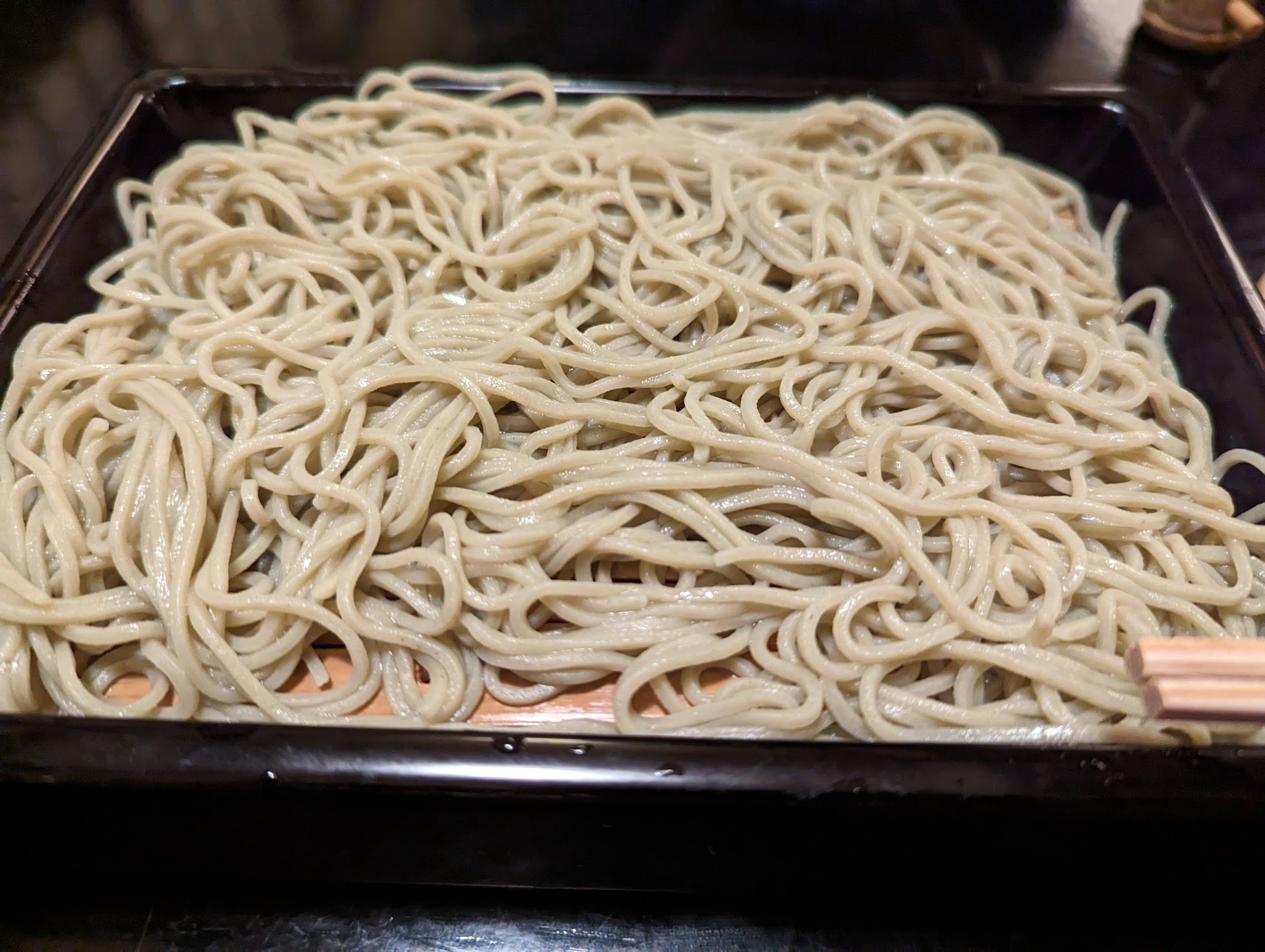
To my surprise, my group managed to get in. While the wait was somewhat long—around 30 minutes—it was nowhere near as bad as I was expecting for a restaurant with its reputation. When our number was called, we sat down at one of the traditional floor spots (as opposed to having western-style chairs), and I ordered seirou soba: a plain buckwheat noodle, served hot with a thin dipping sauce.
It was literally the best soba I’d ever eaten. The noodles were simple but satisfying with a fresh buckwheat taste with lots of depth, and the restaurant also offered hot water at the end that you could mix with your remaining dipping sauce to create a nice after-meal broth. Not only that, but it was very affordable, not even factoring in a strong dollar to yen exchange rate.
Japan is a land of genuinely good food at reasonable prices, and Kanda Yabu Soba is a prime example. While this value is most apparent in the many convenience stores that dot the country, what’s truly mind blowing to me is that even a nationally renowned, 144-year-old restaurant would still be so accessible budget-wise. But even putting aside such a long-lived establishment, I find that the US, by comparison, suffers from high rent, the cost of real estate, and the segregation of communities due to the prevalence of car culture. These factors make it almost impossible for niche restaurants to get off the ground and remain reasonably priced.
My only regret about going to Kanda Yabu Soba is that I didn’t have the opportunity to try more than the basic. It was excellent, of course, but now that I’ve had the seirou soba, I want to try their more elaborate options (like the one with duck!). That’ll hopefully be for next time, if I happen to be in the area again.








 OGIUE MANIAX