Kio made his first trip to Akihabara, but took a different route this time. The last visit, he went to Melon Books, ZIN, K Books, etc. This time, it was Yodobashi, Volks, Yellow Submarine.
When asked if his interests are going from books to 3-dimensional things, Kio says that his interest in ero is growing weaker, while his desire to build gunpla is growing stronger.
Another reply shows Kio that the old Genshiken capsule figures still exist, to which he expresses surprise. He’s also amazed at how the swimsuit figures of Saki and Ohno managed to happen. The original replier says he likes this Ohno figure, but likes the bouncing boobs Ohno bust that came with an issue of Monthly Afternoon.
(Ogiue Manaix note: I have this one too, but I never managed to get the Ogiue counterpart because it was Japanese mail-order only…)
The Kimura Jin super fan known as “b” talks about how pure and innocent Jin looks, and asks Kio if Jin is saying “ni” (two) in the countdown image above. Kio gives an affirmative.
I had to ask if there’d be any limited store exclusives for Volume 8. Kio answered “no,” which helps me a lot because it determines how I order the book.
Technically not Kio tweets, but manga artist Shigisawa Kaya drew some Hashikko Ensemble fanart! In the first image, they mention loving Kozue’s fat fingers.
The artificial rendition of “Kanade” by Sukima Switch, as performed by the main characters of Hashikko Ensemble, goes away April 25th, 2022! Make sure to listen.
Kio wonders who the heck “Nagayama Koharu-chan” is. (Note: It’s actually a weird troll account by the author of Chainsaw Man where he pretends to be a third grader into Chainsaw Man).
Every so often, I’ll come across a specific type of retcon in a long-running series that essentially says a certain important character or thing was unseen in the background all along, and that the audience just wasn’t aware of this. It’s a kind of shortcut to make new information not feel shoehorned in, and it’s not necessarily a bad thing—just evidence that things weren’t planned from the outset, for better or for worse.
The Gundam franchise has sort of always been this way, whether it’s the Mobile Suit Variations line that talked about all the other aces fighting in the One Year War offscreen or anime such as 08th MS Team showing events from a different perspective. But the film Gundam Narrative takes it to a whole other level, being what is essentially spackle for a specific period in the Universal Century timeline.
Early Gundam series were not made to overly adhere to a finely tuned canon, as they were usually set years apart chronologically to emphasize the idea that “things have changed.” But as the timeline has become more dense with sequels, prequels, sidequels, and spin-offs, there developed a certain unexplained plot element that had no real answers: why did the crowning technology from the film Char’s Counterattack, the Psycho-Frame, stop being used in later UC works like Gundam F-91 and Victory Gundam? It’s the kind of thing that can be explained by simply saying, “Stuff happened,” but the space-opera minutiae fairly present in Gundam potentially makes that an unsatisfying answer.
The result is a movie about three kids—Jona Basta, Michele Luio, and Rita Bernal—whose lives are tied to major events throughout the Universal Century series. They were there when a space colony fell on Australia before the start of First Gundam, but burgeoning Newtype powers resulted in them being able to evacuate their town to safety. They were involved in the Cyber-Newtype experiments that were a major element in Zeta Gundam. And now their story takes them to being directly involved with the aftermath of the events of Gundam Unicorn and the hunt for the third Unicorn-class mobile suit, known as Phenex.
Gundam Narrative basically tries to act as a bridge between two eras, and while the story is decent on its own, the focus with reconciling that incongruity results in an unusually jargon-heavy work (even by Gundam standards!), and a bit of weakness when it comes to the social and political themes that usually come part and parcel with the franchise as a whole. I’m not sure if it’ll end up being anyone’s favorite Gundam, but it’s also not a hot mess. Gundam Narrative serves a function, and it’s fairly entertaining while doing so, but I tend to prefer something with more meat on its bones.
Shortly after I reviewed the first 16 volumes of the manga Shoujo Fight (or Shojo Fight), Volume 17 was released in English. I normally wouldn’t write about the same series after just one volume, but the introduction of an antagonistic character named Amamiya Maya has set off a compelling rivalry. However, rather than with the protagonist, Oishi Neri, the rivalry is between Amamiya and Neri’s best friend, Odagiri Manabu.
Many sports manga revel in the relationships between side characters, Shoujo Fight included, but up until recently, Manabu’s have been more about developing friendships—and one romance. This has all changed with the appearance of Amamiya, and what makes this particular rivalry stick out in my mind is the way it brings out a fiery side of Manabu that is also true to her otherwise gentle demeanor.
Amamiya is the captain of another volleyball team, but she also went to the same elementary school as Neri and Manabu. She’s essentially a narcissistic sociopath with a knack for social engineering, and she uses this skill to both manipulate her unwitting allies and extort her enemies. As young children, Manabu was on the receiving end of Amamiya’s exploitative actions while also being resistant to them—her caring and genuine heart the total opposite of Amamiya’s. In current times, Manabu is shown to instinctively recognize Amamiya’s tactics, and she bristles at the way the latter controls her teammates. Amamiya also has an obsession with mirroring Neri that contrasts Manabu’s own complementary bond with Neri, setting them up as “equals” of sorts.
As of Volume 17, Amamiya’s facade is starting to slip, but it’s notable that this isn’t solely because of Manabu’s actions. Other characters, including older ones with more life experience, are starting to call out Amamiya’s actions and behavior, and the cumulative effect between them and Manabu might be the key to breaking the sociopath’s hold on her teammates. I’m eagerly anticipating Volume 18 to see how this all turns out.
The third Gundam: Reconguista in G film continues the trend of breathing new life into a less beloved Gundam series. The edits make it noticeably easier to follow than the TV series, although I do acknowledge that the story is rarely ever straightforward or presented plainly, and this is a sticking point and the reason G-Reco is fairly divisive.
But as I watched Gundam Reconguista in G Part III: Legacy of Space, I had an epiphany of sorts that I think helps explain this split opinion. Namely, the key to understanding G-Reco is to get into the minds of individual characters. I understand how this sounds a little obvious (plenty of stories are about achieving personal goals), but what I mean is that character actions can seem inscrutable until you actively try to get into their heads.
The story as of Part III: As alliances and allegiances have shifted since Part Iand Part II, Earth’s great continent-states now send forces into space to meet with Towasanga, a nation on the other side of the moon, created by the descendants of the humans who settled in space colonies in the Universal Century era. Not only do Towasangans have access to technology unobtainable by those on Earth, but the Towasangans see themselves as arbitrators between the Earth and the far-off colonies of Venus Globe, which provide to the Earth the photon batteries needed for it’s civilization to function, and thus see the need to equip themselves for conflict amidst the increasing tensions on Earth. Bellri Zenam, still thinking about the deaths he’s seen and caused, tries to figure out what he should do and where he fits into the big picture.
One of the big differences between G-Reco and other Gundam series is that there aren’t two major sides, like Federation vs. Zeon or Earth Alliance vs. ZAFT. Rather, there are multiple governments and factions: Ameria, Gondwana, Towasanga, Capital Tower (which is then further divided into the Capital Guard and the Capital Army). These groups are then comprised of singular people who think independently and have their own ideas of right and wrong, which results in G-Reco being more confusing when you think primarily in terms of who is on what side and which side is winning, because these positions are always in flux. Rather, the important thing is actually to understand what motivates each character and how it affects their decision-making.
Bellri, for example, is initially driven by his opposition to the Capital Army and its inherent militarization of what is supposed to be a neutral defensive force. Upon meeting Aida Surugan, he’s also moved by his own horniness. By the third movie, he’s also filled with regret—both from having accidentally killed his own teacher in mobile suit combat and learning why having a thing for Aida is a bad idea—and his actions reflect this. Bellri constantly tries to avoid dealing lethal damage, but also isn’t so naive that he thinks he shouldn’t do anything. When he loudly shouts that he’s about to fire and does a purposely bad job of aiming, one gets the sense that he’s trying to deliver warning shots that are nevertheless real and dangerous.
The Char Aznable of the series, Captain Mask, is motivated by something very different: improving the standing of his people. As a descendant of that Kuntala, people raised to be human livestock when food was abysmally scarce on Earth, Mask’s kind are still discriminated against. It’s little wonder why he’d be so willing to ally himself with the powerful and influential. To Mask, it’s all a means to a noble end.
So when the forces of Towasanga show up, and many seem to have pursuit of glory in mind, it highlights their hypocrisy and elitism. Particular attention is paid to the female commander Mashner Hume and her boytoy, Rockpie Geti, who are overly eager to mix business with pleasure. It’s as if the film is trying to say that the only thing that’s worse than ignoramuses perpetuating war on Earth is ignoramuses who live in space who are supposed to know better and perpetuate war anyway. Still worse is the man who consciously exacerbates all this: Cumpa Rusita, the leader of the Capital Army.
I will admit that I remember little of this section from the TV series, but the slightly condensed nature of the film brings with it better pacing that makes certain events feel less abrupt. The restoration of Raraiya’s memories now comes across as strange yet reasonable, like it takes going into space to jog her memories. Bellri learning why he shouldn’t be hot for Aida also has a realness to it, as he’s shortly after shown to be struggling with some serious emotional turmoil (and his insistence on calling her Big Sis from then on feels a bit like a self-reminder).
The next parts of G-Reco are originally where the series went from okay to great for me, but I’ve also read that Tomino plans on doing some heavy changes to the end. As Bellri and Aida reach Venus Globe in Part IV, I’d like to see how it might reshape my experience. For now, it’s still a fun and contemplative ride.
I love the way the Super Robot Wars series combines plots together, and one example is the “connection” between the two Chizurus featured in Super Robot Wars 30.
One of the anime series in Super Robot Wars 30 is the 2000s-era anime Gun x Sword, and among the cast is a veteran robot crew called El Dora Team, who are portrayed as old-fashioned relics of a bygone era who find the spirit to fight again instead of sitting on the sidelines and waxing nostalgic. They’re essentially meant to be 1970s robot anime characters (with a bit of Mexican and spaghetti-Western flair) thrust into a modern context.
One of those 70s elements is they once had a female teammate named Chizuru, possibly as a nod to Nanbara Chizuru, the girl member from Super Electromagnetic Robo Combattler V. However, both Gun x Sword and Combattler V are in Super Robot Wars 30, and the setting is such that El Dora Team are still the old timers and the Battle Team are the upstarts. As a result, they flipped the script and made the Combattler V Chizuru the younger one who reminds the grandpas about their dearly departed friend.
This swapping of ages and influences is a clever maneuver to allow both sets of characters to retain their identities and physical ages within the story. But it also reminds me of someone: Elvis Presley.
Elvis famously wore flashy jumpsuits with collars and sometimes capes, and there’s speculation that he didn’t do it out of the blue. Growing up, he was a big fan of the Fawcett superhero Captain Marvel Jr., and the similarities between the character and Elvis has led to fans of both wondering if Elvis took elements of his famous aesthetic from the comic character. The story doesn’t end there, though.
Over the years, DC had acquired the license to the Captain Marvel (aka Shazam) characters. In one of their many later reboots, they placed Captain Marvel Jr. into their setting as a modern teenager, so rather than being a child of the 1930s, he was now a product of the 1990s. But in a similar twist to how the two Chizurus are connected in SRW30, it was now Captain Marvel Jr. who was the Elvis fan.
It’s a funny kind of geekery that I appreciate, and it reminds me why it’s fun to be a fan.
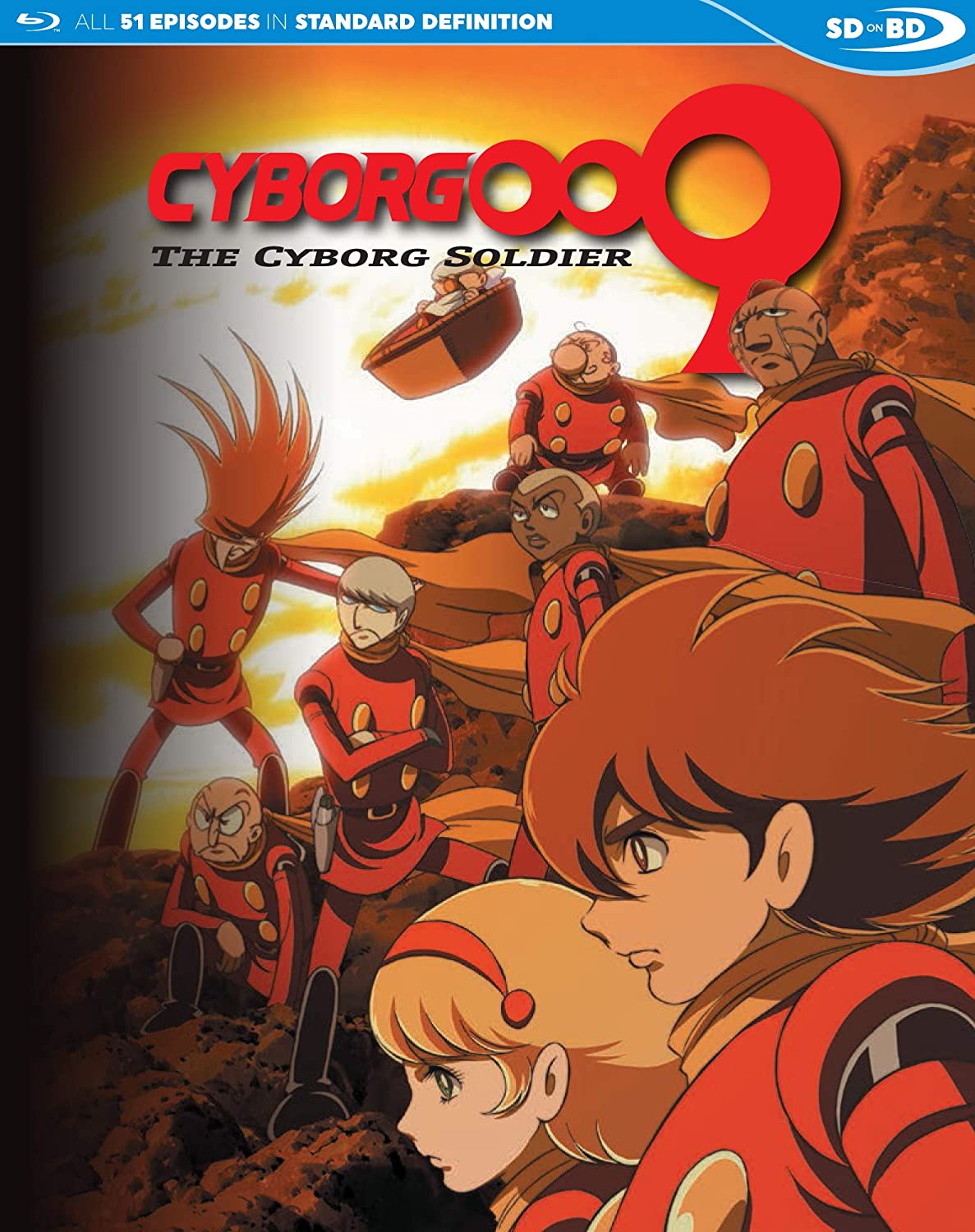
The early 2000s were an interesting time for anime remakes. Rather than trying to “update” aesthetics to match contemporary sensibilities, many chose to be intentionally retro. It’s within this context that 2001’s Cyborg 009: The Cyborg Soldier emerges. Based on the pioneering action manga by legendary creator Ishinomori Shotaro, the series embraces the rounded, Tezuka/Disney-inspired character designs that defined post-WWII manga while adding some modern flourishes.
The eponymous Cyborg 009 is one Shimamura Joe, a Japanese guy who was abducted by the mysterious organization known as Black Ghost and forcibly converted into a cyborg capable of moving at superhuman speeds. However, Black Ghost’s plans go haywire when Joe escapes thanks to previously unknown allies: fellow 00 Cyborgs just like him, numbering 001 through 008, each of whom have unique abilities like flight or super strength. Together, they battle against Black Ghost and its plans to inflame and perpetuate war and conflict on Earth.
I’ve only read a little of the original manga, but what struck me about Cyborg 009: The Cyborg Soldier is how compelling it is from the start. Between the solid foundations of the source material and a retro style combined with sharp direction and animation, it never comes across as too indulgent in nostalgia or trying too hard to make up for any perceived staleness from the 1960s original. Cyborg 009 is so influential that many of its elements have become standard tropes in anime, manga, and even beyond, but they still feel fresh when presented here. I also have to point out the stellar voice cast, which features heavy hitters like Sakurai Takahiro, Wakamoto Norio, Ohtsuka Akio, and more.
This anime (which is just one of many, many adaptations over the decades) largely follows the manga it’s based on by covering all the big arcs—though certain storylines like the Vietnam War have had their settings changed. One consequence is that the strengths and flaws of the manga also come across in the 2001 version, including the fact that some storylines are just weaker than others. Especially after the first 20 or so episodes, there seems to be a bit of meandering as the narrative has trouble finding foes as interesting as earlier ones. This comes right down to the climactic conclusion, which was controversial at the time it ran in the manga and disappointed many fans, but is presented here largely unchanged. The last few episodes are even an alternate storyline based on notes Ishinomori left for a new conclusive ending, but one he couldn’t finish before passing away in 1997.
Given how recently Ishinomori had died at the time of production, I have to wonder if that affected the approach taken for The Cyborg Soldier. It reminds me of 2021’s Getter Robo Arc, which was also a mostly straight adaptation of a deceased artist’s work, but in that case, the manga never finished, leaving both it and its anime on a cliffhanger. At least The Cyborg Soldier has some sense of closure.
The politics of Cyborg 009 with its antiwar message and its criticisms of war profiteering stand up to the test of time, especially because they’re rarely ever simplistic. In one episode, the team has to help psychic alien children who come from a world where killing is completely unimaginable, but they are invaded by other aliens with no such qualms. All they can do is run and defend, stemming the bleeding but never truly stopping it. It isn’t until Cyborg 002, an Italian-American with flight powers named Jet Link, provokes the children to stand up for themselves that they turn the tide of battle. The character abhors war, but believes that remaining passive and lacking the will to fight back in any situation means getting run over—a sentiment he developed on the mean streets of New York City. Notably, though, this isn’t necessarily the philosophy of the rest of the team, and the fact that they both have unique personalities and come from different cultures around the world helps to portray a diverse team with different perspectives.
One issue with that diversity is that in the original manga, many of the designs of the characters were ethnic stereotypes, with Cyborg 008 being the most egregious example. A black African named Punma (whose country of origin changes depending on the version), he is portrayed in the manga with comically large lips and jet-black skin like a sambo doll. However, it’s clear from his personality and background that he is not meant to be a joke: Punma is originally a clever and kind soldier fighting against a tyrannical government, which means he has the most practical combat experience. His ability to excel in underwater combat, a product of his cyborg transformation, is a pretty neutral ability, and neither he nor his people are portrayed as savages. In The Cyborg Soldier, Punma sports a much less offensive design, helping the visuals to catch up to the character within.
Another case where the politics of representation could use some work is with the sole woman on the team, Cyborg 003. French woman Francoise Arnoul has enhanced hearing and sight, which means she’s the only one with a passive ability—a longstanding trope for female team members in children’s series inside and outside of Japan. It also doesn’t help that she is often the default caretaker of Cyborg 001, a Russian baby with psychic powers named Ivan Whisky, with her cradling Ivan in her arms as the men go out. But she’s also a three-dimensional character clearly beloved by the anime staff, and there are plenty of moments where Cyborg 003 is made to shine or another character sings the praises of her sensory abilities or regrets not having them. Unlike with Cyborg 008, though, because the issues with her portrayal are less purely visual, The Cyborg Soldier still ultimately retains a great deal of this passivity it adheres to the manga.
Cyborg 009: The Cyborg Soldier ran incomplete internationally in the early 2000s, and it wasn’t until 2018 that a US Blu-ray was released in full thanks to Discotek Media. It’s one of those titles I genuinely thought would never see the light of day again, so I’m more than grateful. What’s funny to me is that even this 21st-century adaptation might be viewed as “retro” by fans (it’s 20 years old!), and that in this context, it stands the test of time in more ways than one. Not only does The Cyborg Soldier successfully convey the strengths of the original manga, but it holds its own as one of the best things to come out of that early digital era of anime, while delivering a timeless message of a wish for peace.
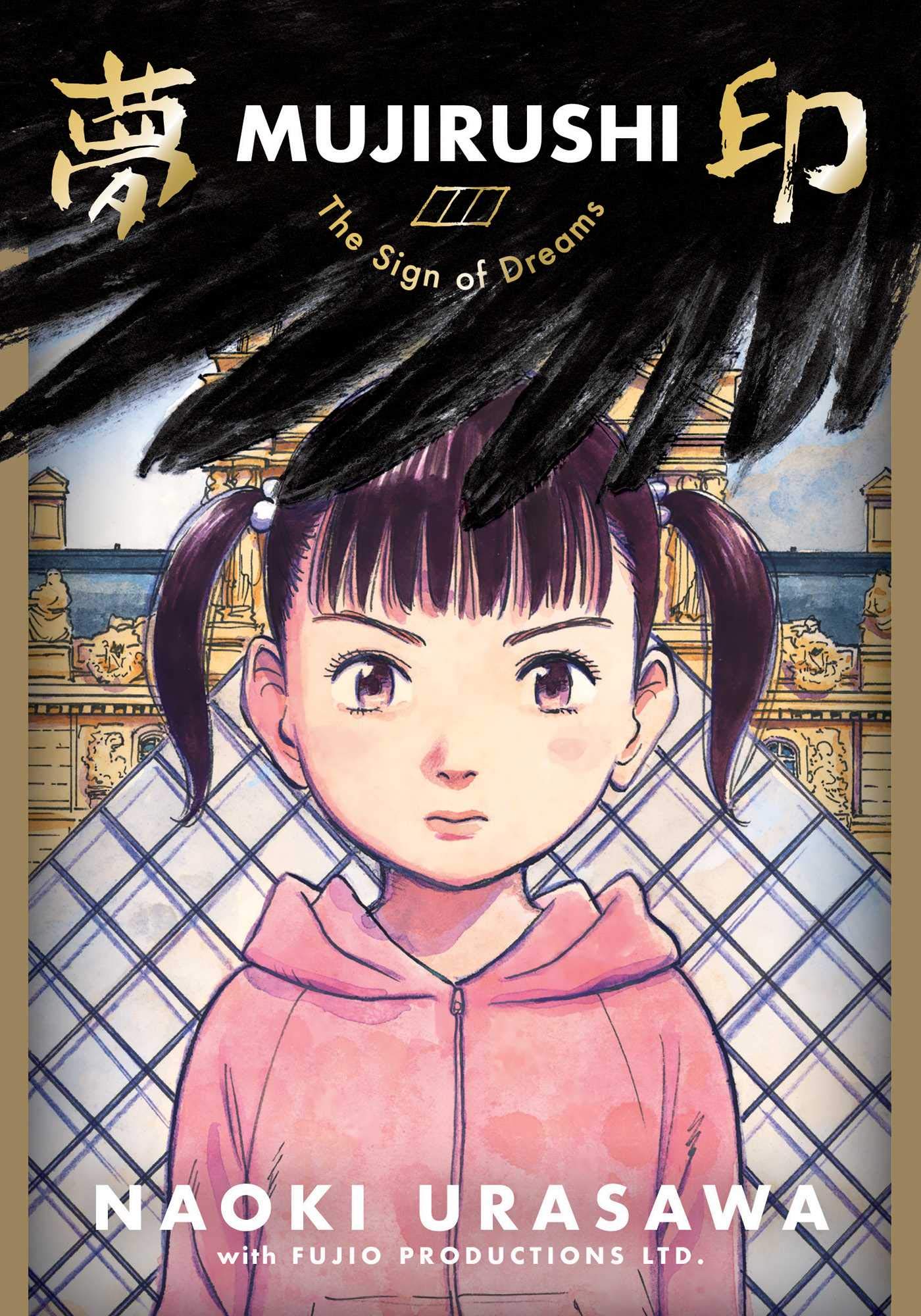
I’ve read my fair share of Urasawa Naoki. Between Monster, Pluto, and 20th Century Boys, I hold the manga author in high esteem, and generally assume I have a decent sense of his style. But I’m not sure anything could quite prepare me for Mujirushi: The Sign of Dreams.
The story centers around a father and daughter who have fallen on hard times after the dad makes a series of bad decisions. Desperate to get out of crushing debt, the two happen upon a mysterious fellow with extremely large front teeth and an overwhelming obsession with France known as the Director. This fellow convinces the father to participate in a plan that supposedly should give them both what they want, leading to a trip to France and the Louvre that only brings more unexpected turns.
It sounds like a pretty reasonable story, but one thing that makes Mujirushi different is that the Director is none other than Iyami, the most famous side character from the Osomatsu-kun franchise whose “SHEEH!” exclamation became a cultural phenomenon. As described by Urasawa himself (and even discussed in the early episodes of the modern-day revival sequel Osomatsu-san), Iyami was explosively popular in the 1960s—even more than the brothers themselves. An American equivalent would be something like having Steve Urkel show up as a central character in an otherwise unrelated movie (though Urkel did have his own France moment…)
I also want to mention that this manga features a weird female parody of Donald Trump named Beverly Duncan, whose face ends up playing a major role in the story, and it makes me wonder why Urasawa decided to throw this in. My best guess is that he simply wanted to draw Trump’s characteristic punchable grin because it makes quite the visual impact.
The manga is actually part of a collection of French, American, and Japanese comics made to celebrate the Louvre; readers might be familiar with the JoJo’s Bizarre Adventure take known as Rohan at the Louvre. When taken in this context, I can’t help but be amazed that Urasawa would weave one of Japan’s most pre-internet memetic characters into a story about French culture in the popular imagination, as if to say that the mere concepts of “France” and “the Louvre” exist in many individuals’ minds through the loud proclamations of a Francophile character. In many ways, it gives me similar vibes to 20th Century Boys and its obsession with Japanese pop culture of the mid-Showa period (Friend’s character in particular), as if Mujirushi is a story about France for the Japanese people who grew up in that period. Mujirushi thus ends up being as much a look at how people learn of and experience France as it is the Louvre itself. In that sense, while it’s not a sweeping psychological mystery like so many of Urasawa’s titles, its intersection of nostalgia, culture, and memory fits right into his oeuvre.
A confluence of events has me thinking a lot about how people connect to Virtual Youtubers. Just recently, we’ve had both the final concert from pioneer Kizuna AI—who coined the actual term “Virtual Youtuber”—and the termination of Hololive’s Uruha Rushia not long after a different incident involving controversy over a rumored real-world relationship. When I think about just those two examples, I realize that their respective stories have a lot to say about the very way people engage online through these highly detailed virtual avatars.
VTubers generally exist as a form of kayfabe. They want viewers to embrace the idea that these artificial selves are real, and even when all parties understand it’s an act, the willful suspension of disbelief is important. But there are a few key differences between AI’s approach back in the burgeoning days of VTubing and the style that Rushia, as a member of Hololive, engaged in. First, AI’s content for most of her career involved uploading clips to YouTube with streaming being secondary content, whereas Rushia is the opposite in that live streaming was the foundation. Second, one of the big AI controversies was when fans thought they were trying to make her into more of a brand than an individual performer, while Rushia ran into trouble because of the perceived blurring of lines between her virtual and real selves.
The fact that streaming is live (as opposed to pre-recorded) inherently changes how viewers interact with someone. It means being there in real time, more or less. Certainly, there are things like superchat readings, where messages sent with monetary donations aren’t responded to until a later stream, but you know that when the figure on screen reacts to something, you’re seeing it right then and there (or at least with a slight delay). It’s somewhat like the difference between video chatting with a friend versus receiving a video message from them, and I don’t think it’s surprising that many would find the former more engaging.
Having things live also means that things can go in unpredictable directions. That’s often seen as a plus, but that uncut nature is exactly what brought Rushia trouble. After all, the initial ruckus happened because she seemingly received a Discord message from a guy—a male YouTuber with his own massive and intensely devoted following—which for her more obsessed fans broke the immersion they had with her character personality as a yandere wife. The situation, in turn, is made all the more complicated by the fact that devotion to VTubers is often expressed through money via things like the aforementioned superchats. This exact series of events couldn’t happen to a VTuber who only uploaded clips, or at least not nearly as easily.
In contrast, one of the biggest controversies of Kizuna AI came not from the perception of peeling the curtain back too far, but from practically the opposite. Up until a couple years ago, it was not officially known who was the voice behind Kizuna AI, but fans knew there was a singular person bringing the character to life. When Activ8, the company behind AI, started the “Multiple AI Project” that would result in her being split into multiple versions, the fan backlash was the result of fear that they were going to replace the original, ater revealed to be voice actor Kasuga Nozomi. In other words, the concern was that making AI a vessel or suit that anyone could jump into and “become” her would be essentially stripping the character of her unique identity (brought forth by Kasuga) and providing cheap imitations. If we go by wrestling terms again (a natural extension of describing all this as kayfabe), then this was a Fake Diesel and Razor Ramon moment:
I’m also reminded of the Vtuber kson, who is a rarity in that she is willing to stream both as her flesh-and-blood self and as a Virtual Youtuber. In an interview on the Trash Taste Podcast, she mentioned that her fans in Japan enjoy her IRL stuff less. While kson says she’s not sure why that’s the case, she thinks it’s because they relate to her anime form more. Here again, immersion seems to be a big factor. This is not to single out Japanese fans or anything, but it speaks to the different wants and desires from VTuber fans, as well as the power of “chara moe.” Only, now these characters can be directly interacted with on a level not seen before.
I’m not someone who thinks that having strong feelings for online performers, virtual or otherwise, is inherently a doomed path. In my eyes, it’s not all that far removed from other forms of escapism and fandom, which I think are beneficial overall. However, what’s clear to me is that the varying degrees to which people want to engage with both the virtual and the real means that every strategy comes with inherent advantages and disadvantages—especially when you factor in the desire for success as a Vtuber, however one wants to define it. Perhaps what all this comes down to is a genuine human desire for safe emotional connection and authenticity, and Virtual Youtubers allow for a taste of that in times when we feel alone. It’s just not without risks to both performers and viewers alike, and I hope everyone can maintain their sanity because doing this can make anyone extremely vulnerable.
What are the most common salty complaints in fighting games? “I swear I pressed the right button!” “Why did your move hit?!” “It’s not fair that I practiced this combo and you have to do less!” “Combos are cheap! Why should I have to put down my controller whenever I get hit?” Scrub gripes are often contradictory and based in whatever is convenient for the player, so if you were to truly cater to the scrub, the solution would be to wipe that all away and let them do whatever they want, whenever they want. So here’s my idea: give every character permanent super armor.
For those unfamiliar with “super armor” in fighting games, think of most classic Mega Man games. In boss fights, Mega Man recoils whenever he takes a hit, but the enemy robot masters never flinch, and will continue to execute their attacks even as you damage them. I believe the ideal scrub fighter would be such that all playable characters would be like Mega Man bosses, and hitstun as a concept wouldn’t even exist. The character Mech-Zangief already exists in some older games with this ability, but it would be roster-wide.
No blocking. No throws. Plenty of combos, but none of the combos would actually prevent the other player from continuing to hit buttons. There would be literally zero ways for an opponent to interrupt a player’s actions, and it would only become a matter of who could land more of their attacks against an opponent who’s moving around and trying to land theirs.
Would scrubbery still happen? Of course. You can’t truly defeat it any more than you can defeat anger itself. But maybe by being absolutely uninterruptible, the scrub can panic mash to their heart’s content, and thus derive joy.
I’d be lying if I claimed I wasn’t full of fear of where the world is going. While violence is nothing new, there’s something about these particularly brazen lies we’re seeing used to justify a takeover of a sovereign nation that has me worried that the world is going to scary places, if not already there.
That said, while I sometimes would like to more fully disconnect my fandoms from the world at large, it’s a great deal harder than one might expect. Case in point, I started watching 2001’s Cyborg 009: The Cyborg Soldier, which is about people who were kidnapped and forcefully integrated with machines, who then rebel against the massive warmongering arms dealer that made them who they are. Even an adaptation of a classic action manga has dimension. That’s not in the same ballpark as, say, a harem series, but I think it’s ideal to discuss both the anime and manga that embraces every level of political engagement to those that are more passively political. Heck, isn’t the biggest anime basically Attack on Titan?
Here are the special Patreon members who continue to show me their generosity. While the lack of new members might be viewed as a sign of stagnation, the fact that so many continue to stick with me is something I appreciate.
It’s been a long time coming, but here are my thoughts on Gundam Unicorn at last. Speaking of political anime…
Kio Shimoku
Kio Shimoku’s Twitter was pretty light in February, but I expect that to change in March with the final volume of Hashikko Ensemble.
Closing
I’m impressed how well Cyborg 009: The Cyborg Soldier holds up. It feels just as fresh today as it did when I’d catch episodes on Cartoon Network back in the day, and the focus on diversity, peace, and criticism of warmongering feel more relevant than ever before. I hope the ideals that anime brings can be something we can reach in our lifetimes.



 OGIUE MANIAX