Kio Shimoku Twitter Highlights May 2024

​​Not very many tweets this month, but starting off with some fun insight into how Spotted Flower has changed.

Kio laments that Spotted Flower (a series that was once supposed to be simple and easy to draw) now has a huge cast, places he’s never drawn before, things that require photo references, and an increased page count.

It’s been 10 years since Kio last watched The Piano, a movie that apparently shook him with the level of NTR it features. In hindsight, he realizes this might be why he likes the movie so much.

Kio believes that the manga artist Kusada has made some kind of breakthrough in portraying the cuteness of their character Kurono.

A drawing from the 18+ work Kio is currently making, showing the mom from the first doujinshi he did.

Mysterious drawing.

Kio drew a special piece for the current anime Train to the End of the World.

Turtle door! 

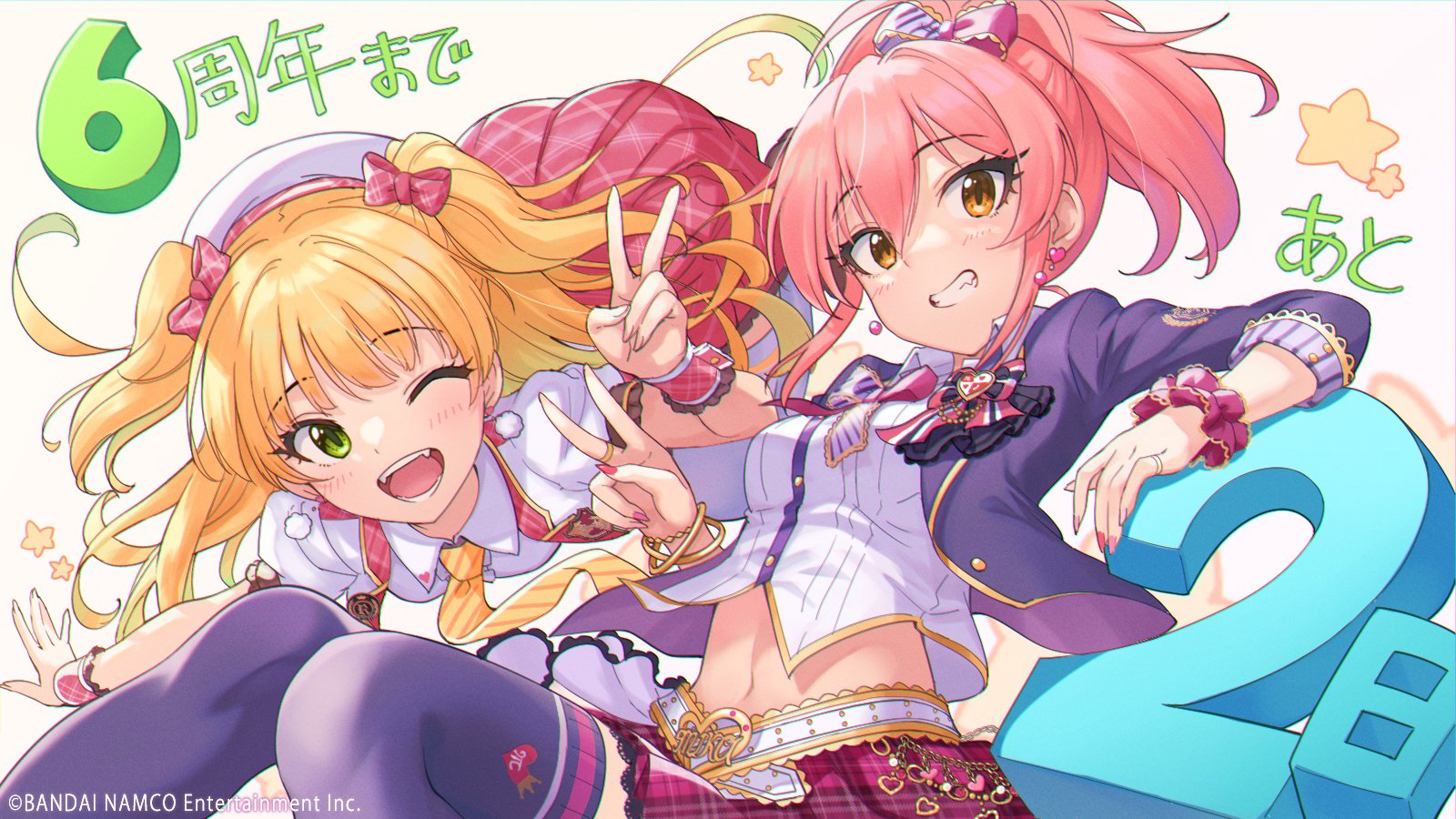
Ultimate Character Combo: Idols, Gals, and the Jougasaki Sisters

As character types, the “idol” and the “gal” (or gyaru) have both been around in Japanese media for decades. However, they seem to have hit even greater notoriety in recent times. On the idol side, there’s been heavy hitters like Oshi no Ko and Love Live! Then there are works like Hokkaido Girls are Super Adorable and An Otaku Who’s Kind to Gals, where gals are the main heroines or the central focus.

The idol is an idealized symbol of pure devotion to the fans, for better or worse. Fan support is why she’s able to grow as a performer. The gal is attractive, forward, and runs up against traditional Japanese beauty standards. When portrayed with a heart of gold (or as someone who’s secretly a virgin), she transforms into dork kryptonite. 

What happens when the two are combined? Naturally, it would make for a powerful character.

In thinking about the relative success of both archetypes, I began to wonder if there are any examples of such a convergence. Then I remembered that there are indeed a couple of characters who occupy that intersection: sisters Jougasaki Mika and RIka from The iDOLM@STER.

I am by no means an expert or even a dedicated fan of The iDOLM@STER. What I do understand, based on my limited knowledge, is that 1) Mika and Rika were introduced in the Cinderella Girls mobile game in 2011, and 2) I’ve been seeing their fanart for what seems like forever—Mika’s especially. In all instances, they exude “gal” energy. According to the popularity polls, Rika was initially ranked higher, but Mika emerged as more of an enduring mainstay. As if to reflect Mika’s notoriety, the Cinderella Girls anime portrays Mika not as one of the main characters, but an established idol whom others look up to.

One thing I don’t know is whether Mika and Rika have been merely a reflection of the two trends or if they actually contributed to their presence in significant ways. In other words, while I can guess that their popularity has come from being gal idols, how often is it the case that the Jougasakis are the reason people got into one or both sides? Gal subculture has been around for a long time, but I don’t recall them being nearly as prominent as characters in 2011—at least, not in the way they are today, and not in terms of their cultural presence around in the 90s and early 2000s.

While one can hardly attribute the increased visibility of idols to primarily Jougasaki Mika or Rika (they are from games where nearly everyone is an idol, after all), I can’t help but wonder if they’re significantly responsible for shining a greater spotlight on “gal characters” in a way that has persisted over a decade later. If the sisters have played a large role, it would make them influential in a way few other characters can match.

And if there are any other examples of gal idols, I’d like to learn about them.

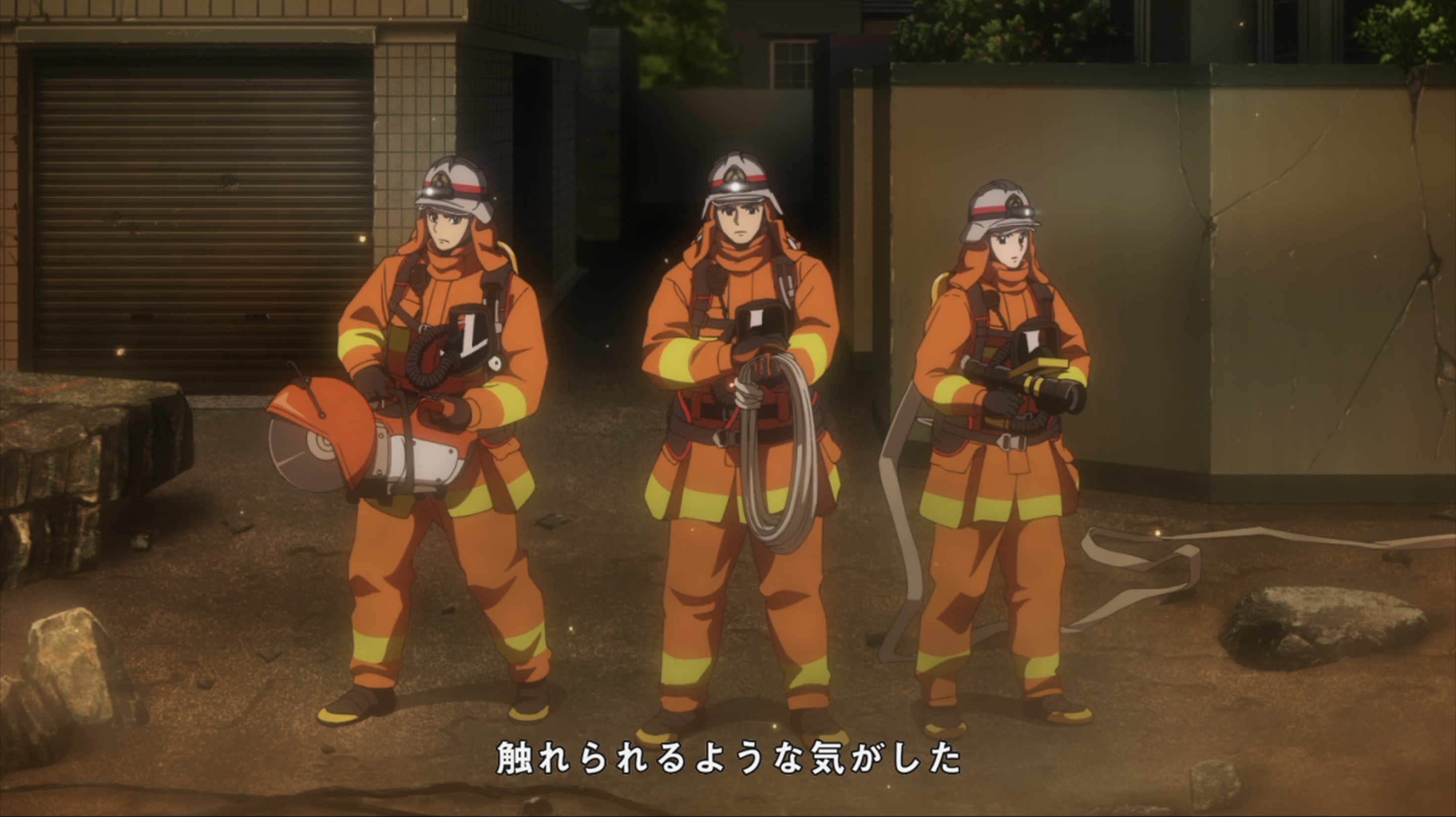
Bringing the Heat to Prime Time—Firefighter Daigo: Rescuer in Orange

Cop-themed media is ubiquitous, but firefighter stories are far less common—maybe it’s the lack of “bad guys.” But here comes Firefighter Daigo: Rescuer in Orange, an anime that’s not only about dealing with fires and other hazards, but is actually a sequel to a popular 90s series. 

The original Firefighter! Daigo of Fire Company M by author Soda Masahito was a successful manga in Japan, running for an impressive 20 volumes. Over in the US, I remember seeing ads for the original Firefighter Daigo manga back in the 2000s, but it never really got any traction. My primary exposure to author Soda Masahito’s work has been through some of his shorter manga such as the schoolgirl rap battle series Change! and the MMA-themed Hanakaku. In both cases, they were clearly (and disappointingly) made to end early, so it’s interesting to see Soda return to the world of his biggest hit not named Capeta.

The sequel does not require prior knowledge of the first series—the only anime ever created for it is a decades-old film. Taking place many years after the first series, Firefighter Daigo: RiO follows three recent recruits as they go through the rigorous process of becoming rescuers and then beyond. The first is Toake Daigo, a taciturn wunderkind who has a preternatural knack for dealing with dangerous situations. The second is Onoda Shun, an intense guy who’s the exposition hype man, kind of a Vegeta, and a hardworking guy in his own right. The third is Nakamura Yuki, Shun’s former high school classmate, who possesses keen observation skills and a literal lifelong dedication to joining the fire department. As they go through their respective paths towards being full-fledged rescue workers, their links to one another run deeper than they realize.

Daigo and Shun are clearly meant to both parallel and contrast with the original duo from the first series, Asahina Daigo and Gomi Shunsuke. Asahina is the loud and brash one while Gomi is the serious kind, whereas their spiritual successors have “swapped” personalities. Yuki can come across as “Firefighter Daigo: Now with Girl,” but they develop her as a unique character and a worthy peer in her own right.

Firefighter Daigo: RiO is mainstream in a way few anime ever are. On top of the approachable subject matter (“firefighters saving people from danger and going through personal drama!”) and the lack of more otaku-oriented tropes, the series also aired during Japanese primetime hours. The result is that it has some of the highest TV ratings of winter 2024, just below the perennial favorites like Sazae-san and on par with the runaway hit that is Frieren. It feels almost tailor-made to do well, like it’d run alongside Law & Order.

Episodes typically highlight the extensive training and preparation of firefighters and rescue workers but also the reality that they can never anticipate everything—improvisation and a cool head under pressure are both necessary. No one embodies this spirit more perfectly than Toake Daigo himself—seemingly too perfectly, at first. He’ll do what others would never think of, and his peers can’t help but watch (and comment) in awe as he pulls off another miracle. But over time, it becomes clear that this intense dedication hides deeper wounds from his past, and that this seeming flawlessness is anything but. Rescuer in Orange does a great job of putting the human in superhuman, not least of which is because Daigo himself sees his peers as better than himself.

It’s a very normal show, until it isn’t. As Kate from Reverse Thieves points out, you think it’s just a normal human drama…and then you find out that the original Daigo has been traveling the world rescuing people like some kind of vigilante firefighter. On top of that, the original Shun has separately been building up a clandestine elite firefighting force to prepare for some impending mega disaster.

The only recurring issue that I think really detracts from the show is that the animation can get pretty sloppy, and a lot of each episode is taken up by a recap; a 22-minute show is more like 18.

Firefighter Daigo: Rescuer in Orange is very cool in a normal way. Its characters are compelling in a normal way. It feels so very conventional most of the time, but will occasionally throw a curveball that really shows how well constructed the series really is. It’s the kind of show that would make for a great gateway anime. I hope that it can accomplish this goal, not only for anime in general but for Soda Masahito’s other works.

When the Shounen Good Boy Gets Hate: Tanjiro, Deku, and Anti-Antiheroes

The first time I learned that some anime and manga fans dislike Tanjiro from Demon Slayer, I was genuinely surprised. To me, he’s one of the best shounen protagonists in a long time: a gentle soul whose greatest qualities are love and empathy, and who is fueled by those emotions to get stronger. And in terms of the battles Tanjjro fights, I really enjoy how every victory feels like it came at great cost to him, emotionally and physically.

“How could anyone not like Tanjiro?” I wondered. Even knowing that this was probably a minority of viewers, I decided to just look at online comments both off the cuff and more detailed, and saw a few recurring criticisms. Namely, the goodness of Tanjiro can make him come across as preachy or self-righteous. He’s too good, lacking any darkness whatsoever, and this can be difficult to relate to. 

I understand not being into goody two-shoes, but what confused me at first is that it’s not like Tanjiro is a perfect unstoppable hero. He’s often unable to defeat demons on his own, and it means that battles are more of a collective effort. However, I eventually realized that this too can be seen as an unappealing trait precisely because he didn’t win on his own.

Things changed when I began approaching the matter in pro wrestling terms. Essentially, I think a lot of people who aren’t fond of Tanjiro—or other similar characters like Deku from My Hero Academia—want heroes more akin to wrestling greats like Stone Cold Steve Austin, The Rock, and post-1980s Sting. Back in the 1990s, antiheroes became much more prominent in entertainment as a whole, and while they were often underdogs against an oppressive greater force, they were also rowdy ass kickers. In contrast, Tanjiro is what wrestling fans call a “white meat babyface,” or an unabashed good guy. In wrestling, this is often “solved” by having the good guy turn bad, become edgier, and then become good again so that they carry at least a bit of a dark side with them. This literally happened with The Rock, and even Deku has a similar phase—one that certain fans had wanted Deku to reach the entire time. Some folks are just looking for badasses.

All this reminds me of a post I wrote back when Kill la Kill was the big thing. At that time, some fans saw Ryuko as a one-dimensional protagonist because she’s a perpetually angry ass kicker who doesn’t have a grand arc full of character development. She doesn’t change on a fundamental level, and this was viewed incorrectly as “poor writing.” I think a similar thing happens with Demon Slayer, only with a different type of main character. That’s not to say preferences aren’t allowed to exist, but that they are not to be confused with neutral objectivity.

For Tanjiro and other “good boy” characters, the purity of their compassion is a beacon of hope that kindness and love can be enduring sources of strength. The fact that Tanjiro never changes at his core reinforces that power. At least, that’s my interpretation. What I’ve since learned is that others might see that aspect as something bland and in need of “development.” To this, I would say that being able to maintain one’s empathy even as the world grows more cruel is a fine character arc because it is in itself a true challenge that requires adapting and honing oneself to overcome the temptation to do otherwise.

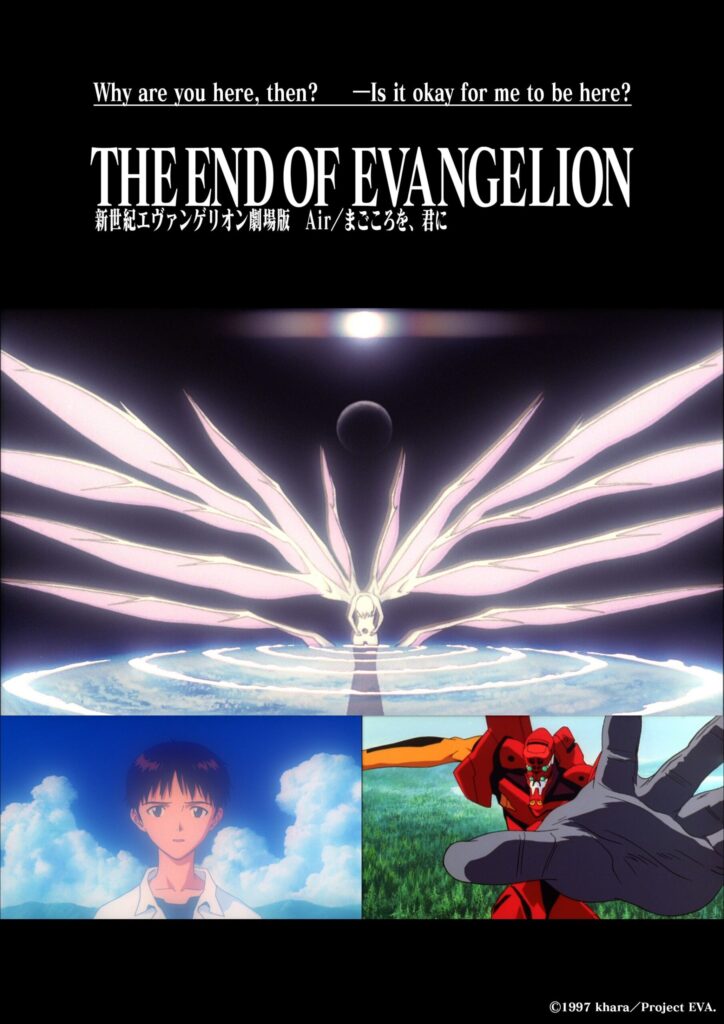
Crawling Through the Dark: End of Evangelion

In March, I went to a screening of End of Evangelion. While it wasn’t my first time seeing the movie, it had also been many years, and this was actually the first time EoE had been released in theaters in North America, courtesy of GKids

Evangelion as a whole is a major part of my history as an anime fan, culminating with the Shin Evangelion movie. But two decades ago, End of Evangelion was one of those works that blew apart my preconceived notions about what animation could do. The emotional turmoil, the horrifying spectacle, and the beautiful animation all worked together to leave a lasting impact on my psyche. 

It’s interesting to have again seen this film in full, now with the context of my own lived experience and where Evangelion has gone since then.

End of Evangelion is a sort of alternate version of the last two episodes of the TV series. Rather than taking place purely in an abstract world consisting of the collective minds and souls of its characters, things are based more in the physical world. After NERV defeats the last of the Angels, its secretive parent organization SEELE betrays NERV, and the ensuing carnage sends its already traumatized heroes spiraling down even further.

Ikari Shinji has long been the poster child for angsty teen protagonists, and it’s easy to see here why he could be both a very relatable character and an endless source of aggravation for viewers. As the people on his side and close to him are literally gunned down in cold blood, Shinji is unable to act. It makes me want to shout, “Get out of your own head, damn it!” And that admonishment more or less happens in the movie itself. But Shinji’s perspective is also one that hits close to home: He’s screwed up so many times that he thinks doing nothing is literally better than trying at all and inevitably making things worse. When you only see yourself as a source of failure and disappointment, it can be hard to take even a single step forward.

But when Rei initiates Third Impact, the apocalyptic event that’s meant to bring everyone’s souls together and reform humanity as the single entity it began as, Shinji does something surprising: He rejects this future that would ostensibly solve all his problems with human connection. It turns out that Shinji isn’t satisfied with a happiness that is handed to him, even if it would be a realm of sheer bliss. He wants to achieve self worth by going out there and finding it himself. The process itself, and the authenticity of the success, is paramount. It’s not so much that reality is about suffering, but more like telling someone who’s trying to plant a flower (and is incredibly bad at gardening) that you can just buy them an entire field of flowers that’ll be tended by the world’s best botanists. 

The ending scene is one of many scenes that have long generated discourse, and thinking about it from the perspective of dreams vs. reality has me reconsidering its outcome. In the aftermath of the Third Impact (or at least its attempt), Shinji finds himself alone with Asuka. Seeing her lying prone, Shinji starts to strangle her, repeating an earlier “action” he took while being confronted in his mind about the way he desperately tries to avoid loneliness. But to his surprise, Asuka’s hands gently brush against his face, and this causes Shinji to let go. Asuka then says, “Disgusting.”

I see Shinji’s actions as indicative of him doubting that he’s out of the dream-like Third Impact, only to be thrown off by Asuka being very different from what he saw in his own mind. The compassion and disdain are both there, beauty and ugliness all mixed together. Reality is where dreams end, but it’s also fueled by those same dreams. It’s a messy world where Shinji can once again try to make a genuine connection, even if they’re the last two people on Earth.

To me, the essential difference between End of Evangelion and Shin Evangelion has to do with their relationship with depression. EoE is what you get when you’re caught up in it and are trying to provide hope that there’s a way out. Shin Evangelion is the result of someone who managed to overcome that depression and can tell you the other side is real. 

I’m glad Anno found his light.

Too Many Good Shows, Really: Ogiue Maniax Status Update for May 2024

The spring 2024 anime season turns out to be absurdly good! There are many highlights among the new shows, but I think chief among them are Train to the End of the World, Jellyfish Can’t Swim in the Night, and Go! Go! Loser Ranger! It’s also interesting seeing Shinkalion: Change the World try to be a little more mature. I wonder if it’s aiming for the kids who grew up on the first two Shinkalion anime.

Thanks to my Patreon supporters for the month, especially the following people!

General:

Ko Ransom

Diogo Prado

Alex

Dsy

Sue Hopkins fans:

Serxeid

Hato Kenjirou fans:

Elizabeth

Yajima Mirei fans:

Machi-Kurada

Blog highlights from April

One Piece, the Five Elders, and Going Beyond Expectations

The One Piece manga has never been more exciting than it is now.

Time Well Spent: “Frieren: Beyond Journey’s End”

Frieren is indeed as good as everyone says. I’ve rarely seen an anime impress me this much.

Bara Bara Obari: Bang Brave Bang Bravern

A celebration of super robot anime that forges its own path.

Kio Shimoku

For fans of Ogiue (and Ogiue doppelgangers), this is a good month.

Closing

It feels like it’s been a while since all of my highlighted posts are just straight-up reviews and analyses of specific anime and manga titles. I wonder if this trend will continue.

Kio Shimoku Twitter Highlights April 2024

​​Momentous events in Spotted Flower’s side chapters gather some fanfare this month in Kio’s tweets. And the end of Elden Ring at last!

Spotted Flower online side chapter featuring Not-Ogiue and Not-Sasahara getting it on (and Not-Ogiue proposing!).

Kio wishing a happy birthday to Tamaoki Benkyo, author of Deathscythe Cutie.

Readers talking about wanting to see Not-Ogi and Not-Sasa get married at least, and Kio responding coyly.

Cherry blossoms!

Kio went to the Narita Buddhist Temple for the first time in a long while. When asked about food recommendations in the area, he mentions eel. 

The Our Treasure brand Z.A.P. from The Five Star Stories, now in Kio’s hands.

Kio rode the Tateyama Kurobe Alpine Route. His photos don’t have any people in them, but in actuality, it was crowded.

Kio says whether one wants to interpret Spotted Flower as a sequel to Genshiken or something else is up to the reader.

A second side chapter for Spotted Flower! This one focuses on Not-Yajima and Not-Hato.

A comic by Kio about assembling the Mechatro WeGo VOTOMS collab model kit. He actually got a positive response from the model kit designer!

Kio defeated Malenia in Elden Ring, and then goes into detail about the experience.

Kio bought and enjoyed the newest blu-ray from How Do You Like Wednesday?, titled Building a House in Hokkaido.

Elden Ring completed! Kio is a little sad that there was no last dungeon after the boss rush, though (Note: Let me know if there is one, and I’m totally off in understanding this.)

Bara Bara Obari: Bang Brave Bang Bravern

Bang Brave Bang Bravern is like an anime that has traveled through time to reach us in 2024, but it’s not clear whether it came from the past or the future.

The show’s creator, Obari Masami, is near-synonymous with mecha. He’s been involved since the 1980s with works like Dancouga and Gravion, he’s the reason the Brave Pose exists, and they even bring him in to animate giant robot parodies in other genres. So when he announced a new series in the form of Bravern, I wondered what form it would take, especially with him as director and mecha designer. 

The answer is: one filled with shocking twists that are as baffling as they are exciting. This is very much intentional, as the initial promo material and even most of the first episode has you believing that Bang Bravern is on the grittier side, with mecha as weapons of war. The first meeting between its central characters, Japanese soldier Ao Isami and American soldier Lewis Smith, seemingly portends a story about true camaraderie on the battlefield.

Then everything goes into Obari Overdrive. A shiny red robot shows up, literally shouting all his special attacks with a sincere level of camp. This namesake, Bravern, is a heroic sort who draws a lot from the Brave franchise, especially the bonding of kid and robot that is a hallmark of those anime. Only, Isami is a grown man instead of a wide-eyed grade schooler and reacts with a mix of awe and horror. The arrival of Bravern then kicks off a culture clash between the serious original setting and its brightly colored new reality that leaves everyone perplexed and hesitantly hopeful in the face of imminent doom.

During all this, we’re treated to the opening and then ending themes. The former is a blood-pumping super robot song that draws from the genre’s collective past, with shades of Godannar, Gaogaigar, Daiohja, and even Space Battleship Yamato. The latter features Isami and Smith in the rain, slowly undressing themselves as they sing dramatically like they’re starring in a musical. Together, these two songs encapsulate much of what Bravern is about.

And that’s only the first two episodes! 

At least one shocking revelation or pivotal moment hits every episode, in a manner reminiscent of both Gurren-Lagann and Samurai Flamenco. The stakes keep escalating in wonderfully outlandish ways so frequently that Brang Bravern feels like 52 episodes got condensed into 12. The result is a show that leaves little breathing room for major moments, but also appears to act as an acknowledgement that giant robot anime comes from a time when year-long shows were the norm—and that such an era has long since passed.

With its muscular and passionate men in a setting that’s normally about masculine bravado, Bang Bravern might give the impression that it’s queerbaiting. In reality, it’s not really a bait: The show is very gay. At the same time, it feels very different from a lot of other works in that territory. For one thing, the attractive guys are also surrounded by attractive girls and attractive mecha, making it a smorgasbord of hotness all around. And amidst all this cheesecake and beefcake, the story told by Bang Bravern cuts to the heart of living up to childhood ideals.

This isn’t really plot spoilers, but the final episode plays the opening but with added sound effects like explosions and clanking sounds. This is a reference to the fact that many giant robot anime of yesteryear would at some point change their openings to include similar SFX. I think that says a lot about the spirit of Bang Brave Bang Bravern.

Time Well Spent: “Frieren: Beyond Journey’s End”

Frieren: Beyond Journey’s End is a major hit, and deservedly so. In an age where fantasy anime and manga often lean heavily on gaming and RPG tropes to a fault, here instead is a much more conventional setting that also isn’t prone to the typical older swords-and-sorcery clichés. It’s a marriage of old and new while quietly forging a path all its own.

Unlike many titles in the genre, Frieren: Beyond Journey’s End takes place after defeating the big threat to the world. Its heroine is the quiet elf mage Frieren, who helped vanquish the Demon King as a member of the party of heroes. Due to the nature of her species, Frieren is extremely long-lived: To many, their 15-year quest would be a milestone, but to her, it’s just a drop in the bucket. However, at the funeral of an old party member, the kindhearted (albeit somewhat vain) hero named Himmel, Frieren realizes just how life-changing that “brief excursion” really was. In response, she embarks on a new adventure that has her retracing the steps the Party of Heroes took, gaining a new appreciation for both the past and the present, and the people who walked into her life. 

Essentially, Frieren: Beyond Journey’s End is like an epilogue extended into an entire series of its own.

The original manga is currently serialized in the magazine Weekly Shounen Sunday. This ostensibly places it in the same demographic as works like Detective Conan and Inuyasha, but it also doesn’t carry the same essence as your average shounen or their typical power fantasies. Sure, Frieren can be seen kicking ass and schooling the ignorant, but what makes her an incredible heroine is not the ability to sling deadly magic or her many years of honing magic. Rather, it’s the way Frieren has very different priorities when it comes to magic. 

Her real motivation is collecting fake grimoires and spells of all kinds—especially ones that are often considered mundane or even useless by others. Frieren is like a master chef from the world’s most highly rated restaurant whose eyes light up every time she gets to try the latest fast food gimmick item or cheap street stall. To her, the beauty of magic is most deeply reflected in the small and humble spells, and Frieren’s experience makes her marvel at both the familiar and the unfamiliar. There’s only one very specific exception, and it’s where Frieren is most able to show her true power in combat.

I relate to Frieren and her ideals a lot. In the pursuit of my hobbies and interests, I try to view them through a lens of discovery where silly little things are valuable in their own right.

Frieren has neither rose-tinted nostalgia for the past, nor a conviction that the forward march of progress is inevitable. Some things used to be better, some were worse, and contemporary cultures are a product of centuries of change and development but also the fading of memories. Even magic is affected by cycles and trends, which is something Frieren tries to convey to her student, Fern, and also anyone willing to listen.

The combination of the epilogue-like nature of the series, its heroine’s personality, and her tendency to take a very long view on things makes Frieren: Beyond Journey’s End feel more like equal parts fantasy adventure and travelog in the vein of Kino’s Journey. Episodes can take place over the course of a day or even six months, and travel companions will sometimes literally mature. The series also often flashes back to moments with Frieren’s original party to provide context or an interesting parallel to her current journey. And much like Kino, when things go down and action is necessary, characters don’t disappoint. 

While Frieren: Beyond Journey’s End is not entirely devoid of console and PC RPG tropes (the hero and demon lord archetypes are chief among them), I want to reiterate just how much the series is not an isekai, a reincarnation story, or based heavily in the aesthetic trappings of RPGs where badassery is the main appeal. Sure, it can scratch a similar itch because Frieren is often secretly the strongest person in the room, but the series doesn’t rely on those tropes as lazy shorthand in lieu of actually being accessible. 

In other words, this is potentially a perfect gateway anime that also holds up for longtime fans of anime and manga. With Frieren: Beyond Journey’s End, you have a reminder that sometimes a work is popular not because it appeals to some lowest common denominator, but because it’s just solid storytelling with compelling characters, an interesting world, and a narrative that encourages thoughtfulness. It’s definitely going on my list of all-time greats, with Frieren herself being one of the best to ever do it. 

And by “do it,” I mean appreciate life and all its wrinkles.

Kio Shimoku Twitter Highlights March 2024

​​

Not a particularly momentous month for Kio Shimoku tweets, but still a decent variety.

Spotted Flower Chapter 45 is out in the physical edition of Rakuen (digital is end of March). Kio also shows off all the issues of Rakuen he’s collected.

Kio retweeted a previous tweet of his showing an old model kit of the L-Gaim MK-II that he tried to rework and improve. It’s not quite to his liking yet.

Joking that his heart is always in the Joker Star Cluster, the setting of The Five Star Stories.

Kio drew a short comic about building a model kit for the Ba Ga Hari BS Cobra from The Five Star Stories.

The adult video version of Kio’s 18+ doujinshi was on sale (ended 3/11). The tweet includes one old drawing, and I believe one that’s entirely new (on the right).

Kio reacts to the death of Toriyama Akira. “Ever since I discovered Dr. Slump in my boyhood days, I was happy to have the art of Toriyama Akira with me through life. May your soul find happiness.”

Kio finally finished reading through the 7th The Five Star Stories Designs book. He especially likes the character 剣聖ヴェイデリ・コーダンテ (Sword Saint Veidery Codante? I can’t find an official English spelling).

Responding to the death of Tarako, the voice of the main character of Chibi Maruko-chan (also the second voice of Monokuma in Danganronpa). “Whoa, whoa, whoa. Hold on…”

Kio tries out a Five Star Stories Shindanmaker, and the site decides that he would be part of the Magic Kingdom Buchtgma, his Motorhead would be Batsch the Black Knight, and he would be compatible with the Fatima Harper.

Kio has apparently been shadowbanned on Twitter for the past year. When someone replies that he should consider bluesky, he’s hesitant because of how long it took him to get on Twitter.  

In response to the latest chapter of the mecha manga Kayuuma, Kio calls it “awful” but in a complimentary way.

The actual members of How Do You Like Wednesday? actually appeared in the anime Snack Basue

Kio comments that between Snack Basue, Frieren, and Delicious in Dungeon, is personally loving the heck out of all this food-centric anime.

Kio reacts to the death of Inomata Mutsumi, character designer on the Tales RPG series. “Inomata Mutsumu-sensei…I feel so sad…May your soul find peace in the afterlife.”

Exhausted from backing up an old hard drive.

Kio is going to take time poring over the illustrations book he got from the Nagano Mamoru exhibit.

Reacting to the manga artist Kusada drawing the Jamru-Fin from Gundam ZZ, Kio joins in on talking about how awesome the design is. Kio remembers seeing it in a plastic modeling magazine back then.

Kio is surprised to discover there are Gundam model kits that are Real Grade Ver.2. He remembers having trouble with the fine details of the Version 1 Real Grades due to his aging eyes, but now he has Hazuki Loupe magnifying glasses, so it should be okay

https://twitter.com/kioshimoku1/status/1773178086017626143.

The guy is having fun in Miquella’s Haligtree in Elden Ring, even though it’s so difficult (I think).