New York City Anime/Japanese Pop Culture Festival Waku Waku +NYC recently announced the appearance of Inafune Keiji as a special guest, known for his work on Mega Man and Mighty No. 9, and I got the opportunity to write a piece on Inafune.
ALSO IF YOU BUY A VIP PASS BY 11:59PM EST ON JUNE 7TH YOU’LL BE GUARANTEED TO MEET INAFUNE
A lot of things have happened over the past month at (or around) Ogiue Maniax. Observant folks might have noticed that I’ve started linking to other posts on this blog. That’s because I’ve started contributing to the social media for an upcoming convention in New York City, Waku Waku +NYC, and this includes writing blog posts for them. I hope you enjoy the extra material, as while they’re not quite the same as what I’d normally write for Ogiue Maniax, they’re still intended to be fun, informative, and promote discussion.
However, if you look at the actual Patreon page, I don’t include those extra blog posts in my creations, as I believe it’s not quite fair to bolster my numbers like that when it’s all content supported by another organization not explicitly for Ogiue Maniax. Readers, do you agree, or would you rather see everything I make go on there?
This month’s special sponsors are:
Ko Ransom
Alex
Johnny Trovato
Anonymous
May was actually the first month where I wrote two sponsored posts:
I definitely enjoyed writing them, and they got me to look more into topics I’ve had only passing familiarity with, and if you like what you see, why not consider becoming a sponsor? At $30 a month you can request topics as well.
I’m also still putting consideration into a new sponsor level, which is to have Skype conversations with me every week, and a milestone, which will involve me writing a negative review of Genshiken just for fun. The goal would not be to exaggerate, but to fairly state the flaws of my favorite series. What do you think? Would that be fun?
I’ve written a blog post on Sailor Moon as my introduction to Japanese food over at the Waku Waku +NYC official blog. If you’re interested in me waxing nostalgic and rambling the way you expect out of Ogiue Maniax, take a look.
I’ll be a regular contributor to the Waku Waku +NYC blog from now on, so look forward to more posts from there in the future. As always, I will continue to devote myself to Ogiue Maniax as well.
If you’re curious, Waku Waku +NYC is an upcoming Japanese popular culture festival from August 29-30 in Brooklyn, NY. Unlike a lot of anime cons and Japanese events, this one looks to more thoroughly integrate food with Japanese anime, games, fashion, etc. If you’re even half as interested in eating and watching anime as I am, it might be worth your while.
New York Comic Con 2014 was my first in five years. I wasn’t around for the dissolution and complete integration of New York Anime Festival. I did not see the claustrophobia-inducing crowds created by people sneaking in that nearly drove some of my friends to never, ever go back. I was not around as the aging Jacob Javits Center itself expanded as best as it could to account for not only this convention but others as well. My experience with NYCC 2014 is almost that of a time traveler, as what I have to mainly compare it to is an old existence, before this convention was being labeled as the San Diego Comic-Con of the east coast.
As much as a convention should be about being a magical and informative experience where fans connect to the media they love as well as to their peers, the first thing worth mentioning about NYCC 2014 is its use of RFID badges. I was informed of their inaugural usage last year, but seeing them in action made me fully aware of the boon they provide to both the convention goers themselves and the staff running the entire thing. Essentially, attendees must use a card to check in and check out of the convention area, which not only cuts down on the number of people who shouldn’t be there but means that there are plenty of opportunities to actually relax and take in the con experience. Just having a space that is outside the convention building itself but still part of NYCC was so beneficial, as it allowed attendees to catch some fresh air if they needed it. Though I didn’t know anyone personally who had difficulty handling large crowds (and the NYCC attendance population is around a staggering 100,000), I suspect having not only the front entrance but other outside spots may have been a life saver for some.
Of course, all of this is not to say that New York Comic Con 2014 was neither magical nor informative, as I found it struck a fine balance as a convention of industries, artists, and fans in terms of activities and opportunities. New York Comic Con is a for-profit venture, designed to make money and to benefit all of those who take part in it on the industry. For one thing this means greater industry presence in both the panels and the showroom floor, and fewer fan panels where enthusiasts can analyze and discuss particular interesting angles of the things they love. However, as much as I’m used to industry panels being fairly by the numbers affairs about shilling products (not that there’s anything wrong with it), at NYCC these panels, although different from fan-run events, still carried with them a lot more meta-discussion of the industry and what it means to be “in” comics. You have to expect the sales pitch to some degree, but it was rarely much of an issue.
For example, I attended a couple of panels about women in comics (be they characters or creators or fans or anything else), and it involved industry professionals of all sorts who didn’t necessarily all agree with each other discussing an important topic in a way that encouraged further conversation instead of necessarily having as their primary agenda the sales of their own products. In the “Women of Color in Comics” panel, for instance, you had both industry veterans and independent creators. One veteran emphasized the idea that if you want to change how the big companies see women, you have to know how to communicate in their language, bring portfolios that old white men would understand, while some of the freelance artists stressed the importance of being able to work for yourself to create the characters you want.
The women in comics panels were illuminating and informative overall, though I do have one criticism for a prevailing sentiment I saw: when asked about how to deal with men who aren’t even aware that there is sexism and discrimination in the industry and its fandom, the answer I saw most often was “who needs those guys, forget them.” I understand that dealing with ignorance getting asked “what sexism?” for the 1000th time is a trying, perhaps soul-draining experience, but I do think that it’s still a group of people who need to be addressed and who might honestly just not know.
It’s actually quite impressive how supportive of female fans and creators New York Comic Con was. In addition to the panels, there were large “Cosplay is Not Consent” signs that were noticeable but not terribly intrusive which aimed to prevent sexual harassment of cosplayers by appealing to the human brain’s ability to think ahead. I hear it was largely effective, though without context I do wonder if some people thought that the signs were saying that cosplaying was not okay.
Maybe this has to do with the number of artists, writers, and creators as guests instead of marketing folks, but in a lot of the panels I attended I felt that the audience was let in on their creative processes at least to some extent. Obviously they’re not taking advice from attendees, but it seemed like the answers reflected the personalities and styles of those who gave them. Notably, when manga artist Obata Takeshi (Death Note, Hikaru no Go) spoke, it was clear that he was not a people person, and was unaccustomed to the spotlight. When he explained how he worked, his answers were muddled like so many other artists I’ve met. In contrast, at one of the Image panels, Matt Fraction could talk up a storm and really present the job of comics writer as something not so much glamorous but intense and personal. While obviously I can’t agree with their sentiments, seeing the panelists at the European Comics Artists panel thinly veil their displeasure towards manga was also similarly revealing.
Before going to the con, I received some useful advice for attending panels: always line up an hour beforehand. It doesn’t matter how small a crowd you think a panel is going to get, because more likely than not you’ll be on the wrong end if you don’t play it safe. Bizarrely, the lines felt rather relaxing. They were times to rest one’s feet, to chit-chat with friends and sometimes strangers, and in my case to play against other people in Super Smash Bros. for Nintendo 3DS. I matched my Mega Man against others and had an exciting time. More importantly, though, the fact that the lines were able to remain these fairly civil affairs (aside from The Walking Dead panel according to what I heard at con feedback) indicates how effective this year’s organization was. At Otakon one year, I had a friend from England who found it mind-boggling that a place could be so bad at queueing. While I don’t know if NYCC could hold up to his superior English line standards either, I think it would have at least gotten a higher grade.
Overall, what might be the strangest thing about my NYCC 2014 experience is that I expected a rushed, frantic time where I would feel overwhelmed to the point of some bizarre euphoria. At times, coming down the escalator and seeing the absolute mob of people in the main lobby made it seem as if I were about to descend into a pit of madness. However, what I actually got was a relaxed, comfortable experience learning about the things I love and trying my best not to spend all of my money. Now if only I didn’t have to buy four 1-day tickets because all of the 3-day tickets sold out in like two minutes, then it would’ve been a lot better.
To conclude, here are some of my convention highlights.
Attending my first Avatar (Legend of Korra) panel only to realize that it might be the last Avatar panel ever.
Getting Obata Takeshi’s autograph on Volume 1 of Hikaru no Go.
Obata would have liked to draw Otter no.11 as an actual manga.
Meeting at last my long-time internet friend David Brothers.
Asking Juanjo Guarnido (author of Blacksad) about whether the extremely popular comics that the Franco dictatorship in Spain used as propaganda still had any influence today (his answer was no).
Being like, maybe one of two people to cheer for Tribe Cool Crew at the Sunrise Panel. I yelled so loudly one of the panelists immediately looked at me. Also, watch Tribe Cool Crew. My review of it is pending.
TURN A GUNDAM LICENSED (also First Gundam). I was actually repeating Turn A Gundam like it was a mantra, as if I were trying to cast a magic spell. I guess it worked?
Seeing all of the animators’ demo reels at the Kakehashi Project (The Bridge for Tomorrow) panel. A lot of the work reminded me of the more visceral art that often appeals to me yet is rarely found in anime. I especially liked the work of Shiroki Saori.
Watching the US premiere of the Kill la Kill Episode 25 OVA. It was a great revisit of the series, and in one brief moment during one of Mako’s speeches I swear she transforms into Baron Ashura from Mazinger Z.
Playing all that Super Smash Bros. for Nintendo 3DS with people.
Tomorrow is the start of New York Comic Con 2014, and I for one am pretty excited. Though I’ve attended NYCC in the past, it’s actually been five years since I was last able to attend, and I’ve heard from people that it’s changed a lot. Heck, people over the past couple of years have been talking about how it rivals San Diego Comic Con now, and that is certainly not the convention I left back in 2009.
I know that at a con this big I won’t be able to do everything I want, but here’s some stuff I’m considering.
Thursday
Walt Disney Studios Tomorrowland and Walt Disney Animation Studios Big Hero 6. 1-2:30pm, Main Stage 1-D
Comics – What We’ve Lost, What’s Ahead. 2:15-3pm, 1A01
Nickelodeon’s Legend of Korra: Book 4. 5:15-6:15pm, Empire Stage 1-E
Friday
“Marry, Do or Kill?” What Will it Take to Shatter Female Stereotypes in Comics? 11:15am-12pm, 1A05
Voltron: A 30th Anniversary Celebration Presented by Perfect Square. 2-2:45pm, 1A21
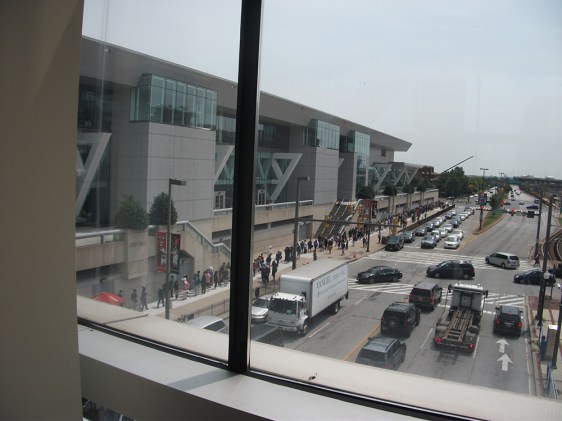
Fortune and misfortune came in roughly equal parts at this year’s Otakon, as the best weather in years for the convention mainly served to provide some reprieve for the long and grueling ticket line. Some technical difficulties forced the registration to extend all the way until Friday at 4pm (registration began Thursday). Being press I did not have to deal with this myself, so I don’t want it to sound like I am speaking entirely from personal experience, but I did accompany a couple of friends as they moved through what was a seemingly unending parade of otaku before giving up at roughly the 2-hour mark and waiting for the next day.
Some panel room shuffling this year meant that panels could hold larger audiences, while little details like dividers helped traffic flow along. The bottleneck sky bridge between the Baltimore Convention Center and the Hilton could still get backed up at times, but not quite as much as last year. Again, the weather was a major boon as it meant that even if certain parts of the con got jammed, it was a simple matter of leaving the con center and entering at a different point. Unfortunately, many of the presentations also had tech issues that mostly seemed to stem from the Otakon equipment rather than presenters’ laptops and such. However, Otakon smartly implemented 15-minute breaks between panels, which gave people time to set up and mostly work through any problems, and even if things still went awry it at least only ate into their time somewhat.
Once people actually got into the convention though, Otakon turned out for the most part to be as great as ever.
Industry Panels
This year, due to still recovering from jetlag, I took a more relaxed pace compared to previous Otakons. Having no panels to run for myself made this easier, and while the guests were good, none of them were must-see for me. Of course, even simply picking and choosing means that there are still a number of interesting panels. The best industry panels this year had to be the Q&As with director Katabuchi Sunao (Mai Mai Miracle), Otakon mainstay Maruyama Masao, founder and former producer of the anime studio MADHouse and current founder of MAPPA (Kids on the Slope, Teekyuu), and character designer/animator Matsubara Hidenori. Their new project is a film adaptation of the manga In this Corner of the World (previously released on JManga as To All Corners of the World) by Kouno Fumiyo, about a young girl living in Hiroshima during World War II. Kouno previously received critical acclaim over the similarly themed Town of Evening Calm, Country of Cherry Blossoms, and having read In This Corner of the World myself, I have to say that I am extremely looking forward to this project.
I managed to ask a couple of questions of Katabuchi. One had to do with some criticism of Kouno’s work I’ve seen in the past, where people accused her of not being directly critical enough of the Second World War and issues such as Japan’s militarism at the time. While it’s clear upon reading the manga that the work is actually quite critical and is merely subtle in its approach, I wanted to know if 1) they were aware of this criticism 2) they were prepared to address it. Katabuchi’s response was quite satisfying in this regard, as he himself gave an example of how the original manga does portray a larger world with many political issues but through the eyes of a young girl who isn’t necessarily aware of everything around her but is nonetheless affected by it in her everyday life.
In particular, Katabuchi pointed out how the main character’s desire for a yo-yo is actually a reference to the fact that yo-yos had become popular in Japan at the time, but the manga does not bother to mention this because a little girl would not be thinking about the significance of popular trends to a society. In other words, while this yo-yo example says nothing directly about the political climate at the time, it shows the awareness that the work has about what was happening in society. Given this response, and the fact that an elaborate art exhibition of their layout and design work for the movie showed just how much research they were putting in to depict a pre-atomic bombing Hiroshima, it gives me confidence that the movie will properly tackle its difficult subject matter. While Miyazaki Hayao’s The Wind Rises drew a similar kind of controversy (the criticism that it had whitewashed Japan’s role in history), I feel that, similar to Miyazaki’s film, that this will not be a simple black-and-white anti-war film.
The other question had to do with the fact that he actually worked on the, shall we say interesting, American Street Fighter cartoon. No, not the anime film with the dub soundtrack featuring Korn, nor Street Fighter II V, but the one best known for its M. Bison memes. I basically asked if he had any recollection of his experience there, and he said that it had been so long ago that all he remembered was drawing Chun-Li at some point and eventually feeling like he should have been in charge of the whole thing. At another point in the panel, Katabuchi also mentioned how he has an advantage over Miyazaki because Miyazaki is never allowed to direct something like Black Lagoon but everything is fair game for Katabuchi himself.
As for Maruyama, it’s more or less the case every year, but the man is arguably the most important person at Otakon every time he attends. In This Corner of the World is a MAPPA production and so a lot of the focus was on that, but he was of course open to questions in general. I asked him if his production style had changed now compared to his early days at MADHouse on shows such as Aim for the Ace!, but he responded that his approach to production has changed little in the 3+ decades since, as he prefers to give the creators themselves freedom to work. The only drawback is that it means he’s not the best with finances, which is why MADHouse was eventually purchased by Nippon TV.
Another interesting question courtesy of Kate from the Reverse Thieves was whether the subject matter of the current anime Terror in Resonance (terrorism and nuclear weapons) had caused any controversy or run into any problems. Maruyama responded that both he and the director Watanabe Shin’ichirou (Cowboy Bebop, Samurai Champloo, Kids on the Slope) had concerns that the TV stations would refuse to air the show, but that the two of them went forward with it anyway because that’s their style. It reminds me of the production issues that the Coppelion anime ran into that caused it to cover up all overt references to radiation, and I’m personally happy that the same fate has not befallen Terror in Resonance, or at least not yet. Overall, I have to stress that going to a Maruyama panel is always worth it, and as sad as it sounds the man is not getting any younger. That said, he did joke that he’s the same age as Miyazaki but whereas Miyazaki retired Maruyama is doing more work than ever before. Maybe it’s a MAPPA trend to make jokes referencing the famed Ghibli director.
The last guest to attend the convention that was related to In This Corner of the World was Matsubara Hidenori, known for his character design work on the Sakura Wars games and more recently for his animation work on the Rebuild of Evangelion films. He was a guest in 2009 as well, and after having heard how interesting his Q&A was at the time I made sure not to miss it. Sadly I couldn’t ask him any questions myself, but his responses in general were quite informative. In particular, he talked about how glad he was to not have to necessarily draw young, cute girls all the time anymore, and that one of the works most influential to him is the World Masterpiece Theater series En Famille or The Story of Perinne. He also mentioned that while he once tried to switch to using a drawing tablet, in the end he had to go back to pencil and paper.
I briefly mentioned the In This Corner of the World art exhibition, but it really deserves at least is own paragraph to talk about how amazing it is. I’m actually a little sad that photos weren’t allowed because the amount of work and research that went into them is nothing short of astounding. In order to properly capture the Hiroshima area of World War II Japan, they did things like find out how seaweed was dried using bamboo instead of reeds, and they even looked into the train schedules at the time to see what times would be accurate for trains in the backgrounds in certain scenes. A lot of this work would arguably be unnecessary and very few people are even alive today who remember that period, but it shows just how much they want to capture the feeling of living in that environment.
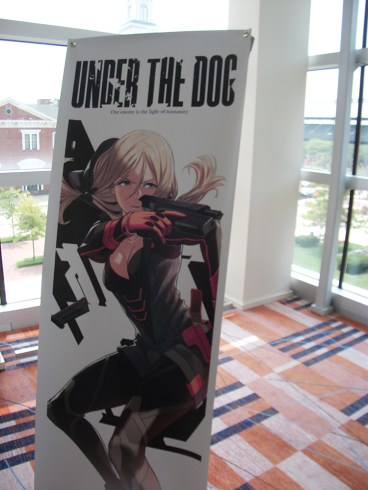
I also attended the panel for character designer Kozaki Yuusuke, and while I’m not quite the fan that others are (having only barely played No More Heroes and never having played Fire Emblem: Awakening), it was fun to see him take audience drawing requests. The two images above were the result of this, and it turns out that Kozaki even drew the cover art for the Otakon guidebook this year. This was quite noticeable as generally the artwork for Otakon stuff has traditionally ranged from subpar to mediocre. It also made me really want to read his manga Donyatsu, which is about donut-shaped dogs and cats in an apocalyptic world; in one of the images above, Donyatsu is featured being eaten by a Fire Emblem character. The main reason Kozaki was at Otakon, however, was to promote a new anime project, Under the Dog, which based on its initial material is trying to invoke a Ghost in the Shell: Stand Alone Complex-type feel but with more action. In fact, at the panel they mentioned getting an animator who worked on GitS. If you want to help make it happen, a Kickstarter went up just this past week.
Fan Panels
While the guests are generally great at Otakon, it’s the fan panels that are in my opinion the heart and soul of the experience. Compared to Anime Expo, for example, Otakon boasts a much larger set of non-industry panels, which results in a general sense of genuine enthusiasm over the experience of watching, reading, and thinking about anime, manga, and related topics.
The first panel of the convention that I attended was the Intro to Josei panel, and it was clear that they were inexperienced as presenters. The panel had two parts to it, a brief history and rundown of the significance of josei (manga for older women), and then some examples of interesting titles. Their intentions were good, but the panel had two main problems. First, it felt like two panels in one, with the seam between the history and the examples made especially visible by the fact that the first and second halves just felt completely different. Second, it was more of an introduction to J-Drama panels than one about josei anime and manga, as all of their visual examples came from dramas, even in cases where anime counterparts were available (like Nodame Cantabile). The result was that the panel didn’t feel like an introduction, but more a brief gleaning of what’s available. If they could include more anime and manga and really figure out what they want to say, then I think it would be much improved for the future.
I’ve known Daryl Surat for a long time now, and have listened to the Anime World Order podcast for even longer. As was the case last year (and possibly the years before that, I can’t remember), Daryl was a featured panelist at Otakon, and he always manages to have a strong mix of smart and stupid that keeps things fresh, entertaining, and even educational. While his Anime’s Craziest Deaths panel is an Otakon mainstay at this point and pretty much always delivers exactly what its title states, he also did a panel on ninja in anime, one on the long relationship of influence that exists between pro wrestling and anime, and one on showing some of the many references in Kill la Kill. The ninja panel was the lightest in terms of content and was more about seeing how wide and varied the perception of ninja has become to include just about anyone doing anything as long as they’re called a ninja. The pro wrestling/anime panel approached that connection from a unique angle, positing the idea that, more than simply being about one referencing the other and vice versa, some of the very fundamental storytelling aspects of anime and manga (particularly shounen fighting works) are influenced by the wrestling storylines that were popular when television first emerged in Japan. It also went into detail about the female pro wrestling scene in Japan and how it was for a long time not about appealing to men through sexy outfits but about giving girls idols to aspire to, which then created certain archetypes in anime and manga as well. Really great panel, I recommend going even if people don’t have an interest in pro wrestling.
The Kill la Kill references panel 1) made me want to watch Sukeban Deka, the show about a yo-yo-wielding delinquent girl that inspired much of Kill la Kill 2) emphasized that what makes Kill la Kill work is that it does not live or die by its references but uses them to enhance the experience (something I agree with). It was fun to see the audience’s brains light up as they realize how many things went over their head, and also great to see how many Kill la Kill fans were at Otakon (more on that later). I have to give a very personal thanks to Daryl, because while he mentions appropriating this post of mine on the puns and wordplay in Mako’s spotlight scenes, he gave me full credit for it and even encouraged people to come read Ogiue Maniax. The applause I got at the panel was one of the best moments of the con for me.
I also attended two of the fan panels run by members of the Reverse Thieves, “The Visual Stylings of Kunihiko Ikuhara” and “The Measure of a Man. The Nature of a Hero: A Fate/Stay Night Panel.” The Ikuhara panel focused on the Revolutionary Girl Utena and Mawaru Penguindrum director and the unique flair he brings to his work, tracing his visual motifs from his days on Sailor Moon to his more recent work. One thing that they really emphasized was how important pattern and repetition were for Ikuhara, which along with his use of visual cues from dramatic theater really shows how Ikuhara values graphic design in his animation work, and doesn’t treat it simply as “drawn film.” As they mentioned, it’s easy to believe that Ikuhara does things purely for style’s sake and that it doesn’t contribute to the overall narrative at all when in fact it very much does, but it could have been highlighted even better. Although there were some technical mishaps, Alain’s Fate/Stay Night panel was also quite successful. In showing how each of the three main story paths in Fate/Stay Night follow a different philosophy in terms of what it means to be a “hero,” Alain pointed out how attempting to mash them all together for the first TV series led to its downfall because it was literally putting three conflicting sets of ideas together. I remember years ago seeing fans of Tsukihime being similarly upset over that anime, and given that it is also a Type-Moon property I can’t help but feel a similar thing happened there.
Other Panels
This might not sound especially different from the panels I normally attend, but by being less focused on must-see events, I also was able to be more experimental in my con experience. For example, while a former boss of mine was big into sumo, I had never really gotten into it myself. However, being somewhat aware of the fact that sumo takes a lot of skill, going to the Sumo Demonstration on Saturday was actually pretty informative. There, five-time US sumo champion Kelly Gneiting took on the world’s largest Japanese man, Yamamotoyama Ryuuta, and showed the flexibility and strength required to be a sumo wrestler. To give you an idea of what it takes, imagine trying to lift 500 lbs. that is actively trying to push itself against you, adding more weight and stress to your attempt. It’s no wonder that matches last only a short while and require long breaks.
Another unusual panel that leaped out of the schedule was something titled “Gunma Prefecture Office” with no description to accompany it. What could it be? Was it actually people from Gunma’s tourism division? It turns out that it was something along those lines (though not in an official capacity), as former Otakon president Alice Volkmar introduced the crowd to the Gunma Prefecture and all of its little details. The things I got most out of it were that hot springs are a big deal there (which of course makes me want to visit), and it’s known for its three mountains, all of which are featured in the intense races of Initial D. Truth be told, I was originally considering just asking Initial D questions the entire time.
The last panel I will mention is the Otakon Game Show, a perennial Otakon feature that has both contestants and audience participating in a battle of who knows more about anime. It’s generally fun, though I feel like the questions are too geared towards knowledge of minutiae from popular shows and not so much a well-rounded knowledge of anime, and the ask the audience section needs to go. I also had problems registering my phone for the audience participation section, and many of my answers did not go through. Other than that, it was a fine time.
I do have to say, though, and this might just be me nitpicking, but yaoi does not rhyme with kazowie. That’d be like saying Aoi rhymes with Howie.
Concerts
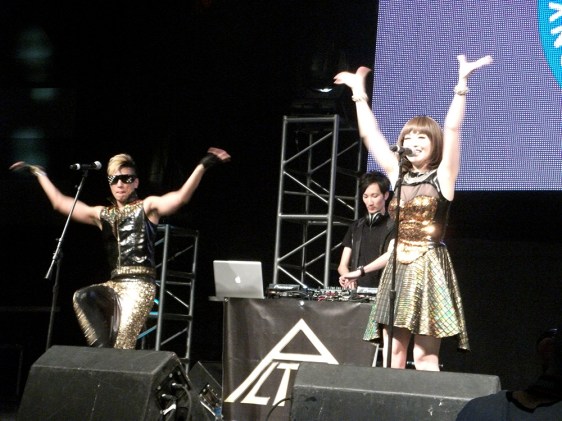
I was originally not planning on attending any concerts this Otakon, but upon remembering that the band Altima consisted of not only one of the singers from Fripside (A Certain Scientific Railgun) but also motsu from the recently disbanded group m.o.v.e. (Initial D), it meant I had to check it out if only for a little while. This wasn’t the first time I got to see motsu as I actually attended another con where he was a guest, Anime 2012 in the Netherlands, so I knew that the man brings the hype. The music really got me pumped up, but I actually had to leave the concert early as I could feel it destroying my ears (I failed to bring earplugs).
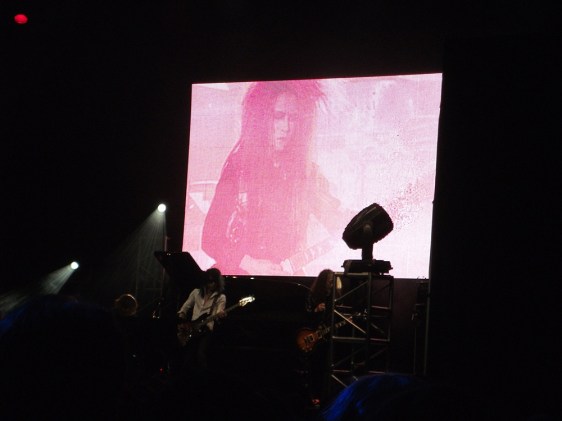
I am also not big into J-Rock, but X-Japan member Yoshiki has such a reputation about him that when I managed to get a ticket for the concert I also decided to see what he’s all about. You may have to forgive me for being ignorant when it comes to X-Japan, but I had no idea that their style was a mix of heavy metal and classical. Yoshiki was there more for the latter side, performing primarily classical-style pieces on piano while accompanied by a string quartet and a singer. The highlight of the concert was when he played a song in tribute to two members of X-Japan who had passed away over the years, a long, 10+ minute torrent of emotions that culminated in Yoshiki smashing the keys as if he was trying to shove them through the piano itself. This was actually a transition from his classical self to his metal self, as suddenly two other X-Japan members made a surprise appearance and rocked out. I apologize for not knowing their names.
Overall
Because of the fact that I personally did not approach Otakon as frantically as I had in previous years, in a way it would have been difficult for the convention to have disappointed me. That’s not to say that Otakon made no effort to make this year as enjoyable and as comfortable as they could, but I did not run into any major problems that ruined the con experience. The only thing that is a concern is the gradual countdown until the move to Washington D.C. in a few years, and the farewells we’ll have to bid to Baltimore and its food.
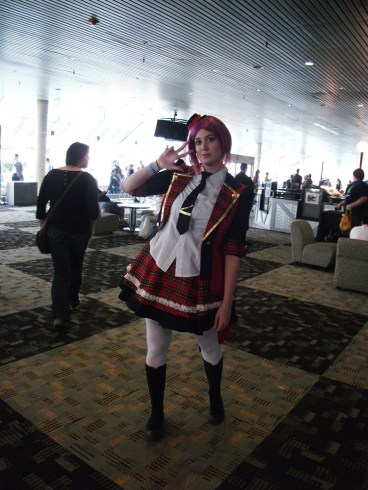
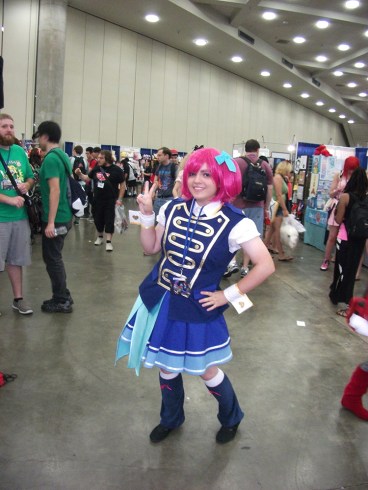
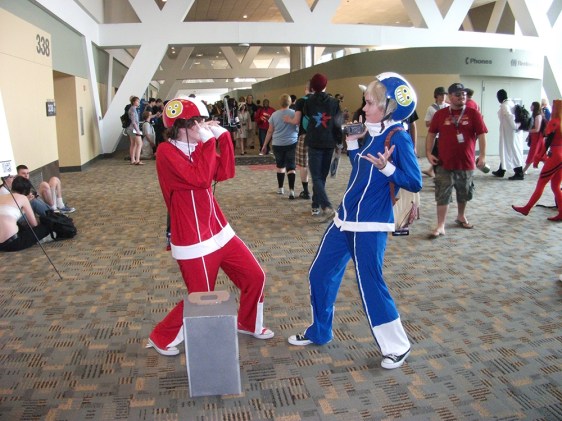
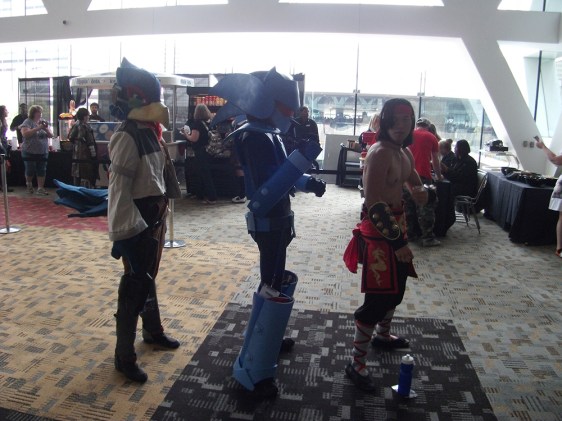
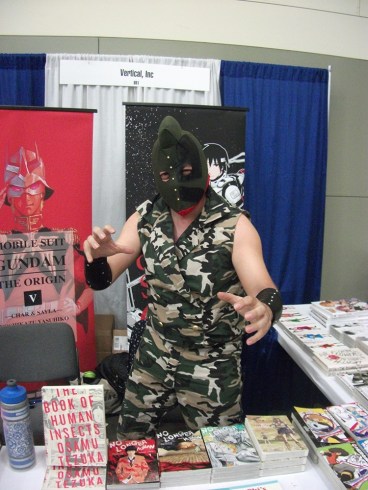
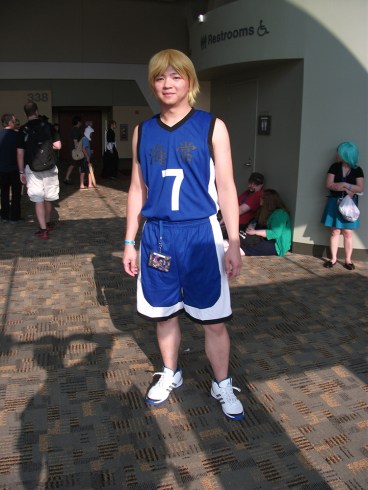
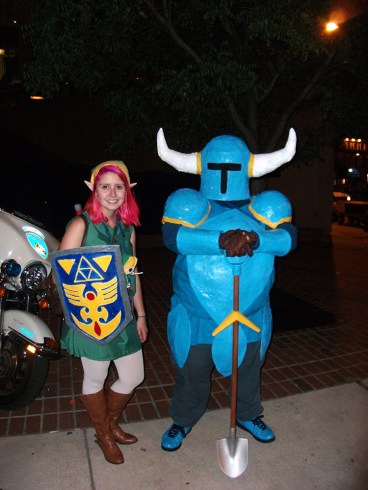
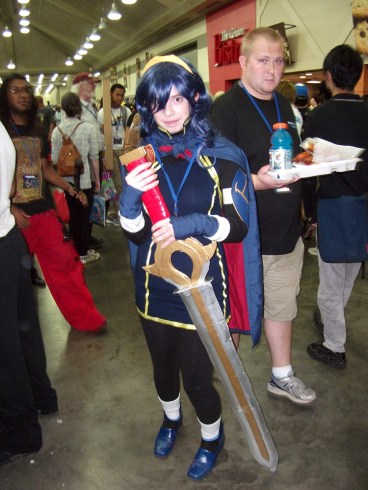
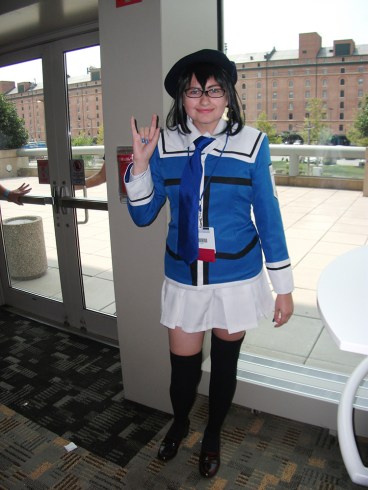
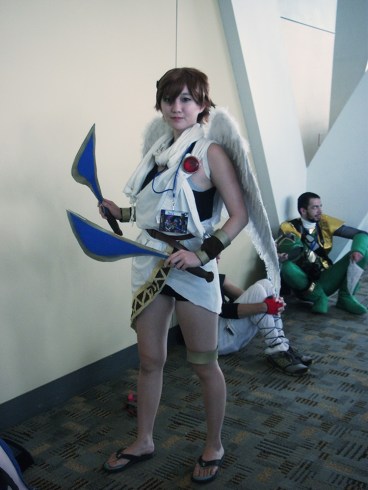
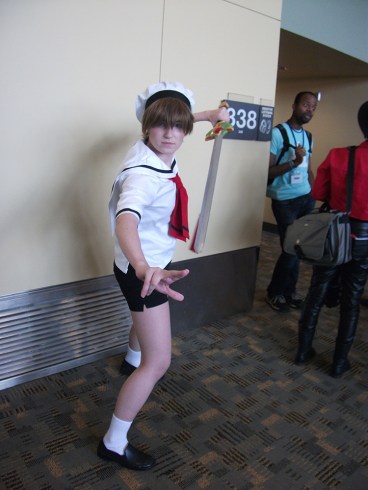
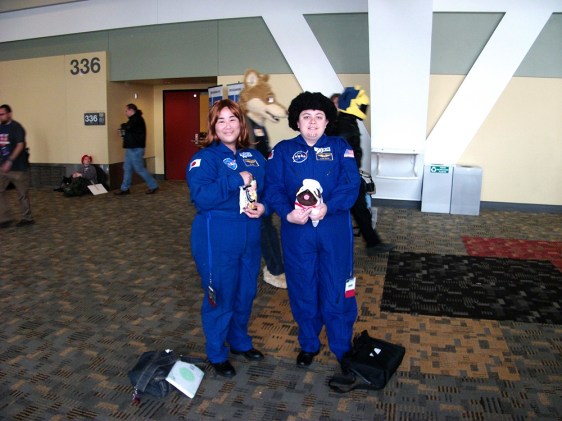
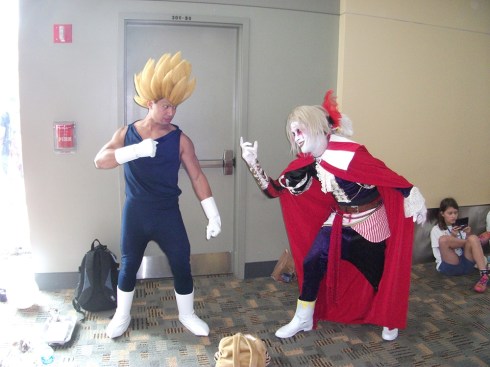
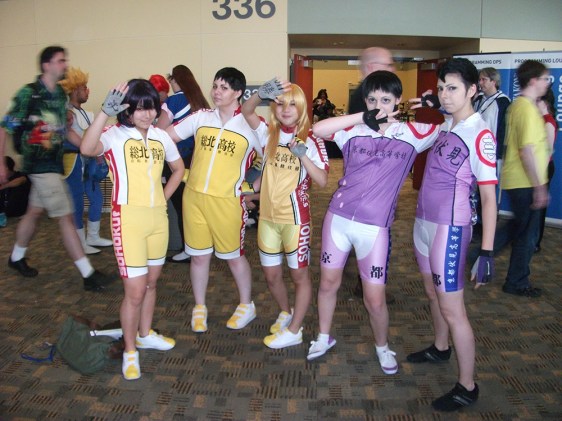
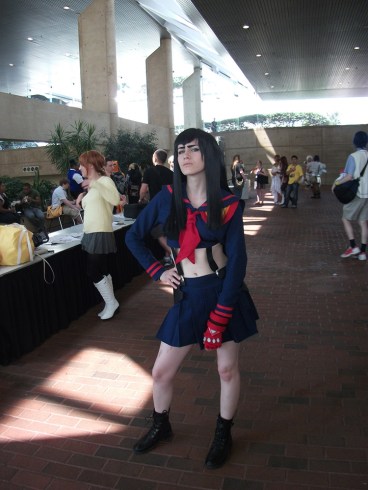
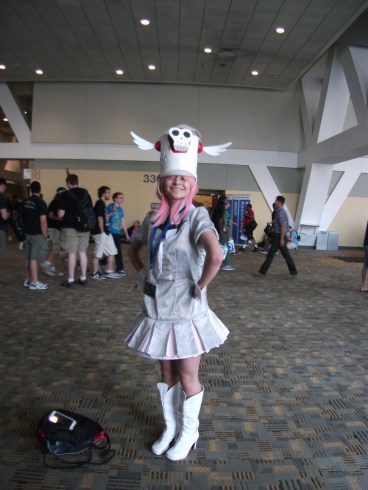
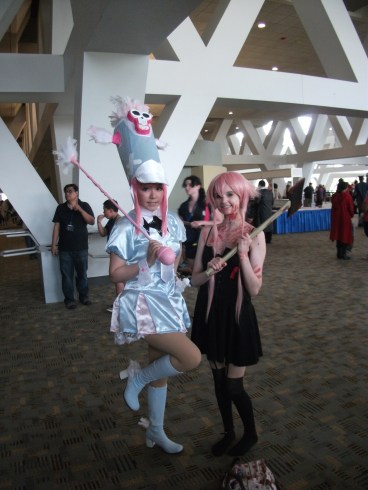
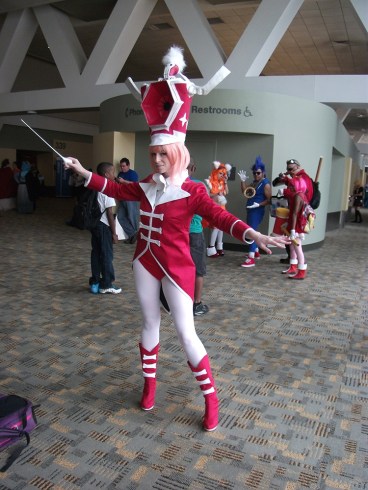
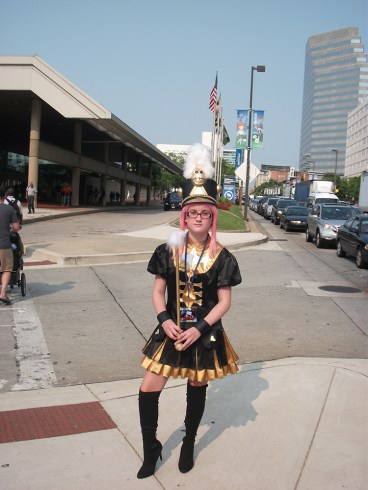
I’ll sign off here with a collection of cosplay photos. Shout outs to the Nogami Aoi cosplayer for referencing something as cool as Zettai Karen Children, the Yazawa Nico and Koizumi Hanayo (Love Live!) cosplayers in the photo all the way up top, the impromptu and unintentional VGCW match, and all the various Jakuzure Nonons that attended. Given that she has more outfits than just about anyone else, it was fun seeing how many variations of Nonon I could photograph.
Four years ago I arrived in the Netherlands. In a few days, I return to the United States. I don’t know exactly where this post will go, but I feel it is important to say something about my time in Europe, both as a person and as a fan of anime and manga. I apologize for the rambling that’s about to ensue.
I’ve lived outside of the United States before, having spent a few months studying abroad in Japan (almost 10 years ago at this point!), but never had I been in a foreign country for so long. I can’t say I ever truly acclimated myself to this environment (I never even got fluent in the language, after all), but I managed a comfortable existence. Even putting aside amazing culinary cultures such as France and Germany, food has been an (often deep-fried) adventure. I’ll miss the Indonesian cuisine and the herring especially.
I could go on forever about food, though, so I’ll speak mainly about things that are more directly pertinent about being an otaku. One aspect that I had been somewhat aware of in the past but that had rarely entered my mind was that different countries have unique relationships with Japan, and this is certainly the case with the Netherlands. Famously the Dutch were the only foreigners allowed in Japan for a long time, and they stayed exclusively on the island of Deshima (or Dejima). So what does a Dutch group dedicated to bringing Japanese music to anime conventions in the Netherlands call itself? Deshima Sounds. It makes sense.
It was fascinating to see a different anime con culture compared to the US. The conventions certainly never even approach the massive attendances of an Otakon or an Anime Expo, but they have their own charm. From my first convention experience here, one aspect that really stood out to me was how the Artists’ Alleys greatly emphasized the production of full-on comics (one might even call them doujinshi) over individual images. While I don’t know if this is truly relevant, I do know that the Netherlands historically has been considered a strong country for book-publishing, allowing things that could get one in trouble in other countries (and I don’t mean pornography). It’s actually something I wouldn’t mind seeing more of in the US.
Speaking of fans, I must apologize to the folks over at Manga Kissa in Utrecht for never really going, but I am fully behind their endeavor to provide an actual manga cafe with a wide selection. If you’re ever in Utrecht, I recommend you check it out, as it’s a nice place to relax.
While my focus has been on anime and manga for a long time, I was also presently surprised to find out that the Netherlands has its own comics culture. Whenever I went to a new city, I often looked around for a comic store, and while many of the comics were simply French or Belgian comics translated into Dutch, even that was interesting because of how the Dutch preferred less expensive paperbacks over the elaborate hardcovers one would find elsewhere. It was actually amazing to be able to attend an event and just walk straight up to some of the biggest names in the industry and get a sketch at no cost and without a significant wait in line.
Around 2009 or so, I began to get into Japanese mahjong after having watched shows such as Akagi and Saki. Having originally played online, I eventually found a group to play with in real life, but it wasn’t until I lived in the Netherlands that I had the opportunity to actually attend tournaments and to compete for pride and glory (there were never any cash prizes but that’s okay). This country is small enough that even a tournament at a fairly obscure location was never too difficult to get to, and to find a fairly thriving riichi mahjong scene makes me incredibly grateful. I’ve met people from all over the world at these tournaments, gained some nice friends, and it’s even legitimately improved my mahjong to boot. Many of the Dutch players had originally come from a different style of mahjong, and so when playing them I had to learn that my style, which was built from playing the Tenhou online ladder, simply did not work. I had to re-evaluate how I looked at the game, and this experience is something I’ll never forget. I leave being fairly satisfied with my own performance, having attended three European tournaments and having placed 10th, 20th, and 6th.
Then there’s the rest of Europe to talk about! I wasn’t able to go to every country I had set my eyes on (Sweden, Luxembourg, and Switzerland I’ll perhaps regret not seeing most of all), but of the places I did have the pleasure of visiting I actually discovered quite a bit about geek fandom in general. I visit New York’s “Forbidden Planet” regularly, but it pales in comparison to the one in London. The comics museum in Belgium was a blast and made me want to read European comics more than ever.
Paris is, perhaps predictably, the most notable of all. While I had heard that the French were big into anime, it didn’t hit me until a simple trip from the hotel to the city center involved passing by not one, but multiple cosplay shops, in areas that didn’t even necessarily show signs of otakudom otherwise. Upon entering the toy and comic stores, I was continuously greeted by the ubiquitous presence of one UFO Robo Grendizer. I was already aware of the fact that Grendizer was a big deal for the French (and the Italian), that it was basically to them what Voltron was to the US, but in a way it was so much more. At the time, I suspected that the French benefited from the fact that Japan still continuously produced new Grendizer merchandise, and I think that theory still holds today.
I also got to attend a few Starcraft II events, which was wild.
Thank you to everyone who helped me out while I was living in a continent I had never even visited before. You’ve made my life that much richer, and I hope we can meet again someday. And yes, I am now aware of Alfred J. Kwak.
In a few days, I head to Otakon in Baltimore, which itself is undergoing a big transition with its eventual move to Washington, DC in 2016. Otakon is familiar territory at this point, yet I can’t help but feel that there will be some strange kind of culture shock for myself.
I was unable to go to AnimeNEXT this year, but thanks to the Reverse Thieves and their con report, I’ve learned that the Studio Trigger panels were fantastic and I’m totally jealous of them for being there. Obviously I can’t write about the experience, but there are two points in their post on Trigger that I find interesting to look further into.
The first aspect I want to talk about is in regards to them having an initial version of Kill la Kill with five episodes already planned out in full, but decided to scrap it and start over again with something they felt was stronger. Back when I wrote my review of Kill la Kill I got some comments from a particular poster that criticized Kill la Kill‘s writer for making numerous revisions to the script, as if it had hacked together haphazardly, but with this clarification it’s now obvious that the drastic changes came from the planning stage and were less about cobbling together a frankenstory and more about trying to find the right direction no matter what.
The second little factoid that caught my attention is the fact that the staff at Studio Trigger is really into American superhero comics, which is sort of obvious if you’ve watched all of Inferno Cop. What I find funny about this is the fact that for American comics, superheroes are increasingly seen as this bland, boring, mainstream yet niche thing that we need to move past, while Studio Trigger has this reputation for being a new and cutting-edge anime studio, and they take inspiration from superhero comics.
Though I doubt he needs introduction, Seki Tomokazu is a well-known and highly celebrated Japanese voice actor, who has performed roles such as Domon Kasshu in G Gundam, Tanaka Souichirou in Genshiken,and Takahashi Keisuke in Initial D, among many, many others.
Hello, welcome to Otakon! Actually, a few years ago when you were a guest at Otakon I actually asked you a question about Hiyama Nobuyuki, but now I’d like to ask you about your recent work.
So the first question I’d like to ask is your role in Gyrozetter as “Mic Man Seki,” because I’m wondering, as you share the same name, if you were the inspiration for the character, or is it merely coincidence?
So originally the character was called a different name, and his profile was different, but the staff said, “It’s Seki doing it, so we should probably change this around.” So they decided to change the name, change the profile, and now the character is me.
I’d like to ask you about another recent role you had, your voice work in Gokaiger. How is voice acting for a live-action show different from anime, and how do you feel about your voice coming out of children’s toys?
So when I was small, I was also playing with tokusatsu toys, and to think that children nowadays play with those toys and that my voice comes out of it, I feel very honored and very happy that children are playing with those toys.
Regarding acting, I don’t really differentiate anime acting from live-action. It would be the same, but then the only thing I would really care about is to say it very heroically and courageously, as the word “goukai” in Gokaiger implies.
My next question is actually about Genshiken, of which I’m a fan, because you play Tanaka, a character very different from your other roles. What was it like playing Tanaka, and because of the recent cast change, although I know this may be a difficult question, if you know the reasons for the change?
So regarding the character Tanaka, he really likes figures and plamos and such, and I personally really like models, and although this character is very different from the ones I’ve been doing, his inside, as a person who likes models, is something I could relate to very much. I feel that the casting and such were matched up for that purpose.
As for the cast change in Genshiken, it does sort of happen at times when the sequel of a series goes on with a different company or production, and I thought I would love to do it again, but since I took on other roles after other people in similar ways, I would just need to term it as an “adult world.” I don’t have much to say.
I would also like to ask you about working with Mizuhashi Kaori, especially in Genshiken.
Mizuhashi Kaori is small but very energetic. She’s a very nice girl, but I don’t get to see her much these days. She’s about this big. *Seki puts his hands about a forearm’s length apart, to which I do the same*
*Laughs* You don’t believe me.
You’re known for voicing a lot of powerful characters, but your strangest role may be Mepple in Pretty Cure. How did you get that role, and how was it playing the character? Was it a challenge?
About Mepple, this offer came in to me, and they told me to do it as I like it, so I thought I should just do it in my regular voice. That day, on my very first recording on Mepple, I was feeling really good, and I decided to do it with a sort of high voice. They told me, if you can do that for an entire year, please do it. So, the only really good day I had was just that one day, and afterwards I was having a really hard time doing that one voice. Now that I think about it, it was a year of really hard work.
My final question has to do with voice acting. A few years ago, Mitsuya Yuji was a guest at Otakon, and he talked about how in the old days voice acting was a side job for theatre and drama actors. Nozawa Masako has also mentioned outside experience is also valuable, as opposed to acting exclusively in anime or voice acting. What do you think of this advice, and do you think it’s possible to be a strong voice actor without that outside background?
I think both opinions are correct. Whether you have influence or not, it’s all about how hard you work yourself. But, I am in the generation where Ms. Masako was my teacher, my sensei, and I learned from her that to be a good voice actor you have to be very powerful without just the voice actor part, that you need to be very good at using your body to act and such. From how she raised me, I think that’s very true, and outside experience helps very much, but the recent generation don’t really follow that example, so it really is up to the person.
This is an interview with Tachikawa Yuzuru and Suwa Michihiko, both of whom are involved with the Anime Mirai project, an annual Japanese government-funded program to help teach young animators the skills they need to improve Japan’s animation industry. Tachikawa is the director of one such Anime Mirai-funded work, Death Billiards. Suwa is better known as the producer for works including Detective Conan, Magic Knight Rayearth, and City Hunter, and is part of the Anime Mirai selection committee.
So the first thing I want to ask you pertaining to Anime Mirai is, because the project developed from wanting to help young animators, what is your opinion of the current state of anime for young animators in Japan? Would you like to see a future perhaps where the AnimeMirai project is no longer necessary because there are so many opportunities for young animators?
Tachikawa: So the reality is that when it comes to the number of animators versus the number of projects, the projects are greatly outnumbering the animators. The upper staff (senpai) is supposed to teach the younger (kouhai), but that’s not really happening these days. To speak bluntly, the studio doesn’t have much time or money, so it’s sort of centered around making the project. So since Anime Mirai is being funded by the country, I hope that it will be a starter for raising new hopes for the anime industry.
In the end, what would be best is if the upper staff at the studio would be able to teach the younger staff and that way Anime Mirai would no longer be needed. That would be the best future we could see.
You said the Anime Mirai project is funded by the Japanese government. What unique advantage does this provide, the fact that it is state funded?
Suwa: So the country funds Anime Mirai with I think 38 million yen, check back with me for the numbers. Sfter Anime Mirai makes a project, throughout the year the project will be shown as a movie. But after that, the movie/show will be in the hands of the companies, and it will then be a new project for the companies to get a profit out of Anime Mirai, so I think it will be a new way of doing things.
This question is about Death Billiards because it uses a lot of 3DCG in its animation of billiards. I know 3DCG has been seen in a variety of ways, such as a shortcut, a new form of animation unto itself, and as a cost-saving measure. What is your opinion of using 3D computer graphics in anime?
Tachikawa: Personally I don’t like anime becoming all 3DCG, it has to be a balance of both. The importance would be using 3DCG in the right place at the right time. The balls in Death Billiards are 3DCG, but the project had plans to teach the younger ones how to draw the more human parts, so we left the billiard balls and such to 3DCG.





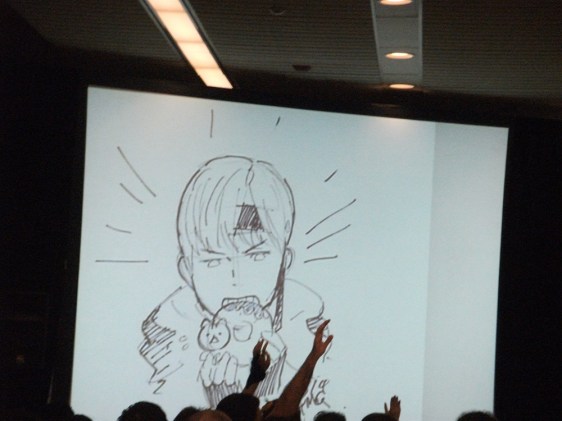
 I also attended the panel for character designer Kozaki Yuusuke, and while I’m not quite the fan that others are (having only barely played No More Heroes and never having played Fire Emblem: Awakening), it was fun to see him take audience drawing requests. The two images above were the result of this, and it turns out that Kozaki even drew the cover art for the Otakon guidebook this year. This was quite noticeable as generally the artwork for Otakon stuff has traditionally ranged from subpar to mediocre. It also made me really want to read his manga Donyatsu, which is about donut-shaped dogs and cats in an apocalyptic world; in one of the images above, Donyatsu is featured being eaten by a Fire Emblem character. The main reason Kozaki was at Otakon, however, was to promote a new anime project, Under the Dog, which based on its initial material is trying to invoke a Ghost in the Shell: Stand Alone Complex-type feel but with more action. In fact, at the panel they mentioned getting an animator who worked on GitS. If you want to help make it happen, a