Nostalgia Is Overrated: The Tunnel to Summer, the Exit of Goodbyes (Otakon 2023)

This film premiered in the US at Otakon 2023.

It’s not uncommon for people to dwell on what might have been. “If only I could get back what I lost, then everything would be better.” The Tunnel to Summer, the Exit of Goodbyes is an anime film that explores this feeling, told through the lens of a summer romance with a spark of the fantastical.

The Tunnel to Summer explores the lives and relationships of two teenagers, a boy named Touno Kaoru and a girl named Hanashiro Anzu, who end up finding an actual urban legend: the Ryuuguu Tunnel that is said to give you your greatest desire but at the price of losing everything. Touno has to deal with an abusive father who blames him for all their troubles and trauma. Hanashiro has something to prove and an attitude to match—one that says, “I have neither the time or patience to deal with stupid crap.” The pair discover that time passes much more quickly in the tunnel, and even a few seconds in there translates to hours in the real world. But the two have wishes they want to fulfill, and so they work together to figure out its secrets, all the while growing closer.

Time dilation isn’t a new premise in Japanese fiction. Both Aim for the Top! Gunbuster and Voices of a Distant Star explore how human relationships can be affected by the uneven passage of time within science fictional settings. Even beyond anime, the Ryuuguu Tunnel itself is a reference to the fairy tale Urashima Tarou, which is about a guy who visits the underwater Ryuuguu-jou (Dragon Palace) for what he perceives as three days but is actually 300 years. As a trope, I actually enjoy time dilation quite a bit because of how it messes with our minds so simply and easily—and The Tunnel to Summer adds another emotional dimension because it’s not just about how they are passively affected by it but also how their active decisions have consequences. The characters must consider how the past (or future) they long for might very well be distracting them from finding happiness in the present. 

Something else that stands out to me is the central relationship between Touno and Hanashiro because of how much the two feel like equals. It sort of brings to mind BL shipping in shounen series, and how often it happens simply because all the boys are involved in the same competition—which often engenders visibly greater passion than whatever interaction the hero has with a female love interest. Here, Touno and Hanashiro feel very much like they’re in it together as they learn and experiment about the Ryuuguu Tunnel. In terms of how this plays out in the overall story, I like how each character is very invested in their mutual endeavor in their own way. The similarities and differences between the two ultimately enriches their relationship and gives the film a nice emotional anchoring.

Because of the subject matter and the seasonal setting, The Tunnel to Summer, the Exit of Goodbyes ends up having a very nostalgic feel while at the same time questioning the value of nostalgia itself. It’s more than just another summer-themed anime movie, carrying a memorable identity all its own.

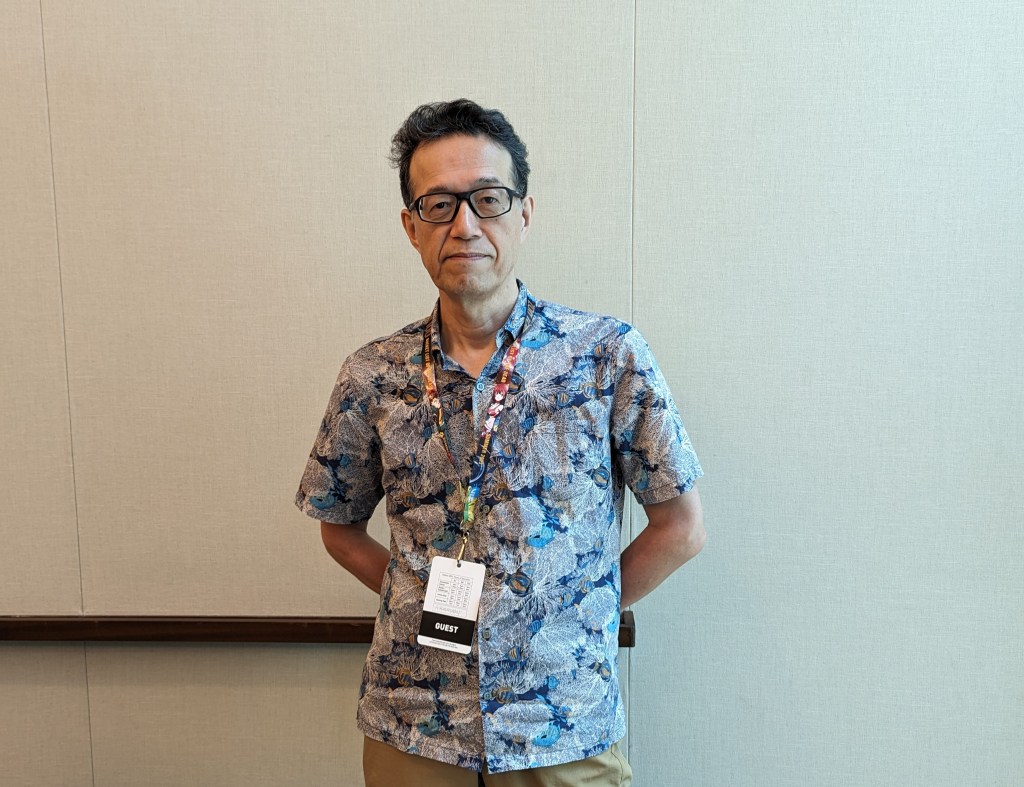
Interview: Aramaki Shinji (Otakon 2023)

Aramaki Shinji is a creator known for his mecha design work on Bubblegum Crisis, Genesis Climber Mospeada, Megazone 23, and more. He also designed many of the toys that became Transformers, including Soundwave. Aramaki is also an anime director who has focused on pushing 3DCG animation since the early 2000s.

You have a lot of experience as a mechanical designer, and I understand that different mechanical designers have different processes for designing. For example, Kawamori Shoji has talked about how he uses Legos. What are the key aspects of your approach?

Well, it depends a lot because I get different requests for each project I work on. For example, you mentioned that Kawamori Shoji-san uses Legos, but I think that’s mainly for designing transforming mecha. Should I answer just based on transforming ones? It’ll make it easier if we narrow it down to a certain genre.

Sure, let’s go with transforming.

So we initially choose two or three shapes/forms, and we ask, what are we going to transform and how. But we start out with the two coolest forms.

Would you say you sort of work backwards from the final designs/silhouettes perhaps?

Initially, we don’t really get into the details. We just think, oh this is what a cool bike looks like, and this is what a cool robot looks like. So we just start off with what looks cool and don’t get into the particulars of how it transforms yet.

It gets difficult from there. In the past, I used to study how things might transform using papercraft. Nowadays, though, we can use 3D programs. We start off with simple blocks, but using them, we can join them and see how these volumes move around.

If we use 3DCG, we can study how these forms look from varying perspectives, so it makes the process much easier.

The next work is one that you might not be as known for. I looked up your credits, and it said that you’re responsible for conceptual design on the anime Star Driver. The style of the mecha there are quite different from what I typically think of when it comes to your work. How far removed are the final designs compared to your originals?

Actually, for Star Driver, I didn’t do much mechanical design, and I didn’t really touch any robots. But I actually designed the landscapes and backgrounds—the stage design—for Star Driver. The series is set on an island, and I designed what the island is like, and what the school is like. I did it based on discussions I had with the director, Igarashi, to set the mood for the anime.

You directed works such as Appleseed, which was, at this point, decades ago. I remember seeing them first start to show up, and that was a time when directing in full 3DCG wasn’t nearly as convenient as it is today. What are some of the challenges you faced in the early 2000s?

Back then, we actually had a lot of problems. There was no standardized software for design, so the character design software was different from the landscape design software. That made it really difficult to organize everything and keep it together as one team. 

For one scene, when we decided on the camera angle and looked at the scene, the table and the character were sort of shifted because they were designed using different softwares.

These seem to be simple problems, but back then, Japan wasn’t as advanced in the field of CG. So we faced challenges every single day.

My final question: I actually have fond memories of the cartoon M.A.S.K. and its toys, and I was excited to learn that you worked on it. What designs were you responsible for, and what did it feel like to work on a foreign production?

This series involved a lot of transforming vehicles such as trucks and boats, but the original designs came from the toy company, Kenner. Back then, I was working in LA, but I went to Chicago where their company was based, and took a lot of pictures of the prototypes. We did drawings to help with animations.

Most of the mechas were designs provided from the toys, but some were not from the toys, so I got to design them.

I don’t remember all that well where they appeared in the show, but they let me design two transforming vehicles back then, where I got to pick the car types and how they transform. They were called the Manta and the Shark.

Thank you for this interview. It was great to have you at Otakon!

Thank you.

Otakon 2023: The Iwao Junko Panel

At Otakon 2023, Iwao Junko (Tomoyo in Cardcaptor Sakura) had a panel focused exclusively on her history and career. This is a summary of the panel, as well as notes from the Q&A that occurred. To read the interview I conducted with her and collaborator Kawamura Ryu, go here.

The Beginning

Iwao started off the panel by talking about her childhood, and how she loved listening to records found in storybooks, watching anime, listening to music. At that time, voice acting wasn’t seen as it is today, so when she asked others about a career in that realm, they told her she would have to be an actor or a singer/musician. Even so, she thought about getting into voice acting since she was 6 or 7 years old.

Around 13, she secretly auditioned to become an idol, and while she was ready to get rejected 100 or 200 times, she ended up getting accepted after just on try. Her parents (especially her dad) were very against it, but she promised them that she would quit in ten years if she didn’t make it.

So she went to Tokyo and did lessons, and she eventually debuted as an idol in a four-person group at the age of 16. She was actually replacing another idol in the group who had “graduated” (i.e. quit and moved on), but the group was already planning to split up after one year. Once that was done, she had to do part-time jobs and attend night school.

Iwao’s First Anime Role

From then on, until the age of 23, Iwao just worked and auditioned, ending up with various jobs. She was in musicals, and also played an assistant in a science show for kids. She even worked at a train station. One day, one of the members of the science show saw Iwao and asked if she had given up on show business. At that time, the ten-year deadline she had promised her parents was almost up. This person mentioned that a certain show was looking for someone who could act and sing, and so Iwao went for it because it could be her last chance. After auditioning, she was nervous waiting for results every day. 

It was her first anime role, and it was Melissa Thorn, one of the main characters in an Japanese-French co-produced anime called Montana Jones, about explorers on a voyage. Got the part of one of the main characters of Montana Jones. When she told her parents about it, worried that time was technically already up, her parents instead congratulated her, and said they want Iwao to keep trying for another 10 or even 20 years.

From there, Iwao joined a voice acting school and practiced for her debut in Montana Jones. One thing that surprised her about working on the show was that there was no rehearsal time in anime. The first day of recording is when you meet the rest of the cast.

Another surprise was that they recorded based on roughly drawn non-color animatics. She expected to be acting in reference to finished animation, and while there was sometimes color, that was often not the case. Sometimes, ttwo characters would even be represented by just a red line and a blue line.

The other main characters were played by Otsuka Akio (Solid Snake, Black Jack) and Nakao Ryusei (Freeza). Their performances were so good that she worried there were actually prior practice sessions that she didn’t know about and missed. Iwao couldn’t keep up with them at all. 

The way the recording studio was set up, 10-plus people had to work with four microphones. And in fact, one of those mics was the “main character mic,” exclusively used by Ohtsuka as Montana Jones. The result: you ad to quietly get up to the mics each time and constantly choosing which of the three you’d use every time. Not only that, but recording was analog back then, and the tape didn’t stop for you. Every take was 15-minute long (about half an episode), and whenever there was a mistake, everyone had to start all over again. Iwao remembers the other voice actors getting frustrated with her and asking, “What is this amateur doing here?” It was Otsuka and Nakao who helped her through the process, until they eventually finished the first episode. 

After the debut episode, haired, the show actually got complaints from viewers who wanted her to be replaced with someone more experienced, and she even received a stack of physical hate mail complaining about her. The other actors supported her and let her know that everyone has to deal with this. Gradually, the staff also supported her, and she gained fans little by little. She still got negative feedback, but would also receive letters from fans. Because of that, she wanted to become someone who could someday help a newbie overcome these same troubles. Something curious she noticed was that once she started having a more positive outlook, she started landing a lot more roles.

Going Full-Time

At first, she didn’t have enough voice acting gigs to quit her day job, but eventually had enough roles that she could go full-time. Her first time as protagonist was in Key the Metal Idol, and from there, it was Cardcaptor Sakura and Evangelion and so on. She remembers her manager saying, “You’re gonna get it,” in regards to Eva. It was with Eva that she could make voice acting her sole career. One thing she learned, though, was that despite the job being “voice acting,” a  lot of her work seemed to be event-related. Couldn’t get much sleep, which was rough.

Iwao recalled that the Eva audition was 15 minutes long for everyone. There was a long bench where everyone sat as they waited to try out, and she could see so many voice actors there who were interested. Iwao actually auditioned for two roles, and hinted that the second role has become known recently, but did not specify which one.

Q&A

  • At the 20th anniversary CCS exhibition, she got to go to dinner with all the other actors outside of work. 
  • Shows she wishes people would know more: Harimogu Harley, Betterman, Key the Metal Idol.
  • Perfect Blue was a case where she actually received a real script and storyboards prior to recording. Iwao’s time as an idol only lasted one year, but she knew from others while working at that time that some of the things Mima goes through in the film actually dho happen. What she didn’t find out until later that director Kon Satoshi didn’t know anything about her idol history or age, and decided it based on one line that everyone was supposed to recite for their audition: “Who…are you?” Kon had decided on voice alone, so when he looked at her résumé, he reacted to Iwao’s extremely strong-sounding family name, which translates roughly to “Boulder Man.” Kon was excited to see what kind of Rock-like Man would show up, and was surprised Iwao was rather small. Because of this, he was watching her with a stern and scary face, but she didn’t know this was the reason, and Iwao was so scared that she couldn’t greet him. When playing Mima and the “other” Mima, she had to have separate recording days for the different personalities, and thought Matsumoto Rica (who played Rumi) gave a powerful performance.
  • When asked if she ever had the chance to be the mentor she wanted to become during Montana Jones, she mentioned that she thought upon entering her 50s that this would be her mentorship phase (Iwao is 53 this year). The series where she was able to to do this was an anime called Shining Post, where she thought, “Now is my time to shine.” Iwao ended up telling the new voice actors about what she herself had experienced.
  • I got to ask a question as well, one that I couldn’t fit into the interview! “Are there any roles you played later in your career that would have been difficult for you  earlier in your career?” Iwao replied that it would have to be Hisae in Onihei, as it was a role where she felt she could bring the experience she had built up over time. When playing her, Iwao thought, “Finally, I can play adult roles.”
  • Everyone who worked on the Madoka Magica found out about the twists and turns week by week, so it was a surprised to everyone.
  • Iwao is from Kyushu, and a major Tomoyo/Iwao fan asked the final question, which was regarding recommendations for anyone traveling to her home prefecture. Iwao’s Her recommendations are Beppu in Oita Prefecture, which is famous for hot springs. She also suggested checking out Nagasaki.

Interview: Iwao Junko and Kawamura Ryu (Otakon 2023)

Iwao Junko is a singer and voice actor most famously known for playing Daidouji Tomoyo in the anime Cardcaptor Sakura. Kawamura Ryu is a musician and composer who has frequently collaborated with Iwao on musical projects. This interview was conducted at Otakon 2023 in Washington, DC.

My first question is for Iwao-san: I first came to know you through your role as Tomoyo in Cardcaptor Sakura, and you helped make her one of my favorite characters ever. I’ve noticed that in the first series, our approach to Tomoyo was a little different from how it turned out later on. Was there any catalyst for this change?

Iwao: Daidouji Tomoyo in the Clow Card series is an elementary school girl, and she’s grown up a bit in Clear Card. So as some years have passed, I played her a little more mature.

Iwao-san, your singing as Tomoyo is beautiful but also notably different from how you approach your personal music. How do you manage to stay in character so well while singing as Tomoyo?

Iwao: When I sing as Tomoyo, I sing as an elementary school girl. But when I sing as myself, I use my natural voice. 

Is it a challenge to play Tomoyo while singing?

Iwao: It’s not all that difficult, actually.

My next question is for Kawamura-san: What made you decide on the bass as your instrument of choice? 

Kawamura: I’d have fewer rivals.

And how did you go from playing music yourself to also arranging for others?

Kawamura: It’s actually something I learned from Tanaka Kohei-san. What he mentioned was that, as a musician/player, you don’t get the same royalty payments as you would if you’re a composer. So what I learned is that you should be well-rounded, and have both “composer” and “player” under your belt.

Are there any other lessons you’ve learned from working with Tanaka-san that have stuck with you?

Kawamura: His policy was “make something other people won’t make.” He’s ingrained that in me.

Speaking of Tanaka Kohei, I also know Iwao-san from a series called Betterman, and your performance really stands out to me when you play Sakura—it’s very haunting. What was it like working on Betterman?

Tomoyo: So on Betterman, which Tanaka Kohei-san did the music for, I auditioned and landed that role. I wanted to play the character of Sakura as a girl who is cute, yet enigmatic and even a little frightening. Expressing that scariness was not so much about changing my tone, but rather taking care to change the tempo within the lines.

Kohei-san was the one who basically welcomed me into the world of anime, so I’m very grateful to him. I had done various jobs as a singer and such, but I always longed to be involved in the world of anime—to be a voice actor. I was missing that step towards that industry, though, and It was Kohei-san who allowed me to get into singing covers of other songs, providing me opportunities for people to see and hear me. So he is a very important figure to me. 

Another series Iwao-san worked on that is very influential is Evangelion. Do you have any memories of working on Eva that stand out strongly in your mind?

Iwao: I got the role of class rep Horaki Hikari from auditioning. When playing her, Director Anno-san asked me to express her energeticness and her “class-rep feel” through my voice. However, in Shin Evangelion, Hikari is a mother, and as a mother, she would have a different voice tone as well as a different emotion to her compared to the television version where she was a school girl and a class rep.

On that note, over the past decade or so, you returned to many roles—in Evangelion, in Cardcaptor Sakura: Clear Card, and you even reprised the role of Sakura in Super Robot Wars 30. What is it like to revisit these older characters of yours?

Iwao: Going back to previous roles is very interesting because what I thought I remembered I may not actually remember, and some things might have changed—like the tone of my voice. I would want to focus on meeting the expectations of my fans. For example, for Super Robot Wars 30, the Betterman director, Yonetani-san, was actually there to see over my breaths and my tones so that I was better able to reproduce what I sounded like and what the fans expected me.

Thank you very much!

Anime Central 2023 Interview: Tanaka Rie

Tanaka Rie is a veteran voice actor with over two decades’ experience in anime.

How would you describe the voice acting industry back when you first started versus what it’s like today?

I feel like I’ve only been in the industry for 25 years, so there are other people who are much more senpai than I am. But back when I first started out, voice actors wouldn’t show their faces in the media a lot. Now, though, you see voice actors doing media, movies, TV shows, photo books, and such. So you start to see that it’s much more out there in the media. There are a lot of young kids nowadays who are really excited about the prospect of being voice actors, so in that sense it’s changed quite a bit.

You graduated from the famous Yoyogi Animation School. Are there any particular things you learned there that you feel have helped you greatly in your career?

I feel very fortunate and very blessed that I was able to attend Yoyogi Animation School. I only went for one year’s curriculum there, but I was able to gather a lot of experience. That’s because it’s very different when you’re a voice actor because in order to be a pro, you have to gather experience. And so even if you go to school, even if you go through a curriculum, and even if you graduate, you still have to get that experience at doing that job. But I do find that one thing that was really great was being able to be around other people who were also looking to be voice actors—that friendly competition, that rivalry. We also had auditions at school. 

When I originally went to the school, though, I debuted as a singer and not as a voice actor. I was with Sony for three years as a singer, and then went from there to being a voice actor. I feel that it was a very good experience. I’m glad I went to a vocational school.

When I think “Tanaka Rie,” the first character that comes to mind is Lacus Clyne from Gundam SEED. How did you approach playing the character, as well as Meer Campbell in SEED Destiny?

Lacus Clyne is the most difficult character I’ve ever played. She’s not a regular human, but rather one of a variation called Coordinators. They’re like a third era of humanity who are born having been adjusted and “coordinated,” and so Lacus’s emotional expressions were extremely challenging. Even through the full range of emotions, not much changes. She’s a human being, but she doesn’t emote in a very human way. In times of sadness or in times of joy, I had to portray her intense emotions in a calm and reserved manner. Whether she’s happy or crying, she doesn’t falter. 

Her name means “lake” [in Latin], and the director told me that the image of her is that of a tranquil lake that calms. Having to keep that image in mind was incredibly hard.

Lacus was a character in both SEED and SEED Destiny, whereas Meer Campbell debuted in SEED Destiny. People who’ve never seen these shows might be wondering who the heck Meer is, but she’s a copy of Lacus Clyne—a fan of Lacus who was surgically altered to look and sound like Lacus because Meer wanted to become her. She was a fake Lacus who was deceived by the villain of the series, Durandal, into believing she could become the real deal. 

Meer is actually a powerless and utterly normal human being, and so she has this very human quality to her. I found that it made her an incredibly easy character to play—Meer’s so human that it hurt. As a girl, she has a certain way of being and a strong personality. This comes out when she says, “I am Lacus!,” due to her brainwashing, and even when she’s confronted by the real Lacus Clyne, she still thinks, “I was Lacus, wasn’t I?” I loved Meer.

As I played her, I thought, the character of Meer really is a complicated girl. While Lacus was difficult to play, Meer was the opposite: a woman who was all too human. I could really empathize with her as a normal person. I approached her as a character one could easily empathize with. That’s what made Lacus so much more difficult, whereas when playing Meer, I could use the emotions I had going into the studio that day and put them into the character because she’s such a human character.

You were involved with the Precure franchise very early on in the role of Shiny Luminous. Do you have any memorable stories from working on Max Heart, and how does it feel to see Precure going for this long?

Luminous is not technically a Precure, and she’s actually a queen in that world. When I got the part, I thought she was a Precure, but in actuality she wasn’t. It was tricky in the sense that she’s a character who can transform like a Precure but isn’t actually one and doesn’t refer to herself as one. 

She transforms with a shout of “Luminous Shining Stream!” using her mascot Porun as a compact, but that doesn’t mean that she’s powerful. Precures fight using martial arts, throwing punches and kicks—that’s how they show their strength. Luminous can’t fight physically, though. She’s a character who runs away and guards using barriers, and thinks, “I’m going to protect everyone!” after she’s transformed. Luminous really tries her hardest, and because she can’t fight directly, she strives to safeguard Nagisa and Honoka, Cure Black and Cure White. However, when the time comes, all three are within her barrier to perform the attack Extreme Luminario. When that happens, all three are truly united.

When she’s Kujou Hikari, however, she’s just a normal schoolgirl who works part-time as an apprentice at a takoyaki cafe, and is rather shy. Playing her ended up requiring a lot of effort.

You play many “big sister–like” characters, such as Suigintou in Rozen Maiden, Maria in Hayate, Akira in Yamato 2199, and Maho in Girls und Panzer, yet you’re able to make them sound so different from one another. Do you have any advice for newer voice actors who would like to be able to diversify their style?

I’ve done so many roles, and when it comes to being a voice actor, we do a lot of solo recording these days. But before COVID-19, it was common to do voice recording as a group, and for like 23 people to share three mics.

When it comes to differentiating roles, well, there’s only 24 hours in a day. For example, you might have one project that goes from 10am to 3pm, and then another 4pm to 9pm, and you have to try your best to do well in both roles during those 24 hours. In that hour between, I make that “switch” inside me, like when I’m eating. While it’s tough to do so, being able to just go “I’m triggering that switch” is what being a professional voice actor is about. 

When I think about it, though, I don’t know for sure how I accomplish that. It’s true that my normal speaking voice isn’t the one I use for my characters, so perhaps it’s like putting on one mask and then switching to another. So it’ll be like: “Today I’m Nishizumi Maho.” “Today I’m Luminous.” “Today I’m Lacus Clyne.” I might be doing it unconsciously. But being able to “switch” like that is very important.

Those aiming to be voice actors shouldn’t just focus on voice acting but should learn from many things and observe more broadly. You often hear it said that you need to start your voice acting career in your teens, and if you wait until you graduate, it’ll be too late. They’ll even say that in the voice acting schools. But you’ll have some who start voice acting in high school, while others might go to college first or switch to becoming voice actors from a different career. It’s really about your own life, and the timing with which you decide, “I want to do this thing!” becomes important in terms of how you study and learn about the world and society. Between a voice actor who knows nothing of the world and one who has all kinds of experience, I find the latter more impressive. That’s what my senpai have always said as well, and it makes one want to try to have many different experiences.

Mobile games have become a major part of the entertainment industry, and you have worked on a great many. Do you do anything differently when voicing characters for mobile games versus anime or more traditional video games?

When it comes to mobile games, anime, and more traditional video games, the approach doesn’t really change. However, what is different is dubbing foreign media—dramas, movies, and such. That’s because they don’t want me to use “anime character voices” but rather something closer to my real voice. So the approach to voice acting for a TV show from abroad is different compared to doing something for a work that’s originally Japanese. 

In recent years, you started your own YouTube channel, playing games, releasing music, and showing your cosplay. What made you want to start streaming yourself?

During the coronavius pandemic, I thought, “Why not try?” but actually, the suggestion to make a YouTube channel began before COVID-19. I’d never done YouTube before, and between my main job as a voice actor and having to provide deliverables and content, I wasn’t sure if I had the capacity to handle doing it all. But I’ve always loved video games, and so when COVID-19 happened and things couldn’t continue as they had, I thought, “Well, guess I’m doing this.” But also, I thought about how I couldn’t interact with the fans—the tens of thousands of subscribers—and how hard it was for them, as well as how sad it made me as well as Vega-chan, who’s been working with me all this time. In terms of the scope of what we could do, we started with streaming from my home, and as things have opened back up, I can do more and even find sponsors. That said, things didn’t totally open back up, meaning it’s still a bit hard. So this is a kind of fanservice so I can connect to the fans through my voice, and I can give them joy through my broadcasts, where I deliver content twice a week. I love video games, and the fans like seeing me play them, so that makes me happy.

You are known for having a love of Indian curry. Do you have a favorite type of Indian curry?

Cashew curry! It has cashew and chicken. I always make sure to have cashews in my curry, and I love the spices. Indian food in Japan is amazing! I love it.

Would you like to give a message to your fans reading this interview?

I really cherish all my fans. Even if there are times you can’t hear my voice in anime or video games, I’ve been working hard with Vega-chan on my YouTube channel for a long while now, and fans can interact with me there. Also, there will be a lot of big projects coming up where you’ll be able to hear me again, and so to my fans not just in Japan but all over the world as well, please continue to support me. I look forward to seeing you all soon.

Ogiue Maniax Panels at Otakon 2023

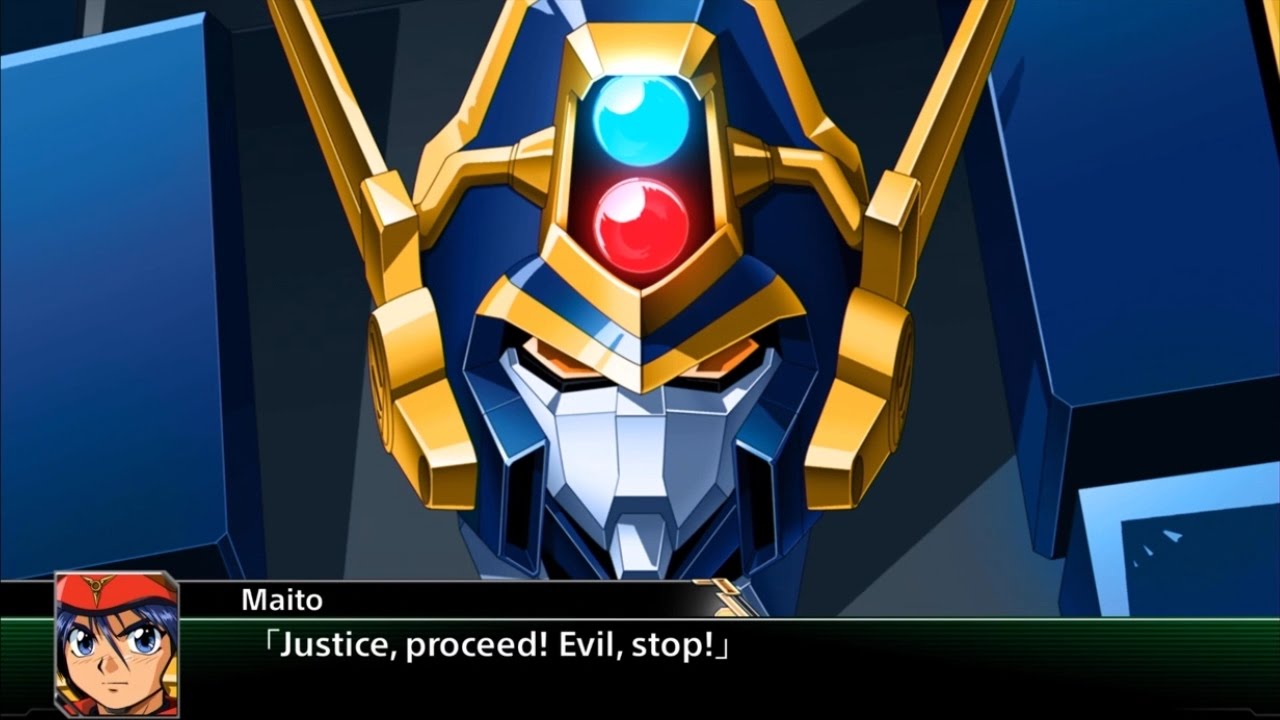
A screenshot from Super Robot Wars featuring the robot Might Gaine. Its pilot, Maito, says "Justice, proceed! Evil, stop!"

Otakon 2023 kicks off this Friday, and I have two panels over the weekend!

Giant Train Robots of Anime and More

Friday July 28, 2023 10:15 am to 11:15 am

Trains and mecha are two tastes that go great together. Discover “rail robots” from all across Japanese media and learn for yourself how awesome they are!

Densha Otoko: Train Man, Otaku Myth, Internet Legend

Saturday July 29, 2023 8:45 pm to 9:45 pm

Once upon a time, the story of a nerd helping a girl on a train changed the otaku world forever. Come and (re)discover the true (?) story of Densha Otoko, its many adaptations, and its legacy 20 years later.

Otakon always has a million things to do, but if you just so happen to stop by, I hope you enjoy yourself.

One Sick Event: Anime Central 2023

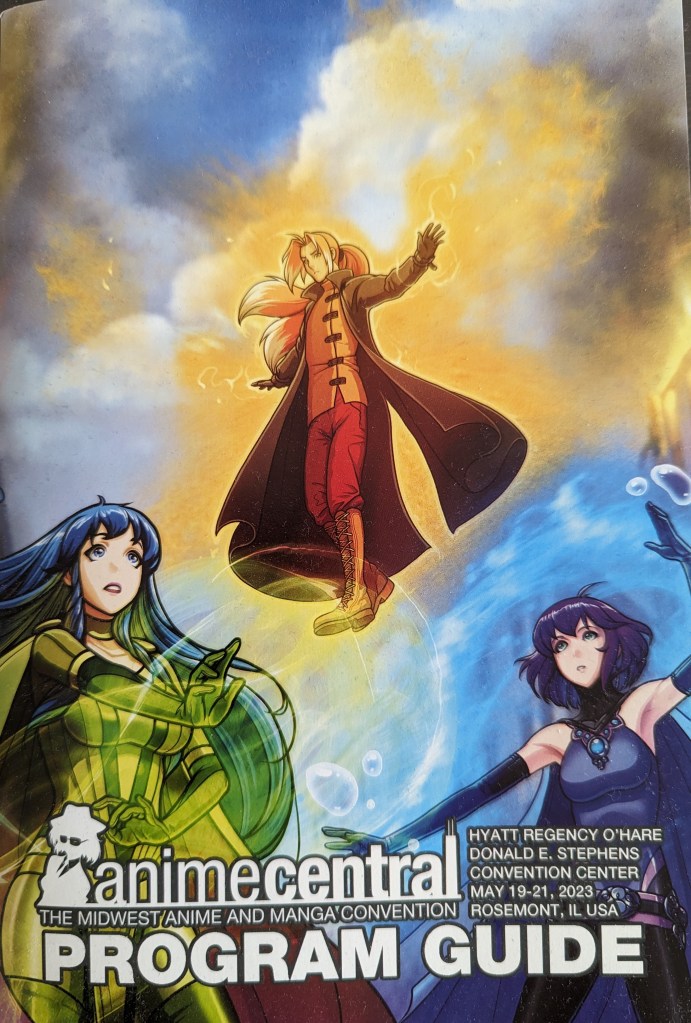
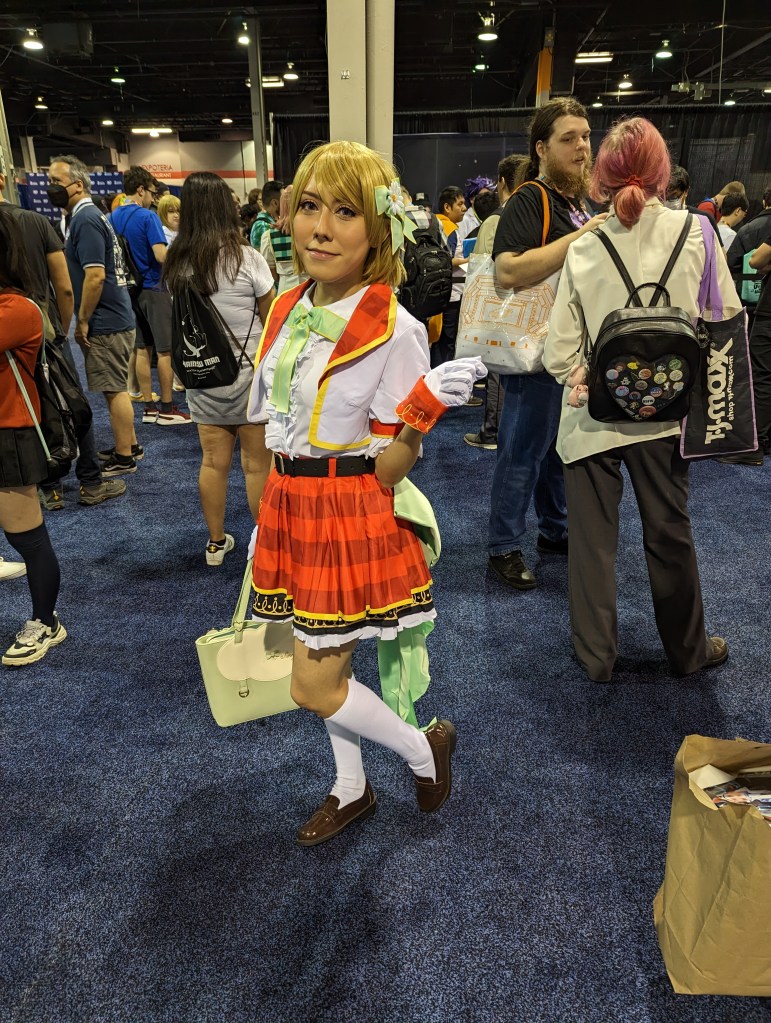
I’ve been to my fair share of US anime conventions—on the east coast and the west coast and even some international ones—but never in the Midwest. When I heard the news that Kubo Yurika (the voice of Hanayo in Love Live! ) would be attending Anime Central 2023, I decided I had to be there. Call it paranoia, but after one of my favorite character designers and animators, Kimura Takahiro, passed away this year, I’ve started feeling that I shouldn’t let opportunities pass me by.

What I did not expect was to have COVID-19 while at the event—a fact that I wouldn’t find out until later. While my throat was feeling uncomfortable, I had tested negative multiple times before flying out, so I figured it was just a mild cold or something similar that could be contained with good masking. Unfortunately, it turned out to be worse than I thought.

I mention all this for two reasons:

First, as far as I know, I did not spread COVID to anyone at the con—not even my convention roommate who had to hear me coughing and hacking into the night and had to fly next to me. This means that good respiratory masks (KN95, N95, KF94) really, truly work. You are doing yourself and everyone else a favor at conventions and other crowded places.

Second, because I wasn’t feeling great, my experience at Anime Central 2023 was not ideal. Nevertheless, I had a good time, and I think it has to do with the fact that Anime Central still maintains a pretty down-to-Earth feel for a convention.

Basics

Anime Central 2023 took place May 19–21  at the Donald E. Stephens Convention Center in Rosemont, Illinois, just a 35-minute car ride from Chicago O’Hare airport. With multiple hotels connected to the convention center through a system of enclosed overpasses, you can easily get to the convention center itself without stepping outside. Putting aside my own hopelessness when it comes to directions, plenty of signage makes it difficult to get lost in those above-ground tunnels.

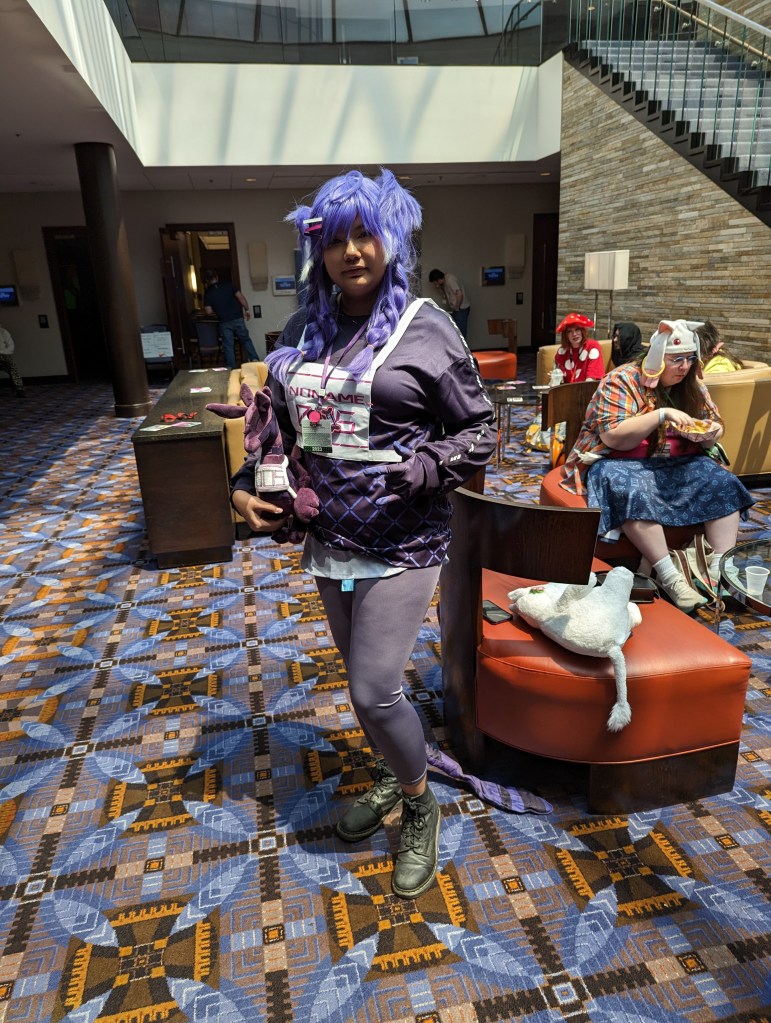
The con had a certain feel I would describe as very 2006. That’s not an insult either, as I actually prefer my conventions to not be polished to the point of rubbing out any quirks. The way Anime Central manages to get big guests while still feeling very fan-run is reminiscent of my favorite anime cons.

The Kubo Yurika Experience

One of the big highlights of the con is the fact that I got to interview Kubo. That came with a caveat: Talking with her had to be under the pretense that we would be focusing on the game A Light in the Dark, for which she and Ichinose Kana (Suletta Mercury from Gundam: The Witch from Mercury) provided voices. The result still provided a good deal of insight into their careers and approaches to voice work.

I also attended her panel, and it was a joy to see her interacting with the audience as fans gushed over her. One person in particular mentioned that having an earbud accidentally get stuck in her ear while watching Love Live! inadvertently helped her doctor realize that she had a tumor—which means Love Live! saved her life. The biggest takeaway I had from all this is that it’s wonderful to see such a large gathering of Hanayo fans.

Kubo was also doing a couple signing sessions and meetings with fans, but my condition that weekend basically made it impossible for me to wait the hours needed to get something. While I have some regrets about that, the positives outweigh the negatives.

Interviews

You can find my Q&As with guests at Anime Central, including with Kubo and Ichinose, here: 

Kubo Yurika & Ichinose Kana

Tabata Hisayuki (includes extensive discussion about Kimura Takahiro)

Tanaka Rie

Panels

I didn’t get to attend as many panels as I would have liked, but the ones I saw were all good in their own ways. Tadokoro Azusa made for a lively guest eager to answer questions from the audience, and I was glad to hear people ask her about her time as Kiriya Aoi in Aikatsu! Helen McCarthy’s panels on the late Matsumoto Leiji and the history of cosplay both took deep dives into humble origins, and I recommend sitting in on any of her talks if you have the chance. And then there was “Kani-me 2: Crabs of Anime,” which struck a decent balance between crowd-pleasing antics and being informative. As someone who once co-ran a panel called “Such Dog, Much Anime, Wow,” I felt a connection.

Food Scarcity

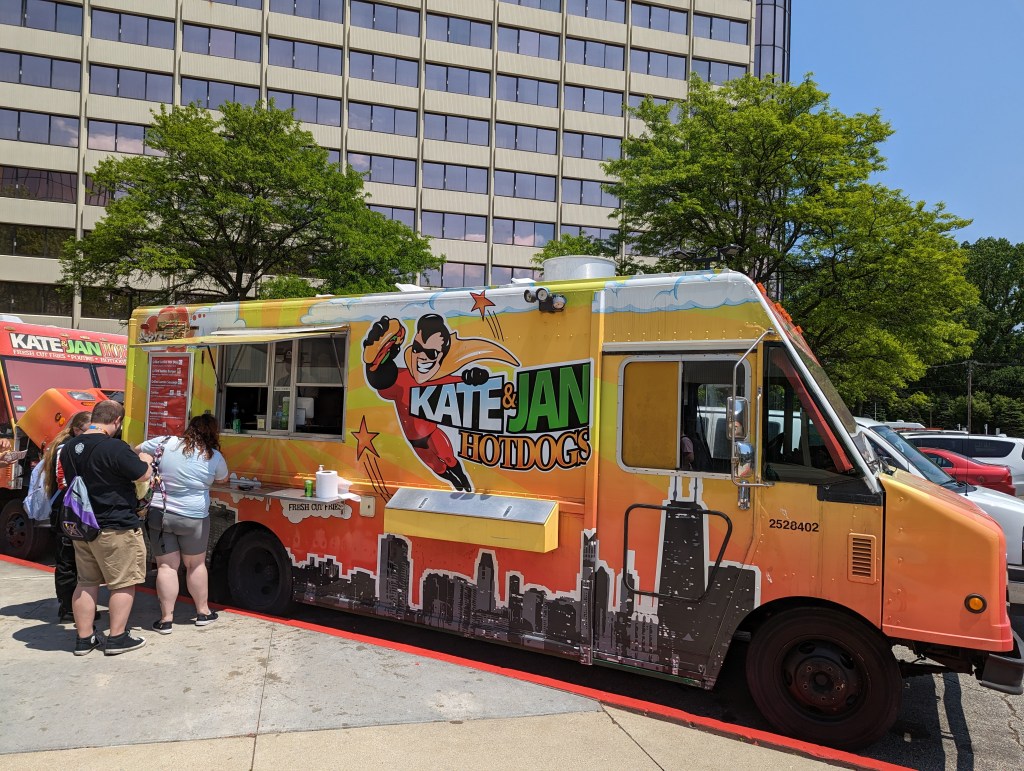
Now here’s a downside: Compared to other cons I’ve been to, getting meals can be inconvenient. While there is an entertainment area nearby that has a number of restaurants, there aren’t a ton of options for quick eats or delivery. Normally, I wouldn’t mind traveling to Chicago proper to get my fill, but because I didn’t have the stamina, I had to make do with what was available. The food truck situation was pretty dire, in that there were literally only two, and they were run by the same people. The different hotels provide options at hotel prices, and the Convention Center “ramen” was more like a lo mein cosplaying its Japanese cousin. Supermarkets and grocery stores are also hard to come by without a car. In other words, it’s best to pack some snacks and more nutritious options in your luggage if you plan to go.

Final Thoughts

Attending Anime Central 2023 was an exception of sorts for me, and regardless of the quality of the event itself, I can’t say if I’ll be able to go back next year. However, it gave me plenty of reasons to consider the possibility, and hopefully I’m not suffering from a once-in-a-lifetime plague by then.

For those in and around the Chicago area, it might just become your go-to regional con, but I get the feeling that you already know that better than I do.

Anime Central 2023 Interview: Animator Tabata Hisayuki

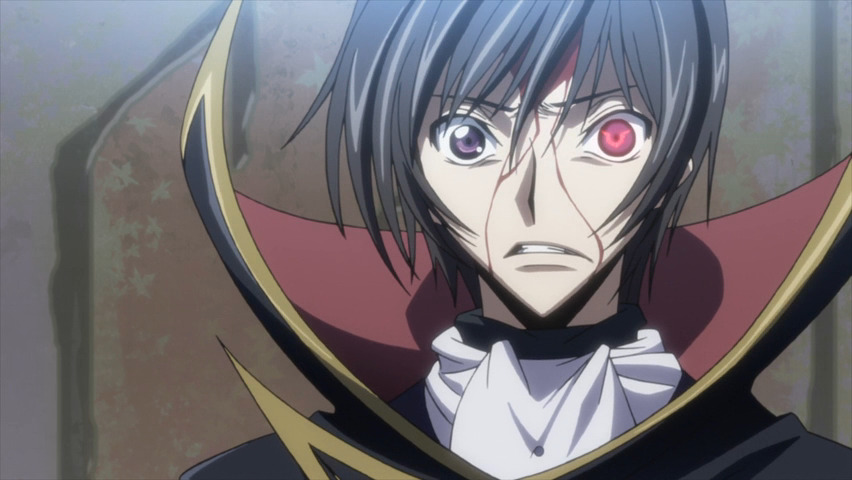
Lelouch from Code Geass, a slender and dark-haired teenager who has a single glowing eye. He's wearing a high collar cape, and blood is running down his face.

Tabata Hisayuki is an animator and animation director with over 20 years of experience in the industry. He’s best known for his work on anime from the Fate franchise, as well as being involved with works such as Code Geass. 

What was supposed to be a group press conference at Anime Central ended up being a one-on-one session, which resulted in a longer interview than is typical.

You started working in anime during a time when the transition from cel to digital, as well as to widescreen, was occurring. Looking back on that period, what do you think about it now?

For me, the digital media was actually much better. All the frustrations I had with analog were solved by digital. So I think I transitioned to digital much quicker than most other people.

In your career, you’ve worked on multiple projects involving Kimura Takahiro, namely Godannar, Code Geass, and Gun x Sword. In light of his unfortunate passing this year, do you have any stories you’d like to share about working with him?

Kimura was a lot older than me—by 12 years—so I wouldn’t dare say he was my friend, but during Code Geass, our desks were next to each other. He was always a great mentor to me, and he treated me as an equal colleague. As for all the memories I have of him, there’s so much that I don’t know if I have enough time to talk about it here.

As director on Warm, Winter Canada, did you work closely with the Canadian Tourism office? What kind of feedback did you receive from them?

Let’s start by saying that they brought me to all the cities they wanted me to promote, and that made a huge difference because it meant I could incorporate all my personal experiences into the videos. 

What do you think are your strengths as an artist and animator?

That would be my attitude towards work, but as for my actual professional skill, it would be subtle character acting. I like to put acting into my characters, and I do believe I am considered for those kinds of skills.

There aren’t too many animators who are interested or capable in animating characters according to their personalities rather than giving them flashy actions, so I think that’s a selling point that I can give.

What motivated you to get into animation? Were there any works that really influenced you and your style?

I’m just one Japanese otaku, and for my generation there is just one influential show, and that would be Evangelion and all the other GAINAX shows. So I think my influences are the same as everyone else’s. 

And this is hard to say in the open, but I got to know Kimura Takahiro’s work not through his anime, but rather one of his pervy games.

Between being an animator and an animation director, which do you prefer and why?

Animator. 

Are there any projects, specific scenes, or any other work that you feel most proud of?

I think all the projects went well, and it’s hard to single out just one. But when I talk to overseas fans, they always bring up Fate and Code Geass, so I’m glad I worked on those two shows.

Being an animator in Japan can be a very difficult and laborious job. What do you think would help make “animator” a more stable profession?

I do think the working conditions of animators have improved a lot over the years. But if you look at the general flow of capital, it’s structured so that those at the top of the rights pyramid take all the pay, and it’s up to us production staff to make it with the spillover from that. And so without fundamental change in that structure, I don’t think there would be any big change. Recently, though, I do think there have been some moves towards changing that structure as well.

For example, individual animators don’t have any rights, so even if I want to draw Tohsaka Rin or Saber for someone at Anime Central, I wouldn’t be able to do that. So even if it were just free permission for a visiting animator to draw these IP characters for the public, I think that would be a big change.

I deeply regret that even though I might be the character designer, I can’t draw these characters that I’ve designed, for fans at locations like Anime Central. If I draw these IP characters without permission, Crunchyroll might get upset.

Are there any upcoming projects of yours that you think anime fans should know about?

There was supposed to be a project I could have announced here. Two months ago, it was permanently canceled. 

But the next project I’m involved in should be due for announcement soon. I’m not the character designer for it, but I am the animation director, and it’s a wonderful project. So I look forward to it being announced.

It seems we have more time than expected, so would you be able to talk a bit more about your experiences with Kimura-sensei? 

As an example of how we got along, we would exchange New Year’s greeting cards every single year, and the sketches on both of our cards would be very pervy. Would you like to see some examples?

Sure! [Note: Image cannot be shown]

(Chuckles) I don’t have the ones that I drew for him.

In my fond memories, since I was in charge of all the pervy scenes in Code Geass, Kimura would be grinning and correcting all my work next to me. 

And since our desks were so close, I would always see how hard Kimura worked. I worried for his health, but he kept assuring me that he would be okay. He did leave us early, though. But I can’t forget all the times I had with him back then. I learned everything from him, and I enjoyed all those times. My attitude as an animator, as well as my skills, are things that I learned from him. 

I know that I’m going to just start tearing up if I recall everything in a proper perspective. 

You said you’re a fan of Evangelion. Did you have a favorite character?

Asuka. Back in the old theatrical release, the one from way back, the presale tickets would come with a prepaid telephone card. So I started lining up the day before to get it. 

So I really am a living example of an otaku who went professional.

Have you been able to see the recent Shin Evangelion movies? What did you think of them?

I think the remakes of Evangelion have really mellowed out. Personally, I’m much more fond of the original films that were much less mellow. 

You just described yourself as one of the otaku who became animators. I think lots of people have aspirations to become animators—what do you think made you different?

Well, I don’t know if I was “successful,” but I have been able to continue for 23 years, and I think it’s because I’ve been able to deliver and gain trust. This is the same as any professional job.

You mentioned being in charge of pervy scenes in Code Geass, and you also mentioned being very good at character acting. Are these two things related? 

Yes and no, but technically speaking, they’re not related because those are different modes. But I gave my best to both.

Before, you preferred being an animator over being an animation director. Why is that?

As an animator, I don’t have to correct other people’s works.

As you said, people know you for your work on the Fate franchise. What is it like seeing it get so big over the past 10 years?

I do feel lucky that I was involved with Fate. But after Fate/Stay night, Unlimited Blade Works, and Heaven’s Feel, I haven’t really followed up on the franchise, and I’m not so familiar with the game’s expansions such as the mobile game, but I just think it’s impressive. 

Do you have a favorite route of those three?

Of course, it’s Unlimited Blade Works.

Are there any anime or manga from growing up that you would like to see revived—maybe even with you work on it?

I’m not so interested in revivals, so I’m stuck for an answer.

Is there any anime genre that you haven’t been able to work on that you would love to be involved with?

There may not be so many missed opportunities for me, since if there was a genre I wanted in on, I could always find a friend to refer me to it.

Having noticed that Code Geass and Fate are popular among fans outside of Japan, have you noticed any differences in tastes and preferences between fans in Japan and fans abroad?

For me, the reaction from overseas fans is limited to occasions such as conventions. But seeing the fan reaction to Code Geass, I don’t see much of a difference. Is that something you feel is different?

I find Code Geass was popular both in Japan and especially here a few years ago. Fate has become very popular over time here as well, very much thanks to the mobile game, Fate/Grand Order

I do think it’s very much the same between Japan and overseas because the lack of time lag due to streaming has brought things to the same place. 

Speaking of that, there’s talk these days about how anime production is increasingly international, involving Crunchyroll, Netflix, etc. Do you feel there is a difference between creating anime that is primarily targeted towards Japan vs. a more international audience?

This is a question best answered by a producer rather than a line animator, but for the Japan-side shows, I do think there is much more emphasis or interest in hitting ratings for the Japanese domestic market. That might be the sole focus.

Do you have any advice for aspiring animators?

To become an animator in Japan?

Let’s say yes.

There are a lot of animators who work overseas remotely with Japanese studios, so borders are starting to become irrelevant. There are issues about this, but time will solve them. Perseverance is the best advice.

Was this remote work because of the pandemic or was it even before that?

This was a trend that started before the pandemic, but I do think the pandemic accelerated it.

Are there any other workflow/production changes that have occurred because of the pandemic as well?

Digital production has really accelerated. Or rather, COVID really separated it into two layers: the ones who succeeded in digitizing their workflows and those studios that were left behind.

You don’t have to name names, but for the studios left behind, does that mean that they are no longer around or that they’re just having to catch up?

This really depends on the sense of urgency at each studio. Some will be able to catch up and others will end up disappearing just because the digital workflow is inevitable, and everyone needs to move on.

Going back to the topic of Canada, the Tourism office sent you to a lot of places. Did you have a favorite?

I like cold climates, so there are plenty of favorites, but I ended up liking Yellowknife. Since this was my first visit to Canada, I liked it so much that I went there again two years later for a personal visit. For that trip, I revisited Vancouver, and also Banff and Yellowknife.

Did you grow up in a cold area in Japan?

Not at all!

Haha, I see. 

Thank you so much for the interview!

Anime Central 2023 Interview: Kubo Yurika and Ichinose Kana

Kubo Yurika and Ichinose Kana were at Anime Central 2023 to promote the game A Light in the Dark. Kubo is best known for her role as Koizumi Hanayo in Love Live!, and Ichinose is currently voicing Suletta Mercury, the protagonist of Mobile Suit Gundam: The Witch from Mercury.

I also had the chance to ask Kubo a question specific to Love Live! during her fan panel, which I’ve included at the end of the main interview. 

You’re both here at ACen because of your role in the visual novel A Light in the Dark. What are your most memorable experiences being involved with this game?

Do you mean during the recording?

Yes.

Kubo: Personally, this was during a time when I had a lot to record, so my sessions went on for days. My character, Mysterious Girl, goes through a lot of difficulties, and I was going through a lot of difficulties in my real life as well. So that overlapped, and I really realized that my life can be so easily influenced during recording.

Ichinose: By the roles you play?

Kubo: Yes, yes! That’s it! There’s a part of me that can be hurt quite a bit.

Ichinose: Oh, wow.

Kubo: So my memorable experiences tend to be about the heaviness of the role I play.

Ichinose: For me, I like playing serious roles, and my role hit close to heart. My character starts off very reticent, but there was still a lot of emoting involved. I do like heavy roles—and it was still heavy—but I still enjoyed it.

-How have your experiences playing characters such as Hanayo from Love Live! and Ichigo from Darling in the Franxx influenced the way you play your characters in A Light in the Dark

Kubo: So for both of us, it probably wouldn’t just be the roles from the works you mentioned—they’re all opportunities for growth as actors.

Ichinose: These are genuine experiences that contributed to our breadth of expression.

How do you balance playing multiple characters at once and keeping track of them?

Kubo: As for keeping track of roles, I think all the characters we’ve played so far don’t necessarily influence who we play in the moment. We just get into the role and do it that way. 

Ichinose: And since all the roles are so heavy in A Light in the Dark, resetting the emotions and getting out of the characters tends to be a bit of a challenge. But at the same time, as we work professionally, we do get ingrained with an emotional switch, or an acting switch, where we switch between roles in a very natural way.

Kubo: Yes, you’re right!

How does recording for a visual novel compare with other types of voice work?

Ichinose: Compared to recording for other types of video games, in other games, it’s more typical to do small voices like “Yah!”

Kubo: And “Hah!”

Ichinose: Yeah, and “Hah!” But there is a much longer story in A Light in the Dark, and there is much more emotional continuity. Depending on the recording, we might be skipping chapters, so we have to keep track of the continuity of the story and also the emotions. 

Kubo: But there are also branching paths in the story where the user has to select which path to go, and we have to be aware of the pre-selection emotion as well as which path the user chose.

Ichinose: One dialogue path would end, and then we’d have to do a different dialogue path.

Kubo: The level of tension and excitement would have to change too. It’s one of the fun and interesting things about the project.

Ichinose: I would sometimes have to rewind the emotional state of the character and go back. 

Kubo: Right!

That general area is part of the difficulty.

What inspired you to become a voice actor, or get into the entertainment industry in general?

Kubo: I started as a model for teenage magazines, but even before then, I was always watching anime and reading manga. While modeling, I was starting to wonder if I was unfit for the job, whereas I could always enjoy anime and manga. So I always wanted to take on the challenge if I ever had the opportunity. I did tell my agency that’s what I wanted to do, but they told me off that it’s not such an easy thing. They didn’t outright oppose what I said, but they said it’s not easy. When I got the role for Love Live!, though, that was my foot in the door into a career as a voice actor.

Ichinose: When I was in grade school and kindergarten I always loved watching anime, and my life more or less involved watching anime. I did play with my friends, but if I were at home, I’d spend pretty much the whole day watching anime. As I watched anime and loved anime, my thoughts turned towards the casts in anime, towards the voice actors, and eventually I would think that I wanted to get involved in the world of these various animation stories. So when it came time to choose a future for myself, one day I went to an open campus at a voice acting school, where I got my determination to go into voice acting.

For my three years in high school, I worked part-time and saved so I would have the money to pay for my own tuition for voice acting school. I paid my way through, did my audition, and got a role. So I started from a love of anime, refined my voice, and tried it out. I have the person who encouraged me to go into voice acting back then, who told me I had a chance, to thank.

Is there anything about your performances as Mysterious Girl and Young Girl that you’re especially proud of? 

Ichinose: What do you mean by that?

In the sense of, did you think you felt you had performed well, and can look back and say “I did a really good job here?”

Kubo: For my role as Mysterious GIrl, there is a portion in the latter half of the game where she goes through an emotional explosion. I played that part thinking, “I could lose my voice tomorrow, but I’ll go through with it.” If you can experience that scene, I would be very happy.

Ichinose: My character gets a little bit closer to the main character in the middle of the story, and she begins to open up and start talking about her dreams and aspirations—like how she would like to eat sweets. Normally, that’s the kind of dream that’s easily realizable if you have the money for it, but the girls grew up in an environment where that’s not something they could afford.

How is it to play a character who didn’t have something that was so ordinary and common for normal people? That was my challenge. So this is a serious title, but there are these small slivers of hope that my character can aspire towards, and if that kind of nuance gets through to the player, I think my acting will be rewarded.

Thank you!


Bonus: Extra Question for Kubo Yurika from the Previous Day’s Fan Panel

I love the way that you portray Hanayo’s shyness and intensity. My question is: I noticed your performance of her evolved over time; what changes did you make to playing Hanayo over the years?

Kubo: It wasn’t like I really changed my approach to Hanayo—more like as the years went by, Hanayo saw more of her character, experienced more, as did I personally. I think that’s kind of what led to that natural evolution. I wasn’t very conscious of it at all.

Hope and Chaos Take the Subway: Anime NYC 2022

Anime NYC 2022 is the second year in the pandemic era for New York’s biggest anime convention. Last year, the event broke its own attendance records, likely owing to people eager to do something in-person after months and months of restrictions. In contrast, this year felt more like a return to something vaguely normal.

Badges and Registration 

Although I had the benefit of obtaining a press pass, I do know there were issues with supply of general admission this year: both three-day badges and Saturday ones were in short supply. It’s difficult to tell if they’re following in New York Comic Con’s footsteps towards eliminating three-day tickets in general (a move that makes attending the con all weekend significantly more expensive at $65 per day) or if it has to do with COVID-19 precautions.

One thing Anime NYC definitely did seem to take a page from New York Comic Con is a lottery system for seats for major panels in addition to a similar lottery already in place for guest autographs. Attendees could enter online for a chance at these con activities without needing to devote themselves to waiting in lines, and the idea is that it’s also fairer for people coming in from farther away. I understand the overall benefits of this method, though the fact that you have to cancel your reservations in advance should you win (or else risk being ineligible for future lotteries) means that it’s harder to be flexible the day of. I believe being able to make impromptu decisions is part of the fun of conventions, and potentially losing that flexibility can feel like a bit of a burden. Again, though, it might be a net good, and what probably needs to be tweaked is that way fewer panels probably need this system in place.

COVID-19

Speaking of health, Anime NYC did require proof of vaccinations or a negative COVID test, and they enforced that aspect pretty stringently. The same could not be said of masks, however. In panels, staff did a good job of making sure everyone had masks, but everywhere else it was pretty much a coin toss. The city itself has relaxed rules around masking even on the subway, so it’s hard to fight against that kind of momentum, but I wish there was a way to re-emphasize the importance of masks especially in an environment like a convention center filled with tens of thousands of people.

Last year’s con turned out not to be an Omicron super spreader event, despite early reports. I really hope that remained the case for this year, but the relative lack of masking concerns me.

A Note on Attack on Titan

The biggest guest of 2022 had to be Isayama Hajime, author of Attack on Titan. I’m bringing him up first because I actually did not attend any of his events. I follow Attack on Titan through the anime, and I didn’t want to be spoiled. I don’t know if it would have been possible to wait for the anime to conclude before inviting Isayama, but I have to wonder if there were others like me, or perhaps even much bigger fans who were forced to hold back.

Hololive Meet NY

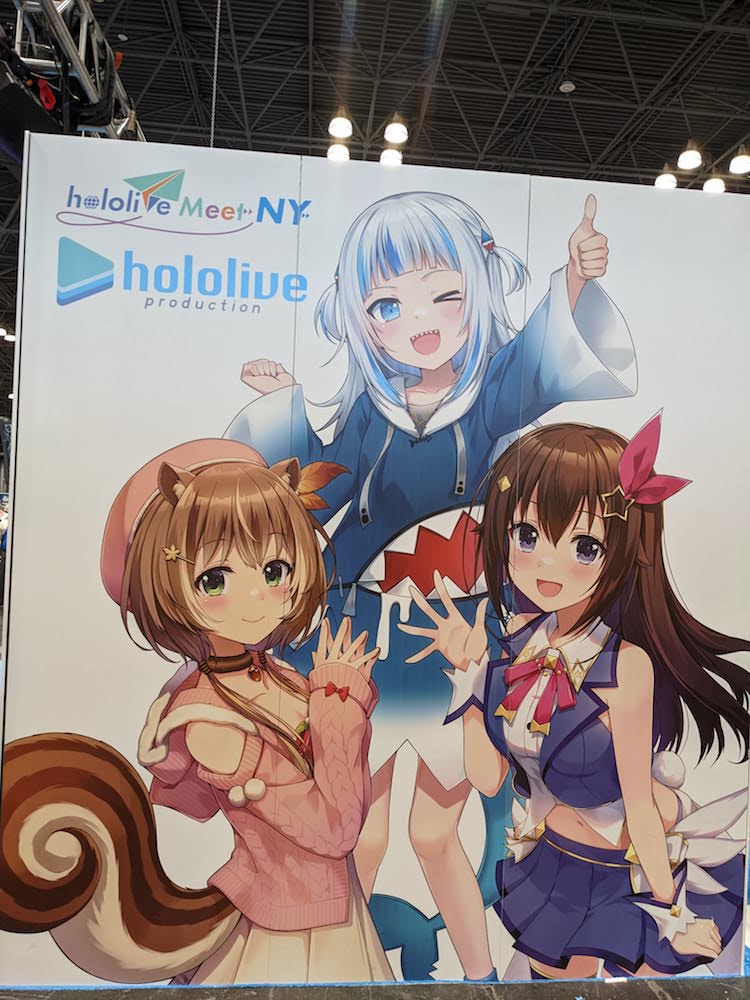
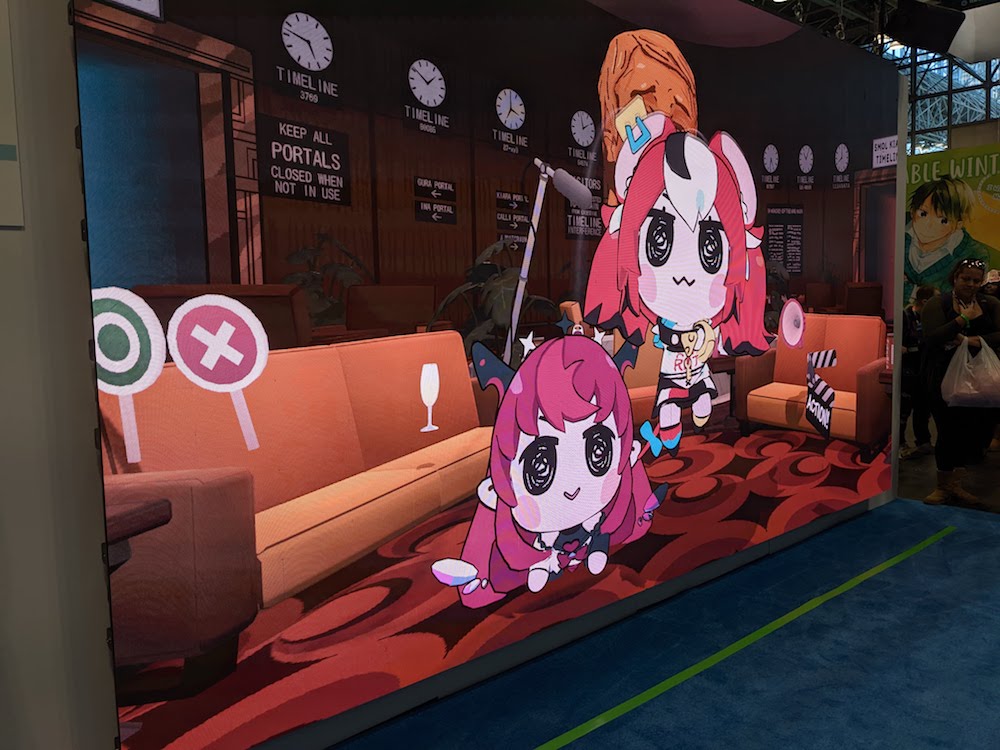
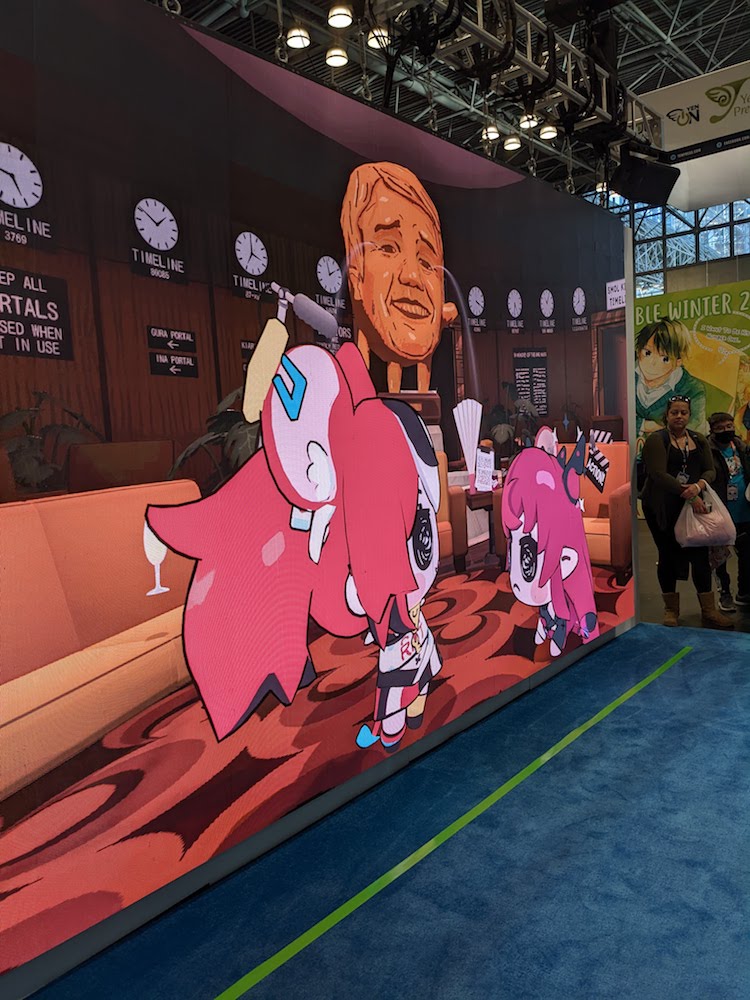
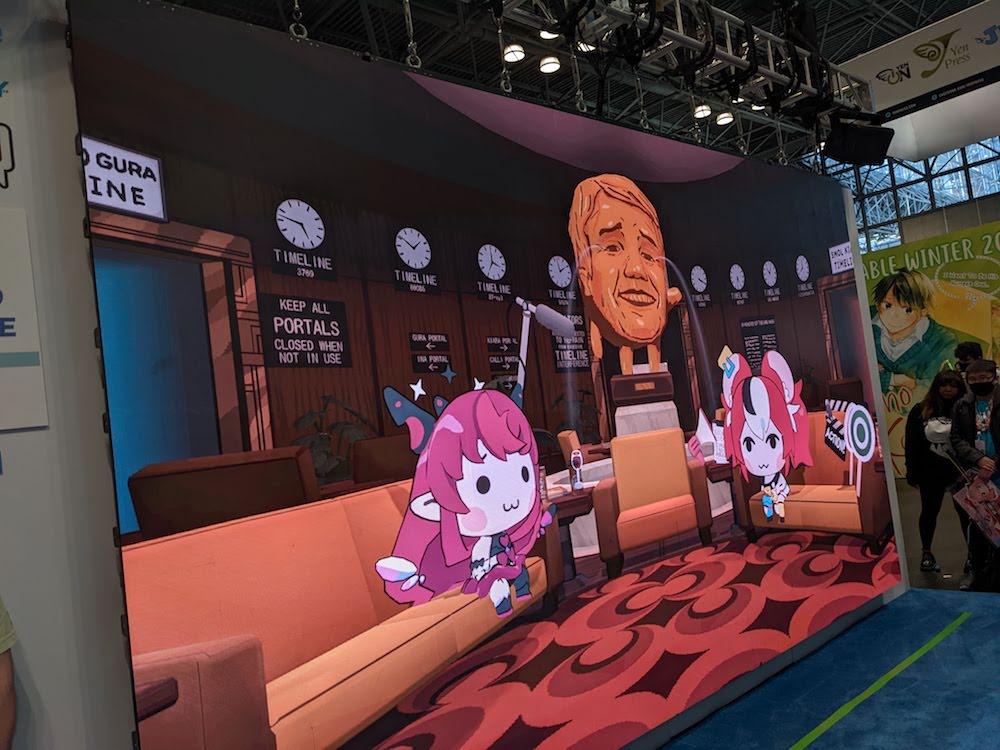
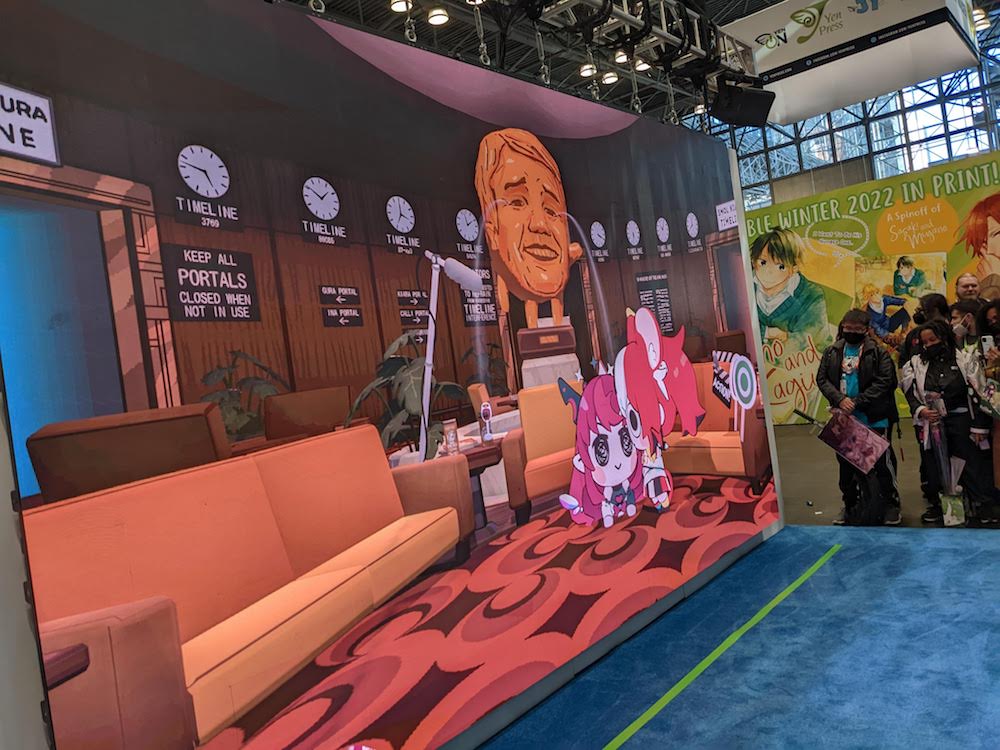
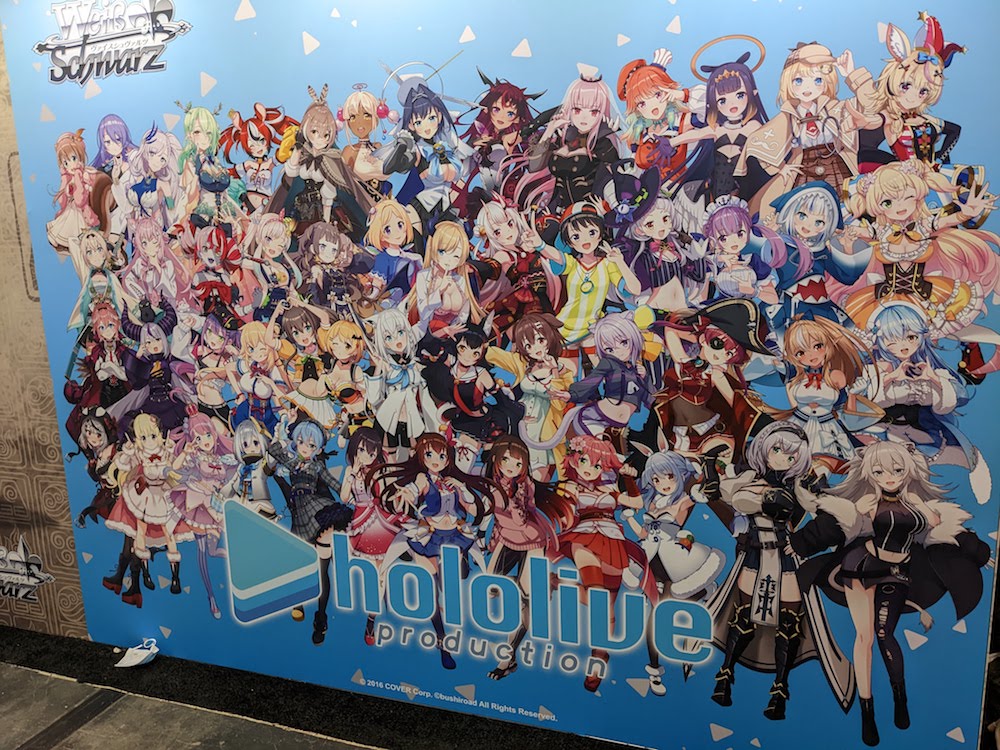
My personal must-see guests were technically not even there: the Virtual Youtubers of Hololive. I prioritized the VTuber stuff because this was my first time at a convention where they had a more significant presence; Anime NYC 2021 had a panel featuring Hololive Council’s five members, and it was a decent enough event that unfortunately had little to no interaction with the fans. For 2022, a more direct VTuber experience was provided through a dedicated booth in the Exhibit Hall in conjunction with VRChat, all as a part of the Hololive Meet series of international con appearances.

Throughout the weekend, different Hololive members (primarily the English ones) held hour-long live shows while streaming remotely. Due to what I assume are various limitations, they didn’t use any of their standard 3D models, instead opting for less complicated ones already familiar to fans: Smol models, BEEGSmol models, and also the VRDance ones

For personal reasons (and because I didn’t want to make it an all-Hololive weekend), I was only able to see two shows in full.  The first I saw was an enthusiastic morning exercise routine (though not in the radio taisou sense) by Mori Calliope that led to all sorts of 3D wackiness. The second, and one of the highlights of the entire event, was a special Anime NYC edition of the Chadcast that became something even more special due to technical mishaps.

The BaeRys Show

Normally, the Chadcast is a three-person monthly show on Youtube by Calliope along with Hakos Baelz and IRyS. None of them are among my absolute favorites as individuals, but as a trio, they’re practically a must-watch. I was looking forward to a convention-exclusive Chadcast, but as the crowd gathered for it, only Baelz and IRyS appeared. Jokingly announcing that this was actually the first episode of the “BaeRys” podcast, the two informed the crowd that Callie’s internet wasn’t working and so she likely couldn’t join in. 

While unfortunate, this also meant getting a full 60 minutes of pure BaeRys, the official name for the pair. I’m not a dedicated shipper, but their interactions are among my favorites because they have such excellent chemistry together. The running joke in the fandom (that is also embraced by the VTubers themselves) is that they‘re constantly getting married and divorced, and so the two played various games meant to reveal “interesting” sides of each other. Questions included “Would you rather vomit on your idol or get vomited on by them?,” “Truth or Dare: Have you ever peed in a pool?,” and (with the help of a fan) “What are three things you like about each other?” 

Watching their antics made me aware of what Callie adds to the Chadcast. Baelz and IRyS’s favorite drinks are coffee and soda, respectively, and BaeRys is very much like drinking coffee soda: a surprisingly refreshing combination, but one that can be overwhelming. Callie, then, is a savory (American) biscuit you eat in order to temper the intensity of coffee cola, and so one’s preference at any given time for Chadcast or BaeRys has to do with whether you want a balanced taste or to experience the extremes.

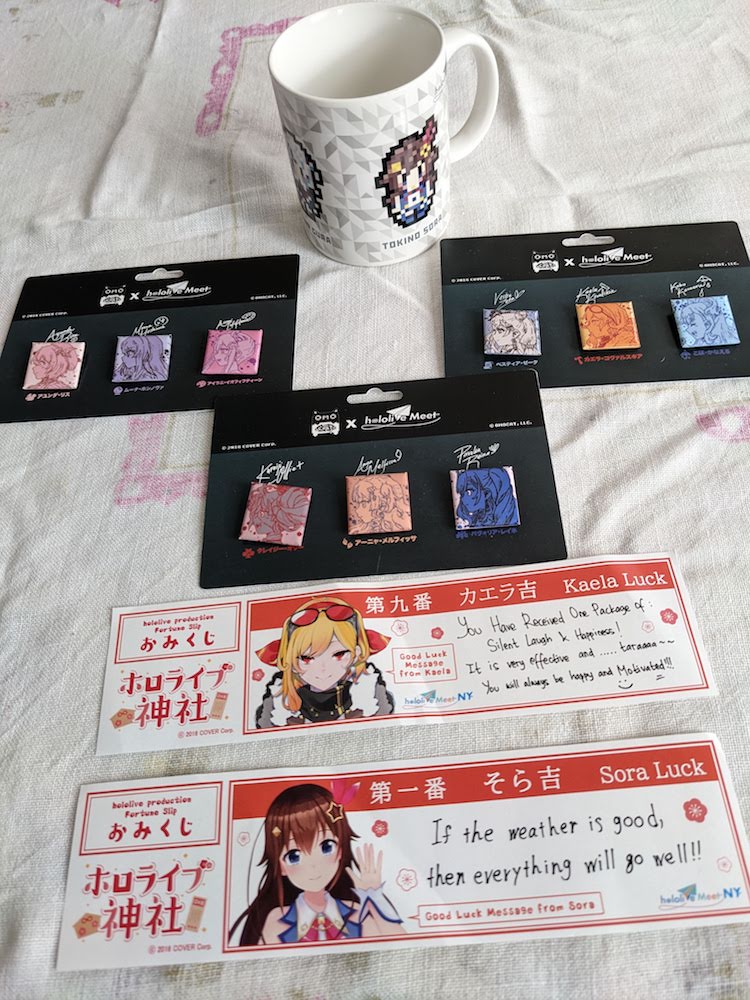
Along with the streams, there were three other booths offering official Hololive merchandise: Bushiroad (for items related to the Weiss Schwarz card game), Omocat (for exclusive crossover art), and Animate USA (for Hololive Meet–themed items). Buying $40 worth would get you a ticket you could exchange for a Hololive fortune, but attendees could also get a fortune for free if they have a VRChat account. I just so happened to create one because of the recent Code Geass x FLOW VR concert, so I managed to snag two fortunes, one for flagship Hololive Tokino Sora and one for Indonesian member Kaela Kovalskia. 

I do have a couple complaints about how things were handled with Hololive Meet. First, the space provided meant everyone had to stand because sitting would create a fire hazard, and my feet still haven’t fully forgiven me. Second, you had to buy $40 of Hololive merch at one store in order to get the fortune ticket, so you couldn’t spread it across all three. Other than those issues, I’m glad I finally got to see what a “live” Hololive event is like. Next on the bucket list is getting to see my favorites, Haachama and holoX. 

High Card

Among the anime premieres at Anime NYC was the first episode of a series called High Card, written by Kawamoto Homura (writer of Kakegurui) and his younger brother, Munoh Hikaru. It was actually the first screening anywhere, including Japan.

While there is a playing card motif to High Card, it’s not really a gambling anime so much as it is an action-oriented work that revels in absurdity and spectacle, exemplified by its tag line: “Are you ready? It’s showdown!” A special deck of cards has been scattered to the four corners of the Earth, and they have found owners of various types. The cards confer special powers that range from the powerful to the ridiculous (and sometimes both), and at the center of the story is a young thief trying to get money to save his orphanage. Like Kakegurui, the cast of characters is off-the-wall and full of dangerous and sensual individuals, though this time it’s mostly guys instead of girls. The creators said they were inspired by Kingsman, and it shows.

During the Q&A section, Munoh talked about how coming to New York City was amazing because he’d only ever seen it in images and on the screen. He then joked that he’d yet to see Spider-Man or the Ninja Turtles (the latter mention was omitted by the translator for some reason).

Wit Studio

It’s rare to see a current anime studio with a pedigree as strong as Wit Studio: Attack on Titan, Great Pretender, Ranking of Kings, and most recently Spy x Family are among the works they’ve produced. At Anime NYC, multiple staff members for Spy x Family were invited as guests: President and CEO George Wada, as well as artist Syo5 (pronounced “Shogo.”) They held a panel that was a combination of Q&A, insight into the creative process, live-drawing session, and early preview of Spy x Family episode 8. 

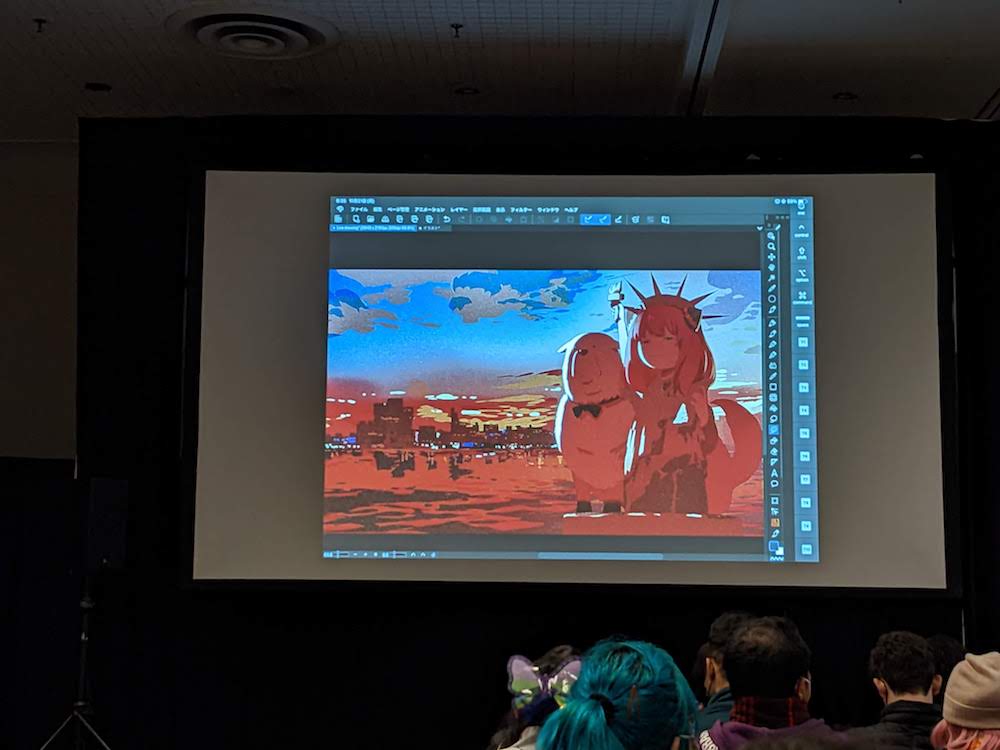
The live drawing was more a showcase of how Syo5 works on color palettes, taking an adorable line drawing of Anya Forger as the Statue of Liberty (with her dog, Bond) and adding a sunset to it. During the panel, Syo5 discussed how the color palettes in Great Pretender weren’t realistic, but were meant to have a different feel for each part of the world the characters travel to, and coloring the Anya of Liberty was a showcase of a process similar to what went into Great Pretender

Ranking of Kings also got plenty of love from the Wit staff and audience alike. They mentioned that they’re trying to get the next season done in 2023, and Syo5 showed some of his conceptual drawings that established the general look of the anime.

Eating at the Javits

There were no onsite food trucks this year, so all nearby food options were basically in the Jacob Javits Center itself. Fortunately, between the stalls in the exhibit hall and the Javits dining area, there was actually a decent number of food options. Granted, they were all overpriced to hell and back, but that’s inevitable with con food. 

For those eager to relish in Japanese culture, the exhibit hall had Go Go Curry (a perennial favorite of mine), ramen, bento from BentOn, okonomiyaki from Okonomi, and a few others. I’ve tried pretty much all of them before (though not necessarily in the context of Anime NYC), and the quality is quite good, even if it costs too much. For those who didn’t want to pay the “weeb tax” (or wait in line for a long time), options included burgers and chicken, dumplings, empanadas (Nuchas) Korean food (Korilla), and even Indian food (Curry Kitchen). Overall, the variety was welcome, given the circumstances. I remember a time when you could barely get anything resembling good at the Javits, and I’m glad to see that has continued to change.

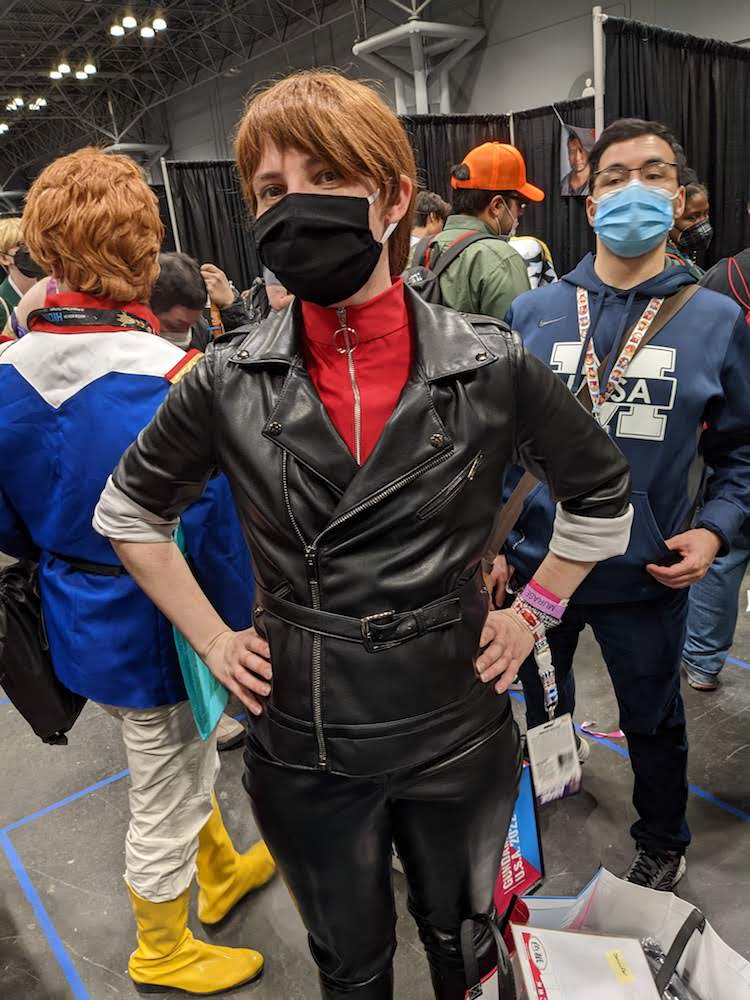
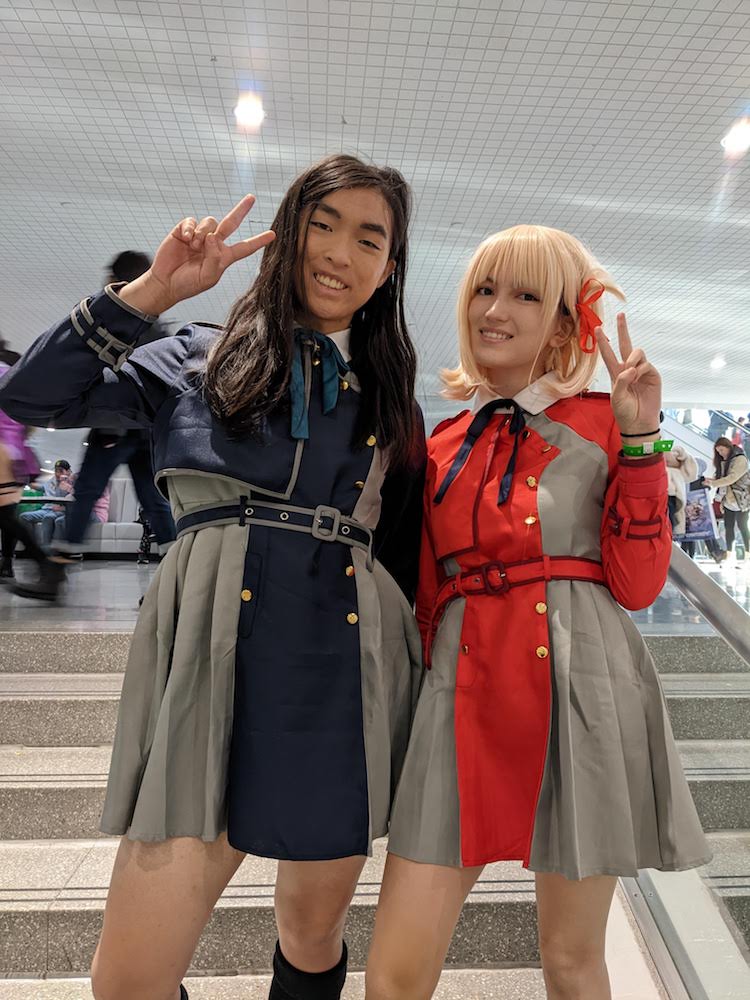
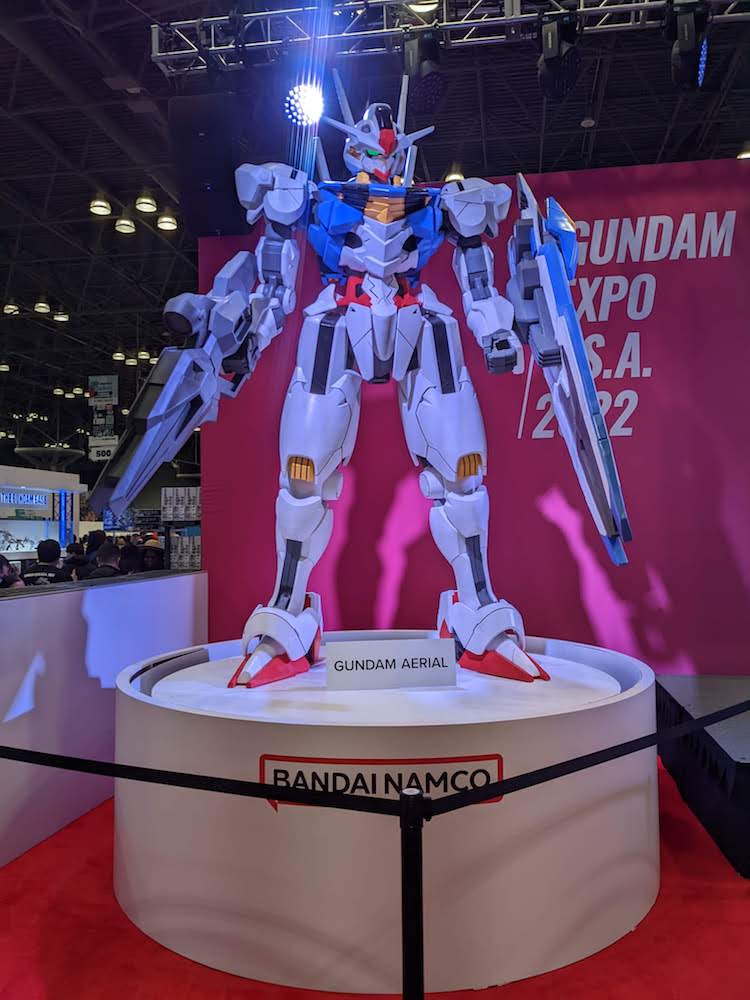
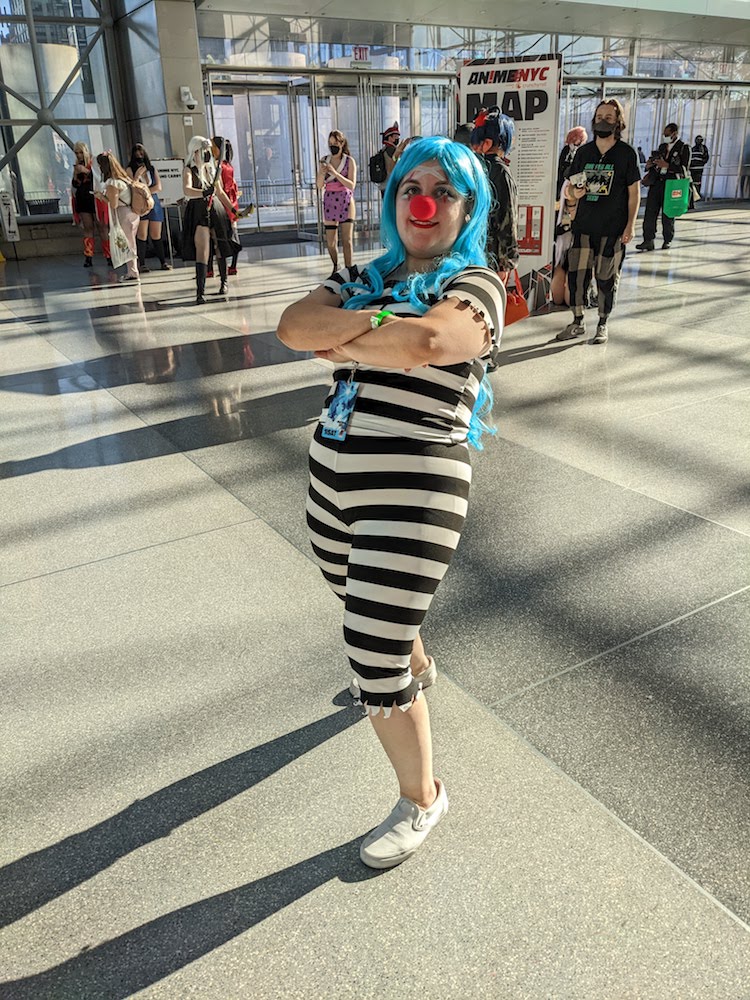
Cosplay, Etc.

Overall

Anime NYC 2022 had a few firsts for me, notably when it came to seeing Hololive Virtual Youtubers in a more direct fashion. In that respect, it was an unforgettable experience. While I prefer cons with a greater amount of fan panel programming, I also understand that this is not what Anime NYC is about. Attendees seemed generally to be in high spirits, but I do have concerns about it getting more expensive to attend, as a lot of anime fans are not rolling in dough. If they can keep bringing the guests people want to see while finding ways to make it affordable, I think things will be looking up for next year.