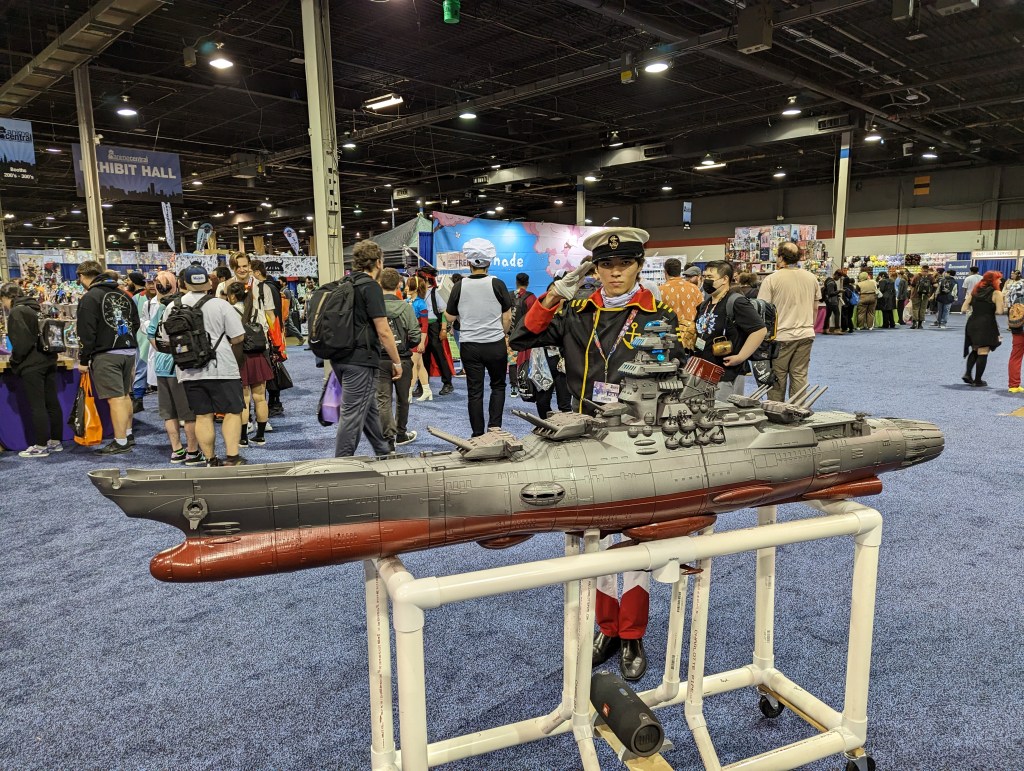
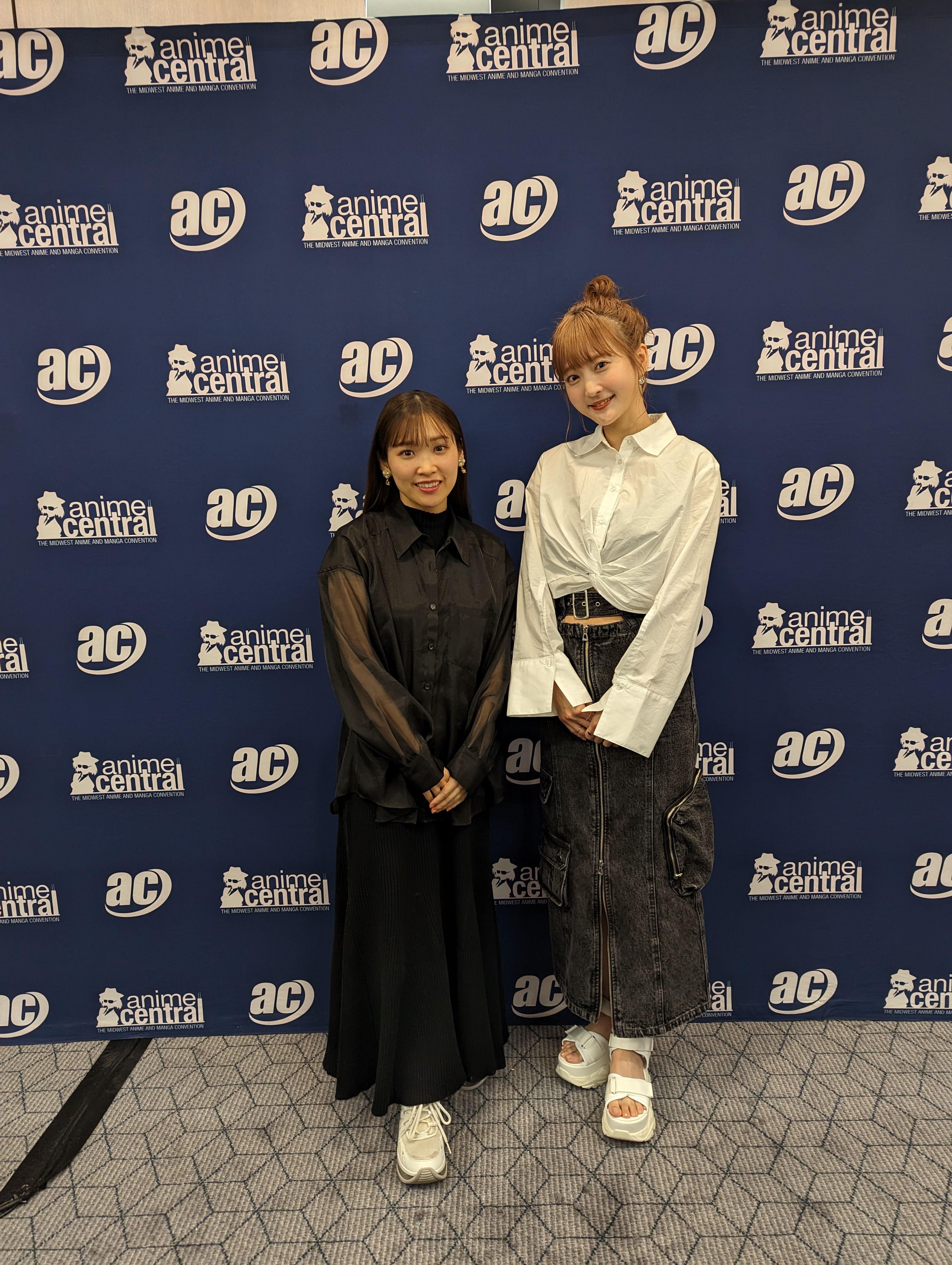
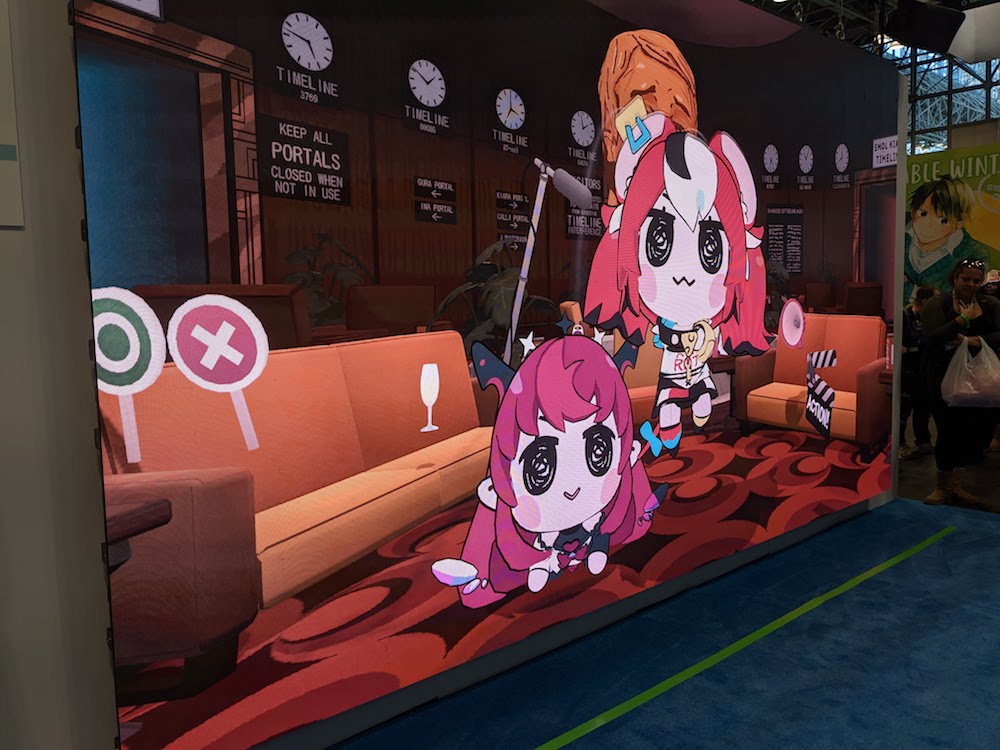
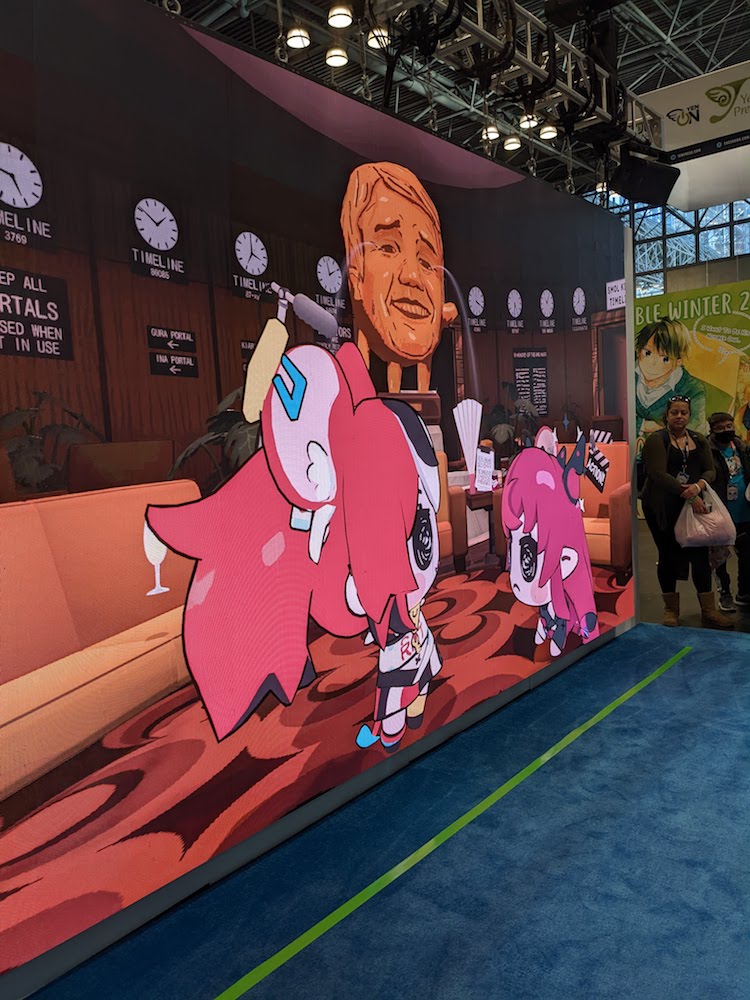
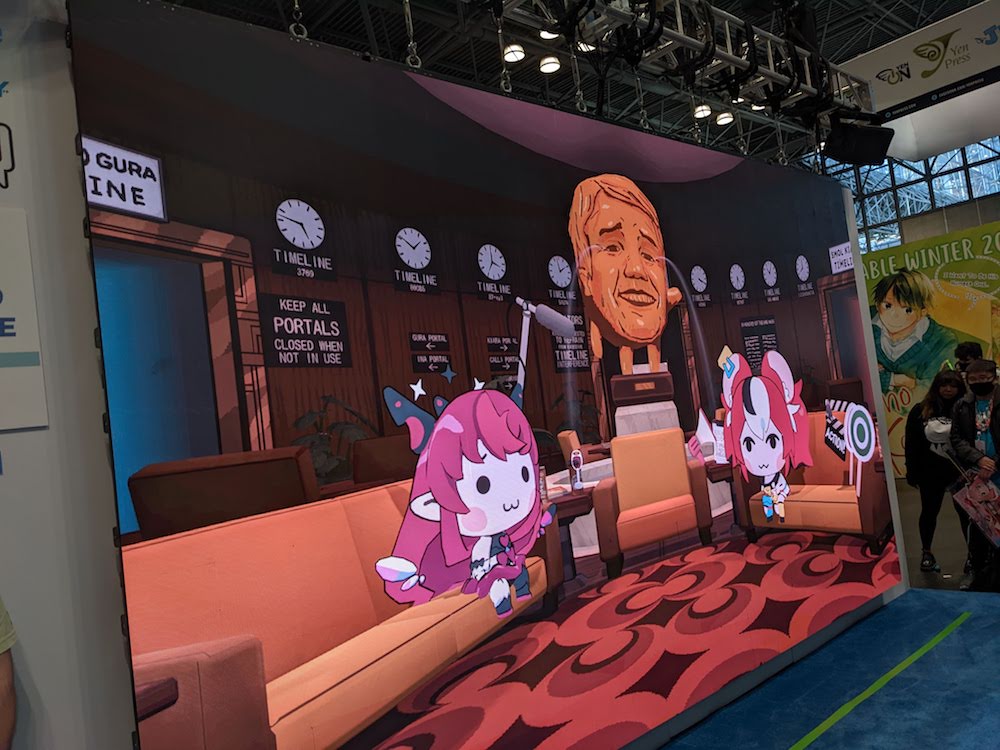
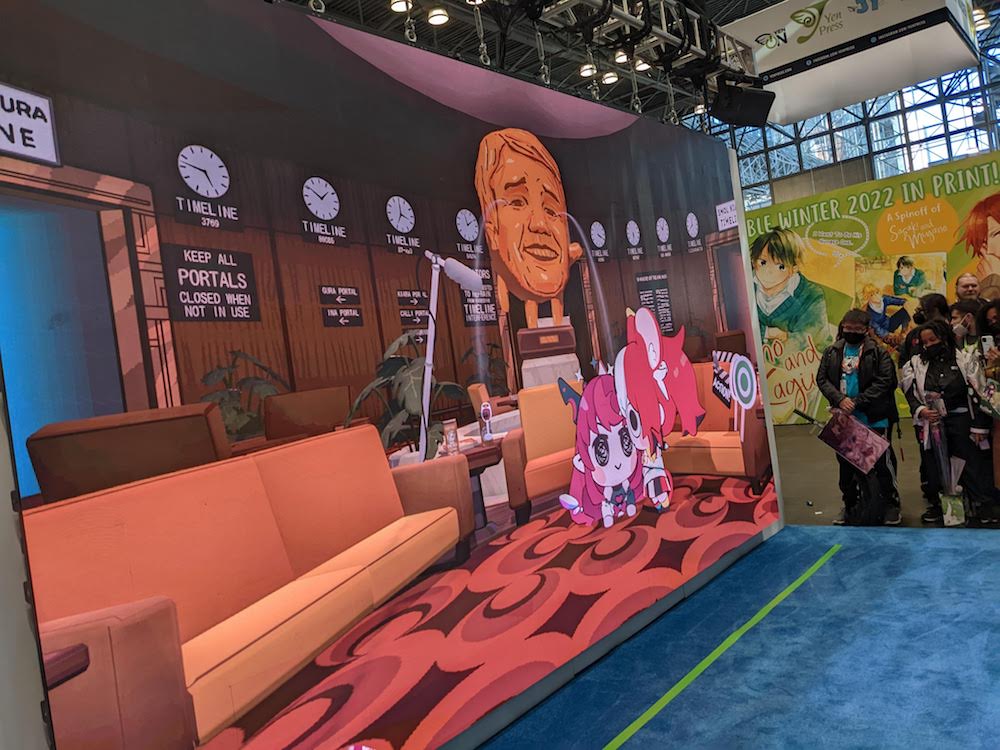
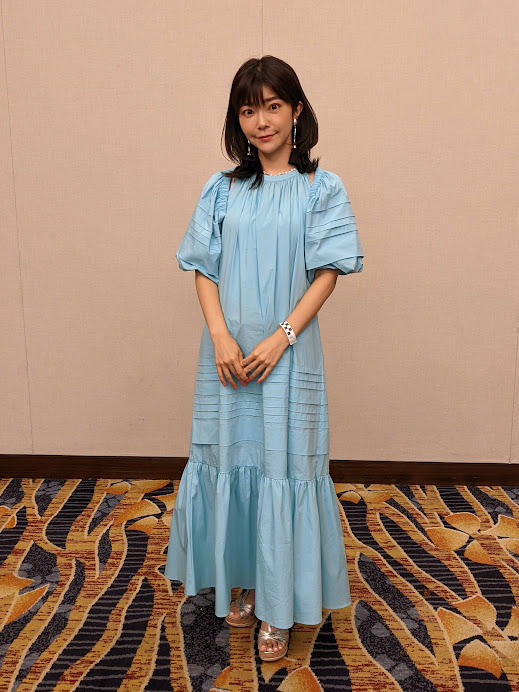
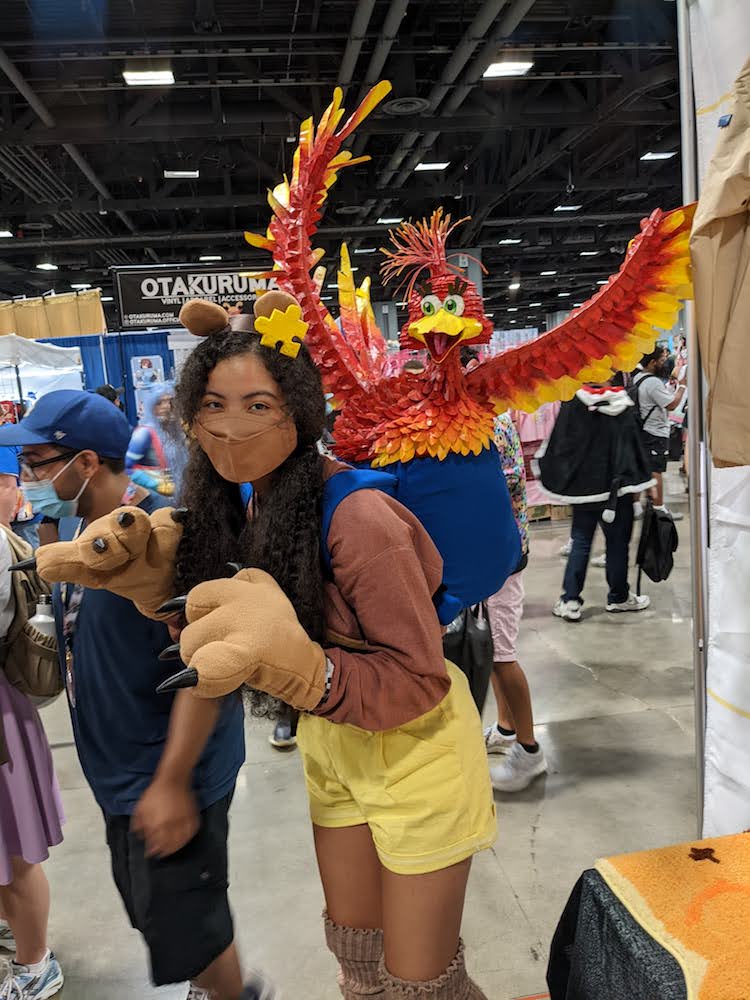
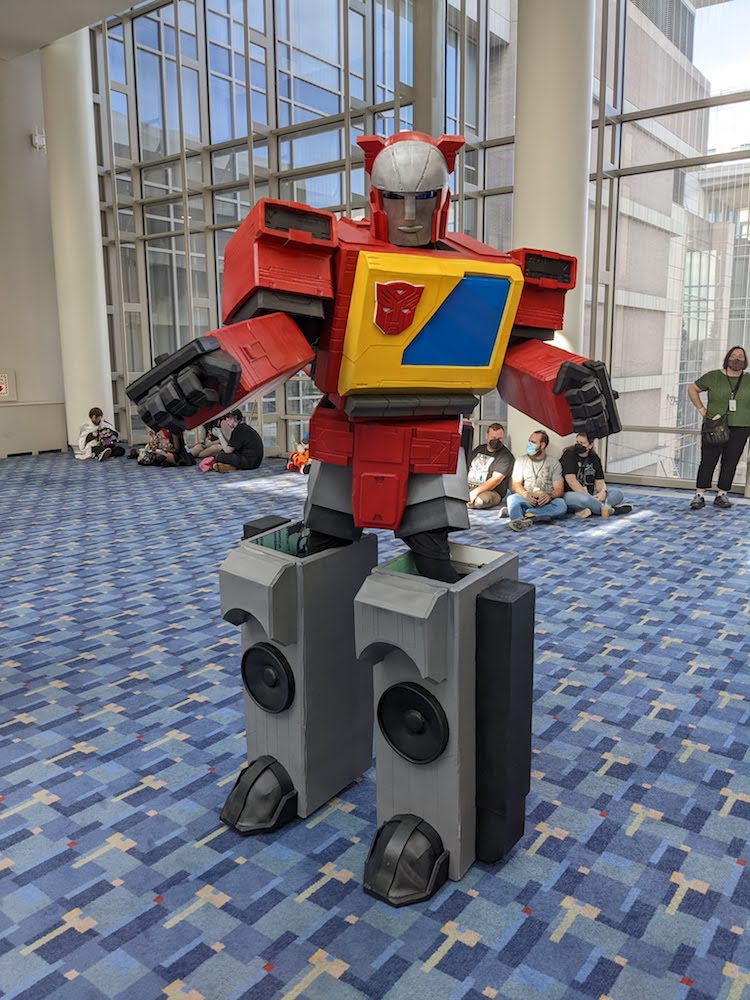
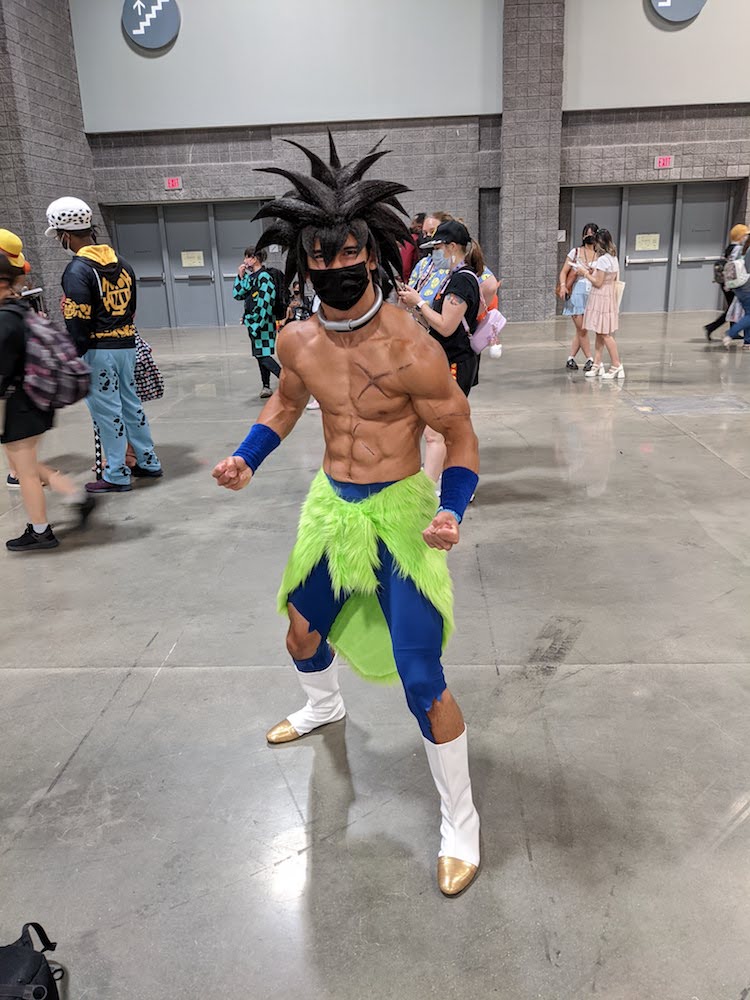
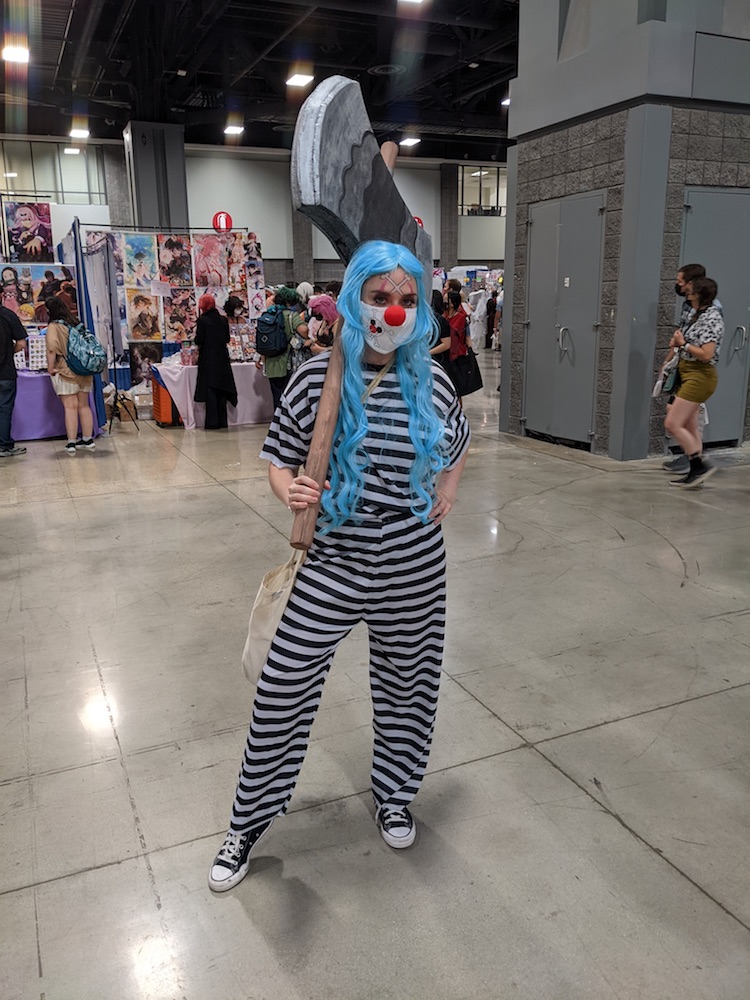
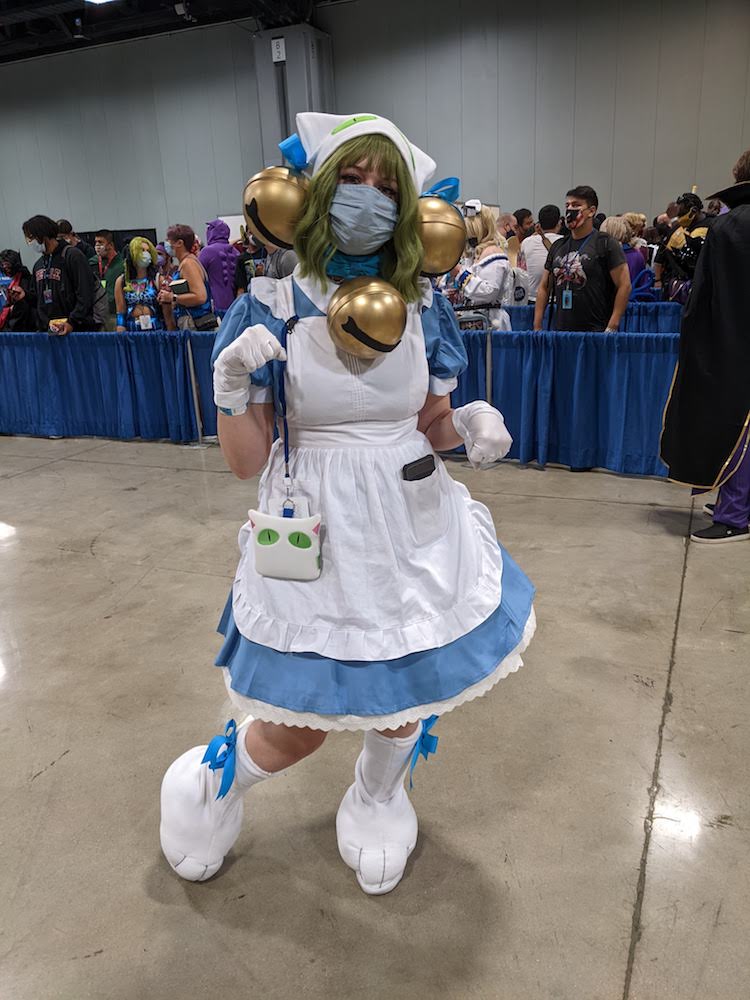
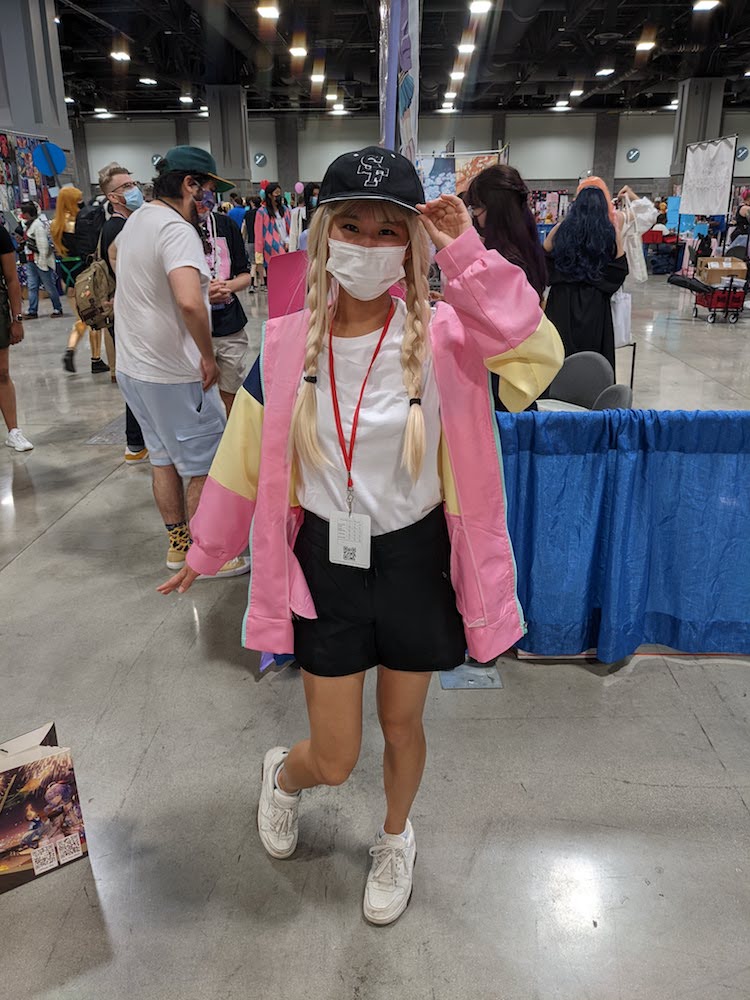
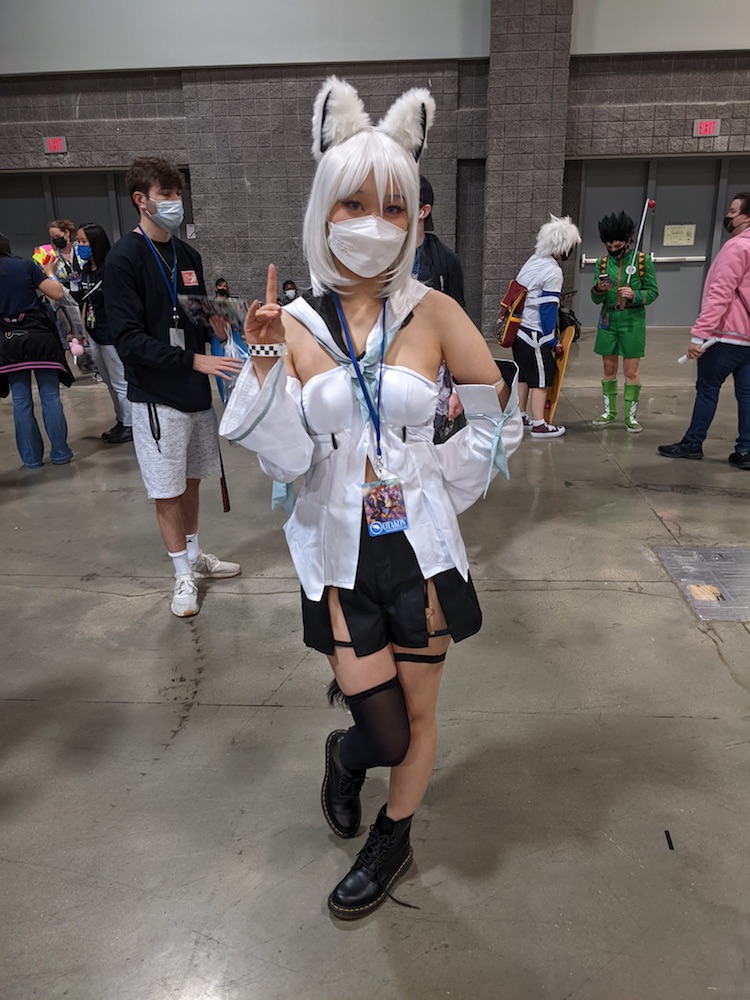
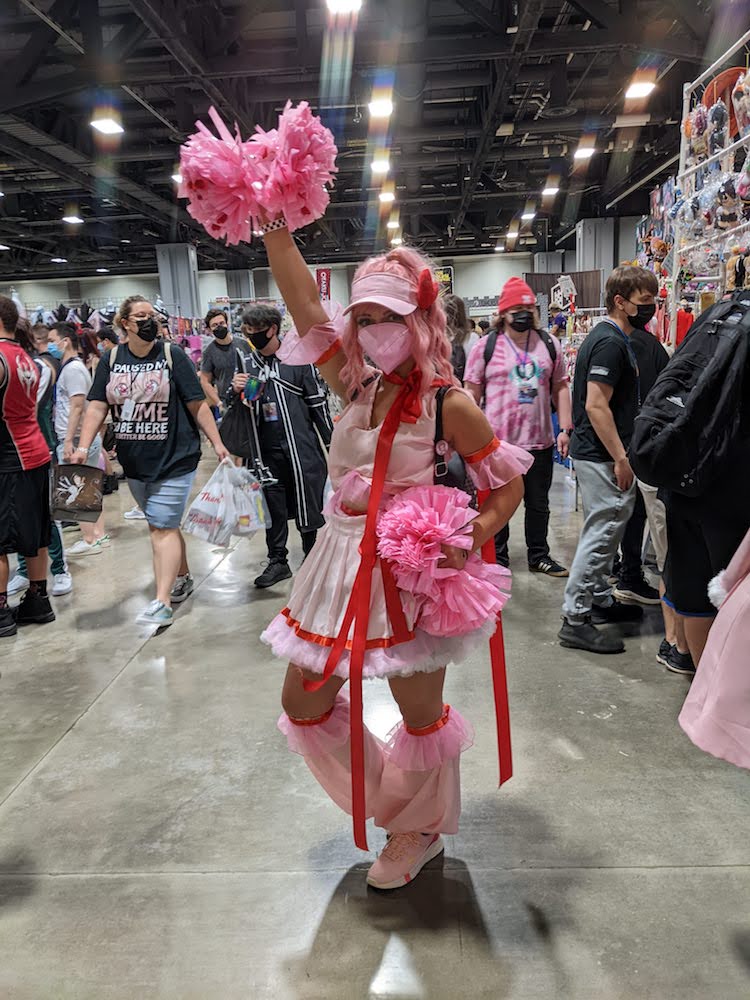
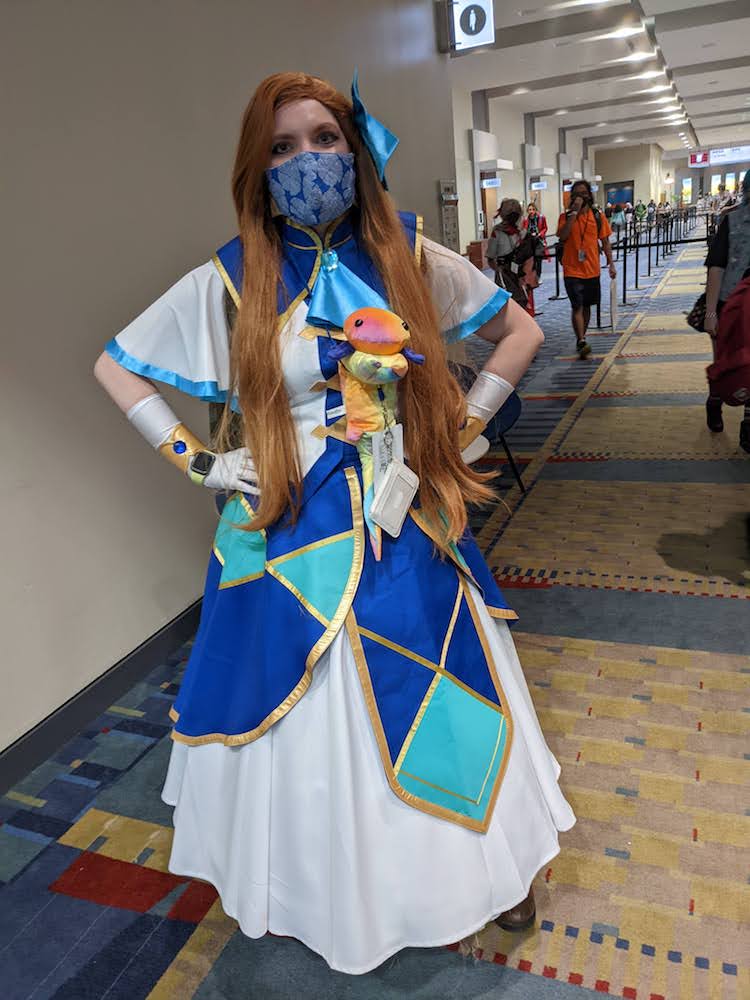
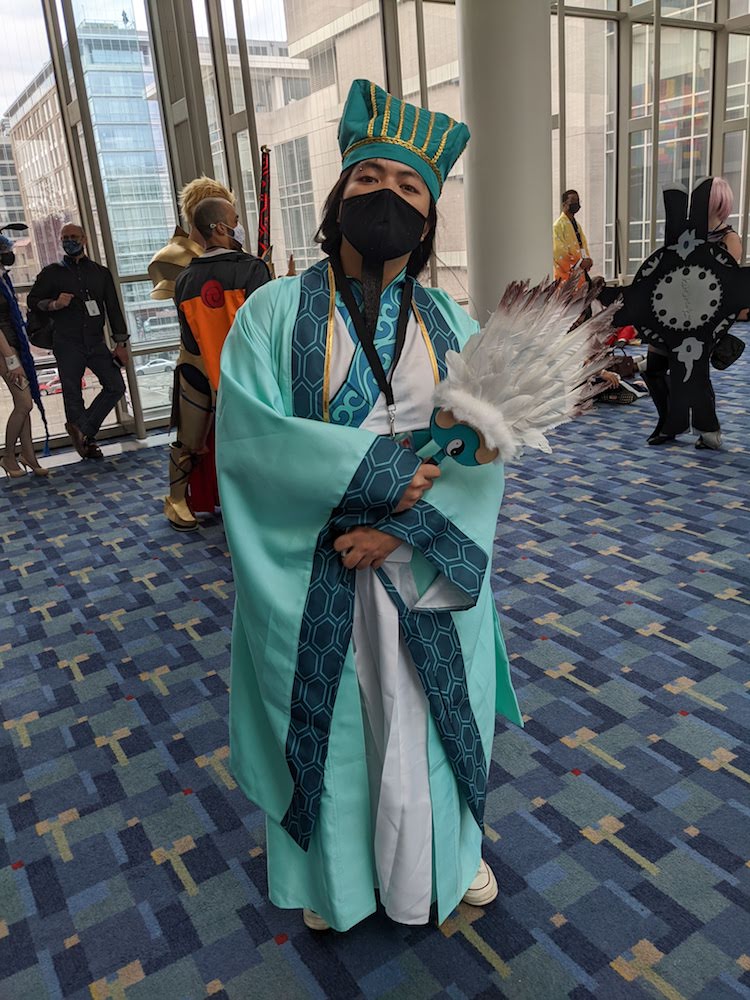
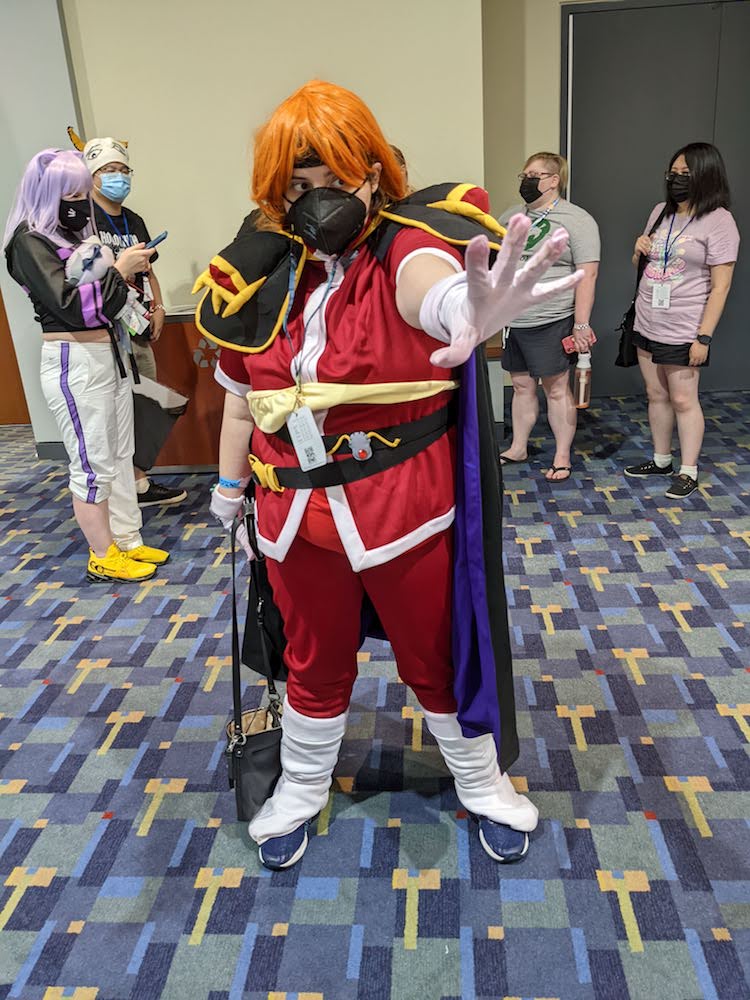
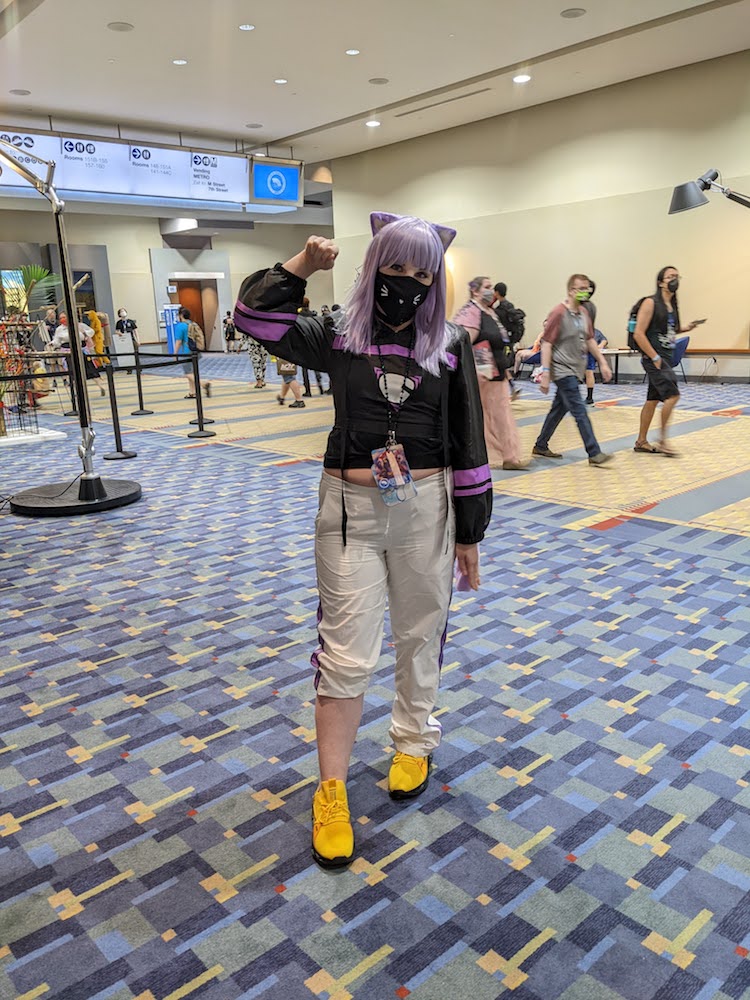
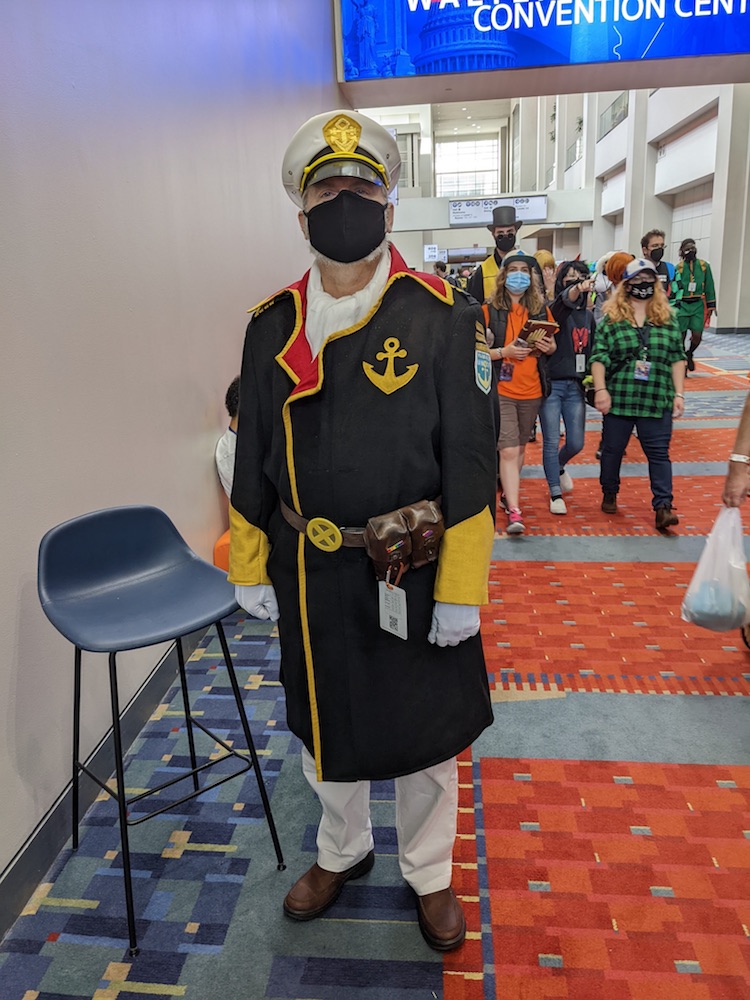
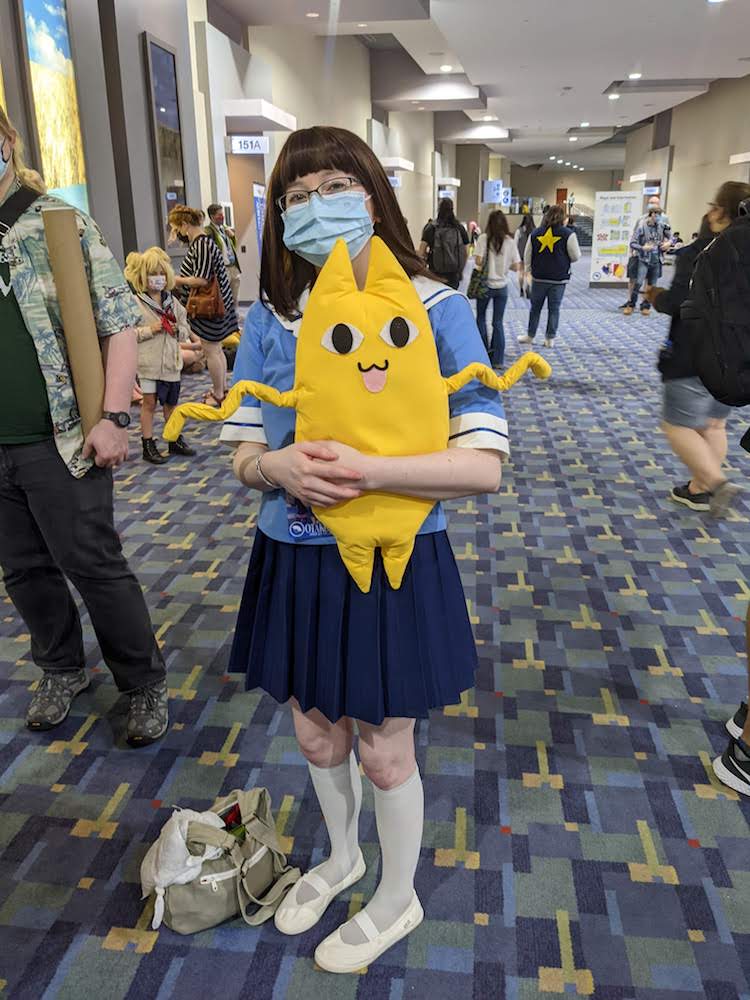
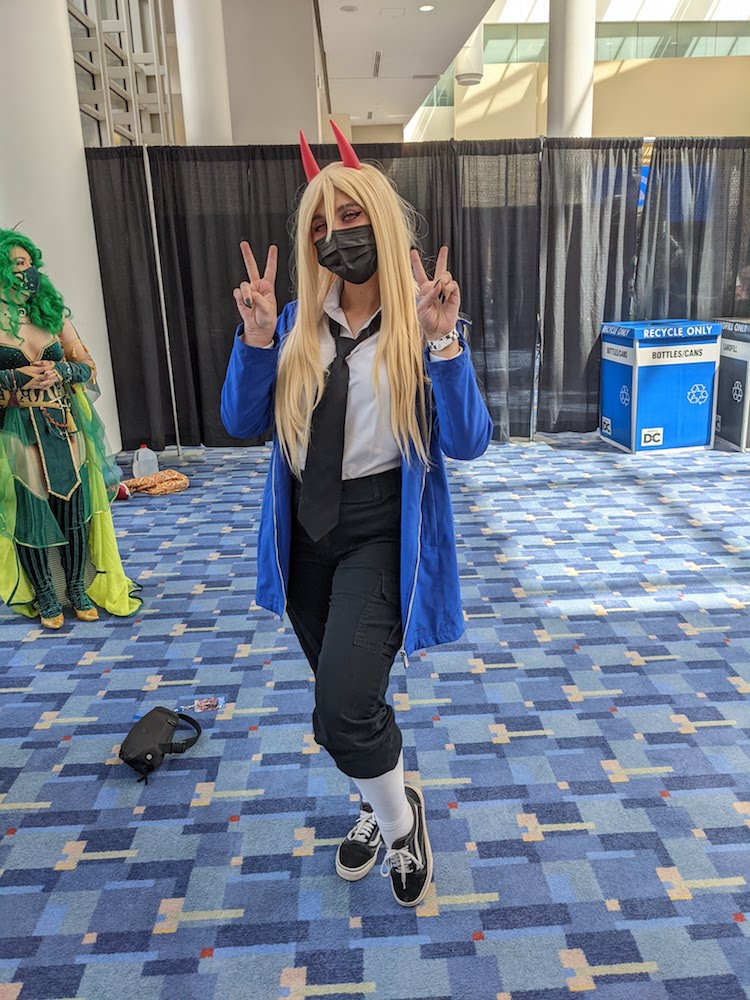
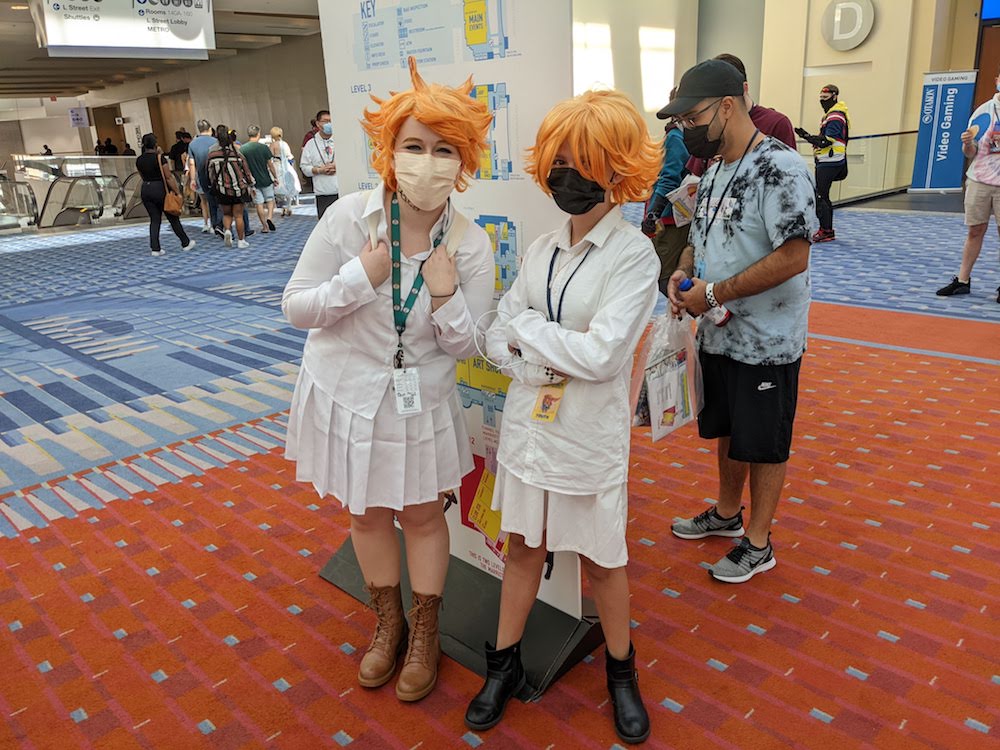
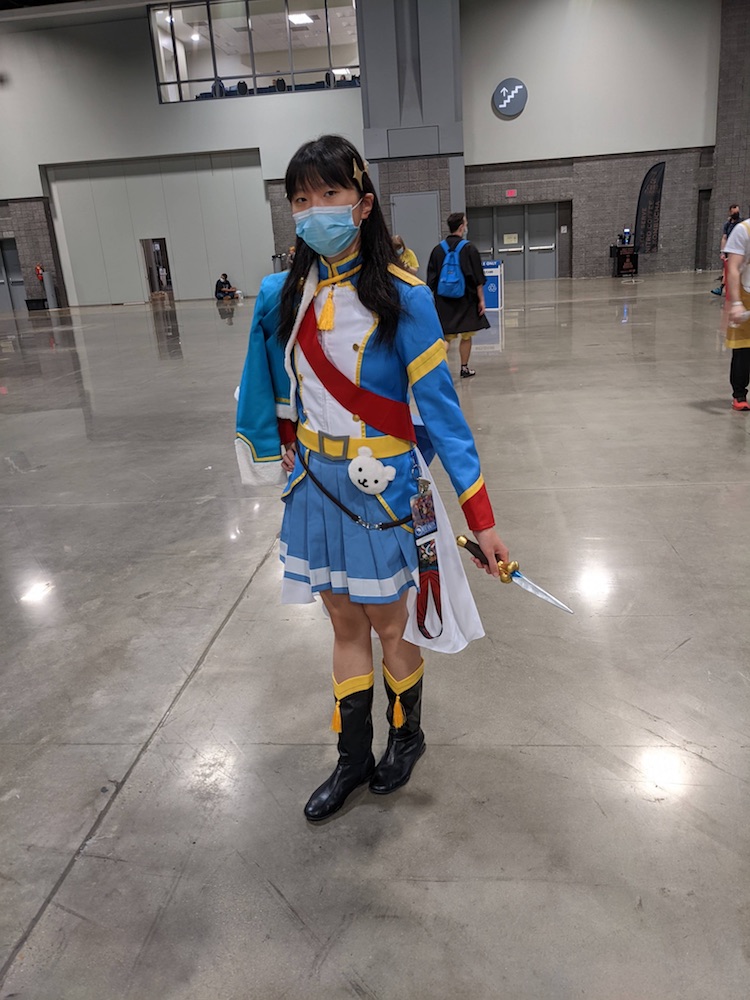
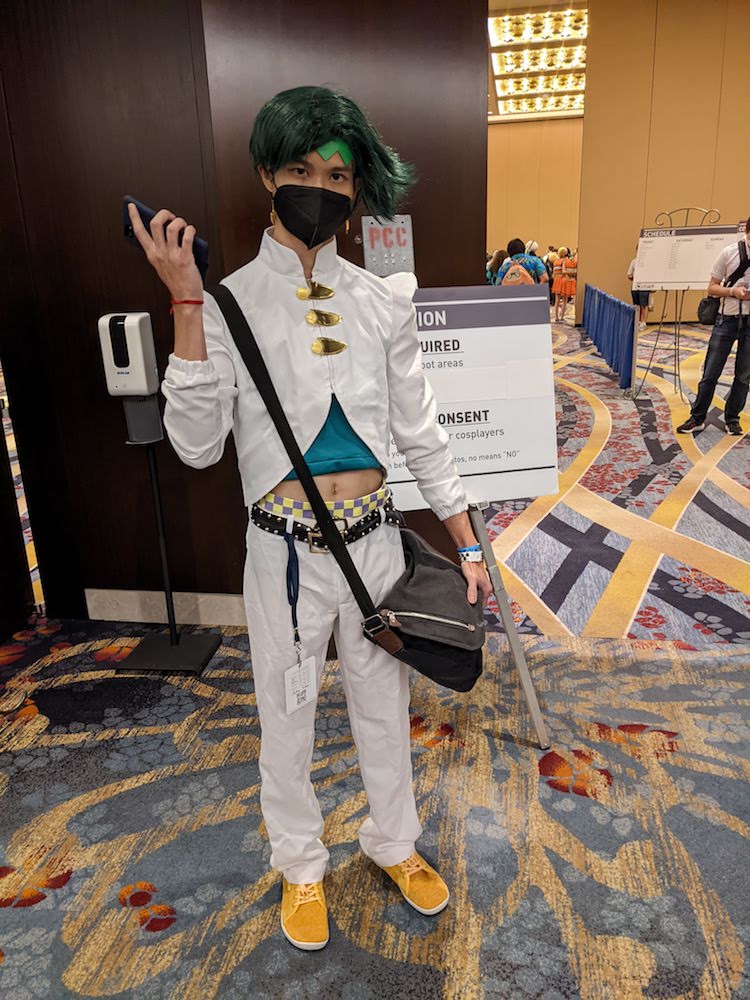
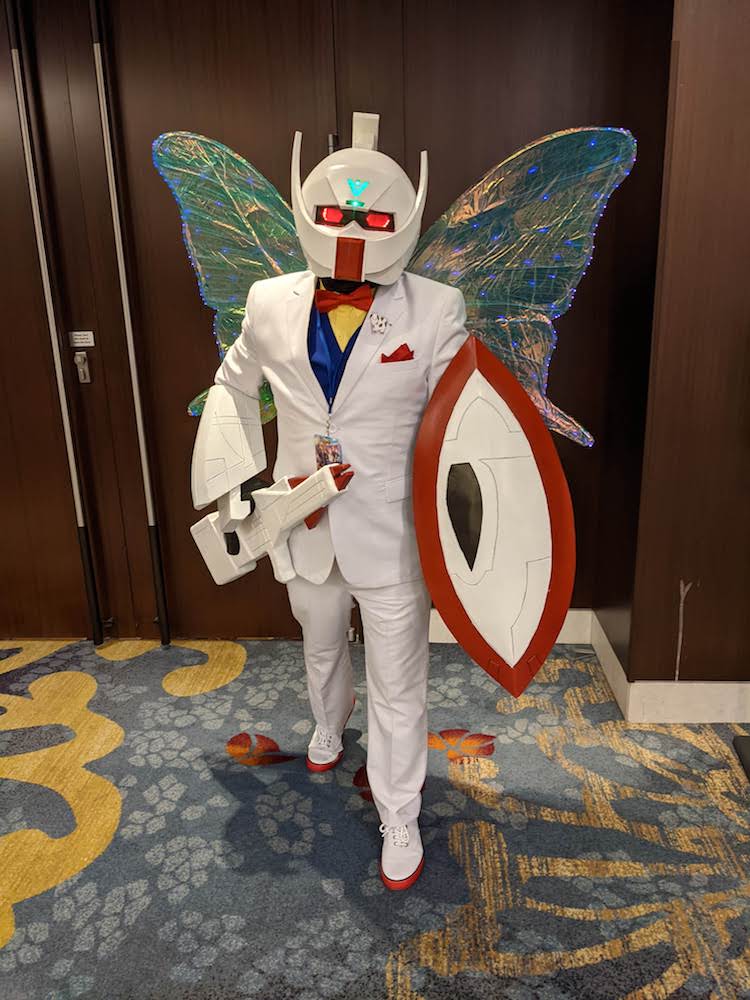
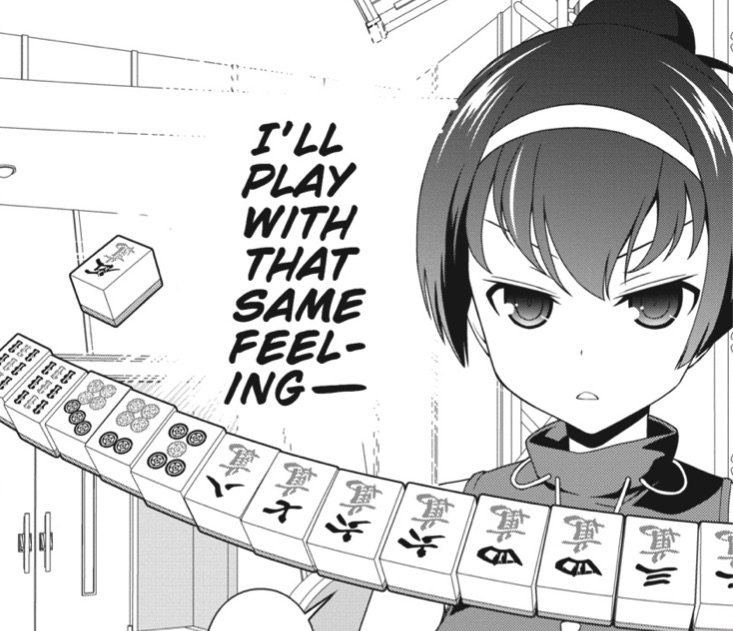
I’ve been to my fair share of US anime conventions—on the east coast and the west coast and even some international ones—but never in the Midwest. When I heard the news that Kubo Yurika (the voice of Hanayo in Love Live! ) would be attending Anime Central 2023, I decided I had to be there. Call it paranoia, but after one of my favorite character designers and animators, Kimura Takahiro, passed away this year, I’ve started feeling that I shouldn’t let opportunities pass me by.
What I did not expect was to have COVID-19 while at the event—a fact that I wouldn’t find out until later. While my throat was feeling uncomfortable, I had tested negative multiple times before flying out, so I figured it was just a mild cold or something similar that could be contained with good masking. Unfortunately, it turned out to be worse than I thought.
I mention all this for two reasons:
First, as far as I know, I did not spread COVID to anyone at the con—not even my convention roommate who had to hear me coughing and hacking into the night and had to fly next to me. This means that good respiratory masks (KN95, N95, KF94) really, truly work. You are doing yourself and everyone else a favor at conventions and other crowded places.
Second, because I wasn’t feeling great, my experience at Anime Central 2023 was not ideal. Nevertheless, I had a good time, and I think it has to do with the fact that Anime Central still maintains a pretty down-to-Earth feel for a convention.
Basics
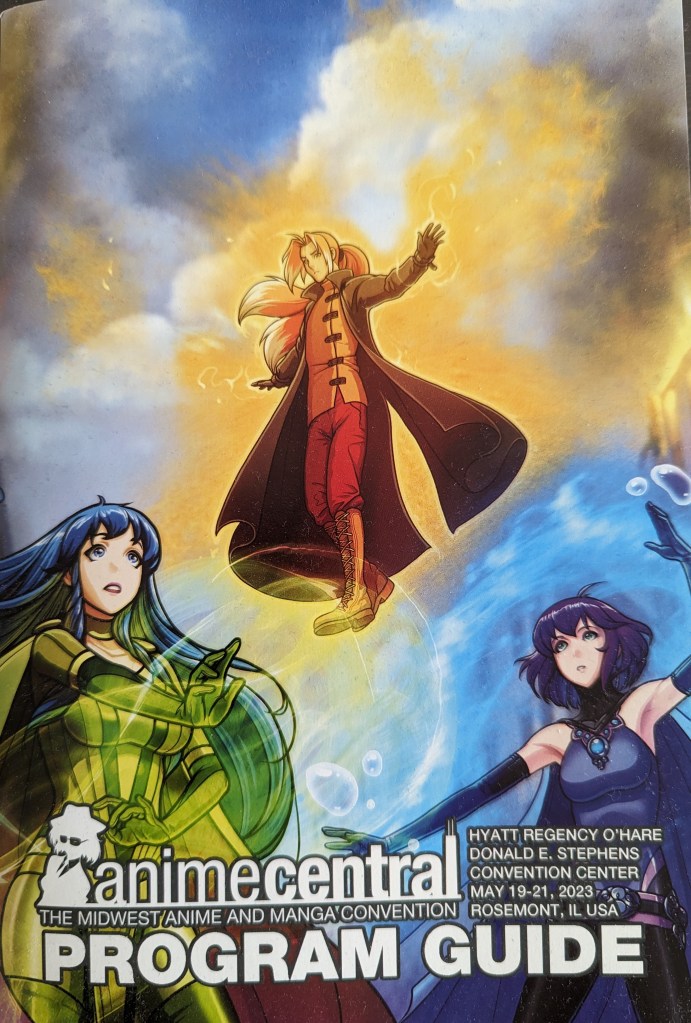
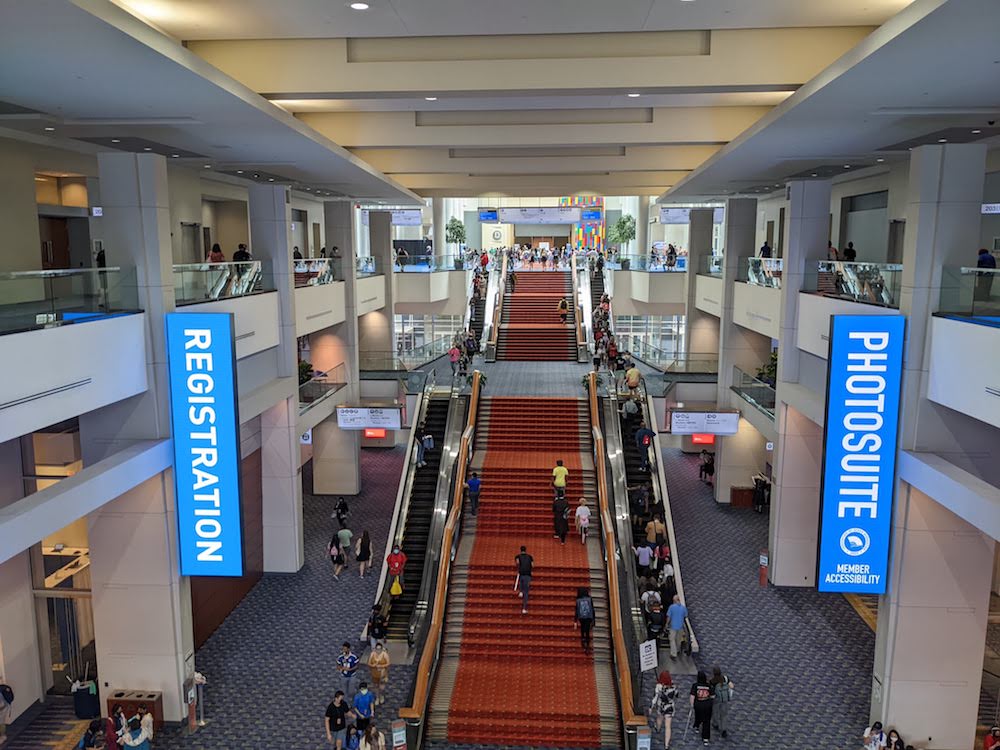
Anime Central 2023 took place May 19–21 at the Donald E. Stephens Convention Center in Rosemont, Illinois, just a 35-minute car ride from Chicago O’Hare airport. With multiple hotels connected to the convention center through a system of enclosed overpasses, you can easily get to the convention center itself without stepping outside. Putting aside my own hopelessness when it comes to directions, plenty of signage makes it difficult to get lost in those above-ground tunnels.
The con had a certain feel I would describe as very 2006. That’s not an insult either, as I actually prefer my conventions to not be polished to the point of rubbing out any quirks. The way Anime Central manages to get big guests while still feeling very fan-run is reminiscent of my favorite anime cons.
The Kubo Yurika Experience
One of the big highlights of the con is the fact that I got to interview Kubo. That came with a caveat: Talking with her had to be under the pretense that we would be focusing on the game A Light in the Dark, for which she and Ichinose Kana (Suletta Mercury from Gundam: The Witch from Mercury) provided voices. The result still provided a good deal of insight into their careers and approaches to voice work.
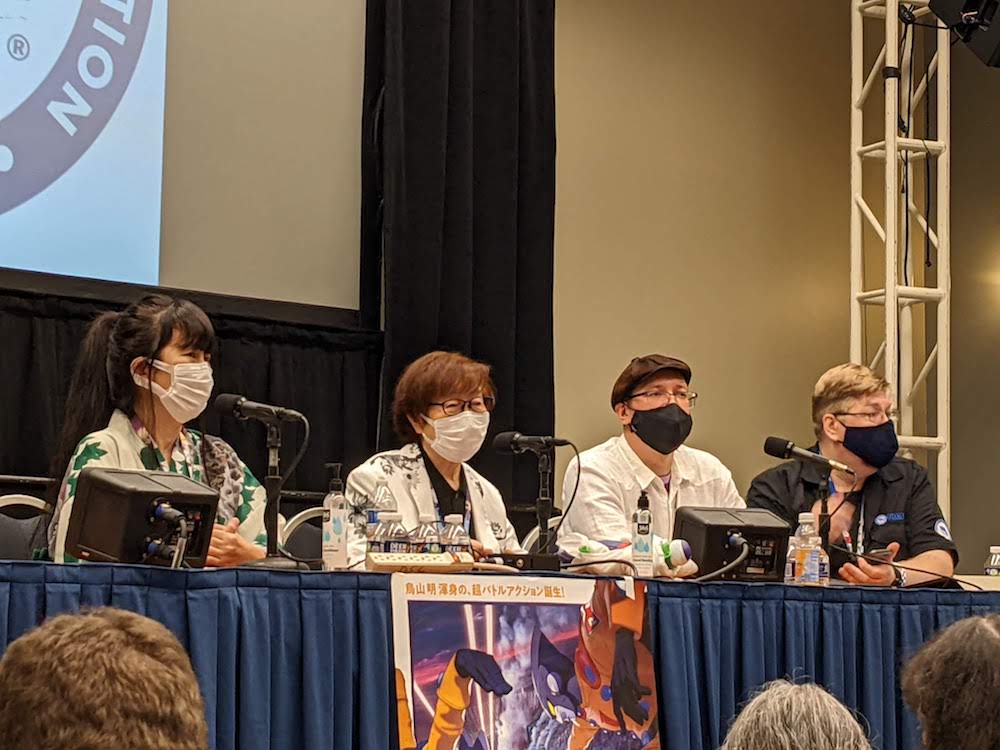
I also attended her panel, and it was a joy to see her interacting with the audience as fans gushed over her. One person in particular mentioned that having an earbud accidentally get stuck in her ear while watching Love Live! inadvertently helped her doctor realize that she had a tumor—which means Love Live! saved her life. The biggest takeaway I had from all this is that it’s wonderful to see such a large gathering of Hanayo fans.
Kubo was also doing a couple signing sessions and meetings with fans, but my condition that weekend basically made it impossible for me to wait the hours needed to get something. While I have some regrets about that, the positives outweigh the negatives.
Interviews
You can find my Q&As with guests at Anime Central, including with Kubo and Ichinose, here:
I didn’t get to attend as many panels as I would have liked, but the ones I saw were all good in their own ways. Tadokoro Azusa made for a lively guest eager to answer questions from the audience, and I was glad to hear people ask her about her time as Kiriya Aoi in Aikatsu!Helen McCarthy’s panels on the late Matsumoto Leiji and the history of cosplay both took deep dives into humble origins, and I recommend sitting in on any of her talks if you have the chance. And then there was “Kani-me 2: Crabs of Anime,” which struck a decent balance between crowd-pleasing antics and being informative. As someone who once co-ran a panel called “Such Dog, Much Anime, Wow,” I felt a connection.
Food Scarcity
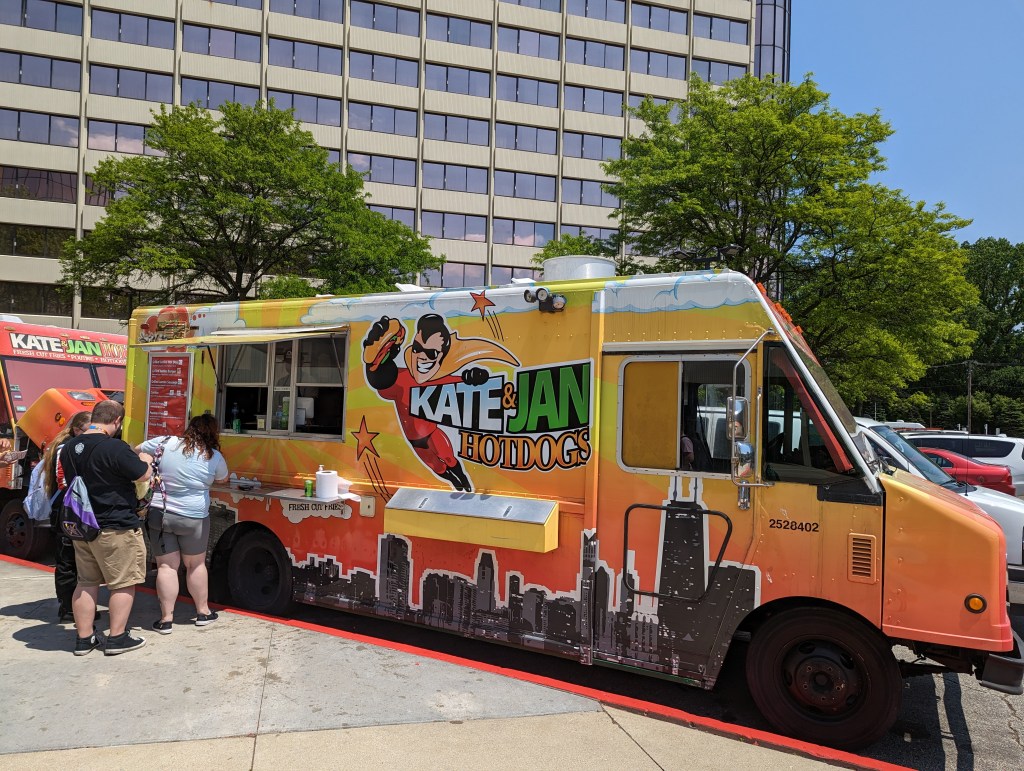
Now here’s a downside: Compared to other cons I’ve been to, getting meals can be inconvenient. While there is an entertainment area nearby that has a number of restaurants, there aren’t a ton of options for quick eats or delivery. Normally, I wouldn’t mind traveling to Chicago proper to get my fill, but because I didn’t have the stamina, I had to make do with what was available. The food truck situation was pretty dire, in that there were literally only two, and they were run by the same people. The different hotels provide options at hotel prices, and the Convention Center “ramen” was more like a lo mein cosplaying its Japanese cousin. Supermarkets and grocery stores are also hard to come by without a car. In other words, it’s best to pack some snacks and more nutritious options in your luggage if you plan to go.
Final Thoughts
Attending Anime Central 2023 was an exception of sorts for me, and regardless of the quality of the event itself, I can’t say if I’ll be able to go back next year. However, it gave me plenty of reasons to consider the possibility, and hopefully I’m not suffering from a once-in-a-lifetime plague by then.
For those in and around the Chicago area, it might just become your go-to regional con, but I get the feeling that you already know that better than I do.
Tabata Hisayuki is an animator and animation director with over 20 years of experience in the industry. He’s best known for his work on anime from the Fate franchise, as well as being involved with works such as Code Geass.
What was supposed to be a group press conference at Anime Central ended up being a one-on-one session, which resulted in a longer interview than is typical.
You started working in anime during a time when the transition from cel to digital, as well as to widescreen, was occurring. Looking back on that period, what do you think about it now?
For me, the digital media was actually much better. All the frustrations I had with analog were solved by digital. So I think I transitioned to digital much quicker than most other people.
In your career, you’ve worked on multiple projects involving Kimura Takahiro, namely Godannar, Code Geass, and Gun x Sword. In light of his unfortunate passing this year, do you have any stories you’d like to share about working with him?
Kimura was a lot older than me—by 12 years—so I wouldn’t dare say he was my friend, but during Code Geass, our desks were next to each other. He was always a great mentor to me, and he treated me as an equal colleague. As for all the memories I have of him, there’s so much that I don’t know if I have enough time to talk about it here.
As director on Warm, Winter Canada, did you work closely with the Canadian Tourism office? What kind of feedback did you receive from them?
Let’s start by saying that they brought me to all the cities they wanted me to promote, and that made a huge difference because it meant I could incorporate all my personal experiences into the videos.
What do you think are your strengths as an artist and animator?
That would be my attitude towards work, but as for my actual professional skill, it would be subtle character acting. I like to put acting into my characters, and I do believe I am considered for those kinds of skills.
There aren’t too many animators who are interested or capable in animating characters according to their personalities rather than giving them flashy actions, so I think that’s a selling point that I can give.
What motivated you to get into animation? Were there any works that really influenced you and your style?
I’m just one Japanese otaku, and for my generation there is just one influential show, and that would be Evangelion and all the other GAINAX shows. So I think my influences are the same as everyone else’s.
And this is hard to say in the open, but I got to know Kimura Takahiro’s work not through his anime, but rather one of his pervy games.
Between being an animator and an animation director, which do you prefer and why?
Animator.
Are there any projects, specific scenes, or any other work that you feel most proud of?
I think all the projects went well, and it’s hard to single out just one. But when I talk to overseas fans, they always bring up Fate and Code Geass, so I’m glad I worked on those two shows.
Being an animator in Japan can be a very difficult and laborious job. What do you think would help make “animator” a more stable profession?
I do think the working conditions of animators have improved a lot over the years. But if you look at the general flow of capital, it’s structured so that those at the top of the rights pyramid take all the pay, and it’s up to us production staff to make it with the spillover from that. And so without fundamental change in that structure, I don’t think there would be any big change. Recently, though, I do think there have been some moves towards changing that structure as well.
For example, individual animators don’t have any rights, so even if I want to draw Tohsaka Rin or Saber for someone at Anime Central, I wouldn’t be able to do that. So even if it were just free permission for a visiting animator to draw these IP characters for the public, I think that would be a big change.
I deeply regret that even though I might be the character designer, I can’t draw these characters that I’ve designed, for fans at locations like Anime Central. If I draw these IP characters without permission, Crunchyroll might get upset.
Are there any upcoming projects of yours that you think anime fans should know about?
There was supposed to be a project I could have announced here. Two months ago, it was permanently canceled.
But the next project I’m involved in should be due for announcement soon. I’m not the character designer for it, but I am the animation director, and it’s a wonderful project. So I look forward to it being announced.
It seems we have more time than expected, so would you be able to talk a bit more about your experiences with Kimura-sensei?
As an example of how we got along, we would exchange New Year’s greeting cards every single year, and the sketches on both of our cards would be very pervy. Would you like to see some examples?
Sure! [Note: Image cannot be shown]
(Chuckles) I don’t have the ones that I drew for him.
In my fond memories, since I was in charge of all the pervy scenes in Code Geass, Kimura would be grinning and correcting all my work next to me.
And since our desks were so close, I would always see how hard Kimura worked. I worried for his health, but he kept assuring me that he would be okay. He did leave us early, though. But I can’t forget all the times I had with him back then. I learned everything from him, and I enjoyed all those times. My attitude as an animator, as well as my skills, are things that I learned from him.
I know that I’m going to just start tearing up if I recall everything in a proper perspective.
You said you’re a fan of Evangelion. Did you have a favorite character?
Asuka. Back in the old theatrical release, the one from way back, the presale tickets would come with a prepaid telephone card. So I started lining up the day before to get it.
So I really am a living example of an otaku who went professional.
Have you been able to see the recent Shin Evangelion movies? What did you think of them?
I think the remakes of Evangelion have really mellowed out. Personally, I’m much more fond of the original films that were much less mellow.
You just described yourself as one of the otaku who became animators. I think lots of people have aspirations to become animators—what do you think made you different?
Well, I don’t know if I was “successful,” but I have been able to continue for 23 years, and I think it’s because I’ve been able to deliver and gain trust. This is the same as any professional job.
You mentioned being in charge of pervy scenes in Code Geass, and you also mentioned being very good at character acting. Are these two things related?
Yes and no, but technically speaking, they’re not related because those are different modes. But I gave my best to both.
Before, you preferred being an animator over being an animation director. Why is that?
As an animator, I don’t have to correct other people’s works.
As you said, people know you for your work on the Fate franchise. What is it like seeing it get so big over the past 10 years?
I do feel lucky that I was involved with Fate. But after Fate/Stay night, Unlimited Blade Works, and Heaven’s Feel, I haven’t really followed up on the franchise, and I’m not so familiar with the game’s expansions such as the mobile game, but I just think it’s impressive.
Do you have a favorite route of those three?
Of course, it’s Unlimited Blade Works.
Are there any anime or manga from growing up that you would like to see revived—maybe even with you work on it?
I’m not so interested in revivals, so I’m stuck for an answer.
Is there any anime genre that you haven’t been able to work on that you would love to be involved with?
There may not be so many missed opportunities for me, since if there was a genre I wanted in on, I could always find a friend to refer me to it.
Having noticed that Code Geass and Fate are popular among fans outside of Japan, have you noticed any differences in tastes and preferences between fans in Japan and fans abroad?
For me, the reaction from overseas fans is limited to occasions such as conventions. But seeing the fan reaction to Code Geass, I don’t see much of a difference. Is that something you feel is different?
I find Code Geass was popular both in Japan and especially here a few years ago. Fate has become very popular over time here as well, very much thanks to the mobile game, Fate/Grand Order.
I do think it’s very much the same between Japan and overseas because the lack of time lag due to streaming has brought things to the same place.
Speaking of that, there’s talk these days about how anime production is increasingly international, involving Crunchyroll, Netflix, etc. Do you feel there is a difference between creating anime that is primarily targeted towards Japan vs. a more international audience?
This is a question best answered by a producer rather than a line animator, but for the Japan-side shows, I do think there is much more emphasis or interest in hitting ratings for the Japanese domestic market. That might be the sole focus.
Do you have any advice for aspiring animators?
To become an animator in Japan?
Let’s say yes.
There are a lot of animators who work overseas remotely with Japanese studios, so borders are starting to become irrelevant. There are issues about this, but time will solve them. Perseverance is the best advice.
Was this remote work because of the pandemic or was it even before that?
This was a trend that started before the pandemic, but I do think the pandemic accelerated it.
Are there any other workflow/production changes that have occurred because of the pandemic as well?
Digital production has really accelerated. Or rather, COVID really separated it into two layers: the ones who succeeded in digitizing their workflows and those studios that were left behind.
You don’t have to name names, but for the studios left behind, does that mean that they are no longer around or that they’re just having to catch up?
This really depends on the sense of urgency at each studio. Some will be able to catch up and others will end up disappearing just because the digital workflow is inevitable, and everyone needs to move on.
Going back to the topic of Canada, the Tourism office sent you to a lot of places. Did you have a favorite?
I like cold climates, so there are plenty of favorites, but I ended up liking Yellowknife. Since this was my first visit to Canada, I liked it so much that I went there again two years later for a personal visit. For that trip, I revisited Vancouver, and also Banff and Yellowknife.
I also had the chance to ask Kubo a question specific to Love Live! during her fan panel, which I’ve included at the end of the main interview.
You’re both here at ACen because of your role in the visual novel A Light in the Dark. What are your most memorable experiences being involved with this game?
Do you mean during the recording?
Yes.
Kubo: Personally, this was during a time when I had a lot to record, so my sessions went on for days. My character, Mysterious Girl, goes through a lot of difficulties, and I was going through a lot of difficulties in my real life as well. So that overlapped, and I really realized that my life can be so easily influenced during recording.
Ichinose: By the roles you play?
Kubo: Yes, yes! That’s it! There’s a part of me that can be hurt quite a bit.
Ichinose: Oh, wow.
Kubo: So my memorable experiences tend to be about the heaviness of the role I play.
Ichinose: For me, I like playing serious roles, and my role hit close to heart. My character starts off very reticent, but there was still a lot of emoting involved. I do like heavy roles—and it was still heavy—but I still enjoyed it.
-How have your experiences playing characters such as Hanayo from Love Live! and Ichigo from Darling in the Franxx influenced the way you play your characters in A Light in the Dark?
Kubo: So for both of us, it probably wouldn’t just be the roles from the works you mentioned—they’re all opportunities for growth as actors.
Ichinose: These are genuine experiences that contributed to our breadth of expression.
How do you balance playing multiple characters at once and keeping track of them?
Kubo: As for keeping track of roles, I think all the characters we’ve played so far don’t necessarily influence who we play in the moment. We just get into the role and do it that way.
Ichinose: And since all the roles are so heavy in A Light in the Dark, resetting the emotions and getting out of the characters tends to be a bit of a challenge. But at the same time, as we work professionally, we do get ingrained with an emotional switch, or an acting switch, where we switch between roles in a very natural way.
Kubo: Yes, you’re right!
How does recording for a visual novel compare with other types of voice work?
Ichinose: Compared to recording for other types of video games, in other games, it’s more typical to do small voices like “Yah!”
Kubo: And “Hah!”
Ichinose: Yeah, and “Hah!” But there is a much longer story in A Light in the Dark, and there is much more emotional continuity. Depending on the recording, we might be skipping chapters, so we have to keep track of the continuity of the story and also the emotions.
Kubo: But there are also branching paths in the story where the user has to select which path to go, and we have to be aware of the pre-selection emotion as well as which path the user chose.
Ichinose: One dialogue path would end, and then we’d have to do a different dialogue path.
Kubo: The level of tension and excitement would have to change too. It’s one of the fun and interesting things about the project.
Ichinose: I would sometimes have to rewind the emotional state of the character and go back.
Kubo: Right!
That general area is part of the difficulty.
What inspired you to become a voice actor, or get into the entertainment industry in general?
Kubo: I started as a model for teenage magazines, but even before then, I was always watching anime and reading manga. While modeling, I was starting to wonder if I was unfit for the job, whereas I could always enjoy anime and manga. So I always wanted to take on the challenge if I ever had the opportunity. I did tell my agency that’s what I wanted to do, but they told me off that it’s not such an easy thing. They didn’t outright oppose what I said, but they said it’s not easy. When I got the role for Love Live!, though, that was my foot in the door into a career as a voice actor.
Ichinose: When I was in grade school and kindergarten I always loved watching anime, and my life more or less involved watching anime. I did play with my friends, but if I were at home, I’d spend pretty much the whole day watching anime. As I watched anime and loved anime, my thoughts turned towards the casts in anime, towards the voice actors, and eventually I would think that I wanted to get involved in the world of these various animation stories. So when it came time to choose a future for myself, one day I went to an open campus at a voice acting school, where I got my determination to go into voice acting.
For my three years in high school, I worked part-time and saved so I would have the money to pay for my own tuition for voice acting school. I paid my way through, did my audition, and got a role. So I started from a love of anime, refined my voice, and tried it out. I have the person who encouraged me to go into voice acting back then, who told me I had a chance, to thank.
Is there anything about your performances as Mysterious Girl and Young Girl that you’re especially proud of?
Ichinose: What do you mean by that?
In the sense of, did you think you felt you had performed well, and can look back and say “I did a really good job here?”
Kubo: For my role as Mysterious GIrl, there is a portion in the latter half of the game where she goes through an emotional explosion. I played that part thinking, “I could lose my voice tomorrow, but I’ll go through with it.” If you can experience that scene, I would be very happy.
Ichinose: My character gets a little bit closer to the main character in the middle of the story, and she begins to open up and start talking about her dreams and aspirations—like how she would like to eat sweets. Normally, that’s the kind of dream that’s easily realizable if you have the money for it, but the girls grew up in an environment where that’s not something they could afford.
How is it to play a character who didn’t have something that was so ordinary and common for normal people? That was my challenge. So this is a serious title, but there are these small slivers of hope that my character can aspire towards, and if that kind of nuance gets through to the player, I think my acting will be rewarded.
Thank you!
Bonus: Extra Question for Kubo Yurika from the Previous Day’s Fan Panel
I love the way that you portray Hanayo’s shyness and intensity. My question is: I noticed your performance of her evolved over time; what changes did you make to playing Hanayo over the years?
Kubo: It wasn’t like I really changed my approach to Hanayo—more like as the years went by, Hanayo saw more of her character, experienced more, as did I personally. I think that’s kind of what led to that natural evolution. I wasn’t very conscious of it at all.
Anime NYC 2022 is the second year in the pandemic era for New York’s biggest anime convention. Last year, the event broke its own attendance records, likely owing to people eager to do something in-person after months and months of restrictions. In contrast, this year felt more like a return to something vaguely normal.
Badges and Registration
Although I had the benefit of obtaining a press pass, I do know there were issues with supply of general admission this year: both three-day badges and Saturday ones were in short supply. It’s difficult to tell if they’re following in New York Comic Con’s footsteps towards eliminating three-day tickets in general (a move that makes attending the con all weekend significantly more expensive at $65 per day) or if it has to do with COVID-19 precautions.
One thing Anime NYC definitely did seem to take a page from New York Comic Con is a lottery system for seats for major panels in addition to a similar lottery already in place for guest autographs. Attendees could enter online for a chance at these con activities without needing to devote themselves to waiting in lines, and the idea is that it’s also fairer for people coming in from farther away. I understand the overall benefits of this method, though the fact that you have to cancel your reservations in advance should you win (or else risk being ineligible for future lotteries) means that it’s harder to be flexible the day of. I believe being able to make impromptu decisions is part of the fun of conventions, and potentially losing that flexibility can feel like a bit of a burden. Again, though, it might be a net good, and what probably needs to be tweaked is that way fewer panels probably need this system in place.
COVID-19
Speaking of health, Anime NYC did require proof of vaccinations or a negative COVID test, and they enforced that aspect pretty stringently. The same could not be said of masks, however. In panels, staff did a good job of making sure everyone had masks, but everywhere else it was pretty much a coin toss. The city itself has relaxed rules around masking even on the subway, so it’s hard to fight against that kind of momentum, but I wish there was a way to re-emphasize the importance of masks especially in an environment like a convention center filled with tens of thousands of people.
Last year’s con turned out not to be an Omicron super spreader event, despite early reports. I really hope that remained the case for this year, but the relative lack of masking concerns me.
A Note on Attack on Titan
The biggest guest of 2022 had to be Isayama Hajime, author of Attack on Titan. I’m bringing him up first because I actually did not attend any of his events. I follow Attack on Titan through the anime, and I didn’t want to be spoiled. I don’t know if it would have been possible to wait for the anime to conclude before inviting Isayama, but I have to wonder if there were others like me, or perhaps even much bigger fans who were forced to hold back.
Hololive Meet NY
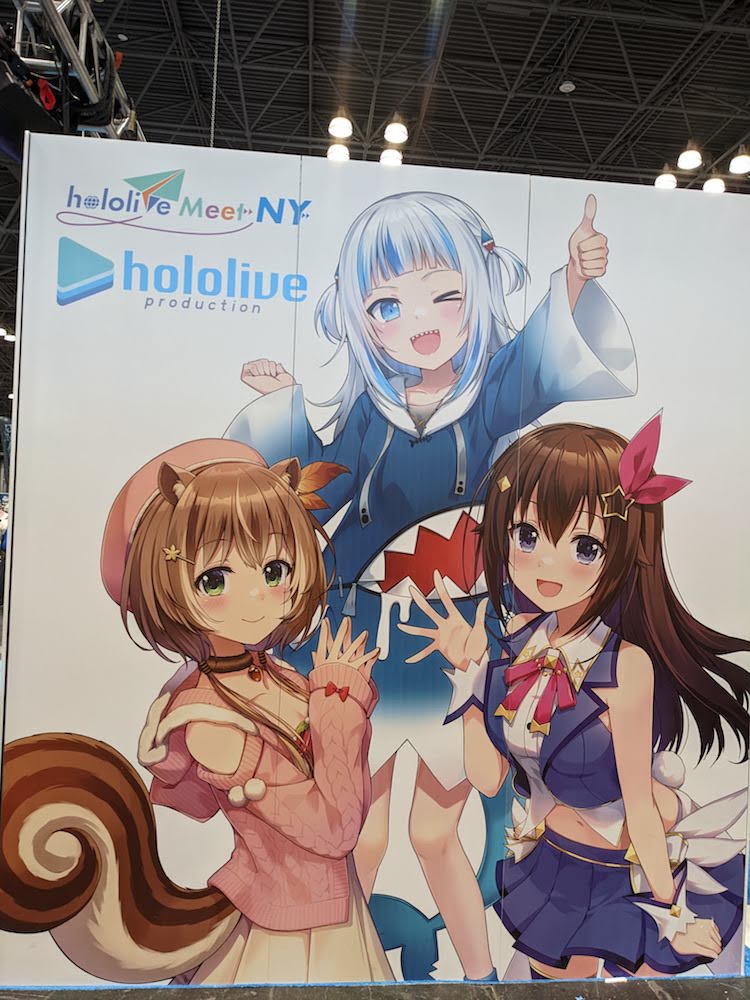
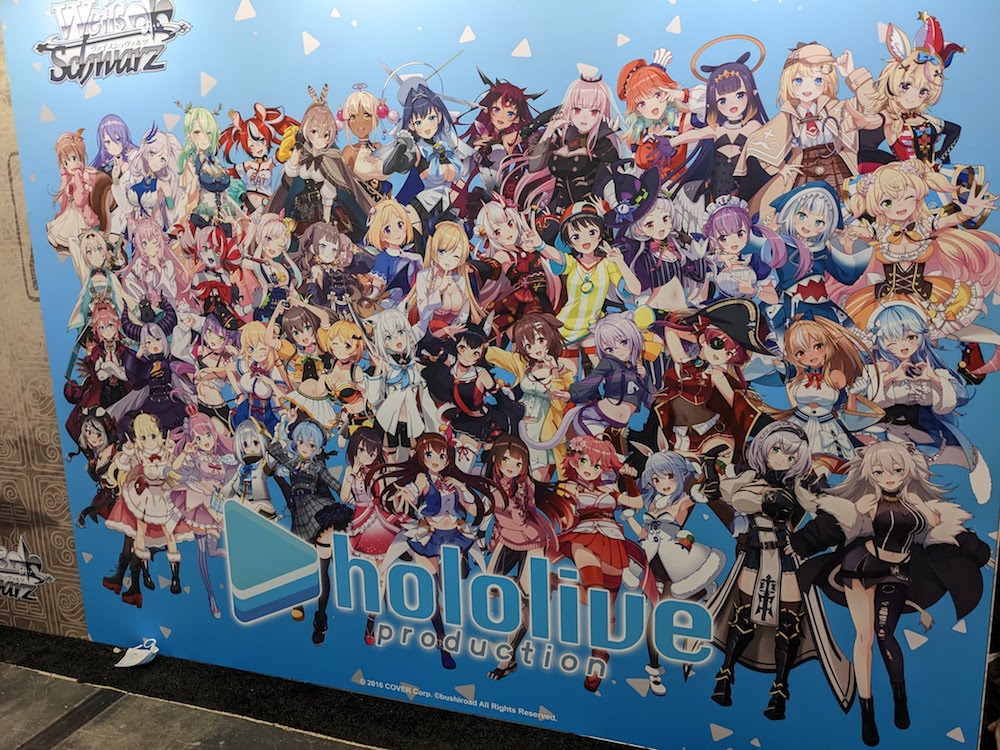
My personal must-see guests were technically not even there: the Virtual Youtubers of Hololive. I prioritized the VTuber stuff because this was my first time at a convention where they had a more significant presence; Anime NYC 2021 had a panel featuring Hololive Council’s five members, and it was a decent enough event that unfortunately had little to no interaction with the fans. For 2022, a more direct VTuber experience was provided through a dedicated booth in the Exhibit Hall in conjunction with VRChat, all as a part of the Hololive Meet series of international con appearances.
Throughout the weekend, different Hololive members (primarily the English ones) held hour-long live shows while streaming remotely. Due to what I assume are various limitations, they didn’t use any of their standard 3D models, instead opting for less complicated ones already familiar to fans: Smol models, BEEGSmol models, and also the VRDance ones.
For personal reasons (and because I didn’t want to make it an all-Hololive weekend), I was only able to see two shows in full. The first I saw was an enthusiastic morning exercise routine (though not in the radio taisou sense) by Mori Calliope that led to all sorts of 3D wackiness. The second, and one of the highlights of the entire event, was a special Anime NYC edition of the Chadcast that became something even more special due to technical mishaps.
The BaeRys Show
Normally, the Chadcast is a three-person monthly show on Youtube by Calliope along with Hakos Baelz and IRyS. None of them are among my absolute favorites as individuals, but as a trio, they’re practically a must-watch. I was looking forward to a convention-exclusive Chadcast, but as the crowd gathered for it, only Baelz and IRyS appeared. Jokingly announcing that this was actually the first episode of the “BaeRys” podcast, the two informed the crowd that Callie’s internet wasn’t working and so she likely couldn’t join in.
While unfortunate, this also meant getting a full 60 minutes of pure BaeRys, the official name for the pair. I’m not a dedicated shipper, but their interactions are among my favorites because they have such excellent chemistry together. The running joke in the fandom (that is also embraced by the VTubers themselves) is that they‘re constantly getting married and divorced, and so the two played various games meant to reveal “interesting” sides of each other. Questions included “Would you rather vomit on your idol or get vomited on by them?,” “Truth or Dare: Have you ever peed in a pool?,” and (with the help of a fan) “What are three things you like about each other?”
Watching their antics made me aware of what Callie adds to the Chadcast. Baelz and IRyS’s favorite drinks are coffee and soda, respectively, and BaeRys is very much like drinking coffee soda: a surprisingly refreshing combination, but one that can be overwhelming. Callie, then, is a savory (American) biscuit you eat in order to temper the intensity of coffee cola, and so one’s preference at any given time for Chadcast or BaeRys has to do with whether you want a balanced taste or to experience the extremes.
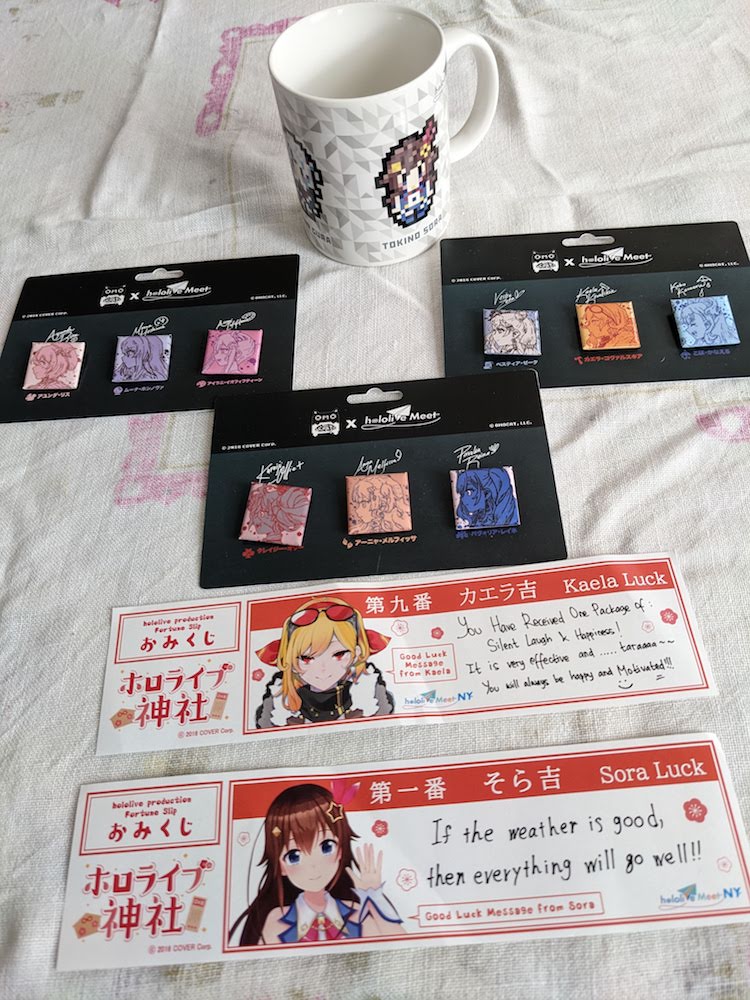
Along with the streams, there were three other booths offering official Hololive merchandise: Bushiroad (for items related to the Weiss Schwarz card game), Omocat (for exclusive crossover art), and Animate USA (for Hololive Meet–themed items). Buying $40 worth would get you a ticket you could exchange for a Hololive fortune, but attendees could also get a fortune for free if they have a VRChat account. I just so happened to create one because of the recent Code Geass x FLOW VR concert, so I managed to snag two fortunes, one for flagship Hololive Tokino Sora and one for Indonesian member Kaela Kovalskia.
I do have a couple complaints about how things were handled with Hololive Meet. First, the space provided meant everyone had to stand because sitting would create a fire hazard, and my feet still haven’t fully forgiven me. Second, you had to buy $40 of Hololive merch at one store in order to get the fortune ticket, so you couldn’t spread it across all three. Other than those issues, I’m glad I finally got to see what a “live” Hololive event is like. Next on the bucket list is getting to see my favorites, Haachama and holoX.
High Card
Among the anime premieres at Anime NYC was the first episode of a series called High Card, written by Kawamoto Homura (writer of Kakegurui) and his younger brother, Munoh Hikaru. It was actually the first screening anywhere, including Japan.
While there is a playing card motif to High Card, it’s not really a gambling anime so much as it is an action-oriented work that revels in absurdity and spectacle, exemplified by its tag line: “Are you ready? It’s showdown!” A special deck of cards has been scattered to the four corners of the Earth, and they have found owners of various types. The cards confer special powers that range from the powerful to the ridiculous (and sometimes both), and at the center of the story is a young thief trying to get money to save his orphanage. Like Kakegurui, the cast of characters is off-the-wall and full of dangerous and sensual individuals, though this time it’s mostly guys instead of girls. The creators said they were inspired by Kingsman, and it shows.
During the Q&A section, Munoh talked about how coming to New York City was amazing because he’d only ever seen it in images and on the screen. He then joked that he’d yet to see Spider-Man or the Ninja Turtles (the latter mention was omitted by the translator for some reason).
Wit Studio
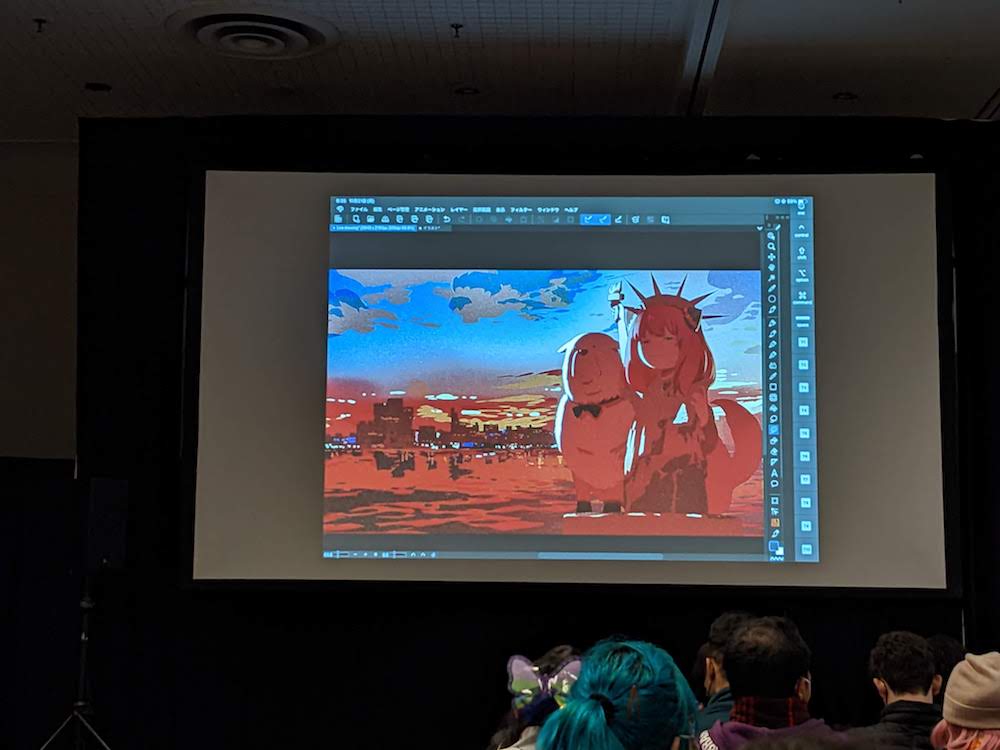
It’s rare to see a current anime studio with a pedigree as strong as Wit Studio: Attack on Titan, Great Pretender, Ranking of Kings, and most recently Spy x Family are among the works they’ve produced. At Anime NYC, multiple staff members for Spy x Family were invited as guests: President and CEO George Wada, as well as artist Syo5 (pronounced “Shogo.”) They held a panel that was a combination of Q&A, insight into the creative process, live-drawing session, and early preview of Spy x Family episode 8.
The live drawing was more a showcase of how Syo5 works on color palettes, taking an adorable line drawing of Anya Forger as the Statue of Liberty (with her dog, Bond) and adding a sunset to it. During the panel, Syo5 discussed how the color palettes in Great Pretender weren’t realistic, but were meant to have a different feel for each part of the world the characters travel to, and coloring the Anya of Liberty was a showcase of a process similar to what went into Great Pretender.
Ranking of Kings also got plenty of love from the Wit staff and audience alike. They mentioned that they’re trying to get the next season done in 2023, and Syo5 showed some of his conceptual drawings that established the general look of the anime.
Eating at the Javits
There were no onsite food trucks this year, so all nearby food options were basically in the Jacob Javits Center itself. Fortunately, between the stalls in the exhibit hall and the Javits dining area, there was actually a decent number of food options. Granted, they were all overpriced to hell and back, but that’s inevitable with con food.
For those eager to relish in Japanese culture, the exhibit hall had Go Go Curry (a perennial favorite of mine), ramen, bento from BentOn, okonomiyaki from Okonomi, and a few others. I’ve tried pretty much all of them before (though not necessarily in the context of Anime NYC), and the quality is quite good, even if it costs too much. For those who didn’t want to pay the “weeb tax” (or wait in line for a long time), options included burgers and chicken, dumplings, empanadas (Nuchas) Korean food (Korilla), and even Indian food (Curry Kitchen). Overall, the variety was welcome, given the circumstances. I remember a time when you could barely get anything resembling good at the Javits, and I’m glad to see that has continued to change.
Cosplay, Etc.
Overall
Anime NYC 2022 had a few firsts for me, notably when it came to seeing Hololive Virtual Youtubers in a more direct fashion. In that respect, it was an unforgettable experience. While I prefer cons with a greater amount of fan panel programming, I also understand that this is not what Anime NYC is about. Attendees seemed generally to be in high spirits, but I do have concerns about it getting more expensive to attend, as a lot of anime fans are not rolling in dough. If they can keep bringing the guests people want to see while finding ways to make it affordable, I think things will be looking up for next year.
The story of New York Comic Con has long been a move increasingly towards mainstream nerd culture. But what happens when that culture changes into one where comics have ascended?
For years now, I’ve associated this convention with prestige TV shows and superhero movies above all else. Comics are still paid lip service and the Artist Alley still brings some of the biggest names you can imagine, but my attendance and attention have waned over time. Even this year, I only went one day when in the past it would have been three or four. But when I was there, I couldn’t help but notice the remnants of New York Anime Festival, once upon a time absorbed into its bigger and more popular brother we call NYCC, emerging with new life.
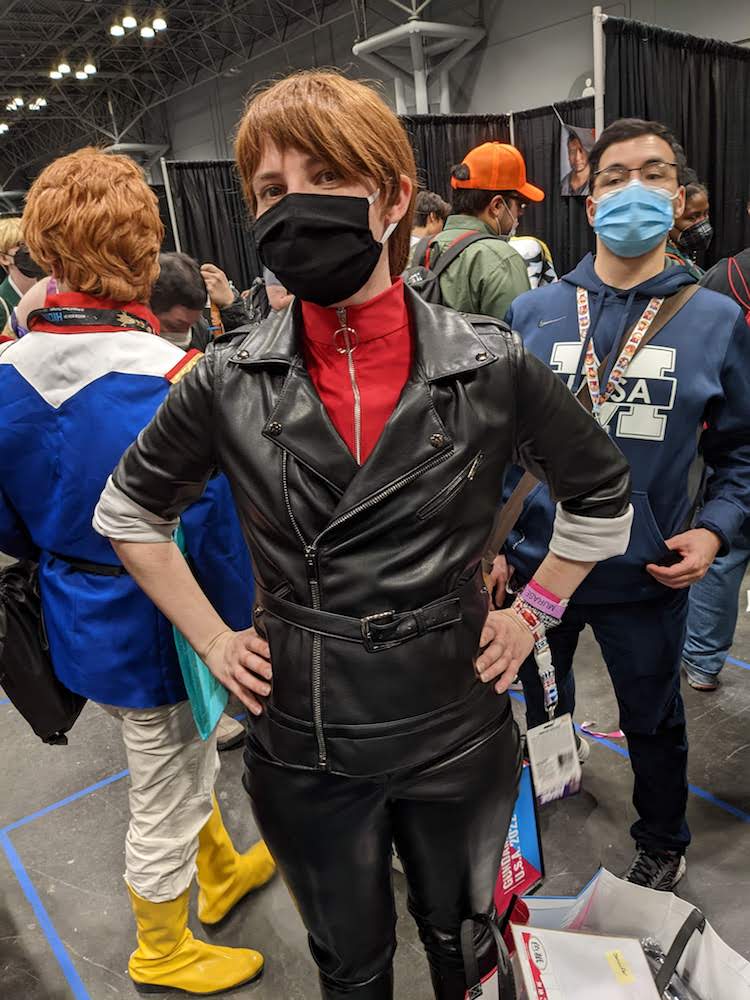
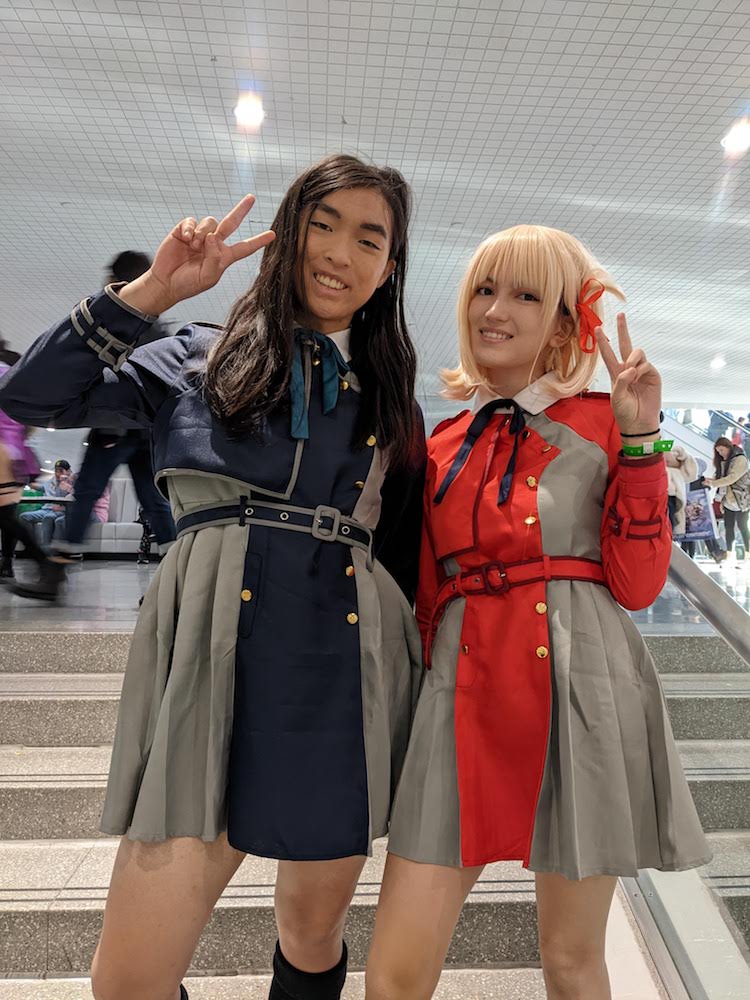
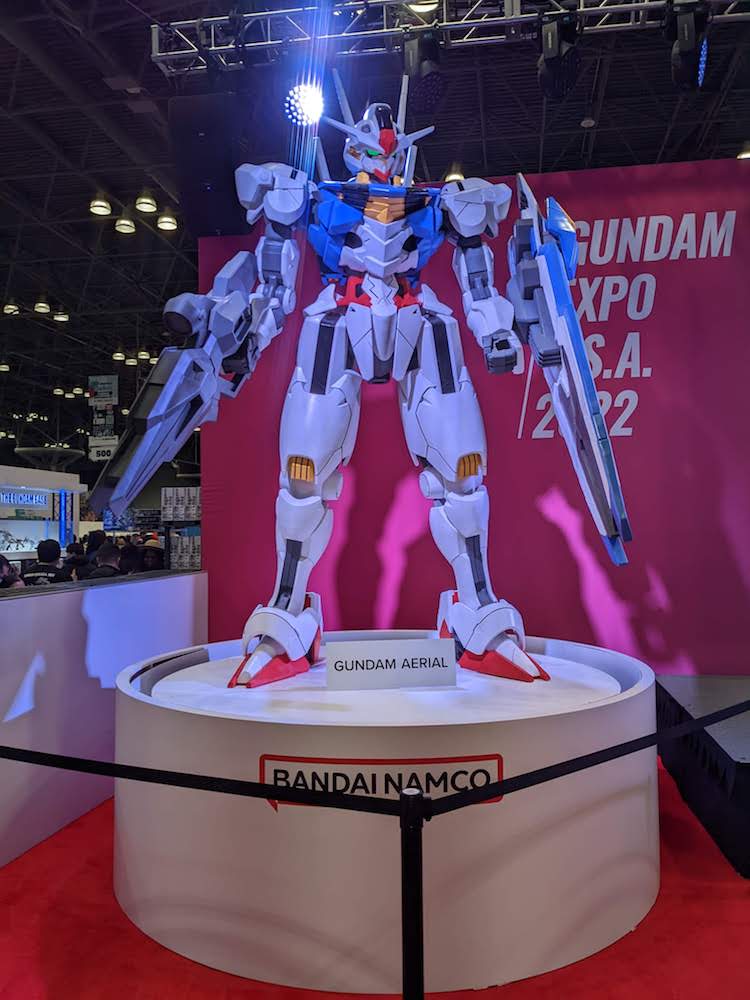
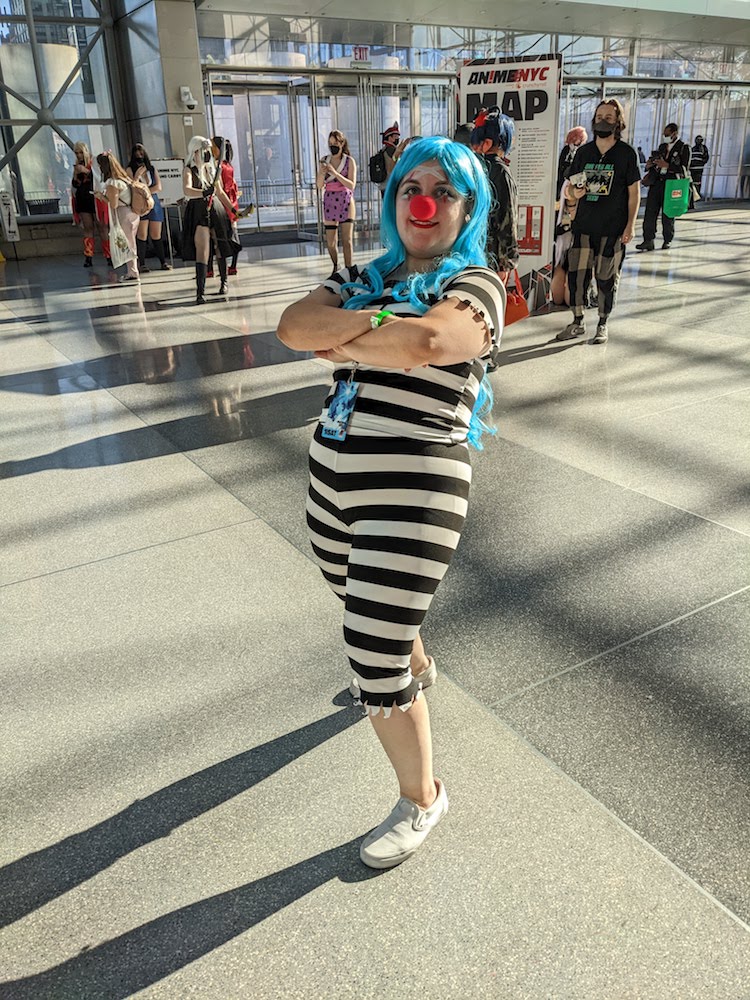
It would be inaccurate to treat NYCC like an anime con, but the industry presence in the Exhibition Hall was very noticeable. Big booths for Gundam, Yu-Gi-Oh!, and various anime and manga companies littered the space. And when it came to cosplay, the amount of Demon Slayer, Jujutsu Kaisen, etc. was hard to ignore. There were plenty of other things (including some very excited folks in Cobra Kai uniforms eager to meet John Kreese’s actor, Martin Kove), yet it felt like Cool Japan stepped one foot out of a casket.
I have to wonder if this stems from the big boost anime and manga have gotten during the pandemic. Ever since COVID-19 forced major changes on how people live, one consequence was that people’s entertainment habits changed. Among these shifts were a massive increase in book sales, and among them graphic novels blew up. But among the boom of graphic novels, manga had ascended even further. Anime and manga are almost undeniably mainstream now (at least when it comes to certain major titles), and perhaps it’s only natural for the mainstream-chasing New York Comic Con to follow suit to some degree.
Out of all fan conventions, I consider Otakon the one can’t-miss event. There’s certainly a sentimental component, as I’ve been attending for about 15 years at this point, but I think their approach to the concept of the anime con is vitally important: a celebration of anime fandom that’s not for profit and also gives respect to both the creators of the works and the fans themselves. This year, Otakon 2022 shattered its attendance record with a whopping 40,000+ (roughly 6,000 more than the previous record), and I’m glad to see it thrive after a combination of a risky move to Washington DC saw an attendance drop and the arrival of a global pandemic threatened its very existence.
COVID-19 Measures
Anyone who follows Ogiue Maniax knows that I do not take COVID-19 lightly. I’m a firm believer in the science that says vaccinations provide significant protection against severe disease and death, and that good-quality masks are an important tool for mitigating spread. I’m also not so naive as to think COVID couldn’t possibly be at the convention. So why did I still decide to attend, especially with the Omicron variants being so infectious? There are multiple reasons.
First, above all else, is that Otakon’s COVID-19 policy reassured me that they take the pandemic seriously. Much of the US has been opening up in rather unsafe ways (if they had ever closed down at all), and some other notable conventions had tried to roll back their masking and vaccination policies despite the prevalence of the Omicron variants. However, Otakon maintained that attendees must either be vaccinated or present a negative PCR test result, and that masks are mandatory. A few more things could have been done, like requiring vaccinations and boosters, period, but it’s understandable that some people still can’t get vaccinated for reasons other than hesitancy. In my view, Otakon cared more about people than attendance numbers.
Second, the Walter E. Washington Convention Center is quite spacious and has tall ceilings that can help keep air circulating—it’s being in stagnant air in small, enclosed spaces that is especially high-risk, and I could do what I can to avoid those situations and/or make sure I didn’t take my mask off under any circumstances.
Third, I trusted my own risk management. In situations that are too crowded around me or where the mask usage rate is clearly lacking, I could make the decision to change plans or abandon ship and head back to my hotel. Although it might mean not getting to see something or someone I was looking forward to, it was something I was willing to accept. You can’t do everything at Otakon anyway. I did eat out with friends once, but it was on a Sunday when the majority of attendees had already left DC.
Of course, COVID safety only goes as far as whether people actually follow them. In that regard, I was pleasantly surprised to see that the majority of people wore masks of some kind and wore them over their noses like you’re supposed to. It wasn’t perfect, and there were plenty of ineffective cloth masks still being worn, but I think having the firm requirements come from the con itself might have encouraged attendees to follow their example. I also literally saw security go after someone with no vaccination/COVID-negative wristband in a reassuring sign of vigilance. Score one for mandates.
Issues
That’s not to say the con ran 100% smoothly, however.
I enjoy getting autographs from creators, and Otakon is often good at inviting a variety of interesting guests from Japan. However, ever since the move from Baltimore, the autograph area has been in the same space as the Dealer’s Room, resulting in a less-than-ideal situation. Attendees wanting to get their stuff signed have to deal with the massive crowd trying to get into the Dealer’s Room to shop, and I thought about giving up on more than one occasion because I was worried about being surrounded by people and increasing the chances of infection.
Exacerbating this was the fact that there was a major pedestrian traffic jam in the underground tunnel connecting the Marriott to the convention center on Saturday. Normally, this is the ideal way to get to the con if you’re staying at the hotel (as I was), but the huge delays meant I couldn’t return to my room and retrieve something I hoped to get autographed until it was too late. However, that was fairly small potatoes compared with the fact that those trying to make their way through the tunnel could be stuck in there an hour or even longer. There were also lines snaking out from the Marriot and at the convention center, and on a hot summer day too. It seems like the culprit is a confluence of factors, including the gigantic boost in attendance numbers, some confusion over COVID-19 protocols, and some mechanical failures that meant inaccessible escalators. Whatever the case may be, I hope Otakon is prepared to deal with this next year
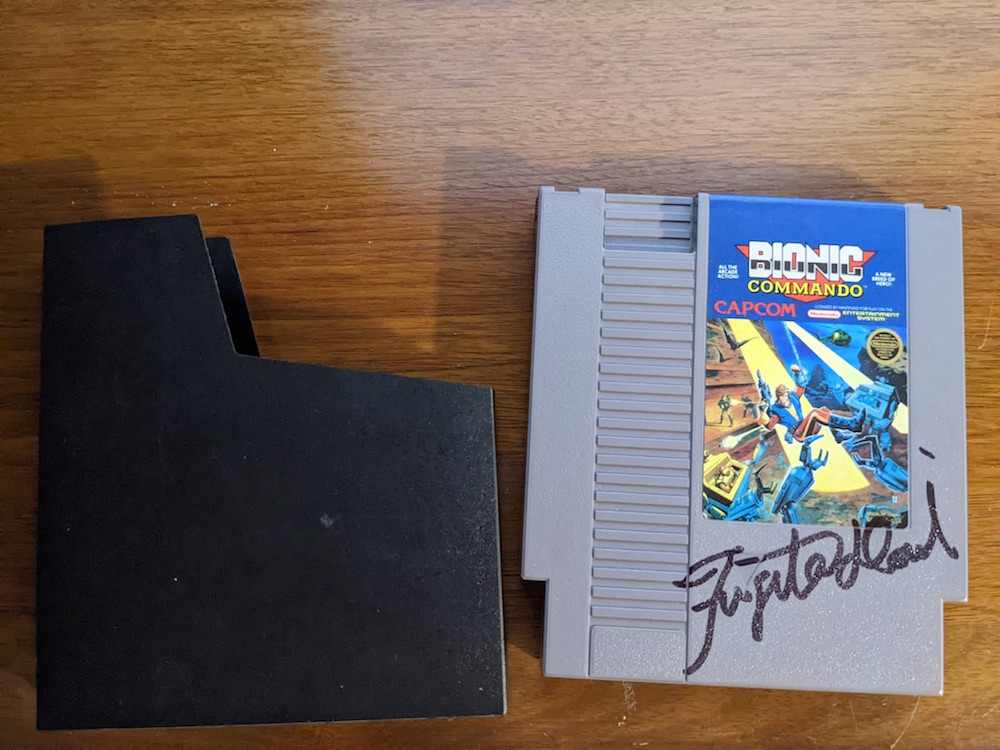
Fortunately, I actually did manage to get a couple of things signed in the end: an old family copy of NES Bionic Commando from back in the 1980s, as well as a special edition of a My Youth Romantic Comedy novel from the author and staff (not pictured).
Interviews
After my hiatus from interviewing last year, I managed to speak with some guests for 2022. Check out the following interviews:
If you ever want to hear from voice actors who love their craft and want to prepare the next generation, it has to be these two industry veterans. Furukawa is famously the voice of Piccolo, Moroboshi Ataru, and Portgas D. Ace. His wife is probably best known as Naru (Molly) from Sailor Moon. Together, this husband-wife voice team provided insight on how they train talents at their school, the ways they introduce emotion to their roles, and how to sound like you’re moving around without actually doing so (because the mic won’t pick everything up). One insightful thing I learned is that COVID-19 has upended the tradition of having everyone in the same room to record a scene (which made for better recordings, in my opinion), though important dialogues might still result in a two-person session.
I actually interviewed them back in 2017, but forgot to ask them about one of my favorite works: Zambot 3, where Furukawa played Shingo. This time, I got the chance to make up for that omission, and Furukawa answered that Tomino had very meticulous instructions and planning for voice actors, and he’d talk with each voice actor one by one. Furukawa said it was a very theatrical experience compared to other roles, though I don’t know if “theatrical” is a euphemism for something else.
Studio Trigger’s Cyberpunk: Edgerunners
While it wasn’t my first choice for aTrigger anime screening, I was still curious to see what they had in store for the first episode of Cyberpunk: Edgerunners. I’ve never played Cyberpunk in any form, but I was glad to see that the studio’s approach emphasized the dystopian qualities of its, well, cyberpunk setting over the “cool factor.” The stark class differences and crushing hand of capitalism make the hero’s anger all the more poignant.
After the screening, the staff showed some of their early character design sketches. The two things that stood out to me were the degree to which they had to revise to match the Cyberpunk video game creator’s vision, as well as the fact that they straight-up said the main girl character (who barely shows up in episode 1) was inspired by Motoko from Ghost in the Shell as they explained the big influence that cyberpunk as a genre had on them as artists.
At the end, they teased the SSSS.Gridman + SSSS.Dynazenon movie, which I’m eagerly awaiting.
Bigwest’s Macross Panel
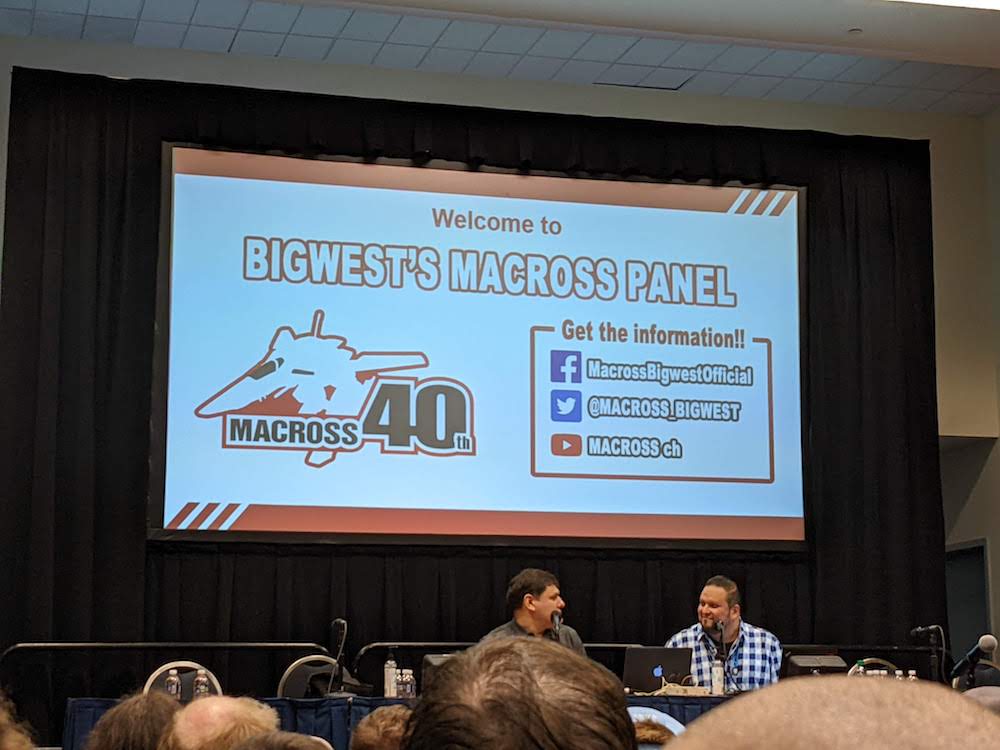
When I found out there was going to be an official Macross panel at Otakon, I felt it was my duty to attend. After all, official Macross panels have never really existed in the US prior to 2022, with the closest being whenever Kawamori Shoji is a guest. One of the biggest moments of the panel was when they showed a video of the various Macross anime (narrated by “Maximillian Jenius” Hayami Sho), and a loud cheer erupted around Macross 7. The panelists mentioned that the title would have induced silence not so long ago—a sign of the changing times. Personally, I think that similar to JoJo’s Bizarre Adventure,anime fandom had to catch up to Nekki Basara instead of the other way around.
This panel has since garnered a bit of controversy due to the fact that Otakon announced that there would be something special. To Macross fans, that can mean all sorts of things because of its unusual history when it comes to licensing and the legal issues with Harmony Gold/Robotech. Speculation ran rampant: Could it be Do You Remember Love? A new Macross? Something completely out of left field?
It turned out to be the very first US screening of Macross Frontier Short Film: The Labyrinth of Time, which was originally shown before the Macross Delta Zettai Live film. It was a treat to see and it was downright gorgeous, though not quite the first thing to come to mind as a special surprise.
Discotek Media
If ever there was a US anime company with a catalog made for me, it would be Discotek. Even when they’re not licensing titles off my wishlist, they’re giving others similar dreams. While Machine Robo: Battle Hackers is not everyone’s first choice for long-sought-after anime, their willingness to put out such obscure works is appreciated.
By far, the two big titles announced here are Space Sheriff Gavan and the complete Urusei Yatsura TV series. Neither hit me on that deep level, but the audience went bananas for both. I’m well aware of the significance both shows have to tokusatsu and anime fandom, and I’m looking forward to checking both out.
At a dinner with friends, I learned that Gavan is such a big deal in Malaysia that it’s become a part of the language itself. Using the word “Gaban” there means to describe something as epic or to evoke an image of bravery. I have to wonder how many works of television and film can make similar claims to fame.
My Panels
I’ve done plenty of panels at Otakons past, but this year is the first time I’ve had to do two back-to-back. I had considered asking for one of them to be moved, but the prospect of getting them both out of the way in one fell swoop was appealing as well. Thankfully, the vast majority of the panel rooms were in close proximity to one another this year, making the transition a relative breeze.
The first panel was “Hong Kong in Anime and Manga.” The idea was to explore different ways in which Hong Kong’s people, culture, and environment are portrayed in anime and manga. There was a technical hiccup at the beginning that delayed the start by five minutes, there were no real issues otherwise. I was surprised that there were very few Cantonese speakers in the audience, but that just meant I had underestimated the need to explain the language aspect of Hong Kong, and could adjust on the fly. I also noticed how big a reaction a clip of Cantonese-speaking VTuber Selen Tatsuki received, which gave me an idea of her extensive reach.
I hope people enjoyed the panel. I managed to briefly talk to a couple of folks who enjoyed the panel (including a longtime reader!) before I had to hoof it out of there. I was also informed that I might have made more than a few people interested in checking out G Gundam—mission accomplished.
The second panel was “Mahjong Club: RIICHI! Ten Years Later.” It was the revival of a panel I last presented in 2012 alongside Kawaiikochans creator Dave, adjusted to take into account the many opportunities English-speaking anime fans have to play Japanese mahjong compared to a decade ago. One big adjustment we made was to deemphasize some of the nitty-gritty of the rules and to better convey the excitement and tension of a game of mahjong. For the most part, the audience was new to the panel (but not necessarily new to mahjong), so I hope we were able to give something for everyone who watched us.
There was an issue with text on our slides getting cut off; it’s something we can fix when we do this again in another 10 years (?).
Fan Panels
A History of Isekai
Isekai is the elephant in the room when it comes to modern anime, and a panel about its history could easily strike a shallow cord. Luckily, this one focused primarily on the works leading up to Sword Art Online, mentioning the mecha isekai of the 1980s, the shoujo isekai of the 1990s, and the outsized influence of The Familiar of Zero. It’s debatable whether something like Urashima Tarou can count, though if it does, then it’d be amusing to show the anime Urashiman. Of course, not every title can be mentioned in an hour, even if it means missing out on the fantastic opening to Mashin Hero Wataru.
Digital Anime Fansubs: 2000 to Now
This panel was about the rise of digital subs around the turn of the millennium, and it focused mainly on the changing formats+file sizes, the brand-new frontier of getting anime straight from Japan within days (as opposed to months or even years), as well as the ways that fansubbers tried to establish their identities through practices like fancy karaoke effects. It was probably a fun introduction to this era for people unfamiliar with it, though I wonder if there would be a way to establish a more detailed history. It wouldn’t be easy by any means, due to the fact that this sort of subject isn’t really recorded, but maybe collecting anecdotes from fellow fans (or fansubbers themselves, if possible) could be cool.
A Sophisticatedly Unsophisticated Look at Fanservice
This was a panel by Gerald from the Anime World Order podcast, and I actually saw a fledgling incarnation of it ten years ago at Otakon. It was interesting to see him tackle the topic again, and there were definitely shows I remembered—namely the infamous Manyuu Hikenchou. This time, the panel had a more concrete idea of what it wanted to show, which is fanservice in terms of being things that are gratuitously superfluous. In that regard, the panel did take things to the next level, though I thought it still didn’t quite hit the mark on what would be considered traditionally “fanservice for girls,” which I think is more rooted in context and relationship dynamics than jiggling bits and crotch shots.
Showings
Otakon 1994 AMVs
One of the pleasant surprises this year was that the con decided to screen the original Anime Music Video Contest from the very first Otakon 28 years ago. It was a window into the past, particularly in terms of the shows that were being used (Riding Bean, Bubblegum Crisis, Detonator Orgun, and so on), and it’s even more impressive when you realize that digital video editing was still in its infancy back then.
There was a particular video that was considered “non-competing” that seemed to grossly revel in detailed depictions of violence against women. While I could see the argument against showing it at all, I do think having it available as a sign of what the fandom was like, warts and all, has at least historical merit. I would say I hope this isn’t a thing anymore, but I don’t typically watch AMVs anyway.
Wada Kaoru and Hayashi Yuki Sunday Concert
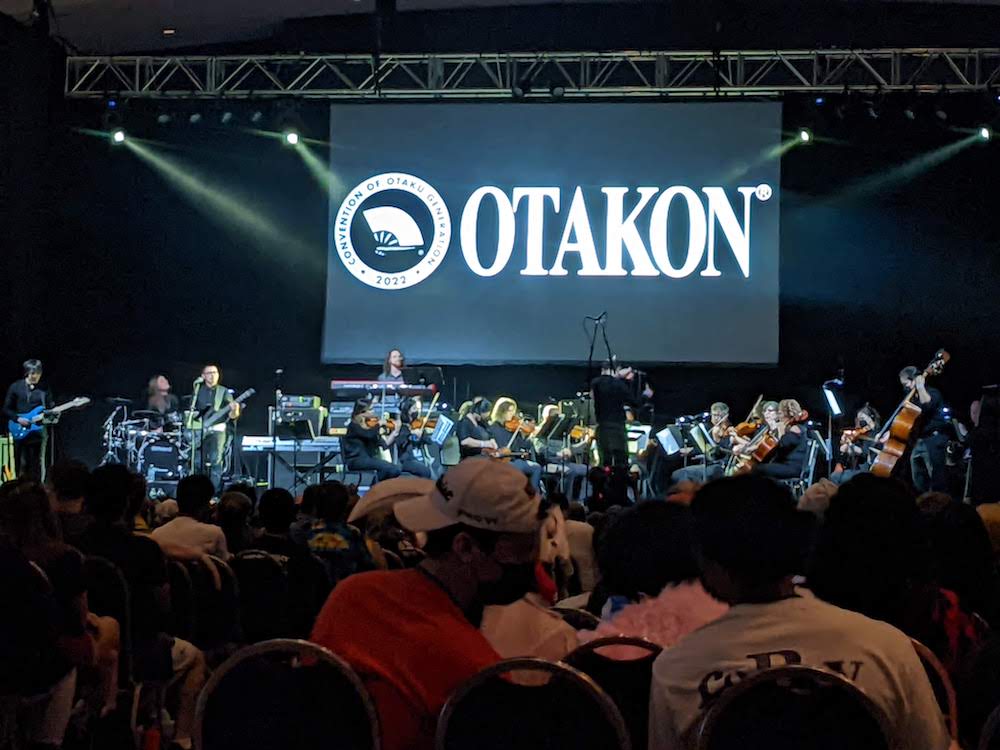
Despite the prominence of K-pop at Otakon this year (enough to have Hangul on the front cover of the physical guidebook for the first (?) time!), the only concert I attended was for the music of composers Wada Kaoru (Inuyasha, Yashahime) and Hayashi Yuki (Haikyu!, My Hero Academia). I wasn’t familiar with a good chunk of the songs, but the contrasting styles between the two made for an interesting experience you usually don’t get when the focus is on a single act. The real treat was during the encore, when they played along with the combination orchestra+rock band.
Cosplay
Conclusion
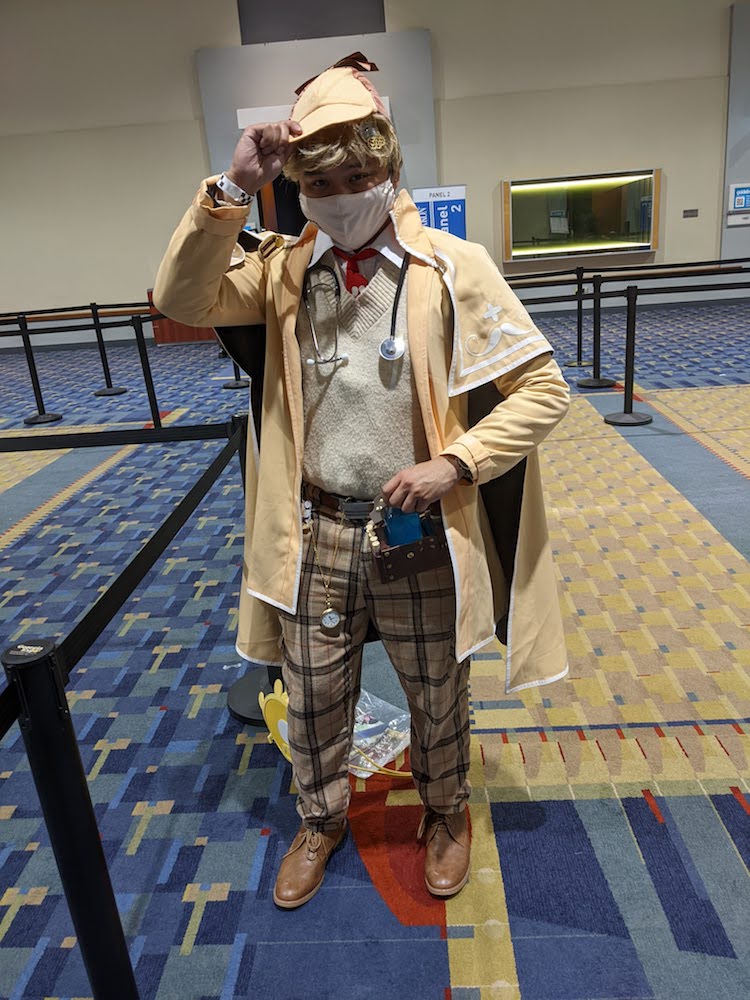
So that was Otakon 2022! It had some hiccups that made me remember that attending a convention is a conscious choice that requires risk assessment, but I definitely had a great time overall. I’ll leave off with a gallery of cosplay photos I took throughout the event. Cheers to another fine year, and I hope all my fellow attendees made it out healthy in the end.
I was recently a guest on the long-running Anime World Order podcast to discuss this year’s Otakon! Joining me was my friend and mahjong partner-in-crime, Dave of Kawaiikochans fame.
Readers of Ogiue Maniax might remember that I once gave AWO a shout-out as one of the influences that inspired me to start this blog. Sixteen years later, I’ve made the big time.
This interview was conducted at Otakon 2022 in Washington DC. Gugenka, Inc. is a company that describes itself as “Sales of digital goods and technical research on Japanese animation using advanced contents such as VR/AR/MR.” Mikami Masafumi is the CEO, and Kiral Poon is the CTO.
How did you get into the business of 3D, VR, AR—these sorts of subjects?
Poon: Do you mean academic side, or…?
Anything, really. If there’s an academic element, then definitely talk about it. If it’s sort of an amateur hobby, or…just what inspired you to take this up…
Mikami: We were originally making AR stuff for movie promotions, and we slowly moved that content into VR. That became for VR anime promotion, where we promote anime with our VR abilities.
Poon: One of the examples would be the Sailor Moon VR that we built. That is also, like, a movie for Sailor Moon Crystal promotion, and then we did the VR game for the event. And in the end now it’s on VIVEPORT for free, but it was originally promotional content.
I first became familiar with Gugenka through the HoloModels app.
Poon: Really?!
Yeah. I found out about it from a reader, actually.
Poon: When did you hear about it?
A couple of years ago, I think?
So what was the origin of the decision to make virtual AR models? Was the plan from the start to work with established properties?
Mikami: The way it started off was, you know how we have anime figures in real life, right? What if we could make digital versions of anime figures?
In physical figures, it’s probably not a real surprise to see on your figure rack a Dragon Ball character and a Re:ZERO characters side by side. But then in VR contents, it was an uphill battle to get the understanding to have two characters of different IPs sitting on the same app.
Poon: I’d like to actually convey my two cents on that. Japanese companies are really, really, really restrictive on the IP stuff. The more I work with them, the more I think that’s so crazy about it. Masafumi back in the day, he tried very hard. One problem is, how can you line up two different IPs together without any problem with the IP company. Cause they usually want to have their own world, right? When it’s in the real world, it’s just figures, so they don’t care about it. But in digital, they usually have control with their applications. So Masafumi was actually the producer. He is the one who actually produced it and persuaded those companies to do it together. The reason he can do that is because this company has a long history with these companies and these movies. He already knew these people, and that’s why he did it. It is not easy at all, in my opinion.
I’ve heard similar things about the game Super Smash Bros. When it comes to the director, Sakurai, it’s only because he has such a strong reputation in his industry that he’s able to convince all these different…
Poon: Yeah, exactly. In Japan, when you work, it’s not only about ability, but also about how people trust you. So that’s the case.
I also want to point out why this app exists, which is that there’s limited space around the world. We usually line up a lot of figures—I buy my own figures too—they take up a lot of space. In AR applications, you stick them into the space, and you can display them anytime. It’s just like an RPG item box, where you just bring it up anytime—exactly like that. That’s really convenient, and you can do more than with actual figures. You can move the pose and change the face. With real figures, you have to change the parts, and there’ll be lines on the face you don’t want. But with digital figures, you don’t have that problem. So that’s one of the main reason I can tell you why we created them.
You actually anticipated my next question!
[laughter]
So moving on, Gugenka has collaborated with virtual stars of all kinds. You have Vocaloids like Hatsune Miku. You have Virtual Youtubers like Kizuna A.I., Tokino Sora—and I remember that when I got the Gugenka HoloModels app, there was Shinonome Megu.
Poon: You did a good job. People don’t even know that one.
So what do you think about the fact that people are embracing virtual characters, and have you noticed any changes in the degree to which people are embracing them?
Mikami: Right now, everyone has their own different characteristics, and everyone would probably be able to express themselves differently in different bodies. I believe that our app would enable everyone to express themselves in their own body of their choice.
Around the world, the COVID-19 pandemic has brought the concept of virtual spaces to the forefront, as friends, families, and businesses try to gather online through various chat programs but also in creating virtual space. How has the pandemic affected your approach to virtual spaces? Has it cast a new light on them?
Poon: So with virtual space, during the pandemic, we have actually been trying to increase our opportunities with all these restrictive companies. In my point of view, usually Japanese companies tend not to do remote work and exhibitions lots online. But because of the pandemic, they start thinking about it, and they approach us. Of course, sometimes we approach those companies—“Hey, do you want to do it?” Usually, it’s the case that they will ask us about doing online exhibitions. Before, there were, like, no exhibitions, but because of the pandemic, we have those events hosted by Gugenka.
For example, the closest one would be the MF Bunko J one that we just did with Kadokawa—the light novel one. It’s a really popular real-world event in Japan. And there’s live concerts, like the Sanrio Virtual Fes. We tried to make it realistic, and we have a very good reputation on that event with VRChat. And of course, we also connect with all these partners from Japan—VRCast and other platforms. And I connect with all others across the world and have partnerships with them, like VRChat. After that, people started realizing what we’re trying to do to make people closer in distance, and display things in HoloModels, and also create your character through MakeAvatar.
You’ve worked on many events, and I know it’s hard to pick a favorite, I guess, but I’ll ask anyway: Do have any events you’re surprised that you managed to work on?
Poon: I guess I’ll let Masafumi answer first, and then I’ll answer.
Makami: I would say Kitty-chan’s Sanrio Virtual Fes is probably my favorite. I can take pride that I participated in it. The reason is that the people who are enjoying the real stuff Sanrio produces, as well as the artists and VTubers—they all come together in one event, so I thought it was a good event.
Poon: I’ll add two cents about the Sanrio virtual event because there’s not many people who know about the event in the US. After I did the panel, people were all surprised. This is a real diverse event that includes actual artists like AKB48—famous, real artists like HoneyWorks. There were also virtual artists like Kizuna A.I. and other VTuber characters. And then there’s also the system that we created so that we can bring this all in, and with synchronization with the timing we can make it feel like a live event.
What that means is, what if you join late but your friends have been in for five minutes? In a usual game, well, you start from zero, and you play it, right? But in real life, you’ll be seeing things five minutes late. What you’re seeing with friends is the same thing, and when you wave, and when you sing, you’re doing the same thing. This is what makes a huge difference with the Sanrio Virtual Fes event. We created a synchronization system to make sure everyone had the same experience, same timing to all these artists. And it’s a huge event because there’s more than a hundred songs. I didn’t sleep for two to three days just to check the songs, and it was crazy. I wish one day we could join us for the second one. So that’s the Sanrio Virtual Fes.
That actually makes me think: Sometimes, due to the pandemic and the increasing use of online spaces, people want to get together for a karaoke session, right? But due to the differences in synchronization, it can cause problems for people who want to sing together. Is there a possibility of creating a space like that for regular users?
Poon: So there’s a lot of problems in terms of people’s preferences. During the event, there’s a separate instance we created to adapt for each person. For example, if your computer is weak, but you still want to enjoy the event, there’s something called shitei [appointed] instance, which means you are pointed to that instance, and we make sure you can have the best experience in that instance. But because it’s a social VR, if you want to see the group, there’s something called jiyuu [free] instance. But if it crashes, or you just want to enjoy the experience with your weak computer, you can still go to the appointed instance.
But also, furthermore, for the paid content, there’s outfits using the MakeAvatar app. It’s like when you dress up as Mickey—or Marvel characters because Disney owns Marvel—and you go to Disneyland. So it’s the same thing as when you go to Sanrio Puroland; you dress as Mochipoly, as they call it. It’s really cute, and you can buy the hat from Kitty, or Keroppi.
There are two reasons for that. First, is because of the story. It’s best delivered that way. It feels like part of them, and it’s real good. When you look at pictures, it’s really nice. Second, is the performance. We want weak computers to also get in easily. So we think about all that and plan the event that way.
I know a lot of people around my age became anime fans in part or in whole due to Slayers.
Poon: Ooh!
So I was pleasantly surprised to see both a HoloModel of Lina Inverse—I saw the author, Kanzaki, constantly promoting it—
Poon: Man, I’m surprised you know Slayers, and that we did that?
And you created the Slayers 3D Live event. Were there any fun, creative challenges involved with working with this property?
Poon: Actually, Masafumi was talking about Sanrio, but my favorite event was Slayers. The reason for that is the equal system that I was trying to build. I’m actually the director of the concert for the live event in Tokorozawa Sakura Town.
So we actually have the live event, and then the sequences. We have HoloModels of Slayers, and usually it would be a waste that you can’t use them on other games. It’s really expensive to build a really high-quality CG model. We have the models, we have the live event in Sakura Town in real life, so it feels like Lina Inverse is there, and she does the song. Then, we host this event online in NeoChat so everyone can join. And then in the end, it’s sold on blu-ray. So this whole flow is the equal system that we try to tell those IP companies that we can balance promotion and also maybe earning a little money for the company. That’s why it was my favorite event, because all the systems of the Sanrio event are based on the Slayers event.
I’m surprised. Even though I didn’t do a lot of promotion for it, I’m surprised that you and—actually, one more person at the panel, he said he knew it, and he actually joined the event. I’m actually touched because I want North America—like myself from Canada, and there’s also the US—I want them to join us. But there’s limited resources, and there’s a problem that we didn’t have enough English translation at the time. So in the future, I’m trying to push everyone to do more English support. Good question. I want to talk more about Slayers!
Kiral, one of your interests, as written in the Otakon guidebook, is creating technology to help make life easier for animators. There’s an ongoing issue about animators being overworked and underpaid? Do you think your work can help deal with this issue?
Poon: Do you know Dragon Ball Super: Super Hero? That is one of the good examples of using good 3DCG in movies that doesn’t feel weird. Because sometimes it feels weird in 3DCG. There’s one good example, that you can have an efficient way of moving, and then you can have more stories to deliver to people.
So that is great, and it’s efficient, but to your question, can it solve the overtime and overwork problem? In some ways, but it comes down to the culture in Japan. Let’s say you need less people for the same project, right? Well, you just hire less people for the same work—there’s a chance like that. But it depends on the company. They could be, like, “Oh, there’s less work now, so now everyone doesn’t have to be doing overtime, and they can go home, right? So there’s two approaches, and it comes down to culture, I think, partially. But the reason I want to focus on technology and I keep improving that, like with Slayers, is to try io make it more toon-like with cel shaders—to make it more efficient. But can that solve the core problem is the question.
Are there any Gugenka products or services that get less attention that you think people should know more about?
Mikami: In regards to what I want people to know more about, it’s basically everything: HoloModels, MakeAvatar, virtual events. But I kind of believe there are two major points that I think we need to focus on to have a wider number of people know about us and these events.
One is that there is a time difference between Japan and the US. While we were able to get past the problem of distance because we could bring people together from vastly different parts of the world, we can’t really get past the problem of time at the moment. So, I believe what we want to do in the future is maybe have different events for different time zones to address the time issue.
The other thing I want to focus on is basically localization of the English versions for these apps that we have. We need to be able to disseminate this information about the apps and events, and it’s not as easy as Google or word-for-word translation because sometimes they miss the mark or have different words we would like to use. Also, the thing about media is basically that over here in the US, it’s not like we have a strong understanding of where the media pipelines are. So I believe what would be best is if we could get to know the media people here, and how to best communicate with our fans so that we could disseminate the information to everyone interested in an effective manner.
Poon: I actually have the same feeling. When we do the panels, people actually come to me and say, “I didn’t know Gugenka before—MakeAvatar, HoloModels—but now I’m going be a core fan and support it.” So I’m touched, and also really happy that people enjoy our service.
Like, with MakeAvatar—I don’t think you even know this much yet—but this allows us to use different parameters. The tech part is really hard—I tried so hard on this tech from January—and finally, you can use different kinds of morphs to different kinds of faces. The idea is, usually anime characters are a little bit more the shounen youngtype, but I want elderly people to also be cool. Even if you’re old, you should be really handsome because you do your own thing. You could be chubby, you could be muscular—allowing the diversity is human, and it should be possible in your own character. That’s why we have all these features.
Of course, we have the SD character, that is, the small one. The main reason we built this one is because we support Quest, cell phone, and browser, so we want the workload to be lower. But we have new, high-quality MakeAvatar that allows you to change clothing and stuff. And the business model would be to buy the cosplay—the costume—and the IP company gets paid, and the user is happy. So you can export to VRChat, VirtualCast, to see online on Vroid Hub, or browser games.
We think in the future maybe we can do more promotion in the US and more people could take advantage of this. You could become a VTuber easily. I could host a panel and just teach you to use the app, and you could be a VTuber for free. And we have the face-tracking support in this, which means it can detect your muscles and move. In normal characters, it only supports simple expressions like A-I-U-E-O and smlle, angry, crying—that’s it. But we support really detailed motions on this.
This interview was conducted at Otakon 2022 in Washington, DC.
My first question is about a role you had in the Precure series, Cure Lemonade. Precure is a very big and popular franchise in Japan, but at the time you played the character, it was still a young series. Was it like to play the character back then, and how does it feel to return to the character for crossover movies and other material?
Ise: I was in the third generation from the start of the series, and right around the time I was voicing the character, it was starting to pick up popularity in Japan.
So as you know, it’s about to approach its 20th anniversary, and I had no idea back when I first started that it would be this popular. Part of that is due to the fact that, yes, this is a children’s anime, but it also gives dreams and hopes to adults as well, and that’s probably what has led to it being so popular.
My next question has to do with the series Panty & Stocking. It’s quite popular with American fans—even more than I’d expected—and a lot of people are happy to see the series come back after 10 years. What was it like voicing Stocking, such an unusual and foulmouthed character?
Ise: I still don’t know if I’m in it, but if they reach out to me to play the character of Stocking again, I’d look forward to it.
I thought it was an interesting series. Panty and Stocking are angels in training, and they take off their panties and stocking and turn them into weapons to defeat demons.The vocabulary they use is rather…tricky?
Ise’s Manager (via webcam): Crazy!
Another character you’ve returned to in recent times is Dragon Kid in Tiger & Bunny, after a decade. Has your approach to playing her changed from how you first played her?
Ise: Tiger & Bunny 2 is 10 years after the original, but it actually hasn’t been 10 years since I’ve played Dragon Kid. Within that period, I’ve done drama CDs and movies, so it doesn’t feel like there was a 10-year gap. But even though Dragon Kid hasn’t aged after a decade, I have, and my voice has deepened and become more adult, so it adds another dimension to the role.
Watching Tiger & Bunny 2, she comes across as more of a senpai—which she is. I think the deeper voice lends itself to that role.
What was it like to play such a bizarrely inhuman character as Foo Fighters in JoJo’s Bizarre Adventure? How do you perform when the character is in no way, shape, or form a human?
Ise: Let’s see. When Jolyne and the others first meet her, Foo Fighters is a plankton-like lifeform. At the time, she’s like “Uju! Uju, uju!” in a low voice when she’s just a stand. She isn’t quite human, but she’s intelligent and clever, so I didn’t feel that much difficulty playing the character. After she borrows Atroe’s body, Foo Fighters has a childishness about her and a sense of growth she shows alongside Jolyne and Hermes, so I was conscious of conveying that innocence.
I really enjoy your role as Ray in The Promised Neverland. It’s maybe a somewhat different character from what you normally play, as well as a heavy work. What was it like to voice Ray, especially because he does age over the course of the series?
Ise: In the first season, Ray is willing to sacrifice everything in order to save Emma and Norman—to help them escape. He lives for that, but there’s a darkness about him, and he hides his true thoughts and feelings. He planned things with all this in mind, but when he’s able to confide his secret to the other two and speak those true feelings, it lifts a weight off his shoulders. In the first season, he’s full of heavy and dark feelings. But his position changes in the second season, and he becomes more cheerful.
A less prominent character you’ve played is Akagi Sena the fujoshi from OreImo. Were you familiar with fujoshi and BL culture before the role?
Ise: In Japan, when girls who love anime and manga reach middle school, they’ll—well, I wouldn’t say it’s guaranteed—they’ll start to develop some interest in BL. So I can really understand the feelings of those we call fujoshi, and I myself read BL in middle school. It didn’t feel difficult to relate to Sena.
From what I’ve heard, you put a lot of thought into your roles—it’s very clear from your answers. My last question is, what are some lessons you’ve learned that you think would help new or aspiring voice actors?
Ise: In America or in Japan?
It’s a pretty open question.
Ise: Tough question. Being a voice actor involves using your unique voice, but it’s actually not a job that’s only about your voice. Just like a live-action actor, one of the best ways to inform your acting is to gain a lot of lived experience as the foundation for your performance, and it’s good to want as many experiences as possible. When you’re in your teens, you should do the things you can only do at that age—school, friends, falling in love, doing everything someone in their teens does. This will help to inform whatever it is you’re performing as a voice actor.
Otakon 2022 is this weekend, July 29–31, and I’ll be heading back to my favorite anime convention of all. This year, I’m running two panels: one by myself, and one with an old partner in crime.
Hong Kong in Anime and Manga
Friday 4:30 PM – 5:30 PM / Panel 2
I was motivated to do this panel because I wanted to celebrate the culture of Hong Kong but also critically investigate how it is used in anime and manga. Those who’ve been to my panels will know that I tend to take a more scholarly (yet still fun) approach, and this is no exception, I hope
Mahjong Club (aka Riichi! Ten Years Later)
Friday 5:45 PM – 6:45 PM / Panel 5
It’s been ten years, the Japanese mahjong panel is back! Once again, it’ll feature myself along with Kawaiikochans creator Dave. There are more riichi mahjong players outside of Japan than ever before, and more easy ways to play too! Whether you’re an experienced hand or someone who only knows mahjong by name, this panel has something for you.