Interview: Super Robot Wars’ Terada Takanobu (Otakon 2023)

Terada Takanobu is a veteran game producer, and has been involved with the Super Robot Wars franchise since the 1990s. This interview as conducted at Otakon 2023 in Washington, DC.

Hello, it’s great to meet you. I’ve been a long-time fan of the Super Robot Wars series, and I’m very glad that is finally easy for people to play around the world.

My first question: You recently announced that you were becoming a freelancer. How has that change been for you? Have there been any particular advantages or challenges that come with it?

There were lots of interests I wanted to pursue, so I decided to step down from the producer role to become a supervisor, and use that time to do the things I’d like to do.

I want to make toys and plastic models, and original robot animations—ones that are not Super Robot Wars OG.

Do you have any all-time favorite anime or even tokusatsu works?

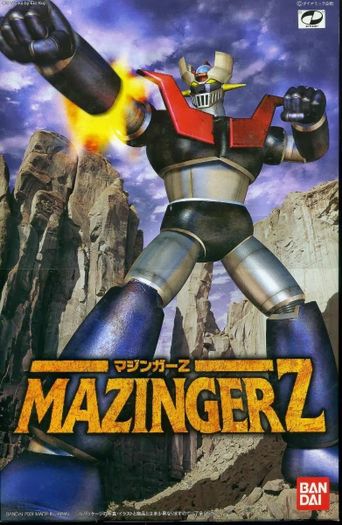
My favorite super robot is Mazinger Z. As for tokusatsu, Ultraman and also Masked Rider. And more and more. 

Original Kamen Rider, or…?

It would have to be the first Masked Rider, fundamentally.

One signature element of SRW is the continued use of very creative 2D attack animations. What are the reasons you have stuck with this style even though so much has changed about video games over time?

In Super Robot Wars DD, we’re doing 2D animations and something between 2D and 3D too, so we’re diversifying. 

In SRW DD, the idea behind going for 3D animation is to better capture the original. But more than when I was a producer, I can now better create the content I make compared to before 

What has it been like developing mobile games, as well as having multiple games out there? Is it part of a broader strategy?

With regard to the overall strategy of creating mobile games, that lies with the publisher, Bandai Namco, so I can’t really speak to it. However, as for challenges in mobile games specifically, I’d say one that having a deadline every month is a bit challenging. For example, before, if it was for a console, you had three years to get the battle animations and the scenarios and put everything into one package. But now, with the mobile games, you have everything packaged every month.

You started at Banpresto in the 90s. Are there any staff from that era still at [its successor] BBSoft?

There are some.

Do you have any specific series or character units that you thought turned out especially well in terms of their presence in SRW? Or do you think there were any storylines that were executed very well?

It’s a bit difficult, because all of them are a lot of work, and I’m mainly putting effort into making what’s there. It’s a cyclic process of making and releasing and making. More than myself, it’s ultimately the users who decide what’s good.

Are there any titles you are especially proud of being able to obtain for SRW or thought you’d never get for the series?

Space Battle Yamato, aka Star Blazers. As for recently, too many. Hmm…recently, Gridman, Mobile Suit Victory Gundam, and Gun x Sword. In SRW DD, Devilman and Koutetsu Jeeg. What’s it called in English?

Translator: [Steel] Jeeg. 

Oh, just that directly.

Ogiue Maniax: There isn’t much of a Jeeg presence in America.

Ah, I see. Oh, and there are two Jeegs now: [Steel] Jeeg and [Steel God] Jeeg

The impression I have about SRW is that there are the “main” games—Alpha, F, F Final, V, X, T, 30, etc.—and then there are smaller ones that tend to be a little more daring with game mechanics and what series they include. One title I think of is SRW Neo, with Jushin Liger. Is there any truth to the idea that you see the smaller games as more experimental?

Before, yes, there was a difference with the more experimental ones. But now, SRW DD is the only one out, and in there, we try all sorts of things like Jushin Liger and Granzort. SRW DD does embrace the style of SRW, such as the game stages and the scenarios and everything.

I know that you cannot reveal any unannounced information, but has there ever been any consideration to include giant robots from non-Japanese media?

I’m not allowed to say what it was, but there were past attempts. There’s lots I would like to license, but it didn’t work out.

Do you receive feedback from the directors and other staff involved with the titles included in SRW? For example, have you ever had to interact with directors Tomino or Anno?

Yes, there has been some feedback—and actually, there have been some ideas that came from Tomino-san and Anno-san. And actually, I came across some suggestions that Kawamori-san of Macross had earlier. But I had to tell him that’s not something I have control over.

One last question: Over the years, you’ve worked with many voice actors, and unfortunately, some have passed away. Sometimes, they are replaced by new actors, and other times, you re-use existing voice clips. Do you have any say in who gets recast in SRW, or is it outside your control?

If it’s stated by the original source material, I will do as the source material requests. Otherwise, I have the freedom to choose.

Thank you very much!
Interview: Aramaki Shinji (Otakon 2023)

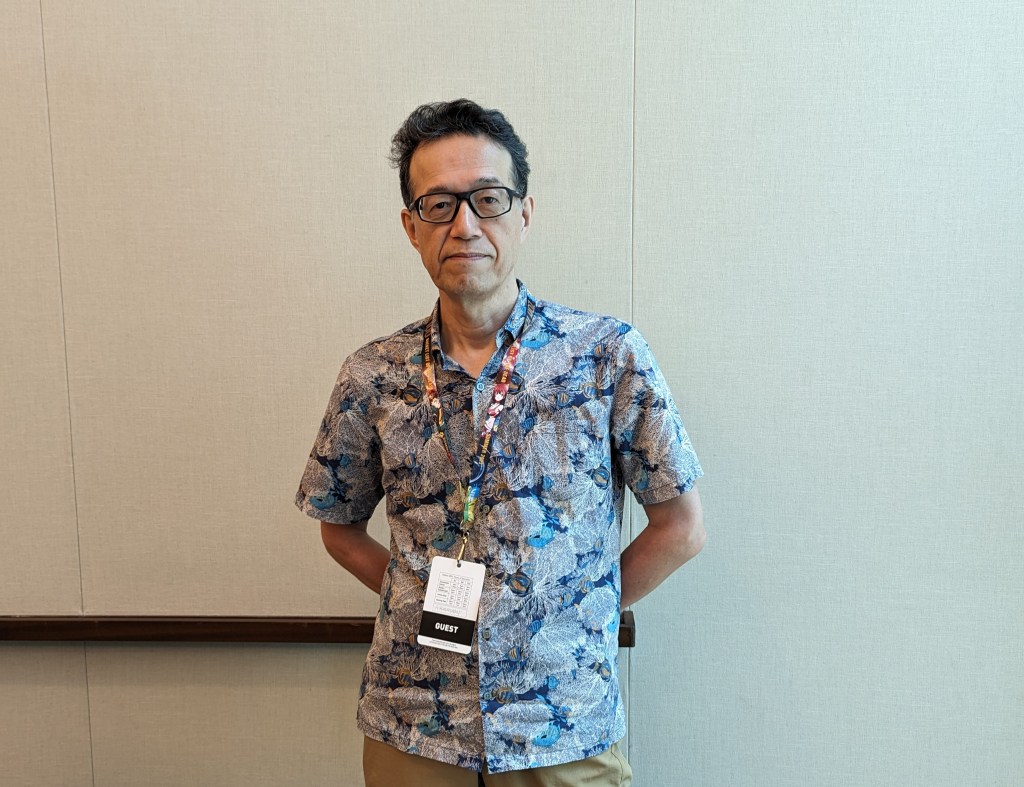
Aramaki Shinji is a creator known for his mecha design work on Bubblegum Crisis, Genesis Climber Mospeada, Megazone 23, and more. He also designed many of the toys that became Transformers, including Soundwave. Aramaki is also an anime director who has focused on pushing 3DCG animation since the early 2000s.

You have a lot of experience as a mechanical designer, and I understand that different mechanical designers have different processes for designing. For example, Kawamori Shoji has talked about how he uses Legos. What are the key aspects of your approach?

Well, it depends a lot because I get different requests for each project I work on. For example, you mentioned that Kawamori Shoji-san uses Legos, but I think that’s mainly for designing transforming mecha. Should I answer just based on transforming ones? It’ll make it easier if we narrow it down to a certain genre.

Sure, let’s go with transforming.

So we initially choose two or three shapes/forms, and we ask, what are we going to transform and how. But we start out with the two coolest forms.

Would you say you sort of work backwards from the final designs/silhouettes perhaps?

Initially, we don’t really get into the details. We just think, oh this is what a cool bike looks like, and this is what a cool robot looks like. So we just start off with what looks cool and don’t get into the particulars of how it transforms yet.

It gets difficult from there. In the past, I used to study how things might transform using papercraft. Nowadays, though, we can use 3D programs. We start off with simple blocks, but using them, we can join them and see how these volumes move around.

If we use 3DCG, we can study how these forms look from varying perspectives, so it makes the process much easier.

The next work is one that you might not be as known for. I looked up your credits, and it said that you’re responsible for conceptual design on the anime Star Driver. The style of the mecha there are quite different from what I typically think of when it comes to your work. How far removed are the final designs compared to your originals?

Actually, for Star Driver, I didn’t do much mechanical design, and I didn’t really touch any robots. But I actually designed the landscapes and backgrounds—the stage design—for Star Driver. The series is set on an island, and I designed what the island is like, and what the school is like. I did it based on discussions I had with the director, Igarashi, to set the mood for the anime.

You directed works such as Appleseed, which was, at this point, decades ago. I remember seeing them first start to show up, and that was a time when directing in full 3DCG wasn’t nearly as convenient as it is today. What are some of the challenges you faced in the early 2000s?

Back then, we actually had a lot of problems. There was no standardized software for design, so the character design software was different from the landscape design software. That made it really difficult to organize everything and keep it together as one team. 

For one scene, when we decided on the camera angle and looked at the scene, the table and the character were sort of shifted because they were designed using different softwares.

These seem to be simple problems, but back then, Japan wasn’t as advanced in the field of CG. So we faced challenges every single day.

My final question: I actually have fond memories of the cartoon M.A.S.K. and its toys, and I was excited to learn that you worked on it. What designs were you responsible for, and what did it feel like to work on a foreign production?

This series involved a lot of transforming vehicles such as trucks and boats, but the original designs came from the toy company, Kenner. Back then, I was working in LA, but I went to Chicago where their company was based, and took a lot of pictures of the prototypes. We did drawings to help with animations.

Most of the mechas were designs provided from the toys, but some were not from the toys, so I got to design them.

I don’t remember all that well where they appeared in the show, but they let me design two transforming vehicles back then, where I got to pick the car types and how they transform. They were called the Manta and the Shark.

Thank you for this interview. It was great to have you at Otakon!

Thank you.

The Ginguiser Crowdfund: Only 24 Hours Left to Help Preserve This Retro Mecha Anime!

Back in January this year, I posted about a crowdfund by the anime studio Nippon Animation to digitally preserve one of their obscure giant robot anime from the 1970s, Blocker Corps IV Machine Blaster, and avoid being left with only the original deteriorating film prints. While it looked to be in danger of not making it, the crowdfund was successful. Now they’re back to raise money to archive another one of their quirky 70s mecha series: Super-Transforming Magic Robo Ginguiser. Unfortunately, I only discovered this crowdfund very recently, and now there’s only 24 hours left to fund it as of this post!

Ginguiser, like Machine Blaster, is not exactly the most timeless anime around. But it’s still a part of anime and mecha history, and I feel it’s important to make sure we make even the possibility of a high-quality release someday a likelihood. I mentioned it briefly in my overview of 1977 for the Golden Ani-Versary back in 2013, but mainly to share the amazing image above. Check out the opening by Sasaki Isao of Space Battleship Yamato and Getter Robo fame!

Readyfor.jp is a Japanese-only site, so it can be tricky to navigate, and it doesn’t make donating from abroad easy. For the convenience of those who want to contribute but hit a language barrier, I’ve provided the same guide to donating as in my previous Machine Blaster post.

First, you’ll have to make an account on the site. At the top-right corner is a red button for logging in and creating an account. From there, you can either choose to register directly with readyfor.jp by clicking the red button on the right, or via Facebook using the button below it.

The blank spaces above, from top to bottom, are “user name,” “email address,” “password,” and “password again.” Then you’ll get a confirmation email, in which you’ll have to click a link to confirm your registration.

From there, if you go back to the Ginguiser project, you’ll see another red button to the right of the main image. That’s the donate button, and it’ll take you to a page where you can choose how much you want to put in. Unlike other crowdfunding sites, you can only select along preset amounts, so the minimum is 3,000 yen, which gets you a thank-you message and updates via email. The most expensive one, at 70,000 yen, is Ginguiser soft-vinyl figures. At the bottom, you’ll have the choice to pay via credit card or bank account. For payments outside of Japan, it’s probably better to use a credit card just because bank info in Japan can be very specific and have aspects that other countries don’t.

This is where it gets tricky. After putting in your credit card info, you’ll have to add your address as well. However, the form is not formatted for non-Japanese addresses, so you’ll have to work around it. Thankfully, if you just kind of fill it in as you would a normal address (and ignore the actual meanings of each form space, in case you can read Japanese), then it works out. Another crowdfund on readyfor.jp has provided a helpful screenshot, which I’ve also provided here. Note how the postal code in Japanese is just filled out as 111-1111. The only blank spaces this image isn’t showing are for your name.

From there, you hit the last button at the bottom and confirm your contribution! You can also write a message in the space provided.

I hope Ginguiser can make it! And if you’re the curious sort, there’s actually a Ginguiser tag on the Japanese art site Pixiv. Warning: Some images are NSFW!

Let’s Get this Roadshow on the Road: SHIROBAKO the Movie

When SHIROBAKO The Movie was first announced, I was filled with excitement and anticipation. The original TV series is one of my favorite anime from P.A. Works, as its romanticized look at the Japanese animation industry through the P.A. Works formula (cute girls doing X in a town) delivers some pretty deep-cut in-jokes while working to encourage viewers to consider joining the anime industry. I looked forward to reuniting with a fantastic cast of characters and seeing how their careers in anime would continue. 

A few pandemic-induced delays on both sides of the ocean later, and I finally got my chance to attend a one-night-only screening through Fathom Events.

The Story

SHIROBAKO is about five girls who make a promise to join the anime industry and turn their club project into a full-fledged anime, and enter the field by specializing in different aspects of anime production. The movie takes place four years after the TV series, and sees them still working in the industry but suffering from stagnating careers. In particular, protagonist Miyamori Aoi is dealing with the decline of her studio, Musashino Animation Productions (aka Musani), after a disastrous show cancellation. As Aoi wonders if there’s any way to bring it back to its old glory, a proposal comes her way: take a risk and start production on an anime film. 

A Theatrical Feel

In many ways, the film feels like it’s trying as hard as possible to indeed be SHIROBAKOTHE MOVIE. Just as the TV series is about making shows, this involves the characters working on a feature-film. And because one of the biggest appeals of SHIROBAKO is its cast of characters, a lot of the movie is about bringing the old team back together and rediscovering the energy and inspiration they’ve lost. A couple of musical numbers—a feature absent from the TV series—also get thrown in, as if the staff is saying, “We’re doing this because we can.” It’s definitely the experience I was looking for, from reuniting with the cast (writer Imai “Diesel-san” Midori being my favorite) and it ends in a satisfying and uplifting way, though ironically, I wish I could have spent more time with them. 

Rosy, Yet Not without Criticisms

SHIROBAKO can be thought of as a story about people within an industry, as opposed to the industry itself. It peels back the curtain enough to show the strain of deadlines, creative clashes, the perils of overwork, and many other things that can go wrong during an anime production. However, it doesn’t point any fingers at the systemic issues that cause these to be common problems, notably chronic underpayment of staff. SHIROBAKO is willing to deliver a few lumps, but holds back the ugliest parts. Though, given that it’s not meant to be a hard-hitting work, I don’t really mind. At the very least, it’s not all sunshine and rainbows in SHIROBAKO.

This approach extends into the movie, but this time, it’s willing to show a bit more about how precarious everything can be within anime production. Part of the reason Musani fell from grace is because the studio’s owner (who, as a reminder, is a parody of legendary industry figure Maruyama Masao) tried to get ahead of schedule by starting production before the ink had dried on the contract, and got burned for doing so. In other words, trying to be more responsible came with an inherent risk, which on some level indicates an unforgiving industry. This also ties into the direction the movie goes, as well as Aoi’s role in the process. Like Keep Your Hands Off Eizouken!’s Kanamori, Aoi is a producer, and the dramatically reduced time span to finish the film seems like a recipe for disaster. Aoi has to know how to best use previous resources and experience to allow for some shortcuts, and when to put your foot down to keep on schedule vs. when to encourage and allow for greater creative flexibility. 

Overall

SHIROBAKO The Movie is more or less what I wanted and expected out of it, and the challenges it presents its characters—trying to get out of their respective ruts and reignite their passion for anime—helps to paint an image of the anime industry as complicated and full of ups and downs. Though this is clearly a film from before COVID-19 was an issue, 

I have to wonder if it was meant to be P.A. Works‘ giving a pep talk to itself, trying to provide some hope when things feel hopeless.

God Mars and the Legacy of BL Fan Shipping

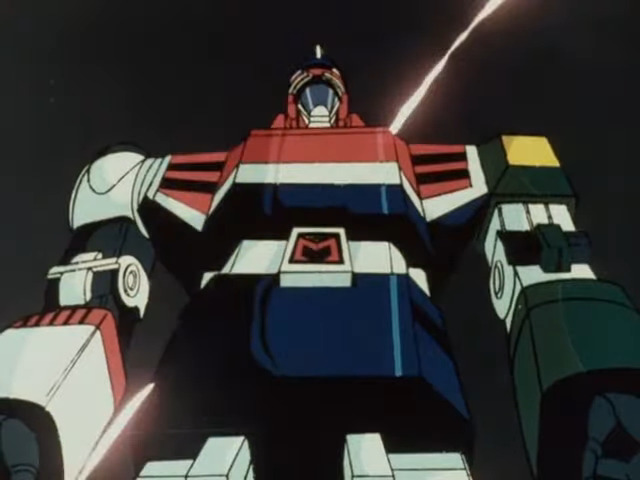
There are two success stories to tell about the 1981 giant robot anime Six God Combination God Mars. The first is about a combining giant robot that was better as a toy than as an animated figure in motion: toy sales were strong enough to extend the series beyond its first year, but the awkward stiffness of the titular God Mars itself is something of a running gag (as seen in the YouTube comments here). The second, and I think the one that should get more attention among English-speaking anime fans, is about the tremendous influence of God Mars on Japan’s female anime fandom and doujinshi scene. In a time when pairing same-sex characters from your favorite series was not yet the full-on cottage industry it is today, God Mars was a cornerstone title alongside Captain Tsubasa.

I personally came to know about God Mars twenty years ago, although knowledge about the two aspects of the series came at different times. It was a collection of giant robot anime openings around 2001 that introduced me to the show and its impressive-looking mecha, but it was actually 2004’s Genshiken Official Data Book (of all things) that first brought to my attention God Mars’s popularity with women. Years later at Otakon 2010, voice actor Mitsuya Yuji mentioned among his most popular roles a character from God Mars named Marg. Now, I have the entire series on physical media thanks to Discotek (with 25 episodes up for free on TMS’s Youtube channel), and I’ve finally come to understand what made God Mars one of the granddaddies of fandom pairing in Japan.

Simply put, it’s Marg. Once you know about him, it becomes crystal clear why a female fandom around God Mars developed.

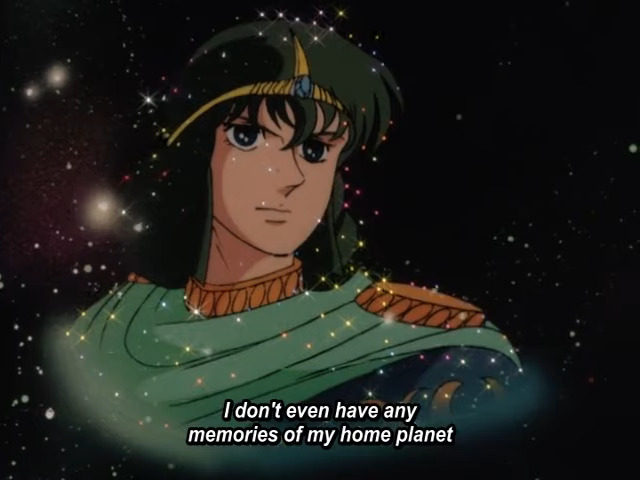
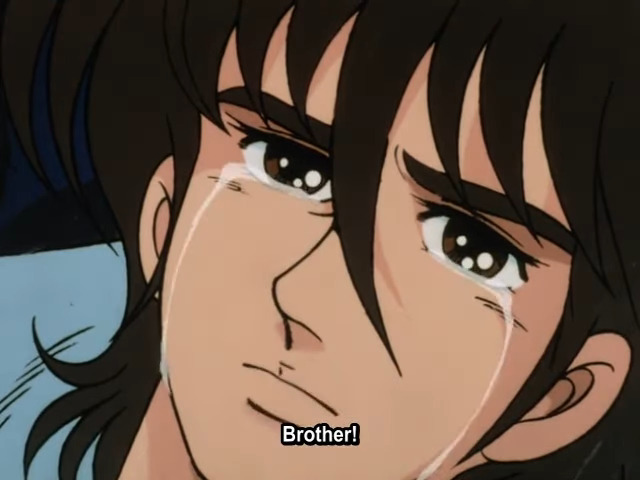
Marg is not the main character. That honor goes to Myoujin Takeru, a guy with psychic powers who discovers that he is actually an alien named Mars sent from the planet Gishin to destroy Earth. However, Takeru manages to defy the evil Emperor Zul and use the very weapon originally meant to eliminate Earth to instead form God Mars and beat back the Gishin Empire. Along the way, he discovers many truths about his original home world, including that he has a long lost brother—Marg—in Zul’s clutches. The dramas that emerge from their familial relationship include attempts to reunite, the pain of separation, and even the crossing of swords due to various plot contrivances. 

Marg is ridiculously beautiful both inside and out. He has lush locks of long green hair, and eyes that can express the deepest kindness but also the most fervent passion. His voice is gentle yet powerful, and his forlorn communications with Takeru express a longing and desire to see Takeru—unless he’s being brainwashed into being the enemy, of course, at which point his anger is spine-tingling. Whenever Marg shows up, he becomes the most captivating figure on screen.

Given that we’re talking about shipping and coupling, it’s not entirely accurate to pin it all on Marg. The popularity of a series among female fans traditionally hinges on the relationships between characters rather than singular personalities, and Takeru himself is no slouch. Not only does he look like a more handsome version of many a 70s robot protagonist, but he is perhaps the angstiest hero ever to grace a giant robot anime. Sure, Shinji from Evangelion is traumatized and depressed, and Heero Yuy from Gundam W is dark and brooding, but they don’t angst the way Takeru does. Naturally, more often than not, that anguish has something to do with Marg. And yes, they’re brothers by blood. Whether that was an additional awakening for fans in 1981, I’m not sure. I wouldn’t be surprised.

Even before God Mars, there were plenty of good-looking and charismatic secondary characters in mecha anime. Between directors Tomino Yoshiyuki and Nagahama Tadao, they all but cornered the market: Prince Sharkin (Reideen), Garuda (Combattler V), Prince Heinel (Voltes V), Richter (Daimos), and both Char Aznable and Garma Zabi (Gundam). The key difference between these major rivals and Marg is that the latter is so many things in one. He’s an adversary at some times, but at other times he’s basically a damsel in distress.

There is something I need to make clear: Unlike so many later anime, which could be constructed from head to toe with a female audience in mind (or at least pay regular lip service to that side of fandom), God Mars is still built on the foundation of a toy-shilling kids’ anime. It is 65 episodes long, and not every episode is exactly compelling. There’s an unsurprising inconsistency in terms of the show’s quality with respect to storytelling and animation quality. In addition to the notorious stiffness of God Mars the robot, the anime is rife with fights between characters with psychic powers that revolve around dramatic poses in still shots in lieu of actual movement—a style of action scene the book Even a Monkey Can Draw Manga mocks for its laziness. And dashing canon hopes of brotherly love, the series pairs Takeru with a female character, albeit one with a connection to Marg. In other words, back in 1981, fujoshi had to walk uphill both ways to get their BL shipping fix. 

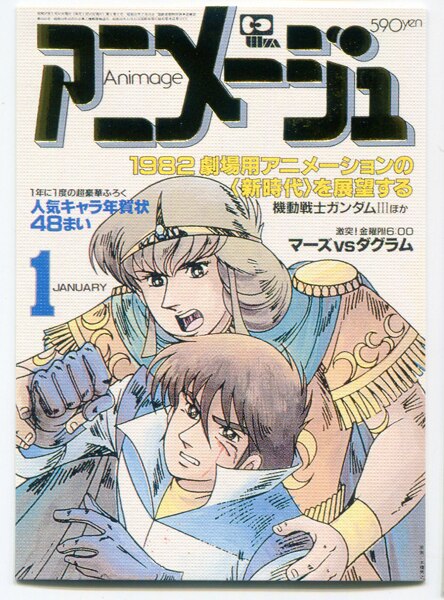
Even so, a girls’ fandom emerged out of God Mars, and plenty of evidence exists that the creators became aware of this audience eventually. The TV series keeps finding ways to bring him back in different forms. A 1982 movie recap of the first 26 or so episodes reduces the screen time of other supporting characters in favor of more Marg, and the poster advertising the film even features him prominently (see above). A later OVA released in 1988—well after God Mars’s heyday—centers around Marg entirely. A look at God Mars merchandise reveals both official and unofficial works where Marg takes up a lot of real estate.

When I was going over my own prior history with God Mars, I omitted one thing: the game Super Robot Wars D for the Gameboy Advance. God Mars is one of the titles included, and in the game, you can manage to not only recruit Marg to your side but also have him pilot an alternate God Mars from that 1988 OVA in which he’s the star. Once together, Takeru and Marg can perform combination attacks like the “Double Final God Mars.” I can’t help but wonder if there were both kinds of God Mars fans working on this game, bringing together the hopes and dreams of those whose lives were changed in some part by God Mars and its two successes.

Otakon Needs Our Help

Otakon, the largest American anime convention on the east coast, is in trouble. Due to the ongoing pandemic stifling last year’s event and the nonprofit nature of its parent organization, Otakon is at risk of shutting down for good. In order to fight off this unfortunate possibility, Otakorp is now, for the first time ever, accepting donations online.

I make no effort to hide the fact that Otakon is by far my favorite anime convention. I’ve been an attendee since before I started Ogiue Maniax all the way back in 2007, and I’ve gone as press (and occasionally even a panelist) every year since. Writing con reports and conducting interviews with great Otakon guests have become staples of this blog and my experience as an anime fan. Donating to Otakon has been one of the easiest decisions I ever made.

What I love so much about Otakon is that it never feels as commercialized compared to some of the professionally run anime conventions that are so common these days. I can expect interesting guests from Japan, including those who might not be as well known to the mainstream anime fan, and it’s always a pleasure to pick their brains for industry insight. I also love the fan panel culture that has grown out of Otakon, where every year is full of genuinely enthusiastic presenters, both new and seasoned, who encourage their audience to explore a little further and think a little deeper about anime, manga, and fandom. And it’s also been a great place to connect to many of the fellow fans I’ve met online.

In honor of Otakon and in hopes of it continuing on, I’ve decided to list some of the great interviews I’ve done at the convention over the years. I hope they can at least show you why it’s a cultural touchstone worth saving.

Furuya Toru, the voice of Amuro Ray and Tuxedo Mask (Otakon 2019)

Inoue Kikuko, the voice of Belldandy and Aina Sahalin (Otakon 2019)

Kawamori Shoji, creator of Macross (Otakon 2018)

Furukawa Toshio (Piccolo, Kai Shiden) and Kakinuma Ai (Naru in Sailor Moon) (Otakon 2017)

P.A. Works, the studio behind Shirobako (Otakon 2016)

LeSean Thomas, co-director of The Boondocks and creator of Cannon Buster (Otakon 2016)

Takamatsu Shinji, director of Gundam X and J-Decker (Otakon 2015)

Park Romi (Edward Elric, Loran Cehack) press conference (Otakon 2015)

Seki Tomokazu, the voice of Domon Kasshu (Otakon 2013)

The “Blocker Corps IV Machine Blaster” Crowdfund: Help Preserve a 45-Year-Old Giant Robot Anime!

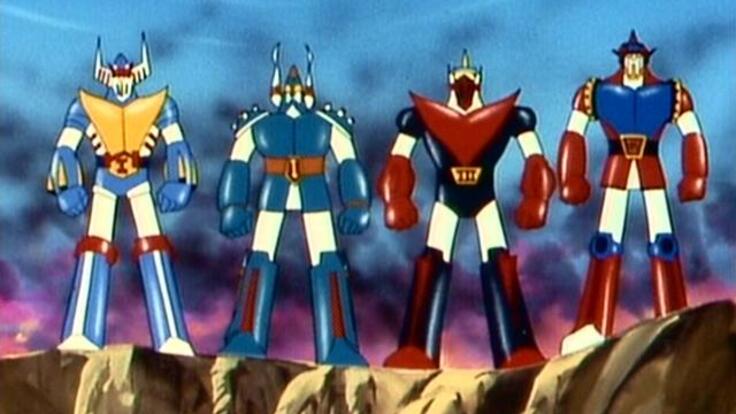
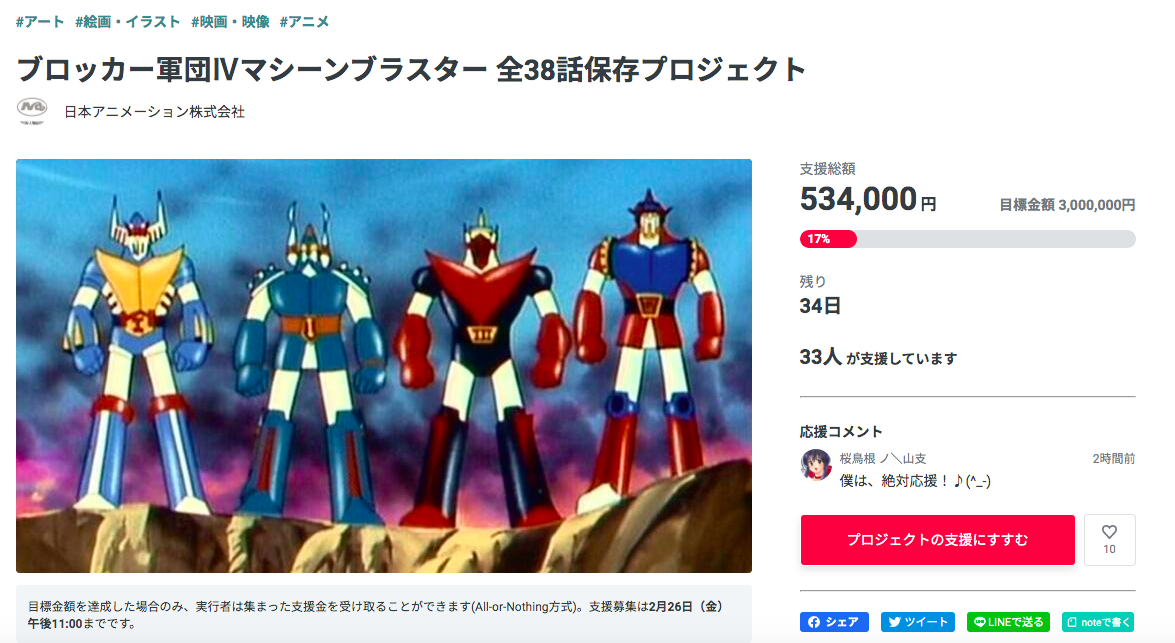
Blocker Gundan IV Machine Blaster is a 1976 super robot anime that most people have probably never heard of. It doesn’t have a long and storied legacy, and its international presence is limited to the Philippines and Italy, where it was known as Striker Force and Astrorobot, respectively. But it’s also a part of the grand history of giant robots in Japanese animation, and now one of the studios that produced the show, Nippon Animation, has started a crowdfund project to convert the Machine Blaster film reels into a digital archive through the site readyfor.jp. The goal is 3 million yen, or approximately $29,000 USD, by February 26 Japan Time.

While Machine Blaster is in many ways a footnote of anime history, that’s all the more reason why I want to see it preserved. I think it’s easy to assume that the art and entertainment we as humans create will always be around in some form, but film wears down, or it can get lost and buried. For many years, the sole copy of the Korean giant robot animated movie Robot Taekwon V was a badly damaged reel, and it was only by luck that a near-complete duplicate film reel was discovered. Machine Blaster is no Gundam or Mazinger Z, but I love giant robots and I would hate to see even this obscure series not have a proper archived version beyond its DVD releases.

Also, while Machine Blaster is indeed not Gundam, it actually shares a mecha designer! Ookawara Kunio, the man responsible for the mobile suits of the original TV series (as well as shows like Reideen, Zambot 3, and Daitarn 3), is also behind the robots of Machine Blaster. He even has a written message on the crowdfunding page talking about his time with the series as one of the many 20-somethings there being thrown into a full-on project without much experience. 

If you’re like me and want to donate to saving Machine Blaster, I’ve provided a guide below, as the site is entirely in Japanese. Also, I should note that this is not a crowdfund to get a copy of the series; it’s just to help archive it. That being said, there are bonus goods for those who contribute more (though it’s not clear if they’ll send them abroad).

First, you’ll have to make an account on the site. At the top-right corner is a red button for logging in and creating an account. From there, you can either choose to register directly with readyfor.jp by clicking the red button on the right, or via Facebook using the button below it.

The blank spaces above, from top to bottom, are “user name,” “email address,” “password,” and “password again.” Then you’ll get a confirmation email, in which you’ll have to click a link to confirm your registration.

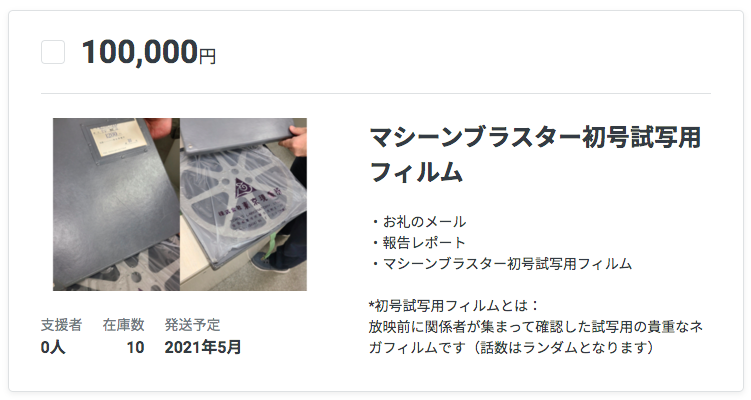
From there, if you go back to the Machine Blaster project, you’ll see another red button to the right of the main image. That’s the donate button, and it’ll take you to a page where you can choose how much you want to put in. Unlike other crowdfunding sites, you can only select along preset amounts, so the minimum is 3,000 yen, which gets you a thank-you message and updates via email. The most expensive one, seen below, is actually preview film reels of random episodes of Machine Blaster for 100,000 yen. The middle range has a bunch of merchandise you can get, like buttons and even a beach blanket. Choose which one you want, and note that you can actually select more than one at the same time. At the bottom, you’ll have the choice to pay via credit card or bank account. For payments outside of Japan, it’s probably better to use a credit card just because bank info in Japan can be very specific and have aspects that other countries don’t.

This is where it gets tricky. After putting in your credit card info, you’ll have to add your address as well. However, the form is not formatted for non-Japanese addresses, so you’ll have to work around it. Thankfully, if you just kind of fill it in as you would a normal address (and ignore the actual meanings of each form space, in case you can read Japanese), then it works out. Another crowdfund on readyfor.jp has provided a helpful screenshot, which I’ve also provided here. Note how the postal code in Japanese is just filled out as 111-1111. The only blank spaces this image isn’t showing are for your name.

From there, you hit the last button at the bottom and confirm your contribution! You can also write a message in the space provided.

Not every giant robot anime is going to be of legendary status, but I want to make sure we can keep and preserve as many as possible for both the fans who grew up with them and those who look back on anime’s history with curiosity. Blocker Corps IV Machine Blaster at least deserves that much.

PS: Like so many 70s giant robot anime, it got its own Italian theme song for the Italian dub. It is glorious, and worth comparing to the Japanese songs and their pleasant cheesiness.

The Kickstarter that Seeks Better Pay for Japanese Animators

A common question among anime and manga fans is “How do I support the creators in these industries?” The simplest answer is to subscribe to legitimate anime streaming sites and purchase manga from publishers (whether they’re the Japanese companies or licensors in your country), but it’s undeniable that there are still issues with people in these fields not getting paid enough. 

Back in August, I wrote about different ways I found to support creators more directly, and the most ambitious idea was Sugawara Jun’s New Anime Making System Project—a method of production that involves having animators work directly with musicians to create music videos. Recently, they launched their new Kickstarter, and it runs until November 22, 2020. They’ve gotten a number of musicians to provide music for them already, including Donna Burke, the voice of Raising Heart from Magical Girl Lyrical Nanoha

As of this post, they’ve actually hit their target goal of 5 million yen (about $48,000 USD). Actually, I’d been planning this blog post for a while, but by the time I got around to it, they’d already been funded! That being said, it’s still possible to contribute and make the project even bigger. As for myself, I’ve already supported them through their gogetfunding page, which still hasn’t reached its goal, but unlike Kickstarter, is not an all-or-nothing proposition.

I’m not savvy enough to predict how successful this whole endeavor will be, but I like that Sugawara is trying to innovate. I’ve also been a long-time supporter of his other project—the Animator Dormitory—and the fact that they’re trying to tackle the problem from both ends (housing and salary) gives me hope. Maybe something can truly change.

Success and Failure in the Ongoing Attempt to Bring Kids Back to Giant Robots

Giant robot anime began very squarely in the domain of children. Loud, boldly colored robots appeared on TV (at least, once color TV became common), and the toys based on them came full of fun gimmicks and gizmos. Over time, there was a maturing of the genre in many ways, both in terms of themes presented and the aging of fans, so by the time we got into the 2000s, things changed. Between Pokemon, card games, and more, giant robots have just not been the ticket to big toy sales among kids. Thus, most giant robot anime of the last fifteen years rely more on adult tastes and nostalgia, or at the very least have been aimed at young adults. However, every so often, you’ll see moves to try to reclaim giant robots for kids, and they communicate a reality that mecha alone tend not to capture kids’ hearts in this day and age.

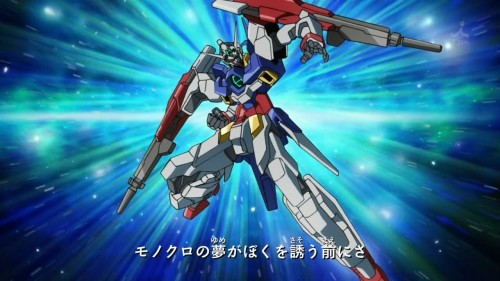
Gundam AGE

One of the more significant attempts to capture that younger audience was 2011’s Gundam AGE, because of how Gundam is what arguably kicked off the move toward mature audiences all those years ago and because it’s traditionally been such a sales juggernaut. Although keeping the traditional “robots in war” staples, Gundam AGE was a concerted effort to target kids, right down to more toyetic robot and weapon designs. Unfortunately, the series pleased pretty much no one, including me, despite my initially high hopes. The story was a mess, and the model kits failed to attract older and younger customers alike, to the extent that a kitbash of Madoka from Madoka Magica with beefy Gundam arms became more of a sales point than the actual merch. Later Gundam overtures towards kid audiences were more successful via the Gundam Build Fighters and Gundam Build Divers spin-offs, but both treat the mecha as collectible items utilized in virtual environments—closer to the popular style of Japanese kids’ shows.

Chousoku Henkei Gyrozetter

Another instance is 2012’s Chousoku Henkei Gyrozetter, though this one is odd in that what it ultimately tried to promote was not toys or model kits, though some did come out. Rather, like Aikatsu! and Pripara, the bread and butter of Gyrozetter was the card-based arcade game. Ultimately, it was called a major mistake on the part of Square-Enix. Personally, I think the show is very enjoyable, but it’s also arguably better known for its attractive older characters than anything else—so not exactly kid’s stuff. 

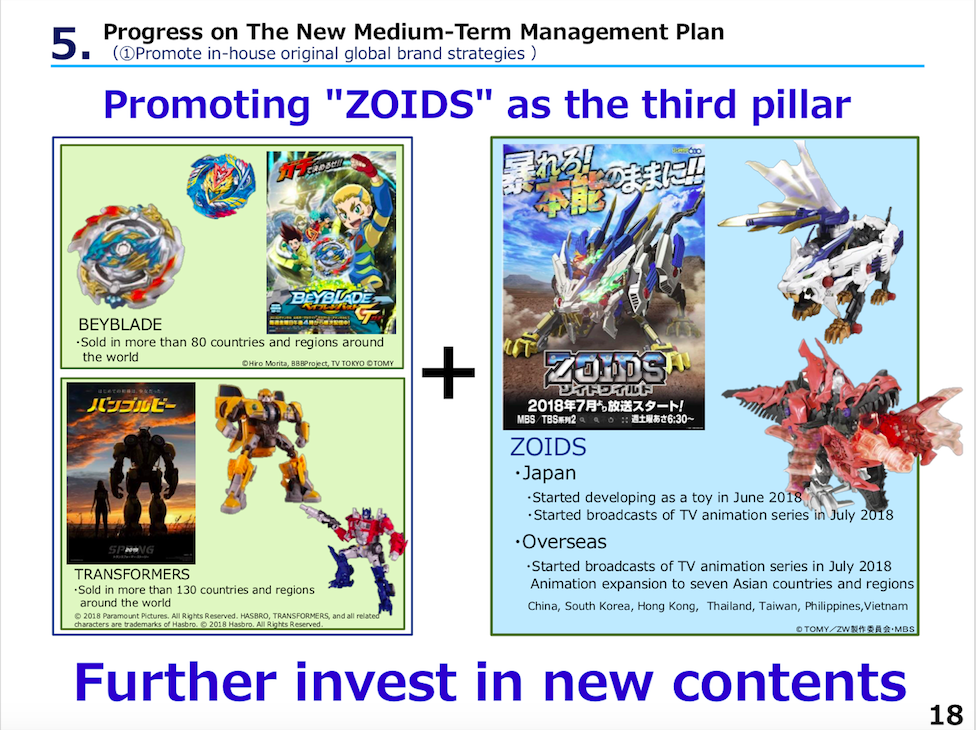
While hitting the mark seems difficult, there is one company that seems intent on making giant robot anime work for kids: toy maker Takara Tomy, the originator of Transformers. In addition to that long-standing international cultural staple (whose success has so many external factors that it’s hard to gauge in terms of success as “anime”), it’s Takara Tomy that keeps taking swings, down to even pushing the ZOIDS franchise as their “third pillar” along with Transformers and Beyblade. 

2018’s ZOIDS Wild anime is a continuation of the ZOIDS franchise, which has been receiving animated adaptations since 1999’s ZOIDS: Chaotic Century. Given its longevity, it would be easy to assume that they’re doing something right with their use and portrayal of giant robots, but I think there’s a key factor that keeps ZOIDS relatively popular: the use of animal-shaped robots as opposed to humanoid ones. The more universal appeal of dinosaurs and cool beasts does a lot of the heavy lifting. 

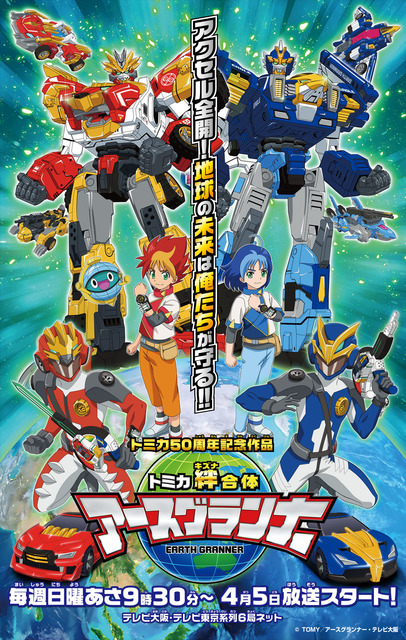
Tomica Kizuna Gattai Earth Granner

Along this vein, Tomica Hyper Rescue Drive Head (2017) and Tomica Kizuna Gattai Earth Granner (2020) both involve motor vehicles that can transform into robots—and, unlike Gyrozetter, have the many toys to show. The Tomica line is primarily more about cars than mechs, and the toys have enormous success in Asia. Again, the robots are not the main popularity factor, acting instead as an additional flourish to push it over the edge. Transformers, in a sense, combines both ZOIDS and Tomica’s appeals together, while also banking on brand recognition. Moreover, while giant robots are still a staple of tokusatsu, they’re more a secondary component to the color-coded-hero fantasy that defines these live-action series. The previous Tomica tokusatsu series use cars in a similar manner. 

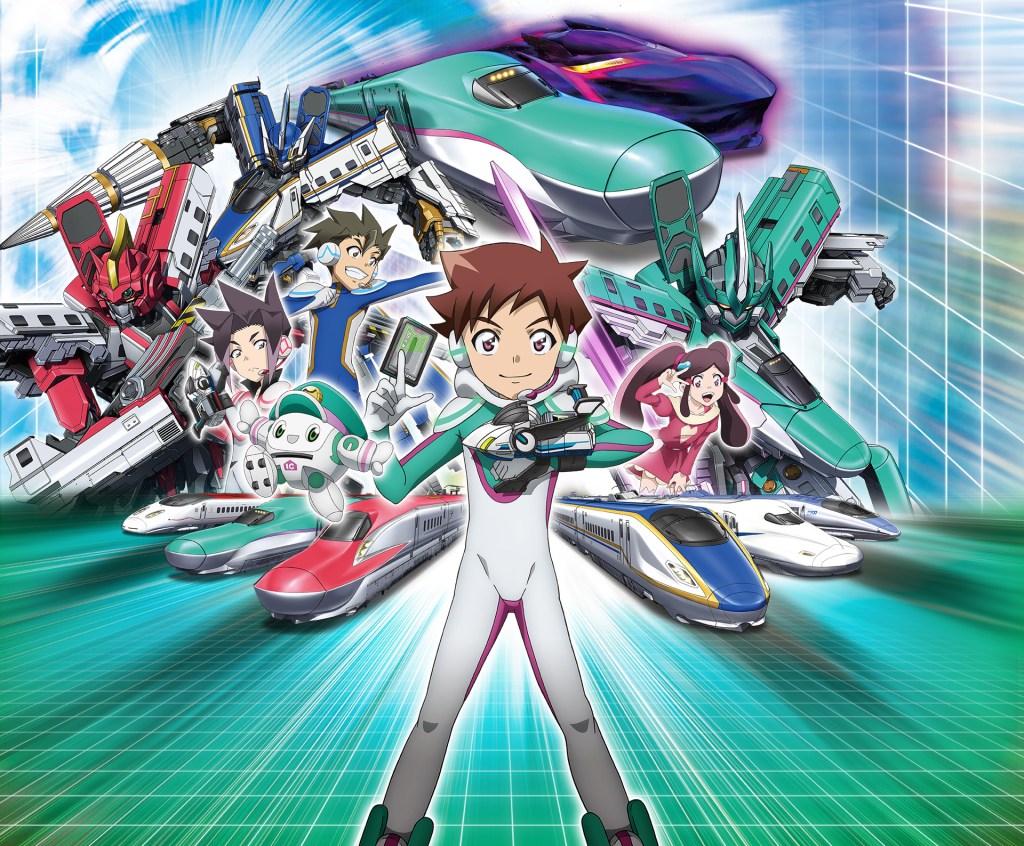
Shinkansen Henkei Robo Shinkalion

The strangest case might very well be 2018’s Shinkansen Henkei Robo Shinkalion THE ANIMATION is a series about bullet train (“Shinkansen”) robots sponsored by the East Japan Railway Company. Somewhat like Gyrozetter, there’s an unconventional ultimate goal—promoting Japan’s high-speed rail system—but unlike Gyrozetter, the toy and merchandise line is definitely there. In addition, while ZOIDS Wild, Drive Head, and Earth Granner all target boys ages 10-12, I can’t help but notice how aggressively kid-friendly Shinkalion’s aesthetics are, from the character designs to the story. What really makes Shinkalion an oddity, however, is that its success isn’t measured solely in toy sales, but also the degree to which it creates good PR for Japan’s public transportation.

It does sadden me that mecha don’t appear to carry an inherent appeal for kids these days, but I do think that sprinkling in robots can potentially push these franchises into becoming more memorable and enjoyable. Also, I’d like to think that Takara Tomy is laying down a foundation for it to happen in the future, and much like how adults who grew up with super robots in the 1970s grew attached to them, perhaps in a couple of decades we’ll see nostalgia for the Shinkalions and Earth Granners of the world.

Want to “Support the Creators?” Here Are Actual Ways to Do It

Among online anime and manga fandom, there’s been an ongoing narrative about “supporting creators, not companies.” Often presented as a noble justification for piracy, where the companies that own the rights to either creating or translating the works are greedy exploiters of the artists, authors, and other contributors, the idea is that it’s better to buy merchandise instead. This is, in short, a very faulty understanding of how the anime and manga industries work. 

However, if we’re to take at least some of these sentiments as genuine and merely misguided, there are actually outlets to support anime and manga creators more directly.

One cause worth contributing to is the Animator Dormitory Project, which began in 2014 and aims to provide affordable housing to young animators for the first three years of their careers. Animation is grueling work, and a lot of young animators fall out of the industry after three years because the salaries are abysmal—sometimes less than $300 USD a month.

Related to the Animator Dormitory Project is founder Sugawara Jun’s other idea: the New Anime Making System Project. The basic gist is that it’s hard for animators to unionize both because of historical reasons, and that the animation studios themselves often don’t have enough money to sustain unions even if they wanted to do so. Sugawara’s idea is to have animators work on short music video projects for musicians from all around the world, and pay them more—eventually two to four times what they’d make otherwise, if all goes well. Compared to the Dormitory Project, I believe this one could be even more attractive fans who are skeptical of the production committees and companies who oversee anime production. It holds the potential to transform the industry as a whole for the better.

But maybe someone is really in love with the idea of supporting a creator directly. In that case, it’s not wholly out of the question. Some artists, both professional and amateur, have turned to Patreon-esque sites such as Pixiv fanbox and Fantia, which allow fans to directly donate to the authors either in general or for specific projects. You might just be able to find one of your favorite creators on those sites.

For example, I discovered that manga artist Matsui Katsunori (artist on La Sommelière) is currently trying to restart his Mixed Martial Arts-themed fighting manga, Hana Kaku: The Last Girl Standing. I learned a couple years ago that the manga had ended rather abruptly, so I’m glad to see him try to continue this series. I really love what I’ve read of it, and I think sites like fanbox and Fantia give a platform for passion projects that might not have been deemed as mainstream-viable.

Buying manga and anime legally and signing up for legitimate digital services will still, of course help creators out and contribute to their financial success, even as structural issues in these industries still exist. That said, if anyone feels sincerely passionate about “wanting to support the creators,” in a more direct fashion, I hope you’ll take one of the options listed above, or perhaps even try to find other possibilities.