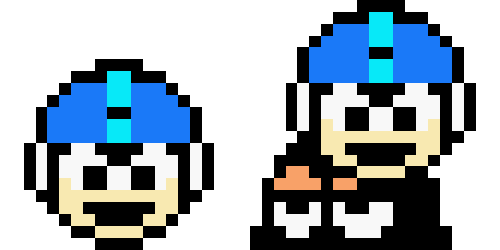
Slap a Teenager: Maturation of the Creative Process

I’ve been doing quite a bit of drawing lately, and it’s gotten me thinking about the whole creative process, and the influence of one’s own age.

Recently, an old friend of mine found material for a video game we were creating back in elementary school. It had everything kids (or rather, we specifically) wanted in video games: tons of levels, tons of bosses, tons of neat gadgets and enemies. It was a game we’d spend time on nearly every day during lunch, thinking up new ideas for it. Honestly, looking at the stuff we came up with, I’m a little jealous of what we created back then. These were the unfettered mindsets of a pair of 10 year olds, where anything was possible as long as it made video game sense, and back then video game sense wasn’t very sensible.

Then one day something happened: we started to become teenagers. Now, when we looked back at our materials, everything seemed so kiddy. We thought, if our game was to go anywhere, we’d have to update it to make sure it didn’t look like the game was only for kids! Keep in mind we were like 13 or 14, and of course the hilarity of kids trying to make a game not for kids practically writes itself. This was the age of people accusing Nintendo of not appealing to the older demographics enough, and when Rare decided to revamp Jet Force Gemini and slap a few extra years onto its characters. So we made the characters cooler and tougher. We tried to give the bosses more realistic proportions, closer to Dragon Ball Z than Dragons of Blue Land. It wasn’t exactly 90s extreme, but it was something close to it.

Eventually high school came and we worked on it less and less until it dropped off entirely until more recently when we began to uncover our old materials. Now of course, looking at the things we came up with early on, and then how we tried to change it as we got older, I sort of want to slap my teenage self for accidentally trying to ruin a good thing. Not that I think my ideas as a teenager were all that bad either, but in this one case that teenage mentality was trouble.

I truly think that what we were thinking up at the lunch table back then could still appeal to kids today, though we’d have to apply a more cohesive design philosophy to everything. The goal would shift from trying to replace the products of our childish maginations with something more “mature,” to trying to refining or childhood imaginations and keeping it from exploding out the sides.

Then I hear people say, “Why do you watch an anime that’s meant for KIDS?” and the answer is obvious.

When the Visitor is the Tour Guide: Reviewing Unfamiliar Genres

I spent last weekend watching some awesomely bad anime with friends. One title that stood out though, that is the very opposite of bad, was the OVA Baoh, based on the work of Araki Hirohiko, creator of JoJo’s Bizarre Adventure. This was not my first time watching Baoh, as it was actually one of the seminal titles that made me into an anime fan when my brother brought it home years ago, but it’d been well over a decade since I last laid eyes on the blue man who shoots needle lasers from his hair, and I was eager to revisit. It was an uproarious time, and it sports one of the best dubs ever. Listen to the Anime World Order review of it to give yourself a better idea of the glory of Baoh.

Just for fun, I decided to look on Anime News Network for a review of Baoh, and what I found was a terribly misguided summary of the OVA, with choice quotes such as this:

Making matters even worse is the show’s ludicrous habit of freezing the action mid-battle to display the names of BAOH‘s attacks. Do we really need to know that BAOH has just performed the “Reskini Harden Saber Phenomenon”? Is there a quiz after the show?

Now, I can obviously forgive this review as it comes from a less enlightened era of anime fandom (2003) and most likely the original writer has improved and matured since then, but it does bring up a recurring problem in the realm of anime discussion: Those who know little about a show’s content or genre discussing the work from a position of authority.

Anyone who’s watched action-based anime knows that the Special Move Name Displayed at the Bottom of the Screen is a common theme in such shows, and is often used for dramatic effect in ways similar to the combination sequence for giant robot anime. This is why the above quote is so off-putting; it shows a lack of knowledge of the type of show Baoh is trying to be, even if it doesn’t pull it off perfectly. I feel that it’s like criticizing a Power Rangers show for using spandex and rubber suits, or a harem anime for featuring lots of attractive girls. It’s a problem which still plagues ANN from time to time, though I understand that when you review professionally, you can’t always pick what you want to review.

I’m not saying that people should not discuss or review anime of genres and tropes to which they’re unfamiliar or for which they have a strong dislike, but that to do so while assuming a position of authority just makes a person look uninformed and trying to toot his or her own horn, rather than actually look at the work.

In summary, if you’re going to give a negative review of Twilight, you can complain about how you think the writing is awful. You can complain about characterization. You can complain about the portrayal of vampires in the story, or even lament the popularity of the suave, handsome vampire. What you can do but should not however, is complain about the fact that there are vampires in Twilight in the first place, because–Surprise!–this series is about vampires.

Moe Anime Girl Gets Pregnant, Has Baby – Jigopuri Volume 1

Kio Shimoku is a manga author who is best known for his work on the 9-volume Genshiken series, about the members of a college anime/manga club. It’s personally my favorite manga series ever. It may come as a surprise then to know that Kio’s latest manga, Jigopuri: The Princess of the Hell, concerns itself with a topic normally far-removed from that of watching anime: Teen Pregnancy.

Well, not teen pregnancy per se, but it does center around a widowed 18 year old mother and her newborn child. The mother is Okiura Ayumi, her daughter is Okiura Yumeko, and living with them is Ayumi’s twin sister Hino Kaname. The raising and nurturing of young Yumeko, who is less than one week old when we first see her, is the central focus of Jigopuri, and the manga’s approach to a topic which is incredibly common in the real world but incredibly rare in comics is rather unique.

Despite its realistic tone and content, the art style of Jigopuri is closer to that of Kujibiki Unbalance than it is Genshiken, and it might be difficult to reconcile the fact that doe-eyed moe anime girls are discussing topics such as diaper-changing and the unbearable stress that comes part and parcel with raising a newborn. What can be even more jarring is the fact that Yumeko is drawn in a rather realistic style, more closely resembling a photograph than a kawaii anime infant.

No, Yumeko is not an ideal entertainment baby who is ten parts adorable and one part cuddles. She is a wrinkly, crying, pooping baby who needs attendance at all times because she’s a baby. Everything revolves around this fact, from the deliberately slow pacing of story (chapters generally span only a single day) to the way it handles all of its seemingly incongruous artistic elements, and understanding why Yumeko is portrayed in this manner is the key to understanding Jigopuri.

From the start, Jigopuri puts a young, inexperienced mother with no time or desire for romance in the spotlight, and in doing so makes Ayumi, and by extension the whole of Jigopuri, into something partially meant to stand against the tide of common trends seen in moe anime and manga. Although Ayumi at times feels helpless, it is never because she can’t do anything, but rather because she does so much. That doesn’t mean Jigopuri condemns moe, but it does remove much of the glamor and fetishism that accompanies many tropes of modern anime and manga. Nowhere is this more evident than in the comic’s portrayal of breasts.

As one might expect out of Jigopuri, breastfeeding occurs frequently, but the sight of an attractive woman exposing her large, shapely breasts (with nipples shown) begins to lose its erotic appeal once you are made aware of how inevitably their appearance is attached to the shrill cry of Yumeko as she wakes a sleep-deprived Ayumi up in the middle of the night. After a while, you begin to really feel for Ayumi, as you think to yourself, “She has to take out her breasts again?” And further cementing this un-fetishizing is the fact that Ayumi’s breasts are visibly veiny, an effect achieved through smart use of screen tones, and an indicator that these are not the idealized breasts you’d see in other works willing to show them with the same frequency as Jigopuri.

That’s Jigopuri as of Volume 1, and I really do recommend it, though I understand it’s not for everyone. Its cutesy art style combined with its realistic content can throw people off quite a bit, but if you can read Japanese or if it comes out in English, I think you should give it a chance.

A common sight in Jigopuri is a tired and weary Ayumi with deep bags underneath her eyes, a sign that each day wears on her even if she truly loves her daughter.

The Fujoshi Files 10: Asai Rumi

Name: Asai, Rumi (浅井留美)
Alias:
Asa Matsu (アサマツ)
Relationship Status: Complicated
Origin: Mousou Shoujo Otakukei

Information:
The students of North Haneda High are baffled by how the unassuming Asai Rumi can attract some of the most interesting friends, not least of which are the hottest girl in school, a ladykiller heart-throb and his best friend, as well as the hulking captain of the Judo club. However, what few know is that Asai has made her friends through the power of being a fujoshi. While not quick to admit to the fact, Asai does not deny herself as a fujoshi, and that honesty attracts friends and breaks down the mental barriers, including those of her tormentor-turned-best-friend and fellow fujoshi, Matsui Youko.

Bedridden as a child, Asai Rumi discovered manga thanks to a kind neighbor, a discovery which eventually led to her world being impacted by an un-shrink-wrapped BL title in a bookstore. Since then, she’s worked hard as a fujoshi, attending the major event known as Comic Banquet and even co-creating doujinshi of her favorite series, Fullmetal Prince, with the help of Matsui. Her favorite character is the titular Prince, but only when he is the “uke” in the pairing.

Fujoshi Level:
Asai Rumi’s presence as a fujoshi is so strong that she is able to make fujoshi who are in denial confront their own feelings about the stories they love. However, this comes at somewhat of a price, as Asai is so steeped in the world of BL and yaoi that she has trouble understanding normal romantic relationships. It is to the point that while she finds herself mutually attracted to her good friend Abe Takahiro, she manifests her interest by pretending to be an aggressive guy putting the moves on her yaoi lover.

Let Me Tell You About Comic Market 76 Which I’m Not Attending

…But maybe someday!

It’s Friday evening in Japan right now, and that means the first day of Comic Market 76 has ended. Not living in Japan and not being able to fly over means I can’t join the hustle and bustle of sweaty nerds inching their way to tables full of fan-made comics, but for those of you who are and have been, I wish you the best of luck.

What’s most important though is the fact that people are still making Ogiue doujinshi. They’re not great in number, and apparently according to the catalogue they’re all located at the same table, but to you fine artists who are keeping the dream alive, I salute you wholeheartedly. I may or may not have friends who are willing to exchange my money for your goods, acting as a  proxy for those of us with a passion for Ogiue and a love of supporting those who also understand Ogiue’s position of superiority in the world of anime and manga.

Ogiue Maniax and the Reverse Thieves Talk Otakon on Ani-Gamers

A while back I was on the Ani-Gamers podcast along with the Reverse Thieves where we talked about our experiences at Otakon 2009 this past July in Baltimore. There’s some overlap with my written review of the invent, but I invite you to listen anyway and hear us crack wise in Real Time.

This episode of Ani-Gamers can be found here.

Bokura no Garadoubla

One of the most amazing and shocking reveals in the world of giant robot villainy was the discovery that Mazinger Z’s infamous first two adversaries, Garada K7 and Doublas M2, were actually once a single sentient entity known as Garadoubla. Garadoubla turns out to be a heroic figure to the Mycenae and also a warrior of honor and pride (and also three heads). In fact, he was so beloved that they referred to him as the Hero Garadoubla. Thanks to extensive research, I have unraveled more information on this god of the Mycenae.

Archaeological evidence shows that Garadoubla was to the Mycenaeans what Mazinger Z is to the modern Japanese. Children would play with clay dolls fashioned after Garadoubla’s visage. Musicians would sing about the strength, size, and reliability of Garadoubla when he unites the power of justice, love, and friendship. The most famous of the songs celebrating Garadoubla began with the following opening chorus:

Ga Ra Ra! Ga Ra Ra! Garadoubla! Ga Ra Ra! Ga Ra Ra Ra Garadoubla!

According to records, the heroic tales of Garadoubla, the honorable warrior of the Mycenae, were recorded on ancient illustrated stone tablets by a well-regarded artisan known as Gonagacles. Sadly most of his work was destroyed in the great fire that exterminated the Mycenae Empire, but the memories of his adventures would remain in the Greek consciousness and would eventually be retold as Garadoubkaisar and Etumos Garadoubla.

Tomino vs Imagawa, NYC vs Atlanta

Anime Weekend Atlanta has announced that one of their guests of honor will be Imagawa Yasuhiro, acclaimed director of the Giant Robo OVA and the currently-running Shin Mazinger TV series. AWA is running this year from September 18-20.

Meanwhile, New York Anime Festival, running September 25-27, has already announced famed Gundam creator and director Tomino Yoshiyuki as its guest of honor. If you’re a fan of giant robots and you don’t have the time or resources to go to both, this can be a very painful decision to make.

To help you with your dilemma, try asking yourself the following two questions.

Question 1: Do you love Gundam?

Question 2: Do you love G Gundam even more?

I Am/Am Not an Otaku: The Reverse Thieves’ Otaku Diaries and the Definition of Otaku

After an initial introduction of the demographics of those who chose to partake in the Otaku Diaries, the Reverse Thieves have released the second part of their study. This time around, the discussion centers around the word “otaku” and what it means to anime fans.

A large number of their results showed that many anime fans consider the word “otaku” to have negative connotations and may even be upset if someone referred to them as an otaku. It is, in other words, an insult. Sometimes, the negative connotations come from wanting to distance oneself from the “other” anime fans, e.g. socially inept naruto fans, and other times they stem from wanting to use the word as the Japanese use it. Of course, I can’t be the only one to see the irony in a person denying that they’re an otaku while also championing the true, JAPANESE definition of the word, or at least their interpretation of the Japanese definition.

I remember years ago when I was part of a Pokemon community on the internet (the Team Rocket Headquarters if you want to know), where one of the site owners got very upset whenever someone called him an otaku, insisting that the term was in reality extremely derogatory and that it should only be used for the most extreme cases of anime fandom. It was around that time that I began developing my hypothesis on the Path of  Otaku Self-Acceptance, or the path the typical anime fan takes when confronted with the term “otaku.”

Phase 1) I Want to Be an Otaku!

This phase is usually the first one that new anime fans feel. Anime is fresh and exciting, and they want to see more and more of it. They consider the status of “otaku” to be a goal to strive for. However, if they start to sour towards the anime community they may enter…

Phase 2) Don’t Call Me an Otaku!

This is the point at which you find many of the subjects of the Otaku Diaries, as well as many anime fans you know. Sometimes they genuinely are just not that into anime and don’t want to be considered hardcore fans, but often times you see that many of the people who fall into this category are simply in denial. They hide their anime fandom from others as hard as they can, and they will put on airs so that no one can discover their terrible, terrible secret. Eventually, some of them pretend not to be otaku so hard that they permanently make the switch. Others, however, may grow tired of the charade and come to acceptance. That is what leads them to…

Phase 3) I am an Otaku

This is the point at which people realize that “Otaku” is just a descriptor. It is no more a self-inherent badge of shame or badge of pride than any other part of a person’s life, like saying “I am short” or “I work in construction.” It’s where I hope to see more anime fans, and I believe it’s the key to becoming true to oneself, provided you actually are an otaku.

I am an Otaku. Are you?

Another Legend is Born