Return to Genshiken: Volume 6 – Eyes as Black as the Abyss

Volume 6 of Genshiken is probably my favorite volume of manga ever. I think I’ve re-read it more than any other, so coming back to it for “Return to Genshiken” is almost like visiting an old friend.

At this point, it feels almost unnecessary to call it a transitional volume because it feels like every volume brings a major shift or two. This time, I’d say there are two especially significant events: the graduation of the old guard, and the first full dive into Ogiue’s head.

What is Return to Genshiken?

Genshiken is an influential manga about otaku, as well as my favorite manga ever and the inspiration for this blog, but it’s been many years since I’ve read the series. I intend to re-read Genshiken with the benefit of hindsight and see how much, if at all, my thoughts on the manga have changed.

Note that, unlike my chapter reviews for the second series, Genshiken Nidaime, I’m going to be looking at this volume by volume, using both English and Japanese versions of Genshiken! I’ll also be spoiling the entirety of Genshiken, both the first series and the sequel, so be warned.

Volume 6 Summary

Ogiue decides to try her hand at drawing a doujinshi for Comic Festival, but only after a series of wacky/traumatic mishaps. From cosplay to drawings of Sasahara and Madarame to getting caught red-handed with a bag full of doujinshi at ComiFes itself, Ogiue’s grudging acknowledgement of her fujoshi side is the very definition of reluctant. What’s more, Kasukabe thinks Ogiue has a twinkle in her eye for Sasahara, and refuses to believe otherwise.

Meanwhile, Keiko tries to get into Shiiou University despite years of neglecting her own education, Madarame has a nervous non-date with Kasukabe, and the classic trio of dudes finally graduate from college. Ohno feels a twinge of sorrow, but that’s eventually wiped away when she becomes the new president of Genshiken, with the hope of bringing about a true Society for the Study of Cosplay.

End of an Era, Dawn of a New Age

Madarame, Tanaka, and Kugayama are all classic images of otaku. Out-of-shape, awkward, and filled with trivia, they’re firmly in the camp of nerds who can never pass as “cool.” All three stick around to varying degrees for the rest of the first series and even in the sequel, but the fact that these “big children” are entering into the adult world is important for the tone of Genshiken. While all have made strides in previous volumes in different areas—girls, artistic progress, life in general—their graduation in hindsight feels like the moment when “more” might just be possible. They, and especially the younger members, are poised to break through the boundaries of the otaku identity, if only a little.

The buildup to graduation is filled with emotion. For example, when Madarame runs into Kasukabe chatting with friends on campus, a combination of his powerful crush on her and his general social awkwardness causes him to snub her. It’s such a painfully relatable scene, especially with how Kasukabe’s friendly “hello” gesture throws Madarame completely off guard. How could Kasukabe actually be that friendly? When did she even get that way? While re-reading Genshiken has helped me to see this change more readily, I recall it feeling almost out-of-nowhere the first time around.

Another moment comes from Ohno, who has a cloud of melancholy hanging overhead prior to the guys’ graduation. The reason is that, because she came back from abroad, she has to do an extra year at the university, and thus will graduate a year after Sasahara, Kasukabe, and Kohsaka. It’s a heartfelt moment where Ohno and Kasukabe grow even closer, albeit with Kasukabe promising to fulfill a cosplay request that she’ll eventually regret. What makes this moment hilarious in hindsight is that, as saddened as Ohno is here, she ends up delaying her graduation multiple times throughout Nidaime because she just doesn’t want to face adult society. Like Kasukabe, Ohno changes quite a bit over the course of Genshiken, sometimes so gradually that it’s notice. That doesn’t apply here, though, as Volume 6 is also when Ohno agrees to become the new Genshiken president so that she can shape it in her own cosplay-loving image. Later in Volume 9, Ohno even makes a comment that her character appears to have changed at some point, referencing her transformation from meek token girl otaku to confident motherly type.

Ogius Maximus

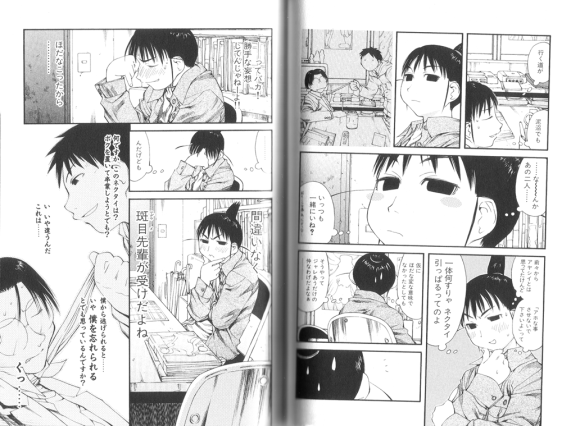
This volume is chock full of premium Ogiue content. It’s a constant barrage of scowls, dreams created and destroyed, misunderstandings, and burgeoning romance. What’s especially telling about Ogiue’s prominence is that we’re privy to her inner thoughts to a degree only a few other prominent characters share, such as Sasahara and Madarame. She has a brief moment in Volume 5, but this time it’s entire extended internal monologues that lay bare the true Ogiue lurking within.
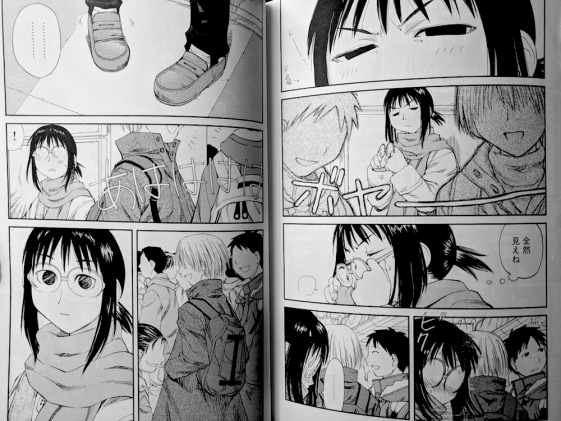
  We have Ogiue going to Comic Festival incognito, i.e. half a chapter devoted to showcasing Ogiue’s mix of anger towards others, anger at herself, and the sense that she just really want friends but is her own worst enemy. As she stomps through Tokyo Big Sight in her winter coat and high school-era glasses, a snarly pout adorning her face, you can see her giving into her basest desires, mirroring Sasahara’s first voyage to ComiFes (though this is certainly not Ogiue’s first rodeo). When Ogiue’s hovering around the rest of the club, the lonely look she gives as they laugh over in the distance is almost heartbreaking. The subsequent silliness of her bumping into Ohno and having her doujinshi spill out of her bag for all the world to see is dramady at its finest. In other words, Genshiken.

The breakdown of Ogiue’s defenses is a recurring theme in this volume, seen not only in her ComiFes disaster but also in her very first cosplay. Kasukabe, having noticed that Ogiue’s a little weak to pressure, uses this opportunity to try and get Ogiue to open up. Ogiue dressed as Renko from Kujibiki Unbalance is probably her most iconic moment. Not only has it been replicated on multiple occasions across various anime adaptations and decorative covers, but it’s the subject of Ogiue’s only full PVC figure (which I own, yes).

Sasa x Ogi Continues

In Volume 5, there’s a moment that I believe is the subtle beginning of Ogiue’s obsession with Sasahara x Madarame, and by extension the catalyst for her eventually falling for Sasahara. In Volume 6, Kasukabe’s actions nudge it towards greater prominence.

In one of the doujinshi planning scenes, Haraguchi reveals that he’s already made plans for Genshiken’s book (he wants to turn it into a big seller by bringing on a ton of high-profile guest artists). Sasahara keeps trying to politely refuse Haraguchi’s “kindness,” as his tendency as a non-confrontational person. However, as Haraguchi keeps pushing and pushing, eventually Sasahara’s expression grows stern (similar to how he reacts to his own sister). He puts his proverbial foot down, saying, “I will personally call all the guest artists you brought on board (without my consent) and turn them down.”

It’s potentially easy to miss, but immediately afterwards there’s a small panel with an Ogiue closeup, and she has the ever-so-slightest blush on her face. Without later context, it can just seem like she’s surprised or shocked at Sasahara’s change of behavior, but now it’s clear to me that this was the catalyst for her perception of Sasahara as a a “seme” character, and also her eventual attraction to him.

Back when I first read Genshiken, I was actually mildly skeptical towards the idea that Ogiue was interested in Sasahara just because Kasukabe said so. Both on a personal level and as a consumer of fiction, I’d groan at these situations. Just because someone looks at someone else once or twice didn’t mean romance is in the air!

Those situations still get overblown in my opinion, but as I’ve re-read Genshiken, it’s clear to me that the hints were there. It’s not that Ogiue is madly in love with Sasahara from the start, but that she begins to notice his finer qualities, and this grows into something more. This, I believe, is what Kasukabe truly notices, even if she misinterprets Ogiue’s drawing of Sasahara as aggressive top as a more typical from of affection.

Kasukabe really is the “matchmaker” of Genshiken, or maybe she just loves goading potential/existing couples. Whether it’s grilling Tanaka and Ohno, or it’s getting Madarame to quit waffling and pick a girl, her thrill at seeing her nerd friends get somewhere is actually one of Kasukabe’s most charming qualities.

The Ogiue Maniax Moment

The top image in this post is probably favorite Ogiue scene ever. It’s where my original banner came from, and I’ve used it in posts such as “Explaining Decompression in Comics.” As Ogiue thinks about the logistics of a Sasahara x Madarame relationship, her mind wanders down deeper and darker rabbit holes. She tries to pull herself away, but she can’t. In an entire volume where page after page of Ogiue’s piercing eyes is like manna from heaven, this is like the main course.

Keiko Shows Substance

Ogiue and Keiko meet for the first time in this volume, and it’s hilarious to see how antagonistic they were at the time. Keiko softens up to everyone over time, even her older brother, but there’s just a certain pleasure I derive from seeing Keiko eventually call Ogiue “onee-chan.” She’s marrying her brother and Ogiue in her head before everyone else. But I’m getting ahead of myself.

Volume 6 is probably almost as big a deal for Keiko fans as it is for Ogiue fans; it’s when Keiko really begins to turn a new leaf. Even if we learn in the next volume that her attempts to get into Shiiou University are fruitless, and that she quits college entirely by Nidaime, she’s genuinely trying to be more than just a dumb, shallow girl. I get the feeling a lot of Keiko lovers wouldn’t be so keen on her if she had never changed, but that’s the magic of Genshiken.

Mebaetame Amateur Figure Hour

Starting this volume of Genshiken, the between-chapters extras get creative. This time around, it’s Tanaka’s blog where he shows off his design and construction of a figure from Kujibiki Unbalance. The most amazing thing about this is that it’s made using real photographs of an actual constructed figure. This then later factors into the end-of-volume special, when Tanaka accidentally drops the figure and breaks it. Someone actually built it for real, and I don’t think we’ll ever know if it was Kio himself, an assistant, or an acquaintance. Did he actually break his own constructed figure for the sake of a gag, or was there a stunt double?

Final Random Thoughts

This is the last we see of Kitagawa, the Club Council vice president. She ends up marrying her senpai. I kind of wish we saw where she was in Nidaime, but she was always a pretty minor character. On a personal note, I knew a guy who really liked Kitagawa, but he passed away a few years ago. Rest in Peace, Cortana.

At graduation, someone is reading the end of Part 1 of the Kujibiki Unbalance manga. The pages shown are meant to be an indication of how far the story has gone, as characters portrayed as enemies earlier in the series are now getting married.
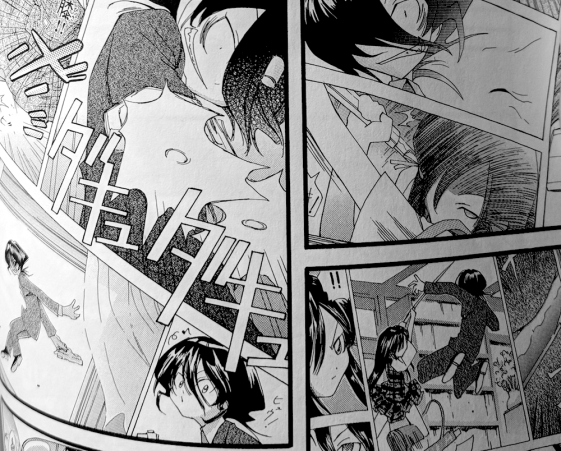
Kujibiki Unbalance in Volume 3
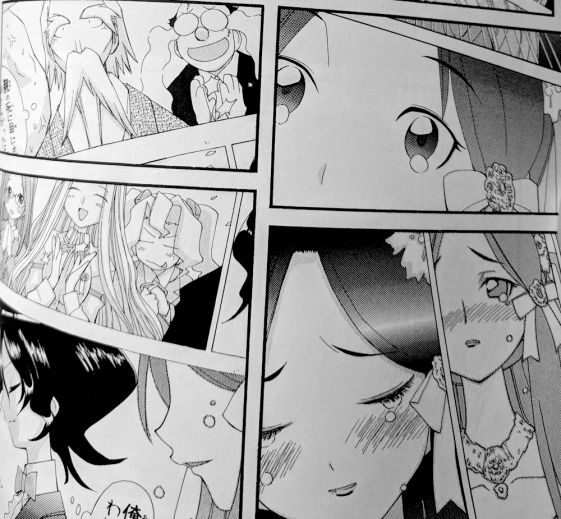
Kujibiki Unbalance in Volume 6

The end-of-volume special also features the crew hanging out post-graduation, and in one instance Sasahara and Madarame are checking the girls out. I like that there’s pretending that they don’t notice how attractive their clubmates are, though obviously they don’t say anything out loud. What sticks out to me here is Sasahara getting a little hot and bothered by Ogiue in a skirt. With Kasukabe, who’s dressed to kill in a short skirt and pantyhose, it feels like he’s seeing her as just “an attractive lady.” But with Ogiue, she’s wearing a pretty subdued outfit and a pretty long skirt. I’d like to think it’s that spice of beginning to actually have feelings for another, which turns even plain clothes into thrilling adventures in fantasy. In Volume 7, Sasahara really lets his imagination run wild, but that’s for next time.

10 Years After: Ogiue Maniax 10th Anniversary

10 years. What kind of fool keeps blogging about anime for an entire decade? It’s a milestone, but not the end of the journey. Still, looking back on my time here, there’s a lot to reflect on. That’s why I’m devoting this celebratory post to writing a not-so-brief history of Ogiue Maniax.

The Birth of Ogiue Maniax

Back in 2006, I had already been interacting with my fellow anime fans online for years. Long, essay-style forum posts were the norm in my communities, and it was just fun to read and write them. However naively, it felt like we were pushing critical thinking about anime and manga. However, the spaces in which I wrote began to dry up, or saw a new generation of moderators too afraid of what outsiders thought, shrinking beneath the judgment of their peers. I wanted a place where I could write what was on my mind.

At first, I didn’t think to start my own blog, and tried my hand as a “guest contributor,” a charitable term for “asked friends if I could post stuff to their sites.” The otaku news blog Heisei Democracy agreed to post an odd essay I had originally wrote for class, titled “Moe as Commodity”-—perhaps more relevant a topic today than ever before. Shiro, who ran the blog Toward Our Memories, offered me a chance to write about Gurren-Lagann and its connections to giant robots of years past. It was thanks to these opportunities that I thought maybe, just maybe, I could go off on my own.

I did not write the first anime blog, of course. The “scene” was well established when I started, with many more cropping up alongside my own. However, as I began to write in those early days, I noticed a tendency for other bloggers to slow down. Sometimes it had to do with real life—something I understand more than ever 10 years later. But in other cases, I heard a common refrain that there simply wasn’t enough to write about. Too many anime were too similar. Yeah, there’s some good stuff, but how much is much is out there, really?

I saw this as a challenge. I truly believed that there was always something worth writing about when it came to Japanese pop culture, and I wanted to see if I could keep it up. My ideal was to publish at least one post, long or short, once a day for seven days a week. It was an odd thing to get stubborn about, looking back.

While I’m no longer writing every single day of the week (I simply don’t have that amount of time or mental energy to devote to Ogiue Maniax), I think I’ve kept the flame of that original desire alive. Sure, I’ve sometimes talked about things that aren’t strictly anime or manga—esports theory, fandom and politics, and mahjong—but I see those topics as an extension of how I’ve grown as a writer, scholar, and human being. Anime isn’t isolated from the rest of the world, and even the decision to draw back and “heal” through media interaction carries effects and consequences.

Blogging as Blessing

Reaching a greater level critical thinking and expressing it through Ogiue Maniax is itself the product of the good fortune that has come from blogging. Back when I first started to gain some traction among online fans, I actually ran into one reader named Erin. At the time, she and her boyfriend (now husband) Noah had their own anime podcast called Ninja Consultant. While I’m naturally introverted and loathed the act of networking, meeting Erin and Noah was enormously beneficial. I didn’t even really consider it networking; it was just meeting new people. That encounter helped set me on a path to working various media jobs over the next few years, and was a catalyst for positivity in my life.

Not long after, I met through my blogging the woman who would one day become my wife. While writing Ogiue Maniax had been beneficial for a number of reasons, I never considered myself a particularly good writer. I just saw myself as someone who wanted to think more deeply about entertainment and media, with the blog being the conduit through which my thoughts are shared. But my wife helped foster in me an unusual, unfamiliar feeling: confidence. She told me that my ability to make complex and difficult ideas accessible and comprehensible to a wider audience was an admirable skill that reflected both my writing ability and my outlook on life. Last year, I decided to take a Harry Potter Sorting Hat test online and it put me in Hufflepuff, the school focused on humanity and providing opportunities for all. In hindsight, it makes sense.

Eventually, this led me to actually living abroad in Europe and taking my academic interest in manga and anime to the next level. For four years, I poured hours and hours of research into manga to an extent I didn’t even think possible, and it filled both my waking hours and my dreams. Even during this time, however, I still blogged. I looked at all that Ogiue Maniax had allowed me to achieve, and I loved the site too much to want to abandon it, even if might have preserved my sanity more effectively. This is the point at which I had to dial back my daily posts into something more manageable: two to three entries per week. Even with the reduced schedule, the constant swirling of ideas and readings and attempts to articulate labyrinthine thought processes brought about a change in Ogiue Maniax. I found myself compelled to delve deeper into my musings on anime and manga as it relates to not just pop culture or subcultures, but human culture in general. It forever changed the way I approach Ogiue Maniax for the better (at least in my opinion).

A Measured Success

More recently, I started my Patreon, and I make a modest amount every month. It’s not enough to make a living, but it supplements my existing income quite nicely. I’ve never had the largest readership around, and it’s even declined as anime blogging itself has dropped off. The Ogiue Maniax path is certainly not what you should try if your goal is to make writing your career, but I think my modicum of success is a reflection that I’ve held onto those core beliefs that originally fueled this blog at its inception even as I, the anime industry, fandom, and the world have changed. More than ever, I believe that there’s always something worth saying about anime and manga, and I hope that I’m able to inspire others to think the same as well.

Focused practice is supposedly the ideal way to improve a skill; knowing your weaknesses and drilling them into strengths is how one should approach the honing of a craft. I did no such thing. I brute forced it by making myself adhere to a schedule and making myself put out something—anything—on a regular basis. While I don’t always produce the best-edited pieces (a string of typos over the years can attest to that), I like to think that it’s made me unafraid of putting my thoughts and feelings out there in the world. Courage is a flower that needs to be nurtured.

Shout-Outs

Seeing as Thanksgiving is around the corner, I’d like to express my gratitude to the following:

Kio Shimoku: Although I know you’ll never read this, thank you for creating Genshiken. It’s been an inspiration in more ways than one, and has helped me grow as a human being. キオ先生は多分読まないけれど、本当に先生の事、感謝します。『げんしけん』のお陰で人として成長しました。

My fellow Genshiken fans: Whether early on in the blog’s life, or later as I did my chapter reviews, I’ve received much love for my Genshiken musings. Thank you for reading.

MrShadowAnt: My friend for many, many years, you were one of the first people I could truly nerd out with. Thank you.

6th Floor: There are fewer times I look back on more fondly than those afternoons and lunches spent playing games, talking anime, and just being friends. I believe those conversations became a major cornerstone of how I approach the world and my writing. Thank you.

Alain: Thank you, Al, for being someone to bounce ideas off of, and for providing a measured perspective on things.

Anime World Order: To Daryl, Gerald, and Clarissa, thank you for providing a template for how to talk about anime and manga while being entertaining and informative. You’re one of the reasons I even considered starting Ogiue Maniax at all.

Arco: When I think of ridiculously long posts, I think of you. Thank you for writing.

Jeff Lawson: Although you’ve long since left the aniblogging game, thank you for linking to Ogiue Maniax way back. It was the first boost in views I ever got, and I consider it a major cornerstone in the blog’s history.

Shiro: When I first felt that itch to blog about anime, you were one of the first to give me a platform to tackle my ideas. Thank you for providing me that opportunity. That Gurren-Lagann post became one of the two pivotal moments that prompted me to start Ogiue Maniax.

Shingo: Thank you, Shingo. I wrote the article “Moe as Commodity” many years ago at this point, and I think it stands as a precursor to what Ogiue Maniax would become. Also, I want to give an even more personal thank-you for showing me around Akihabara in 2005. I still haven’t forgotten!

Johnny Trovato: Thank you for believing in me and my Patreon more than anyone. I look forward to your requests every month.

Dave Cabrera: It’s funny how we met years before seeing each other in person without realizing it. You’re definitely one of the funniest writers I know, and as you strive to get out there and make yourself known, it inspires me to push ahead. Thank you, and Rosa GIgantor forever.

Veef: Thank you for being an ally in measured mecha fandom, eager for dialogue and civil even in disagreement. I always look forward to podcasting with you.

Patz: Another robot ally, thank you for helping to show the world that robot fans can be more than their stereotypes. Let’s do more con panels together.

KRansom: Whether we’re working together professionally or just for fun, it’s always great to get your thoughts on goings-on in Japanese pop culture and scholarship. People still read the Nausicaa article we translated. Thank you.

David Brothers: We first met on a fighting game forum, but at some point I began to see you not just as a friend, but also as a writer whose strength of voice and desire to do good in the world was something to aspire to. Thank you for making me want to better myself.

Divine: Thank you for having my back in the Netherlands. I do not underestimate how much it helped to have a familiar face abroad.

My friends and colleagues in Europe: Thank you for challenging me and pushing me to improve how I construct and express ideas.

Mitch: I know life has you busy, but I’m still grateful for when you’d take the time to catch any typos in my posts. Thank you.

Erin and Noah: Thank you for reaching out to me. I still owe you a lunch or dinner or something.

Ed Chavez: You’re still the smartest person I’ve ever known when it comes to manga, and I value our conversations. It’s always a pleasure to pick your brain. Thank you.

My wife: You saw something special in me, and encouraged me to recognize it. We’ve been through some interesting times together. Thank you.

Raspatat at Koshien: An Iconic Dutch Snack at Japan’s Most Famous Baseball Stadium!

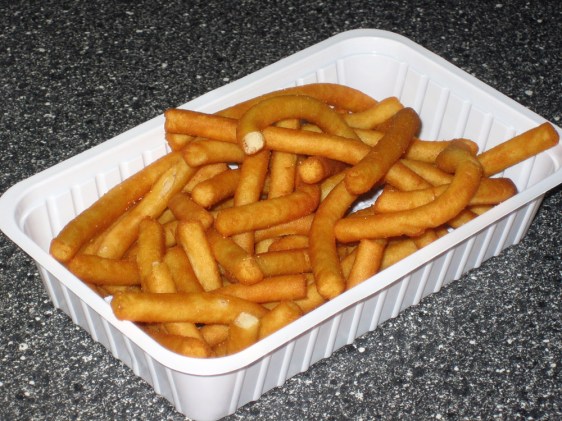
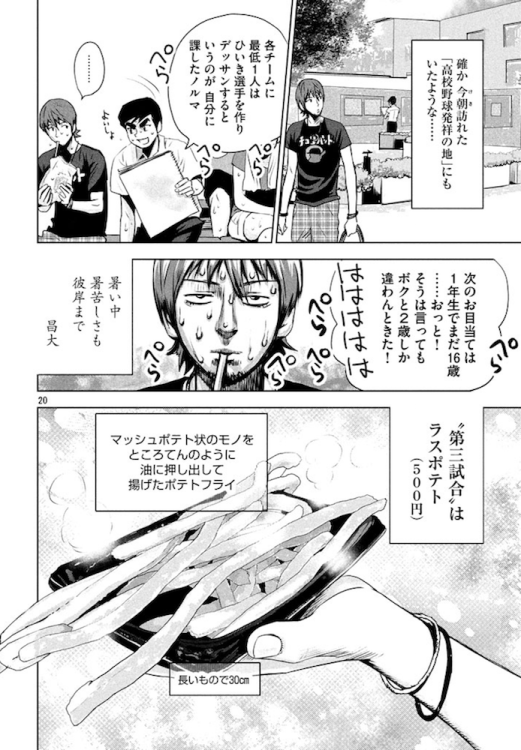
I lived for quite a few years in the Netherlands, where I learned that roadside snacking is a pretty big deal to the Dutch. Snack shops are an institution, serving foods such as kroketen (croquettes), pataat (fries), frikandel (deep-fried sausage), and more. I’d been reminiscing about these delicious treats recently, and just happened to come across one in a rather unlikely place: manga. While reading the series Kyuujou Sajiki (Three Ballpark Meals), a series about eating at ballparks all across Japan, I encountered an old friend: raspatat!

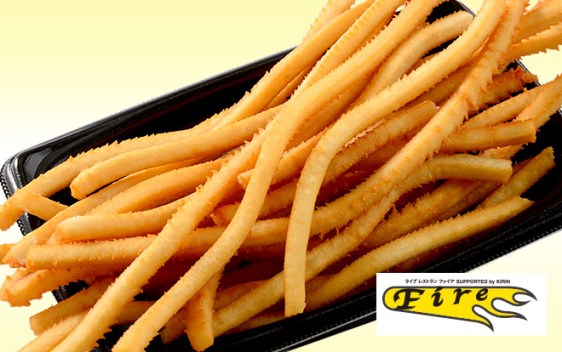
For those unfamiliar with raspatat, it’s an unusual form of french fry, essentially taking mashed potato and reconstituting it back into fry form—think of it as the Pringles of the fry world. The taste is very unique, with a kind of buttery toastiness that borders on knish territory. It’s worth trying at least once.

Here’s a commercial for it:

Anyway, not only does raspatat show up in Kyuujou Sajiki, but it’s actually found in Koshien Stadium of all places! Koshien is basically the mecca of Japanese baseball; it’s the site of the grand finals of Japanese high school baseball every year, and is enshrined in countless manga, anime, and other Japanese media. The manga is based on what you can find in real life, so you can actually travel to Koshien and get some for yourself!

On the official Koshien website, you can find it listed as rasupoteto. It’s not quite the same as the raspatat you can find in the Netherlands (they’re way longer, for one), but the website’s description specifically says it’s a style of Dutch french fries. There’s no mistaking that this is the most famous Japanese baseball stadium’s own rendition of a Dutch snacking tradition.

Even if it isn’t to watch high school athletes’ dreams get fulfilled and/or crushed, if I ever manage to visit Koshien, I am definitely getting some rasupoteto. I feel almost obliged to do so…and my stomach wouldn’t mind either.


Save

Ten! Ten! Ten!: Ogiue Maniax Status Update for November 2017

This month is the tenth anniversary of Ogiue Maniax. I’ll have a special post for that occasion. In the meantime, I’d like to thank my Patreon sponsors, especially the following:

General:

Johnny Trovato

Ko Ransom

Alex

Diogo Prado

Viga

Sue Hopkins fans:

Serxeid

Yoshitake Rika fans:

Elliot Page

Hato Kenjirou fans:

Elizabeth

Yajima Mirei fans:

Machi-Kurada

My favorite posts from last month:

The Precarious Balance of Tradition and Progress: Sakura Quest

A review of the unique P.A. Works anime

Love Live! Sunshine!! and the Complexities of Anime Tourism

A follow-up post of sorts to the Sakura Quest review, this one looks at the relationship between anime and influencing the movement of populations

Gattai Girls 7: Shinkon Gattai Godannar and Aoi Anna

The latest Gattai Girls is actually one of my favorite anime ever. (It was also a somewhat subtle hint towards me getting married.)

Patreon-Sponsored


Halloween Means Precure!

I was asked to write about my favorite Halloween anime, only to realize that most of them are Precure episodes. Go figure.

Closing

I’d like to end this month on a more serious note.

This past Halloween, there was a terrorist attack in lower Manhattan. While I did not know any of the people who were hurt or injured, my condolences go out to their friends and families. I went to school in the same area back in 2001, when 9/11 occurred, and hearing about the attack brought me back to what I felt then: the confusion, the need to evacuate, the unsettling feeling that the world will never be the same. Circumstances were different this time around, but I know the fear and unease that can linger over New York City in the face of such a crime. At the same time, just as then, I’m always surprised by the resilience of New Yorkers to just get back up and go about their day. On some level, it’s a product of being accustomed to the hustle and bustle of such a crazy metropolis, but I also think that it’s a semi-conscious effort to not let fear cower us into submission, or make us doubt each other as human beings.

Hate does not defeat hate. Trust, education, and openness to new ideas are the key ingredients to a better tomorrow.

Save

Save

Save

[New York Comic Con 2017] Mashima Hiro Panel Thoughts

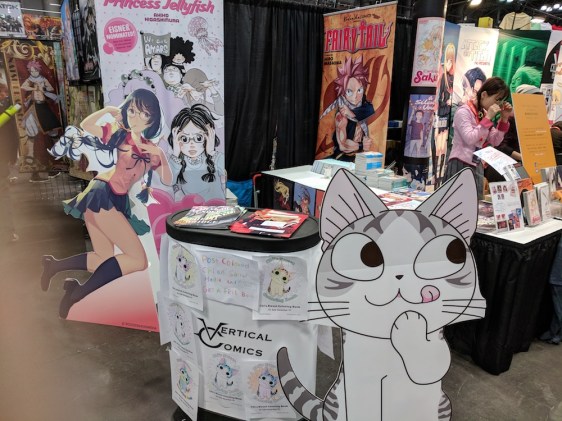
New York Comic Con 2017’s biggest manga and anime guest was, without a doubt, Mashima Hiro. Mashima came to NYCC after concluding his most famous series, the hit shounen manga Fairy Tail, and he sat down for a couple of panels. While I only have a passing knowledge of Fairy Tail, I attended his Saturday retrospective panel at the Hammerstein Ballroom. An hour later, I came away with the sense that Mashima Hiro might be closest to the mindset of anime and manga fandom than other creators.

Because NYCC had another major shounen manga guest last year in Naruto creator Kishimoto Masashi, and because Mashima himself mentioned during the panel that he considered Kishimoto his “rival,” I can’t help but compare the two. Listening to both of them explain their motivations painted two very different pictures. Kishimoto talked about how, at some point, Naruto became a story of redemption, while his becoming a father during the course of his manga’s serialization also influenced the messages he wanted to leave behind. Mashima, on the other hand, seemed to thrive on the simple yet effective premise of “what would be cool?” Fairy Tail was apparently powered by questions such as “Who would win in a fight?” and “What kind of magic would be awesome to see?”

Combined with the greater amounts of fanservice in Fairy Tail—it seems as if, after a certain point, every panel in the series of a girl is pinup quality—it just seems like a series that didn’t have especially lofty goals, not that there’s anything wrong with that. It’s a certain kind of purity, and has in its basis much of what makes shounen manga so popular in the first place. It’s part power fantasy, part adventure. The kinds of ideas floating around in Mashima’s head seem to be cut from the same cloth as much of the fandom, especially when taking into account Western fans. Fairy Tail in Japan is no match for One Piece, but I always get the impression that they’re much closer in popularity at least in the US. I feel like this fan space, where crossover dream battles are practically the potatoes of online discussion (the meat is “who do you ship?”), is one where Mashima’s mindset can thrive.

The Fujoshi Files 174: Mejiro Juon

Name: Mejiro, Juon (目白樹音)
Alias: N/A
Relationship Status: Single
Origin: Princess Jellyfish

Information:
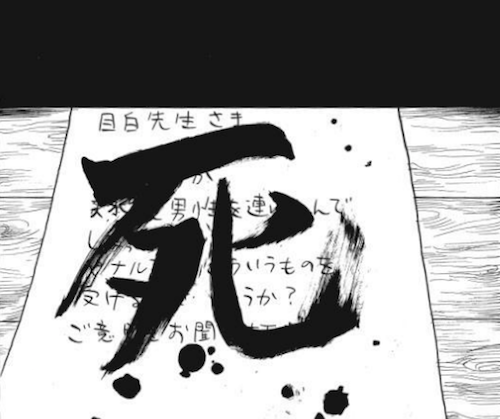
A popular yaoi manga author, Mejiro Juon lives in Amamimizukan, a girls-only shared home occupied by nerds and geeks. Due to her social anxiety, she never reveals her face to others, and instead communicates purely through written notes. She was not always in BL; in her younger days, she even drew shoujo manga.

Compared to her housemates, Mejiro adheres most strongly to Amamizukan’s “No Men” policy.

Fujoshi Level:
Other than the fact that she is a published author of BL works, nothing specific is known about Mejiro Juon’s fujocity.

Save

Chouchou and Body Confidence in Boruto

I’ve been enjoying Boruto: Naruto Next Generations quite a bit, even to my own surprise. The series is quite different from Naruto, akin to how the transition from Avatar: The Last Airbender to Avatar: Legend of Korra involves fundamental changes to the world. It’s a new era in the Hidden Leaf Village, and this is reflected in not just the setting, but how the newer generation of characters behave. One of my favorites in this regard is Chouchou, especially because of her body positivity.

As a daughter of the Akimichi clan, Chouchou is a heavyset character just like her father. However, unlike Chouji in his younger days, who was extremely sensitive about comments to his weight, Chouchou barely bats an eyelash to those who would call her fat. She’s confident in her lifestyle, and to anyone who points out how much she eats, she responds that it’s necessary for an energetic girl like herself. She may be larger than her peers, but it’s anything but a negative for Chouchou.

One of the biggest indicators that Chouchou is not meant to be your stereotypical fat character is that she lacks a “fat voice.” It’s very common in anime for overweight characters to have a rounder, deeper voice that is meant to accentuate their size. Instead, Chouchou sounds perky and fun to be around.

That being said, the “fat voice” does appear in an episode with a different character, a film actor who was fired because he put on too many pounds, so it’s not as if Boruto is entirely without fault in regards to its portrayal of fatness. Even so, Chouchou is still a step in the right direction.


Save

Changin’ My Life: Ogiue Maniax Status Update for October 2017

October is going to be a special month for me from this point forward.

That’s because something big has happened, something I once thought impossible: I got married.

Seriously.

I won’t go into too many details, but I’ll just say that my wife is a very special person to me, who’s stuck with me through thick and thin. This even includes my time abroad in the Netherlands. I actually met her thanks to Ogiue Maniax, though I wouldn’t recommend writing anime blogs as a way to find relationships.

So I want to give a very, very special thanks to my Patreon members this month, because your continued support lets me pursue this blog as a passion project.

General:

Johnny Trovato

Ko Ransom

Alex

Diogo Prado

Viga

Sue Hopkins fans:

Serxeid

Yoshitake Rika fans:

Elliot Page

Hato Kenjirou fans:

Elizabeth

Yajima Mirei fans:

Machi-Kurada


In other, non-matrimonial news, I recently did a series of manga recommendations on Twitter. Check out the thread!

Also, here are my favorite posts from last month:

Tomino Yoshiyuki’s “Big Picture”: WHy the Gundam Creator Can Be So Hit or Miss

Recently, I got to thinking about Tomino and all his eccentricities. Here’s my hypothesis on the “Tomino style.”

Fighting Evil By Moonlight – Heartcatch Precure!: The Novel

I reviewed the Heartcatch Precure! novel, which ostensibly focuses more on Cure Moonlight than the anime.

Beyond the Brokeback Pose: Don’t Meddle with My Daughter

A look at the idea of superheroine sexualization and fetishism as a kind of cultural export, through the lense of the manga Don’t Meddle with My Daughter. It actually got retweeted by the author!

Return to Genshiken

Return to Genshiken: Volume 5 – Pride and Fujo Justice

Part 5 of my Genshiken re-read. Ogiue starts her journey here, but it’s Sasahara who really grows.


Patreon-Sponsored

My Favorite Light Novel Anime

Self-explanatory, but a fun topic all the same.

Closing

Here’s to an exciting new life!

Save

Save

Save

The Fujoshi Files 173: Kashiwagi Nao

Name: Kashiwagi, Nao (柏木奈緒)
Alias: N/A
Relationship Status: Single
Origin: Your Lie in April

Information:
A good friend of middle school softball player Sawabe Tsubaki’s, Kashiwagi Nao provides seemingly no-nonsense, practical attitude to help Tsubaki and her unrequited love for her childhood friend, piano prodigy Kousei Arima. However, it later turns out that all of her advice comes from being a fujoshi.

Fujoshi Level:
Kashiwagi Nao owns 108 volumes of BL.

Save

Return to Genshiken: Volume 5 – Pride and Fujo Justice

Volume 5 holds a very special place in my heart—it was my first ever manga purchase when I studied in Japan, and my first real exposure to the character of Ogiue. As such, it’s one of the volumes of Genshiken I know best, but in re-reading it I’ve still managed to pick up on some things I hadn’t before!

What is Return to Genshiken?

Genshiken is an influential manga about otaku, as well as my favorite manga ever and the inspiration for this blog, but it’s been many years since I’ve read the series. I intend to re-read Genshiken with the benefit of hindsight and see how much, if at all, my thoughts on the manga have changed.

Note that, unlike my chapter reviews for the second series, Genshiken Nidaime, I’m going to be looking at this volume by volume. I’ll be using both English and Japanese versions of Genshiken! Also, I will be spoiling the entirety of Genshiken, both the first series and the sequel, so be warned.

Volume 5 Summary

Ogiue’s is one of the club’s newest members. After some spirited discussions/arguments” with Saki and Ohno about yaoi, she inadvertently reveals her true fujoshi nature. Her kink: BL inspired by shounen manga.

Madarame attempts to take on his greatest foe: premium clothing shopping. Although it nearly drains him of all will, he ultimately succeeds. Ogiue, following similar advice, does not.

Sasahara’s Comic Festival application is accepted, and Genshiken must fight through a meddling pest (Haraguchi), editor and artist tensions between Sasahara and Kugayama, and a fast-encroaching deadline on the way to their first vendor experience at a doujin event. In the end, they manage to make it in time. They even sell out of their Kujibiki Unbalance-themed doujinshi onsite, thanks in part to the cosplay/crossplay powers of Ohno and Kohsaka.

Ogiue Exposed

There’s a lot we learn about Ogiue in Volume 5. She’s indeed a fujoshi, in spite of her vocal disdain for them. She comes from the Tohoku region (and, as we learn in Nidaime, Yamagata specifically) when she panics and slips into her native accent. She’s also an artist, though we’ve yet to learn the significance of art to Ogiue (and how it ties into the trauma of her past). But there’s another major development in this volume that has major implications for the rest of the series.

Before I get into that, however, I do want to point something else out. Ogiue’s initial excuse when Kuchiki mentions that he caught her at a Scram Dunk event is that it was “for her little brother.” I never got around to it in my Nidaime reviews, but it turns out that she actually does have a little brother. The reveal happens in Volume 16, in a 4-panel comic where Ogiue and Sue visit Ogiue’s family home. A simple “Sis?” followed by “He’s my brother” is all it takes to finally know that the brother, at least, was not a lie.

The True Origins of Sasa x Mada

As an Ogiue fan, one of my favorite aspects of Genshiken is naturally her gradual acceptance of her fujoshi side, and her quiet obsession with Sasahara x Madarame yaoi is a part of this. While that particular thread comes to the fore in the next volume, I realized during my re-read that the seeds were planted in Ogiue’s head in Volume 5.

In one of the doujinshi planning scenes, Haraguchi reveals that he’s already made plans for Genshiken’s book (he wants to turn it into a big seller by bringing on a ton of high-profile guest artists). Sasahara keeps trying to politely refuse Haraguchi’s “kindness,” as his tendency as a non-confrontational person. However, as Haraguchi keeps pushing and pushing, eventually Sasahara’s expression grows stern (similar to how he reacts to his own sister). He puts his proverbial foot down, saying, “I will personally call all the guest artists you brought on board (without my consent) and turn them down.”

It’s potentially easy to miss, but immediately afterwards there’s a small panel with an Ogiue closeup, and she has the ever-so-slightest blush on her face. Without later context, it can just seem like she’s surprised or shocked at Sasahara’s change of behavior, but now it’s clear to me that this was the catalyst for her perception of Sasahara as a a “seme” character, and also her eventual attraction to him. When Sasahara is later arguing with Kugayama about getting the doujinshi done, and he refuses Ogiue’s help because he doesn’t want her picking up Kugayama’s slack, this also contributes to her fantasy image of Sasahara. It might also have “helped” that he made her cry, showing his gruff, masculine side, however limited.

As for Madarame as “uke,” right after Sasahara tells Haraguchi that emphatic “no,” Haraguchi turns to Madarame to ask if it’s really okay. Madarame then mentions that Sasahara is president now and it’s up to him to make the final decisions. I think this moment of deference towards Sasahara by Madarame is what plants the seed of “bottom-ness” in Ogiue’s mind, along with Madarame’s general behavior around Kasukabe.

Doujinshi Creation: From Passive to Active

Sasahara’s decision to participate in Comic Festival in the first place is a major pivot for Genshiken. Up to this point, they were an extremely passive club, where things sort of happened to them. Now, they’ve stepped into the field of creators; they’re making an active contribution to otaku culture, so to speak. This experience is also clearly what eventually leads Sasahara to becoming a manga editor. All of the back-and-forth with Haraguchi, having to know when too far is too far, and basically managing disparate elements of production to create a single complete product in a limited time span is portrayed as a tiring yet invigorating experience for Sasahara—and one that he’s pretty good at too. His personality is somehow a good fit for editorial work, especially in the manga sense of also having to manage artists.

Speaking of passivity, the argument between Kugayama and Sasahara is too real. Sasahara basically accuses Kugayama of discounting his own ability to become a professional manga artist to protect his “flimsy pride.” In other words, Sasahara is saying that Kugayama is choosing to give up because it would feel even worse to try his hardest and fail. While the opposite mentality is encouraged in life and in movies, fearing failure is something that virtually anyone can relate to.

Saki in Transition

Saki, as much as she’s spending time with the Genshiken crew, is still in a period of transition between being absolutely new to the world of otaku and being fully accustomed to it, as she is in Nidaime. While she’s always the “normie” outsider in the series, there are a number of choice moments in Volume 5 that speak to her status being in flux.

When Saki is talking with Ogiue next to the gigantic pile of homoerotic doujinshi, she looks at one of them, gets suspicious, and then opens it up and has her supicions confirmed. If she were an otaku, or at least much more familiar with the stuff, she probably would’ve realized it immediately. Still, the fact that she noticed something was “off” speaks to the time she’s been in Genshiken.

At Comic Festival, Saki sees Kousaka in drag and is clearly taken aback. Back when I first read it, it seemed like she was about to say something sad, but knowing Saki better now, I get the impression that she was going to respond with something kinder, albeit still embarrassing. In Nidaime, she reveals that she has plenty of gay friends and friends who crossdress, which makes me wonder if Saki’s response was actually going to be more “If you’re into that sort of thing, I guess I can accept that,” before she’s interrupted by Kuchiki.

But she’s also learning, whether she likes it or not. In one of the post-ComiFes 4-panel comics, Saki mentions that having the Kujibiki Unbalance vice-president (Ohno’s cosplayed character) selling pornographic doujinshi of the president must be pretty strange. Ohno gets a look of surprise on her face that Saki has shown a small example of otaku-esque perception.

However, just as we think she’s adjusting, the otaku world smacks her right in the face. At the very end of the volume, she’s shown reading the doujinshi Genshiken put out and reacting with awkward disgust. It’s clear why: the doujinshi is lolicon (and the volume has a heavily censored version of it), featuring a young Chihiro and Ritsuko from Kujibiki Unbalance having an early sexual encounter. Ultimately, while the rest of the club is treating it like nothing big (and it’s likely powered by Sasahara’s general obsession with Ritsuko, as opposed to any specific age range), Kasukabe’s reaction is all too expected, and is likely the sort of thing that keeps her from ever fully embracing otaku subculture.

She never really interacts with Nidaime‘s resident shotacon, Yoshitake Risa, either. I wonder how that conversation might go…

Mebaetame

This time around, Genshiken’s small club doujinshi looks at the Kujibiki Unbalance anime, which, in case you didn’t know or forgot, was actually made. A lot of the screenshots are actually taken directly from the anime, but a few of them are actually drawn by Kio Shimoku to resemble a TV anime screenshot. I find that kinda funny.

Final Random Thoughts

Madarame and Ogiue’s fashion trips might have seemed like one-off adventures originally, but looking back it’s clear that their voyages made an impact. Madarame starts to dress at least a little better, especially after he starts to work professionally, but it still sticks even when he quits his job in Nidaime. As for Ogiue, she starts to wear better-fitting clothing, and after she starts dating Sasahara she becomes even more fashionable. By the time Nidaime rolls around, Yajima is actually kind of intimidated by how good-looking Ogiue is. That’s quite some progress for a girl who used to actively shun fashion.

Save

Save

Save

Save

Save

Save

Save

Save

Save

Save

Save

Save

Save

Save

Save

Save

Save

Save