In an essay by Evangelion creator Anno Hideaki found in Gundam: The Origin Volume 1 (Aizouban Edition) titled “Celebrating the Revival of Gundam as Tale,” Anno argues that anime narratives in recent years have moved away from being “Tales” like the original Gundam. “Audiences have come to need work only as an escape from reality, as a comfortable dream, judging everything on the criterion of moe, while creators’ intellectual paucity and the jumble of trivial touches have encouraged that structure.” Referring to current anime and manga as “stagnant,” Anno laments the loss of the Tale in anime and manga, hoping that it can make a return, and even blames himself for contributing to this current state of anime. Thus, when considering the new Evangelion movies as “rebuilds,” I began to suspect that the films might be an attempt to bring the “Tale” back into Evangelion after its influence had broken down the concept in the first place. Although I was not aware of this perspective of Anno’s when I saw the original two movies, after viewing Evangelion 3.33: You Can (Not) Redo I find that the Rebuild of Evangelion films, while not attempting something so simple and shortsighted as turning back the hands of time in order prove the superiority of Tales, are still revisiting Evangelion in such as a way as to try and address the differences between older and newer anime narratives, create a Tale appropriate for contemporary culture, and respond to current criticisms of youth culture.
At the beginning Evangelion 3.33, we see protagonist Ikari Shinji waking up 14 years in the future, in a time when much has changed. Shortly after Shinji’s revival, a fight breaks out and it turns out Shinji is aboard a ship called the Wunder, an airship with a powerful laser cannon powered by Shinji’s iconic robot, the EVA-01. As the battle ensues, a combination of characters we’re familiar with and characters entirely new shout about the status of the enemy, which weapons to use, and what strategic options are available, all while Katsuragi Misato stands at the bridge as a stoic and hardboiled captain ready to give orders at just the right time. Although this somewhat resembles depictions from previous films and the television series with the organization NERV and Shinji’s father Gendou at the helm, what this resembles even more is the most classic Tale in all of anime, Space Battleship Yamato. Substitute the EVA-01-powered laser for the Wave Motion Cannon and Misato for Captain Okita, and you more or less have a fight that wouldn’t look out of place in Yamato. Shinji is thrust not just into the future, but into what appears to be a completely different anime story structure.
Rather than simply making it the Tale of Shinji experiencing the simpler world of a Yamato-esque goal and the pieces surrounding it, however—Yamato was about traveling to a distant planet to retrieve an item which would help remove the radiation that had turned the Earth into an inhospitable husk—Evangelion 3.33 complicates the issue. While both Yamato and Evangelion 3.33 take place on a devastated Earth, for the latter it turns out that Shinji’s actions in the previous movie, when he finally stood up for himself and gained the self-activation he never had before, were the very cause of the planet’s current dire situation, the Third Impact. Shikinami Asuka Langley, who was injured in the last film when Shinji had control of his own EVA forcibly taken away from him, is alive and piloting, but shows absolute disdain for Shinji. Even the one goal he had set out to accomplish, rescuing Ayanami Rei from being absorbed by the enemy Angel, turns out to be a failure, as Rei’s body was never found, most likely absorbed by EVA-01’s cockpit after the two had fully synchronized with the EVA. Instead, what Shinji gets is a clone of Rei devoid of memories, an almost-unthinking soldier who can only follow orders.
This clone Rei in the third film (although technically all of the Reis are clones) is a strikingly powerful presence, acting as a strong argument against the classic criticisms of Ayanami Rei and the characters she has inspired. Typically, Rei is seen as an almost doll-like fetish object, an attractive girl with pale features and no personality whom men can sexualize as the “perfect” passive woman entirely subject to their desires. Here, in Evangelion 3.33, we get the truly subservient version of Rei, a character who is so passive she cannot even read a book without being ordered to do so, and the disturbing nature of this iteration of the character actually highlights just how much characterization and personal will is present in the base character of Ayanami Rei. “You don’t know what’s missing until it’s gone,” as the cliché goes, and the fact that a truly doll-like Rei is so bizarre and alien underlines the fact that Rei is defined not by her loss of humanity but by her pursuit of it. Rei ends the film seeing a gigantic grotesque version of herself and asking, “Is that me?” The titanic Rei acts as an uncanny juxtaposition and jars Rei into becoming self-aware, becoming the potential seed through which she can gain independent thought and conscience. Rei, who is arguaby seen as the classic example of a character whose various visual and narrative components appeal to the “database” mindset which Azuma Hiroki argued back in 1999 was increasingly common in a postmodern Japanese society, re-gains the ability to become part of a Tale which isn’t, a cohesive work which is at the same time complex and contradictory.
This is the narrative space in which Evangelion 3.33 takes place, and the result is that even though this film may appear to be another case of how nothing Shinji does ever goes right, it is not the same sort of internal trauma and pessimism which classically characterizes Evangelion. The depression Shinji suffers and shows in this film does get the closest to the type of introspection that Evangelion is famous for, but given not only the context of the previous films which feature a cast of characters more willing and able to communicate their pain to each other but also the difference in setting the 14-year shift provides in this film even those signature abstract angst moments take on a different set of meanings. Most notably, Shinji’s psychological paralysis is not the result of some indescribable fear or internal agony, but because of his own guilt. This can be seen in the bonding scenes with Nagisa Kaworu, the tragic character whose role in all previous versions of Evangelion has been to connect with Shinji on a level no other character had previously been able to before dying at Shinji’s own hands. Kaworu and Shinji’s relationship takes on a somewhat different dynamic, as Kaworu helps to bring Shinji to a place of conviction already familiar to him from the previous film.
Instead, a different tragedy occurs, as Kaworu’s plan—to co-pilot the new EVA-13 with Shinji in order to fix the world ravaged by the Third Impact—is undermined by the fact that NERV and Gendou have replaced one of the key items capable of restoring the world, instead leading it to a further apocalypse. Kaworu realizes the difference and tries to stop Shinji, but Shinji is so intent on correcting everything that he fails to register Kaworu’s hesitation and he ends up falling for Gendou’s plot. The scene again looks to be another case of Shinji failing, but given everything else shown up to this point, I find that it draws attention not so much to Shinji’s individual suffering, but to the world around Shinji. Whether Shinji follows his own will or whether he listens to others, he still creates disaster, but this Shinji is, again, a more active Shinji whose problem is not that he’s “unwilling” to help, but that his surrounding environment has forced him into unwinnable situations. Appropriately, this time around Kaworu dies, but not directly because of Shinji.
Shinji’s plight in Evangelion 3.33 mirrors the recent criticisms used against youth culture by media appealing to older generations. Whether inside or outside of Japan, the current generation is seen as a group of selfish good-for-nothings who want and expect everything handed to them, instead of knowing the value of sacrifice and hard work. Whether they’re referred to as “NEETs” or “Generation Me,” Shinji and Evangelion 3.33 bring to attention the idea that, while we can place blame on them, the previous generations are not absolved of blame; the world the children inherit is the world given to them.
Ultimately, I find that the Rebuild of Evangelion films are trying to create a Tale similar to Yamato and Gundam, but in a way which is consciously trying to take into account the era in which we live. At the end of Evangelion 3.33, Shinji is once again emotionally distraught and paralyzed over the horrible consequences of his actions, when Asuka literally drags him out of his cockpit and tells him that he can’t simply sit still. Rei joins them. The previous two films had already established that the characters were able to bridge the emotional gaps they were unable to overcome in the original television series, and though the space of 14 years after the Third Impact had bred in Asuka a deep resentment and anger towards Shinji, that one scene shows how the connection is still there. My prediction for the “Tale of Evangelion” as expressed by the four films is thus: A 14-year-old boy estranged from his father and suffering deep personal agony is thrust into a situation far greater than him, and though he is told to sacrifice himself for the greater cause, through the connections he makes with his peers he finds that he would lose too much in the process, including his own identity. This prioritization of the self and what he finds valuable in life does not come without its own consequences, but it becomes the potential ground for him, and those like him, to find their own solutions to the problems of the world. Of course, the fourth film has yet to debut, so we’ll see if I’m right.
With Episode 8 comes the second half of the previously discussed chapters of 70, 71, 72, and 73. You can now safely read them for my thoughts on the narrative developments of Second Season up to this point. Did you notice that Yoshitake’s drinking beer now that she was revealed to be 20? Oh, you wacky censorship.
As I mentioned last time, Episodes 7 and 8 mixed things up from the original manga, transforming this episode into a hyper-focused Hato exploration. I think it really does make the show feel even more focused on Hato than the comic. It’s strange to think about, because basically the same things happen overall. The fact that they added a new fantasy scene while extending another one also contributes to this. Funny that right as I said for episode 7 that the current anime cuts things out while the previous one adds new scenes, Nidaime ends up putting in some original material, and racey material at that.
Specifically, the new scene involves Hato imagining Madarame walking in on him and then Hato seducing Madarame. While it’s not entirely out of character for him to imagine such a scenario, it feels like the anime is trying to push that angle harder than it was in the comic. Maybe this was done independent of Kio, or maybe Kio oversaw the addition, but author’s original intent or no, I think little things like that quicken the pace of that particular plot thread.
I don’t want these episode looks to merely be about nitpicking though, and I think the events in this episode can be discussed even further from what I originally spoke about in the chapter reviews. For one thing, I find Hato’s mental comment that male pregnancy may be a new thing for male-targeted works, it’s been a long-standing trope in BL. It’s a funny thing to contemplate, that within the categorical segregation within manga and anime, that ideas arrive at different rates, but that ideas may also cross-pollenate as a result of reaching one before the other. It actually reminds me once again of something Fred Schodt wrote in Manga! Manga!, which is that during the early 80s when the book first came out, the character designs between girl-oriented and guy-oriented stuff began to converge a little, rather than being at their previous extremes. You can say that the current manga and anime industry reflects this as well.
To end off, let’s talk fanservice. There’s a lot of it in this episode, of course more concentrated in the BL-ish areas. Do you want to know what’s fanservice for me?
No, not Makoto and Madarame, more to the left.
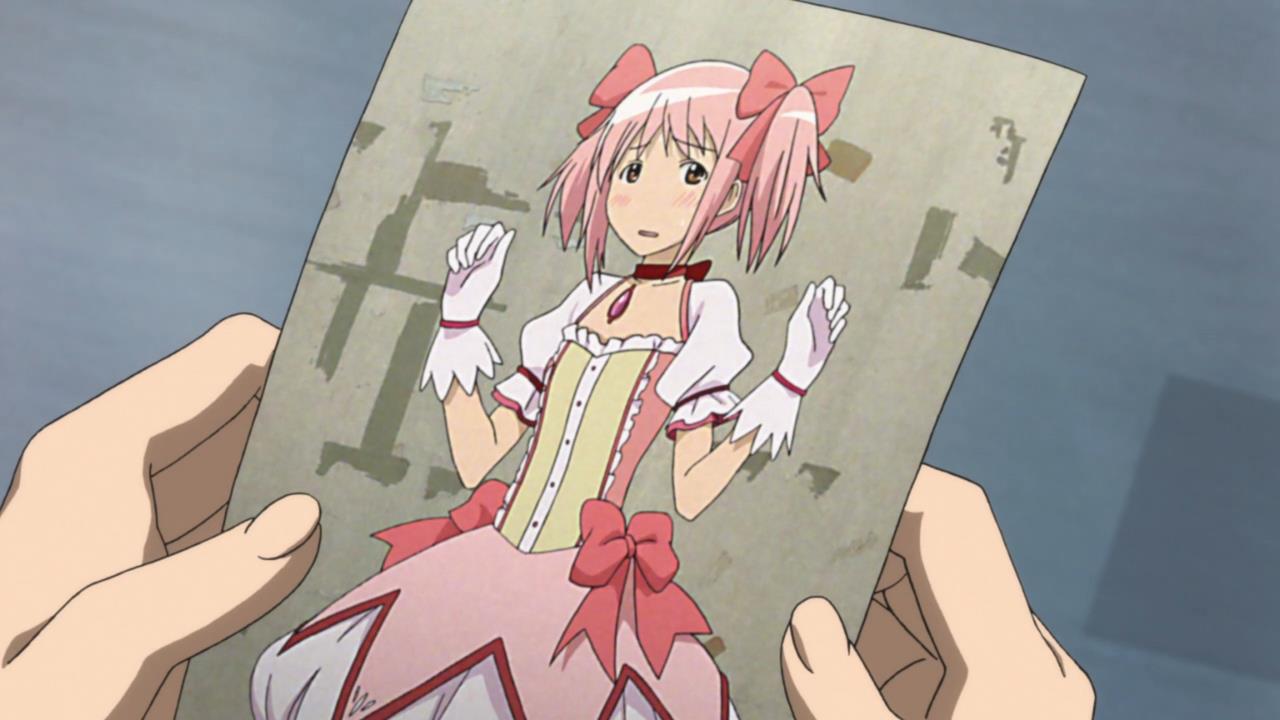
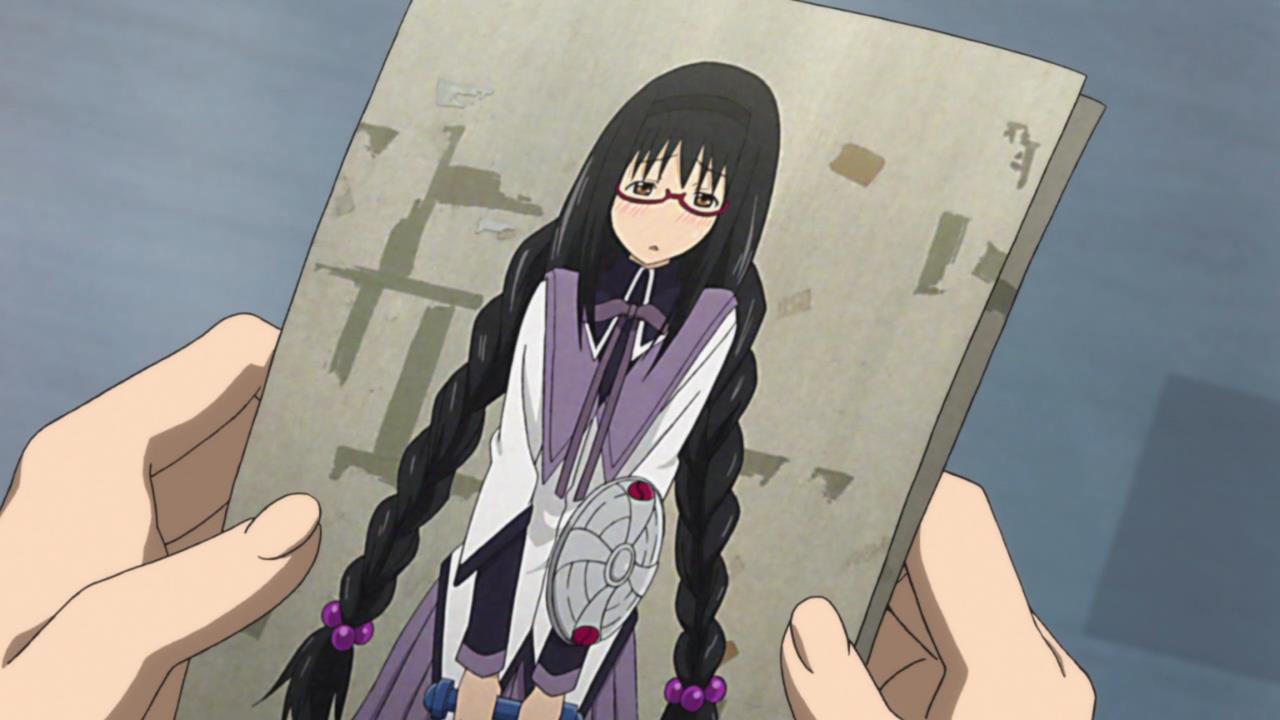
Ogiue in a suit. Also this:
Truth be told, I’m still not entirely used to Ogiue’s eyes having so much more detail drawn into them.
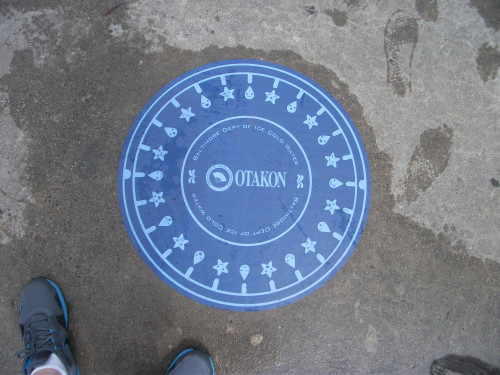
This year’s Otakon was its 20th anniversary, and as expected of the staff they brought out the big guns, with names such as Watanabe Shinichirou, Kanno Yohko, and Seki Tomokazu. As with every year, one of the biggest strengths and weaknesses of Otakon is that there’s too much to do, and it leaves me feeling both satisfied and a bit disappointed.
For one thing, I didn’t get to see the Space Dandy trailer.
Industry
Watanabe Shinichirou (Cowboy Bebop)
Possibly the biggest news to come out of Otakon was the announcement of Watanabe’s new anime, the aforementioned Space Dandy. Described by Watanabe as “80% comedy, 20% serious” in contrast to Cowboy Bebop‘s “80% serious, 20% comedy,” the series sounds just plain interesting when you hear how much they’re putting into it. In terms of music, for example, Watanabe stated that they would have over 20 artists contributing to the soundtrack, and in terms of production every episode would have different episode directors and different designs for the aliens inhabiting their planets.
I managed to ask Watanabe about having Thomas Romain (Basquash!, Oban Star Racers) on staff for ship design, and Watanabe mentioned that he had been impressed with Romain’s work for a while. Also, while Romain is Satelight staff and normally wouldn’t be able to work at Bones for Watanabe, Romain turned out to be a huge fan of Cowboy Bebop which gave Watanabe the leverage to get him on board for this one project.
I do wonder how it’ll be received among American fans, because there was some disappointment from the fanbase over Watanabe’s previous work, Kids on the Slope. While Space Dandy is closer to his action-ey works, the “80% comedy” part might be unwelcome by those fans looking for drama and grit. That said, I’m certainly looking forward to it.
One of the more unique guests this time around was Kurosaku Kaoru, a novelist in her own right, but also more relevant to the otaku audience as the wife of Watsuki Nobuhiro, author of Rurouni Kenshin. Originally Watsuki himself was supposed to come as well, but he was unable to due to working on Embalming. Kaoru also held a panel all about Watsuki, but because of the way she went about it the crowd also learned a lot about some of the most famous Shounen Jump manga artists, as well as the workings of Jump in general.
There was also a gallery of Watsuki’s works, the first of its kind, but sadly even though we could take photos we are not allowed to share them online. (I’m sure somebody has though.)
Watsuki we learned is a big fan of American media, as one of his biggest regrets about not being able to attend Otakon was not being able to visit a Toys “R” Us and look at the Pacific Rim merchandise. He’s also a big fan of American comics, and his favorite superheroes are the X-Men. We also got to see his daily work schedule, which is mind-bogglingly arduous but also par for the course. According to the breakdown, Watsuki works from 10am to 6pm, from 7pm to late, and midnight to 4am. Sleep is 4am-9am, and the other gaps are for meals. That’s 5 hours of sleep versus about 15 hours for work. If he keeps on schedule, he gets four days of rest at the end of each month.
Kurosaki also provided a monthly breakdown of his schedule, and while inking comprised the majority of it, it was especially fascinating to see that the “name,” an extremely rough preliminary version of the manga which is mainly about panel and page layout and narrative flow, takes four days to comple. Kurosaki mentioned that the “name” is so simple as to use stick figures, but the attention paid to this part of the manga-creating process does emphasize how important panel flow is in manga.
Kaoru also took us through the process by which Watsuki makes color images, which involves drawing a thumbnail and then going over it with a Japanese calligraphy brush and copic markers for color. Watsuki apparently thinks that It’s good for one shot illustrations but not the manga itself, as it requires more concentration but the lines become more dynamic, and it acts as a time-saving measure for color images. The traditional feel that the brush art gives off also matches the theme and feel of Kenshin. Related to that, when someone asked about the setting of Rurouni Kenshin, the answer was that Watsuki wanted to draw a period piece with sword fights but didn’t want to draw topknots (they were strange-looking to a modern Japanese audience as well as an international one), so the Meiji period was the only point in history where you could have the former without the latter.
I wish I could’ve asked more about copics, as I find it interesting that they’re such an industry standard.
In terms of former assistants, Watsuki’s lineup is near-Olympian, counting among them Oda Eiichirou (One Piece), Murata Yuusuke (Eyeshield 21), Shimabukuro Mitsutotshi (Toriko), Mikio Itoo (Normandy Secret Club), and Takei Hiroyuki (Shaman King), all of whom consider Watsuki a friend. From Kaoru we learned that there are three breaks a year for Jump artists, and that during those breaks everyone either gathers at Watsuki’s or Oda’s house. Shimabukuro is a current neighbor of theirs, while Takei is a former neighbor. Murata, now known for his exquisite artwork on One Punch Man, used to be an assistant on Gun Blaze West, though at the time Watsuki thought his drawings were “no good.”
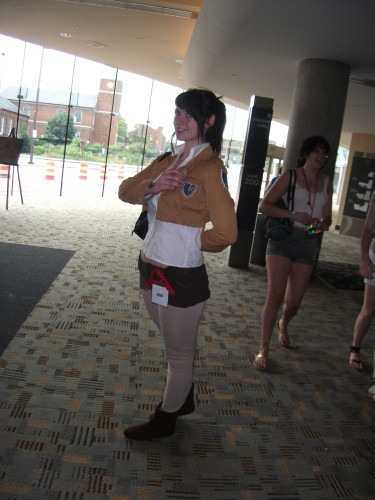
Mikio Itoo is known as the “cameo king,” appearing multiple times in One Piece, Shaman King, and even Kenshin in background posters and crowds and such.
Another major name who worked with Watsuki on Kenshin was former editor-in-chief of Shounen Jump, Sasaki Hisashi, whoworked with Watsuki from his first submission all the way to the end of Kenshin. The basis for a certain character in Bakuman (he even uses the fictionalized version of himself as a Twitter avatar), Sasaki is often asked about the accuracy of Bakuman, to which the official reply is, “Things depicted in Bakuman are neither true nor false.” We also learned that Jump employees are not supposed to give comments outside the office using their real faces.
Not limited to people who have worked directly with, over, or under Watsuki, we also saw comments from Kishimoto Masashi (Naruto), Inugaki Riichirou (also Eyeshield 21), Matsui Katsunori (La Sommelière), and Suzuki Shinya (Mr. Fullswing). Did you know the last chapter of Kenshin ran in the same magazine as the first chapter of Naruto? Kishimoto saw this as a kind of passing of the baton, and credits Kishimoto for making Japanese culture popular in manga again (but also believes that now it’s become too much). For this reason, Kishimoto calls Watsuki the leader of a generation.
Inugaki’s comment was that Watsuki taught him techniques to speed up the manga-creating process, namely giving rhythm to the use of detail and not trying to draw every little thing. We then learned from Kurosaki that both she and Watsuki playGerman board games often with Inugaki and his wife, and are especially fans of Dominion. As someone who hasn’t played it but has played games like it and has heard much about it, the intrigue continues to build for me.
Suzuki’s message talked about Watsuki’s fandom, as he once found an entire box full of fan letters for Watsuki. Matsui, whom Kurosaki commented that he’s especially good at drawing cute girls (I would agree), actually did not send any comments, except to promote him in the US. As much as I’d like to see that, I know Drops of God didn’t knock the manga community off its socks, so I don’t know how well the less adventurous La Sommelière would do.
What was maybe the most interesting bit of trivia of all, however, was that a lot of the Jump artists use the instant messaging service LINE to talk to each other and joke around. Watsuki doesn’t use it because he’s bad with computers, so his wife has to tell him what’s going on.
Sentai Filmworks
The only American industry panel I attended was Sentai Filmworks’, where they were very excited over their recent Girls und Panzer announcement. I also ran into an unfortunate bit of luck, discovering that they had license rescued Betterman, a show which I had just recently scoured Amazon for in other to get the complete release of the original Bandai DVDs. It’s a shame, because it definitely would have been a show I would’ve bought and supported, mainly because it’s such an unusual piece of work.
I asked Sentai Filmworks about the translation issues in their release of Mawaru Penguindrum but the answer given was ignorance, claiming that they had not been aware of the criticisms brought out against their translation choices. Oh well.
Maruyama Masao
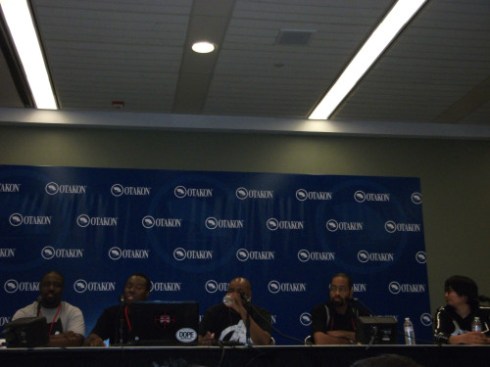
While many of the industry guests and panels are excellent, every year the most stand-out guest is Maruyama Masao, founder and former producer at MADHouse, currently founder and producer of MAPPA (Kids on the Slope). Even though he’s been at one Otakon after the other, his Q&A panels are consistently informative and interesting. To give you an idea of how great his answers are, when asked about production delays for Redline (which took 7 years to complete), Maruyama answered that Redline was not late, it took as long as it should have, which was a lot of time due to the amount of work required for it. Maruyama then said that he left MADHouse to take responsibility for the debt that Redline put them into but then said in English, “IT’S A JOKE.”
In one of my favorite moments of Otakon, I asked Maruyama to share some stories about the recently departed Dezaki Osamu (director of works such as The Rose of Versailles, Aim for the Ace, Black Jack OVAs, and even Dear Brother), to which he replied with what was about a 10-minute long answer. Maruyama stated two significant events responsible for his long career in anime: working with two Osamus. First, he worked for Tezuka Osamu at Mushi Pro, and then formed MADHouse with Dezaki. Their first non-Tezuka work was Ashita no Joe. Eventually when the Ashita no Joe 2 film was in planning, they had creative differences where Maruyama believed it was unnecessary and Dezaki wanted to work on it, so he left and formed a studio called Anapple. They would not work with each other for many years, though they were still friends and still played mahjong with each other.
During the time they were apart, Maruyama produced directors such as Hosoda, Kon, Kawajiri, and had no time to work with Dezaki. Eventually, as they both reached old age, they decided to work together once more, and their final project together was, of all things, Ultraviolet. Dezaki wasn’t sure if it was the right work, but it was the only one in the pipeline at the time and the only chance they had to work together. Maruyama said they were happy to make it, though said nothing of the quality of the show. Maruyama then mentioned that Dezaki’s final work, Genji, had Dezaki tryingg to put in everything he couldn’t put into Ultraviolet. Then Maruyama said that with the time he has left on Earth, he would try to bring Dezaki and Kon’s remaining works to the world.
The panel also included a special showing of a short titled Hana wa Saku (Flowers Bloom), directed by Katabuchi Sunao (Mai Mai Miracle) with music by Kanno Yohko, whose purpose was to encourage the people affected by the earthquake. I hear in his other panel he also showed a video directed by Rintaro which was a funeral tribute to Kon Satoshi.
Interviews
I managed to get interviews with both acclaimed voice actor Seki Tomokazu, as well as Tachikawa Yuzuru and Suwa Michihiko, who are involved with the Anime Mirai project. Keep checking Ogiue Maniax for those.
Fan Panels
In terms of fan-run panels, this year was a mix of new and interesting subjects as well as a few “greatest hits” to celebrate the 20th anniversary. Mike Toole’s panel on “Outsider Anime,” his take on the Henry Darger-esque idea of “Outsider Art” looked at a number of creative and off-the-wall artists who, while for the most part not totally “outsiders” still push the boundaries. Names such as Shinkai and Yuasa are somewhat familiary to anime fans at this point, but I hadn’t heard of Tomioka Satoshi and his bizarre toilet humor rabbit animation Usavich for instance, and only recently learned about Mizue Mirai and his abstract animations. I was especially glad though to see him mention Iseda Katsuyuki, a man infamous for creating anime pretty much on his own with… unique results.
I attended the “45 Years of Shounen Jump” panel (while also singing along with the anime openings). Run by landofobscusion, it was a short “greatest hits” breakdown of the magazine. I learned quite a few things. For example, I did not know Sexy Commando was a top 3 title at one point, nor did I know that the end of Dragonball lost the magazine 500,000 readers while Slam Dunk’s finish lost them 2 million. What was even more interesting was hearing the crowd react to all of the titles mentioned. Yu Yu Hakusho for instance got a gigantic pop that I wasn’t quite expecting, as I knew people liked the show but didn’t know it was nestled that fondly in the hearts of fans who watched it on Cartoon Network.
Because of this panel the second City Hunter opening is stuck in my head now.
Speaking of surprising fan reactions, I am pleased to see the mecha fandom’s opinion of Gundam SEED turn around tremendously. Traditionally, when you go to a giant robot or Gundam-themed panel, there is a valuing of the Universal Century timeline over the alternate universe counterparts not named G Gundam. (The Seki Tomokazu panel I attended taught me just how many people love G Gundam, to the extent that more than one attendee exclaimed Domon Kasshu as a role model for how to live as a man.)
In the past Gundam SEED was seen as a black spot on giant robot anime, “the beginning of the end,” and all it took was a panelist to go “Gundam SEED! BOOOO!” to get the crowd to follow along. This time, though, when I attended the Mechapocalypse panel, Gundam SEED received largely applause rather than jeers, and it just warms my heart to see a mecha fandom which accepts what SEED brings to the table. We all agree though that SEED Destiny is still terrible.
Actually, the Mechapocalypse panel in general was a good deal of fun. Generally mecha panels are all about going through the history of giant robots and having everyone cheer for their favorites, and while this one retained some of that, it also mixed it up heavily with roundtable discussions of specific themes and characteristics of robot anime, all while keeping it light-hearted. While I’m already familiar with the Japanese Spider-Man, it’s inevitably a crowd pleaser whether you’ve seen it or not.
The other mecha panel (of sorts) I attended was Al’s presentation of the directorial works of Tomino Yoshiyuki, creator of Gundam. Neither full of blind praise for the man nor unfairly critical of his body of work, the panel laid out the various aspects of Tomino’s reputation, particularly his tendency for works to be either fairy light-hearted or particularly violent and morbid, and how both make up Tomino’s overall ouevre into something special. While I know a decent amount about Tomino anime, I also learned a good deal from the panel. I also realized based on audience reaction that Gundam has this strange memetic power which actually exceeds the content of the actual shows. This might be commonplace for anime fans nowadays as a lot of current anime operates actively under such influence, but I recall seeing the shouts of “Char is a lolicon!” back in the late 90s, and I think it’s what fuels some of the odder aspects of most Gundam panels, whether the panelist plans it or not.
The last panel I want to mention is “Anime Mystery Science Theatre 3000.” Although it was my first time seeing it, I learned from others that it was an extremely popular and well-regarded Otakon panel back in the day. Coming out of retirement for Otakon’s 20th anniversary , the Anime MST3K crew took down the GONZO film Origins: Spirits of the Past (aka Gin-iro no Kami no Agito), pointing out the hamfisted environmentalism message alongside the sudden and strange character/romance development points which result in the deformed child of Appleseed and Nausicaa. In addition to being hilarious, I noted that they had indeed kept up with anime over the years, spotting multiple Girls und Panzer references.
Concerts
This year, Otakon decided to hold two double concerts for its four guests, which resulted in Home Made Kazoku starting for TM Revolution and Ishikawa Chiaki preceded Kanno Yohko. I saw Home Made Kazoku back in 2010 at Otakon and TM Revolution back in 2008 at the first New York Comic Con. In both cases they’re among my favorite concerts I’ve attended, and to see them together was quite a treat. One notable thing about the Kazoku/Revolution concert was that it was held in the Mariner Arena, which made lining up in advance almost entirely pointless as you could get a decent seat even at the last minute. It was a pleasant change-up compared to previous years, and unlike the time with JAM Project I was glad to see the arena fill up a decent amount. I heard that at the end the two groups had a superhero teamup and did a song together, but I sadly had to leave before that.
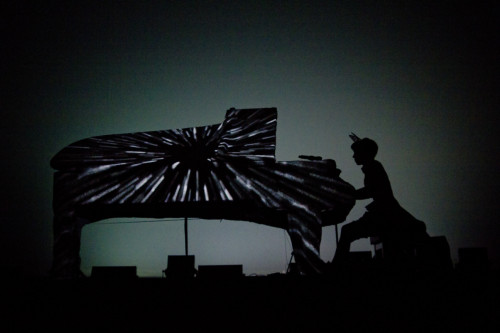
The Ishikawa/Kanno concert was an anomaly before it even began. Unlike every other concert at Otakon, this concert required tickets due to “unforeseen demand,” and tickets could only be picked up at specific times of the day. While I know Kanno is probably the most popular anime composer out there, it seemed to be an intentional choice to up the value of each seat, marketing at its finest. In order to keep up with demand, Otakon actually created an overflow room so that people could watch the live feed from elsewhere within the Baltimore Convention Center. The concert itself was also quite fantastic, as Ishikawa’s haunting melodies (“Uninstall” is a perennial favorite) led well into Kanno’s part, which was unlike any convention concert I’ve attended. Kanno was alone on stage with a piano, playing a number of her best hits, including of course “Tank!” and “The Real Folk Blues” from Cowboy Bebop. As the concert went on the white covering laid over the piano became a kind of projection screen which displayed graphic animations to accompany her music. It was a full-on aural/visual combination, as much an artistic performance as it was a musical concert. It was definitely another highlight of Otakon 2013.
The title of this con report comes from Kanno’s introduction by her producer, which I found quite memorable.
Baltimore and Friends
The most surprising news to come out of Otakon had to do with the convention itself, as the staff announced that Otakon would be moving out of Baltimore into Washington, DC in 2017. Citing capacity issues, I experienced firsthand the fact that the Baltimore Convention Center is increasingly unable to handle the growing attendance rate of Otakon. Friday afternoon saw for whatever reason extreme, extreme congestion on the third floor that made it so it literally took me 15 minutes to walk what should be a 3-5 minute trip, tops. I do feel pretty bad for Baltimore, as I know that Otakon provides them a good deal of money every year. On a personal level, my friends found a great hotel and great places to eat, and to leave them with the possibility of never returning does fill me with a bit of sadness. That said, I still have three years to chow down and go wild.
By the way, if you ever are in Baltimore and decide to go to Abbey Burger Bistro, I’ll tell you about my custom burger I ordered this year because it was fantastic. Duck meat burger (it’s a meat of the month so it might not be available) cooked medium rare, with brie, grilled onions, mushrooms, pineapple, and red pepper paste on thick toast. Do it.
I didn’t hang with or meet people as much as I had in previous years, but I still enjoyed seeing everyone. In terms of group activities, the highlight of the convention was watching Salty Bet in the hotel room. We happened upon a great night which pitted all of the famous overpowered characters against each other, and the unstoppable force vs. immoveable object that was Berserk vs. Rare Akuma made for an unforgettable evening.
Cosplay
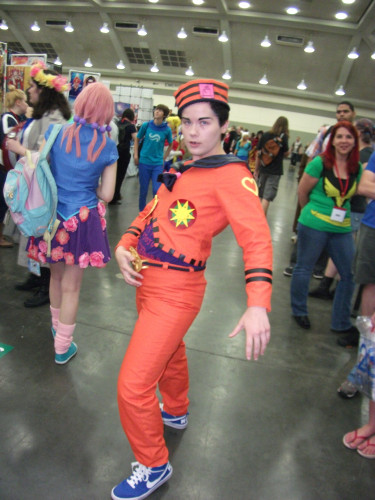
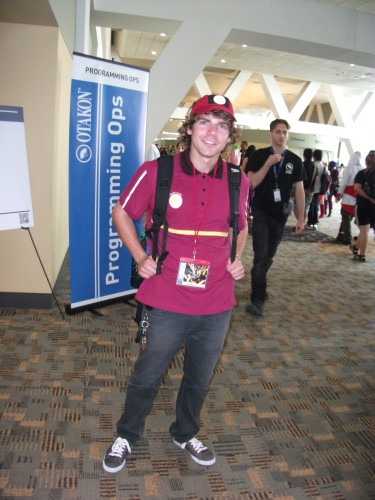
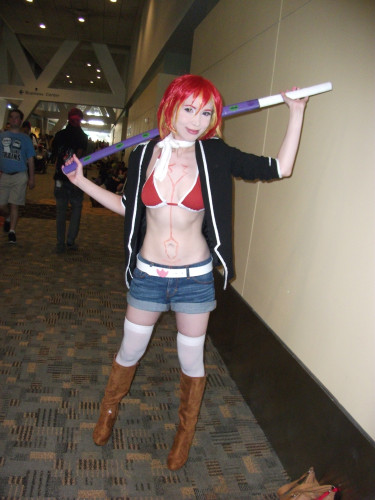
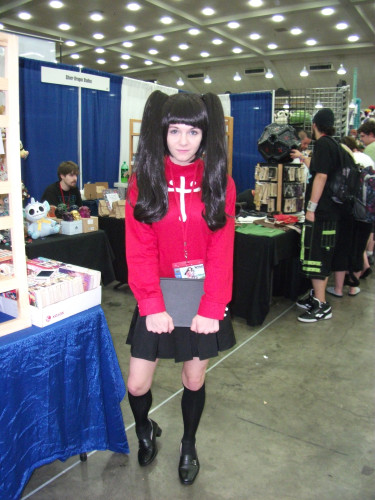
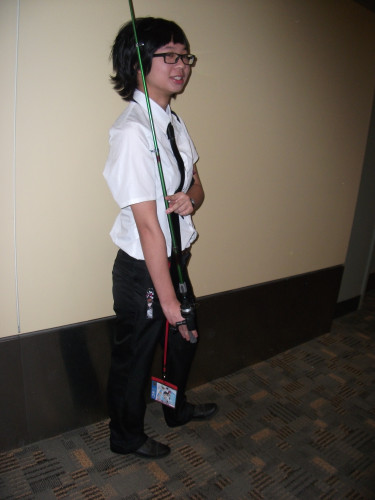
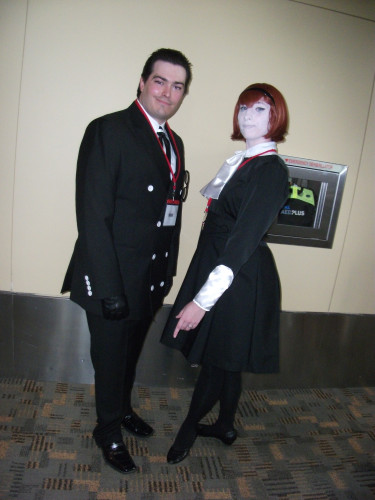
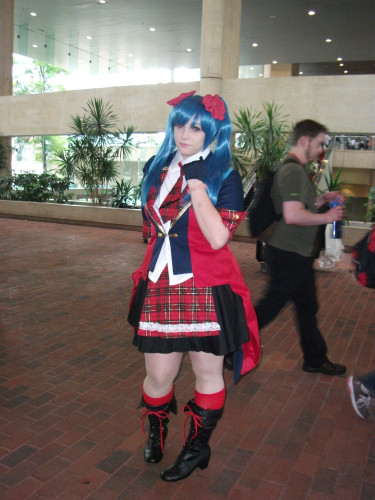
I’ll end off with the semi-standard cosplay photo bonanza. I was not quite as trigger happy with the camera this year, but I did find some definite gems. Special shout out to the Sasha cosplayer who actually handed me a potato afterward.
It’s been a month or two since I watched Wolf Children so my thoughts on it aren’t really fresh. I’m calling this a “review” I guess, but it’s more an evaluation of what’s left of my impression of the film. Given my usual meandering, this may turn into more of a real review than most of what I write.
Wolf Children is about a human mother raising her half-human/half-wolf son and daughter. Directed by Hosoda Mamoru, it bears some similarities to his previous movies, The Girl Who Leapt Through Time and Summer Wars, but the changing perspectives of Wolf Children between the older sister Yuki, her brother Ame, and Hana the mother veers it away from the heavy teenager focus of the other films. Both Yuki and Ame are still children, and through Hana we get to see the two half-wolves as a mother would. This three-sided view, along with the fact that those individual views change significantly along the way, is core to the movie’s strength and emotional weight.
In order to fit into human society, the two wolf children are taught that they must hide their wolf sides, which is difficult for them because they transition between the two almost unconsciously. Having to keep their true selves a secret is one of the recurring themes of the movie, especially in terms of how difficult it is both on a pragmatic level and on a psychological one. Making them choose, even unintentionally, between human and wolf worlds clearly has an effect on how they view themselves. There’s a racism aspect to it, but also the idea that ultimately children decide their own paths, even if their parents disapprove or worry that it wasn’t the right choice. The fact that the “wolf” in them is actually the Japanese wolf, a once-indigenous and now-extinct species, the concept of the other that has been pushed out of society mingles with a softer message concerning environmentalism.
The visuals of the movie are quite beautiful, though one thing that really stands out to me is the variety of animation techniques on display. Throughout the movie there’s a mix of traditional animation, heavy rotoscoping in moments you wouldn’t expect it, compositing, and (I think) even some 3-D animation. It lends the movie a somewhat jarring feel at times, which didn’t jar me out of the film, but at least presented an interesting plethora.
Though talking about the specialness of anime is easily derided (and I’ve done so myself quite often), the use of the mother protagonist and the incorporation of a subdued supernatural element makes me think that such a film would not easily be made in, say, the United States, at least not as a mainstream film or even an animated one. In contrast, Wolf Children did enormously well in Japan. Like all of Hosoda’s movies, it’s worth seeing, and I think it shows a different side of his work.
So Genshiken Second Season Episode 5 isn’t terribly different from its corresponding chapters, 65 and 66, so I won’t be discussing much about the adaptation process this time around. I will say though that I’m glad the actors for Angela and Ohno can at least pronounce American R’s.
The only changes are a ton of background cosplay that wasn’t in the manga, and this imaginary shot of a seductive Angela.
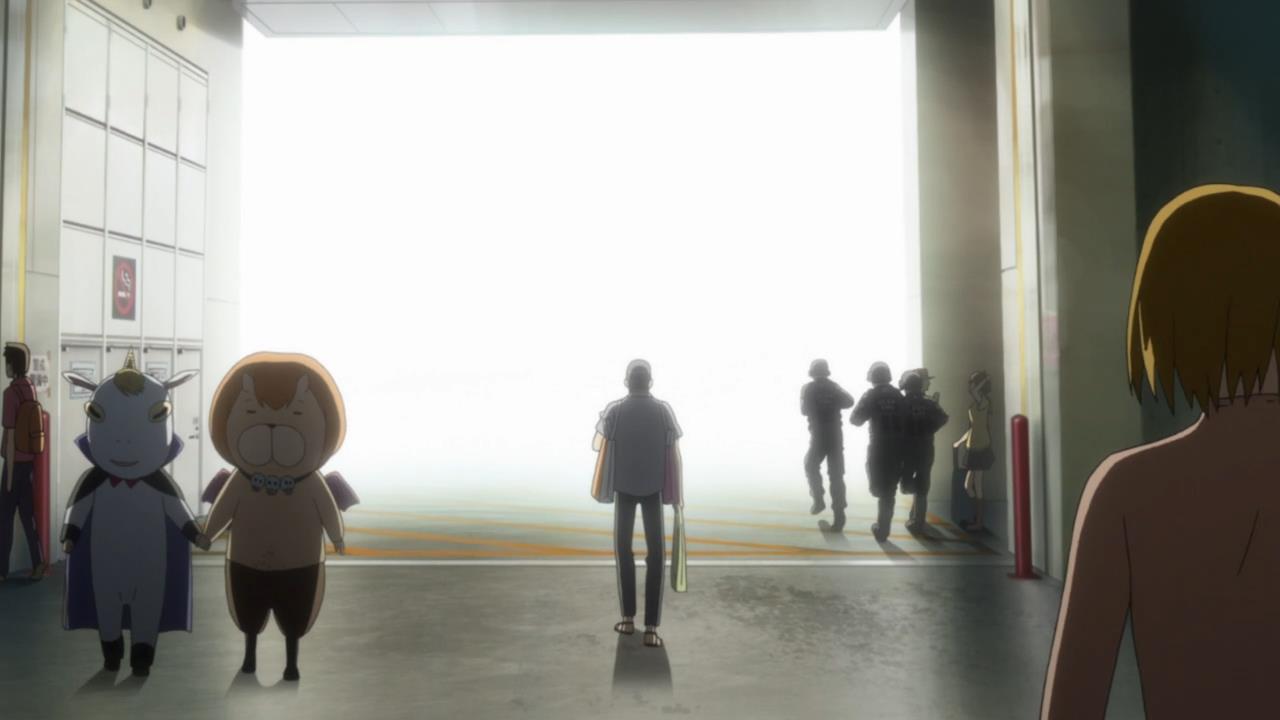
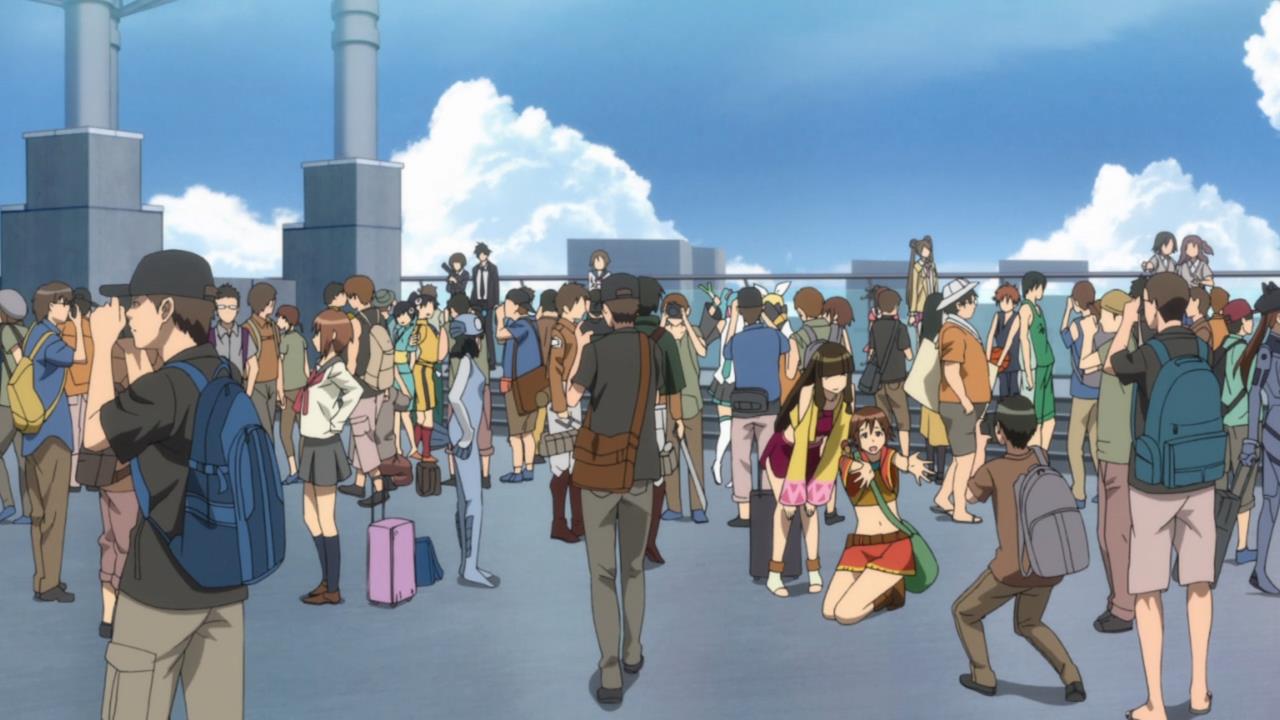
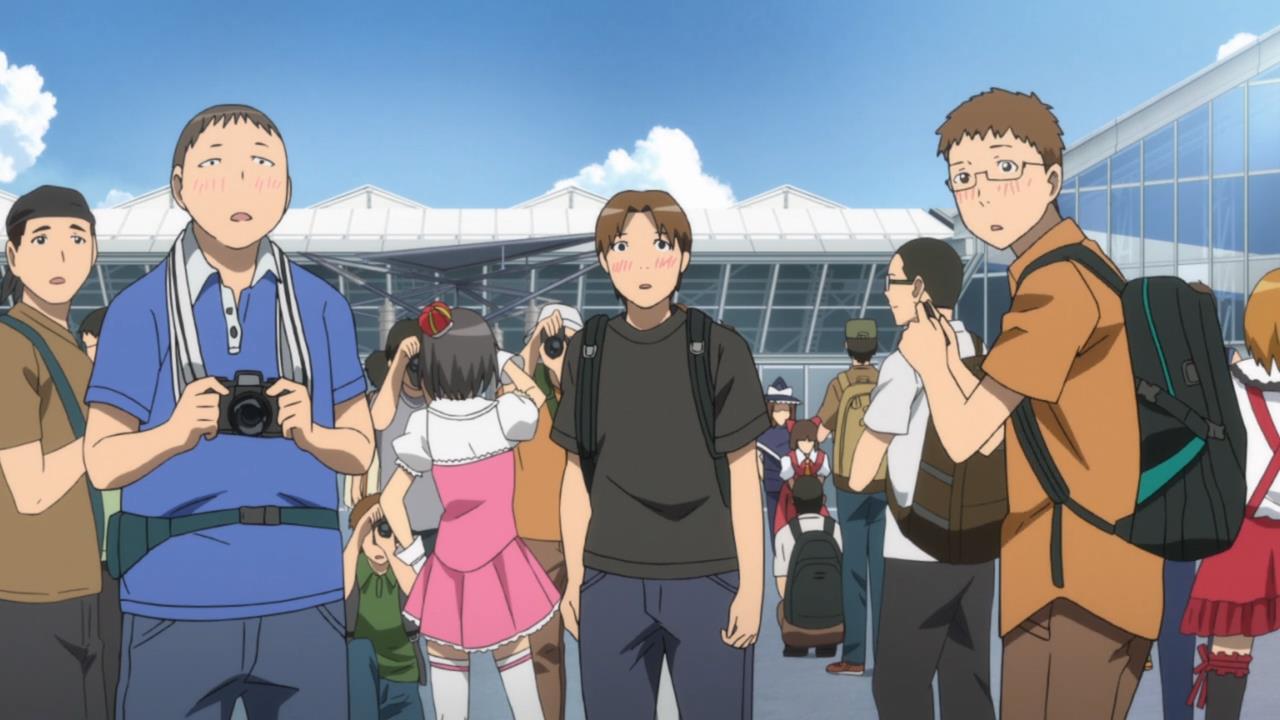
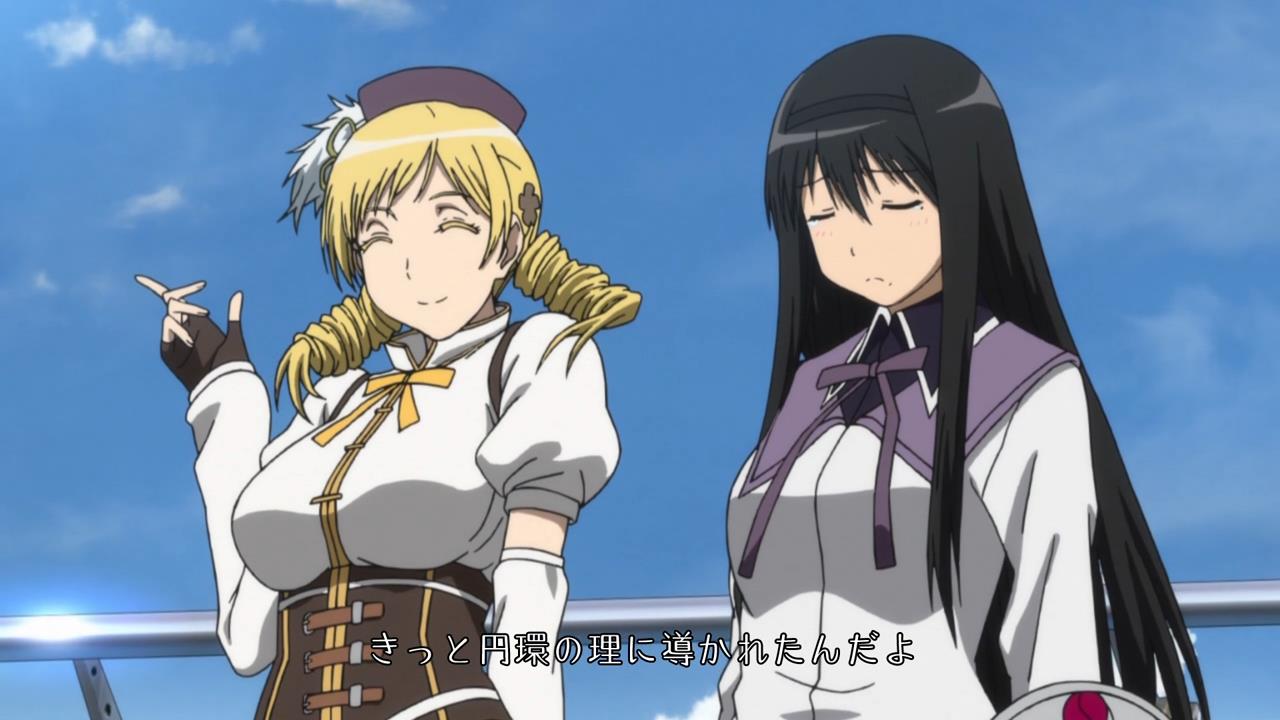
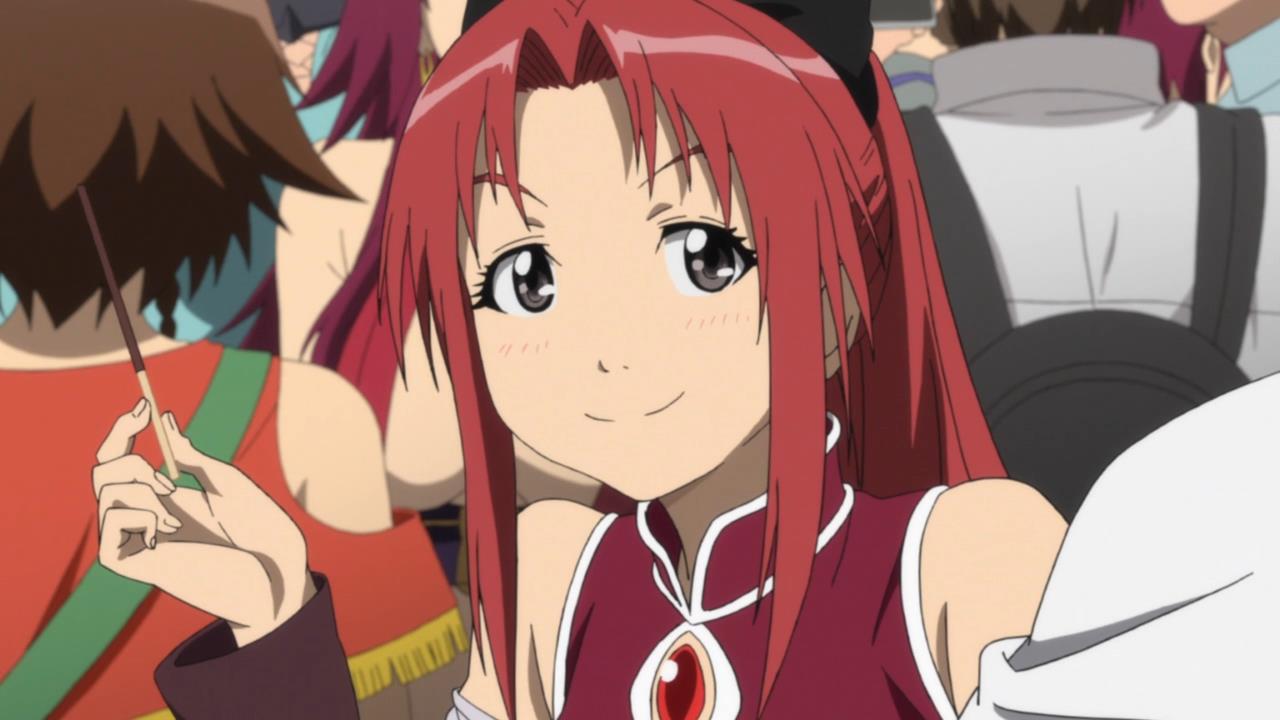
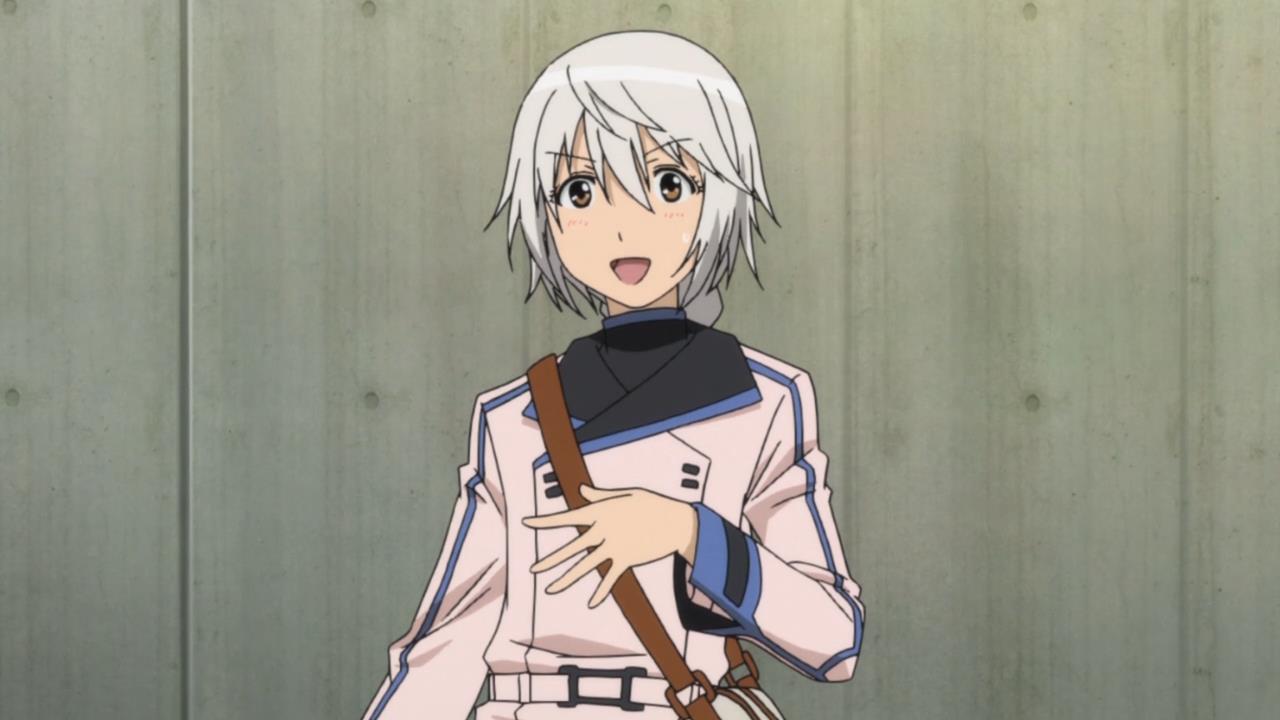
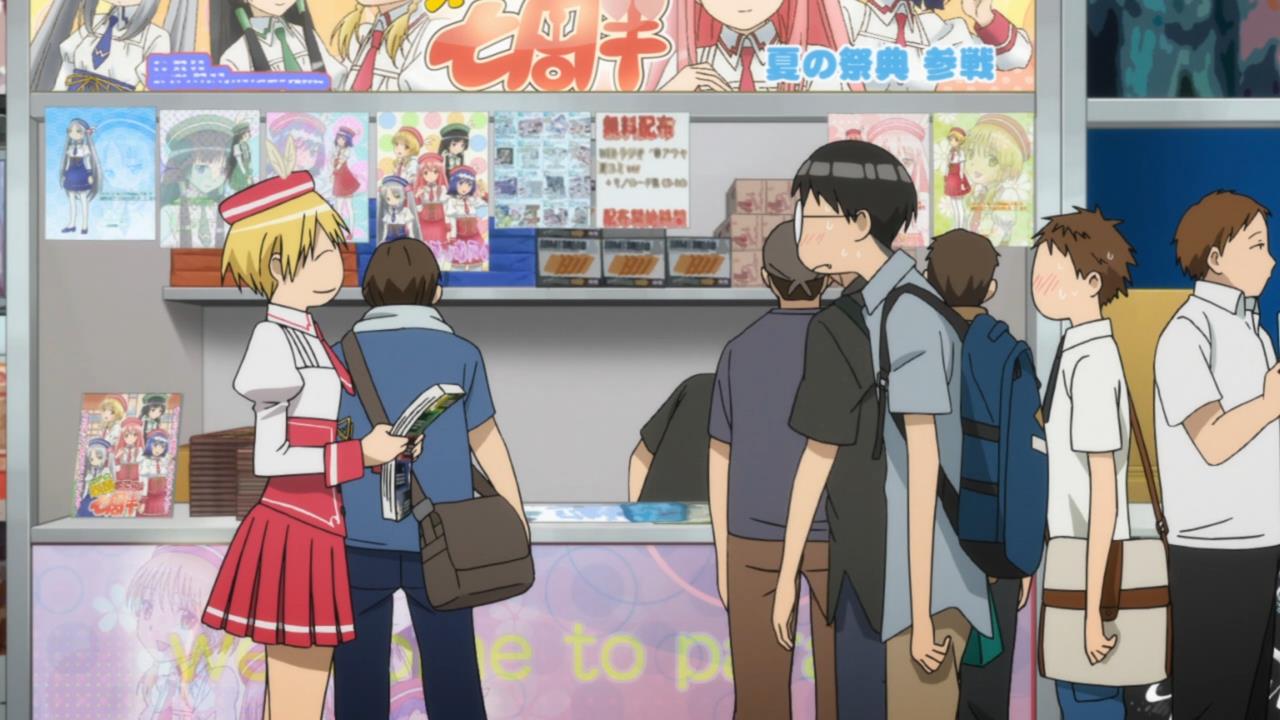
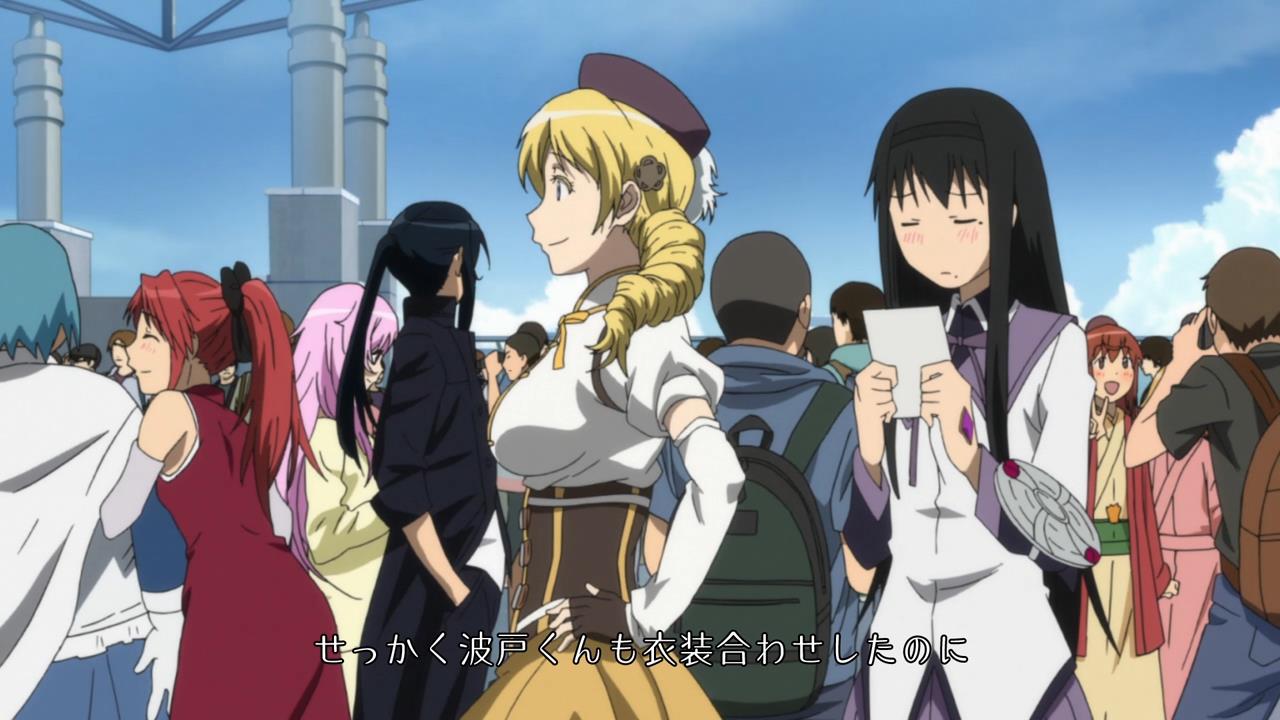
That said, there is a ton of cosplay in this episode and the last, so I’ve taken the time to try and identify as many of them as I can. I’m unsure of some, and flat out don’t know others, so feel free to leave a comment if you recognize one I didn’t. I’ve actually already received a bit of help. For the cosplay in Ogiue’s room in Episode 4, most of the answers are here.
All cosplay identifications are approximately from left to right, and any Genshiken main cast cosplays I ignore after the first time.
Yamada (Kujibiki Unbalance, the in-universe favorite anime of Genshiken), Manaka (Love Plus)
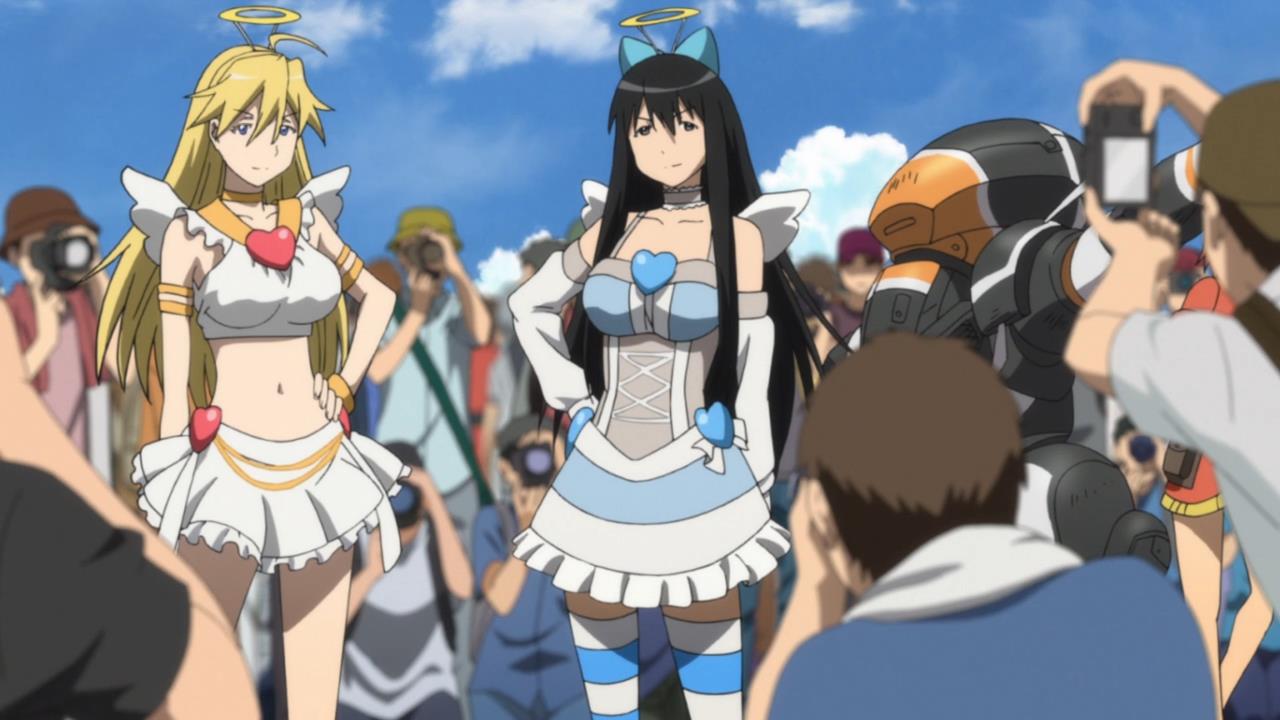
Panty and Stocking (Panty & Stocking with Garterbelt), Chamber and Amy (Gargantia)
Don Valentino (Cuticle Detective Inaba) (Thanks Kate), Azazel (Yondemasuyo Azazel-san), Unknown Soldiers, Titan (Attack on Titan) (Thanks eatallhumans)
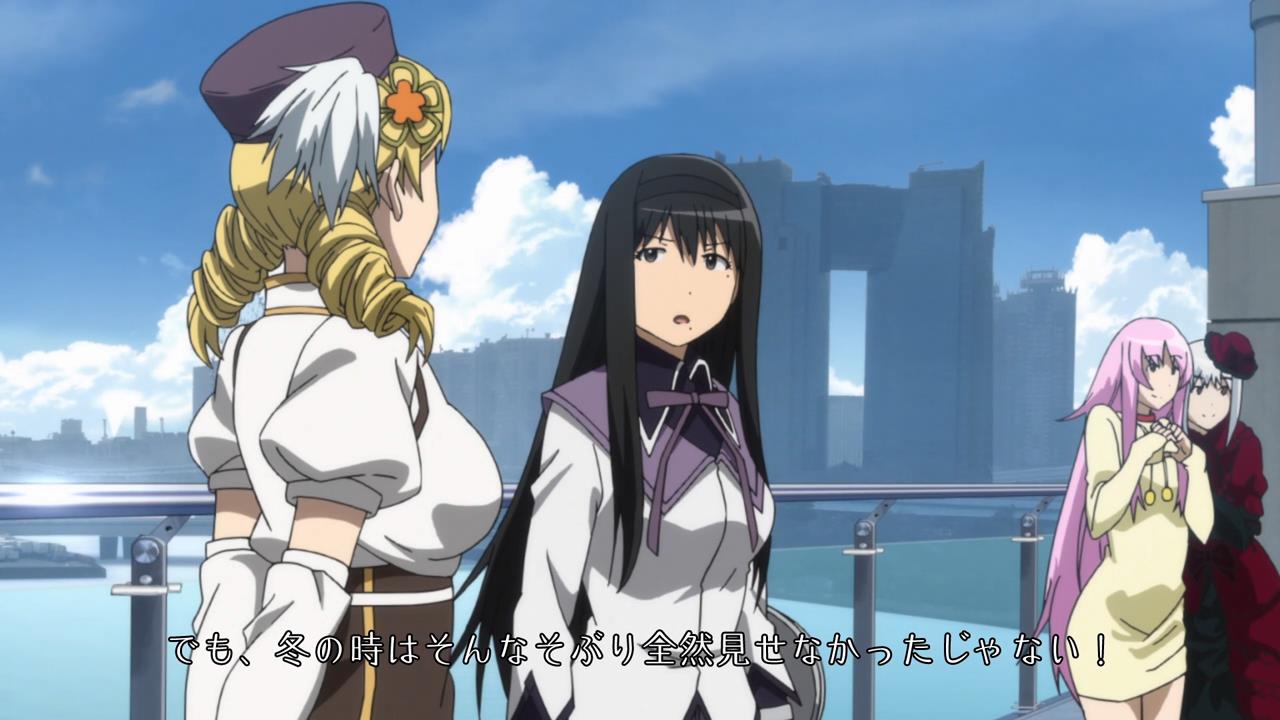
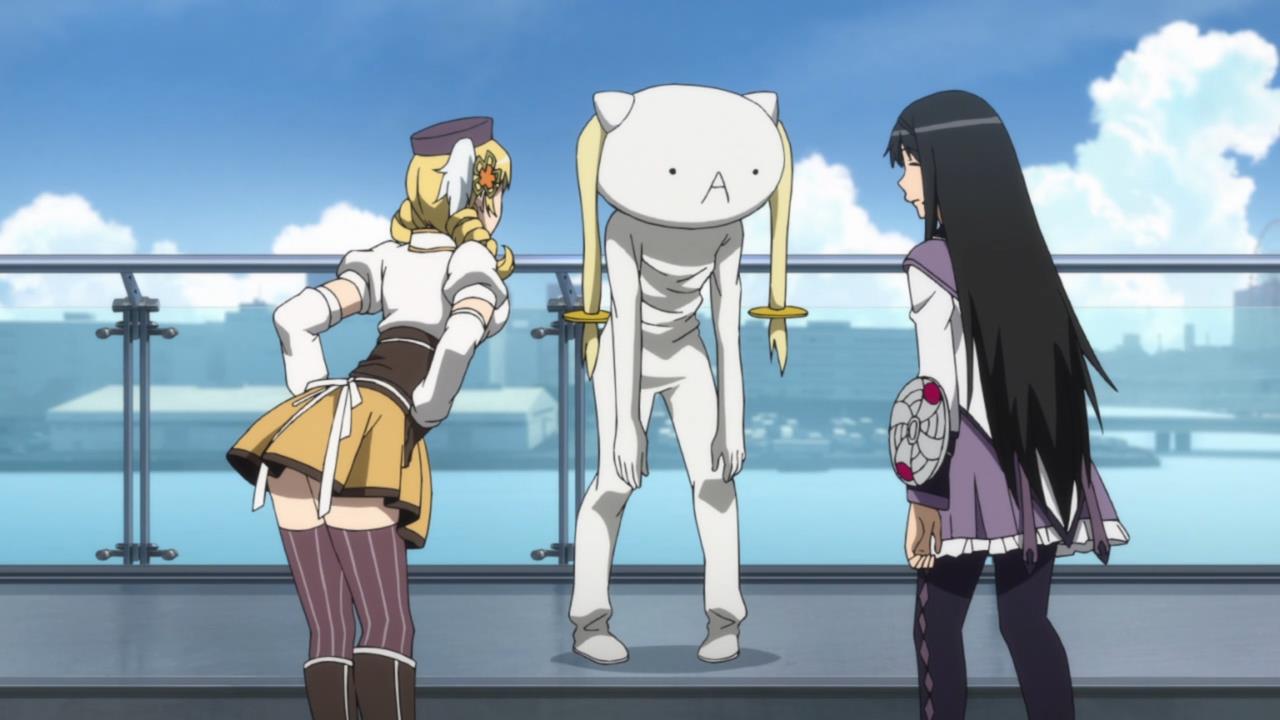
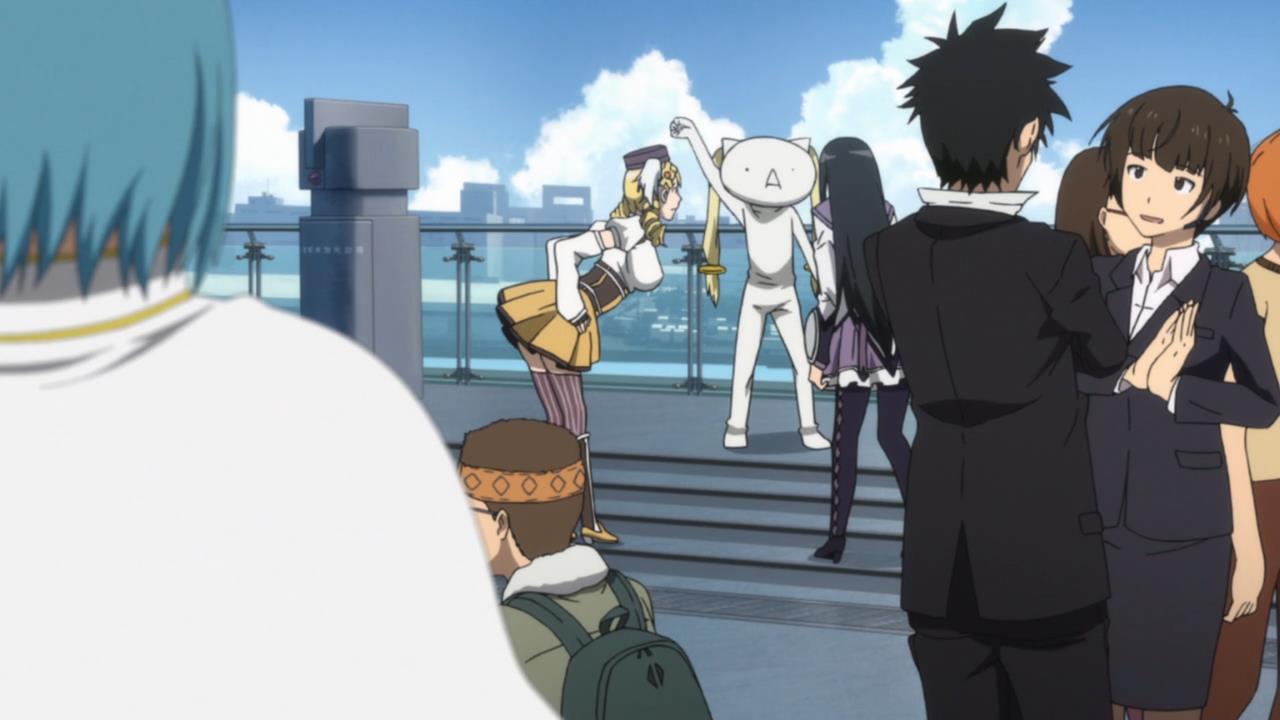
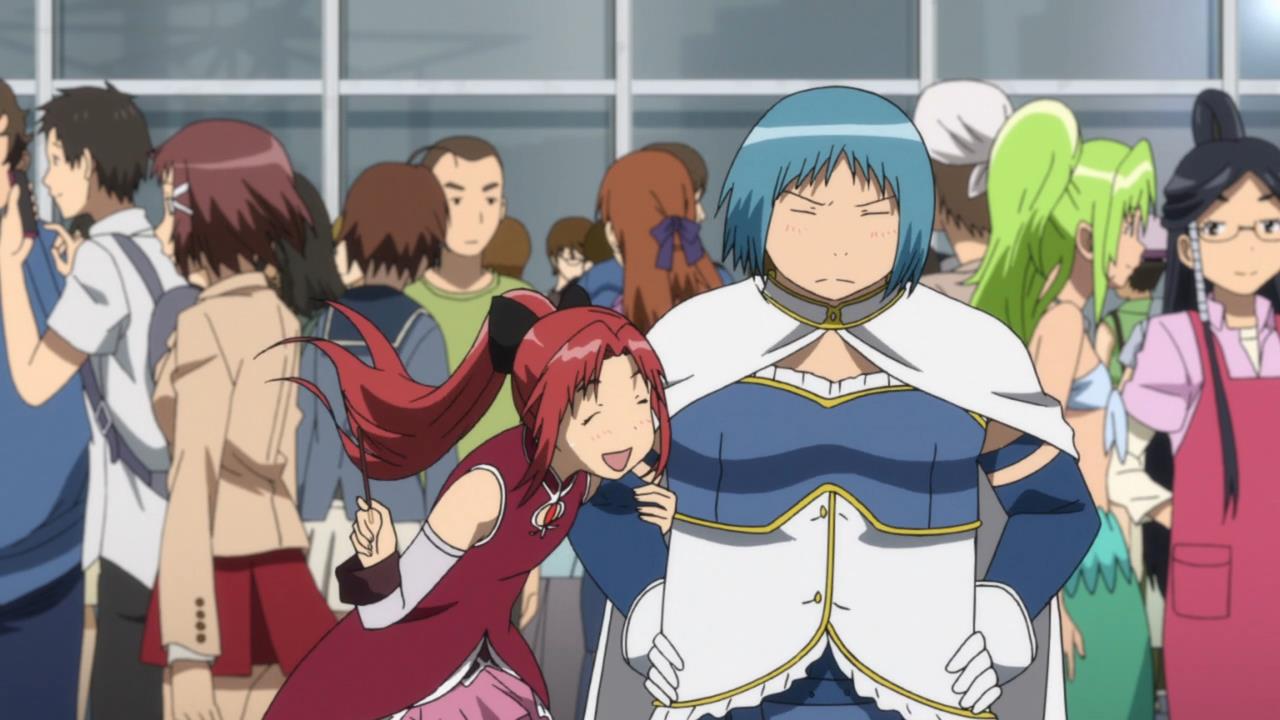
Miho and Yukari in Anglerfish Costume (Girls und Panzer), Tsukihi and Karen (Monogatari series), Akane and Kougami (Psycho-Pass), Soldier from Attack on Titan, Miku and Rin (Vocaloid), Saaya and Amy (Gargantia), Shima (Stellvia), Kuroko’s Basketball, Railgun (?), Neon Genesis Evangelion
Tsukiko (Henneko) (Thanks to @Buffered), Sort of Marisa and Reimu (Touhou) (Thanks to @elliotpage), Hanayo or Rin (Love Live!)
Genshiken Second Season Episode 4 features both cosplay antics and some Comic Festival drama. My overall thoughts can be found in my reviews of the equivalent manga chapters: 626364
One of the differences between the anime and manga in this episode have to do with format pacing, as the arrival of Ogiue’s old hometown companions occurs at the end of Chapter 63 and acts as a cliffhanger, whereas the same event occurs in the middle of the second half of Episode 4 and resolves by the end. Some of the dramatic impact disappeared from the scene in my opinion, and I think that they could’ve done more, whether with timing or music choice or something else.
Also, I noticed that because some lines of dialogue were cut from the anime, the Crunchyroll subs didn’t quite accurately translate certain points. Yabusaki wasn’t saying that Genshiken president is a perfect job for Ogiue, the line was meant to convey that Yajima isn’t at all surprised that Ogiue would have such a past of making yaoi out of her boyfriend and the ensuing trauma which came out of it. The manga dialogue also has Yabusaki mention that it was her and the other Manga Society girls who pushed her to jump out of a window, a tinge of guilt in her expression.
That’s me nitpicking, though. The real purpose of this post is actually to ask a question.
I’m really into Genshiken, and while I don’t have the whole thing memorized, it’s something I’ve obviously thought about a lot. Thus, when Nakajima first shows up again, I had a strong reaction, somewhere between “oh snaaaappppp” and “holy crap.” It was a big deal for me, and I remember my body tensing up and me having to re-read that point just to let it all sink in. That’s because I recognized Nakajima and Shigeta instantly, and I’ve come to realize that simply not everyone has Genshiken on the brain to the point that they would have that instant reaction. Not only that, but for those who stuck with the anime exclusively, the series never delved heavily into Ogiue’s past, so this is the first time those viewers are learning about her suicide attempt and the events surrounding it.
So, what I want to ask is, what was your impression when Nakajima first arrives in Nidaime?
Did you recall her immediately? Did you need some of the dialogue to jog your memory? Did you totally forget who she was? For those who are anime-only, did you learn something significant? Could you remember Nakajima from that one episode from Genshiken 2?
I was recently on The Cockpit discussing the recent giant robots ‘n monster film Pacific Rim along with the host Patz, as well as the Reverse Thieves. The podcast is super spoileriffic so it’s recommended for people who’ve already seen it.
If you have any love for giant robots and/or giant monters, you might not necessarily love the movie, but you’ll at least like it a fair deal.
I might be calling this an episodic review in the tags, but that’s kind of a misnomer. Instead, I’d like to talk about Genshiken Second Season episode 2, or rather, what’s missing from it.
The manga equivalents of this episode would be Chapters 58, 59, and 60, but if you look at Chapter 59 you’ll notice a rather important Madarame story being cut from it. Now, this might be them cutting it out entirely, or it might be a pacing issue or something where they’d prefer to explore the new characters before putting the spotlight on the old guard again. That’s why, for now, we’ll leave it aside and assume it might actually appear in the anime at a later date, and focus on another curious cut. For those who are sticking to the anime, be warned that Chapter 59 is potentially pretty spoilery for you.
In Episode 2, Yajima, Yoshitake, and Hato all go over to Yajima’s place to create their profiles for the club magazine, Mebaetame. Prior to this, they go to buy some drinks, during which Yoshitake talks about her fantastic metabolism. What the anime did not include, however, is the fact that Yoshitake was trying to buy alcohol to liven up the party. The scene was originally a way to show how Yoshitake is as free-spirited as Yajima is straight-laced (her objection is mainly that they’re below drinking age), especially when Yoshitake ends up getting the beers anyway. Curiously, whereas in the manga they pass out due to drunkenness, in the anime, they simply got tired.
Here’s what I’m wondering: Was this cut due to time constraints, or was it cut in order to avoid showing underage drinking?
I don’t know enough about Japanese television censorship or censorship laws to determine if this is the true cause, but I do know I’ve seen plenty of manga to anime adaptations play it safe in roughly similar ways. The Bokurano anime, for example, turned a rape and exploitation storyline from the manga into something much less extreme. Genshiken does not even begin to approach that territory, but maybe for this show it’s still something they’d like to avoid.
Another thing, though not exactly a cut, is a loss of context. The moment when Ogiue slams the door on Ohno is a visual reference to the time Ogiue invited Sasahara over alone. That part of Genshiken isn’t animated, so the connection is lost.
The opening is kind of interesting. It has quite a bit of information about what’s going to happen (including the appearance of a certain saucer-eyed character and her friend), but what I find most interesting about it is that it makes it very clear that Hato is the focus of the new series, something which wasn’t always immediately obvious in the manga. Also, Sue as Koujiro Frau from Robotics;Notes is about as perfect as it gets. That’s something that wasn’t in the manga but fits Sue’s character so amazingly well that I wish it had been. There is precedent for anime stuff to make it into the original manga, though, so hope is not lost.
The new Genshiken anime has begun airing, and with it comes not only a time skip over the conclusion to the original manga, but also a new cast of characters. Seeing as the anime is pretty much covering the manga panel-by-panel, and I’ve already reviewed the individual comic chapters along the way, there’s not much need for me to do a thorough analysis, but I do want to give some thoughts about the adaptation process at least. If you do want to see my thoughts on the events of episode 1 of Genshiken Second Season (or Genshiken Nidaime, or as I prefer to call it, Genshiken II), you can find them here and here.
By the way, the title of the first episode is a reference to the Japanese title for the Shinkai Makoto movie known in English as The Place Promised in Our Early Days.
While the anime is faithful to the manga so far, in watching the first episode I feel that the pacing of this newest anime is a good deal more frantic than what I’m used to seeing from Genshiken anime. While the series was never quite subdued moe comedy or Maria-sama ga Miteru levels of “slow,” there was always a kind of mellowness to them even in the sillier situations. Think of Saki talking to them about how Kohsaka (probably) watches anime while they’re having sex. The humor crescendoes, coming out gradually. With the new series, it feels like one gag after the other with little room to breathe in between.
The thing I’m not as sure about is to what degree this has to do with the adaptation itself by Production I.G. (and along with it the new voice actors), and to what degree this is because of the new cast of characters and their different personalities. Certainly as much as Madarame could get rather crazy in the old days, he’s no Yoshitake, whom Ogiue accurately describes as like Kuchiki, only with tact and sense. At the same time, I’ve re-read the manga recently and I didn’t get the impression that the pacing is different, even if some of the energy shown by its characters is.
If I had to pick out a major difference, I think it may have to do with the fact that the manga often presents varying pieces of information such as different dialogues and facial expressions at once, from panel to panel, while the anime presents the same stuff isolated from its connective moments. Of course, the fact that I’ve seen all of this already may also mean I’m more sensitive to this, and someone entirely unfamiliar with the new Genshiken might be taking in the crazy world of a girl-dominant Society for the Study of Modern Visual Culture first and foremost.
I do also want to say just a couple of things about the voice actors. First, although they’re fine (but will take some getting used to), I experience cognitive dissonance when hearing Yukana as Ohno. No matter what, I can’t shake Cure White from my head. The other thing is that, in addition to finding Yamamoto Nozomi’s Ogiue performance to be somewhat similar to Mizuhashi Kaori’s other non-Ogiue roles, her Ogiue is actually closer to how I first imagined the character’s voice back when she appeared in the manga. At the time, I heard her voice as just the tiniest bit high-pitched with an equally small amount of nasalness, which Yamamoto has.
Speaking of Ogiue, one thing that didn’t occur to me while watching but I realize may be an issue with the animated Nidaime is that, for someone who had stuck only to the anime adaptations previously, Ogiue’s character might come across as way different from what they remembered. Whereas the last time we left Ogiue she had a tendency to stare daggers into everyone she met, now she’s kind of good-natured and filled with a good deal more joy, and without the Karuizawa arc from the manga showing both what her traumas were and how she eventually overcame then, this contrast in her old and new personalities is potentially jarring.
Anyway, to end things off, here’s a fun comparison for Ogiue fans everywhere.
After much delay, I finally started playing NiGHTS into dreams… HD. I’ve never played too many games on my PC just because I didn’t even have a proper controller for a lot of the genres I normally play otherwise, but I decided to just go, “To hell with it” and purchase an X-Box 360 controller. I know I was hankering for some retro gaming when I decided to buy it in euros even though it’d cost me a little extra.
I’m not really going to review NiGHTS here just because the game has such a powerful reputation, a cult classic that all Sega Saturn owners either remember fondly or always pined after. It is indeed an exquisite game, especially in its visual presentation and its smooth controls, but what I’ve found upon returning to my old favorite is that the game occupies this strange space for me where it is both somehow therapeutic while at the same time motivating and challenging.
Actually, I will say one thing about the game: it doesn’t control quite like the original Sega Saturn NiGHTS, and while the difference isn’t huge, it’s still noticeable for someone like me who poured hours and hours and hours into the old one. Playing widescreen can also throw off my sense of timing because the camera changes at ever-so-slightly different points.
I’ve written previously about how a current hobby of mine, Japanese mahjong, is a combination of luck and deception, and is thus enormously nerve-wracking. NiGHTS isn’t this, but it also doesn’t feel “casual” or “mindless.” Rather, it’s a game with a simple, clear-cut goal (get the highest score while beating each stage and boss), but I always feel like the game is only as intense as I want it to be. Unlike another perennial favorite of mine, Pokemon, it also isn’t hampered by the permanence of decisions (can’t use your single-player team because it wasn’t EV-trained properly!!!) If I want to just enjoy the bright colors and scenery, I can. If I want to push myself to get as close to perfect as possible, I can. If I just want to fight the bosses over and over again (and I do love doing that), I actually can now, thanks to NiGHTS HD. I can kill Gulpo in 10 seconds.
That reminds me that, even back then, my biggest complaint about the game is that the bosses are simply too easy regardless of whether you’ve played the game a ton or not. It’s the one thing that I think the sequel, NiGHTS: Journey of Dreams, improved upon tremendously (except for that stupid and frustrating fight against Bomamba).



























 OGIUE MANIAX