I Should Never Forget How Fortunate I Am

I’m in a pretty good spot in my life. I value the work I do, I love continuing to write this blog, and even my social life is as comfortable as I need it to be. While this might sound like I’m humble-bragging, that is most definitely not the intent. Nor am I setting up an example for others as to how to succeed. Rather, this is a reminder to myself to remember what it’s like to be a “nerd lost at sea.”

From a young age, I knew I didn’t quite live up to the expected masculine image presented to me in society. I didn’t want to watch sports, I was physically weaker than my friends, and had little desire to get stronger to make up for this. I would rather read a book or play a game. I spoke (and still speak) in a rapid mumble that is difficult for everyone but my closest friends to understand. I also remember all those times I was part of one internet community or another, and someone would come in after being gone for months, and all they could talk about is how life was so much better once they abandoned childish things. If it made them happier, then that’s for the best, but there was always a problematic assumption that the hobbies were at fault.

Things have worked out for me more or less, but I try to tell myself that while I’ve progressed a lot, there are fundamental aspects of me that haven’t changed, and they don’t necessarily need to change. Also, I’ve found my way to shore, but I don’t have some guaranteed winning formula. There are as many factors outside of myself as there are within, and remembering the doubts and struggles I’ve been through (and still experience) is my way of not forgetting where I came from.

Ogimani Blogemi 16: Ogiue Maniax 16th Anniversary

I occasionally picture myself old and gray and still writing Ogiue Maniax. You really never know what the future might hold, but tomorrow will be 16 years since I started, and it increasingly feels like that vision might come true. 

Blogging this year has been more of a challenge through reasons somewhat beyond my control. I’ve considered reducing my posting schedule further, but I do worry that it’ll put even more pressure on me to make every blog entry some kind of refined masterpiece. 

That said, I do think I might be imposing overly high standards on myself. Recently, I was recalling the earliest days of Ogiue Maniax, when I let just about anything escape my brain and end up in a post, and I’ve started to wonder if I should make at least a partial return to those days. I’ve positioned myself as someone with a degree of insight, but maybe I should be more comfortable having some mediocre opinions every now and then.

Funnily enough, what made me think about returning to the basics is the continued and active enshittification of Twitter. Over the past seven years or so, I decided to let my more off-the-cuff thoughts exist on Twitter while I devoted longer form things to the blog, but now that everything is on fire on Twitter, I might very well find myself spit balling right here. I’ve joined some alternatives like Bluesky, Mastodon, and Threads, but am still unsure of where I’ll land.

Ultimately, what Ogiue Maniax has become is not so much a career or even a life‘s calling, but something much simpler. It’s a place for me to question, be it myself, others, why I feel the way I do. It’s a place for me to anchor my passion. And sometimes it’s work, in a certain sense, but I’m really only beholden to myself and the notion that I can grow by writing. This is a home online I’ve been building for the last 16 years, and each post is another brick. Will I ever be done? Let’s see.

MF Ghost and the Passage of Time

One of the Fall 2023 anime I had been anticipating was MF Ghost, a sequel of sorts to the famous downhill street racing series Initial D. While I’ve never been a car person, I could never deny the excitement the series brought me, nor the clear influence Initial D has had on car culture in Japan and abroad. But MF Ghost takes place in a speculative(ish) future, and the differences between it and its predecessor remind me of just how much technology has changed in that time.

MF Ghost is set in a time when environmental concerns (including volcanic eruptions in Japan) have made it so that most motor vehicles are electric and self-driven, and the only traditional cars are used purely for sport—particularly a legalized version of street racing known as MFG. It has fans worldwide, who can watch thanks to drones streaming live feeds, and it features cars from around the world rather than just Japan.

The drones following the cars, and the fact that everyone watches remotely, highlights the fact that a very visible aspect of Initial D is not present in MF Ghost: the crowds of onlookers watching the races in person. While there might be technical reasons for this (perhaps the author just didn’t want to draw them), I think it also draws a huge contrast with Initial D because of the latter’s time frame. In other words, when Initial D debuted in 1995, cell phones were still a pretty rare sight, let alone phones that could display video (that wouldn’t come for another four of five years). Sure, one other big factor is that the racing in Initial D was technically illegal and would never have big broadcasts regardless of technology levels, but the in-universe gallery for these mountain races wouldn’t even have the opportunity to be a live audience in any reasonable way.

Plot-wise, Initial D starts in the 1990s and ends only a year or two after the start, so all the tech remains of that era despite the fact that the manga ended in 2013. As a result, the jump to MF Ghost represents over 20 years of change at the very least. It’s wild to think about.

I referred to MF Ghost as “speculative,” and I meant it in a fairly tongue-in-cheek way. “What if the future had cool races using known car brands like Toyota and Ferrari” isn’t exactly the height of creative imagination or science fiction. However, there is one aspect of MF Ghost as a story set in the future that warms my heart. In Initial D, the character Takahashi Ryosuke (adversary turned mentor to the protagonist, Fujiwara Takumi) loves street racing more than circuit racing because of how unpredictable it can be and how there are elements beyond the drivers’ control. Now, the same mountain racing that was relegated to a select few enthusiasts has become a household name. Isn’t that grand?

Hololive and the Year of Amazing Dancers

I once described La+ Darknesss as having a level of skill and confidence in dancing nearly unmatched all of Hololive. That was back in March, shortly before 4th fes (the latest of the annual live concert events), and at the time, I left a caveat that there were actually a number of members who had yet to debut in 3D, and things might change.

Well, things have changed.

At this point, every girl in Hololive outside of the most recent debuts have gotten full 3D models, and many have shown themselves to be noticeably amazing physical performers. Among these talents, there are three that stand out to me in particular.

Hakos Baelz of Hololive Promise.

Vestia Zeta of Indonesia Gen 3.

And Vestia’s genmate Kobo Kanaeru. 

I have zero technical or artistic knowledge of dancing (outside of reading Wandance!), so my praise of them is mostly based on vibes. From that limited perspective, I get the sense that they move better than the vast majority of their fellow Holomembers. On top of that, they all seem to approach dance in different ways compared to one another, to the extent that I start to feel like their personalities and quirks come through in their respective performances. 

To me, Bae moves as if her entire body from head to toe is equally super-charged, Zeta from the ground up (with her legs being a big focus), and Kobo like she’s acting just as much as she’s dancing. La+, in comparison, seems to dance from the core and then have her energy radiates outwards into the rest of her body. I don’t know if this is even accurate or makes sense, but I start to wonder if I might be able to recognize each of them through their dancing even if they shared the same 3D model. Either that, or I’m just overestimating myself.

We might be entering a new Renaissance period of VTuber dancing. The recently announced 5th fes, Hololive Island, is likely to feature all of them and be an incredible showcase. On top of that, an upcoming Riot Games event in Japan is going to have a performance by Murasaki Shion and three of the names I’ve mentioned above: La+, Bae, and Kobo. And with ReGLOSS’s Todoroki Hajime making dance a major part of her character, I can see things only getting more exciting in the near future.

The Emergency Heteronormative Character

There is an archetype in anime and manga that I’ve begun calling the “Emergency Heteronormative Character.” 

In the beginning, many manga creators do not know where their comics will end up. Rose of Versailles was supposed to focus a lot more on Marie Antoinette than Oscar. Kinnikuman famously began as a superhero parody before it turned into a full-on wrestling manga—and all because its authors, Yudetamago, really got into the latter. A single storyline in Yu-Gi-Oh! about a trading card game permanently altered its entire trajectory. I think the same thing happens with series where character relationships are important.

Some love triangles know exactly who the end girl will be, whereas others might not arrive at an answer immediately (or ever). But I have also seen series where a particular character, usually a minor one, seems to exist just in case, as if above them is a message that reads “Break Glass if Heternormative Romance is Necessary.” 

I have never read Slam Dunk, but I’ve heard about Akagi Haruko: the female love interest of the protagonist, Sakuragi Hanamichi. She is a fairly important character at the start (being the one to spark Hanamichi’s entry into basketball), and she’s even the focus of the anime’s extremely beloved first ending sequence. But over time, she recedes into the distance because the dynamics between the players themselves are what really draw people in. 

The appeal of shounen sports series for shippers plays right into this pattern. Whether it’s Prince of Tennis or Yowamushi Pedal, there often seems to be a girl character who is like an anchor on the port of heteronormativity, allowing a manga creator to double back if need be. Even Saki has some of this energy in the earliest volumes. The character of Koutarou began as the sole male member of the mahjong club, acting as a potential male audience stand-in to witness the girls in their nonchalantly risque glory.

BL and yuri potential often drive a good deal of the relationship interest in series like the ones mentioned. However, the Emergency Heteronormative Character can even exist in series that are pretty heterosexual too. In Rokudo’s Bad Girls, you have Tsuyukusa Mizue, the only non-delinquent girl in the series. She’s meek and cute, and always worried about how the main character Rokudo seems to be turning to the dark side. And while the anime is on an accelerated timeline, the early part of the manga makes it pretty clear that she could have been Rokudo’s “saving grace” if the series had gone a little differently.

Emergency Heteronormative Characters aren’t automatically bland, and they can be fun and charming in their own right. That said, they often feel like the product of an author hedging their bets, and they typically shine less brightly because they are simply not meant to be in the spotlight as much. I also have to wonder if these characters exist on some level for in case a title needs a quick romantic conclusion should things need to wrap up quickly. However, as we further leave the era where nice and neat heterosexual relationships are seen as necessary, maybe the archetype will have to evolve into something else entirely.

My Personal Challenge: Deciding What Language to Work On

Whether by circumstance or choice, I’ve had the benefit of knowing, learning, and at the very least being exposed to multiple languages. I’m native in one, grew up with a second, and work extensively with a third (Japanese). I love learning about languages. However, as I try to improve my understanding, I keep running into a couple of issues where I feel that I probably know the answers but am afraid to fully open my eyes.

First, what language(s) should I be focusing on? One connects me to my background and culture. Another helps me professionally. And then there are a few others I’ve been exposed to over the years that I’d like to at least get a grasp on.

Second, if I want to get to a point of fluency in a language, what do I need to do? For that matter, what kind of fluency am I looking for?

From my having studied Japanese, I’m aware that there is a point at which a language will just click into place. I have vivid memories of having spent time there after taking classes back home, and one day just being able to understand so much more, as if my brain finally “got it.” So the best solution to start with is probably to stick with one language until it entrenches itself in my mind, because outside of head trauma, you can’t ever fully lose it.

I also know this because my second language is something where I have an intrinsic connection. My parents have spoken it all my life, though I haven’t always reciprocated in kind. I’ve spent much of my life in a situation where I can often understand what is being said to me but can’t always find the words on command, and my reading ability is subpar at best. When it comes to really complex topics or idioms, I am out of my depth. Even so, I can tell that it’s in settled deep in there. My specific dilemma here is whether I should be satisfied with only that much.

So the specific goal depends on the language because I have different degrees of familiarity with each. When it comes to Japanese, I would seek a greater mastery so that I won’t get caught off guard by unusual words or phrases, be they extremely archaic or all too modern. For my parents’ tongue, I’d like both literacy and enough of an expanded vocabulary so as to not sound like a child even well into my adulthood. And as for other options, I’d really just like to be able to read comics in a target language so I can appreciate them more.

The hard pill for me to swallow is that the best thing to do, almost without a doubt, is to concentrate heavily on one so that the neural connections can form. Be as active as possible about it too, consuming all the media I can, and maybe even seek out language partners or take classes. From there, once I feel comfortable with one, I can maybe consider trying another. 

However, there are some barriers, mostly having to do with time and mentality. While I’m very fond of language learning, it’s not my only hobby or even my primary one (see: this anime and manga blog). Also, whenever I stray away from a language, I end up feeling guilty about neglecting it—even if it’s to work on another one! Despite knowing full well that learning new languages is hard, I feel stuck in limbo, worried that I’m simultaneously spending too much and too little time and effort. If I can overcome that block, I can probably make greater strides instead of moving forward bit by bit.

My intent is not to become a polyglot. I don’t have a goal of wowing my friends with all the languages I can possibly speak. If I were to achieve such skill, I’d surely be happy about it, but it’d be just one more tool I could utilize to explore the world and its stories better than ever. Now, if only I could make sense of my jumbled thoughts.

Child Empowerment as Commodity and 1980s American Cartoons

The 1980s were a pivotal decade in American children’s television, when Ronald Reagan’s administration removed the rules against directly advertising to children. Things like He-Man, My Little Pony, and Thundercats are all a product of this barrier getting knocked down. There was a clear downside to this—it allowed greedy capitalist companies to have their way with young and impressionable minds—but I also distinctly remember loving the cartoons of the 80s (and 90s) because they felt like they spoke to me and my desires.

Compared to the even older cartoons of decades past that I’d see pop up on TV, there was so much more action. Characters from shows like Silverhawks, Teenage Mutant Ninja Turtles, and Bionic Six just looked downright amazing in the mind’s eye of a young kid. I think what really stood out to me was the degree to which these shows felt like they understood what kids wanted, in contrast to programs that were concerned about what parents would think. Even with the requisite PSAs (e.g. GI Joe’s “Knowing Is Half the Battle”), what made these toy-centric cartoons feel so good was the irresponsibility. They allowed kids like me to live vicariously through them, with only the flimsiest of morals as pretext. Even today, their opening animations ooze such style and splendor that they represent the pinnacle of cool.

Of course, the reality is that what kids want isn’t necessarily what’s good for them, and companies were and are all too eager to exploit them for the sake of a bottom line. Children are not ignorant or imperceptive, but they’re also readily willing to eat ice cream for breakfast, lunch, and dinner. Cartoons of the Reagan era definitely swung in that direction, and those who grew up on them and take their visual conventions and tropes for granted might not be aware how much their biases are influenced by this sustained marketing volley on our senses.

At the same time, shit was rad, and I’m glad I saw Rodimus Prime ask the Matrix of Leadership to “light our darkest hour.” How do you give kids that kind of empowerment without taking advantage of the plasticity of their minds?

I use the 80s as the main focus because of that prominent macho aesthetic, but what I’m also thinking about is the way getting attached to a specific era of animation can shape one’s perspective as to what is normal and interesting. Cartoons do not exist in a vacuum apart from the world at large, and both the creators and kids carry values that are often different in some way than their predecessors.

Ironically, diversity and championing civil rights is far more transgressive move than just letting kids imagine they could shoot lasers, but to those who grew up in the shadow of the 80s and 90s, the former can seem too much like the moralizing that made the previous decades’ cartoons feel boring.

The complaint that Disney doesn’t have “true bad guys” anymore also comes to mind. On some level, it makes sense: Evildoers like Jafar, Scar, Maleficent are iconic and bring a bit of an edge to the family-friendly works they come from. However, while these bad guys often possess a visceral darkness about them, the antagonistic forces of current Disney movies tackle more socially profound topics like generational trauma. The former chill the spine, while the latter bludgeon the gut, often feeling far more painful to those of us who can relate to the characters’ situations. But a certain type of person thinks it automatically worse if the villains aren’t, well, villainous. The lack of a clear-cut light vs. dark conflict can be disappointing to those who just want to see a foe vanquished.

I think all this is to say that sometimes it’s not just nostalgia that makes a period of art and entertainment feel special—there are actual differences influenced by the culture of the time and the people who contributed. But just because a period is special doesn’t mean it’s the be-all, end-all. We can find hot in the way 80s cartoons hit the mark aesthetically and inspired kids with that sense of cops-and-robbers awe, while also acknowledging that not everything was perfect. 

Good Anime vs. Bad Direction?

A thought popped into my head one day: Can I tell if a good anime adaptation was marred by bad direction without knowing actual details about the production? It’s one thing to point at spectacular failures, but what about something that was decent but could have been transcendent? What about if the source material was so strong on its own that not even a mediocre director could remove its shine? Or is it impossible for something to be good, yet suffer from poor direction? 

While I love anime and possess some formal education in related areas, I’m not refined to the point that I can easily make judgment calls about direction quality. Moreover, with anime, there are a lot of people involved—e.g. the actual animators—in a collaborative effort, so it can be difficult to tell where one person’s contributions end and another’s negative impact begins. I’m also generally someone who prefers to point out a work’s strengths over its weaknesses, and this may have left me unable to nitpick to such an exacting degree.

I’m not sure how strongly I desire the ability to be so discerning in the end, but maybe I could develop it. While I’d rather not be an anime snob (feel free to call me out if you think I already am), I’m somewhat wary of giving more credit than is properly due. There have been past cases of me praising something that I thought was a legitimately good work (and still do), only to learn that the person at the helm hindered more than helped. I don’t know if I’m asking too much of myself, but I feel like I have to be aware of my limitations.

Social Connection and Nostalgia for Web 1.0

I have a somewhat rose-colored view of an internet from long ago, and based on my observations on social media, I’m not alone. Increasingly, I see among those who surfed the superhighway a desire to return to a still-connected but far less prominently “public” presence. There’s no doubt a heavy element of nostalgia, but I also think there’s another major factor: a longing for a time when you could feel comfortable baring your insides, both the beautiful and ugly parts, without risking attack en masse.

The internet has thrived as a way to help people feel less alone without great risk to themselves. Whether it’s a political belief, favorite book, or even a sexual fetish, thinking you’re the only person in the world who’s into something can be an incredibly isolating experience. Are you “normal?” If not, are there at least others who can relate to you?

Now, especially as an entire generation has grown up being encouraged (or even forced) to make their online presence and extension of their offline identity, it’s not surprising that people would become afraid to share themselves. In a recent interview, game creator Sakurai Masahiro (of Smash Bros. and Kirby fame) said something related to this, which was summarized by a translator as follows:

“Sakurai talks about how he feels like today’s culture is too combative & people are quick to tear down things they don’t like in bad faith, and that the people putting things out into the world are vulnerable whereas the critics aren’t; he has little faith that things will change.”

I think it captures the environment well, along with the fear it creates.

Trying to find out if there were others like you carried a risk in the past too, of course. I’m under no illusions that those days weren’t filled with trolls or mean-spirited assholes eager to tear people down, but compared to today, the potential damage to the self feels less severe. Or at least, it would be localized.

There’s an anime called Jormungand about a mercenary team led by an arms dealer. In the final episode [Spoiler Warning], the main characters essentially cripple the ability to wage war from the other side of the world, though more regional conflicts are still very possible. In other words, while they can never truly stop war, they at least wanted to slow its spread. I think the desire to return to an era of web rings, bulletin boards, and extremely unpolished personal sites comes from a similar sentiment. Call it harm reduction, perhaps.

The Roles of “Characters” in Mecha Anime

Sometimes, you’ll see a wild claim about mecha anime, like “Gurren-Lagann was the first giant robot series to be about characters instead of the robots,” and it inevitably results in a backlash—in this case, the counterargument that all giant robot shows are about characters. Whether the initial statement is made in jest or as a genuinely ignorant take by someone with only surface-level knowledge of mecha, it reflects certain assumptions about what the genre is like.

I got to thinking about the notion that giant robot anime are about characters because it’s both true and an oversimplification. Moreover, the extent to which the giant robots truly “matter,” as in they’re inexorable from the world being portrayed and can’t be substituted with some other form of weaponry, varies tremendously. But regardless of the true “necessity” of either characters or robots, I feel there is more to it than just one side mattering more than the other. Then a thought occurred to me, and I have a kind of nascent “universal theory of giant robot anime”:

Giant robot anime are about characters, but more specifically, the main character reflects some vital or fundamental aspect of the world and story around them. The giant robot, in turn, is reflective of the connection between the hero and that aspect.

If it seems nebulous, that’s because it is. I’m thinking less about trying to justify every mecha anime and more about how the giant robots end up being the avatar through which so many of these protagonists interact with their environment and their histories, and thus reveal more about the anime themselves. There’s also no denying the close ties between giant robots and merchandising, but this also ebbs and flows over the decades.

So let’s start with some of the big ones. 

Tetsujin 28 is about Shoutarou trying to make a difference in a post-WWII environment by being a boy detective who fights crime. Tetsujin 28 the robot was created to fight the Allies, but is now being used for an alternate purpose: as a guardian of peace instead of a weapon of war. 

Mazinger Z draws a direct lineage to this sort of thinking. While the power fantasy and toyetic appeal of the robot itself is undeniable, Kouji is presented with a question about human potential from the very beginning: If you had great power, would you be a god or a devil? The robot Mazinger Z is Kouji’s way of making a difference, and he chooses to use it as a protective guardian.

Mobile Suit Gundam, the first “real robot” anime that emphasized the robots as weapons of war over superhero-like entities, is about its hero Amuro’s repeated exposure to the trauma of war. It’s through the Gundam that he experiences physical and emotional scars alike, and the very fact that his piloting experience molds him into a capable soldier also contributes to the overall “horror of war” message that girders Gundam and its many sequels.

Superdimensional Fortress Macross has three main components: romance, music, and robot battles. Here, the titular robot is literally a flying city traveling through space, and it functions as both an urban cosmopolitan center and a massive superweapon. In other words, it is the very space in which all three pieces of Macross take place.

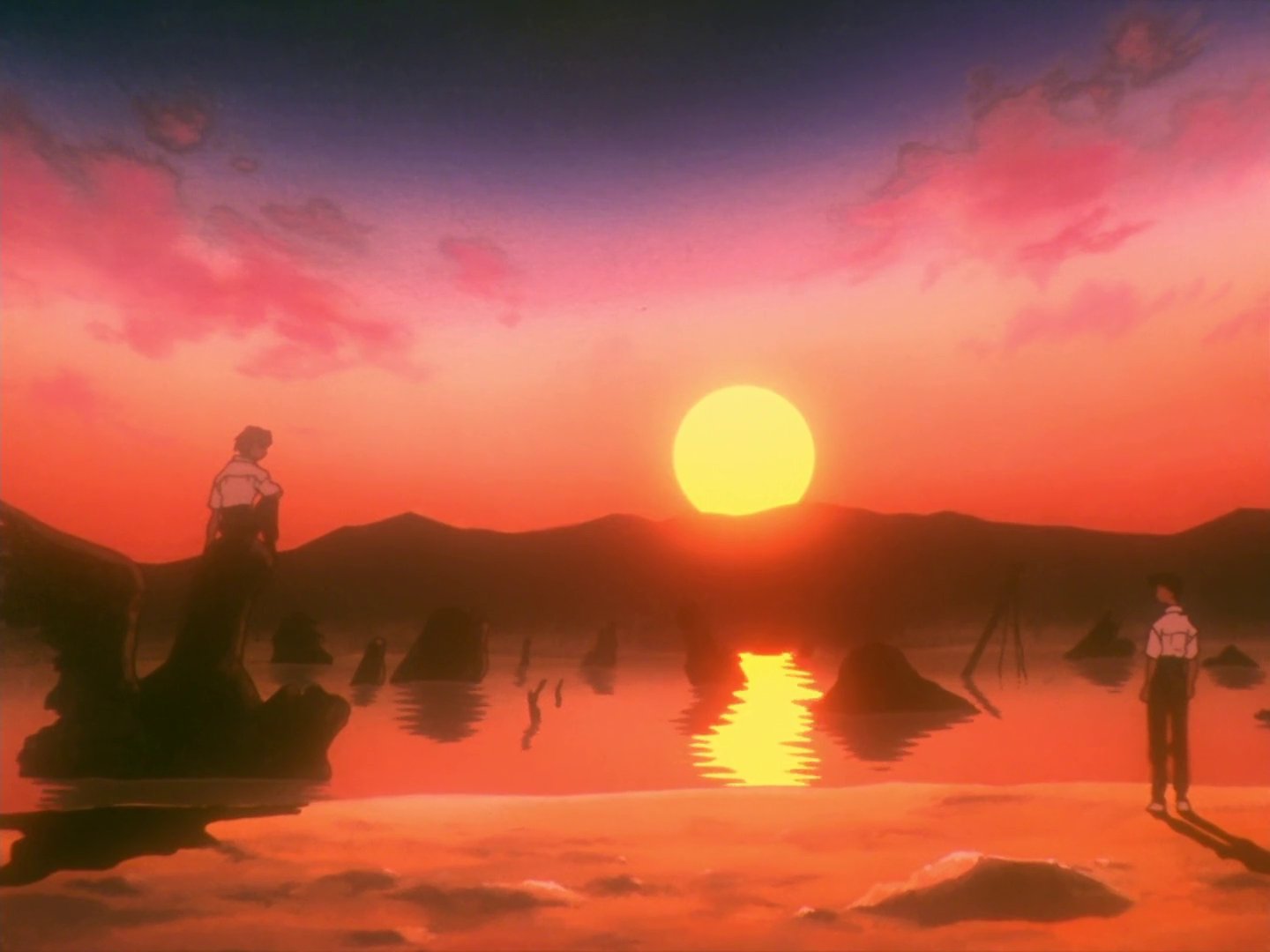
Neon Genesis Evangelion centers around Shinji and his fear of human connection, be it with his family, his peers, his friends, or anyone else. It is the anime of extreme introspection. Not only is the EVA-01 the means by which he tries (and fails) to find self-worth, but the EVA itself is revealed to house the soul of his dead mother. He is contained in a womb-like structure inside of his giant mom.

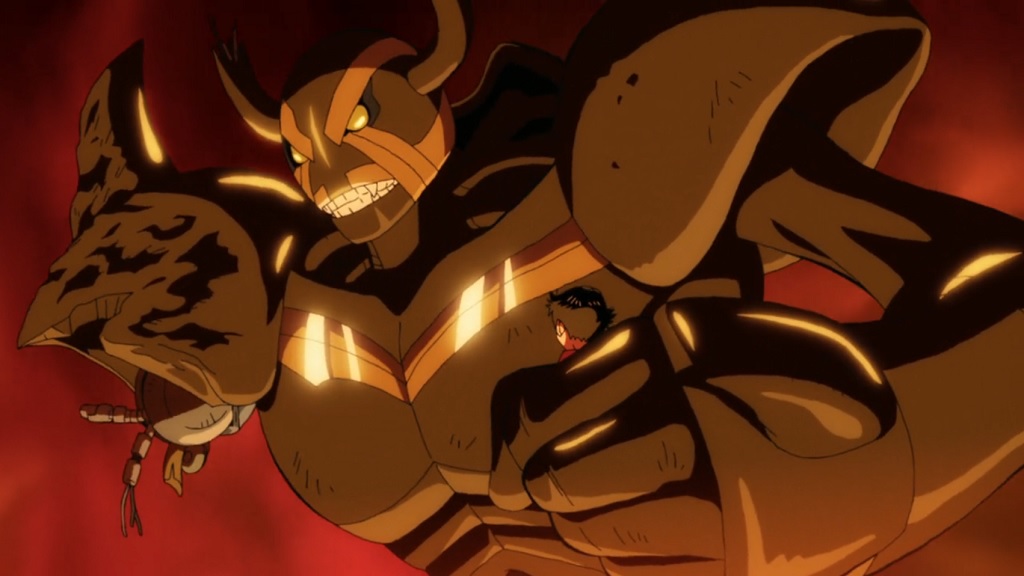
Tengen Toppa Gurren-Lagann is about Simon and the limitless potential of humanity to overcome all obstacles slowly but surely—and ultimately whether there should be limits on that power. Gurren-Lagann manifests this through numerous transformations fueled by human spirit that bring on exponential power growth.

The above examples are all heavy hitters, but what I also want to emphasize is that this applies to “lesser” titles as well.

Brave Police J-Decker is maybe the most on-the-nose example of the relationship between a boy and his giant robot, as the story is about how Yuuta’s friendship with the giant police robot Deckard is what teaches the latter to develop true emotions and a proper sense of justice and humanity. 

Shinkon Gattai Godannar is about the relationship between Gou and Anna as husband and wife and how their love affects both their personal and professional lives as co-pilots. Godannar Twin Drive is literally a combination of both robots.

Robotics;Notes focuses on Kaito and his relationship with Akiho’s giant robot club, and the blurring of augmented reality with actual reality. The creation of the Guntsuku-1 is basically an untenable goal that, through the events of the series, becomes effectively “real” through how Kaito and Akiho view and utilize it.

Trider G7 is about Watta, who’s both a little kid and the CEO of his own company, utilizing both the image of Japanese corporate culture of the early 1980s and the classic child desire of wanting to do what the adults do. The Trider G7 robot literally flies out of a playground, and has tons of cool and wacky weapons, but the fact that it’s Watta’s robot and the main way he gets his job done means it’s the conduit through which that “grown-up” fantasy takes place. 

Shinkansen Henkei Robo Shinkalion the Animation is literally a commercial for bullet train toys that are, in turn, advertising for the Shinkansen trains in Japan. Its main character, Hayato, is basically a Shinkansen fanatic who sees them as not only the coolest things ever but as reflecting a philosophy of unwavering service to the people of Japan. The Shinkalion robots, by extension, portray a more action-packed version of this concept.

Giant robot anime embody many values, from crass commercialism to dreams of being brave and strong, from anti-war sentiments to deep looks inward at the psychological scars of society. The mecha themselves are often not “characters” in and of themselves (with a number of notable exceptions), but they are symbolic of how the protagonists of these stories relate to what they experience. The hurdle for those who think that these anime are “more about robots” is that this particular way of communicating the characters’ stories requires an acceptance of giant robots as a storytelling device.