The Elegant Design of Suntory’s Virtual Youtuber

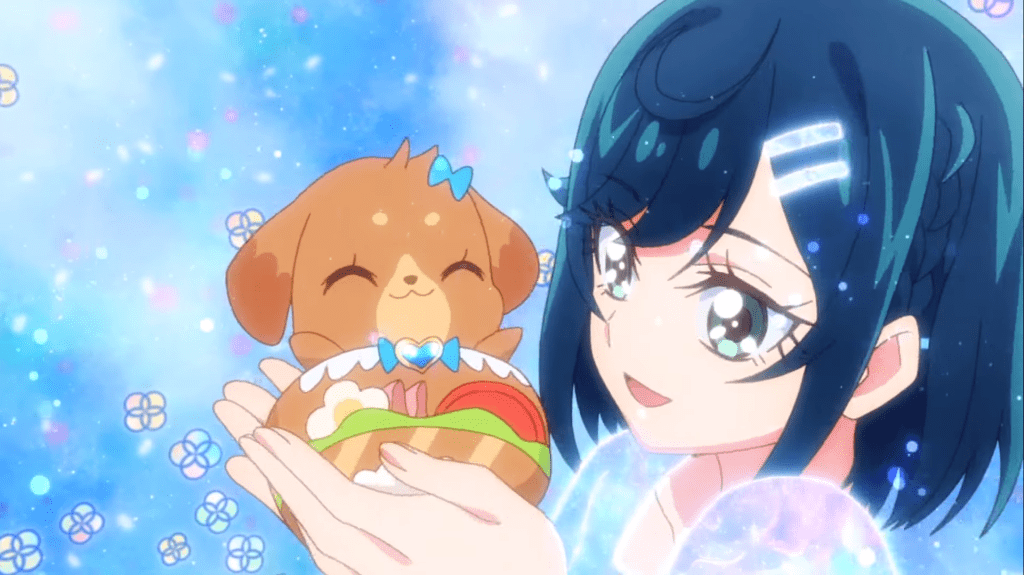
There’s a 50/50 chance that saying “the Japanese beverage company Suntory has their own official Virtual Youtuber” would come as a surprise. But the blue-haired “Suntory Nomu” is real (in a sense), and I actually like her design quite a bit. What really stands out about Nomu’s appearance, relative to other VTubers, is how simple and subdued it is. A white dress with blue highlights stands in sharp contrast to the vast majority of Hololive and Nijisanji, who seem to be created with a maximalist philosophy. This latter approach brings to mind broader discussions about character design in media.

(Side note: I’m not sure I need to mention this, but in case it matters, I am not endorsing Suntory products in any way. I generally like their drinks well enough, but that’s about it.)

When looking at Nomu relative to the Hololive members she’s streamed with, the difference is clear. While both have attractive designs, Takane Lui and Aki Rosenthal have all these details, adornments, and colors, resulting in rather complex/complicated appearances. There are practical reasons to make them this way, of course: They need to be immediately distinct and visually appealing to prospective viewers. Rigging/modeling them for animation is a one-time thing, as opposed to needing to draw them anew every time in the vein of anime or manga. And the expectation is that people will stare at them for extended periods. VTubers need to communicate a good portion of who they are immediately, as viewers can’t be expected to dive into an extensive backstory—and often VTuber backstories are helpful suggestions, at best. 

The decision to go maximalist reminds me of fan discussion surrounding fighting game characters. Fighting games, especially ones not based on an existing property, share a number of similarities with VTubing. There’s no prior context for people to get attached to (as they might with an animation or comic), so having characters catch the eye right away while also communicating how they play is important. There’s still quite a bit of range—Compare Ryu or Chun-li from Street Fighter to Sol Badguy or Dizzy from Guilty Gear (especially pre-STRIVE)—but criticizing a fighting game character for being “boring” is typically more about looks and presentation of attacks. That’s actually a big difference with Virtual Youtubers: It does ultimately come down to personality.

But it makes me wonder if significantly simplified designs like Suntory Nomu couldn’t thrive despite the general trends against them. Maybe it’s because so many designs take an “everything but the kitchen sink” approach that Nomu’s aesthetics stand out more. Could there be a trend back down to relatively more minimalist designs in VTubing, fighting games, and other similar areas? It’s something I’d like to see, if only because I’m curious how it would all play out among the fans themselves.

What if Luke Is Not the Actual Main Character of Street Fighter 6?

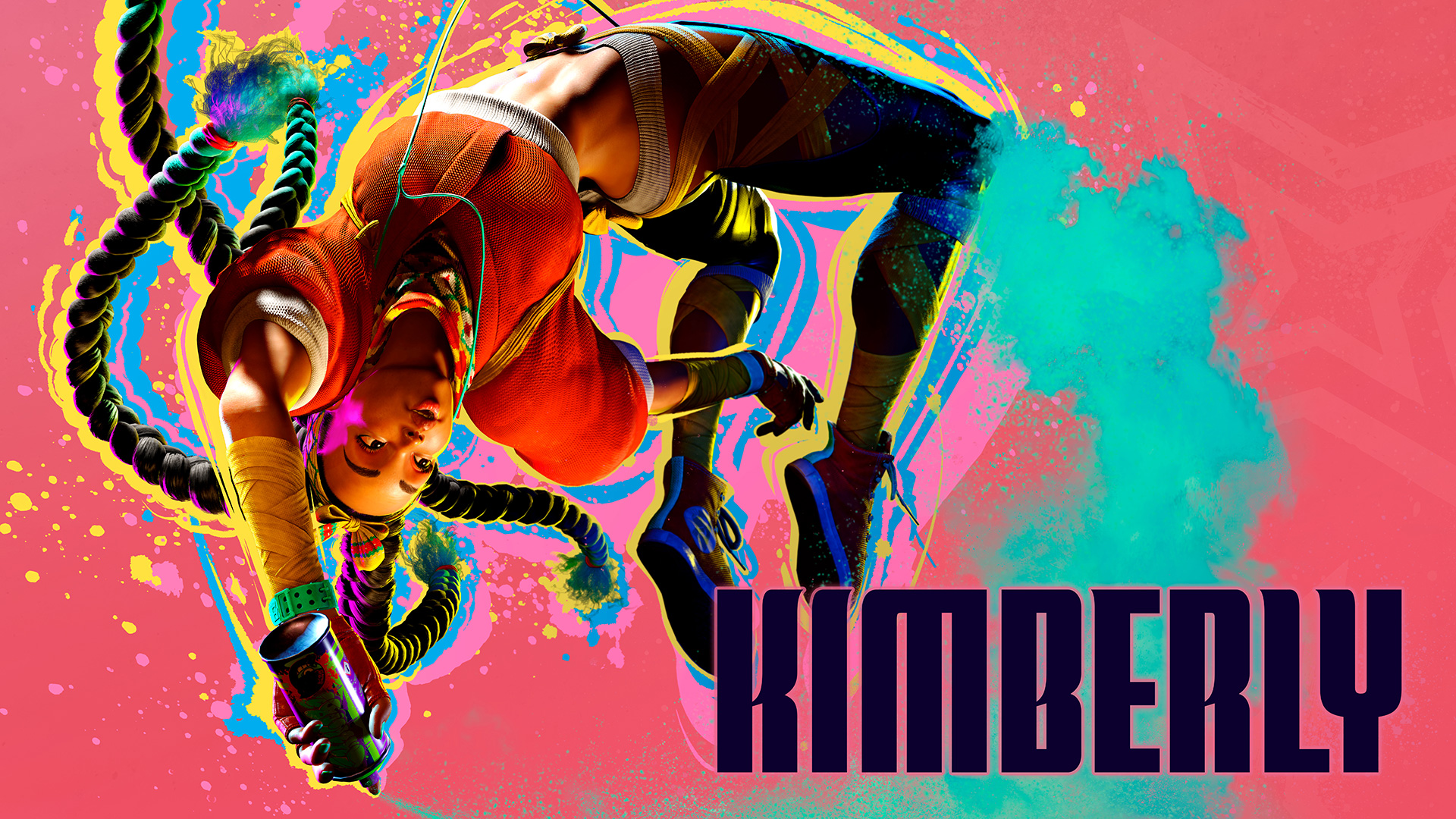
Street Fighter 6 draws ever closer, and standing at the poster child of this new game is the American MMA fighter Luke. He was even originally introduced in Street Fighter V as the bridge to the anticipated sequel. But as prominent as Luke is, I actually think another new character might be the true protagonist of Street Fighter VI: the black female ninja, Kimberly.

The new Street Fighter leans heavily into an urban street aesthetic, most notably in the use of spray paint/graffiti as reflective of hip hop culture. While this motif been around to certain degrees since the very first Street Fighter (like on the title screen), here it’s a defining part of the look and feel of SF6. And if you look at all the new characters, only Kimberly incorporates spray paint in her moveset. She combines it with her ninjutsu training under Guy from Final Fight, taking the old and giving it a fresh coat.

I’m entertaining this possibility because I see it as a way for the Street Fighter franchise to stealthily push a forward-looking diversity that celebrates its international fandom while simultaneously shielding itself from the pitchforks of overly sensitive cultural conservatives who are afraid of having their games not be represented by a conventionally muscular manly man. Luke almost feels like a Trojan horse: “Look over here at this blond American tough guy! Isn’t he what you want?” Meanwhile, Kimberly thoroughly embodies the spirit of SF6. 

And that’s on top of having Ryu, Ken, and Chun-li still around. I could be completely wrong in the end, but even if I am, I think Kimberly is already a breakout character among a crowded roster of excellent new designs. She’ll at least wind up being the Chun-Li of Street Fighter 6.

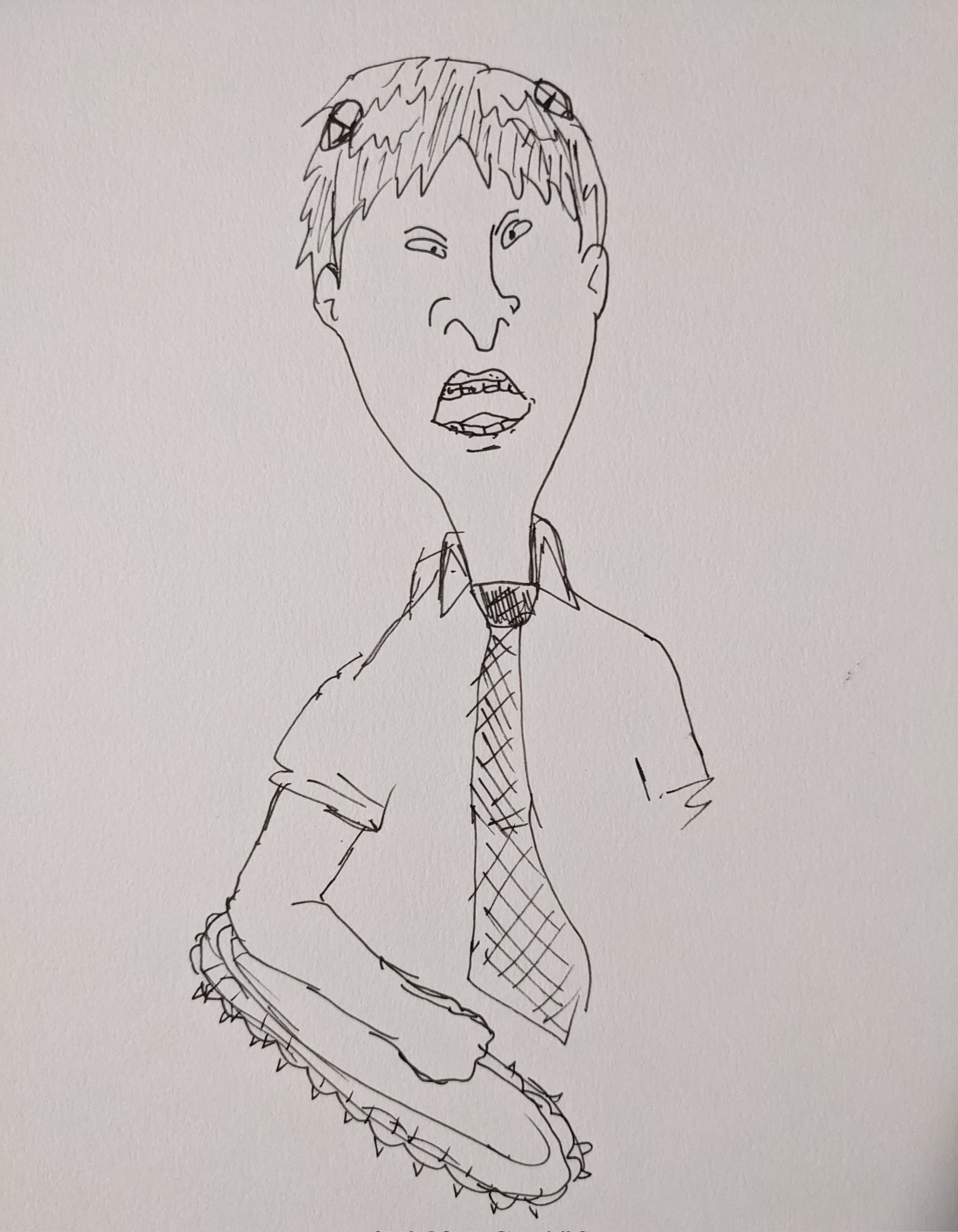
Inktober 2022 Archive: My First Time!

After years of hemming and hawing, I decided to actually do Inktober this past October. The results were, well, results.

Especially with the state of Twitter being extremely abunai, I decided it’d be good to just have a gallery here.

Truly Something for Everyone: Splatoon 3

In Splatoon, ink is everything. It’s how you take down opponents, it’s how you advance and retreat, it’s how you control space, it’s how you assist allies, and it’s how you win. This core mechanic is so smart, creative, and well-executed that it basically provides a solid foundation for every game entry. Unless the creators actively screw things up, it’s hard to mess with such a successful formula. However, while a bit of a spitshine would produce a decent enough sequel, Splatoon 3 has gone above and beyond to take the lessons from its predecessors and create a more fun and more refined experience.

The bread and butter of Splatoon is its multiplayer, where teams of four compete. While the basic gameplay remains fundamentally the same, and I’m nowhere good enough to notice subtle differences in weapon ranges and the like, it’s very clear that the developers put a lot of thought into improving things. For the more competitive sort, ranked battles now have two types of games available so you can play the ones you enjoy more. For everyone in general, the new generation of super weapons builds on an important development that’s happened over the course of many games. The original Splatoon was famous for having invincible supers with such great power that games revolved around them. Splatoon 2 dialed this back a bit, and now Splatoon 3 puts an even greater emphasis on interactivity and counterplay.

But not everyone is into competing against other players, of course. Fortunately, Splatoon 3 provides alternatives. The first is the return of Salmon Run, a multiplayer co-op experience against waves of computer-controlled enemies. The second is the best story mode thus far, delivering in every way that matters. Like previous games, the singleplayer story mode works as a nice introduction to the games’ mechanics, but the actual plot itself is actually filled with thrilling surprises that provides great fodder for long-time fans without alienating newer players.

Speaking of avoiding crushing beginners, while it’s clear that the Octo Expansion was a major influence on how this turned out, fortunately it’s not as harsh as that Splatoon 2 DLC. I still get chills thinking about the Octo Expansion’s hidden final boss, Inner Agent 3, and I expect an eventual Splatoon 3 DLC to be similarly expert-focused.

I do have a couple complaints about the game. One is that the initial tutorial basically requires players to use the motion controls. While I prefer that method of control myself, I know people who just cannot get accustomed to that setup. Between that and requiring a shooter-type weapon (technically also my preference) to get through most of the singleplayer, and I think that perhaps not enough has been done to help those who don’t prefer the default style of Splatoon but still want to enjoy it. Another is that many of the maps in online play feel a little cramped, and as someone whose preferred weapon (the N-Zap) thrives on mobility, I find myself feeling at times like there’s no escape. I think I can probably adjust to that, though.

Overall, Nintendo has really hit it out of the park with Splatoon 3. It’s basically everything I was hoping for, even as I’m still trying to get used to all the changes. This one’s a winner.

Dear Media Companies, Stop Trying to Flood My Brain

I am tired of media and entertainment companies trying to monopolize my attention.

Fourteen years ago, when the Marvel Cinematic Universe had begun bringing to the silver screen the crossovers that defined superhero comics, I was on board. I love a good superhero team-up, and the MCU films came without decades of baggage. When the first Avengers movie hit theaters, it felt like just the right amount of reward for time spent.

Fast forward to now, and I just cannot keep up, nor do I want to. The problem isn’t just that Marvel is putting out so many more movies and TV shows. I really don’t mind sprawling mega franchises that fans devote their hours to. Nor is it that I’ve just gotten older. Rather, what I’m bothered by is that Marvel seems to be trying to push out all other competition from people’s brains until they’re all that’s left.

Compare this with something like Pokémon. You could easily spend every waking hour (and potentially even your sleeping ones) to these Pocket Monsters. But Pokémon doesn’t act like every game, manga, and anime is interwoven, nor does it imply that missing even one of them means failing to have the whole story. In fact, almost every game starts from the assumption that it’s introducing new players to the world of Pokémon, and they don’t draw specific attention to prequels. Marvel, however, wants you to watch show after show, film after film.

Another example of mind-monopolizing media is just gacha games in general. Between the stamina bars that either encourage players to spend money or keep a close eye on when they refill, the constant limited-time bonuses, the never-ending new stories, and the gambling-esque character rolls themselves, I constantly find myself wishing I could enjoy these games. That’s not to say that I avoid them entirely, but I have to actively minimize their presence in my life. The worst of them take from the old Farmville school of essentially holding your game hostage.

I’m not inherently against Marvel, mobile games, or similar, but I can’t stand how they discourage exploration by trying to monopolize attention. I love to explore different stories, different forms of art, and different creators. I’m not going to be nerd-guilted out of that passion.

Life, the Universe, and Battling – Pokémon Legends: Arceus

For better or worse, the Pokémon games have stuck to a tried-and-true formula that has brought it great success for nearly 30 years. While there have been some oddballs, the clear emphasis on the series has been on a fairly gentle-yet-complex turn-based experience that allows it to remain popular and accessible. For those wanting more—like a real-time battle experience—it can feel like a futile wish.

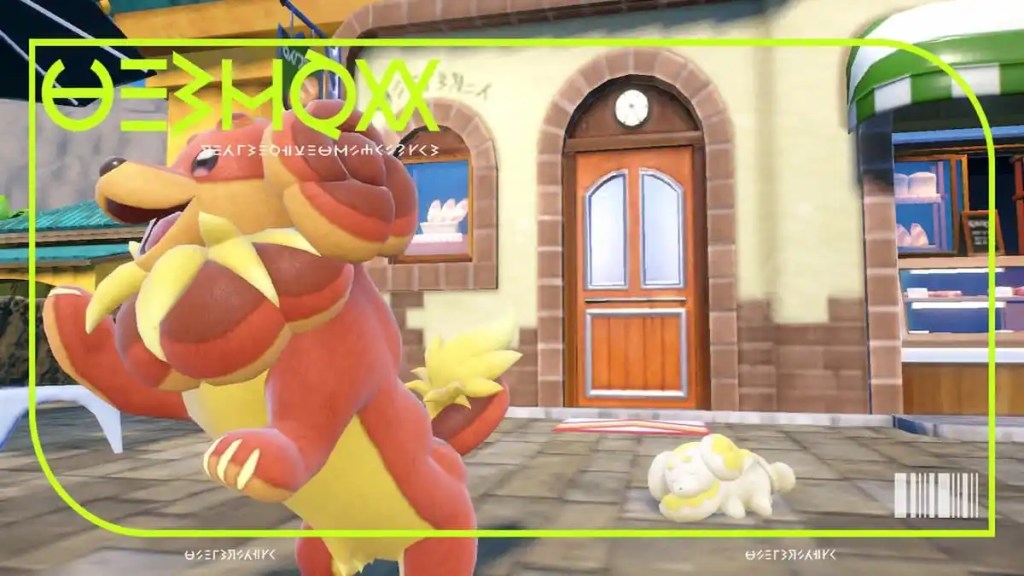
The pseudo-open-world of Pokémon Legends: Arceus isn’t exactly the game to answer these prayers, but it is the most daring title to date. It’s sort of a middle ground between various poles—not a full-fledged main title entry, but one that still maintains most of the core concepts of Pokémon. The open field at the center of the Sword and Shield games is greatly expanded upon here, and is in fact pretty much the feel of Legends: Arceus. The game also incorporates some real-time gameplay elements that put your trainer in peril instead of just your Pokémon, but battles inevitably come down to a turn-based experience, albeit one where the mechanics have a few added twists. All this makes for a fairly refreshing game that’s like a foot pressing halfway on the gas pedal. Some things feel familiar and other things are real surprises.

The premise of Pokémon Legends: Arceus is that you have been transported back in time to an era before the Sinnoh region was even called by that name. You arrive right on the cusp of the invention of the Poké Ball, which means that the so-called Hisui region is a place with a fundamentally different relationship with Pokémon consisting of fear and reverence. I was genuinely surprised to have the player character experience a time slip, and I have to wonder why the developers went with this angle instead of just having it be a child of the past. The story is decent enough, but I think the gameplay itself is what’s most interesting.

Because this is supposed to be a historical period that’s also more dangerous for regular folks, the new mechanics (or sometimes lack thereof) feel like both a throwback and a new frontier. There are no features like traits or even held items, let alone something as modern as Dynamaxing, giving me a real Generation-1 vibe at times. I experienced a number of moments where I was worried about a Pokémon having something like Levitate, only to quickly realize that such things don’t exist in Hisui. 

The really major change comes from the way attacks can have different “speeds” to them, such that while battles are still fundamentally turn-based, sometimes you or your opponent can go two or more turns in a row. Combined with the fact that things like status effects and stat buffs/debuffs work quite differently all around, and the result is something familiar, yet strangely new. Also, sometimes, you’ll have to fight 1v2 or more, whether because you caught the attention of multiple wild Pokémon, or you’re fighting someone whose village culture is one where having multiple Pokémon out to do battle is perfectly normal. It’s not like any standard rules have been codified yet—which adds to the feel that this game takes place in a bygone era.

As for the real-time elements, the main ones are special boss fights against guardians known as “Noble Pokémon,” where you have to pelt extremely powerful Pokémon with bags of soothing balm and create opportunities to engage them in a proper Pokémon battle. The added factor of having to learn boss patterns and how to best dodge their attacks brings a dexterity element mostly absent from older games, but the awkward transition into battle mode feels like it could use some work—like a bizarre cousin of chess boxing. Maybe if you still had to dodge collateral damage while your Pokémon is engaging them, it could integrate the two pieces better.

There are hints that the upcoming Pokémon Scarlet and Violet are going to utilize at least some elements of Pokémon Legends: Arceus, though to what extent is still not entirely clear. While I do enjoy that real-time aspect, I’m not sure if I necessarily want it for the main series. I personally would be served with a solid hybrid between real-time and turn-based, but when I think about the fantastic accessibility of Pokémon that has allowed players young and old to approach it regardless of dexterity, and of the stories where kids have learned to read because they played these games, I don’t want that taken away. Maybe we could live in a world where Pokémon can somehow be both, and everyone can be happy.

What Bridget’s Return has Taught Me About the Internet

I’m no stranger to Guilty Gear or the yo-yo wielding Bridget: I cut my teeth on the character’s debut game, Guilty Gear XX, and I’ve seen both the unorthodox zoning and the particular internet notoriety garnered by Bridget’s feminine appearance and association with a certain term that implies an element of deception. I’m also one of the many surprised by Bridget’s return in the current Guilty Gear STRIVE—doubly so at the reveal that Bridget has gone from identifying as a boy (albeit one raised as a girl for superstitious reasons) to being a trans girl. Honestly, I never thought the games would make this decision, even accounting for the fact that another fighter, Testament, is nonbinary in STRIVE

However, the biggest shock of all to me was seeing some of the more negative reactions to Bridget’s loudly declaring herself to be a girl, specifically coming from a 4chan-derived crowd who worshiped Bridget as a “femboy” while simultaneously engaging in transphobic behavior. To them, Bridget being trans is a deep betrayal, or as one person summarized it, “their 9/11.”

I’ll be upfront in saying that I don’t really have an “interest” in Bridget, so this is not that type of personal matter to me. However, having seen the “Bridget worship” from all the way back in the day, I had always chalked up the caustic behavior of certain fans as a bit of self-deprecation mixed with slowly discovering their sexuality in a way that was psychically acceptable. While I never thought that being into Bridget automatically made you gay (attraction and sexuality are far more complex than that), I had assumed these people would like to see Bridget happy no matter what decision she made—and even then, the art of her wouldn’t have to substantially change. What I failed to take into account was the fact that bigoted fetishism is a thing, and that by extension, some use “femboy attraction” as a form of identity politics to rally against “wokeness.”

That was an oversight on my part. I know full well how fetishizing a group can risk dehumanizing them (though that’s not to say fetishes are inherently wrong). It also needs to be acknowledged that Bridget is a purely fictional character, which changes the dynamic compared to a real person. It does make me wonder, however, if affirming Bridget’s trans identity is somehow a breach of that plausible deniability that some had used to keep their contradictory beliefs afloat.

One thing I do worry about is how the politics of grievance seem to turn everything into a culture war, and that Bridget is going to be another front for harassment to occur, if it hasn’t happened already. Kudos to Arc System Works for being willing to take this risk, though. When it comes to updating their characters—be they straight, gay, cis, or trans, or anything else—Guilty Gear is unmatched.

Simplicity that Works: Multiversus Alpha Review

Thanks to an old friend, I managed to get into the Multiversus alpha. As a long-time fan of Smash Bros. and someone with a general interest in platform fighters, this new Warner Bros. crossover had me reasonably intrigued by its level of polish and its emphasis on 2v2 battle. While a lack of free time meant that I could only play briefly, I came away from the game with a positive impression, albeit somewhat tempered by its free-to-play (i.e. inevitably loot-based) model.

Gameplay-wise, two things stick out to me. First, is that it feels like the developers put a lot of thought as to how each character’s gameplay would reflect their identity. Second, the simplicity of the controls make Multiversus quite accessible and might even be a boon to its team focus.

The signature character flourishes are indeed all there, but it’s even baked into the mechanics. Of course Bugs Bunny would dig holes and generate objects out of thin air to complement his slapstick nature. Of course Velma from Scooby-Doo would act as range-focused support, and also gather clues like Phoenix Wright in Marvel vs. Capcom 3. Arya Stark has her sword, but also a “pie-making” mechanic that occurs when she KOs someone—which implies that she turned them into pie. The game successfully celebrates its crossover nature visually and through its controls.

The only exceptions might be Shaggy and Reindog. The former leans completely into the Ultra Instinct Shaggy meme and winds up being like a mix between Goku, Captain Falcon. The latter is an original character (in the same crossover-universe vein as Ruby Heart and Cybaster), and thus has no basis.

In terms of the controls, Multiversus does not have shields or grabs. It also does not rely on analog movement. Unlike Smash Bros., there are no distinctions between walking vs. running, or tilts vs. smash attacks. Simple as controls are in Smash, I’ve seen this granularity be a sticking point for less experienced players, and I think this move helps accessibility. The leniency of aerial movement also makes me think of a more refined and varied Brawlhalla: another free-to-play platform fighter that, unlike Multviersus, suffers a bit from feeling samey across its cast.

While there’s an argument to be made that this might oversimplify things in the competitive realm, I think this won’t be the case. In fact, the pared-down controls actually feel more conducive towards the chaotic environment of a 2v2 match. They give both players and spectators potentially less to concentrate on so they can pay attention to the match as a whole.

I can easily see the competitive scenes for Smash Bros. and Multiversus coexisting, if only because they have different emphases. Smashers overwhelmingly prefer singles over doubles, while the developers of Multiversus specifically designed it for 2v2. To wit, some of the biggest proponents of the game are those who have great love for doubles Smash, and I hope they end up having a game that can reward that passion. 

Semi-Brief Thoughts on the Slingshot in Super Smash Bros. Ultimate

The last time I wrote about Smash Bros., it was to give my thoughts on the concept of character complexity. Since then, the developers have declared Smash Bros. Ultimate balance changes are more or less done, so outside of discoveries from the community itself, there likely wouldn’t be anything new to discuss. But that’s exactly where new tech has arisen, namely in the form of what has been coined the “slingshot.” 

Building off of a few seemingly disparate techniques found earlier in the game’s competitive life, the slingshot was introduced to players at large thanks to Smash Bros. tournament organizer GIMR, who also runs the biggest Smash stream around, VGBootcamp. I’ve put his video above, as he explains it better than I can, but to sum it up: The slingshot is a technique that purposely uses the cumbersome buffer system in Ultimate to allow characters to juke while facing the opponent.

Even in this early stage, there are many reasons I feel that the slingshot is a net positive for me personally and Smashers in general. I’ll admit that prior to this announcement, I hadn’t really touched the game in months. But now, I find myself grinding the inputs trying to see what I can learn, and it’s exciting. Also, as GIMR begins to show in the video, it has immediate benefits for both of my mains, Mewtwo and Mega Man. 

I predict that slingshot will benefit Mewtwo immensely. While it’ll make the character more vulnerable to shield pressure, Mewtwo never dealt with it well anyway, so nothing much will change on that end. On the flip side, being able to mitigate that pernicious tail hurtbox that has plagued Mewtwo throughout Ultimate through quick turnarounds is itself a major boon. But Mewtwo also sports specific physics that seems ideal for slingshots and the way it instantly boosts characters to max air speed: a combination of low initial air speed but also the third highest max air speed in the game. It doesn’t help when Mewtwo is being juggled, but on the ground, I think it’ll be a fundamental change to the character.

Mega Man is different in that he has extremely high air acceleration and a strong (though not Mewtwo-level) max air speed. Although I think he potentially won’t benefit quite as much, the slingshot looks like it’ll still be a great asset. The tech will add an extra trick to his already strong and wiggly neutral, and I can see every move of his being useful with this new trick.

My only worry is that in a game where out-of-shield options are already bad, things might get a whole lot worse. But with the added layers I predict the slingshot will open, it’s going to make for a more dynamic experience.

Making and Sharing Lemonade: Princess Connect! Re:Dive Season 2

The first season of Princess Connect! Re:Dive was a surprise hit for me. In a seemingly endless field of mobile game adaptations, this one manages to achieve a nice balance between plenty of irreverent hijinks among its core characters with a bit of intrigue surrounding its greater plot and world. Season 2 flips the ratio, leaning more heavily into the overarching narrative, but I find it still enjoyable in its own right. In a certain sense, having the former take a more episodic approach gives more dramatic weight to the latter.

One thing I find particularly fascinating about Re:Dive is the way it connects to the original Princess Connect (sans Re:Dive) by giving the “player character,” Yuuki, more dimensions through turning his story into a redemption arc. It’s established throughout the anime that the world portrayed in the anime is something of a “redo” after a final battle against a great villain went horribly wrong, which renders Yuuki initially amnesiac. “Having things happen to you” is not the same thing as having a personality, but in giving this origin story to Yuuki, it lets him feel like a character all his own instead of an automatic audience stand-in. Takasaki Yu from Love Live! Nijigasaki High School Idol Club shares a similar circumstance, and like Yuuki, is there in part to show how great everyone else is.

Making the vanilla Princess Connect the backstory for a bigger and better sequel turns out to be a solid idea, and it actually reminds me of another game franchise: Street Fighter. The very first game is widely regarded as the worst one just by virtue of awkwardly imprecise controls and the lack of a large playable character roster, but the roots were there. And like Princess Connect, it’s the sequel that would become more of a gold standard—and the sprinkling of story from Street Fighter would become the exciting backdrop for Street Fighter II. After all, how much more awesome is the rivalry between Ryu and Sagat when the canon says Ryu scarred Sagat with a Shoryuken and drove the former champion to develop his own leaping uppercut? 

For that matter, the way that various characters in Season 2 of the Re:Dive anime show up to reward their fans without overshadowing the Big Plot feels like how a fighting game anime would ideally work if adapted into a TV series. I never finished Street Fighter II V, so I can’t say how that one goes.

Princess Connect! Re:Dive Season 2 gets around to more or less wrapping up the big threads established from Season 1, but given that it’s a mobile game, there’s inevitably going to be some more story. I hope it can keep up the general joy and excitement that made me a fan in the first place.