Nendoroid Tomoyo, Champion of the Universe

nendoroidtomoyo-sutekidesuwa

Daidouji Tomoyo from Cardcaptor Sakura is one of my favorite characters ever, from one of my favorite anime ever, and if you’re not a fan of Tomoyo… what’s wrong with you? Whereas normally I would hesitate to buy even some of my most beloved heroines, Nendoroid Tomoyo was a no-brainer. Upon seeing it go up for pre-order, I hit purchase and looked back with zero regrets. Sakura merchandise is common, but Tomoyo much less so, and I couldn’t let this sort of thing pass me by.

nendoroidtomoyo-sakuradistant

I don’t own a lot of Nendoroids. In fact, my first one was a Kinomoto Sakura (seen above) that I received as a birthday present. Quite smartly, my friend purchased it because he (correctly) expected that I would not hesitate to pick up Tomoyo. Thus, I don’t have a lot to compare to, and I’m extremely biased, so I’ll call this less a review and more of a celebration.

nendoroidtomoyo-closeup

Nendoroid Tomoyo is mostly based on her anime design, as opposed to the softer shoujo look of the Cardcaptor Sakura manga. However, one thing that they did bring from the manga was a hint of Tomoyo’s lavender hair; in the anime it’s more of a gray. When I think about it, rarely do figures try to replicate the look of shoujo manga, likely due to how complicated and not designed for 3-D they are. At least with anime, you can rely on more solid colors.

Tomoyo comes in a standard Tomoeda Elementary school uniform, and has a choice between a hat or a hairband, as well as smiling and ecstatic faces. I’ve gone with the hat + sparkly eyes combo for these photos in order to achieve maximum radness, but what really takes this figure over the top is the inclusion of her signature camcorder.

Remember kids, this anime was made in the early 2000s, before mobile phones could take HD-quality video. Back in her day, Tomoyo would have to walk 20 miles uphill both ways in the snow in order to film her lovely Sakura-chan and add to her massive archive of Cardcaptor Sakura footage in her private viewing room inside of her mansion, under watch by her squad of lady bodyguards.

nendoroidtomoyo-withsakura

It’s supposed to have a swing-out screen, but a small missing part makes it impossible to attach. I’m not sure if it was defective or if I had simply lost it while taking it out, that’s how tiny the connecting piece. The other flaw is that the giant head is rather unwieldy, especially with the hat, and sometimes moving it around can cause Tomoyo’s noggin to fall off.

Overall, it’s a fine addition to the collection, and when I think about it, I am fortunate that the characters I like tend not to get a ton of merchandise. That’s what I would say…if I didn’t get into Love Live. That’s for next time.


Aquarion Logos Has a Way with Words

Wordplay has always been important in the Aquarion franchise. Generally set in a world where love reincarnates thousands of years in the future, many solutions across both the original Genesis of Aquarion and Aquarion EVOL literally come out of transforming words in order to access a plethora of elaborate giant robot attacks. Even as far as those series go, the latest incarnation, Aquarion Logos, takes this love of language manipulation to a whole new level, positioning it as the most prominent factor. For a lover of puns such as myself it makes for a fascinating series, not only because it’s often quite clever, but because Aquarion Logos looks at the very way in which people perceive words.

In the original Aquarion, the Japanese title was Sousei no Aquarion, where sousei (創聖) means “construct” and “holy.” Hence, its English translation is “Genesis.” When characters combine their robots, they say, “Sousei Gattai,” or Genesis Combination. Already this is where Aquarion Logos takes a different angle. In that series, sousei is written with the Japanese kanji for “construct” and “voice” (創声). Translated into English as “verbalism,” it represents the fact that the main pilots in the series all have a talent for bringing words into reality. Whether they’re aiming to be a politician, a comedian, or indeed a “savior” as the main character Kaibuki Akira does, they believe in the power of language, and can almost literally walk the walk by talking the talk. When characters shout “Sousei Gattai” in Aquarion Logos, it thus takes on a completely different meaning.

The ways in which words are used becomes the central conflict of at least the first half of the series. The villain, a man named Kenzaki Sougon, is able to travel into the very world where words exist and transform them into creatures called “M.J.B.K.” Pronounced mojibake (literally “word monsters”), these enemies of the week (again, giant robot show) devour the words on which they are based, manipulating their presence in reality. Because of the way kanji works, many other ideas are eradicated as well. For example, in Episode 1 the M.J.B.K. is created from the word maki (巻), which means “roll,” causing things to get twisted into knots, but it’s also the word used to mean “volume” as in “volume 1 of a manga,” which causes that concept to disappear as well.

Sougon believes that people have sadly lost their connection to the origins of words, that the power of words comes from the desire to communicate what exists. Words are in service to reality, and forgetting that means words become useless. In contrast, Kaibuki Akira goes the opposite direction. He draws on the creative potential of words as a way to construct reality. The key example of this is the fact that Akira frequently refers to himself as a “savior,” and tries his best to just constantly save people. When asked why he’s a savior or why he’s so hung up on the idea, it turns out that there’s no particular reason. He takes the meaning of the word itself and makes it into reality through his actions, fulfilling its potential. The Japanese word for savior, kyuuseishu literally means “one who saves the world,” and that’s what Akira aims for.

In Episode 13 the team fights a particularly dangerous M.J.B.K. that represents Mu, or nothingness. Written as 無, perhaps people might recognize it as the symbol used by Gouken in Street Fighter IV. Sougon uses it because the power of nothingness is able to consume other words and concepts, but Akira responds by saying that nothingness also means endless possibilities. At this point, he and his co-pilot Maia utilize the signature attack of the Aquarion franchise, the Mugenken, or “Infinite Punch.” Mu is one half of the word for infinity. At another point, as the world risks being reduced to that nothingness, the word “savior” carries the potential for recovery, as it consists of the characters for “help,” “world,” and “person.” What else is needed to start over other than these concepts?

Aquarion Logos is both a powerful and silly anime, and intentionally so. It’s potentially a difficult series to watch because of how prominent kanji is, making it a bit obtuse for those unfamiliar with Japanese, particularly because English and other languages don’t necessarily utilize symbols in the same way. So far, many of the references are to the original Aquarion, but Episode 13 drops a possible callback to Aquarion Evol, so it’ll be interesting to see how things develop now that the second half has been under way.

Let’s Talk About Cloud Strife’s Hair in SUPER SMASH BROS.

By this point, you’ve probably heard: against all odds, and against all predictions, Cloud Strife is in Super Smash Bros. for Nintendo 3DS & Wii U. The very symbol of Square Enix (back then Squaresoft)’s departure from Nintendo consoles, and the most popular Final Fantasy ever, now challenges Nintendo’s greatest icons. I’m not going to show you a hype reaction video (all of my hype tends to be inward), but if you want to see one, this is my favorite.

Instead, I want to talk about this:

smash-cloud-ffvii smash-cloud-adventchildren

(No, I did not purposely use the Japanese trailer, it was just up on the Japanese Smash Bros. page first.)

As you’ve probably noticed, you have the choice between Final Fantasy VII Cloud and Advent Children Cloud. However, what impresses me is that Cloud’s hair is more realistic-looking in his Advent Children model.

That was totally unnecessary to do, but it’s this kind of attention that I love about Super Smash Bros. One aspect of Advent Children is that it updated the designs of the FFVII characters, showing off in the process the advances in 3D graphics that had developed since 1997. What I find especially impressive about this is the fact that the game ends up embracing both versions. While Cloud isn’t blocky like the Akira from Virtua Fighter Mii Costume, there’s still that sense of not just a different hair style but a more polygonal one.

Then again, given Little Mac’s wireframe model, this is exactly the sort of thing I should have expected…if I had expected Cloud at all.

Who’s even left at this point? Who could even top the surprise factor of this? At this point I’m calling Pitfall Harry, the first side-scrolling platform hero.

If you liked this post, consider becoming a sponsor of Ogiue Maniax through Patreon. You can get rewards for higher pledges, including a chance to request topics for the blog.

I’m Backing the Anime Project CHUYA-DEN on Kickstarter

I believe that the best children’s anime, and perhaps the best children’s entertainment in general, carries a sense of weight that does not try to go far above their heads. More than a matter of simply “maturity,” it’s about giving children respect and understanding that they are thinking, feeling beings who experience the world, and this also results in works that can be enjoyed by adult as well. The best moments of series such as Pokemon and Digimon follow this vein, and this is also the impression I get from the latest Kickstarter anime project, CHUYA-DEN: The Night and Day Chronicles.

CHUYA-DEN follows three children who get embroiled in the conflict between day and night youkai, and must fight to save the world from darkness. After watching the Kickstarter video, I decided to back the project almost immediately. This might seem a bit odd given that details of the story are sparse and the staff for this project aren’t industry superstars, but just from that small introduction a number of things stuck out and impressed me.

First, is the overall atmosphere of the world being portrayed. With its Arietty-esque portrayal of common, everyday objects such as cooking stoves as giant artifacts, combined with the brightness of its characters and the darkness of night, I could feel a sense of importance in what the characters are trying to accomplish.

Second, is the fact that the creators of the studio responsible for this project, WAO World, are valuing CHUYA-DEN as a wholly original project not shackled by the demands of a toy industry or other such sponsor that demands sales of merchandise above all else. As much as series such as PokemonDigimon, and Precure have their heartfelt moments, their ties to toy and game companies always require a bit of sales-pitching, and I see CHUYA-DEN as something that exists along a similar wavelength without always having to defer to that sort of merchandise-oriented marketing.

Third, and for me the most important point, is that CHUYA-DEN appears to greatly value a sense of introspection in its characters and world while still maintaining itself as a children’s show. There’s a line in the trailer that says, “All you feelings inside are battles you must fight,” and that sense of conflict being as much internal as external is the same feeling get from my favorite children’s anime, titles such as Heartcatch Precure! and Battle Spirits: Shounen Toppa Bashin.

The project has 4 days to go, and is currently at over $50,000 of its stated $100,000 goal. If you’re interested in it for the same reasons as me, or perhaps even different reasons all your own, why not take a look?

If you liked this post, consider becoming a sponsor of Ogiue Maniax through Patreon. You can get rewards for higher pledges, including a chance to request topics for the blog.

The Fujoshi Files 149: Ominaeshi

Name: Ominaeshi (女郎花)
Alias: N/A
Relationship Status: Single
Origin: Moehime

Information:
One of the four Heian-period youkai who comprise the “Kachou Fugetsu,” Ominaeshi is, much like the rest of her group and her human friend Tomoe, a bibliophile. Possessing a more masculine personality compared to the others, Ominaeshi also has the ability to manipulate plants.

Fujoshi Level:
Willing to read anything and everything, while Ominaeshi is not much of a yaoi fan compared to her friends, she is slowly becoming more of a fujoshi due to constant exposure.

Verbose Anime Where Words are Everything: Monogatari Series and Aquarion Logos

I don’t believe all that strongly in “show, don’t tell.” It’s effective as a basic guide to help people understand the power of visual media, or as a helpful rule to teach people that subtlety is a thing, but it runs the risk of being wielded like a sledgehammer, similar to the concept of “character development.” Telling instead of showing has a purpose and can be used well, though effectively doing so is arguably even more difficult.

hanamonogatari-suruga

I recently finished Hanamonogatari, which for those who’ve lost track of all of the different titles is the end (or perhaps extended epilogue/adventure unto itself?) of the second series. Given the characteristically heavy amount of dialogue that this series is known for, and both the criticism and praise it receives for doing so, I had to return to what is perhaps the biggest question to deal with when reviewing or analyzing Monogatari. Is it actually possible for a series that obsessed with words to be follow the idea of “show, don’t tell?”

The Monogatari series, and Nisio Isin in general, revels in long dialogue that tells the viewer or reader what’s going on. There are seemingly endless descriptions by characters about how they’re feeling and fewer expressions and actions that reflect those emotions. It can come across as very long-winded, and I think that finding the series to be unenjoyable as a result is not surprising or exactly a problem. However, Monogatari is frequently about words themselves, and how they can be transformed or carry different meanings, especially through the use of Japanese as an ideogram-based language. Puns and wordplay and general use of homonyms is core to the series, and if a work is that obsessed and built around looking at and examining the occult power of words, how much is lost in a less dialogue-heavy work?

aquarionlogos-maki

A counterpoint to this is the more recent Aquarion Logos, where the heroes battle monsters that are actually the essences of kanji ripped out and mutated. I think the similarities to Monogatari are quite upfront, and I even jokingly call it Aquarimonogatari myself. Here, rather than engaging in extensive dialogues and conversations, a lot of the action comes from mecha battles and more typical anime character interaction hijinks. Words hold a similar power in Aquarion Logos that they do in Monogatari, but this is usually expressed in scenes where the loss of corruption of a word causes accidents and other horrible changes in the world.

So in terms of the question of “is it actually possible” to make a series that is so focused on the nature of words to be less expository, the answer is “yes,” but then one must ask to what extent it transforms the function and feel of the work itself. Can Aquarion Logos go as deep into exploring the interplay between words in terms of their appearance, sound, and cultural weight as Monogatari when it has all of these surrounding qualities that are more in line with a typical series? Or is perhaps Monogatari just as “guilty” of doing the same because it has this very otaku-focused set of characters that play just as much with the idea of “harems” in anime as they do the power of writing and speech?

If you liked this post, consider becoming a sponsor of Ogiue Maniax through Patreon. You can get rewards for higher pledges, including a chance to request topics for the blog.
Fun New Experiments: Ogiue Maniax Status Update for November 2015

The past month has been quite fun for Ogiue Maniax. First off though, I’d like to thank the following Patreon supporters for believing in me and my writing:

General:

Ko Ransom

Alex

otarsus

Anonymous

Yoshitake Rika fans:

Elliot Page

Hato Kenjirou fans:

Elizabeth

If you haven’t checked out what I’ve written over the past month, I think I’ve put out some pretty good work this time around. As part of New York Comic Con I reviewed Boruto: Naruto the Movie, which is the bookend to the long and popular Naruto franchise. I also finally got around to talking more about my current favorite food manga, Mogusa-san, and I make a pretty convincing argument as to who’s the best moe character of 2015.

My Genshiken chapter review this month felt somewhat heavier than my previous ones, but I think it makes a good partner with my most recent post, which covers my own thoughts on the recent harassment issue in the Steven Universe fandom.

No sponsored posts this time around, but if you’re interested in having me tackle a specific topic of your choice, I take requests from sponsors who have pledged $30+ on my Patreon.I’m trying a few new things with Ogiue Maniax, as while I love the blog I do wonder if it’s grown stagnant and unwieldy in certain respects. First, while many of my articles are fairly long, I’ve started including some shorter posts as well. Back before 2010, when I would write one post per day, my output was more about getting ideas out there and making them short and sweet. Although I think longer posts have their merit in that they allow for more in-depth explorations of ideas and so I would never do away with them, I am wondering if shorter posts can reach people in a different way.

Second, I’m dipping my toe in YouTube. I do not believe I will ever fully get into the YouTube game, but I was thinking of it as a different medium to get my thoughts across. Today I’ve released the first in what could be a series of “1-Minute Reviews,” based on my past reviews on the blog. The idea, as implied, is that I give my take on an anime in 60 seconds or less.

Third, I started up a Facebook page for Ogiue Maniax. I’m currently not entirely sure what its use is, but I’m open to suggestions.Finally, I’ve created an Ogiue Maniax Skype Group for any Patreon supporter who contributes $2 or more. I’m curious to see if anyone would be interested in chatting with me or other readers directly. I’m still unsure if I would do video chat, but voice chat is something I’m open to. Just contact me through Patreon with your Skype name and I will add you to the group.
So tell me what you think!


The Dangers of Righteousness: Thoughts on the Recent Steven Universe Tumblr Incident

Recently, there was an incident where a Steven Universe fanartist named Zamii was bullied online through Tumblr, actively harassed over what the aggressors stated to be the artist’s racist, sexist, and problematic fanart. More than simple and well-meaning criticism, it reached the point that the artist attempted suicide, and even the Executive Producer of Steven Universe had to step in and essentially defend fanart as a form of freedom of expression. It gets more complicated than that, but here’s a helpful article that summarizes the whole controversy.

I wanted to say something about this issue, but the problem was that there’s actually so much wrong with this situation that I was having trouble deciding where to begin. So, I think I’m going to start from the basics, the core ideas that I think need to be understood and appreciated so that people willingly reflect on their actions. If these are communicated successfully, then maybe I’ll branch out further in a future post.

We currently live in a time where people are increasingly aware of how perceptions of themselves and the world are shaped in part by the media around them. If you’re a girl and you grow up in a world that tells you women are sluts, that’s going to affect you on some level, even if you ultimately defy it. If you’re a minority and you’re told that you can only work certain jobs, or you’re fat and being told that you can never be beautiful, then it’s going to stay with you, needling at the back of your mind. This is what makes Steven Universe such an interesting series: its diversity of representation, and the strength and growth of its characters are not only well-written but can even be said to question race, gender, and sexuality norms in an uplifting manner. This is what attracts many fans to Steven Universe, and why diversity is at times at the forefront of discussion about the series.

Were the harassers right about Zamii’s art being problematic? I do not believe so personally, but on some level it doesn’t matter how justified their position was.  They could have been 100% right for all I care. The problem is—and I want not just people involved in this situation but everyone to read this—even if you are right, it does not give you the license to be an asshole.

Of course I know things aren’t so cut and dry. There are strong emotions at work, and unlike those who believe that emotions are inherently counter to logic, I think that they actually can help to reveal some of the issues with ourselves and our societies in ways that complement the use of reason. In fact, I believe that emotion is of utmost importance to those bold words above because it’s a matter of empathy, and empathy is a quality that is worth extending to everyone, even those with whom you vehemently disagree.

Ideas can be thought of as living entities, ever-changing as they interact with other ideas. What seems like a sound notion that benefits the greater good in one decade may be revealed to be harmful or dangerous in another. What makes thinking and learning so crucial to societies is that there is the possibility of growth, and that we as human beings are not beholden to the doctrines of yesterday. This is what has allowed race and gender equality to take hold and make progress, even if only a little bit. When you honestly believe in your righteousness to the extent that you feel it necessary to fulfill its demands no matter the consequences, then you are falling into the very trap that all of this progress was meant to avoid. A bully clad in the conviction of helping others is still a bully at the end of the day.

This is not to say that people should never stand up for what they believe in, or that no actions should be taken when someone or something is wrong. However, when you take such an extreme position, that you are right and the “enemy” is wrong and must be brought to justice, mob or otherwise, you paint yourself into a corner. If you harass them directly, create websites dedicated to discussing how terrible they are, or even go as far as to obtain their personal information for the purpose of tormenting them, then you are pretty much saying that the ends justify the means. If that’s the case, then here’s a simple question: how would you feel if it happened to you?

It’s possible that you believe that it would never happen to you, because you’re morally upstanding in every way. Your philosophy on a variety of topics is in favor of acceptance, tolerance, and diversity. Will that always be the case, though? Are you sure that everything you think and feel will always be considered correct and not harmful or problematic? Whatever the case may be, if you harass and bully others, you’re pretty much saying that others would be equally justified in attacking you should the occasion arise. And even if you are indeed morally pristine, that doesn’t prevent it from still potentially happening to you. All people need to do is 1) believe that you’re somehow wrong or evil 2) stand by the idea that the ends justify the means and 3) not understand that you’re a human being too.

Before I end off, there’s another side to all of this that I think has to be mentioned, which is the allure of being on the “winning side.” I understand that, on a very basic human level, people want to feel that they’re right. They want to stand with the majority because it doesn’t only make life easier, it just feels good. As much as I’ve talked about all of this being a problem, it’s not like I’m totally innocent of this. When I was picked on as a kid, I would sometimes fall to the temptation of picking on kids even dorkier than I was. I was wrong, of course. I shouldn’t have ever done that, and to remember that I was willing to join the horrible little assholes who would make my own life hell just for that brief respite from being the target still kind of makes me sick. Please understand that your actions are not in a vacuum, and that when you join in on attacking someone because you either want the thrill of being part of the in-crowd or enjoy seeing others suffer, even if it’s “for the right reasons,” you’re condoning an attitude and approach to solving problems that only begets more hatred and more “us vs. them” mentalities that work not to bridge gaps but to widen them.

If you liked this post, consider becoming a sponsor of Ogiue Maniax through Patreon. You can get rewards for higher pledges, including a chance to request topics for the blog.
 

2015’s Best Moe Character

Nux_on_a_bike

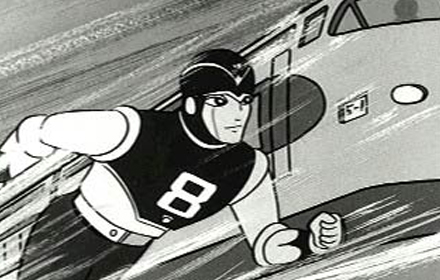
I recently re-watched the awesome Mad Max: Fury Road, which has reminded me about something very important: Nux the War Boy is the most moe character of 2015.

Nux, like the other War Boys, is afflicted with cancer which makes him barely able to stand. Despite his crippling illness, he tries his best to achieve glory and be shiny and chrome.

Moe.

Nux, though part of a religious cult that emphasizes death and war, is in a sense innocent. He has a sense of naive, wide-eyed wonder about the world and his glorious leader, Immortan Joe. He knows little of the world, but he slowly learns.

Super moe.

Despite his efforts, however, his clumsiness often gets the better of him, and it leaves you feeling sorry for him. Seeing Nux curled into a ball as he laments the fact that the Gates of Valhalla denied to him three times, you just want to give him a hug.

So moe I could live, die, and live again.

If you liked this post, consider becoming a sponsor of Ogiue Maniax through Patreon. You can get rewards for higher pledges, including a chance to request topics for the blog.
Adulthood in Tribe Cool Crew

Screen Shot 2015-10-29 at 12.00.31 PM

Tribe Cool Crew is the kind of kids’ show I really enjoy, one that combines a surprising amount of maturity and actual consideration for children with an overall fun and vibrant spirit. Rather than just moralized preaching, it tries to understand where kids are coming from. It’s why I’ve already written two separate reviews for this hip hop dancing anime, one towards the beginning of its broadcast, and the other right in the middle. Now that the anime has finished, it brings me to consider how important the idea of “maturity” (and all that it entails) is in Tribe Cool Crew. By the end, there are a number of developments that are rather surprising and even arguably out of place for a kids’ show, but also create a varied image of what it means to be an “adult.”

Note that this post will be especially spoiler heavy compared to the other two reviews.

Throughout Tribe Cool Crew, there is a general sense of development and progression in the characters, or at least a few episodes dedicated to each character. For the main duo Haneru and Kanon, it comes across as learning how to dance better by overcoming psychological barriers. However, when it comes to the adults, there are three prominent versions of maturity that are presented.

Screen Shot 2015-10-29 at 12.09.34 PM

For Kumo, Mizuki, and Yuzuru, the adults that team with Haneru and Kanon to become Tribe Cool Crew, their worries tend to be about managing expectations. The character Mizuki, for example,  at one point has to learn that her tendency to overwork herself through multiple jobs, favors, and a lack of appreciation for sleep should be reined in a bit lest it wear her down to a nub. What’s interesting is that this all originally came from a good place: she worked hard as a kid to go from overweight, shy girl to a cool and curvaceous dancer. Rather than the lesson being “DO YOUR BEST!” or “NEVER GIVE UP!”, it’s a more tempered outlook that is valuable to both children and adults.

Screen Shot 2015-10-29 at 12.13.02 PM

A different kind of maturity appears with the character Jey El, who focuses on ideals. Essentially a highly idealized Michael Jackson figure with all of the controversy stripped out, Jey El is a peace ambassador whose dancing is beloved throughout the world. He came from the slums and has dedicated his life to stopping war and violence. Because of this, Jey El is revealed to have numerous enemies in both arms-dealing and the military-industrial complex, with attempts on his life being not that uncommon.

Of course, just the fact that I typed “military-industrial complex” in reference to a show about kids dancing seems kind of weird. Sure enough, the reveal that the ever-important “Dance Road” tournament that defines the series is sponsored in part by warmongers is quite ham-fisted, reflecting a tendency in a lot of kids’ series in general (anime or otherwise) to slip in something more serious towards the end of their lives. Nevertheless, Jey El’s maturity is rooted in a kind of uncompromising vision that is optimistic even as he’s fully aware of the horrors of the world.

Screen Shot 2015-10-29 at 12.07.28 PM

Then there’s the idea of adulthood and maturity from Jey El’s head of security Gallagher, which is grounded in cynicism and the need to compromise even when it goes against one’s values.

In the second half of the anime, the biggest problem facing Tribe Cool Crew, aside from their progression through the underground dance tournament “Dance Road,” is an unusual dance called “Crowd High.”  With dynamic movements and easy to learn moves, Crowd High has gone viral on a global scale, but the characters discover that the dance is actually quite dangerous to perform as stories of injuries begin to pile up (keeping safe while dancing is a recurring message in the series). As Tribe Cool Crew reaches its climax, it’s revealed that the Jey El they’ve seen encouraging them on is in fact a robot, and the real Jey El is in a coma as a result of a bombing by a small child in a war-torn region.

Gallagher explains that he is behind the popularity of Crowd High, seeking to spread dance just as Jey El wished but utilizing a style that has no need for soul, talent, or inspiration so that anyone can learn it, even if it comes at the occasional risk of injury. He also happens to be working with the very military/weapons moguls that Jey El was fighting against. Gallagher’s idea of maturity is one where success is tempered by a view of reality as harsh and unforgiving, and that achieving one’s goals may require a deal with the devil if the ends justify the means. Underlining all of this is the fact that Gallagher was also emotionally affected by the bombing, questioning if Jey El’s methods are even feasible if they can’t reach that one small child.

Children are thus introduced to these varying perceptions of what it means to be an adult, and I think that on some level it allows young viewers to decide who to follow. That said, I think it’s not surprising that in the end Haneru and Kanon do not follow Gallagher’s example, and that Jey El’s revival (brought back thanks to the soulful dancing of our heroes) also inspires a change in Gallagher. Nevertheless, what I find especially notable is how Gallagher is in the end portrayed not as a true villain or even someone with malicious or self-serving intentions. On some level he still believes in their mission, and it is the tragedy of losing Jey El that prompts him to adjust his way of thinking.

If you liked this post, consider becoming a sponsor of Ogiue Maniax through Patreon. You can get rewards for higher pledges, including a chance to request topics for the blog.