The Moving Goalposts of Integration: Messy Roots

Messy Roots: A Memoir of a Wuhanese American is an autobiographical comic by Laura Gao. It tells the story of her coming to the United States at a young age and growing up with the competing influences of Chinese and (predominantly white) American culture. It’s another story about the Asian diaspora, with the author’s Wuhanese roots making it all the more striking in this current health and political environment. Although the story isn’t specifically about COVID-19-derived discrimination, it shows how the seeds of that racism were already planted amidst a more personal story of joy, sorrow, identity crisis, and self-acceptance.

The comic goes through Laura’s life from early childhood all the way through college. Along the way, she runs into the conflict of wanting to hold onto certain aspects of her Wuhanese roots that are discouraged by her parents while also looking to reject or minimize those which her parents want her to maintain. Traveling back to Wuhan at different stages of her life and feeling the increasing disconnect with her original home contributes to the fear of being neither Chinese enough or American enough to satisfy either side, while also feeling that leaning too far in one direction is also considered a mistake.

These feelings hit me right in the chest. There’s a moment early on in Messy Roots, where Laura brings lunch from home. When her classmates blanch at her dumplings and call them “stinky,” I could feel myself yelling in my head, “HOW DARE YOU? Your sandwiches or whatever are clearly nothing compared to what she gets to bring.” I love all foods, including White American food of the typical variety, but that stigmatizing of delicious homemade dumplings actually made me mad for Laura. The notion of people finding certain foods’ cultures inherently smelly is a recurring issue, I find.

Conversely, Laura joins the basketball team as a way to fit in with her American peers, but when she ends up wanting to quit due to unpleasant events at school and informs her parents about it, they fail to provide the support she’s looking for. Rather than asking if she’s okay, her dad talks about the money they’ve sunk into her basketball hobby that has now been wasted. That sense of your family’s culture prioritizing the value of the activity over the feelings of the individual is simply too real. 

One aspect of the Asian-American experience that’s expressed well is the fear of being a “FOB,” the fear of being a naive bumpkin. When I was young, it wasn’t all that uncommon to hear Asian kids making the distinction between FOBs and non-FOBS, and at the time, I didn’t realize how deeply toxic that mindset is. I never had to learn English as a second language, so I don’t relate directly to my peers treating me like a complete outsider due to an accent, but damn if some of them didn’t try anyway. I should have known better, and I really didn’t care about what those kinds of kids thought about me, yet something about that mindset must have gotten internalized in me. Seeing Laura depict it getting called out was a welcome jolt.

Messy Roots makes me realize that certain feelings I find bubbling inside of me are not all that unusual. The feeling of wanting to escape or move past cultures because you’re being suffocated on all sides by them, only to circle back around to later in life and try to build back the bridges that were left neglected? It’s something I can definitely relate to. 

Messy Roots ends up having a lot in common with other stories about the Asian diaspora in North America, such as Himawari House, Turning Red, and American Born Chinese—but I find that rather than feeling “samey,” it’s a reminder to me that these shared experiences can help us Asians be conscious of a mutual understanding and empathy when it comes to navigating our circumstances. We’re even seeing these points of connection transcend generations, as Laura makes specific mention of reading Gene Luen Yang’s American Born Chinese, and it having an influence on her. I hope Messy Roots and the others help to carry this legacy forward, and influence the next generations for the better.

Miscellaneous Notes

Wuhanese very much feels like a middle point between Northern and Southern Chinese languages. It seems to carry aspects of both, which isn’t surprising. However, I never knew much about Whan before, and so it makes me want to learn more. Incidentally, a martial arts instructor/scholar I watch on YouTube is also from Hubei Province, where Wuhan is located.

I appreciate all the off-brands used throughout Messy Roots. My favorite is “Royal Danks” [sic]. That sense of disappointment when trying to find cookies (only to see sewing supplies inside that familiar blue tin) is a part of my soul. My earliest memories of butter cookie containers is that they never had cookies.

Love Live! and Playing with Canon through Songs

In Love Live! Nijigasaki High School Idol Club Season 2, the character Takasaki Yu struggles to write a song for her friends in the club to perform. When she finally finishes it, the song is revealed to be “TOKIMEKI Runners,” a piece that celebrates the individuality of each member. In the context of this anime, it’s a new creation, but in terms of the actual real-world release schedule, it was actually their first. It makes me think about how Love Live! has these funny divergences between versions of the same groups, and the pliability of its story as a result.

Similar situations occur in the first Love Live! anime. For instance, the very first song they perform is “START:DASH!!,” but the actual first single was “Bokura no LIVE Kimi to no LIFE.” In the former case, the school idol club was a mere three members at the start. In the latter case, the group already has all nine members. In fact, in the anime, “Bokura no LIVE Kimi to no LIFE” is performed only when the full team has assembled. Rather than it being the introduction to Love Live! that it was conceived as, it serves as a culmination and turning point. 

While there are versions that have come first, like the singles for OG Love Live! and a mobile game for Nijigasaki, they hold no special authority over the fandom. Materials are there to be used in whatever way fits. Old songs become new. New songs become old. Character qualities that are developed over time by the voice actors/singers in one iteration might be presented as long-established in another. In essence, I’m a fan of the fact that there’s not really a specific “canon” other than the broad strokes.

If You Love Literature and Violence, Gimme a Hell Yeah—Hibiki: How to Become a Novelist

Hibiki: How to Become a Novelist is one of my favorite manga of the past few years. Sure, it doesn’t have the mind-blowing thrills or soul-reverberating energy of other works. The art is also decidedly mediocre. But what Hibiki does have is ridiculous humor, unpredictability, and a protagonist I would describe as “spiritually akin to Stone Cold Steve Austin.”

The series follows a teenage girl named Akui Hibiki, who one day submits a novel manuscript on a whim. As a result, she winds up on a journey that brings Hibiki in contact with titans of the field, struggling aspiring authors, an eccentric but enthusiastic school literary club, and a whole host of other unique personalities. But while Hibiki’s quiet and thoughtful personality evoke images of a bookworm archetype or perhaps a demure “literature girl,” she also refuses to take shit from anyone. Whether it’s high school bullies, dismissive fellow writers, nosy paparazzi, or even a kid getting in the way of customers at the bookstore, they’re all met immediately with unexpected violence from this skinny girl. Hibiki isn’t particularly strong or fast, and she isn’t trained to fight in any way, but she will not let anyone try to use the trappings of civility and etiquette to take advantage of her.

Hibiki is not a malicious person. She respects creative passion in all its forms, and will go out of her way to encourage everyone to try their hand at writing so that they might express what’s inside of them, be they friends or enemies. Her fellow members of the literature club run the gamut—from the granddaughter of a famous author, to a childhood friend she knows is stalker-level obsessed with her, to a girl who likes cheesy light novels—but Hibiki supports them all. She cares little about celebrity and glamor, or the aesthetics of fame, as it’s the love of craft that motivates her. What she hates possibly more than anything else is people who shower her with praise but who clearly haven’t actually read her work. Hibiki honestly engages with the creations and feelings of others, and she expects the same in return.

That unabashed authenticity is why I liken Hibiki to one of the most popular wrestlers ever. While pro wrestling is a staged performance and everyone pretty much knows this to be the case, Steve Austin is famous for feeling incredibly genuine every time he walks into the arena as the sound of shattering glass marks his arrival. Austin’s appeal was that he 1) felt convincingly real, and 2) he would constantly kick the ass of his nasty boss, Mr. McMahon, who kept trying to humiliate him. That’s Hibiki to a tee—minus the Stone Cold Stunners, but still keeping the kicks to the gut and the chair shots (really). Though, if I were to describe her exclusively with anime characters, she’s like a cross between the eerily capable mind of mahjong prodigy Akagi Shigeru and the also-aggressive Taniguchi Mio from 22/7.

As I think about the appeal of Hibiki, I’m reminded of a series of tweets I saw by translator Dan Kanemitsu. In them, he expresses the idea that the reason Japanese culture places so much value on stories about middle and high school years is because they’re assumed to be filled with potential and agency. After you grow up, things change, and it just doesn’t come across the same way when a story is about a defiant adult. I feel that the character of Hibiki speaks to this sentiment on a very visceral level, and much of the satisfaction she provides is that she won’t let anything get in the way of that agency. In fact, the last couple of volumes of Hibiki even bring up this idea that the passion of youth can’t be maintained relative to her career. Without going into spoilers, the resulting answer is worth seeing.

Simplicity that Works: Multiversus Alpha Review

Thanks to an old friend, I managed to get into the Multiversus alpha. As a long-time fan of Smash Bros. and someone with a general interest in platform fighters, this new Warner Bros. crossover had me reasonably intrigued by its level of polish and its emphasis on 2v2 battle. While a lack of free time meant that I could only play briefly, I came away from the game with a positive impression, albeit somewhat tempered by its free-to-play (i.e. inevitably loot-based) model.

Gameplay-wise, two things stick out to me. First, is that it feels like the developers put a lot of thought as to how each character’s gameplay would reflect their identity. Second, the simplicity of the controls make Multiversus quite accessible and might even be a boon to its team focus.

The signature character flourishes are indeed all there, but it’s even baked into the mechanics. Of course Bugs Bunny would dig holes and generate objects out of thin air to complement his slapstick nature. Of course Velma from Scooby-Doo would act as range-focused support, and also gather clues like Phoenix Wright in Marvel vs. Capcom 3. Arya Stark has her sword, but also a “pie-making” mechanic that occurs when she KOs someone—which implies that she turned them into pie. The game successfully celebrates its crossover nature visually and through its controls.

The only exceptions might be Shaggy and Reindog. The former leans completely into the Ultra Instinct Shaggy meme and winds up being like a mix between Goku, Captain Falcon. The latter is an original character (in the same crossover-universe vein as Ruby Heart and Cybaster), and thus has no basis.

In terms of the controls, Multiversus does not have shields or grabs. It also does not rely on analog movement. Unlike Smash Bros., there are no distinctions between walking vs. running, or tilts vs. smash attacks. Simple as controls are in Smash, I’ve seen this granularity be a sticking point for less experienced players, and I think this move helps accessibility. The leniency of aerial movement also makes me think of a more refined and varied Brawlhalla: another free-to-play platform fighter that, unlike Multviersus, suffers a bit from feeling samey across its cast.

While there’s an argument to be made that this might oversimplify things in the competitive realm, I think this won’t be the case. In fact, the pared-down controls actually feel more conducive towards the chaotic environment of a 2v2 match. They give both players and spectators potentially less to concentrate on so they can pay attention to the match as a whole.

I can easily see the competitive scenes for Smash Bros. and Multiversus coexisting, if only because they have different emphases. Smashers overwhelmingly prefer singles over doubles, while the developers of Multiversus specifically designed it for 2v2. To wit, some of the biggest proponents of the game are those who have great love for doubles Smash, and I hope they end up having a game that can reward that passion. 

Against the Barrel: Ogiue Maniax Status Update for June 2022

I have to admit that the world feels overwhelming. If it’s not COVID rates ticking up, it’s deadly shootings and war and racism and the fact that these things are all tied together. As an anime blogger, I also think about these things in relation to entertainment, and in light of recent events, we’re seeing old boogeymen like “violent video games” being brought up. I remember those conversations from two decades ago, and though my perspective has changed from childhood to adulthood, I’m not so naive as to think that the root cause is violent entertainment. Rather, it’s at best a symptom of a deeper problem—that power is conflated with self worth, and that gun lobbyists want men to feel that threat of emasculation so badly that they’re willing to go to extremes.

I’m not someone who believes that glorifying violence in entertainment is inherently a problem. I like my action series plenty, and even if something like sports can be argued to be a conduit for aggression, I don’t think that it’s automatically going to lead to the kind of mind-poisoning we’re seeing from cultures that refuse to confront their own pasts. As long as media can be media and not propaganda, even the most depraved depictions of human behavior can have a place. If fiction is the only alternative for someone to find themselves comfort, that’s not the fault of the fiction.

On a less somber note, I’d like to thank the following Patreon subscribers:

General:

Ko Ransom

Diogo Prado

Alex

Dsy

Sue Hopkins fans:

Serxeid

Hato Kenjirou fans:

Elizabeth

Yajima Mirei fans:

Machi-Kurada

Blog highlights from May:

Lots of Brain with a Bit of Heart: Combat in Girls und Panzer das Finale

A review of sorts for GIrls und Panzer das Finale, especially Part 2, but more of an analysis of how combat is portrayed in the series.

Ultimate Dancouga in Super Robot Wars 30 Is Quintessential Obari Masami

How this particular SRW30 DLC captures the essence of its original creator.

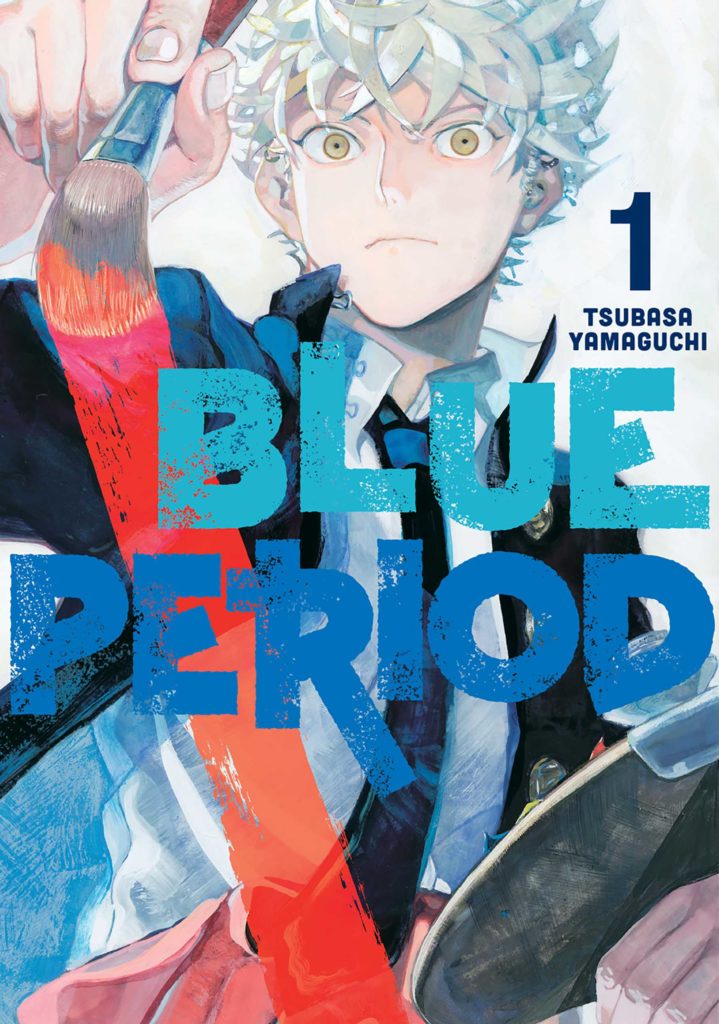
The Tools to Express Yourself: Blue Period

Thoughts on the moving story of a guy who’s suddenly inspired to become an artist.

Apartment 507

Why Zhong Lanzhu makes Love Live! better by being a heel.

Looking at the way the English translation of Spy x Family adapts Anya’s kid speech.

Kio Shimoku

Kio Shimoku’s Twitter was full of design drawings for Hashkko Ensemble. There’s a lot of insight into his early decisions for the manga.

Closing

I’m going to leave off on a nicer and more personal not: I finally beat Super Robot Wars 30! It only took…200 hours. I want to write an overall review of it, but part of me wonders if all the existing posts might be enough.

Kio Shimoku Twitter Highlights May 2022

Kio Shimoku provides a few more insights into the Hashikko Ensemble creative process this month.

Kio realizes that Menturm and Mentholatum are different products.

Kio posts a Hashikko Ensemble drawing used for a Monthly Afternoon cover. A fan mentions that they originally thought Himawari would become part of the core cast, to which Kio apologizes but in a way that makes him sound like an elderly man.

Kio clarifies that Hanyama would be Second Tenor, and was supposed to join as a tone-deaf member, but it never happened. (In the manga, it’s mentioned that Hanyama isn’t tone deaf, but rather is the son of a monk and therefore used to singing Buddhist chants, where the notes are slightly off from Western music.)

The drawing with Hanyama should be the last of the color illustrations, though Kio thinks there might be one more.

It took too many chapters to get Kousei into the Chorus Appreciation Society, which resulted in Shinji becoming the Second Tenor of the group. While that wasn’t the original plan, Shinji’s use as a tsukkomi character came in handy quite a bit.

Right when Kio starts to relax, a new manuscript is due. (It’s likely a new chapter of Spotted Flower.)

A drawing of Kozue feeling something in the stomach, with Kio saying that he thought stomach warmer season was over, but it looks like he still needs it.

A rough from the new chapter of Spotted Flower.

Kio suddenly needed to handle a bunch of administrative work, which exhausted his mental capacity to keep working on manga. 

Lately, Kio has been revising his roughs into line art for color images rather than using the pen tool to do so. For some reason, the latter approach isn’t quite hitting the mark for him, even though that’s how Kio does B&W art.

It looks like Kio got drunk while watching a DVD of the “Hajimete no Africa” specials from the variety show How do you like Wednesday?

The Tools to Express Yourself: Blue Period

When I was in art school, I often heard a recurring sentiment from my fellow students: “If people can understand even 10% of the message my piece conveys, I would be happy.” Though we differed in style, talent, skill, and experience, there was a mutual desire to have we put into our work to make it to those viewing it. So when I began reading the fine arts–themed manga Blue Period, and the main character starts to cry after his friends “get” his drawing of Shibuya at dawn, it brought me back to those younger days. It also told me that this manga really understands the struggle that artists have with themselves and their work.

Blue Period is the story of Yaguchi Yatora, a contradictory “academically successful delinquent” whose social and school careers are both solid. However, Yatora is prone to being the person others want him to be, and he lacks personal motivation. When a chance encounter with an older female classmate’s large-canvas artwork fills him with inspiration to try making something himself, it leads Yatora to start down the path of applying to art school despite his parents’ wishes. As a total beginner with certain expectations placed upon him by friends and family, the walls he must surmount are tremendous.

It’s rare for manga and anime about artists to actually be about art; most of the time, it’s really just a motif to convey drama and/or comedy. This is a fine approach, and some of my favorite series fall under this umbrella—Hidamari Sketch and Honey and Clover stand out. But like Blank Canvas, Blue Period takes a more serious approach, delving deep into the “art” of art, so to speak. From theory and experimentation to the emotional roller coaster that comes from thinking you’re hot stuff one day and hot garbage the next, I can speak from personal experience that what’s portrayed is all too real.

While Blue Period does approach the subject of art very seriously, this doesn’t mean it’s a dry and boring instruction manual. The characters and their stories are some of the best parts of the series, and I find myself drawn to most of them. Yatora himself is quite rare in terms of protagonist types because being a successful yet directionless individual is not the kind of conflict you see too often, and the rest of the cast feels like three-dimensional individuals living their lives, whether they appear a lot or a little. Whether it’s Yuka’s gender-nonconformity riling their parents up, Kuwana being pressured by the artistic pedigree of her family, or even Yotasuke’s reasons for being an artist clashing with Yatora’s, their world and their emotions feel real.

Blue Period is the kind of series I enjoy most: one where character interactions are robust and powerful. In that sense, it reminds me of Kio Shimoku’s work in certain ways. Notably, Blue Period is actually serialized in Monthly Afternoon (home to Genshiken and Hashikko Ensemble), which makes me think the similar vibes are less a coincidence and more a general editorial emphasis.

I’ve both watched the anime and read the manga, and while they largely tell the same story, they each have a particular feeling that makes them not quite 1:1. The anime has the advantage of portraying things in color instead of black and white, which makes the artwork feel more like how you’re “supposed” to see it. The pacing is also such that the human drama is emphasized. The manga has one obvious edge in that it goes past the anime, but even putting that aside, there’s more to it. The manga lingers more on the art and its characters’ internal worlds more, and the rougher artwork has an appeal all its own. In short, the anime feels like it emphasizes the interpersonal more, whereas the manga is more about the internal. 

One theme that comes up in Blue Period is the way that making art can be very revealing about oneself, and willingly exposing your deepest self to the world can be intimidating. Seeing Yatora and the others so hard at work reminds me about my own journey and process, namely that I wasn’t half as dedicated as these characters are. Blue Period may be making me confront my own inadequacies and regrets, and I can’t help but feel that itch to start making art again, if only to address those unresolved emotions.

Lots of Brain with a Bit of Heart: Combat in Girls und Panzer das Finale

After years of waiting, I finally got the chance to watch Girls und Panzer das Finale: Part 2 thanks to a sweet sale from Sentai Filmworks. The second in a planned six-part film series to wrap up the “girls in tanks for sport” franchise, Part 2 is definitely not a standalone movie. It introduces no new characters, doesn’t have any real major revelations, and is probably better thought of as an extra-long TV episode. Even so, I don’t mind one bit. What I’ve come to remember just from sitting down with this second movie is that there is something inherently joyful to Girls und Panzer, and I think it comes down to how it handles the portrayal of combat.

Whether by fists or by vehicles, I find that fights in action-oriented anime largely fall under two categories: brain-oriented and heart-oriented. “Brain-oriented” means ones where characters win or lose because of strategic or tactical circumstances. They don’t necessarily have to be “realistic;” there just has to be an internal logic. Stand battles in JoJo’s Bizarre Adventure, which focus on overcoming an enemy’s specific strengths and weaknesses, are a prime example. “Heart-oriented,” on the other hand,” comes down to essentially “they won because they wanted it more.” Most battles in Fist of the North Star are this way, even though the series ostensibly is a clash of different martial arts—ultimately, it’s about Kenshiro’s righteous anger. It’s also not uncommon to see hybrids that aim to achieve satisfaction in both. Gaogaigar is a notable example of a hybrid, especially because it involves taking a heart-based skill (“bravery”) as a power source for brain-based decisions while fighting (“the G-Stone is powered by bravery.”)

Girls und Panzer revels in its battle scenes. But while Girls und Panzer has a good deal of heart to it, that’s really not what side its bread is buttered on. Its tank battles are brain-oriented through and through, and what I find interesting is just how much the series avoids expository dialogue to convey that focus. Whether it’s JoJo’s Bizarre Adventure or Legend of the Galactic Heroes, brain-oriented fare often revels in that verbosity, and while I don’t worship at the altar of “show, don’t tell,” Girls und Panzer does make for a very compelling experience. In das Finale: Part 2, concepts like positioning are conveyed mostly visually without the need for diagrammatic maps. While I most definitely don’t have any sort of practical combat experience (in tanks or otherwise), the film makes you feel like you’re both an outside observer and in the thick of it. 

Of course, brain-oriented battles assume brains, and that it’s not just a bunch of empty tanks on autopilot. In this respect, characters in Girls und Panzer serve an important function. Aside from being cute girls whose personalities satirize cultures around the world (including Japan), their behaviors provide windows into how they think and approach both competition and life in general. For example, the first fight in das Finale: Part 2 comes down to exploiting underlying intrateam rifts by utilizing commonalities in certain tank designs, and it is incredibly silly while also making total sense.

A part of me can’t believe that Girls und Panzer is coming up on its 10-year anniversary. But every time it shows back up, I know that it’s going to deliver. The love and effort poured into the franchise is hard to deny, and the sheer amount of earnest fun is virtually palpable. Its breed of brain-oriented combat is still rare in this day, and as it gradually rolls to the finish line, I hope others take up the mantle.

Semi-Brief Thoughts on the Slingshot in Super Smash Bros. Ultimate

The last time I wrote about Smash Bros., it was to give my thoughts on the concept of character complexity. Since then, the developers have declared Smash Bros. Ultimate balance changes are more or less done, so outside of discoveries from the community itself, there likely wouldn’t be anything new to discuss. But that’s exactly where new tech has arisen, namely in the form of what has been coined the “slingshot.” 

Building off of a few seemingly disparate techniques found earlier in the game’s competitive life, the slingshot was introduced to players at large thanks to Smash Bros. tournament organizer GIMR, who also runs the biggest Smash stream around, VGBootcamp. I’ve put his video above, as he explains it better than I can, but to sum it up: The slingshot is a technique that purposely uses the cumbersome buffer system in Ultimate to allow characters to juke while facing the opponent.

Even in this early stage, there are many reasons I feel that the slingshot is a net positive for me personally and Smashers in general. I’ll admit that prior to this announcement, I hadn’t really touched the game in months. But now, I find myself grinding the inputs trying to see what I can learn, and it’s exciting. Also, as GIMR begins to show in the video, it has immediate benefits for both of my mains, Mewtwo and Mega Man. 

I predict that slingshot will benefit Mewtwo immensely. While it’ll make the character more vulnerable to shield pressure, Mewtwo never dealt with it well anyway, so nothing much will change on that end. On the flip side, being able to mitigate that pernicious tail hurtbox that has plagued Mewtwo throughout Ultimate through quick turnarounds is itself a major boon. But Mewtwo also sports specific physics that seems ideal for slingshots and the way it instantly boosts characters to max air speed: a combination of low initial air speed but also the third highest max air speed in the game. It doesn’t help when Mewtwo is being juggled, but on the ground, I think it’ll be a fundamental change to the character.

Mega Man is different in that he has extremely high air acceleration and a strong (though not Mewtwo-level) max air speed. Although I think he potentially won’t benefit quite as much, the slingshot looks like it’ll still be a great asset. The tech will add an extra trick to his already strong and wiggly neutral, and I can see every move of his being useful with this new trick.

My only worry is that in a game where out-of-shield options are already bad, things might get a whole lot worse. But with the added layers I predict the slingshot will open, it’s going to make for a more dynamic experience.

Ultimate Dancouga in Super Robot Wars 30 is Quintessential Obari Masami

One of the highlights of any Super Robot Wars game is seeing how awesome mecha look in their attack animations. So when Ultimate Dancouga first performed its ultimate attack in Super Robot Wars 30, I expected the kind of spectacle associated with its designer, Obari Masami. After all, he personally designed this exclusive version of Dancouga for the game, and his penchant for flashy action poses is unmistakable. When I first saw Ultimate Dancouga strike the characteristic warped-perspective sword pose seen above during its Dancou Shinken technique, I could only think “Yep, there it is!”

But then a few other thoughts immediately followed. “Why didn’t I associate this Obari Pose with Dancouga’s finishing moves in SRW?” “Did it even strike the Obari Pose in older titles?” “Did it ever Obari Pose in the original anime?!”

That’s when I remembered: The 1980s anime Super Beast Machine God Dancouga predates the Obari Pose, which emerged in the 1990s with the Brave franchise! In fact it’s sometimes more commonly known as the Brave Perspective and Sunrise Stance, among other things.

Sure, recent toy releases make reference to the Pose, but it’s not the same as having it in the show itself. And while there’s been plenty of creative license with attacks throughout SRW, their desire to capture the flavor of the source material is likely why the Pose never made it in. On top of that, the Dancouga TV anime was Obari’s first credit as mecha designer, so the series holds a special place in his massive body of work.

So Ultimate Dancouga ends up being a kind of “combination” of two aspects of Obari’s legacy: It’s his first professional mecha design striking his signature pose. It’s not technically going full circle, but there’s a wholeness to Dancou Shinken that makes it satisfying.