How “Over-Animating” Manga Can Change an Anime

Adapting comics into animation involves taking images which, at most, hint at or represent motion, and filling in more of the gaps that or imagination would have otherwise. While how faithfully an animated work tries to adhere to its comic can vary, I’ve noticed that even those that try to follow the source material can at times “over-animate,” providing what is perhaps too much flair and thus changing the overall fee of a given title.

Over-animating isn’t an established terms by any means, but they’re convenient for my purpose. The way I’m defining it is the degree to which added material not found in the original can make a given scene feel noticeably different. This is often done by taking the source material and then exaggerating what’s there, either through the sense of motion or by adding additional elements. Think of it as the opposite of those times when a show fails to capture the splendor of a good fight scene from a manga—when it comes to over-animating, the spectacle can potentially wind up either being a distraction or changing how we even think of particular characters or moments.

Three examples come to mind in this respect: Mysterious GIrlfriend X, Dagashi Kashi, and Laid-Back Camp.

Mysterious Girlfriend X, about a boyfriend and girlfriend who literally swap spit. Whereas the manga portrays saliva as a simple white, the anime drool glistens and drips like honey, giving it an extra dimension that makes it feel less ethereal compared to the original. When I read the manga, the saliva seems like a means to an end. In contrast, the anime seems hyper-focused on that particular fetish.Dagashi Kashi is similar. While both comic and cartoon feature attractive female characters and a degree of titillation, the first season takes it one step further every time. Suggestive moments like eating tube-shaped snacks called fugashi while blindfolded are exaggerated by the addition of a massive, super-sized version. A flashback featuring kids playing doctor as a way for the character Saya to get closer to the boy she likes has an accidental chest-touching scene thrown in. The manga is fairly racy, but the anime is hyper-horny.

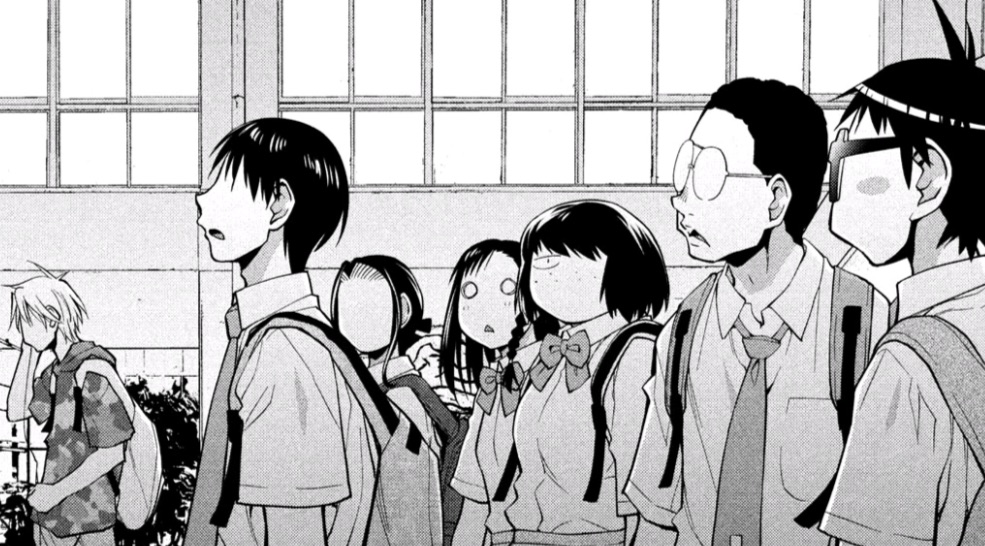
Unlike the other two, my use of Laid-Back Camp (aka Yurucamp) has nothing to do with perversion. Instead, it has to do with how the character Nadeshiko is made to be extra ditzy compared to the manga. At one point, Nadeshiko notices her new friend Rin, only to run into a window like a bird not knowing how glass works. This isn’t especially different from how Nadeshiko is portrayed in the manga, but it’s almost not quite the same either. She’s not especially bright and she’s ruled to a large degree by her instincts, but Nadeshiko is never quite so dumb as to literally run into glass.

While I have my own preferences, it’s not as if I’m saying that sticking faithfully to the manga should be the way to go all the time. The drool of Mysterious Girlfriend X might resonates more with fans if it’s thick and viscuous. The girls of Dagashi Kashi might make a greater impact when the suggestiveness is turned up a couple (dozen) notches. And perhaps Nadeshiko being a little dimmer makes her a more endearing and humorous character. Even so, I want to emphasize how these changes can transform how we view a title and its characters, despite having so many similarities between versions. It’s the little things that can make all the difference.

The Confession: “The World God Only Knows” Five-Year Retrospective

April 12, 2019 marks the five-year anniversary of a momentous occasion: the day of the final and most important love confession in the manga The World God Only Knows. There’s a lot that’s special about this particular ending, not least of which was the internet’s powerful reaction to it, best encapsulated in the image below, which collects before and after reactions toward the reveal. For those who want to avoid spoilers about this series, or those who would feel offended by typical 4chan speech, it would be best to turn back now. For those who want to stay, I hope you like hearing me wax nostalgic about what makes this conclusion so great.

Continue reading

Changing of the Guard in Fandom

ComicsGate, or what remains of it, has been a thinly veiled campaign to bully women out of comics, and the “movement” itself is hardly worth talking about as anything more than unjustified harassment. However, I find that it pulls its energy from a profound change occurring in readers of the superhero genre: the ever-increasing presence of women as both readers and creators, and with it, a change in how the comics-reading community determines what is worthy of praise. I’ve seen it on a personal level, as I went from understanding comics fandom as a boys’ club filled with casual sexism and jokes about Hal Jordan’s punches to one where a mutual understanding and acceptance of such things can no longer be assumed.

I previously wrote a blog post exploring the interaction between canon, fanon, and headcanon, and in it I used those terms the way one would when talking about narrative continuity. However, I think the contrast between those concepts still exists if we use the other definition of “canon”: the commonly accepted masterpieces of a given medium. The challenging of “canons” and “fanons” in that sense is what I’ve seen as a result of the changing demographics of superhero and comics fandom. Over the course of many years, women and girls have come in with their own ideas about which artists to respect and what ideas should be taken away from a given comics, and those deeply entrenched in the older ways feel the ground shifting beneath them. Guys like that can be vulnerable to a smooth-talking neckbeard snake whispering to them, “They’re changing the rules. They’re outsiders. What happened to the things that matter?” Losing the place they belong can be more important to some than trying to address political issues in communities.

Fandom is built in partly on passion, partly on accruing knowledge and experiences. This combination lets fans both embrace that which they love—be it a book, musician, film, or anything else—and perhaps even take it to places that the work by itself would never travel. Fandom creates communities and communication, and it encourages fans to pool their resources together and establish some common ground. But when that common ground is challenged, or finds its foundation shaken by newer generations eager with different preconceived notions of what’s good or acceptable in both people and works, it can create schisms between fans.

In a way, it reflects the world’s politics at large, as previously established majorities have seen their numbers slowly dwindle in ways where numbers alone will not let them hold onto power, and a loss of influence can be downright frightening for those accustomed to always being on top in their own universes. Even if there’s an intellectual understanding that the actions of today are meant to address certain past injustices, it can be a bitter pill for those who assumed a stable foundation in their comics fandom.

Sonya Blade is No Longer a Terrible Character

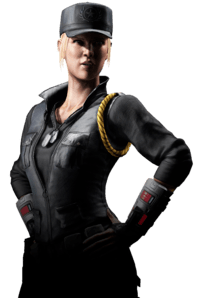
Several years ago, I wrote a post entitled “Sonya Blade is a Terrible Character,” specifically referring to problems in her visual design. Since then, I feel that Netherrealm Studios, the people behind Mortal Kombat, have made significant and positive changes to her look. I no longer think my previous complaints quite apply.

sonyablades2In my original post, I had two criticisms. First, her overall look wasn’t that great in the first place from an aesthetic and character design perspective. Second, her features haven’t been visually or thematically consistent enough. This wasn’t a problem with Mortal Kombat in general, as Scorpion and Liu Kang for example have iconic elements that make you instantly think of them as Scorpion and Liu Kang, and it wasn’t a problem of appealing to horny teenagers because that hasn’t prevented other games from establishing their characters’ signature looks that make them memorable and recognizable. Even Street Fighter V, which heavily revised many popular characters’ designs to no shortage of controversy, still kept the general feel of the characters intact. That wasn’t the case with Sonya Blade.

Sonya_2RENDER

In the years since, Mortal Kombat X has come out and now Mortal Kombat 11 is set for release this year, and it’s clear that they’ve worked to establish a more consistent default look for Sonya. Instead of a vague gesture of “blond, big-boobed soldier” that permeated most of her recent designs and outfits, the current Sonya sports a form-fitting yet functional jumpsuit that effectively communicates her military special forces background. What I especially like about her current look is that it doesn’t deny her sex appeal, but at the same time doesn’t let it take over her entire design.

Not only does she look cooler overall, but now, whenever I see her, I instantly think “Sonya Blade!” without necessarily needing to be told in advance who it is. That alone is a major improvement that I hope the developers of Mortal Kombat keep for a long time.


Downtown: Ogiue Maniax Status Update for April 2019

By the time you read this, I’ll be traveling in Asia! It’s a fun trip that I hope to maybe write about in the coming month.

In the meantime, I want to express my thanks to my Patreon sponsors for their continued support!

General:

Johnny Trovato

Ko Ransom

Diogo Prado

Alex

Sue Hopkins fans:

Serxeid

Hato Kenjirou fans:

Elizabeth

Yajima Mirei fans:

Machi-Kurada

My favorite posts from March:

Rokudou no Onna-tachi: When Krillin Wins

An updated look at the best harem delinquent underdog manga around.

Oh My God, Becky, Look at His Hands: Teasobi

The author of Mogusa-san has a most scandalous manga!

Star Twinkle Precure’s Excellently Personal Transformations

Magical girl shows love their transformation sequences, and the new Precure does them brilliantly

Hashikko Ensemble

Chapter 14 revolves around the challenge of deciding on a song to perform.

Patreon-Sponsored

“Tales of Eternia: The Animation” and the Adapting of RPGs

How does this early 2000s game-to-anime work handle the transition?

Closing

How do you feel about the new Wednesday-Sunday schedule? Has it thrown any of you off, or are you enjoying the change? Let me know in the comments!

Star Twinkle Precure’s Excellently Personal Transformations

Precure as a whole is known for its fantastically animated transformation sequences, but I’ve been especially impressed by the current Star Twinkle Precure. They feel especially strong and consistent, and both the attention to detail and little design flourishes make each character stand out from the others.

As the main character, Cure Star is the standard from which the others are contrasted. She sets up the basic premise of the series’ transformations–waving around a pen and drawing while singing about who she wants to be–but there’s also a spring and a bounce that highlights her personality in full. Her dancing feels very loose and casual, and at the same time conveys her eagerness and curiosity. Cure Star already embraces who she is and who she wants to be in her daily life, so she doesn’t seem especially different before and after changing into a Precure.

While all the other girls draw their symbol and stand next to or in it, Cure Milky stays offscreen. She then surfs on top of the heart along a flow of green water, playing off the Japanese word for Milky Way: ginga, or “silver river.” Milky seems to express the most joy over transforming into a Precure, which makes sense, given that she’s the only who even knew about the legend of Precure already. Her outfit has a number of elements that suggest her extraterrestrial origin, but my favorite are the clear, bubbly shoulders. They’re reminiscent of old-fashioned portrayals of aliens at the same time that they adhere to the general Precure aesthetic.

The first really noticeable thing about Cure Soleil is that as he continuously traces a circle, it gets brighter and more intense, almost like you’re staring into the sun. It’s the only initial drawn shape to create a fully rendered image (a sun, of course), which she then emerges out of, as if the flames are transforming her. Soleil’s Precure outfit resembles a flamenco dress, calling back to her Spanish/Latin cultural background, without making her feel like a “token” foreigner character.

Cure Selene’s transformation whispers elegance compared to the others, which are more energetic. Her initial drawing is the only asymmetrical one, and the way she stands inside the crescent moon without being inside of the shape itself leaves an impression—especially with the way her feet are planted apart, toes in. Unlike the other girls, she actually rides the crescent moon she draws, and the arrow she shoots is based on her archery background. Her transformation feels the most “freeing,” as if she’s finally not being held back by her upper-crust upbringing.

Overall, I love how much personality and individuality these transformations have. They really emphasize the idea that these girls are trying to transform into who they want to be.

Stars: Hashikko Ensemble, Chapter 14

The Chorus Appreciation Society has its first big argument in Hashikko Ensemble, Chapter 14.

Summary

With only one day to submit an application to enter the MHK Concours, the Chorus Appreciation Society is struggling to decide on a song for both practical and personal reasons. Among the considerations: available members, song familiarity, and taste. After a great deal of arguing and even a near-fight between Orihara Kousei and Hachida Shinji (!), they finally land on a song they can all agree on: “Miagete Goran Yoru no Hoshi o” by Kyu Sakamoto.

Those Pesky Song Rights

One of the practical considerations that the group has to account for is that any rewriting or adapting of compositions, for the sake of better matching the performers, has to be approved by the original creator. With less than 24 hours to decide, that means this option is out of the question.

Kio didn’t have to place that limitation on his characters—he could’ve written the situation to have more leeway. It does add a bit of tension, however, and it gives ample opportunity for the manga to go into detail about the typical statement of a chorus or ensemble.

What is Normal? What is Otaku?

One of the barriers is Kousei, who refuses to do any songs he considers embarrassing, which rules out all J-pop. Others are ease of performance and familiarity. Akira suggests they do a Studio Ghibli song, seeing how popular, well known, and tasteful they are. Hasegawa Kozue’s eyes light up at the prospect, but she’s shocked and appalled to discover that some of the members have never seen a Ghibli film—namely Jin and Kousei, though Jin has performed some of the songs. Shion also reveals that she’s never watched one, though Kozue is much gentler and more forgiving with her.

This little interaction highlights a number of character aspects. First, the question of whether gruff judoka Kozue is actually an otaku is brought up by the other characters. There’s no clear answer, but at the very least, we know she’s not the kind of otaku to scoff at Miyazaki films. As for why those three in particular are Ghibli virgins, Jin and Shion can be attributed to strict households—Jin’s never even had TV. As for Kousei, it’s likely due to his traumatic, neglect-filled childhood.

Grump and Not-So-Grump

I find there are some similar trajectories for Kousei and Shion, in that both come across as hardasses at first but are softened up as they spend more time with the rest of the characters. The big difference is that while Shion just seems gruff but turns out to just be a goof, Kousei’s “lighter” side only comes out in tiny doses which are then exaggerated by everyone else. More broadly, there is a general theme of the Chorus Club/Appreciation Society helping people deal with or overcome their personal challenges.

The title of the chapter, “Ore ni Totte” [To Me], actually comes from a line uttered by Kousei: “To me, singing’s…” Here, he’s expressing what may be some poetic or powerful view of music, and the other members try to eagerly egg him on to express what he means.

It’s also telling that Kousei eventually says he wants to leave because it’s his tastes that are getting in the way, and that he’ll be fine with whatever—there’s a considerate person in there. However, Akira stops him because he wants a song everyone will be happy to work on. Both Kousei and Akira gain points in my eyes.

Songs

As mentioned above, the song they pick is “Miagete Goran Yoru no Hoshi o” (Behold the Nighttime Stars) by Kyu Sakamoto. The way the characters described it as basically something everyone knows prompted me to do some research because I was unfamiliar with both the singer and the song.

It turns out that Kyu Sakamoto is one of the most famous musicians ever, inside and outside of Japan. In 1963, he became the first Japanese performer to hit #1 on the US Billboard Top 100, and in 1985, he tragically died in the deadliest single plane crash in history.

Other songs mentioned in the chapter include “Kanade” by Sukima Switch (of course), and the Ghibli songs brought up by Jin: “My Neighbor Totoro” and “Stroll” from My Neighbor Totoro, “Carrying You” from Laputa: Castle in the Sky, and “Country Roads” from Whisper of the Heart.

Final Thoughts

Kio actually made a chart showing all the characters who’ve appeared thus far with names and classes. It’s a lot! It also makes me wonder who we’ll see more of in the future, especially now that we know what to call every one of them.

“Tales of Eternia: The Animation” and the Adapting of RPGs

I was asked via Patreon to look at the Tales RPG series, which I have very little experience with. Given time constraints, I decided to focus my energy on an anime version, knowing full well that such adaptations often do not fully capture what makes the source material appealing. With that in mind, I chose to go in blind on the earliest Tales anime: Tales of Eternia.

My immediate feeling from the first couple of episodes was that the core cast is a fun and likable bunch, and that they stood out above all else. My favorite is Farah Oersted, the martial arts tomboy with an oddly familiar an appropriate voice—turns out she shares a voice with Videl from the Dragon Ball franchise. The show at times felt beholden to its RPG origins, especially during fight scenes, which is not helped by the roughness of the early-2000s digital animation.

But as I kept watching, I wondered just how much ground they were covering from the original Tales of Eternia. Halfway in, it seemed more like they were on their very first missions, when you’re still kind of learning the ropes. By the time a major plot twist comes in, it feels strangely paced—like either the story was moving too slow for something like this, or it had been skipping over too much. At this point, I decided to look at just how this anime maps onto the game.

The answer is that it doesn’t—at least not exactly. The central characters are more or less the same, except drawn in an early-2000s anime style as opposed to the softer designs of the game (or its squat sprites), but the story of the Tales of Eternia anime does not take place anywhere in the actual RPG. Suddenly, it made sense, and the feeling I was getting from the anime version was all too familiar: the Tales of Eternia anime is basically a filler arc.

The challenge of adapting an RPG is tricky because there’s not necessarily enough time to cover everything, so I can see why they took this approach. Shoving the game’s story into 13 episodes probably wouldn’t have done it justice, so going for a wholly original story is an interesting solution. However, the reason it feels so much like filler is because it straddles the line a little too much. The anime tries not to touch the main story so there are no real stakes, but it also seems to assume that this somewhere into it, so the anime isn’t terribly free to take liberties. All that remains is the charm of the characters.

You (Meaning I) Don’t Need to Know Everything

The original intention of this blog post was to review Ikeda Riyoko’s Claudine, a scandalous and emotionally intense look at a man born in a woman’s body and the complications it brings. It provides an interesting contrast to Ikeda’s most famous work, The Rose of Versailles, whose protagonist, Oscar, is raised as a man but is ultimately a woman inside.

However, as I tried to shape my thoughts on Claudine, I began to worry about whether or not I was the right person to be writing about a transgender-focused manga, never mind that Ikeda herself, as far as I know, isn’t transgender either. It’s not as if I haven’t written about similar topics before, but I’ve been increasingly self-conscious about it. My concern with writing about Claudine was that I do not know how actual transgender people might experience its narrative. Is the dominant tragic aspect of the manga considered a step backwards?

Then something dawned on me. While I consider my constant desire for knowledge a strength, this pursuit of expertise has its downsides, one of which is an inner need to say things from a place of authenticity that isn’t necessarily in reach. I expect myself to be able to understand everything eventually on a deeper level, but in some situations, as with the transgender experience, there’s only so far I can go. While there are many ways I don’t match up to the ideal male image society upholds, I don’t know what it’s like to feel uncomfortable in my own skin to that degree—to feel like who I appear to be on the surface isn’t who I am.

What I’m realizing is that it’s okay that my knowledge will forever be limited to a certain degree. I don’t need to try and be an expert in everything; I can listen to the voices of those with direct experience and those who dedicate their lives to the pursuit of equality. Support when I can, guide when I can, and learn when I can: that’s the way to approach life, especially as I grow older.

PS: I’m well aware of the irony of me taking what should have been a review of a manga about a member of a trans man and making it all about me realizing the limits of my emotional knowledge when it comes to trans people. I hope you’ll forgive me.

Rokudou no Onna-tachi: When Krillin Wins

In 2016, I found out about Rokudou no Onna-tachi, a new manga that was a fresh and interesting take on the well-worn harem genre. As I continued, my opinion of it only grew. Even now, I find myself regarding Rokudo no Onna-tachi more highly than ever. There are many aspects of this series that contribute to its success, but fundamental to all of it is the portrayal of its protagonist, Rokudou Tousuke, as a true underdog. In a sense, he’s the Krillin of the series, but Rokudou no Onna-tachi is a story where Krillin is the main character, and he succeeds because he’s not the strongest, or the toughest, or the smartest.

To recap, Rokudo no Onna-tachi is about Rokudou Tousuke, a meek high school kid who casts a spell on himself to be more popular with girls. However, what he didn’t know was that the spell was very specific: it only attracts delinquents and “bad girls.” Most notable among them is Himawari Ranna, the strongest and most terrifying brawler in town. It turns out that bullies are a lot friendlier when your ostensible girlfriend can shatter concrete with her fists, but Rokudou is the last person to want to encourage violence, so he actively tries to prevent Ranna from sending every person they meet to the hospital. Along the way, Rokudou manages to befriend an eclectic group of people and through a combination of friendship, guts, and kindness, accidentally becomes the “shadow boss” of his school.

I call Rokudou no Onna-tachi a delinquent harem work, but it leans much more toward the former descriptor than the latter, and I think the series is all the better for it. While there is a romantic aspect of sorts, as the series has progressed, a majority of the focus has been on Rokudou’s shounen protagonist-esque ability to win over his antagonizers with or without the attraction spell (which he can’t get rid of, no matter how hard he tries). And even when it comes to the delinquent girls who fall head over heels for him. What’s more, “being hot to bad girls” doesn’t give him much of a leg up in a fight, so his ability to stand up to bigger and bigger threats speaks more to his qualities as a human being than anything else.

And yet, while romance doesn’t define the series, the central relationship between Rokudou and Ranna is still interesting and vitally important to the tone of the narrative. If Rokudou is indeed a Krillin, that sort of makes Ranna the Android 18 of this story in that she’s the more powerful of the two. However, her role is arguably closer to that of Goku, or even Saitama in One Punch Man. She’s an unstoppable force in a fight, and many physical conflicts in Rokudo no Onna-tachi are a matter of anticipating the carnage to come as soon as she gets where she needs to be. She’s not a heroine with a tragic backstory or a brash amazon with a hidden soft side, and even those moments of loving infatuation toward Rokudou humorously highlight a central tenet of Ranna’s being: violence is everything. That dynamic of contrasting personalities between Rokudou and Ranna fuel both the comedic and the dramatic parts of the manga, and it’s all the better for it.

If Rokudou no Onna-tachi had just stuck to pure silliness, making jokes about how an endless parade of nasty girls were getting googly-eyed over a tiny loser, then it would have worn out its welcome far too quickly. But if it had swung too deep into the serious and dramatic, then I believe it would have had a harder time standing out from the pack. It’s because Rokudou can be portrayed as this unlikely hero, and that the series can swing between silly and serious so effectively by using his constantly being out of his depth, that the manga is such a rewarding and enjoyable experience.